Beyond the Big Five circuit lies a red-earth reserve on the Ewaso Nyiro River, home to rare northern species and two of Kenya's most important community-led conservation projects.
5Safaris
Jul–Oct (Migration) · Jan–Mar (Calving)Best time
$450From, per person
Why Samburu National Reserve
Where Rare Wildlife and Ancient Traditions Meet
Archer’s Gate, just after six in the morning. The barrier is still down, a ranger is checking the manifest by torchlight and somewhere beyond the acacia line an elephant is already crossing the Ewaso Nyiro. We have driven through this gate more times than we can count and it still stops the conversation in the vehicle every time.
Samburu National Reserve sits roughly 345 kilometres north of Nairobi, in Samburu County, on the edge of Kenya’s true north. It covers 165 square kilometres of red laterite soil, doum palm forest and open lava plains, cut through the middle by the Ewaso Nyiro River, the only permanent water source for miles in any direction. Everything about Samburu’s wildlife, where it gathers, when it moves and what it eats, comes back to that river.
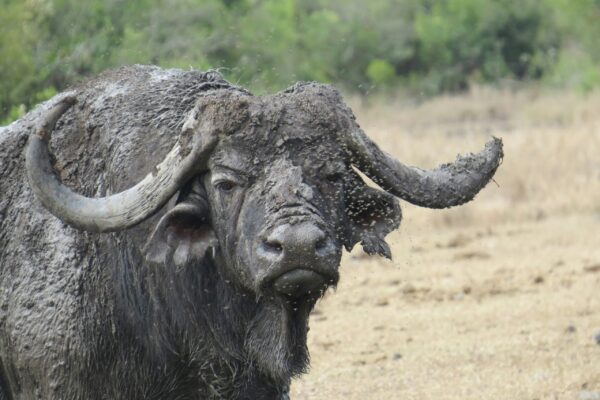
What sets Samburu apart from the reserves further south is not the Big Five, though lion, leopard, elephant and buffalo are all resident here. It is the Samburu Special Five: Grevy’s zebra, reticulated giraffe, gerenuk, Beisa oryx and Somali ostrich, five species adapted to this arid country and rarely seen together anywhere else in Kenya.
Samburu is also home to two of the country’s most important community-led conservation stories. Reteti Elephant Sanctuary and the Umoja Uaso Women’s Village are both run by the Samburu people who have shared this land with wildlife for generations. Here, conservation and culture are not add-ons to a game drive. They are the reason the wildlife is still here to see.
We are a Nairobi-based safari operator and we send guests north to Samburu for a different kind of safari: quieter roads, rarer species and a slower pace than the Masai Mara circuit allows. If you have already done the Mara and are wondering what else Kenya has to offer, this is usually where we send you next.
QUICK ANSWER | What is Samburu National Reserve?
Samburu National Reserve is a 165 square kilometre wildlife reserve in Samburu County, northern Kenya, on the Ewaso Nyiro River. Established in 1985 and managed by the Samburu County Government, it is known for the Samburu Special Five and community-led conservation projects including Reteti Elephant Sanctuary.
Samburu National Reserve At a Glance:
Location: Samburu County, northern Kenya, on the Ewaso Nyiro River
Size: 165 square kilometres (64 square miles)
Established: 1985, formerly part of the Samburu-Isiolo Game Reserve
Managed by: Samburu County Government
Distance from Nairobi: Approximately 345 kilometres, a 5 to 6 hour drive
Flying time from Wilson Airport: Approximately 60 to 90 minutes
Known for: The Samburu Special Five, large elephant herds and Reteti Elephant Sanctuary
Main gate: Archer’s Gate
Neighbouring reserves: Buffalo Springs National Reserve and Shaba National Reserve, forming one shared ecosystem
The Samburu Special Five is not a substitute for the Big Five and we never present it that way to guests. It is a separate list altogether, five species adapted to arid northern Kenya that most visitors have never seen before setting foot in Samburu: Grevy’s zebra, reticulated giraffe, gerenuk, Beisa oryx and Somali ostrich.
QUICK ANSWER | What is the Samburu Special Five?
The Samburu Special Five refers to five distinctive northern Kenya species found in and around Samburu National Reserve: Grevy’s zebra, reticulated giraffe, gerenuk, Beisa oryx and Somali ostrich. It is separate from the Big Five and represents wildlife adapted specifically to this arid ecosystem.
Grevy’s Zebra
Grevy’s zebra is the largest of the world’s wild equids, distinguished from the more common plains zebra by its narrower stripes, larger rounded ears and white belly. It is also one of the most endangered zebra species on the continent, with conservationists estimating that only a few thousand remain in the wild, the majority of them in Samburu, Laikipia and Meru counties. Grevy’s zebra tends to stay closer to permanent water than plains zebra, which makes the riverine stretches of Samburu a reliable place to find it.
Reticulated Giraffe
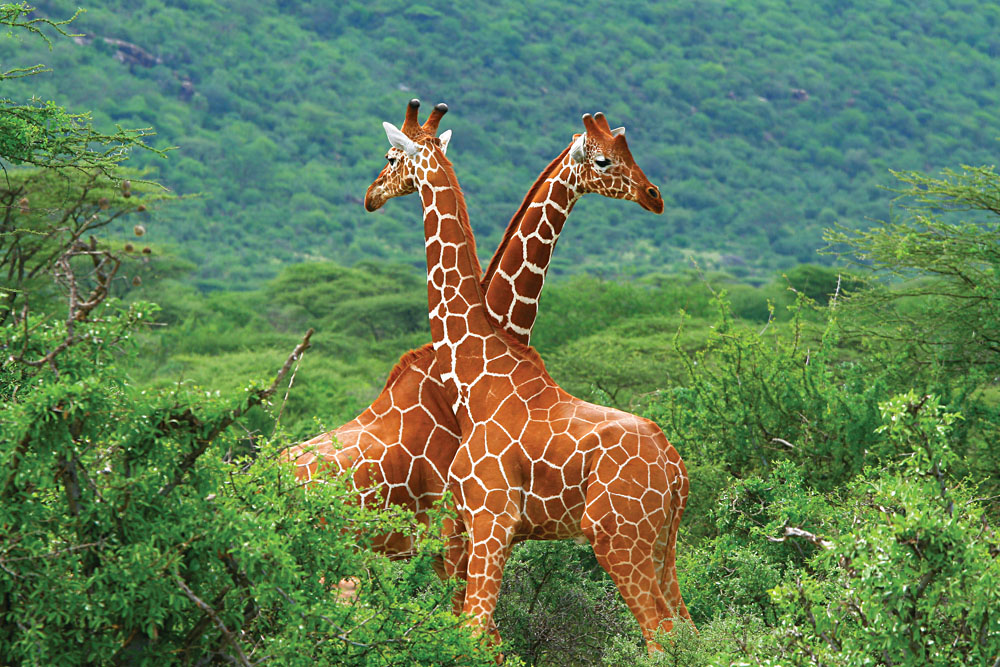
The reticulated giraffe is easy to identify by its sharply defined, geometric white lines against a deep chestnut coat, unlike the more blotchy patterning of the Masai giraffe further south. It is found almost exclusively in northern Kenya and southern Ethiopia, and Samburu is one of the most reliable places in the country to see it browsing the acacia along the river.
Gerenuk
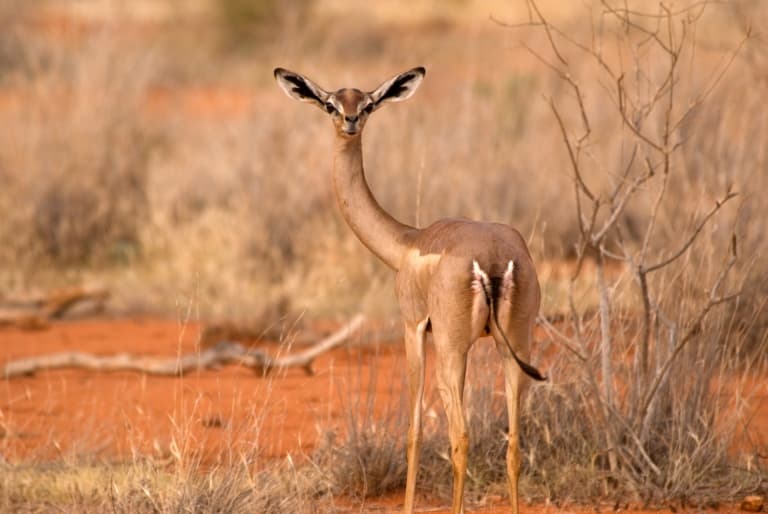
Gerenuk means giraffe-necked in Somali, and the name explains the animal. This slender antelope stands on its hind legs, balancing against a tree trunk, to browse leaves other grazers cannot reach. It rarely needs to drink, drawing most of its moisture from the vegetation it eats, which suits it perfectly to Samburu’s dry bush country.
Beisa Oryx
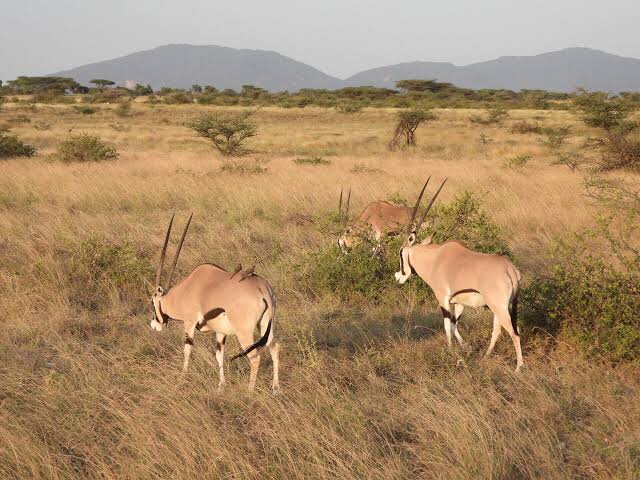
The Beisa oryx is built for this landscape: long, straight, rapier horns, a bold black and white facial pattern and the ability to survive extended dry spells with minimal water. Herds move across the open plains away from the river during cooler parts of the day, and a mature bull with a full set of horns is one of the more striking sights on a Samburu game drive.
Somali Ostrich
The Somali ostrich is the northern counterpart to the more familiar Masai ostrich found around the Mara and Amboseli, distinguished by the blue-grey rather than pink colouring on its neck and legs during breeding season. Samburu sits within its range, and sightings are common on the open plains away from the riverine forest.
We stopped counting the Big Five the day a guest asked us what a gerenuk was. That question is why people come north.
Wildlife of Samburu National Reserve
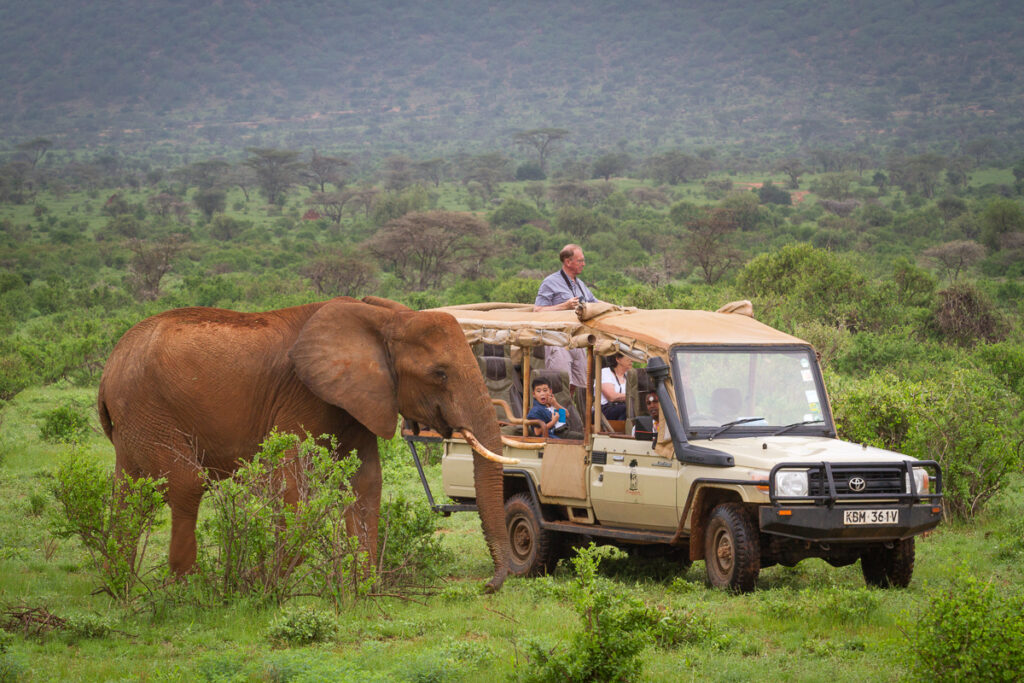
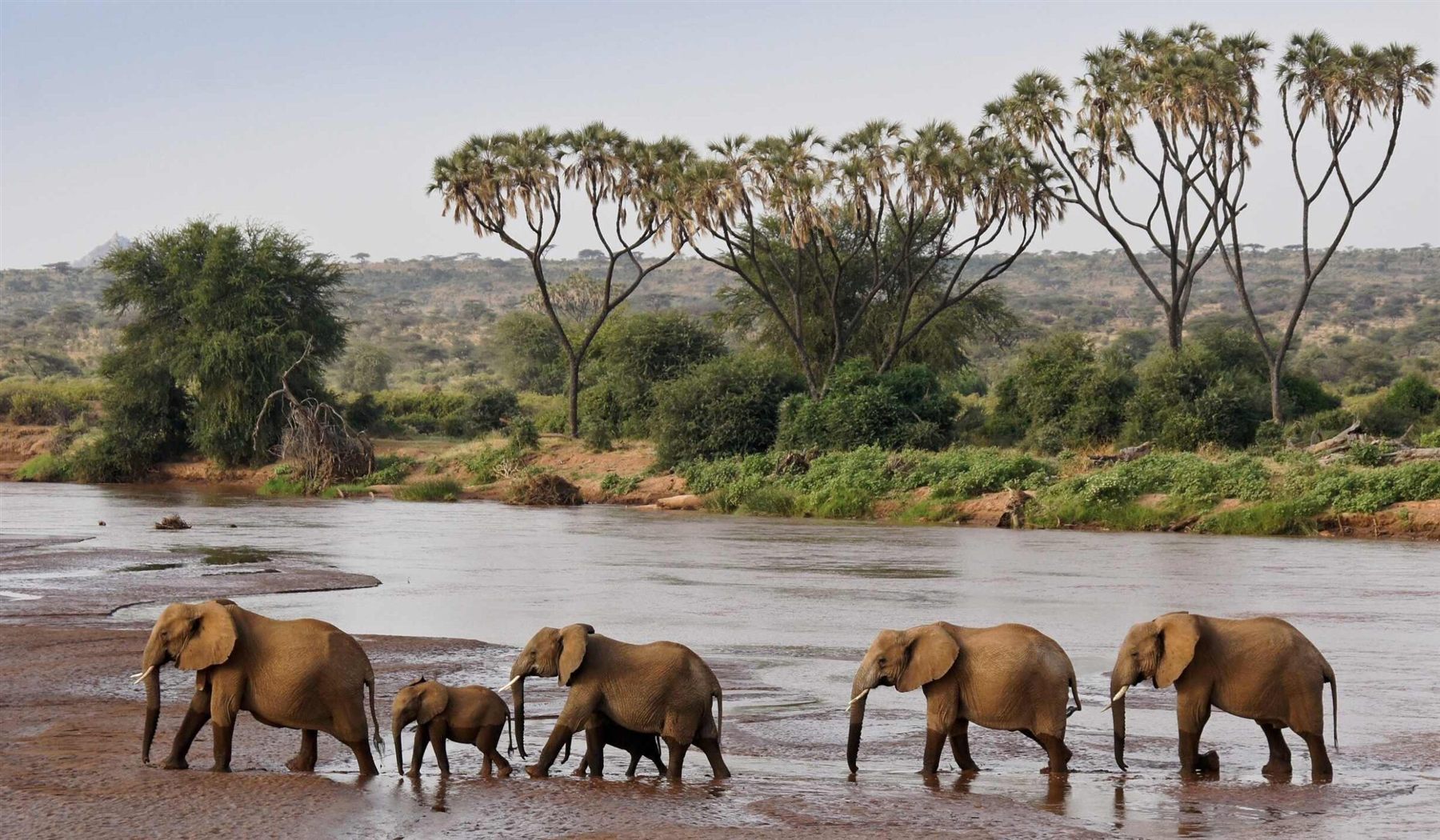
Beyond the Special Five, Samburu holds a genuinely dense wildlife population for its size. Elephant herds are a signature sighting, often taking on a reddish tone from dust-bathing in the local soil, and the reserve has long been a focus of elephant research, with Save the Elephants running its base here and Elephant Watch Camp, founded by the Douglas-Hamilton family, sitting within the reserve itself.
Lion, leopard and cheetah are all present, and Samburu has its own famous resident predators. Kamunyak, a lioness who repeatedly adopted orphaned oryx calves in the early 2000s, became one of the most written-about wild animals in Kenya. Buffalo, striped hyena and, on rare occasions, wild dog round out the predator and grazer picture. Birdlife is exceptional, with more than 350 recorded species drawn to the riverine forest and open plains.
The Ewaso Nyiro River is the organizing fact of Samburu’s ecology. During the dry months, wildlife concentrates along its banks and doum palm groves in a way that makes game drives close to the river especially productive. In the wetter months, animals disperse further into the plains, which changes both the viewing pattern and the visual character of the reserve.
QUICK ANSWER | What animals can you see in Samburu?
Samburu National Reserve is home to the Samburu Special Five (Grevy’s zebra, reticulated giraffe, gerenuk, Beisa oryx and Somali ostrich), along with elephant, lion, leopard, cheetah, buffalo and more than 350 recorded bird species, most concentrated along the Ewaso Nyiro River.
Expert Note
Every Samburu trip we have written up looks a little different depending on the season and the river level. A guest visiting in dry-season August sees a completely different reserve to one visiting after the November rains, same animals, same landscape, entirely different mood. If you have been here before, it is worth going back in a different month.
Kibara Mugo, Safari Writer & East Africa Specialist
Things to Do in Samburu National Reserve
Game Drives
Morning and afternoon game drives are the backbone of a Samburu safari. Morning drives set out at first light, when temperatures are cooler and predators are often still active from the night before. Afternoon drives run through to sunset and tend to produce the best sightings along the river, where animals come down to drink as the heat breaks.
Samburu Special Five Tracking
Expert Note
When tracking the Samburu Special Five, do not treat it like ticking five boxes on one drive. Grevy’s zebra and Beisa oryx favour the open plains away from the river, while gerenuk and reticulated giraffe are usually found in acacia scrub closer to the tree line. Two or three drives, at different times of day, give a far better chance of all five than a single long circuit.
Nicholas Wangithi, Director & Founder
Reteti Elephant Sanctuary
Reteti Elephant Sanctuary sits within the 850,000-acre Namunyak Community Conservancy in the Mathews Mountain Range, roughly a drive north of Samburu National Reserve itself. Opened in 2016, it is the first community-owned and community-run elephant sanctuary in Africa, staffed entirely by Samburu keepers, including some of the continent’s first female elephant keepers. The sanctuary rescues orphaned and abandoned elephant calves, cares for them around the clock and works toward eventually returning them to the wild.
Reteti Milk Mamas
One of the things that makes Reteti distinctive is its milk economy. Rather than relying solely on imported formula, the sanctuary sources goat milk from local Samburu women, who are known as the Milk Mamas, to help feed the orphaned calves. The program gives these women a steady income from their existing goat herds while directly supporting the elephants in Reteti’s care, tying the sanctuary’s conservation work to the economic wellbeing of the surrounding community.
Expert Note
A visit to Reteti needs to be booked at least a day in advance, and feeding times are limited to short windows in the early morning and late afternoon. If Reteti is a priority for your itinerary, tell us early so we can build the day around it rather than trying to fit it in.
Hellen Asiko, Director & Guest Experience Curator
Umoja Uaso Women’s Village
Umoja Uaso is a village founded in 1990 near Archer’s Post by Rebecca Lolosoli and a group of Samburu women, established as a place of safety for women who had survived gender-based violence. It operates as an all-women community, and today its residents support themselves and their families largely through traditional Samburu beadwork sold to visitors. A visit to Umoja is a chance to meet the women who run it and hear their story directly, and we treat it as a cultural visit built on respect, not spectacle.
Samburu Cultural Experiences
Beyond Umoja, many camps and conservancies around Samburu arrange visits to Samburu manyattas, where guests can see traditional beadwork, storytelling and daily life among a community that has herded livestock across this landscape for generations. We ask guests to approach these visits as an exchange rather than a photo opportunity, and we work only with communities who have chosen to host visitors on their own terms.
Camel Safaris
Camels have long been part of Samburu life, used by local pastoralist communities to move across country that is too dry and rugged for vehicles in places. Several conservancies bordering the reserve offer short camel safaris or camel-supported walking trips, a slower and quieter way to experience the same landscape, and animals on the ground tend to react to a camel with far less wariness than they show a vehicle.
Birdwatching
With more than 350 recorded species, Samburu rewards patient birders. The riverine forest along the Ewaso Nyiro holds species you will not find on the open plains, while the drier country away from the river favours larks, bustards and birds of prey.
Nature and Bush Walks
Full walking safaris are generally not permitted inside Samburu National Reserve itself for safety reasons, but guided walks led by an armed ranger are available in the private conservancies bordering it, including Kalama, West Gate and Namunyak. Walking puts you at the pace of the landscape rather than a vehicle’s, and it is often the best way to properly appreciate the smaller details of the ecosystem, tracks, dung, insect life, that a game drive moves past too quickly to notice.
Bush Breakfasts and Sundowners
Most camps can arrange a bush breakfast after an early game drive or sundowners on a riverbank or rocky outcrop as the light drops. Both are simple additions to a day’s itinerary, and both make Samburu’s landscape, rather than any single animal, the main event.
Wildlife Photography
Samburu’s light is a genuine draw for photographers. The red soil, the contrast of green riverine forest against dry plains and the low, warm light of early morning and late afternoon all favour photography. Species like gerenuk and reticulated giraffe, rarely photographed elsewhere in Kenya, are an additional pull for anyone building a serious portfolio.
Mount Ololokwe
Mount Ololokwe, also known locally as Ol Lolokwe, is a striking flat-topped mountain visible from within the reserve, though it lies outside Samburu’s boundaries to the north near Archer’s Post. It holds deep spiritual significance for the Samburu people, who use it as a site for ceremonies, and it is a dramatic landmark on the horizon during game drives even for travellers who never approach it directly. Guided hikes to viewpoints on the mountain are arranged through conservancies and lodges in the area rather than through the national reserve itself, and we confirm current access and permit arrangements with our ground team before including a climb in any itinerary.
QUICK ANSWER | What is Mount Ololokwe?
Mount Ololokwe, also called Ol Lolokwe, is a flat-topped mountain near Archer’s Post, just outside Samburu National Reserve. It holds deep spiritual significance for the Samburu people and is a prominent landmark visible from within the reserve, with guided hikes arranged through nearby conservancies and lodges.
Shaba National Reserve
Shaba National Reserve lies east of Samburu and Buffalo Springs in Isiolo County, covering roughly 239 square kilometres of volcanic terrain dominated by the Shaba Hill lava formation. Gazetted in 1974, it is greener and more rugged than Samburu, with riverside forest, natural springs and lava-strewn plains that give it a distinct visual character.
Shaba holds real conservation history. Joy Adamson, co-author with George Adamson of Born Free, worked here with Elsa the lioness in the years documented in that book, and Joy Adamson was killed in the reserve in January 1980. Shaba is also known for its large resident lion prides, which spend the heat of the day resting under thickets, and for the rare William’s lark, found in very few other locations in Kenya.
We typically recommend Shaba as a combination with Samburu rather than a standalone stop. The two reserves sit close enough together that travellers staying near Archer’s Post can visit both within a few days, and the change in scenery between Samburu’s open plains and Shaba’s volcanic terrain is worth the short additional drive.
Buffalo Springs National Reserve
Buffalo Springs National Reserve sits directly across the Ewaso Nyiro River from Samburu, on its southern bank, and covers about 131 square kilometres. It was originally established in 1948 as part of the larger Samburu-Isiolo Game Reserve, with its current boundaries set in 1985. The reserve takes its name from a natural spring near its western edge, whose clear water draws wildlife even when the river itself runs low.
Buffalo Springs is particularly good for elephant sightings and is considered one of the more reliable places in the ecosystem for leopard. Because it shares the same wildlife population as Samburu, many itineraries combine the two, crossing the river to alternate game-viewing areas over a multi-day stay.
Samburu Conservancies vs the National Reserve
Samburu National Reserve is only part of the wider picture. Surrounding it is a network of community-owned conservancies, including Kalama, West Gate, Namunyak, Meibae and Sera, all part of the Northern Rangelands Trust, a model in which local Samburu communities retain ownership of the land and receive tourism revenue directly in exchange for setting it aside for wildlife and visitors.
The practical difference between the reserve and its conservancies matters when you are planning an itinerary. Inside the national reserve, activities are restricted to standard daytime game drives on established tracks, with no night driving, off-road driving or walking safaris permitted. In the conservancies, camps typically hold private concessions that allow night game drives, guided walking safaris, off-road driving and camel safaris, along with lower vehicle density at sightings because access is limited to guests staying within that conservancy.
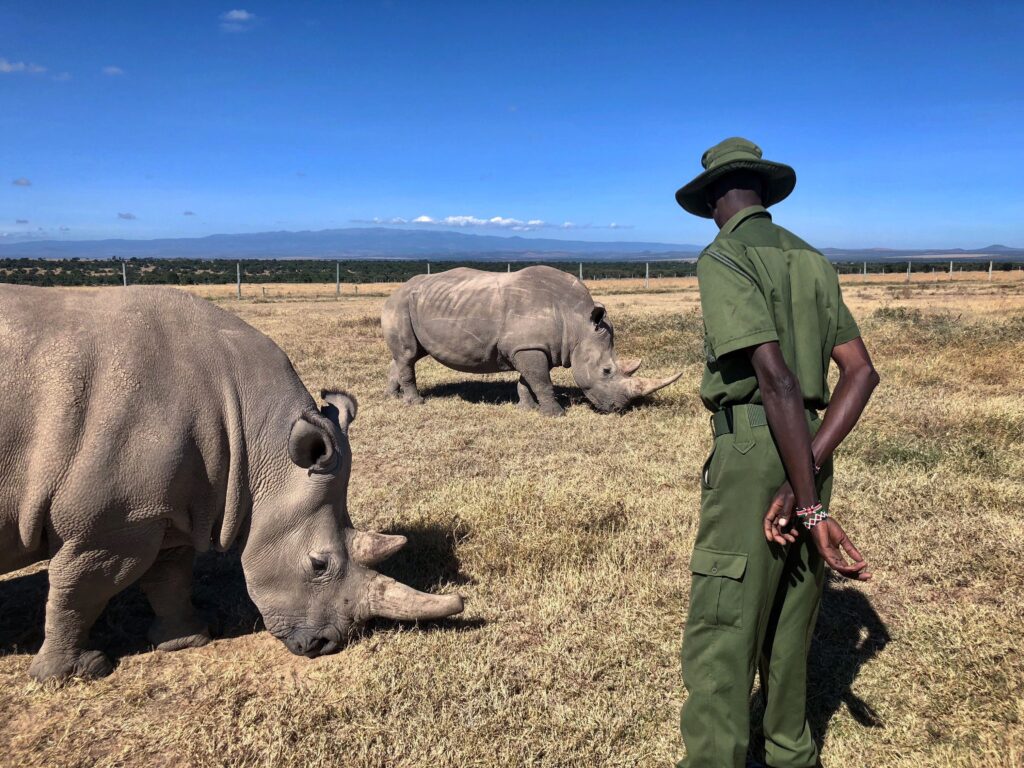
Sera Conservancy, further north, is a particular standout. It runs East Africa’s first community-owned black rhino sanctuary, where guests can track rhino on foot with an expert guide and a Sera Conservancy ranger, an experience unavailable anywhere inside the national reserve itself.
Expert Note
If night drives, walking safaris or a rhino tracking day matter to you, we build your stay around a conservancy camp in Kalama, West Gate or Namunyak rather than the reserve itself, since those activities simply are not permitted inside Samburu National Reserve’s boundaries.
QUICK ANSWER | What is the difference between Samburu National Reserve and its conservancies?
Samburu National Reserve permits only daytime game drives on set tracks. The surrounding community conservancies, including Kalama, West Gate and Namunyak, allow night drives, walking safaris, off-road driving and camel safaris, with tourism revenue paid directly to the Samburu communities that own the land.
Samburu National Reserve Gates
Samburu National Reserve is accessed through several gates, each suited to a different approach into the reserve.
Archer’s Gate: The main and most commonly used entrance, closest to Archer’s Post and most safari lodges
West Gate: Used for approaches from the western side of the reserve, near West Gate Community Conservancy
Kalama Gate: Connects Samburu to Kalama Conservancy on its northern edge
Uaso Bridge Gate: Sits at the bridge crossing linking Samburu to Buffalo Springs
Which gate makes sense for your safari depends entirely on where you are staying and which reserves or conservancies you plan to combine, so we confirm the right routing as part of building your itinerary rather than defaulting to one gate for every guest.
How to Get to Samburu National Reserve
By Road
The standard road route from Nairobi runs north through Thika and Nyeri or Nanyuki, over the equator, and on through Isiolo to Archer’s Post, a journey of roughly 345 kilometres that takes 5 to 6 hours depending on traffic through Nairobi and conditions on the Isiolo road. The tarmac holds for most of the route, with the final stretch into the reserve itself requiring a 4×4 vehicle. We run this as a road safari for guests who want to see the changing landscape from Mount Kenya’s foothills to the semi-arid north, or as one leg of a longer road circuit.
By Air
Scheduled flights from Wilson Airport in Nairobi reach Samburu’s airstrips in approximately 60 to 90 minutes, landing at the Samburu or Buffalo Springs airstrip depending on the operator and camp. A flying safari cuts most of a day of driving and suits travellers combining Samburu with other northern Kenya destinations or with a wider Kenya itinerary on a tighter schedule. Camps arrange the road transfer from the airstrip on arrival. Light aircraft typically enforce a soft-bag luggage limit, generally around 15 kilograms per person, so we flag this early for guests flying in.
Road or Fly? How to Decide
The road route is the better choice if the drive itself is part of what you want from the trip, the changing scenery from Nairobi’s outskirts to Mount Kenya’s foothills and on into the dry north, or if you are combining Samburu with other stops along the way, such as Nanyuki or a Laikipia conservancy. It also costs less than flying and avoids the luggage restrictions of light aircraft.
Flying makes more sense if your time is limited, if you are combining Samburu with destinations too far apart to drive between comfortably, such as the Masai Mara, or if a full day in the vehicle simply does not appeal. The trade-off is cost and the smaller luggage allowance most charter and scheduled light aircraft enforce.
Expert Note
The Isiolo road holds up well for most of the year, but the final stretch into Archer’s Post can get slow after heavy rain in the long or short rains. If you are travelling by road in April or November, build in extra time rather than cutting it close.
Nicholas Wangithi, Director & Founder
QUICK ANSWER | How do you get to Samburu National Reserve?
Samburu National Reserve is reached either by road, a 345 kilometre, 5 to 6 hour drive north from Nairobi via Nanyuki and Isiolo, or by air, with scheduled flights from Wilson Airport landing at Samburu or Buffalo Springs airstrip in roughly 60 to 90 minutes.
Climate and Weather in Samburu
Samburu has a hot, semi-arid climate, low altitude and low rainfall compared with Kenya’s highland parks, and it stays warm to hot year-round. Daytime temperatures typically run from around 30 to 35 degrees Celsius, occasionally higher in the hottest months, while nights cool noticeably, generally down to somewhere between 17 and 20 degrees Celsius, cool enough that a fleece for early morning game drives is genuinely useful.
Rainfall follows Kenya’s familiar bimodal pattern, the long rains falling from roughly March to May and the short rains from October to December, with November typically the wettest month. January, February and the stretch from June to October are the driest periods, when vegetation thins out and wildlife concentrates predictably around the Ewaso Nyiro River.
Because Samburu sits at a lower altitude than the Masai Mara or the central highlands, it runs noticeably warmer than those destinations even during Kenya’s cooler months, which is worth factoring in if you are combining Samburu with a highland safari on the same trip.
QUICK ANSWER | What is the climate like in Samburu?
Samburu has a hot, semi-arid climate with daytime temperatures typically between 30 and 35 degrees Celsius and cooler nights around 17 to 20 degrees Celsius. Rainfall is low and bimodal, with long rains from March to May and short rains from October to December.
Samburu National Reserve Entry Fees and Tickets
Samburu National Reserve, Shaba National Reserve and Buffalo Springs National Reserve all currently charge the same rate: USD 85 per non-resident adult and USD 50 per non-resident child for a 24-hour entry period. Kenyan citizens and East African Community residents pay separate, lower rates in Kenyan shillings, and proof of citizenship or residency, a national ID or passport showing residency status, is required at the gate to qualify.
Even with matching rates across all three reserves, travellers combining Samburu with Buffalo Springs or Shaba on the same trip should still confirm whether separate tickets are required for each reserve, since they are administered by different county authorities. Most Afrikan Accent Adventures safari packages already include park entry fees, and for fly-in safaris the fee is typically payable on landing.
Expert Note
Park fees at Samburu, Shaba and Buffalo Springs are set by county government rather than the Kenya Wildlife Service, so they can change with less notice than fees at KWS-run parks. Speak to us before finalizing your budget if your travel dates are more than a few months out.
Hellen Asiko, Director & Guest Experience Curator
QUICK ANSWER | How much does it cost to enter Samburu National Reserve?
Samburu National Reserve, Shaba National Reserve and Buffalo Springs National Reserve each charge USD 85 per non-resident adult and USD 50 per non-resident child for 24 hours. Kenyan citizens and East African Community residents pay lower rates in Kenyan shillings. Most Afrikan Accent Adventures packages already include park entry fees.
January and February bring hot, dry conditions with thin vegetation, which pushes wildlife toward the river and generally makes for strong game viewing, though the heat is intense in the middle of the day.
March through May is the long rains season. The landscape turns green fast, birding improves noticeably and visitor numbers drop, but some tracks away from the main routes can become difficult to pass and a few camps close for part of this period.
June through October is the dry season and the busiest stretch of the year for Samburu, with reliable game viewing along the river and generally easy road conditions, both for self-drive and for the transfer in from Nairobi.
November and December bring the short rains, greening the plains again without the road disruption of the long rains, and this window suits travellers who want strong photography conditions without peak season crowds.
QUICK ANSWER | What is the best time to visit Samburu?
The dry months from June to October offer the most reliable game viewing and easiest road access. January and February are also strong for wildlife sightings. March to May and November to December bring more rain and greener scenery, better for birding and quieter camps, with some road conditions to plan around.
How Many Days Do You Need in Samburu?
Two nights gives a genuine introduction to Samburu, enough time for two or three game drives and a realistic shot at several of the Special Five, but it leaves little room for Reteti, Shaba or a cultural visit.
Three nights is our usual recommendation for a first Samburu visit. It allows a proper attempt at all five Special Five species across multiple drives, plus one dedicated excursion, whether that is Reteti Elephant Sanctuary, Umoja Uaso or a half day in neighbouring Buffalo Springs.
Four nights or more suits travellers who want to combine Samburu with Shaba and Buffalo Springs properly, add a full Reteti and Namunyak Conservancy day, and still have time left over for walking safaris, camel outings or simply slower, unhurried game drives.
QUICK ANSWER | How many days do you need in Samburu?
Three nights is generally the ideal stay for a first visit to Samburu, enough time to track the Samburu Special Five properly and add one excursion such as Reteti Elephant Sanctuary. Four or more nights suits travellers combining Samburu with Shaba and Buffalo Springs.
Why Visit Samburu National Reserve?
Samburu offers wildlife you will not find on a standard Kenya circuit. The Special Five exist here and in a handful of neighbouring conservancies and nowhere else in the country in the same concentration, which matters if you have already covered lion, elephant and the classic plains species elsewhere.
It also offers a different pace. Visitor numbers are lower than in the Masai Mara, vehicle density around sightings is lower, and the landscape itself, red earth, doum palms, volcanic hills, looks nothing like the grass plains most people picture when they think of an African safari.
Beyond wildlife, Samburu is where two of Kenya’s strongest community conservation stories are based. Reteti Elephant Sanctuary and Umoja Uaso Women’s Village both put the Samburu people at the centre of the story rather than at the edge of it, and visiting either adds real depth to a trip that would otherwise be about animals alone. Combined with Shaba and Buffalo Springs on the doorstep, genuine luxury camps along the river and a conservancy network offering night drives and walking safaris, Samburu holds up as a serious safari destination in its own right, not only as an add-on to the Mara.
Guests who have already done the Mara ask us the same question every time. What else is there? Samburu is usually our answer.
Samburu Safari Cost
Samburu safaris span a wide price range depending on accommodation style, season and how you get there. As a general market guide, budget safaris using simple lodges or campsites tend to run from roughly USD 250 to 400 per person per day, mid-range lodges and tented camps from around USD 400 to 600, and luxury camps and private conservancy properties from USD 600 upward, with some exclusive-use camps well over USD 900 per person per day in peak season.
These figures generally include game drives, park fees, meals and a guide, but they vary by operator and season, so we treat them as a planning range rather than a quote. What genuinely moves the number for a Samburu trip is accommodation style first, then whether you fly or drive, since flying adds cost but saves a full day of travel each way, and finally how many reserves and conservancies you combine in one itinerary.
Expert Note
Tell us your budget range early rather than late. We can build a strong Samburu itinerary at several different price points, road safari with mid-range lodges, flying safari with a conservancy camp, or a full Samburu, Shaba and Buffalo Springs circuit, but the earlier we know your range, the better the itinerary we can put together.
QUICK ANSWER | How much does a Samburu safari cost?
Samburu safaris generally range from around USD 250 to 400 per person per day for budget options, USD 400 to 600 for mid-range lodges and tented camps, and USD 600 upward for luxury and private conservancy properties, typically including game drives, park fees, meals and a guide.
Samburu Safari Packages
We build Samburu into itineraries in a few different ways: as a standalone road or flying safari focused on the Special Five and Reteti, as part of a wider northern Kenya circuit taking in Shaba, Buffalo Springs and the Laikipia conservancies, or as one leg of a longer Kenya itinerary alongside destinations further south. Samburu Special Five safari packages are our most requested starting point for first-time visitors, since they are built specifically around giving guests the best realistic chance of all five species across several drives. Because Samburu suits both first-time safari travellers and repeat visitors looking for something beyond the Masai Mara, we tailor the pacing and the mix of activities, game drives, Reteti, cultural visits, walking and camel outings, to what each traveller actually wants from the trip.
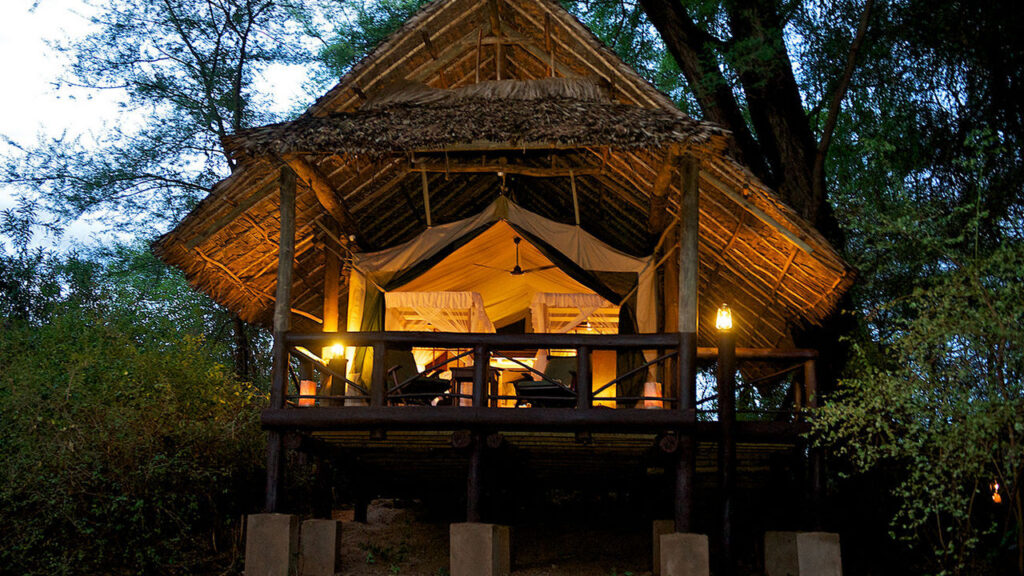
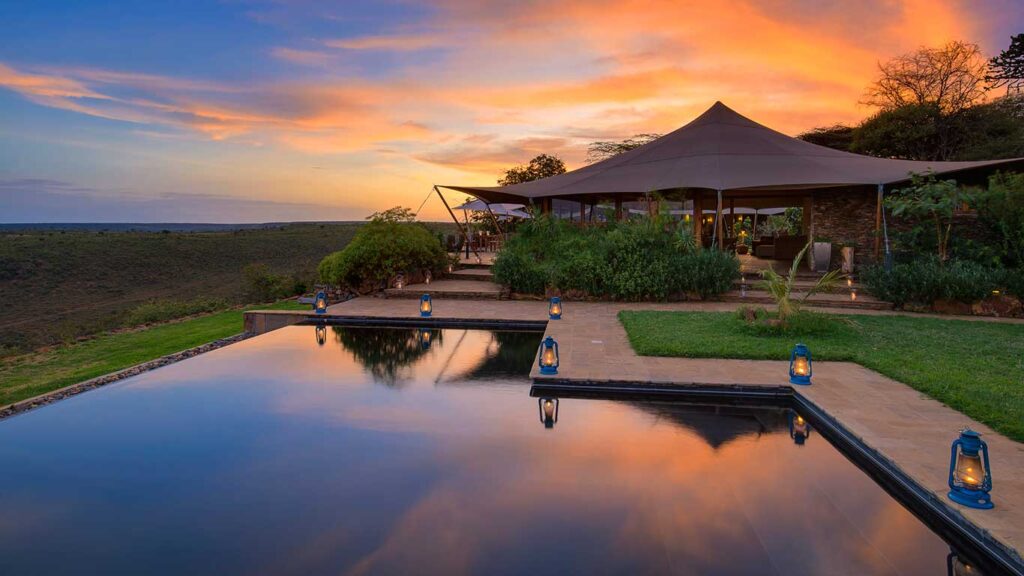
Accommodation across Samburu, Buffalo Springs and Shaba ranges from luxury lodges with permanent structures to intimate tented camps set directly on the Ewaso Nyiro River, along with private camps in the conservancies bordering the main reserves. Camps positioned along the river tend to offer the most direct wildlife encounters, with elephants and other animals regularly visible from camp itself, while properties set back in the conservancies often prioritize privacy, night drives and exclusive-use game viewing over river frontage.
We work with a range of properties across this ecosystem and match accommodation style, riverside luxury camp, lodge, or private conservancy camp, to each traveler’s budget and priorities as part of building the itinerary.
Samburu vs Other Kenya Safari Destinations
Samburu vs Masai Mara
The Masai Mara delivers the highest predator density in Kenya and the annual wildebeest migration, and nothing in Samburu competes with that on scale. What Samburu offers instead is species you will not see in the Mara at all, the Special Five, alongside noticeably lower visitor numbers and a landscape that looks completely different. Many of our guests do both on the same trip, treating Samburu as a change of pace rather than a substitute.
Expert Note
I have sat down with more first-time safari clients than I can count who ask whether they should choose the Mara or Samburu, as if it has to be one or the other. Most of the strongest Kenya itineraries we have written up do both, Mara first for volume and drama, Samburu second for something quieter and genuinely different.
Kibara Mugo Safari Writer & East Africa Specialist
Samburu vs Amboseli
Amboseli is built around its Mount Kilimanjaro backdrop and large, easily viewed elephant herds on open swampland. Samburu’s elephant sightings are just as rewarding but set against red earth and riverine forest rather than a mountain view, and Samburu adds the Special Five and the Reteti story, which Amboseli does not offer.
Samburu vs Tsavo
Tsavo is vast, with a wilder, more rugged character and its own red-earth elephant herds. Samburu is considerably smaller and more concentrated around the Ewaso Nyiro, which tends to make game viewing more predictable over a short stay, while Tsavo rewards travellers with more time and an appetite for a bigger, less structured wilderness.
Responsible Tourism and Conservation in Samburu
Samburu is one of the clearest examples in Kenya of tourism revenue funding conservation and community development directly. Reserve entry fees support the Samburu County Government’s management of the reserve, while conservancy fees at Kalama, West Gate, Namunyak, Meibae and Sera go straight to the Samburu communities who own that land, funding rangers, schools, healthcare and grazing management rather than a distant concession holder.
Reteti Elephant Sanctuary and Umoja Uaso Women’s Village extend that model further, tying conservation and cultural tourism directly to the economic wellbeing of the Samburu people who run them. Choosing to visit either, and to buy beadwork or crafts directly from the women who make them rather than from a roadside vendor, keeps more of that value inside the community it is meant to support.
On the ground, responsible practice in Samburu is straightforward: stay on established tracks inside the national reserve, since off-road driving is not permitted there, keep a respectful distance from wildlife, and follow your guide’s lead on cultural visits rather than treating them as photo opportunities.
Expert Note
We ask every guest visiting a Samburu manyatta or Umoja Uaso to follow the same simple rule: ask before you photograph anyone, and let the visit be a conversation rather than a performance. It changes the whole tone of the experience, for guests and for the community hosting them.
Hellen Asiko, Director & Guest Experience Curator
Plan Your Samburu Safari
From the Special Five to Reteti Elephant Sanctuary and the Umoja Uaso Women’s Village, Samburu National Reserve offers a side of Kenya that most safari itineraries never reach. We build Samburu safaris as standalone trips, as part of a northern Kenya circuit with Shaba and Buffalo Springs, or as one leg of a longer Kenya journey, matched to how much time and what kind of experience you are looking for.
Samburu is not a detour from the real safari. For a lot of our guests, it becomes the trip they talk about most.
🐆
Where Rare Wildlife and Ancient Traditions Meet
Journey into Kenya's untamed north and discover the Samburu Special Five, remarkable predator encounters, and rich cultural traditions along the banks of the Ewaso Nyiro River. Samburu offers a safari experience unlike any other destination in East Africa.
Good reasons to go
Why travellers love Samburu National Reserve
🦒
The Samburu Special Five
Samburu National Reserve is the only major safari destination in Kenya where visitors can encounter the famous Samburu Special Five: the Grevy's…
🐆
Exceptional Leopard Sightings
Samburu has earned a reputation as one of Kenya's best locations for leopard viewing. The dense riverine forests along the Ewaso Nyiro…
🐘
Large Elephant Herds
The reserve supports one of Kenya's most studied elephant populations, with large family groups frequently gathering along the river to drink, bathe…
🌊
The Ewaso Nyiro River
Flowing through the heart of the reserve, the Ewaso Nyiro River serves as the region's lifeline and attracts an incredible concentration of…
🦁
Excellent Predator Viewing
Samburu supports healthy populations of lions, cheetahs, hyenas, and leopards. The reserve's open terrain and lower visitor numbers often result in intimate…
🌍
Authentic Samburu Cultural Experiences
Visitors can explore traditional Samburu villages and learn about the customs, ceremonies, beadwork and pastoral lifestyle of one of Kenya's most fascinating…
🦅
Outstanding Birdwatching
With over 450 recorded bird species, Samburu is a paradise for bird enthusiasts. The mix of riverine habitats, open grasslands, and arid…
🌅
Spectacular Northern Landscapes
Samburu's dramatic scenery of rocky hills, doum palms, acacia woodland and golden plains creates some of Kenya's most photogenic safari landscapes. The…
From value camps to premium lodges — we match every stay to your style and budget.
Budgetfrom $80/night
Tourist Camps
Comfortable tented camps just outside the reserve gates. En-suite rooms with hot showers, full-board meals, and close proximity to the Mara.
Lion King Bush Camp
Samburu Riverside Camp
Mid-Rangefrom $200/night
Tented Lodges
Spacious canvas tents on raised platforms with private decks, often inside or adjacent to conservancies. Better access and fewer crowds.
Samburu Sopa Lodge
Ashnil Samburu Camp
Samburu Simba Lodge
Elephant Bedroom Camp
Luxuryfrom $600/night
Premium Lodges
World-class lodges and exclusive camps in private conservancies. Night drives, bush walks, spa, and personalized service — the ultimate safari experience.
Saruni Samburu
Saruni Samburu
Larsens Camp Samburu
Samburu Intrepids Camp
Samburu Intrepids Camp
When to go
Samburu National Reserve's seasons
Every season has its magic — here's what to expect when, so you can travel at your perfect time.
☀️
Peak SeasonJune to October and December to Februaryober
Peak
✓ Dry conditions provide exceptional wildlife viewing and predator activity.
🌤️
Shoulder SeasonJanuary – March
Shoulder
✓ Fewer visitors, pleasant weather and attractive accommodation rates.
🌧️
Green SeasonApril to May
Green
✓ Lowest prices (20–30% off)
✓ Fewer tourists — exclusive feel
✓ Best birding season (migrants)
ⓘ Some rain — short afternoon showers
Plan with confidence
Practical travel info
Everything you need to know before you go — and we’ll guide you through every step.
🛂
VisaVisa
Most international visitors require a Kenyan Electronic Travel Authorisation (eTA) before arrival. Applications are completed online before travel and are usually processed within several business days.
💉
HealthHealth
Samburu lies in a semi-arid region with warm temperatures throughout the year. Visitors are advised to consult their healthcare provider regarding malaria prevention, routine vaccinations, and travel health advice before arrival.
✈️
Getting ThereGetting There
Samburu National Reserve is accessible by road from Nairobi in approximately six hours or by daily scheduled flights from Wilson Airport to Samburu Oryx Airstrip in approximately one hour.
💰
MoneyMoney
The local currency is the Kenyan Shilling (KES), although major lodges and camps accept Visa and Mastercard. US Dollars are widely accepted for safari-related services.
🌤️
ClimateClimate
Temperatures range between 22°C and 34°C during the day with cooler evenings. The reserve experiences two rainy seasons, usually from March to May and during November.
🔌
PowerPower
Kenya uses Type G electrical sockets with a 240V power supply and 50Hz frequency. Most lodges provide charging facilities and adaptors.
🕒
Time ZoneTime Zone
Samburu operates on East Africa Time (EAT), UTC +3, and Kenya does not observe daylight saving time.
🛡️
SafetySafety
Samburu National Reserve is considered safe for safari tourism. Professional guides and lodge staff ensure visitors enjoy secure and well-managed wildlife experiences.
Find it on the map
Where is Samburu National Reserve
Good to know
Samburu National Reserve — your questions answered
should I pack for Samburu?
Neutral-coloured clothing, strong sun protection, a hat, binoculars and layers for cool early mornings and hot midday temperatures all suit Samburu's semi-arid climate.
Where is Samburu National Reserve?
Samburu National Reserve is in Samburu County, northern Kenya, on the banks of the Ewaso Nyiro River, approximately 345 kilometres north of Nairobi.
What is Samburu National Reserve famous for?
Samburu is best known for the Samburu Special Five, five species adapted to arid northern Kenya, and for community-led conservation projects including Reteti Elephant Sanctuary and Umoja Uaso Women's Village.
What is the Samburu Special Five?
The Samburu Special Five is Grevy's zebra, reticulated giraffe, gerenuk, Beisa oryx and Somali ostrich, a group of species found in this ecosystem and rarely seen together elsewhere in Kenya.
Is Samburu worth visiting?
Yes. Samburu offers wildlife found in few other Kenyan reserves, lower visitor numbers than the Masai Mara and genuine access to community conservation projects, making it a strong standalone destination or an addition to a wider Kenya safari.
What animals can you see in Samburu?
Alongside the Samburu Special Five, the reserve holds elephant, lion, leopard, cheetah, buffalo and more than 350 recorded bird species, most concentrated around the Ewaso Nyiro River.
What is the best time to visit Samburu?
June to October and January to February are the driest months and generally offer the most reliable game viewing, while March to May and November to December bring more rain, greener scenery and fewer visitors.
What is the climate like in Samburu?
Samburu has a hot, semi-arid climate with daytime temperatures generally between 30 and 35 degrees Celsius and cooler nights around 17 to 20 degrees Celsius. Rainfall is low, falling mainly during the long rains from March to May and the short rains from October to December.
How many days do you need in Samburu?
Three nights is our usual recommendation for a first visit, enough for a proper attempt at the Special Five plus one excursion such as Reteti Elephant Sanctuary. Four or more nights suits travellers combining Samburu with Shaba and Buffalo Springs.
How do you get to Samburu?
Samburu is reached by road, roughly a 5 to 6 hour drive from Nairobi, or by air, with scheduled flights from Wilson Airport landing at Samburu or Buffalo Springs airstrip in about 60 to 90 minutes.
Should I fly or drive to Samburu?
Driving suits travellers who want the changing scenery and lower cost, or who are combining Samburu with stops along the way. Flying suits travellers short on time or combining Samburu with destinations too far to drive between, though it comes with a stricter luggage limit.
How far is Samburu from Nairobi?
Samburu National Reserve is approximately 345 kilometres from Nairobi by road.
What are the Samburu entry fees?
Samburu National Reserve, Shaba National Reserve and Buffalo Springs National Reserve each charge USD 85 per non-resident adult and USD 50 per non-resident child for 24 hours, with lower rates for Kenyan citizens and East African Community residents.
How much does a Samburu safari cost?
Costs generally range from around USD 250 to 400 per person per day for budget safaris, USD 400 to 600 for mid-range lodges and tented camps, and USD 600 upward for luxury and private conservancy properties, usually including game drives, park fees, meals and a guide.
What is the difference between Samburu National Reserve and its conservancies?
The national reserve permits only daytime game drives on established tracks. The surrounding conservancies, including Kalama, West Gate and Namunyak, allow night drives, walking safaris, off-road driving and camel safaris, with revenue paid directly to the Samburu communities that own the land.
Can you visit Shaba and Samburu together?
Yes. Shaba National Reserve sits close enough to Samburu that most itineraries based near Archer's Post can combine the two within a few days, and we regularly build trips that cover both.
Can you visit Reteti Elephant Sanctuary from Samburu?
Yes. Reteti Elephant Sanctuary sits within Namunyak Community Conservancy, a drive north of the main Samburu reserve, and is typically arranged as a dedicated excursion booked at least a day in advance.
Can you climb Mount Ololokwe?
Guided hikes to viewpoints on Mount Ololokwe are arranged through conservancies and lodges near Archer's Post rather than through the national reserve, since the mountain itself lies outside Samburu's boundaries.
What is the difference between Samburu and Masai Mara?
The Masai Mara offers the highest predator density in Kenya and the wildebeest migration, while Samburu offers species found nowhere else in the country, the Samburu Special Five, along with lower visitor numbers and a distinct red-earth landscape.
Is Samburu good for a luxury safari?
Yes. Samburu has a strong range of luxury tented camps and private conservancy properties along the Ewaso Nyiro River, several offering exclusive-use game viewing, night drives and walking safaris away from other vehicles.
Is Samburu a responsible or sustainable safari destination?
Yes. A significant share of tourism revenue in the Samburu ecosystem flows directly to the Samburu communities who own the surrounding conservancies, and community-run projects such as Reteti Elephant Sanctuary and Umoja Uaso Women's Village put local people at the centre of conservation and tourism rather than at the margins of it.
 ✨Signature Journeys