Kenya Flying Safari Cost: Road vs Fly-In Safari, Is It Worth Upgrading? 2026 Guide
We compare Kenya safari road vs fly-in costs mile for mile, so you know exactly when the extra cost of flying pays for itself and when it doesn't.
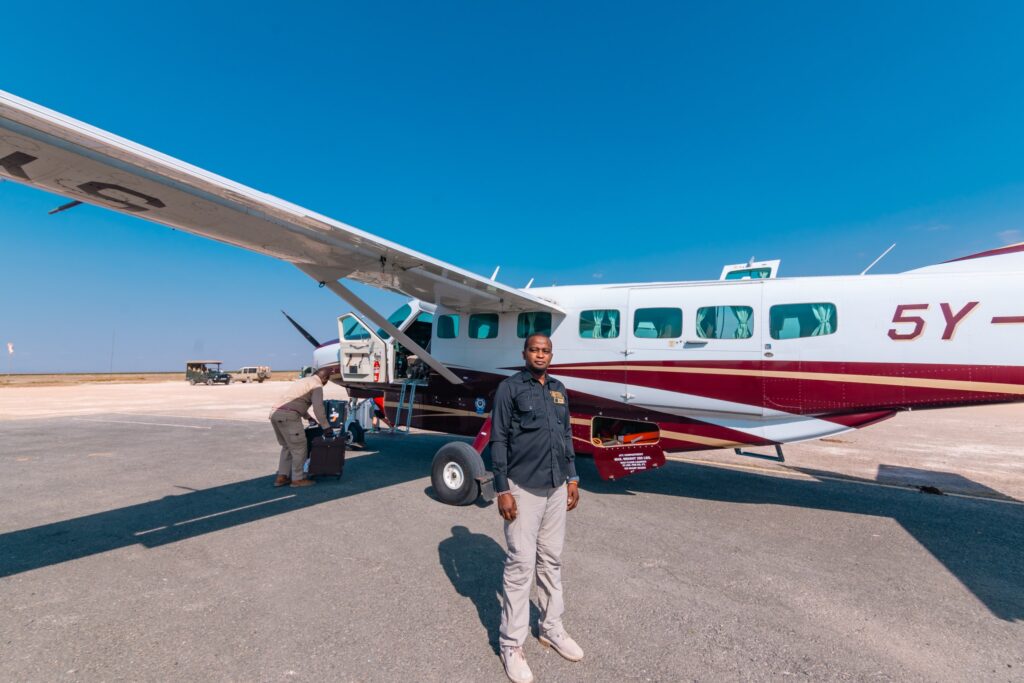
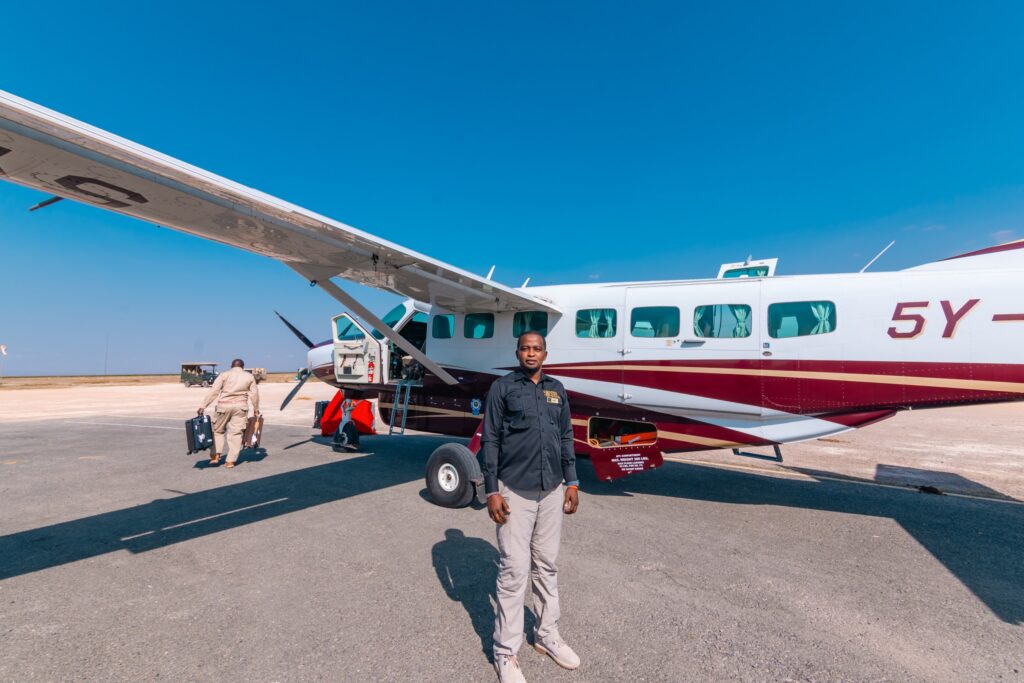
Afrikan Accent Adventures Founder Nick Wangithi standing next to a Cessna bush plane on an airstrip, welcoming guests to the speed and convenience of a road vs fly-in safari.
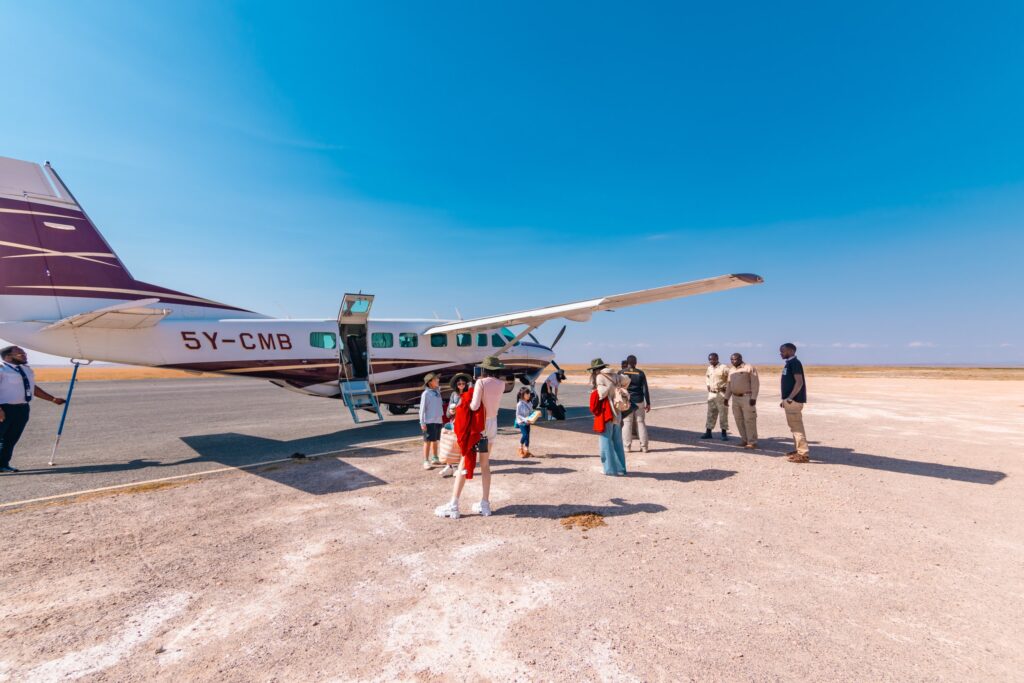
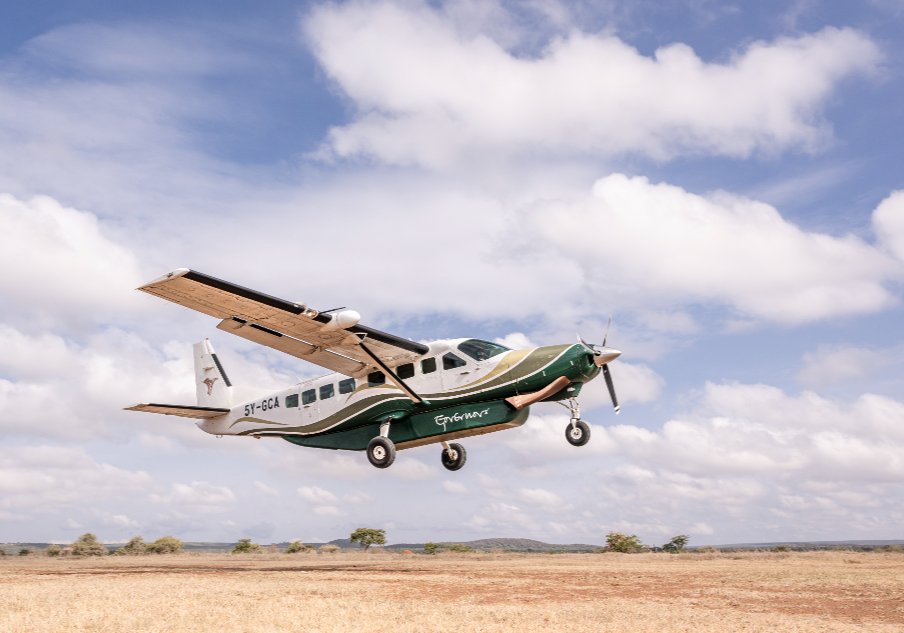
Wilson Airport. 6:15am. A Fly ALS Cessna Caravan sits on the apron catching the first light while a ground handler weighs soft duffel bags to the kilogram. Fifteen minutes later that plane is wheels up for the Masai Mara, and by 7am the pilot is banking over the Great Rift Valley escarpment with the plains already spread out below.
At the exact same hour, a different group is climbing into a Land Cruiser outside a Nairobi hotel for the drive to the Masai Mara. Their day looks completely different. Five to seven hours of tarmac, murram and the long descent past Narok, with a stop for lunch and a stretch of legs at Mai Mahiu. They will reach camp in time for a late afternoon game drive. The flying group will already be on their second game drive by then.
Both groups paid for a Kenya safari. One paid more for the same number of nights. The question we get asked constantly, by email, on the phone and in person at our Nairobi office, is whether that extra cost is actually worth it. It is the road vs fly in safari decision every guest faces before they book, and it deserves a straight answer rather than a sales pitch.
It depends entirely on the trip. A two night Masai Mara safari and a twelve night Kenya circuit answer the road vs fly-in question completely differently, and so does a family travelling with young children versus a photographer chasing dawn light over the plains. This guide breaks down the full range of Kenya safari transport options, sets out real 2026 cost ranges, real time differences and exactly who should fly, who should drive and who should do both.
| QUICK ANSWER | Is a Fly-In Safari Worth It in Kenya? |
| Yes, for safaris of five nights or fewer, for northern destinations like Samburu and Laikipia and for travellers with limited time. Flying recovers a full day of driving for roughly $150 to $350 more per person one way. For longer circuits or flexible budgets, driving remains excellent value. |
At a Glance:
- Flight time, Nairobi to Masai Mara: 45 to 60 minutes with Fly ALS from Wilson Airport
- Road time, Nairobi to Masai Mara: 5 to 7 hours via Narok or the Mai Mahiu route
- Domestic safari airline used: Fly ALS, operating scheduled flights from Wilson Airport
- Indicative one-way flight cost, 2026: $150 to $350 per person, route and aircraft dependent
- Road transfer cost: Typically bundled into the safari vehicle and guide day rate
- Light aircraft luggage allowance: Around 15kg per person in a soft-sided bag
- Best suited to flying: Samburu, Laikipia, short safaris, honeymoon itineraries
- Best suited to road: Masai Mara only trips, longer circuits, budget conscious travel
Kenya Flying Safari Cost in 2026
| QUICK ANSWER | How Much Does a Kenya Flying Safari Cost in 2026? |
| A one-way domestic flight in Kenya typically costs $150 to $350 per person, depending on the route, season and aircraft. This is transport only. Total fly-in safari cost also depends on your camp, season and trip length, which usually make up the larger share of the price. |
There is no single Kenya flying safari cost. The real Kenya fly-in safari cost 2026 travellers pay depends on the airstrip you are flying to, the season, whether you are on a scheduled flight or a private charter and whether the flight is bundled into your safari package or booked separately.
As an indicative 2026 range, a one-way scheduled flight from Wilson Airport to a Masai Mara airstrip such as Musiara, Ol Kiombo or Keekorok runs roughly $150 to $250 per person on carriers such as Fly ALS. Flights to Samburu, Loisaba or Lewa in the Laikipia region often sit closer to $200 to $300 given the longer routing north. Private charters cost significantly more, often $800 to $1,500 for the aircraft depending on group size and distance, though that cost is shared across everyone on board rather than charged per seat. Flying safari Kenya price also shifts with the season, climbing during the July to October migration months and the December holiday peak.
This is transport cost only. It sits separately from your accommodation and safari package cost, which is usually the larger line item on any quote. A camp charging $600 a night for a luxury tented suite does not change price because you flew in instead of driving. What changes is how many of your safari days you actually spend viewing game rather than sitting in a vehicle.
Why Luxury Fly-In Safaris Cost More Overall
Luxury fly-in safaris tend to cost more for a second reason beyond the flight itself. The camps positioned for fly-in guests, tucked inside private conservancies with their own airstrips, typically run smaller properties with a higher staff to guest ratio and exclusive traversing rights. You are not only paying for the flight. You are paying for the kind of camp that only makes sense to reach by air, and that camp carries its own premium regardless of how you arrive.
| EXPERT NOTE A camp does not cost more because you flew in. It costs more because it is the kind of camp built for people who fly in. We tell every guest that distinction upfront, because it changes how you should compare quotes. Kibara Mugo, Safari Writer & East Africa Specialist |
Road vs Fly-In Kenya Safari: Cost Comparison

Set side by side, a fly-in safari vs road safari Kenya comparison makes the trade-offs clear fast. Road safari Kenya cost stays low because transport is bundled into the vehicle and guide fee, while flying safari Kenya price adds a distinct line item per leg. Neither option is universally better. The right choice depends on what you are optimizing for on this particular trip.
| Factor | Road Safari | Fly-In Safari |
| Transport cost | Usually bundled into vehicle and guide fee | Adds $150 to $350 per person, per leg |
| Travel time, Nairobi to Mara | 5 to 7 hours each way | 45 to 60 minutes each way |
| Comfort | Good in a well maintained 4×4, tiring on long days | Minimal fatigue, short hop in a light aircraft |
| Luggage | Standard suitcases and camera bags accepted | Soft-sided bags only, around 15kg limit |
| Flexibility | Stop for photos, villages, viewpoints en route | Fixed schedule tied to flight times |
| Game-viewing time | Reduced on long transfer days | Maximized, especially on short safaris |
| Best type of traveller | First-timers, families with time, budget conscious guests | Time-limited, luxury, honeymoon and repeat travellers |
Nairobi to Masai Mara: Road vs Flight
| QUICK ANSWER | How Long Is the Flight from Nairobi to Masai Mara? |
| A Fly ALS flight from Wilson Airport to the Masai Mara takes 45 to 60 minutes. A road transfer covering the same route takes 5 to 7 hours depending on whether you travel via Narok or Mai Mahiu. |
Comparing Nairobi to Masai Mara by road vs flight is the single decision that shapes more Kenya safari budgets than any other. From Nairobi, the drive to the Masai Mara covers roughly 270 kilometres, but the road itself dictates the time. Via Narok the journey typically runs 5 to 6 hours. Via Mai Mahiu and the Rift Valley escarpment it can stretch to 6 or 7 hours depending on traffic leaving Nairobi and road conditions during the rains.
Flying from Wilson Airport with Fly ALS, the same route takes 45 to 60 minutes depending on which Mara airstrip you land at. That difference is not just a comfort upgrade. On a short safari it is the difference between arriving for lunch and a full afternoon game drive versus arriving late and losing that first day almost entirely.
For a 3-night Masai Mara safari, flying effectively recovers close to a full game-viewing day compared with driving both ways. For a 7-night or longer circuit that already includes multiple destinations, that recovered day matters proportionally less.
Featured Kenya Flying Safaris
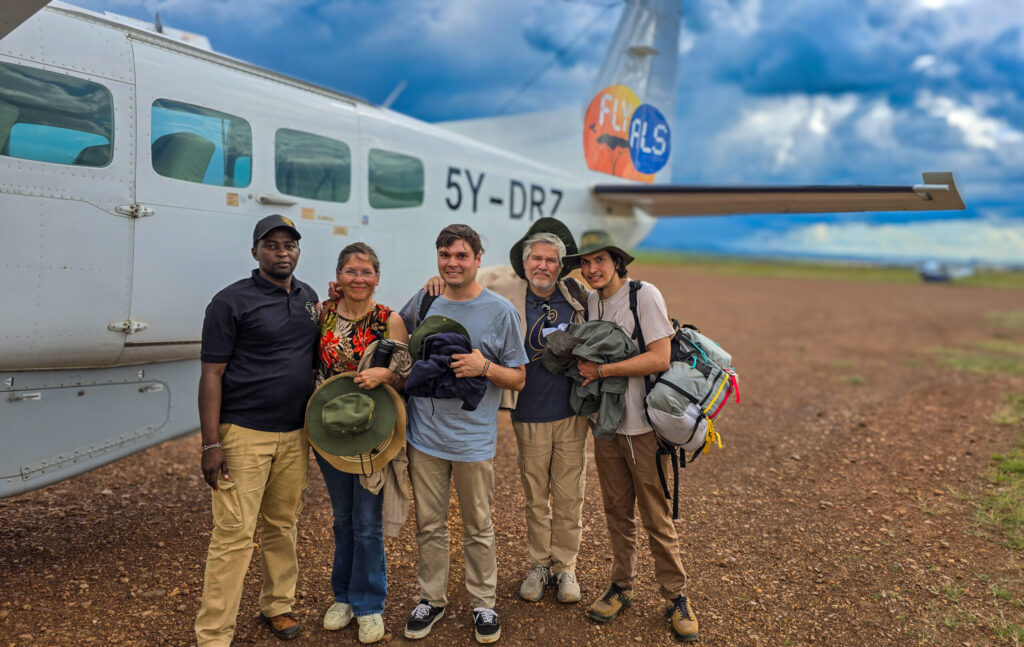
If the numbers above have you leaning towards flying, here are four of our flying safaris built specifically around the routes and airstrips discussed in this guide, including options popular with travellers searching for a luxury fly-in safari Kenya honeymooners and first-time visitors request most.
| 4 Days Flying Luxury Amboseli Safari | Kitirua Plains Lodge 4 Days / 3 Nights · from $2,800 per person sharing · Amboseli National Park A short, high-value fly-in safari to Kitirua Plains Lodge under Mount Kilimanjaro, ideal for travellers testing whether a fly-in trip suits their style before committing to a longer circuit. View this safari → |
| 3 Days Masai Mara Fly-In Safari | Mara Serena Safari Lodge 3 Days / 2 Nights · from $1,350 per person sharing Masai Mara Our clearest example of when flying earns its cost back. On a 2-night stay, the 45 to 60 minute flight protects almost the entire safari for game drives. View this safari → |
| 6 Days Kenya Flying Safari | Naivasha and Masai Mara 6 Days · from $2,490 per person sharing · Lake Naivasha and Masai Mara A drive in, fly out style itinerary that pairs the scenic Rift Valley route to Naivasha with a flight back from the Mara, giving you the best of both transport options in one trip. View this safari → |
| 6 Days Kenya Flying Luxury Safari | Amboseli and Masai Mara 6 Days / 5 Nights · from $5,050 per person sharing · Amboseli and Masai Mara A two-destination luxury fly-in circuit where flying is the clear upgrade, since driving between Amboseli and the Mara would consume a full day that adds nothing to the safari. View this safari → |
Browse our full collection of flying and road safaris →
Is a Fly-In Safari Worth the Extra Cost?
The honest answer changes with trip length and traveller type. Here is how we assess it for our own guests.
2-Night Safari
Fly. On a 2-night safari, a 5 to 7 hour drive each way can consume close to half your total time on the ground. The flight cost is easily justified by the game-viewing hours it protects.
3-Night Safari
Fly if budget allows. A short Kenya safari fly-in on this scale, often booked as a fly-in safari for 3 days Kenya travellers with tight schedules search for specifically, is the trip length where flying delivers the clearest return. You keep both full days for game drives and arrive relaxed rather than road weary.
4 to 5+ Night Safari
This is genuinely a toss-up. Driving in on day one and flying out at the end, or vice versa, often makes more sense than paying for return flights on a longer trip.
Honeymoon or Luxury Traveller
Fly. The comfort, privacy and unbroken romance of the trip matter more than the saving, and most luxury camps in remote conservancies are built around fly-in access regardless.
Family Safari
Fly if travelling with young children or elderly relatives. A long road transfer with restless kids in the back seat erodes the start of the holiday. For families with older, road-tolerant children, driving in one direction can be part of the adventure.
First-Time Safari Traveller
Either works well, but we usually recommend driving at least one leg. Seeing the Great Rift Valley, Maasai villages and the landscape change on the ground gives useful context that a flight simply skips over.
Photographer
Drive when time allows. The road offers genuine photo opportunities, including the Rift Valley viewpoint and roadside wildlife near the Masai Mara boundary. Fly only if your shooting schedule cannot absorb a lost transfer day.
Traveller With Limited Holiday Time
Fly, without much debate. If you have 5 to 7 total safari days, every hour spent on the road is an hour not spent watching game, and that trade rarely favours driving.
| QUICK ANSWER | Is a Fly-In Safari Worth It for a Short Trip? |
| Yes. On a 2 to 3 night Kenya safari, flying protects almost all of your limited time for game drives instead of road transfers. This is the trip length where the extra cost of flying delivers the clearest return. |
When a Road Safari Is Better
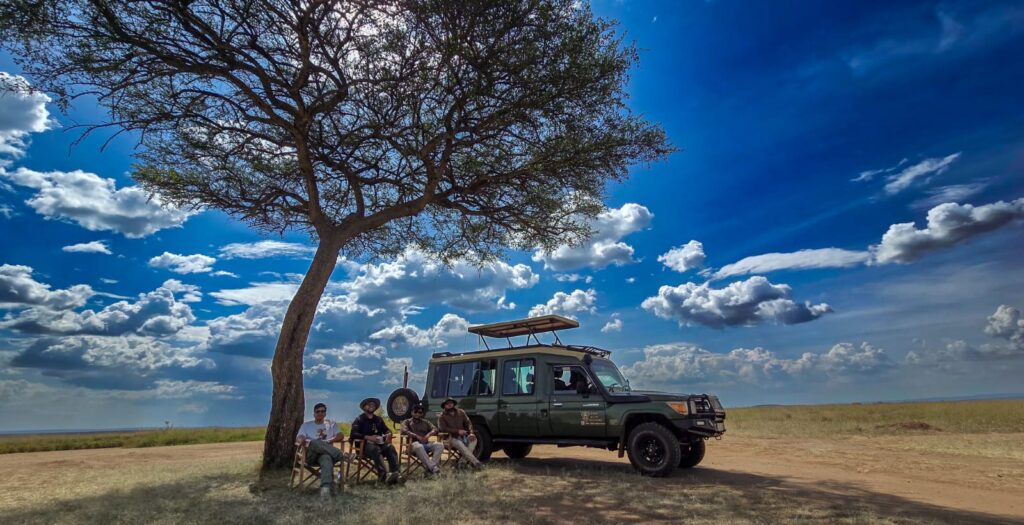
Road travel earns its place on longer, more flexible itineraries. If your Kenya safari runs 7 nights or more, spreads across several parks, or includes a Nairobi to Amboseli to Masai Mara circuit, driving lets your guide stop for photographs, detour to a Maasai village or simply adjust the plan on the day. Road transport also keeps costs down meaningfully across a multi-destination trip, since the vehicle and guide fee is already built into your safari package.
Road safaris also suit travellers who see the drive itself as part of the experience rather than an obstacle to it. The scenery between Nairobi and the Masai Mara, particularly the Rift Valley escarpment, is genuinely worth the time for guests who are not racing the clock.
When Flying Is the Better Upgrade
Flying earns its cost back through time and access rather than comfort alone. On short safaris, every recovered hour becomes a game drive. A flying safari into Samburu, Laikipia or other northern conservancies also opens up destinations that would otherwise cost an entire travel day each way by road.
Flying is the clearer upgrade whenever your itinerary combines distant regions in a single trip, for example a Masai Mara and Samburu combination, where driving between the two can eat a full day that contributes nothing to the safari experience.
The Best Compromise: Drive In, Fly Out
For many of our guests, the strongest value sits between the two extremes. Drive to the Masai Mara on arrival, when the novelty of the landscape and the Rift Valley views justify the time, then fly back to Nairobi with Fly ALS at the end of the safari to protect a same-day international connection or simply avoid a tired final transfer.
This approach also spreads the cost. You pay for one flight instead of two, keep one full scenic road day and remove the risk of a long drive on your final morning when guests are usually more focused on packing and flight connections than the view outside the window.
| EXPERT NOTE Drive in for the landscape. Fly out for the connection. It is the combination our repeat guests ask for most, and it is usually the best value structure on a 5 to 6 night Kenya safari. Kibara Mugo, Safari Writer & East Africa Specialist |
Hidden Costs and Things to Check
Before comparing quotes, confirm these details. They affect the real cost more than the headline flight price.
- Baggage restrictions: light aircraft typically cap luggage at 15kg per person in soft bags, with excess charged or left behind.
- Wilson Airport transfers: confirm whether transport from your Nairobi hotel to Wilson Airport is included or billed separately.
- Airstrip transfers: most camps include the short drive from the airstrip to camp, but always confirm this in writing.
- Flight schedules: Fly ALS and other scheduled operators run fixed departure times, which can affect your last morning game drive or first afternoon activity.
- Seasonal pricing: flight and camp rates rise during July to October and the December holiday period.
- Private vs shared flights: shared scheduled flights cost less per person but may include multiple stops before reaching your camp.
- Whether flights are included: always confirm if the quoted safari price already includes flights or lists them as an add-on.
Destination Examples
Masai Mara
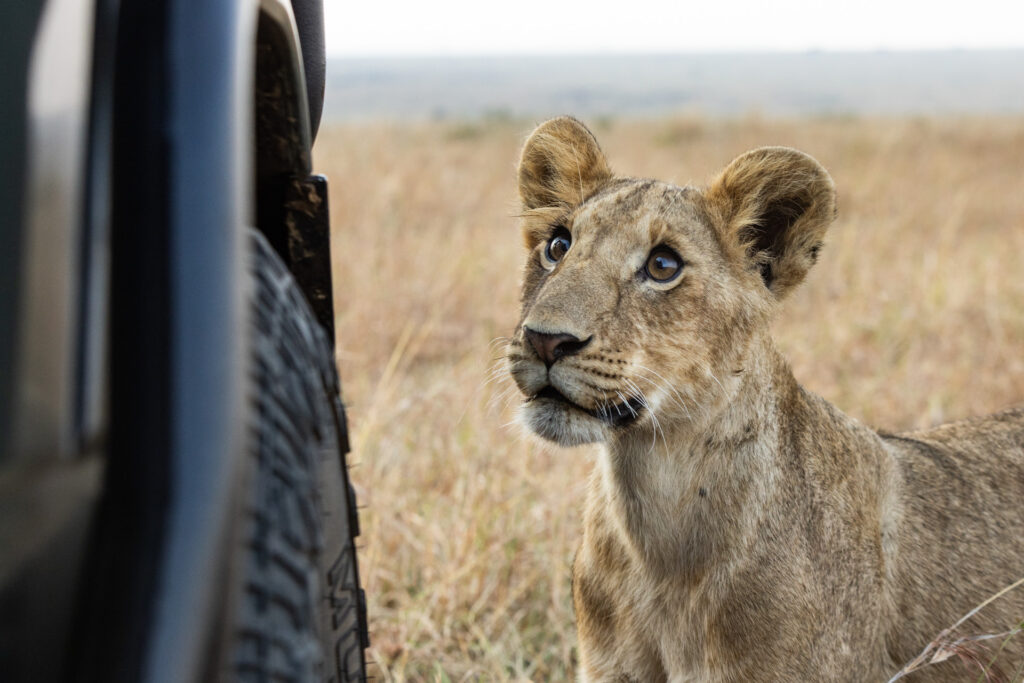
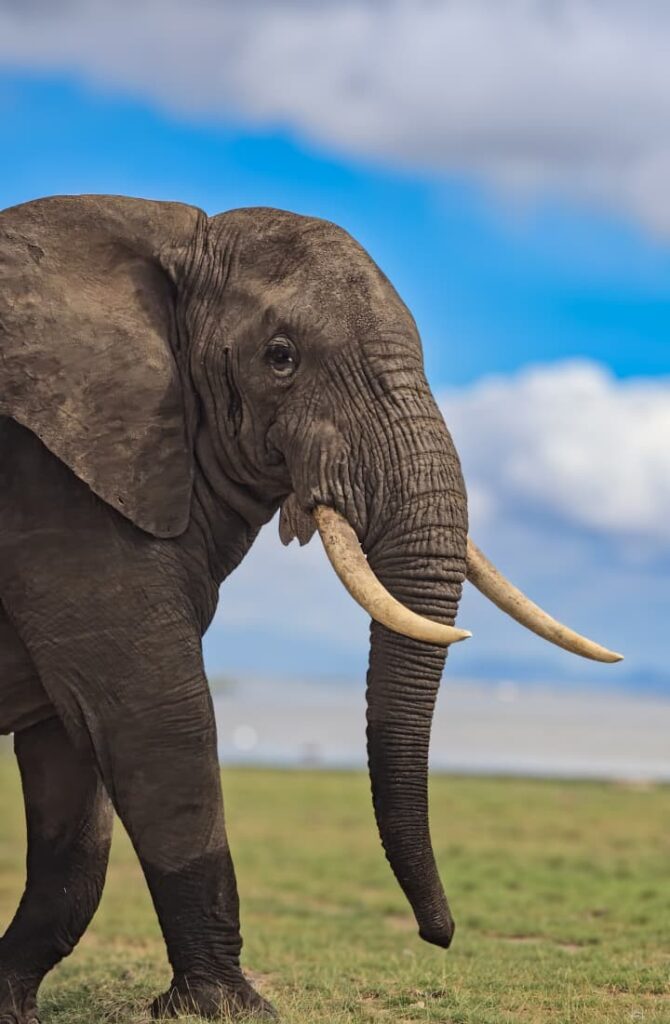
Both options work well. Road suits longer stays and budget travel. Flying suits short safaris and camps deep inside the Mara Triangle or northern conservancies like Mara North, where a long transfer would otherwise cut into game-viewing time. Masai Mara fly-in safari cost typically sits at the lower end of our national ranges, since it is the shortest and most frequently flown domestic route in Kenya. Fly ALS operates scheduled flights from Wilson Airport to several Mara airstrips.
Amboseli
Road is often the better choice. Amboseli sits roughly 4 hours from Nairobi, close enough that the drive rarely justifies the added flight cost unless combined with another distant park. Fly ALS also serves Amboseli directly for guests prioritizing time over budget.
Samburu
Flying is the stronger option. The drive north from Nairobi runs 5 to 6 hours through varied terrain, and most travellers combine Samburu with the Masai Mara, where flying between the two saves an entire day of road travel. Fly ALS runs scheduled Samburu routes.
Tsavo
Road works well, particularly for guests combining Tsavo with a coastal extension to Diani, since the park sits conveniently along the Nairobi to coast route. Fly ALS also connects Tsavo with its coastal destinations for guests short on time.
Laikipia
Flying is worth the upgrade. Laikipia conservancies reached via Loisaba, Lewa or Nanyuki, all served by Fly ALS, reward the extra cost with private access, rhino sanctuaries and walking safaris that road-only itineraries often skip due to time pressure.
How to Choose
| QUICK ANSWER | What Is the Cheapest Way to Safari in Kenya? |
| Road transport is the cheapest way to safari in Kenya, since the transfer cost is normally included in your safari vehicle and guide fee. Flying costs more but is worth it on short safaris and northern routes where it saves a full travel day. |
Work through three questions in order. First, how many total safari nights do you have. Under 5 nights generally favours flying. Second, which regions does your itinerary cover. Northern destinations like Samburu and Laikipia favour flying, while Masai Mara only or coast combination trips favour road. Third, what matters more on this trip, budget or time. If time is the constraint, fly. If budget is the constraint and your schedule allows it, drive.
We build most of our Kenya safari itineraries around this exact framework, mixing road and air within a single trip so guests pay for flights only where they genuinely change the experience.
Frequently Asked Questions
How much does a fly-in safari in Kenya cost?
A fly-in safari in Kenya adds roughly $150 to $350 per person for each one-way domestic flight, on top of your accommodation and park fees. The total varies by destination, aircraft and whether you fly shared or private charter.
Is flying to the Masai Mara worth it?
It is worth it on safaris of 5 nights or fewer, since flying recovers close to a full day of game viewing compared with the 5 to 7 hour road transfer. On longer circuits the time saved matters proportionally less.
Is it cheaper to drive or fly on a Kenya safari?
Driving is cheaper in almost every case, since road transport is typically bundled into your safari vehicle and guide fee while flights are billed separately. Flying costs more but buys back travel time.
How long is the flight from Nairobi to Masai Mara?
A Fly ALS flight from Wilson Airport to a Masai Mara airstrip takes 45 to 60 minutes, compared with a 5 to 7 hour road transfer covering the same route.
How much luggage can I take on a Kenya safari flight?
Most light aircraft operators cap luggage at around 15kg per person, packed in a soft-sided duffel bag rather than a hard suitcase. Excess weight is charged or left behind at Wilson Airport.
What is the cheapest way to get to Masai Mara?
Road transport is the cheapest way to reach the Masai Mara from Nairobi, since the transfer cost is usually included in your safari vehicle and guide fee rather than charged as a separate flight.
Can you fly into Kenya’s safari parks?
Yes. Kenya’s major parks and conservancies, including the Masai Mara, Amboseli, Samburu and Laikipia, all have airstrips served by scheduled domestic flights from Wilson Airport in Nairobi.
Is a fly-in safari better for a short trip?
Yes. On a 2 to 3 night safari, flying protects the majority of your limited time for actual game drives rather than road transfers, making the added cost easier to justify.
Which airline flies from Nairobi to the Masai Mara and Amboseli?
Fly ALS operates scheduled domestic flights from Wilson Airport to the Masai Mara, Amboseli, Samburu, Tsavo and the Laikipia region via Loisaba, Lewa and Nanyuki.
Do all safari camps offer fly-in access?
Most camps in the Masai Mara, Amboseli and Tsavo can be reached by either road or air, while many remote conservancy camps in Samburu and Laikipia are built specifically around fly-in access.
Plan Your Kenya Safari with Us

Whether your trip calls for a full flying safari circuit, a straightforward road safari or the drive in, fly out combination our guests ask for most, we plan every route around your actual time and budget rather than a fixed template. Our team, led by Hellen Asiko as Director and Guest Experience Curator, offers a free consultation to map out the right mix of road and air for your Kenya safari.
Explore our full range of flying and road safaris →
Talk to us before you book, and we will show you exactly where flying earns its cost and where the road already gets you there.
Let's plan your East African safari
Tell us when you'd love to travel and a local specialist will craft a tailor-made route around you.


