Kids on Kenya Safari: Real Age Limits, Camp Rules and Malaria Facts
Kenya’s parks don’t set a minimum age, but camps, balloon operators and mosquitoes do, and this is how we plan around all three for families.
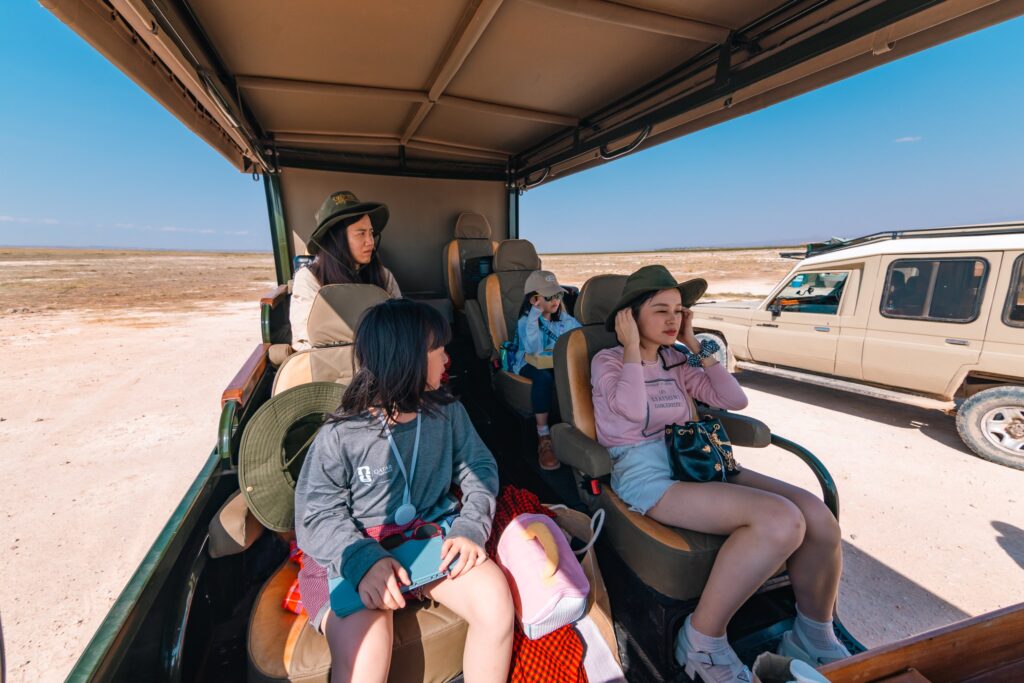
Family with kids on a Kenya safari sitting in a private 4x4 vehicle at a Masai Mara airstrip pickup, ready for a game drive after a fly-in safari.
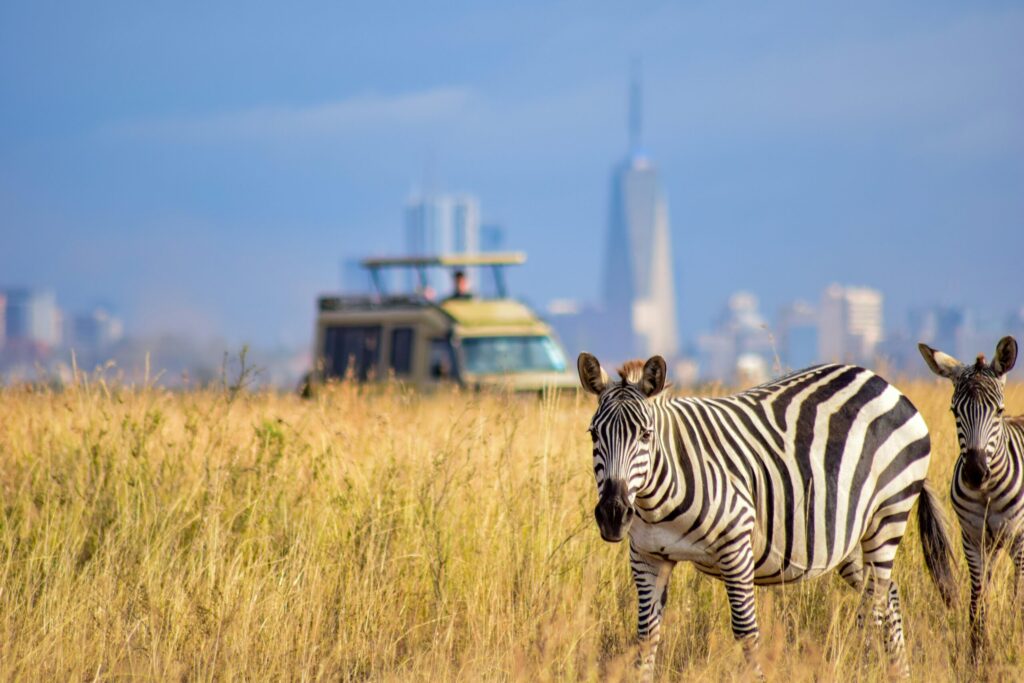
Kids on a Kenya safari are awake before the guide. Nairobi National Park Main Gate. 6:20am. The four-year-old in row two has been up since half past four and has views on that. Ninety minutes later a black rhino walks out of the long grass with the glass towers of the city standing behind it, and the whole vehicle goes quiet. The four-year-old included.
By 11:00 we’re at the rope at the Sheldrick Wildlife Trust. It’s the one hour a day, 11:00am to noon, when the public can watch orphaned elephant calves come in for their milk, and the youngest are rarely more than two metres from the visitors. Nobody at any of those stops asked how old the child was. Nobody does.
That’s the question we get every week. How young is too young? Kenya’s national parks don’t set an age. Camps do, and they don’t agree with each other. Balloon operators do. Walking safaris do. Malaria, the worry sitting under every one of these enquiries, ignores age altogether and follows altitude.
This guide does three things. It separates the age limits that are real from the ones that are folklore. It tells you where malaria tablets are still needed, which is almost everywhere you’ll want to go. And it says plainly where we’d take children and where we wouldn’t, including a head-to-head between a road safari and a fly-in for families. Some of it will contradict what you’ve read elsewhere.
| QUICK ANSWER | Can you take kids on a Kenya safari? Yes, kids of any age can go on a Kenya safari with the right camp and a private vehicle. Kenya’s parks set no minimum age. Camps, balloon operators and walking safaris do, from 5 to 12. Malaria risk applies below 2,500 metres, so plan tablets with your doctor. |
At a Glance:
- Operator: Afrikan Accent Adventures, a Nairobi-based, KATO-registered safari operator running private family departures for 2 to 6 guests.
- Minimum age: No national minimum for Kenya’s parks. Camps set 5 to 12 depending on the property and the activity.
- Malaria: The US CDC lists risk in all areas below 2,500 metres, game parks included. Central Nairobi is the exception, with rare cases only.
- Masai Mara fees for children (2026): Free for ages 8 and under. USD 50 a day for ages 9 to 17.
- Balloon safari: Governors’ Balloon Safaris takes children aged 8 and over who are taller than 1.2 metres.
- Entry paperwork: Every visitor including infants needs an approved Kenya eTA. A parent or guardian applies for each child.
- Easiest first step: Our Nairobi day trip from USD 295 per person, with no age limit at any of its three stops.
- Best months for families: June to October and January to March for dry-season game viewing. Late December costs more: our 11-day family safari is USD 3,120 per person for October departures and USD 4,115 for 23 December.
Minimum Ages for Kids on Kenya Safari by Activity and Camp
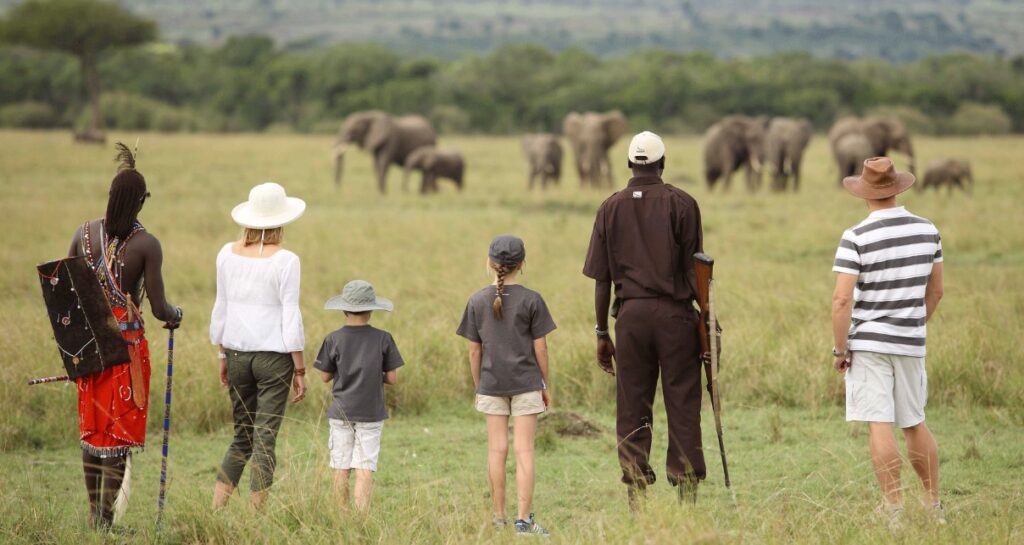
The gate is rarely the obstacle. The Masai Mara National Reserve, managed by Narok County, waives its entry fee for children aged 8 and under and charges USD 50 a day for ages 9 to 17 in 2026. The limits that actually bite sit one level down, with the camp you sleep in and the activity you book.
How Camps Set Their Own Age Limits
Every camp writes its own rulebook. Published policies we’ve seen include Naboisho Camp and Encounter Mara Camp welcoming children from 5, Mara Expedition Camp from 6 and Tipilikwani Mara Camp at any age. At least one well-known conservancy camp takes children from 2 but insists on a private vehicle for anyone under 6. Ultra-luxury camps that hold to 12 and over are built for quiet, not for families, and we’d skip them until your children qualify.
Our rule is simple. Get the age policy in writing before you pay a deposit.
Age Limits by Activity
The table shows what we see across Kenya’s family safari circuit. Treat the numbers as typical, not universal. Camps and operators change them and the final call often sits with the guide or camp manager on the day.
| Activity or setting | Typical minimum | What to know |
| Entering the Masai Mara National Reserve | None | Free for ages 8 and under. USD 50 a day for ages 9 to 17 in 2026. |
| Shared game drive at a camp | 5 to 8 | Varies by camp. A private vehicle removes most of the limit. |
| Private game drive | Any age | Your guide sets the pace. A pop-up roof suits small children. |
| Guided walking safari | 12 is common | Naboisho Camp bars under-12s from guided walks. The guide has the final say. |
| Night game drive | 8 to 12 at many conservancy camps | Allowed in private conservancies only. Not permitted inside the national reserve. |
| Hot air balloon safari | 8 and 1.2 metres tall at Governors’ Balloon Safaris | Some other operators publish lower ages. Confirm before you book. |
| Lake Naivasha boat ride | About 4 | Younger children by discussion with us at the planning stage. |
| Crescent Island walk | All ages | Flat ground and no predators on the island. |
| Hell’s Gate gorge walk | 8 and above | About 4 kilometres with some rock scrambling. Cycling the flat park road suits younger children. |
| Nairobi day trip stops | No age limit | Nairobi National Park, the Sheldrick Wildlife Trust and the Giraffe Centre. |
| QUICK ANSWER | What is the minimum age for a Kenya safari? Kenya’s parks set no minimum age for a safari, but camps and activities do. Many camps welcome children from 5 or 6 and some take toddlers. Guided walks often start at 12. Governors’ Balloon Safaris requires age 8 and a height of 1.2 metres. |
| EXPERT NOTE Send us every child’s age and height when you enquire. Ages decide which camps say yes and heights decide who can fly in a balloon. Both are cheaper to sort out at the quote stage than at an airstrip at 5:00am. Hellen Asiko, Director & Guest Experience Curator |
Kenya’s parks don’t set the age limit. The camp you sleep in and the activity you book do.
Malaria-Free Areas and When Pills Are Still Needed
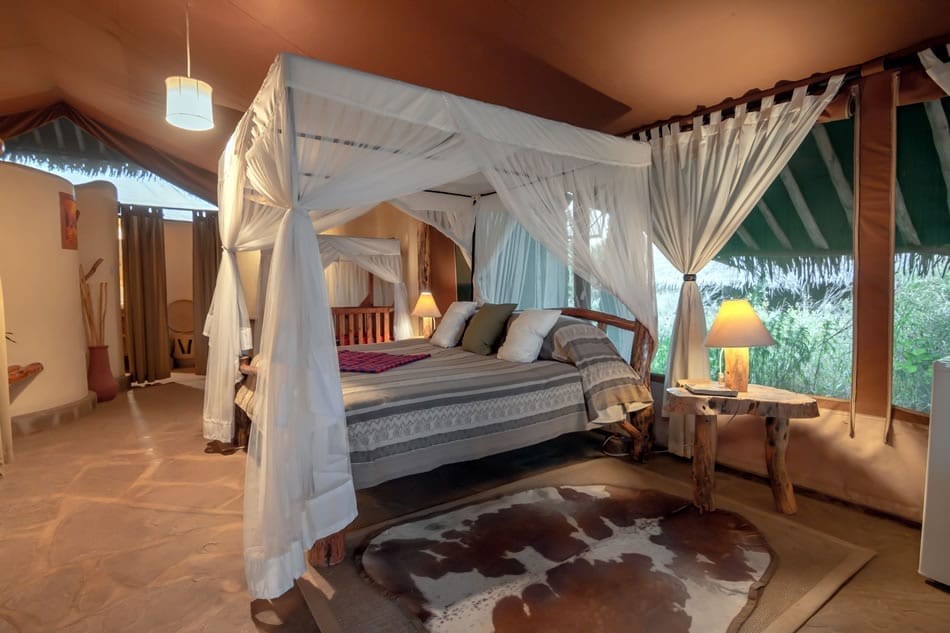
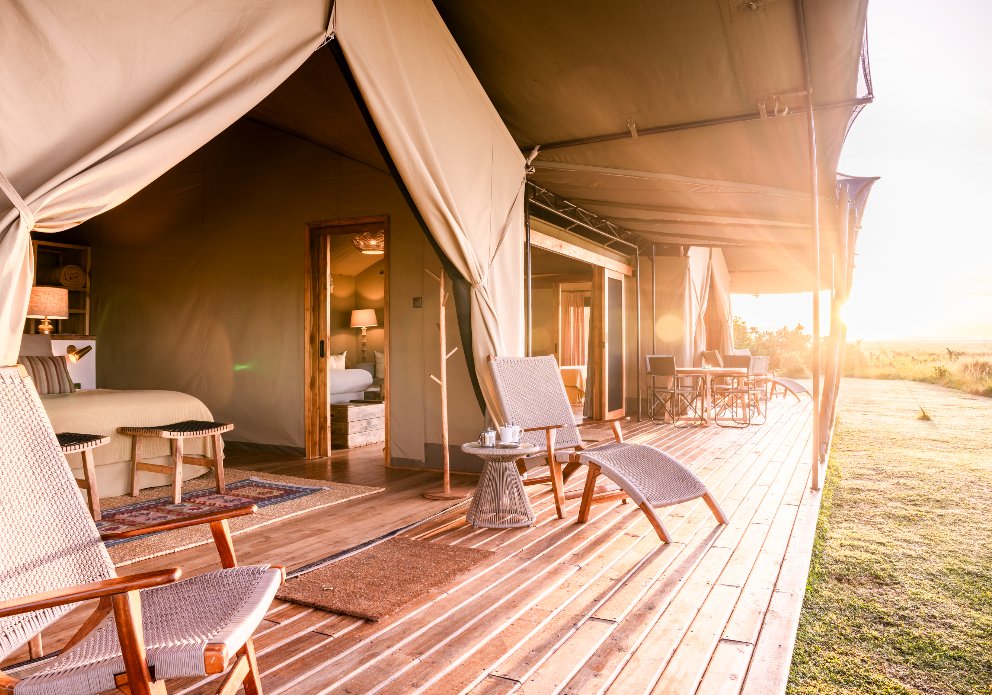
This is where we push back hardest on the internet. Search for a malaria-free family safari in Kenya and you’ll find lists of parks said to be pill-free. We don’t publish one, because the official guidance doesn’t support it.
| QUICK ANSWER | Are there malaria-free safari areas in Kenya? Almost none of Kenya’s safari areas are truly malaria-free. The US CDC lists malaria risk in all areas below 2,500 metres, including game parks. The exceptions are central Nairobi, where cases are rare, and highlands above 2,500 metres. Ask your doctor about tablets for every park below that height. |
What the Official Guidance Says
The US Centers for Disease Control and Prevention (CDC) lists malaria transmission in all areas of Kenya below 2,500 metres, game parks included. The one lower-risk exception it names is the highly urbanized central part of Nairobi, where cases are rare and it advises mosquito avoidance rather than tablets. That is the position in its April 2025 update.
Where That Leaves a Family Itinerary
Read the elevation line literally and almost every safari destination falls under it. The Masai Mara, Amboseli, Lake Nakuru, Lake Naivasha at 1,884 metres, Samburu and Ol Pejeta Conservancy all sit below 2,500 metres. So does the coast. Nairobi National Park sits on the city’s edge, outside the urbanized centre CDC singles out, so ask your doctor about it rather than assuming it’s exempt. Highlands above 2,500 metres, such as the upper Aberdares and the moorland on Mount Kenya, carry minimal risk. They aren’t where most families go on a first safari.
Malaria Tablets for Children
Your doctor or a travel clinic chooses the drug and the dose. We’re safari operators, not doctors. What we can tell you is what the guidance says. Atovaquone-proguanil is used for children weighing at least 5 kilograms and is dosed by weight. It starts one to two days before you enter a malaria area and continues for seven days after you leave. Doxycycline isn’t used in children under 8. Mefloquine is used in children too but carries its own precautions. Babies under 5 kilograms fall outside the atovaquone-proguanil guidance altogether, which is one reason we’d want a travel clinic’s view before a very small baby goes on safari.
The Rest of the Plan
Tablets are half of it. Use a repellent suited to your child’s age (check the label and ask your pharmacist), put long sleeves and trousers on at dusk and ask each camp about nets and tent screens. Mosquitoes are worst after rain, which in Kenya means the long rains from March to May and the short rains from October to December. If a child develops a fever in the weeks after you get home, tell the doctor you’ve been in a malaria area.
Ask your doctor whether a trial run of the tablets at home makes sense. A four-year-old who refuses the tablet is a home problem. At an airstrip it becomes a trip problem.
| EXPERT NOTE Nobody wants to plan a holiday around tablets. Plan it around whether your child will actually take them. Book the travel clinic appointment before you book the safari, because the answer can change the itinerary. Kibara Mugo, Safari Writer and East Africa Specialist |
Is Safari Safe for Children?
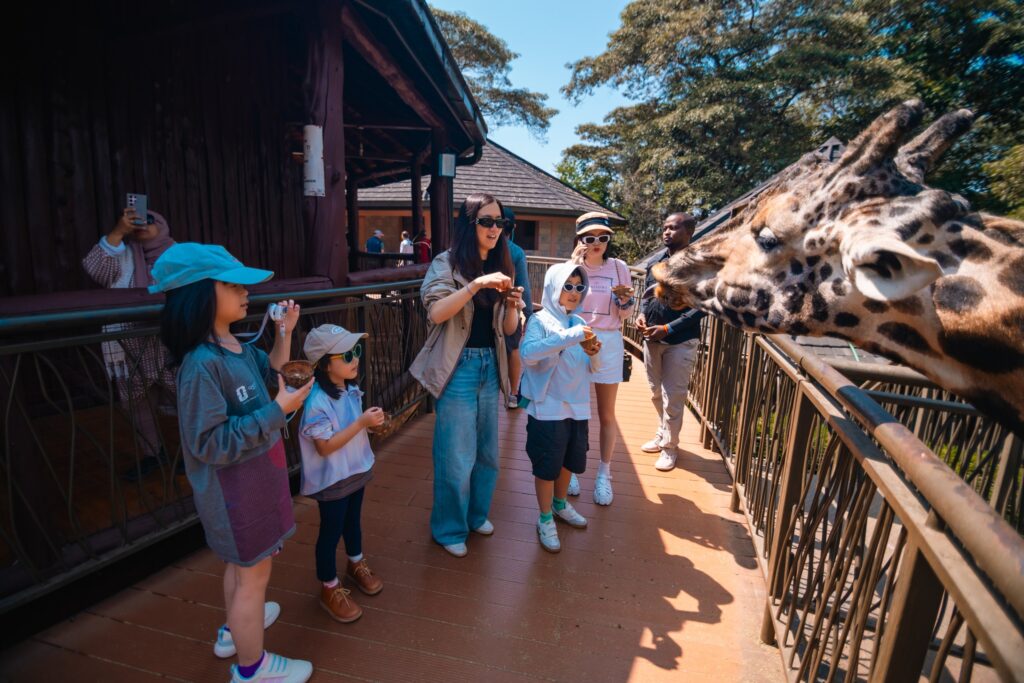
Yes, and the risks are more ordinary than parents expect. Lions are rarely the problem. Sun, sleep, mosquitoes and river edges are.
| QUICK ANSWER | Is Kenya safe for toddlers on safari? Yes, with planning. Toddlers are safest in a private vehicle with a pop-up roof, a camp that escorts guests after dark and a malaria plan approved by your doctor. The main risks are mosquitoes, sun and long drives. Skip shared open-sided vehicles until they sit still for hours. |
The Risks We Actually Manage
- Road time. Our Nairobi to Masai Mara road transfer covers roughly 225 to 270 kilometres and takes five to six hours each way. Seat belts stay on and we build in rest stops.
- Sun. Hats, sunscreen and a water bottle in every child’s hands. Open plains offer little shade.
- Mosquitoes. Covered in the malaria section above. Dusk and dawn are the danger times.
- River and camp edges. Mtito Safari Camp has hippos surfacing beside its dining deck. Royal Mara Safari Lodge raises its suites above the Mara River, where hippo, elephant and buffalo graze past the verandas after dark. That’s the appeal and the hazard. Children stay beside an adult and walk with a camp escort after dark.
- In the vehicle. Children sit down, keep hands inside and keep their voices low. Inside the reserve nobody leaves the vehicle except at designated spots.
- Medical distance. Remote camps are a long way from a hospital. Travel insurance is essential.
Our Line on Toddlers
Under 4, we’d keep the trip short and close to Nairobi. Do the Nairobi day trip, the Naivasha boat ride and Crescent Island, then add a short stay at one family-friendly lodge. Skip the six-destination circuits. A toddler will forgive a missed lion. A toddler won’t forgive the fourth five-hour drive.
Family Suites and Kid-Friendly Camps
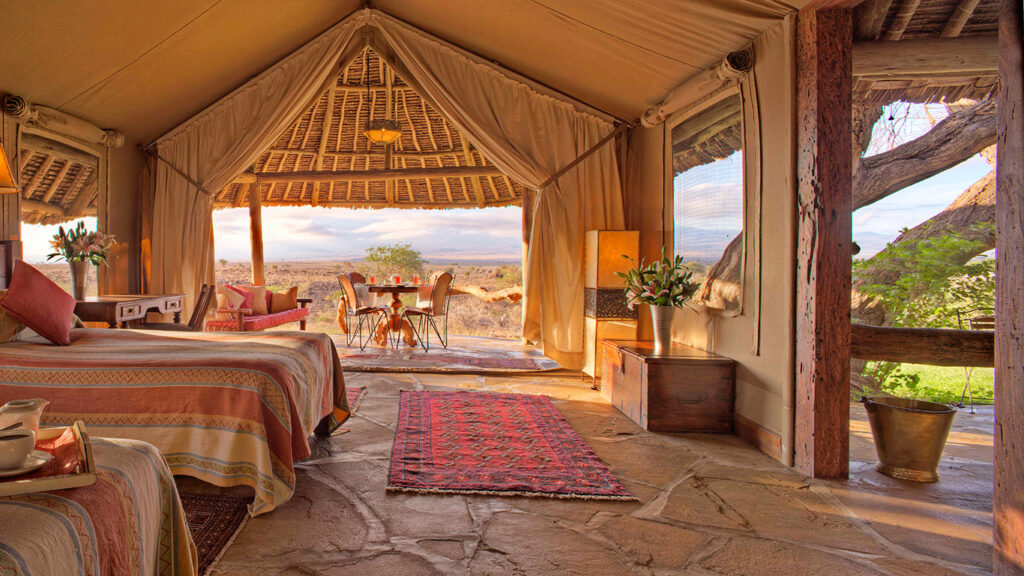
A family safari camp in Kenya earns the label with a tent layout that lets everyone sleep, a pool for the hours between drives and staff who don’t flinch at a nine-year-old with a torch. These are the properties we use and what sets each apart for a family.
Questions to Ask Before You Book
- Is there a family tent, or can two tents be booked side by side?
- What is the written minimum age for game drives, walks and night drives?
- How far is the tent from the main area, and is there an escort after dark?
- Is there a pool, and are there nets or screens in the tents?
Family Camps and Lodges We Use
Mtito Safari Camp, Masai Mara.
A Gold Eco-rated tented camp on the Talek River near Sekenani, with en-suite tents on private decks and a firepit. Our page for it says the camp suits families and asks that children’s ages are discussed when booking. Our 4-day road safari here is from USD 1,450 per person.
Royal Mara Safari Lodge, Mara North Conservancy.
Eight riverfront suites on mahogany decks above the Mara River. Listings show a 650 square foot river tent with a double and a twin bed, which suits two adults and one child. A family of four should ask about a second tent.
Kitirua Plains Lodge, Amboseli.
Our 4-day flying safari here, from USD 2,450 per person, features a family suite in the foothills setting beneath Kilimanjaro.
Sopa Lodges.
Amboseli Sopa Lodge has 83 en-suite rooms and cottages around a central pool. Masai Mara Sopa Lodge has 100 rooms on a hilltop with a pool and a dining terrace that looks out over the plains. Lake Nakuru Sopa Lodge sits on the escarpment rim above the lake. Big, predictable lodges suit families who want space, buffets and a pool.
Sweetwaters Serena Camp, Ol Pejeta Conservancy.
A tented camp around a waterhole in a 110,000-acre conservancy that is home to the last two northern white rhinos, Najin and Fatu, and a chimpanzee sanctuary.
Samburu Intrepids Camp.
Raised decks over the Ewaso Nyiro River, where elephants and crocodiles turn up on the banks. Our itinerary notes a children’s club with cultural and wildlife activities.
Mara Elatia Camp, Mara Triangle.
An intimate tented camp and the entry price to the Mara at USD 1,440 for four days.
Great Rift Valley Lodge and Golf Resort, Naivasha.
A slope-side resort with room to run and a pool, which is exactly what children need after a day of transfers.
Our opinion: under 8, choose the big lodges. Sopa and Serena forgive a bad night and a fussy eater. From 8 upward, move to a conservancy camp, where night drives and walks start to open up.
| EXPERT NOTE The best family camp isn’t the most expensive one. It’s the one where the tent is close to the dining area and the manager knows your children’s names by the second evening. We ask about both before we recommend a property. Hellen Asiko, Director & Guest Experience Curator |
Flexible Game-Drive Timing for Young Children
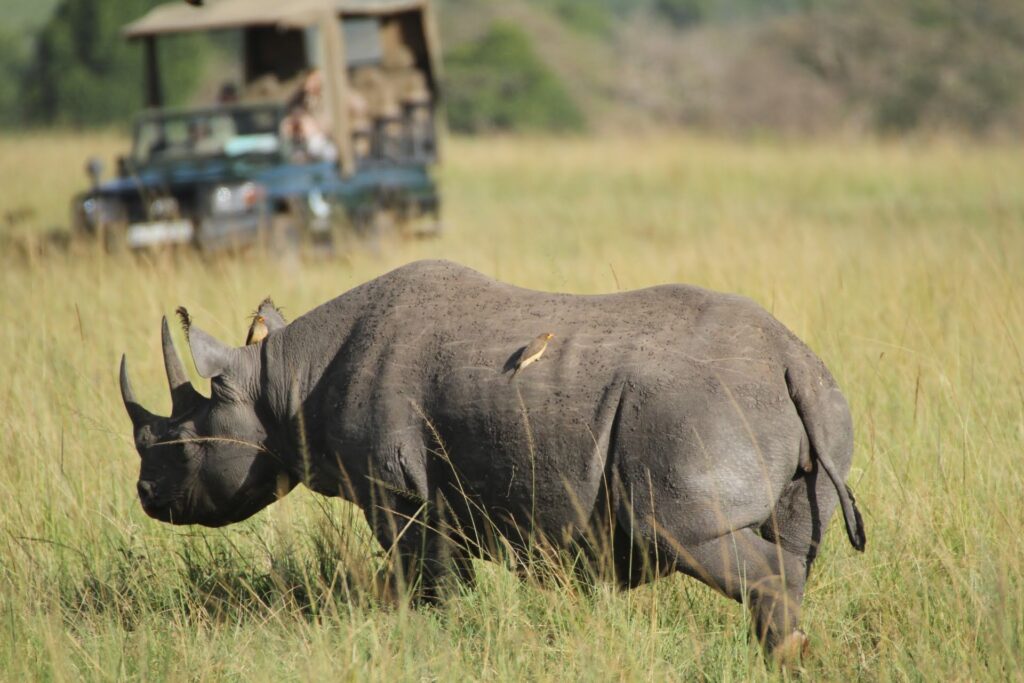
Timing is the single biggest lever you have. Our game drives run two to four hours a session on the Masai Mara road safari and two to five on the family circuit, and a private vehicle lets the guide shorten any of them when a child has had enough.
The Split-Day Pattern
Out at first light, back for a long lunch and a swim, out again around four. It matches when animals move and when small children fall apart. The early drive is the best of the day anyway. Our Nairobi National Park drive starts at 6:00am.
Where We Bend the Rules
- Cap it at two drives a day. Reserve the full-day picnic drive for children aged 8 and over.
- Stop where a child asks. A private vehicle can pull over for a dung beetle. A shared one can’t.
- Stay two nights, not one. Our 11-day family safari has several one-night stops at Ol Pejeta, Lake Nakuru and Naivasha. With under-8s we’d stretch the trip rather than repack a bag every morning.
- Build stops into transfers. Road legs run two to six hours. Plan a snack and a leg stretch every hour and a half.
The only fixed points are the Sheldrick Wildlife Trust window at 11:00am and any dawn balloon flight. Everything else bends to the child.
A toddler will forgive a missed lion. A toddler won’t forgive the fourth five-hour drive.
| EXPERT NOTE Children don’t get tired of animals. They get tired of sitting. We plan the day around the child’s energy rather than the guide’s habit: out at first light, back for lunch and a rest, out again in the afternoon. If a child wants to stop and watch a dung beetle, we stop. Nicholas Wangithi, Director & Founder |
What to Pack Specifically for Kids
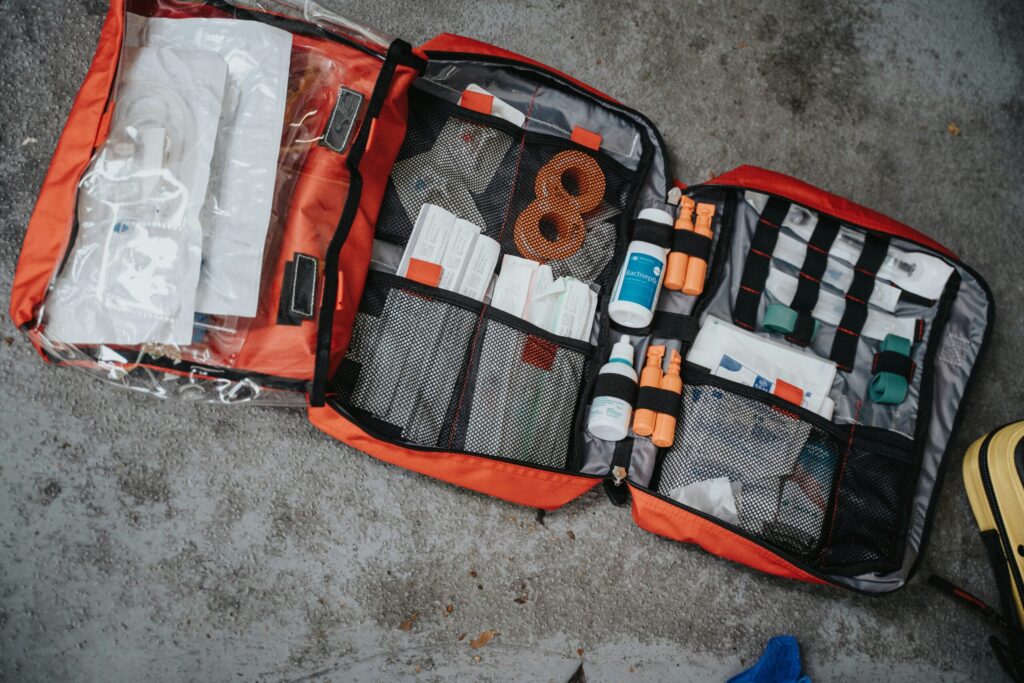
Our general list is in What to Pack for an African Safari. This is the child-specific layer that goes on top.
Health
- Malaria tablets in your carry-on with the doctor’s dosing written down.
- Insect repellent suited to your child’s age. Check the label and ask your pharmacist, because oil of lemon eucalyptus is not for children under 3.
- Sunscreen, lip balm and oral rehydration sachets.
- Child-safe pain and fever relief as your doctor advises, plus plasters and antiseptic wipes.
- A motion sickness remedy. The Rift Valley descent and the Narok road are winding.
Clothes
- Neutral khaki, green and brown. Pack light layers.
- Hats with chin straps, because open plains and a pop-up roof mean wind.
- Long sleeves and trousers for dusk and a fleece or jacket for cool mornings.
- Closed shoes for game drives and swimwear for lodge pools.
In the Vehicle and at Camp
- Child-size binoculars and a notebook with an animal checklist.
- Snacks, a refillable water bottle and wet wipes.
- Tablet shows downloaded offline for the long transfer days.
- A head torch, a bedtime toy and a Type G plug adapter.
- Soft-sided bags if you’re flying in, because light aircraft don’t take hard suitcases. Confirm weight limits when you get your quote.
- Formula and nappies for the whole trip if you have a baby. Remote camps don’t stock them.
Where Is the Best Place to Take Kids on a Safari?
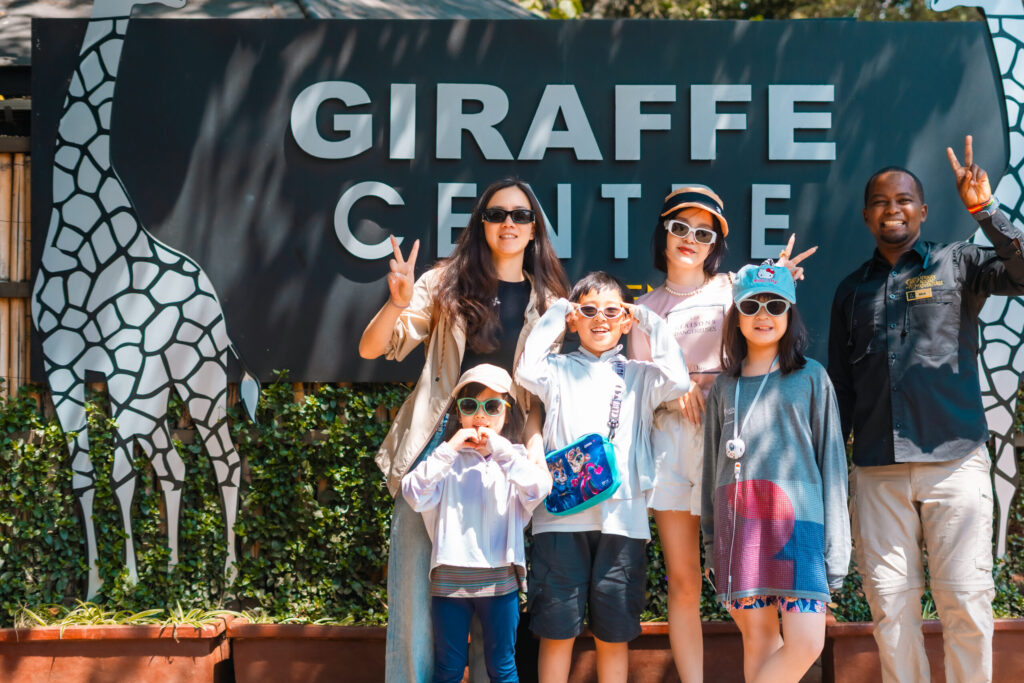
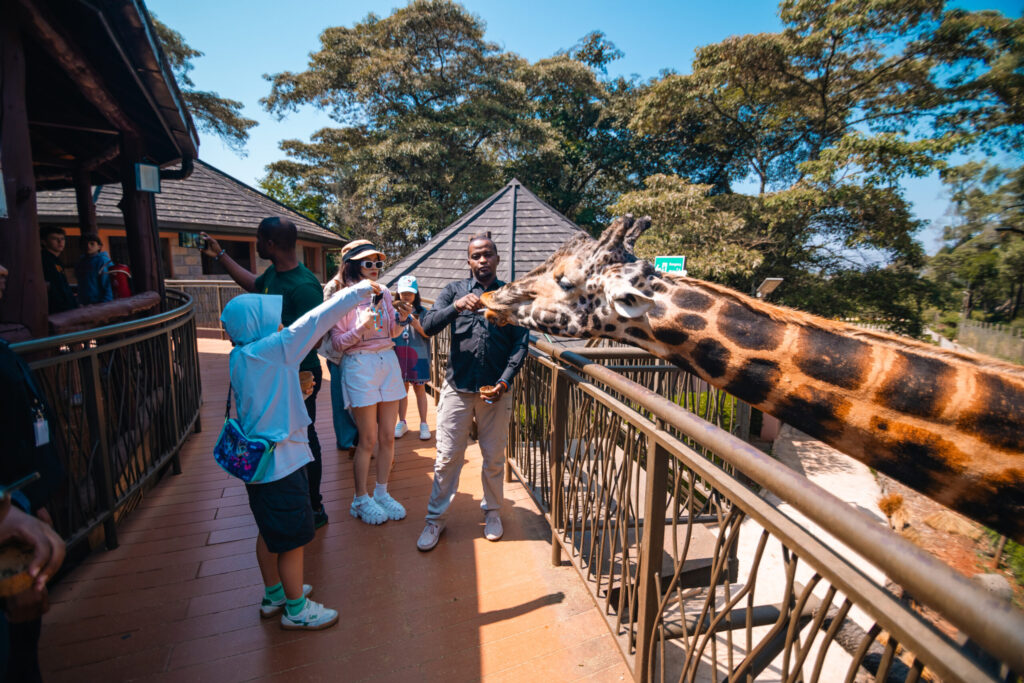
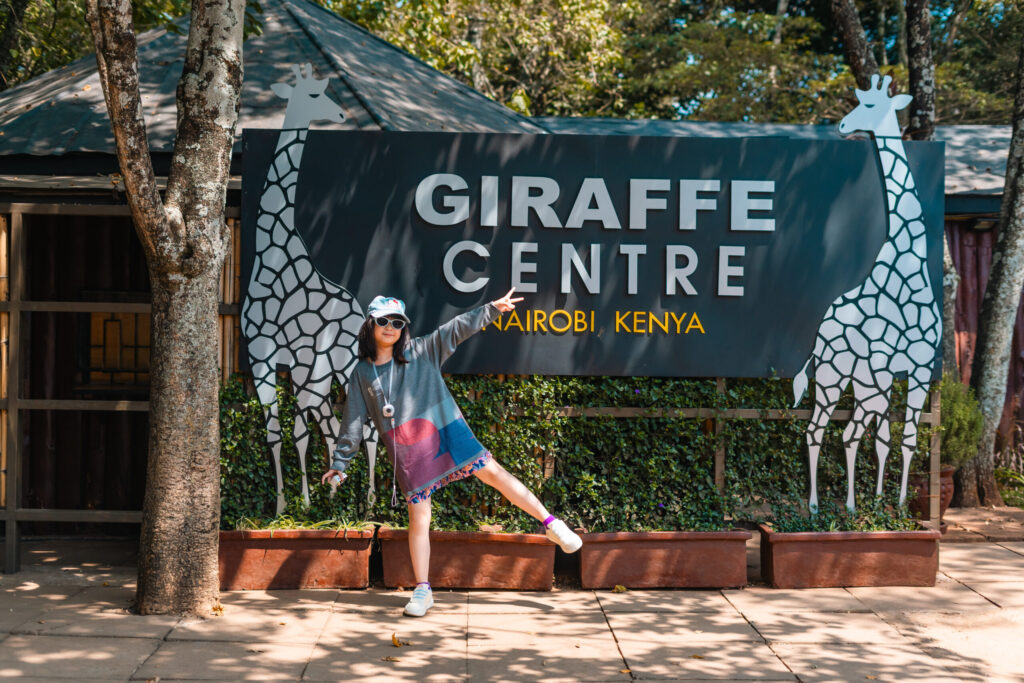
It depends on their age more than on the park. Here’s how we’d match them.
Under 5: Nairobi and Naivasha.
Nairobi National Park, the Sheldrick Wildlife Trust and the Giraffe Centre need no age limit and no overnight. Lake Naivasha’s boat ride starts at about 4 and Crescent Island has no predators. Add one short stay at a family lodge.
5 to 8: Amboseli and Lake Nakuru.
Amboseli is flat and open, so small eyes find elephants easily against Kilimanjaro. Lake Nakuru is compact, with rhino, Rothschild’s giraffe and flamingos, though flamingo numbers vary with the water levels.
8 to 12: Masai Mara and Ol Pejeta.
Big cats, river crossings from July to October and, at Ol Pejeta, the rhino sanctuary and a chimpanzee sanctuary. This is also when balloons and guided walks start to open up.
Teenagers: Samburu and the conservancies.
The Samburu Special Five, night drives and walking safaris suit teenagers who want more than sitting in a vehicle.
If you have one park only, make it Amboseli for children under 8 and the Masai Mara for children over 8.
Where to Go With Kids in Kenya Beyond the Parks
Nairobi
The capital is the gentlest start and we cover it in full below. It is also the only place on this list where a child can meet a wild black rhino, an orphaned elephant and a giraffe in one morning.
Lake Naivasha and Hell’s Gate
Our Naivasha day trip is about 90 kilometres from Nairobi and runs from a 6:30am pickup to roughly 7:00pm. It combines a hippo boat ride, a walk among giraffe and zebra on Crescent Island and, in Hell’s Gate National Park, cycling among zebra and a gorge walk past Fischer’s Tower. Hell’s Gate has no lions, leopards or elephants, so it’s one of the few Kenyan parks where families can cycle. The gorge walk suits 8 and above.
The Coast
Diani Beach is the extension families ask for once the game drives are done. The same malaria rule applies at the coast, so keep the tablets going and finish the course after you leave.
Fly-In Safari vs Private Road Safari: Which Is Better With Kids?
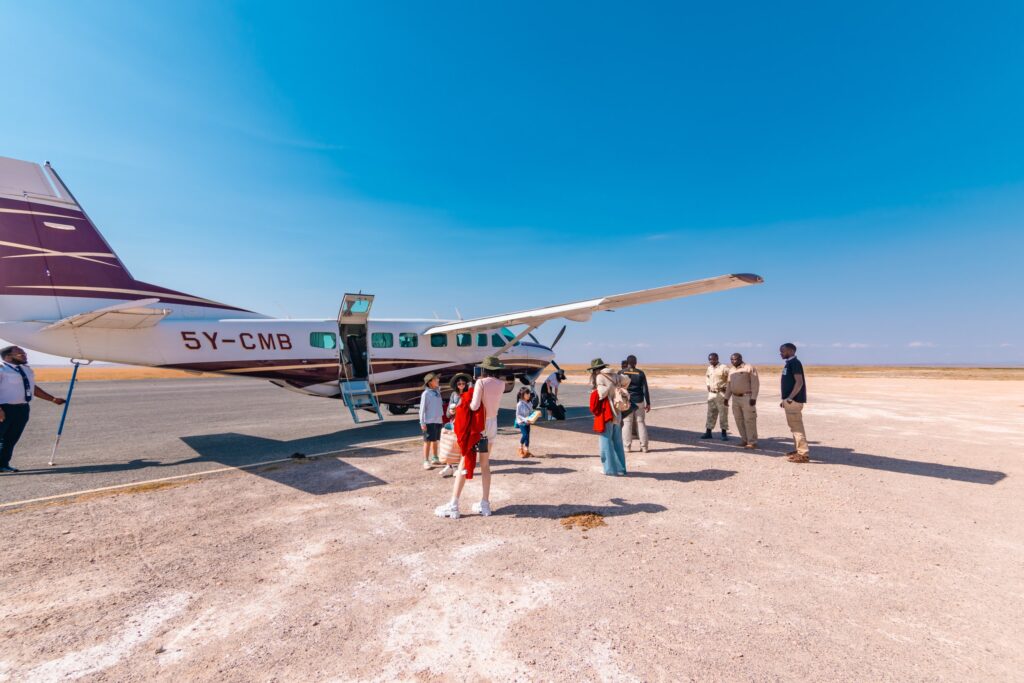
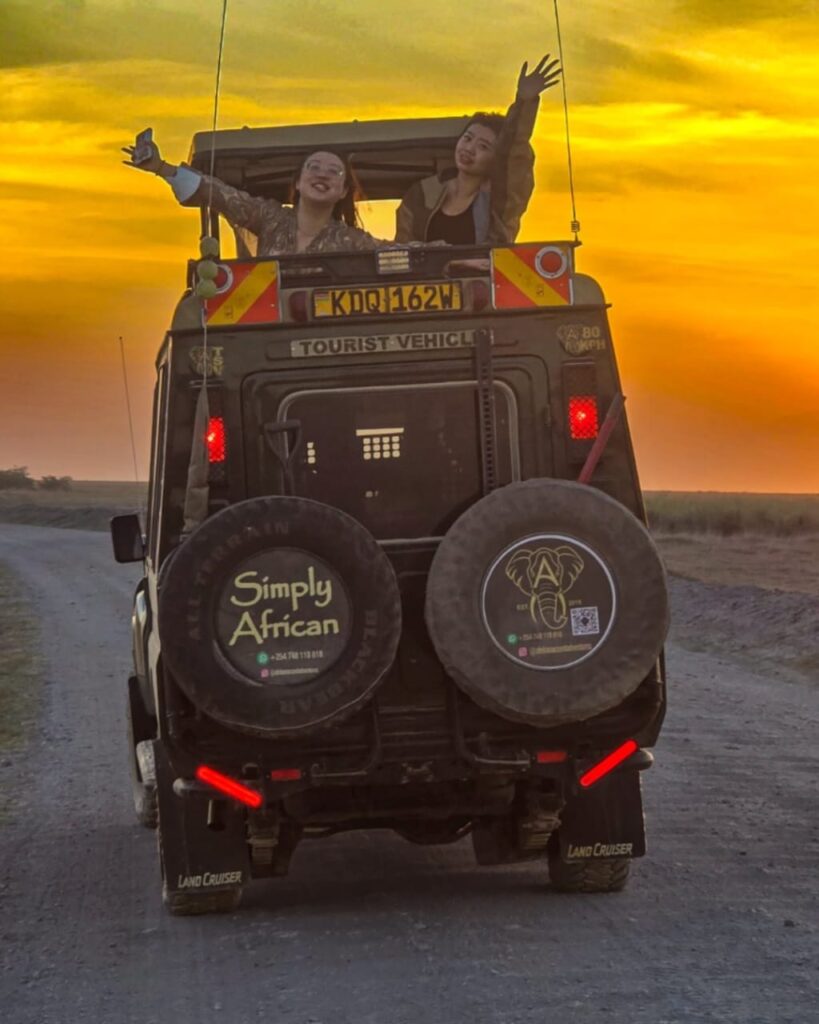
We compared two of our own Masai Mara packages that look similar on paper and behave very differently with children.
- The 4 Days Masai Mara Road Safari at Mtito Safari Camp drives.
- The 5 Days Masai Mara Flying Safari in Mara North Conservancy at Royal Mara Safari Lodge flies.
| Factor | Road: Mtito Safari Camp | Fly-in: Royal Mara Safari Lodge |
| Length | 4 days, 3 nights | 5 days, 4 nights |
| From price per person | USD 1,450 | USD 3,300 |
| Group size | Private, 4 to 6 guests | Private, 2 to 6 guests |
| Getting there | 225 to 270 kilometres by 4×4 through the Rift Valley and Narok. Five to six hours each way. | Scheduled light aircraft from Wilson Airport in about 45 minutes, then a 10-minute road transfer. |
| Where you game drive | The Masai Mara National Reserve. Two full days of drives, with the Sekenani area close to the camp. | Three nights in Mara North Conservancy and one full day in the reserve. |
| Extras | Optional balloon safari and Maasai village visit. | Night game drive, guided walking safari and a Maasai village visit built in. Balloon optional. |
| Camp setting | Gold Eco-rated tented camp on the Talek River. Hippos beside the dining deck. | Eight riverfront suites over the Mara River at Hippo Bend Lagoon. |
| Meals and fees | Full board. Park entry fees included. | All-inclusive with house drinks and laundry. Conservancy and reserve fees included. |
| Best for | Ages 5 and up, tighter budgets, families who like the drive | Under-6s, short trips, families who value time above cost |
The price gap is USD 1,850 per person. That buys back roughly ten to twelve hours of round-trip driving and a full extra day of game viewing. It also buys the conservancy’s headline perks: off-road driving, night drives and walks.
Here’s the catch. Those perks come with age limits, and for a child under 8 or so the night drive and the walk may be off the table. Royal Mara’s own child policy is one to confirm before you pay. So the fly-in solves the hard part for a toddler and wastes some of the money on a small child.
Our verdict. Under 6 with a short trip, fly. From 6 to 12, drive and spend the difference on a second destination. From 12 upward, fly and take the night drives.
The fly-in solves the hard part for a toddler. For a seven-year-old it buys perks they may not be old enough to use.
Where to Take Kids for Fun in Nairobi on a Budget
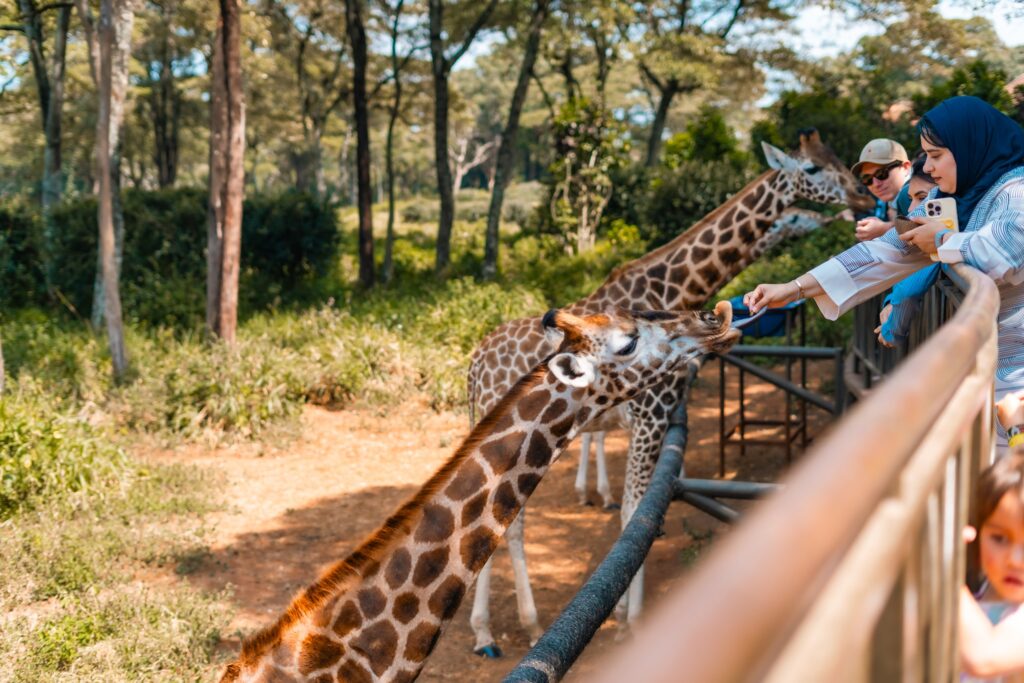
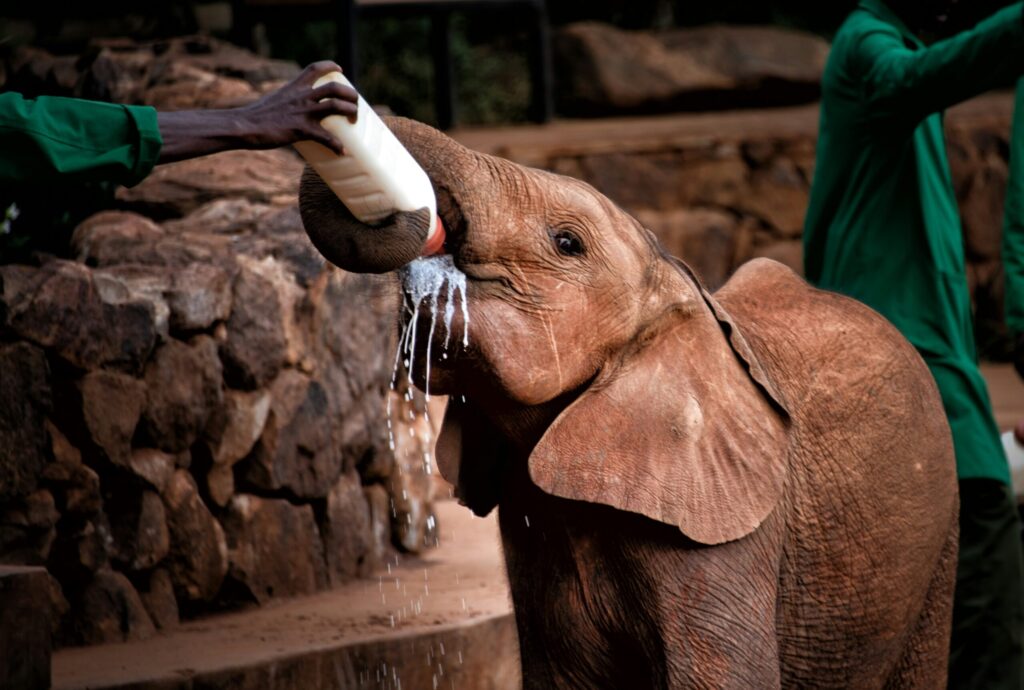
Nairobi is the cheapest wildlife day a family can buy in Kenya, because nobody needs a flight, a lodge or a park permit for a night. Our Nairobi Day Trip: National Park, Sheldrick Elephant Orphanage and Giraffe Centre is from USD 295 per person for a private 4×4 with a pop-up roof, a driver-guide and all three entry fees.
How the Morning Runs
- 6:00am. Hotel pickup. Through the park’s Main Gate on Langata Road before 6:30am.
- Three to four hours in Nairobi National Park. Lions, black rhino, buffalo, giraffe and more than 400 bird species. There are no elephants here, which is what the next stop is for.
- 11:00am to noon. Sheldrick Wildlife Trust, where keepers feed orphaned calves from oversized bottles. The Trust reports more than 270 orphans raised and reintegrated since 1987.
- Giraffe Centre, 30 to 45 minutes. Children hand-feed Rothschild’s giraffe from a raised platform. The tongue is about 45 centimetres long.
- Early afternoon. Drop-off at your hotel or at Jomo Kenyatta International Airport, so it works on a departure day for flights from about 4:00pm.
There are no age limits at any of the three stops. It is the trip we recommend for every family, including ones with toddlers.
Sample Family Itinerary: Four Packages Compared
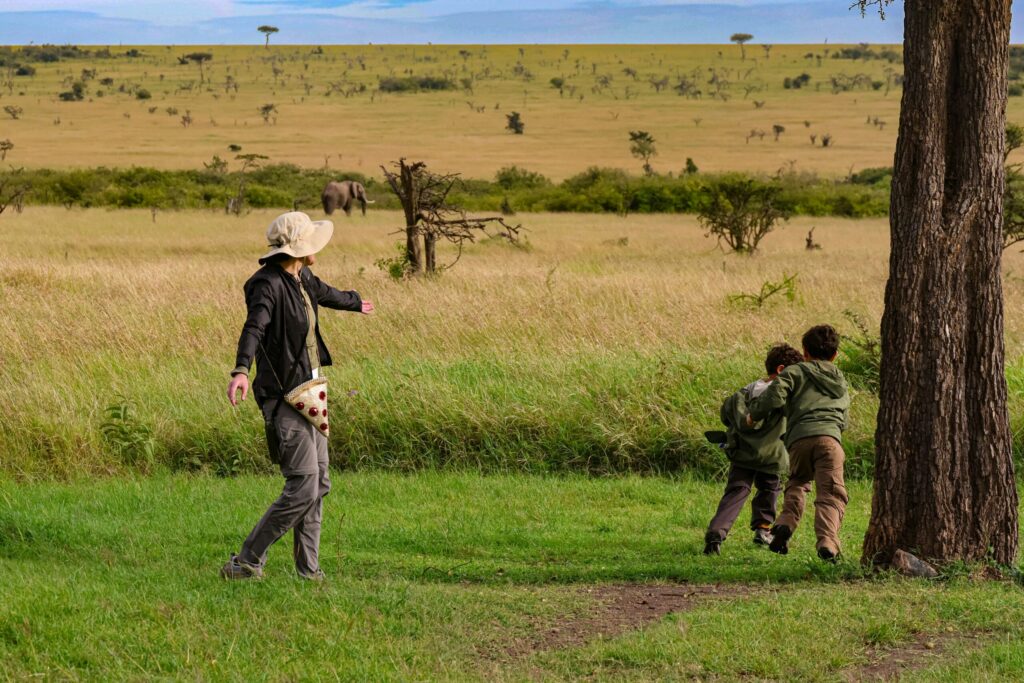
These four packages are the building blocks we use for families. The table shows what makes each one different, what children actually do and where they sleep.
| Package | Length and price | What makes it unique | Kid activities | Camps and what sets them apart |
| Nairobi Day Trip | 1 day From USD 295 pp | A city-skyline rhino drive, the 11:00am orphan elephant feed and giraffe feeding, done by early afternoon. No age limits. | Rhino spotting, calf feeding hour, giraffe platform | No overnight. Hotel pickup at 6:00am. |
| Lake Naivasha Day Trip | 1 day From USD 215 pp | A freshwater lake, a predator-free island and a park where families cycle among zebra. | Hippo boat ride, Crescent Island walk, cycling, gorge walk for 8+, optional hot springs | No overnight. Pickup at 6:30am and back around 7:00pm. |
| 11 Days Kenya Family Safari | 11 days, 10 nights From USD 3,120 pp | Six ecosystems by road with one private 4×4 and one guide throughout. Samburu, Ol Pejeta, Nakuru, Masai Mara, Naivasha and Amboseli. | Samburu Special Five, northern white rhinos, Naivasha boat ride and Crescent Island walk included. Optional camel ride, astronomy with Samburu elders and balloon. | Samburu Intrepids (2 nights): river decks. Sweetwaters Serena (1): waterhole. Lake Nakuru Sopa (1): escarpment views. Mara Elatia (3): intimate camp. Great Rift Valley Lodge (1): lakeside slopes. Praro Amboseli (2): Kilimanjaro foothills. |
| 6-Day Kenya Safari: Amboseli, Lake Nakuru and Masai Mara | 6 days, 5 nights From USD 1,670 pp | Routed to avoid backtracking, with three big full-service Sopa lodges and three iconic parks in five nights. | Kilimanjaro and elephant photographs at dawn, flamingos and rhino at Nakuru, a full Mara day | Amboseli Sopa (2 nights): 83 rooms around a pool. Lake Nakuru Sopa (1): crater-rim views. Masai Mara Sopa (2): hilltop lodge with 100 rooms. |
Three Ways to Combine Them
- Under 6, eight days. Nairobi day trip on Day 1, a rest day on Day 2, then the 6-day Sopa safari. Three big lodges with pools beat six different camps.
- Ages 8 and up, eight days. Nairobi on Day 1, Naivasha on Day 2 and the Sopa circuit for Days 3 to 8.
- Ages 8 and up, eleven days. The 11 Days Kenya Family Safari for families who want six ecosystems in one trip.
Opt for a Private Family Safari in Kenya

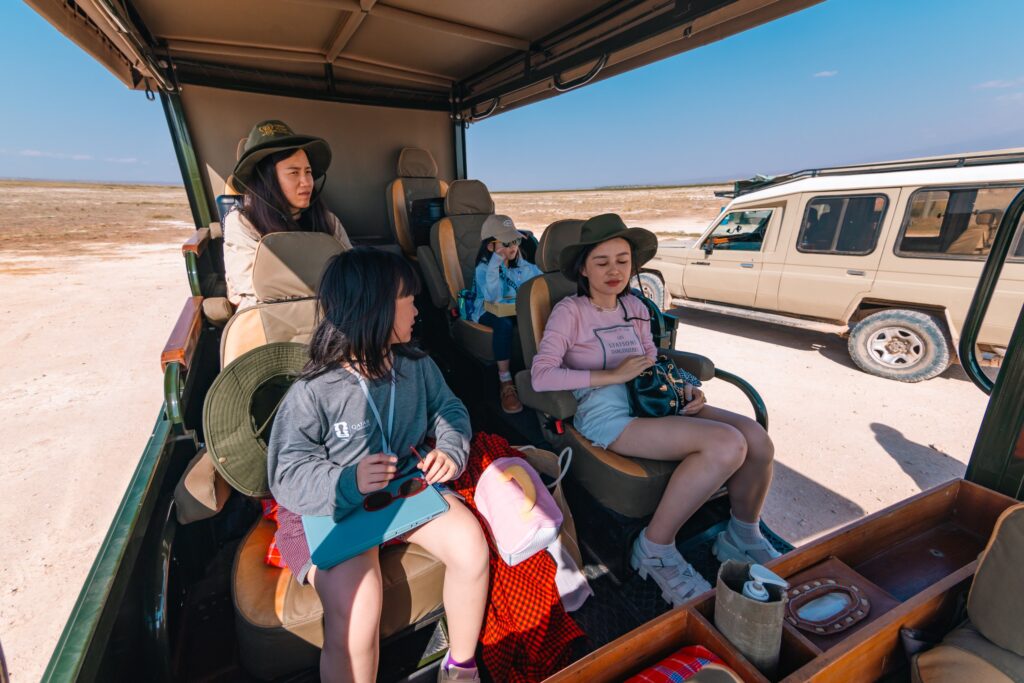
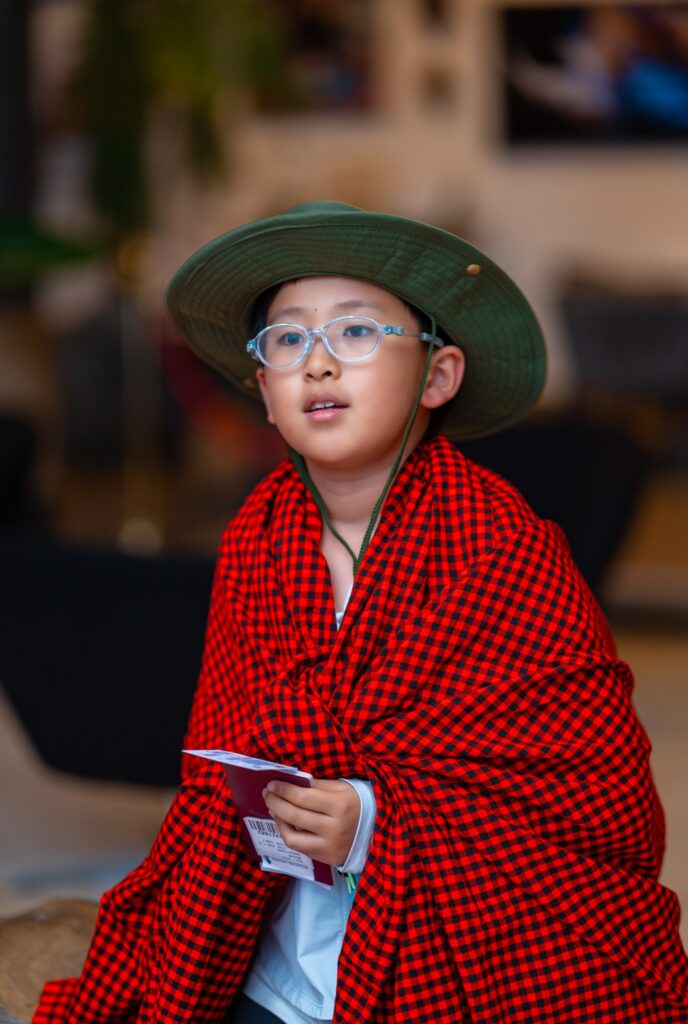
A private family safari means your own 4×4 with a pop-up roof, one guide for the whole trip and a schedule nobody else has a say in. Our family packages are private for 2 to 6 guests, and the same driver-guide stays with you throughout.
For children the difference is control. The guide can shorten a drive, schedule a comfort stop or turn back for a nap. Our family safari page is explicit that the guide adjusts the pace of game drives and builds in stops on long transfers.
Our opinion is blunt. Skip shared group departures with children under 8. We do run book-a-seat departures, from USD 1,235 per person, and they’re good value for adults. They’re the wrong tool for a family, because you can’t stop a vehicle for a tantrum when six strangers are aboard.
Why Family Safari Planning Matters
A family safari fails in the planning, not in the bush. The details below are the ones that catch families out.
Paperwork
Every visitor to Kenya, including infants, needs an approved eTA before travelling. A parent or guardian fills it in for each child, and you should use the official Government of Kenya portal only. Carry passports for everyone and, if you arrive from a yellow fever risk country, a yellow fever certificate for anyone aged 1 or over. If a child travels with one parent or without parents, carry the birth certificate and a signed consent letter, and confirm requirements with your airline.
Cost
Park fees differ by season. The Masai Mara adult fee is USD 100 a day from January to June and USD 200 a day from July to December in 2026, while children pay USD 50 from age 9 -17 all year round. Our packages include reserve and park entry fees. Single supplements matter for solo parents. Child pricing varies by camp, so ask for a quote.
When to Go
June to October and January to March are the dry-season windows. July to October is the migration, with river crossings peaking in August and September, and it’s also the busiest and costliest stretch. January to March is drier, quieter and gentler on Mara fees. The long rains in April and May turn Mara tracks to mud. Late December carries a holiday premium, as the gap between USD 3,120 and USD 4,115 on our family safari shows.
Insurance
Buy comprehensive travel insurance, including medical cover, before you pay your final balance.
Frequently Asked Questions
What age is best for a first Kenya safari?
Five or six is the sweet spot for a first full safari, though younger children do well on shorter trips close to Nairobi. By 5 most children can sit still for a two to three hour drive and most camps say yes. Under 5, stay near Nairobi and Naivasha.
Can babies go on safari in Kenya?
Yes, but we’d wait until a baby weighs at least 5 kilograms and your doctor agrees a malaria plan. Atovaquone-proguanil isn’t used below that weight. Infants also need an eTA, and a yellow fever certificate is required from age 1 if you arrive from a risk country.
Do children pay park fees in Kenya?
Yes, though children pay reduced fees and the youngest often enter free. In 2026 the Masai Mara waives entry for ages 8 and under and charges USD 50 a day for ages 9 to 17. Our packages list reserve and park entry fees as included.
Do kids need malaria tablets for the Masai Mara?
Yes, you should plan on it. CDC lists malaria risk in all areas below 2,500 metres, game parks included, and the Masai Mara sits below that. Your doctor chooses the drug by weight and age, and you should ask about it well before you travel.
Can children do a hot air balloon safari in the Masai Mara?
Yes, from around age 8 at Governors’ Balloon Safaris, which also requires a height over 1.2 metres. Some other operators publish lower ages, so confirm when you book. Children under 18 must fly with an adult.
Do children need an eTA for Kenya?
Yes. Every visitor including infants needs an approved eTA before travelling. A parent or guardian applies for each child through the official Government of Kenya portal. Apply well ahead, because processing takes a few days.
Is a road or flying safari better for kids?
It depends on age. For under-6s on a short trip, the fly-in saves ten to twelve hours of driving. From 6 to 12, a road safari costs far less and the perks of the conservancy are mostly age-limited anyway. See our comparison above.
What is the best time of year to take kids on safari?
June to October and January to March are best for dry-season game viewing. July to October brings the migration but also the crowds and the highest prices. Avoid April and May for the Masai Mara if you want dry tracks.
How much does a family safari in Kenya cost?
Our from-prices run from USD 295 per person for the Nairobi day trip to USD 3,120 per person for the 11-day family safari in October. In between sit the Naivasha day trip at USD 215 and the 6-day Sopa safari from USD 1,670. Child pricing varies by camp.
Can we do a safari with children who still nap?
Yes, and that’s the main reason we recommend a private vehicle. The guide can plan the day around the nap, with a long lunch and a rest at camp. The only fixed points are the Sheldrick hour at 11:00am and any dawn balloon flight.
Get a Family Safari Quote
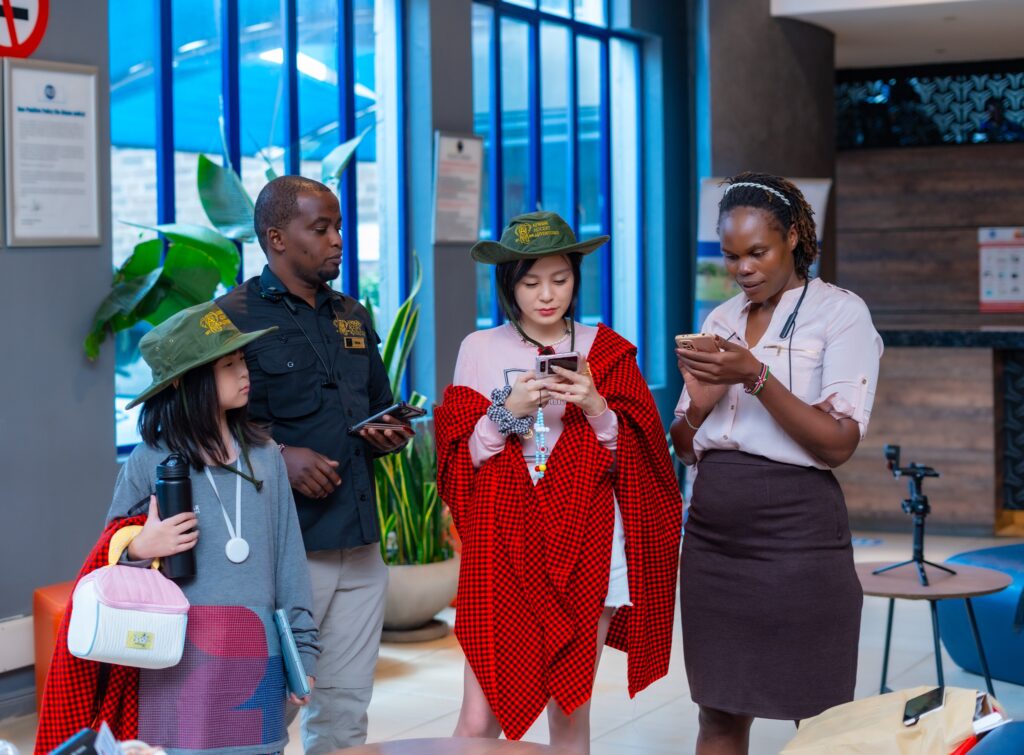
We started with a four-year-old and a rhino in the morning. Everything since has been the same idea. The age of the child doesn’t decide the safari. The camp’s rules, the malaria plan, the vehicle and the timing do.
We’ve covered the age limits by activity, the malaria guidance, family camps, game-drive timing and packing, and compared a road safari with a fly-in and a Nairobi day trip with an 11-day circuit. What we add beyond an article is the planning. We’re a Nairobi-based, KATO-registered operator running private departures for 2 to 6 guests, with the same driver-guide throughout. We confirm each camp’s age policy before we quote and shape the days around your children’s ages.
Get a family safari quote and Hellen Asiko, Director & Guest Experience Curator, will build it with you.
Tell us how old your children are and we’ll show you the safari that fits them.
Let's plan your East African safari
Tell us when you'd love to travel and a local specialist will craft a tailor-made route around you.


