Lake Nakuru National Park is one of Kenya’s most scenic wildlife destinations, located in the Great Rift There is a moment on the first drive into Lake Nakuru National Park when the road rises above the lake and the whole valley opens at once. Below, the water sits in the floor of the Great Rift Valley, bordered by yellow-green grassland, acacia woodland and rocky escarpments. A rhino is grazing somewhere below the viewpoint, a troop of baboons is moving through the trees and, if the conditions are right, waterbirds are spread across the shoreline.
Lake Nakuru National Park sits in Kenya’s Rift Valley, close to Nakuru city and roughly 160 to 170 kilometres northwest of Nairobi. At 188 square kilometres, it is compact compared with Kenya’s larger parks, but remarkably diverse. The park protects the alkaline Lake Nakuru, surrounding grasslands, acacia woodland, rocky hills, euphorbia forest and a nationally important rhino sanctuary.
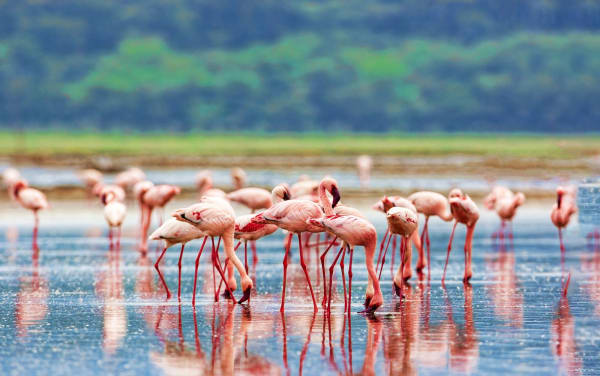
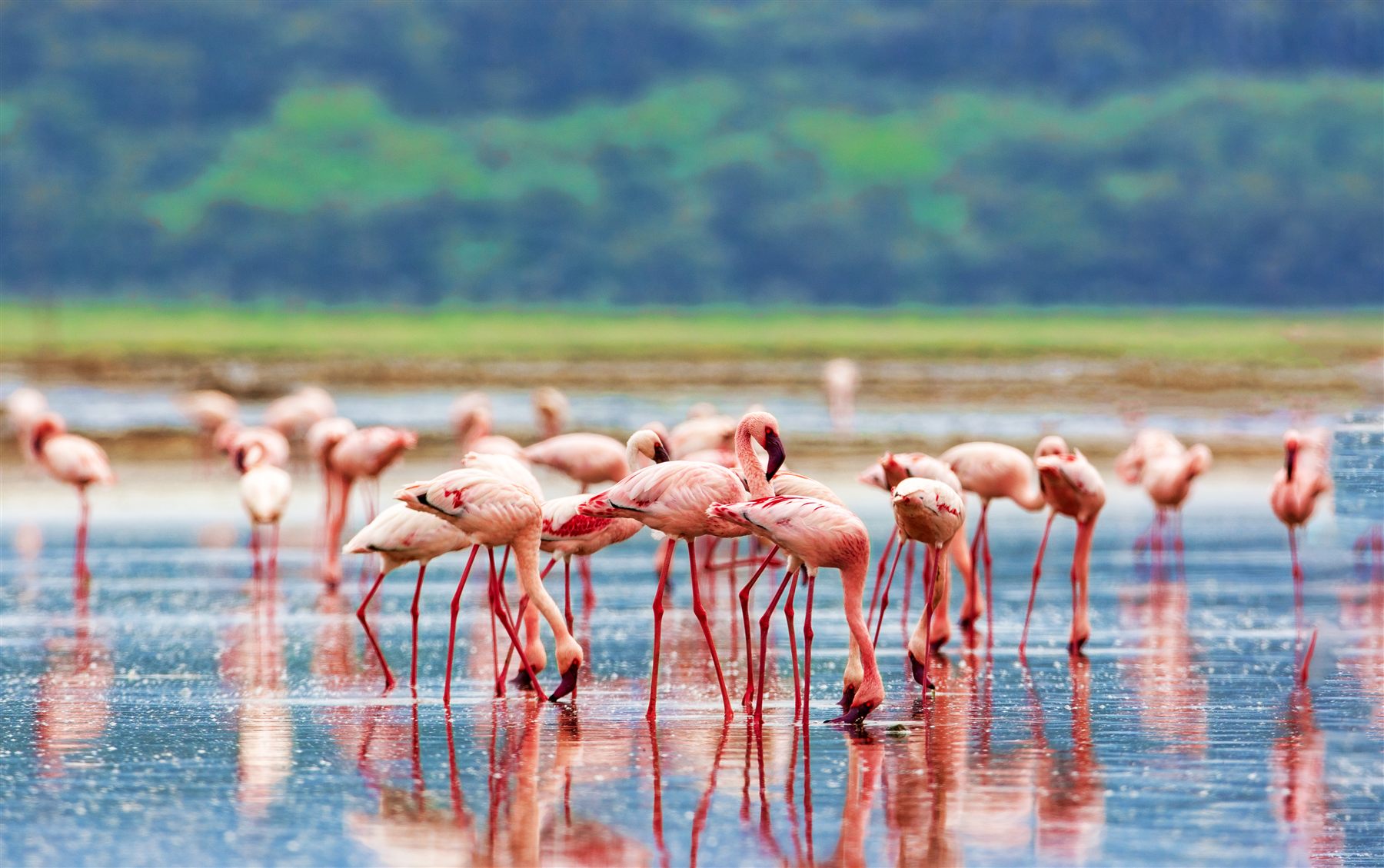
For decades, Lake Nakuru National Park became famous around the world for its flamingos. Huge concentrations of lesser flamingos once gathered along the lake’s shores, creating the extraordinary pink spectacle that made Lake Nakuru one of Africa’s most recognizable wildlife destinations. The story is more complicated today. Changing water levels and lake chemistry have altered flamingo feeding conditions, and recent Kenya Wildlife Service monitoring shows that flamingo numbers at Lake Nakuru can fluctuate dramatically.
What has not changed is the importance of Lake Nakuru National Park as a wildlife destination. The park is one of Kenya’s strongest places to see both black and white rhinoceros, alongside buffalo, lion, leopard, Rothschild’s giraffe, zebra, waterbuck, impala, warthog and an impressive variety of birds. Kenya Wildlife Service describes Lake Nakuru National Park as an ornithological paradise and a flagship sanctuary for endangered black and white rhinos.
We send guests to Lake Nakuru National Park for a different reason from the classic Mara experience. The distances are shorter, the wildlife is concentrated, the scenery changes constantly and a single full day can produce an unusually productive safari. For travellers combining Nairobi, Lake Naivasha, Lake Nakuru and the Masai Mara, Lake Nakuru National Park is one of the most logical stops on the route.
QUICK ANSWER | What is Lake Nakuru National Park?
Lake Nakuru National Park is a 188-square-kilometre national park in Kenya’s Great Rift Valley, surrounding Lake Nakuru and protecting a diverse combination of lake, grassland, woodland and rocky habitats. The park is managed by the Kenya Wildlife Service and is especially known for its rhino sanctuary, birdlife, Rothschild’s giraffe and scenic Rift Valley landscapes.
Lake Nakuru National Park At a Glance
Location: Nakuru County, Kenya, in the Great Rift Valley
Size: 188 square kilometres
Lake: Lake Nakuru, a shallow semi-alkaline Rift Valley lake
Elevation: Approximately 1,760 metres above sea level
Management: Kenya Wildlife Service
Distance from Nairobi: Approximately 160–170 kilometres by road
Typical driving time from Nairobi: Around 3 to 4 hours, depending on traffic and road conditions
Known for: Black and white rhinos, Rothschild’s giraffe, birdlife, Lake Nakuru, scenic viewpoints and flamingos
Major attractions: Lake Nakuru, Baboon Cliff, Makalia Falls, Lion Hill, Out of Africa Viewpoint and the rhino sanctuary
Birdlife: Approximately 450 recorded bird species
Neighbouring destinations: Lake Naivasha, Hell’s Gate National Park, Lake Elementaita and the Masai Mara
Main access: Nairobi–Nakuru road corridor and Lanet/Nakuru-area approaches
Lake Nakuru National Park was formally gazetted in 1968 after earlier conservation measures began in 1961. The original protected area focused on the lake and adjacent shoreline before the park was expanded to its current 188-square-kilometre area in 1974. A perimeter electric fence was later constructed to reduce human-wildlife conflict, and in 1987 Lake Nakuru National Park became Kenya’s first government-managed rhino sanctuary.
The Wildlife of Lake Nakuru National Park
Lake Nakuru National Park packs a remarkable amount of wildlife into a relatively small area. Unlike some of Kenya’s larger parks where long drives are necessary to move between different wildlife zones, Lake Nakuru National Park concentrates many species around the lake, woodland and surrounding grasslands.
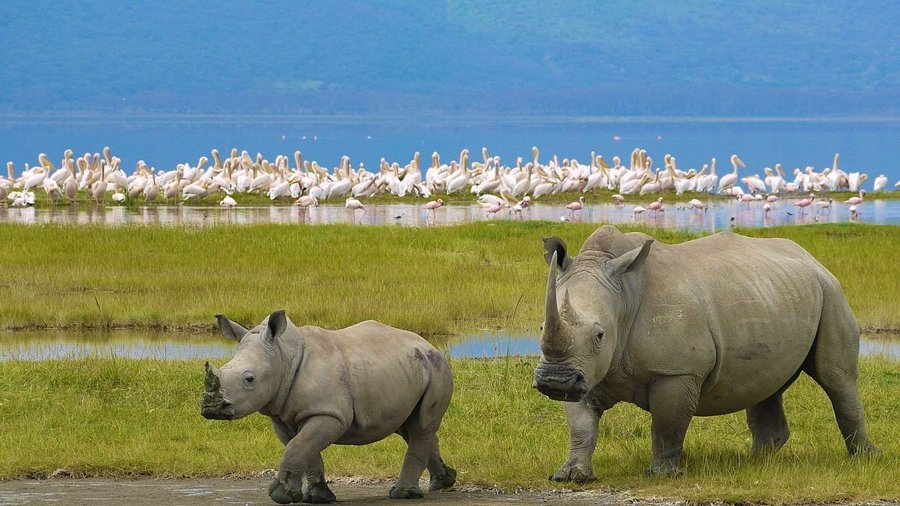
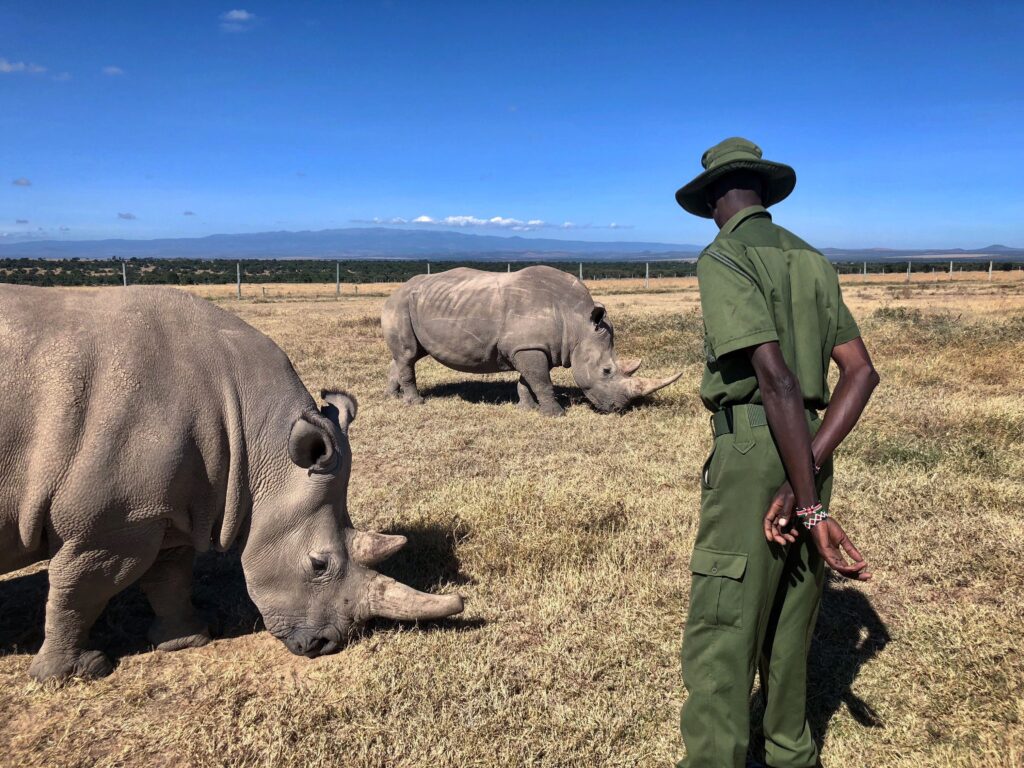
The park is particularly important for rhino conservation. Both black rhinoceros and white rhinoceros occur here, and Lake Nakuru National Park remains one of Kenya’s most reliable destinations for travellers hoping to see these endangered animals. The combination of protected habitat, perimeter fencing and dedicated conservation management has made the park an important stronghold for rhino.
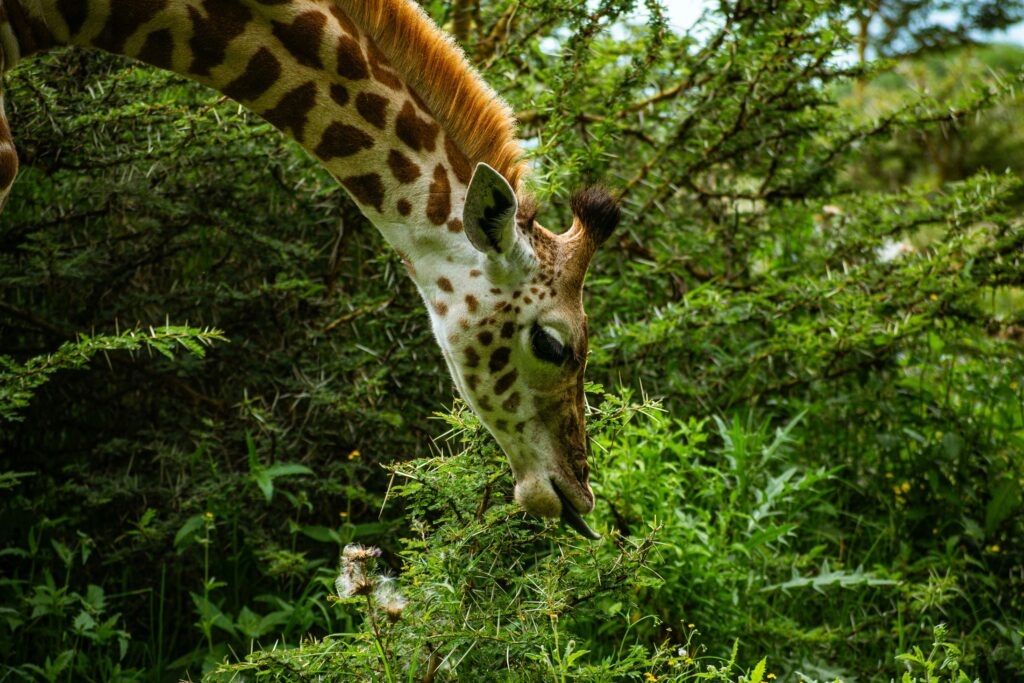
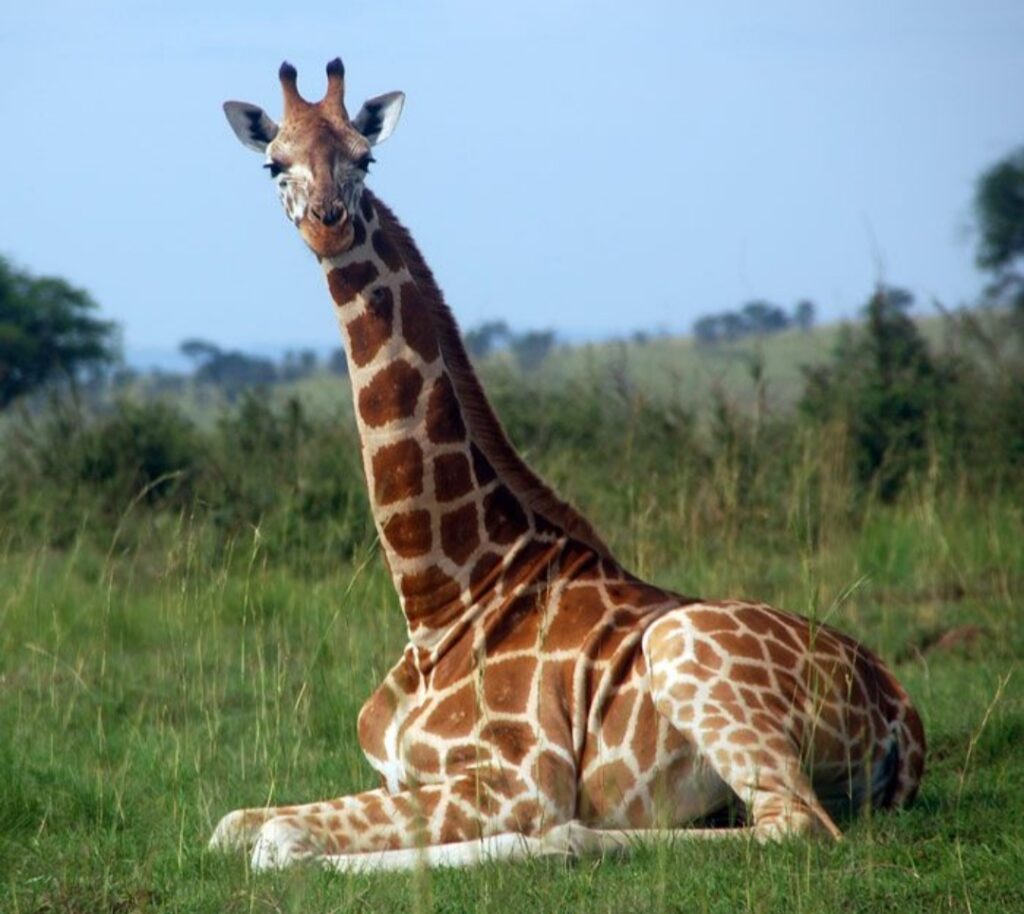
Buffalo are widespread, especially around the open grasslands and water sources. Rothschild’s giraffe can often be found browsing in the acacia woodland, while zebra, impala, waterbuck and warthog occupy the more open areas. Eland and other antelope are also present.
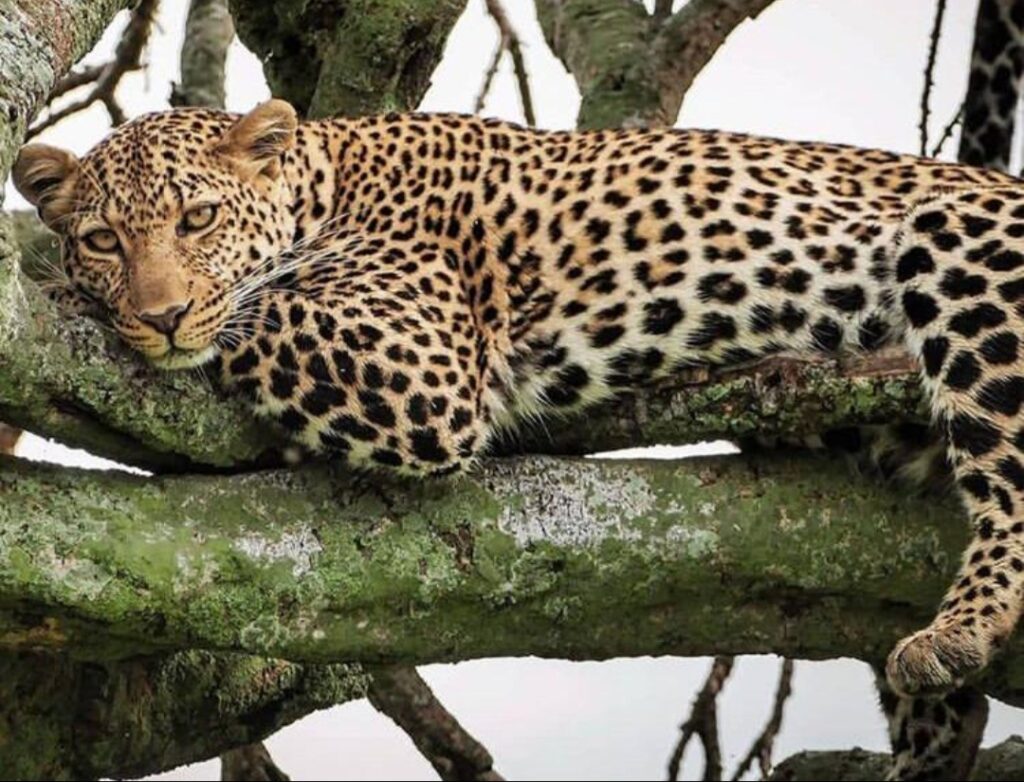
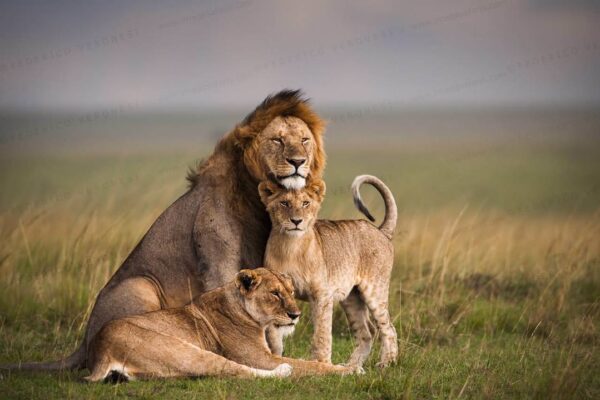
Lion are resident in Lake Nakuru National Park, and the park’s woodland and rocky areas provide cover for predators. Leopard are more elusive, but the dense woodland and rocky terrain create suitable habitat. Sightings are never guaranteed, as with any wild animal, but experienced guides know the areas where predator activity is more likely.
The park also supports baboons, colobus monkeys and other smaller mammals, while the lake and surrounding wetlands provide habitat for large numbers of waterbirds.
QUICK ANSWER | What animals can you see in Lake Nakuru National Park?
Lake Nakuru National Park is particularly well known for black and white rhinoceros, Rothschild’s giraffe, buffalo, lion, leopard, zebra, waterbuck, impala, warthog and baboons. The park also supports approximately 450 bird species, including waterbirds, raptors and migratory species.
Rhinoceros in Lake Nakuru National Park
For many safari travellers, rhino is the biggest reason to visit Lake Nakuru National Park.
The park was designated Kenya’s first government-managed rhino sanctuary in 1987, and its conservation programme has played an important role in protecting both black and white rhinoceros.
White rhinos are generally easier to locate because they often feed in open grassland and can sometimes be seen in small groups. Black rhinos are more associated with thicker vegetation and are generally more elusive. Seeing both species in the same national park is one of the strongest wildlife experiences Lake Nakuru National Park offers.
The fenced nature of the park also makes wildlife management different from the open ecosystems of the Masai Mara or northern Kenya. Lake Nakuru National Park is surrounded by human settlements, and the perimeter fence helps keep wildlife within the protected ecosystem while reducing conflict with surrounding communities.
Rothschild’s Giraffe
Rothschild’s giraffe is another major attraction in Lake Nakuru National Park.
This giraffe is distinguished by its distinctive coat pattern and pale lower legs, and it is one of Kenya’s most conservation-significant giraffe populations. Lake Nakuru National Park offers excellent opportunities to see these giraffes feeding among acacia woodland and open grassland.
A typical Lake Nakuru National Park game drive can move from shoreline habitats to woodland within a short distance, making giraffe sightings particularly rewarding for photographers. The contrast between a tall giraffe, red-brown earth, acacia trees and the Rift Valley escarpment creates some of the park’s most recognizable safari scenes.
Flamingos and Birdlife
Flamingos remain closely associated with Lake Nakuru National Park, but visitors should understand that the famous pink shoreline is not guaranteed on every visit.
Historically, Lake Nakuru supported enormous concentrations of lesser flamingos that fed on algae in the alkaline lake. The birds became the defining image of Lake Nakuru National Park and attracted birdwatchers and photographers from around the world.
Lake conditions have changed significantly in recent years. Rising water levels have expanded the lake and altered its chemistry, reducing the availability of the algae that lesser flamingos depend on. Kenya Wildlife Service’s recent flamingo monitoring found approximately 500 lesser flamingos at Lake Nakuru in January 2025, compared with more than 1.3 million recorded there in January 2006.
That does not make Lake Nakuru National Park a poor birding destination. Quite the opposite. The park supports approximately 450 recorded bird species, making it one of Kenya’s most important birdwatching destinations.
Depending on the season and water conditions, visitors may see pelicans, cormorants, herons, egrets, storks, kingfishers, raptors and numerous terrestrial species around the park.
The lesson for visitors is simple: come to Lake Nakuru National Park expecting exceptional birdlife rather than guaranteeing a particular number of flamingos.
QUICK ANSWER | Are there still flamingos at Lake Nakuru?
Yes, flamingos still occur at Lake Nakuru, but their numbers and distribution can vary substantially. Changing water levels and lake chemistry have reduced the suitability of Lake Nakuru for large lesser-flamingo concentrations compared with historical periods. Recent KWS monitoring shows that flamingo populations can shift between Kenya’s Rift Valley lakes as environmental conditions change.
The Evolving Lake Nakuru Ecosystem
Lake Nakuru National Park is an excellent example of how wildlife tourism and ecological change are connected.
The lake’s water level has changed considerably over recent years, affecting shoreline habitats, water chemistry and the distribution of birds. The park’s ecosystem is also influenced by the wider watershed feeding Lake Nakuru, which extends far beyond the national park boundary.
For photographers, this means Lake Nakuru National Park can look completely different from one year to another. Shorelines move, islands appear or disappear, vegetation changes and bird concentrations shift.
This is one reason we avoid promising guests a particular flamingo spectacle. A responsible Lake Nakuru National Park safari should describe the ecosystem as it is today rather than relying entirely on photographs from decades ago.
Things to Do in Lake Nakuru National Park
Game Drives
Game drives are the main activity in Lake Nakuru National Park.
Because the park is relatively compact, a game drive can cover a large variety of habitats within a few hours. Early morning drives are especially useful for wildlife activity when temperatures are cooler, while afternoon drives provide excellent opportunities for photography as the light softens.
A full-day Lake Nakuru National Park game drive can include the lake shoreline, rhino areas, acacia woodland, open grassland and the park’s scenic viewpoints.
The compact nature of Lake Nakuru National Park also makes it particularly suitable for travellers who have limited time. A traveller staying in Nakuru or at a lodge near the park can enter early, spend several hours exploring and continue to another destination later in the day.
Rhino Tracking and Wildlife Viewing
Lake Nakuru National Park is one of the best places in Kenya to focus a safari around rhino.
There is no formal walking rhino-tracking experience comparable to the specialist experiences offered in some private conservancies, but game drives provide excellent opportunities to observe black and white rhinos in their natural habitat.
The emphasis should always be on responsible viewing. Guides maintain appropriate distances, avoid crowding animals and position vehicles so that guests can watch without disturbing the wildlife.
Birdwatching
Birdwatching in Lake Nakuru National Park extends far beyond flamingos.
The lake attracts waterbirds, while the surrounding woodland, grassland and rocky habitats support a much broader bird community. Experienced birders can spend an entire morning moving slowly through different habitats rather than simply stopping at the lake.
With approximately 450 recorded bird species, Lake Nakuru National Park is particularly rewarding for visitors who combine a general safari with an interest in ornithology.
Scenic Drives
Lake Nakuru National Park is one of Kenya’s most scenic safari destinations.
The road network climbs toward rocky viewpoints and then drops back toward the lake, creating constantly changing perspectives. From higher ground, the lake appears as a broad blue-green expanse surrounded by the Rift Valley landscape.
Scenic driving is particularly worthwhile when wildlife activity is quiet during the middle of the day. Rather than treating the hours between game drives as wasted time, we use them to explore viewpoints, woodland and less-visited sections of the park.
Baboon Cliff
Baboon Cliff is one of the most recognizable viewpoints in Lake Nakuru National Park.
From the elevated viewpoint, visitors can look across the lake and surrounding park, making it an excellent stop for landscape photography and panoramic views.
The area is also associated with baboons, which is where the viewpoint gets its popular name. As with all wildlife encounters, visitors should never feed or approach the animals.
Lion Hill
Lion Hill provides another elevated perspective over Lake Nakuru National Park.
The hill offers views across the lake and surrounding grasslands and is especially attractive in the early morning or late afternoon when the Rift Valley light becomes softer.
For travellers who enjoy landscape photography, combining Lion Hill with the lake shoreline creates two very different perspectives of the same ecosystem.
Makalia Waterfalls
Makalia Waterfalls lies toward the southern part of Lake Nakuru National Park and is particularly attractive during and after the rainy periods.
Water flow is seasonal, so the falls can look very different depending on recent rainfall. The surrounding area also provides a quieter landscape away from the main lake viewpoints.
Kenya Wildlife Service lists Makalia Waterfalls among the park’s principal attractions.
Out of Africa Viewpoint
The Out of Africa Viewpoint is another popular scenic stop associated with Lake Nakuru National Park.
The viewpoint takes its name from the famous landscape connections with the film and book tradition surrounding Out of Africa. From the elevated ground, visitors get a broad view across the park and lake.
It is particularly worthwhile for sunrise or late afternoon photography when the light creates stronger contrasts across the Rift Valley.
Wildlife Photography
Lake Nakuru National Park is exceptionally photogenic.
Rhinos provide powerful wildlife subjects, giraffes work well against the open landscape and the lake creates opportunities for wider environmental photographs. Birds offer another layer, particularly when pelicans, flamingos or other waterbirds are active.
The park’s relatively short distances between habitats also make it possible to combine wildlife photography with landscape photography during the same drive.
Expert Note
Lake Nakuru National Park rewards photographers who stop looking only for animals. The lake, escarpments, acacia woodland and changing Rift Valley light are part of the experience. On a good photography day, we may spend as much time composing a landscape around a giraffe or rhino as we do following the animal itself.
Kibara Mugo, Safari Writer & East Africa Specialist
Lake Nakuru National Park and the Great Rift Valley
One of the reasons Lake Nakuru National Park works so well in a Kenya safari itinerary is its position within the Great Rift Valley.
The park lies within a chain of Rift Valley lakes and can easily be combined with Lake Naivasha, Lake Elementaita and the Masai Mara.
The drive between Nairobi and Lake Nakuru National Park also changes gradually from urban and agricultural landscapes into the dramatic escarpment country of the Rift Valley. For travellers taking the road rather than flying, the journey becomes part of the safari experience.
The park’s elevation of approximately 1,760 metres also gives Lake Nakuru National Park a cooler climate than Kenya’s lower-lying northern and coastal destinations.
Lake Nakuru National Park Gates
Lake Nakuru National Park has several access points around its perimeter, with the most practical entrance depending on where a traveller is coming from and where they are staying.
Lanet Gate: A common access point for travellers approaching from Nairobi and the eastern side.
Main/Nakuru Gate: Useful for travellers staying around Nakuru town and approaching from the city.
Nderit Gate: Provides access toward the western and southern parts of the park.
The correct gate depends on the accommodation, direction of travel and planned game-drive route. We therefore normally select the gate according to the day’s itinerary rather than automatically using the same entrance for every Lake Nakuru National Park safari.
How to Get to Lake Nakuru National Park
By Road
The easiest way to reach Lake Nakuru National Park is by road from Nairobi.
The journey follows the Nairobi–Nakuru corridor through the Great Rift Valley. Under normal conditions, the drive takes roughly three to four hours, although Nairobi traffic, roadworks and stops can extend the journey.
For guests travelling with Afrikan Accent Adventures, we normally use a private 4×4 safari vehicle when Lake Nakuru National Park is part of a wider safari. This allows the itinerary to remain flexible and makes it easier to stop at viewpoints or other attractions along the route.
Lake Nakuru National Park is also conveniently positioned for itineraries combining Nairobi, Lake Naivasha and the Masai Mara.
By Air
Lake Nakuru National Park is primarily a road-access safari destination, but private or chartered aviation can be arranged into nearby airstrips depending on the itinerary and aircraft operator.
For most travellers, flying does not offer the same advantage here that it does for remote destinations such as Samburu or the Masai Mara. The road journey from Nairobi is relatively manageable, making Lake Nakuru National Park one of the parks where driving is often the more practical option.
Road or Fly? How to Decide
For a standard Kenya safari, we recommend driving to Lake Nakuru National Park.
The park is close enough to Nairobi that flying rarely provides the same time-saving benefit as it does in northern Kenya. Driving also allows travellers to connect Lake Nakuru National Park naturally with Lake Naivasha and the Masai Mara.
Flying becomes more attractive for travellers using private aviation or building a bespoke multi-destination itinerary where every transfer needs to be minimized.
For most guests, however, a private 4×4 road safari remains the simplest and most cost-effective way to experience Lake Nakuru National Park.
Expert Note
If Lake Nakuru National Park is being combined with the Masai Mara, we normally recommend using it as a route stop rather than treating it as an isolated destination. Two nights around Nakuru can work very well, but one full day of game viewing can also be enough for travellers with a tight schedule.
Nicholas Wangithi, Director & Founder
QUICK ANSWER | How do you get to Lake Nakuru National Park?
Lake Nakuru National Park is most commonly reached by road from Nairobi, approximately 160–170 kilometres away. The drive generally takes around three to four hours depending on traffic and road conditions. The park can also be incorporated into road itineraries linking Nairobi, Lake Naivasha and the Masai Mara.
Climate and Weather in Lake Nakuru National Park
Lake Nakuru National Park has a cooler climate than many of Kenya’s lower-altitude safari destinations because it sits high in the Rift Valley.
Daytime conditions are generally comfortable for safari, although temperatures can rise during the middle of the day. Early mornings can be cool, particularly during the June to August period, so a light fleece or jacket is useful for the first game drive.
Rainfall follows Kenya’s broader seasonal pattern, with the long rains generally occurring from March to May and shorter rains around October to December.
The rainy seasons can transform Lake Nakuru National Park. Grasslands become greener, waterfalls such as Makalia become more active and birdlife can become especially rewarding.
The dry periods, particularly June through September and often January and February, tend to provide easier driving conditions and clearer visibility. Wildlife can also become easier to locate around remaining water sources and open grasslands.
QUICK ANSWER | What is the climate like in Lake Nakuru?
Lake Nakuru National Park has a relatively mild Rift Valley climate compared with Kenya’s hotter lowland parks. Conditions are generally comfortable during the day but can be cool in the early morning and evening. Rainfall is seasonal, with wetter periods around March–May and October–December.
Lake Nakuru National Park Entry Fees and Tickets
Lake Nakuru National Park is classified by Kenya Wildlife Service as a premium park.
Under the KWS 2025 conservation fee schedule currently published by KWS, the entry fee for Lake Nakuru National Park is USD 90 per non-resident adult and USD 45 per non-resident child/student. The same tariff lists KES 2,025 per adult and KES 1,050 per child/student for Kenya residents, and KES 1,500 per East African Citizen adult and KES 750 per child/student. African citizens are listed at USD 50 per adult and USD 25 per child/student.
KWS states that visitors on package tours normally have park entry fees included in the total safari cost, while self-organized visitors can pay through the official KWS payment system.
Because government conservation fees can change, travellers should confirm the applicable rate for their travel date before finalizing a budget.
QUICK ANSWER | How much does it cost to enter Lake Nakuru National Park?
The current KWS 2025 tariff lists Lake Nakuru National Park at USD 90 for non-resident adults and USD 45 for non-resident children/students. Kenya residents, East African citizens and African citizens have separate rates. Package safari operators normally include park entry fees within the safari price.
Best Time to Visit Lake Nakuru National Park
Lake Nakuru National Park can be visited throughout the year.
January and February
These months are generally warm and relatively dry. Wildlife viewing can be productive, and the grasslands are often easier to drive through.
Birdwatchers may find the lake and surrounding habitats particularly rewarding, although flamingo numbers should never be assumed from historical photographs.
March to May
The long rains bring fresh vegetation and greener scenery to Lake Nakuru National Park.
Birdlife can be excellent, and photographers often appreciate the dramatic skies and greener landscapes. The trade-off is that heavy rain can make some roads slower or muddy.
June to October
This is one of the most popular periods for a Lake Nakuru National Park safari.
The weather is generally drier, visibility is often good and wildlife viewing conditions are favourable. Early mornings can be cold, so warm clothing is useful for game drives.
November and December
The short rains refresh the park and can produce beautiful green landscapes. Visitor numbers may be lower than during the busiest dry-season periods.
For travellers who prioritize photography and scenery rather than guaranteed dry weather, this can be an excellent time for Lake Nakuru National Park.
QUICK ANSWER | What is the best time to visit Lake Nakuru National Park?
Lake Nakuru National Park is a year-round destination. June to October generally offers reliable dry-season conditions and good game viewing, while January and February can also be productive. The rainy seasons bring greener scenery and strong birding opportunities but can make some roads more challenging.
How Many Days Do You Need in Lake Nakuru National Park?
One Night
One night can work for travellers using Lake Nakuru National Park as a stop between Nairobi and the Masai Mara.
Arrive around midday, enjoy an afternoon game drive, spend the night near the park and take an early morning drive before continuing toward the Mara.
Two Nights
Two nights is our preferred option for travellers who want to experience Lake Nakuru National Park properly without spending too much time in the area.
It allows for an afternoon game drive on arrival, a full or extended game-viewing day and a final morning drive before departure.
Three Nights or More
Three nights suits photographers, birdwatchers and travellers who want a slower pace.
It also creates room to combine Lake Nakuru National Park with Lake Naivasha, Hell’s Gate or other nearby Rift Valley attractions.
QUICK ANSWER | How many days do you need in Lake Nakuru?
One night is enough for a route-stop safari, but two nights is the ideal starting point for a more complete Lake Nakuru National Park experience. Three nights or more is best for birdwatchers, photographers and travellers who want to explore the wider Rift Valley.
Lake Nakuru National Park Accommodation
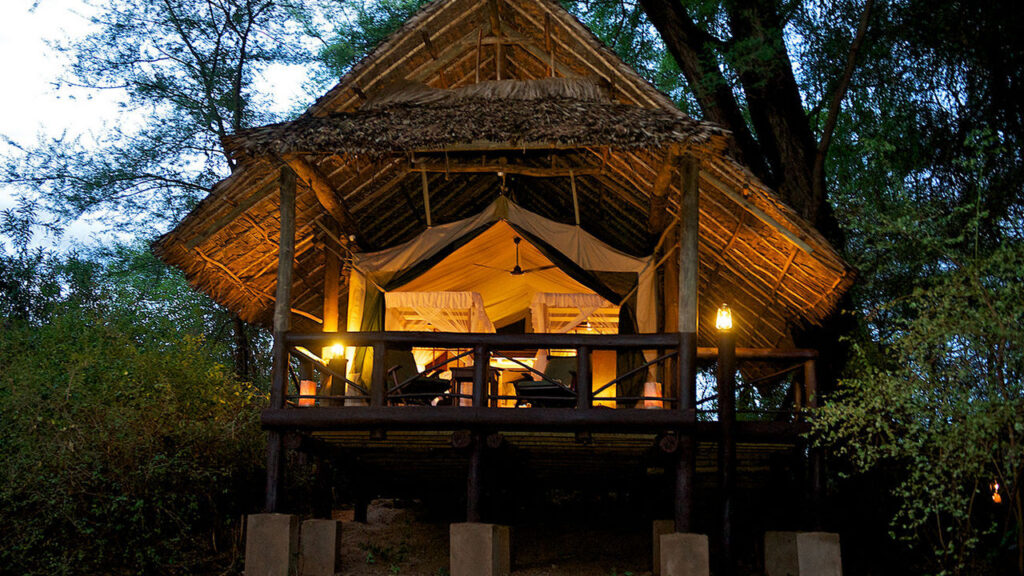
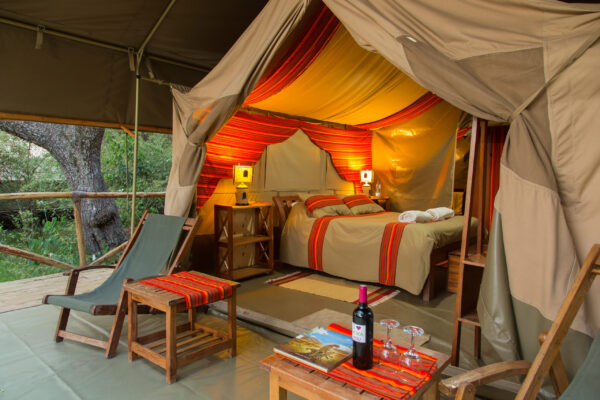
Accommodation around Lake Nakuru National Park ranges from luxury safari lodges and tented camps to mid-range hotels and simpler guesthouses.
Properties around the lake and within the surrounding ecosystem provide different experiences. Some focus on lake views, others on elevated positions overlooking the park, while properties closer to Nakuru town offer easier access for travellers on shorter itineraries.
Kenya Wildlife Service itself lists accommodation and camping options within Lake Nakuru National Park, including Naishi Guest House and campsites such as Makalia, as well as privately owned properties including Sarova Lion Hill, The Cliff, Lake Nakuru Lodge, Lake Nakuru Sopa Lodge and Flamingo Hill Camp.
For most safari travellers, we recommend choosing accommodation based on three things: proximity to the preferred park entrance, views and setting, and whether the property fits naturally into the next destination on the itinerary.
Accommodation Styles Around Lake Nakuru National Park
Luxury Lodges
Luxury lodges around Lake Nakuru focus on spacious rooms, strong views, landscaped grounds, full-board dining and personalized service.
They work particularly well for couples, honeymooners and travellers combining Lake Nakuru National Park with luxury properties in the Masai Mara.
Mid-Range Lodges and Tented Camps
Mid-range accommodation offers one of the best balances between comfort and safari value.
Guests typically receive comfortable rooms or tents, en-suite bathrooms, meals and access to game-drive services without the higher cost associated with exclusive luxury camps.
Camping
Camping is available within the Lake Nakuru National Park ecosystem through designated KWS campsites.
KWS’s published 2025 rates list separate charges for public and special campsites in premium parks such as Lake Nakuru National Park.
Camping is best suited to travellers who prioritize time in nature and lower accommodation costs over hotel-style facilities.
Lake Nakuru National Park vs Lake Naivasha
Lake Nakuru National Park and Lake Naivasha are often combined, but they provide very different experiences.
Lake Nakuru National Park is primarily a wildlife destination, with rhino, giraffe, buffalo, lion and extensive birdlife.
Lake Naivasha is better known for its freshwater lake, boat trips, hippos and opportunities for walking and cycling around nearby wildlife areas.
Combining both gives travellers a broader Rift Valley experience without requiring a major detour.
Lake Nakuru National Park vs Masai Mara
The Masai Mara is larger, more open and famous for its predator concentrations and annual wildebeest migration.
Lake Nakuru National Park is smaller and more concentrated, making it easier to see a wide variety of wildlife in a shorter period.
The two destinations complement rather than replace each other.
A Lake Nakuru National Park and Masai Mara itinerary can begin with the rhino sanctuary and Rift Valley landscapes before continuing into the open grasslands of the Mara.
For first-time visitors to Kenya with enough time, we often recommend doing both.
Lake Nakuru National Park vs Amboseli
Amboseli is famous for its large elephant herds and Mount Kilimanjaro backdrop.
Lake Nakuru National Park offers a completely different landscape, with a Rift Valley lake, rhino sanctuary, acacia woodland and escarpments.
If elephants and Kilimanjaro are your priorities, Amboseli has the advantage. If rhinos, birdlife and a compact Rift Valley safari appeal more, Lake Nakuru National Park is the stronger choice.
Lake Nakuru National Park vs Samburu
Samburu and Lake Nakuru National Park are almost opposite in character.
Samburu is dry, rugged and dominated by the Ewaso Nyiro River, with its famous Special Five of Grevy’s zebra, reticulated giraffe, gerenuk, Beisa oryx and Somali ostrich.
Lake Nakuru National Park is greener, cooler and centred around the Rift Valley lake and rhino sanctuary.
Combining the two creates a particularly varied Kenya safari, moving from the dry northern landscape of Samburu to the highland Rift Valley environment around Lake Nakuru.
Responsible Tourism and Conservation in Lake Nakuru National Park
Lake Nakuru National Park is a conservation destination first and a tourism destination second.
The park’s history demonstrates how protected areas can change in response to conservation priorities. What began as a bird sanctuary in 1961 expanded into a much larger protected ecosystem, and the park later became a major rhino sanctuary.
The electric perimeter fence constructed in 1986 was an important intervention in managing wildlife movement and human-wildlife conflict around the park.
For visitors, responsible tourism means staying on designated roads, maintaining a respectful distance from animals, never feeding wildlife and following the instructions of guides and KWS personnel.
It also means understanding that the ecosystem is changing. The reduction in flamingo numbers is not a reason to dismiss Lake Nakuru National Park. It is a reminder that wildlife habitats are dynamic and that conservation depends on monitoring and adapting to ecological change.
Expert Note
Do not judge Lake Nakuru National Park solely by whether you see a huge flock of flamingos. The park’s conservation story is much bigger than the lake’s famous pink shoreline. A rhino standing in the grass below the escarpment, a Rothschild’s giraffe moving through acacia woodland or a fish eagle calling over the lake can be just as memorable.
Hellen Asiko, Director & Guest Experience Curator
Plan Your Lake Nakuru National Park Safari
From its rhino sanctuary and Rothschild’s giraffe to its lake, escarpments and exceptional birdlife, Lake Nakuru National Park remains one of Kenya’s most rewarding short-safari destinations.
Its location makes it particularly useful for travellers building a multi-destination Kenya itinerary. Nairobi to Lake Nakuru National Park is a manageable road journey, and from there travellers can continue toward Lake Naivasha, Lake Elementaita or the Masai Mara.
We build Lake Nakuru National Park into safari itineraries according to the traveller’s priorities. A couple looking for a short wildlife escape may spend one or two nights around the park. A photographer or birder may prefer three nights. A first-time safari traveller can combine Lake Nakuru National Park with Lake Naivasha and the Masai Mara for a classic Rift Valley-to-Mara route.
Most importantly, we do not sell Lake Nakuru National Park on the promise of one photograph. The flamingos may be numerous or scattered. The lake level may be high or lower. The landscape changes with the seasons. What remains remarkably consistent is the quality of the wildlife experience, especially the opportunity to see rhino in a compact, scenic national park.
Lake Nakuru National Park is not simply a stop on the way to the Masai Mara. It is one of Kenya’s most important rhino conservation areas, one of its best-known birding destinations and one of the most accessible places to experience the Great Rift Valley on safari.
For travellers who want a safari that combines wildlife, scenery, conservation and easy access from Nairobi, Lake Nakuru National Park remains an excellent choice.


 ✨Signature Journeys