

Kenya Safari Travel Insurance: What You Actually Need
Kenya's US$50,000 travel insurance rule is frozen, not struck down. Here's the cover that actually moves you, treats you and brings you home from a Kenya safari.
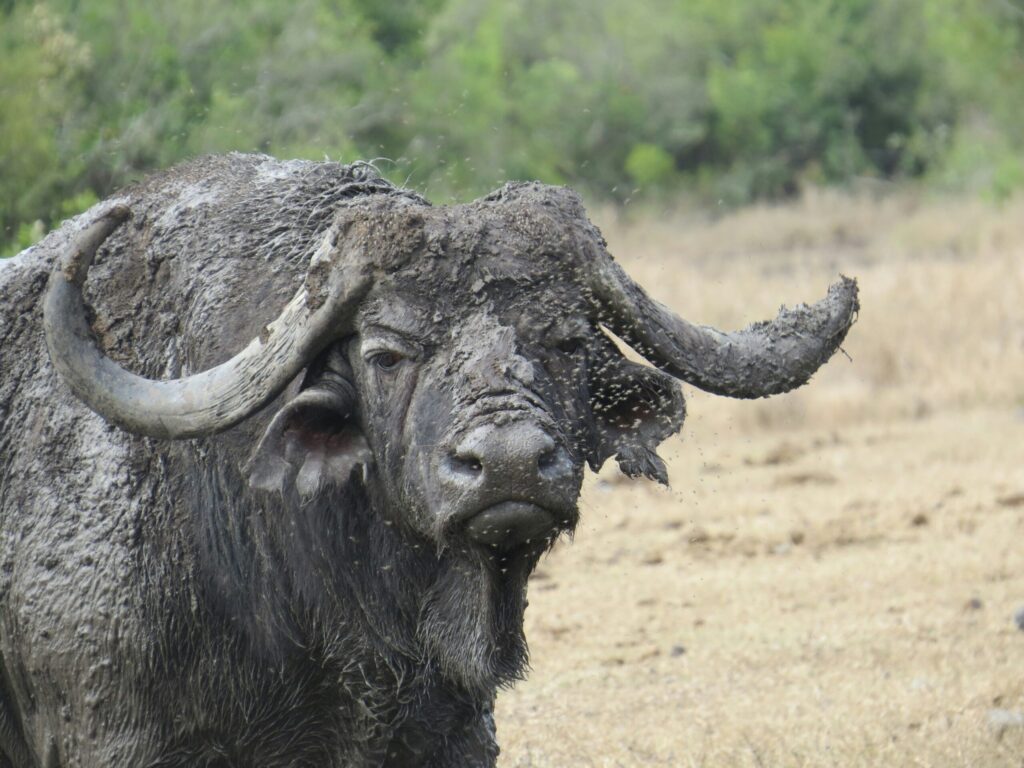
Mud-caked Cape buffalo in Ol Pejeta Conservancy, Kenya, illustrating the real safari risks that make Kenya safari travel insurance essential.
On 30th July 2026 the Kenya Gazette carried Notice No. 11492, signed by Health Cabinet Secretary Aden Duale. Under it, every foreigner entering Kenya for less than 12 months would need travel health insurance worth at least US$50,000. Anyone shopping for Kenya safari travel insurance suddenly had a government number to measure a policy against.
Less than a month later the number was frozen. In late August Justice Francis Rayola Olel, sitting at the High Court in Marsabit, suspended the notice’s implementation and enforcement after two Marsabit residents challenged it. When the matter returned to court on 16th September the orders were extended. Today the rule stands on paper and is enforced nowhere.
That leaves travellers half-informed, which is worse than uninformed. Some read the headline and decide insurance is optional now. Others read the notice and assume they’ll buy a policy at the airport. Both are asking the wrong question.
Last year we watched a guest at Ol Pejeta Conservancy open a vehicle door with a buffalo 40 metres away. His guide had it shut again before the second foot touched the ground. Nothing happened that day, but safari risk doesn’t follow the court calendar. It follows a rough road, a fever at a remote camp and a bush airstrip. The real question was never whether Kenya will check your policy at the airport. It’s whether your policy will move you, treat you and bring you home.
| QUICK ANSWER | Do you need travel insurance for a Kenya safari? Yes, you need travel insurance for a Kenya safari, even though the US$50,000 entry rule is frozen. We make comprehensive Kenya safari travel insurance with medical evacuation a condition of every booking. Add cancellation, baggage and activity cover. Buy it within 14 days of your first deposit. |
At a Glance:
- Current status: The US$50,000 rule is gazetted but frozen by the High Court at Marsabit, with enforcement suspended
- Legal basis: Gazette Notice No. 11492, published 30th July 2026 under the Social Health Insurance Act, 2023
- Minimum cover if revived: US$50,000 in total, including US$20,000 for medical expenses and US$25,000 for emergency medical transportation
- Who it would cover: Non-Kenyans staying in Kenya for less than 12 months
- Our rule: Comprehensive travel insurance is a condition of booking with Afrikan Accent Adventures (Booking Terms, Section 10)
- Air ambulance: AMREF Flying Doctors, based at Wilson Airport in Nairobi
- Typical premium: 4% to 10% of your prepaid trip cost (US market range)
- Tanzania: Mandatory US$44 inbound policy for mainland Tanzania from 1st October 2026
Is Travel Insurance Mandatory for Kenya in 2026?
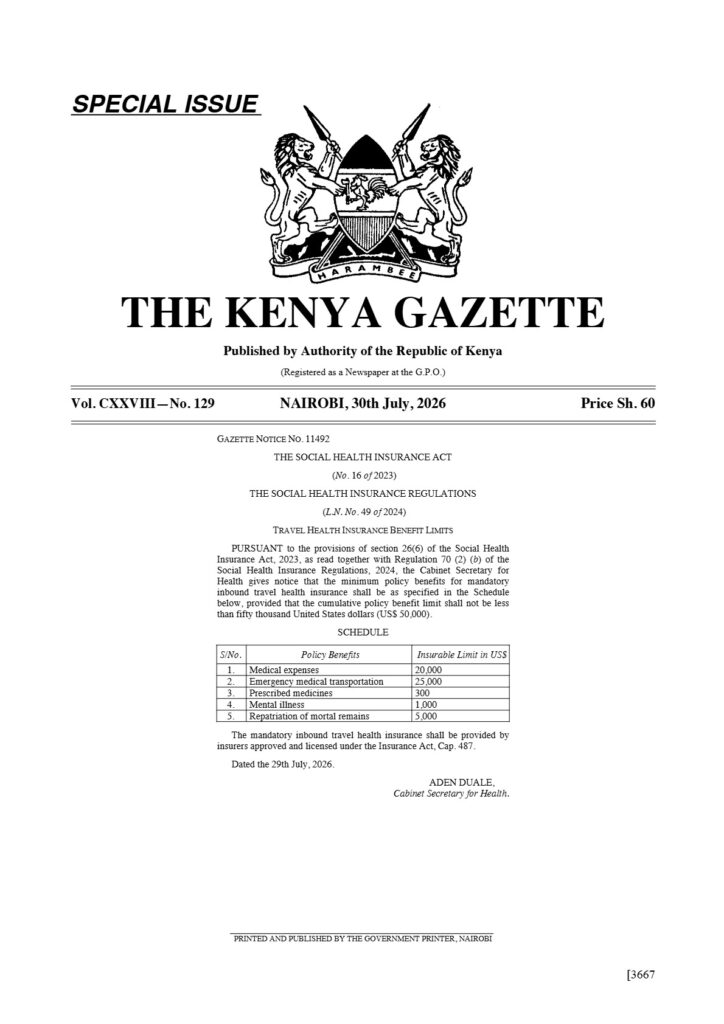

No. Travel insurance isn’t enforceable as a condition of entry to Kenya today. The High Court at Marsabit suspended the US$50,000 rule in late August 2026 and extended that suspension at the 16th September hearing. The notice itself hasn’t been struck down. Gazette Notice No. 11492 still exists. The Social Health Insurance Act, 2023 still requires visitors to hold travel health insurance in principle. The final judgment is still to come.
In practice the government can’t enforce the notice at Jomo Kenyatta International Airport while the orders stand. That doesn’t mean you should fly uninsured. It means the entry rule and the safari risk have separated. The entry rule is on hold. The risk isn’t.
Two cautions. Courts move, and a final judgment could quash the notice, rewrite it or uphold it. And your operator may set its own rule. Ours does: Section 10 of our Booking Terms and Conditions makes comprehensive travel insurance a condition of booking whatever the court decides.
A court can freeze an entry rule. It can’t freeze a fever, a buffalo or a bush airstrip.
Why Standard Travel Insurance Often Isn’t Enough

A standard policy was written for a beach week, not a bush airstrip. It handles the delayed flight, the hotel and the lost bag well. Travel insurance for an Africa safari leaks in the safari-specific lines. We see six gaps, and they’re the ones to check before you pay.
- Evacuation caps. Many policies list evacuation but cap it low or leave the decision to the insurer’s doctors. Look for the limit and for wording that names air ambulance from remote areas.
- Pre-existing conditions. Most policies exclude them unless you buy a waiver, and the waiver usually has to be bought within 14 to 21 days of your first trip payment.
- Activity exclusions. Ballooning, guided walking safaris and high-altitude trekking sit in the adventure bracket for many insurers. Our Booking Terms recommend that guests confirm cover for ballooning, high-altitude trekking and water-based activities.
- Gear limits. Per-item limits on cameras and lenses often sit far below replacement cost.
- Thin benefit lists. Kenya’s own minimums name mental illness treatment, prescribed medicines and repatriation of remains. Mental health cover isn’t commonly included in travel policies. A policy can clear US$50,000 in total and still miss a line.
- Card cover and government advice. Credit card benefits vary enormously and some include no medical or evacuation cover at all. Many policies also exclude claims in areas your own government advises against visiting, so read its Kenya travel advice on the day you buy.
Our verdict: a standard policy isn’t wrong. It’s incomplete.
Read the certificate, not the brochure.
What Is the US$50,000 Kenya Travel Insurance Requirement?
It’s a minimum benefit rule, not a price. Gazette Notice No. 11492 fixed the minimum cover that mandatory inbound travel health insurance must carry: a cumulative benefit limit of at least US$50,000, roughly KSh6.5 million at August 2026 exchange rates. What you’d pay for a policy is a separate figure, and the government hasn’t set one.
The notice came from Health Cabinet Secretary Aden Duale under the Social Health Insurance Act, 2023 and its 2024 regulations. It says the cover must come from insurers approved and licensed under Kenya’s Insurance Act and must accompany the visitor for their entire stay. The stated aim is to stop hospitals and public funds absorbing unpaid medical and evacuation bills left behind by uninsured visitors.
What Does the US$50,000 Travel Insurance Cover?
The US$50,000 splits into five minimum benefits. A policy has to meet each line, not just the total.
| Benefit | Minimum cover | What to check on your policy |
| Medical expenses | US$20,000 | Hospital and doctor costs. Check whether the insurer pays the hospital directly |
| Emergency medical transportation | US$25,000 | Air ambulance from remote areas, not only road transfers |
| Prescribed medicines | US$300 | Medicines prescribed during treatment |
| Mental illness | US$1,000 | Often missing from standard policies, so ask in writing |
| Repatriation of mortal remains | US$5,000 | A separate line in many policies |
| Cumulative total | Not less than US$50,000 | The overall limit must still reach this figure |
Add the five minimums and you reach US$51,300, so a policy pitched at exactly US$50,000 may not satisfy every line. Ask your insurer for a certificate that shows each limit separately.
Who Needs Travel Insurance to Visit Kenya?

Every non-Kenyan staying in Kenya for less than 12 months falls inside the rule as gazetted. The notice lists no exemptions, for example for East African Community citizens. Further guidance was expected before the court stepped in. For our guests arriving from the United States, the United Kingdom, Europe or Australia the answer is simple: yes. Under our Booking Terms every guest needs comprehensive cover whatever the notice says. Anyone over 60, anyone with a pre-existing condition and anyone adding a balloon flight, a guided walk or a Mount Kenya trek should read the small print twice. Travelling with children? Our guide to kids on Kenya safari covers age limits, camp rules and malaria.
Will My Home-Country Policy Count?
The Ministry of Health said it would. Its clarification of 7th August said travellers holding qualifying insurance from their country of origin could upload proof through the eTA system and wouldn’t need a second policy, provided it met the gazetted limits. Visitors without cover could buy a compliant policy at a designated entry point. The Marsabit petitioners call the notice and the clarification contradictory, because the notice itself says cover must come from insurers licensed in Kenya. Critics warned that a strict reading could force visitors to pay twice. Our advice: skip the duplicate. Don’t buy a second Kenyan policy on speculation. Buy one good policy that would pass if the rule returned.
Does Kenya eTA Require Proof of Travel Insurance?
Not while the rule is suspended. The official eTA portal didn’t list proof of insurance among its standard documents when the notice was reported in early August. The Ministry’s 7th August clarification then tied verification to the eTA, with proof uploaded online and checks at entry points, but that mechanism sits inside the notice the High Court froze. The upload also drew a legal challenge: the petitioners argue that collecting health insurance details through the eTA raises privacy concerns under Article 31 of the Constitution of Kenya. Apply for your eTA as usual, keep your policy certificate on your phone and on paper and check the portal in the week you fly. Our visa requirements page covers the eTA itself.
KATO and the Court: What Travellers Should Know About Kenya’s Insurance Requirement
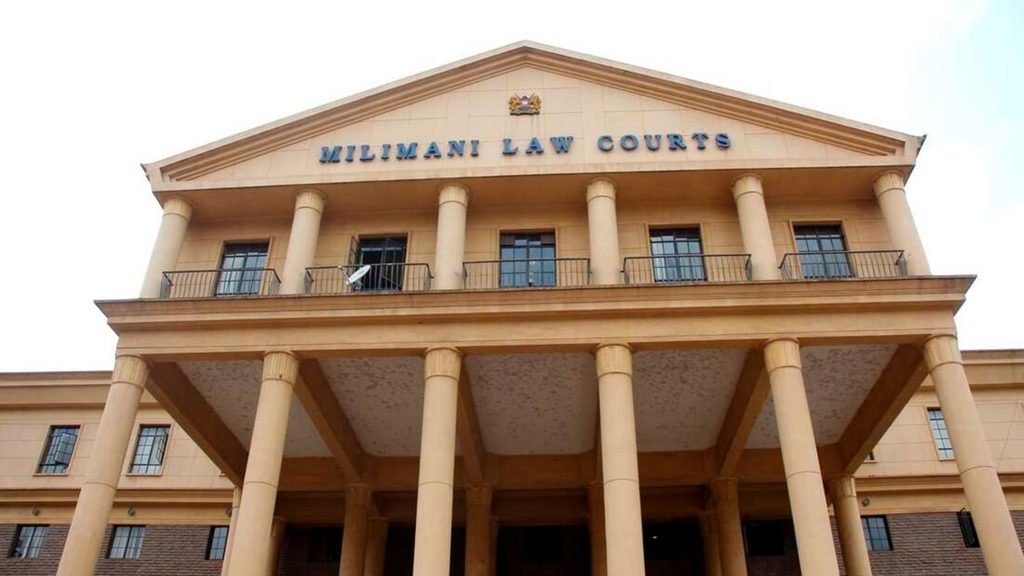
The legal story has moved fast, so here it is in order, with what’s settled and what isn’t.
| Date | What happened |
| December 2024 | The State Department for Immigration and Citizen Services invites local insurers to bid in a restricted tender. The initial procurement fails. |
| 30th July 2026 | Notice No. 11492, dated 29th July, appears in a Special Issue of the Kenya Gazette and sets the US$50,000 minimum. |
| 7th August 2026 | The Ministry of Health clarifies that qualifying home-country policies count, with proof uploaded through the eTA and a compliant policy available at designated entry points. |
| August 2026 | Vantage Point Ventures, with the Consumers Federation of Kenya (COFEK) in support, files a Nairobi case challenging the selection of 14 insurers and the roles of Kenya Re and Minet. |
| 21st to 24th August 2026 | Justice Francis Rayola Olel of the High Court at Marsabit certifies a petition as urgent and suspends implementation and enforcement of the notice. Reports differ on the exact date. |
| 16th September 2026 | Inter partes hearing before Justice Olel. The interim orders are extended and enforcement stays suspended. There is no final judgment. |
| 29th September 2026 | The Nairobi case on insurer selection is listed for mention. |
The Gazettement: What Notice No. 11492 Actually Did
Gazettement is the formal step, and it’s what made the headlines. It isn’t the same as a rule you can enforce at a border. The notice fixed the minimum benefits. The mechanics came later, in the Ministry’s 7th August clarification: proof uploaded through the eTA, verification at entry points and, according to court papers reported by the Nation, possible refusal of entry for non-compliance. The government had tried to build the scheme before. Clyde & Co’s analysis notes that a restricted tender inviting local insurers to bid in December 2024 failed. The government prescribed the benefits anyway.
What Did the Kenyan High Court Decide About Mandatory Travel Insurance?
It paused the rule. It didn’t decide the case. In late August Justice Francis Rayola Olel, sitting at the High Court in Marsabit, certified the petition as urgent and suspended the implementation and enforcement of Gazette Notice No. 11492 until the application could be heard. Two Marsabit residents brought it. The respondents include the Health Cabinet Secretary, the Interior Ministry, the Principal Secretary for Immigration and the Attorney General.
The petitioners make four arguments. The Ministry of Health, they say, has no power to set entry conditions, because the management of foreign nationals belongs to the Interior Ministry and the Directorate of Immigration. Verifying insurers, they add, is the Insurance Regulatory Authority’s job and not Immigration’s. The rollout also lacks the policy and administrative framework that Section 26(7) of the Social Health Insurance Act requires. And collecting health insurance data through the eTA, without public participation, raises privacy and data protection concerns. These are the petitioners’ arguments. The court hasn’t ruled on them.
The September Ruling: Why the Rule Remains Frozen
On 16th September the matter returned to Justice Olel for an inter partes hearing, where both sides are heard on the interim application. The orders were extended, so enforcement of the notice stays suspended while the petition is pending. It wasn’t a final judgment. The notice hasn’t been quashed, amended or upheld. We haven’t seen a published date for the full hearing. A separate case in Nairobi, brought by Vantage Point Ventures with the Consumers Federation of Kenya (COFEK) in support, challenges how 14 insurers were selected and the roles played by Kenya Re and Minet. It was listed for mention on 29th September.
What Is KATO’s Position on Mandatory Travel Insurance for Kenya?
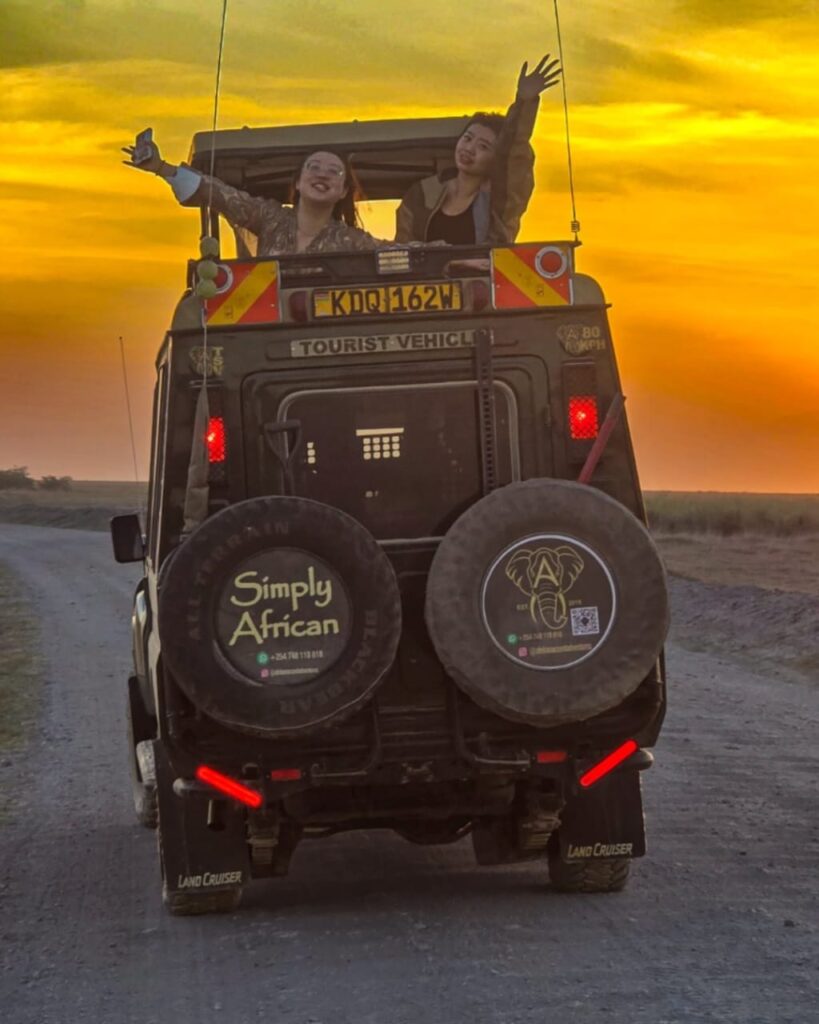
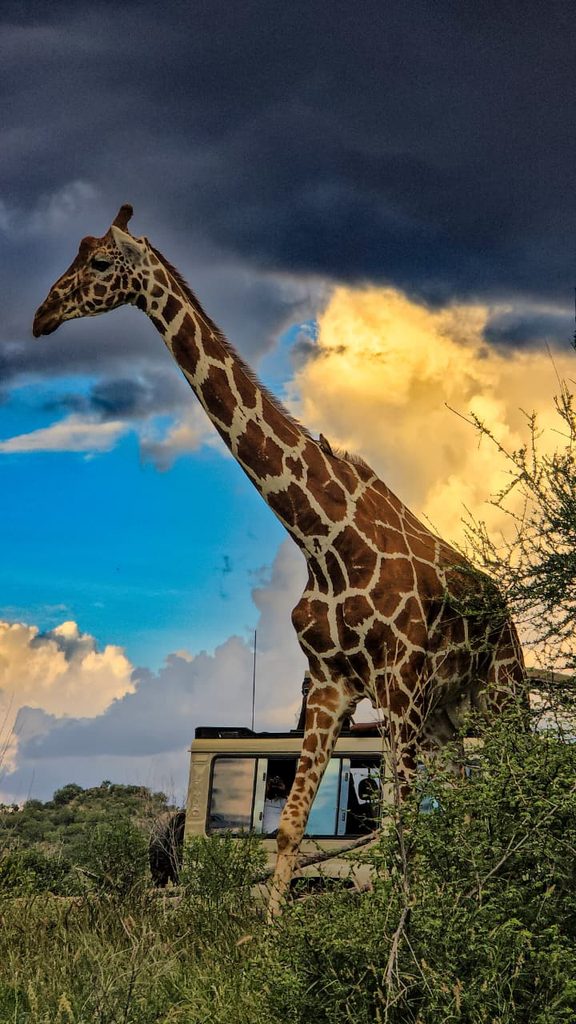
KATO is for insurance and against this design. The Kenya Association of Tour Operators, formed in 1978 and representing more than 300 licensed operators, lobbies for its members on how government policy and legislation are formulated and implemented. Its Code of Conduct already tells members to encourage clients to carry travel insurance. What the industry objected to in August was the double bill.
Fred Odek, who chairs KATO and was quoted by The EastAfrican as chairman of the Kenya Tourism Federation, said a visitor who buys cover at home and is then told to buy another policy in Kenya faces an additional expense and that the rule would make Kenya a costlier destination. The Nation reported that hoteliers, tour operators and travel agents fear Kenya could lose visitors to Tanzania, Rwanda and South Africa. The industry line, is that insurance isn’t the problem. Implementation is.
We agree that paying twice is bad policy design. We don’t agree that the answer is going without.
| EXPERT NOTE Read the certificate before the headline. Whatever the court decides next, three numbers decide whether your policy works on safari: the evacuation limit, the medical expenses limit and the cancellation limit. If you can’t find all three on the certificate, the policy isn’t ready. Kibara Mugo, Safari Writer and East Africa Specialist |
Should You Still Buy Travel Insurance for a Kenya Safari?
Yes, and we’d say so with or without a court case. Afrikan Accent Adventures is a Nairobi-based safari operator, and Section 10 of our Booking Terms and Conditions makes comprehensive travel insurance a condition of booking. The minimum we require covers four things:
- Medical expenses and emergency evacuation or repatriation
- Cancellation and curtailment
- Personal accident
- Loss of baggage and personal effects
We may ask for proof before departure, and a guest who travels without adequate cover does so entirely at their own risk.
Three reasons we hold that line. First, the exposure is real money. Our cancellation schedule charges the deposit only until 90 days out (30% of the tour price), then 50% from 90 to 61 days, 75% from 60 to 31 days and 100% inside 30 days. Air and rail tickets, permits and non-refundable camp deposits are non-refundable at any time. Second, we can’t refund what a supplier won’t return: our force majeure clause limits refunds to what suppliers pay back. Third, safari medicine is remote medicine. The vehicle is the first ambulance and the airstrip is the second. Our Kenya safari safety guide covers the other half of the job, which is not needing the claim in the first place.
What Should Kenya Safari Travel Insurance Cover?
Start with our four required lines, then add the three that safari travellers forget: activities, camera gear and weather delay. Put them in this order of priority: evacuation first, cancellation second, gear third.
Medical Evacuation Cover: The One You Can’t Skip
If you check one benefit with care, make it this one. Evacuation moves you from where you are to where treatment is, and in the Masai Mara, Laikipia and Samburu that can mean an airstrip rather than a road. Repatriation then takes you home. They’re different benefits and policies list them separately. Check four things: the evacuation limit, whether air ambulance from remote areas is named, whether the insurer’s doctors alone decide you’re fit to move and whether repatriation home is included. Evacuation insurance for Kenya isn’t an upgrade. Our safety guide calls it the minimum and we haven’t changed our minds.
Does Travel Insurance Cover Medical Evacuation from the Masai Mara?
Yes, if your policy includes emergency medical evacuation and the insurer’s assistance team agrees the move is medically necessary. Insurers don’t pay for convenience flights. They pay for necessary transfers they’ve approved. The usual order of events looks like this:
- Your guide radios the camp manager.
- You or the camp call your insurer’s 24-hour assistance line, which is the number on your certificate.
- The assistance doctors assess the case by phone and decide between a road transfer, an air ambulance or treatment on site.
- A light aircraft collects the patient from the nearest airstrip and flies to Wilson Airport in Nairobi, a flight of roughly an hour from the Mara.
- A ground ambulance meets the aircraft and takes the patient to a Nairobi hospital such as The Nairobi Hospital or Aga Khan University Hospital.
Two traps. Call the assistance line before you arrange transport yourself, because many policies won’t repay a transfer they didn’t approve. And remember that evacuation isn’t a taxi: if the policy only covers repatriation to your home country, it may not move you to Nairobi at all. Ask the question in writing.
AMREF gets you to the hospital. Your insurer pays the hospital. A safari needs both ends covered.
Flying Doctors and AMREF: What They Actually Do
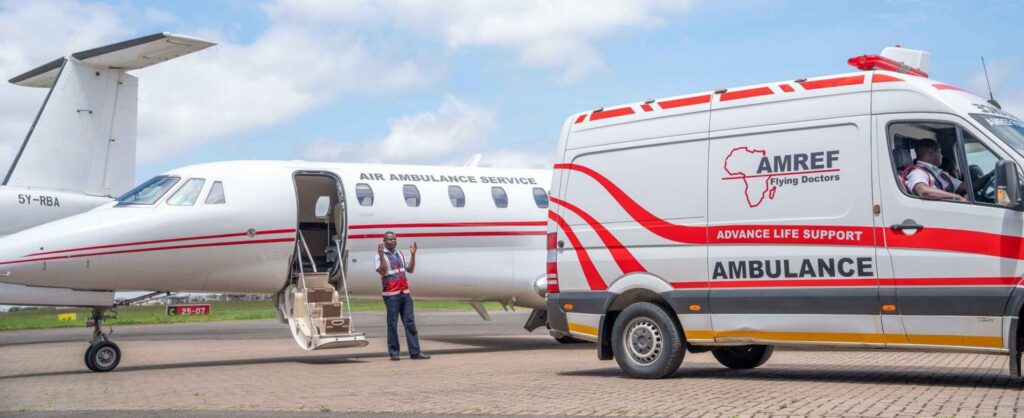
AMREF Flying Doctors is the air ambulance service of AMREF Health Africa (the African Medical and Research Foundation). It operates from Wilson Airport in Nairobi. Its aircraft and ground ambulances move seriously ill or injured patients from remote areas to hospital. The idea dates to the 1950s, when surgeons Michael Wood, Archibald McIndoe and Thomas Rees proposed flying doctors to patients. Our safety guide calls it the benchmark service for serious incidents.
It isn’t an insurer. It moves patients. It doesn’t pay hospital bills, fly you home from Nairobi or refund a cancelled trip. You meet it in one of three ways. Your insurer’s assistance company may dispatch it. You can buy AMREF Flying Doctors’ Maisha Tourist cover, a short-term air ambulance product for individual and small-group travellers (a separate Tourist Scheme B exists for tour operators, hotels and lodges). Or you can join the Flying Doctors Society of Africa, an independent membership body whose members get one free evacuation per membership period from Kenya, Uganda, Tanzania, Rwanda or Burundi, with a ground ambulance to the hospital of their choice.
Read the fine print before treating a membership as insurance. AMREF Flying Doctors keeps the right to judge whether an evacuation is medically warranted, and its terms exclude treatment that began before the membership did. Use it as a top-up that guarantees the aircraft. Keep the full policy for the hospital bill, the flight home and the cancelled trip.
| EXPERT NOTE In the bush the first hour matters most. Tell your guide on day one about any medication, allergy or condition. Make sure your insurer’s emergency number is saved on your phone and written on paper. When something goes wrong, the number you can read out loud saves more time than the best policy you can’t find. Nicholas Wangithi, Director & Founder |
Trip Cancellation and Weather Delays
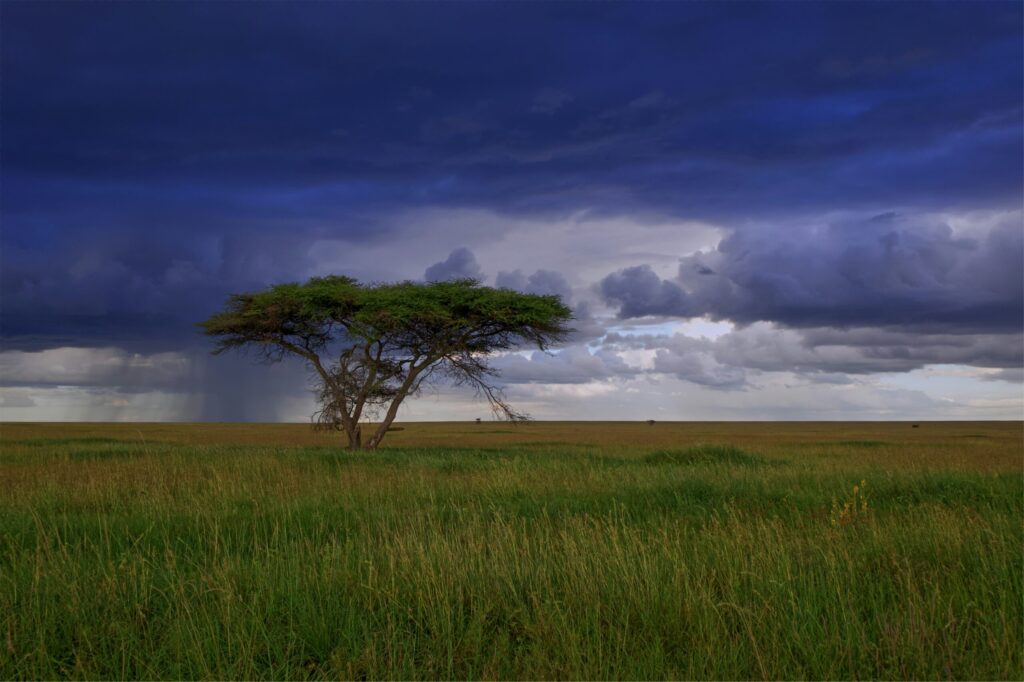
Travel insurance covers safari cancellation when the reason is one your policy lists and you bought the policy before the event. Covered reasons usually include illness or injury to you or a close relative, the death of a close relative and some travel disruptions. Changing your mind isn’t covered unless you add Cancel For Any Reason. That upgrade typically returns 50% to 75% of your prepaid costs, adds roughly 40% to 50% to the premium and usually has to be bought within 14 to 21 days of your first trip payment.
Run the numbers on our schedule. A guest who cancels our four-day Masai Mara safari at Mara Elatia Camp in the Mara Triangle, priced from US$1,440 per person, 45 days out owes 75% under our terms, which is US$1,080. Cancel with 25 days to go and it’s the full US$1,440. That’s the money a cancellation benefit exists to recover. Anyone booking inside 60 days pays in full at the time of booking, so the exposure starts on day one.
Weather is the other half. The long rains run from March to May, when rivers rise and some roads and airstrips turn unreliable. A delay or interruption benefit repays extra hotel nights, meals and missed connections when a covered event disrupts your travel. Read what the policy counts as a covered event, because bad weather isn’t always one. Buy before the problem is known, since insurers exclude events that are already foreseeable when you buy.
Camera and Gear Cover for Photographic Safaris

A telephoto lens can cost more than the rest of your luggage combined. Standard policies cap each item at a fraction of that, and many exclude gear left unattended or in a vehicle. Three habits fix most of it. Photograph every body and lens with its serial number and keep the receipts in the cloud. Carry the kit as hand luggage and never in a checked bag. Then ask your insurer or your home contents insurer about specified-item or all-risks gear cover. Our Booking Terms are plain on the rest: baggage and valuables stay the guest’s responsibility, including items left in vehicles or accommodation, so your policy is the only safety net. If gear is stolen in Nairobi, ask the police for a police abstract and keep it with your claim.
Does Travel Insurance Cover Safari Activities in Kenya?
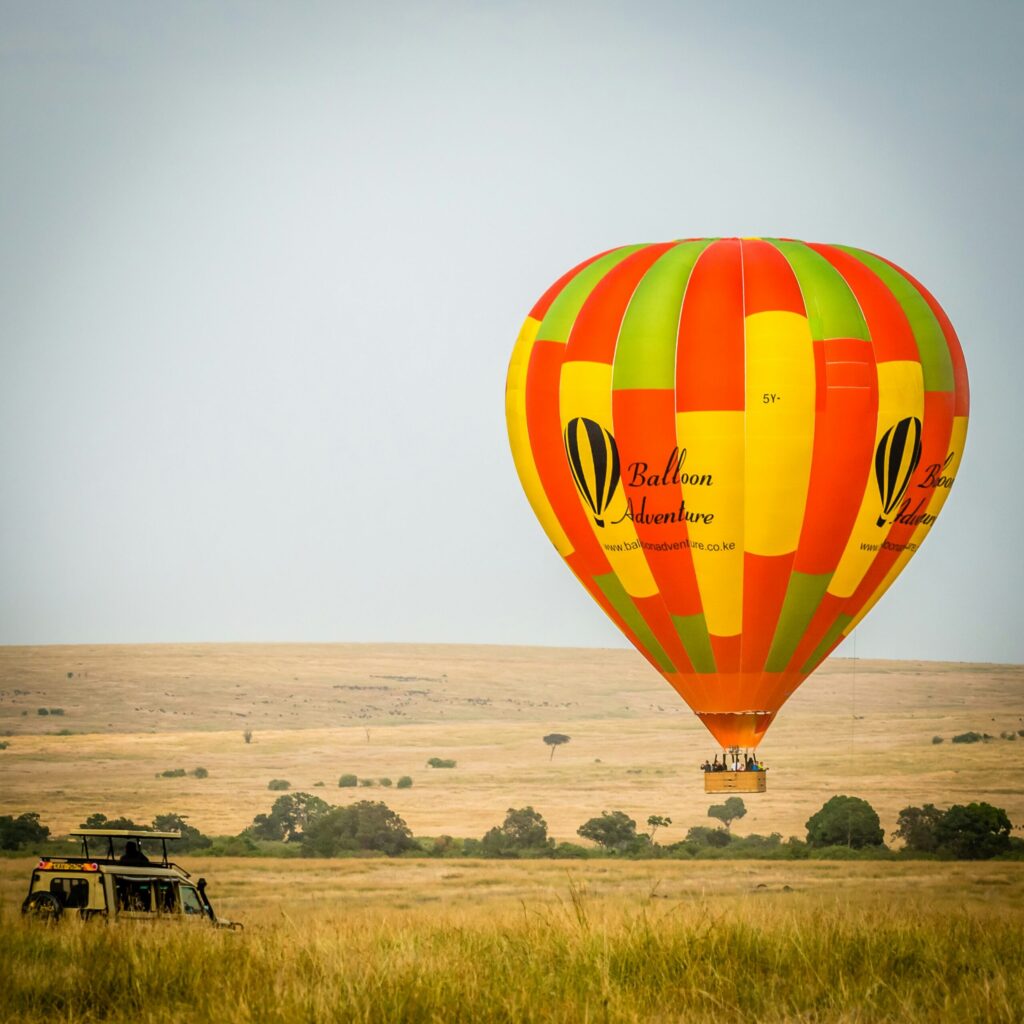
Game drives are covered almost everywhere. The grey zone is the extras. Check your policy’s activity list against the table below, then confirm in writing.
| Activity | Usually covered? | What to check |
| Game drives in a safari vehicle | Usually yes | Rarely an issue. Stay in the vehicle and follow your guide’s instructions. |
| Hot air balloon safari | Varies | Some insurers cover it as a passenger activity and others need an add-on. Confirm in writing. |
| Guided walking safari | Varies | Look for wording on walking with armed rangers or near dangerous animals. |
| Mount Kenya trek | Often capped by altitude | Point Lenana stands at 4,985 metres. Check the policy’s altitude limit. |
| Water sports and diving at the coast | Varies | Check depth limits and certification requirements. |
| Horse riding and quad biking | Often an adventure add-on | Check helmet and guide conditions. |
One exclusion deserves a warning: most policies exclude injuries caused by deliberately exposing yourself to needless danger. Step out of the vehicle against your guide’s instruction and an assessor will read the claim closely. Our Kenya safari safety guide sets out the rules that protect both you and your claim.
How Much Does Travel Insurance for Kenya Cost?
Expect to pay roughly 4% to 10% of your prepaid, non-refundable trip cost for comprehensive cover, with most travellers landing around 6% to 7%. These are US market figures from insurance comparison sites, so treat them as a guide and not a quote. On a US$6,000 safari including flights that’s about US$240 to US$600. Age, pre-existing conditions, trip length and extras such as Cancel For Any Reason move the number most.
| What you are buying | Typical cost |
| Comprehensive single-trip policy | 4% to 10% of prepaid, non-refundable trip cost; most travellers pay around 6% to 7% |
| Cancel For Any Reason upgrade | Adds roughly 40% to 50% to the base premium and typically repays 50% to 75% of prepaid costs |
| Kenya’s US$50,000 rule | No premium set. US$50,000 is the minimum benefit, not the price |
| Tanzania mainland inbound policy | US$44 per person, valid up to 92 days, bought from the National Insurance Corporation or a partner insurer |
| AMREF Flying Doctors Maisha Tourist | Quoted by AMREF Flying Doctors, so ask for current rates |
Don’t buy on price alone. A cheaper policy that caps evacuation low or excludes ballooning costs more on the day it fails. Buy within 14 days of your first deposit so the pre-existing condition waiver and Cancel For Any Reason stay available. Compare certificates, not quotes.
Do I Need Travel Insurance for a Kenya and Tanzania Safari?
Yes, and Tanzania now makes it compulsory. From 1st October 2026 foreign visitors entering mainland Tanzania must hold the government’s inbound travel insurance, a fixed policy priced at the equivalent of US$44 per person and valid for up to 92 days with multiple entries. The rules, Government Notice No. 256 of 2026, are dated 4th September 2026 and apply at airports, land borders and seaports. The policy comes from the National Insurance Corporation (NIC) or a registered insurer working with it, and visitors without one can be refused entry.
Residents of East African Community and Southern African Development Community states fall outside the rule. Zanzibar has run its own mandatory scheme through the Zanzibar Insurance Corporation since 2024.
The two countries built their rules differently. Kenya’s sets a benefit floor that your own policy can clear if it’s ever enforced. Tanzania sells you a fixed product. Treat the Tanzanian policy as your entry ticket and your own policy as the safety net. Its published purpose is emergency treatment, luggage loss, evacuation and repatriation, but we haven’t seen its benefit limits, so we’d never rely on it alone. Sort it before you fly to avoid a queue at the border. Then make sure your own policy names both Kenya and Tanzania and that your evacuation cover reaches the Serengeti as well as the Masai Mara.
What Happens If I Travel to Kenya Without Travel Insurance?
Right now, you can fly in without it because the government can’t enforce the notice, but you carry every bill yourself. If you’re booked with us, you’d also be in breach of Section 10 of our Booking Terms, which makes cover a condition of booking and lets us ask for proof before departure.
If the rule returns, the Ministry’s August clarification points to proof uploaded through the eTA, checks at entry points and, according to court papers, possible refusal of entry. A visitor without cover was meant to be able to buy a compliant policy at a designated entry point. We wouldn’t plan a safari around that option. An airport counter after a long-haul flight is the worst moment to choose a policy. Cancellation cover can’t be bought after you’ve already travelled.
Without cover the arithmetic is simple. You pay hospital bills as they arise, pay for any air evacuation yourself and absorb any cancellation charge in full. Our schedule reaches 100% inside 30 days. Tanzania is stricter still: no valid inbound policy can mean refused entry.
Our Recommended Minimum Cover Checklist for a Kenya Safari
Use this before you pay. It starts with the four lines our Booking Terms require and adds the safari-specific extras. The limits in the right-hand column are our editorial recommendation, set above Kenya’s frozen minimums.
| Cover | What we look for |
| Emergency medical expenses | US$100,000 or more, with direct billing to hospitals where possible |
| Emergency evacuation and repatriation | US$250,000 or more, naming air ambulance from remote areas and repatriation home |
| Kenya’s frozen minimums | A certificate showing US$20,000 medical, US$25,000 emergency transport, US$5,000 repatriation of remains, US$1,000 mental illness and US$300 medicines |
| Trip cancellation and curtailment | The full prepaid, non-refundable cost of safari and flights, with Cancel For Any Reason considered |
| Personal accident | Included, as our Booking Terms require |
| Baggage and personal effects | A per-item limit that matches your camera kit. Add separate gear cover if it doesn’t |
| Activities | Ballooning, guided walking and altitude limits confirmed in writing |
| Pre-existing conditions | A waiver bought inside the insurer’s window, usually 14 to 21 days after your first deposit |
| Assistance line | The 24-hour number saved on your phone and written on paper |
| Tanzania leg | The NIC inbound policy at US$44 plus your own cover naming Tanzania |
If Something Goes Wrong: Five Steps
- Tell your guide or camp manager first. They know the nearest airstrip and the fastest route.
- Call your insurer’s 24-hour assistance line before arranging transport, because many policies won’t repay a transfer they didn’t approve.
- Keep every receipt, prescription and medical report.
- For stolen or damaged gear, photograph the damage and get a police abstract.
- Tell your Afrikan Accent Adventures contact as soon as you safely can.
| EXPERT NOTE Buy the policy in the same week as your first deposit. That’s when the pre-existing condition waiver and Cancel For Any Reason windows are open, and it’s when you still have time to change your mind about the add-ons. Then send us the policy details so they travel with your itinerary. Hellen Asiko, Director & Guest Experience Curator |
Kenya Safari Travel Insurance FAQ
Do I need travel insurance for a Kenya safari?
Yes. Kenya doesn’t currently enforce a legal insurance requirement, but we require comprehensive travel insurance with medical evacuation for every booking. Without it you’re personally liable for remote-area medical costs and cancellation charges.
Is travel insurance mandatory for Kenya in 2026?
Not at the moment. Gazette Notice No. 11492 made US$50,000 of travel health insurance mandatory for foreign visitors in July 2026, but the High Court at Marsabit suspended its enforcement in August and extended the orders in September. The notice hasn’t been quashed, so check the position before you fly.
What is the US$50,000 Kenya travel insurance requirement?
It’s a minimum benefit level, not a premium. Visitors staying under 12 months must hold cover worth at least US$50,000 in total, including US$20,000 for medical expenses, US$25,000 for emergency medical transportation, US$5,000 for repatriation of remains, US$1,000 for mental illness and US$300 for prescribed medicines.
What is AMREF Flying Doctors?
AMREF Flying Doctors is the air ambulance service of AMREF Health Africa, based at Wilson Airport in Nairobi. It flies seriously ill or injured patients from remote areas to hospital, but it doesn’t pay hospital bills or replace travel insurance.
Does travel insurance cover safari cancellation?
Yes, for covered reasons such as illness, injury or the death of a close relative, provided you bought the policy before the event. Cancelling because you changed your mind needs a Cancel For Any Reason upgrade, which usually repays 50% to 75% of prepaid costs.
Does travel insurance cover medical evacuation from the Masai Mara?
Yes, if your policy includes emergency medical evacuation and your insurer’s assistance team approves the transfer as medically necessary. Call the assistance line before arranging transport and check that the limit covers air ambulance from remote areas.
Does the Kenya eTA require proof of travel insurance?
Not while the rule is suspended. The Ministry of Health planned for proof to be uploaded through the eTA system, but that plan sits inside the notice the High Court froze. Apply for your eTA as usual and check the portal in the week you travel.
Can I use my home-country travel insurance in Kenya?
Yes. The Ministry of Health’s clarification accepts qualifying policies from your country of origin if they meet the gazetted benefit limits, and nothing stops you using a home policy on safari. Ask your insurer for a certificate that shows each limit.
How much does travel insurance for Kenya cost?
Expect 4% to 10% of your prepaid trip cost for comprehensive cover, which is about US$240 to US$600 on a US$6,000 safari. Kenya has set no premium for its US$50,000 rule, and Tanzania’s mainland policy is a fixed US$44 per person.
Do I need travel insurance for Tanzania?
Yes, from 1 October 2026 for foreign visitors entering mainland Tanzania. The rule requires the government’s inbound policy, priced at the equivalent of US$44 per person and valid for up to 92 days, bought from the National Insurance Corporation or a partner insurer. Residents of East African Community and Southern African Development Community states are exempt.
Does travel insurance cover hot air balloon safaris?
Sometimes. Some insurers cover ballooning as a passenger activity, others need an add-on and some exclude it, so confirm in writing before you book. Our Booking Terms recommend that guests check their cover for ballooning before departure.
What happens if I travel to Kenya without travel insurance?
You can currently enter Kenya because the government can’t enforce the notice, but you’d pay every medical, evacuation and cancellation cost yourself. With us you’d also breach Section 10 of our Booking Terms.
When should I buy safari travel insurance?
Buy it within 14 days of your first safari deposit. Pre-existing condition waivers and Cancel For Any Reason upgrades are usually only available within 14 to 21 days of your first trip payment, and cancellation cover can’t be bought once the reason for cancelling has arisen.
Get Your Cover Checked Before You Pay a Deposit
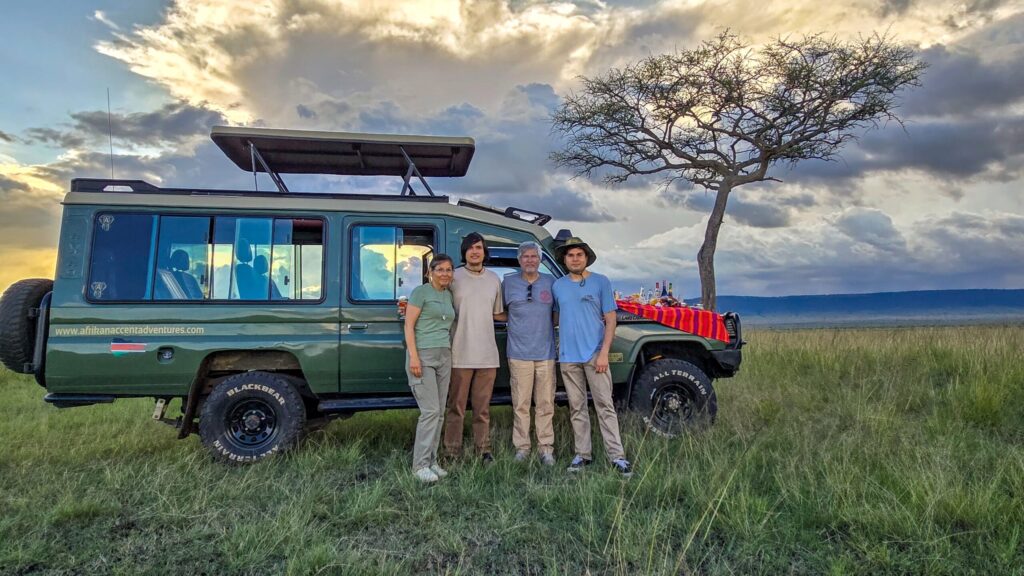
We’ve covered the rule, the court, KATO’s view, the cover that moves you out of the Masai Mara and the Tanzanian policy that’s now compulsory. What an article can’t do is read your policy against your itinerary.
Book a free consultation with Hellen Asiko, Director & Guest Experience Curator. Bring your itinerary and your policy certificate and we’ll show you where the gaps are, which activities need extra cover and whether the policy meets what Section 10 of our Booking Terms requires. We’re a Nairobi-based safari operator running trips across the Masai Mara, Amboseli, Laikipia and Samburu, and we’d rather you find a gap now than on a bush airstrip.
The court froze the rule, not the risk, so buy the policy that will move you, treat you and bring you home.
Let's plan your East African safari
Tell us when you'd love to travel and a local specialist will craft a tailor-made route around you.


