 ✨Signature Journeys
📍 Masai Mara National Reserve
4 Days Masai Mara Safari | Mara Elatia Camp, Mara Triangle
from$1,440
★★★★★ 5
Home to the Big 5, the Great Wildebeest Migration and Dramatic Mara River Crossings.
Sekenani Gate, just after six in the morning. The first vehicles are already rolling through, the grass is still wet with dew and somewhere beyond the acacia thickets a pride of lions is finishing the night’s hunt. We have driven through this gate more times than we can count, and the first glimpse of the Masai Mara never quite loses its effect.
Masai Mara National Reserve sits in southwestern Kenya, in Narok County, forming the Kenyan section of the wider Mara-Serengeti ecosystem. The reserve covers approximately 1,510 square kilometres of open grassland, rolling hills, riverine forest and seasonal wetlands. The Mara and Talek rivers cut through the landscape, providing permanent or seasonal water and concentrating wildlife during the dry months.
What sets the Masai Mara apart is the sheer concentration and variety of wildlife. Lion, leopard, cheetah, elephant, buffalo, hippo, giraffe, hyena and hundreds of bird species all occur here, while the annual wildebeest migration brings one of the greatest wildlife spectacles on Earth into the Mara between Kenya and Tanzania.
The Masai Mara is also much bigger than the national reserve itself. Surrounding community conservancies such as Mara North, Naboisho, Olare Motorogi, Ol Kinyei, Enonkishu and others extend the protected landscape beyond the reserve boundaries. These conservancies place Maasai landowners at the centre of conservation and tourism, while offering experiences such as walking safaris and night game drives that are not permitted inside the national reserve.
We are a Nairobi-based safari operator and the Masai Mara remains one of the places we send guests when they want the classic Kenya safari: big cats, enormous herds, open savannah, dramatic landscapes and the possibility of witnessing the Great Migration. But the Mara is not only about migration season. A well-planned Masai Mara safari can be exceptional throughout the year.
Masai Mara National Reserve is a 1,510-square-kilometre wildlife reserve in Narok County, southwestern Kenya, and the northern extension of the Serengeti ecosystem. It is famous for its exceptional concentration of big cats, large elephant and buffalo populations, open savannah landscapes and the annual wildebeest migration.
Location: Narok County, southwestern Kenya, bordering Tanzania
Size: Approximately 1,510 square kilometres
Established: 1961 as a wildlife sanctuary, later expanded and converted to a reserve
Managed by: Narok County Government, with the Mara Triangle managed separately by the Mara Conservancy
Distance from Nairobi: Approximately 270–300 kilometres by road depending on the route and gate
Driving time from Nairobi: Approximately 5–6 hours, depending on traffic, road conditions and the chosen gate
Flying time from Nairobi: Approximately 45–60 minutes from Wilson Airport to the Mara airstrips
Known for: Big cats, the Great Migration, large herbivore herds, dramatic predator sightings and open savannah
Main gates: Sekenani, Talek, Oloolaimutia, Musiara and Oloololo
Major rivers: Mara River and Talek River
Neighbouring conservation areas: Mara Triangle and numerous community conservancies including Mara North, Naboisho, Olare Motorogi, Ol Kinyei and Enonkishu
The Great Migration is the event most closely associated with the Masai Mara. Each year, millions of wildebeest, accompanied by large numbers of zebra and other herbivores, move through the wider Mara-Serengeti ecosystem in search of fresh grazing and water.
The timing is not fixed to a particular date. The herds respond to rainfall, grass availability and river conditions, which means the exact arrival and departure of the migration can vary from year to year.
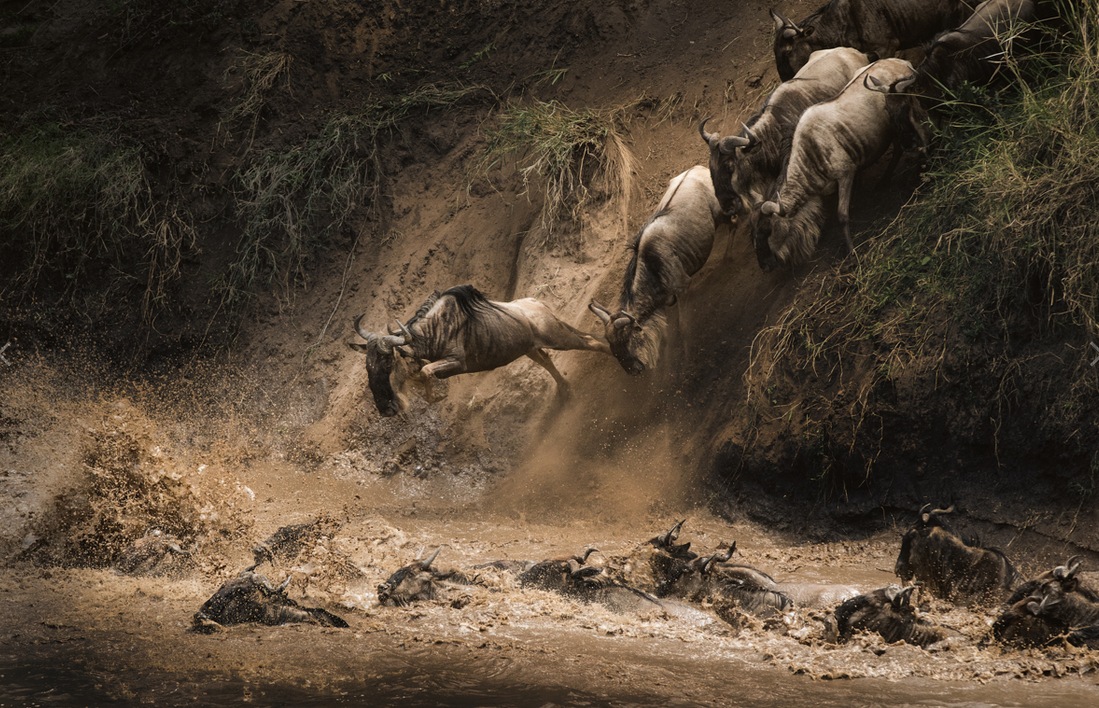
When the herds reach the Masai Mara, the Mara River becomes one of the most dramatic places to watch wildlife. Wildebeest gather on the banks, hesitate at the water and eventually plunge into the river in large groups. Crocodiles wait below while lions, hyenas and other predators take advantage of the concentration of prey.
The river crossings are spectacular, but they are not guaranteed. We never promise guests a crossing simply because they are travelling during migration season. Wildlife follows its own timetable.
The wildebeest migration usually reaches the Masai Mara between July and October, with August and September traditionally regarded as strong months for migration activity. However, the timing changes annually according to rainfall and grazing conditions, so migration crossings cannot be guaranteed on specific dates.
The wildebeest is the central character of the Masai Mara migration story. Large herds can stretch across the plains as far as the eye can see, creating an extraordinary spectacle of movement, dust and sound.
Zebra travel with the wildebeest, feeding on different grasses and helping make use of the landscape as the herds move. Thomson’s gazelles, topi and other herbivores are also part of the wider migration system.
For photographers, the migration offers several completely different opportunities: huge herds on open plains, dust-filled movement, predator encounters and the possibility of a river crossing.
But there is another side to the migration. The Mara remains an excellent wildlife destination outside the peak migration months, and travellers who visit in January, February, November or December can experience excellent game viewing with fewer vehicles in many areas.
The Masai Mara is one of Kenya’s strongest destinations for viewing the traditional Big Five: lion, leopard, elephant, buffalo and rhinoceros.
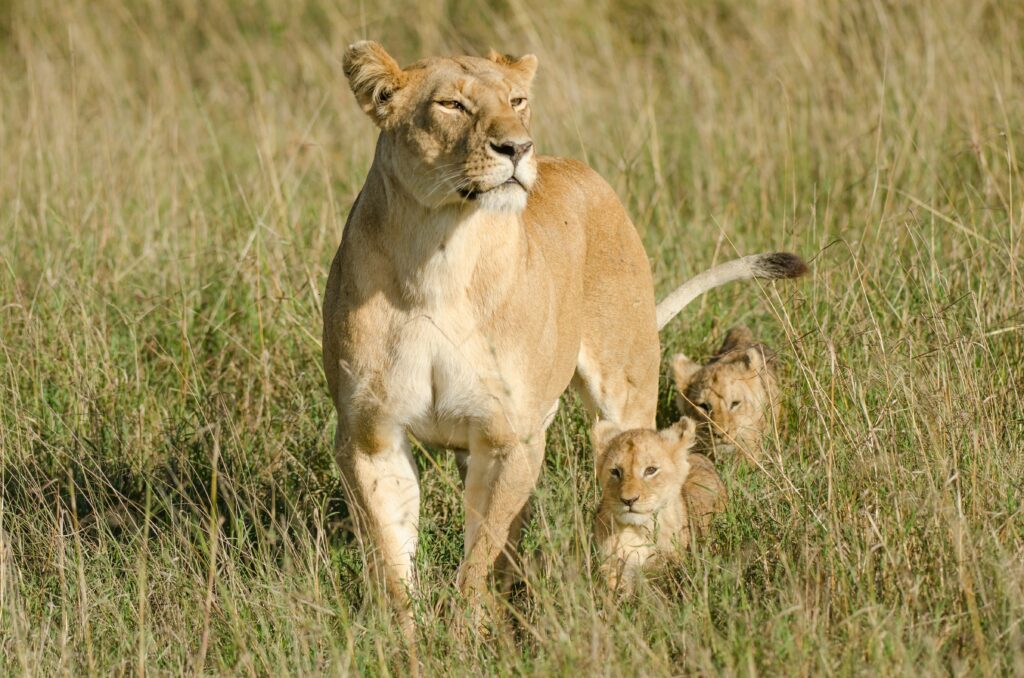
Lion sightings are particularly strong. Large prides occupy the grasslands and riverine areas, and early morning game drives can produce sightings of lions returning from a hunt or resting after a night of activity.
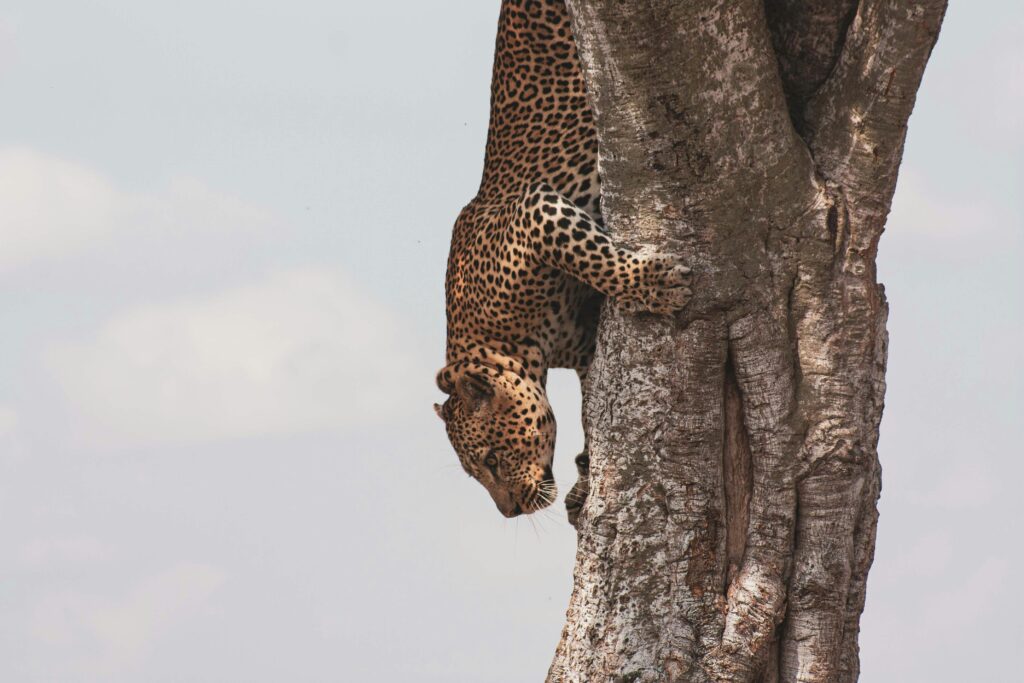
Leopards are more elusive and are often found near riverine forests, particularly around areas where there is sufficient cover. Finding a leopard requires patience, a good guide and sometimes a little luck.
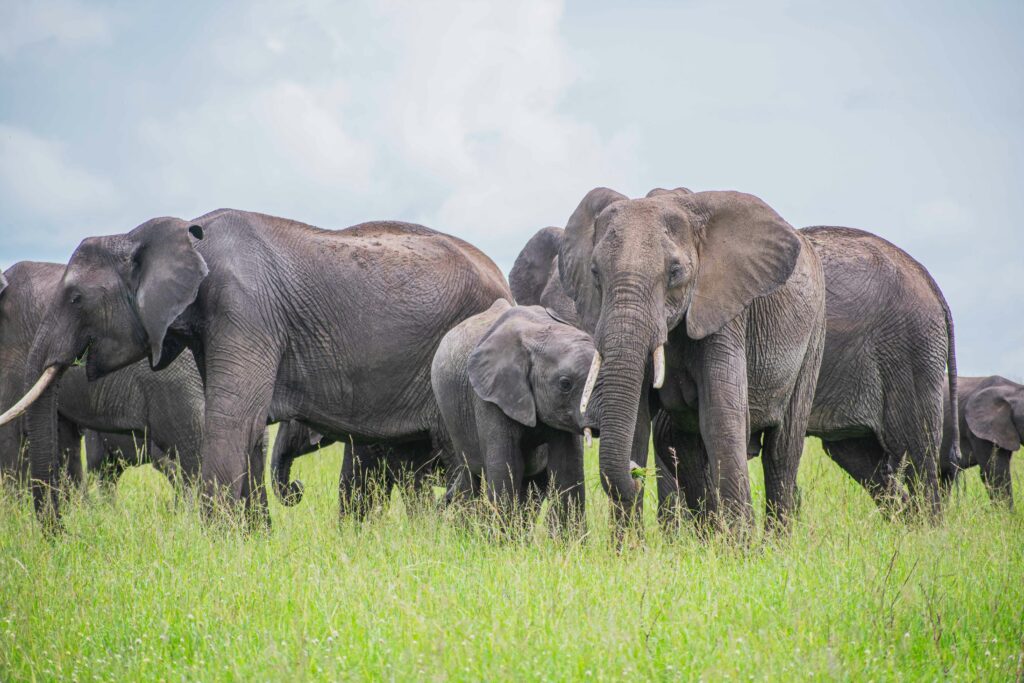
Elephants move across the plains and woodland areas in family groups and can often be seen near water during dry periods.
Buffalo occur in large herds and are particularly impressive when viewed against the open grassland.
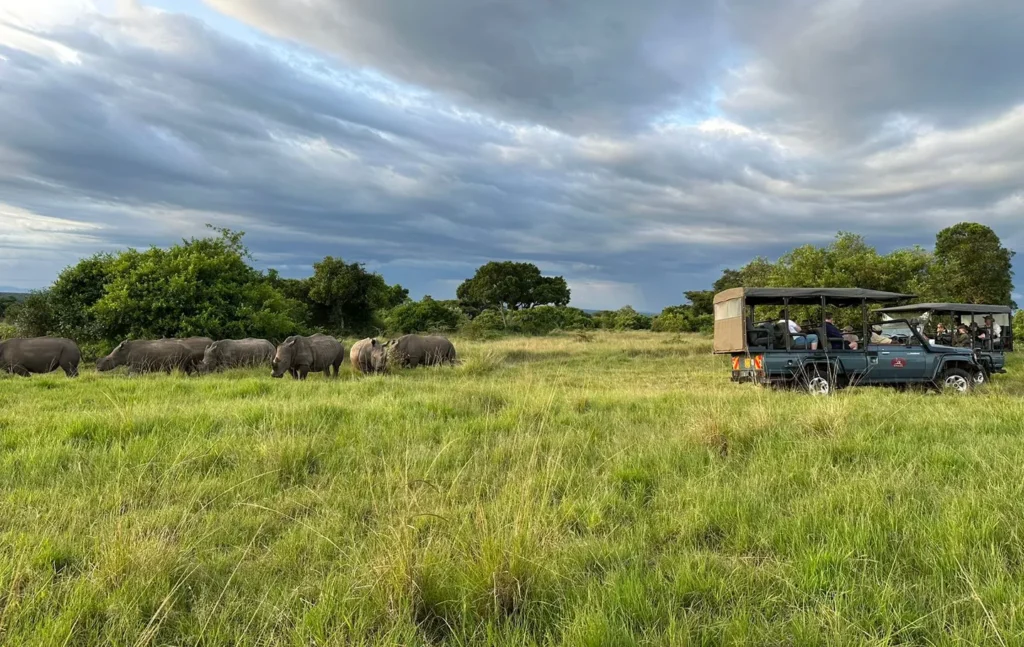
Black rhino are present in the Mara, although sightings are considerably less predictable than lion, elephant or buffalo. The reserve’s rhino population is carefully protected, and responsible wildlife viewing is essential.
The Masai Mara has earned its reputation as one of Africa’s great big-cat destinations.
Lion are among the most frequently encountered predators in the Masai Mara. The open terrain makes prides relatively easy to locate, particularly during the cooler morning hours.
A Masai Mara safari can reveal lions hunting, mating, resting, nursing cubs or interacting with members of their pride. The behaviour changes with the season, prey availability and time of day.
Leopards are considerably more secretive. They favour areas of dense vegetation, riverine forest and rocky cover, often resting in trees during the heat of the day.
A leopard sighting in the Masai Mara can be one of the most rewarding encounters of a safari precisely because it is less predictable than finding a lion pride.
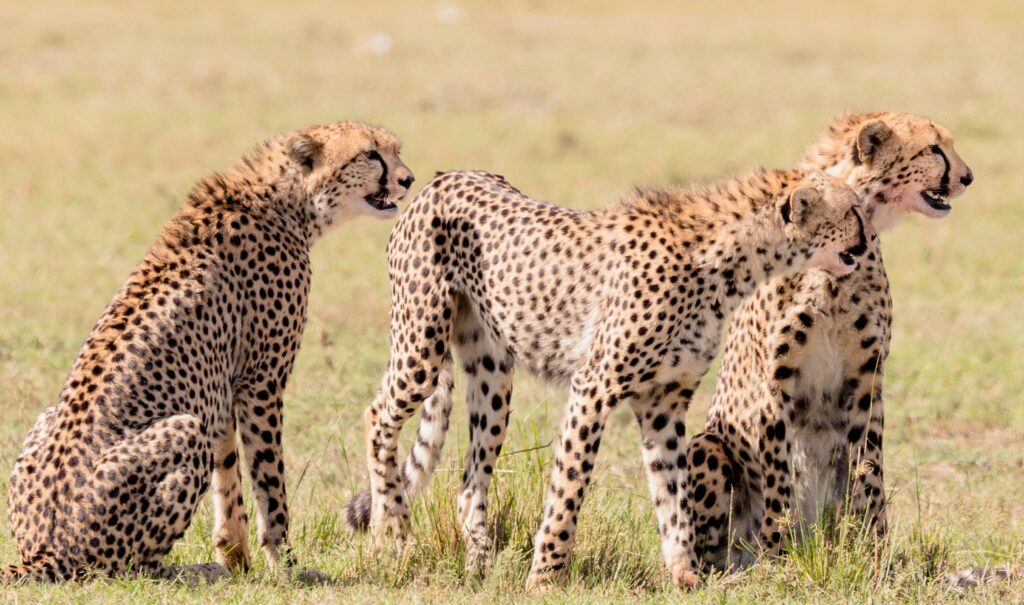
The open plains of the Masai Mara provide ideal hunting country for cheetahs. Their preference for open terrain allows them to use speed to pursue prey such as gazelles.
Early morning and late afternoon are particularly productive periods for cheetah sightings because temperatures are lower and prey activity increases.
The Masai Mara supports lion, leopard, cheetah, elephant, buffalo, black rhino, giraffe, hippo, crocodile, wildebeest, zebra, topi, impala, Thomson’s gazelle, hyena and many other species. The reserve is particularly famous for its concentration of big cats and large herbivore herds.
Beyond the Big Five and big cats, the Masai Mara supports an extraordinary range of wildlife.
Topi are common on the open grasslands, often standing on termite mounds to scan the surrounding plains.
Thomson’s gazelles and Grant’s gazelles provide important prey for cheetahs and other predators.
Hippopotamus occupy deeper sections of the Mara and Talek rivers, spending much of the day submerged and emerging to graze after sunset.
Nile crocodiles are particularly important around the Mara River, where they wait for opportunities during the migration.
Spotted hyenas are among the Mara’s most adaptable predators and scavengers. They are active both day and night and can often be encountered around predator kills.
Giraffes browse scattered acacia and other trees, while eland, impala, warthog and various antelope species add to the diversity of the plains.
Birdlife is equally impressive. Raptors, vultures, storks, egrets, rollers, bee-eaters, ostriches and numerous grassland species can all be encountered during a Masai Mara safari.
The biggest mistake we see guests make is assuming the Masai Mara is only worth visiting during the wildebeest migration. The migration is extraordinary, but the resident wildlife remains here throughout the year. If your priority is predators, photography or quieter game drives, travelling outside peak migration can sometimes produce a more relaxed safari.
Kibara Mugo, Safari Writer & East Africa Specialist
Game drives are the foundation of a Masai Mara safari. Morning game drives begin around sunrise, when temperatures are cooler and predators are often still active. Afternoon drives continue toward sunset, when the savannah takes on its characteristic golden light.
A full-day game drive can be particularly useful during migration season because it allows your guide to respond to wildlife movements rather than returning to camp after a short morning circuit.
Inside the national reserve, game drives follow designated tracks and visitors are expected to respect wildlife-viewing regulations.
Migration viewing is one of the most sought-after Masai Mara experiences. Depending on the season and location of the herds, a game drive may involve following wildebeest across the plains or positioning near the Mara River.
River crossings are unpredictable, and responsible guides avoid pressuring animals or creating unnecessary vehicle congestion.
The best migration safari is not necessarily the one that spends every hour beside a river. Some of the most memorable moments happen when thousands of wildebeest are simply moving across the open grasslands.
The Masai Mara is particularly suited to tracking lion, leopard and cheetah.
Professional guides use tracks, alarm calls, bird behaviour, recent sightings and knowledge of individual territories to locate predators.
Rather than simply driving from one sighting to another, experienced guiding turns predator tracking into part of the safari experience.
A hot air balloon safari offers a completely different perspective of the Masai Mara. Flights normally begin before sunrise, allowing guests to watch the landscape gradually appear beneath the balloon.
From above, the scale of the Mara becomes clear: winding rivers, scattered acacia, wildlife trails and herds moving across the grasslands.
Balloon safaris are weather-dependent and generally require advance booking.
Birdwatching in the Masai Mara is rewarding throughout the year. The combination of grassland, riverine forest, woodland and seasonal wet areas creates habitats for a wide variety of species.
Birds of prey are particularly impressive, with vultures and eagles frequently visible around predator activity and carcasses.
The Masai Mara is one of Kenya’s premier wildlife photography destinations.
The open grasslands provide unobstructed views of wildlife, while the golden morning and evening light creates strong photographic conditions.
The migration adds another dimension, particularly when large herds move through clouds of dust or gather near the Mara River.
For photographers, we recommend a private 4×4 safari vehicle where possible. Having control over the vehicle, route and timing gives considerably more flexibility than joining a large shared vehicle.
Bush breakfasts can be arranged in approved locations, allowing guests to start the day in the open savannah after an early game drive.
Sundowners are equally popular. As the sun drops behind the Mara hills, guests can stop at an appropriate viewpoint for drinks and snacks before returning to camp.
The experience is less about the drinks themselves and more about slowing down long enough to appreciate the landscape.
The Masai Mara takes its name from the Maasai people who have lived alongside wildlife in this landscape for generations.
Cultural visits can introduce guests to Maasai traditions, beadwork, livestock keeping, storytelling and contemporary community life.
We encourage guests to approach these experiences respectfully, ask permission before taking photographs and purchase crafts directly from the people who make them.
Guided walking safaris are generally not permitted inside the national reserve itself, but selected surrounding conservancies allow walking with trained guides and rangers.
Walking changes the safari completely. Instead of focusing on large animals alone, guests begin noticing tracks, insects, plants, bird calls and animal signs that are easily missed from a vehicle.
Night game drives are not permitted inside the Masai Mara National Reserve but are available in selected surrounding conservancies.
After dark, the Mara becomes a different ecosystem. Nocturnal animals such as aardvarks, genets, civets, bush babies and nightjars become more active, while predators use darkness to hunt.
If night drives are important to your itinerary, we recommend staying in a conservancy rather than inside the national reserve.
Selected Masai Mara conservancies offer horseback safaris, allowing travellers to experience the landscape at a slower pace.
Horseback safaris can be particularly rewarding around herbivore herds, although availability and routes depend on the individual conservancy and camp.
The distinction between the national reserve and surrounding conservancies matters when planning a Masai Mara safari.
Inside the national reserve, the main activity is daytime game viewing. Night drives, walking safaris and unrestricted off-road driving are not permitted.
Community conservancies operate under different management structures and can offer additional activities such as night game drives, walking safaris, controlled off-road viewing, horseback experiences and private bush meals, depending on the conservancy.
The conservancy model also creates a direct relationship between tourism and Maasai landowners. Conservancy tourism revenues support landowners, conservation operations, ranger programmes and community development.
Several conservancies surround the Masai Mara National Reserve, including Mara North, Naboisho, Olare Motorogi, Ol Kinyei and Enonkishu. The wider conservancy network extends the wildlife habitat far beyond the boundaries of the national reserve.
The Masai Mara National Reserve is the publicly managed core wildlife area where daytime game drives are the principal safari activity. Surrounding community conservancies are managed in partnership with Maasai landowners and may offer night drives, guided walks, controlled off-road driving and other experiences that are not permitted inside the national reserve.
The Mara Triangle occupies the southwestern section of the greater Mara ecosystem, on the western side of the Mara River.
It is managed separately from the Narok side of the Masai Mara National Reserve by the Mara Conservancy and is known for strong wildlife viewing, lower vehicle density in some areas and excellent migration habitat.
The Triangle is particularly important during the wildebeest migration because herds move through its grasslands and cross the Mara River in this area.
A stay on the Mara Triangle side can therefore provide a different experience from the eastern sections of the reserve.
Mara North is one of the largest community conservancies in the greater Mara ecosystem and provides an important buffer between the national reserve and community land.
It is known for lower vehicle density, walking opportunities and night game drives, depending on the camp and current conservancy regulations.
Naboisho is particularly well known for its strong conservation model, excellent wildlife viewing and low-density tourism.
Guests staying in Naboisho can experience night drives, walking and other activities that are not generally available inside the national reserve.
Olare Motorogi is renowned for its predator population and relatively low tourist density. It borders the national reserve and offers an exclusive conservancy experience with access to activities such as night drives and guided walking.
Ol Kinyei is a community-owned conservancy known for its scenic landscape, strong conservation programme and intimate camps.
It is particularly suited to travellers looking for a quieter Masai Mara safari away from the busiest sections of the national reserve.
Enonkishu combines wildlife conservation with livestock management and community land stewardship.
It provides an opportunity to understand how pastoralism and wildlife conservation can coexist within the greater Mara ecosystem.
The Masai Mara has several access gates, and the most suitable gate depends on the location of your accommodation.
Sekenani Gate: One of the principal eastern entrances and a common access point for camps and lodges in the eastern Mara.
Talek Gate: Convenient for properties around Talek and the northern and eastern sections of the reserve.
Oloolaimutia Gate: Provides access from the eastern side and is useful for accommodation around Oloolaimutia.
Musiara Gate: Serves the northern sector and is particularly convenient for camps around Musiara and Governors’ areas.
Oloololo Gate: Provides access to the western side and is particularly useful for guests staying around the Mara Triangle and western Mara.
The correct Masai Mara gate depends on where you stay, which section of the reserve you want to explore and whether your itinerary includes a conservancy.
The standard road journey from Nairobi to the Masai Mara takes approximately five to six hours, depending on traffic, weather, road conditions and the gate being used.
The route passes through Kenya’s highlands before descending toward Narok and eventually reaching the Mara ecosystem.
The final approach varies considerably depending on the chosen gate and accommodation. Some roads are well maintained, while others can become rough during periods of heavy rain.
For a road safari, we recommend a proper 4×4 safari vehicle rather than a minibus, particularly if the itinerary includes longer game drives or remote camps.
Flying is the fastest way to reach the Masai Mara.
Scheduled and charter flights operate from Wilson Airport in Nairobi to several airstrips across the Mara ecosystem. Flight times are generally around 45 to 60 minutes, depending on the destination and routing.
Airstrips include locations serving different camps and conservancies, so we select the appropriate airstrip according to your accommodation.
Light aircraft normally operate with soft-sided luggage restrictions, commonly around 15 kilograms per person, although the exact allowance depends on the airline.
Road travel is the better choice if you want to experience Kenya’s changing landscapes, combine the Masai Mara with destinations such as Lake Nakuru or Naivasha, or keep the overall safari cost lower.
Flying makes more sense when time is limited, when travelling directly from another safari destination or when you want to maximize your time inside the Masai Mara rather than spending most of a day on the road.
For a first Kenya safari, we often recommend driving into the Mara and flying out, combining the landscape experience of a road journey with the convenience of a flight.
If you are combining the Masai Mara with Amboseli, Samburu or the coast, we usually look at the entire route before deciding whether you should drive or fly. The cheapest transport option is not always the most efficient one once you factor in travel time and lost game-viewing hours.
Nicholas Wangithi, Director & Founder
The Masai Mara has a mild-to-warm climate compared with Kenya’s hotter lowland destinations.
Daytime temperatures generally remain comfortable for game drives, while early mornings and evenings can feel surprisingly cool, particularly during the June to August period.
Rainfall is seasonal, but the Mara can receive rain at different times of the year. The main rainy periods are generally associated with the long rains from March to May and the short rains around October and November.
Rainfall can transform the Mara almost overnight. Dry golden grasslands become green, wildflowers appear and migratory bird activity increases.
The wetter periods can also make some roads muddy, particularly on secondary tracks.
The Masai Mara has a generally mild-to-warm climate, with cooler mornings and evenings and warmer afternoons. Rainfall is seasonal, with the long rains generally occurring from March to May and shorter rains around October and November. Conditions vary between years, so safari planning should account for changing weather and road conditions.
Masai Mara entry fees are set by Narok County Government and have changed significantly in recent years. For 2026, published guidance lists non-resident adult fees at USD 100 per person per day from January through June and USD 200 from July through December. Children aged 9–17 are listed at USD 50 per day, while children aged eight and below enter free.
The Masai Mara introduced a 12-hour ticket validity period, generally covering the daylight period from approximately 6:00 AM to 6:00 PM.
Because fees and ticketing arrangements can change, we confirm the current applicable rate when preparing a safari quotation rather than relying on an old fee schedule.
Most Afrikan Accent Adventures safari packages quote park entry fees as part of the overall safari package, making it easier for guests to understand the actual trip cost.
For 2026, published guidance lists non-resident adults at USD 100 per day from January to June and USD 200 per day from July to December. Children aged 9–17 are listed at USD 50 per day, while children aged eight and below enter free. Fees for Kenyan citizens and East African residents are lower and are charged in Kenyan shillings.
This is the period most associated with the Great Migration. Wildebeest and zebra are usually present in significant numbers, and river crossings may occur when conditions are right.
July through October is also a popular period for international visitors, so vehicle numbers and accommodation prices can be higher.
January and February can be excellent for game viewing. The grass is generally shorter in many areas, making wildlife easier to spot, and resident predators remain active.
This period is particularly attractive to travellers whose priority is big cats rather than migration.
The long rains bring green landscapes and fewer visitors. Photography can be excellent, although rain can affect road conditions and some seasonal camps may close.
The short rains bring new vegetation and renewed wildlife activity. Visitor numbers can be lower than during the peak migration period, making this an attractive period for travellers looking for a quieter Masai Mara safari.
July to October is the classic migration season, while January and February are excellent for resident wildlife and predator viewing. March to May and November to December offer greener scenery, fewer visitors and strong birding and photography opportunities, although rain can affect road conditions.
Two nights can provide a worthwhile introduction to the Masai Mara, particularly if you fly in and concentrate on the reserve.
Three nights is our usual recommendation for a first Masai Mara safari. It provides enough time for several game drives, predator tracking and a realistic opportunity to explore different sections of the reserve.
Four nights works particularly well during migration season or for travellers combining the national reserve with a conservancy.
Five nights or more suits photographers, families and repeat safari travellers who want a slower pace, multiple full-day game drives, a balloon safari, cultural activities and time in a conservancy.
Three nights is a strong starting point for a first Masai Mara safari. Four nights gives you more flexibility for wildlife tracking and migration viewing, while five nights or more works particularly well for travellers combining the national reserve with a private conservancy and additional experiences.
The Masai Mara offers one of the highest concentrations of wildlife in Kenya in a landscape that remains visually extraordinary.
The combination of open grassland, big cats, large herbivore herds, the Mara River and the wider Serengeti ecosystem makes every game drive different.
The Great Migration adds another dimension, but the Masai Mara is not dependent on it. Lions, cheetahs, leopards, elephants, buffalo, giraffes, hippos, hyenas and numerous antelope species remain throughout the year.
The surrounding conservancies make the destination even more versatile. A traveller can combine classic daytime game drives in the national reserve with walking, night drives, community experiences and quieter wildlife viewing in a conservancy.
For first-time safari travellers, the Masai Mara delivers the classic Kenya safari they imagined. For experienced safari travellers, it offers enough wildlife and conservation variety to justify returning.
Masai Mara safari prices vary according to accommodation, season, transport, number of nights and whether you stay in the national reserve or a private conservancy.
As a general planning range, budget Masai Mara safaris can start around USD 250–400 per person per day, mid-range safaris commonly fall around USD 400–650 per person per day, while luxury and private conservancy safaris can exceed USD 600 per person per day and rise considerably higher for exclusive properties.
Peak migration months generally command higher accommodation rates, particularly around August and September.
Flying into the Masai Mara also increases the total cost compared with a road safari, but it saves considerable travel time.
These are planning ranges rather than fixed prices. We prepare each Masai Mara quotation according to the actual accommodation, dates, vehicle type and activities selected.
A Masai Mara safari can range from approximately USD 250–400 per person per day for budget travel, around USD 400–650 for mid-range accommodation and USD 600 or more for luxury and private conservancy experiences. Peak migration season and fly-in arrangements generally cost more.
We build Masai Mara safari packages around the experience rather than simply the number of nights.
A classic three-night Masai Mara safari focuses on game drives and the Big Five.
A four- or five-night itinerary can combine the national reserve with a conservancy, allowing guests to experience both classic daytime game drives and activities such as night drives or guided walks.
For a longer Kenya safari, the Masai Mara can be combined with Lake Nakuru, Lake Naivasha, Amboseli, Samburu, Laikipia or the Kenyan coast.
We also create fly-in Masai Mara packages for guests who want to maximize their time in the reserve and reduce road travel.
Speak to Afrikan Accent Adventures for a Masai Mara itinerary built around your travel dates, accommodation preference and safari budget.
Accommodation in the Masai Mara ranges from comfortable mid-range lodges and tented camps to intimate luxury camps and exclusive private conservancy properties.
Properties inside or close to the national reserve are convenient for traditional game drives and can reduce transfer times to wildlife areas.
Conservancy camps offer a different experience, often with smaller numbers of guests, private concessions and access to activities unavailable inside the national reserve.
Riverside camps can provide excellent scenery and occasional wildlife sightings around camp, while properties deeper in the conservancies often emphasize privacy and exclusivity.
We match accommodation to the traveller rather than recommending the most expensive property by default.
Samburu offers species and landscapes that are very different from the Masai Mara, including the Samburu Special Five, red earth, doum palms and the Ewaso Nyiro River.
The Masai Mara offers stronger concentrations of big cats, enormous herbivore herds and the Great Migration.
For a first safari, the two destinations complement each other exceptionally well. Samburu gives the itinerary a northern Kenya character, while the Masai Mara delivers the classic savannah experience.
Amboseli is famous for large elephant herds and Mount Kilimanjaro views.
The Masai Mara is stronger for predators, open savannah wildlife and migration viewing.
The two parks therefore work extremely well together, particularly for travellers who want both elephants beneath Kilimanjaro and big-cat encounters across the Mara plains.
Tsavo is much larger and wilder in scale, with enormous areas of rugged terrain, red soil and relatively remote wilderness.
The Masai Mara is smaller and more concentrated, making wildlife encounters particularly productive over a short safari.
If you have three nights, the Masai Mara usually provides more predictable big-game viewing. If you have more time and want a deeper wilderness experience, Tsavo can offer a completely different style of safari.
The Masai Mara ecosystem depends on the relationship between wildlife conservation, tourism and Maasai communities.
The national reserve protects the central wildlife habitat, while surrounding conservancies extend the protected landscape onto community-owned land.
Conservancy tourism provides income to Maasai landowners while supporting wildlife habitat, ranger programmes and community development.
Responsible tourism also means respecting wildlife-viewing rules. Drivers should remain on permitted tracks inside the reserve, maintain appropriate distances from animals and avoid blocking wildlife movement.
During the Great Migration, responsible driving becomes even more important. River crossings are dramatic enough without vehicles creating unnecessary pressure around the animals.
Cultural visits should also be approached respectfully. Guests should ask before taking photographs and should treat Maasai communities as hosts rather than as part of a staged wildlife attraction.
The Masai Mara is shared by wildlife, visitors and communities. The best safari operators understand that keeping the ecosystem healthy is more important than getting one extra photograph. We would rather leave a sighting early than contribute to a crowd that stresses the animals.
Hellen Asiko, Director & Guest Experience Curator
From the roar of a lion at sunrise to thousands of wildebeest moving across the plains, the Masai Mara delivers the kind of wildlife experience that has made Kenya famous around the world.
But the Masai Mara is more than the Great Migration. It is a year-round ecosystem supporting big cats, elephants, buffalo, rhino, giraffes, hippos, antelope and hundreds of bird species.
We build Masai Mara safaris as standalone trips, as part of a wider Kenya circuit, or as a combination of the national reserve and surrounding community conservancies.
Whether you want a private 4×4 road safari, a fly-in luxury experience, a mid-range Masai Mara safari or a longer Kenya itinerary combining several destinations, we can structure the trip around your priorities.
Speak to Afrikan Accent Adventures to start planning your Masai Mara safari.
The Mara is famous for the migration. But ask anyone who has spent a few quiet mornings here, before the vehicles arrive and before the plains begin to heat up, and they will tell you the same thing: the Masai Mara does not need the migration to be extraordinary.
Each year, more than 1.5 million wildebeest, together with hundreds of thousands of zebra and gazelle, pour north from the Serengeti into the Mara in the world's greatest terrestrial migration. Between July and October, they mass on the banks of the Mara River and plunge across its crocodile-infested waters in a spectacle of chaos, courage and raw survival. To witness a Mara River crossing is to see nature at its most primal and unforgettable — the reason travellers cross the world to be here.
The Mara's crown jewel. From roughly July to October, over 1.5 million wildebeest and hundreds of thousands of zebra flood north from…
The Mara is famed for possibly the highest lion density in Africa, including legendary prides like the Marsh Pride. Leopard drape the…
Even outside Migration season, the Mara delivers. Lion, leopard, elephant, buffalo and rhino are all resident, making it one of the best…
Drift silently over the plains at sunrise as the ecosystem wakes beneath you — herds moving, predators returning from the hunt, the…
The Mara is the ancestral home of the Maasai, one of Africa's most recognisable cultures. Village visits reveal traditional pastoralist life, beadwork,…
Bordering the reserve is a ring of Maasai-owned conservancies (Naboisho, Olare Motorogi, Mara North, Ol Kinyei and more) offering an exclusive alternative:…
A birding paradise, with over 500 recorded species from tiny bee-eaters to enormous ground hornbills and a spectacular array of raptors —…
Between the golden light, the open plains, the density of predators and prey, and the drama of the crossings, the Mara is…
✨Signature Journeys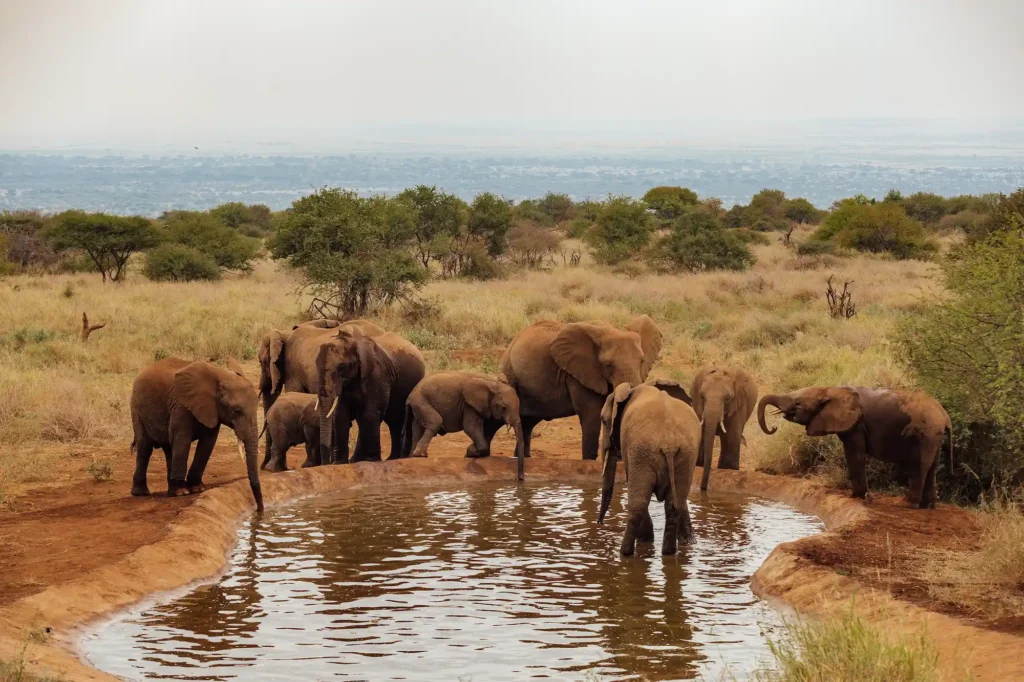 ✨Signature Journeys
 🏕️✨Mid-Range Safaris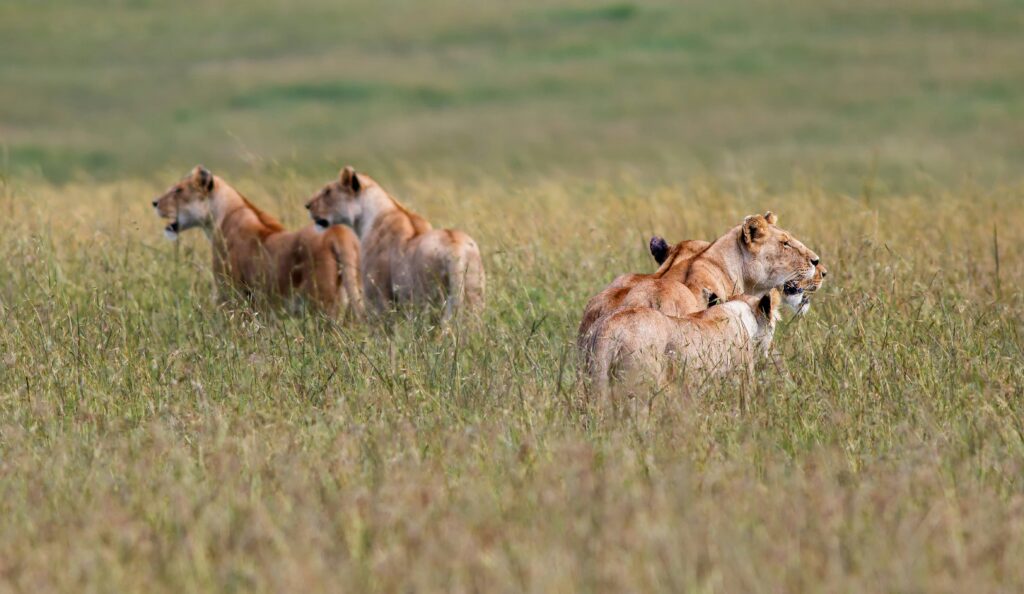
From value camps to premium lodges — we match every stay to your style and budget.
Comfortable tented camps just outside the reserve gates. En-suite rooms with hot showers, full-board meals and close proximity to the Mara.
Well-appointed lodges and tented camps offering private verandas, en-suite bathrooms and reliable full-board service within or near the reserve.
Award-winning camps in private conservancies with personal butlers, infinity pools, gourmet dining and exclusive access to off-road game drives.
Every season has its magic — here's what to expect when, so you can travel at your perfect time.
Everything you need to know before you go — and we’ll guide you through every step.
Most international visitors require an Electronic Travel Authorization (eTA) before travelling to Kenya. Ensure your passport is valid for at least six months beyond your travel date.
Consult your healthcare provider before travelling. Yellow Fever vaccination may be required if arriving from an endemic country, and malaria prophylaxis is recommended for most visitors. Carry insect repellent and sunscreen.
Maasai Mara can be reached by road in approximately 5–6 hours from Nairobi or by a 40–60 minute scheduled or charter flight from Wilson Airport to one of several airstrips within the reserve.
The Kenyan Shilling (KES) is the local currency. Most lodges accept major credit cards, though carrying some cash for tips, local markets, and small purchases is recommended. Mobile money (M-Pesa) is widely used.
Daytime temperatures average 20–28°C, while early mornings and evenings can be cool, especially between June and August. Pack light clothing plus a warm jacket for game drives.
Kenya uses 240V, 50Hz electricity with Type G (British-style) plugs. Most safari camps provide charging facilities, although some operate on solar power with charging available at designated times.
Kenya follows East Africa Time (EAT), UTC +3, with no daylight saving time.
Wi-Fi is available at most lodges and luxury camps, although speeds may vary. Safaricom generally provides the strongest mobile network coverage across the Maasai Mara ecosystem.
Maasai Mara is considered a safe safari destination when travelling with licensed guides. Always remain inside the vehicle during game drives unless instructed otherwise, follow your guide's directions, and avoid walking around unfenced camps after dark without an escort
Bring neutral-coloured clothing, a warm fleece or jacket, comfortable walking shoes, a hat, sunglasses, sunscreen, binoculars, a camera with extra batteries, and a reusable water bottle.
The Mara is world-famous for the Great Migration and its dramatic Mara River crossings (July–October), and for having one of the highest concentrations of big cats — especially lions — in Africa. It also offers year-round Big Five viewing, 500+ bird species, and rich Maasai culture, making it Kenya's premier safari destination.
For the Migration and river crossings, July to October is ideal. For fewer crowds, lower fees, and excellent resident game, January–February and June are superb. March–May (long rains) is greenest, quietest and cheapest. The Big Five and big cats are present year-round, so there's no bad time — only different experiences.
As of 2026, non-resident adults pay US$100 per day (Jan 1–Jun 30) and US$200 per day (Jul 1–Dec 31); children/students around US$50. East African residents and Kenyan citizens pay reduced KSH rates. Tickets are valid 12 hours (6am–6pm). Conservancy fees (US$90–150 pp/night), vehicle fees, and camping fees are separate. Fees go to Narok County and are revised periodically — confirm before travel.
By road, it's roughly 225 km (5–6 hours) from Nairobi, via Narok to gates like Sekenani, Talek, or Oloolaimutia. By air, scheduled and charter flights from Nairobi (Wilson Airport) reach several Mara airstrips in about 45 minutes — far quicker and more comfortable, and the preferred option for many.
The National Reserve is government-managed (Narok County), open to all with an entry fee, and can get busy at prime sightings. The surrounding private conservancies (Naboisho, Olare Motorogi, Mara North, etc.) limit vehicle numbers and allow night drives, walking safaris and off-road viewing — a more exclusive, quieter experience. Many visitors combine both.
Yes — lion, leopard, elephant, buffalo and rhino are all present, making the Mara one of the best Big Five destinations in East Africa. Rhino (black rhino) are the hardest to spot but numbers are slowly recovering. Big cats, especially lions and cheetahs, are exceptionally reliable.
No — crossings are unpredictable natural events dependent on the herds' movements, rainfall and grazing. Visiting during peak season (July–October) and staying 3–4+ nights greatly improves your chances, but patience is essential; herds may gather at a river for hours or days before crossing. A good guide is invaluable
3 to 4 nights is ideal — enough to explore different areas, maximise Migration/crossing chances, and enjoy activities like a balloon safari or conservancy game drives. Shorter visits work but feel rushed given the travel involved; longer stays reward you richly.
Inside the reserve puts you closest to the action and avoids re-paying entry fees for nighttime hours. Conservancy camps (just outside) offer exclusivity, night drives and walking safaris. Budget travellers often stay near the gates. Your choice shapes both experience and cost — conservancies cost more but feel more private.
The Mara is a safe, well-established destination with professional guiding. It's a malaria region, so antimalarial prophylaxis, repellent and covered clothing at dawn/dusk are recommended. Follow guide instructions around wildlife, and note park rules carry fines (e.g. off-road driving and animal harassment are penalised).
Hot-air balloon safaris, Maasai village visits, guided walking safaris and night drives (in conservancies), sundowners, photography tours, and birdwatching. The reserve itself restricts off-road driving, night drives and walking — which is why many visitors add conservancy time for these experiences.
Absolutely. The Mara pairs naturally with other Kenyan parks (Amboseli, Lake Nakuru, Samburu) and beach time on the Kenyan coast (Diani, Mombasa). For the truly ambitious, it links across the border with Tanzania's Serengeti to follow the Migration. Nairobi is the usual hub for onward connections.
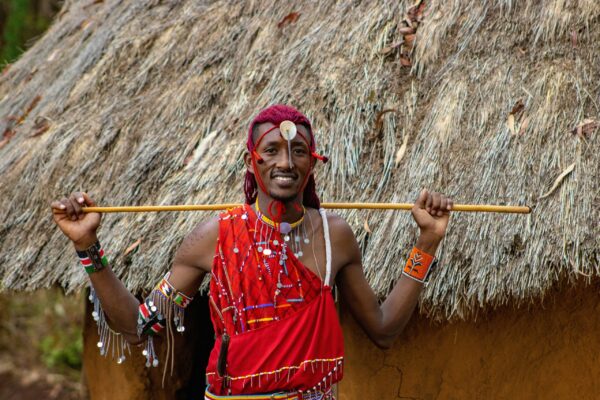
A village visit can be the best hour of a Kenya safari or the most awkward one, and…
Read more →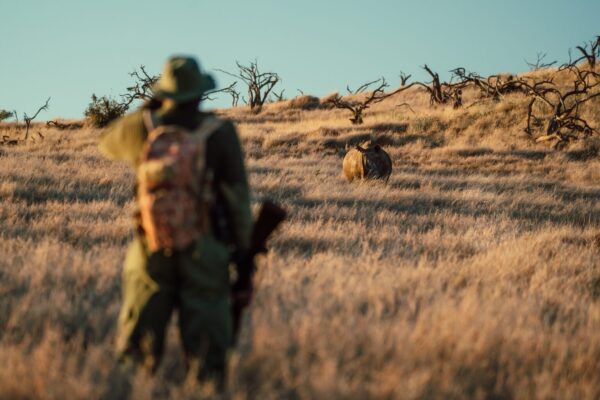
Where Kenya's guided bush walks happen, who leads them and why the thirty minutes you spend on foot…
Read more →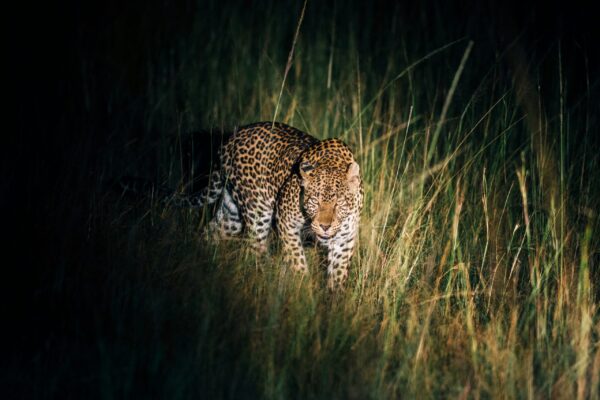
The rule is simpler than most itineraries make it sound: no national park allows it, a short list…
Read more →Tell us what you’d love to see and a local specialist will design a tailor-made itinerary around you — no obligation, reply within 24 hours.