

 Budget Safari
📍 Serengeti National Park + Tarangire National Park + Ngorongoro Conservation Area
5 Days Tanzania Budget Safari
from$1,500
★★★★★ 5
Tanzania's UNESCO wilderness - the Great Migration, 3,000 lions and the dramatic Mara River crossings.
Dawn comes slowly across the Serengeti. The first light catches the tops of the golden grasses, a lion disappears into the shade of a kopje and somewhere in the distance thousands of wildebeest are beginning another day of following water and fresh pasture. We have driven through the Serengeti many times and it still has the ability to make an entire safari vehicle go quiet.
Serengeti National Park sits in northern Tanzania and forms the heart of the wider Serengeti-Mara ecosystem. The park covers approximately 14,763 square kilometres of open grassland, woodland, river systems and rocky kopjes, forming one of the most important wildlife areas in Africa. The name Serengeti is commonly associated with “endless plains”, and the scale of the landscape explains why.
What sets Serengeti National Park apart is the sheer scale of its wildlife ecosystem. The Serengeti is famous for the Great Wildebeest Migration, when enormous herds of wildebeest, zebra and gazelle move through the ecosystem in search of fresh grazing and water. The migration is not a single event that happens in one place on one date. It is a continuous movement across the Serengeti-Mara ecosystem, with different areas of the park becoming important at different times of year.
But Serengeti National Park is much more than the migration. Lion, leopard, cheetah, elephant, buffalo, giraffe, hyena, hippo and numerous antelope species live here throughout the year. More than 500 bird species have also been recorded, including several species endemic to Tanzania.
For us at Afrikan Accent Adventures, Serengeti National Park is one of those destinations that does not need to be exaggerated. The scale of the plains, the concentration of predators and the possibility of encountering wildlife far from another vehicle make a Serengeti safari one of the defining experiences of northern Tanzania.
Serengeti National Park is a 14,763-square-kilometre protected area in northern Tanzania and the centre of the wider Serengeti-Mara ecosystem. It is internationally famous for the Great Wildebeest Migration, exceptional predator populations, vast savannah plains and diverse wildlife. Serengeti National Park was established in the early 1950s, with its present boundaries enlarged in 1959. It was inscribed as a UNESCO World Heritage Site in 1981.
Location: Northern Tanzania, within the wider Serengeti-Mara ecosystem
Size: Approximately 14,763 square kilometres
Established: 1952, with boundaries enlarged to their present size in 1959
Managed by: Tanzania National Parks Authority (TANAPA)
UNESCO status: World Heritage Site since 1981
Biosphere status: Part of the Serengeti-Ngorongoro Biosphere Reserve
Known for: Great Wildebeest Migration, lions, leopards, cheetahs, elephants, vast plains and exceptional wildlife diversity
Main eastern entrance: Naabi Hill Gate
Other access points: Ndabaka Gate, Fort Ikoma, Handajega and northern access routes depending on itinerary and current park regulations
Main central area: Seronera Valley
Neighbouring ecosystem: Ngorongoro Conservation Area, Maswa Game Reserve, Grumeti and Ikorongo areas, and Kenya’s Masai Mara ecosystem
Main airport access: Kilimanjaro International Airport or Arusha Airport, followed by road or a flight to a Serengeti airstrip
The park forms part of a much larger ecosystem of approximately 35,000 square kilometres, which explains why the migration cannot be understood by looking at Serengeti National Park alone.
The Great Wildebeest Migration is the event most closely associated with Serengeti National Park, but calling it simply a migration can make it sound like a predictable procession. In reality, it is a constantly moving ecological cycle driven largely by rainfall, grass growth and water availability.
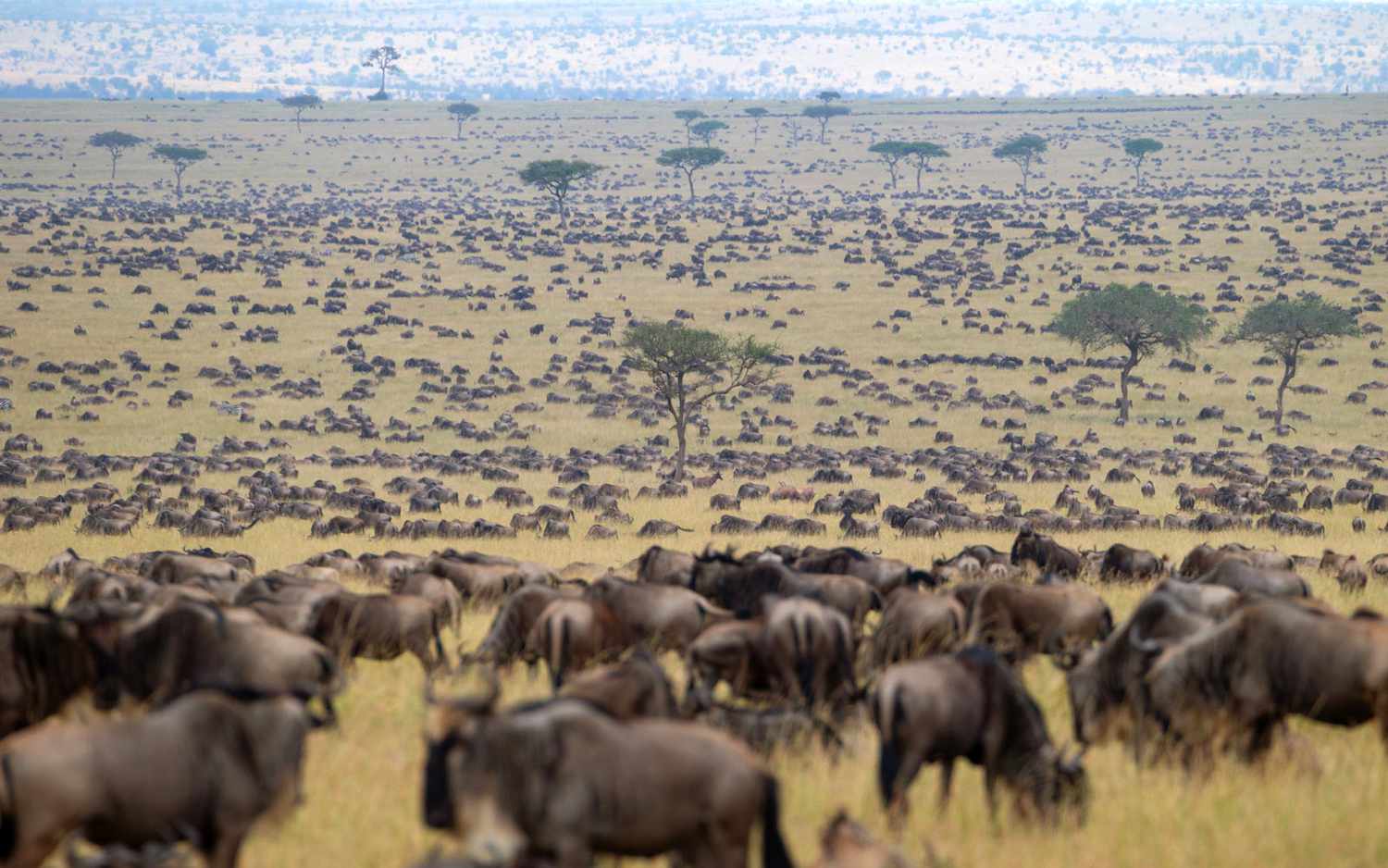
Around two million wildebeest, together with hundreds of thousands of zebra and gazelles, participate in the wider migration system. The animals move through Tanzania and Kenya following seasonal grazing conditions, while lions, cheetahs, leopards, hyenas and other predators follow the herds.
The southern Serengeti and Ndutu plains are especially important during the calving period, generally around January to March. As the rains and grazing conditions change, the herds gradually move through the central and western Serengeti before reaching the northern Serengeti and the Mara River area later in the year.
The famous river crossings are usually associated with the northern Serengeti between roughly July and October, although the exact timing depends on rainfall and herd movement. There is no guaranteed crossing date, and we never promise guests a river crossing simply because they are travelling in a particular month.
This is one of the most important things to understand about Serengeti National Park. The best migration safari is not necessarily the one that follows a calendar. It is the one that follows the animals.
The Great Wildebeest Migration is the annual movement of roughly two million wildebeest and large numbers of zebra and gazelles across the Serengeti-Mara ecosystem in search of fresh pasture and water. The route changes with rainfall and grazing conditions, meaning different areas of Serengeti National Park become important at different times of the year.
Serengeti National Park has one of the richest concentrations of large mammals in Africa. The park’s open plains make it particularly productive for grazers, while the abundance of herbivores supports an equally impressive population of predators.
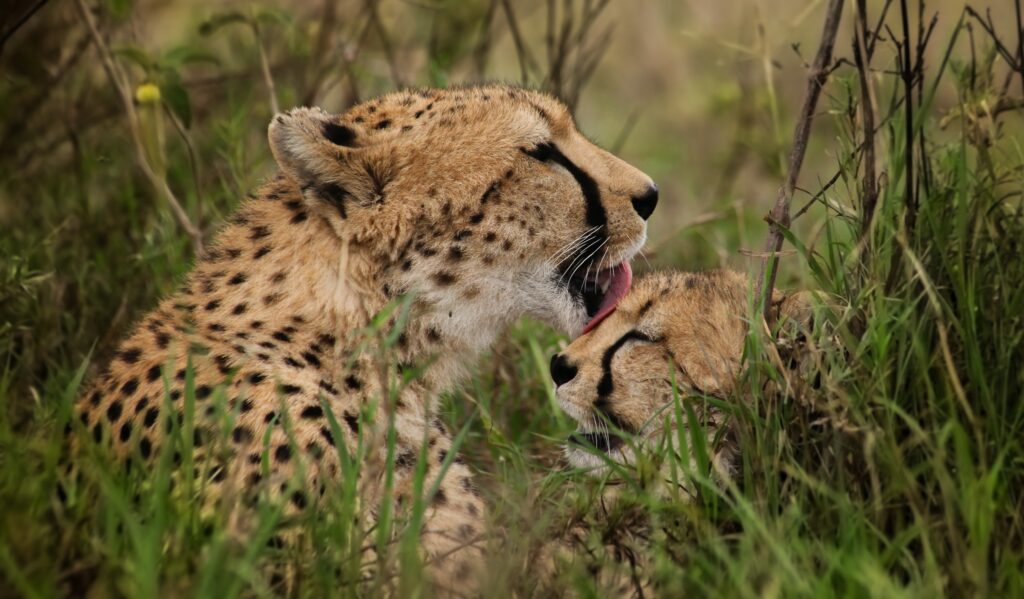
Lion are among the most frequently encountered big cats in Serengeti National Park, particularly around the central plains and rocky kopjes where prides establish territories. Cheetahs favour open grassland where their speed gives them an advantage, while leopards are more secretive and are often associated with riverine woodland and large trees.
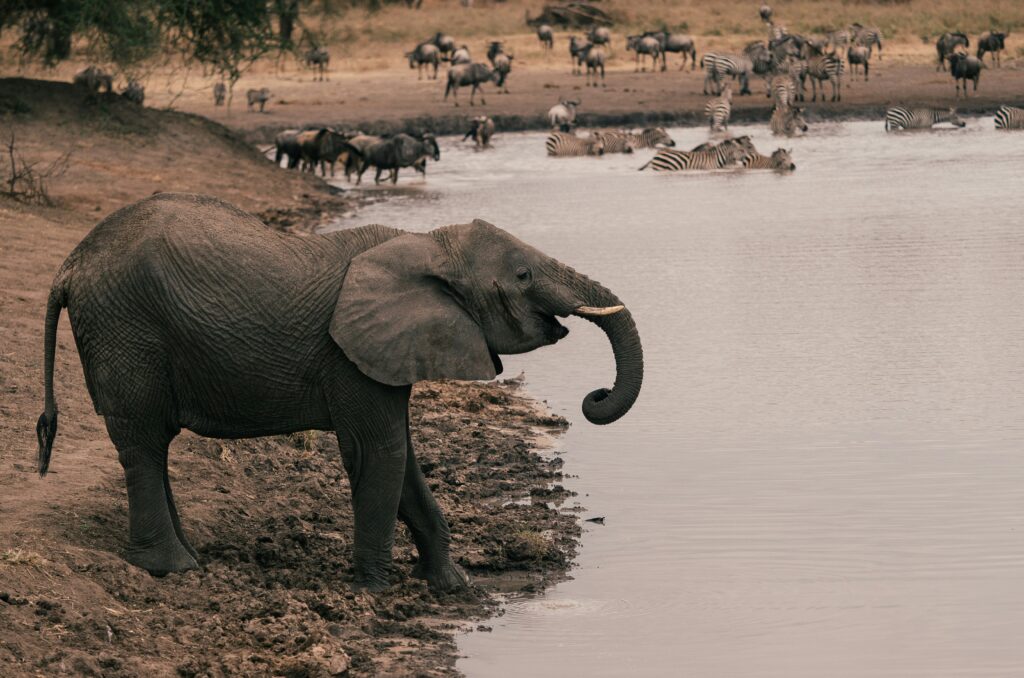
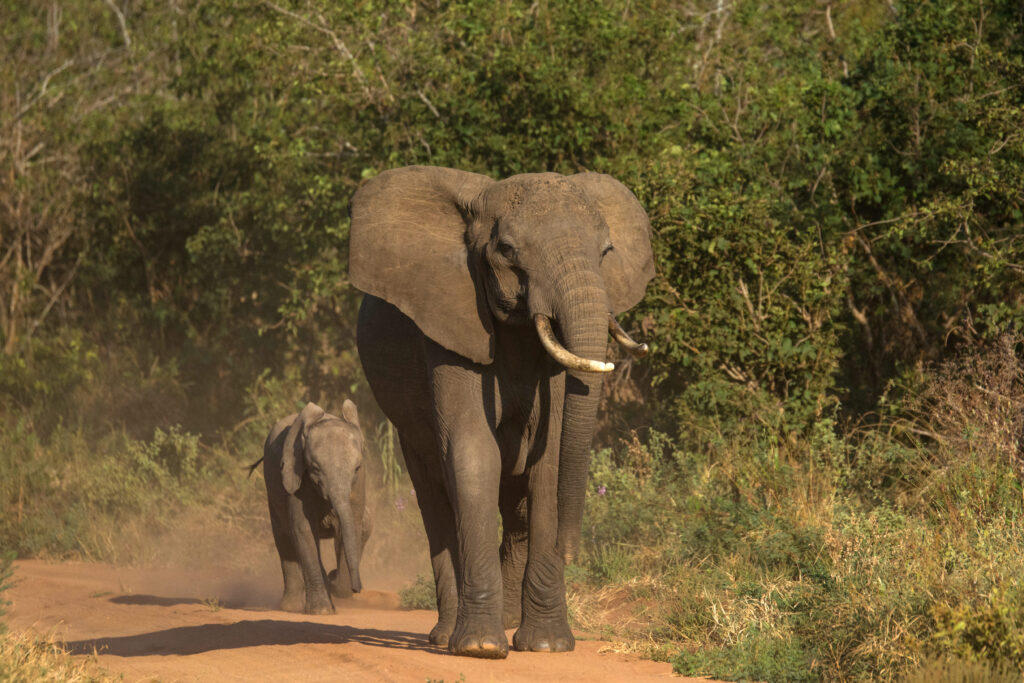
Elephants move through woodland and open country, while buffalo, giraffe, hippo and several antelope species occupy different habitats throughout the park. Hyenas are widespread and play an important role as both predators and scavengers.
The Serengeti ecosystem also supports threatened species including black rhinoceros, African wild dog, elephant and cheetah. UNESCO identifies the Serengeti as one of the world’s most productive ecosystems and highlights its exceptional predator-prey relationships.
A Serengeti safari can include lion, leopard, cheetah, elephant, buffalo, giraffe, hippo, wildebeest, zebra, gazelle, eland, topi, hartebeest, warthog, hyena and many other species. Serengeti National Park also supports threatened species such as black rhino, African wild dog and cheetah, while more than 500 bird species have been recorded.
Serengeti National Park is one of Africa’s great lion destinations. The abundance of wildebeest, zebra, buffalo and other herbivores creates an unusually strong food base for large prides.
Lions are especially active during the cooler hours of the morning and late afternoon. During the heat of the day, they may be found resting beneath trees, in tall grass or beside rocky kopjes.
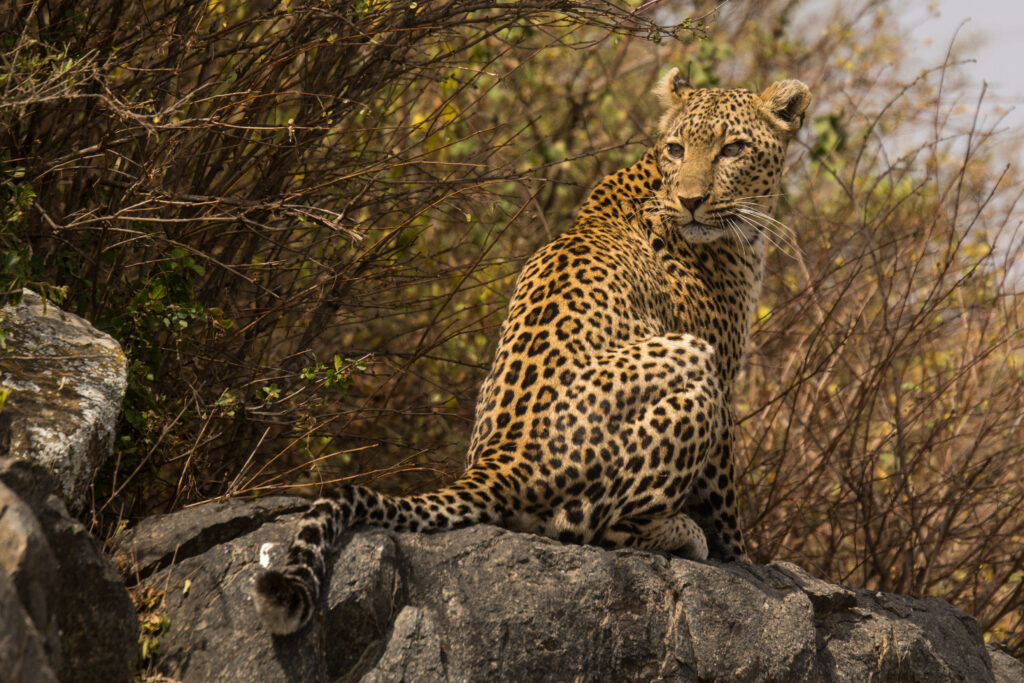
Leopards are present throughout Serengeti National Park but are considerably more elusive than lions. The Seronera Valley and riverine areas are particularly productive habitats because the combination of trees, water and prey provides excellent cover.
A leopard resting in an acacia tree above a safari vehicle is one of the classic Serengeti sightings, but patience matters. We encourage guests to spend time observing rather than simply ticking the species off a list.
Cheetahs are particularly well suited to the open plains of Serengeti National Park. They need space to run and often hunt during daylight when visibility is good.
The southern and central plains can be productive areas for cheetah sightings, particularly where prey such as gazelle and young wildebeest are abundant.
Spotted hyenas are among the Serengeti’s most important predators. They are highly social, intelligent animals that hunt as well as scavenge and are often encountered around areas with high concentrations of herbivores.
The Serengeti National Park ecosystem is shaped by rainfall. When rain falls and new grass appears, herbivores move toward the freshest grazing. As the grass is consumed and water availability changes, the herds continue moving.
This makes the Serengeti National Park experience different from month to month.
From approximately January to March, the southern plains and Ndutu region become particularly important for the calving season. Thousands of young wildebeest are born during this period, attracting predators and creating some of the most dramatic wildlife encounters of the year.
Around April and May, the herds begin moving north and west as grazing conditions change. The western Serengeti and Grumeti area can become increasingly important.
From June into July, the migration may move through the western corridor and central Serengeti before continuing north.
From roughly July to October, northern Serengeti becomes one of the major areas of interest, particularly around the Mara River. River crossings can occur during this period, but they depend on weather, water levels and the movement of the herds.
By November and December, the herds generally begin moving back toward the southern plains as the short rains stimulate fresh grazing.
The important point is that the migration is dynamic. Serengeti National Park does not operate according to a fixed migration timetable.
Game drives are the foundation of a Serengeti safari. Early morning game drives offer cooler temperatures and excellent opportunities to see predators while they are still active. Afternoon game drives continue toward sunset, when the landscape takes on the warm golden light that makes Serengeti National Park so famous with photographers.
Full-day game drives are particularly useful when staying in a migration area because the herds can cover large distances. Instead of returning to camp at midday, guests can carry a picnic lunch and spend more time exploring.
Following the Great Wildebeest Migration requires flexibility. The most successful migration safaris are designed around the likely location of the herds rather than simply choosing a camp based on a calendar.
In Serengeti National Park, we consider the season, recent rainfall, camp location, road access and current wildlife reports when planning a migration itinerary.
The calving season is one of the most dramatic times to visit Serengeti National Park. The southern plains become filled with wildebeest and young calves, while predators take advantage of the abundance of vulnerable newborn animals.
The atmosphere is completely different from the northern river-crossing season. Instead of focusing on dramatic crossings, the experience centres on births, predator behaviour and huge concentrations of animals spread across the short grass plains.
Northern Serengeti is the place to be when the migration reaches the Mara River system. Watching wildebeest gather at a riverbank can be extraordinary, especially when animals hesitate before entering the water.
But river crossings are unpredictable. A herd may gather for hours and then turn back, cross at another point or move away completely. That uncertainty is part of the natural experience.
A hot-air balloon safari offers a completely different perspective of Serengeti National Park. The flight normally begins around sunrise, with the balloon drifting over plains, woodland and wildlife before landing for a bush breakfast.
Balloon safaris are particularly popular around the central Serengeti and selected other sectors where operators are licensed. Availability depends on location, season and weather conditions.
Walking opportunities vary according to the specific area and current park regulations. Where permitted, guided walking experiences allow guests to focus on tracks, plants, insects, birds and smaller details that can easily be missed from a safari vehicle.
For guests wanting extensive walking or night activities, we recommend combining Serengeti National Park with a private concession or conservancy where those activities are specifically permitted.
Serengeti National Park is not only a destination for large mammals. More than 500 bird species have been recorded in the park, making it an excellent destination for serious birdwatchers as well as casual observers.
The open plains support vultures, secretary birds, ostriches, bustards and numerous raptors, while woodland and riverine areas add kingfishers, rollers, bee-eaters and other species.
The scale and light of Serengeti National Park make it one of East Africa’s great wildlife photography destinations.
The open plains create clean backgrounds for cheetah and wildebeest, while kopjes provide elevated positions for lions and leopards. During migration season, dust, movement and enormous herds create opportunities for wide environmental photographs that are difficult to reproduce elsewhere.
A bush breakfast after an early game drive is one of the simplest ways to slow down during a Serengeti safari. Guests can sit in the open landscape, enjoy breakfast and watch wildlife moving across the plains.
Sundowners offer a similar experience at the end of the day, with the changing light turning the Serengeti landscape gold as animals become active again.
Do not build your entire Serengeti safari around one animal sighting. The migration is spectacular, but the quieter moments, a leopard disappearing into long grass, a lion pride waking beneath a tree, or elephants crossing an open plain, are often what guests remember years later.
The enormous size of Serengeti National Park means that different regions offer different experiences.
The Seronera Valley is the most popular part of Serengeti National Park and one of the best areas for year-round wildlife viewing. The combination of permanent water, grassland, woodland and rocky outcrops supports a wide range of wildlife.
Seronera is especially strong for big cats, including lions, leopards and cheetahs. It also has the largest concentration of camps and lodges in the central Serengeti and the busiest airstrip.
The southern Serengeti and Ndutu plains are particularly important during the wildebeest calving season. The short grass plains are visually open and provide excellent opportunities for watching predators and young wildebeest.
This region is especially attractive between approximately January and March, although conditions vary annually.
The western corridor is known for woodland, rivers and the Grumeti ecosystem. During parts of the migration, large numbers of wildebeest pass through this region.
The western Serengeti generally feels quieter and more secluded than central Seronera, particularly around camps positioned away from the main concentrations of visitors.
Northern Serengeti is characterised by rolling hills, woodland and the Mara River system. It becomes particularly important during the northern phase of the migration.
Kogatende is one of the main access points for northern Serengeti, while nearby areas offer a selection of luxury camps, mobile camps and permanent lodges.
The northern Serengeti can also be an excellent choice outside the peak migration period because resident wildlife remains in the area throughout the year.
Serengeti National Park and Ngorongoro Crater are often combined in the same northern Tanzania itinerary, but they offer very different safari experiences.
Ngorongoro Crater provides an enclosed volcanic landscape with an exceptional concentration of wildlife within a relatively compact area. Serengeti National Park is much larger and provides the feeling of travelling through an enormous open ecosystem.
A visit to the crater is often excellent for a concentrated game-viewing day, while Serengeti offers the possibility of spending several days exploring different landscapes and following wildlife over much greater distances.
For first-time visitors, combining both is usually stronger than choosing only one.
Tarangire National Park is famous for elephants, baobab trees and seasonal wildlife concentrations around the Tarangire River.
Serengeti National Park offers a much larger landscape, greater predator diversity and the Great Wildebeest Migration. Tarangire is often an excellent first or final stop on a northern Tanzania safari before continuing to Ngorongoro and Serengeti.
Lake Manyara National Park is considerably smaller and offers a compact combination of groundwater forest, woodland, grassland and lake habitats.
Serengeti National Park is the destination for travellers seeking enormous open plains, major predator populations and the migration. Lake Manyara works well as a complementary stop rather than a replacement for Serengeti.
Because Serengeti National Park is so large, choosing the right gate can make a significant difference to a safari itinerary.
Naabi Hill Gate: The main eastern entrance and the traditional gateway when arriving from Ngorongoro.
Ndabaka Gate: An important western entrance for itineraries approaching from the Mwanza side and the western corridor.
Fort Ikoma Gate: Useful for access to the northwestern Serengeti and western areas.
Handajega Gate: Provides access to parts of the western Serengeti.
Northern access routes: Access arrangements can vary according to the route, season and current park regulations, particularly around the Kenya-Tanzania border.
We do not recommend choosing a gate simply because it is the most famous one. The correct entrance depends on where you are staying, the season and which part of Serengeti National Park you want to explore.
Most road safaris to Serengeti National Park begin in Arusha. The drive to the eastern entrance at Naabi Hill is roughly 325 kilometres, although the actual distance and driving time depend on the route and destination within the park. A road journey can take around 7 to 9 hours, with additional time required for stops and wildlife viewing.
The road option is popular because it turns the journey itself into part of the safari. Many travellers combine Serengeti National Park with Tarangire, Lake Manyara and Ngorongoro Conservation Area.
Flying is the fastest way to reach Serengeti National Park. Scheduled and charter flights connect Arusha Airport and Kilimanjaro International Airport with several airstrips inside the park.
Seronera is the main central airstrip, while Kogatende serves the northern Serengeti, Ndutu serves the southern plains and calving-season area, and Grumeti provides access to the western corridor. Flight times are generally around one hour from Arusha, depending on the destination and routing.
Light aircraft have strict luggage limitations, commonly around 15 kilograms per person in soft-sided bags, although the exact allowance depends on the airline and aircraft.
Road travel makes more sense if you want to combine Serengeti National Park with Ngorongoro, Tarangire or Lake Manyara and enjoy the changing landscapes along the route.
Flying is preferable for travellers with limited time or those who want to maximise their time inside Serengeti National Park. It is also particularly useful when following the migration because you can fly directly into the sector where your accommodation is located.
For migration safaris, we choose the airstrip and accommodation together. Flying into Seronera when your priority is the northern migration, for example, can mean spending hours driving across a huge park before reaching the wildlife you came to see. The best Serengeti itinerary puts you in the right sector first.
Serengeti National Park has a generally warm climate, but temperatures vary according to altitude, season and time of day. Early mornings can be cool, especially during game drives, while afternoons are usually warm.
Rainfall is seasonal and strongly influences wildlife movement. The long rains generally occur around March to May, while shorter rains commonly arrive around November and December.
The southern plains can become particularly productive following rainfall because fresh grass attracts large concentrations of wildebeest and other grazers.
The central and northern Serengeti remain important throughout the year because resident wildlife does not disappear when the migration moves elsewhere.
Serengeti National Park has a warm tropical savannah climate with seasonal rainfall. Temperatures are generally comfortable during the day but can be cool before sunrise, especially during game drives. The long rains normally occur from around March to May, while shorter rains generally occur around November and December.
Serengeti National Park is managed by Tanzania National Parks Authority, or TANAPA, and visitors are required to pay applicable conservation and other park-related fees.
TANAPA’s published tariff information states that conservation fees vary according to visitor category and season. Its tariff information also states that conservation fees are valid for 24 hours from entry and that children under five enter free, while child rates apply to ages five to fifteen.
Because park tariffs can change between financial years, we recommend confirming the current Serengeti National Park fee applicable to your travel dates before finalising a safari budget.
For Afrikan Accent Adventures safari packages, applicable park fees are normally incorporated into the overall safari quotation rather than left for guests to arrange at the gate.
The Serengeti National Park conservation fee depends on visitor category and the applicable TANAPA tariff for the travel period. TANAPA’s published tariff system distinguishes between non-residents, residents or expatriates and East African citizens, with separate child rates. Fees are generally valid for 24 hours from entry.
There is no single best month for every Serengeti safari because the ideal travel period depends on what you want to see.
January through March is one of the strongest periods for visiting the southern Serengeti and Ndutu area. The wildebeest calving season attracts enormous numbers of herbivores and predators.
The long rains create green landscapes and excellent photographic conditions. Visitor numbers can be lower, although heavy rainfall can make some roads challenging.
The landscape begins drying out and the migration moves north and west. June and July can provide excellent game viewing in central and western Serengeti.
Northern Serengeti becomes a major focus as migrating herds reach the Mara River system. This is one of the most popular periods for travellers hoping to witness river crossings.
The short rains bring new vegetation and the migration begins moving south again. This period can provide excellent game viewing with greener landscapes and, depending on the year, fewer visitors than the peak dry-season months.
The best time depends on your priority. January to March is ideal for the calving season in the southern Serengeti, June to July can be excellent for following the migration through central and western areas, and August to October is popular for northern Serengeti and potential Mara River crossings. November and December bring green landscapes and renewed grazing in many areas.
Two nights can provide a good introduction to Serengeti National Park, particularly if you fly directly into Seronera.
Three nights is our usual recommendation for first-time visitors because it gives enough time for several game drives and allows you to explore beyond the immediate area around your camp.
Four nights or more is ideal for travellers who want to slow down, explore different sectors or follow the migration more deliberately.
If the Great Wildebeest Migration is the main reason for your trip, we recommend staying as close as possible to the expected location of the herds rather than simply adding more nights in one fixed area.
Three nights is a strong starting point for a first Serengeti safari. Two nights works for a shorter itinerary, while four or more nights gives you more time to explore different habitats, follow wildlife and combine sectors such as central and northern Serengeti.
Serengeti National Park is one of the few safari destinations where the landscape itself feels almost as important as the animals.
The plains stretch toward the horizon, interrupted by kopjes, acacia woodland, seasonal streams and rivers. Herds can extend for kilometres, while predators operate within and around them.
The Great Wildebeest Migration adds another level to the experience, but even outside migration season, Serengeti National Park remains one of Africa’s strongest wildlife destinations.
It is also a destination that rewards repeat visits. A guest who visits during the calving season will experience a completely different Serengeti from someone travelling to northern Serengeti during the dry season.
For travellers who have already experienced Kenya’s Masai Mara, Serengeti National Park offers a natural continuation of the same wider ecosystem while providing a much larger Tanzanian landscape to explore.
Serengeti safari prices vary considerably depending on accommodation, season, transportation and the number of nights.
Budget Serengeti safaris may use campsites or simpler lodges and can be significantly less expensive than luxury fly-in safaris. Mid-range Serengeti safaris generally combine comfortable tented camps or lodges with private or shared game drives. Luxury Serengeti safaris may use permanent luxury camps, mobile migration camps or private concessions, with prices rising significantly during peak migration periods.
Flying into Serengeti National Park normally costs more than travelling by road, but it saves several hours of driving and gives guests more time inside the park.
A realistic Serengeti safari quotation should therefore be based on your exact travel dates, accommodation category, number of travellers, transport arrangement and preferred sector.
The cost of a Serengeti safari depends mainly on accommodation level, season, number of nights, transport and whether you drive or fly. Budget, mid-range and luxury Serengeti safari options are available, but peak migration periods and luxury camps can significantly increase the price.
We build Serengeti safari packages around the experience rather than simply selling a fixed number of nights.
A classic northern Tanzania safari may combine Tarangire National Park, Ngorongoro Conservation Area and Serengeti National Park. A migration-focused safari may concentrate on southern Serengeti during calving season or northern Serengeti during the Mara River period.
A fly-in Serengeti safari can be designed for travellers who want to maximise time in the park, while a road safari works particularly well for guests who want to experience the full northern Tanzania circuit.
For guests travelling from Kenya, we can also design cross-border itineraries that combine the Masai Mara with Serengeti National Park, subject to the appropriate border and flight arrangements.
Accommodation in Serengeti National Park ranges from public campsites and simple tented camps to mid-range lodges, luxury tented camps and high-end mobile migration camps.
The most important consideration is not simply how luxurious the property is. Location matters enormously.
A beautiful camp in central Serengeti may be perfect for year-round wildlife viewing, while a migration-focused camp in northern Serengeti may be much better for guests travelling during the river-crossing season.
Similarly, a southern Serengeti camp can be the better choice during calving season.
We therefore match accommodation to the season and the experience you want rather than automatically recommending the same property for every Serengeti safari.
Serengeti National Park is internationally recognised for its ecological importance. UNESCO inscribed the park as a World Heritage Site in 1981 under criteria recognising its extraordinary natural beauty and biological importance.
The wider ecosystem supports enormous populations of herbivores and predators and remains one of the most important wildlife landscapes on the continent.
Conservation challenges include poaching, tourism pressure, wildfires and the need for effective management of water and wildlife resources. UNESCO also identifies the transboundary nature of the Serengeti-Mara ecosystem as an important part of its ecological integrity.
Responsible tourism therefore matters. Staying on designated tracks, keeping a respectful distance from animals, avoiding litter and following park regulations all help protect the Serengeti National Park experience for future generations.
A responsible Serengeti safari is not simply about seeing animals. It is about ensuring that the ecosystem remains healthy enough for those animals to continue thriving.
We encourage guests to follow their guide’s instructions around wildlife, avoid unnecessary noise, never feed animals and remain within designated areas.
During wildlife encounters, the best photographs are not always worth moving closer. A good safari guide knows how to position the vehicle without putting pressure on the animals.
We also encourage travellers to support locally owned accommodation, community initiatives and responsible safari operators where possible.
The Serengeti is large enough that you can spend an entire day surrounded by wildlife without ever needing to rush from one sighting to another. Give your guide permission to slow down. Sometimes the best safari moment is the one that was not on the itinerary.
From the first lion call before sunrise to thousands of wildebeest moving across the horizon, Serengeti National Park offers a safari experience on a scale few places in Africa can match.
Whether your priority is the Great Wildebeest Migration, big cats, photography, birdwatching, luxury accommodation or simply experiencing the endless plains, we build Serengeti safari itineraries around the season and the experience you want.
We can arrange Serengeti National Park as part of a longer northern Tanzania safari with Tarangire and Ngorongoro, as a dedicated migration safari, as a fly-in safari or as part of a Kenya-Tanzania itinerary.
The Serengeti is not simply somewhere you go to see the migration. It is a living ecosystem that changes every day, every season and every year.
And that is precisely why we keep going back.
From witnessing the awe-inspiring Great Wildebeest Migration and tracking the legendary Big Five to soaring above the savannah in a hot air balloon, Serengeti National Park delivers extraordinary safari experiences throughout the year. Let Afrikan Accent Adventures craft a personalized journey that brings you closer to Africa's most spectacular wildlife and landscapes.
Every year, over two million wildebeest, zebras, and Thomson's gazelles embark on the legendary Great Migration across the Serengeti ecosystem in search…
Serengeti National Park is one of the few places in Africa where visitors can encounter the legendary Big Five—lion, leopard, elephant, African…
Float silently above the golden plains at sunrise on an unforgettable hot air balloon safari. As the morning light illuminates the landscape,…
Whether you're a professional photographer or an enthusiastic traveller, Serengeti National Park offers unmatched opportunities for wildlife photography. The open landscapes provide…
Serengeti National Park supports one of Africa's highest concentrations of predators. Lions, cheetahs, leopards, spotted hyenas, jackals, and crocodiles thrive throughout the…
Serengeti National Park supports one of Africa's highest concentrations of predators. Lions, cheetahs, leopards, spotted hyenas, jackals, and crocodiles thrive throughout the…
Scattered across the plains are ancient granite formations known as kopjes, some dating back millions of years. These rocky outcrops serve as…
Designated a UNESCO World Heritage Site in 1981, Serengeti National Park is internationally recognised for its exceptional biodiversity, ecological significance, and role…
Budget Safari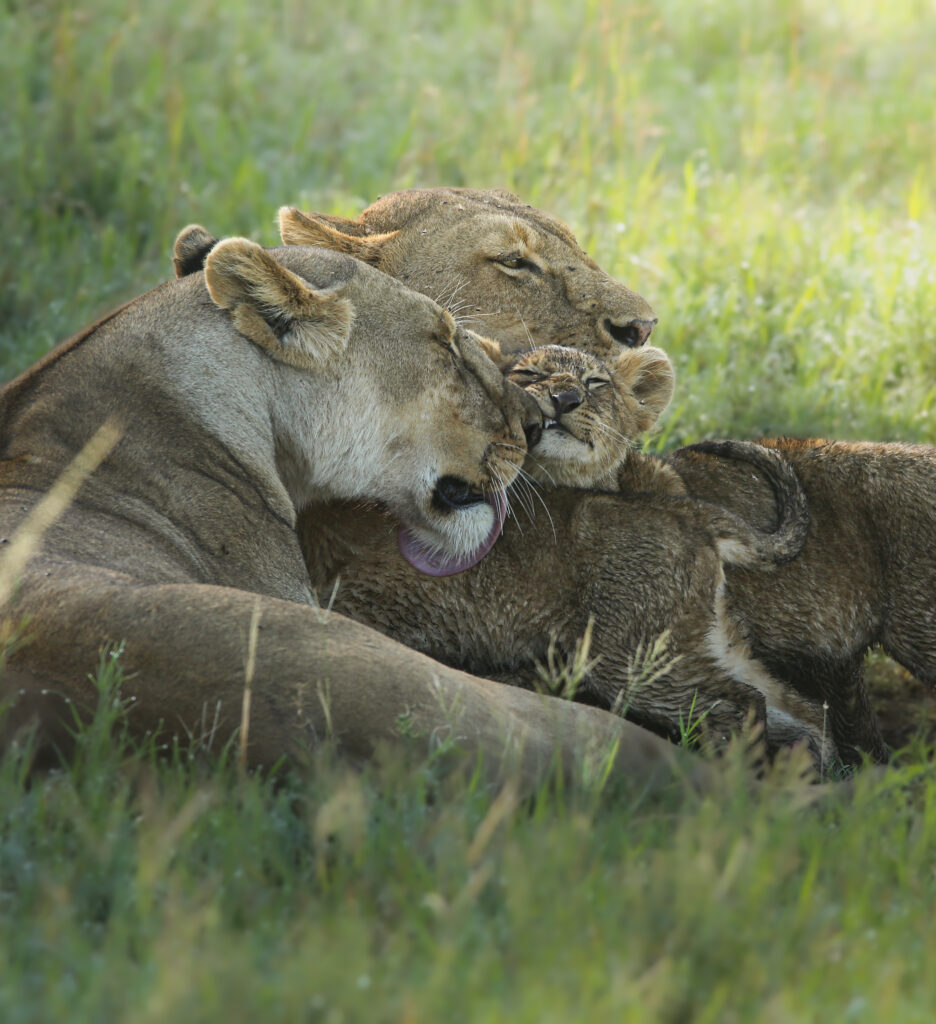
From value camps to premium lodges — we match every stay to your style and budget.
Comfortable safari camps and lodges offering excellent value for money. Ideal for budget-conscious travellers, backpackers, students, and small groups seeking an authentic Serengeti experience without compromising on wildlife viewing.
Well-appointed tented camps and safari lodges featuring private en-suite accommodation, quality dining, and personalized service. Perfect for couples, families, and first-time safari visitors looking for comfort at a reasonable price.
Elegant luxury lodges and tented camps with spacious suites, fine dining, spa facilities, private decks, and outstanding service. Designed for honeymooners, families, and luxury safari enthusiasts.
Luxury mobile camps that relocate throughout the year to follow the Great Wildebeest Migration, providing front-row access to river crossings, calving season, and key migration events. Ideal for wildlife enthusiasts and photographers.
Stylish tented camps and boutique lodges offering elevated comfort, exceptional locations, gourmet cuisine, and immersive wildlife experiences. Suitable for discerning travellers seeking a premium safari without entering the ultra-luxury category.
The highest level of safari accommodation featuring exclusive suites, private butler service, bespoke game drives, gourmet dining, and exceptional privacy in prime wildlife locations. Tailored for VIP travellers and once-in-a-lifetime safaris.
Every season has its magic — here's what to expect when, so you can travel at your perfect time.
Everything you need to know before you go — and we’ll guide you through every step.
Most international visitors require a Tanzanian visa before or upon arrival, depending on nationality. Ensure your passport is valid for at least six months beyond your travel date and check the latest immigration requirements before departure. Single Entry Tourist Visa: US$50 (most nationalities) US Citizens: US$100 (Multiple Entry)
The official currency is the Tanzanian Shilling (TZS), although US Dollars (USD) are widely accepted at lodges, camps, and tourist facilities. Credit cards are accepted at most luxury properties, but carrying some cash for tips and small purchases is recommended.
Consult your healthcare provider before travelling. Malaria prevention is recommended for most visitors, and routine travel vaccinations should be up to date. Yellow fever vaccination certificates may be required if arriving from or transiting through a country with yellow fever risk.
Serengeti enjoys a pleasant tropical savannah climate with warm days and cooler mornings and evenings. Pack lightweight clothing for daytime game drives and a warm jacket for early morning safaris. Rainfall varies by season, creating different wildlife experiences throughout the year.
Pack neutral-coloured clothing, comfortable walking shoes, a warm fleece or jacket, sun hat, sunglasses, sunscreen, insect repellent, binoculars, camera equipment, reusable water bottle, power bank, and any personal medications.
Most safari lodges and tented camps offer complimentary Wi-Fi in guest areas, although speeds may be slower than in cities. Mobile network coverage is available in many parts of the Serengeti but may be limited in remote areas.
Tanzania uses Type D and Type G electrical sockets with a 230V / 50Hz power supply. Many safari camps provide charging points in rooms or central lounges. Carrying a universal travel adapter is recommended.
The best way to explore Serengeti National Park is in a professionally guided 4x4 safari vehicle with a pop-up roof. Scheduled flights also connect Arusha, Zanzibar, and other national parks to several Serengeti airstrips for convenient fly-in safaris.
Serengeti National Park is a safe destination when visiting with experienced guides. Always remain inside your safari vehicle unless instructed otherwise, follow park regulations, and respect wildlife by maintaining safe viewing distances.
Help preserve this remarkable ecosystem by avoiding littering, staying on designated tracks, respecting wildlife, and supporting eco-conscious safari operators and lodges committed to sustainable tourism and local community conservation initiatives.
Tipping is appreciated but not compulsory. As a guideline, many travellers tip safari guides USD 15–25 per person per day, while lodge staff often receive USD 5–10 per guest per day, depending on the level of service.
Early morning and late afternoon provide the best lighting for wildlife photography. A camera with a zoom lens of at least 200–400 mm, extra memory cards, spare batteries, and binoculars will help you make the most of your Serengeti safari.
Absolutely. Serengeti National Park is widely regarded as one of the world's greatest safari destinations. It is home to the legendary Great Wildebeest Migration, abundant wildlife, the Big Five, and breathtaking landscapes. Whether you're a first-time visitor or an experienced safari traveller, the Serengeti offers unforgettable wildlife encounters and exceptional game viewing throughout the year.
We recommend spending at least three to four days in Serengeti National Park to fully appreciate its diverse landscapes and wildlife. This allows enough time for multiple game drives, increasing your chances of seeing the Big Five, predators, and seasonal migration events. Photographers and wildlife enthusiasts often prefer five to seven days.
Serengeti National Park is a year-round safari destination, with each season offering unique experiences. January to March is ideal for the wildebeest calving season, while July to October is famous for the dramatic Mara River crossings during the Great Migration. The best time depends on the wildlife experience you wish to enjoy.
Yes. Serengeti National Park is one of Africa's best destinations for spotting the Big Five—lion, leopard, elephant, African buffalo, and black rhinoceros. While rhinos are less common and mainly found in protected areas, experienced guides greatly improve your chances of seeing all five species during your safari.
The Great Migration is a continuous, year-round journey rather than a single event. From January to March, the herds gather in the southern Serengeti for calving. Between July and October, many visitors come to witness the dramatic Mara River crossings in the northern Serengeti before the herds gradually return south.
Yes. Serengeti National Park is considered one of the safest safari destinations in Africa. Visitors explore the park with experienced professional guides who follow strict park regulations and wildlife safety guidelines. Following your guide's instructions ensures a safe and enjoyable safari experience.
Serengeti National Park lies within a malaria-risk area. It is advisable to consult your doctor or travel health clinic before travelling to Tanzania regarding appropriate malaria prevention, vaccinations, and general travel health recommendations.
Pack lightweight neutral-coloured clothing, a warm jacket for early morning game drives, comfortable walking shoes, a wide-brimmed hat, sunglasses, sunscreen, insect repellent, binoculars, a camera with extra batteries, and any personal medications. A small daypack is also useful for daily excursions.
Yes. Serengeti is an excellent destination for families, and many lodges offer family rooms and child-friendly activities. Private safaris provide greater flexibility for families travelling with young children, while some luxury camps also offer educational wildlife experiences for children.
Both are exceptional safari destinations that form part of the same ecosystem. Serengeti National Park is significantly larger, offers greater habitat diversity, and hosts the majority of the Great Migration. Maasai Mara is more compact, making wildlife easier to locate over shorter visits. Many travellers choose to experience both during one East African safari.
Visitors can reach Serengeti National Park by road from Arusha, a journey of approximately 7–8 hours depending on the route and stops. Alternatively, scheduled and charter flights operate daily from Arusha, Kilimanjaro, Zanzibar, and other Tanzanian parks to several Serengeti airstrips, significantly reducing travel time.
Yes. Hot air balloon safaris are among the Serengeti's most iconic experiences. Flights depart shortly before sunrise and offer spectacular aerial views of wildlife and the endless plains. The experience concludes with a champagne bush breakfast, making it a popular activity for honeymooners, photographers, and special celebrations.
Serengeti National Park is home to more than 70 mammal species and over 500 bird species. Visitors commonly see lions, elephants, giraffes, zebras, wildebeest, cheetahs, leopards, buffaloes, hyenas, hippos, crocodiles, gazelles, elands, ostriches, and numerous colourful bird species throughout the park.
Yes. A 4x4 safari vehicle is highly recommended for exploring Serengeti National Park. These vehicles provide better comfort, safety, and access to wildlife viewing areas, particularly during the rainy seasons. Most guided safaris use specially designed 4x4 Toyota Land Cruisers with pop-up roofs for optimal game viewing.
Absolutely. Serengeti is commonly combined with Ngorongoro Crater, Tarangire National Park, Lake Manyara National Park, and Zanzibar. Many travellers also choose to pair a Serengeti safari with Kenya's Maasai Mara for an unforgettable East African wildlife adventure.
Yes. Serengeti National Park offers world-class luxury lodges, exclusive tented camps, boutique safari retreats, and seasonal mobile migration camps. These properties feature spacious suites, gourmet dining, exceptional service, and prime wildlife-viewing locations for an unforgettable safari experience.
Many lodges and camps provide complimentary Wi-Fi in guest areas, although internet speeds may vary due to the park's remote location. Mobile network coverage is available in many areas but can be intermittent depending on your location within the park.
Afrikan Accent Adventures specializes in tailor-made Tanzania safaris designed around your travel style, budget, and interests. We combine expert local knowledge, experienced professional guides, carefully selected accommodations, and seamless logistics to create unforgettable safari experiences. Whether you're planning a luxury honeymoon, a family adventure, a photographic expedition, or your first African safari, our team is committed to delivering exceptional service from your initial enquiry to your journey home.

The driver-guide’s daily rate, the camp tip box, the dollar-note rule that catches people at the last camp…
Read more →
Kenya's US$50,000 travel insurance rule is frozen, not struck down. Here's the cover that actually moves you, treats…
Read more →
Kenya’s parks don’t set a minimum age, but camps, balloon operators and mosquitoes do, and this is how…
Read more →Tell us what you’d love to see and a local specialist will design a tailor-made itinerary around you — no obligation, reply within 24 hours.