What to Pack for an African Safari: Everything You Actually Need and What You Don’t
The packing guide built from years of watching what goes wrong at the airstrip, on the vehicle and in the field and what you will wish you had brought.
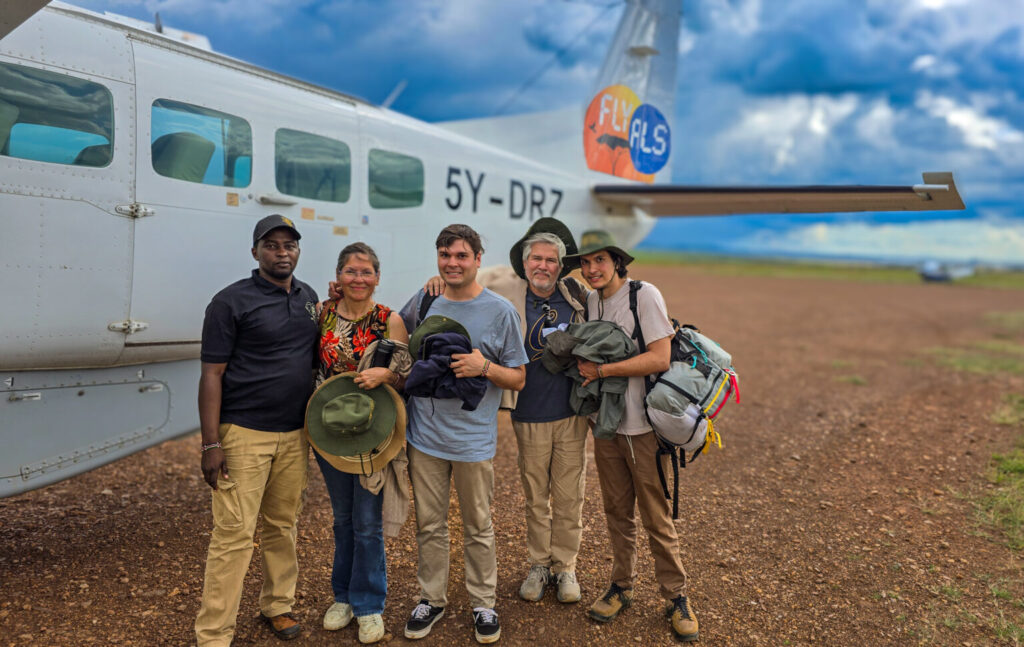
We have been designing Kenya safari itineraries for a long time. We know this story in several variations. The guest who packed for the midday temperature and froze on the 6am drive. The one whose camera battery died after the first morning because the lodge charging schedule does not accommodate a battery left on overnight. The photographer who brought a 600mm prime lens in a bag that weighed more than his luggage allowance.
This is the guide that comes from those stories. It is not exhaustive. Exhaustive packing guides are part of the problem. This one tells you what to bring, why it matters and what to leave at home without apology.
Quick Answer | What Should I Pack for an African Safari?
Pack neutral-colored layered clothing, a fleece jacket, wide-brimmed hat, polarized sunglasses, sunscreen, DEET repellent, and 8×42 binoculars. Use a soft-sided duffel (max 15kg for bush flights). Bring a reusable water bottle, prescription medication, passport, Kenya ETA, and travel insurance. Leave rigid suitcases and single-use plastics at home.
Safari Packing — At a Glance
- Luggage: Soft-sided duffel or hold all only. No hard or semi-rigid cases on bush flights.
- Weight limit (bush flights): 15kg total including hand luggage. Some carriers allow up to 20kg – confirm before you travel.
- Clothing colors: Neutral earth tones – khaki, olive, tan, grey, sand. No white, black or blue.
- Layers: Non-negotiable. Mornings at 6am in the Mara can sit at 10°C. The open vehicle makes it colder.
- Plastics: Single-use plastics banned in Kenya’s protected areas since 2020. Bring a reusable bottle.
- Footwear: Closed walking shoes for bush walks. Sandals for camp. One smart-casual pair for dinner.
- Tech: Camera, binoculars, universal adapter, power bank. Laundry available at most lodges.
- Documents: Passport, Kenya ETA ($30, apply at etakenya.go.ke), yellow fever certificate, travel insurance.
The Bag: The Decision That Determines Everything Else
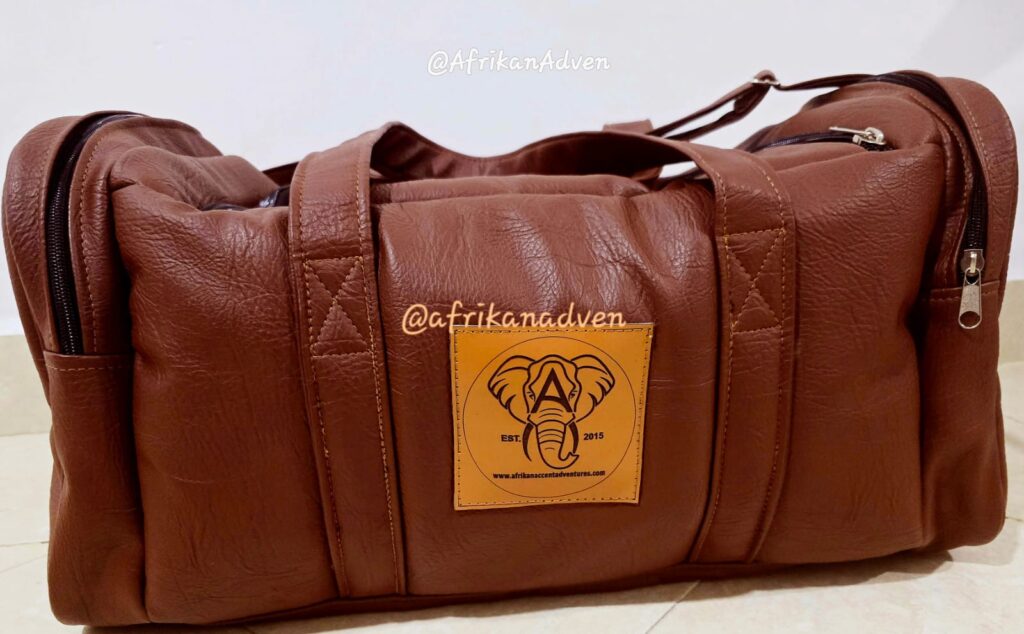
Most packing guides start with clothing. The right place to start is the bag, because a bad bag choice ends your trip at the check-in counter before the wildlife begins.
Kenya’s safari ecosystem runs on light aircraft. Safari Link from Wilson Airport to Nanyuki. Mara Air into the conservancies. Fly-540 across the northern circuit. These are small planes with holds sized for soft luggage, and they operate a policy that is applied without exception: soft-sided bags only, 15 kilograms per person total including whatever you carry on board. Some carriers push this to 20kg. None of them will take a hard case, regardless of its dimensions or the elegance of your argument at 5:45am.
Beyond the logistical argument there is a practical one. A soft duffel that is not entirely full compresses. It fits in spaces that a rigid case cannot reach. It sits in the back of a game drive vehicle without shifting when the track gets rough. It goes under the bed in a tent that was not designed for luggage storage. Soft bags work in the African bush in ways that hard cases do not.
What to bring
- A soft-sided duffel or hold all of 40 to 60 litres. This is your main bag and it needs to be genuinely compressible – bush plane holds are not rectangular.
- A daypack of 15 to 20 litres. This goes in the vehicle with you and holds camera, binoculars, water bottle, sunscreen, jacket and anything you need within reach.
- Packing cubes. The single upgrade that most changes how much fits in a soft bag without chaos.
What not to bring
- A hard or semi-rigid suitcase. Even a small one. Even a carry-on sized one. They are not accepted.
- A bag larger than 70 litres. You will fill it and then face a weight problem at the airstrip that no charm will solve.
- More than one large bag per person. One main duffel, one daypack. That is the configuration.
“If you are connecting from a long-haul flight with substantial checked luggage, your Nairobi hotel or Wilson Airport can store the excess while you are in the bush. We arrange this for clients as a matter of course. The suitcase full of city clothes stays in Nairobi. The duffel goes to the Mara.”
Clothing: Why the Colors Matter and How to Pack Less Than You Think
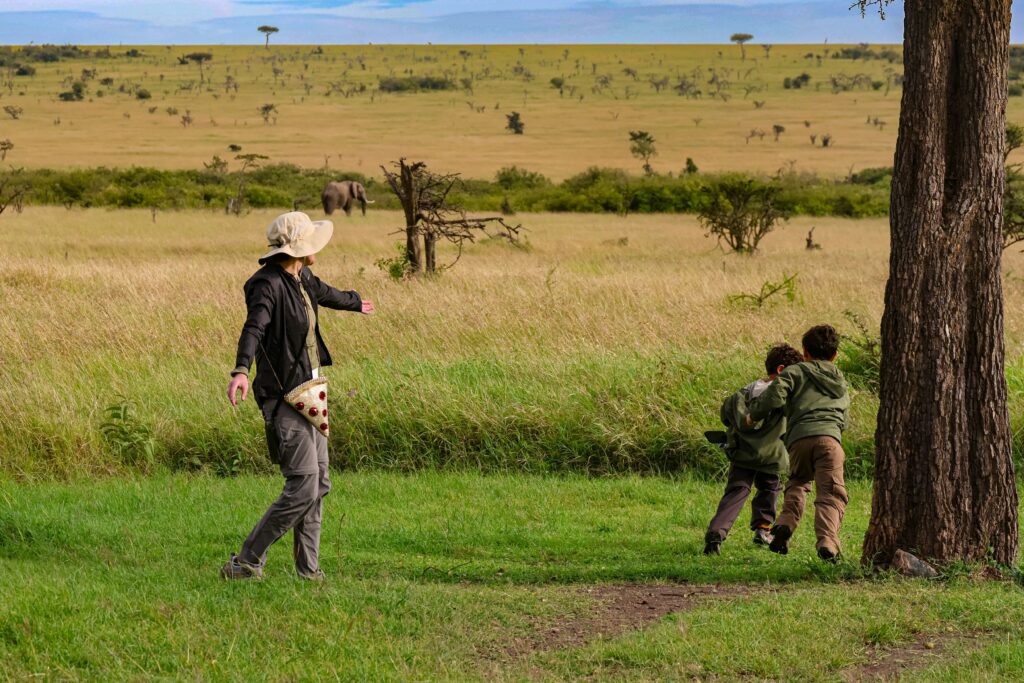
Here is the thing nobody tells you clearly enough about dressing for a Kenya safari: the biggest clothing mistake is not getting the colors wrong. It is packing for the wrong temperature.
The Masai Mara sits at 1,500 metres above sea level. The Laikipia plateau sits higher. Morning game drives depart at six o’clock in vehicles with no roof and no windscreen. At that altitude and that hour, the temperature can be ten degrees below what it will be by mid-morning. Guests who looked up the weather forecast the night before and saw 28°C spend the first hour of the most important wildlife experience of their trip with their arms wrapped around themselves rather than holding binoculars. It is entirely avoidable and it happens constantly.
The temperature window across a single safari day runs from cold to warm to hot and sometimes back to cold on the evening drive. You do not need an outfit for each phase. You need layers.
The colors rule and the reason behind it
Neutral earth tones across the whole wardrobe: khaki, olive green, tan, sand, taupe, muted grey. This is not a style guide. It is a practical brief with reasons behind each exclusion.
White is visible to wildlife at significant distance in open grassland. Dark colors absorb heat in a way that makes three hours in an open vehicle genuinely uncomfortable rather than merely warm. Blue and black attract tsetse flies in certain ecosystems – not universal across Kenya but a risk in specific areas that is not worth taking for the sake of a favorite shirt. Bright colors in a game vehicle make you conspicuous in the one context where not being conspicuous is the entire point.
The compensation: earth tones photograph extraordinarily well against Mara grassland. You will spend less time deciding what to wear each morning than you have on any other trip you have taken.
The layering system
Three layers handle every temperature scenario from pre-dawn to midday without requiring three separate outfits.
- Base layer: a lightweight long-sleeved merino wool top. Merino regulates temperature in both directions, dries quickly and does not retain oduor across multiple days of use. This matters when lodge laundry runs on a 24-hour cycle rather than on demand.
- Mid layer: a fleece or light down jacket. This is the item people most consistently under pack. It lives on the vehicle seat until mid-morning and returns to your shoulders by the evening drive.
- Outer layer: a lightweight packable windproof jacket. Not a heavy waterproof unless you are travelling in the long rains. Should compress to roughly the size of a water bottle.
The full clothing list for a seven-night trip
Most lodges offer same-day or next-day laundry service. Pack for four days and use the service. Pack for seven days and you exceed your weight limit.
- Three to four lightweight neutral tops in mixed long and short sleeve
- Two pairs of safari trousers or lightweight chinos
- One pair of shorts for warm afternoons at camp
- One smart-casual outfit for dinner at camps with a dress code
- Fleece or light down jacket
- Packable windproof outer layer
- Four to five pairs of merino or wicking socks
- Four to five sets of lightweight underwear
- A buff or beanie for cold morning drives
- Swimwear – most lodges have pools
- Light pyjamas – the tents lose heat quickly at night
Footwear
Three pairs cover the full range of safari scenarios.
- Closed walking shoes or light hiking boots: for bush walks and walking safaris. They should be broken in before you travel. A boot blister on day one of a four-day walking circuit is a problem that degrades the entire experience.
- Sandals or flip-flops: for moving around camp between drives. Most camps are not barefoot-friendly – stone paths, grass and the occasional scorpion under the wrong rock.
- One smart-casual pair: a clean pair of trainers or loafers covers dress code requirements at any Kenya lodge without adding significant weight.
Sun, Insects and Health: The Category You Cannot Improvise
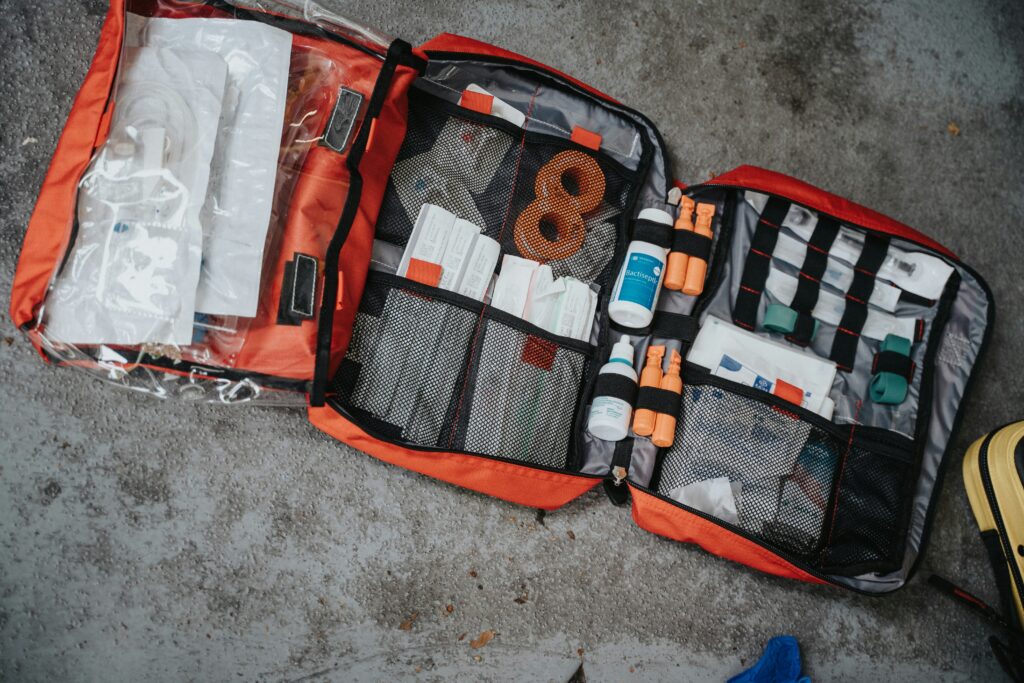
You can buy an extra buff at the Nairobi airport. You cannot buy malaria prophylactics at the Nanyuki airstrip. The health and protection category is the one where forgetting something costs you in ways that ruin trips rather than merely inconveniencing them.
Sun protection
The UV index in the Mara and Laikipia at midday is significantly higher than most northern hemisphere visitors are accustomed to. You are at altitude, in an open vehicle, often with reflective grassland below you. You are being hit by sun from above and below simultaneously for hours at a stretch.
- SPF 50+ sunscreen: apply before the morning drive and again at the midday break. Fragrance-free formulas only in wildlife areas — scent carries on the wind and affects animal behaviour at closer range than you would expect.
- Wide-brimmed hat: the full brim, not a baseball cap. The sun arrives from the side as well as above in an open vehicle. Your ears and the back of your neck need coverage on a three-hour morning drive.
- Polarized sunglasses: quality matters here. Cheap lenses cause eye strain in high UV conditions over a multi-hour game drive. Polarized lenses specifically cut glare off the grassland.
- Lightweight buff: for neck and lower face coverage in dusty conditions. One of the most-used items in the vehicle.
Malaria and insect protection
Malaria risk varies significantly by destination within Kenya. The Masai Mara and coastal Kenya are higher risk. The Laikipia highlands including Ol Pejeta are considerably lower risk. Your itinerary determines your prophylactic requirement.
- Malaria prophylactics: prescribed by your GP or travel clinic before departure. The principal options are atovaquone–proguanil (Malarone), doxycycline and mefloquine. Start the course before departure as directed. Do not leave this to the week before you travel.
- DEET-based insect repellent (30 to 50%): apply to exposed skin at dawn and dusk. Covering up at those times is the first line of protection; repellent is the second.
- Long-sleeved top and trousers for evenings: the most effective insect barrier is also the simplest and cheapest.
Medical and personal health
- Prescription medication in original packaging: with a GP letter if the medication is controlled or injectable.
- Antihistamines: for dust and pollen. The Mara in dry season produces considerable airborne dust in a moving vehicle.
- Imodium and rehydration sachets: for stomach upsets that accompany travel between multiple camps and varied food sources.
- Blister treatment: essential if your itinerary includes walking safaris on day one.
Optics and Tech: The One Thing Most People Get Wrong
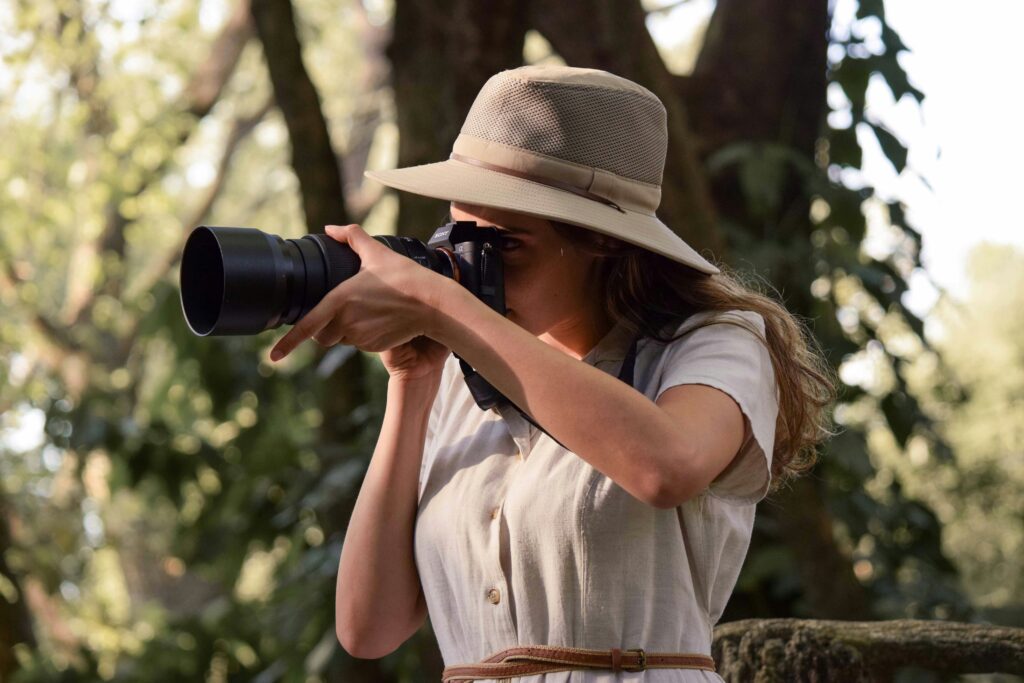
The most common post-trip regret we hear is the same one every time: not bringing better binoculars. Not a better camera. Not a longer lens. Better binoculars. This is worth stating plainly before you start pricing 600mm telephoto lenses.
Binoculars – the item that transforms a game drive
A good pair of binoculars does something a camera cannot: it gives you the animal in real time, fully resolved, at a distance that a vehicle cannot close. The leopard three hundred metres away in the fever tree is a smudge to the naked eye. Through 8×42 binoculars it is a complete, breathing, watchable animal. The same holds for a distant cheetah hunt, for birds in the canopy and for the behavioural details that tell you what an animal is about to do before it does it.
The specification to look for is 8×42 or 10×42. The first number is magnification, the second is the objective lens diameter in millimetres. An 8×42 gives a wider field of view and is better for tracking fast movement. A 10×42 gives slightly more power with marginally less stability in a moving vehicle. Both are excellent choices. Avoid anything above 10x — you cannot hold it steady on a vehicle and high magnification in poor light produces a useless image at dawn.
Camera and photography
The right camera for a safari is the camera you can raise, focus and fire in two seconds. A cheetah chase lasts thirty seconds from start to finish. A leopard makes a decision to leave a tree in the same time it takes to change a camera setting. Familiarity with your equipment matters more than the specification.
- Main camera with a telephoto zoom: a 100–400mm zoom covers the great majority of wildlife scenarios. A 70–200mm works for camp scenes and landscapes. Fixed telephoto lenses above 400mm are exceptional for birds but add weight that accumulates significantly across a full day.
- Smartphone: current flagship phones produce excellent results in good midday light. At dawn and dusk in a moving vehicle they struggle. The phone comes but does not replace a dedicated camera.
- Spare batteries and memory cards: bring at least two batteries per camera body and more memory than you think you need. A full day in the field empties a battery faster than the lodge schedule accommodates.
- Bean bag or window mount: rests on the vehicle door and provides a stable platform for long telephoto work without a tripod. Lightweight, inexpensive and transformative for image sharpness from a moving vehicle.
- Dust protection for camera bag: the Mara in dry season generates real dust. A rain cover doubles as protection.
Everything else worth packing
- Universal travel adapter (UK three-pin): Kenya uses the British standard plug. Most lodges have USB points in rooms but the adapter covers everything else.
- Power bank (20,000mAh): for charging in the vehicle between drives. A full charge covers two phone charges and a pair of wireless earphones.
- Headlamp: for walking between tents at night. Most bush camps are deliberately unlit. A phone torch is a poor substitute when your hands are full.
- E-reader: camp afternoons between drives are unscheduled and genuinely quiet. An e-reader weighs nothing and makes excellent use of time that has no program.
- Offline apps: download destination maps, iNaturalist and Merlin Bird ID before you leave. Connectivity at many bush camps is limited to the lodge’s main area and sometimes not there either.
Toiletries, the Kenya Plastic Ban and the Reusable Bottle
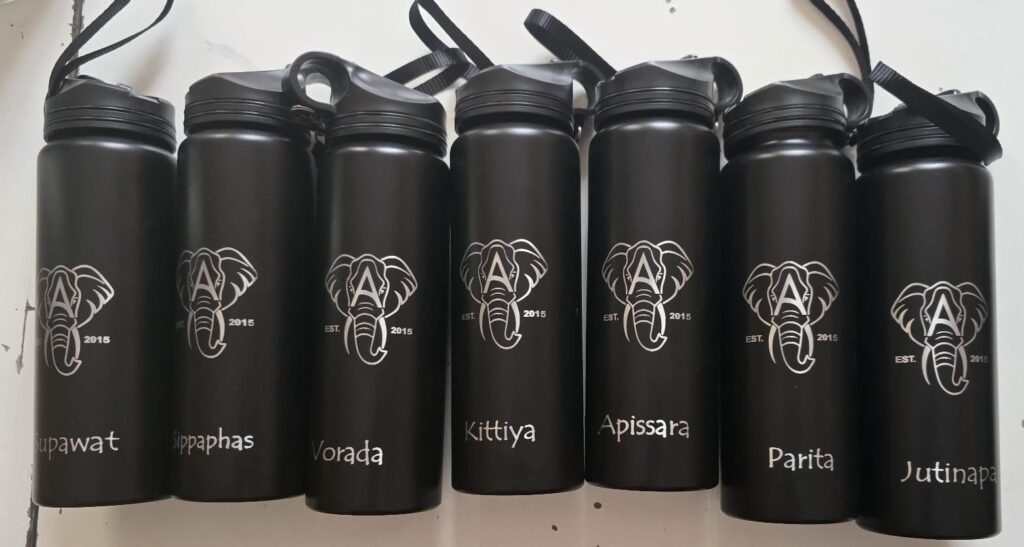
Kenya introduced one of Africa’s strictest plastic bans in 2017. Since 2020 single-use plastics – including water bottles, straws and plastic packaging – are prohibited in all national parks, nature reserves, beaches, forests and conservation areas. The fine for violation is not nominal.
In practical terms this means you will not be handed a plastic water bottle at any reputable Kenya camp. You will be handed a refilling station, a filtered water source and, at the better camps, your own branded reusable bottle on arrival. Bring your own. A one-litre insulated wide-mouthed bottle keeps water cold through a five-hour morning drive and costs nothing to refill.
Beyond the bottle, keep the toiletry category as minimal and low-impact as possible. Strong fragrances – perfume, aftershave, heavily scented sunscreen – carry on the wind in the bush and affect the behaviour of wildlife at closer range than most guests expect. Fragrance-free is not a preference in a wildlife area. It is a practical choice that improves the experience for everyone in the vehicle.
- Biodegradable soap, shampoo and conditioner: most camps provide them. Bring your own if the standard matters to you. Solid bars are lighter and do not count against liquid limits.
- Eco-friendly SPF 50+ sunscreen: fragrance-free. Some camps prohibit chemical sunscreens near water sources. Mineral-based formulas are the safer choice.
- Insect repellent (DEET 30 to 50%): bring enough for the full trip. It is not reliably available at remote camp shops.
- Lip balm with SPF: cracked lips at altitude in dry season progress from a minor inconvenience to a persistent one by day three.
- Biodegradable wet wipes: for hands in the vehicle between stops.
- Hand sanitizer: 50ml in the daypack.
Documents: The Short List That Lives in Your Daypack
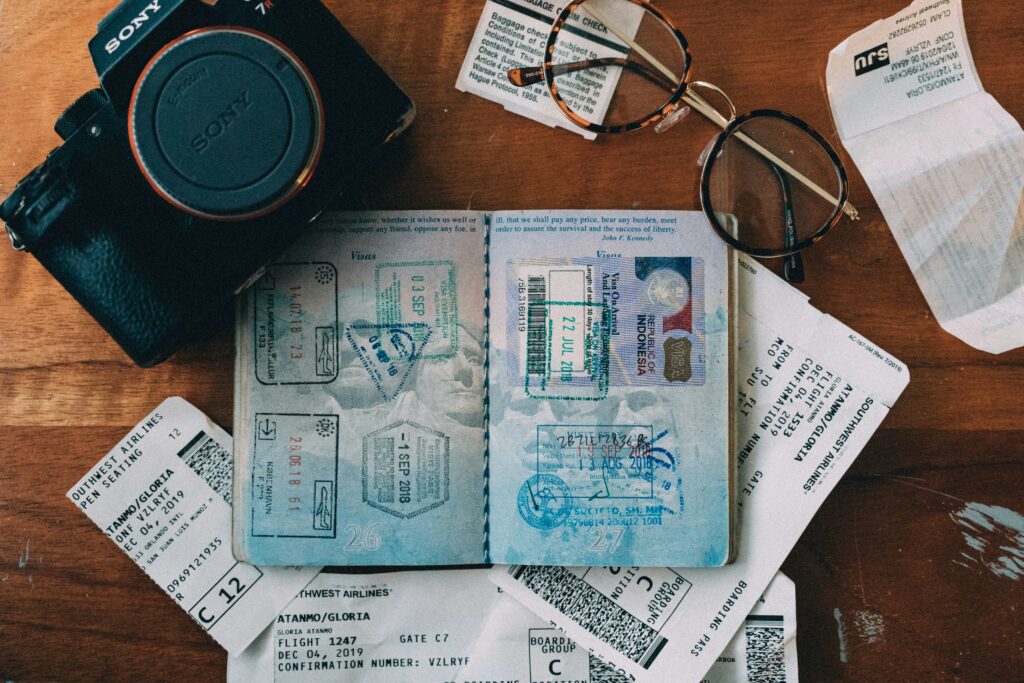
You can replace most things that go missing on a safari. Documents are the exception. Keep originals and copies of each of the following on your person throughout all transfers.
- Passport: valid for at least six months beyond your return date. Kenya enforces this.
- Kenya Electronic Travel Authorization (ETA): applied for online at etakenya.go.ke before departure. Cost is $30 USD, processing within three working days. Print a copy and save an offline version. The ETA replaced visa-on-arrival in 2023.
- Yellow fever vaccination certificate: required if arriving from or transiting through a yellow fever endemic country. Issued by your travel clinic after vaccination.
- Travel insurance documentation: policy number, the emergency medical evacuation contact number and the specific cover details. Medical evacuation from a remote camp to Nairobi exists as a real scenario. Know the number before you need it.
- Lodge and camp vouchers: printed or saved offline. Wi-Fi at bush camps is not guaranteed. You do not want to confirm your reservation via a connection that does not exist.
- Emergency contacts written on paper: camp contacts, Afrikan Accent Adventures’ emergency line and your home country’s embassy in Nairobi. Paper does not run out of battery.
Frequently Asked Questions: What to Pack for a Kenya Safari
How strict is the 15kg luggage limit on Kenya bush flights?
Very strict. The 15-kilogram limit is applied at check-in at Wilson Airport and other bush airstrips without negotiation. It is 15kg total per person inclusive of any hand luggage you carry on board. Some carriers – notably certain Mara routes – allow up to 20kg, but this varies and should be confirmed directly with your carrier before travel. Excess luggage can be stored at Wilson Airport or your Nairobi hotel and collected on return. We arrange storage for clients as part of every multi-destination itinerary.
Can I wear black clothing on a Kenya safari?
You can, but it is not advisable for two reasons. Black absorbs heat significantly more than neutral earth tones, which matters on a three-hour open vehicle drive in sun. In ecosystems where tsetse flies are active – certain areas of western Kenya and parts of the northern circuit — dark colours including black and blue attract them. The guidance is practical rather than stylistic: pack neutral earth tones and you avoid both problems without thinking about it.
Do I need a visa to visit Kenya?
Kenya operates an Electronic Travel Authorization (ETA) system that replaced visa-on-arrival in 2023. Most nationalities apply online at etakenya.go.ke before departure. The cost is $30 USD and processing typically takes three working days. A small number of East African passport holders are exempt. We include current ETA requirements and application guidance in the pre-departure information sent to all Afrikan Accent Adventures clients.
What is the best lens to bring for safari photography?
A 100–400mm zoom lens handles the great majority of wildlife photography scenarios from a vehicle — close encounters at twenty metres and distant sightings at three hundred. A 70–200mm covers landscapes, camp scenes and group shots. If bird photography is a specific priority, a fixed 500mm or 600mm telephoto produces excellent results but adds significant carry weight. For most safari travellers the 100–400mm zoom is the single most versatile choice. Pair it with a bean bag window mount for sharp results from a moving vehicle.
Is water safe to drink at Kenya safari camps?
At reputable camps, yes – drinking water is filtered and safe. Most provide filtered water in glass dispensers in rooms and at communal areas. Single-use plastic water bottles are prohibited in Kenya’s protected areas under regulations in force since 2020. Bring a reusable bottle of at least one litre capacity and refill it at camp. We confirm the specific water arrangements at each camp we recommend in your pre-departure briefing.
Can I use my phone as my only camera on safari?
In ideal conditions – good light, stationary subjects at close range – a current flagship smartphone produces genuinely impressive wildlife images. In the conditions that define most safari photography – dawn and dusk light, fast-moving animals, subjects at two hundred metres — it struggles significantly. A dedicated camera with a zoom lens produces qualitatively better results across the range of scenarios a full day in the bush presents. The phone is useful for camp scenes, personal moments and the occasions when the dedicated camera is not immediately to hand.
Before You Pack: Talk to Us First
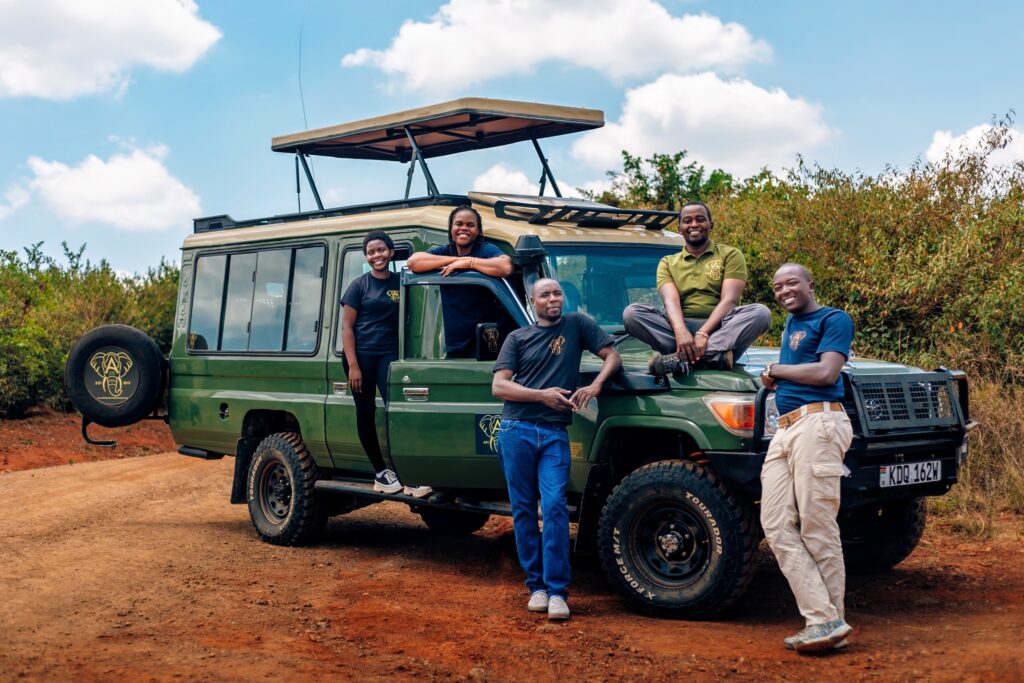
There is a version of safari preparation that involves reading every packing guide on the internet, cross-referencing luggage weight limits across four different airline websites and arriving at the airstrip with a bag that is technically compliant but completely wrong for the specific camp, the specific season and the specific itinerary you are actually doing.
There is a better version. It involves telling us where you are going and when, and receiving a briefing that tells you exactly what to bring for that trip – which camps run laundry, which airstrips have the strictest limits, whether your camps provide binoculars in the vehicle or whether you need your own, what the temperature range looks like in August in Laikipia versus November in the Mara. That information exists. We have it. And we send it to every client we work with as part of preparing for a trip rather than as an afterthought.
We are a Nairobi-based safari company. We design Kenya itineraries with the knowledge of people who spend time in these vehicles, on these airstrips and in these camps rather than people who manage the logistics from a booking platform in another time zone. The detail that makes a trip go right is the kind of detail that lives in that proximity.
Get in touch with our African Safari experts before you start packing. The trip starts with the conversation, not the bag.
Let's plan your East African safari
Tell us when you'd love to travel and a local specialist will craft a tailor-made route around you.


