Serengeti Calving Season at Ndutu: When to Go, Where to Stay and What You See
Calving isn’t one dramatic moment. It’s thousands of small ones, all day, in every direction. Here is how to plan a Ndutu calving season safari so you are inside the action, not driving to it.
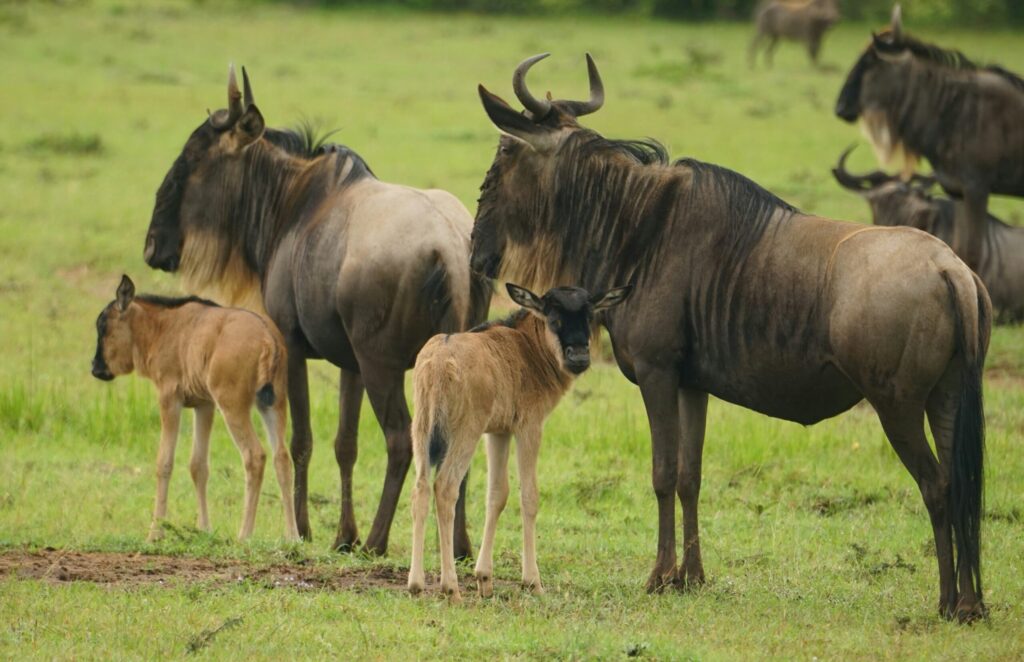
Newborn wildebeest calves standing close to adult wildebeest in the lush green grass of the southern Serengeti during the Ndutu calving season.
Ndutu, southern Serengeti. 6:15am in February. Cold enough that we had our hands wrapped round mugs of coffee and the pop-up roof still down against the wind. Mist was lifting off the short grass south of Lake Ndutu and there were wildebeest in every direction, thousands of them, grunting in that low nasal drone that sounds like a field full of frogs. This is the Serengeti calving season at close range.
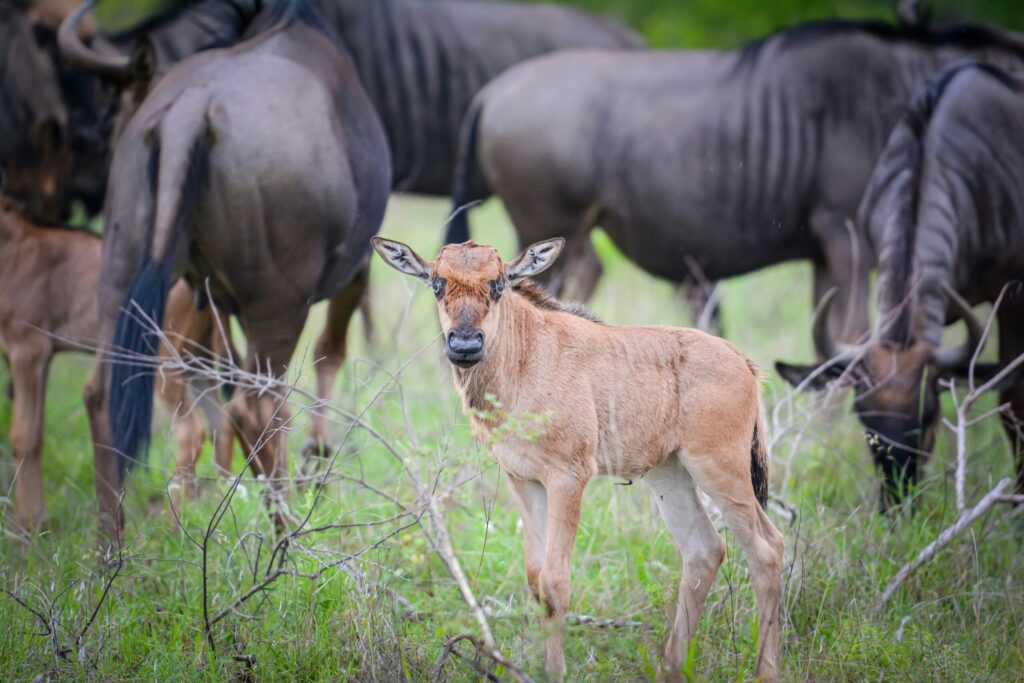
A lioness was lying flat in the grass about sixty metres off, doing nothing. Then a cow near the edge of the herd stopped, hunched and let go, and a calf slid out into the cold. Wet. Dark. Folded up like a deckchair. It was standing within minutes and wobbling toward its mother before the lioness had even lifted her head. Our guide switched off the engine and nobody said a word for twenty minutes.
That is what photographs don’t carry. Calving isn’t one dramatic moment. It’s thousands of small ones, all day, in every direction, with hyenas, lions and cheetahs working every edge of the herd. We’ve sat on those plains in the first weeks of February and we’ve sat there in mid-March, and they are not the same safari.
Most guides to a Serengeti safari at this time of year tell you to go from January to March and stay somewhere near Ndutu. That advice is true and nearly useless. The month you pick and the place you sleep decide whether you spend your days inside the action or in a vehicle on the way to it. Here’s how we’d plan it.
| QUICK ANSWER | When is calving season in the Serengeti? Calving season runs from late January to March, peaking in February. Most calves arrive within a few weeks on the southern plains around Ndutu. Timing shifts with the rains each year. We’d book the first three weeks of February for the best odds. |
At a Glance:
- Season: Late January to March, with the peak in February. The exact timing moves from year to year with the rains.
- Location: The southern Serengeti plains around Ndutu, Tanzania, where the Ngorongoro Conservation Area meets Serengeti National Park.
- Scale: Commonly cited estimates put births at about 8,000 a day at the peak and up to roughly 500,000 calves in a few weeks. These are estimates, not census counts.
- Best base: A seasonal mobile camp on the plains near Lake Ndutu or in the Kusini area. Permanent options include Engiterata Adventure Camp, Ndutu Safari Lodge and Lake Masek Tented Lodge.
- Park fees: Ngorongoro Conservation Area (which includes Ndutu) US$70.80 and Serengeti National Park US$82.60 per person per 24 hours at 2026 rates including VAT. Confirm 2027 tariffs before you book.
- Minimum stay: Three nights at Ndutu is the floor. Four to five nights is where we’d start.
- From Nairobi: Fly from JKIA to Kilimanjaro or Arusha then take a light aircraft to Ndutu airstrip. Or drive via the Namanga border to Arusha then about 5.5 to 6 hours and 260 km to Ndutu.
- Booking window: Six to nine months ahead for February. Prime camps are small and sell out fast.
When is calving season in the Serengeti?
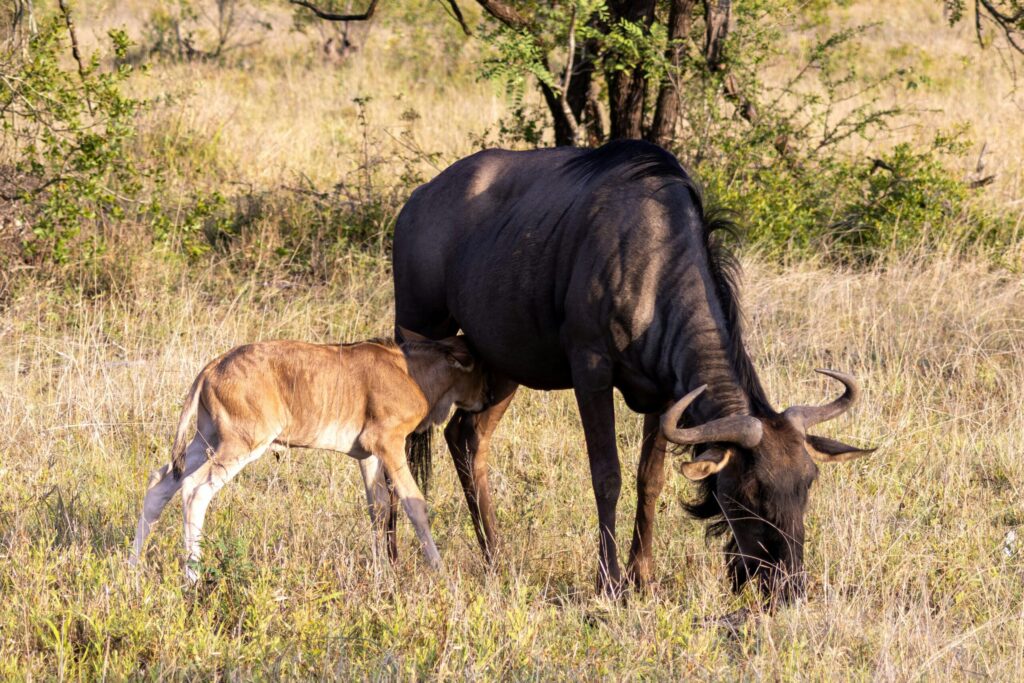
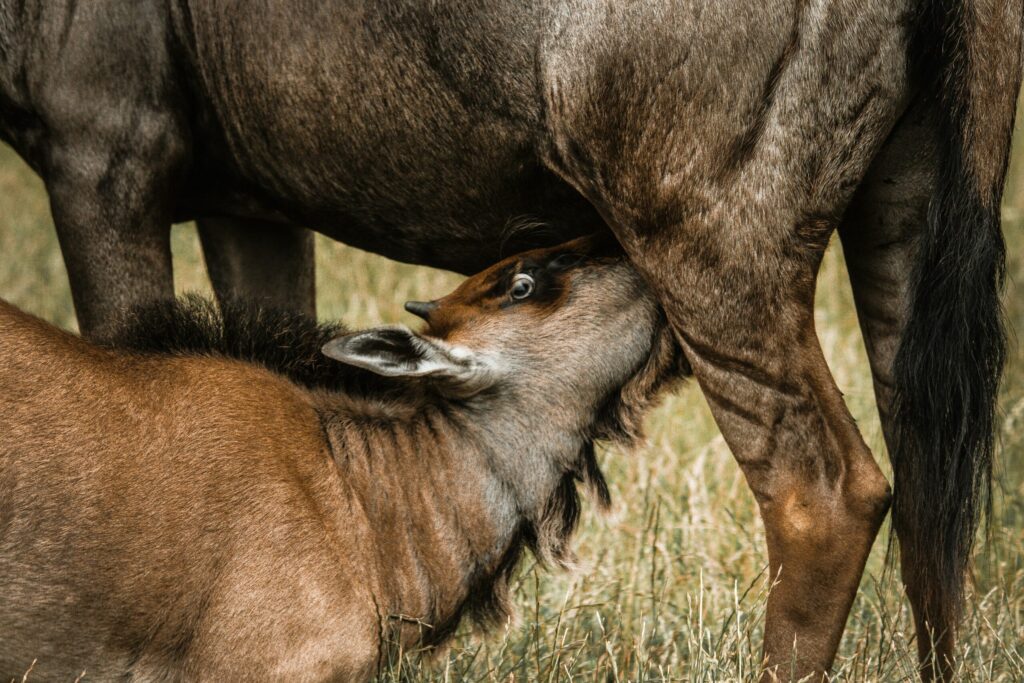
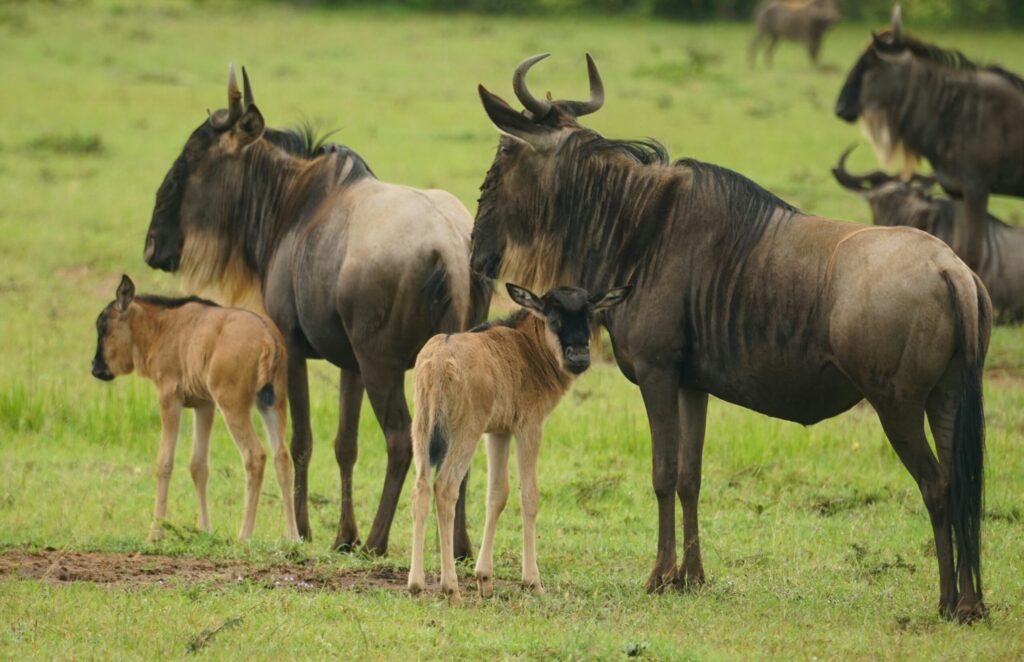
The wildebeest herds arrive on the southern plains from about December, after the short rains turn the grass green. Calving begins in late January in most years and peaks in February. By March the births tail off, the calves are bigger and the long rains start to build. Well over a million wildebeest take part, along with zebra and gazelle, which is why wildebeest calving in Tanzania is the densest wildlife event on the continent.
The births are synchronized on purpose. When hundreds of thousands of calves arrive in a few weeks, predators can’t eat them all, so the herd wins by numbers. A newborn is usually on its feet within minutes and can run with the herd within days. That biology is the reason the season is so short and so intense.
Ndutu calving season month by month
- December: The herds are arriving and many cows are visibly heavy. A few early calves appear. Camps are opening and rates are lower in the first weeks of the month.
- January: Pre-calving build-up. Births start in earnest in late January in most years. It’s a good month for fewer vehicles but a riskier one if newborns are your priority.
- February: The peak. This is the month to book, and the first three weeks are our pick. It’s also the most expensive month for camps.
- March: The tail. Calves are bigger and stronger, predators still work the herds and camp rates drop from early March. The long rains arrive, so expect greener plains and some muddy tracks.
- April: The herds drift north and west. Most Ndutu camps close or move. We wouldn’t plan a calving safari for April.
Pick the first three weeks of February. Pick the camp that can move with the herd. Everything else is detail.
Why the dates move
Calving follows the rain and the grass, not the calendar. A late or weak short-rains season can push the herds and the births a week or two either way. Nobody can guarantee where the herds will be on a given morning, and we won’t pretend otherwise. What we can do is choose a camp that repositions, check recent field reports a few weeks before you travel and build in enough nights to find them. Our wildebeest migration calendar for 2027 will track the herd month by month once it’s published at Wildebeest migration calendar 2027.
Where are the herds, and what is Ndutu?
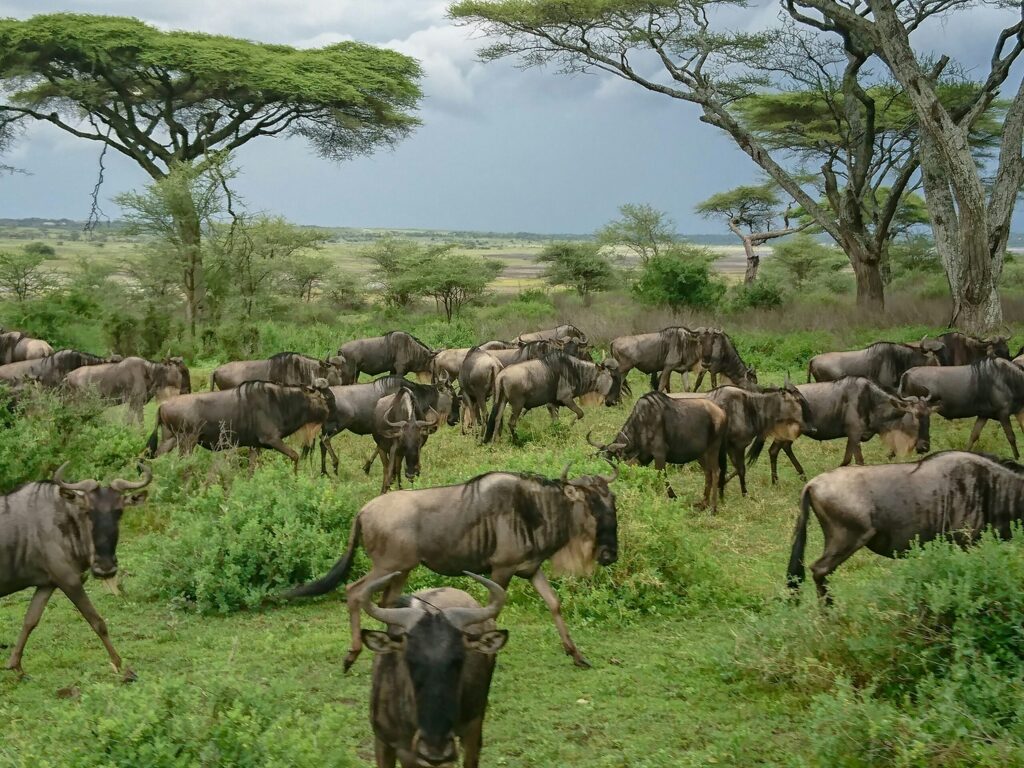
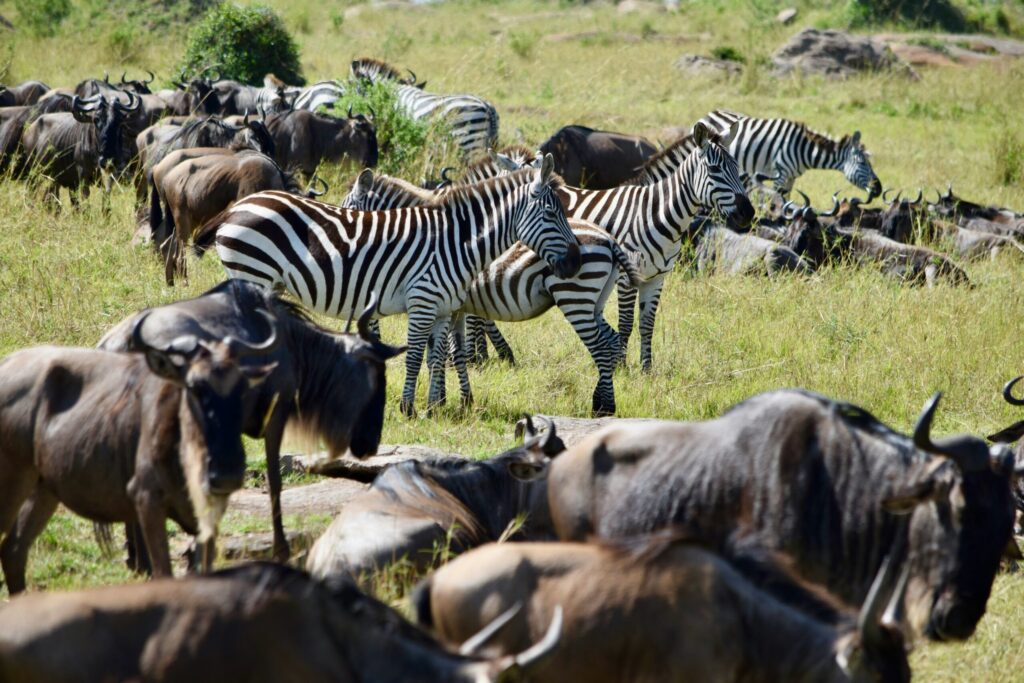
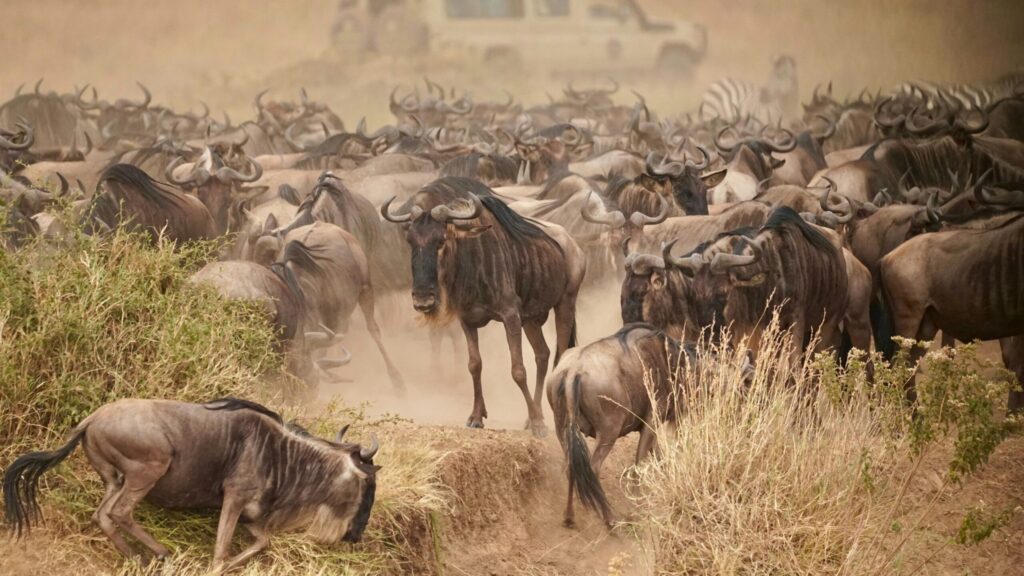
Ndutu is a stretch of acacia woodland, marsh and open short-grass plains around two seasonal soda lakes, Lake Ndutu and Lake Masek, at the southern end of the Serengeti ecosystem. Lake Ndutu forms a natural boundary. The south side sits in the Ngorongoro Conservation Area and the north side in Serengeti National Park. Maasai pastoralists live and graze in the conservation area, which is a multiple-use landscape rather than a pure wildlife park.
The herds calve on the short-grass plains because the grass is nutritious and the open ground lets mothers see danger coming. The woodland edges around the lakes give lions and leopards cover to hunt from. That mix of open plain and cover is why Ndutu is so productive for predator viewing.
| QUICK ANSWER | Where is the wildebeest calving? Wildebeest calve on the short-grass plains of the southern Serengeti around Ndutu in Tanzania. Ndutu sits where the Ngorongoro Conservation Area meets Serengeti National Park. Calving does not happen in Kenya. The herds shift between Ndutu and Kusini with the rain. |
Ndutu, Kusini and the southern plains
In a good year the calving herds spread across the plains east and south-east of the lakes toward Kusini, which sits inside Serengeti National Park along its southern edge. Kusini has kopjes and a different feel from the Ndutu woodland. Several seasonal camps set up in both areas, so the herds can be on your doorstep in one and an hour away in the other. This is why we ask which area the camp is in before we ask about the tents.
| QUICK ANSWER | What is Ndutu known for? Ndutu is known for the wildebeest calving season and the predators that follow it. It surrounds Lake Ndutu and Lake Masek in the southern Serengeti ecosystem. Camps sit right on the calving plains. Expect lions, hyenas and cheetahs hunting newborn calves. |
Can you see the Great Migration in February?
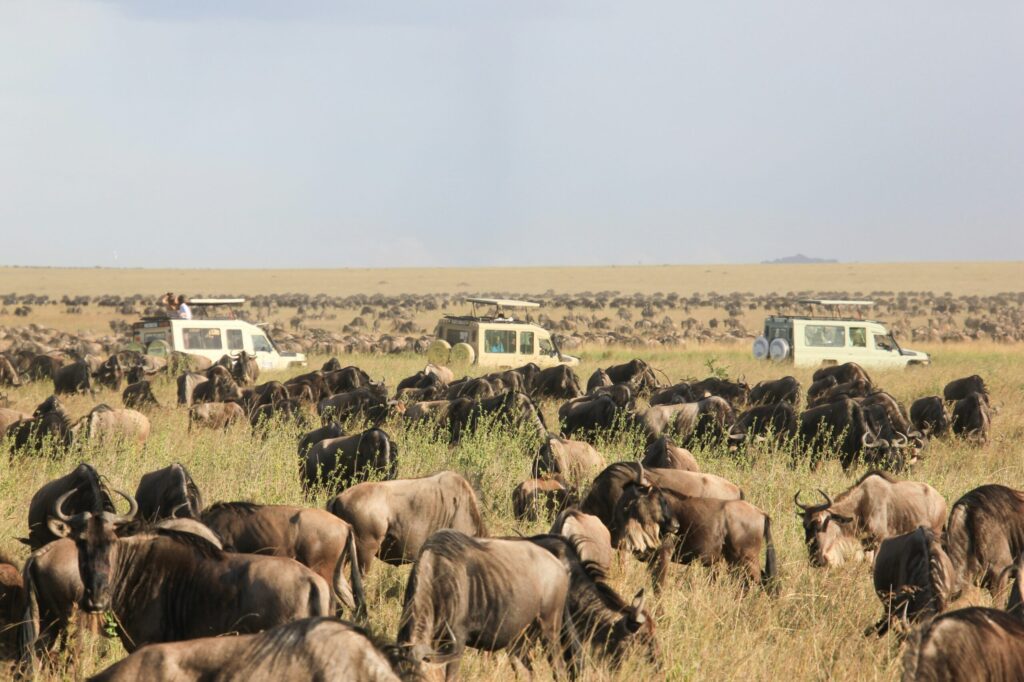
| QUICK ANSWER | Can you see the Great Migration in February? Yes, but the herds are in the southern Serengeti, not Kenya. February is calving season rather than river crossing season. The Mara River crossings happen from roughly July to October. For a Serengeti February safari, Ndutu is where you want to be. |
The migration never stops. It’s a year-round loop and February is simply its birthing phase. Travellers who want the dramatic Mara River crossings need a different month, usually between July and October, and a base in the northern Serengeti or the Masai Mara. For the full cycle see our guide to the wildebeest migration calendar.
What predator action can you expect?
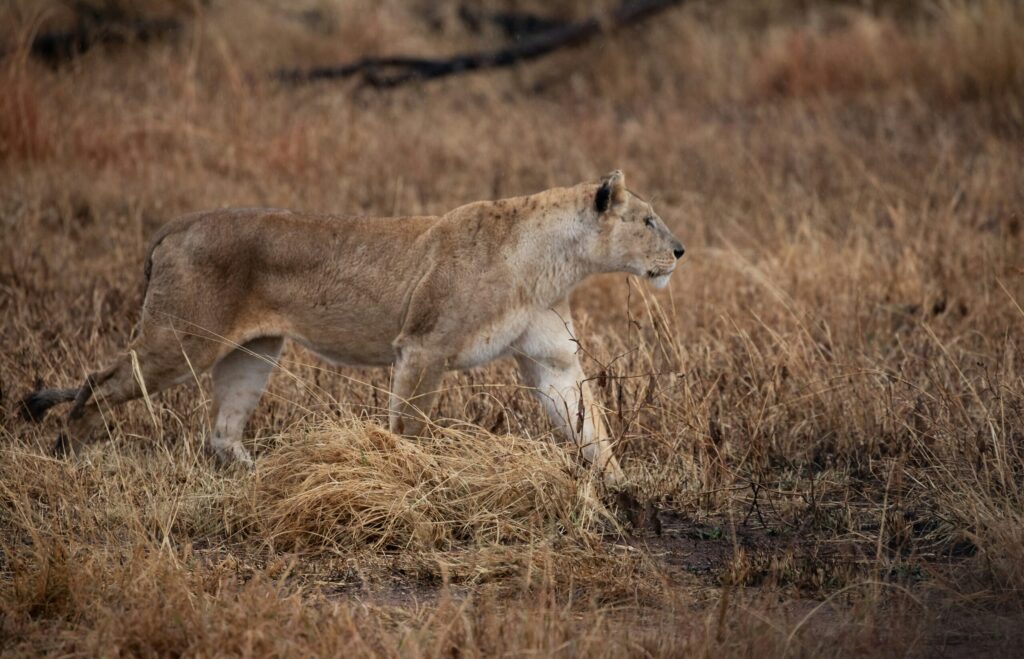
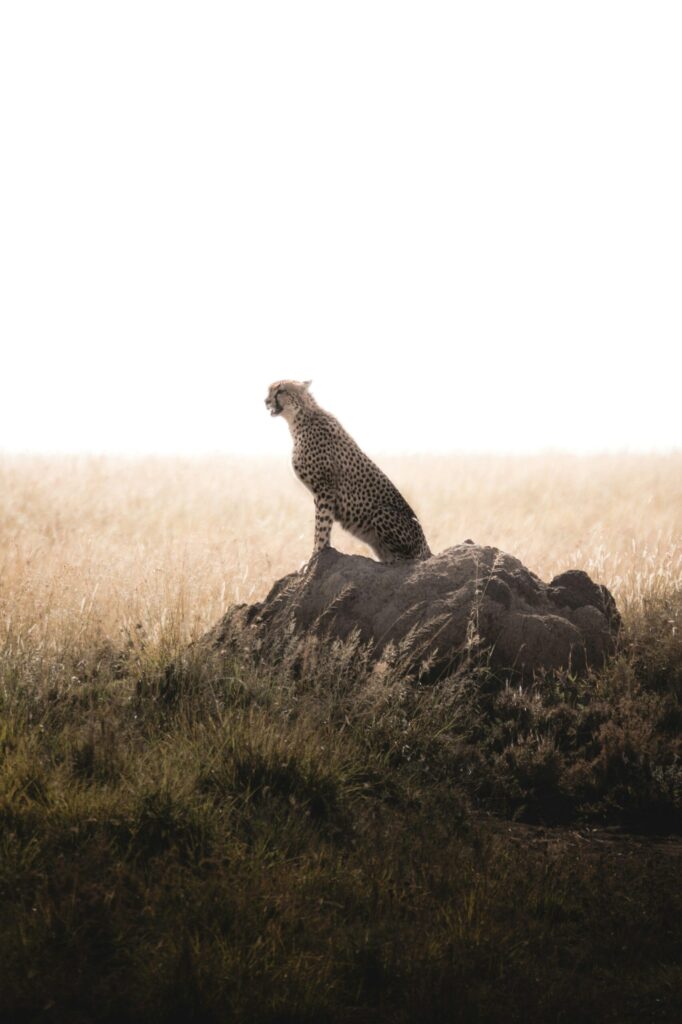
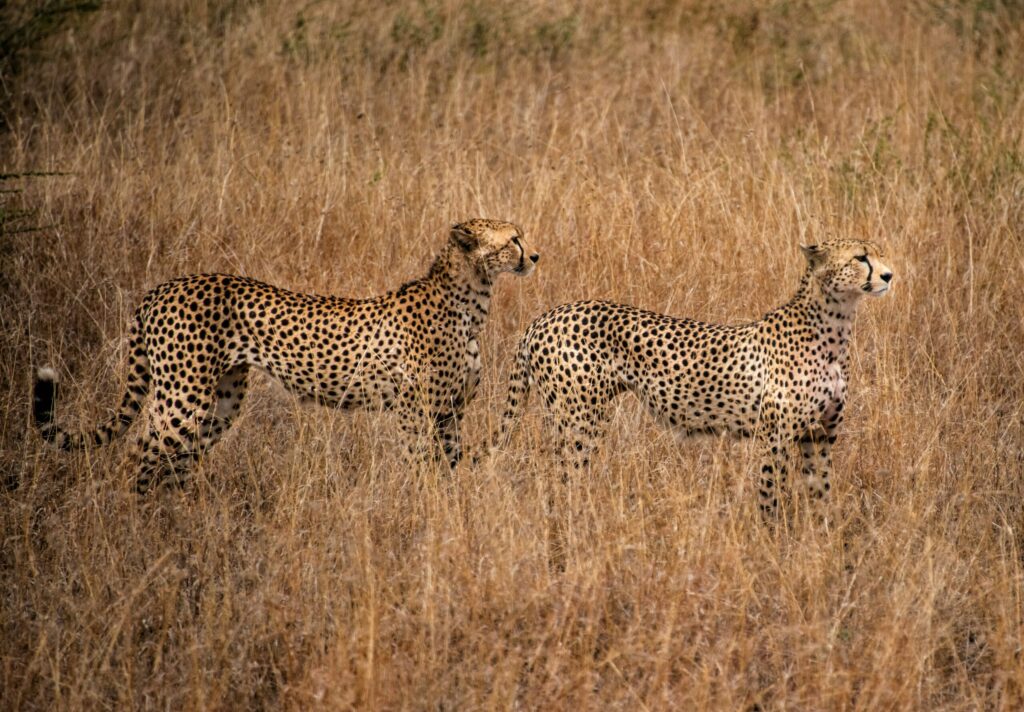
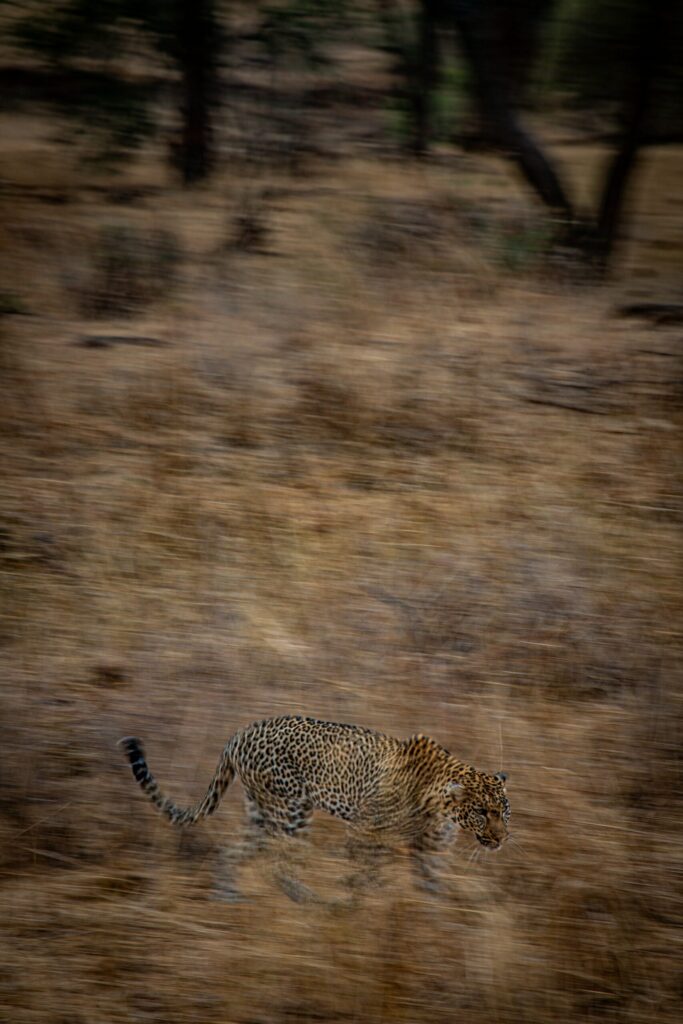
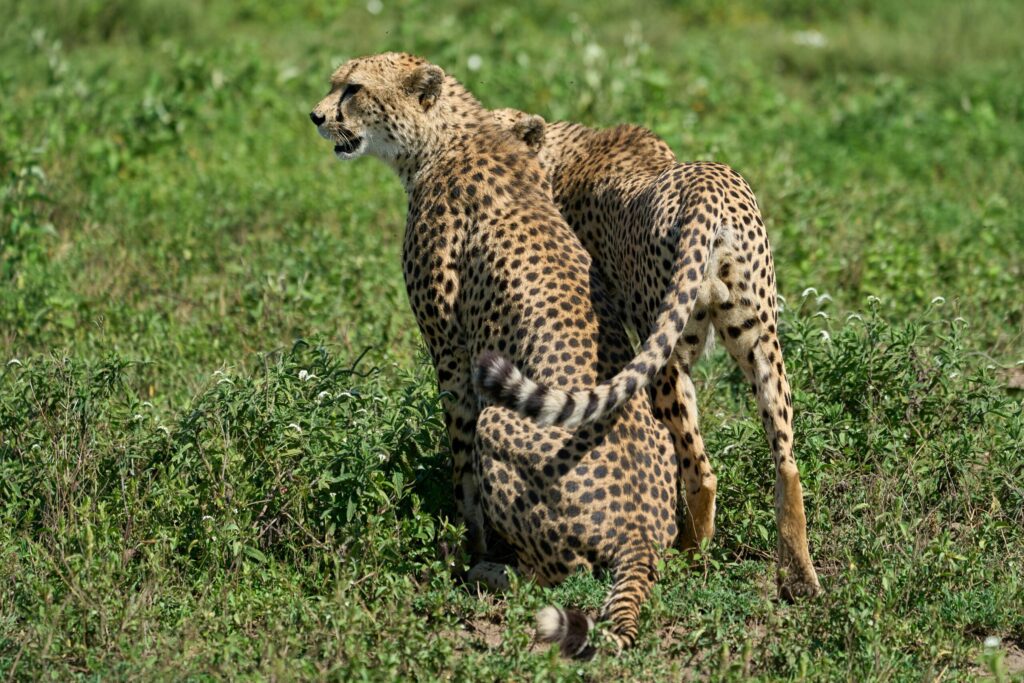
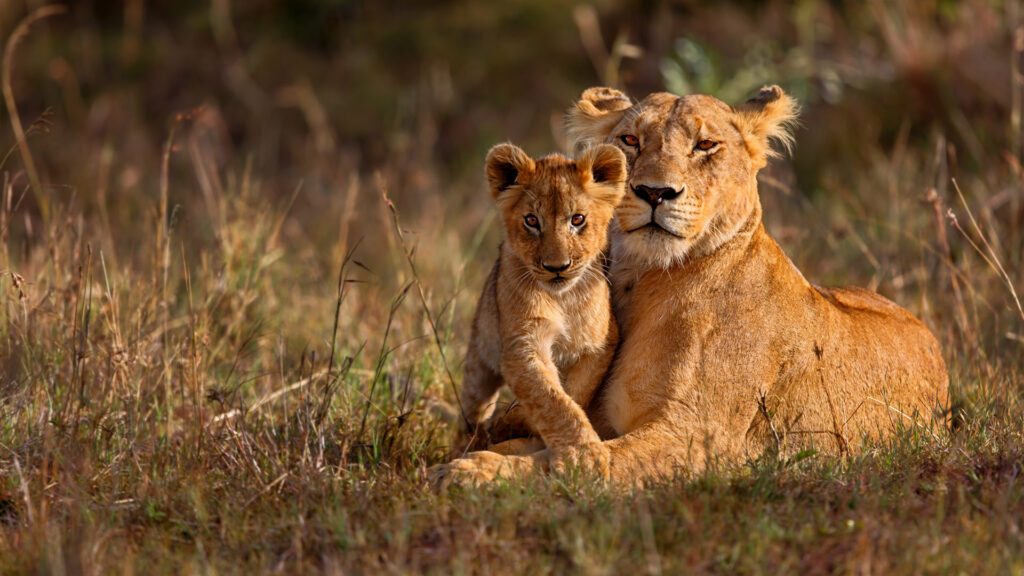
Calving concentrates predators like nothing else on the Serengeti calendar. Lions work the herd edges and the woodland fringe. Spotted hyenas are the most efficient takers of calves and are often active at dawn and dusk. Cheetahs hunt from termite mounds and low rises on the open plains. Leopards are present in the woodland around the lakes but are rarely the headline. Black-backed jackals pick at the margins and vultures and marabou storks clean up behind them.
Be realistic. You will see predators, but you won’t see a kill every morning. Many hunts fail. Some of our longest sightings are a lioness lying still while the herd flows around her and nothing happens for an hour. Then it happens in four seconds. The reward goes to people who stay out all day, which is why full-day drives with picnic breakfast and lunch are the standard format at Ndutu in calving season.
Calving season isn’t a bloodbath. It’s a nursery with a very hungry audience.
What you will see besides kills
- Newborn calves standing for the first time, often within minutes of birth.
- Cows and calves finding each other by voice and smell in a crowd of thousands.
- Cheetah mothers teaching cubs on the open plains.
- Flamingos and other birds on Lake Masek and Lake Ndutu when water levels allow.
Who should skip it
If you can’t watch a calf lose its mother or a hunt end badly, don’t book this safari. Guides don’t intervene and neither will you. The rules are simple: stay in the vehicle and keep the distance the guide sets. Children are welcome at some camps but many mobile camps set minimum ages, so ask before you commit.
| EXPERT NOTE | Park downwind of the herd, switch the engine off and wait. Vehicles that keep creeping forward push the cows away and spoil the scene for everyone. The best sightings come from guides who are patient enough to let the plains come to them. Nicholas Wangithi, Director & Founder |
What does a calving-season day look like?
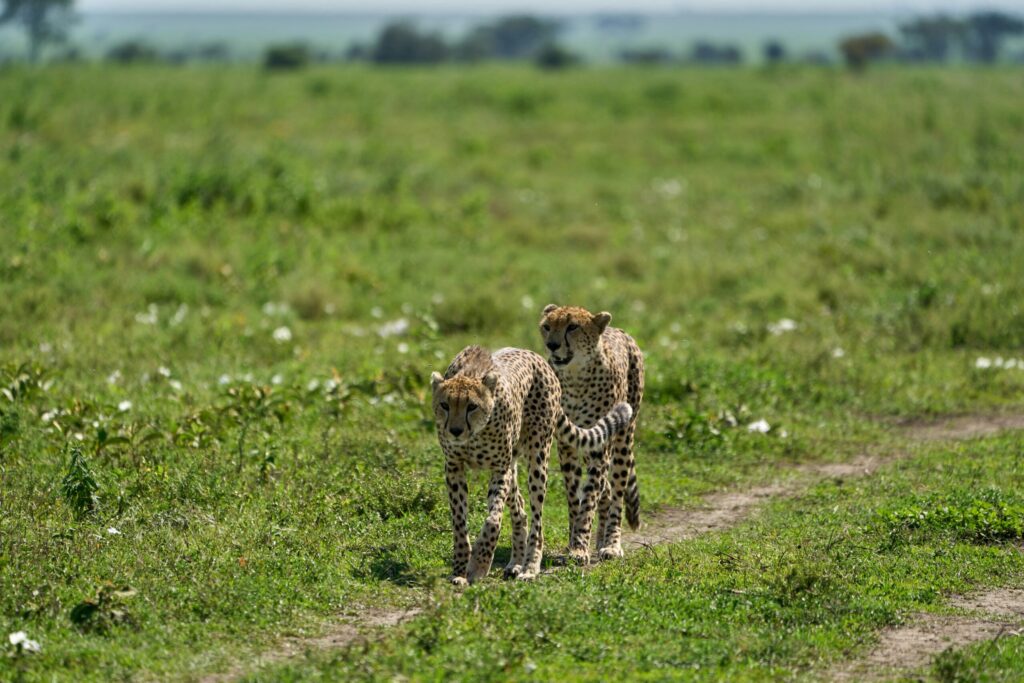
Expect a 6am start with tea and a rusk, then a full day in the vehicle. Camps pack picnic breakfasts and lunches so you can stay with the herds through the middle of the day when hunting slows and the herds lie up in the heat. Some guests return to camp for lunch and a rest if the camp is close. We prefer the full-day format when the herds are nearby.
On the road in and out you can add a stop at Olduvai Gorge between the Ngorongoro highlands and the plains. If you want a cultural visit in the conservation area, choose a community-led one and read our guide to doing a Maasai village visit respectfully first. Park rules limit driving after dark and gates close at 6pm, so plan arrivals accordingly.
Where should you stay for the Ndutu calving season?
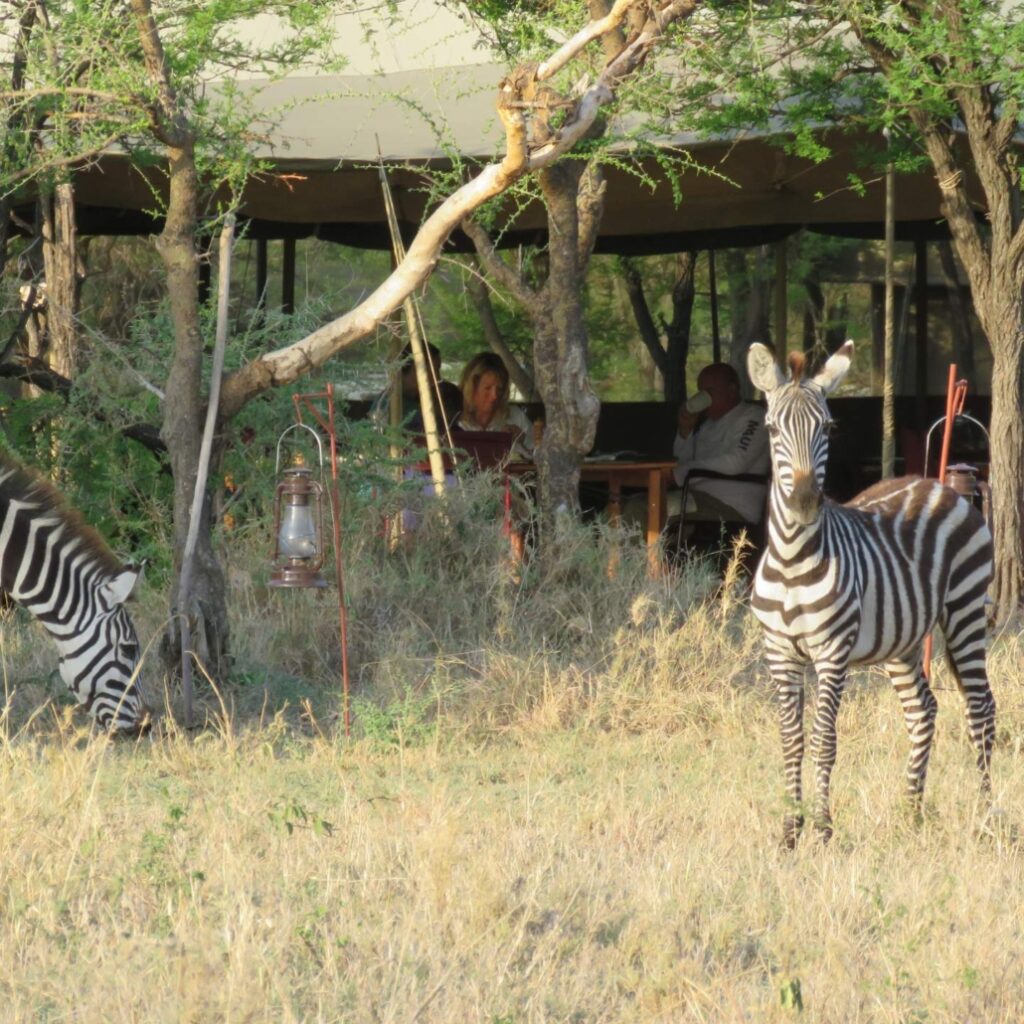
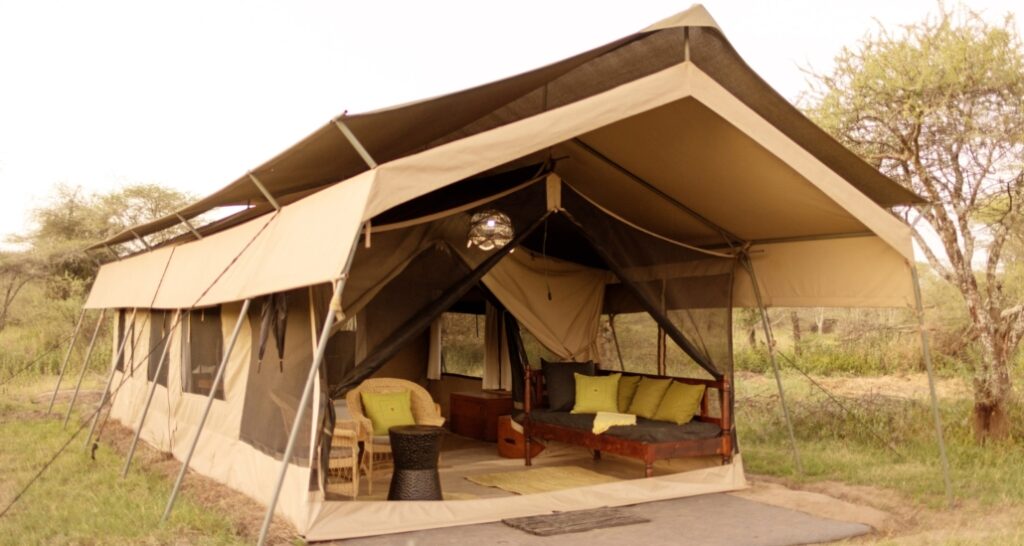
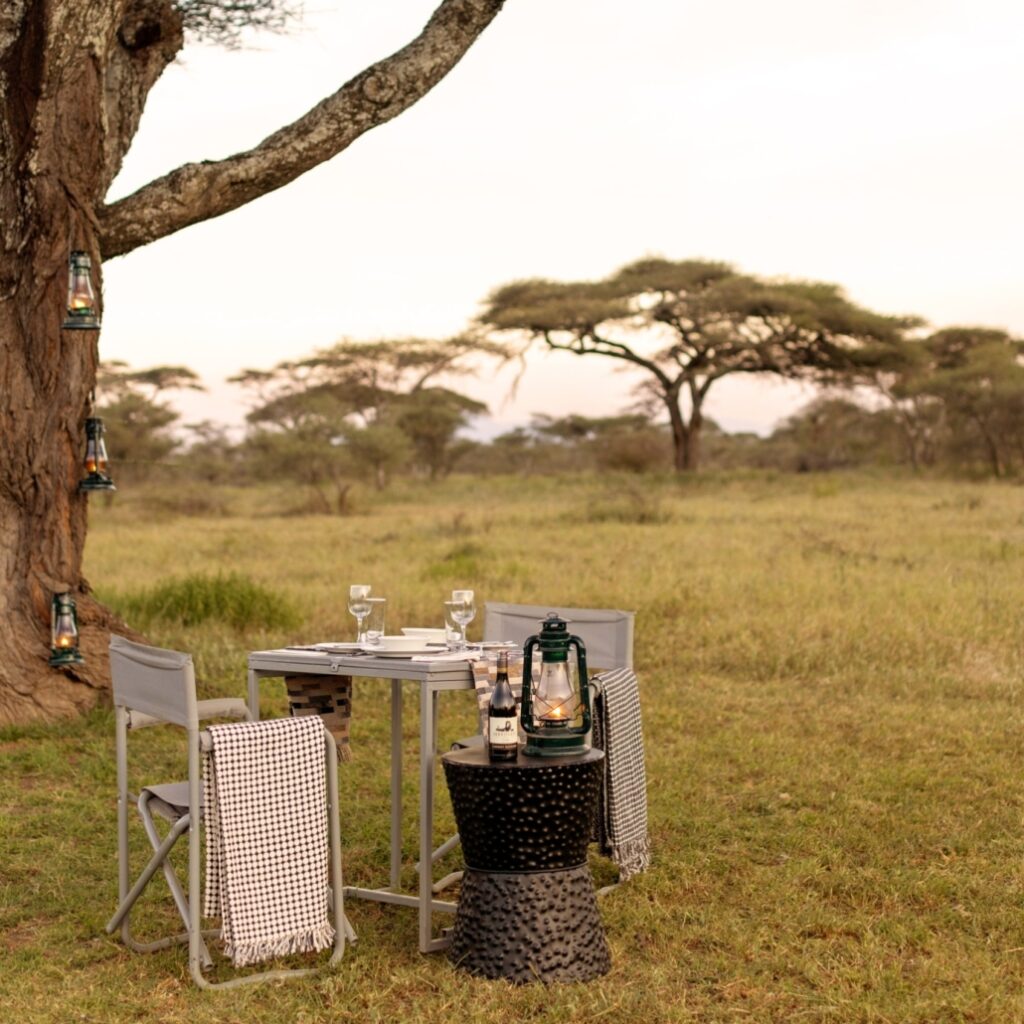
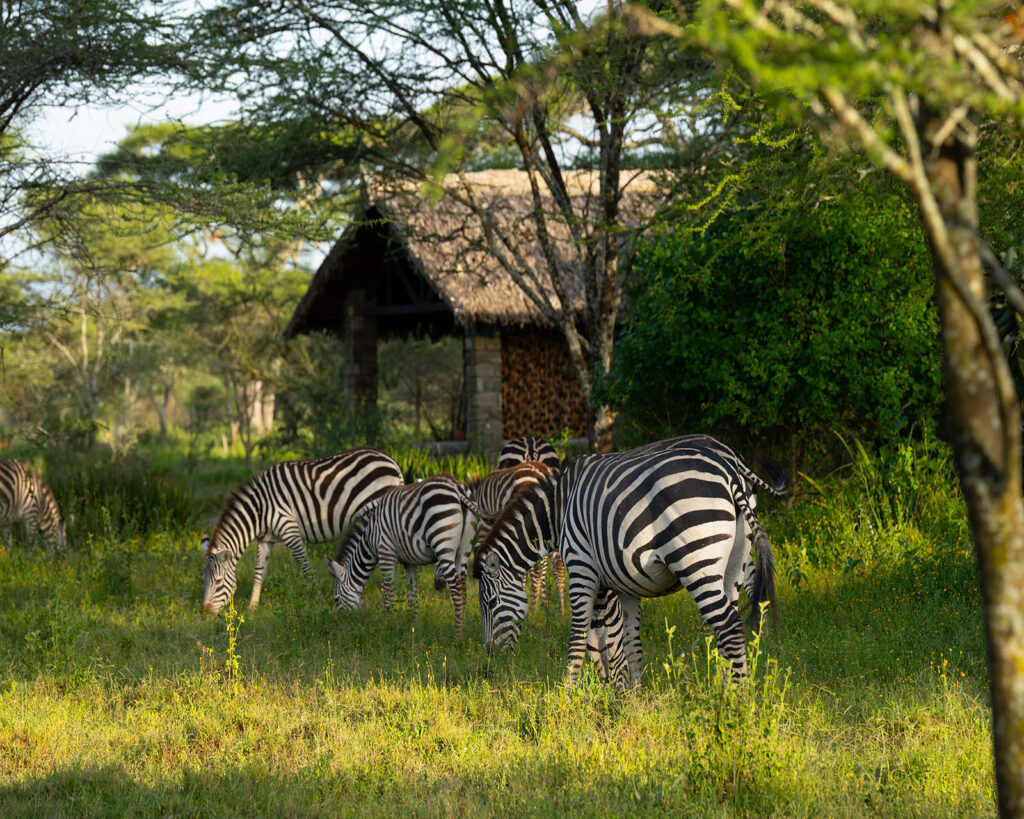
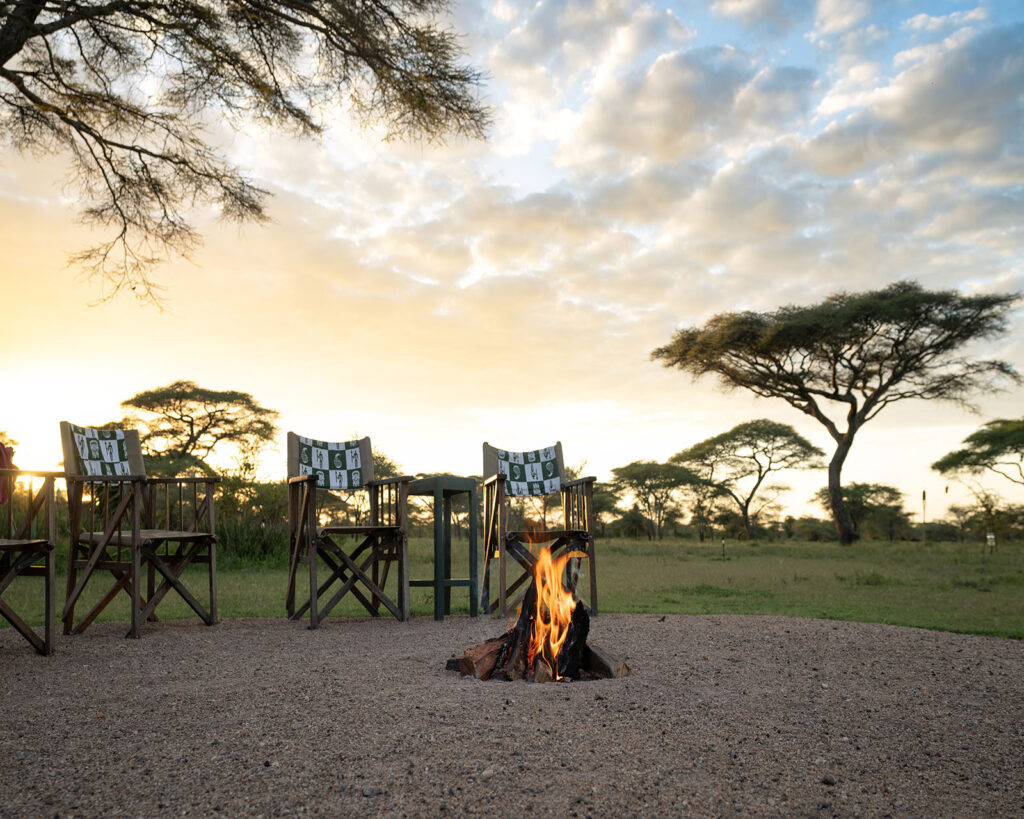
Sleep on the plains. A camp that is five minutes from the herd beats a nicer room that is an hour away. Most of the best calving-season camps are seasonal mobile camps that open from about December to March and move with the herds. Permanent lodges around Ndutu are few. That scarcity is why the good ones sell out so early.
Mobile camps: our first choice
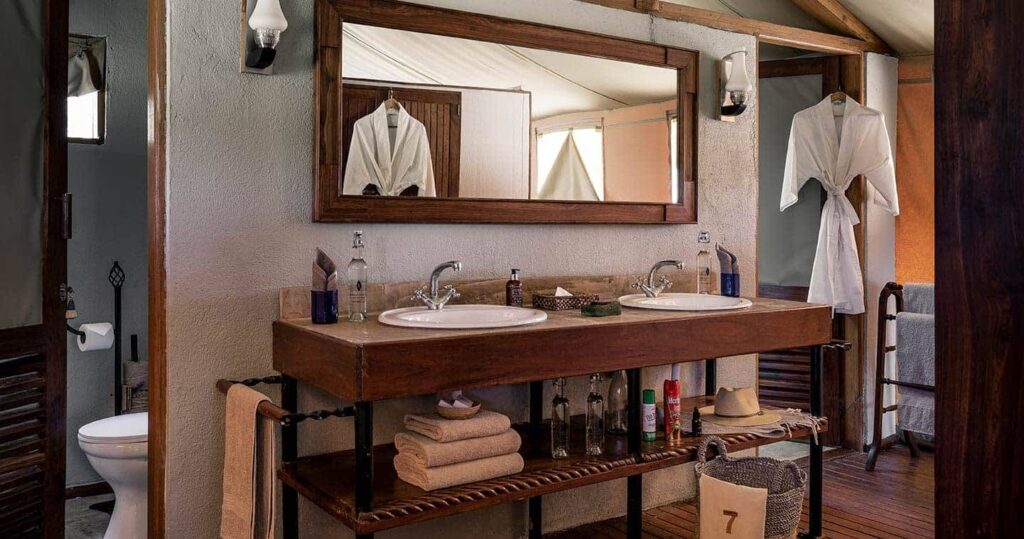
Seasonal camps such as Lemala Ndutu, Nasikia Migration Mobile, Ndutu Under Canvas, Tanzania Bush Camps Ndutu and the mobile camps in Kusini run by Alex Walker Serian and Sanctuary Kusini set up where the herds are expected. Tents are canvas but comfortable, with proper beds and a full camp team, though facilities vary by camp so ask for specifics. Rates are the highest of the year in February.
Permanent lodges and camps
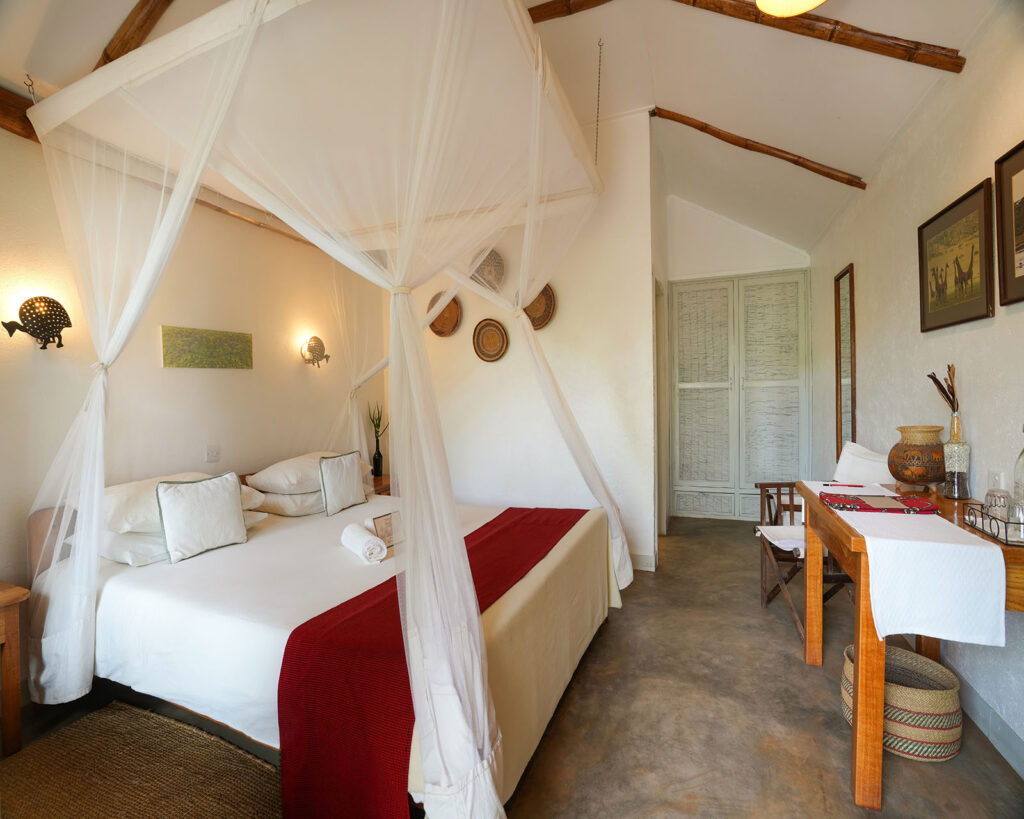
Ndutu Safari Lodge sits under acacias with views over Lake Ndutu and is the long-established entry-level option. Lake Masek Tented Lodge overlooks Lake Masek and is the more scenic choice in our view. Ndutu Wilderness Camp is a seasonal tented camp open roughly December to March. These give you walls and reliable facilities, but the herds may be further away and you can lose game-viewing time to the drive out.
| EXPERT NOTE | Ask any camp two questions before you pay a deposit. Where did the herds sit last week and can the camp move if they leave? A camp that answers both clearly is worth a premium. One that talks only about the pool isn’t. Kibara Mugo, Safari Writer and East Africa Specialist |
Ndutu vs central Serengeti in February
We wouldn’t base a calving safari in central Serengeti. Seronera is great for resident lions and leopards, but the herds are mostly in the south in February. Naabi Hill Gate to Seronera is about 60 km and about an hour, and Ndutu to Naabi is about 30 km and an hour and a half, so you’d spend roughly two and a half hours each way chasing the action. Use central Serengeti as a second stop, not a base.
| Factor | Ndutu | Central Serengeti (Seronera) |
| February highlight | Calving herds and concentrated predators | Resident lions and leopards in kopje and riverine country |
| Herd access | On the doorstep in most years | Mostly 2 to 3 hours away by road |
| Accommodation | Seasonal mobile camps and a few lodges | Wider choice of permanent lodges and camps |
| Fees | Ngorongoro Conservation Area fee on the south side | Serengeti National Park fee |
| Our verdict | Base here for calving | Add as a second stop |
How much does a calving-season safari cost?
| QUICK ANSWER | How much does a calving-season safari cost? A five-day calving-season safari costs roughly US$2,200 to US$4,500 per person, excluding international flights. Mid-range sits near US$3,000. Park fees add about US$71 to US$83 per person per day. Camp rates are highest from late December to February. |
Park fees
At 2026 rates including VAT, the Ngorongoro Conservation Area fee (which covers Ndutu) is US$70.80 per person per 24 hours and the Serengeti National Park fee is US$82.60 per person per 24 hours. Add a Ngorongoro Crater descent and there’s a crater service fee of US$295 per vehicle. Concession fees for nights inside the parks are charged per person per night by season. Tariffs change, so we confirm current rates before quoting a 2027 trip.
Camps and totals
| Item | Indicative range | Notes |
| Mobile camps in February | Roughly US$400 to US$800 per person per night | Full board and drives typically included |
| Lake Masek Tented Lodge | Roughly US$280 to US$545 per person sharing | Range spans the year. February sits at the top. |
| Ndutu Wilderness Camp | US$425 per person per night at peak 2025/26 rates | Dropped to US$295 from 1st March 2026 |
| Five-day safari, budget to luxury | Roughly US$2,200 to US$4,500 per person | Two travellers sharing. Excludes international flights. |
| Driver-guide tip | US$15 per person per day (range US$10 to US$20) | Discretionary. Go higher for exceptional service. |
These are indicative figures from published rate cards and operator itineraries, not a quote. The biggest drivers of price are the camp type, the number of Ndutu nights and whether you fly or drive. Flying in costs more but saves roughly a day of road time.
How many days do you need?
Plan at least three nights at Ndutu and ideally four or five. Calving is a living event, not a scheduled one. A single day can give you a birth and a hunt or only wildebeest grazing. Extra days at Ndutu raise your chances of the good ones. We wouldn’t squeeze the safari into three days by road from Arusha because the long drive eats the best light on arrival and departure.
| Length | How it works | Our view |
| 3 days | Fly in and out. Two full days at Ndutu. | Tight but workable for a short trip |
| 5 days | Four nights at Ndutu or three at Ndutu plus Ngorongoro Crater. | The sweet spot for most guests |
| 7 to 8 days | Ndutu plus Ngorongoro Crater and Tarangire, or Kenya first. | Best for a full Tanzania circuit |
How do you get there from Nairobi, and can you combine it with Kenya?
Flying
Scheduled flights link JKIA in Nairobi to Kilimanjaro International Airport in roughly an hour, with onward light aircraft to the Ndutu airstrip. Lemala Ndutu, for example, notes the airstrip is a 20-minute transfer from camp. Flying is our preferred option for a short trip because it saves the long road day.
Driving
Road travel runs from Nairobi through the Namanga border to Arusha, then about 260 km and 5.5 to 6 hours from Arusha to Ndutu via the Ngorongoro Conservation Area. Allow time at the border. It’s a long day, but it works well if you’re already combining Kenya and Tanzania.
Documents
Tanzania requires a visa or eVisa for most nationalities, and travellers arriving from Kenya are expected to carry a yellow fever certificate. Check the latest rules a few weeks before you fly. For the Kenya side of your trip see our Kenya entry requirements guide and the Kenya eTA guide for UK, US and EU travellers.
Combining with Kenya
The cleanest pairing is Kenya first, then Tanzania. Spend a few nights in Amboseli, which is close to the Namanga crossing, then continue by road to Arusha and fly on to Ndutu. Or start in the Masai Mara and fly across. January and February are dry and excellent in Kenya too, so see our guide to a Kenya safari in January and February. Not sure which country suits you? Read Kenya or Tanzania for safari. For Tanzania itineraries and routes see our Tanzania safaris page.
| EXPERT NOTE | Book camps and flights together, six to nine months ahead for February. Light aircraft have baggage limits, so pack in soft bags. Check your yellow fever certificate and Tanzania entry paperwork early rather than at the airport. Hellen Asiko, Director & Guest Experience Curator |
Ndutu or the Masai Mara in the same months?
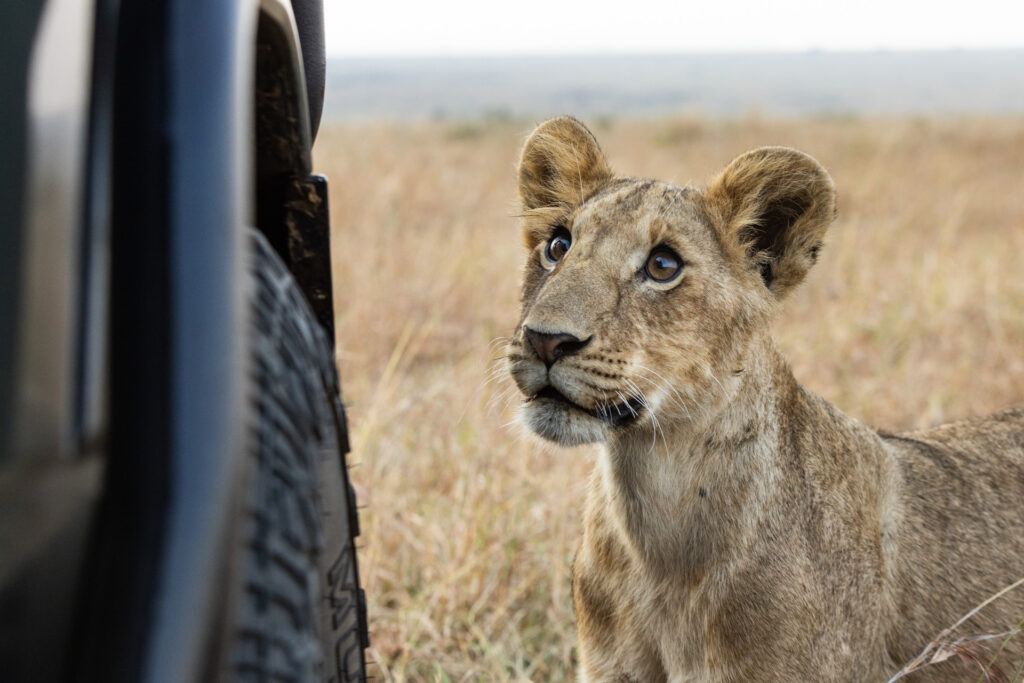
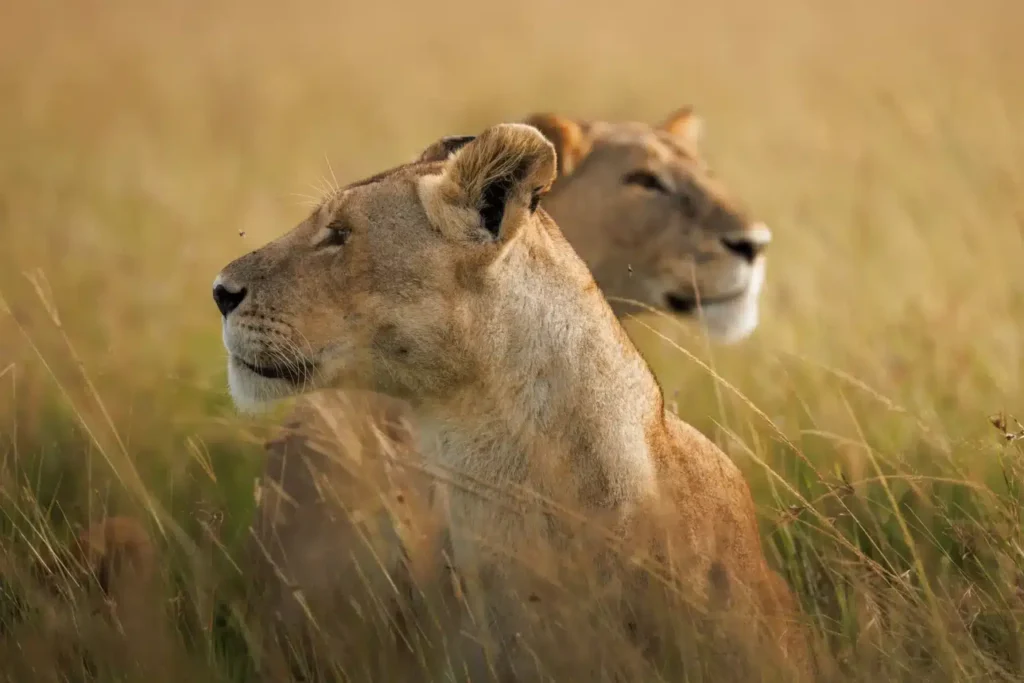
If calving is why you’re going, choose Ndutu. If you want big predators, open landscapes and simpler logistics, the Masai Mara in February is excellent. The Great Migration isn’t in Kenya in February, but the Mara’s resident wildlife is, and the dry weather makes for good driving.
| Factor | Ndutu, Tanzania | Masai Mara, Kenya |
| Main draw in February | Wildebeest calving and predators | Resident lions, cheetahs and other big game |
| Great Migration | Yes, calving herds | No. Herds usually arrive from July. |
| Weather | Short rains ending, long rains from March | Dry season, good road conditions |
| Access from Nairobi | Cross-border flight or long drive | Short flight or road drive within Kenya |
| Activities | Full-day game drives | Game drives, balloon flights and conservancy options |
For a fuller comparison read Masai Mara vs Serengeti and our Masai Mara complete safari guide. If you’re choosing a balloon flight, see the Masai Mara hot air balloon safari guide.
What to pack and what the weather is like
Days are warm and mornings are cold, so layers matter. Short showers are possible in February and become more frequent in March. Tracks can turn muddy. Bring neutral clothes, a warm fleece, a hat and sunscreen. Ndutu is in a malaria-risk area, so get medical advice before you travel. Our African safari packing list covers the full kit. For what a day in the vehicle feels like, read a day on safari hour by hour and for our vehicles see our Land Cruiser fleet.
Frequently asked questions
What is the best month for wildebeest calving at Ndutu?
February is the best month. Births peak then and the first three weeks are our pick. Late January and early March can also be good depending on the rains.
How long does calving season last?
Calving season lasts about two to three months, from late January to March. Most births happen in a few intense weeks in February.
Is the calving season better than the river crossings?
It depends on what you want. Calving gives you newborns and concentrated predator action on open plains. River crossings, usually between July and October, give you big drama at the Mara River. Many travellers do both across two trips.
Do I need to book far in advance?
Yes. Book six to nine months ahead for February. The best seasonal camps are small and fill up early.
Is Ndutu suitable for children?
It can be, but check each camp’s policy. Some mobile camps set a minimum age (Lemala Ndutu accepts children from 6). The sight of hunts can also upset younger children.
Is it safe to watch predators hunt calves?
Yes, if you follow your guide’s instructions. Stay in the vehicle and keep the distance the guide sets. Hunts are natural and guides don’t intervene.
Can I combine Ndutu with the Ngorongoro Crater?
Yes. Many itineraries pair Ndutu with a night near the crater and a crater descent. The crater service fee is US$295 per vehicle at 2026 rates.
Can I do a calving safari from Kenya?
Yes. Calving happens in Tanzania, but you can start in Nairobi and fly or drive across. Many guests add Amboseli or the Masai Mara first.
Which is better in February, Ndutu or central Serengeti?
Ndutu is better for calving. Central Serengeti works as a second stop for resident lions and leopards.
Can you see the Great Migration in February?
Yes. The herds are in the southern Serengeti calving around Ndutu. They are not in Kenya, and there are no river crossings at this time of year.
Plan a calving-season safari
We’ve covered when to go, where to stay, what it costs and how to get there. What we can add is the part a guide can’t give you: a real read on where the herds are, a camp that can move with them and a route that doesn’t waste your best mornings. Afrikan Accent Adventures is a Nairobi-based safari operator running Kenya and Tanzania trips, and Hellen Asiko, Director & Guest Experience Curator, will build your itinerary around the plains and the dates that matter. Tell us your month and your budget and we’ll start from there. Remember that 6:15am mist on the grass? That’s the hour to plan around.
Come for the calves, sleep on the plains and let us get you there before the mist lifts.
Let's plan your East African safari
Tell us when you'd love to travel and a local specialist will craft a tailor-made route around you.


