

Kenya Safari Vaccinations: What Is Actually Required Versus Recommended
The yellow fever certificate confuses far more travellers than the malaria tablets ever do, and getting the distinction wrong can cost you a transfer, not just a jab.
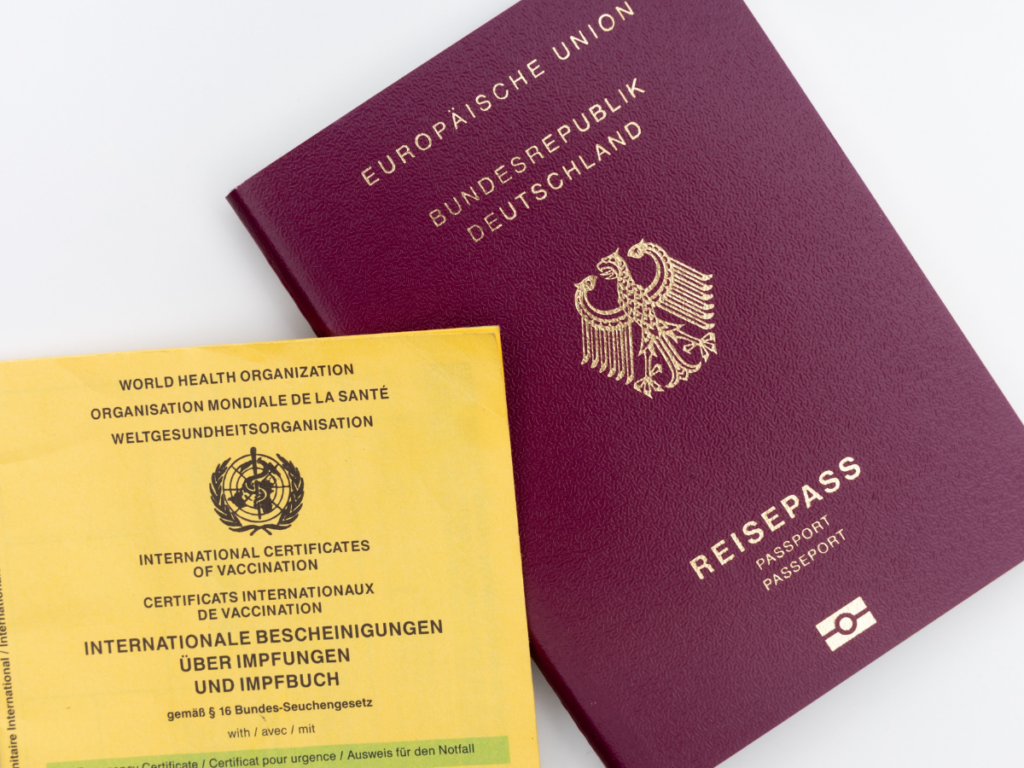
An official WHO yellow fever certificate and passport required for border compliance when reviewing, Kenya eta visa, Kenya safari vaccinations and travel health entries.
The Port Health desk at JKIA sits before immigration, not after, and that catches most travellers off guard. We have watched this happen more than once. A guest steps off a long layover in Addis Ababa, passport out, immigration and baggage claim still ahead of him, already thinking about the transfer to Wilson Airport we have timed for later that same morning. Before any of that, a Port Health officer stops him. Not for a boarding pass. Not for a visa. For a yellow fever vaccination certificate.
Most guests do not have one. Not because they ignored the requirement, but because they never knew Kenya has one. Travel forums treat “safari country” and “yellow fever risk country” as the same thing, and they are not. Kenya does not vaccinate anyone at its own border for a direct arrival from the United States, the United Kingdom or most of Europe. It cares about where you have been in the twelve hours before you land, not where you are going once you do.
The confusion gets worse for guests combining Kenya with Uganda, Rwanda or Tanzania on one trip, which is a route we book often for clients heading on to gorilla trekking after the Mara. Each of those countries has its own rule, and the rules do not mirror each other. What clears you for Nairobi will not automatically clear you for Kigali.
Get this wrong and the cost is not a fine. It is a missed transfer, a night stuck in Nairobi instead of camp and a rebooked light aircraft slot that may not exist until the following day. Get it right, and vaccinations become the easiest item on your entire packing list.
| QUICK ANSWER | Do I need vaccinations for a Kenya safari? Kenya does not require vaccination for travellers arriving directly from the US, UK or Europe. Transit more than twelve hours through a yellow fever risk country and you need a valid ICVP certificate. Malaria medication is not legally required but is essential for nearly every Kenya safari itinerary. |
At a Glance:
- Yellow fever certificate: required only if arriving from, or transiting twelve or more hours through, a WHO-listed risk country. Valid for life since 11 July 2016 once issued, with no ten-year booster needed.
- Malaria risk zones: present across roughly 70 percent of Kenya below 2,500 metres, including the Masai Mara, Amboseli, Tsavo, Samburu and the entire coast. Nairobi and the Masai Mara plateau carry comparatively lower transmission.
- Malaria medication: not legally required, but strongly recommended by the CDC and WHO. Atovaquone-proguanil, doxycycline and mefloquine are the three standard chemoprophylaxis options.
- Other recommended vaccines: Hepatitis A and typhoid for most travellers, with routine boosters (MMR, Tdap, polio) confirmed current. Hepatitis B and rabies are considered case by case.
- COVID-19: no vaccination or testing requirement currently in effect for entry into Kenya.
- Travel insurance: a policy with medical evacuation cover is strongly recommended given the distance between remote camps and full-service hospitals. A regional air evacuation membership such as AMREF Flying Doctors is a common add-on.
- Where to get a certificate in Nairobi: JKIA Port Health, open 24 hours, or Wilson Airport Port Health, open 06:30 to 20:30.
- Recommended lead time: book a travel clinic appointment four to six weeks before departure to cover multi-dose vaccines and the certificate’s ten-day validity window.
Are Vaccinations Required for a Kenya Safari?

Only one, and only conditionally. Kenya has a single conditional vaccination requirement for entry, tied to yellow fever, and no blanket rule that forces every visitor to carry a specific set of jabs. Everything else you will read about on this page, from hepatitis A to malaria tablets, sits in the recommended column, not the required one. That distinction is the single most useful thing to understand before you book a single appointment.
Required Vaccinations for Kenya Safaris
The only vaccination Kenya can require at its border is yellow fever, and even that depends entirely on your routing rather than your destination. Kenya dropped its COVID-19 vaccination and testing requirements for entry some time ago, and no other disease carries a mandatory certificate for arriving travellers. If an itinerary, a blog or a visa agent tells you Kenya requires a broader vaccination panel than that, they are describing CDC and WHO recommendations, not Kenyan law.
Is Yellow Fever Vaccination Mandatory for Kenya?
No, not for most travellers. Kenya’s Ministry of Health requires a valid International Certificate of Vaccination or Prophylaxis (ICVP), commonly called the yellow card, only from travellers arriving from, or transiting for more than twelve hours through, a country where the WHO records yellow fever transmission risk. This applies to travellers aged one year and older.
That list includes countries such as Ethiopia, Uganda, Rwanda, South Sudan, Nigeria, Ghana and the Democratic Republic of Congo, among others the WHO updates as disease patterns shift. A direct flight from New York, London or Frankfurt does not trigger the requirement. A fourteen-hour layover in Addis Ababa on the way to Nairobi does, even if you never leave the airport terminal.
The certificate rule follows your routing, not your passport.
This matters most for guests building a multi-country East Africa itinerary. If your safari continues into Uganda or Rwanda for gorilla trekking, both countries require a yellow fever certificate from all arriving travellers regardless of origin. Tanzania requires it from travellers arriving from Kenya specifically. A route that clears Kenyan immigration cleanly can still need documentation for the next border crossing, so we check this against the full itinerary, not just the first flight, before we confirm bookings.
Once issued, the certificate is straightforward to manage. Since 11 July 2016, under the International Health Regulations, the ICVP is valid for the traveller’s lifetime. There is no ten-year booster requirement, despite that rule still circulating in older travel advice. The certificate becomes valid ten days after vaccination, so a jab taken the week before departure will not satisfy the requirement on arrival.
Exemptions exist for infants under nine months, pregnant women outside an active outbreak, travellers with a severe egg allergy and those with significant immunodeficiency. Travellers who fall into one of these categories and are still flagged at the border should carry an official medical exemption letter, since Port Health officers make the final call at the desk. Families travelling with young children should raise the infant exemption with a pediatric travel clinic directly, since the cut-off is age-specific and the clinic will confirm whether it applies to your child’s exact itinerary.
If you discover mid-trip that an onward leg requires a certificate you do not have, both JKIA Port Health, open around the clock, and Wilson Airport Port Health, open from 06:30 to 20:30, can administer the vaccine in Nairobi. Remember the ten-day rule before it takes effect, and build that buffer into your itinerary rather than your departure morning. Arrive at a Kenyan port of entry without a required certificate and without an exemption letter, and Port Health officers can vaccinate you on the spot where available, or delay your entry while they verify your status. Neither outcome is one you want to discover for the first time at the immigration desk.
Recommended (Not Required) Vaccinations
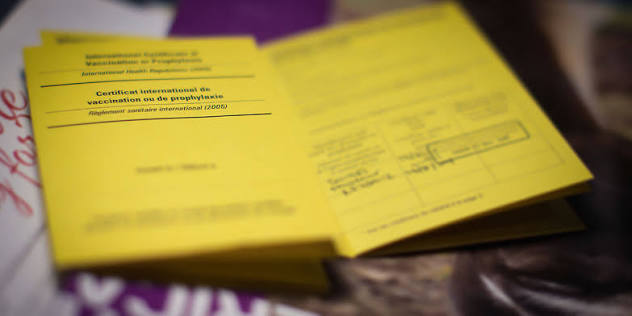
Kenya’s only conditional entry requirement is yellow fever. Everything else on this list is a health recommendation from the CDC and WHO, not a border rule, and the distinction matters for how you plan your appointments.
Hepatitis A and typhoid
Both spread through contaminated food and water, and both are considered standard recommendations for travel to Kenya regardless of trip length. A single hepatitis A dose gives partial protection within about two weeks, with a booster six to twelve months later completing long-term immunity. Typhoid can be given as an injection, effective after roughly two weeks, or as a four-dose oral course taken over seven days.
Routine boosters
Confirm you are current on MMR, Tdap and polio before travelling. Kenya does not check these at the border, but a mobile safari puts you further from a well-equipped hospital than a city holiday would, and lapsed routine immunity is an easy gap to close before departure rather than after a problem arises.
Hepatitis B and rabies
These depend on your itinerary and activities rather than a blanket rule. Hepatitis B is generally recommended for longer stays or any trip involving medical or dental procedures. Rabies pre-exposure vaccination is worth discussing if your safari includes extended bush walks, cycling safaris or camps where vervet monkeys and baboons are a constant, close presence around the dining tent. Rabies is present in Kenya, and pre-exposure vaccination buys time and simplifies treatment if a bite or scratch does happen, though it does not remove the need for prompt medical attention afterward.
Cholera and meningococcal
These are considered for specific circumstances only, such as extended rural travel during an active cholera advisory, or a itinerary that includes crowded settings where meningococcal transmission risk is higher. For a standard lodge or tented camp safari, most travel clinics will not push these unless your health history or travel plans call for them.
Malaria Prevention Options Compared

Do You Need Malaria Medication for Safari?
Yes, for almost every classic Kenya safari route. There is no travel vaccine that replaces malaria prophylaxis for adult visitors, and mosquito nets and repellent alone are not considered sufficient protection once your itinerary enters a transmission zone. The chemoprophylaxis you take daily or weekly, combined with mosquito-bite prevention, remains the standard of care, and the CDC lists three main options for Kenya.
| Medication | Dosing Schedule | Start Before Travel | Continue After Return | Key Consideration |
| Atovaquone-proguanil (Malarone) | One tablet daily | 1 to 2 days before entering a malaria zone | 7 days | Best tolerated option for most travellers, no photosensitivity, shortest post-trip tail |
| Doxycycline | One tablet daily | 1 to 2 days before entering a malaria zone | 4 weeks | Cheaper option, but causes sun sensitivity, a problem on long open-vehicle game drives |
| Mefloquine | One tablet weekly | 2 to 3 weeks before travel | 4 weeks | Weekly dosing suits some travellers, but needs the longest lead time and is not right for everyone |
Atovaquone-proguanil, sold as Malarone and available as a cheaper generic, is the option most travel clinics reach for first on trips under three weeks. It needs only one to two days of lead time before you enter a malaria zone and clears your system a week after you leave one, which suits the standard seven to twelve day safari far better than doxycycline’s four-week tail. Doxycycline costs less over a longer trip but carries a real photosensitivity risk, worth weighing seriously against hours spent in an open-sided vehicle under equatorial sun. Mefloquine’s weekly dosing appeals to travellers who struggle with daily pills, but it needs two to three weeks to assess tolerability before departure, which makes it a poor fit for a last-minute booking.

| EXPERT NOTE Guests always ask about the malaria pill and forget the other half of the equation. Mosquitoes that carry it bite from dusk to dawn, exactly when our sundowners and dinners happen and exactly when private conservancies run their night drives. The tablet lowers your risk. It does not replace long sleeves after 5pm and a spray of repellent before you sit down for dinner. Nicholas Wangithi, Director and Founder |
Kenya’s malaria risk is not uniform. Roughly 70 percent of the country sits below the 2,500 metre threshold where transmission is common, and that band covers the classic safari circuit: the Masai Mara, Amboseli, Tsavo East and West, Samburu and the entire coastline from Mombasa to Lamu. Nairobi itself and the higher Masai Mara plateau carry comparatively lower transmission, but neither is risk-free, and stopping prophylaxis mid-trip because one leg feels cooler is not something any of the three medications are designed to accommodate safely.
Altitude and Sun: Less-Discussed Health Considerations
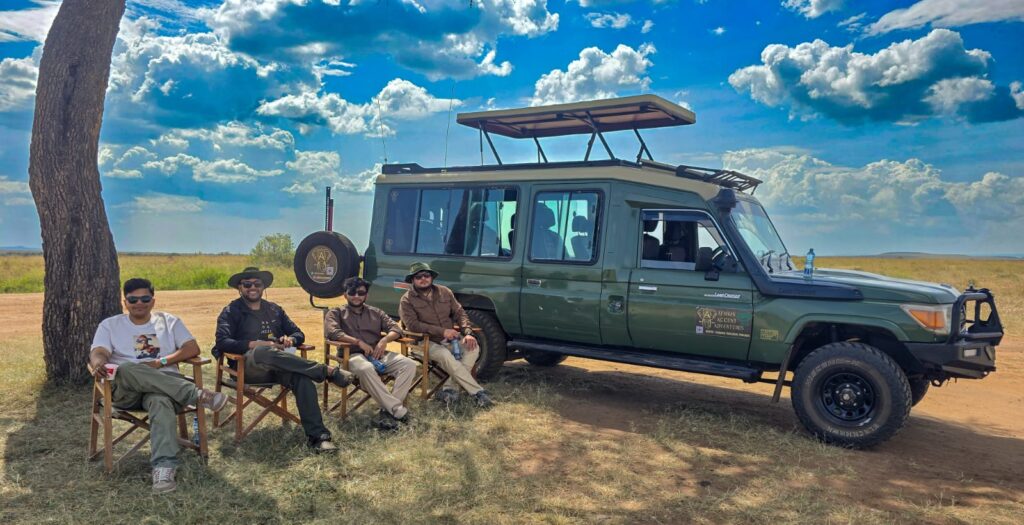
Vaccinations and malaria tablets dominate the pre-trip conversation. Altitude and sun exposure rarely come up, and both affect a standard game-viewing safari more than most guests expect.
Altitude on the standard circuit
Nairobi sits at 1,795 metres, and the Masai Mara plateau ranges from roughly 1,500 to 2,100 metres. Neither elevation causes altitude sickness in a healthy traveller, though the cooler mornings and evenings surprise guests who packed only for heat. This is a different question entirely from climbing Mount Kenya, where Point Lenana sits at 4,985 metres and the technical summit, Batian, reaches 5,199 metres, or Kilimanjaro’s 5,895 metre summit across the border in Tanzania. Either of those climbs needs its own acclimatization plan and, often, its own conversation with a travel clinic about altitude sickness medication. A standard lodge or tented camp safari does not.
Sun and dehydration
What the altitude does not do, the equator does. Kenya’s UV intensity stays high year round regardless of season, and a typical game drive puts you in an open-sided vehicle for three to four hours at the exact midday window when the sun is strongest. Sunburn on a safari is common, avoidable and almost always the result of underestimating how different equatorial sun is from a temperate summer. Broad-spectrum SPF50 or higher, a wide-brimmed hat, sunglasses and an SPF lip balm belong in the vehicle, not the suitcase. The dry season brings dust and low humidity across much of the Mara and Amboseli, and travellers consistently under-hydrate on long drive days, which compounds fatigue faster than the heat alone would.
What to Put in a Safari First Aid Kit
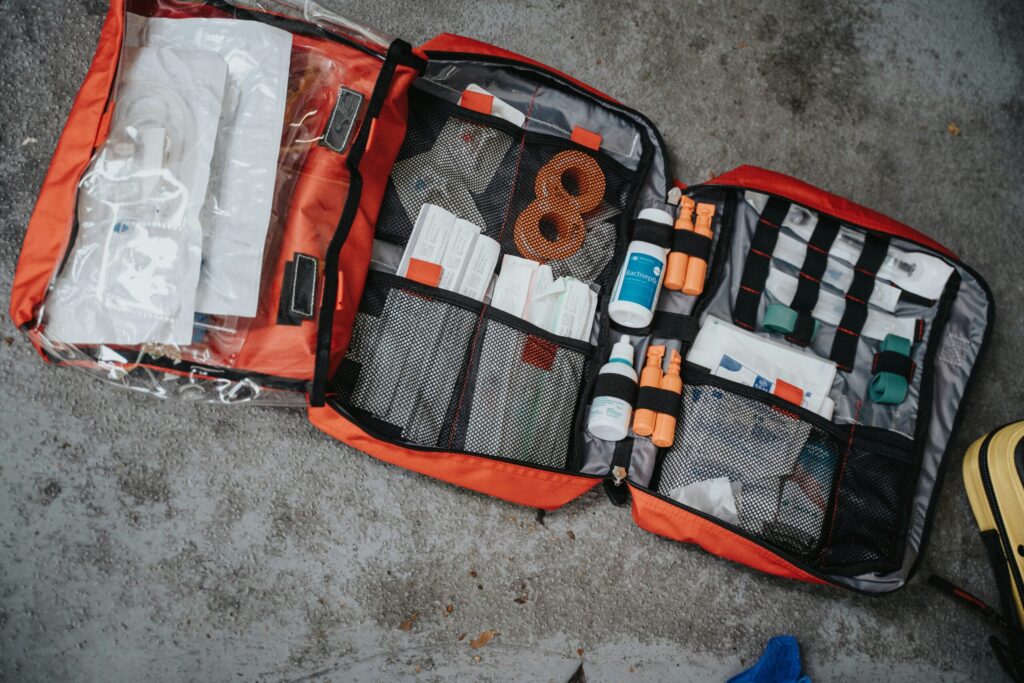
Most camps stock a basic medical kit and treated mosquito nets over every bed, but a mobile safari puts real distance between you and the nearest hospital, and a small personal kit covers the gaps.
Prevention
Insect repellent containing DEET or picaridin, broad-spectrum sunscreen SPF50 or higher, and your full course of malaria prophylaxis, packed with enough spare days to cover a delayed flight home.
Digestive upsets
Oral rehydration salts, an anti-diarrhoeal such as loperamide, and, if your travel clinic agrees it fits your health history, a short course of a broad-spectrum antibiotic like azithromycin for self-treatment of a more severe case.
Minor injuries and general use
Adhesive bandages and blister plasters, antiseptic wipes, an antihistamine for insect bites or a mild allergic reaction, a basic pain reliever, and hand sanitizer for the stretches between camps where handwashing facilities are limited.
Personal prescriptions
Carry every prescription medication in its original packaging with a copy of the prescription itself. This matters at Kenyan customs and doubly so if your itinerary continues into a second country with its own rules on carrying medication.
A first aid kit does not need to be large. It needs to match the gap between you and the nearest hospital, which on safari is bigger than it looks from the lodge veranda.
Travel Clinics and Timing Before Departure

When Should You Get Travel Vaccinations Before a Safari?
The single biggest mistake we see is guests treating vaccinations as a task for the week before departure. Several of the vaccines and one of the malaria medications on this page need far more lead time than that.
Four to six weeks before departure is the standard advice, and it exists for good reason. Rabies pre-exposure vaccination runs on a 21 to 28 day schedule across three doses. An accelerated hepatitis B series takes 21 days to reach useful protection for imminent travel. Mefloquine needs two to three weeks before travel to confirm you tolerate it. Layer the ten-day validity window on a yellow fever certificate on top of any of these, and a two-week runway gets tight fast.
Travellers booking later than that are not without options. A single hepatitis A dose and routine boosters can still be arranged inside two weeks. Atovaquone-proguanil and doxycycline both start just one to two days before you enter a malaria zone, which makes either workable even on a short lead time. Mefloquine, given its longer trial period, is the one option a late booking should generally avoid.
| EXPERT NOTE When we confirm an itinerary, we look at the routing before we look at the camps. If a guest’s flights touch a yellow fever risk country for more than a few hours, we flag it in the pre-trip documents we send, well before departure, so there is time to sort it out at home rather than at the airport. Hellen Asiko, Director & Guest Experience Curator |
Book your appointment with a travel clinic or your own doctor in your home country before you fly. Afrikan Accent Adventures builds the camps, the guiding and the routing, but we are not a medical provider, and vaccination decisions belong with a clinician who knows your health history. What we can do, and do as standard, is flag any routing that carries a yellow fever transit requirement when we confirm your itinerary, alongside the visa and entry details covered in our Kenya eTA guide.
Travel Health Checklist for Your Kenya Safari
Everything above sorted into a single timeline. Use it as the order to work through rather than a list to tackle in one sitting.
Four to six weeks before departure
Book a travel clinic appointment. Confirm whether your routing triggers the yellow fever transit rule and get vaccinated if it does. Start a rabies or hepatitis B course now if either applies to your trip. Discuss malaria medication options with your clinician, factoring in trip length and whether mefloquine’s longer lead time suits your schedule.
Two to three weeks before departure
Complete any multi-dose vaccine course you started. Arrange travel insurance with medical evacuation cover, and consider a regional air evacuation membership such as AMREF Flying Doctors as a supplement, particularly if your itinerary includes remote conservancies. Confirm routine boosters (MMR, Tdap, polio) are current.
One to two days before departure
Start atovaquone-proguanil or doxycycline if either is your chosen malaria medication. Pack your first aid kit, your prescriptions in their original packaging and your yellow fever certificate if you have one, along with a copy of your travel insurance details.
During and after the trip
Keep taking your malaria medication for the full course after you return home, not just while you are in Kenya. If you develop a fever, chills or flu-like symptoms in the weeks after your trip, tell your doctor you have recently travelled in a malaria area, since these symptoms are easy to mistake for a common illness and malaria needs prompt diagnosis and treatment.
| EXPERT NOTE Guests treat this checklist as paperwork and then thank us for it later. The travellers who skip the four to six week window are almost always the ones calling us from a pharmacy in Nairobi trying to sort out a malaria prescription two days before their charter flight to the Mara. None of this is complicated. It just has to happen in the right order, early enough to matter. Kibara Mugo, Safari Writer and East Africa Specialist |
Frequently Asked Questions
Do I need a yellow fever vaccine for Kenya?
Only if you are arriving from, or transiting more than twelve hours through, a country the WHO lists as a yellow fever risk. A direct flight from the US, UK or most of Europe does not trigger the requirement, though the CDC still recommends the vaccine for travellers heading to western Kenya regardless of the entry rule.
Can I enter Kenya without the yellow fever vaccine?
Yes, most travellers can. The certificate is only checked at the border for arrivals connected to a risk country. If you are exempt and still asked for it, carry a copy of your itinerary and, where relevant, a medical exemption letter.
Are there any mandatory vaccinations in Kenya?
Only yellow fever, and only conditionally. Kenya has no other vaccination requirement for entry, though the CDC and WHO recommend several others for general travel health rather than border compliance.
What vaccinations are recommended for a safari in Kenya?
Hepatitis A and typhoid are recommended for most travellers, alongside confirming routine boosters such as MMR, Tdap and polio are current. Hepatitis B and rabies are worth discussing with a travel clinic depending on trip length and activities.
Do I need malaria medication for safari?
Yes, for nearly every classic Kenya safari itinerary. Roughly 70 percent of the country sits within malaria transmission zones, including the Masai Mara, Amboseli, Tsavo, Samburu and the coast, and a doctor-prescribed chemoprophylaxis is the standard recommendation for all of them.
What malaria tablets are best for a Kenya safari?
Atovaquone-proguanil is the most commonly prescribed option for trips under three weeks, thanks to its short lead time and one-week post-trip tail. Doxycycline is a cheaper alternative if you can manage the sun sensitivity, and mefloquine suits travellers who prefer weekly dosing and can start it two to three weeks before departure.
Is it safe to go on safari without vaccinations?
It depends which vaccinations you mean. Skipping a yellow fever certificate is legally fine if your routing does not require one, but skipping malaria prophylaxis on a trip into the Mara, Amboseli or the coast is a real and unnecessary risk, not a compliance question.
Is Kenya safe health-wise for travellers?
Yes, with standard preparation. Millions of visitors complete a Kenya safari each year without a health incident, and the main risks, malaria and traveller’s diarrhea, are both manageable with prophylaxis, food and water caution and a basic first aid kit.
What happens if I arrive in Kenya without a required yellow fever certificate?
Port Health officers can vaccinate you on the spot where that service is available, or delay your entry while they verify your status. This only applies if your routing actually triggers the requirement, so check your specific flights and layovers well before departure rather than finding out at the immigration desk.
Do children need different vaccinations for a Kenya safari?
Yes, age affects several of the recommendations on this page. Yellow fever vaccination has an infant exemption below nine months, hepatitis A is generally given from age one and typhoid injections from age two, and rabies pre-exposure vaccination is worth discussing for children old enough to approach camp wildlife such as vervet monkeys. A pediatric travel clinic should confirm the exact ages and doses for your child.
Do I need travel insurance for a Kenya safari?
It is not a legal entry requirement, but it is a practical necessity. Remote camps in the Masai Mara, Amboseli, Tsavo and Samburu sit hours from the nearest full-service hospital, and a policy with genuine medical evacuation cover, sometimes paired with a regional air evacuation membership such as AMREF Flying Doctors, is standard advice across the safari industry rather than an optional extra.
Plan the Health Side Once, Then Forget About It
That guest at the JKIA Port Health desk made their transfer in the end, but only because we had already flagged the Addis Ababa layover during itinerary confirmation and rebooked the charter flight two hours later as a precaution. That is the part of health planning most guides leave out: it is not just about which jabs you get, it is about whether your operator checked your routing before you landed.
We build that check into every itinerary we confirm, alongside the entry and visa details covered in our Kenya eTA guide, and the wider precautions we take on every game drive, detailed in our guide to what keeps you safe on safari. Bring the malaria tablets your doctor prescribes, pack the sunscreen, and let us handle the routing.
Get your yellow fever routing checked before you book a single flight, and the rest of your Kenya safari health prep takes care of itself.
Let's plan your East African safari
Tell us when you'd love to travel and a local specialist will craft a tailor-made route around you.


