Inside Our 4×4 Safari Vehicle: Why the Land Cruiser Changes Your Game Drive
Pop-up roof, charging ports, onboard fridge, UHF radio and a hard cap of six guests in an eight-seater: here is what each one does for you on a Kenya game drive and which ones are worth asking for.
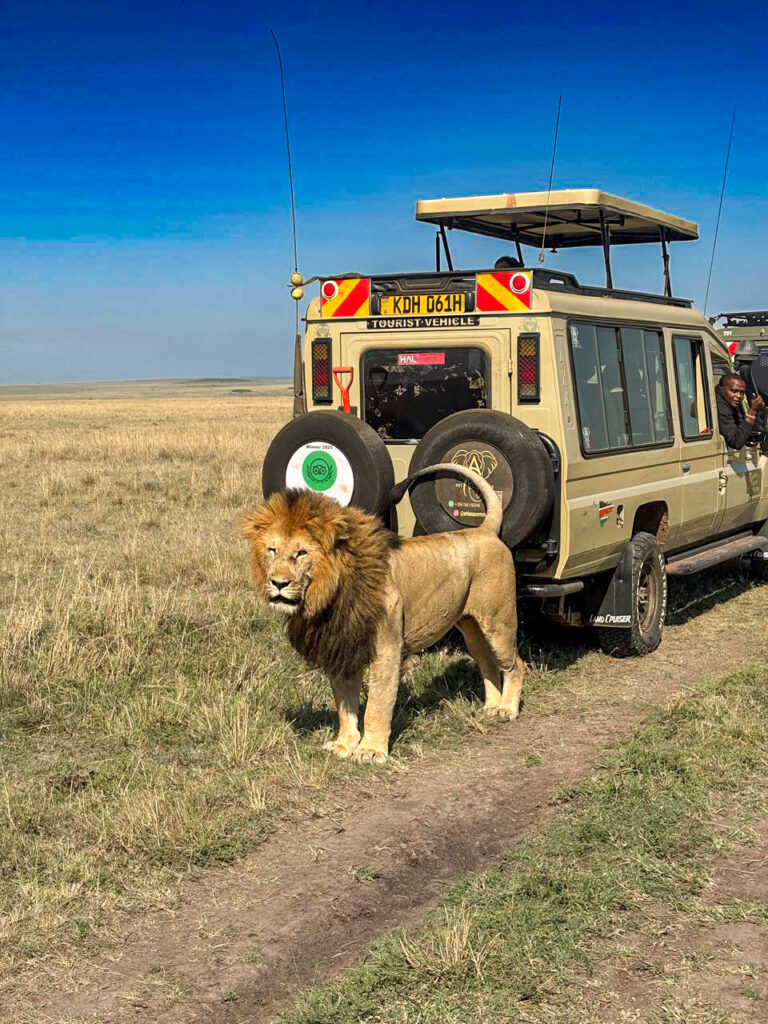
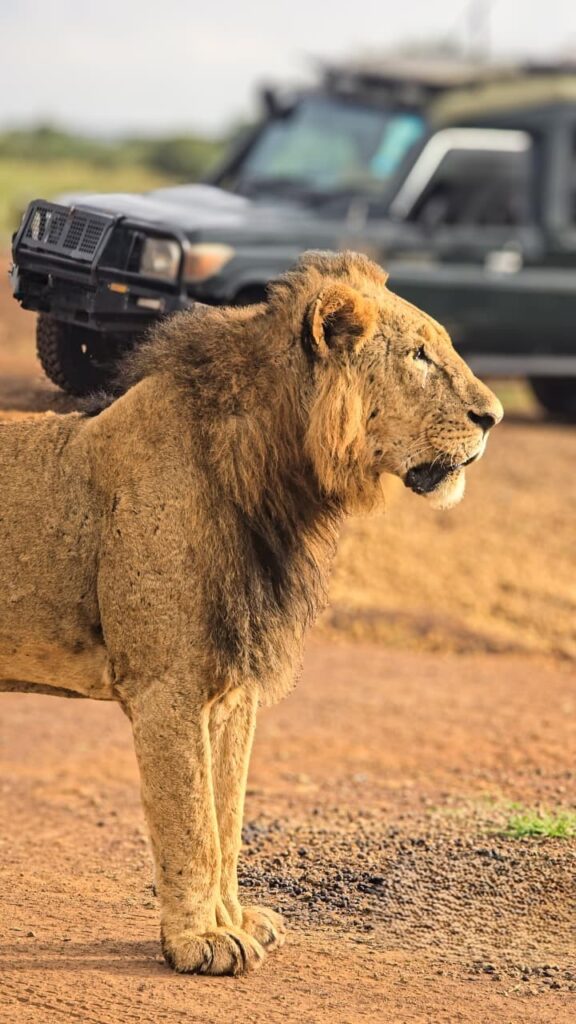
A large male lion walking past a 4x4 safari vehicle in Kenya, showing the close wildlife encounters possible from a quiet Land Cruiser.
6:40am. A cheetah climbs a termite mound in the Mara Triangle, eighty metres from the track, and surveys the plain like it owns the lease. In our safari vehicle six guests rise through the open roof together. Six window seats. Six clear views. Not one elbow in anyone’s ribs.
Now picture the same morning in a nine-seater carrying eight guests. Two people are wedged in the middle with no window. Somebody is asking to swap. The cheetah doesn’t wait for the negotiation, and neither does the light.
We’ve watched guests spend weeks comparing camps. Tent size. Plunge pools. Whether the shower is hot at 5am. Then they leave the vehicle to chance. On a road safari that’s a mistake, because the vehicle is where you’ll spend most of your waking hours. It’s your viewing platform and your shade. It gets you through black cotton soil after rain and keeps your phone alive in the sixth hour of a drive.
We’re Afrikan Accent Adventures, a Nairobi-based safari operator, and we run our own fleet. Every 4×4 safari vehicle we put on the road is a Land Cruiser with a pop-up roof, charging ports, an onboard fridge, UHF radio and tiered seating. Eight seats. Never more than six guests.
Here’s our argument. A safari Land Cruiser with a roof that lifts and a guest cap that holds isn’t a luxury. It’s the quietest upgrade on a Kenya safari and the one you’ll feel on every single drive. Below we explain what each feature does, where it matters most and where the vehicle isn’t the deciding factor. Our fleet overview has the short version.
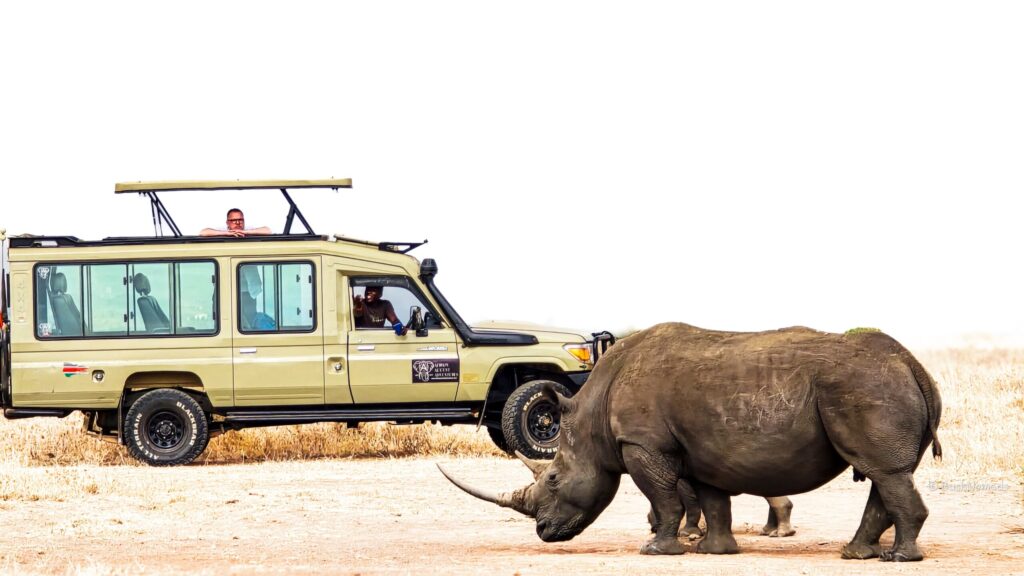
| QUICK ANSWER | What amenities are in a safari vehicle in Kenya? Afrikan Accent Adventures’ 4×4 safari vehicles are Land Cruisers with a pop-up roof, charging ports, an onboard fridge, UHF radio and tiered seating. The open-sided design gives every guest an unobstructed view. Each vehicle has eight seats and carries a maximum of six guests. |
At a Glance:
- Vehicle: 4×4 Land Cruiser safari vehicle, purpose-built and open-sided
- Seats and guest cap: Eight seats, maximum six guests per vehicle
- Roof: Pop-up roof on every vehicle for standing room and 360° visibility
- Power and drinks: Charging ports for devices and an onboard fridge
- Communication: UHF radio linking your driver-guide to base and other guides
- Seating: Elevated, tiered seating with a window seat for every guest
- Responsible practices: Biodegradable cleaning products and limited engine idling
- Where it earns its keep: Road safaris to the Masai Mara, Amboseli, Samburu and Lake Nakuru
What can you expect inside an Afrikan Accent Adventures safari vehicle?
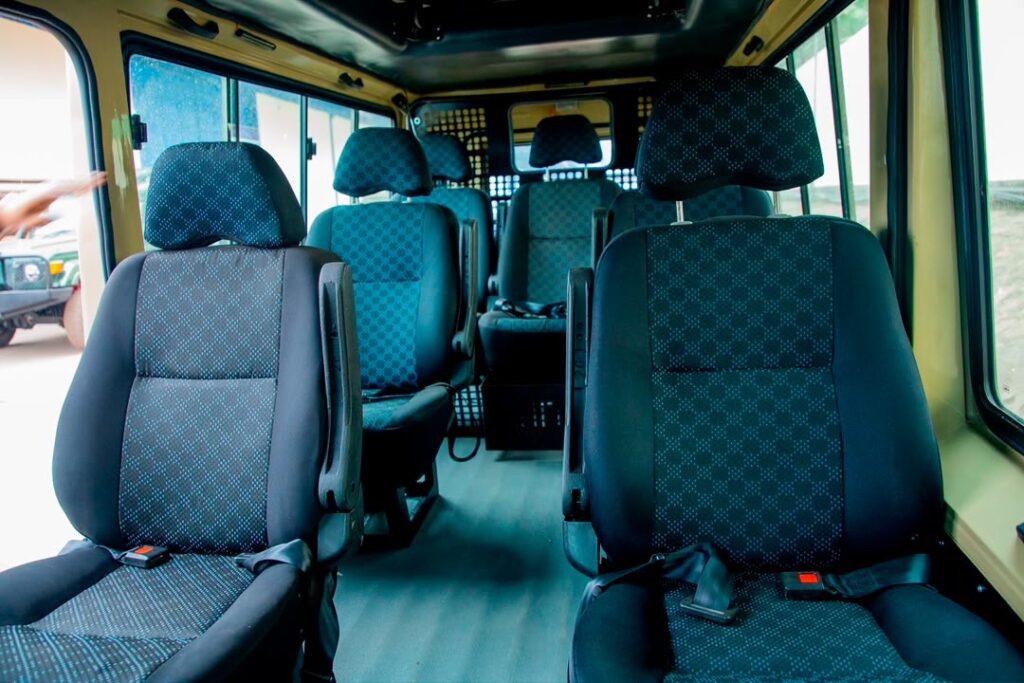
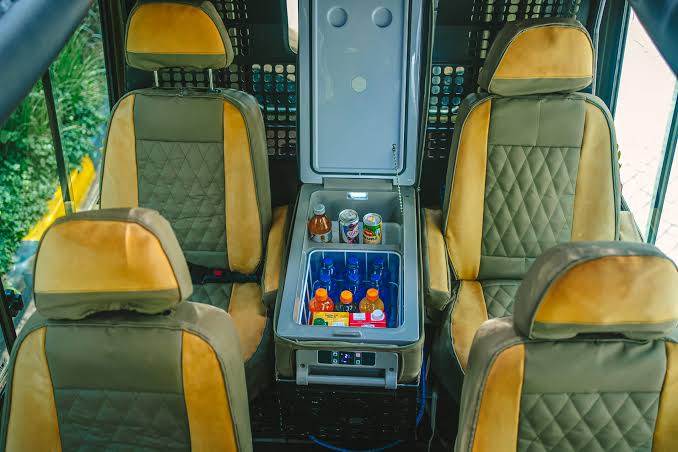
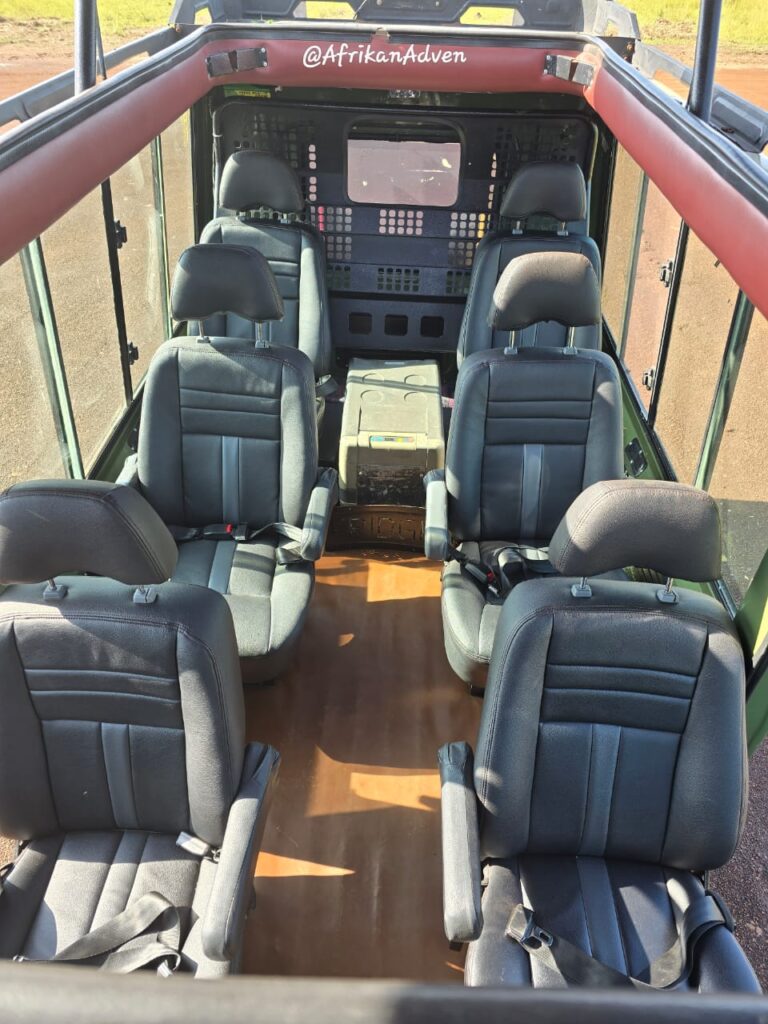
Start with the shape. Our fleet is made up of purpose-built, open-sided 4×4 Land Cruisers fitted with elevated, tiered seating. Tiered means the guest in the back row looks over the shoulder of the guest in front and not at the back of their head. The roof lifts. Charging ports sit within reach. An onboard fridge keeps drinks cold and a UHF radio ties your driver-guide to base and to other guides working the same circuit.
Every vehicle is driven by an experienced, certified guide. That matters more than any piece of equipment on the list, and we’ll come back to it. First the kit.
What’s fitted as standard
- Pop-up roof: stand up and look out in every direction with 360° visibility.
- Tiered seating: elevated rows so every guest has a clear line of sight.
- Open-sided design: unobstructed views for eyes and cameras alike.
- Charging ports: power for phones, cameras and other devices.
- Onboard fridge: cold drinks through the game drive.
- UHF radio: contact with base and with other guides.
- 4×4 Land Cruiser build: off-road suspension and four-wheel drive for rugged park terrain.
Who it is for
Photographers feel the difference first. Families feel the elbow room. Couples get a window seat each and a clear view past the next person. If you’re on a road safari through the Masai Mara, Amboseli, Samburu or Lake Nakuru, this is the vehicle you’ll live in for most of the trip.
Why the 4×4 safari Land Cruiser is the benchmark for Kenya game drives
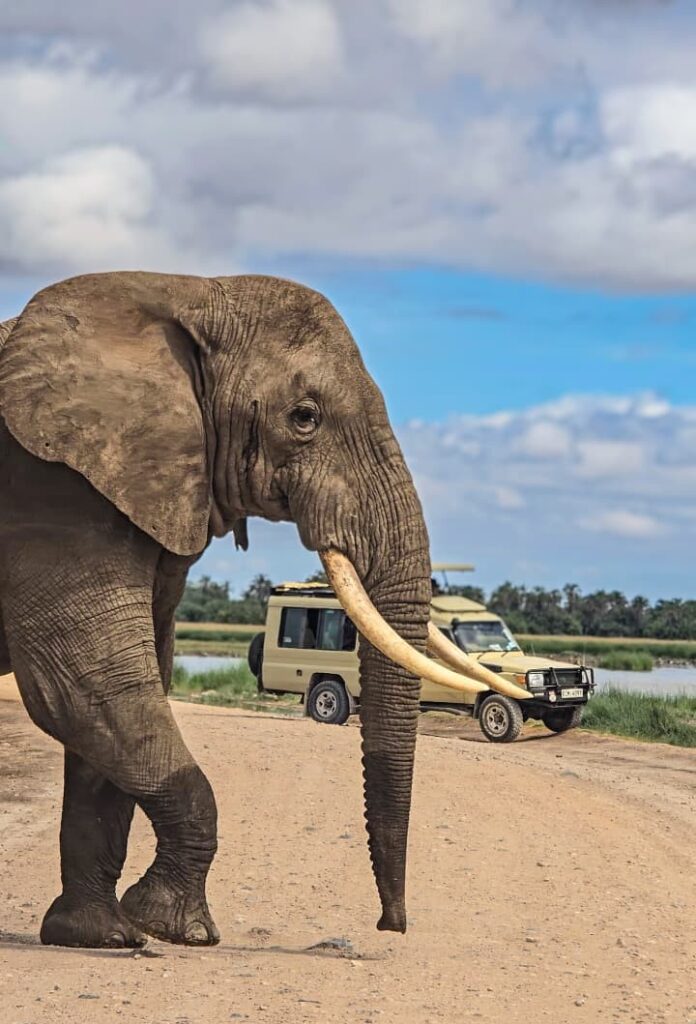
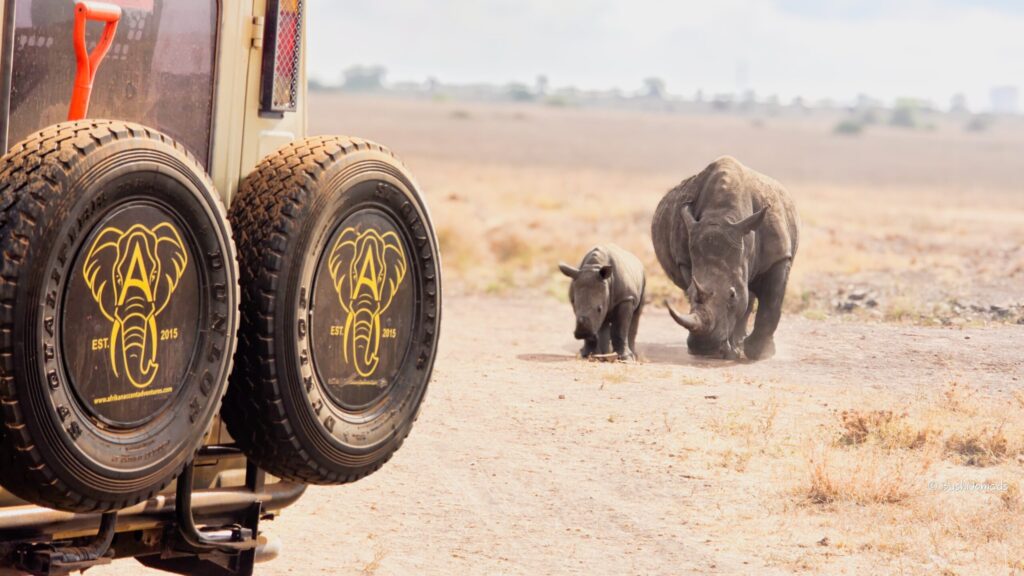
A 4×4 safari vehicle isn’t a status symbol. It’s a response to Kenyan ground.
The terrain decides
After rain the black cotton soil of the Masai Mara turns to grease. A two-wheel-drive van that glides along in August can sit stuck in November. Amboseli’s dry lakebed throws up fine dust that finds every seam. Samburu’s riverbed crossings and rocky tracks punish low suspension. Some conservancies also restrict entry to 4×4 vehicles, so the wrong vehicle can close a door before your safari starts.
Why the Land Cruiser specifically
The Land Cruiser’s reputation in Kenya’s safari trade isn’t marketing. The 70 Series in particular has long been called the workhorse of East African guiding because it’s tough and happy to run for years. Parts and mechanical know-how are widely available across Kenya, and that matters when the nearest workshop is hours from the track you’re on.
Height changes what you see
Elevated seating lifts your eye line above the grass. A lioness lying in the Masai Mara’s long grass disappears from a low seat and appears from a high one. The same goes for a leopard draped along an acacia branch or a cheetah on a mound. Height is the cheapest way to see more.
| QUICK ANSWER | Why choose a 4×4 safari Land Cruiser over a standard van? A Land Cruiser’s off-road suspension, four-wheel drive and elevated seating handle rugged park terrain more comfortably than a standard van. Every guest also sits higher, which puts them in a front-row position for sightings and photos. |
Pop-up roof, charging ports, fridge and UHF radio: the amenities that change your safari
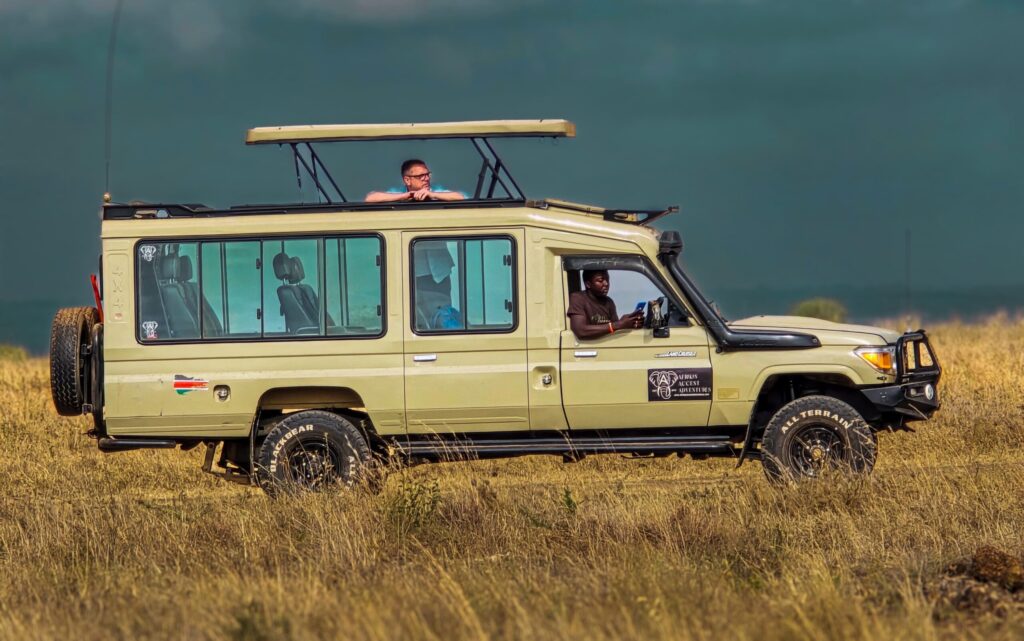
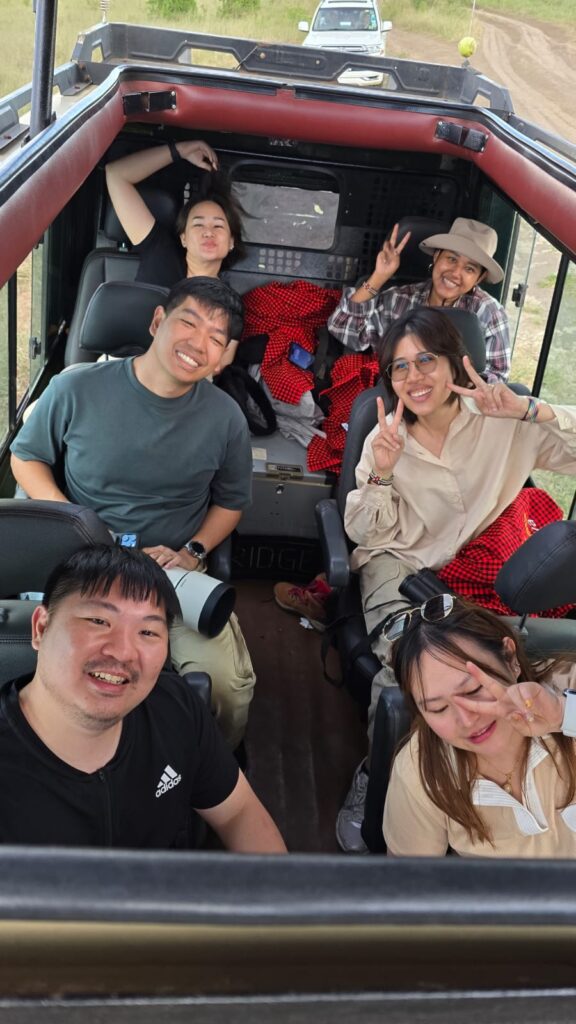
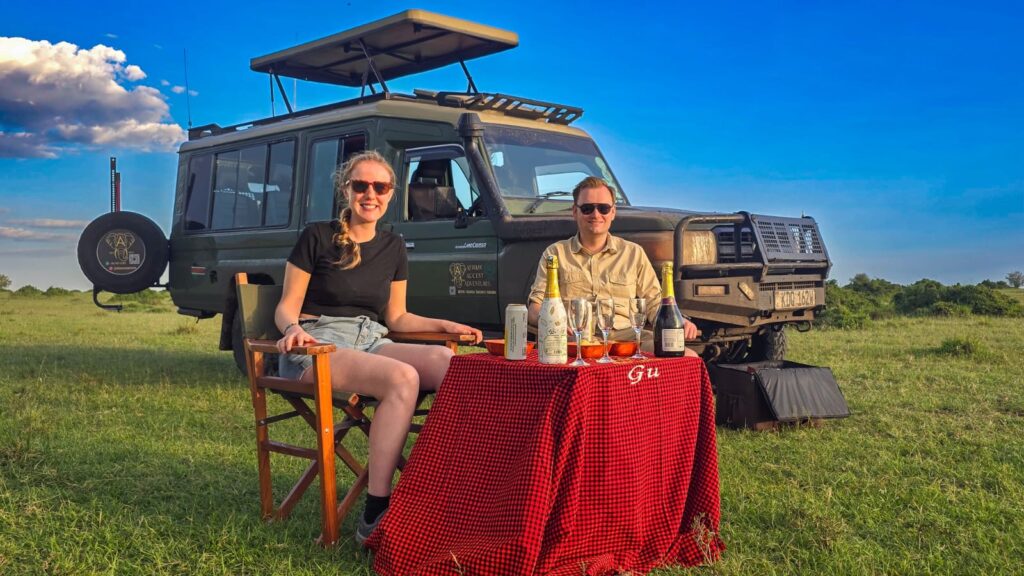
Pop-up roof: your standing platform
This is the amenity that earns its place. With the roof raised you stand up, turn a full circle and see what the window frame was hiding. It gives you 360° visibility, which matters when a leopard crosses behind the vehicle and your seat faces the wrong way. It’s standard on every Afrikan Accent Adventures 4×4 safari Land Cruiser.
Three practical points. Stand only when the vehicle is stationary. Wear a hat and sunscreen because standing puts you in the sun. Lower the roof on transfers and in rain.
| QUICK ANSWER | What is a pop-up roof and why does it matter? A pop-up roof lifts so guests can stand and photograph wildlife with 360° visibility. It’s standard on every Afrikan Accent Adventures 4×4 safari Land Cruiser. Stand only when the vehicle is stationary and lower the roof for rain and transfers. |
| EXPERT NOTE Raise the roof only once your driver-guide has positioned the vehicle and switched off the engine. Hold the frame and keep your voice low. Animals read a quiet vehicle as part of the landscape, and that is how you get closer without ever moving. Nicholas Wangithi, Director & Founder |
Charging ports: because the sixth hour is when the phone dies
Cameras and phones drain fast on a long drive. Video eats batteries. Ports in the vehicle give you a top-up between stops so you’re not rationing shots by midday. Bring your own cables and a power bank as backup. Charge fully at camp overnight too. A vehicle port is a top-up and not a substitute for a full charge.
Onboard fridge: cold drinks at the right moment
Cold water at midday changes the afternoon drive. It’s a small thing and guests mention it afterwards. Bring a reusable bottle and tell us your drink preferences at booking.
| QUICK ANSWER | Do safari vehicles have charging ports and fridges? Yes. Every Afrikan Accent Adventures safari vehicle has charging ports for your devices and an onboard fridge that keeps drinks cold through the game drive. Treat the ports as a top-up and charge cameras fully in camp overnight. |
UHF radio: safety net and sightings network
The radio is the amenity guests never see and always benefit from. It keeps your driver-guide in contact with base and with other guides. If a vehicle breaks down in a remote stretch, help is a call away. If a leopard is spotted on the far side of a river, guides share it. Phone signal is patchy in remote parts of the Masai Mara and Samburu, so the radio works where phones don’t.
One caveat. A radio can pile every vehicle onto one sighting. Good guides use it to spread vehicles out and not to stack them. That’s a guide’s judgement and not an equipment feature, which is why we put so much weight on who’s driving.
| QUICK ANSWER | Do safari vehicles have UHF radio? Yes. UHF radio keeps your driver-guide in contact with base and with other guides, which improves safety and helps coordinate sightings across the convoy. It also works where phone signal is patchy, such as remote stretches of the Masai Mara and Samburu. |
Seating arrangement: 8-seater comfort, capped at 6 guests per vehicle
| QUICK ANSWER | How many passengers are in a safari vehicle? Our safari vehicles have eight seats, but we cap occupancy at six guests per vehicle. That guarantees every guest a window seat, elbow room and an unobstructed view. A group of seven or more travels in two vehicles. |
Eight seats, six guests: the maths
We could sell the other seats. We don’t. A full vehicle is a negotiation. Somebody ends up without a window. Someone’s lens ends up in someone’s ear. Cap it at six and the negotiation never starts. Standard safari vehicles are often nine-seaters carrying up to eight passengers, and with that many aboard a window seat isn’t guaranteed. Ours is. Six guests means a window seat each, space to move for a shot and a clear line of sight from your own seat.
Rotate your rows
Even with a window seat each, some seats suit certain moments better. Ask your driver-guide to rotate rows over the trip so everyone tries every position. It costs nothing and it keeps the vehicle friendly on day four.
What it means for your group
A party of six fits one vehicle. A party of seven or more needs a second one. That affects price, so check how vehicle count is handled in your quote. Our Kenya safari cost guide explains how vehicle choice moves the number.
The cap holds on shared departures too. Our book-a-seat safaris are capped at six guests per vehicle so every seat is a guaranteed window seat.
| EXPERT NOTE Tell us your group size and photography ambitions at quote stage. A family of seven or a pair of photographers with long lenses needs different planning than a couple. We’d rather add a vehicle than squeeze a group, and we’ll show the vehicle count in your itinerary. Hellen Asiko, Director & Guest Experience Curator |
How the right safari vehicle improves photography, safety and wildlife sightings
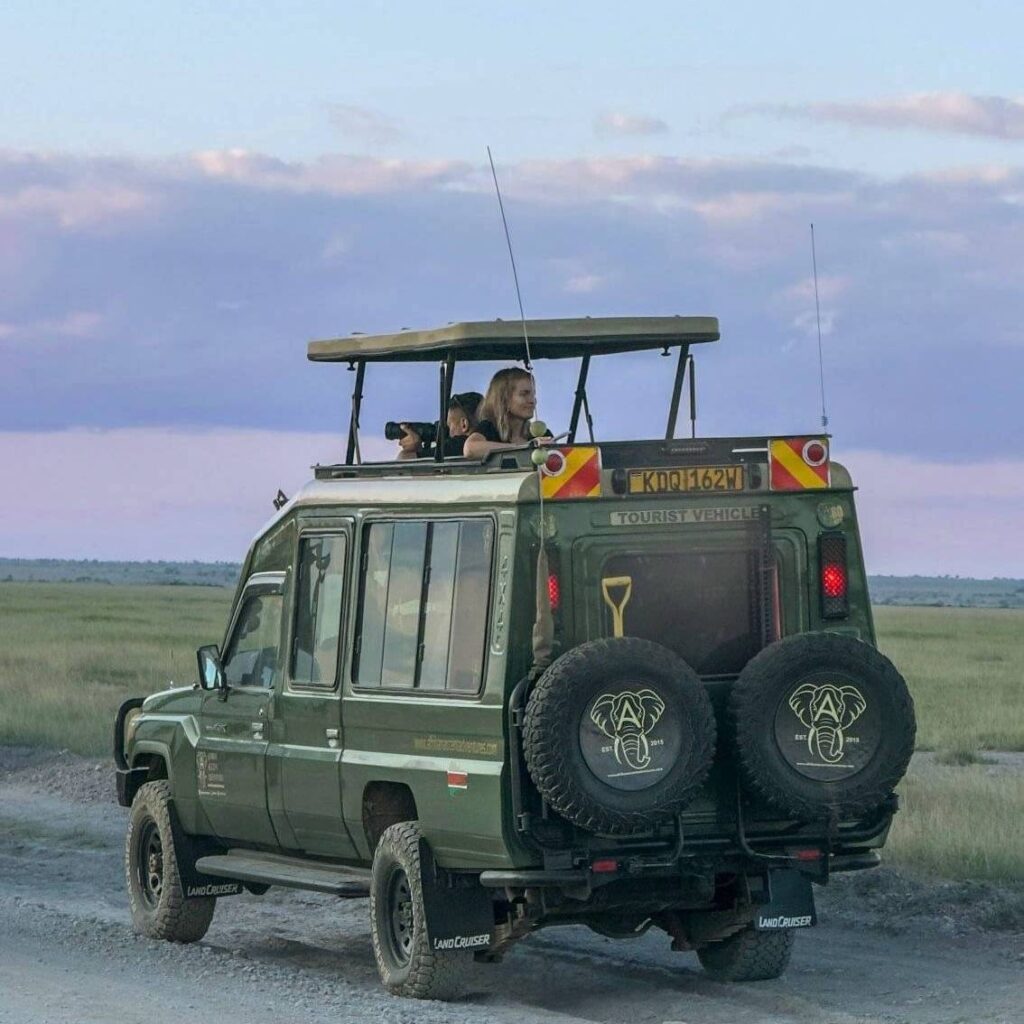
Photography
Stand to shoot. The pop-up roof lets you shoot level with or above eye height in any direction, and the roof frame gives you a steady edge for a long lens. A beanbag or a folded fleece on the frame beats a handheld shot every time. Ask your driver-guide to position the vehicle with the light behind you and to switch off the engine before you raise the camera, since engine vibration softens a long-lens frame. We limit idling anyway, so it’s how we drive.
Safety
Safety on a game drive comes in layers. A certified driver-guide is the first. Four-wheel drive and a Land Cruiser’s off-road build are the second. The UHF radio is the third. Park rules add a fourth. In the Masai Mara a sighting is limited to about five vehicles, and in the Mara Triangle viewing time is restricted to ten minutes when more than five are waiting, with the waiting vehicles holding back about 100 metres. Those rules protect animals and guests, and a well-driven vehicle follows them without being reminded.
Wildlife sightings
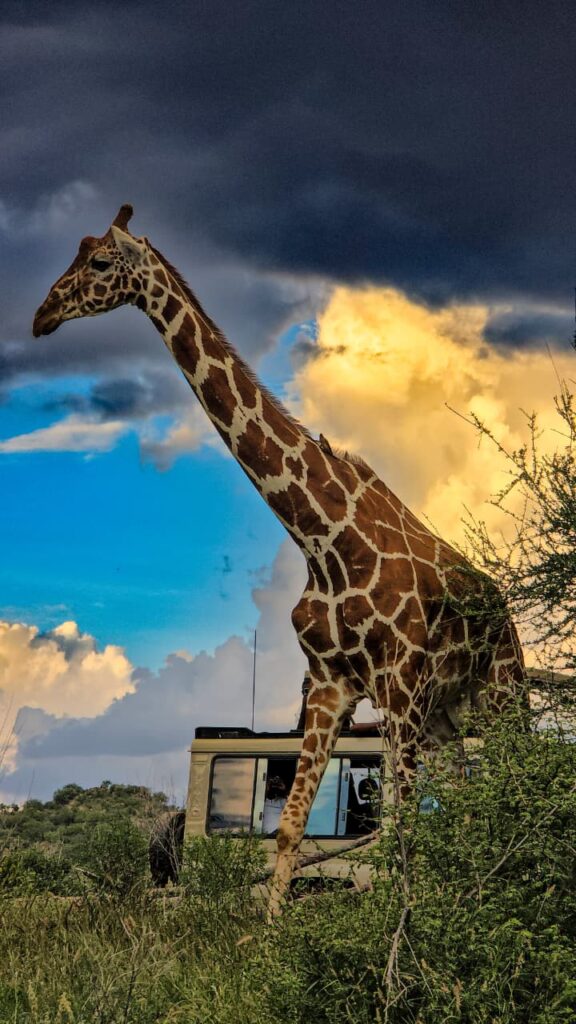
Sightings come from four things working together: height, a quiet engine, a radio and a driver-guide who knows when to wait. The vehicle supplies the first three. The fourth is the person. A calm vehicle that sits still lets animals relax, and relaxed animals do interesting things.
The best seat on safari is the one you never have to fight for.
Afrikan Accent Adventures fleet vs standard safari vehicles: what is different?
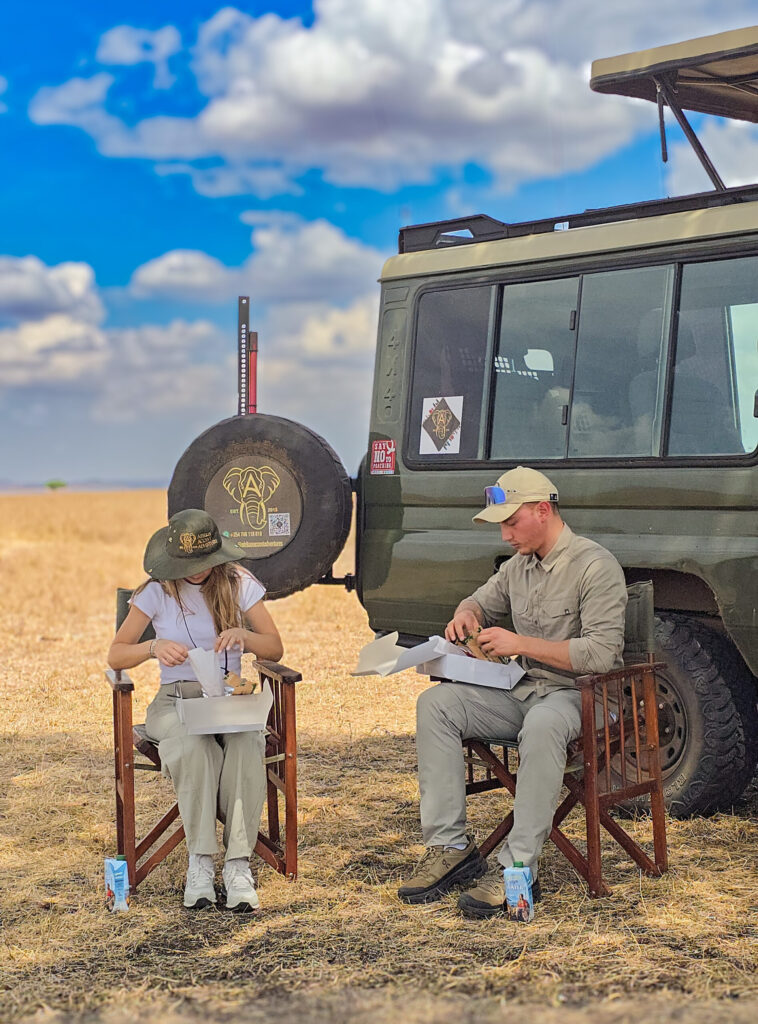
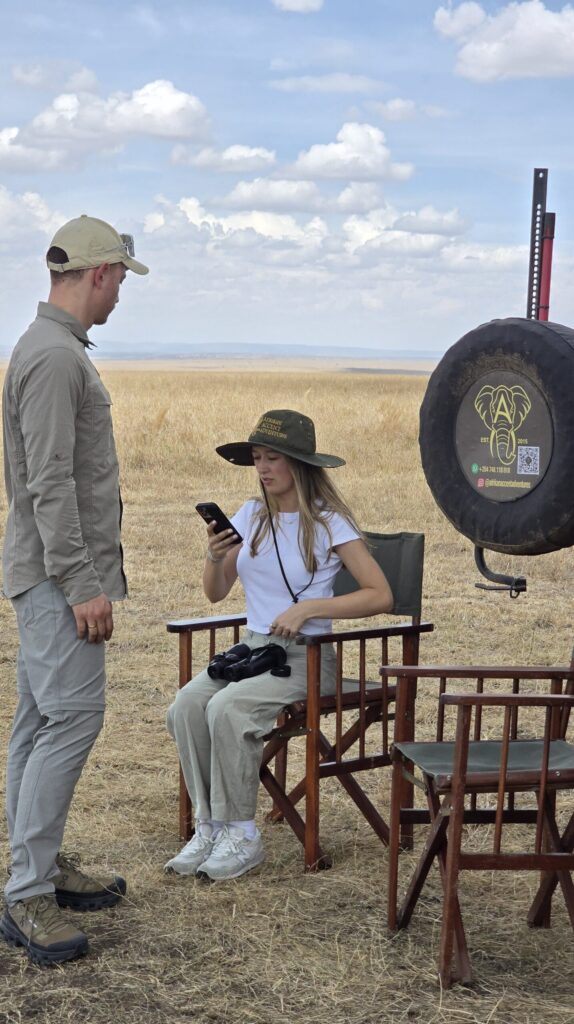
Plenty of Kenya’s safari operators run vans, and a van isn’t a bad vehicle. It’s a different one. This table sets our 4×4 Land Cruisers against the standard safari van you’ll find in many budget quotes. The van column describes typical vehicles and varies from operator to operator, so check every quote.
| Feature | Afrikan Accent Adventures 4×4 Land Cruiser | Typical standard safari van |
| Drive | 4×4 with off-road suspension | Often two-wheel drive; 4×4 versions exist |
| Roof | Pop-up roof, standard on every vehicle | Lifting roof on most; check each quote |
| Seats | Eight seats, six guests maximum | Often nine seats with up to eight passengers |
| Window seat | Guaranteed for every guest | Not guaranteed with up to eight aboard |
| Viewpoint | Elevated, tiered seating | Lower ground clearance and a lower viewpoint |
| Charging and drinks | Charging ports and onboard fridge | Varies by operator |
| Radio | UHF radio | Varies by operator |
| Ride | Larger body, quieter on rough tracks | More road noise on rough stretches |
| Best for | Masai Mara, Amboseli, Samburu and rugged routes | Short, tarmac-led trips on a tight budget |
The seat count is the difference guests feel most. Fill a nine-seater with eight people and somebody sits without a window. Our cap makes that impossible. Our view is simple. On a short trip with good roads and a tight budget, a van can do the job. On a multi-day road safari through the Masai Mara or beyond, we’d pick the Land Cruiser every time.
| EXPERT NOTE When you compare quotes, ask three questions: is the vehicle 4×4, is the roof standard and what’s the maximum number of guests? If an operator can’t answer the third one in a single sentence, the number is probably higher than you’d like. Kibara Mugo, Safari Writer and East Africa Specialist |
Fly-in safaris: whose vehicle will you be in?
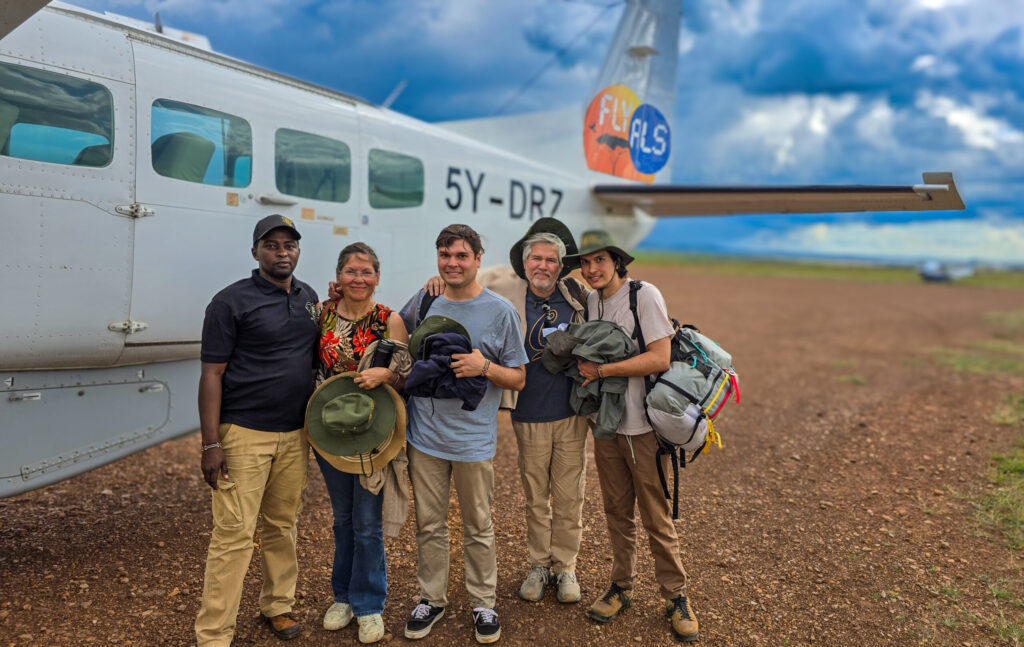
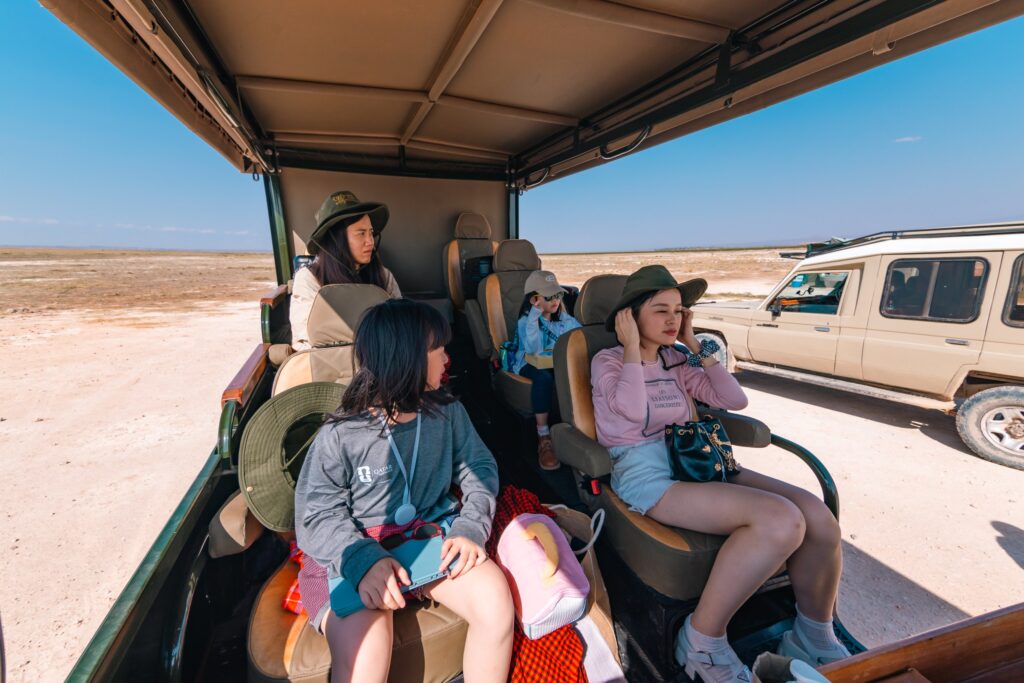
Here’s something most vehicle guides skip. On a fly-in safari, game drives from a camp are run in the camp’s own vehicles, shared by four to six guests at most. Our fleet covers road safaris and the transfers around them. So, ask us which vehicle you’ll use on each day of any itinerary. It’s one line in a quote.
Conservancies add their own rules. In the Masai Mara conservancies a sighting is typically limited to five vehicles and night drives are allowed, which the main reserve doesn’t permit. Our Masai Mara conservancies guide covers vehicle density and conservancy rules in detail.
Eco-conscious engineering: fuel efficiency, reduced idling and responsible tourism
We maintain our vehicles meticulously and run powerful, fuel-efficient engines. We use biodegradable cleaning products and we limit engine idling to protect the silence of the bush. All of that is true and all of it matters.
Here’s the honest part. A Land Cruiser is a heavy 4×4 and it isn’t thrifty. One Kenya rental operator quotes 7 to 8 kilometres per litre for a comparable extended Land Cruiser. And capping a vehicle at six guests means more vehicles for a large group than filling every seat would. We think comfort per guest is the right trade. The responsible gains come from where we can control them: engine off at sightings, well-maintained engines and sensible routing.
Emboo River Camp’s electric vehicles
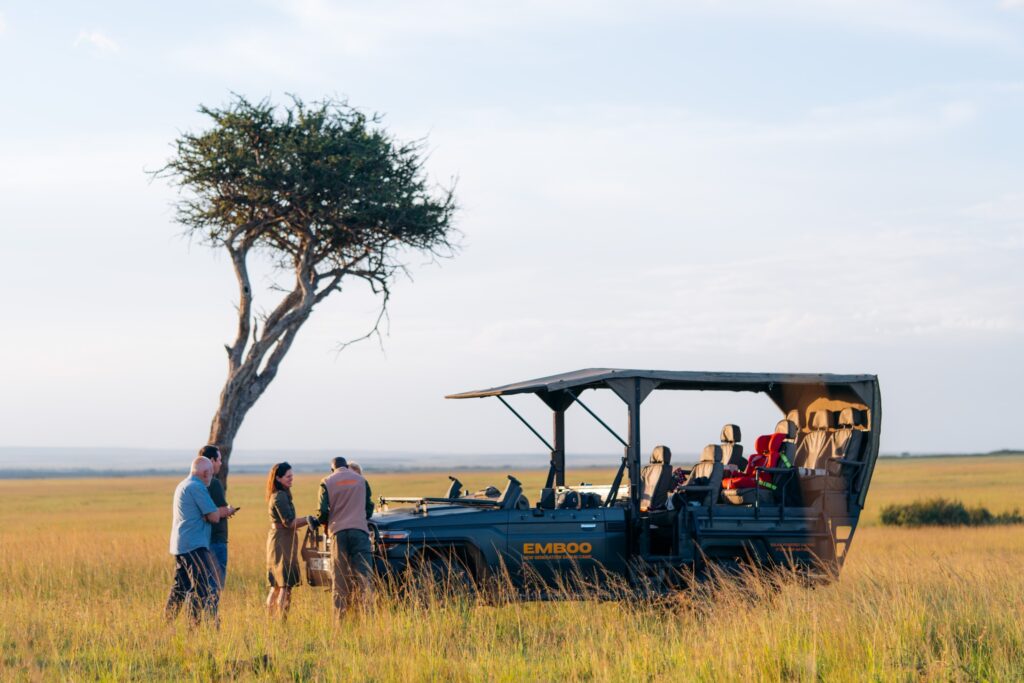
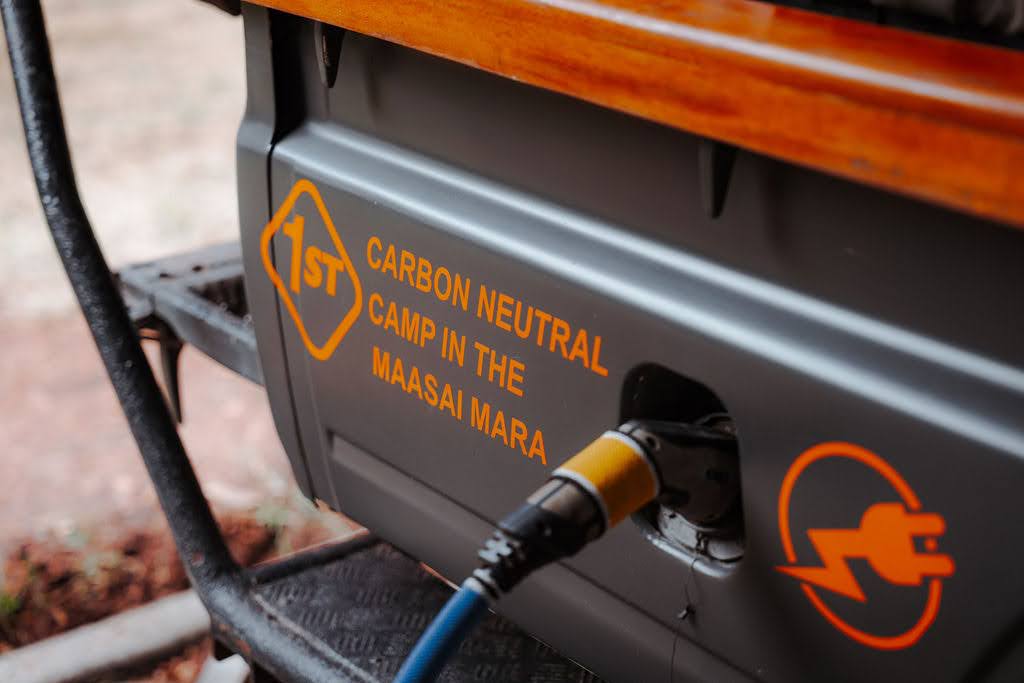
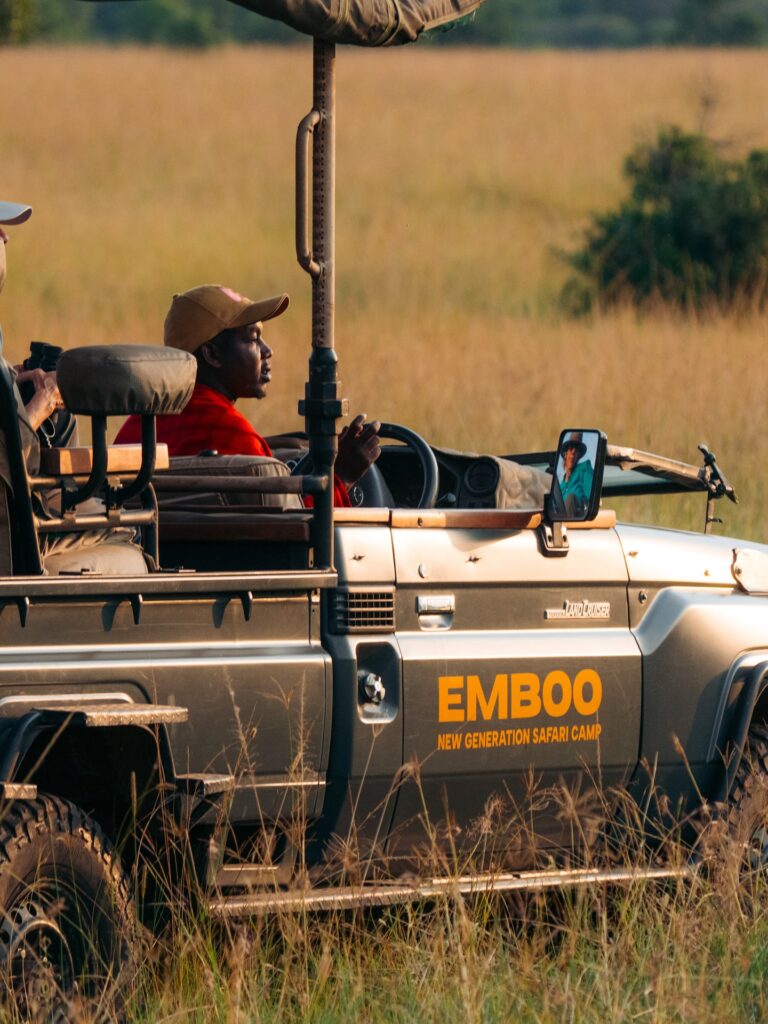
If you want to go further, go electric. Our 4 Days Masai Mara Eco Safari stays at Emboo River Camp on the Talek River in the Masai Mara, where game drives run in electric safari vehicles charged by the camp’s solar system. The fleet has been electric since 2019 and the vehicles were converted from diesel by Nairobi-based Opibus. They’re near silent, so animals stay relaxed and you hear the bush. That’s the cleanest game drive in the Mara today.
The fleet is one part of a wider approach. Read our responsible tourism practices and the work of the Afrikan Accent Foundation for the community and conservation side.
What does vehicle choice do to your Kenya safari cost?
The vehicle and driver-guide are among the largest running costs on a road safari alongside accommodation and park fees. Vans cost less to run than 4×4 Land Cruisers and a cheap quote often reflects that. A cap of six guests means fewer paying seats per vehicle, and that is part of what our price pays for.
We think it’s the right trade. A seat that’s actually a window seat is worth more than a cheaper seat that isn’t. Whichever operator you choose, ask the quote to state the vehicle type and the guest cap. Our Kenya safari cost guide shows where the money goes.
How to choose the right safari vehicle for your Kenya itinerary
Match the vehicle to the route
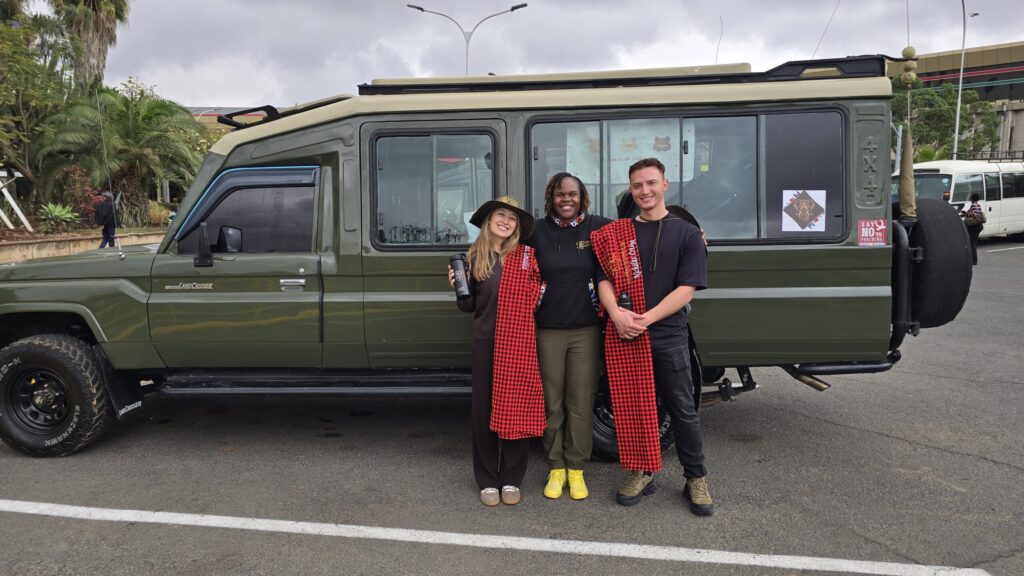
The Masai Mara and its conservancies in the wetter months need 4×4. Amboseli’s dust and Samburu’s rocky riverbeds do too. Short, tarmac-heavy trips such as a Nairobi day trip are the one place a van does the job comfortably. Even there, insist on a roof that lifts.
Eight questions to ask any operator
- Is the vehicle 4×4 and how old is it? Ask for the service record.
- Does the roof lift fully and is it standard on every vehicle?
- What’s the maximum number of guests and is a window seat guaranteed?
- Is there a radio and what type?
- What charging ports are fitted and where?
- Is there a fridge or cool-box for drinks?
- What recovery kit travels with the vehicle? Look for spare tires and a jack at minimum.
- Is the driver-guide certified and is the operator KATO and TRA registered?
What to bring into the vehicle
- A USB-C cable and a Lightning cable with a power bank as backup
- A hat and sunscreen for standing under the open roof
- A scarf or buff for dry-season dust
- A fleece for early mornings
- A beanbag for long lenses
- A reusable water bottle
Frequently Asked Questions
What amenities are in a safari vehicle in Kenya?
A good Kenya safari vehicle has a pop-up roof, tiered seating, charging ports, a cooler or fridge and a radio. Our 4×4 Land Cruisers add an open-sided design and a hard cap of six guests. Ask every operator the same questions because standards vary widely.
Do safari vehicles have charging ports and fridges?
Ours do. Every Afrikan Accent Adventures safari vehicle has charging ports for devices and an onboard fridge for cold drinks. Bring your own cables and treat the ports as a top-up. Charge fully at camp overnight.
What is a pop-up roof and can you stand in it?
A pop-up roof is a roof that lifts so you can stand inside the vehicle and look out in every direction. Yes, you can stand, but only when the vehicle is stationary. Wear a hat because standing puts you in the sun.
How many people ride in one safari vehicle?
Our vehicles have eight seats and carry a maximum of six guests. That gives every guest a window seat and space to move. A group of seven or more travels in two vehicles.
Do safari vehicles have UHF radio?
Ours do. The UHF radio links your driver-guide to base and to other guides, which supports safety and sighting coordination. It’s useful where phone signal is weak.
Why choose a 4×4 Land Cruiser over a standard van?
A Land Cruiser handles rough terrain better and sits higher. Four-wheel drive and off-road suspension cope with black cotton soil, dust and rocky riverbeds. Elevated seating improves sightings and photographs. A van can suit short tarmac trips on a tight budget.
Is the safari vehicle private?
It depends on how you book. On a private safari the vehicle carries only your party. On a book-a-seat safari you travel with other guests, and we cap the vehicle at six passengers so every seat is a guaranteed window seat. On a fly-in safari the camp’s vehicle is shared by four to six guests at most. Confirm your booking type when you request a quote.
Do I get a window seat?
Yes. The cap of six guests in an eight-seat vehicle guarantees every guest a window seat, which a standard nine-seater carrying up to eight passengers can’t promise. Ask your driver-guide to rotate rows so everyone tries a different position.
How long will I spend in the vehicle each day?
Most game drive days have a morning drive from around sunrise and an afternoon drive that runs to dusk. Transfer days between parks are longer. Plan your power bank, cables and a reusable bottle accordingly.
Is there a toilet or air conditioning in the vehicle?
There’s no toilet on board, so we plan stops at park gates and camps. Game drives rely on the open-sided design and the lifting roof for airflow. Tell us at booking if anyone has comfort or mobility needs and we’ll plan around them.
Are there electric safari vehicles in Kenya?
Yes, but they’re rare. Emboo River Camp in the Masai Mara runs an all-electric safari fleet charged by solar power. Our 4 Days Masai Mara Eco Safari stays there, so guests can ride in near-silent electric vehicles.
Should I tip the driver-guide?
Tipping is at your discretion. Our baseline for a driver-guide is USD 15 per person per day with a typical range of USD 10 to 20. Whatever you give, the minimum for any staff member is KES 200.
Ride with us
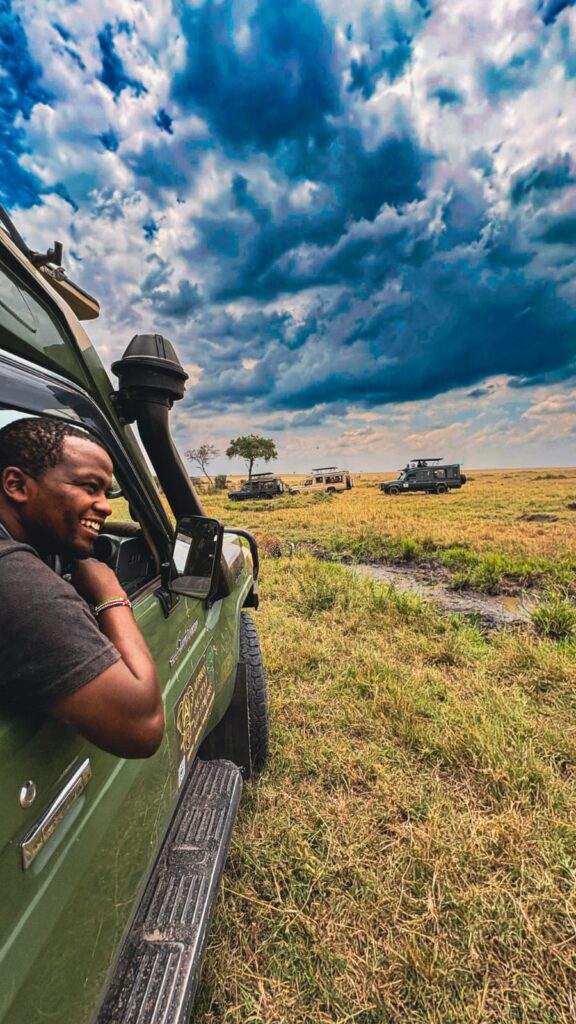
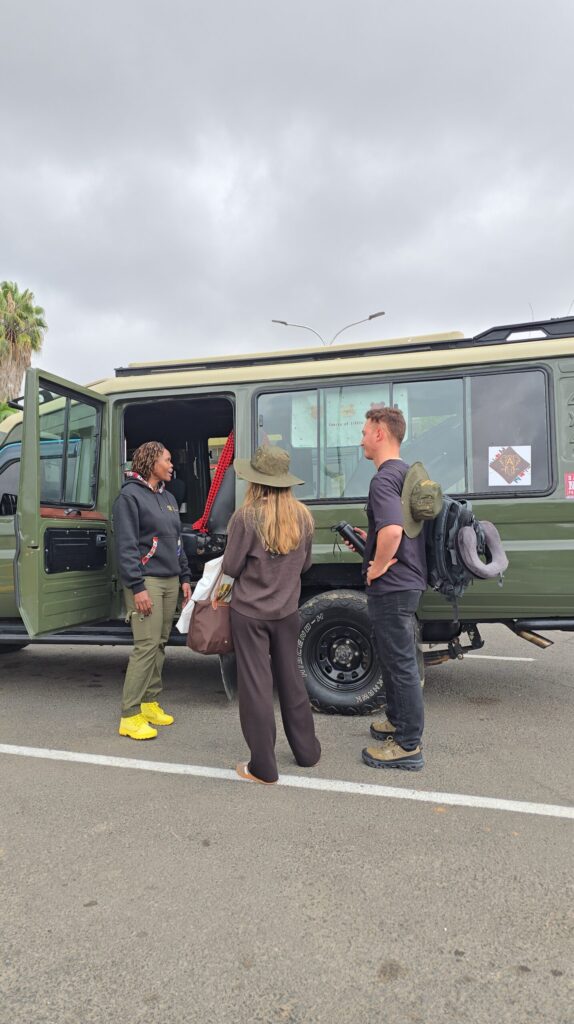
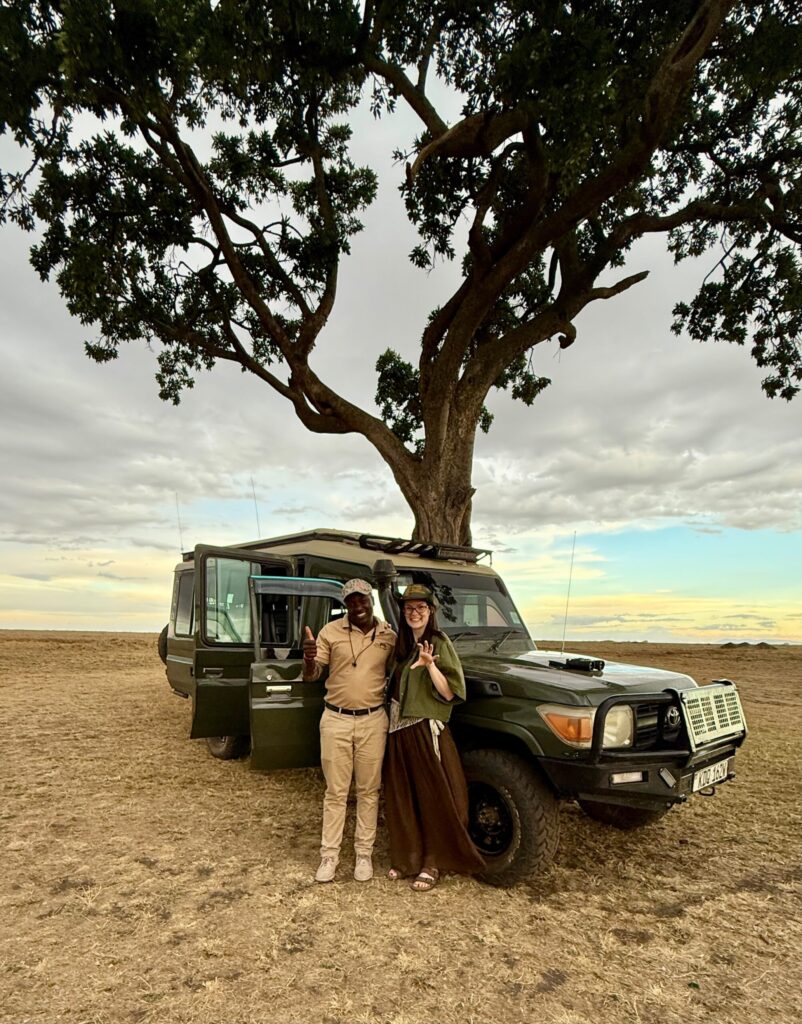
We opened with a cheetah on a termite mound and six guests who didn’t have to fight for a view. Everything in this guide, from the pop-up roof and charging ports to the fridge and UHF radio, exists to make that moment repeatable.
Afrikan Accent Adventures is a Nairobi-based safari operator and the vehicle is only the start. We build tailor-made itineraries across Kenya, Tanzania, Uganda and Rwanda and we state the vehicle type and guest cap in your quote. See our vehicles or browse our safaris. When you’re ready, ask for a free quote and Hellen Asiko, Director & Guest Experience Curator, will shape the trip around the vehicle and the view you want.
Come and ride with us, and take the seat nobody else is fighting for.
Let's plan your East African safari
Tell us when you'd love to travel and a local specialist will craft a tailor-made route around you.


