

Planning & Tips
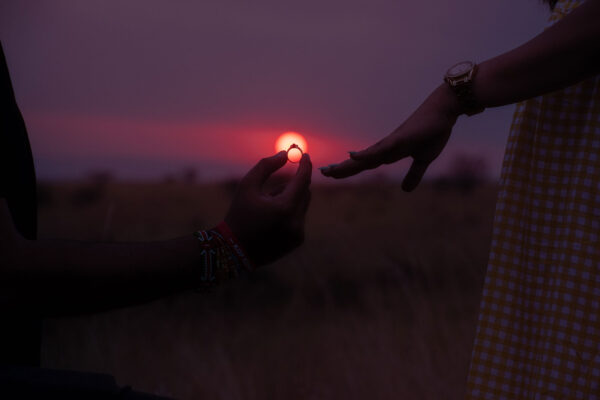
Proposing on Safari: How to Plan a Surprise Engagement
From a quiet stretch of grass in Naboisho Conservancy to a balloon basket at sunrise, here's how we…
Read more →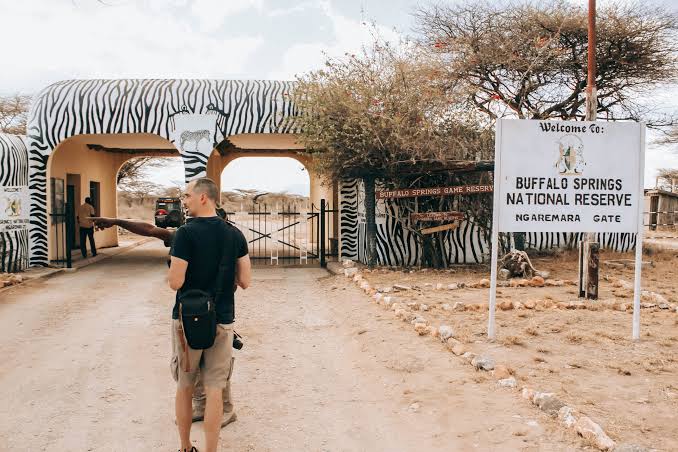
Buffalo Springs National Reserve is a scenic northern Kenya safari destination known for elephants, the Samburu Special Five, the Ewaso Ng'iro River, diverse wildlife and spectacular dryland landscapes.
The first thing you notice about Buffalo Springs National Reserve is how quickly the landscape changes once you cross the Ewaso Nyiro River from Samburu. The red earth remains, the doum palms still line the river and elephants still move through the scrub, but Buffalo Springs feels greener, quieter and more open. The reserve takes its name from a natural spring near its western side, one of several permanent or semi-permanent water sources that make this dry northern Kenya landscape possible.
Buffalo Springs National Reserve lies in Isiolo County, immediately south of Samburu National Reserve. The two reserves are separated by the Ewaso Nyiro River but form part of the same wider wildlife ecosystem, with animals moving between Buffalo Springs, Samburu, Shaba and the surrounding community conservancies. The combination makes Buffalo Springs an excellent extension to a northern Kenya safari, particularly for travellers who want to experience the region beyond the better-known Samburu National Reserve.
At approximately 131 square kilometres, Buffalo Springs National Reserve is considerably smaller than many of Kenya’s famous protected areas, but its compact size works in its favour. The Ewaso Nyiro provides a permanent ecological anchor, while springs, riverine woodland, open grassland, acacia scrub and rocky terrain create a surprisingly varied habitat.
What makes Buffalo Springs National Reserve particularly interesting is its combination of wildlife, water and landscape. Large elephant herds are regularly encountered around the river, while leopard, lion, cheetah, buffalo, Grevy’s zebra, reticulated giraffe, gerenuk, Beisa oryx and Somali ostrich can all occur within the wider ecosystem.
For guests who have already visited Samburu National Reserve, Buffalo Springs offers a chance to see familiar northern Kenya species from a different landscape and often with fewer vehicles around sightings. For first-time visitors, combining Buffalo Springs with Samburu and Shaba creates one of the most complete northern Kenya safari experiences.
QUICK ANSWER | What is Buffalo Springs National Reserve?
Buffalo Springs National Reserve is a 131 square kilometre protected wildlife reserve in Isiolo County, northern Kenya, located on the southern side of the Ewaso Nyiro River opposite Samburu National Reserve. The reserve is known for its natural springs, elephants, dry-country wildlife, riverine habitat and connection to the wider Samburu-Buffalo Springs-Shaba ecosystem.
Buffalo Springs National Reserve At a Glance:
Location: Isiolo County, northern Kenya, immediately south of Samburu National Reserve
Size: Approximately 131 square kilometres (51 square miles)
Established: 1985 in its present form, following the division of the former Samburu-Isiolo Game Reserve
River: Ewaso Nyiro River
Known for: Natural springs, elephants, leopard, dry-country wildlife and riverine scenery
Neighbouring reserve: Samburu National Reserve
Nearby reserve: Shaba National Reserve
Main ecosystem: Samburu-Buffalo Springs-Shaba ecosystem
Nearest major town: Archer’s Post / Isiolo corridor
Distance from Nairobi: Approximately 315 to 350 kilometres by road, depending on the route and access point
Main access: Road from Nairobi via Nanyuki and Isiolo, or by air to nearby northern Kenya airstrips
Managed by: County government administration rather than Kenya Wildlife Service
The Landscape of Buffalo Springs National Reserve
Buffalo Springs National Reserve is defined by the contrast between dry northern Kenya and the permanent water of the Ewaso Nyiro River. Away from the river, the reserve is characterized by open plains, acacia bushland, rocky ground and dry grassland. Along the river, the vegetation becomes noticeably greener, with doum palms and riverine woodland creating a narrow corridor of shade and food.
This contrast is one of the reasons Buffalo Springs National Reserve photographs so well. A game drive can move from pale grass and red soil into dense green vegetation within a short distance, with elephants, giraffes and antelope appearing against completely different backgrounds.
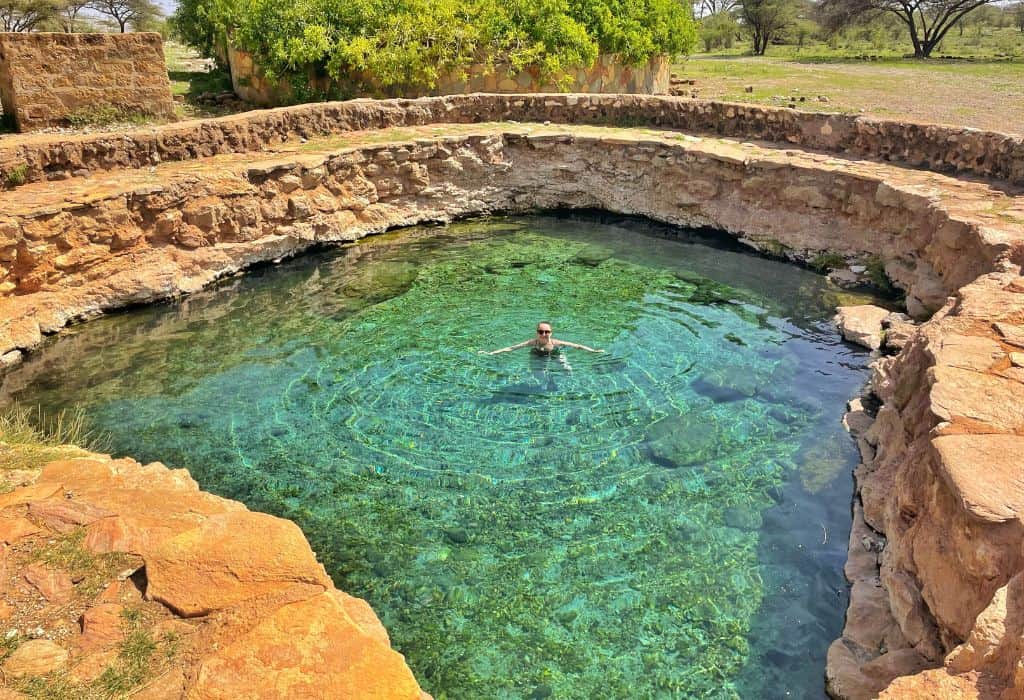
The natural springs that give Buffalo Springs National Reserve its name are another defining feature. In an ecosystem where rainfall is seasonal and temperatures are high, permanent water sources have an importance far beyond their physical size. They attract wildlife, sustain vegetation and help maintain the reserve’s ecological value during the dry season.
The Ewaso Nyiro River
The Ewaso Nyiro River is the ecological backbone of both Buffalo Springs National Reserve and Samburu National Reserve. It runs between the two reserves and provides a year-round source of water through an otherwise semi-arid landscape.
During the dry months, the river becomes particularly important because many animals concentrate around its banks and associated vegetation. Elephants frequently move along the river corridor, while giraffes browse the acacias and birds gather around the water and riverine forest.
The river also creates ecological connectivity. Buffalo Springs National Reserve should not be viewed as an isolated 131-square-kilometre wildlife island. It forms part of a much larger landscape extending through Samburu National Reserve, Shaba National Reserve and surrounding community conservancies.
That connectivity is particularly important for elephants and other large mammals whose ranges extend beyond individual reserve boundaries.
QUICK ANSWER | Why is the Ewaso Nyiro River important to Buffalo Springs?
The Ewaso Nyiro River provides a permanent water source through the semi-arid northern Kenya landscape, supports riverine vegetation and concentrates wildlife during dry periods. It also separates Buffalo Springs National Reserve from Samburu National Reserve while connecting both reserves as part of one wider ecosystem.
Wildlife of Buffalo Springs National Reserve
Buffalo Springs National Reserve supports a strong concentration of northern Kenya wildlife despite its relatively small size. Its position beside the Ewaso Nyiro and its network of springs provide reliable water and vegetation, while the surrounding dry plains support grazing and browsing species.
Elephants are among the most impressive animals to encounter in Buffalo Springs National Reserve. Herds move between the river, springs and surrounding bush, and their presence is one of the defining features of a safari in this part of Kenya.
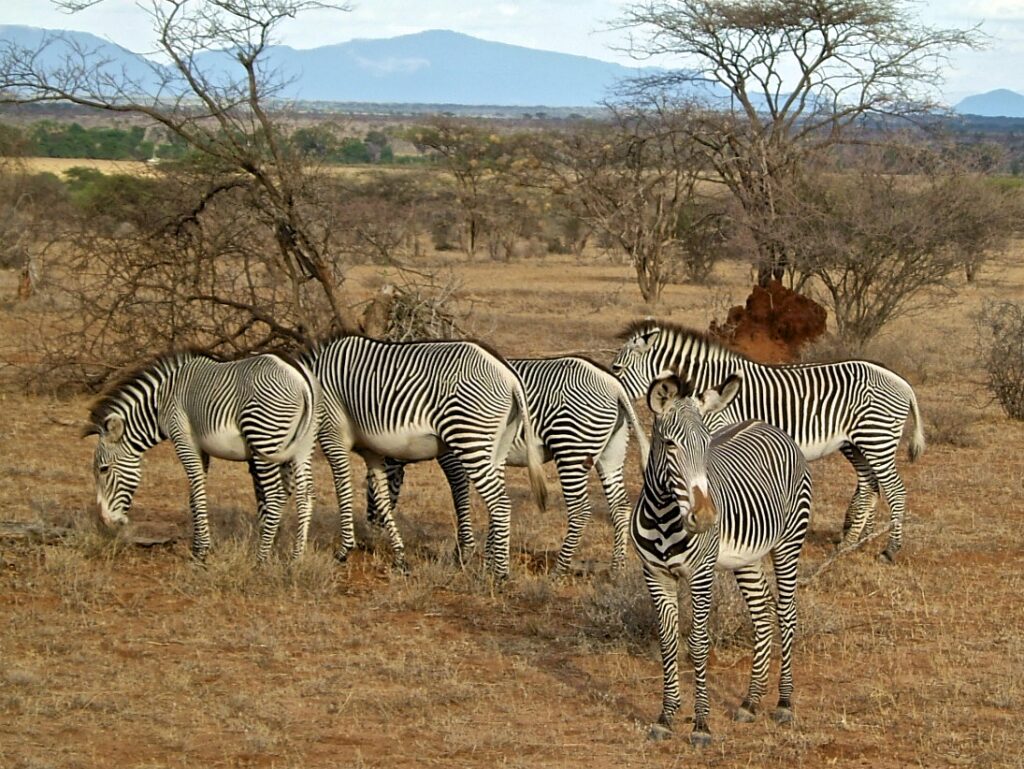
The reserve also forms part of the range of the northern Kenya species commonly associated with the Samburu ecosystem. Grevy’s zebra, reticulated giraffe, gerenuk, Beisa oryx and Somali ostrich can be encountered, although sightings are never guaranteed and vary with season, rainfall and animal movements.
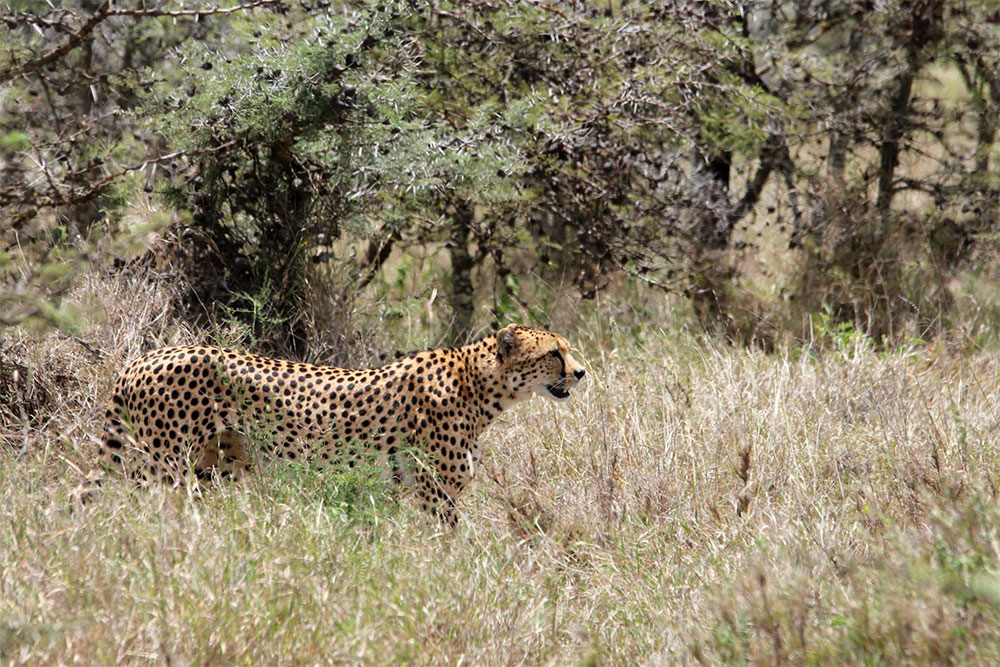
Lion, leopard and cheetah are also present. Leopard sightings can be particularly rewarding around riverine vegetation, where the thicker cover provides ideal habitat for this elusive predator. Cheetahs favour more open country where they can use speed to pursue prey.
Buffalo, warthog, impala, Grant’s gazelle, Kirk’s dik-dik and other antelope contribute to the reserve’s herbivore population. Crocodiles and hippos may also be encountered in suitable sections of the river system.
QUICK ANSWER | What animals can you see in Buffalo Springs National Reserve?
A Buffalo Springs safari can include elephants, lion, leopard, cheetah, buffalo, Grevy’s zebra, reticulated giraffe, gerenuk, Beisa oryx, Somali ostrich, warthog, gazelles, dik-dik and a wide range of smaller mammals and birds. The exact wildlife seen depends on season, water availability and daily animal movements.
The Samburu Special Five in Buffalo Springs
Although the Samburu Special Five are most strongly associated with Samburu National Reserve and the wider northern Kenya ecosystem, several of these species can also be seen in Buffalo Springs National Reserve.
The five are Grevy’s zebra, reticulated giraffe, gerenuk, Beisa oryx and Somali ostrich.
Buffalo Springs is therefore a useful part of a northern Kenya safari for travellers interested in dry-country species rather than only the traditional Big Five.
Grevy’s Zebra
Grevy’s zebra is the largest living wild zebra and is distinguished by its narrow, closely spaced stripes, large rounded ears and white belly. Northern Kenya remains its principal stronghold, and the wider Samburu-Buffalo Springs landscape is an important area for the species.
Reticulated Giraffe
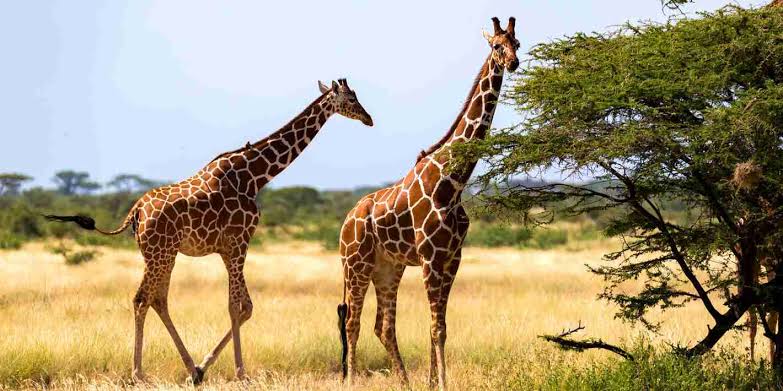
The reticulated giraffe is one of northern Kenya’s most recognizable animals. Its sharply defined white network pattern contrasts strongly with its dark reddish-brown coat. Buffalo Springs provides suitable acacia woodland and scrub for these tall browsers.
Gerenuk
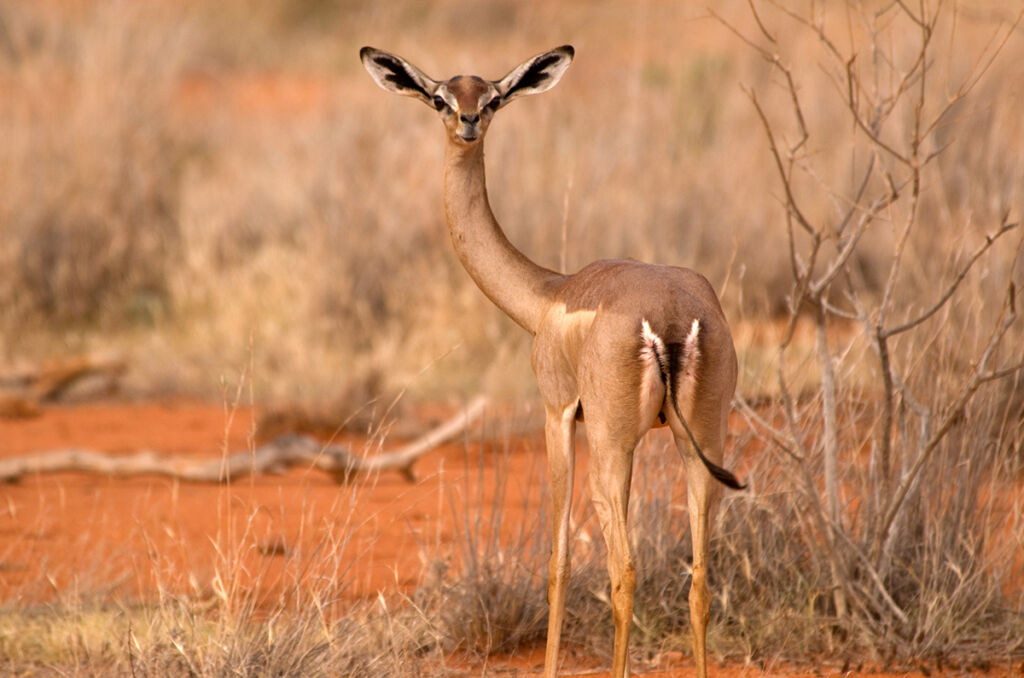
The gerenuk is one of the most specialized antelopes of northern Kenya. Its unusually long neck and ability to stand on its hind legs allow it to browse leaves above the reach of many other herbivores. It is particularly well adapted to the dry conditions found around Buffalo Springs.
Beisa Oryx
The Beisa oryx is built for arid country. Its long horns, strong body and ability to survive with limited water make it one of the most characteristic antelopes of the northern Kenya landscape.
Somali Ostrich
The Somali ostrich is another dry-country specialist. It is distinguished from the more familiar Masai ostrich by its blue-grey neck and legs, particularly in breeding males. Open areas of Buffalo Springs provide suitable habitat for this large flightless bird.
Birdlife in Buffalo Springs National Reserve
Buffalo Springs National Reserve is also an excellent destination for birdwatching. The combination of riverine forest, springs, open grassland, acacia bush and dry plains creates several distinct bird habitats within a relatively compact area.
Birdwatchers can look for hornbills, rollers, bee-eaters, kingfishers, vultures, eagles, bustards, starlings and numerous smaller woodland and savannah species.
The Ewaso Nyiro is particularly important for birds because the riverine vegetation provides food, nesting sites and shade. The open plains add another layer of habitat for ground-dwelling and dry-country species.
For serious birdwatchers, a private vehicle and guide are worthwhile because the best birding often comes from slowing down rather than simply driving between major wildlife sightings.
Things to Do in Buffalo Springs National Reserve
Game Drives
Game drives are the main activity in Buffalo Springs National Reserve. Early morning drives are especially productive because temperatures are lower and predators may still be active after the night.
Afternoon game drives offer a different experience as temperatures begin to fall and wildlife becomes increasingly active around the river and springs. A full-day game drive can be arranged for travellers who want to explore different sections of Buffalo Springs and combine wildlife viewing with a packed lunch.
Elephant Viewing
Elephant viewing is one of the strongest reasons to visit Buffalo Springs National Reserve. Herds often move through the riverine corridor, where they can be watched feeding, drinking, bathing and interacting with one another.
Because the Ewaso Nyiro connects Buffalo Springs with Samburu, elephant movements are not restricted by the reserve boundary. A sighting in Buffalo Springs can therefore be part of a much wider elephant landscape.
Wildlife Photography
Buffalo Springs National Reserve offers excellent conditions for wildlife photography. The combination of red soil, green riverine vegetation, doum palms, open plains and strong northern light creates backgrounds that are very different from the grasslands of the Masai Mara.
Photographers should pay particular attention to early morning and late afternoon, when the lower sun produces stronger texture and warmer tones across the landscape.
Birdwatching
Birdwatching is another rewarding activity in Buffalo Springs National Reserve. The river, springs and woodland attract species that are less likely to be encountered in the driest open country.
A private game drive with a guide who understands local birdlife can turn an ordinary wildlife drive into a dedicated birding experience.
Bush Breakfasts and Sundowners
Several accommodation properties around the Buffalo Springs ecosystem can arrange bush breakfasts and sundowners. An early breakfast in the bush provides a memorable way to extend a morning game drive, while sundowners offer a relaxed end to the afternoon as the northern Kenya landscape changes colour.
Nature Experiences in Surrounding Conservancies
Walking safaris and other specialist activities are generally associated with the community conservancies surrounding the main reserves rather than with Buffalo Springs National Reserve itself.
Travellers interested in walking, night drives, camel experiences or off-road photography can therefore combine Buffalo Springs with a nearby conservancy where those activities are permitted.
This distinction is important when planning a Buffalo Springs safari. Not every activity offered in the wider Samburu ecosystem is automatically permitted inside Buffalo Springs National Reserve.
Samburu National Reserve
Samburu National Reserve lies directly across the Ewaso Nyiro River from Buffalo Springs. The two reserves are separate protected areas but form one connected wildlife ecosystem.
Samburu is generally better known internationally because of the Samburu Special Five, while Buffalo Springs offers a complementary landscape with springs, riverine vegetation and open plains.
For travellers staying for three or more nights in northern Kenya, combining Samburu National Reserve and Buffalo Springs National Reserve can provide a more complete experience than visiting either reserve alone.
Shaba National Reserve
Shaba National Reserve lies farther east and adds another landscape to the northern Kenya safari circuit. Its volcanic terrain, rocky outcrops, springs and riverine habitats contrast with the open plains of Buffalo Springs.
The three reserves, Samburu, Buffalo Springs and Shaba, are often combined because they are geographically close and ecologically connected.
A northern Kenya itinerary that includes all three gives travellers the opportunity to experience different habitats while searching for many of the same dry-country species.
Buffalo Springs vs Samburu National Reserve
Buffalo Springs National Reserve and Samburu National Reserve are often treated as though they are the same destination, but they are separate reserves administered on opposite sides of the Ewaso Nyiro River.
Samburu is on the northern side of the river, while Buffalo Springs lies mainly to the south. Both support similar northern Kenya wildlife, including elephants, big cats and several species associated with the Samburu Special Five.
The main difference for a traveller is often less about wildlife and more about landscape, accommodation location, access and the way the two reserves fit into the itinerary.
Samburu generally has the stronger concentration of tourism infrastructure, while Buffalo Springs can provide a quieter complement to a Samburu stay.
QUICK ANSWER | Is Buffalo Springs the same as Samburu?
No. Buffalo Springs National Reserve and Samburu National Reserve are separate protected areas divided by the Ewaso Nyiro River. They share the same wider ecosystem and many of the same wildlife species, making them ideal to combine on a northern Kenya safari.
Buffalo Springs Conservancies vs the Reserve
The wider Buffalo Springs ecosystem extends beyond the formal reserve boundary into community-owned conservancies and other rangelands.
This distinction matters because activities such as night game drives, walking safaris and off-road driving may be available in neighbouring conservancies while being restricted within the national reserve.
For travellers who want a traditional safari focused on daytime wildlife viewing, Buffalo Springs National Reserve is an excellent choice. For travellers looking for a more adventurous experience, combining Buffalo Springs with a community conservancy can add walking, night drives, cultural experiences or specialist wildlife activities.
Responsible tourism therefore means understanding which land you are visiting and which rules apply to that particular area.
Buffalo Springs National Reserve Gates
Access arrangements can vary depending on the route and the accommodation being used. Buffalo Springs is closely connected to Samburu through the Ewaso Nyiro crossing, and travellers combining the two reserves should confirm the correct entrance and crossing arrangements before travelling.
Main access points are generally associated with the road approaches from Isiolo and the river crossing connecting Buffalo Springs with Samburu.
Because gate operations, crossing conditions and access arrangements can change, we recommend confirming the appropriate gate with your safari operator before the trip rather than relying on a generic entrance.
How to Get to Buffalo Springs National Reserve
By Road
The road journey from Nairobi to Buffalo Springs National Reserve generally follows the northern Kenya route through Thika, Nyeri or Nanyuki and onward through Isiolo.
The total distance is roughly 315 to 350 kilometres depending on the precise starting point, route and reserve access point. The drive normally takes around 5 to 6 hours, although traffic, road conditions and stops can extend the journey.
A road safari is a good option for travellers who want to experience the changing scenery from central Kenya into the semi-arid north.
By Air
Flying is the quickest way to reach the Samburu-Buffalo Springs ecosystem. Scheduled and chartered light aircraft operate from Nairobi’s Wilson Airport to airstrips serving the northern Kenya reserves and surrounding camps.
A fly-in safari can reduce a full day of road travel to approximately 60 to 90 minutes of flight time, followed by a vehicle transfer to the accommodation.
Travellers flying by light aircraft should expect luggage restrictions and are generally advised to use soft-sided bags.
Road or Fly? How to Decide
Road travel makes sense when the journey is part of the safari and when Buffalo Springs is being combined with Nanyuki, Laikipia or other destinations along the northern route.
Flying makes more sense for shorter itineraries, luxury safaris and travellers combining northern Kenya with destinations such as the Masai Mara where driving would consume too much of the available safari time.
Climate and Weather in Buffalo Springs
Buffalo Springs National Reserve has a hot, semi-arid climate typical of northern Kenya. Days can be hot throughout the year, while early mornings and evenings are noticeably cooler.
The reserve experiences Kenya’s general bimodal rainfall pattern, with the long rains occurring around March to May and the short rains generally occurring around October to December.
The dry months are particularly interesting for wildlife viewing because water becomes concentrated around the Ewaso Nyiro and the natural springs. The greener months, however, transform the landscape and can produce excellent birdwatching and photography conditions.
Because rainfall can vary significantly from year to year, the exact condition of roads, grass and water sources should be considered when planning a Buffalo Springs safari.
QUICK ANSWER | What is the climate like in Buffalo Springs?
Buffalo Springs has a hot, semi-arid climate with warm to hot days throughout the year and cooler mornings and evenings. The main rainy periods generally occur from March to May and October to December, while the drier months tend to concentrate wildlife around permanent water sources.
Buffalo Springs National Reserve Entry Fees and Tickets
Entry fees for Buffalo Springs National Reserve should be confirmed against the current county or reserve tariff before travel because Buffalo Springs is not simply administered as a Kenya Wildlife Service national park.
Kenya’s conservation fee structure has changed in recent years, and KWS has confirmed revised national conservation fees for KWS-managed national parks, reserves and sanctuaries from October 2025.
For package safaris, park and reserve entry fees are commonly incorporated into the total safari price rather than being paid separately by the guest. Kenya Wildlife Service also confirms that package-tour operators can include park entry fees in the overall safari cost.
Because Buffalo Springs, Samburu and Shaba have different administrative arrangements, travellers combining the three should ask their safari operator to confirm exactly which reserve fees are included in the quotation.
QUICK ANSWER | How much does it cost to enter Buffalo Springs National Reserve?
Buffalo Springs entry charges should be confirmed using the current reserve tariff and travel date because fees and administration can change. If you book a package safari with Afrikan Accent Adventures, the applicable reserve fees can be incorporated into the safari quotation so you know the total cost before travelling.
Best Time to Visit Buffalo Springs National Reserve
January and February are generally hot and dry, making them useful months for wildlife viewing around permanent water sources. Vegetation is thinner and animals are often easier to locate around the river and springs.
March through May brings the long rains. The reserve becomes greener, bird activity increases and the landscape changes dramatically, although heavy rainfall can affect some roads.
June through October is one of the strongest periods for a Buffalo Springs safari. The weather is generally dry, wildlife concentrates around water and road conditions are usually more predictable.
November and December bring the short rains. The landscape becomes greener, migratory birds can improve the birding experience and visitor numbers may be lower than during peak dry-season periods.
QUICK ANSWER | What is the best time to visit Buffalo Springs?
June to October is generally the most reliable period for wildlife viewing because dry conditions concentrate animals around the Ewaso Nyiro River and springs. January and February can also offer strong game viewing. The rainy seasons bring greener landscapes, fewer visitors and excellent birdwatching.
How Many Days Do You Need in Buffalo Springs?
One night can provide an introduction to Buffalo Springs National Reserve, particularly for travellers who are already staying in the Samburu area.
Two nights is a better minimum for travellers who want several game drives and a genuine chance to explore different habitats within Buffalo Springs.
Three nights works particularly well when Buffalo Springs is part of a combined Samburu, Buffalo Springs and Shaba safari. It allows enough time for several game drives without rushing between reserves.
Four nights or more is appropriate for travellers who want a slower northern Kenya experience, with multiple wildlife drives, photography, birdwatching and additional activities in surrounding conservancies.
QUICK ANSWER | How many days do you need in Buffalo Springs?
Two nights is a good minimum for a Buffalo Springs safari, while three nights works particularly well when combining Buffalo Springs National Reserve with Samburu and Shaba. Travellers focused on photography, birdwatching or a slower safari can comfortably spend three to four nights in the wider ecosystem.
Why Visit Buffalo Springs National Reserve?
Buffalo Springs National Reserve offers something that many Kenya safari itineraries overlook: the opportunity to explore northern Kenya without relying entirely on the country’s most famous reserves.
The reserve combines permanent water, natural springs, riverine woodland, open plains and dry-country wildlife within a relatively compact area.
Its location opposite Samburu National Reserve is another major advantage. Rather than choosing between the two, travellers can experience both during the same safari and see how the landscape changes across the Ewaso Nyiro.
Buffalo Springs is also particularly appealing to repeat Kenya visitors. Someone who has already experienced the Masai Mara, Amboseli or Tsavo may find the northern Kenya ecosystem much less familiar.
The combination of elephants, reticulated giraffe, Grevy’s zebra, gerenuk, Beisa oryx, Somali ostrich, big cats and distinctive dryland scenery makes Buffalo Springs a worthwhile destination in its own right.
Buffalo Springs Safari Cost
The cost of a Buffalo Springs safari varies according to accommodation, season, vehicle type, number of travellers, transport and whether the itinerary includes Samburu or Shaba.
As a broad planning guide, budget and basic mid-range safaris can fall within approximately USD 250 to 400 per person per day, while comfortable mid-range and premium properties may range from around USD 400 to 600 per person per day. Luxury and private conservancy experiences can exceed USD 600 per person per day, particularly during peak season.
These figures are planning ranges rather than fixed Buffalo Springs prices. A private 4×4 safari, luxury accommodation and flying between destinations will cost more than a shared road safari using a simpler lodge.
The best way to price a Buffalo Springs safari is to decide first whether you want Buffalo Springs alone or a combined Samburu-Buffalo Springs-Shaba itinerary.
QUICK ANSWER | How much does a Buffalo Springs safari cost?
A Buffalo Springs safari can range from roughly USD 250 to 400 per person per day for budget and basic mid-range arrangements, around USD 400 to 600 for higher-quality mid-range options, and USD 600 or more for luxury and private experiences. The final price depends on accommodation, season, transport and whether other northern Kenya reserves are included.
Buffalo Springs Safari Packages
We build Buffalo Springs National Reserve into safari itineraries in several ways.
A two-night Buffalo Springs safari works well for travellers who want to focus on elephants, dry-country wildlife and the Ewaso Nyiro.
A combined Samburu and Buffalo Springs safari is ideal for first-time visitors to northern Kenya because it provides access to both sides of the river and the wider wildlife ecosystem.
For a more comprehensive northern Kenya experience, we can combine Buffalo Springs with Samburu National Reserve and Shaba National Reserve, creating a multi-reserve itinerary with different landscapes and wildlife-viewing environments.
Buffalo Springs can also be included in longer Kenya safari circuits connecting northern Kenya with Laikipia, Mount Kenya, Lake Nakuru or the Masai Mara.
Accommodation in Buffalo Springs
Accommodation for Buffalo Springs safaris ranges from comfortable lodges and tented properties near the reserve to luxury camps and lodges positioned along the Ewaso Nyiro or in neighbouring conservancies.
Properties close to the river are particularly attractive because the river is one of the most important wildlife corridors in the ecosystem. Guests may encounter elephants and birds close to camp, although wildlife sightings from accommodation should never be guaranteed.
For travellers prioritizing privacy, walking safaris or night drives, a property in a neighbouring community conservancy may be more appropriate than accommodation inside the main reserve area.
We match accommodation to the type of Buffalo Springs safari being planned, whether that means a comfortable mid-range lodge, a riverside luxury camp or a private conservancy experience.
Buffalo Springs vs Other Kenya Safari Destinations
Buffalo Springs vs Masai Mara
The Masai Mara is larger in reputation and offers exceptional predator viewing, open grasslands and the annual wildebeest migration. Buffalo Springs offers something very different: northern Kenya’s dry-country species, natural springs, riverine scenery and a much smaller-scale safari environment.
Buffalo Springs is not a replacement for the Masai Mara. The two destinations complement each other.
Buffalo Springs vs Amboseli
Amboseli is famous for its Mount Kilimanjaro views and large elephant herds. Buffalo Springs also offers excellent elephant viewing but places those elephants within a red-earth, riverine and semi-arid northern Kenya landscape.
For travellers interested in the Samburu Special Five and northern Kenya species, Buffalo Springs has an advantage.
Buffalo Springs vs Tsavo
Tsavo is dramatically larger and offers an expansive wilderness experience across Tsavo East and Tsavo West. Buffalo Springs is smaller, more concentrated around the Ewaso Nyiro and natural springs, and generally easier to explore over a short stay.
Tsavo suits travellers looking for scale and rugged wilderness, while Buffalo Springs suits travellers looking for concentrated northern Kenya wildlife and a different ecosystem.
Buffalo Springs vs Samburu
Samburu and Buffalo Springs are the most natural comparison because they sit directly opposite one another. Both share the Ewaso Nyiro ecosystem and many of the same wildlife species.
The strongest option for many travellers is not choosing one but combining both.
Responsible Tourism and Conservation in Buffalo Springs
Responsible tourism in Buffalo Springs National Reserve begins with respecting the reserve’s rules, wildlife and surrounding communities.
The reserve forms part of a larger ecosystem in which wildlife moves beyond formal protected-area boundaries. Supporting accommodation and tourism businesses that contribute to conservation and community development therefore helps protect the wider landscape rather than only the reserve itself.
Visitors should remain on designated tracks, maintain appropriate distances from animals, avoid feeding wildlife and follow the instructions of their professional safari guide.
Cultural experiences in the surrounding Samburu communities should also be approached respectfully. Photography should be requested rather than assumed, and visitors should support community-run initiatives where possible.
Conservation in northern Kenya increasingly depends on maintaining connectivity between protected areas and community-owned landscapes. Buffalo Springs is therefore most valuable when viewed not as an isolated reserve but as one component of a larger conservation system linking Samburu, Shaba, Buffalo Springs and surrounding conservancies.
Expert Note
The most important thing to understand about Buffalo Springs is that the reserve boundary does not define the wildlife ecosystem. Elephants, predators and herbivores move between Buffalo Springs, Samburu, Shaba and community land. A good northern Kenya safari therefore supports the wider landscape rather than treating each reserve as an isolated attraction.
Plan Your Buffalo Springs Safari
Buffalo Springs National Reserve is one of northern Kenya’s quieter safari destinations, but its relatively low profile is part of its appeal. The Ewaso Nyiro River, natural springs, doum palms, dry plains and riverine woodland create a distinctive landscape that feels very different from the Masai Mara, Amboseli and Tsavo.
The reserve is especially rewarding for travellers interested in elephants, leopard, northern Kenya’s dry-country species and the Samburu Special Five. Its position directly opposite Samburu National Reserve also makes it easy to incorporate into a wider northern Kenya safari.
For a first visit, we generally recommend combining Buffalo Springs National Reserve with Samburu National Reserve for at least three nights. Travellers with more time can add Shaba National Reserve or a nearby community conservancy for walking, night drives and other experiences that complement the daytime game drives inside Buffalo Springs.
Whether you want a private 4×4 road safari from Nairobi, a fly-in northern Kenya safari or a longer Kenya itinerary combining Buffalo Springs with Samburu, Laikipia and the Masai Mara, we can build the route around your interests, budget and available time.
Buffalo Springs is not simply the reserve across the river from Samburu. It is one of the key pieces of northern Kenya’s wider wildlife landscape, and for travellers willing to go beyond the standard Kenya safari circuit, that difference is exactly the point.
Discover a unique safari destination where crystal-clear springs and the Ewaso Nyiro River sustain some of Kenya's rarest wildlife in a spectacular semi-arid landscape.
Buffalo Springs is one of the premier locations in Africa to encounter the Samburu Special Five. The reserve's unique habitat supports thriving…
The reserve takes its name from a series of crystal-clear underground springs that emerge from ancient volcanic rocks. These springs provide permanent…
Large elephant herds regularly move through the reserve and congregate near the river and springs. Buffalo Springs offers some of the most…
The reserve supports healthy populations of lions, leopards, cheetahs, spotted hyenas, and jackals. The open landscape and low visitor numbers make predator…
The Ewaso Nyiro River forms the ecological backbone of the reserve and attracts a constant flow of wildlife throughout the year. Riverine…
More than 390 bird species have been recorded, including kingfishers, hornbills, fish eagles, bee-eaters, secretary birds, and migratory species.
The reserve's combination of volcanic terrain, lush riverbanks, doum palms, and abundant wildlife creates exceptional photographic conditions throughout the year.
With significantly fewer visitors than Kenya's flagship parks, Buffalo Springs offers quiet game drives and intimate wildlife encounters.
From value camps to premium lodges — we match every stay to your style and budget.
Comfortable tented camps just outside the reserve gates. En-suite rooms with hot showers, full-board meals, and close proximity to the Mara.
Spacious canvas tents on raised platforms with private decks, often inside or adjacent to conservancies. Better access and fewer crowds.
World-class lodges and exclusive camps in private conservancies. Night drives, bush walks, spa, and personalized service — the ultimate safari experience.
Every season has its magic — here's what to expect when, so you can travel at your perfect time.
Everything you need to know before you go — and we’ll guide you through every step.
International visitors travelling to Kenya are required to obtain a Kenya Electronic Travel Authorisation (eTA) before arrival. Applications are completed online and approvals are typically issued within a few days. Passports should be valid for at least six months from the date of entry and contain sufficient blank pages for immigration requirements.
Buffalo Springs National Reserve lies in northern Kenya at an altitude ranging from approximately 850 to 1,230 metres above sea level. Travellers are encouraged to consult their healthcare provider regarding recommended vaccinations and malaria prevention medication prior to departure.
Buffalo Springs National Reserve is located approximately 340 kilometres north of Nairobi and can be reached in approximately 5.5 to 6 hours by road.
Flight duration is approximately 1 hour, followed by a short road transfer of 10 to 30 minutes to most lodges and camps. Private charter flights can also be arranged directly to the reserve's airstrips.
The official currency in Kenya is the Kenyan Shilling (KES), although most lodges, camps, and safari operators accept US Dollars (USD). Travellers are advised to carry small amounts of cash for gratuities, local purchases, and community handicrafts.
Buffalo Springs experiences a warm semi-arid climate throughout the year. Average temperatures include: Daytime: 27°C to 34°C Night-time: 16°C to 22°C The reserve receives relatively low rainfall compared to Kenya's central and southern regions, making it a reliable year-round safari destination.
Kenya uses Type G electrical sockets, identical to those used in the United Kingdom. Voltage: 240V Frequency: 50Hz Most lodges provide electricity throughout the day, while some tented camps rely on generators or solar systems during specific hours.
East Africa Time (EAT) — UTC +3
obile network coverage is generally good around lodges and along the Ewaso Nyiro River corridor. Safaricom provides the strongest signal. Airtel coverage is available in selected areas. Most safari lodges offer complimentary Wi-Fi in guest rooms and public areas, although speeds may vary due to the remote location.
Buffalo Springs National Reserve is considered a safe safari destination with established tourism infrastructure, professional guides and experienced rangers.
As Buffalo Springs lies in a warmer lowland region, mosquitoes may be present, particularly following rainfall. Recommended precautions include: Using insect repellent
Buffalo Springs is regarded as one of Kenya's best wildlife photography destinations thanks to its open landscapes and exceptional visibility.
Yes. Buffalo Springs National Reserve is considered one of Kenya's hidden safari gems and offers an exceptional alternative to the country's busier parks. Visitors enjoy excellent wildlife viewing, spectacular scenery, fewer vehicles and the opportunity to see the famous Samburu Special Five. The reserve provides a more exclusive and intimate safari experience while still offering world-class wildlife sightings.
Buffalo Springs supports an impressive variety of wildlife including elephants, lions, leopards, cheetahs, buffaloes, crocodiles, hippos, hyenas, jackals, giraffes, zebras, impalas, gazelles and warthogs. The reserve is especially famous for the Samburu Special Five: Grevy's zebra, reticulated giraffe, Beisa oryx, gerenuk, and Somali ostrich, which are uniquely adapted to northern Kenya's dry conditions.
The Samburu Special Five are five iconic species found primarily in northern Kenya's arid ecosystems. They include the endangered Grevy's zebra, reticulated giraffe, Somali ostrich, Beisa oryx and gerenuk. Buffalo Springs is one of the best places in Africa to see all five species during a single safari, making it particularly popular with photographers and wildlife enthusiasts.
Buffalo Springs is generally regarded as a Big Four destination because elephants, lions, leopards and buffaloes occur within the reserve. Rhinos are not found here, meaning travellers wishing to complete the Big Five often combine their safari with destinations such as Ol Pejeta Conservancy or Solio Ranch, both of which are renowned for rhino conservation.
The best wildlife viewing takes place during the dry seasons from June to October and from December to February. During these periods, animals gather around the Ewaso Nyiro River and the reserve's natural springs, making sightings more frequent and predictable. The green season from March to May offers beautiful scenery, excellent birdwatching, lower accommodation rates and fewer visitors.
Most visitors spend two to three nights in Buffalo Springs, which allows enough time to enjoy several game drives and explore neighbouring reserves within the Samburu ecosystem. Wildlife photographers and birdwatchers often stay longer to maximise opportunities for sightings and photography.
The reserve is located approximately 340 kilometres north of Nairobi and can be reached by road in about five-and-a-half to six hours via Nanyuki, Isiolo and Archer's Post. Alternatively, daily scheduled flights operate from Wilson Airport in Nairobi to nearby airstrips, reducing travel time to approximately one hour followed by a short transfer to the lodge.
Yes. Buffalo Springs is an excellent family safari destination. Many lodges offer family rooms, swimming pools, educational wildlife experiences, and child-friendly activities. The reserve's quieter atmosphere and lower visitor numbers often make it particularly enjoyable for families travelling with children.
Absolutely. More than 390 bird species have been recorded in the reserve, making it one of northern Kenya's leading birdwatching destinations. Visitors regularly encounter African fish eagles, hornbills, bee-eaters, kingfishers, secretary birds, herons, storks and numerous migratory species during certain times of the year.
Buffalo Springs is famous for its crystal-clear natural springs, large elephant herds, exceptional birdlife and the presence of the Samburu Special Five. The reserve is also celebrated for its uncrowded safari experience and dramatic scenery consisting of riverine forests, doum palms, volcanic soils and open plains.
Yes. Buffalo Springs is commonly combined with Samburu National Reserve and Shaba National Reserve because all three reserves form part of the same ecosystem and are located adjacent to one another. Many itineraries also include Ol Pejeta Conservancy, Solio Ranch, Mount Kenya National Park and Laikipia conservancies to create a diverse northern Kenya safari circuit.
No. One of the reserve's greatest strengths is its exclusivity. Visitor numbers remain significantly lower than destinations such as Maasai Mara and Amboseli, allowing guests to enjoy peaceful game drives, uninterrupted wildlife viewing and excellent photography opportunities without large numbers of safari vehicles competing for sightings.
From a quiet stretch of grass in Naboisho Conservancy to a balloon basket at sunrise, here's how we…
Read more →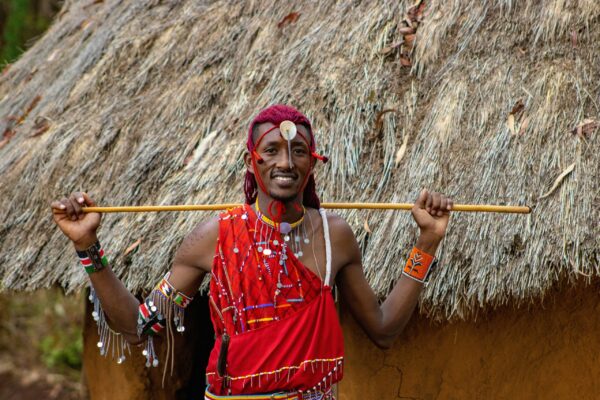
A village visit can be the best hour of a Kenya safari or the most awkward one, and…
Read more →
Where Kenya's guided bush walks happen, who leads them and why the thirty minutes you spend on foot…
Read more →Tell us what you’d love to see and a local specialist will design a tailor-made itinerary around you — no obligation, reply within 24 hours.