


Planning & Tips
Kenya Safari Tipping Guide: Who to Tip, How Much and What Cash to Carry
The driver-guide’s daily rate, the camp tip box, the dollar-note rule that catches people at the last camp…
Read more →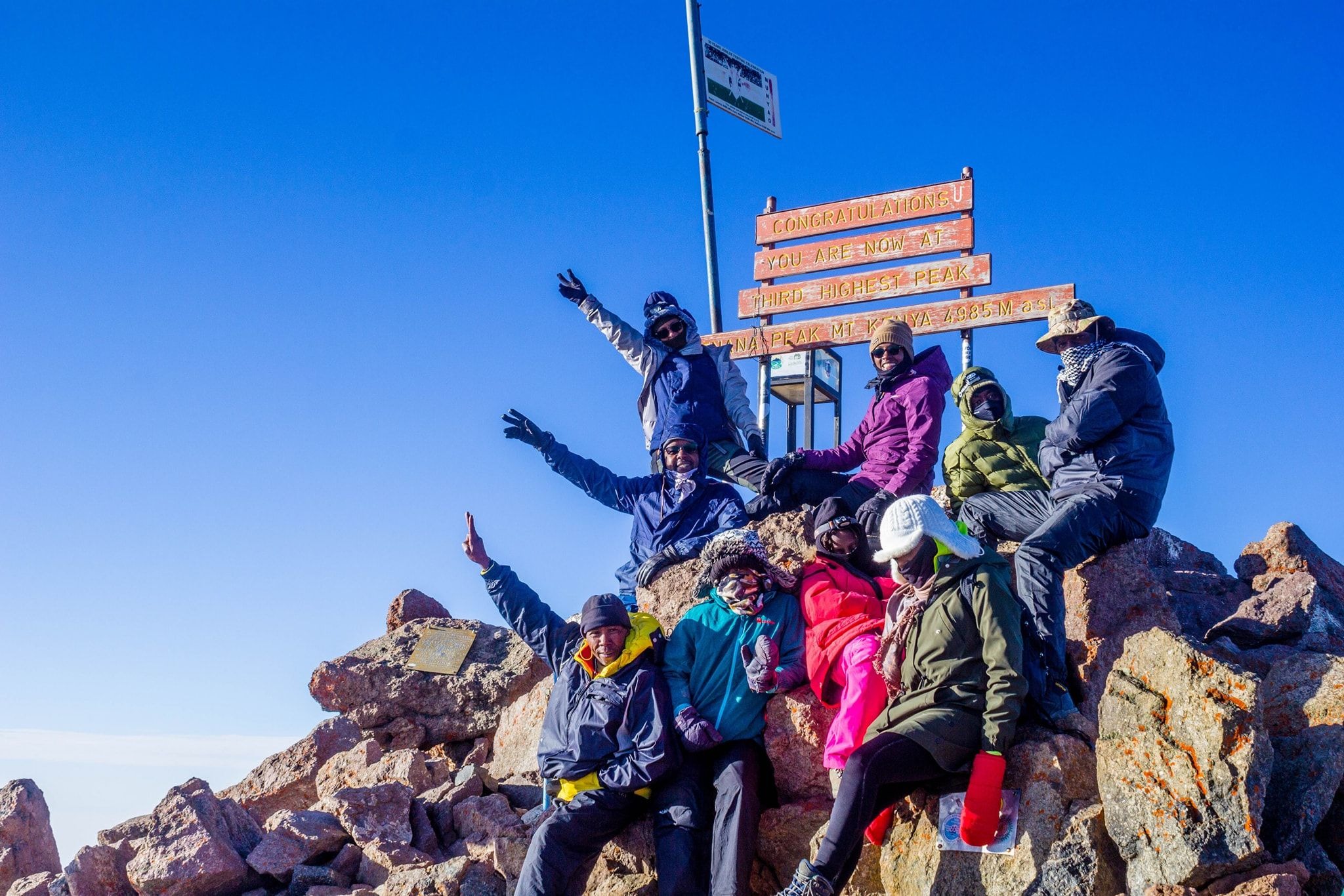
Mount Kenya National Park protects the spectacular slopes of Africa's second-highest mountain, offering mountain trekking, alpine scenery, wildlife, bird watching, forests, glaciers and unforgettable high-altitude adventures.
The road from Nanyuki is still dark when the first outline of the mountain appears. At first it is only a darker shape against the sky, then the peaks separate themselves from the horizon: Batian, Nelion and Point Lenana, rising above the forest. By the time we reach the Mount Kenya National Park gate, the light has reached the lower slopes, but the summit is still catching the first cold colours of morning.
Mount Kenya National Park is not a conventional wildlife destination. It is a mountain ecosystem, a trekking destination, a UNESCO World Heritage Site and one of the most dramatic landscapes in Kenya. Mount Kenya rises to 5,199 metres at Batian, making it the second-highest mountain in Africa, while its forested lower slopes transition through bamboo and high-altitude moorland to an alpine zone of glaciers, rocky peaks and Afro-alpine vegetation. UNESCO recognizes Mount Kenya National Park and Natural Forest for both its exceptional scenery and ecological importance.
The mountain sits approximately 193 kilometres northeast of Nairobi and straddles the equator. Its summit area is dominated by Batian at 5,199 metres, Nelion at 5,188 metres and Point Lenana at 4,985 metres. For most safari travellers, Point Lenana is the achievable summit objective, while Batian and Nelion require technical climbing experience.
Mount Kenya National Park was established in 1949 to protect the mountain’s unique high-altitude ecosystems, wildlife and landscapes. The surrounding forest had already received protected status in 1932, and the wider Mount Kenya property was later recognized as a UNESCO Biosphere Reserve and UNESCO World Heritage Site.
We send guests to Mount Kenya National Park for a completely different experience from the classic savannah safari. There are elephants and buffalo in the forest, colobus monkeys in the canopy and birdlife throughout the mountain, but the real attraction is the transition from tropical forest to bamboo, moorland, giant lobelias and finally the stark alpine landscape above the clouds.
If the Masai Mara is about wildlife density and Samburu is about rare northern species, Mount Kenya National Park is about altitude, landscape and the experience of climbing into one of Africa’s great mountain environments.
Mount Kenya National Park is a protected mountain ecosystem in central Kenya surrounding Africa’s second-highest mountain. Established in 1949, the Mount Kenya National Park protects high-altitude forests, moorlands, alpine landscapes, glaciers and diverse wildlife. The mountain’s highest point, Batian, reaches 5,199 metres, while Point Lenana at approximately 4,985 metres is the highest trekking summit. Mount Kenya National Park forms part of the UNESCO-listed Mount Kenya National Park/Natural Forest World Heritage property.
Location: Central Kenya, around the equator and approximately 193 kilometres northeast of Nairobi
Mountain height: 5,199 metres at Batian, the highest summit of Mount Kenya
Second summit: Nelion, 5,188 metres
Main trekking summit: Point Lenana, approximately 4,985 metres
Established: 1949
UNESCO World Heritage Site: Inscribed in 1997, with the property extended in 2013
UNESCO status: World Heritage Site and Biosphere Reserve
Main access routes: Naro Moru, Sirimon and Chogoria
Nearest major town: Nanyuki
Nearest commercial airstrip: Nanyuki Airstrip
Main attractions: Mount Kenya trekking, Point Lenana, alpine scenery, glaciers, high-altitude lakes, forest wildlife and Afro-alpine vegetation
Wildlife: Elephant, buffalo, leopard, hyena, colobus monkeys, bushbuck, waterbuck and numerous bird species
Best known for: Mountain trekking, dramatic scenery and high-altitude ecosystems
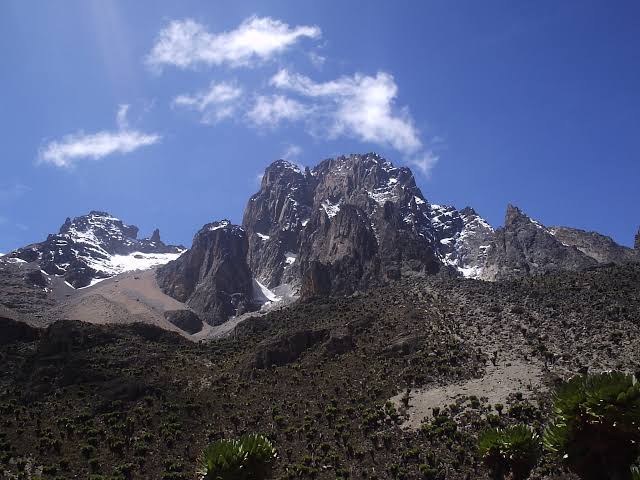
Mount Kenya has three principal summits that dominate the upper mountain: Batian, Nelion and Point Lenana.
Batian is the highest summit at 5,199 metres and is a technical climbing objective. Nelion reaches 5,188 metres and is similarly demanding. Point Lenana, at approximately 4,985 metres, is the trekking summit and the objective reached by most visitors climbing Mount Kenya without technical mountaineering equipment.
The distinction matters when planning a Mount Kenya National Park itinerary. A Mount Kenya trek does not necessarily mean attempting the highest technical summit. Most trekkers climb toward Point Lenana, often beginning the final ascent during the early hours of the morning so they can reach the summit around sunrise.
From Point Lenana, the reward is not simply the altitude. On a clear morning, the surrounding valleys, glaciers, rocky ridges and distant Kenyan plains open beneath you, creating one of the most memorable viewpoints in the country.
Batian is the highest point of Mount Kenya at 5,199 metres. Nelion is the second-highest summit at 5,188 metres, while Point Lenana, at approximately 4,985 metres, is the highest summit normally reached by trekkers.
One of the reasons Mount Kenya National Park is so remarkable is the rapid change in vegetation as altitude increases.
Lower sections of the Mount Kenya ecosystem are dominated by montane forest. As the trail rises, bamboo and Hagenia forest become more prominent before giving way to open moorland.
Higher still, the landscape becomes increasingly alpine. Giant groundsel, giant lobelia, tussock grasses and other specialized Afro-alpine plants appear among rocky slopes, tarns and glacial valleys.
Above the vegetation line, Mount Kenya becomes a dramatically different world of bare rock, ice and snow. The glaciers that remain on Mount Kenya are remnants of a much larger ice system, and UNESCO notes that the mountain’s glaciers are rapidly retreating.
This ecological progression is one of the defining characteristics of a Mount Kenya National Park trek. In a matter of days, trekkers can move through environments that would normally be separated by thousands of kilometres.
Mount Kenya National Park is not primarily marketed as a wildlife park, but wildlife remains an important part of the experience.
The lower forest contains elephants, buffalo, bushbuck, waterbuck and several species of primates. Leopard also occur within the wider Mount Kenya ecosystem, although they are rarely seen because of their secretive behaviour and the dense forest habitat.
Colobus monkeys are among the more memorable sightings in the forest, particularly where mature trees provide suitable habitat. Other smaller mammals can be encountered along forest trails, while birds become increasingly specialized as the altitude changes.
Elephants are especially important to the wider Mount Kenya ecosystem. The UNESCO-listed property connects with the Lewa Wildlife Conservancy and Ngare Ndare Forest Reserve through an elephant corridor that helps maintain ecological connectivity between Mount Kenya and the surrounding conservation landscape.
A Mount Kenya National Park safari therefore works best when travellers understand that wildlife is part of the ecosystem rather than the sole reason for visiting. The mountain itself is the main attraction.
Wildlife in Mount Kenya National Park includes elephant, buffalo, leopard, hyena, bushbuck, waterbuck, colobus monkeys and other forest mammals. Birdlife is also diverse across the forest, bamboo, moorland and alpine zones. Wildlife sightings are less predictable than in Kenya’s open savannah parks because much of Mount Kenya is covered by dense forest and rugged high-altitude terrain.
Mount Kenya trekking is the main activity for visitors who want to experience the mountain beyond the lower forest.
Several routes approach the mountain, but the three principal access routes are Naro Moru, Sirimon and Chogoria. Kenya Wildlife Service identifies these as the main official routes into the mountain park.
Each route has its own character.
The Naro Moru Route is traditionally known for its direct approach and relatively fast ascent. It is popular with trekkers who have limited time, although the route’s steep sections can make acclimatization particularly important.
The Sirimon Route approaches Mount Kenya from the northwest and is widely appreciated for its gradual ascent and scenic progression through forest and moorland. It is often selected by trekkers looking for a more comfortable acclimatization profile.
The Chogoria Route approaches from the eastern side and is famous for its scenery. Valleys, cliffs, tarns and dramatic viewpoints make the Chogoria side particularly attractive for photographers and travellers who want the journey to be as important as the summit.
Many itineraries combine routes, ascending through one side of Mount Kenya and descending through another. This allows trekkers to experience more of the mountain rather than walking the same trail in both directions.
Point Lenana is the summit objective for most Mount Kenya trekking itineraries.
The final ascent usually begins before dawn. Trekkers leave the high camp in darkness, following the trail toward the summit while the sky gradually changes from black to blue.
Reaching Point Lenana around sunrise is one of the defining Mount Kenya experiences. On a clear morning, the first light spreads across the surrounding peaks and valleys, while the lower plains remain far below.
The climb is physically demanding, particularly because of altitude. Fitness is important, but acclimatization is equally important. A traveller who can comfortably walk long distances at sea level can still struggle at almost 5,000 metres if the ascent is too rapid.
For that reason, we prefer Mount Kenya itineraries that allow enough time to adapt to the altitude rather than simply choosing the shortest possible route.
Yes, physically fit beginners can trek Mount Kenya to Point Lenana with an appropriate itinerary, professional mountain guide, sufficient acclimatization and the right equipment. However, Mount Kenya should not be treated as an easy hike. Altitude, cold, steep terrain and rapidly changing mountain weather make preparation essential. Technical summits such as Batian and Nelion require climbing skills and specialist experience.
The Naro Moru Route is one of the most established approaches to Mount Kenya and is particularly convenient for travellers coming from the Nanyuki and Nairobi side of the mountain.
The route passes through forest before reaching higher moorland and alpine terrain. Its relatively direct profile makes it popular with trekkers working with a limited number of days.
One of its best-known features is the steep section known as the Vertical Bog, where trail conditions can become wet and challenging.
We recommend Naro Moru for experienced hikers and for travellers who want a relatively direct Mount Kenya trekking experience, but we normally allow enough time for altitude adjustment rather than attempting to rush the ascent.
The Sirimon Route begins on the northwest side of Mount Kenya and provides a gradual approach through the mountain’s changing ecological zones.
For many trekkers, the gradual profile makes Sirimon one of the more comfortable routes for acclimatization. The landscape also changes beautifully as the trail climbs from forest into moorland and eventually toward the high alpine zone.
The route is particularly attractive for travellers who want to combine a Mount Kenya National Park trek with time in Nanyuki or the wider Laikipia region.
Sirimon also works well as part of a traverse, where travellers ascend by Sirimon and descend by another route.
The Chogoria Route is widely regarded as one of the most scenic approaches to Mount Kenya.
The eastern side of the mountain is characterized by dramatic valleys, rocky cliffs, alpine lakes and expansive views across the lower country.
For photographers, the Chogoria side offers some of the strongest landscape opportunities on Mount Kenya. The route also provides a sense of wilderness that makes the journey feel less like a straightforward mountain climb and more like an expedition through several distinct environments.
A Chogoria ascent can be combined with a descent through Sirimon or Naro Moru, creating a more varied Mount Kenya National Park experience.
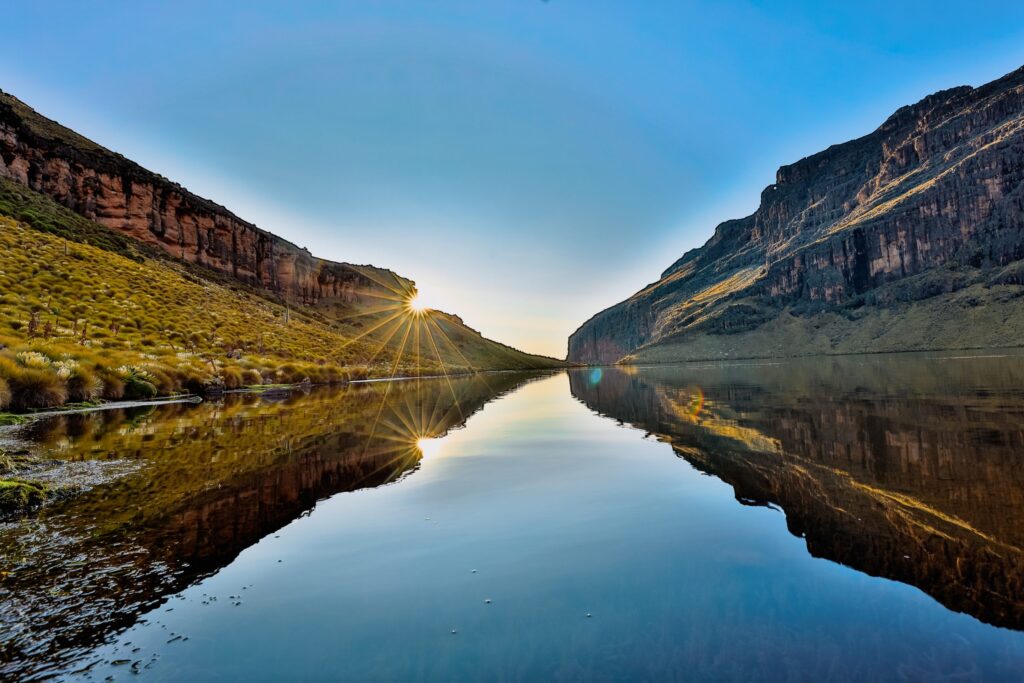
The upper mountain contains several high-altitude lakes and tarns, formed by glacial and volcanic processes over thousands of years.
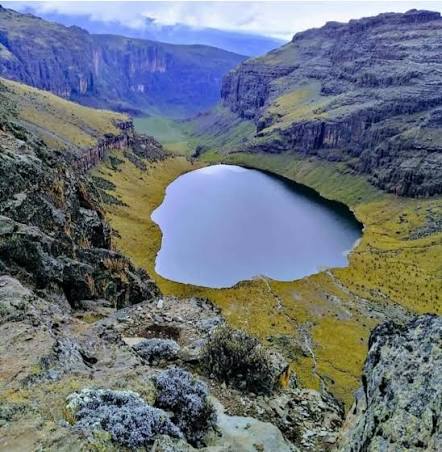
Lake Michael, Lake Ellis and other high-altitude water bodies provide dramatic foregrounds against the mountain’s rocky ridges and moorlands.
Lake Ellis, in particular, is an attractive stop for travellers who want to experience Mount Kenya without committing to a full summit climb. The surrounding landscape offers hiking, camping and photography opportunities while remaining below the highest technical sections of the mountain.
These alpine lakes also demonstrate why Mount Kenya National Park is more than a summit destination. The mountain’s valleys, cliffs, forests, glaciers and water systems are all part of the experience.
Birdwatching is another reason to spend time around Mount Kenya.
The forest zone supports a wide range of forest birds, while the moorlands and higher elevations contain species adapted to colder and more exposed conditions.
Sunbirds, raptors, mountain buzzards and other highland species can be encountered along different sections of the mountain.
Birdwatching is especially rewarding for travellers combining Mount Kenya National Park with nearby destinations such as Ol Pejeta Conservancy, Lewa Wildlife Conservancy or the Laikipia conservancies, where the transition from mountain forest to open northern landscapes produces a broader range of habitats.
You do not have to climb to Point Lenana to enjoy Mount Kenya National Park.
Lower-elevation forest walks provide an opportunity to experience the mountain’s biodiversity without undertaking a multi-day high-altitude trek.
Shorter hikes around the forest edge, waterfalls, streams and viewpoints can be incorporated into itineraries for travellers who want mountain scenery but are not interested in summit trekking.
This makes Mount Kenya National Park particularly useful for families, older travellers and safari guests who want to add a mountain experience to a Kenya itinerary without committing to several nights at altitude.
Mount Kenya is one of Kenya’s strongest destinations for landscape photography.
The mountain’s visual character changes dramatically with altitude. Lower sections are dominated by dense forest, while higher areas open into moorland and then the stark volcanic and glacial scenery of the alpine zone.
Sunrise from Point Lenana is the obvious photographic highlight, but the mountain offers strong images throughout the trek: mist moving through the forest, giant lobelias standing above the moorland, rocky valleys, alpine lakes and the changing colour of the summit peaks.
For photographers who are not interested in climbing, viewpoints around Nanyuki, the lower forest and the Chogoria side can still provide exceptional Mount Kenya images.
Camping is an important part of the Mount Kenya National Park trekking experience.
KWS lists public campsites including Kisoi Munyao, Kinondoni, Mathenge, Solo Camp and Majors Camp, while other accommodation options include mountain huts and privately operated properties.
High-altitude camping requires proper equipment because temperatures can drop sharply after sunset. A sleeping bag suitable for mountain conditions, warm layers, waterproof clothing and appropriate footwear are essential.
Travellers who prefer more comfort can combine the mountain trek with lodge accommodation before or after the climb. Nanyuki has a wide range of hotels and lodges, making it an ideal base for preparing for or recovering from a Mount Kenya trek.
Mount Kenya National Park has three principal official access gates associated with the major mountain routes.
Naro Moru Gate: The main access point for the Naro Moru Route and approximately 188 kilometres from Nairobi via the Nyeri-Nanyuki road.
Sirimon Gate: Located on the Nanyuki-Meru road and approximately 200 kilometres from Nairobi.
Chogoria Gate: Located on the Embu-Meru road and approximately 210 kilometres from Nairobi.
The correct Mount Kenya National Park gate depends on your trekking route, accommodation and itinerary. We confirm the gate and transfer arrangements before departure rather than assuming that every Mount Kenya trek begins from the same side of the mountain.
Mount Kenya National Park is easily incorporated into a central Kenya safari by road.
From Nairobi, the journey generally follows the route toward Thika and onward through the central highlands toward Nyeri and Nanyuki. The exact distance depends on which gate or accommodation property you are using.
KWS places Naro Moru Gate at approximately 188 kilometres from Nairobi, Sirimon Gate at around 200 kilometres and Chogoria Gate at around 210 kilometres.
The road journey is particularly worthwhile for travellers who want to combine Mount Kenya National Park with Nanyuki, Ol Pejeta Conservancy, Lewa Wildlife Conservancy, Samburu or other destinations in northern Kenya.
The closest commercial air access is Nanyuki Airstrip.
Flying from Nairobi reduces road time and makes Mount Kenya easier to combine with a longer Kenya safari. Guests can arrive in Nanyuki and continue by road to their lodge, camp or Mount Kenya trekking route.
Light aircraft generally have luggage restrictions, so we advise guests flying to northern Kenya to confirm their baggage allowance before departure.
Driving is the better option if Mount Kenya National Park is part of a wider central or northern Kenya safari. It allows you to combine the mountain with destinations such as Ol Pejeta, Nanyuki, Samburu and Laikipia without adding another flight.
Flying is useful when time is limited or when Mount Kenya is being combined with destinations that are far apart.
For a traveller doing a Kenya safari that includes Nairobi, Mount Kenya, Samburu and the Masai Mara, we often recommend using road transfers for the central Kenya section and flying selectively where the distances become impractical.
Mount Kenya National Park can be reached by road from Nairobi through Nanyuki, Nyeri or Chogoria, depending on the chosen route. The three principal access gates are Naro Moru, Sirimon and Chogoria. The nearest commercial airstrip is Nanyuki, which makes flying a practical option for travellers combining Mount Kenya National Park with other safari destinations.
Mount Kenya has a mountain climate that changes dramatically with altitude.
The lower slopes are relatively cool and humid compared with Kenya’s lowland safari destinations. As elevation increases, temperatures fall quickly, and conditions around the alpine zone can become cold, windy and wet even when the weather is warm in Nanyuki.
The mountain can experience rain, cloud, wind and sunshine within the same day. Trekkers should therefore prepare for changing conditions rather than relying on the weather at the base of the mountain.
Kenya generally experiences two main rainy seasons, with the long rains usually occurring from March to May and shorter rains later in the year. KWS notes that April to June is generally the wetter low season nationally, while mountain and forest parks have their own cooler and more variable conditions.
The best trekking periods are generally the drier windows, particularly January to February and July to October, although mountain weather can change at any time.
Mount Kenya has a cool and highly variable mountain climate. Conditions become progressively colder as altitude increases, with warm conditions around the lower slopes changing to cold alpine weather near Point Lenana and the technical summits. Rain, cloud, wind and sunshine can occur within a single day, so proper mountain clothing and waterproof equipment are essential.
Mount Kenya National Park is managed by the Kenya Wildlife Service, and current KWS rates list the park as a mountain park.
The current published KWS tariff lists Mount Kenya National Park at USD 70 per non-resident adult and USD 35 per non-resident child/student. African citizens are listed at USD 30 per adult and USD 15 per child/student, while East African citizens and Kenya residents pay in Kenyan shillings at the applicable resident rates.
KWS also states that guests travelling on package tours can have park entry fees included in the total safari cost, while self-organized visitors can pay through the official KWS payment system.
Because conservation fees and trekking charges can change, we confirm the applicable rates when preparing a Mount Kenya National Park quotation rather than relying on an old tariff.
The current KWS published rate for Mount Kenya National Park is USD 70 per non-resident adult and USD 35 per non-resident child/student. African citizens, East African citizens and Kenya residents have different rates. Always confirm the applicable tariff for your travel dates when planning a Mount Kenya National Park trek.
The best time to visit Mount Kenya National Park depends on what you want to do.
For trekking, the drier months are generally preferable because trails are more manageable and summit conditions can be clearer. January and February are popular for mountain trekking, while July through October can also provide good conditions.
The rainy seasons can produce spectacular scenery, with greener vegetation, fewer trekkers and dramatic cloud formations, but wet trails and reduced visibility can make the mountain more challenging.
For wildlife and forest experiences, Mount Kenya can be visited throughout the year, although conditions vary considerably between the lower forest and the summit zone.
If reaching Point Lenana is your priority, we recommend selecting the travel dates around the best available mountain-weather window rather than simply choosing a month based on general Kenyan safari conditions.
January to February and July to October are generally among the better periods for Mount Kenya trekking because they tend to offer drier conditions. The mountain remains a year-round destination, but weather can change rapidly at altitude, and the best dates depend on the route, trekking duration and current mountain conditions.
Two nights can work for a short mountain experience or lower-altitude visit, but it is not enough for most travellers who want to climb Point Lenana properly.
Three nights is possible for experienced hikers following a faster itinerary, but the limited acclimatization time makes it less suitable for many first-time high-altitude trekkers.
Four nights is a much better starting point for a Mount Kenya National Park trek to Point Lenana. It allows the body more time to adjust to altitude and gives the itinerary greater flexibility if weather affects the summit attempt.
Five nights or more is preferable for travellers who want a slower ascent, better acclimatization, additional hiking days or a traverse using different routes.
For guests who are not climbing, two or three nights around Nanyuki and the lower Mount Kenya ecosystem can provide a rewarding mountain experience without the demands of a summit trek.
A four- to five-night itinerary is a good starting point for a Mount Kenya National Park trek to Point Lenana, particularly for first-time high-altitude trekkers. Shorter itineraries are possible for experienced hikers, while longer itineraries provide better acclimatization and more flexibility for weather.
Mount Kenya National Park offers one of the most dramatic changes of scenery available on a Kenya safari.
You can begin the day among montane forest and finish it surrounded by giant lobelias and rocky alpine slopes. The following morning, you can stand above the clouds at almost 5,000 metres.
The mountain is also culturally important to communities living around it, and its rivers and forests provide water and ecological services far beyond the boundaries of the national park.
For adventure travellers, Mount Kenya provides a serious trekking challenge without requiring every visitor to be a technical mountaineer.
For photographers, it provides extraordinary landscapes.
For safari travellers, it offers a completely different experience from the Masai Mara, Amboseli and Samburu.
And for travellers who simply want to see one of Africa’s great mountains, Mount Kenya National Park delivers without requiring a summit attempt.
Mount Kenya National Park costs vary significantly depending on whether you are visiting for a short nature experience, a multi-day trek or a combined Kenya safari.
A lower-altitude Mount Kenya experience using lodge accommodation can be considerably less expensive than a full mountain expedition because there are fewer guide, porter, camping and logistics costs.
A multi-day Point Lenana trek costs more because the package may include mountain guides, porters, camping equipment, meals, park conservation fees, transfers and additional logistics.
As a broad planning guide, travellers should budget separately for accommodation, park fees, transport and trekking services rather than comparing Mount Kenya directly with a standard game-drive safari.
At Afrikan Accent Adventures, we build the Mount Kenya National Park quotation around the route, number of trekking days, accommodation category and whether the mountain forms part of a larger safari itinerary.
The cost of a Mount Kenya National Park trip depends mainly on the trekking route, number of days, accommodation, transport and whether you are climbing Point Lenana. A simple lower-altitude stay costs less than a multi-day summit trek because trekking packages require mountain guides, porters, meals and specialist logistics.
We build Mount Kenya National Park into Kenya itineraries in several different ways.
A Mount Kenya trekking package focuses on reaching Point Lenana and experiencing the mountain’s different ecological zones.
A Mount Kenya and Ol Pejeta itinerary combines the mountain with one of central Kenya’s strongest wildlife destinations, creating a trip that moves from high-altitude landscapes to open savannah and rhino conservation.
A Mount Kenya and Samburu safari combines the mountain with the wildlife and dry northern landscapes of Samburu.
A Mount Kenya and Masai Mara itinerary works particularly well for travellers who want both adventure and classic wildlife viewing.
We can also build Mount Kenya National Park into longer Kenya circuits including Lake Nakuru, Amboseli, Tsavo or the Laikipia conservancies.
The important point is that Mount Kenya does not have to be treated as a standalone mountain expedition. It can be one component of a wider Kenya safari.
Accommodation around Mount Kenya ranges from mountain campsites and huts to comfortable lodges and luxury properties around Nanyuki and the surrounding conservancies.
For trekkers, accommodation on the mountain is generally basic and functional, with camps and mountain huts providing a place to sleep during the ascent.
Before and after the trek, travellers can stay in Nanyuki or around the mountain foothills. This is where we normally recommend adding a comfortable lodge night, particularly before a summit attempt.
KWS lists accommodation options associated with the Mount Kenya ecosystem including Sirimon Bandas, Batian Guest House and a range of public campsites, while privately operated properties include Rutundu Rock Cabins and other accommodation around the mountain.
For luxury travellers, Mount Kenya can also be combined with high-end properties in Nanyuki, Laikipia and the surrounding conservancies.
Mount Kenya and Samburu offer completely different safari experiences.
Samburu is a wildlife destination famous for the Samburu Special Five, elephants, dry northern landscapes and community conservancies.
Mount Kenya National Park is a mountain destination dominated by altitude, forests, moorlands and alpine scenery.
The two destinations work extremely well together. A traveller can spend several days trekking or exploring Mount Kenya before travelling north into Samburu for game drives.
This combination is particularly attractive for repeat visitors to Kenya who want more than the standard Mara itinerary.
The Masai Mara is Kenya’s classic wildlife destination, famous for its predators, open grasslands and the Great Wildebeest Migration.
Mount Kenya National Park offers none of that scale of open savannah wildlife viewing. Instead, it provides mountain trekking, dramatic scenery and a completely different ecosystem.
We do not recommend choosing between the two without considering what you want from the trip.
If wildlife is your priority, choose the Masai Mara.
If adventure and mountain landscapes are your priority, choose Mount Kenya.
If you have enough time, combine them.
Amboseli is famous for elephants and views of Mount Kilimanjaro.
Mount Kenya National Park is about experiencing the mountain itself.
The contrast is particularly interesting. In Amboseli, Mount Kilimanjaro forms the backdrop to wildlife viewing across open plains. In Mount Kenya National Park, you climb into the mountain ecosystem and experience the forest, moorland and alpine zones directly.
A Kenya itinerary combining Amboseli and Mount Kenya therefore provides two very different mountain experiences.
Tsavo is one of Kenya’s largest wilderness areas, known for vast landscapes, red-earth elephants and a sense of remote wilderness.
Mount Kenya is much more concentrated around a single mountain ecosystem.
The two destinations appeal to different travellers. Tsavo is ideal for extended game drives and large-scale wilderness experiences, while Mount Kenya is better suited to travellers who want hiking, trekking and dramatic mountain scenery.
Combining the two can work well on a longer Kenya itinerary, particularly for travellers arriving from or departing toward the Kenyan coast.
Mount Kenya National Park is not simply a tourist attraction. It is part of an important ecological system that supports forests, wildlife, rivers and communities across central Kenya.
UNESCO identifies the Mount Kenya property as an important example of ecological and biological processes, while the wider protected area includes connections to Lewa Wildlife Conservancy and Ngare Ndare Forest Reserve that help maintain wildlife movement across the landscape.
Responsible trekking therefore matters.
Visitors should remain on established trails, avoid leaving waste behind, respect wildlife and follow the instructions of mountain guides and park authorities.
KWS specifically advises visitors to stay on established roads and trails, observe speed limits where applicable, maintain a safe distance from wildlife and remove their rubbish from the park.
On a Mount Kenya trek, responsible tourism also means respecting the mountain itself. Do not remove plants or rocks, do not disturb wildlife and avoid unnecessary damage to fragile alpine vegetation.
Altitude is the most important safety consideration on a Mount Kenya National Park trek.
The mountain rises from forested lower slopes to almost 5,000 metres at Point Lenana, and the human body needs time to adjust to decreasing oxygen levels.
Symptoms of altitude sickness can include headache, nausea, dizziness, fatigue and shortness of breath. A responsible itinerary allows adequate acclimatization and does not treat reaching the summit as more important than a traveller’s health.
Our guides monitor guests throughout the trek and adjust the pace where necessary.
Weather is another consideration. Mountain conditions can change quickly, particularly above the forest zone. Warm layers, waterproof clothing, gloves, a hat, suitable hiking boots and a sleeping bag appropriate for cold conditions should be considered essential equipment.
The biggest mistake we see on Mount Kenya is trying to make the mountain fit into an unnecessarily short itinerary. A traveller may save one day on paper, but rushing the ascent makes altitude and fatigue much harder to manage. If Point Lenana is the goal, we would rather give you an additional acclimatization day than promise a fast summit and leave no room for the mountain to behave like a mountain.
Nicholas Wangithi, Director & Founder
From the forests below the equator to the glaciers and rocky summits above the clouds, Mount Kenya National Park offers one of the most complete mountain experiences in East Africa.
You can visit Mount Kenya for a short forest escape, spend several days exploring the lower slopes, trek toward Point Lenana or combine the mountain with a wider Kenya safari.
We build Mount Kenya National Park itineraries around the traveller rather than forcing every guest onto the same route. Some guests want the challenge of reaching Point Lenana. Others want a comfortable lodge near Nanyuki with mountain views and day hikes. Others want to combine Mount Kenya with Ol Pejeta, Samburu or the Masai Mara.
The right itinerary depends on your fitness, available time, preferred accommodation and what you want to experience.
Speak to Afrikan Accent Adventures about building a Mount Kenya National Park safari around your travel dates and interests.
Mount Kenya is not simply a mountain you see from the road. It is an ecosystem you climb into, a landscape that changes with every kilometre and one of the places in Kenya where the journey itself becomes the destination.
From snow-capped peaks and alpine lakes to ancient forests and world-class trekking routes, Mount Kenya National Park offers an unforgettable journey through one of Africa's most spectacular mountain landscapes. Whether you're summiting Point Lenana, spotting elephants in the forest or enjoying luxury mountain lodges, every moment promises adventure, scenery and discovery.
Point Lenana is the most accessible summit on Mount Kenya and one of Africa's most rewarding trekking experiences. Standing at 4,985 metres,…
For experienced mountaineers, Batian and Nelion offer challenging rock climbs that rank among Africa's finest alpine climbing routes. Why it stands out:…
Mount Kenya hosts rare ecosystems found nowhere else on earth. Visitors encounter: Giant Lobelias Giant Groundsels Alpine flowers Heather forests
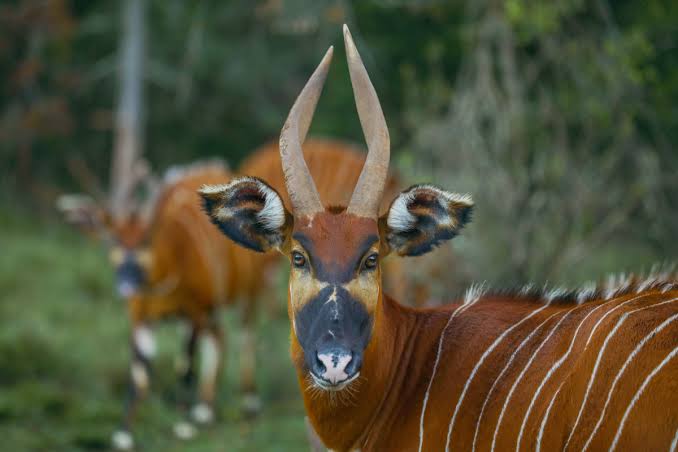
The lower slopes support rich wildlife populations including: African Elephants Buffaloes Bushbucks Colobus Monkeys Sykes Monkeys Leopards Hyenas
The mountain contains spectacular lakes including: Lake Michaelson Ellis Lake Alice Lake
Few places in Africa offer mountain sunrises comparable to Point Lenana. Why it stands out: Golden views over Kenya's plains. Incredible cloud…
The park protects one of Africa's most important ecological and hydrological systems. Why it stands out: Global conservation significance. Exceptional biodiversity. Supports…
Popular routes include: Sirimon Route Chogoria Route Naro Moru Route Burguret Route Why it stands out: Options for all fitness levels. Diverse…
From value camps to premium lodges — we match every stay to your style and budget.
Every season has its magic — here's what to expect when, so you can travel at your perfect time.
Everything you need to know before you go — and we’ll guide you through every step.
Most international visitors require an Electronic Travel Authorization (eTA) before entering Kenya. Applications are completed online before travel and approval is typically issued within a few days. Visitors should ensure their passport is valid for at least six months beyond their travel dates.
No vaccinations are mandatory for most travellers arriving directly from Europe, North America or Asia. However, Yellow Fever vaccination may be required if arriving from or transiting through countries with Yellow Fever risk. Travellers are advised to consult their healthcare provider regarding malaria prevention for lower altitude areas and routine travel vaccinations.
Mount Kenya National Park is located approximately 175 km from Nairobi and can be reached by road in 3 to 4 hours via Nanyuki, Naro Moru, or Chogoria. Charter and scheduled flights operate from Nairobi's Wilson Airport to nearby airstrips including Nanyuki and Lewa Downs for luxury fly-in itineraries.
The local currency is the Kenyan Shilling (KES), although most lodges, hotels, and tour operators accept major international credit cards including Visa and Mastercard. US Dollars are widely accepted for park fees and safari services, particularly newer notes issued after 2009
Mount Kenya experiences diverse climatic conditions due to its elevation. Lower slopes remain mild and pleasant throughout the year, while summit areas can experience freezing temperatures and snowfall. Daytime temperatures generally range from 10°C to 25°C, while high-altitude overnight temperatures may fall below 0°C.
Kenya uses Type G three-pin square plugs with a standard voltage of 240V and 50Hz frequency, identical to the United Kingdom system. Most lodges provide charging facilities, although mountain camps may have limited electricity availability during certain hours.
Kenya operates on East Africa Time (EAT) which is UTC +3 throughout the year. Kenya does not observe daylight saving time, making travel planning straightforward regardless of the season.
Mount Kenya National Park is considered a safe destination for tourists and climbers when travelling with licensed guides and registered operators. Visitors should follow guide instructions, prepare adequately for altitude conditions, and use proper trekking equipment. Wildlife encounters are uncommon on trekking routes but professional guides are trained to manage any situations safely.
Mount Kenya offers climbing experiences for all fitness and skill levels. The most popular summit, Point Lenana (4,985m), is considered a trekking peak and does not require technical climbing skills or mountaineering experience. Most reasonably fit travellers can reach the summit with proper acclimatization and guidance.
The higher peaks, Batian (5,199m) and Nelion (5,188m), require technical rock climbing skills, specialized equipment and certified mountain guides.
For most visitors, Point Lenana provides the perfect balance of challenge, achievement, and spectacular scenery.
The ideal duration depends on your objectives:
2–3 Days: Suitable for lower-altitude hikes and forest exploration.
4 Days: Recommended minimum for reaching Point Lenana.
5 Days: The most popular itinerary, allowing better acclimatization and a more enjoyable pace.
6–7 Days: Ideal for photographers, experienced trekkers and technical climbers.
Most visitors booking a summit trek choose a 5-day itinerary using the Sirimon and Chogoria route combination.
Sirimon Route
Most gradual ascent.
Best for acclimatization.
Suitable for beginners.
Chogoria Route
Considered the most scenic route.
Features waterfalls, lakes, and dramatic valleys.
Excellent for photography.
Naro Moru Route
Fastest route to Point Lenana.
Most popular among local climbers.
Shorter but steeper.
Yes. Kenya Wildlife Service strongly recommends using licensed guides and many routes require registered guides and porters for safety and navigation.
Professional guides provide:
Navigation assistance.
Altitude monitoring.
Emergency support.
Local wildlife knowledge.
Trek logistics and camp management.
Most climbing packages include guides, cooks, and porters.
Altitude sickness is one of the biggest challenges visitors face due to the mountain's high elevation.
Common symptoms include:
Headaches
Fatigue
Nausea
Shortness of breath
Difficulty sleeping
To reduce the risk:
Choose a longer itinerary.
Drink plenty of water.
Avoid alcohol before climbing.
Ascend gradually.
Follow your guide's instructions.
Most trekkers experience mild symptoms, but serious cases are uncommon with proper acclimatization.
The best climbing conditions occur during the dry seasons:
☀️ January to March
Clear skies.
Excellent summit visibility.
Stable weather conditions.
🌤️ July to October
Cool temperatures.
Less rainfall.
Popular climbing season.
The rainy seasons between April-May and November can make trails muddy and reduce visibility, although the landscapes become exceptionally green and beautiful.
Absolutely. Thousands of first-time trekkers successfully reach Point Lenana every year.
Success depends more on:
Fitness preparation.
Proper acclimatization.
Suitable clothing and equipment.
Choosing an appropriate itinerary.
Many operators specifically offer beginner-friendly climbing packages.
The lower slopes and forest zones support impressive wildlife populations including:
African elephants
Cape buffalo
Bushbucks
Giant forest hogs
Black-and-white colobus monkeys
Sykes monkeys
Hyenas
Leopards
Tree hyraxes
Birdwatchers may also encounter over 130 bird species, including sunbirds, eagles, and turacos.
Temperatures can vary dramatically from warm rainforest conditions to freezing alpine environments.
Essential items include:
Waterproof hiking boots.
Thermal clothing layers.
Warm jacket and gloves.
Waterproof rain gear.
Sleeping bag suitable for sub-zero temperatures.
Sunscreen and sunglasses.
Trekking poles.
Water bottles or hydration packs.
Summit temperatures often fall below freezing, especially before sunrise.
Yes. Older children and teenagers regularly complete Point Lenana climbs successfully.
Most operators recommend:
Minimum age of 10–12 years for summit attempts.
Good physical fitness.
Flexible itineraries for younger climbers.
Families with younger children often enjoy lower-altitude hikes, forest walks, and lodge experiences instead of summit treks.
Yes. The highest peaks of Mount Kenya retain glaciers and snowfields throughout the year, although climate change has significantly reduced glacier coverage over recent decades.
Snowfall occasionally occurs at high elevations during colder periods, particularly near Batian and Nelion peaks.
Many visitors are surprised to discover permanent snow almost directly on the Equator.
Without question. Mount Kenya offers experiences found nowhere else in East Africa:
✅ Africa's second-highest mountain
✅ UNESCO World Heritage Site
✅ Spectacular alpine scenery
✅ World-class trekking routes
✅ Unique wildlife encounters
✅ Luxury mountain lodges
✅ Glaciers and equatorial snow
✅ Exceptional photography opportunities
Whether you are seeking adventure, wildlife, relaxation, or luxury, Mount Kenya National Park delivers one of Kenya's most memorable travel experiences.
The driver-guide’s daily rate, the camp tip box, the dollar-note rule that catches people at the last camp…
Read more →
Kenya's US$50,000 travel insurance rule is frozen, not struck down. Here's the cover that actually moves you, treats…
Read more →
Kenya’s parks don’t set a minimum age, but camps, balloon operators and mosquitoes do, and this is how…
Read more →Tell us what you’d love to see and a local specialist will design a tailor-made itinerary around you — no obligation, reply within 24 hours.