Masai Mara Conservancies Explained: Which One Is Right for You?
A dozen private conservancies and conservation areas border the Masai Mara National Reserve, and no two of them offer the same safari.
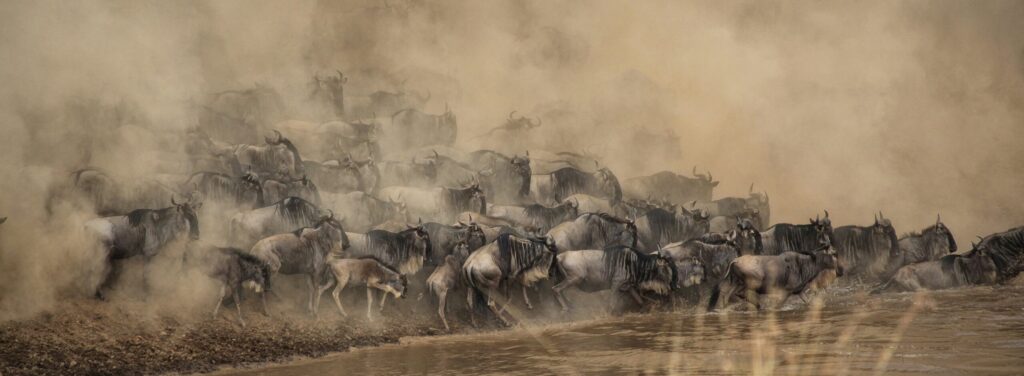
Dramatic spectacle during the Great Migration, showcasing the raw wilderness surrounding Masai Mara conservancies.
Ask a guide at Sekenani Gate at six in the morning where he is headed, and the answer tells you everything about how the Mara actually works. Some vehicles turn left into the Masai Mara National Reserve, toward the crowds building around the crossing points. Others turn away from the gate entirely, toward Naboisho or Mara North, where the track narrows, the tour vans disappear, and the only rule left standing is the one that specific conservancy has decided to set. Same ecosystem. Often the same lion prides. Two completely different mornings.
We have built enough Masai Mara itineraries to know most travellers do not realize this choice exists until we put it in front of them. They ask us for “a camp in the Masai Mara” the way someone asks for “a hotel in Nairobi”, assuming one product, one rulebook, one experience. Then we ask what they actually want. A vehicle that can leave the track to follow a hunting cheetah. A spotlight and a night drive after the reserve gates have shut for the day. A guide who can pull off the road and simply wait, no queue of seven other vehicles jostling for the same sighting. The moment those answers come out, the conversation stops being about the Masai Mara in general and starts being about one very specific piece of it.
This is the conversation we have with almost every guest before we confirm a single night. Not because the reserve is the wrong answer. It holds the river crossings and a density of resident wildlife nothing else in Kenya matches. But the conservancies that ring it, Mara North, Naboisho, Olare Motorogi, Ol Kinyei, Enonkishu, Olderikesi, Olarro, Lemek, Siana, Pardamat, Partakilat and a handful of smaller concessions besides, are where a different safari happens entirely, one built on lower vehicle numbers, longer sightings and freedoms the reserve simply does not grant.
What follows is the version of that conversation we would have with you directly, at our desk or over WhatsApp. Every conservancy explained on its own terms, what it is genuinely good for and where it falls short, plus a look at real Afrikan Accent Adventures safaris built on both sides of the boundary. No universal winner. Just the information we would want if we were the ones booking.
| QUICK ANSWER | Which Masai Mara conservancy is right for you? There is no single best conservancy. Choose Mara North or Naboisho for a strong all-round mix of wildlife, migration access and camp variety. Choose Olare Motorogi for the highest concentration of big cats. Choose Ol Kinyei or Enonkishu for privacy, walking safaris and a smaller footprint. Choose Olderikesi for remoteness. Match the conservancy to your priority, not the other way round. |
At a Glance:
- Location: Private conservancies border the Masai Mara National Reserve to the north, northeast, east and southeast in Narok County, Kenya
- Number of conservancies covered: Seven major concessions profiled in depth (Mara North, Naboisho, Olare Motorogi, Ol Kinyei, Enonkishu, Olderikesi, Olarro), plus Lemek, Siana, Partakilat and the Pardamat wildlife corridor
- Combined conservancy land: Well over 400,000 acres of community-owned wildlife land leased from Maasai landowners across the wider Mara ecosystem
- Reserve entry fee (2026): USD 100 per non-resident adult per day from January to June, rising to USD 200 per day from July to December, set by Narok County
- Typical conservancy fee: Roughly USD 80 to 150 per adult per night, usually bundled into the camp rate rather than paid separately
- What conservancies allow that the reserve does not: Night game drives, off-road driving, guided walking safaris and a strict cap on vehicles per sighting
- Best for the Great Migration: Mara North and Olare Motorogi, both bordering the dispersal routes on the reserve’s northern and eastern edges
- Getting there: Scheduled flights from Nairobi’s Wilson Airport to conservancy airstrips, or a road transfer of five to six hours from Nairobi
Key Highlights:
- A conservancy is leased Maasai-owned land, not a subdivision of the national reserve, and it runs under its own rules.
- Conservancies allow night drives, off-road tracking and walking safaris. The reserve allows none of these.
- Vehicle numbers are capped per conservancy, often to one vehicle per sighting, so a leopard in Naboisho is not surrounded by fifteen cars.
- Mara River crossings happen inside the reserve, not inside a conservancy, whichever camp you choose.
- Resident wildlife, permanent lion prides, leopards and elephant herds, means conservancies deliver strong game viewing even outside migration season.
- Tourism revenue in the conservancies pays Maasai landowners a direct monthly lease income, which is the mechanism that keeps this land wild rather than fenced and farmed.
What Is a Masai Mara Conservancy?

A Masai Mara conservancy is privately leased land owned by Maasai families and communities, set aside for wildlife and low-density tourism instead of grazing or cultivation. It is not a section of the Masai Mara National Reserve, and it is not managed by Narok County. Each conservancy is run by its own trust or management company, usually a partnership between the landowners and the safari camps operating on that land.
The mechanism is straightforward. Camps and tour operators pay Maasai landowners a fixed monthly lease fee for access to their land, whether or not a single guest stays that month. Landowners retain title to their land. In return for that guaranteed income, families agree to remove or reduce livestock grazing, cap the number of permanent structures, and follow strict rules on vehicle numbers and behaviour toward wildlife. This is why you will hear the phrase “land for wildlife” used in the Mara ecosystem. Nobody sells the land. It is leased, typically for periods of fifteen to twenty five years, which gives both the landowners and the camps a long enough horizon to plan around.
The tourism model that pays for all of this is deliberately restrictive. Most conservancies limit density to something like one guest bed per 350 to 700 acres, compared with far higher bed density inside the national reserve. Fewer beds means fewer vehicles at any sighting, which is the single biggest reason travellers who have done both say a conservancy safari feels different from a reserve safari, even when the animals on display are the same species.
Conservation and community benefit are not an afterthought bolted onto the tourism product. They are the reason the conservancy exists. Lease payments fund household incomes, school fees, healthcare access and, in several conservancies, direct bursary programs for local children. Camps also draw the large majority of their staff, guides, rangers and hospitality teams from the surrounding Maasai communities. Naboisho Conservancy, for example, sources around 95 percent of its camp workforce locally.
| EXPERT NOTE The question we get most often is whether a conservancy is simply a quieter, pricier version of the reserve. It is not. The activities allowed, the vehicle density and the ownership model are all fundamentally different. Once a traveller understands that, the choice of conservancy becomes about matching their priorities, not about upgrading. — Kibara Mugo, Safari Writer and East Africa Specialist, Afrikan Accent Adventures |
Masai Mara National Reserve vs Conservancies
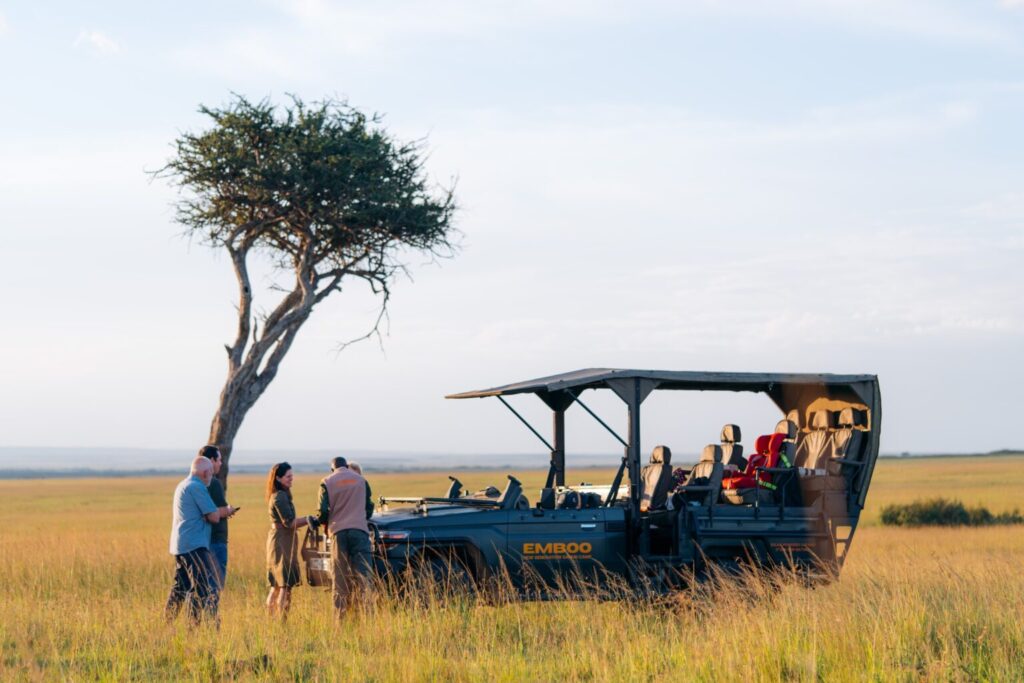
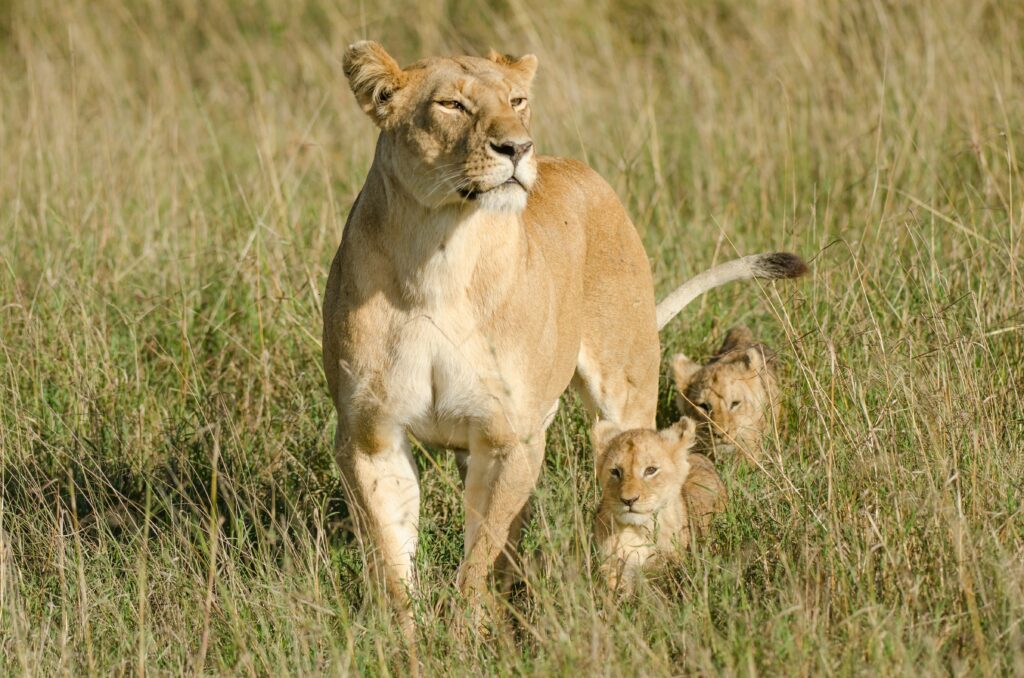
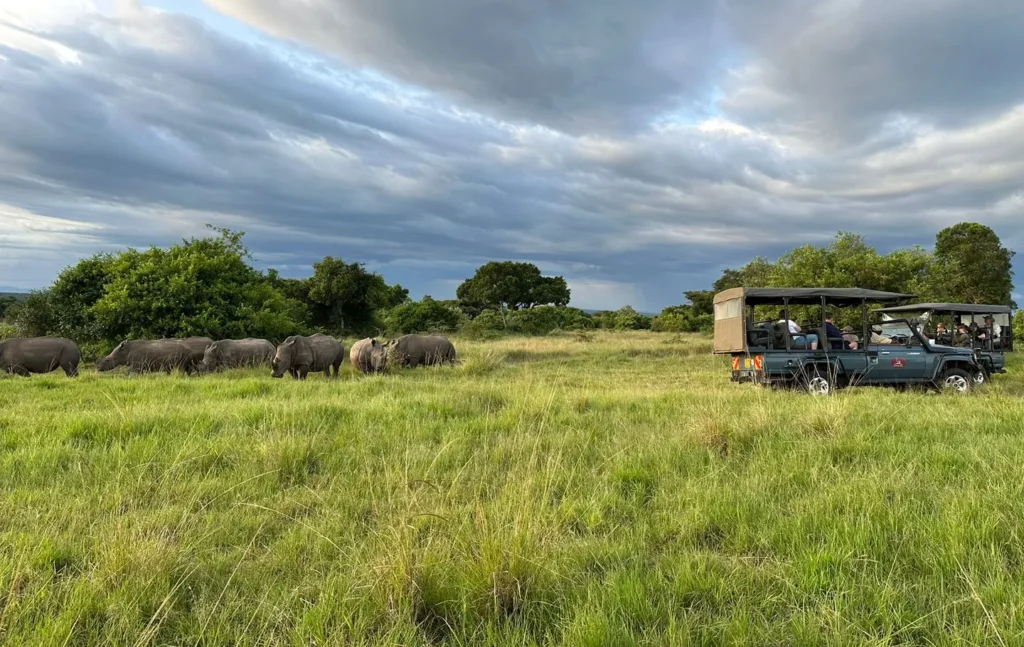
The Masai Mara National Reserve is the core protected area, managed by the Narok County Government (with the western Mara Triangle sector managed separately by the Mara Conservancy). It is open to any visitor who pays the daily entry fee, which means higher and more variable vehicle numbers at popular sightings, particularly around the Mara River crossing points during peak migration months. The conservancies sit outside this boundary, are privately run, and restrict access to guests staying at their partner camps only.
| Factor | Masai Mara National Reserve | Private Conservancies |
| Land management | Narok County Government (Mara Triangle: Mara Conservancy) | Maasai landowners, leased to camps via a conservancy trust |
| Who can enter | Any visitor paying the daily gate fee | Only guests staying at a partner camp |
| Night game drives | Not permitted | Permitted in most conservancies |
| Off-road driving | Not permitted | Permitted in most conservancies, rules vary by concession |
| Walking safaris | Not permitted | Permitted in most conservancies with an armed guide |
| Vehicle density at sightings | Can be high, especially at river crossings in peak season | Capped, often one vehicle per sighting or similar limits |
| Mara River crossings | Yes, this is where they happen | Not directly, guests transfer into the reserve to see them |
| Community revenue model | County-collected entry fees | Direct monthly lease payments to individual landowners |
| Typical atmosphere | Iconic scenery, more vehicles, larger camps and lodges | Lower density, smaller camps, more flexible activities |
Neither side of this comparison is a downgrade. The reserve delivers scale, the highest concentration of resident wildlife in the Mara-Serengeti ecosystem, and the only access point for the dramatic river crossings at spots like Lookout Hill, Serena Crossing and Paradise Plains in the Mara Triangle. The conservancies deliver flexibility and privacy that the reserve’s public-access model cannot. Many of our itineraries combine both, basing guests in a conservancy for two or three nights and adding a day trip or a further stay inside the reserve for the crossings.
Conservancy-by-Conservancy Guide
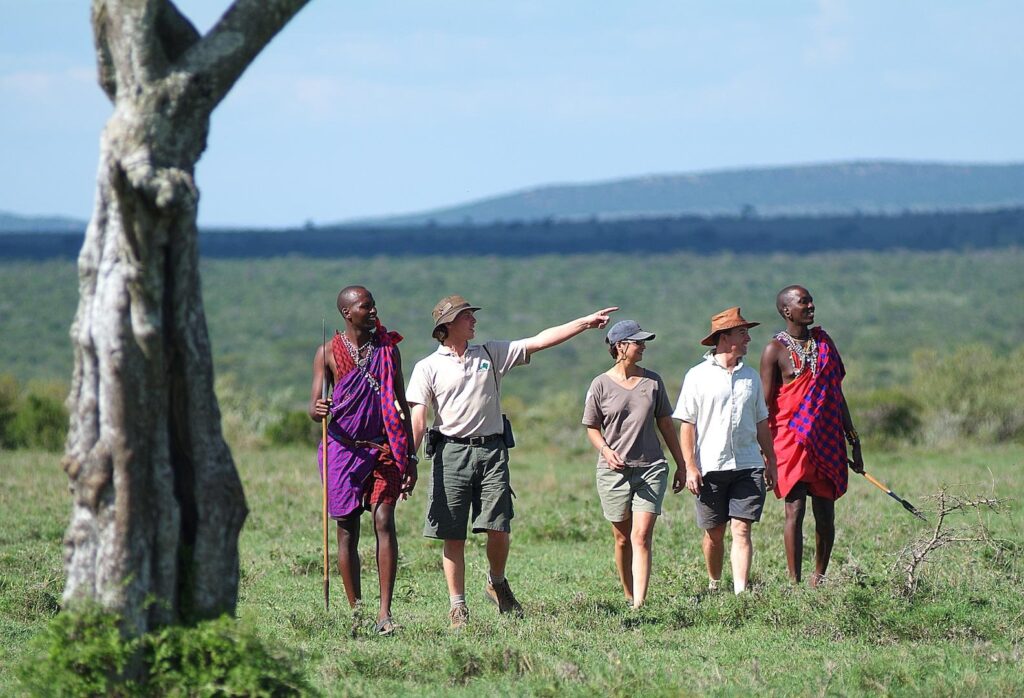
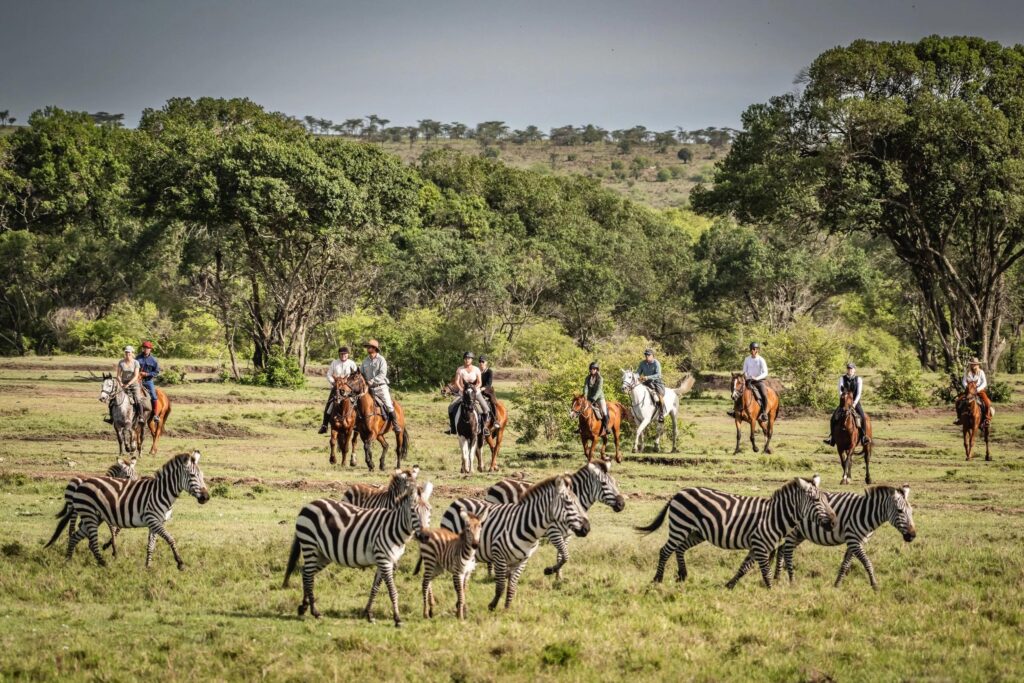
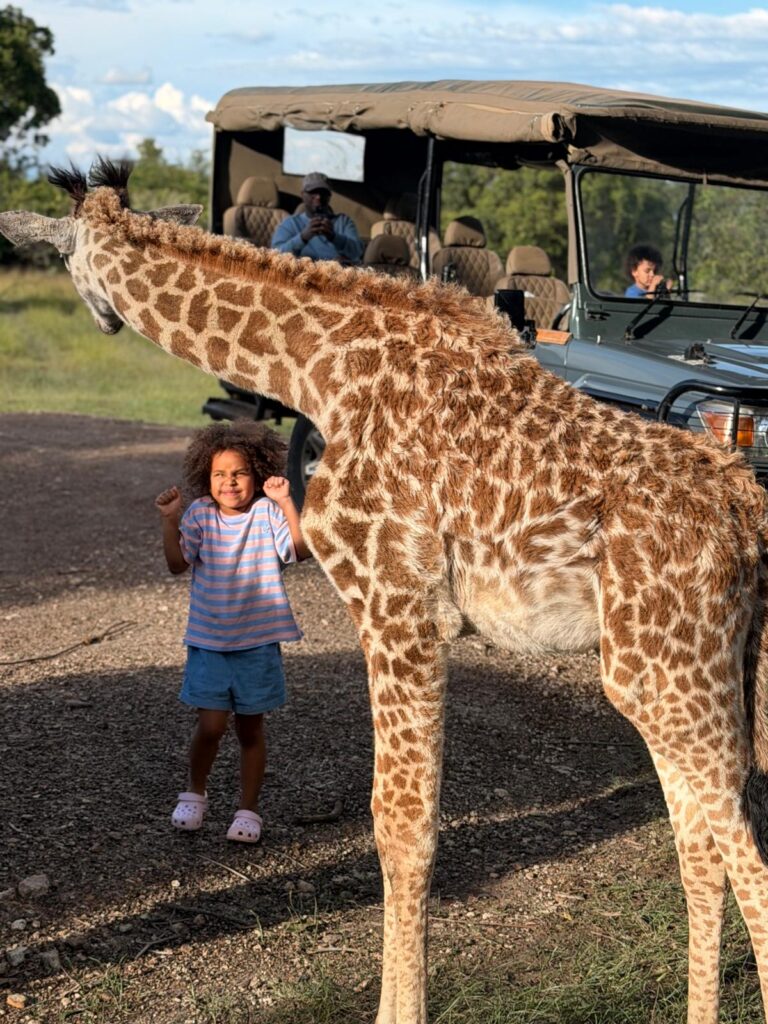
Not every conservancy plays the same role. Some are built around big cat density, others around privacy, others around a specific conservation story. Here is what actually distinguishes each one.
Mara North Conservancy
Location: The northwestern border of the Masai Mara National Reserve, roughly 70,000 acres (figures across sources range from about 69,000 to 74,000 acres).
Mara North was formed in 2009 when more than 800 Maasai landowners pooled land that had been overgrazed under the old ranching system. It is the largest of the northern conservancies and, with around eleven or twelve partner camps, also the one with the widest choice of accommodation, from Elephant Pepper Camp and Karen Blixen Camp to Ngare Serian and Saruni Mara. Its rocky outcrops, including the area known as Leopard Gorge, make it one of the best places in the wider ecosystem to find denning leopards.
Mara North sits directly on a wildebeest dispersal route, so herds moving north out of the reserve and the Mara Triangle pass through it during the July to October peak. The dramatic river crossings themselves happen further south and west, inside the reserve, so guests who want both come here for the resident game and take a day into the reserve for the crossings.
Best for: First-time safari travellers who want a strong all-round mix of resident wildlife, migration season activity and a wide choice of camp styles and budgets.
Naboisho Conservancy
Location: North of the reserve, adjoining Mara North, roughly 50,000 acres (some recent sources cite up to 60,000 acres as the conservancy has grown).
Naboisho means “coming together” in Maa, and the name describes how it was built. In 2010, around 500 Maasai landowners agreed to lease their land into a single conservancy under a 25-year agreement, a model that has since expanded to include more families. It is now known for one of the highest lion densities anywhere in Africa, with estimates putting well over 100 lions, including one of the continent’s largest documented prides, resident within its boundaries.
Camps here, including Naboisho Camp, Kicheche Valley Camp and Encounter Mara, sit on generous private concessions with strict vehicle limits. Guides are drawn heavily from the Koiyaki Guiding School, a local training program that has certified Maasai guides working across the northern conservancies, and camp staffing is overwhelmingly local.
Best for: Travellers who prioritize big cats above everything else, and who want a conservancy with a serious, long-running conservation research program attached to it.
| EXPERT NOTE Night drives change the entire rhythm of a safari. In the reserve you are back at camp before dark. In a conservancy like Naboisho or Mara North, dusk is often when the sightings get interesting, hyena packs moving out, genets appearing in the spotlight, lions starting to hunt. If a guest tells us they want to actually feel the bush at night, we point them toward a conservancy every time. — Nicholas Wangithi, Director & Founder, Afrikan Accent Adventures |
Olare Motorogi Conservancy
Location: Northeastern border of the reserve, roughly 33,000 to 35,000 acres, formed from the merger of the former Olare Orok and Motorogi conservancies.
Olare Motorogi is one of the oldest and most tightly managed conservancies in the ecosystem, and it has built its reputation on big cat density. Research on Mara lion populations has repeatedly found Olare Motorogi and neighbouring Ol Kinyei to have among the highest lion densities recorded in Africa. Only five camps operate here, Mahali Mzuri, Mara Plains Camp, Porini Lion Camp, Kicheche Bush Camp and Olare Mara Kempinski, with a combined bed count kept deliberately low.
Because vehicle numbers per sighting are so tightly capped, guides here can often stay with a hunting cheetah or a denning leopard far longer than would be practical in a busier setting. The conservancy’s position on the reserve’s eastern flank also puts it in the path of migration herds moving toward the Mara River during peak season.
Best for: Travellers whose main priority is big cats, and for luxury travellers who want a small number of high-end camps with minimal vehicle traffic.
The camps that get the closest, longest sightings are usually the ones with the fewest vehicles allowed to show up at all.
Ol Kinyei Conservancy
Location: Southeast of the reserve, between the national reserve and the Loita migratory plains, 18,641 acres.
Established in 2005, Ol Kinyei was the first conservancy formed in the Mara ecosystem after the pioneering Ol Choro Oiroua trust, and it remains entirely Maasai owned, run in partnership with GameWatchers Safaris and its Porini camps. Its award-winning conservation model earned it a place on the IUCN Green List between 2018 and 2023. Only two small permanent camps and two mobile camps operate inside its boundary, which keeps the wilderness feel genuinely uncrowded.
Ol Kinyei carries a resident lion pride, healthy leopard numbers, elephant and buffalo, and more than 300 recorded bird species. Because it sits on a historic migratory corridor toward the Loita plains, it also sees dispersal activity outside the main July to October migration window.
Best for: Travellers who want genuine exclusivity and a small camp count, and who are comfortable trading some camp variety for a quieter, more intimate conservancy.
Olderikesi Conservancy
Location: The remote southeastern edge of the reserve, near the Tanzanian border and the Serengeti. Reported acreage varies significantly by source, from around 18,000 to nearly 25,000 acres.
Olderikesi grew out of the conservation work of the Cottar’s Wildlife Conservation Trust, linked to Cottar’s 1920s Camp, one of the oldest safari operations in Kenya. It is one of the least visited conservancies in the ecosystem simply because so few camps operate there, which is precisely its appeal for travellers chasing solitude. Wildlife includes strong lion, leopard and cheetah populations, with occasional sightings of black rhino and African wild dogs.
Access is more remote than the northern conservancies, and camp choice is limited to a handful of properties. This is not the conservancy for travellers who want a wide pick of accommodation styles or short transfer times.
Best for: Experienced safari travellers who have already done the Mara’s busier corners and now want maximum remoteness, even at the cost of camp variety.
Enonkishu Conservancy
Location: The northernmost point of the Greater Mara ecosystem, roughly 6,000 acres, the smallest conservancy covered in this guide.
Enonkishu, meaning “place of healthy cattle” in Maa, tells a different conservation story from its neighbours. Rather than removing livestock from the land, it pioneers regenerative grazing, managing cattle herds to restore grass cover and soil health in a way that benefits wildlife as well as pastoralist livelihoods. The Mara Training Centre operates inside the conservancy, running practical courses in regenerative land management for the wider region.
Being small and less focused on classic Big Five density, Enonkishu suits travellers who want a distinctive story alongside their wildlife, horse riding, e-biking and hands-on conservation activities that most conservancies do not offer. Camps here, such as House in the Wild, are boutique and family run rather than large luxury operations.
Best for: Travellers interested in regenerative conservation and community-led land management, and those who want horse riding or cycling safaris alongside game drives.
Olarro Conservancy
Location: Further southeast, in the Loita Hills area on the Maji Moto Group Ranch, at some distance from the core reserve boundary. Acreage is reported inconsistently across sources, from roughly 7,000 acres up to 24,000 acres depending on which section (Olarro North, Olarro South, or the wider group ranch) is being described. We flag this explicitly because Olarro’s figures are the least consistent of any conservancy in this guide.
Olarro is a different kind of product from the other conservancies in this guide. It sits in hill country rather than open plains, and while it does carry wildlife including lions, cheetahs, leopards, elephants and resident wildebeest, at least one established source describes game density here as lower than in the northern and eastern conservancies. What it offers instead is a mountain retreat feel, quad biking, mountain biking and hiking alongside conventional game drives, plus proximity to the Loita Hills and Maasai cultural sites.
Best for: Travellers who want a scenic, activity-varied add-on to a Mara safari rather than a primary big cat and migration base, and who are comfortable with the longer transfer to reach it.
Lemek Conservancy
Location: Northern sector of the Masai Mara ecosystem, adjoining Mara North, roughly 19,000 acres.
Lemek was originally part of the Koyaiki Lemek Conservation Area, the same founding entity that later became Mara North Conservancy. When Mara North formally established in 2009, much of the shared land was absorbed into that larger conservancy, leaving Lemek as a smaller, separately managed concession under the Lemek Group Ranch. It remains one of the more accessible conservancies, roughly four to five hours from Nairobi by road, and one of the more affordable, since its handful of camps, including Saruni Wild, Mara River Lodge and Enkerende Tented Camp, sit at the budget to mid-range end of the market rather than the ultra-luxury cluster found in Olare Motorogi.
Its open grassland and riverine frontage along the Mara River support strong year-round wildlife, including resident lion prides and leopards that favour the tree-lined riverbanks. Because Lemek permits the same off-reserve activities as its neighbours, night drives, off-road viewing and nature walks, it is a sound option for travellers who want the conservancy model without the price tag of the northeastern camps.
Best for: Value-conscious travellers who still want conservancy-only activities, and anyone looking for an easier, shorter road transfer from Nairobi.
Siana Conservancy
Location: East of the reserve on the old Siana Group Ranch, roughly 7,900 acres.
Mara Siana Conservancy began operating in 2015, when around 1,200 landowners of the subdivided Siana Group Ranch each set aside a portion of their land to form a joint conservancy, motivated as much by guaranteed grazing management as by tourism income. It sits further from the classic northern cluster, which keeps it quieter and less discovered, and it has become a base for accessible, good-value safaris, including group and book-a-seat departures, rather than only high-end private camps.
Wildlife includes resident lion, elephant, buffalo, giraffe and a healthy cheetah population, with the conservancy also positioned to pick up wildebeest and zebra dispersal at points in the migration calendar. Camps here, such as Osero Camp and Entumoto Safari Camp, are generally smaller and more understated than the marquee northern properties.
Best for: Group and book-a-seat travellers, and anyone wanting a genuine conservancy experience without committing to the highest price bracket.
Partakilat Conservancy
Location: A small private conservancy bordering the Mara Triangle sector of the reserve, on the Oloololo Escarpment. Reported size varies by source, from roughly 150 hectares up to around 3,000 hectares, so we flag this figure as unverified pending direct confirmation.
Partakilat is unusual among the conservancies in this guide because it is built around a single, specific draw: a private rhino sanctuary that has protected white rhino for more than two decades in partnership with the Mara Triangle’s conservation program. It is home to just one camp, Mara Elatia, perched on the escarpment with sweeping views over the Triangle below. Guests can visit the sanctuary directly, a genuinely rare opportunity to see white rhino at close range in an ecosystem where rhino sightings are otherwise uncommon.
Best for: Travellers based in or near the Mara Triangle who want a near-guaranteed rhino sighting alongside their reserve game drives.
Pardamat Conservation Area
Location: North of Naboisho, linking Mara North, Naboisho, Ol Kinyei and Lemek to the Loita plains. Reported size varies from roughly 26,000 to over 60,000 acres.
Pardamat is not a conservancy travellers book directly, and as of our research it has no tourist camps of its own. It matters to this guide because it is the connective tissue that keeps the wider ecosystem functioning. More than 800 Maasai landowners have registered their land here as a mixed-use conservation area, where people, livestock and wildlife share the same space rather than livestock being excluded entirely. Its value is as a migration corridor, keeping the route between the Loita plains and the core conservancies open and unfenced.
We mention Pardamat not as a place to stay, but because understanding it explains why the conservancies around it, particularly Mara North and Naboisho, perform so well for resident and dispersing wildlife. A healthy corridor upstream means a healthier conservancy downstream.
Other Conservancies Worth Knowing
A number of smaller or newer concessions complete the wider Masai Mara conservancy network. We have not given them full profiles here because tourist infrastructure is limited, but they matter to the ecosystem and are worth knowing by name.
- Ol Chorro Oiroua Conservancy, roughly 17,000 to 22,000 acres in the northern sector near Mara North, one of the first conservancies established in East Africa and home to a long-running Southern White Rhino sanctuary.
- Nashulai Conservancy, roughly 6,000 to 10,000 acres on the reserve’s western boundary, notable as a fully Maasai-founded, directed and run conservancy protecting an elephant corridor, with a single tourism partner camp.
- Oloisukut Conservancy, roughly 23,000 acres bordering the Mara Triangle to the south and Mara North to the east.
- Mbokishi and Enarau Conservancies, both small and recently formed additions to the Northern Mara conservancies group, contiguous with Enonkishu, with limited or no dedicated guest accommodation as of this writing.
Expect this list to keep growing. New Maasai group ranches continue to formalize conservancy agreements as the model proves its economic case, so a conservancy with no camps today may have one in two or three years.
Which Conservancy Is Best For…
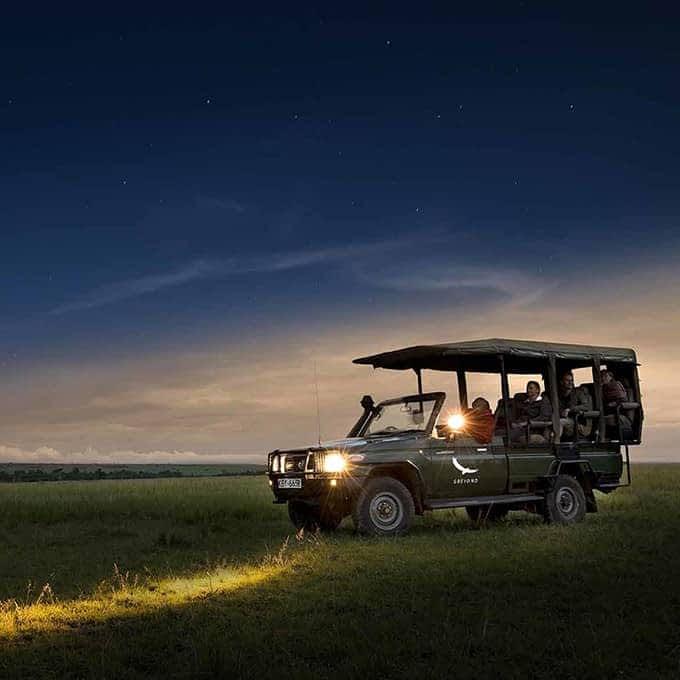
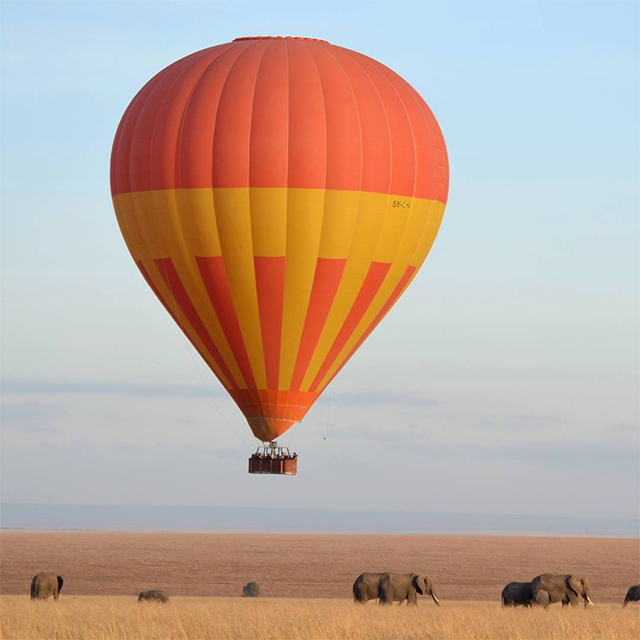
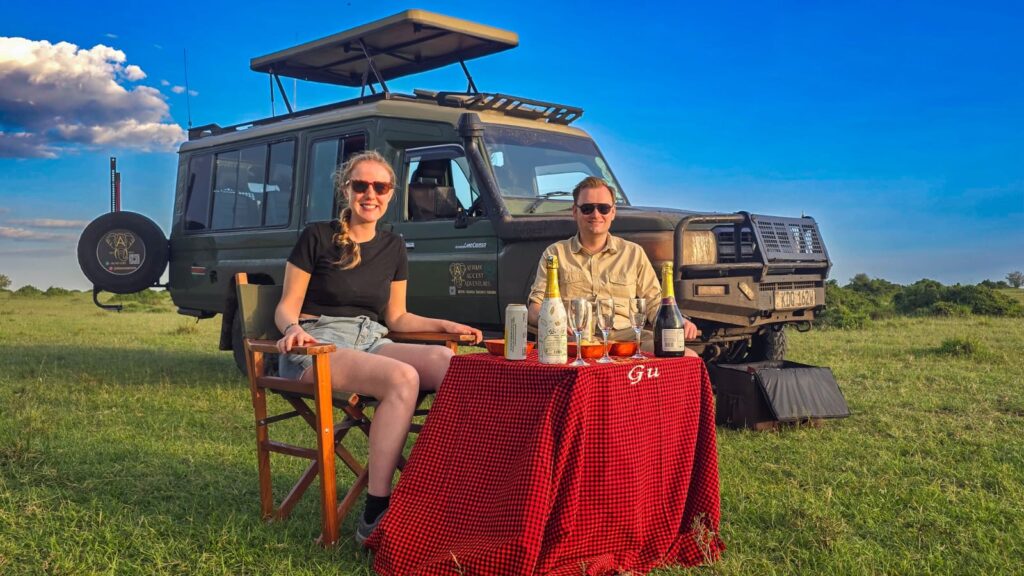
There is no universal winner. The right conservancy depends entirely on what you are looking for. Here is how we point different travellers.
Best Masai Mara conservancy for first-time safari travellers
Mara North Conservancy. It offers the widest range of camps and budgets, strong resident wildlife, and good migration season access, without the narrower focus of the smaller concessions.
Best Masai Mara conservancy for the Great Migration
Mara North and Olare Motorogi, both positioned on active dispersal routes. Remember that the Mara River crossings themselves happen inside the national reserve, so plan a reserve day trip alongside either conservancy during July to October.
Best Masai Mara conservancy for Big Five viewing
Naboisho and Olare Motorogi, both recognized for exceptionally high lion density, alongside strong leopard, elephant and buffalo populations. Rhino sightings are rare across all conservancies and should never be promised.
Best Masai Mara conservancy for privacy
Ol Kinyei and Enonkishu, the two smallest conservancies with the fewest permanent camps and the lowest guest density per acre.
Best Masai Mara conservancy for luxury safari
Olare Motorogi, home to Mahali Mzuri, Mara Plains Camp and Olare Mara Kempinski, three of the most established luxury properties in the ecosystem, all operating under the conservancy’s strict vehicle caps.
Best Masai Mara conservancy for walking safaris
Ol Kinyei and Olare Motorogi, both of which have a longer track record of guided walking activity with armed Maasai guides.
Best Masai Mara conservancy for night game drives
Mara North and Naboisho, where the largest camp counts and most established guiding programs make spotlighted night drives a regular fixture.
Best Masai Mara conservancy for photography
Olare Motorogi and Naboisho, where low vehicle density per sighting gives photographers extended, uninterrupted time with predators, and Mara North for its varied landscape and Leopard Gorge denning sites.
Best Masai Mara conservancy for families
Mara North, where a wider range of family-friendly camps and private vehicle options make it easier to build an itinerary around younger children’s needs.
Best Masai Mara conservancy for couples
Ol Kinyei or Enonkishu for the sense of seclusion, or Olare Motorogi for a more polished, luxury-focused stay.
Best Masai Mara conservancy for honeymooners
Mara Plains Camp or Mahali Mzuri in Olare Motorogi, or one of the smaller camps in Ol Kinyei, all of which combine privacy with a small guest count.
Best Masai Mara conservancy for community experiences
Naboisho and Enonkishu, both of which run visible, well-documented community and conservation programs that guests can engage with directly.
Best Masai Mara conservancy for repeat safari travellers
Olderikesi or Olarro, for travellers who have already covered the northern conservancies and now want either remoteness or a genuinely different, hill-country landscape.
The Great Migration and the Conservancies
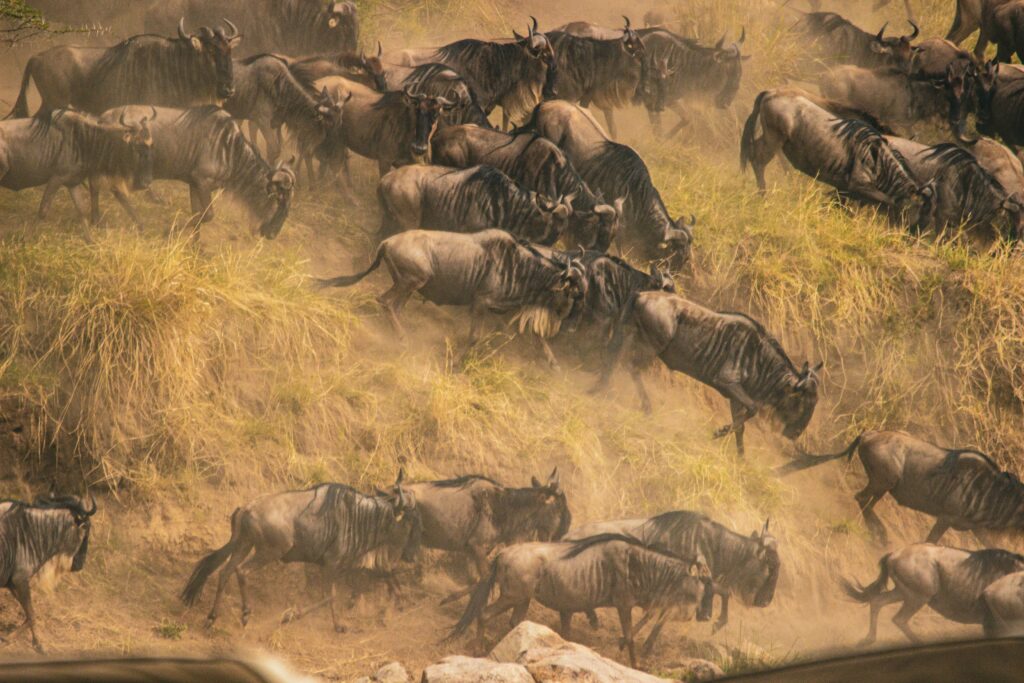
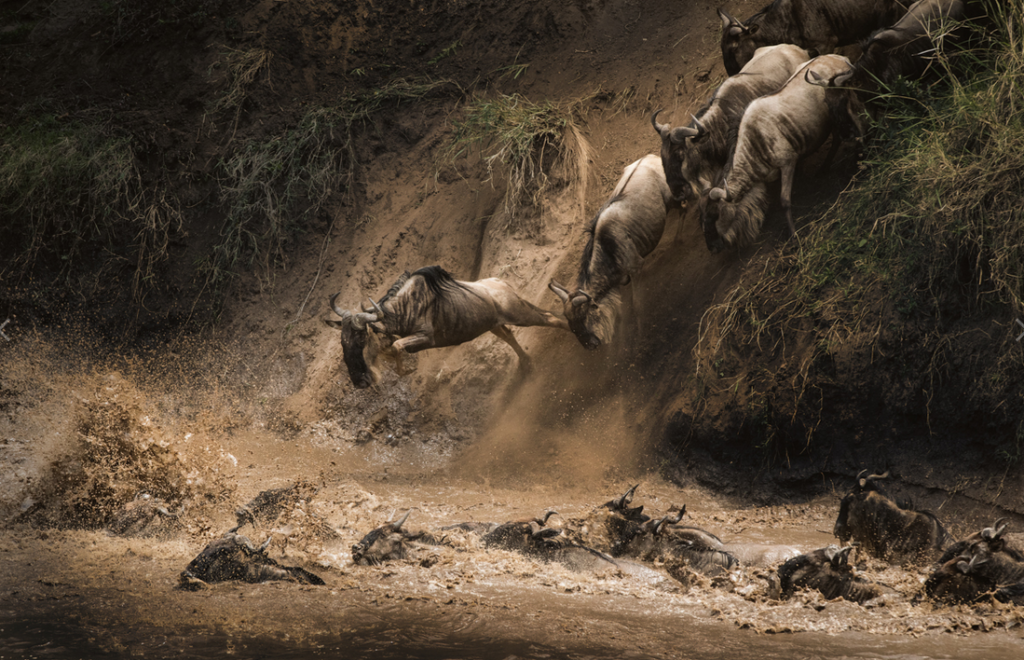
The conservancies play a real role in the Great Migration, but not the role most travellers assume. The dramatic river crossings, the scenes of wildebeest plunging into the Mara River, happen inside the national reserve and the Mara Triangle, at crossing points such as Lookout Hill, Serena Crossing and Paradise Plains. No conservancy contains a Mara River crossing point.
What the conservancies do offer is dispersal access. As roughly two million wildebeest and zebra move through the wider Mara-Serengeti ecosystem between July and October, herds spread well beyond the reserve boundary into Mara North, Olare Motorogi and Ol Kinyei in particular, following grazing rather than a fixed route. This means strong migration season game viewing is possible from a conservancy base, even without a crossing on your doorstep.
Migration timing is never guaranteed. Herd movement depends on rainfall patterns that shift year to year, and no camp, conservancy or reserve can promise a crossing on a given date. We build itineraries around probability, not certainty, which usually means combining a conservancy stay with at least one full day inside the reserve during peak months.
| EXPERT NOTE We are careful never to promise a river crossing. What we can promise is that basing yourself in a conservancy during migration season gives you excellent resident game every single day, lions, elephants, giraffes, with the crossings as a bonus day trip rather than the only reason for the visit. — Kibara Mugo, Safari Writer and East Africa Specialist, Afrikan Accent Adventures |
Wildlife in the Conservancies
The conservancies hold a mix of resident wildlife, present year round, and seasonal or migratory wildlife, present in numbers only at certain times. Understanding the difference matters more than chasing a species checklist.
Lions are resident across all the major conservancies, with Naboisho and Olare Motorogi carrying particularly high densities. Leopards are resident and frequently seen around rocky features such as Mara North’s Leopard Gorge. Cheetahs move across territories that often span conservancy boundaries, so sightings depend on which family group is currently in range. Elephants, buffalo and giraffe are resident in strong numbers throughout the northern and eastern conservancies. Hippos are resident wherever there is permanent water, including stretches of the Mara River accessible from Mara North and Enonkishu.
Wildebeest and zebra are the seasonal and migratory species that draw the biggest numbers during the July to October dispersal, though resident populations of both remain in several conservancies year round. Spotted hyena are resident and, in a conservancy that allows night drives, considerably easier to observe hunting. African wild dogs are seen occasionally in the more remote conservancies, particularly Olderikesi, but sightings should never be presented as reliable.
We avoid claiming any single conservancy as the definitively best place to see a given species. Wildlife moves, territories shift, and a claim that is accurate this season may not hold next year.
Unique Conservancy Experiences
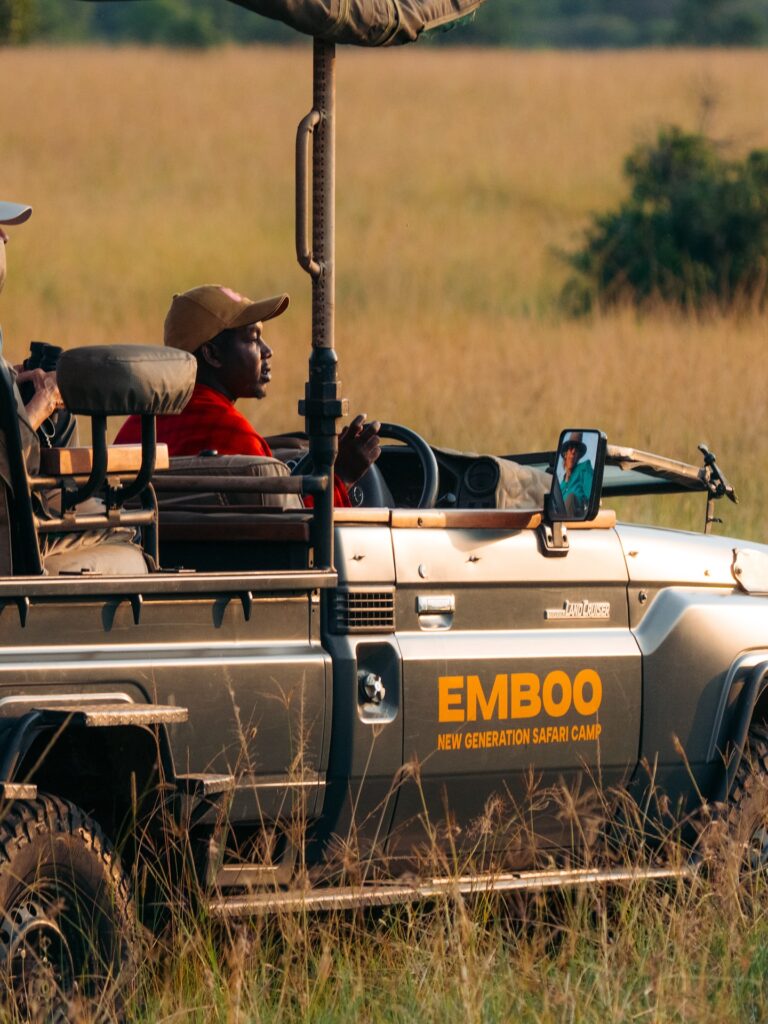
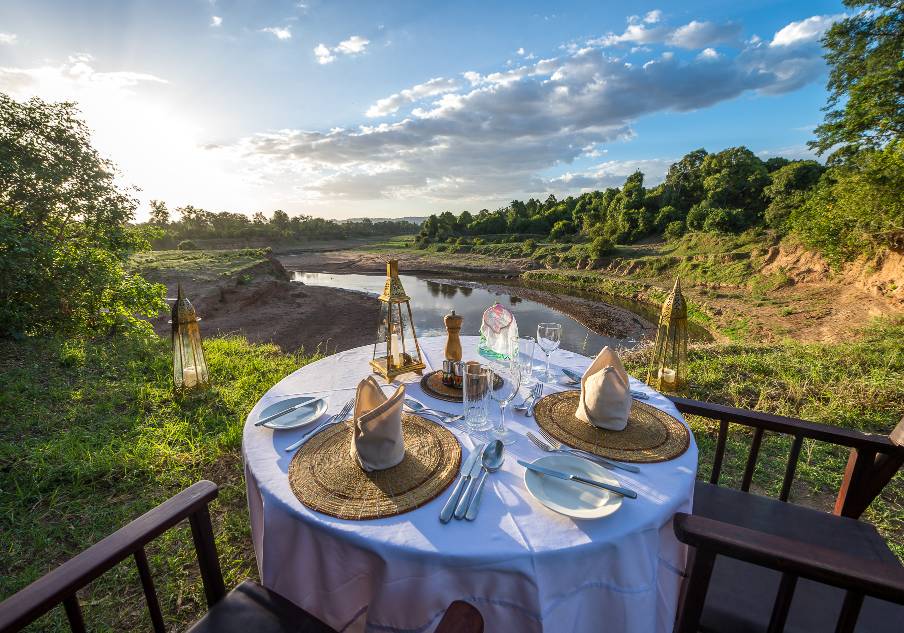
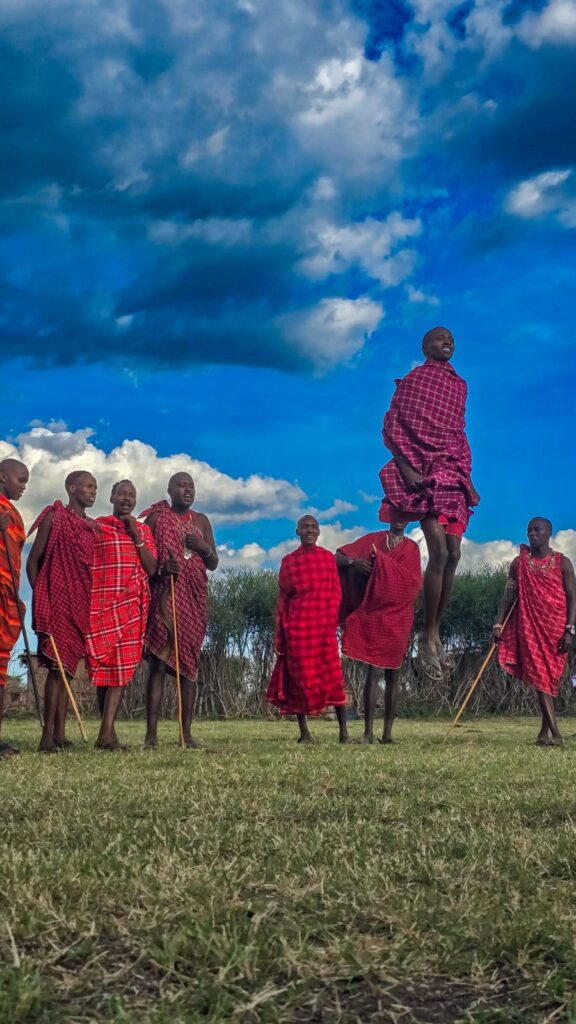
The activities available in a conservancy depend entirely on that specific concession’s rules. Do not assume every conservancy allows every activity listed here.
- Walking safaris with an armed Maasai guide, available in Ol Kinyei, Olare Motorogi and several Mara North camps, not permitted inside the national reserve.
- Night game drives with a spotlight, widely available across Mara North, Naboisho and Olare Motorogi, not permitted inside the national reserve.
- Off-road game viewing, allowed under strict rules in most conservancies to follow predators, not permitted inside the national reserve.
- Bush breakfasts and sundowners, offered by most camps across every conservancy in this guide.
- Cultural visits to Maasai villages, most commonly arranged from Naboisho, Enonkishu and Olarro.
- Horse riding and e-biking, a distinctive Enonkishu offering not widely available elsewhere in the ecosystem.
- Private vehicle game drives, available in most conservancies for an additional cost, giving a family or couple exclusive use of a guide and vehicle.
Confirm activity availability directly against your chosen camp rather than the conservancy in general, since individual camps sometimes apply additional restrictions on top of conservancy-wide rules.
Community and Conservation
Every conservancy in this guide exists because Maasai landowners chose to lease land for wildlife rather than convert it to grazing or agriculture at scale. This is not incidental to the tourism product. It is the financial mechanism that makes the tourism product possible.
Lease payments are typically calculated per acre and paid monthly, directly to registered landowners, regardless of occupancy levels at the camps. This guaranteed income is what allows families to commit their land for periods of fifteen to twenty five years. In Naboisho, more than 500 landowning families receive this income. In Mara North, the figure is over 800. Camps also draw the substantial majority of their workforce from these same communities. Naboisho reports around 95 percent local staffing, and guide training programs such as the Koiyaki Guiding School have certified large numbers of Maasai guides now working across the northern conservancies.
The conservation payoff is measurable in wildlife corridor terms. Conservancy land connects the national reserve to the wider Loita migratory plains and the Mara-Serengeti ecosystem beyond, keeping dispersal routes open that would otherwise be fragmented by fencing and settlement. Reduced and rotated grazing, enforced by conservancy rules, has allowed several concessions to recover from decades of overgrazing under the old ranching system.
We approach this subject carefully. Maasai communities are not a backdrop to the safari experience, and we avoid language that reduces a living culture to a photo opportunity. The relationship between tourism and conservation here is a genuine economic partnership, and it is one worth understanding on its own terms.
| EXPERT NOTE When guests ask us to prioritize a conservancy with a strong, visible community story, we point them toward Naboisho or Enonkishu specifically, because both have well-documented, ongoing programs that guests can see and ask about during their stay, rather than a general claim about community benefit. — Hellen Asiko, Director and Guest Experience Curator, Afrikan Accent Adventures |
Where to Stay
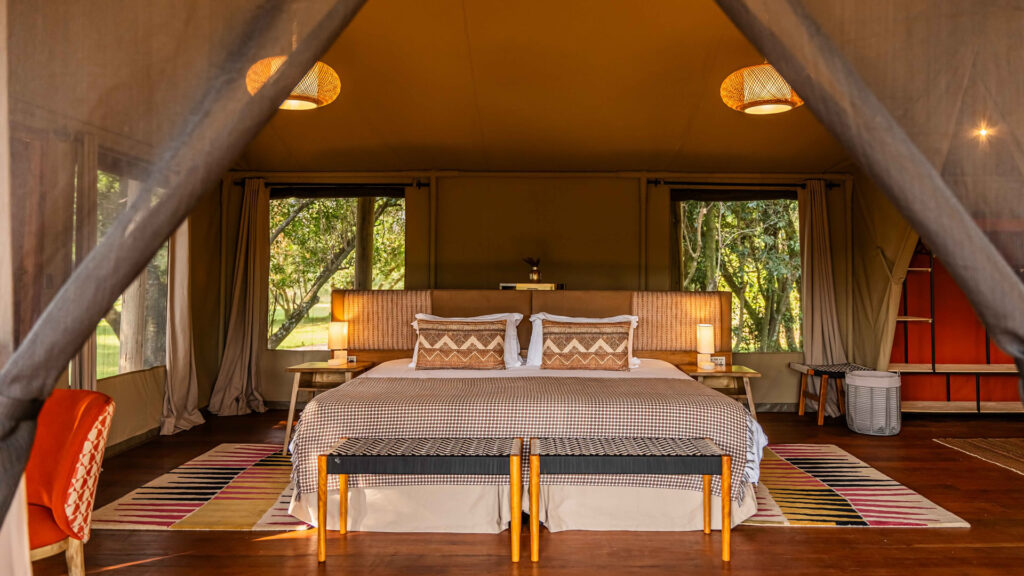
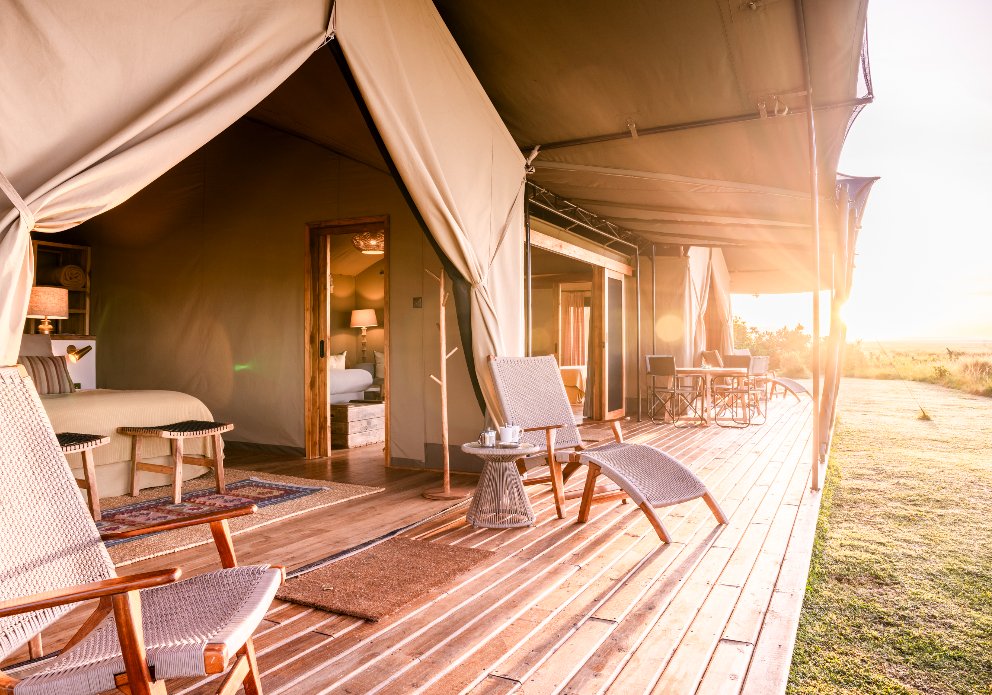
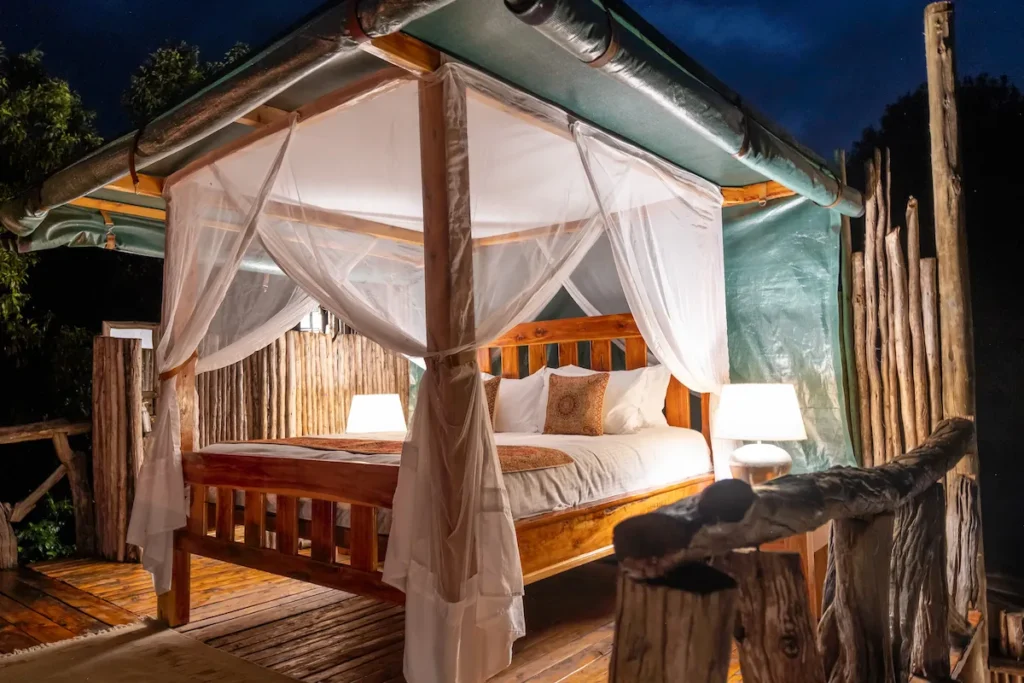
Accommodation style varies as much between conservancies as wildlife does. Mara North has the widest range, from boutique lodges to larger luxury tented camps, simply because it has the most partner properties. Naboisho’s camps, including Naboisho Camp and Kicheche Valley Camp, sit at the mid to upper end of the market with a strong emphasis on guiding quality. Olare Motorogi is the most concentrated luxury cluster in the ecosystem, home to Mahali Mzuri, Mara Plains Camp and Olare Mara Kempinski, all capped at a small number of beds.
Ol Kinyei and Olderikesi both keep camp counts deliberately low, which means fewer choices but a more intimate, small-camp experience. Enonkishu’s properties, such as House in the Wild, are boutique and family run rather than large-scale luxury operations. Olarro’s lodges lean toward a mountain retreat style rather than classic plains-facing tented camps.
When we quote camps by name, we confirm current operating status and conservancy membership directly, since properties do occasionally change hands or relocate between seasons. If you are exploring specific accommodation options for your Masai Mara stay, our team can match a camp to your conservancy priority rather than the other way round.
How to Choose Your Conservancy
Use this framework as a starting point, then let us refine it against your dates, budget and party.
| If you want | Choose based on | Why |
| The Great Migration | Mara North or Olare Motorogi, plus a reserve day trip | Both sit on active dispersal routes, but crossings only happen inside the reserve |
| Big Five and big cats | Naboisho or Olare Motorogi | Both carry among the highest lion densities recorded anywhere in Africa |
| Maximum privacy | Ol Kinyei or Enonkishu | Fewest camps and lowest guest density per acre of any conservancies in this guide |
| Walking safaris | Ol Kinyei or Olare Motorogi | Longest-established guided walking programs |
| Night game drives | Mara North or Naboisho | Largest, most established guiding operations for spotlighted night activity |
| Luxury with minimal vehicle traffic | Olare Motorogi | Five camps only, with a strict shared cap on vehicles per sighting |
| Families with children | Mara North | Widest range of family-friendly camps and private vehicle options |
| A honeymoon | Olare Motorogi or Ol Kinyei | Small camp counts and a strong sense of seclusion |
| Visible community impact | Naboisho or Enonkishu | Well-documented, ongoing community and conservation programs |
| A short 2 to 3 night safari | One conservancy only, ideally Mara North or Naboisho | Enough time to settle in without losing days to transfers between concessions |
| A longer 5 night or more safari | Combine a conservancy with a reserve stay, or two conservancies | Enough time to experience both the private conservancy model and the reserve’s river crossings |
How Many Nights Do You Need?
Two nights: Enough for four game drives and a solid first impression, but tight if you also want a night drive, a walking safari and a day trip into the reserve.
Three nights: Our usual recommendation for a single conservancy stay. It allows time to settle into one guide’s rhythm, add a night drive or walk, and still have flexibility if weather or wildlife movement disrupts a day’s plan.
Four or more nights: Enough to properly combine activities, a conservancy base plus a reserve day for river crossings during migration season, or two different conservancies to compare their character directly. Longer stays also allow for a genuinely restful pace, with fewer forced early starts.
Shorter stays concentrate risk. A two-night safari that coincides with an unlucky weather window or a quiet patch for predator sightings leaves little room to recover. We generally steer first-time Mara travellers toward a minimum of three nights in their primary conservancy.
Getting to the Masai Mara Conservancies
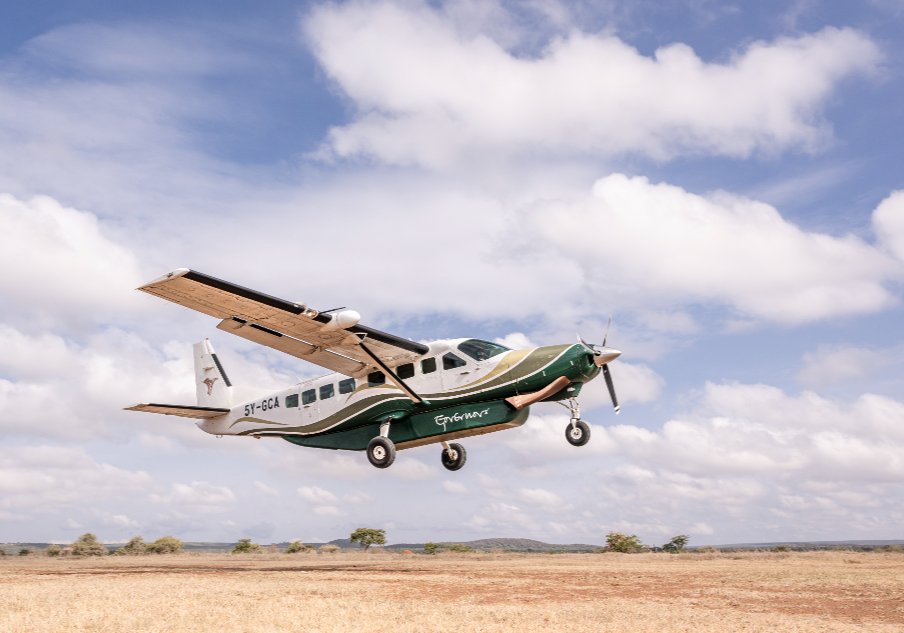
Most conservancy camps are reached by scheduled light aircraft from Nairobi’s Wilson Airport, typically a flight of around 45 minutes to just over an hour depending on the specific airstrip, followed by a road transfer of anywhere from 20 minutes to just over an hour to the camp itself. Airstrips serving the conservancies include Mara North, Ol Kiombo, Olare Orok and Musiara, among others, and the correct airstrip depends entirely on which camp you have booked.
Driving from Nairobi is the alternative, typically five to six hours depending on road conditions and the specific conservancy, usually routed through Narok town. Self-drive and road transfers both reach most conservancies, though the final approach roads can be rough, particularly in the wetter months.
We do not publish fixed flight schedules here, since airlines adjust routings and frequency by season. When we confirm your itinerary, we book against the current published schedule for your specific camp and dates.
Cost of a Masai Mara Conservancy Safari
Several separate charges make up the total cost of a conservancy safari, and it is worth understanding each one rather than treating the final camp rate as a single mystery number.
- Camp accommodation rate, which varies enormously by property, season and room category.
- Conservancy conservation fee, typically in the range of USD 80 to 150 per adult per night, almost always bundled into the nightly camp rate rather than billed separately.
- Masai Mara National Reserve entry fee, which only applies if you visit the reserve itself, at USD 100 per non-resident adult per day from January to June 2026, rising to USD 200 per day from July to December 2026, set by Narok County and subject to change.
- Flights or road transfer costs between Nairobi and your conservancy.
- Optional extras such as private vehicle use, hot air ballooning, or specialist photography vehicles, priced separately by most camps.
As a broad rule, conservancy stays cost more per night than equivalent accommodation inside the reserve, because guest density is capped so much lower. What that premium buys is fewer vehicles at every sighting, activities the reserve does not permit, and a more personal relationship with your guide over several days. We do not publish fixed nightly rates here since they shift by camp, season and currency, but we can build an accurate, itemized quote once we know your preferred conservancy, dates and camp style.
Best Time to Visit
There is no single best month for every traveller, because the answer depends on what you are prioritizing.
July to October: Peak migration season, when wildebeest and zebra herds disperse widely through the northern and eastern conservancies and river crossings are possible in the adjoining reserve. This is also peak pricing and peak demand across every conservancy.
January to March: Drier, quieter months with strong resident wildlife viewing and better value, though without migration herds in the area.
The green season (April to June and November): Lower rates, dramatic light for photography and lush landscapes, but heavier rainfall can affect road access, particularly to the more remote conservancies like Olderikesi and Olarro.
Crowds and pricing both peak alongside the migration months, which is one more reason conservancy travellers, who are already paying for lower vehicle density, often find the value proposition strongest outside the absolute peak of the July to October window.
Reserve or Conservancy: The Practical Verdict
Stay inside the national reserve if your absolute priority is being close to the Mara River crossings during peak migration season, or if budget rules out the higher per-night cost that conservancy density limits create.
Stay in a conservancy if you want night drives, walking safaris, off-road tracking, and a materially lower vehicle count at every sighting, and you are comfortable paying a premium and, in most cases, transferring separately into the reserve for a crossing day.
Neither option is universally superior. Many of the strongest itineraries we build combine both, using a conservancy as the primary base for its activities and privacy, and adding a reserve stay or day trip specifically for the crossings during migration season. When guests ask us to settle the Masai Mara conservancy vs reserve question in one sentence, our answer is that the reserve is where the migration crosses and the conservancy is where the rest of the safari happens best.
Masai Mara Conservancies FAQ
What is a Masai Mara conservancy?
A Masai Mara conservancy is privately leased, Maasai-owned land set aside for wildlife and low-density tourism, bordering the Masai Mara National Reserve. Camps and tour operators pay landowners a fixed lease fee for access, and each conservancy is run by its own management trust independent of the national reserve.
What is the difference between a conservancy and the Masai Mara National Reserve?
The reserve is managed by Narok County and open to any paying visitor, while conservancies are privately run and restricted to guests of partner camps. Conservancies also permit night drives, off-road driving and walking safaris, none of which are allowed inside the reserve.
Which Masai Mara conservancy is best?
There is no single best conservancy. Mara North and Naboisho suit first-time travellers wanting an all-round experience, Olare Motorogi and Naboisho suit big cat focused trips, and Ol Kinyei or Enonkishu suit travellers prioritising privacy.
Which conservancy is best for the Great Migration?
Mara North and Olare Motorogi both sit on active dispersal routes during the July to October migration. The dramatic river crossings themselves happen inside the national reserve, so a conservancy stay is usually paired with a reserve day trip during peak season.
Which conservancy is best for luxury?
Olare Motorogi, home to Mahali Mzuri, Mara Plains Camp and Olare Mara Kempinski, offers the most concentrated cluster of high-end camps operating under a strict shared vehicle cap.
Which conservancy is best for families?
Mara North, which has the widest range of family-friendly camps and the flexibility to arrange private vehicles suited to younger children’s routines.
Can you see the Big Five in the conservancies?
Lions, leopards, elephants and buffalo are resident across the major conservancies, with Naboisho and Olare Motorogi noted for particularly high lion density. Rhino sightings are rare across the ecosystem and should never be treated as a guaranteed part of any itinerary.
Can you do night drives in Masai Mara conservancies?
Yes, most conservancies permit spotlighted night game drives, which are not allowed inside the national reserve. Availability depends on the specific camp, so confirm directly when booking.
Can you do walking safaris in the conservancies?
Yes, several conservancies, particularly Ol Kinyei and Olare Motorogi, offer guided walking safaris with an armed Maasai guide. This activity is not permitted inside the national reserve.
Are conservancies better than the Masai Mara National Reserve?
Neither is universally better. Conservancies offer lower vehicle density and activities the reserve does not permit, at a higher nightly cost. The reserve offers the only access to the Mara River crossings and typically lower per-night rates.
How much does a Masai Mara conservancy safari cost?
Costs vary by camp, season and conservancy, but conservation fees typically run USD 80 to 150 per adult per night, usually bundled into the nightly camp rate. This is separate from the national reserve’s own entry fee, which applies only if you visit the reserve directly.
Can you visit the national reserve from a conservancy?
Yes, most conservancy camps can arrange a day trip or transfer into the national reserve, which requires paying the standard reserve entry fee in addition to your conservancy stay.
How do you get to the Masai Mara conservancies?
Most travellers fly from Nairobi’s Wilson Airport to a conservancy airstrip, followed by a short road transfer, or drive from Nairobi in roughly five to six hours depending on the specific conservancy and road conditions.
Are conservancies good for honeymooners?
Yes, particularly the smaller, lower-density conservancies such as Olare Motorogi and Ol Kinyei, both known for intimate camps with small guest counts.
Which conservancy is best for photography?
Olare Motorogi and Naboisho, where low vehicle density per sighting allows extended, uninterrupted time with predators, key advantages for photographers.
Featured Afrikan Accent Adventures Safaris: Reserve and Conservancy
Everything above is context. Below are real, bookable Afrikan Accent Adventures itineraries built on both sides of the reserve boundary, so you can see how the choice between reserve and conservancy actually plays out in a finished safari.
Inside the National Reserve
3 Days Masai Mara Fly-In Safari, Mara Serena Safari Lodge: A flying safari based inside the Mara Triangle sector of the reserve itself, from USD 1,515 per person. The right choice if the river crossings and classic reserve scale are your priority and you want minimal transfer time.
4 Days Masai Mara Eco Safari, Emboo River Camp: A solar-powered, low-impact camp on the Talek River, inside the Masai Mara National Reserve, from USD 4,000 per person. A rare example of a genuinely sustainable, community-engaged model built on reserve land rather than conservancy land.
In the Private Conservancies
5 Days Masai Mara Flying Safari, Mara North Conservancy at Royal Mara Safari Lodge: Our signature Mara North itinerary, from USD 4,000 per person, built around night drives, off-road tracking and the resident wildlife that makes this conservancy such a strong all-round choice.
4 Days Masai Mara Safari, Mara Elatia Camp, Mara Triangle: From USD 1,440 per person, staying in the Partakilat Conservancy on the Siria Escarpment with direct access to the private rhino sanctuary, while overlooking the Mara Triangle below. A genuine hybrid of conservancy privacy and reserve-adjacent scenery.
3 Days Masai Mara Book-a-Seat Safari, Osero Camp: From USD 690 per person, based in Mara Siana Conservancy on a shared group departure. Proof that conservancy access does not require a luxury budget.
These are a handful of examples pulled from our current safari collection. We have dozens more across every conservancy covered in this guide, at every budget level, and we build new itineraries to order every week. If a specific conservancy has caught your attention, tell us and we will show you what we already have running there.
Ready to Choose Your Conservancy? Let’s Talk.
You do not need to solve this from a spreadsheet of acreage figures and camp names. Tell us what you actually want from your Masai Mara days, and we will tell you which conservancy earns it.
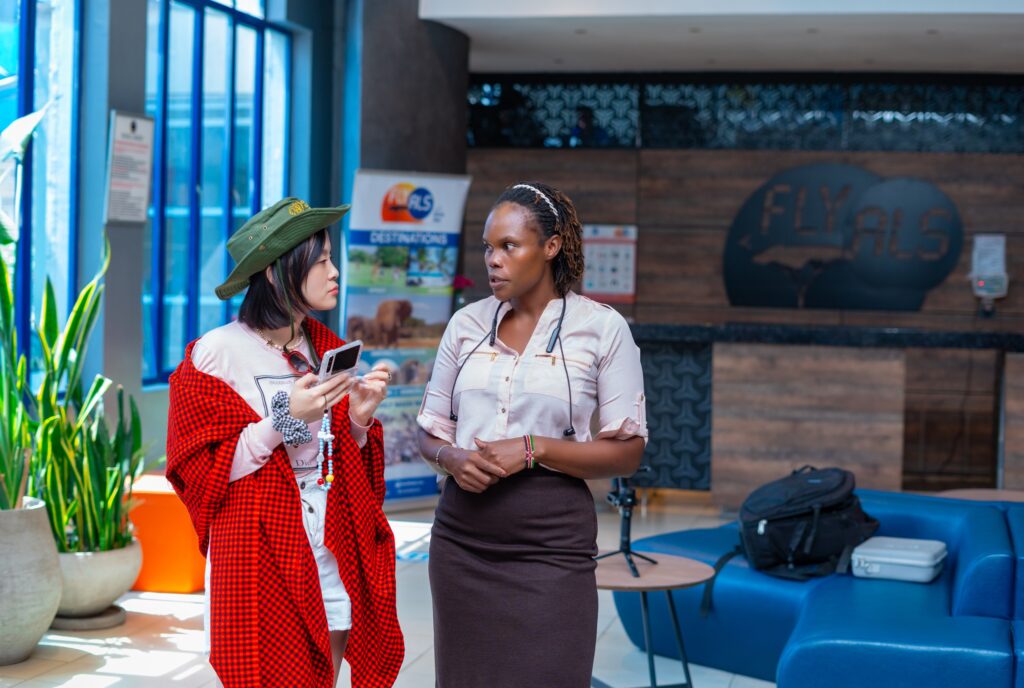
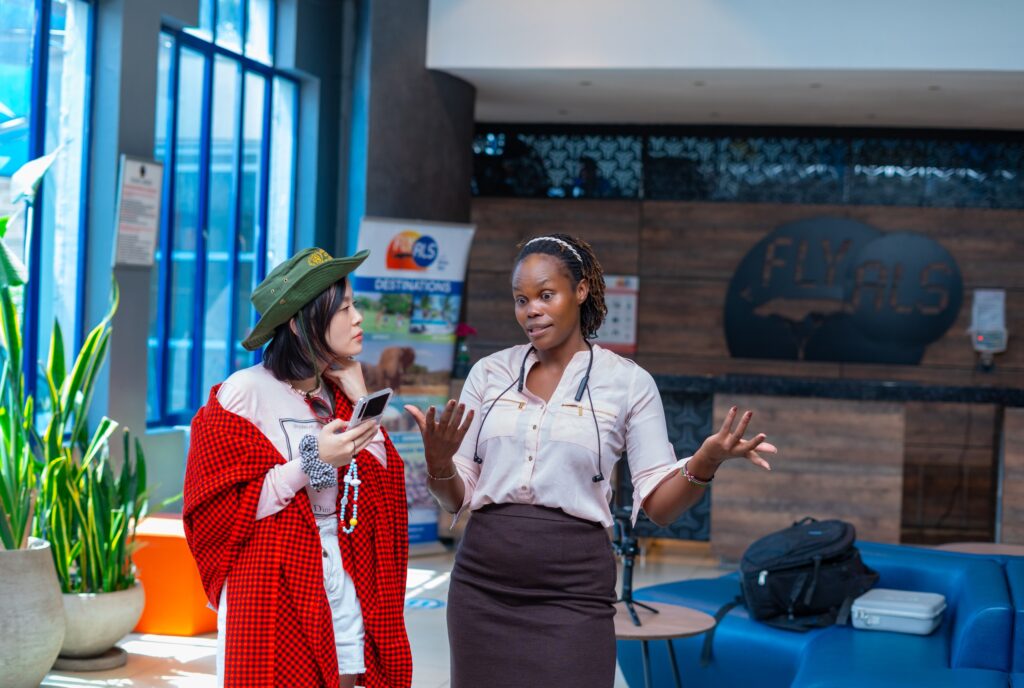
Speak to Hellen Asiko, our Director and Guest Experience Curator, if you want an itinerary built around your dates, budget and priorities, whether that is the Great Migration, a private family vehicle, or a honeymoon in one of the small-camp conservancies.


Speak to Nicholas Wangithi, our Director and Founder, if you want a guide’s-eye view of what a specific conservancy is actually like on the ground right now, night drives, walking safaris, current wildlife movement and all.
The right conservancy is not the most famous one. It is the one built for what you actually came to see. Tell us what that is, and let’s build your Masai Mara safari properly.
Let's plan your East African safari
Tell us when you'd love to travel and a local specialist will craft a tailor-made route around you.


