Nairobi Giraffe Centre and Sheldrick Elephant Orphanage: How to Visit Both in One Morning
One stop stretches to 90 minutes. The other gives you one fixed hour at 11am. Here's how to fit the Giraffe Centre and Sheldrick into a single Nairobi morning without missing either.
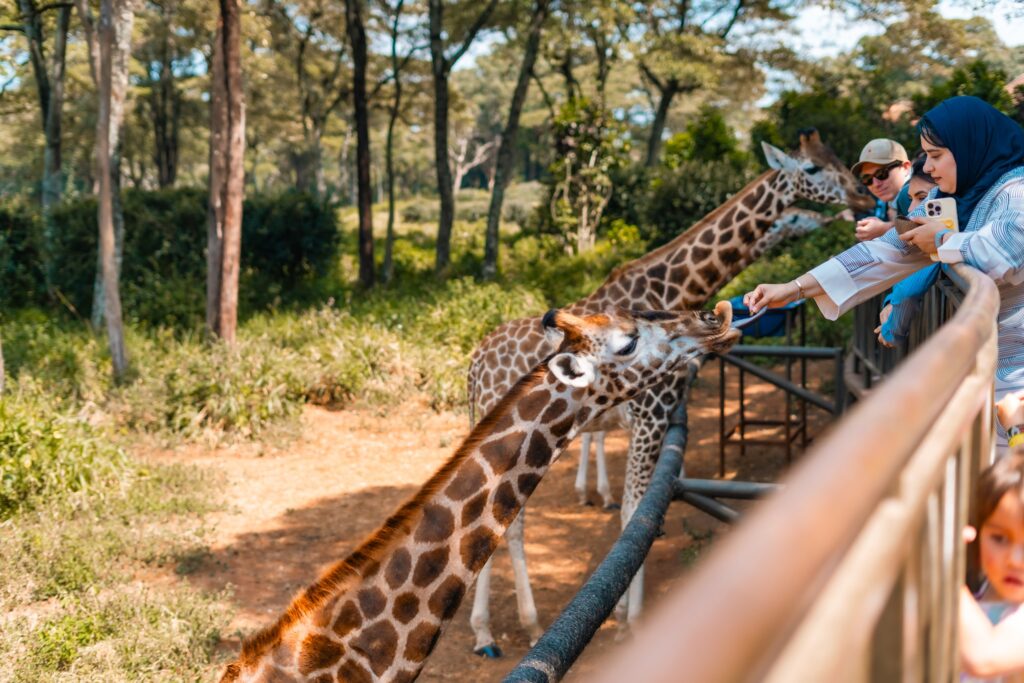
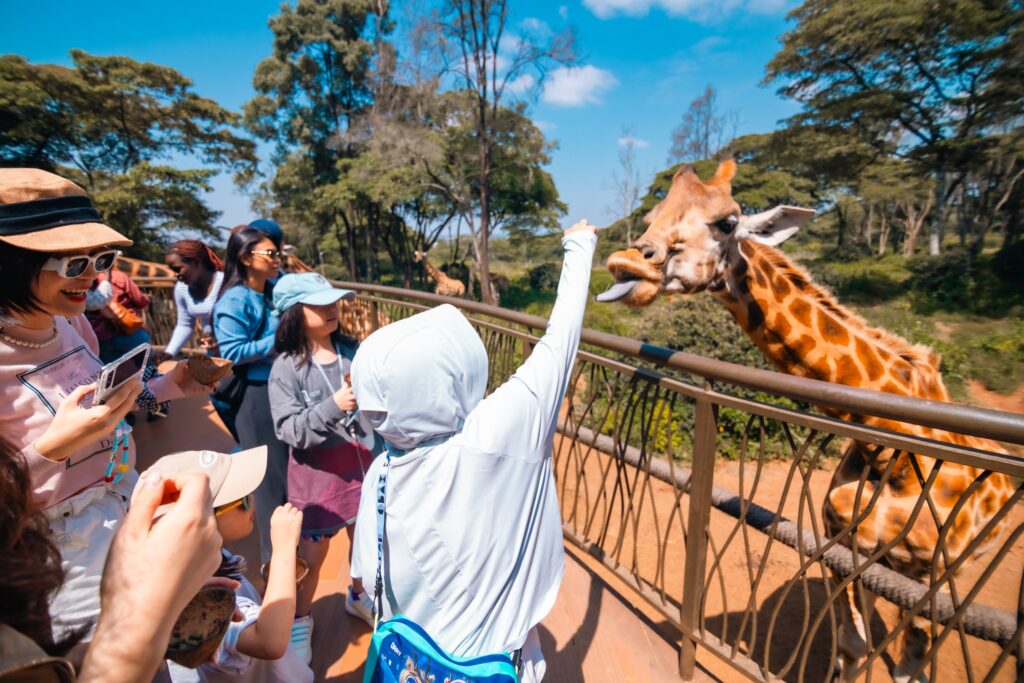
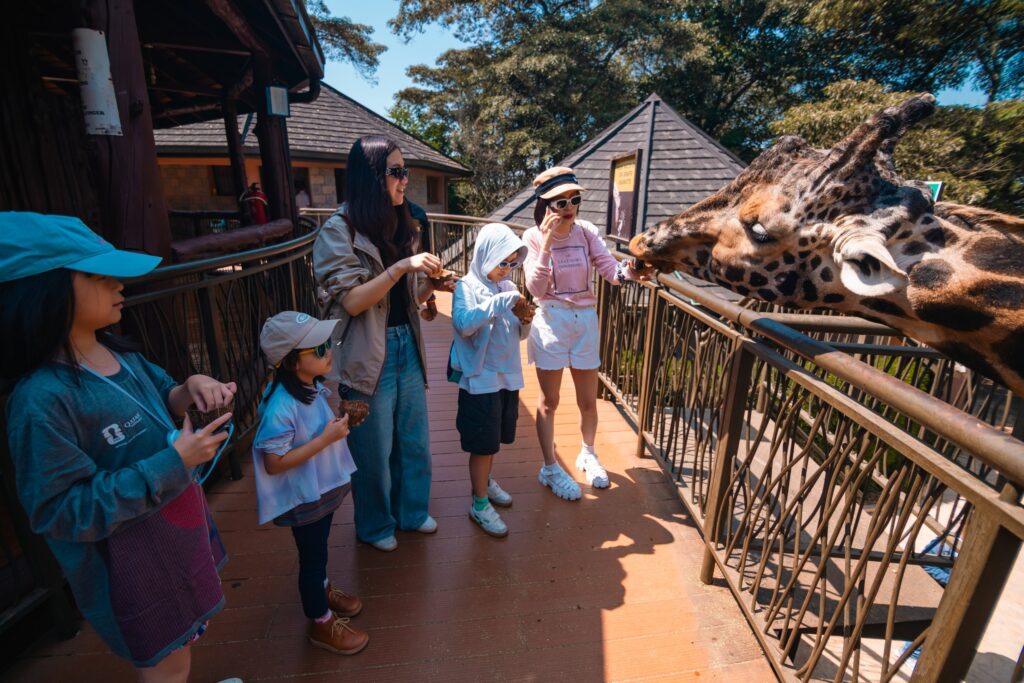
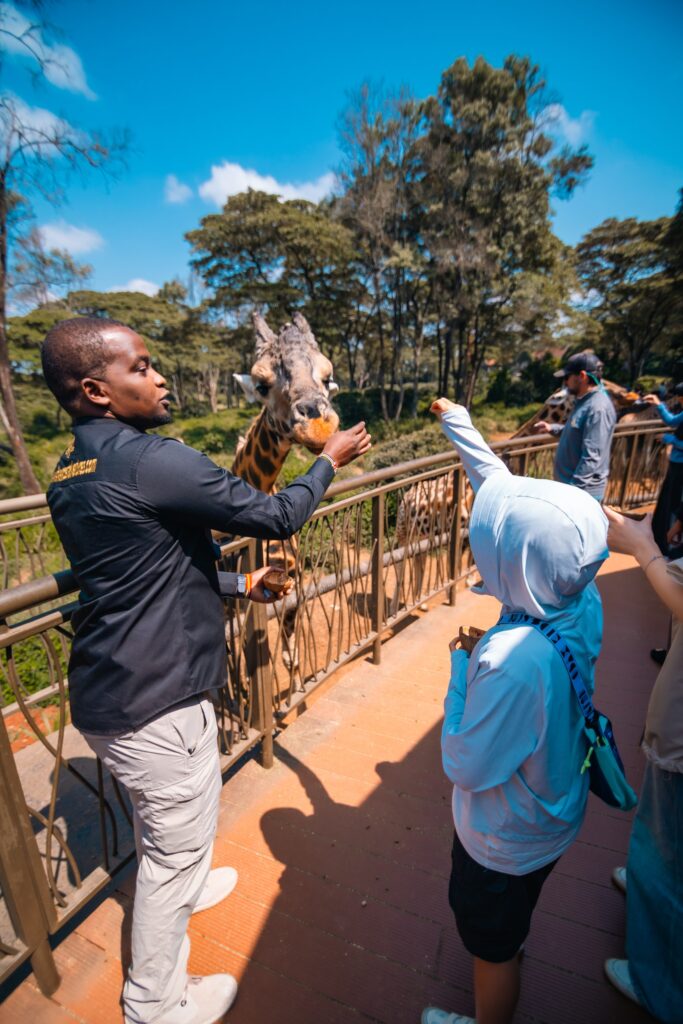
Visitors hand-feeding a Rothschild's giraffe from the raised platform at the Giraffe Centre in Lang'ata, the first stop on a Nairobi day trip.
Magadi Road. 10:27am. We were thirty three minutes from the only hour of the day when the Sheldrick Wildlife Trust opens its Nairobi Nursery to visitors and the Nairobi day trip we’d built for the family in the back seat was third in line at the Kenya Wildlife Service (KWS) Mbagathi Gate. Forty minutes earlier they’d still been feeding giraffes at the Giraffe Centre and nobody had wanted to leave. Ahead of us sat a barrier, a ticket check and a clock that doesn’t negotiate.
That’s the whole difficulty with this morning and almost no itinerary admits it. The Giraffe Centre will happily take 90 minutes of your time and the Centre itself recommends 1.5 to two hours. The Trust gives you one hour. Strictly 11am to 12 noon. Advance booking only. And it can’t hold or extend the visit for late arrivals. One stop stretches. The other doesn’t.
There’s a second trap and it’s newer. Since 19 September 2023 the KWS has required every Nursery visitor to pay the Nairobi National Park entry fee, whether or not they ever drive a game-drive track. For a non-resident adult that’s US$80 on top of the Trust’s US$20 donation. We run this morning for guests at Afrikan Accent Adventures, a Nairobi-based safari operator. That fee changed how we plan it.
So here’s our position and the rest of this guide backs it up. Start at the Giraffe Centre when it opens at 9:00am and leave it by 10:00. Be at the gate by 10:30. And if you’re paying for the park anyway, drive in it. Seeing elephants and giraffes on a Nairobi day trip is easy. Getting through that gate on time is the part that takes planning.
| QUICK ANSWER | Can you visit the Giraffe Centre and Sheldrick in one morning? Yes, this Nairobi day trip fits between 9am and noon. Start at the Giraffe Centre when it opens at 9am and reach the park’s Mbagathi Gate by 10:30am. Sheldrick runs 11am to 12 noon, by advance booking only. Budget about US$112 per non-resident adult in fees. |
AT A GLANCE:
- Sheldrick public visit: 11:00am to 12 noon daily except 25 December, by advance booking only through the Sheldrick Wildlife Trust’s Nairobi office.
- Be at the gate by: 10:30am at the Kenya Wildlife Service (KWS) Mbagathi Gate, also called the Workshop Gate or Magadi Gate, on Magadi Road in Nairobi National Park.
- Sheldrick entry donation: US$20 per adult aged 12 and over and US$5 per child under 12, paid in cash at the Nursery.
- Nairobi National Park fee: US$80 per non-resident adult and US$40 per child, compulsory for every Nursery visitor and paid online through KWS eCitizen.
- Giraffe Centre: Open 9:00am to 5:00pm daily on Nyumbi Road off Duma Road in Lang’ata. KES 1,500 per non-resident adult (about US$11.50) by card or M-Pesa only.
- Time needed: One hour at the Giraffe Centre in this plan and one hour at Sheldrick, so the two stops fill 9am to noon.
- Best order: Giraffe Centre first at 9am, then Sheldrick at 11am. Add a game drive and the order becomes park, Sheldrick, Giraffe Centre.
- Our private day trip: Nairobi Day Trip: National Park, Sheldrick Elephant Orphanage and Giraffe Centre, one day for 2 to 6 guests with all entry fees included, starting at $295 per person.
What is the Giraffe Centre and the Sheldrick Elephant Orphanage, and how do they differ?
Two charities run two very different encounters and you pay for them in two different ways. One is a hand-feeding platform. The other is a viewing cordon around orphaned elephants on their way back to the wild.
The Giraffe Centre in Lang’ata
The Giraffe Centre is the public face of the African Fund for Endangered Wildlife (AFEW) Kenya. It sits on Nyumbi Road off Duma Road in Lang’ata, about 15 kilometres from the city centre. Jock and Betty Leslie-Melville founded AFEW Kenya in 1979 after learning that only about 130 Rothschild’s giraffes survived on a single ranch near Soy in western Kenya. They raised two calves, Daisy and Marlon, at their Lang’ata home and began a breeding program. Kenya’s tourism board now counts more than 300 Rothschild’s giraffes breeding in the country’s national parks.
What you get as a visitor is a raised platform at giraffe head height, a bowl of pellets and a very large tongue. AFEW says 90% of what the Centre earns from entry fees, its shop and its Tea House goes to conservation and to schooling Kenyan children. The educators who give the talks are Environmental Studies students who volunteer.
The Sheldrick Wildlife Trust Nairobi Nursery inside Nairobi National Park
The Sheldrick Elephant Orphanage is the common name for the Sheldrick Wildlife Trust’s Nairobi Nursery. The charity was once the David Sheldrick Wildlife Trust. Dame Daphne Sheldrick founded it in 1977 in memory of her husband David, the founding warden of Tsavo East National Park. The Nursery opened in 1987 with an infant elephant called Olmeg. It’s the first stage of the Trust’s Orphans’ Project, which reports 327 orphans successfully raised and 95 calves born to wild-living former orphans.
Orphans graduate to reintegration units in the Tsavo region (Voi and Ithumba in Tsavo East National Park and Umani Springs in the Kibwezi Forest) and the journey can take up to ten years. Visitors never feed or touch them. Only keepers do, because every orphan is meant to go home to the wild.
The two side by side
| Giraffe Centre | Sheldrick Wildlife Trust Nairobi Nursery | |
| Run by | African Fund for Endangered Wildlife (AFEW) Kenya | Sheldrick Wildlife Trust |
| What you do | Hand-feed Rothschild’s giraffes from a raised platform | Watch orphaned elephants take milk and play in a mud bath |
| Contact | Giraffes take pellets from your hand | None. Only keepers feed or touch the orphans |
| Hours | 9:00am to 5:00pm daily | 11:00am to 12 noon daily except 25 December |
| Booking | Not needed for individuals | Compulsory and in advance |
| Payment | Card or M-Pesa only | Cash donation on the day plus a KWS park fee paid online |
| Time to allow | 1.5 to two hours recommended | One hour, fixed |
One takes walk-ins all day. The other takes a booking, a cash donation and a park fee for a single hour.
Do you need to book the Sheldrick orphanage in advance, and what time is the visit?
| QUICK ANSWER | Do you need to book the Sheldrick Elephant Orphanage in advance? Yes, advance booking is compulsory. The Sheldrick Wildlife Trust accepts no walk-ins and no same-day bookings. Contact its Nairobi office up to three months ahead with your date, ticket numbers and names. The public visit runs 11am to 12 noon daily except 25 December. |
This is the rule that catches people out and it’s stricter than most guides admit. The Trust limits its daily capacity and asks you not to turn up without a confirmed booking. Here’s the process as the Trust sets it out on its Nairobi Nursery visiting page:
- Pick your date. The Trust accepts bookings only for visits within the next three months and takes no same-day requests.
- Contact the Nairobi office. Use the form on the Trust’s FAQs page and choose the Kenya office.
- Give the details. State the date, the number of adult and child tickets, the name of each adult and the name and age of each child.
- Wait for the reply. Allow at least two business days and check your spam folder before chasing.
- Keep the confirmation email. You carry it on the day, printed or on your phone.
- Pay on arrival. The donation is due for every ticket you booked, even if fewer people turn up.
The Trust also says plainly that it won’t accept bookings made through third-party platforms such as Viator, GetYourGuide or Tripadvisor, whatever those listings claim. If a tour operator or local guide books for you, ask for a copy of the Trust’s own confirmation email.
Book as soon as your dates are firm. We wouldn’t leave it later than two weeks before travel in the peak months or over the Christmas holidays.
A confirmation from anyone but the Trust itself is just an email.
| EXPERT NOTE Send us your dates before you book flights if you can. The Trust caps its daily numbers and needs at least two working days to answer. It also recognizes only its own confirmations. The earlier a request goes in, the better your chance of the date you want. Have every traveler’s full name ready plus the age of each child. Hellen Asiko, Director & Guest Experience Curator |
What time is the Sheldrick Elephant Orphanage open to visitors?
| QUICK ANSWER | What time is the Sheldrick Elephant Orphanage open to visitors? The Sheldrick Elephant Orphanage opens to visitors from 11am to 12 noon every day except 25 December. The hour is timed around the herd’s midday milk feed and mud bath. It cannot be delayed or extended for late arrivals. Arrive at the KWS Mbagathi Gate by 10:30am. |
The visiting hours are a single window, 11:00am to 12:00 noon, every day of the year except 25 December. The Trust built the hour around the Nursery herd’s midday milk feed and mud bath, which is also the only feeding the public sees. There’s no second session and no private afternoon slot to fall back on. Older guides mention a separate 5pm visit for foster parents. The Trust’s current visiting page and FAQ list only the 11am hour and say foster parents join it by advance booking like everyone else.
Arrive early. The Trust asks guests to be at the KWS Mbagathi Gate at or before 10:30am and its vehicle carries on-foot visitors to the Nursery between 10:15am and 11:30am. The hour starts at 11:00am whether you’re there or not.
What happens at the Sheldrick visit, and when are the feeding sessions?
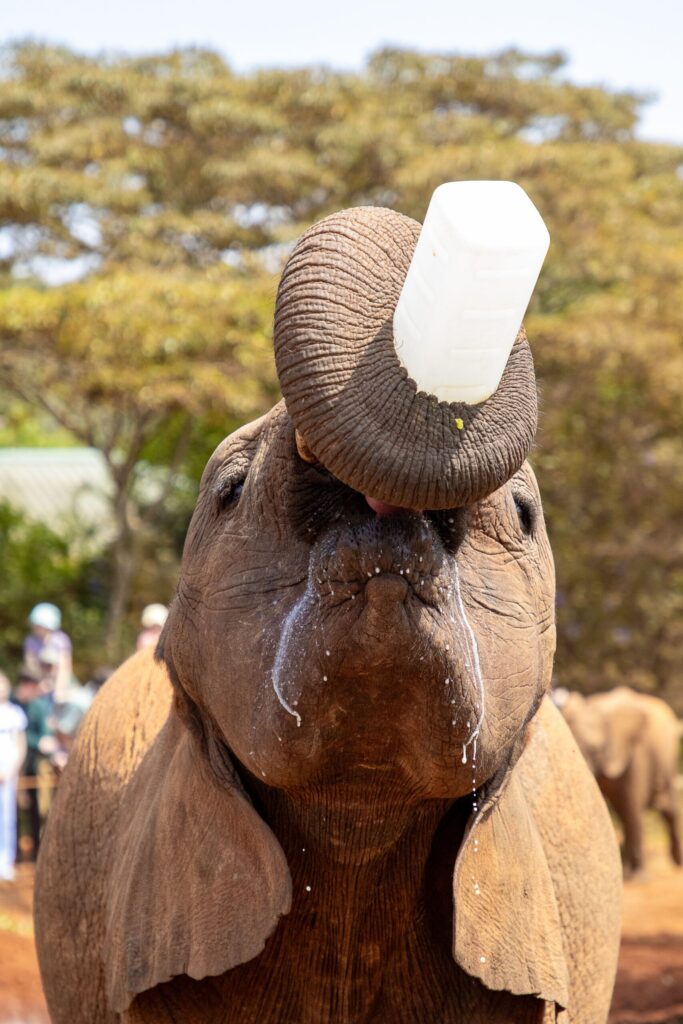
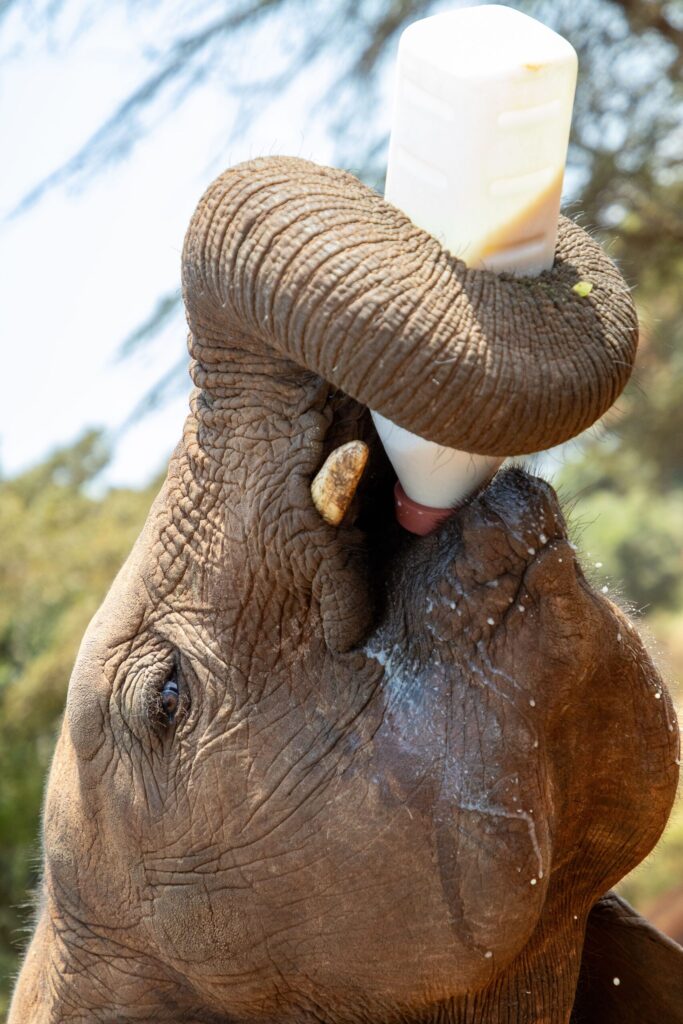
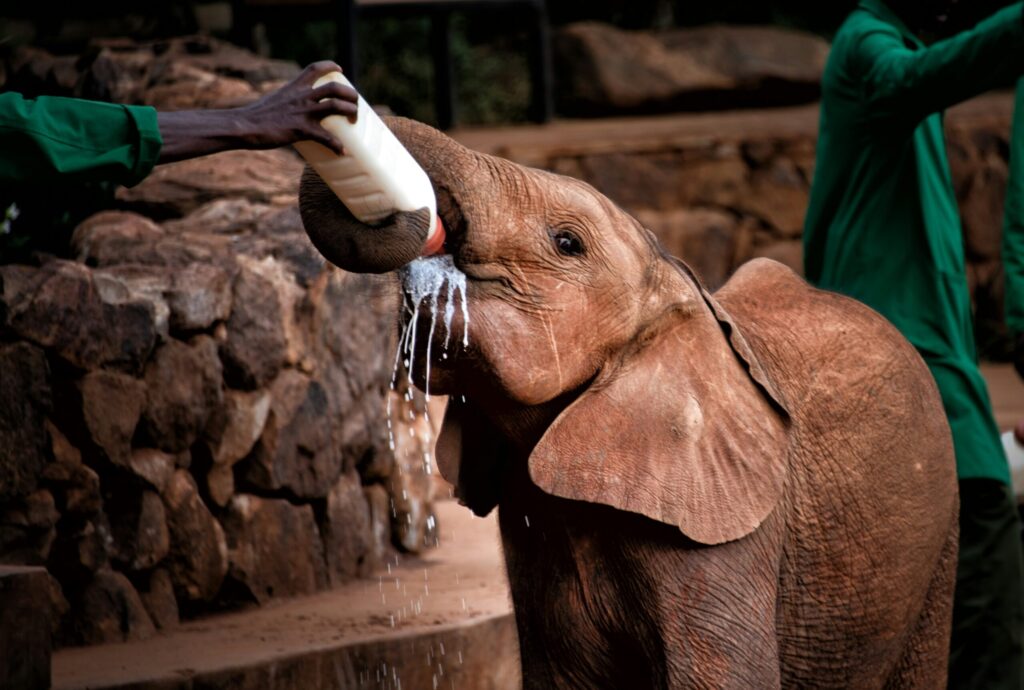
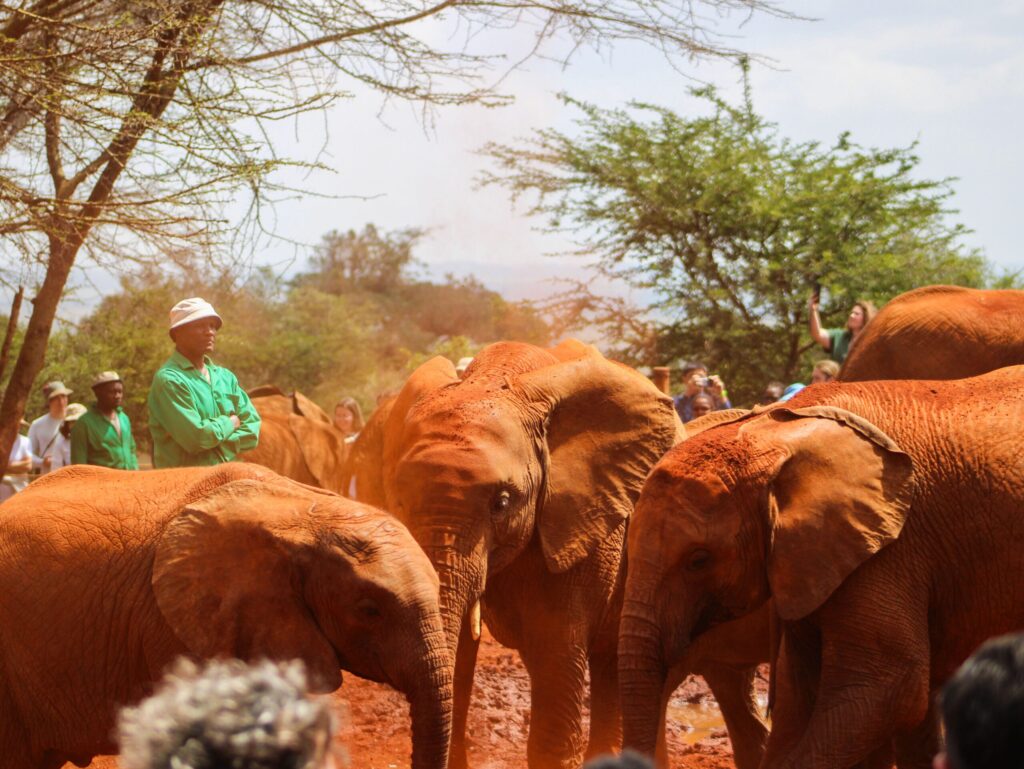
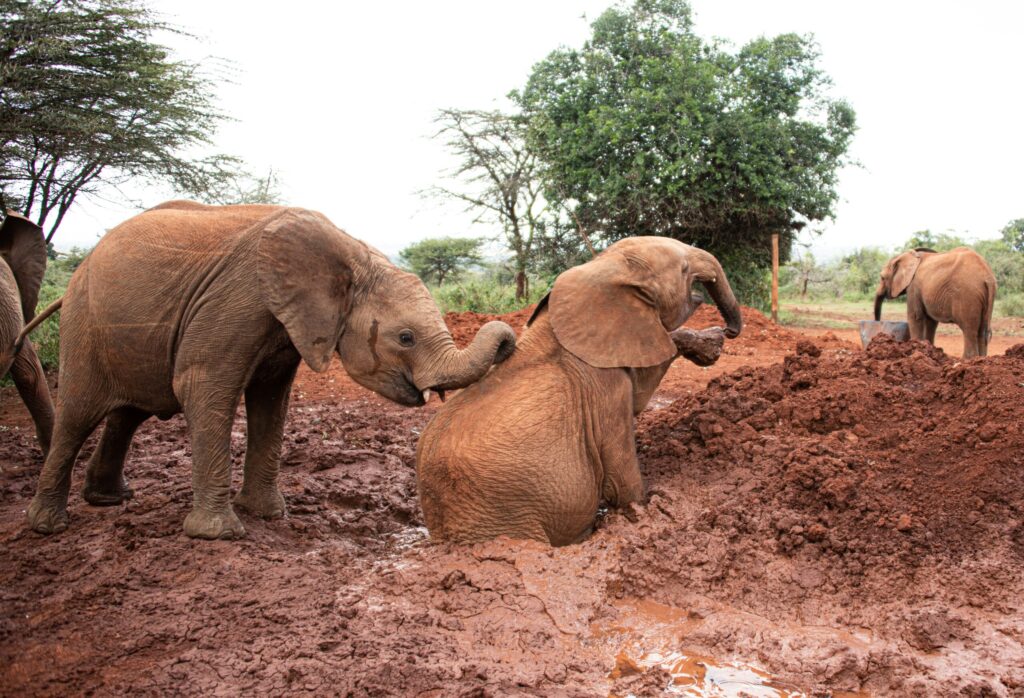
There is one feeding session and it’s the visit itself. From viewing areas around the mud bath you watch the orphans run out of the forest in groups for bottles of specialist milk formula. Then comes playtime. Some wallow in the mud and some wrestle while others take a dust bath. A senior keeper leads the hour and introduces each orphan by name and story. The keeper also explains the Trust’s wider work and leaves time for questions at the end. The Trust lists the current Nursery herd on its website so you can look up who’s in residence.
The rules are short. Only keepers feed or touch the orphans, though a mischievous calf may extend a trunk or bump along the visitor cordon. Phones stay on silent and calls wait. Photos and video are for personal use only and smoking and vaping are banned. Maxwell the rhino isn’t part of the public visit because he’s blind and prefers a quiet life.
Afterwards a small shop sells Trust clothing and gifts made by Kenyan artisans. If a calf has won you over you can adopt in person at the end of the visit for a minimum of US$50 a year. There are no refreshments and no public Wi-Fi at the Nursery.
What happens at the Giraffe Centre, and how long should you allow?
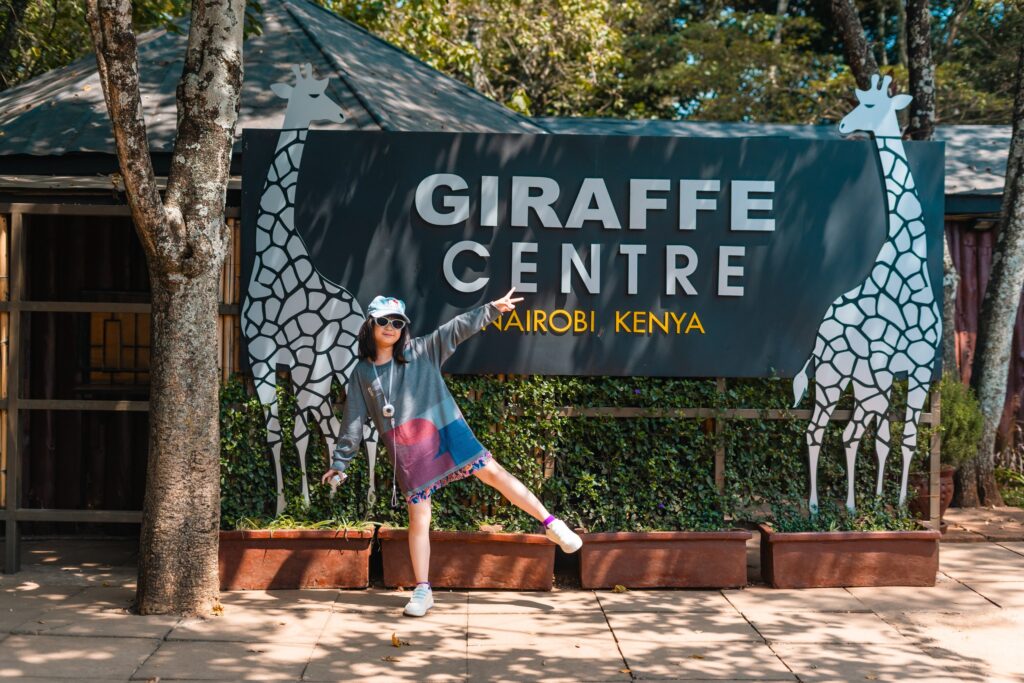
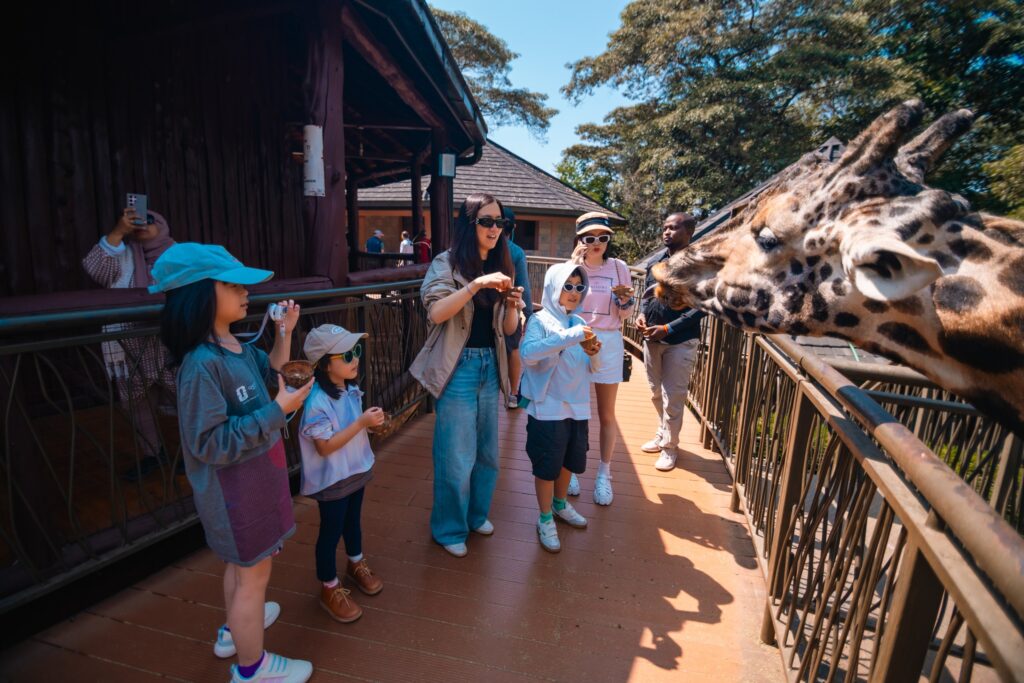
| QUICK ANSWER | How long do you need at the Giraffe Centre? Allow one to two hours at the Giraffe Centre. The Centre opens at 9am and recommends 1.5 to two hours for the platform, a talk, the nature trail and tea. Before a Sheldrick visit, cap it at one hour. It’s busiest from 11am to 1pm on weekdays. |
The Centre’s own advice is 1.5 to two hours, enough to feed the giraffes and sit through a talk. It also covers a walk on the nature trail and a cup of tea. In this plan you have one hour. That’s enough for the platform and the talk if you arrive at 9:00am sharp and don’t get lured into the Tea House. The Centre says weekdays are busiest from 11am to 1pm and that weekends and public holidays are busy all day. That’s one more reason to be first through the gate.
Feeding giraffes and the giraffe kiss
You climb a short staircase to a wooden platform built at giraffe head height and take a bowl of pellets. Then you wait and the giraffes come to you. Rothschild’s giraffes can stand up to about 5.9 metres tall so the eye contact is closer and stranger than anything on a game drive. Feed pellets only and leave the warthogs that wander the grounds alone.
The giraffe kiss is optional. Hold a pellet between your lips and a tongue of roughly 45 centimetres plucks it away. Nobody pushes you into it and most people try it once. Keep your face clear of a swinging head. These animals are gentle. They’re also enormous.
The talk, the nature trail and the Tea House
The educators give a short talk on the giraffe and other wildlife. The nature trail runs through forest across the road and visitors report that your ticket covers it. The Tea House looks out over the giraffe area and the Daisy Zoovenir Shop is named for Daisy, one of the first calves. Both feed the Centre’s conservation budget. If Sheldrick is at 11:00am, skip the trail and the Tea House. They’re the reason the Centre recommends up to two hours and the reason this plan can’t give them to you.
How much do both visits cost?
Three tickets and three payment methods. This table shows the published rates for 2026, with the Kenya resident rates alongside.
| Cost | Non-resident adult | Non-resident child | Kenyan adult |
| Sheldrick entry donation (cash on the day) | US$20 | US$5 (under 12) | KES 2,000 |
| Nairobi National Park fee (KWS, paid online) | US$80 | US$40 | KES 1,000 |
| Giraffe Centre entry (card or M-Pesa) | KES 1,500 (about US$11.50) | KES 750 for ages 3 to 12 (about US$5.80) | KES 400 |
| Entry fees combined | About US$112 | About US$51 | KES 3,400 |
Shilling amounts converted at the Central Bank of Kenya rate of KES 129.89 to the US dollar as of 14th October 2026. KWS also charges a per-vehicle fee that isn’t included here.
How much does it cost to visit the Sheldrick Elephant Orphanage in Nairobi?
The Trust asks for a minimum entry donation of US$20 per adult aged 12 and over and US$5 per child under 12. You can pay the Kenya shilling equivalent at the day’s rate. Kenya residents pay KES 2,000 per adult and KES 500 per child with proof of residency. You pay in cash at the Nursery and not in advance.
The number most guides leave out is the other one. Since 19 September 2023 every visitor has had to pay the Nairobi National Park entry fee and since 1st October 2025 that’s US$80 per non-resident adult and US$40 per child. Pay it online through KWS eCitizen before you leave your hotel. The Trust can’t process it for you and it doesn’t count towards your donation. Add the two and a non-resident adult is paying about US$100 before reaching the Giraffe Centre.
How much does the Giraffe Centre cost?
Non-resident adults pay KES 1,500 (about US$11.50) and non-resident children aged 3 to 12 pay KES 750 (about US$5.80). Children under three enter free and students under 23 with a valid student ID pay the child rate. Kenyan and East African residents pay KES 400 per adult and KES 200 per child with a Kenyan or East African ID or an alien card. A bowl of pellets comes with your ticket.
The Centre takes only M-Pesa, Visa or Mastercard according to its own FAQs. Cash won’t work at the gate.
What else goes on the bill
Transport is the variable. A taxi or ride-hailing car costs less but leaves the gate procedure and the 11am timing to you. A private driver-guide bundles all of it. Our private Nairobi day trip includes every entry fee, the game drive, a Land Cruiser and a driver-guide. Its current price sits in the featured trip below. Tips go on top. Our baseline for a driver-guide is US$15 per person per day and anywhere from US$10 to 20 is fine at your discretion. The Giraffe Centre’s educators are volunteers and the Centre invites a tip for your guide.
| EXPERT NOTE The payment methods are the trap and not the prices. Sheldrick wants a cash donation, the Giraffe Centre takes only cards or M-Pesa and KWS wants its fee online. Pay KWS from your hotel the night before. Keep US dollars or shillings for the Trust. Carry a card for the Centre. Kibara Mugo, Safari Writer and East Africa Specialist |
What is the best time of day and best day of the week to go?
What is the best time of day to visit the Giraffe Centre in Nairobi?
At 9:00am when the gates open. The Centre says weekdays are busiest between 11am and 1pm and that weekends and public holidays stay busy all day. Arrive on the dot and you get the platform before the crowds do. It’s also the only slot that leaves room for Sheldrick at 11:00am because the Centre takes one to two hours and the Trust won’t wait.
Best day of the week
Weekdays. The Giraffe Centre is busy throughout weekends and public holidays and the Trust’s capacity is limited every day. Pick your Sheldrick date first and fit everything else around it. Christmas Day is the one date to avoid. The Giraffe Centre is open and the Nursery is closed.
Best time of year
Both visits run all year. The drier months, roughly June to September and January to February, keep the mud bath manageable. The Trust flags March to April and October to December as the muddy months so wear shoes you don’t mind getting dirty. Bring a hat and sunscreen whatever the season because the viewing area gets hot and sunny.
How do you visit both in one morning, and how do you get there?
We run two versions of this morning. Both turn on the same fixed point, the Sheldrick hour at 11:00am.
The two-stop morning
This is the plan for travellers who want just the elephants and the giraffes. It assumes you already hold the Trust’s confirmation and have paid the KWS fee online.
| Time | Where | What to do |
| 8:15am | Central Nairobi | Leave your hotel. Allow 30 to 45 minutes to the Giraffe Centre, about 15 kilometres from the city centre. |
| 9:00am | Giraffe Centre opens | Be first onto the platform. Feed the giraffes and catch the educator’s talk. |
| 10:00am | Leave the Centre | Skip the Tea House and the trail. You’ll be tempted. |
| 10:25am | KWS Mbagathi Gate, Magadi Road | Show your park ticket and booking confirmation. On foot or by taxi, the Trust’s vehicle collects you. |
| 11:00am | Sheldrick visit begins | Milk feed, mud bath and keeper talk. Pay your donation in cash. |
| 12:00 noon | Visit ends | Lunch in Karen or on to your hotel or the airport. |
The map says about ten minutes between the two sites. We plan 25 because the gate is the one part of the drive nobody can speed up.
The full morning with a game drive
Add Nairobi National Park and the order changes. The park comes first and Sheldrick sits in the middle. The Giraffe Centre goes last because it’s the one stop that can absorb whatever time is left. Here is how our private day trip runs.
| Time | Where | What happens |
| 6:00am | Your Nairobi hotel | Private Land Cruiser pickup. |
| Before 6:30am | Main Gate, Lang’ata Road | Through the gate soon after KWS opens it at 6:00am. |
| 6:30am to about 10:15am | Nairobi National Park | Game drive of three to four hours, timed to reach the Sheldrick gate with a short window to spare. |
| 11:00am to 12 noon | Sheldrick Nursery | Milk feed, mud bath and keeper talk. |
| About 12:30pm | Giraffe Centre | Typically 30 to 45 minutes at your pace. |
| 1:00pm to 2:00pm | Drop-off | Your Nairobi hotel or the airport. |
That puts the Giraffe Centre inside its weekday peak so expect company on the platform. We accept the trade because the park is at its best at first light and the Trust’s hour can’t move.
| EXPERT NOTE Nairobi National Park gives its best sightings in the first hours after the gates open. That’s the second reason the day trip starts at 6:00am. The first is the clock at Sheldrick. If a sighting runs long we trade the time against the Giraffe Centre and never against the 11:00am hour. Nicholas Wangithi, Director & Founder |
Getting there by private vehicle, taxi or ride-hailing
With a private driver-guide the entry fees and the gate procedure are part of the day. By taxi or ride-hailing your driver must drop you at the KWS gate unless you’ve also paid the park fee for the driver and the vehicle. Show your park ticket to the KWS Customer Service team and they’ll point you to where the Trust’s vehicle collects guests. It runs between 10:15am and 11:30am. There’s no public Wi-Fi at the Nursery so arrange your onward ride before you go in.
Airports work as start or finish points. Our full trip ends between 1:00pm and 2:00pm and the drop-off at Jomo Kenyatta International Airport (JKIA) takes 20 to 45 minutes depending on traffic. Flights from 4:00pm are comfortable. For anything earlier drop the Giraffe Centre and go straight from Sheldrick to the airport.
How do you tell an ethical animal encounter in Nairobi from a bad one?
“Sanctuary”, “rescue” and “gives back to conservation” sell tickets. National Geographic’s wildlife-tourism guidance singles out exactly those words and warns against venues that use them while letting large crowds handle the animals. We run five tests of our own.
Five tests we use
- Where is the animal going? A rehabilitation program has a destination. A display has an audience.
- Who touches the animal? Trained keepers and not paying visitors. Rides, selfies and bottle-feeding are the red flags.
- Can the animal walk away? If it chooses when to approach and when to leave it isn’t being worked.
- Is access limited? Fixed hours, advance booking and capped numbers give animals rest. Open entry all day means the contact never stops.
- Does the money show up in the field? Look for published results such as orphans raised, giraffes released or schoolchildren taught.
A rehabilitation program has a destination. A display has an audience.
How the Sheldrick Nursery scores
It passes all five. Every orphan is meant to return to the wild and the Trust limits their exposure to people for that reason. Only keepers feed or touch them. The public gets one booked hour a day with capped numbers. The Trust also publishes its results: 327 orphans raised and 95 calves born to former orphans. The honest caveat is that these are babies and visitors love them. The Trust’s rules are what keep that affection from becoming contact.
How the Giraffe Centre scores
It’s a mixed score and we’d rather say so. It passes on purpose, choice and money. AFEW’s breeding program exists to restore a rare subspecies, the giraffes decide whether to come to the platform and 90% of the Centre’s income goes to conservation and schooling. It falls short on contact and access because visitors hand-feed all day with no cap. That makes it a managed feeding encounter with habituated animals and not wildlife viewing. We’d still send guests with that label attached. Feed pellets only and don’t expect to see how giraffes behave in the wild. For that you drive to Nairobi National Park.
Red flags to walk away from
- A fee to hold, ride or take a selfie with a baby animal.
- An “orphanage” where paying visitors bottle-feed the animals.
- Animals chained, made to perform or kept in bare enclosures.
- Open entry all day with no caps and no fixed hours.
Who suits it best: families, layovers or safari bookends?
Families
Both stops work with children. The Trust charges US$5 for under-12s and the Giraffe Centre lets under-3s in free and charges KES 750 for ages 3 to 12. Neither publishes a minimum age. Plan for the Sheldrick hour on your feet in the sun with water, hats and a plan for toddlers who can’t stand still for an hour. The Giraffe Centre platform is up a short staircase so ask at the gate if that’s a problem for anyone in your party.
Layovers
A layover works if you hold a Sheldrick confirmation and a flight at 4:00pm or later. Our full trip finishes between 1:00pm and 2:00pm and the airport run takes 20 to 45 minutes. With an earlier flight do the two-stop morning or drop the Giraffe Centre and go straight from Sheldrick to the airport. No confirmation? Spend the morning in Nairobi National Park and at the Giraffe Centre instead and book the elephants for your next visit.
Safari bookends
It’s the gentlest first or last day of a Kenya safari. You might see rhinos and with luck lions at dawn then meet the elephants by mid-morning. Nothing needs fitness or a flight. After a Masai Mara safari it makes a full final morning before an evening departure from JKIA. If this is your first safari start with our first-time safari guide.
Who should skip it
Skip the elephants if you can’t hold a booked 11:00am slot or if an hour standing in a crowd in the sun sounds miserable. Skip them too if you’re travelling on 25 December. Skip the giraffes if you want wildlife viewing rather than a managed feeding encounter.
Combining with a Nairobi National Park safari
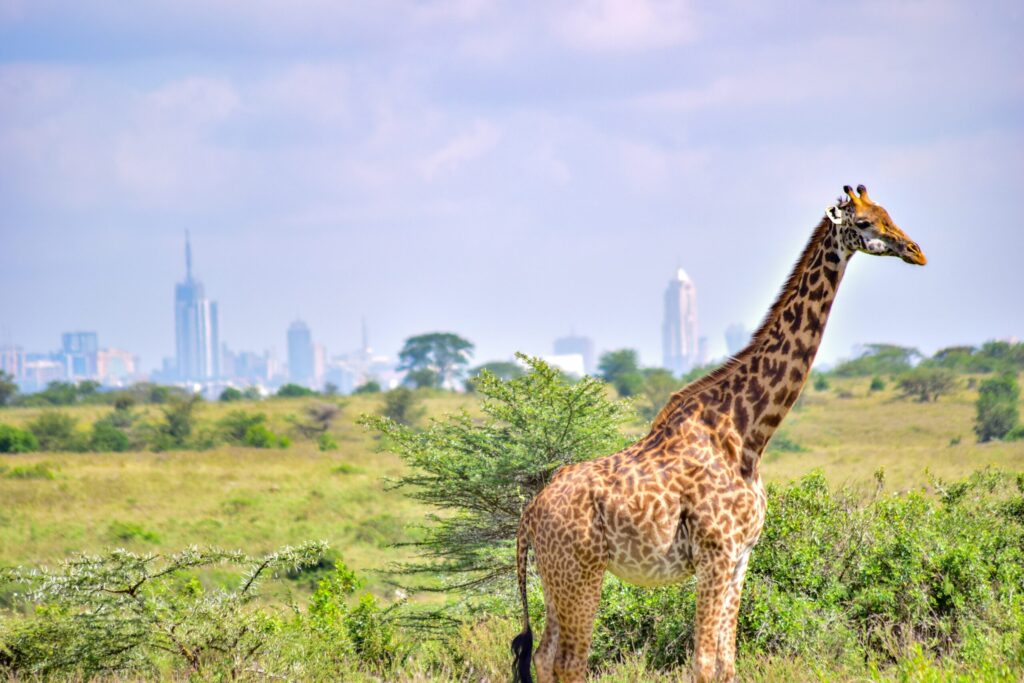
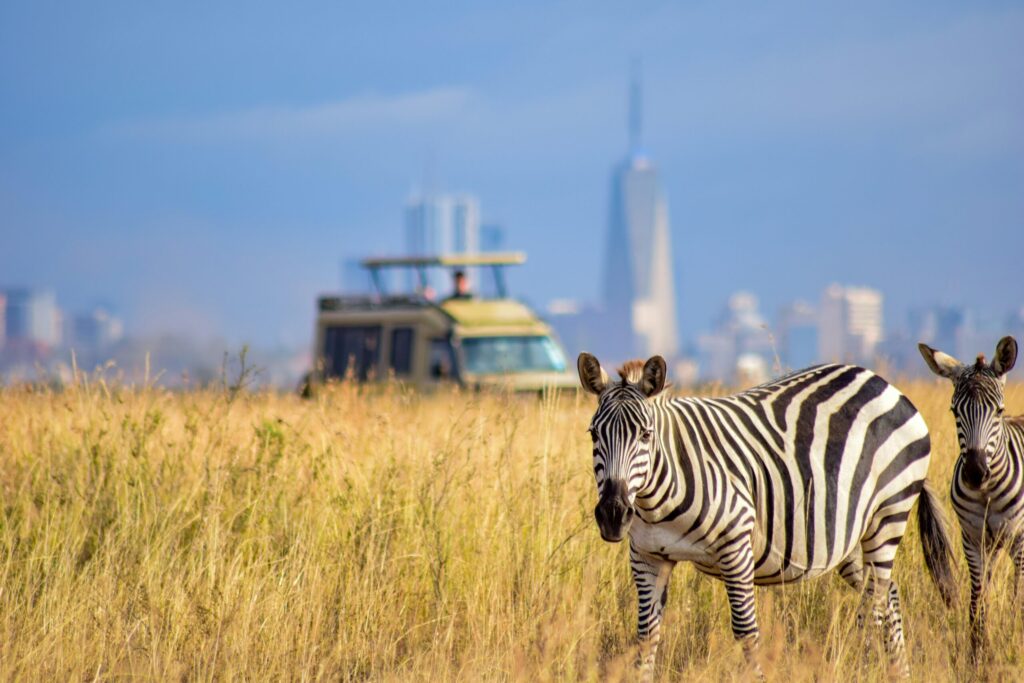
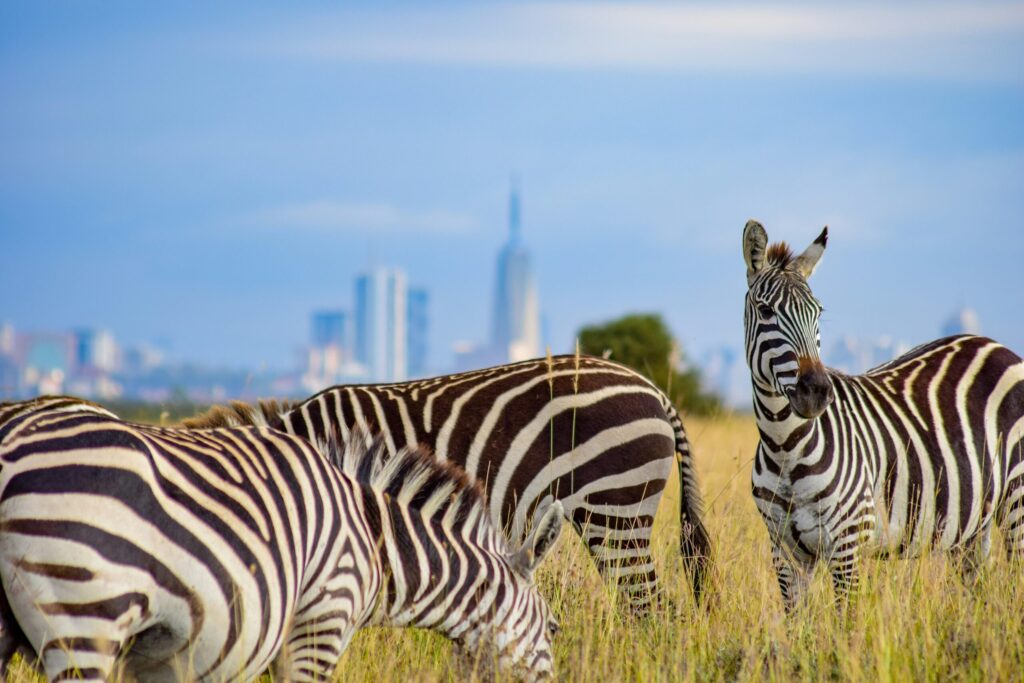
Why the park fee makes the game drive the smart add-on
The KWS requires the park fee for the Nursery so a game drive costs you the drive and not the ticket. Nairobi National Park covers 117 square kilometres on Lang’ata Road about 8 kilometres from the city centre. It was gazetted in 1946 as Kenya’s first national park and holds four of the Big Five: lion, leopard, buffalo and rhino. More than 400 bird species have been recorded there. It has no elephants, which makes the orphans the elephants of a Nairobi day. The gates open at 6:00am and close at 6:00pm.
You’ll pay for Nairobi National Park whether you drive in it or not.
First light is the productive window. Predators are still active and the black rhinos are on the move before the heat. If you want the park without the orphans and giraffes our half-day Nairobi National Park game drive gives you five hours of game viewing in the morning or afternoon. Its page lists the park fees separately so check what’s included before comparing prices.
Featured safari: Nairobi Day Trip: National Park, Sheldrick Elephant Orphanage and Giraffe Centre
This is the day we built the article around. One private vehicle, one early start, three stops and every entry fee covered.
| FEATURED SAFARI |
| Nairobi Day Trip: National Park, Sheldrick Elephant Orphanage and Giraffe Centre 1 day | Private, 2 to 6 guests | Easy | from $295 per person sharing Included: Private Land Cruiser with pop-up roof and an English-speaking driver-guide Hotel pickup at 6:00am and drop-off at your hotel or Jomo Kenyatta International Airport Nairobi National Park, Sheldrick Wildlife Trust and Giraffe Centre entry fees Bottled water on the game drive Not included: Tips, meals beyond bottled water, travel insurance and the optional Sheldrick adoption contribution. View this safari and request your dates |
A second morning: Kiambethu Tea Farm
If you have another free morning our Kiambethu Tea Farm day trip heads 30 kilometres north to Limuru for a farm tour, a forest walk, a tea tasting and a hosted luncheon. There’s no park fee and no early start.
Frequently asked questions
Is the Sheldrick Elephant Orphanage worth it?
Yes, if you can hold a booked 11:00am slot and don’t mind an hour on your feet. It’s the encounter we’d put first in Nairobi. The orphans are raised for release and only keepers touch them. The keeper’s talk gives each calf a name and a story. It’s fixed-time and busy and a non-resident adult pays about US$100 once the KWS fee is counted. Add a game drive and that fee works harder.
Is the Giraffe Centre worth it?
Yes, for about an hour and roughly US$11.50 per non-resident adult. You get eye-level contact with Rothschild’s giraffes, a short talk and a ticket that funds conservation and schooling for Kenyan children. It’s a managed feeding platform rather than wildlife viewing and it’s busiest from 11am to 1pm on weekdays. Go at 9:00am.
Can you touch or feed the baby elephants at Sheldrick?
No. Only the keepers feed and directly interact with the orphans because every orphan is meant to return to the wild. You watch from a visitor cordon though some calves may extend a trunk or bump along it. If you want a closer bond adopt an orphan. Adoptions start at US$50 a year and an in-person adoption at the end of the visit includes a certificate, an elephant watercolor print and a profile card.
Is the Giraffe Centre the same as Giraffe Manor?
No. The Giraffe Centre is AFEW Kenya’s public conservation and education centre, open to everyone from 9:00am to 5:00pm. Giraffe Manor is a hotel next door where guests see giraffes at their breakfast table. A Centre ticket doesn’t include the Manor.
Can you book the Sheldrick visit through Viator, GetYourGuide or Tripadvisor?
No. The Trust accepts only confirmations it issues itself and says it doesn’t accept purported bookings through third-party platforms such as Viator, GetYourGuide or Tripadvisor. If a tour operator books for you ask for a copy of the Trust’s own confirmation email.
Can foster parents visit the Nairobi orphans at 5pm?
Not according to the Trust’s current pages. Its visiting page and FAQ list one public hour from 11:00am to 12:00 noon and say foster parents attend it by advance booking like everyone else. Older guides still mention a 5pm foster hour. If you’ve adopted an orphan and want to be sure, ask the Trust’s Kenya office before you plan around it.
Are the Giraffe Centre and Sheldrick open on public holidays and Christmas Day?
The Giraffe Centre is open every day but the Sheldrick Nursery closes on Christmas Day. The Centre runs 9:00am to 5:00pm including weekends and all public holidays. The Trust’s public visit runs every day except 25 December. On other public holidays book Sheldrick early and expect the Centre to be busy all day.
Where do the orphans go when they grow up?
They move to the Trust’s reintegration units in the Tsavo region and then back into the wild. Voi and Ithumba are in Tsavo East National Park and Umani Springs is in the Kibwezi Forest. The process can take up to ten years and the Trust reports 95 calves born to wild-living former orphans. You can’t visit those units on a Nairobi day trip but guests staying at the Trust’s eco lodges can.
What should you wear and bring?
Wear closed shoes, a hat and sunscreen. Bring water. Carry your Sheldrick booking confirmation, a cash donation for the Trust and a card or M-Pesa for the Giraffe Centre. The Trust offers no refreshments and no public Wi-Fi and asks you to leave other drinks and snacks at home. Mornings can be cool so add a light layer. In the rains the mud bath turns muddy and shoes take the hit.
Is the Sheldrick Elephant Orphanage the same as the Nairobi Animal Orphanage?
No. The Nairobi Animal Orphanage is a separate KWS facility with its own entry fee and the Sheldrick Wildlife Trust doesn’t run it. The Sheldrick Elephant Orphanage is the Trust’s Nairobi Nursery, reached through the KWS Mbagathi Gate on Magadi Road.
Book the Nairobi day trip: park, orphanage and Giraffe Centre
This guide covered the three things that decide this morning: the Trust’s single booked hour, the KWS fee that applies to every Nursery visitor and the Giraffe Centre’s talent for swallowing time. Get them right and the elephants and giraffes of a Nairobi day trip take care of themselves. Get them wrong and you’re in a queue on Magadi Road at 10:27am watching a clock.
What we add is the part you shouldn’t have to manage. Our private Nairobi day trip covers the park, the Sheldrick Wildlife Trust and the Giraffe Centre in one Land Cruiser with a driver-guide who knows the gate. Hotel or airport pickup and every entry fee are included. We build it around your date and your flight. We can add Kiambethu Tea Farm or a longer Kenya safari around it. Talk to Hellen Asiko, our Director & Guest Experience Curator. She’ll plan the timings with you.
Check dates and book this day trip.
The elephants keep their hour, so we keep the clock.
Let's plan your East African safari
Tell us when you'd love to travel and a local specialist will craft a tailor-made route around you.


