Nairobi National Park: Can You Really See Lions Minutes from the City?
What a morning in Nairobi National Park looks like, what it costs at the gate in 2026 and how to fit it around a dawn arrival or an afternoon flight.
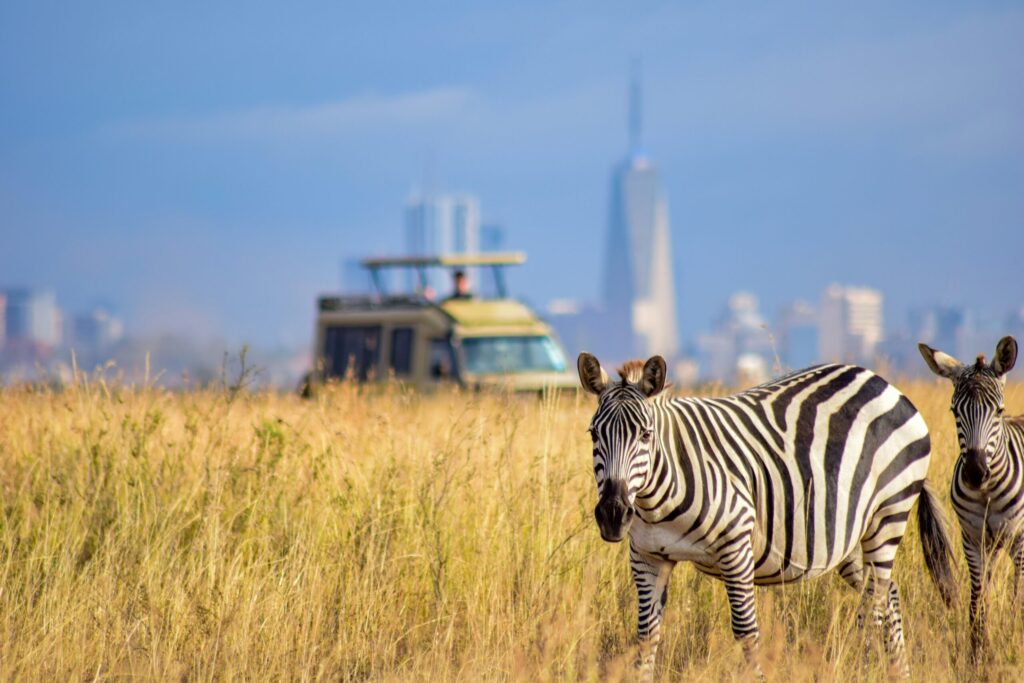
A Zebra spotted on a Nairobi National Park Safari, with the city's skyline in the background.
5:48am on Langata Road. The Main Gate of Nairobi National Park opens at six, so we wait with the engine off and the windows down. The air is cool. In the back seat two guests who landed at Jomo Kenyatta International Airport before dawn are still in the clothes they flew in. Their hotel has told them the room won’t be ready until 2pm.
That’s the arithmetic of a Nairobi arrival day. A dawn landing, a lobby chair and eight dead hours before anything starts. Meanwhile 117 square kilometres of savannah begin about eight kilometres south of the city centre, with lions, black rhino, leopard, buffalo and giraffe on them and a barrier that lifts at 6am sharp.
Can you really see lions minutes from the city? Yes. We’ll say so plainly. But two kinds of traveller get this park wrong. One dismisses it as a city zoo with a fence around it. The other books it as a Masai Mara substitute and leaves disappointed. Both are guessing.
Afrikan Accent Adventures is a Nairobi-based safari operator and this park sits on our doorstep. We know its gates, its fees and the hour it stops being worth the drive. Here is what the park is, what it costs and who should skip it, including the awkward fact that the half-day price on our own page isn’t the whole bill.
Our argument is simple. Nairobi National Park is the best use of the worst hours of your trip and it works if you get three things right: the hour you enter, the fee you budget for and the expectation you bring.
| QUICK ANSWER | Can you see lions in Nairobi National Park? Yes, you can see lions in Nairobi National Park, with dawn giving you the best odds. The Kenya Wildlife Service lists three resident prides: Kingfisher, Athi and Mokoyet. No drive can guarantee a sighting. Gates open at 6:00am and non-resident entry costs USD 80 per adult. |
At a Glance:
- Park: Nairobi National Park, gazetted in 1946 as Kenya’s first national park. 117 square kilometres.
- Managed by: Kenya Wildlife Service (KWS).
- Location: Main Gate on Langata Road, about 8 km from Nairobi’s city centre.
- Gate hours: 6:00am to 6:00pm daily.
- Wildlife: Lion, leopard, buffalo, black and white rhino, cheetah, giraffe, hippo and more than 400 bird species. No elephants.
- Entry fee (non-resident): USD 80 per adult and USD 40 per child aged 5 to 17, valid for up to 24 hours.
- From the airports: Wilson Airport 10 to 15 minutes to the Main Gate. Jomo Kenyatta International Airport 30 to 45 minutes at dawn.
- Our drives: Half-Day Nairobi National Park Game Drive from USD 25 per person. Nairobi Day Trip with Sheldrick and the Giraffe Centre from USD 295 per person.
What makes Nairobi National Park different from every other Kenyan park?
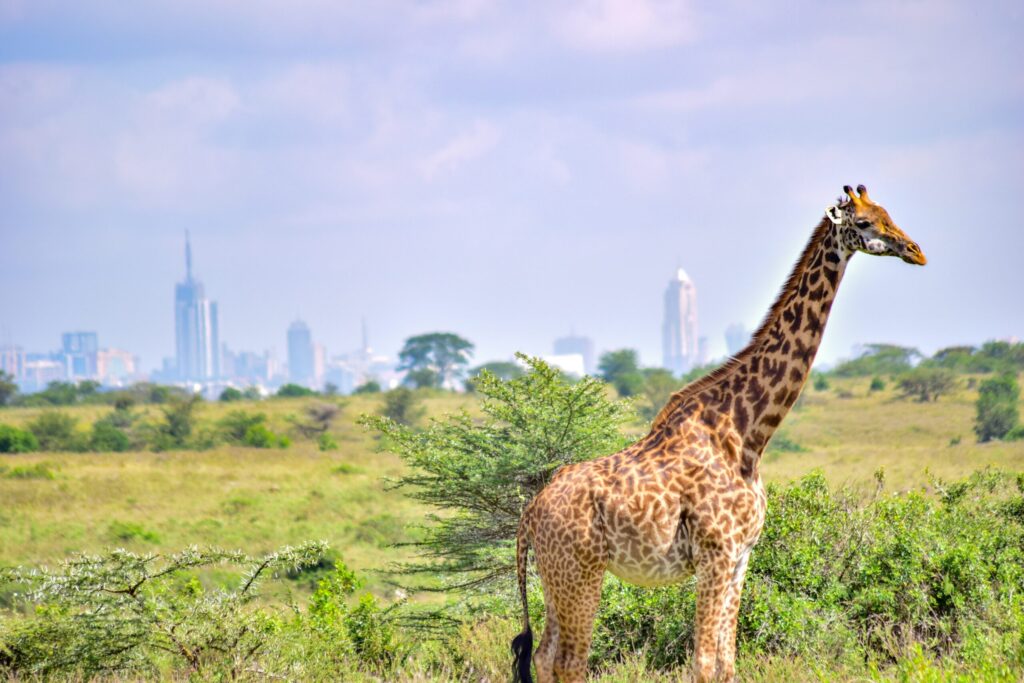
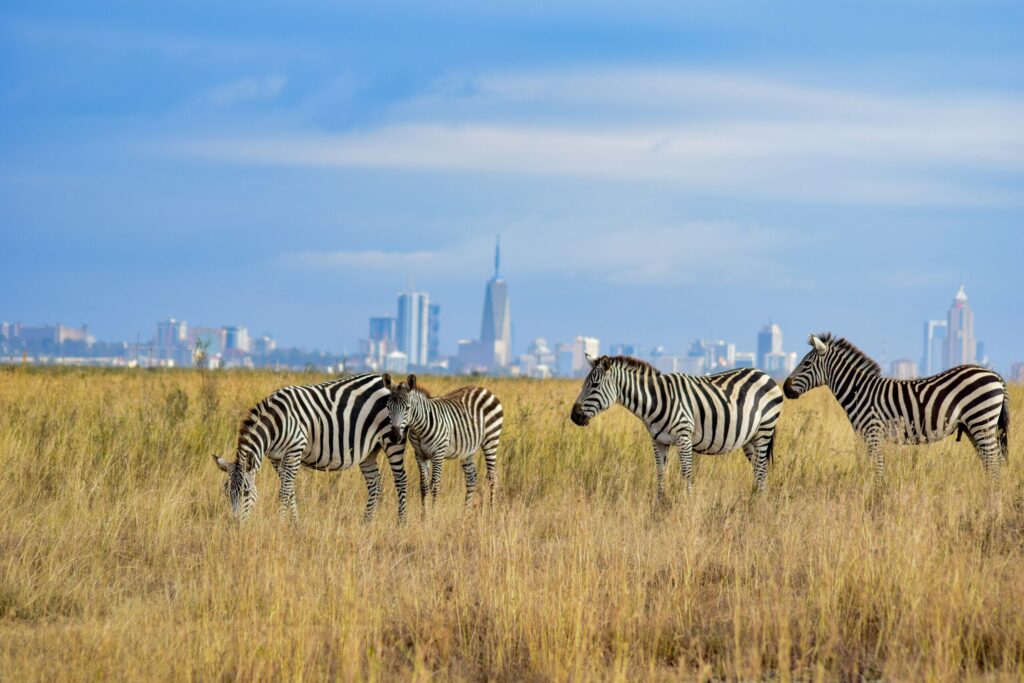
Nairobi National Park is a 117 square kilometre savannah park on the southern edge of Kenya’s capital, gazetted in 1946 as Kenya’s first national park. The Kenya Wildlife Service (KWS) bills Nairobi as the world’s wildlife capital. That’s a slogan, but the geography behind it is real. KWS puts the Main Gate on Langata Road about 8 kilometres from the central business district and from the open grassland you look north at the towers of Upper Hill and the city centre.
The fence tells the story. The park is fenced on its northern, eastern and western sides, where the city presses against it. The southern boundary is open, so animals can move out onto the Athi-Kapiti plains and the Kitengela rangelands and back again. That open flank is why this is a living park and not a zoo. It’s also why lions and the people building homes along the southern edge now share the same ground. Kenya’s 2025 national wildlife census report recommends a corridor linking the park with Athi-Kapiti so animals can keep moving.
Three sides are fenced. The open southern side is what keeps the park alive.
There are no elephants, so the park holds four of the Big Five: lion, leopard, buffalo and rhino. The rhinos are the headline. A Wildlife Research and Training Institute and KWS report cited by The Star in 2024 counted 98 black rhinos against an estimated carrying capacity of 44. In January 2024 KWS tranquilized three of them and moved them to Loisaba Conservancy in Laikipia as part of a 21-rhino translocation.
The park also carries national memory. The Ivory Burning Site Monument sits inside it. President Daniel Arap Moi set fire to 12 tones of ivory at the site in July 1989 and in April 2016 President Uhuru Kenyatta lit 105 tones of ivory and 1.35 tones of rhino horn there. KWS lists it among the park’s headline attractions.
Then there’s the infrastructure nobody edits out of the photographs. A railway bridge about 6 kilometres long carries the Nairobi to Naivasha standard gauge line across the park on pillars tall enough for animals to pass beneath. Aircraft heading for Wilson Airport and Jomo Kenyatta International Airport cross the sky above the plains. We don’t hide any of this from guests. The mix is the point of the place and it’s also the argument for protecting it.
Can you really see lions with the Nairobi skyline behind them?
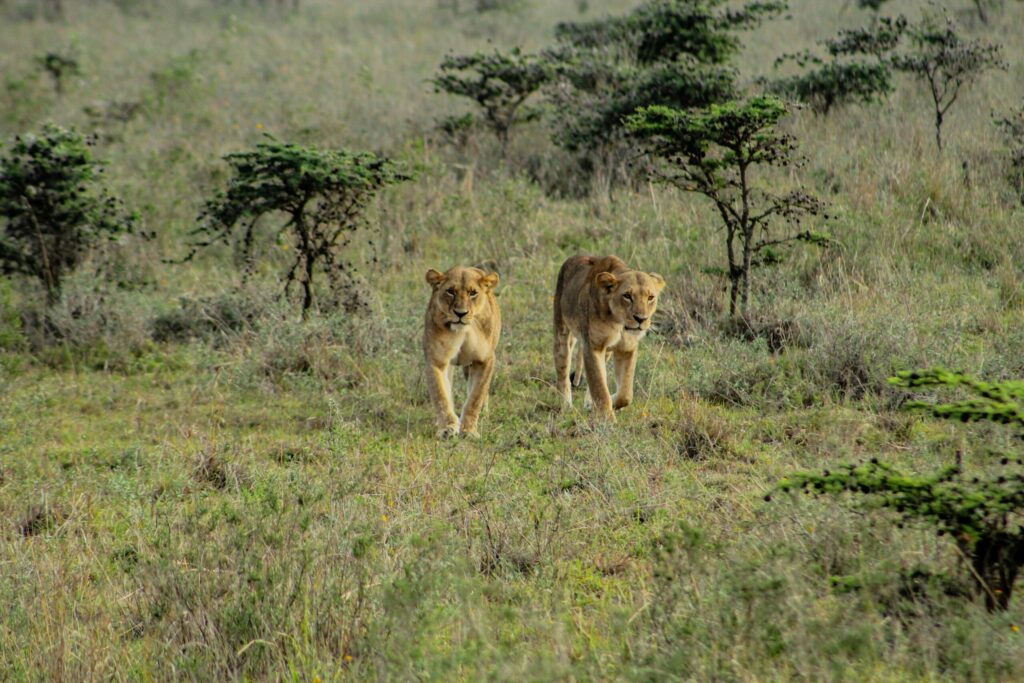
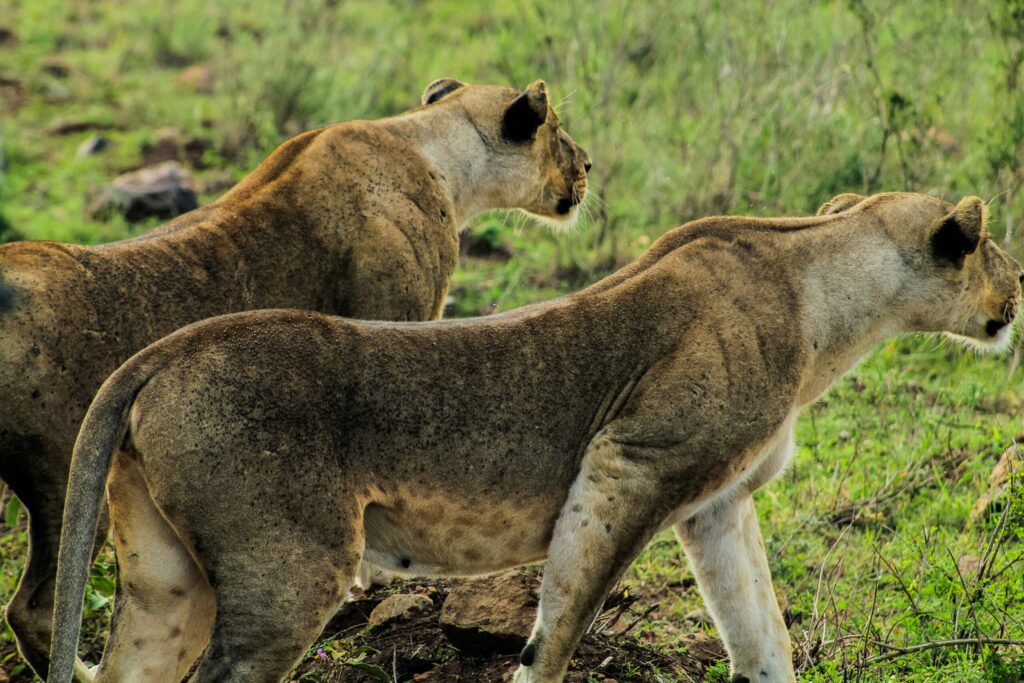
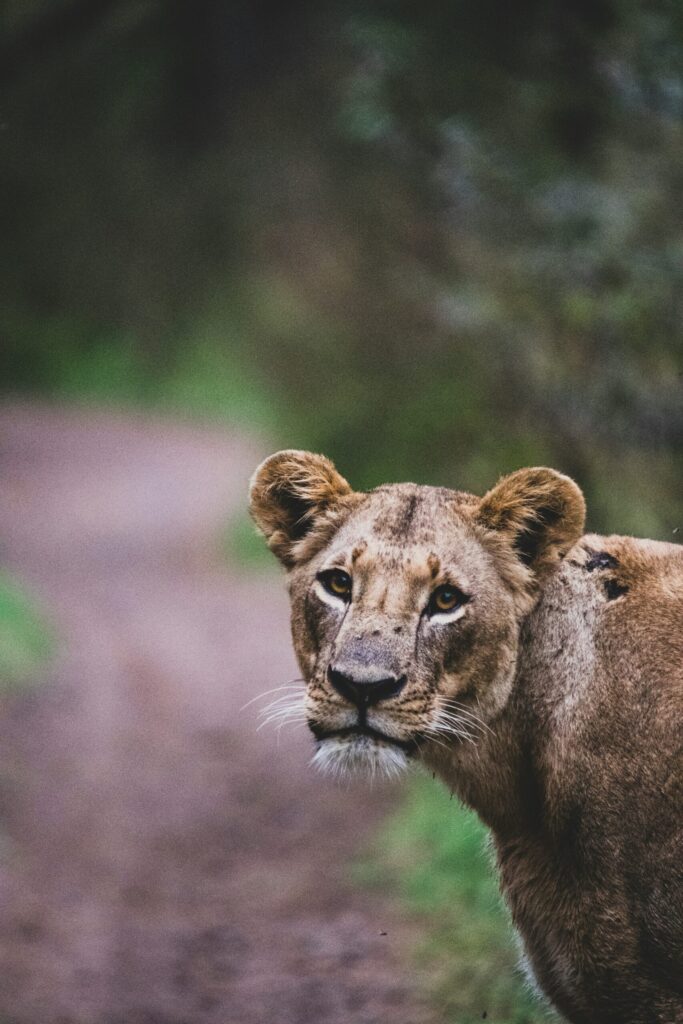
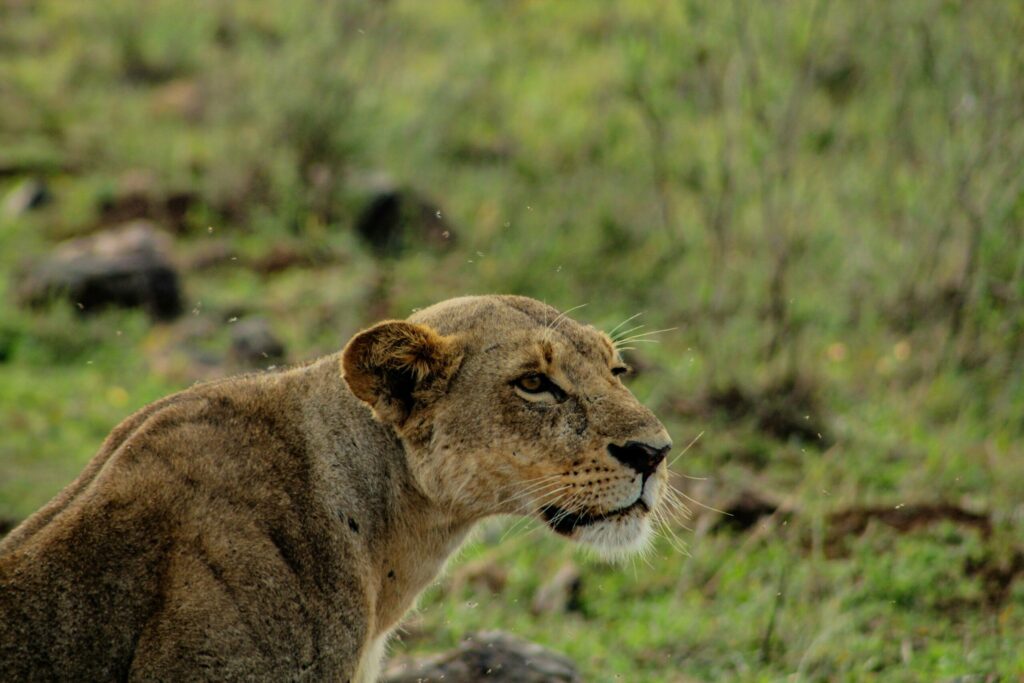
Yes, you can see lions in Nairobi National Park. KWS lists three resident prides: Kingfisher, Athi and Mokoyet. It doesn’t publish a fixed headcount and estimates quoted over the past 15 years have run from about 25 to more than 40 animals. That’s a modest number of cats to find in 117 square kilometres of grass, acacia and river gorge, so the hour you enter and the guide beside you decide the odds.
Our guides work the park by pattern. Lions hold territories across the open Athi basin in the southern and central sections. Leopards are most visible in the riverine forest along the Athi and Mbagathi rivers before the heat builds. The black rhinos are busiest before 8:00am.
Now the skyline. The frame exists: a pride on the northern plains with the towers of Upper Hill and the city centre standing behind it. It also depends on where the pride chose to sleep that morning and lions don’t read itineraries. On some mornings the skyline shot is a giraffe or a rhino instead. We’d rather you hear that here than at the gate.
We won’t promise a lion. A guest on one of our morning drives in March 2025 wrote afterwards on Google that their group saw almost the whole Big Five, missing only the elephant and the leopard. The elephant was never going to be there. The leopard takes luck.
Give the animals room. KWS rules keep vehicles at least 20 metres from wildlife, cap speed at 40 kilometres an hour, ban hooting and keep everyone inside the vehicle outside designated areas. A lioness that settles stays settled. One that feels crowded walks away and takes your photograph with her.
| EXPERT NOTE We stay in radio contact with other guides through the whole drive, so a good sighting travels fast. When we arrive it’s engine off, windows low and voices lower. We keep to the 20 metre minimum even when the lioness doesn’t. Nicholas Wangithi, Director and Founder |
What wildlife can you realistically see in one morning?
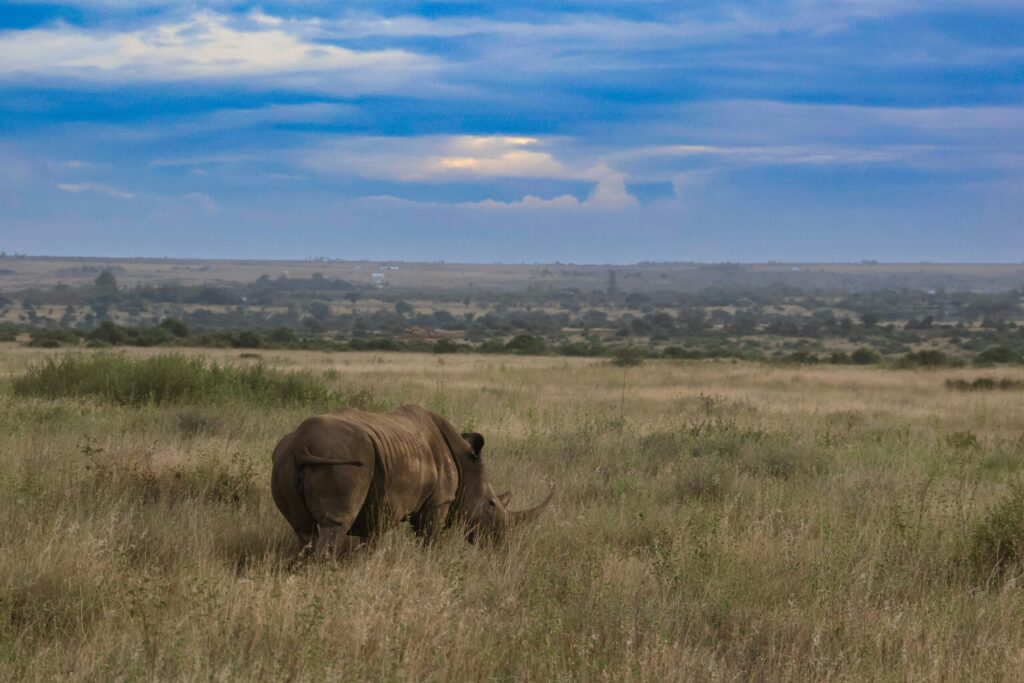
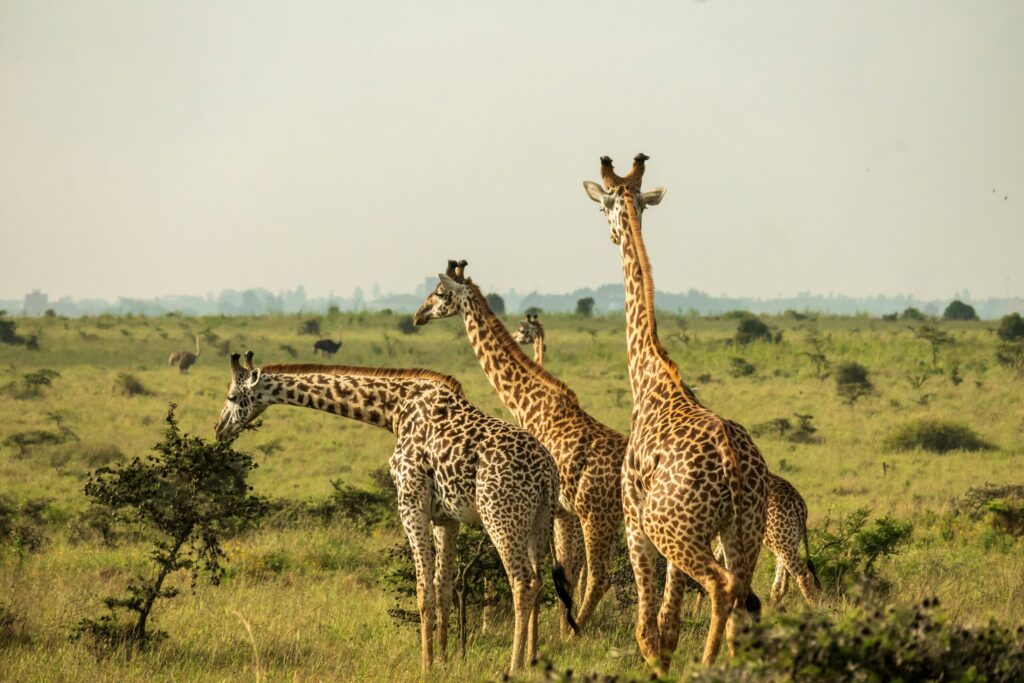
KWS counts more than 100 animal species in the park and more than 400 bird species. You won’t see them all before lunch. Here’s how we’d sort a drive honestly.
What you will almost certainly see
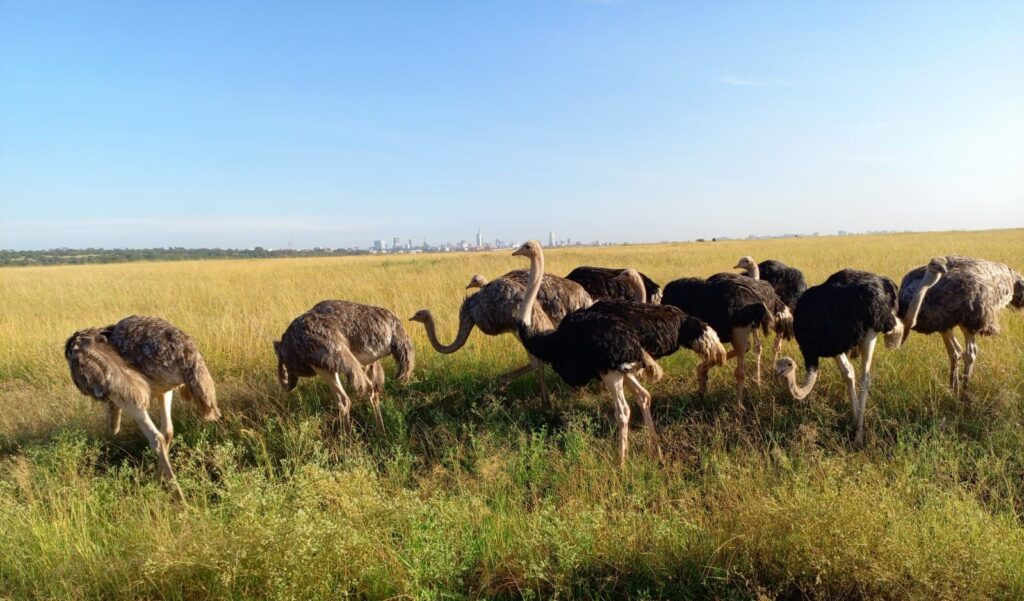
Zebra, giraffe, wildebeest, impala, gazelles, hartebeest, eland, warthog, ostrich and baboon. On the open Athi basin these animals are the backdrop to everything else. The photograph guests take home first is usually a giraffe against the glass towers of Upper Hill.
What most morning drives find
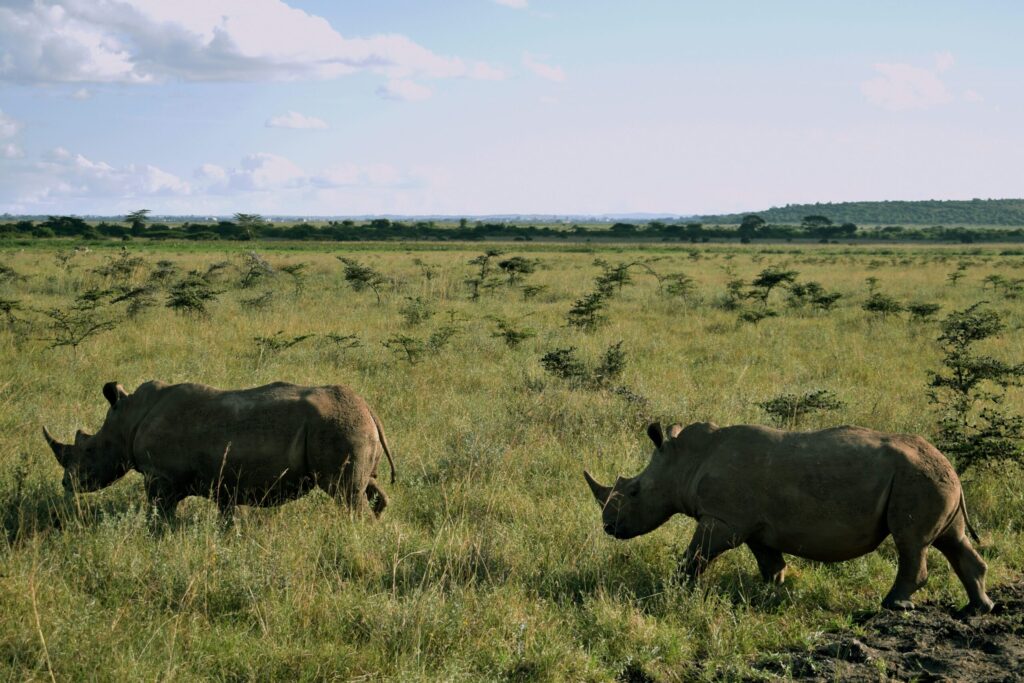
Black rhino and buffalo. The rhino count is high enough that sightings are common on a morning drive and the animals are busiest before 8:00am. White rhino share the park too.
What takes luck and patience
Lion, cheetah and spotted hyena take patience. The leopard takes luck. Hippo and crocodile are the safer bet, at the Hippo Pools in the south of the park.
The birds
More than 400 species are recorded, from secretary birds and ostriches on the grassland to saddle-billed storks and African fish eagles at the water. Migrants arrive between November and April. Birders who dismiss a city park are consistently wrong about this one.
If anyone sells you the Big Five before lunch in Nairobi, check the arithmetic. The park has four. The fifth comes from the orphaned elephants at the Sheldrick Wildlife Trust, which is a different experience and we cover it below.
What is the best time of day and best month to visit Nairobi National Park?
What time should I go to Nairobi National Park?
Go at 6:00am. KWS opens the gates at 6:00am and closes them at 6:00pm. The first two hours are the best of the day. Predators are still on the move, the rhinos are active and the light is soft. By late morning the heat pushes animals into cover and the drive turns into a search.
Afternoons work and we run them, with pickups from about 1:00pm. You must be out by the 6:00pm closing. Choose the afternoon only when the morning won’t fit.
Leave early for the road as well as the animals. Weekday mornings between 7:00am and 9:30am are when Nairobi’s roads clog. A 5:30am start puts you through the gate before most of the city is moving.
The hour matters more than the month. A 6:00am start in March beats a 9:00am start in August.
Which month is best?
The park is open every day of the year. The dry months, January to February and June to October, put the herbivores near permanent water and shorten the grass, which makes everything easier to see. The long rains from March to May turn some tracks to mud, thin the vehicles and let herds spread south across the open boundary. The short rains from October to December green the park and migrant birds arrive between November and April. If we had to pick: late June to October for animals, November to April for birds and any month for a 6:00am start.
How long does a Nairobi National Park visit take?
| QUICK ANSWER | How long does a Nairobi National Park visit take? A Nairobi National Park visit takes three to six hours. The drive itself runs three to five hours inside the gate. Our half-day drive takes about six hours with transfers. Our day trip with Sheldrick and the Giraffe Centre finishes by 2:00pm. |
Three hours covers one good loop. Five hours lets a guide work the whole park, go back to a sighting and stop for the birds, which is why our half-day drive gives you five inside the gate. Add the transfers and you’re out for about six hours from pickup to drop-off.
Our Nairobi day trip has a different shape. It starts with a 6:00am hotel pickup, spends three to four hours in the park, stops for the Sheldrick Wildlife Trust’s public hour from 11:00am and finishes at the Giraffe Centre. Most days we’re done between 1:00pm and 2:00pm.
Under three hours and you spend most of it driving between sightings. Our advice is to give the park at least three and to give it five if you’re a photographer or a birder.
How far is Nairobi National Park from JKIA and the city centre?
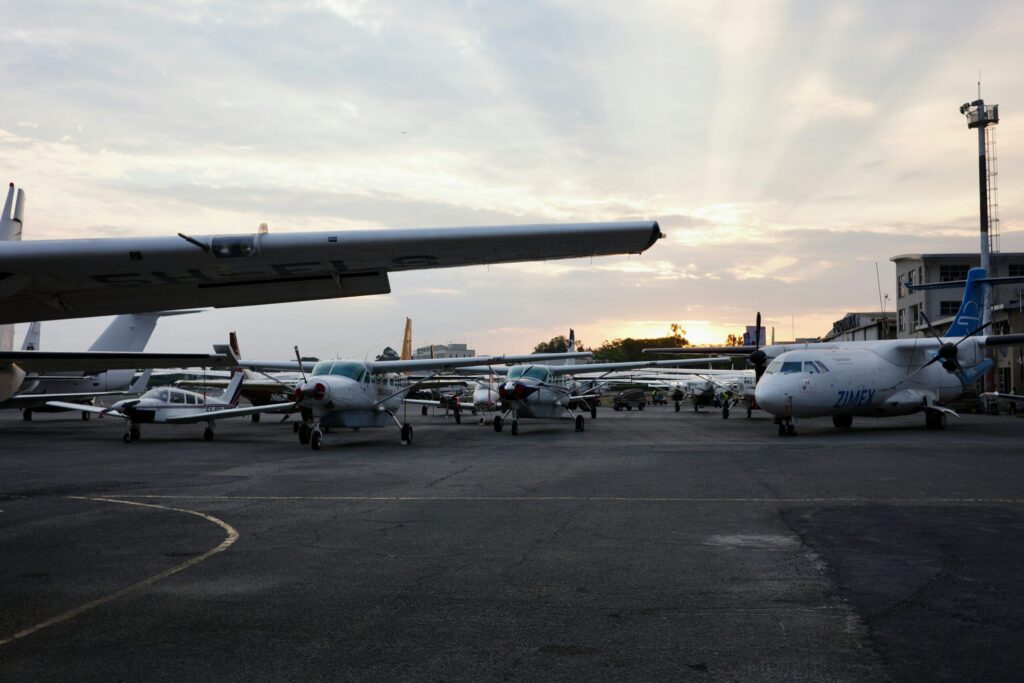
| QUICK ANSWER | How far is Nairobi National Park from the airport? Nairobi National Park’s Main Gate is 30 to 45 minutes by road from Jomo Kenyatta International Airport at dawn. Wilson Airport is closer, at 10 to 15 minutes. The gate is about 14 km from JKIA in a straight line. It sits roughly 8 km from the city centre. |
The Main Gate sits on Langata Road about 8 kilometres from the city centre by KWS’s own directions. Other sources quote 7 to 10 kilometres depending on where they measure from and all of them mean the same thing: it’s a short drive. Our hotel pickups for the day trip reach the Main Gate in 15 to 25 minutes depending on where you’re staying.
Jomo Kenyatta International Airport lies east of the park and Wilson Airport sits to the north on Langata Road. From JKIA allow 30 to 45 minutes to the Main Gate before the morning rush and more after it. Wilson is the shorter hop at 10 to 15 minutes.
Traffic decides the rest. Our guide to Nairobi’s airports covers the weekday window between 7:00am and 9:30am when the roads out of JKIA clog. Before 7:00am a clear road can cut the drive to a fraction of that.
Which gate should you use?
The Main Gate on Langata Road is the principal entrance and sits beside KWS headquarters, the Nairobi Safari Walk and the Nairobi Animal Orphanage. An East Gate on the Embakasi side is the closest entrance to JKIA. The Mbagathi Gate is the route to the Sheldrick Wildlife Trust nursery. Smaller gates on the southern and eastern sides serve lodges and KWS. We enter at the Main Gate on our day trip.
How much does a Nairobi National Park safari cost and what is included?
| QUICK ANSWER | How much is a Nairobi National Park game drive? A Nairobi National Park game drive costs from about USD 105 per adult. That’s USD 25 for the guide and shared vehicle plus USD 80 in park fees. Children aged 5 to 17 pay USD 40 in fees. Our day trip, entry fees included, starts at USD 295 per person. |
The KWS park fee in 2026
KWS raised its conservation fees on 1st October 2025 for the first time in 18 years. Nairobi National Park’s non-resident adult fee went from USD 43 to USD 80. That’s the biggest line on any Nairobi morning, so read it before you read anyone’s tour price. The fee buys one entry valid for up to 24 hours and is paid online through KWS’s eCitizen platform.
KWS conservation fees for Nairobi National Park, effective 1st October 2025
| Visitor category | Adult | Child (5 to 17) |
| Non-resident | USD 80 | USD 40 |
| African citizen (outside East Africa) | USD 40 | USD 20 |
| Kenya resident (foreign national with a resident permit) | KES 1,350 | KES 675 |
| East African citizen (Kenyan citizens included) | KES 1,000 | KES 500 |
| Nairobi Package, non-resident (park, Sheldrick Orphanage and Giraffe Centre) | USD 295 | USD 190 |
Vehicles pay separately: KES 600 a day (about USD 5) for fewer than six seats and KES 1,500 (about USD 12) for six to 12 seats. Children aged five and under are exempt, as are driver-guides registered with the Tourism Regulatory Authority who belong to a registered association. The Nairobi Package adds the Nairobi Safari Walk and the Nairobi Animal Orphanage for USD 25 more per adult.
What a guided morning adds
Our Half-Day Nairobi National Park Game Drive starts from USD 25 per person and lists the park fee separately at USD 80 per adult and USD 40 per child. Our product page shows USD 25 as an early-bird rate against a regular USD 40, so budget USD 105 to 120 per adult before tips. The price covers pickup from your hotel, Jomo Kenyatta International Airport or Wilson Airport, a 4×4 Land Cruiser, an English-speaking driver-guide and bottled water.
Our Nairobi Day Trip with the Sheldrick Wildlife Trust and the Giraffe Centre starts from USD 295 per person and includes hotel pickup and drop-off, all three entry fees and a private 4×4 Land Cruiser with a pop-up roof and radio. At current published rates the three tickets for a non-resident adult come to roughly USD 112: USD 80 for the park, USD 20 for the Sheldrick Wildlife Trust and KES 1,500 (about USD 12) for the Giraffe Centre.
You can build that morning yourself for about that much plus a ride. We’d rather you know it. What you pay us for is a guide who works the park by radio, a private vehicle and a timetable that has you at Sheldrick’s gate on time.
| EXPERT NOTE Read the fee line before the price line. On a half-day drive the park fee is most of the bill, so a cheaper-looking tour that leaves it out isn’t cheaper. Ask what’s included before you compare. Kibara Mugo, Safari Writer and East Africa Specialist |
Is Nairobi National Park worth it and who should skip it?
| QUICK ANSWER | Is Nairobi National Park worth visiting? Yes, Nairobi National Park is worth visiting if you have a free morning in Nairobi. You get rhinos, lions and a city skyline in a single drive. It isn’t a substitute for the Masai Mara. Skip it if you have fewer than six free hours. |
Who should add it
Add it if you land at dawn and your room isn’t ready until 2pm. Add it if you have a layover of nine and a half hours or more. Add it for a last morning before a flight that leaves from 4:00pm. Add it if you’re travelling with young children who need an animal in front of them within the hour. And add it if you’re a first-time visitor who wants to learn how to look at wildlife before paying Masai Mara rates to practice.
Nairobi National Park is the best use of the worst hours of your trip.
Who should skip it
Skip it if you want elephants in the wild. That’s Amboseli. Skip it if you have fewer than six free hours. Skip it if this is your only safari and you’re expecting the Masai Mara’s horizon and the migration, because this is a half-day add-on and not the safari itself. And skip the Nairobi Safari Walk and the Nairobi Animal Orphanage when time is short. You came for animals that can leave.
How do you add Nairobi National Park to an arrival day or a layover?
A dawn arrival
If you land between 4:00am and 8:00am and your room isn’t ready until the afternoon, you’re the park’s best customer. Allow for the queue first. The immigration hall at Jomo Kenyatta International Airport can run 30 to 60 minutes at peak arrival times and then there’s the baggage carousel and customs. Our driver-guide meets you at the airport and takes you to the gate. Our guide to Nairobi’s airports walks through that first hour step by step.
Most nationalities need an approved Kenya eTA to leave the airport and passengers who stay airside in transit don’t. Our Kenya eTA guide covers the application.
A layover
Our arithmetic for an international connection: 90 minutes to clear immigration and baggage, an hour to the gate, three hours in the park, an hour back and three hours to check in for your next flight. That adds up to about nine and a half hours between landing and departure and that’s the floor. Anything shorter and you’re better off staying airside with a good meal.
A last-day send-off
On a final morning the day trip starts at 6:00am and usually finishes between 1:00pm and 2:00pm, so it suits flights that leave from 4:00pm. For earlier departures we cut the Giraffe Centre and drive from Sheldrick straight to the airport.
| EXPERT NOTE Send us three times: when you land, when your next flight checks in and where you’re sleeping. We build the morning backwards from the hard time, not forwards from the landing. And ask your hotel for a picnic breakfast, because a 5am pickup beats the breakfast room. Hellen Asiko, Director and Guest Experience Curator |
Can you combine Nairobi National Park with the Giraffe Centre and the Sheldrick Wildlife Trust?
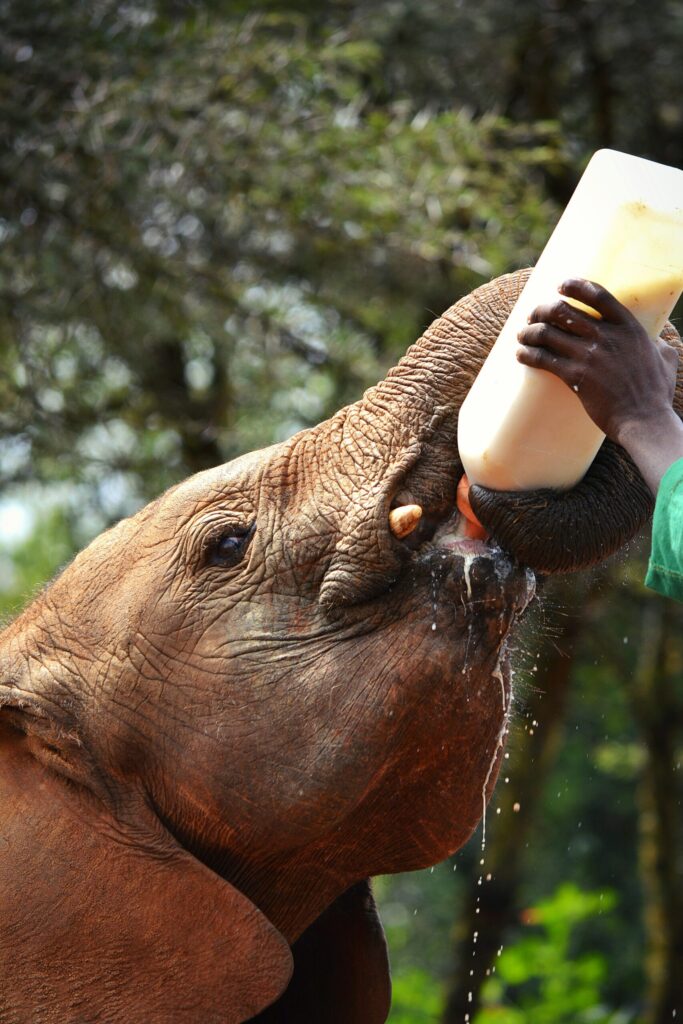
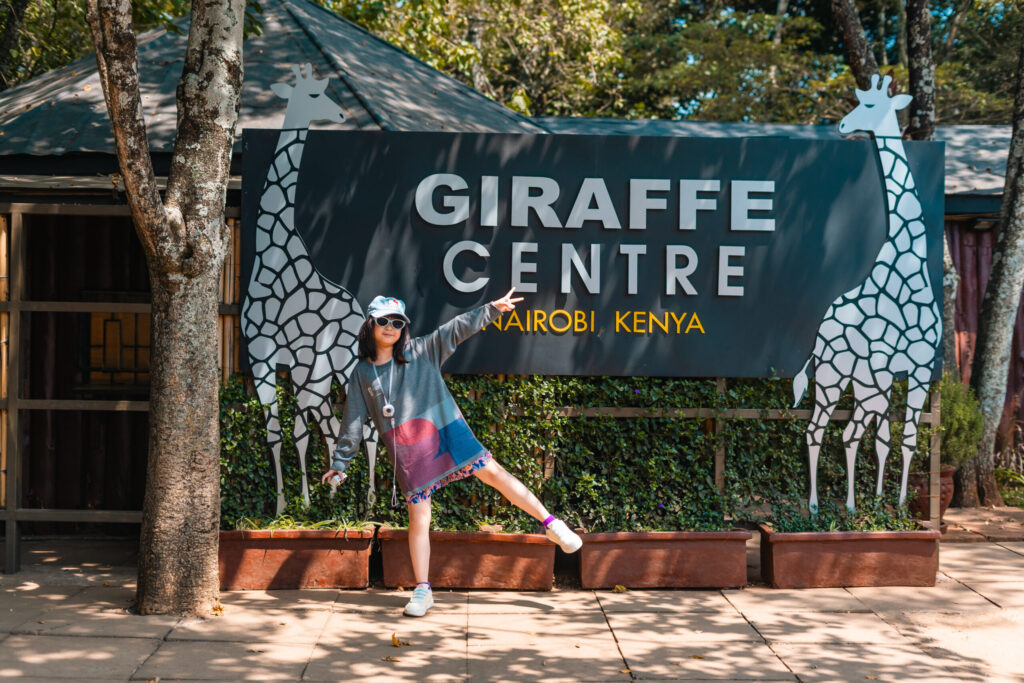
Yes. It’s the best use of a Nairobi morning when you have until early afternoon. The order matters. Start in the park at first light, reach the Sheldrick Wildlife Trust for its public visit from 11:00am to 12 noon and finish at the Giraffe Centre. The Trust’s hour is fixed. Everything else bends around it.
The Sheldrick Wildlife Trust Nairobi Nursery runs its public visit daily except 25 December. Entry is strictly by advance booking. The Trust takes bookings by email, needs at least two business days to reply, takes no same-day visitors and honors only confirmations it issues itself, not those from third-party platforms. Entry donations are USD 20 for adults aged 12 and over and USD 5 for children under 12, paid in cash on the day. Arrive by 10:30am because the visit can’t be delayed or extended for late arrivals.
Here is the piece most visitors miss. Since 19th September 2023 KWS has required everyone visiting the nursery to pay Nairobi National Park’s entry fee at the Mbagathi Gate, even if they never drive further. Pay for Sheldrick and you’ve already paid for the game drive. Make the drive count.
What you’ll see is the orphaned elephants running out of the forest for their midday milk and mud bath while a keeper explains each calf’s story. Only keepers feed or handle the elephants because every orphan is meant to return to the wild.
The African Fund for Endangered Wildlife Giraffe Centre in Langata opens daily from 9:00am to 5:00pm. Jock and Betty Leslie-Melville founded it in 1979 to rebuild the Rothschild’s giraffe population. Non-resident adults pay KES 1,500 and children pay KES 750 with under-threes free. The Centre takes M-Pesa and cards only. We allow 30 to 45 minutes on the raised feeding platform.
Which of our Nairobi National Park safaris should you book?
We run two Nairobi National Park safaris. Pick by how much of the morning you want to give away.
| FEATURED SAFARI Half-Day Nairobi National Park Game Drive from $25 per person Best for: Layovers, tight schedules and anyone who wants the park without the extras. Timing: Morning pickup 5:00am to 5:30am with five hours of game viewing from 6:15am. Afternoon pickup at 1:00pm. Includes: Hotel, Jomo Kenyatta International Airport or Wilson Airport pickup, 4×4 Land Cruiser, English-speaking driver-guide and bottled water. Not included: Park fees of USD 80 per adult and USD 40 per child, tips and meals. View the Half-Day Nairobi National Park Game Drive |
| FEATURED SAFARI Nairobi Day Trip: National Park, Sheldrick Elephant Orphanage and Giraffe Centre from $295 per person Best for: Families, first-time visitors and guests with a flight from 4:00pm. Timing: 6:00am hotel pickup, three to four hours in the park, Sheldrick Wildlife Trust at 11:00am and the Giraffe Centre after. Private for two to six guests. Includes: All three entry fees, private 4×4 Land Cruiser with pop-up roof and radio, driver-guide, bottled water and drop-off at your hotel or Jomo Kenyatta International Airport. Not included: Tips, meals and any Sheldrick adoption contribution. View the Nairobi Day Trip |
Our two Nairobi National Park safaris side by side
| Safari | Time | Park fees | Price | Best for |
| Half-Day Nairobi National Park Game Drive | About 6 hours door to door | USD 80 adult and USD 40 child, extra | USD 25 early-bird (USD 40 regular) | Layovers and tight schedules |
| Nairobi Day Trip with Sheldrick and the Giraffe Centre | 6:00am to about 1:00pm or 2:00pm | Entry fees included | USD 295 | Families, first-timers and flights from 4:00pm |
Not sure which fits? Tell us when you land and when you leave and we’ll tell you which one works.
What should you bring and what are the park rules?
Bring a camera, binoculars, sunscreen, a hat, sunglasses, insect repellent and a light jacket for the cool morning air. Neutral colours help. Wear closed shoes. We provide bottled drinking water on our drives.
The KWS rules that matter: stay inside the vehicle outside designated areas, keep the doors closed, hold to 40 kilometres an hour, stay on the roads, keep 20 metres from the animals, never feed wildlife and don’t hoot. They apply to every vehicle including ours.
Frequently asked questions about Nairobi National Park
Can you see lions in Nairobi National Park?
Yes, you can see lions in Nairobi National Park, but no operator can guarantee one. The Kenya Wildlife Service lists three resident prides named Kingfisher, Athi and Mokoyet. Dawn gives the best odds and a guide who knows where each pride was last seen improves them.
Is Nairobi National Park worth it for first-time visitors?
Yes, if you have a free morning, because it puts rhino, lions, giraffe and a city skyline in front of you within hours of landing. It works as a warm-up before a longer safari and as a send-off after one. It isn’t a substitute for the Masai Mara or Amboseli.
How much does Nairobi National Park cost for non-residents?
Non-resident entry costs USD 80 per adult and USD 40 per child aged 5 to 17 for up to 24 hours. Children aged five and under are exempt. Vehicles pay separately from KES 600 a day and a guided drive adds the guide and vehicle on top.
How long do you need at Nairobi National Park?
Allow three to five hours inside the park and about six hours door to door. Our half-day drive gives you five hours in the park. Our day trip with Sheldrick and the Giraffe Centre finishes between 1:00pm and 2:00pm.
What is the best time of day for a Nairobi National Park game drive?
Early morning is best, so be at the gate when it opens at 6:00am. Predators are still moving, rhino are busiest before 8:00am and the light is soft. Afternoon drives work but the gates close at 6:00pm.
Can you visit Nairobi National Park on a layover or arrival day?
Yes, if you have about nine and a half hours before an international departure or a free morning after you land. Most nationalities need an approved Kenya eTA to leave the airport while transit passengers who stay airside don’t. We collect guests from Jomo Kenyatta International Airport or Wilson Airport.
How far is Nairobi National Park from the airport?
Nairobi National Park’s Main Gate is 30 to 45 minutes by road from Jomo Kenyatta International Airport at dawn and about 14 km away in a straight line. Wilson Airport is 10 to 15 minutes away. Both journeys stretch in the weekday rush between 7:00am and 9:30am.
Are there elephants in Nairobi National Park?
No, Nairobi National Park has no elephants, so it holds four of the Big Five. The orphaned elephants at the Sheldrick Wildlife Trust nursery inside the park are the closest you’ll get and they’re in a rescue program, not wild.
Can you self-drive in Nairobi National Park?
Yes, private vehicles can enter and KWS charges KES 600 a day (about USD 5) for vehicles with fewer than six seats on top of the entry fee. Keep to 40 kilometres an hour and stay on the marked roads. A guide adds radio contact with other guides and knowledge of where the prides were last seen, which is a big part of finding lions.
Is Nairobi National Park safe?
Yes, a guided drive is as safe as any wildlife park visit because you stay inside the vehicle. KWS rules keep everyone in the vehicle outside designated areas and 20 metres from the animals. Wild animals are unpredictable, so follow your guide’s instructions.
Can you do a night drive in Nairobi National Park?
Not on a standard visit, because the gates close at 6:00pm unless you’re staying overnight. The KWS fee schedule lists a night game drive charge of USD 50 per person per trip in selected parks on top of entry. Night drives need to be authorized in advance, so ask us before you plan around one.
Can children visit Nairobi National Park?
Yes, children of any age can join a game drive and KWS exempts children aged five and under from entry fees. Non-resident children aged 5 to 17 pay USD 40. Our day trip suits families because all three stops are short, close together and easy on small legs.
Do you need to book the Sheldrick Wildlife Trust in advance?
Yes, the Trust takes public visits by advance booking only. It issues its own confirmations by email, asks for at least two business days to reply and accepts no same-day bookings. The public visit runs from 11:00am to 12 noon daily except 25th December.
Add a Nairobi National Park morning to your arrival day
You now have the numbers: a 6:00am gate, USD 80 in park fees, three to six hours depending on what you add and about nine and a half hours as the floor for an international layover. We’re Afrikan Accent Adventures, a Nairobi-based safari operator. Beyond the two Nairobi drives above we plan the longer safaris that follow, from the Masai Mara and Amboseli to Samburu and the conservancies, with your arrival day built around your flight instead of against it.
Tell Hellen Asiko, our Director and Guest Experience Curator, when you land and when you leave. She will fit a Nairobi National Park morning into the gap and quote it alongside the rest of your trip. You can start with the Half-Day Nairobi National Park Game Drive or the Nairobi Day Trip with Sheldrick and the Giraffe Centre.
The room won’t be ready until 2pm, but the gate opens at 6am.
Let's plan your East African safari
Tell us when you'd love to travel and a local specialist will craft a tailor-made route around you.


