

 Budget Safari
📍 Nairobi National Park
Nairobi Day Trip: National Park, Sheldrick Elephant Orphanage and Giraffe Centre
from$295
★★★★★ 5
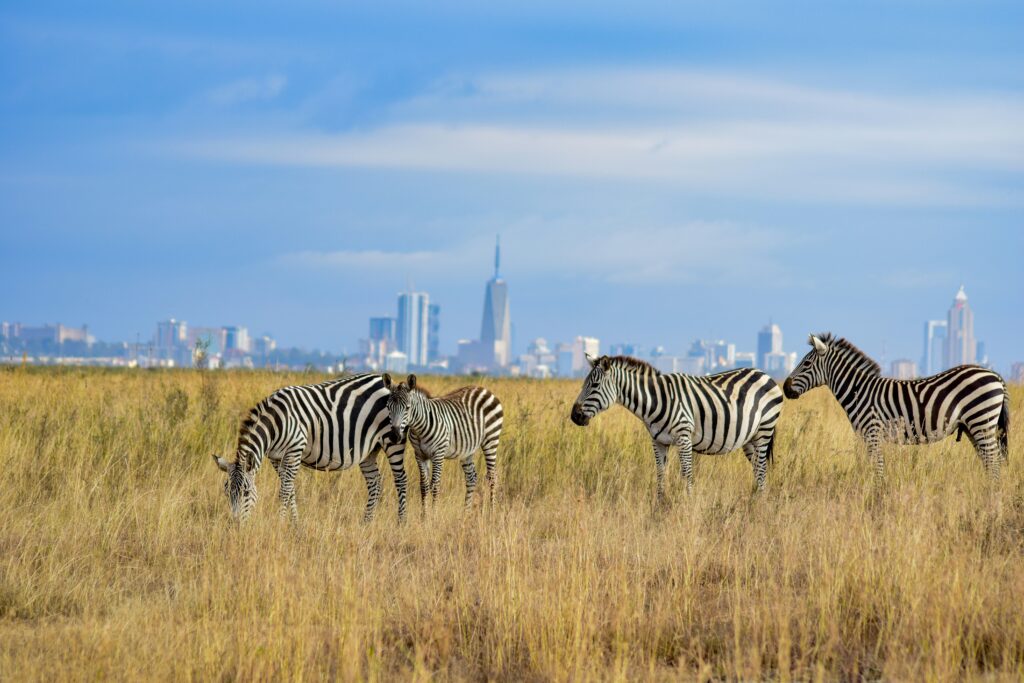
The world's only wildlife capital - lions, rhinos and giraffes framed against Nairobi's skyline.
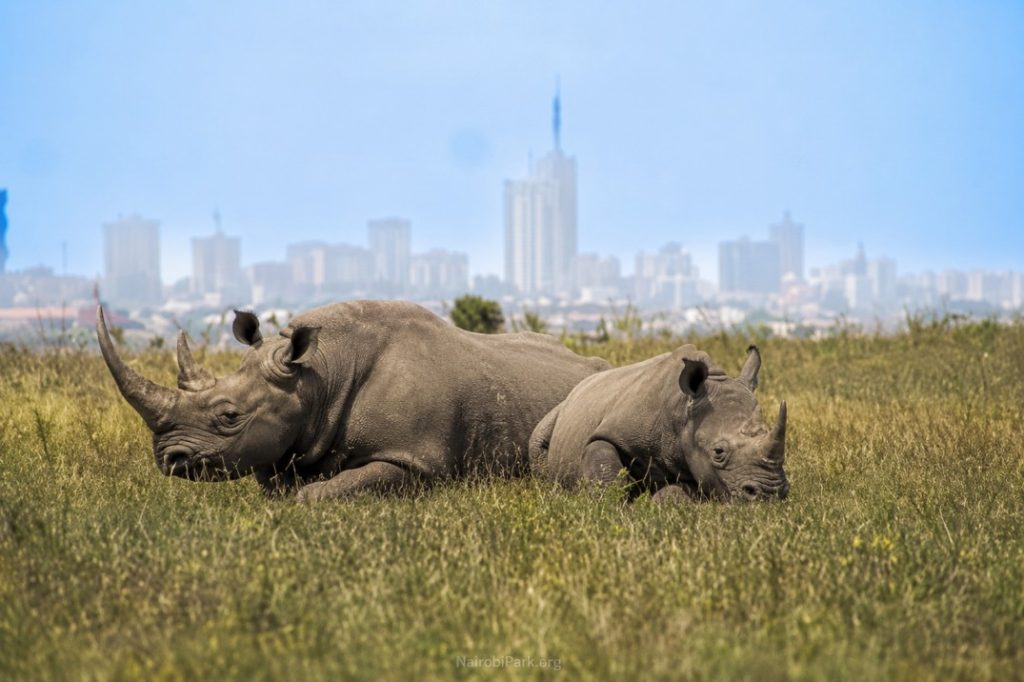
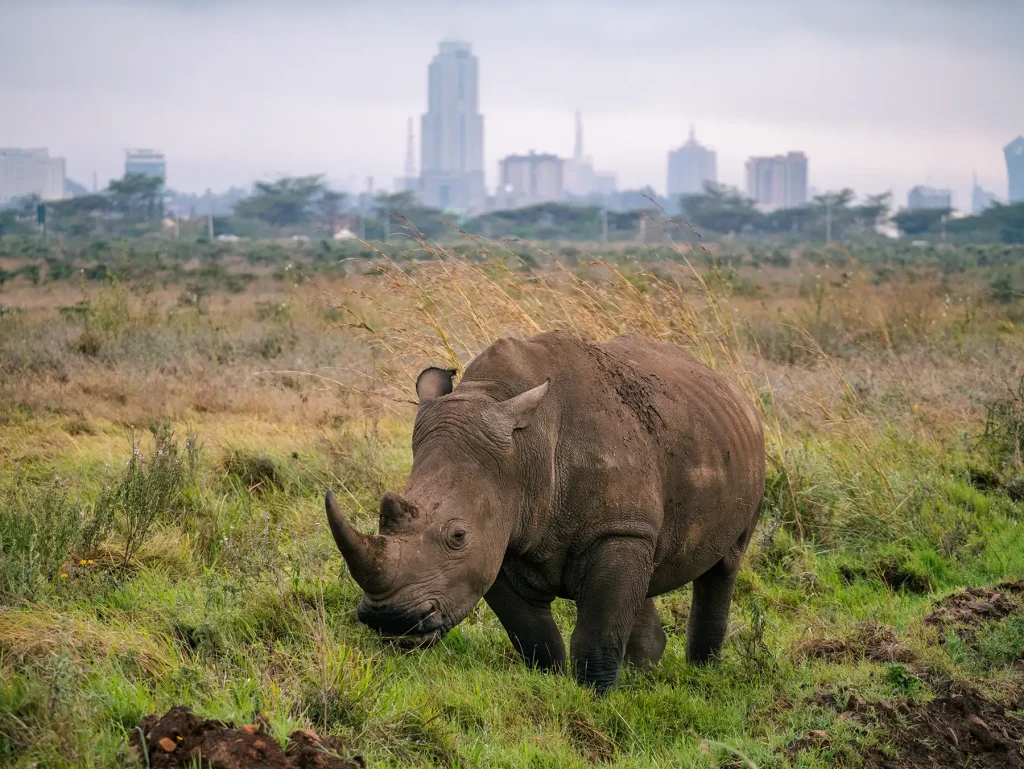
Nairobi National Park, early morning. The city is already moving behind us, traffic building along Lang’ata Road, but inside the park the only sounds are birds calling from the acacia and the low rumble of a safari vehicle crossing the grassland. A few minutes later, a black rhino appears against the skyline, with Nairobi’s towers rising in the distance. It is one of those scenes that makes Nairobi National Park unlike anywhere else in Kenya.
Located just a few kilometres from Nairobi’s central business district, Nairobi National Park covers approximately 117 square kilometres of open grassland, acacia woodland, riverine habitat and seasonal wetlands. Established in 1946, it was Kenya’s first national park and remains one of the most remarkable urban wildlife areas in Africa.
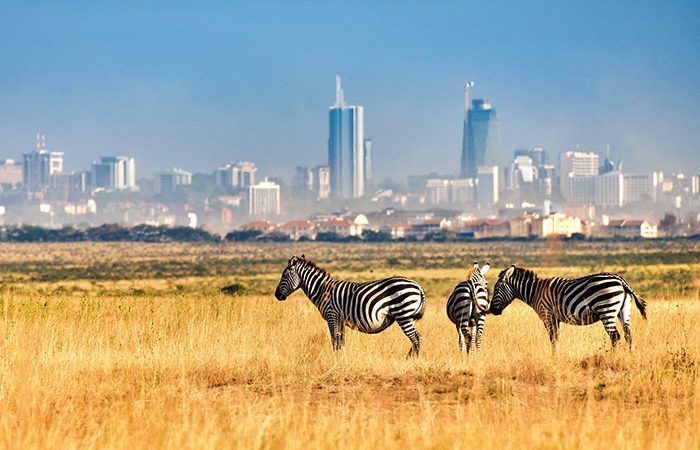
What makes Nairobi National Park special is the contrast. This is a genuine wildlife reserve on the edge of a modern capital city. Lions, leopards, cheetahs, buffalo, giraffes, zebras and both black and white rhinos move through the park while Nairobi’s skyline forms the backdrop. The park does not contain elephants, but it supports four of the traditional Big Five and more than 100 mammal species.
Nairobi National Park is also one of Kenya’s most important conservation landscapes. It protects a major rhino population, supports more than 400 recorded bird species and provides a vital open landscape connected to the wider Athi-Kapiti ecosystem. For travellers arriving in Kenya, Nairobi National Park is an ideal introduction to safari before continuing to destinations such as Amboseli, Lake Nakuru, Samburu or the Masai Mara.
We regularly recommend Nairobi National Park to guests who have only a few hours available in Nairobi, but it is also worth treating as a serious safari destination in its own right. A sunrise game drive can deliver rhino, lion, giraffe, buffalo and large herds of plains game before breakfast, all without leaving the capital.
Nairobi National Park is a 117-square-kilometre protected wildlife area in Nairobi County, located roughly 8 to 10 kilometres from Nairobi’s central business district. Established in 1946, it was Kenya’s first national park and is famous for its unusual setting beside a major capital city, its black and white rhino population, four of the Big Five, more than 100 mammal species and more than 400 recorded bird species.
Location: Nairobi County, southern Nairobi, Kenya
Size: Approximately 117 square kilometres
Established: 1946
Managed by: Kenya Wildlife Service
Distance from Nairobi CBD: Approximately 8 to 10 kilometres
Altitude: Approximately 4,950 to 5,850 feet
Known for: Black and white rhinos, lions, leopards, giraffes, buffalo, zebras and the Nairobi skyline
Big Five: Four of the Big Five are present; elephants are absent
Birdlife: More than 400 recorded species, with wider records exceeding 500 species
Main access: Main Gate along Lang’ata Road
Other access: East Gate and Central Workshop Gate
Nearby attractions: Nairobi Animal Orphanage, Nairobi Safari Walk and historic Ivory Burning Site
Best for: Short safaris, first-time visitors, business travellers, families, photographers and birdwatchers
Nairobi National Park’s official KWS brochure confirms the park’s 117-square-kilometre area, 1946 gazettement, Nairobi County location and year-round accessibility.
Nairobi National Park may be small compared with Kenya’s larger wilderness areas, but its wildlife density and diversity make it one of the country’s most productive short-safari destinations. The open grasslands are particularly good for spotting zebra, wildebeest, eland, impala, gazelles and buffalo, while the more wooded areas provide habitat for giraffe, leopard and other species.
The park is especially famous for its rhinoceros. Both eastern black rhinoceros and southern white rhinoceros occur in Nairobi National Park, and the protected landscape has played an important role in Kenya’s rhino conservation efforts. The park is widely regarded as one of the country’s important rhino sanctuaries.
Lion, leopard and cheetah are also present. Leopards are more elusive and usually require patience and a good guide, while lions are more frequently encountered across the open plains. KWS identifies three lion prides in the park: Kingfisher, Athi and Mokoyet.
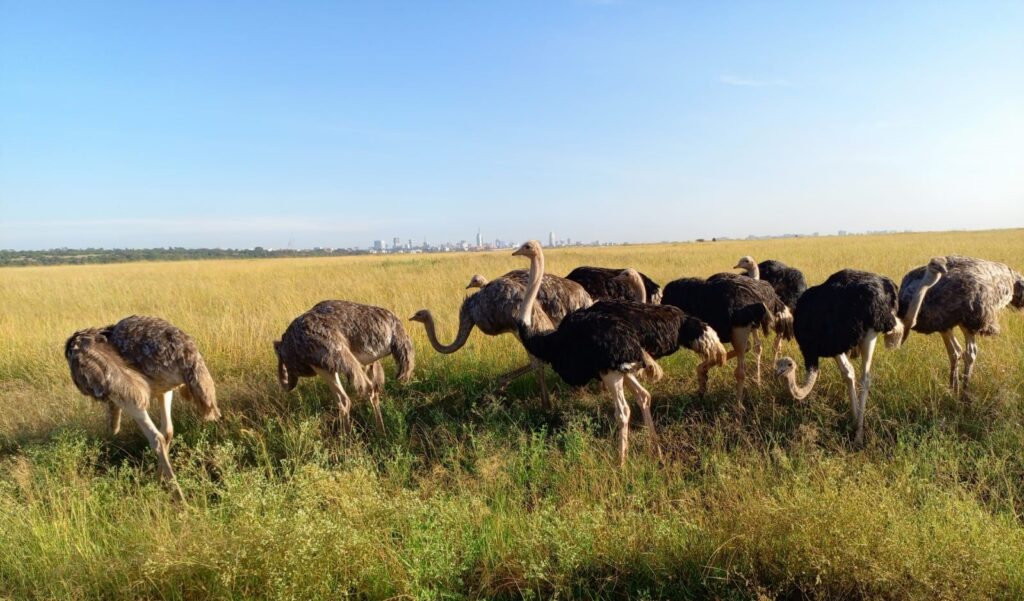
Other wildlife includes spotted hyena, jackal, warthog, baboon, waterbuck, eland, ostrich, Grant’s gazelle, Thomson’s gazelle and numerous smaller antelope species. Hippopotamuses occur around suitable water habitats, while crocodiles can be found in some of the park’s dams and watercourses.
Nairobi National Park is home to more than 100 mammal species, including black and white rhino, lion, leopard, cheetah, buffalo, giraffe, zebra, wildebeest, eland, impala, gazelles, warthog, hyena, baboon and ostrich. More than 400 bird species have also been recorded in the park.
Nairobi National Park is unusual because visitors can see four of the traditional Big Five within a short drive of the city.
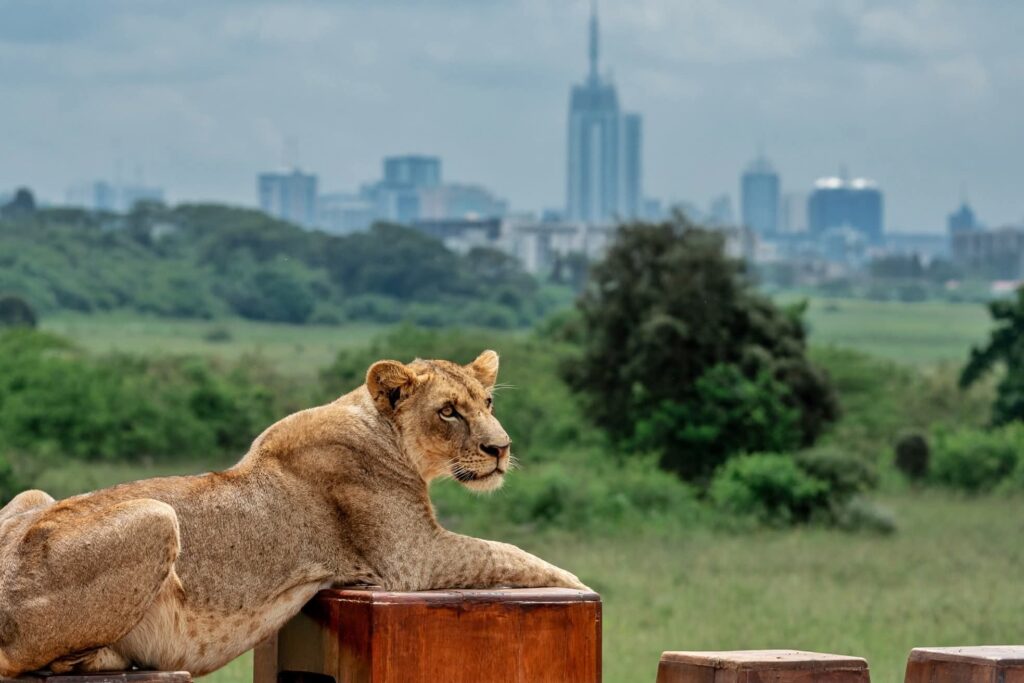
Lion: Lions are among the park’s major predators and are often encountered on the open plains, particularly during cooler morning hours.
Leopard: Leopards are present but much more elusive than lions. Sightings are often associated with riverine woodland, thicker vegetation and areas where prey species concentrate.
Buffalo: Large buffalo herds move through the grasslands and wetter areas, making them one of the more reliable large mammal sightings.
Rhino: Black and white rhinos are among the park’s greatest attractions. Nairobi National Park’s rhino conservation history is one of the reasons the park has such significance beyond tourism.
Elephant: Elephants are not resident in Nairobi National Park. This means the park cannot offer the complete Big Five, but it compensates with unusually reliable rhino viewing and the rare experience of seeing major predators so close to a capital city.
The absence of elephants is important to explain rather than hide. Nairobi National Park is not marketed as a Big Five park in the same way as the Masai Mara or Amboseli. Its real strength is the combination of rhino, predators, plains game, birdlife and the city backdrop.
The black rhino is one of the defining animals of Nairobi National Park. During the twentieth century, Kenya’s rhino population suffered severe pressure from poaching, and Nairobi National Park became an important refuge for surviving animals and a centre for conservation work.
Today, seeing a black rhino moving through Nairobi National Park’s open grasslands is one of the most memorable experiences available on a Nairobi safari. The animal’s presence also demonstrates why protected spaces close to cities matter. Nairobi National Park is not simply a recreational area; it is an important conservation landscape supporting threatened wildlife.
For photographers, rhino sightings can be particularly rewarding in the early morning when the light is soft and the grasslands are less affected by heat haze.
Nairobi National Park is an excellent birdwatching destination. KWS records more than 400 bird species, while the park’s management documentation records a much broader list of more than 500 species. The combination of open grassland, acacia woodland, riverine habitat, dams and seasonal wetlands creates a wide range of habitats within a relatively compact area.
Birdwatchers can encounter ostriches, secretarybirds, crowned cranes, kori bustards, raptors, vultures, waterbirds and numerous smaller grassland species. Migratory birds increase the diversity during certain periods of the year, making the park particularly interesting for dedicated birders.
The park is recognized as an Important Bird and Biodiversity Area, reflecting its wider importance for bird conservation.
For visitors who are not specialist birdwatchers, the birdlife is still part of the safari experience. The sound of birds across the grasslands at sunrise is often one of the first things guests notice after leaving the city behind.
Game drives are the main reason most visitors come to Nairobi National Park. A typical Nairobi National Park safari starts early in the morning, when temperatures are cooler and predators are more active.
Morning game drives are particularly useful for locating lion, rhino, buffalo and other plains animals. Afternoon drives can produce good sightings as temperatures begin to fall and wildlife becomes more active again.
Because Nairobi National Park is relatively compact, a few hours can be enough to see a surprisingly wide range of species. A professional safari guide makes a major difference, particularly when tracking leopard, locating rhino or identifying less obvious animals in the grass.
Nairobi National Park is one of the best places near Nairobi for rhino viewing. The open terrain makes animals easier to observe than they would be in thick forest, although sightings are never guaranteed.
The experience is different from rhino sanctuaries where animals are deliberately concentrated. Inside Nairobi National Park, rhinos are encountered as wild animals within their natural habitat, which makes a sighting considerably more meaningful.
The park’s lions are another major attraction. Early morning drives are often the best time to look for lions before the heat of the day encourages them to rest.
Cheetahs can sometimes be found using the open grasslands to hunt, while leopards require considerably more patience. Spotted hyenas and jackals add another layer to the predator experience.
The relatively small size of Nairobi National Park means experienced guides can often work together to share information about recent sightings, helping visitors make the most of a limited game-drive window.
Nairobi National Park’s birdlife deserves more attention than it often receives. More than 400 species have been recorded, and the variety of habitats means that birdwatching can be productive throughout the year.
Dedicated birdwatchers can plan a longer Nairobi National Park safari around birding, while general safari guests will naturally encounter numerous species during a standard game drive.
Nairobi National Park is an exceptional location for wildlife photography because the city provides an unusual background. A giraffe standing against Nairobi’s skyline, a rhino crossing an open plain with buildings in the distance or a lion resting beneath an acacia creates images that are difficult to reproduce anywhere else.
The best photography conditions are generally around sunrise and late afternoon, when the light is softer and warmer. The combination of open grassland, acacia silhouettes and the Nairobi skyline gives photographers considerable variety within a single game drive.
Nairobi National Park is not only about ticking off animal species. The landscape itself changes considerably across the park, from open plains and scattered acacia to riverine areas and seasonal wetlands.
A slower drive allows visitors to appreciate smaller details, including tracks, birds, antelope, plants and changing landscapes that can easily be missed when the focus is only on large mammals.
Several picnic and event locations within Nairobi National Park provide opportunities to stop during a safari. KWS identifies sites including the Impala Observation Point, Ivory Burning Site, Kingfisher picnic area, Club House and Mokoyiet picnic area. These locations are also used for corporate events, bush dinners, team-building activities and other organized outdoor experiences.
For corporate groups visiting Nairobi, this makes Nairobi National Park particularly useful. A conference or business meeting can be followed by a game drive and outdoor experience without requiring an overnight transfer to another safari destination.
The Ivory Burning Site is one of Nairobi National Park’s most important historical landmarks.
In 1989, Kenya made a powerful international statement against the ivory trade when approximately 12 tonnes of ivory and rhino horn were burned at the site. The event became a major symbol of Kenya’s opposition to illegal wildlife trade and its commitment to wildlife conservation.
Another major ivory and rhino-horn destruction event took place at the same site in 2016, when approximately 100 tonnes were burned.
A visit to the Ivory Burning Site therefore adds historical depth to a Nairobi National Park safari. It connects the animals seen during a game drive with the wider story of Kenya’s conservation movement.
Nairobi National Park can be combined with nearby Kenya Wildlife Service attractions for a fuller wildlife-focused day.
The Nairobi Safari Walk uses simulated wetland, savannah and forest habitats connected by a raised boardwalk. Visitors can see species including white rhino, lion, leopard, buffalo, giraffe, zebra, hyena, crocodile, pygmy hippopotamus, antelopes and primates.
The Nairobi Animal Orphanage provides another opportunity to learn about wildlife rehabilitation and conservation.
These attractions can work particularly well for families, school groups and visitors with limited time who want to combine a Nairobi National Park game drive with additional wildlife education.
Nairobi National Park has several access points, with the most appropriate gate depending on where you are coming from and which part of the park you intend to visit.
Main Gate: Located along Lang’ata Road and the most commonly used entrance for visitors coming from central Nairobi. KWS also operates the Kifaru Ark Shop at the Main Gate.
East Gate: Provides access from the Mombasa Road side of Nairobi.
Central Workshop Gate: Located on the Magadi Road side and useful for selected approaches into the park.
KWS documentation identifies the Main Gate, East Gate and Central Workshop Gate as access points to Nairobi National Park.
Gate selection matters less for most short Nairobi National Park safaris than it does in larger parks because the park is relatively compact. We normally select the gate based on the guest’s hotel, traffic conditions, intended route and time available.
Nairobi National Park is one of the easiest safari destinations in Kenya to reach by road. The park lies approximately 8 kilometres from Nairobi’s central business district, with access from Lang’ata Road.
From central Nairobi, the journey can take only a short time under favourable traffic conditions, although rush-hour congestion can significantly increase the travel time. For this reason, we recommend early departures for morning game drives.
Guests staying around Westlands, Karen, Kilimani, Nairobi CBD or near Jomo Kenyatta International Airport can all reach Nairobi National Park relatively easily.
Nairobi National Park does not require a dedicated safari flight for most visitors because of its proximity to the city. International travellers arriving through Jomo Kenyatta International Airport can transfer directly to their Nairobi hotel and visit the park the following morning.
Wilson Airport is particularly convenient for travellers connecting to other Kenyan safari destinations because it handles many domestic safari flights. KWS identifies both Jomo Kenyatta International Airport and Wilson Airport as air access points for Nairobi National Park.
For Nairobi National Park itself, road travel is the obvious choice. The park is so close to Nairobi that flying specifically for the Nairobi National Park experience is unnecessary for most travellers.
Flying becomes relevant when Nairobi National Park is the first or final stop of a larger safari. A guest arriving at Wilson Airport for a Masai Mara or Amboseli safari can easily add a Nairobi National Park game drive before continuing to the next destination.
For international travellers, Nairobi National Park works particularly well either immediately after arrival or immediately before departure, depending on flight schedules.
Nairobi National Park has a generally warm climate influenced by Nairobi’s elevation. Conditions are usually comfortable for safari, although temperatures can rise considerably during the middle of the day.
The park experiences wetter and drier periods, with rainfall affecting vegetation, water availability and wildlife distribution. After good rains, the grasslands become greener and many herbivores disperse across the park. During drier periods, animals may become easier to locate around remaining water sources.
The park is accessible throughout the year, according to the current KWS park brochure.
Early morning temperatures can feel surprisingly cool, particularly during game drives with the vehicle open to the air, so a light jacket or fleece is useful even when daytime temperatures are warm.
Nairobi National Park is managed by the Kenya Wildlife Service, and the current KWS conservation tariff lists Nairobi National Park as an urban park.
The current listed rate is USD 80 per non-resident adult and USD 40 per non-resident child for a daily park entry. Kenya residents are currently listed at KES 1,350 per adult and KES 675 per child, while East African citizens are listed at KES 1,000 per adult and KES 500 per child. African citizens from outside East Africa are listed at USD 40 per adult and USD 20 per child.
KWS defines a daily fee as an access fee valid for a period not exceeding 24 hours.
There is also a Nairobi Package covering Nairobi National Park, Nairobi Animal Orphanage and Nairobi Safari Walk. The current KWS tariff lists this package at USD 105 for non-resident adults and USD 55 for non-resident children.
Park fees can change, so we confirm the applicable KWS tariff when preparing a safari quotation.
The current KWS tariff lists Nairobi National Park at USD 80 per non-resident adult and USD 40 per non-resident child. Kenya residents pay KES 1,350 per adult and KES 675 per child, while East African citizens pay KES 1,000 per adult and KES 500 per child.
For package tours, KWS states that tour operators can include park entry fees within the total safari cost. Self-organized visitors can pay through the KWS payment system.
Nairobi National Park can be visited throughout the year, but different seasons create different safari experiences.
January to February: Generally drier conditions can make wildlife easier to locate around water sources, while the grass is often shorter and visibility across the plains is good.
March to May: The long-rains period can transform the park into a greener landscape. Bird activity increases, scenery becomes particularly attractive and visitor numbers can be lower, although wet conditions may affect some tracks.
June to October: These months generally provide good game-viewing conditions, with relatively dry vegetation and comfortable safari conditions. This is a popular period for visitors combining Nairobi National Park with a wider Kenya safari.
November to December: The short rains bring renewed greenery and increased bird activity. The park can look particularly beautiful after rainfall, although showers can affect some game-drive routes.
The best time therefore depends on whether your priority is wildlife concentration, green scenery, photography or birdwatching.
Unlike larger Kenyan parks, Nairobi National Park does not require several days to experience properly.
A 3 to 4-hour game drive can provide a very worthwhile introduction, especially for travellers with limited time in Nairobi.
A half-day Nairobi National Park safari gives you more flexibility to explore different sections of the park and spend more time looking for rhino, lion, leopard and other wildlife.
A full-day Nairobi National Park experience works well for photographers, birdwatchers, families and travellers who want to combine game viewing with the Ivory Burning Site, picnic stops or nearby wildlife attractions.
For most international travellers, we recommend at least a half-day if the schedule allows. Rushing through Nairobi National Park simply to tick it off a list misses much of what makes the park special.
Nairobi National Park offers something that very few safari destinations anywhere in the world can match: authentic wildlife viewing immediately beside a major capital city.
You can spend the morning watching a black rhino move through open grassland and be back in central Nairobi in time for lunch. You can attend a business meeting in the afternoon and watch lions or giraffes before sunset. You can arrive in Kenya without travelling hundreds of kilometres and still experience a genuine African safari.
The skyline is another reason to visit. In most wildlife destinations, the landscape is deliberately remote. In Nairobi National Park, skyscrapers appear behind the animals, creating an unusual visual relationship between modern urban life and protected wilderness.
The park is also important because of its conservation role. Its rhino population, bird habitats, grasslands and wildlife corridors demonstrate that conservation does not have to happen far from cities.
The Masai Mara offers a much larger wilderness experience, higher densities of some predators and the spectacular seasonal wildebeest migration. Nairobi National Park cannot compete with the Mara on scale.
What Nairobi National Park offers instead is accessibility. You can experience a genuine game drive without losing an entire day to travel.
For first-time visitors, the two destinations work extremely well together. Nairobi National Park provides a compact introduction to Kenya’s wildlife, while the Masai Mara delivers the larger-scale safari experience.
Amboseli is famous for its spectacular views of Mount Kilimanjaro and its large elephant populations. Nairobi National Park has no resident elephants, but it offers a much broader predator-and-rhino experience close to the capital.
If elephants and Kilimanjaro are the priority, Amboseli is the stronger choice. If your priority is rhino, predators, birdlife and convenience, Nairobi National Park is difficult to beat.
Many guests combine the two, beginning with Nairobi National Park before travelling south toward Amboseli.
Samburu offers northern Kenya’s distinctive landscape and the Samburu Special Five: Grevy’s zebra, reticulated giraffe, gerenuk, Beisa oryx and Somali ostrich.
Nairobi National Park offers a completely different environment, with open grassland, rhinos, lions, leopards, buffalo and the Nairobi skyline.
The two parks complement rather than replace each other. A traveller with enough time can experience the urban wilderness of Nairobi National Park before travelling north to Samburu for a very different safari landscape.
Tsavo East and Tsavo West together form one of Kenya’s largest wilderness areas. Tsavo is ideal for travellers looking for vast landscapes, long game drives, red-earth scenery and a more remote safari atmosphere.
Nairobi National Park is much smaller and more concentrated, which makes it particularly effective for short visits.
If you have only one day available in Nairobi, Nairobi National Park is the practical choice. If you have several days and want a deeper wilderness experience, Tsavo offers considerably more space to explore.
There is no need to stay inside Nairobi National Park to enjoy a Nairobi National Park safari. A wide range of hotels and lodges in Nairobi and around the park can be used as a base.
KWS lists properties associated with the wider Nairobi National Park area, including Ololo Safari Lodge and Emakoko Lodge, while numerous hotels are available within Nairobi itself.
Staying in Karen or near Lang’ata can reduce the morning transfer time to the park, while central Nairobi and Westlands offer a wider range of business and city hotels.
For travellers with an early morning international arrival or a late departure, we can also structure Nairobi National Park around the flight schedule rather than requiring an additional overnight in the park area.
Responsible tourism is particularly important in Nairobi National Park because the park sits directly beside a rapidly growing city.
Visitors should remain inside designated tracks, avoid speeding, maintain a respectful distance from wildlife and never feed animals. KWS specifically advises visitors not to crowd animals, make sudden movements or noises, feed wildlife or litter.
The park’s conservation importance extends beyond tourism. Nairobi National Park provides habitat for threatened species, especially rhinos, and its grasslands form part of a wider ecological system extending toward the Athi-Kapiti plains. KWS conservation planning identifies the park’s wildlife and habitat connectivity as important components of the broader ecosystem.
By paying park entry fees and choosing responsible safari operators, visitors contribute to the continued management and protection of this unique wildlife area.
Few safari destinations are as practical for business travellers as Nairobi National Park.
A conference delegate can leave a hotel in the morning, complete a game drive, return to the city and continue with meetings the same day. KWS has also highlighted Nairobi National Park’s suitability for conferences and corporate experiences because of its proximity to Nairobi’s business district and its combination of wildlife and outdoor activities.
Corporate groups can combine game drives with picnic sites, team-building activities, outdoor breakfasts, photography and conservation-focused experiences.
For international companies holding events in Nairobi, Nairobi National Park provides an easy way to introduce delegates to Kenya beyond the conference room.
Nairobi National Park works particularly well for families because the safari does not require a long road transfer.
Children can experience wild rhinos, giraffes, zebras, buffalo and lions without spending an entire day in a vehicle travelling to a distant reserve. The nearby Nairobi Safari Walk and Nairobi Animal Orphanage can also be added to provide more educational and interactive wildlife experiences.
For families with younger children, a shorter morning game drive followed by breakfast or another Nairobi attraction can be more comfortable than a full-day safari.
One of the biggest mistakes we see with Nairobi National Park is treating it as something to squeeze into an hour because it is close to town. Proximity is an advantage, not a reason to rush it. Give the park a proper morning and you can see rhino, lion, giraffe, buffalo and a remarkable range of birds before most of Nairobi has finished breakfast.
Nicholas Wangithi, Director & Founder
Nairobi National Park is one of Kenya’s most accessible safari destinations and one of its most unusual. Nowhere else does the experience of watching wild animals unfold so close to a major capital city.
From black rhinos crossing the grasslands to lions resting beneath acacias, giraffes browsing against the Nairobi skyline and more than 400 bird species moving through the wetlands and woodland, Nairobi National Park delivers an extraordinary amount of wildlife within 117 square kilometres.
We build Nairobi National Park into itineraries in several ways: as a half-day or full-day Nairobi safari, as an arrival or departure safari before or after an international flight, as a corporate experience, or as the first stop on a longer Kenya safari combining destinations such as Amboseli, Samburu, Lake Nakuru, Tsavo or the Masai Mara.
For travellers with limited time, Nairobi National Park may be the easiest safari in Kenya to add to an itinerary. For travellers with more time, it provides an important introduction to Kenya’s wildlife and conservation story before the journey continues into the country’s larger wilderness areas.
Nairobi National Park is not simply a park next to Nairobi. It is the place where the city and the wild meet, and that is exactly what makes a Nairobi National Park safari worth experiencing.
Experience a world-class safari just minutes from Nairobi's city centre. Spot lions, rhinos, giraffes, cheetahs and hundreds of bird species against the backdrop of Kenya's iconic skyline. Whether you have a few hours or a full day, Nairobi National Park delivers one of Africa's most unique wildlife experiences.
Nairobi National Park offers one of the most iconic wildlife experiences anywhere in the world: watching wild lions roam freely with the…
The park is internationally recognised for its successful black rhino conservation programme and is home to one of Kenya's largest populations of…
Despite being located next to a major city, Nairobi National Park supports healthy populations of lions, cheetahs, spotted hyenas and occasionally leopards.…
The park's rolling grasslands are home to large populations of giraffes, zebras, buffaloes, elands, impalas, gazelles and hartebeests. These species can often…
With more than 500 recorded bird species, Nairobi National Park is one of Kenya's finest birdwatching destinations. Seasonal wetlands, riverine habitats and…
Early morning and late afternoon game drives provide some of the park's most memorable experiences. The golden light of sunrise and sunset…
A safari in Nairobi National Park can easily be combined with a visit to the famous elephant orphanage managed by the David…
The park's location makes it easy to combine wildlife viewing with visits to some of Nairobi's most popular conservation attractions, including the…
Budget Safari 🌅 Day Trips
 🌅 Day Trips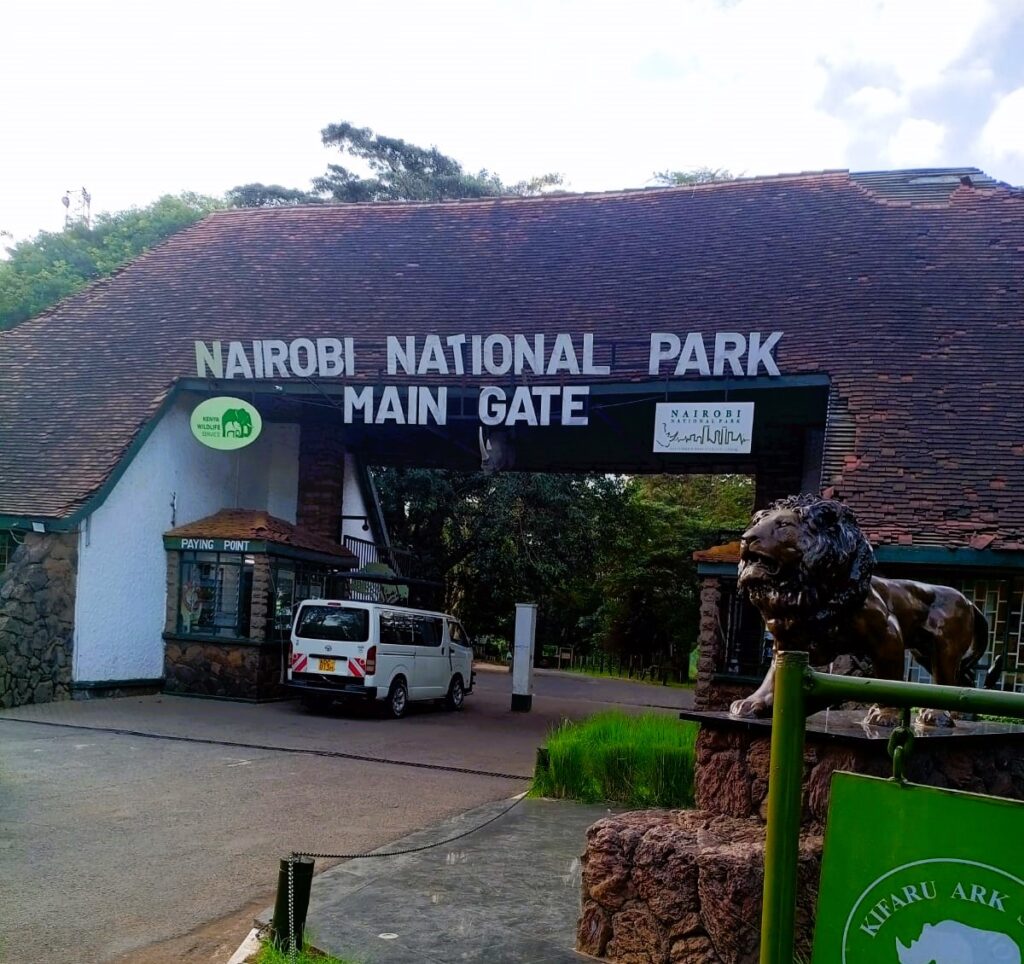
From value camps to premium lodges — we match every stay to your style and budget.
Comfortable tented camps just outside the reserve gates. En-suite rooms with hot showers, full-board meals, and close proximity to the Mara.
Spacious canvas tents on raised platforms with private decks, often inside or adjacent to conservancies. Better access and fewer crowds.
World-class lodges and exclusive camps in private conservancies. Night drives, bush walks, spa, and personalized service — the ultimate safari experience.
Every season has its magic — here's what to expect when, so you can travel at your perfect time.
Everything you need to know before you go — and we’ll guide you through every step.
Most international visitors travelling to Kenya require an Electronic Travel Authorisation (eTA) before arrival. Applications are completed online and approvals are usually issued within a few business days. Visitors should ensure their passport remains valid for at least six months beyond their intended travel dates and has sufficient blank pages for entry stamps if required.
Nairobi National Park lies at a relatively high altitude of approximately 1,600 metres, which significantly reduces malaria risk compared to many coastal and lowland safari destinations. However, travellers should consult their healthcare provider regarding recommended vaccinations and travel health advice. Yellow Fever vaccination certificates may be required for visitors arriving from countries with Yellow Fever transmission risk.
Nairobi National Park is the most accessible safari destination in Kenya and is located just 7 km from Nairobi City Centre, 8 km from Wilson Airport, and approximately 15 km from Jomo Kenyatta International Airport (JKIA). Depending on traffic conditions, visitors can reach the park in as little as 15 to 30 minutes by road, making it ideal for half-day safaris, airport layovers, and business travellers with limited time.
The official currency in Kenya is the Kenyan Shilling (KES), although US Dollars are widely accepted for safari services and tourism-related expenses. Most hotels, restaurants, and tour operators accept Visa and Mastercard credit cards, while mobile payment systems such as M-Pesa are commonly used throughout Kenya. It is advisable to carry small amounts of local currency for personal purchases and gratuities.
Nairobi National Park enjoys a pleasant highland climate throughout the year due to its elevation. Daytime temperatures typically range between 20°C and 28°C, while mornings and evenings can be cooler, especially during the dry season months of June to August. The park can be visited year-round, although the dry seasons generally offer the best wildlife viewing opportunities.
Kenya uses Type G electrical sockets, the same three-pin square plug system used in the United Kingdom. The standard electricity supply is 240 volts at 50Hz. Most hotels and lodges provide charging facilities for cameras, phones, and other electronic devices, and many also offer international adapters upon request.
Kenya operates on East Africa Time (EAT), which is UTC +3 hours throughout the year. Kenya does not observe daylight saving time, ensuring consistent timekeeping regardless of the season.
Nairobi National Park is managed by the Kenya Wildlife Service and is considered one of the safest safari destinations in East Africa. Entry gates are controlled, ranger patrols operate throughout the park and professional guides adhere to strict wildlife viewing protocols. Visitors are advised to remain inside their vehicles during game drives except in designated picnic or viewing areas and to follow all instructions provided by park authorities and safari guides.
Absolutely. Nairobi National Park offers one of the most unique safari experiences in the world as the only national park located within a capital city. Visitors can see lions, rhinos, giraffes, buffaloes, zebras, cheetahs and hundreds of bird species against the backdrop of Nairobi's skyline. The park is especially popular with travellers who have limited time in Kenya but still want to experience an authentic African safari without taking domestic flights or long road journeys.
Nairobi National Park is home to four of Africa's Big Five animals: lions, leopards, buffaloes and rhinos. Elephants are not found within the park due to its relatively small size and proximity to urban areas. The park is particularly famous for its black rhino population and offers some of the best rhino viewing opportunities in East Africa. Leopard sightings are less frequent but do occur, especially during early morning game drives.
The park supports over 100 mammal species and more than 500 bird species. Visitors commonly encounter lions, rhinos, giraffes, buffaloes, zebras, elands, impalas, hartebeests, gazelles, warthogs, ostriches, hyenas, and cheetahs. Depending on the season and luck, visitors may also spot leopards, serval cats, jackals, and numerous bird species including secretary birds, crowned cranes, martial eagles and vultures
Most visitors spend between four and six hours in the park, which is sufficient for a rewarding safari experience. Morning game drives lasting three to four hours are the most popular option due to cooler temperatures and increased wildlife activity. Full-day safaris allow more time for photography and can be combined with nearby attractions such as the elephant orphanage and giraffe sanctuary. Travellers on layovers often choose shorter excursions lasting two to three hours.
The park can be visited throughout the year, but the best wildlife viewing occurs during the dry seasons from June to October and January to February. During these months, shorter grass and reduced vegetation make animals easier to spot, while wildlife gathers around water sources. The rainy seasons from March to May and November offer greener landscapes, excellent birdwatching and fewer visitors, making them attractive for photographers and budget-conscious travellers.
Nairobi National Park is one of the world's most accessible safari destinations. The main gate is located approximately 7 kilometres from Nairobi's Central Business District, around 15 kilometres from Jomo Kenyatta International Airport (JKIA), and approximately 8 kilometres from Wilson Airport. Depending on traffic conditions, travel times range from 15 to 30 minutes, making the park ideal for transit passengers and business travellers.
Yes. Nairobi National Park is one of the few places in Africa where travellers can enjoy a genuine safari experience during a long layover between international flights. Many tour operators offer airport pickup and drop-off services, allowing visitors to enjoy a game drive and return to the airport in time for their onward journey. A layover of at least six to eight hours is generally recommended for a comfortable experience.
Yes. The park is managed by the Kenya Wildlife Service and is considered one of Kenya's safest wildlife destinations. Entry points are controlled, ranger patrols operate throughout the park, and safari guides follow strict safety procedures. Visitors should remain inside vehicles during game drives except in designated areas and should always follow instructions provided by guides and park staff.
Visitors should carry a camera, binoculars, sunscreen, sunglasses, a hat, drinking water, and comfortable clothing in neutral colours. Morning game drives can be cool, so carrying a light jacket is advisable. Photographers may benefit from telephoto lenses due to the park's excellent opportunities for wildlife and skyline photography.
Yes. Many visitors combine their safari with nearby attractions such as the David Sheldrick Wildlife Trust, the Giraffe Centre, the Karen Blixen Museum or local cultural experiences. These combinations are particularly popular among families, conference delegates, and transit travellers who want to maximize their time in Nairobi.
Nairobi National Park offers a safari experience that cannot be replicated anywhere else in the world. It is the only national park located within a capital city, allowing visitors to observe wild animals roaming freely against a backdrop of skyscrapers and urban infrastructure. Its accessibility, exceptional rhino sightings, abundance of predators, and suitability for short visits make it one of Kenya's most distinctive and convenient safari destinations.

A Nairobi operator's field notes on our private seven-day Naivasha-to-Mara route, from the first seedling to the last…
Read more →
Real per-person prices from $200 a day on a shared group departure to more than $1,000 a day…
Read more →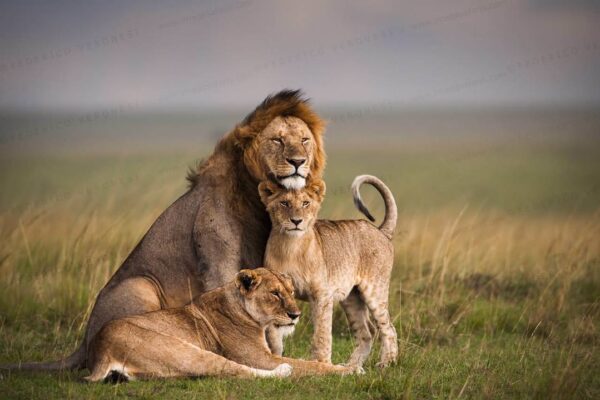
A family safari rarely fails on wildlife. It fails on the logistics: the suitcase, the six-hour drive, the…
Read more →Tell us what you’d love to see and a local specialist will design a tailor-made itinerary around you — no obligation, reply within 24 hours.