

Is a Safari Scary? What Wild Animals Actually Do Around Your Vehicle
The fear most people carry onto safari was built on screens, and a game drive runs on different rules. Here is the honest truth about how close animals get, why they ignore the vehicle and how to start gently.
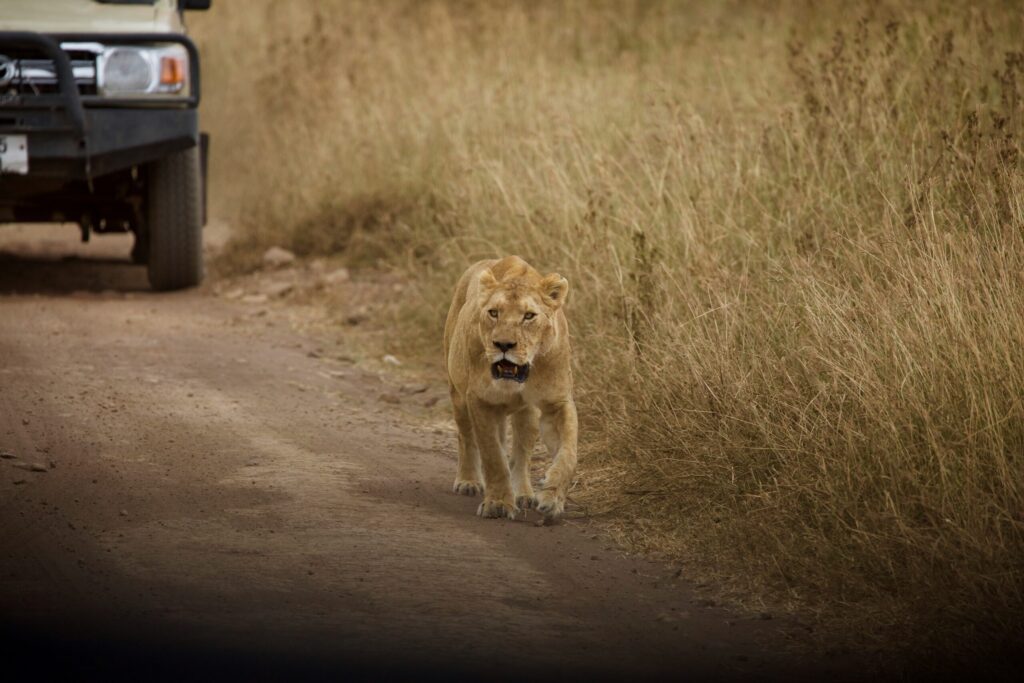
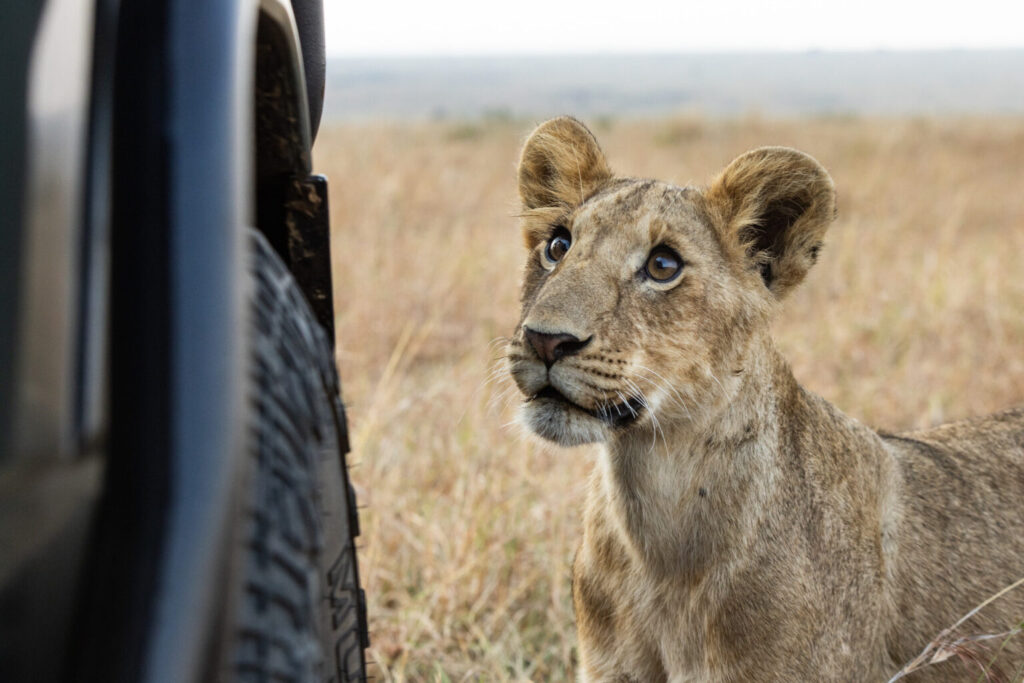
This is what it looks like. The lioness isn't interested in the vehicle; she's just using the road. No drama, just wild animals going about their day.
Langata Gate. 6:20am. The guest in the back seat of our Land Cruiser had told us at pick-up that she planned to spend the morning with her eyes shut. She’d seen the documentaries and read the headlines. She wanted to know one thing before she booked anything bigger: is a safari scary?
Forty minutes into the drive a lioness stepped out of the long grass a few vehicle lengths ahead and crossed the murram road. Our guide switched off the engine. Nobody spoke. The lioness glanced at us once, the way you’d glance at a parked bus, and carried on towards the acacias with the city’s tall buildings hazy on the horizon behind her. The guest’s eyes were wide open. Her hand had let go of the door handle.
Nothing about her courage had changed. Her information had. The lioness didn’t see a threat or a meal. She saw a large, quiet, unremarkable object, and that is the most useful thing a nervous traveller can know before a first game drive.
Yes, there are moments when your pulse climbs. An elephant that decides to walk beside the vehicle will do that, and so will a hyena whooping near your tent at 2am. We won’t pretend otherwise. But the fear most people carry onto safari was built on screens, and a game drive runs on different rules. Nerves are a good reason to start carefully. They are not a reason to stay home.
| QUICK ANSWER | Is a safari scary? A safari is more thrilling than frightening. Animals tolerate a vehicle because they read it as one large, harmless shape, and your guide controls distance and timing. Most risk comes from breaking the rules, not from the animals. Most nervous guests settle within the first hour. |
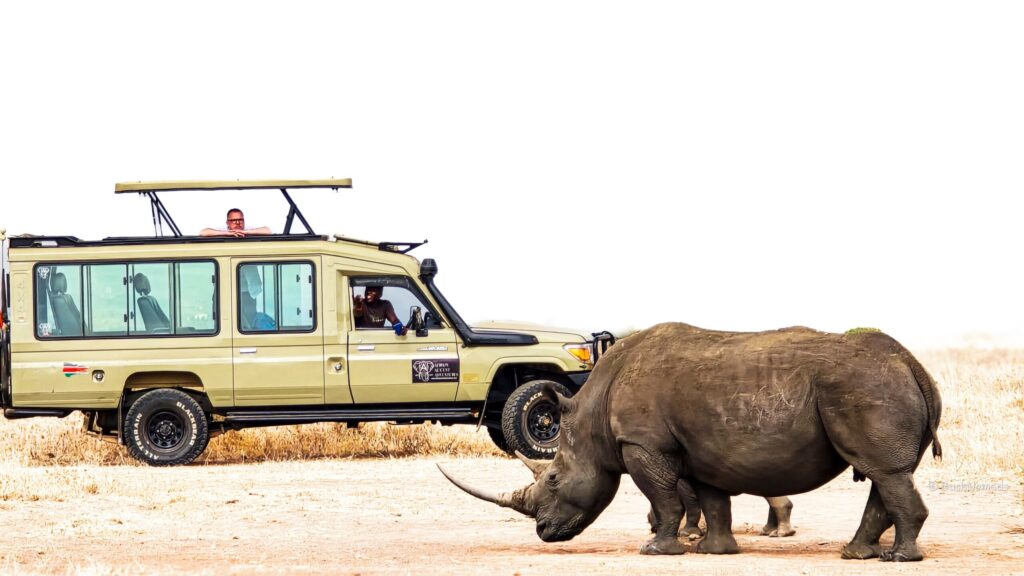
At a Glance:
- Typical distance to big cats: Often a few vehicle lengths, set by the guide and the animal, and sometimes closer when one walks past on its own route
- Where you sit: Inside a 4×4 Land Cruiser with a pop-up roof, never on foot unless you choose a guided walk
- Group size: Our Land Cruisers seat 8 and carry a maximum of 6 guests, so everyone has a window
- Communication: UHF radio between guide vehicles and camps
- The one core rule: Stay seated, stay quiet and follow your guide instantly
- Nights in camp: Most tented camps escort guests to their tents after dark; confirm the system when you book
- Gentlest first step: A half-day game drive in Nairobi National Park, on the edge of Nairobi, with no night away
- Operator: Afrikan Accent Adventures, a Nairobi-based safari operator registered with KATO and TRA
Is a safari scary? What it really feels like
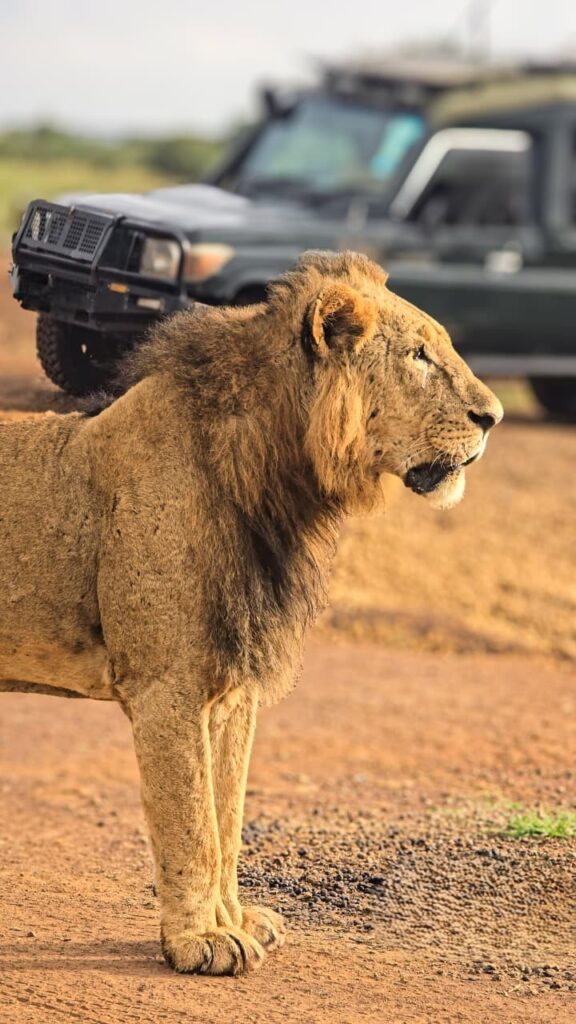
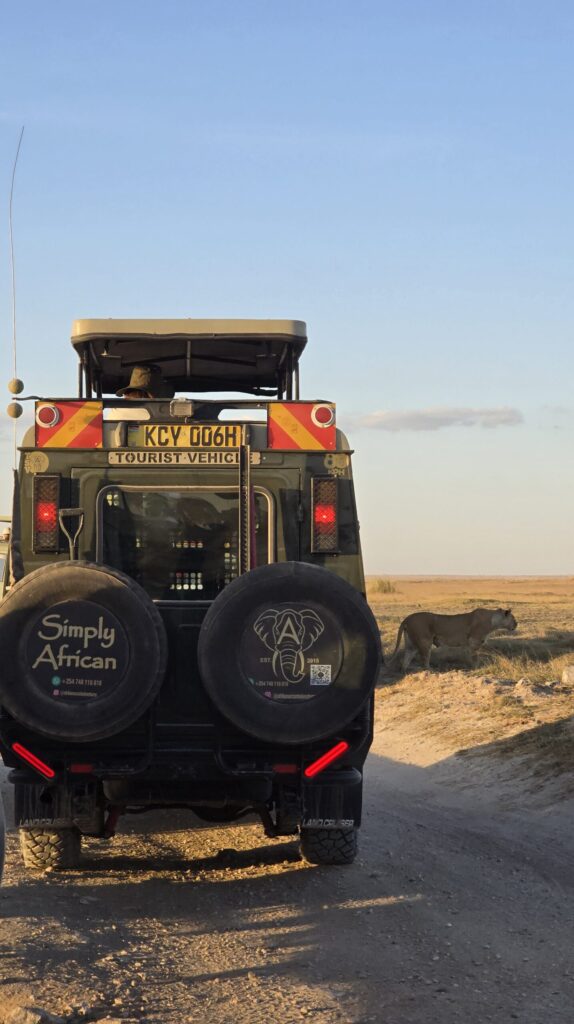
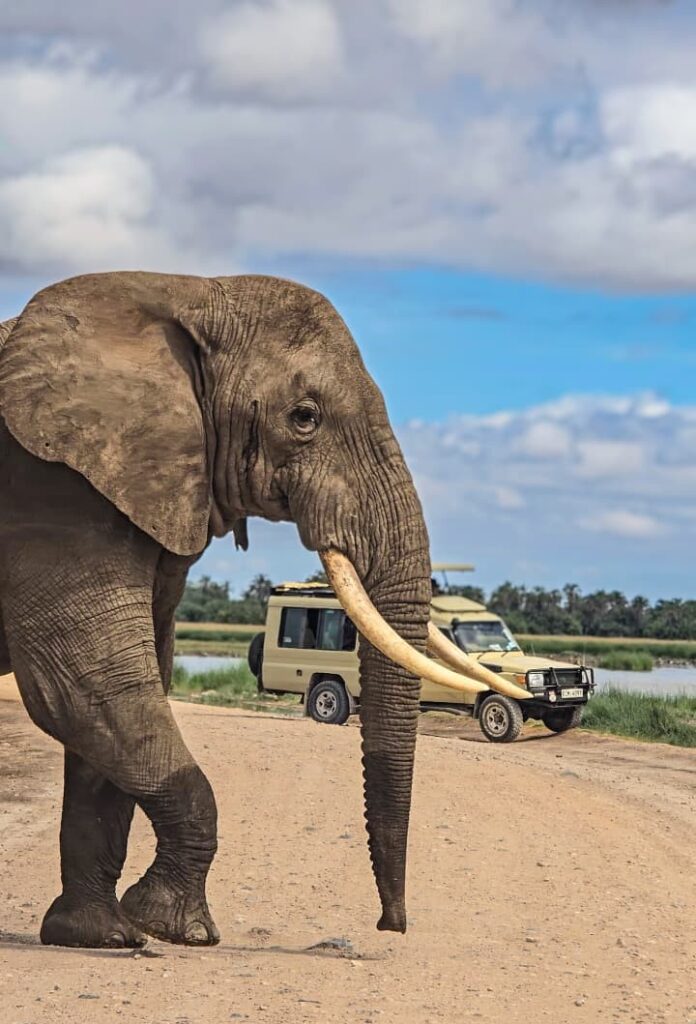
Scary isn’t quite the word we’d choose. Intense is closer. There’s a difference between fear and adrenaline, and a game drive is mostly the second. Your heart rate will climb when a bull elephant stops thirty metres away and looks at you. It will climb again when a lion’s roar rolls across the plain at dusk, a sound that carries for kilometres and lands somewhere in your chest. Neither moment is danger. Both are the reason people come back.
Most of a safari is slow. Zebras graze. Impala flick their ears. A giraffe watches you across a stand of acacia with total disinterest. Predators sleep through much of the day, so the loudest thing in the vehicle is often a camera shutter. The build-up before you travel is almost always bigger than anything that happens once you’re out there.
One piece of advice, and it’s blunt. Skip the wildlife attack documentaries in the fortnight before you fly. Watch something about the Masai Mara at sunrise instead. What you feed your imagination is what you’ll carry into the vehicle.
This article stays with the animals. For wider questions about conditions in the country, our Kenya safari safety guide covers them, and we won’t repeat it here.
The fear most people bring on safari was built on a screen. The game drive runs on different rules.
How close do animals really come?
| QUICK ANSWER | How close do animals get to a safari vehicle? Often within a few vehicle lengths, and sometimes closer when an animal walks past on its own route. Your guide positions the vehicle, switches off the engine and decides when to leave. Distances vary by park, species and mood, and no operator can promise a particular distance. |
Closer than most people expect and further than most people fear. On an ordinary game drive in Kenya, big cats are typically watched from a few vehicle lengths away. Elephants are the exception. They go where they’re going, and that route sometimes runs right beside the vehicle. Giraffes, zebras and antelope often graze within easy sight of the road and hardly lift their heads.
It depends on where you go
Nairobi National Park is open grassland and acacia scrub, and vehicles stay on its tracks. Lions, buffalo, giraffe and black rhino live there, and sightings tend to be calm. Our Nairobi National Park guide explains what you can expect to see. In Amboseli National Park the plains are flat and open, so elephant herds are visible from far off and you can watch them approach and pass at their own pace. In private conservancies around the Masai Mara, such as Mara North Conservancy, vehicle numbers are limited and guides can sometimes leave the track for a sighting, which can mean closer encounters under the same distance rules.
Who decides how close you get
Your guide does, every time. Guides approach slowly from the side rather than head-on, stop at a distance the animal tolerates and leave at the first sign of unease. Ears back, head low, a flicking tail or a sudden stare are all signals to give space. If you want more distance, say so. A good guide will move without a second thought.
Why do animals ignore the vehicle?
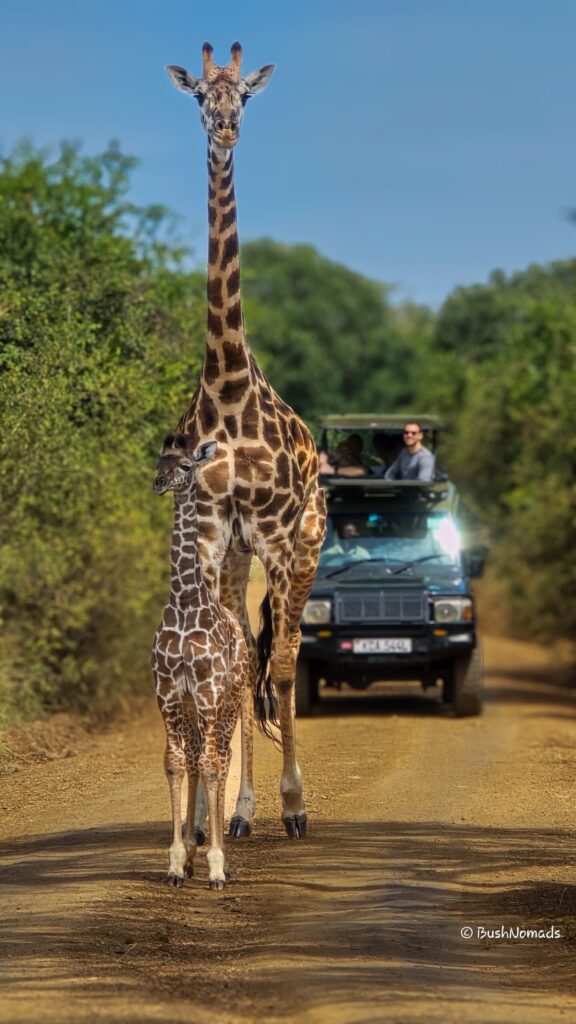
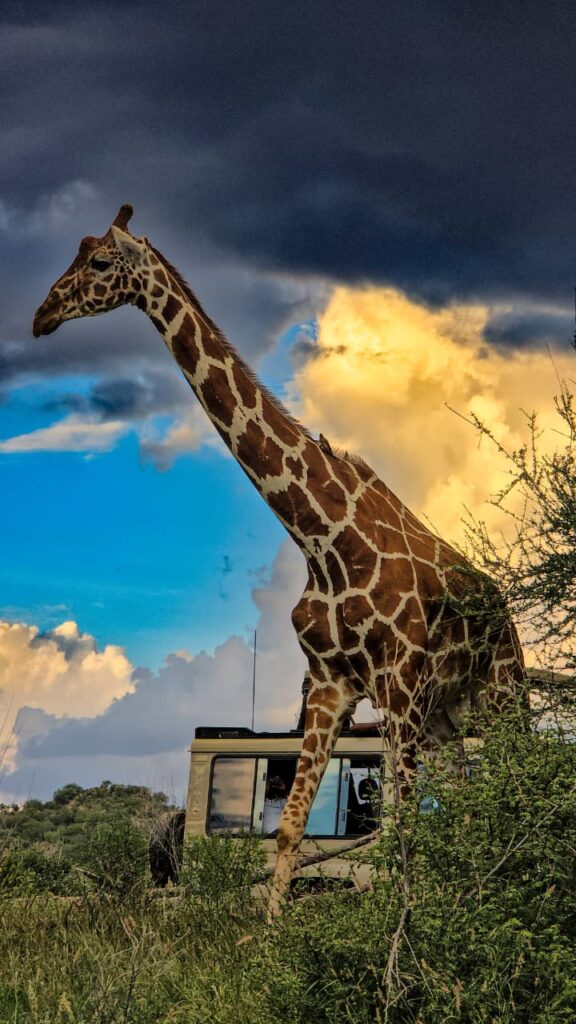
An animal doesn’t see a collection of people when it looks at a game vehicle. It sees one big, slow, unthreatening shape. Decades of tourism and research in places like Amboseli and the Masai Mara have taught resident wildlife that vehicles don’t hunt, chase or throw things. Animals that grow up beside them stop paying attention.
Your behaviour keeps that shape intact. People seated and quiet inside the vehicle blend into the outline. The moment someone climbs out of the roof hatch, leans over the side or steps out of the door, the outline breaks and the animal sees something new. That’s when guides get worried, and it’s why safari safety rules are so firm about staying seated.
Timing helps too. Lions rest for most of the day and hunt mostly around dawn, dusk and night, so the cat you meet at 9am is usually digesting, not planning.
| EXPERT NOTE Guiding notes. Animals announce their mood before they act. Flattened ears, a lowered head, a stiff tail or a sudden stillness mean we back off, and we do it early. We keep the engine running near elephants and never park where an animal’s path is blocked. The aim is that no animal ever has to choose between us and its route. Nicholas Wangithi, Director & Founder |
Are safari animals dangerous?
| QUICK ANSWER | Are safari animals dangerous? Wild animals can be dangerous, but incidents tend to involve people who leave vehicles, approach animals or ignore guides. Inside a vehicle with an experienced guide the risk is managed, not zero. Elephants, buffalo and hippos earn the most respect. |
Yes, wild animals can be dangerous, and any operator who tells you otherwise isn’t being straight. The useful question is which ones and in what circumstances. Here’s how we’d rank them.
Elephants
Elephants deserve the most respect on a game drive. They’re intelligent, protective of calves and occasionally bad-tempered, particularly bulls in musth, a period of raised hormones. A mock charge is common and usually a warning: ears flared, head up, a short rush that stops. Your guide’s response is to stay calm and hold position or reverse slowly. Yours is to sit still and stay quiet.
Buffalo
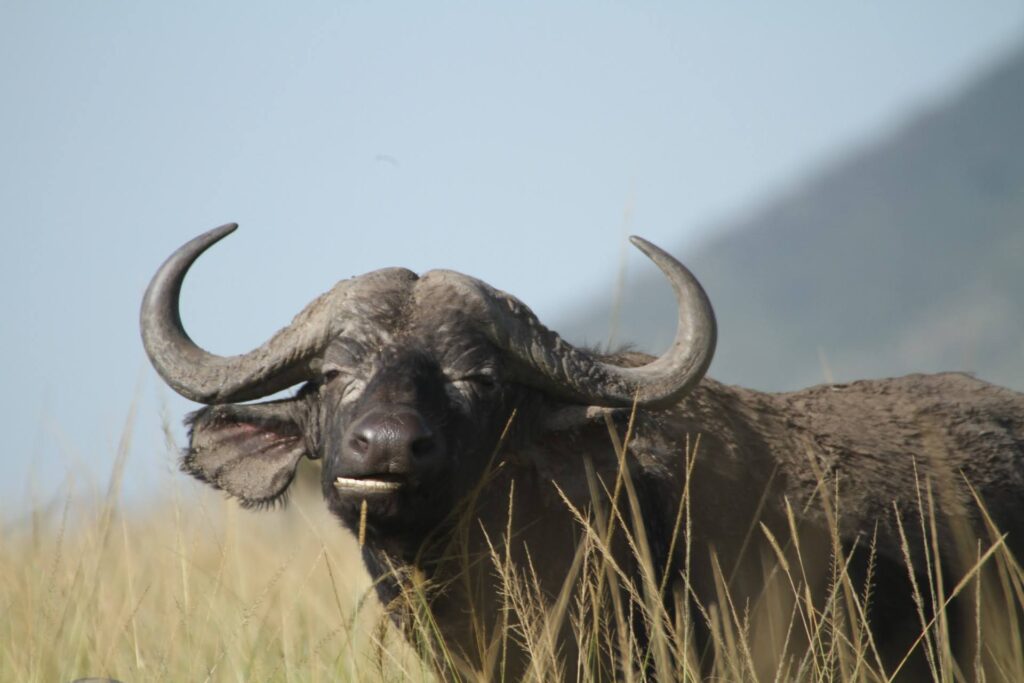
Cape buffalo are unpredictable, old solitary bulls in particular. They’re another reason nobody leaves the vehicle outside guide-approved spots. Herds are generally relaxed around vehicles.
Hippos and crocodiles
Hippos spend the day in water and come out at night to graze, sometimes straight through riverside camps. Crocodiles line rivers such as the Mara River. Both are reasons to keep back from riverbanks and to follow your camp’s rule about moving around after dark.
Lions, leopards and hyenas
Lions are the animal people fear most and one of the least likely to bother a vehicle. Leopards are shy and usually spotted in trees or thick bush. Hyenas are bold around camps at night but rarely trouble people who follow the camp routine.
Snakes and scorpions
Rarely seen on a game drive. At camp they’re a reason to keep tent zips closed and to shake out your shoes before you put them on.
What if I am afraid of lions?
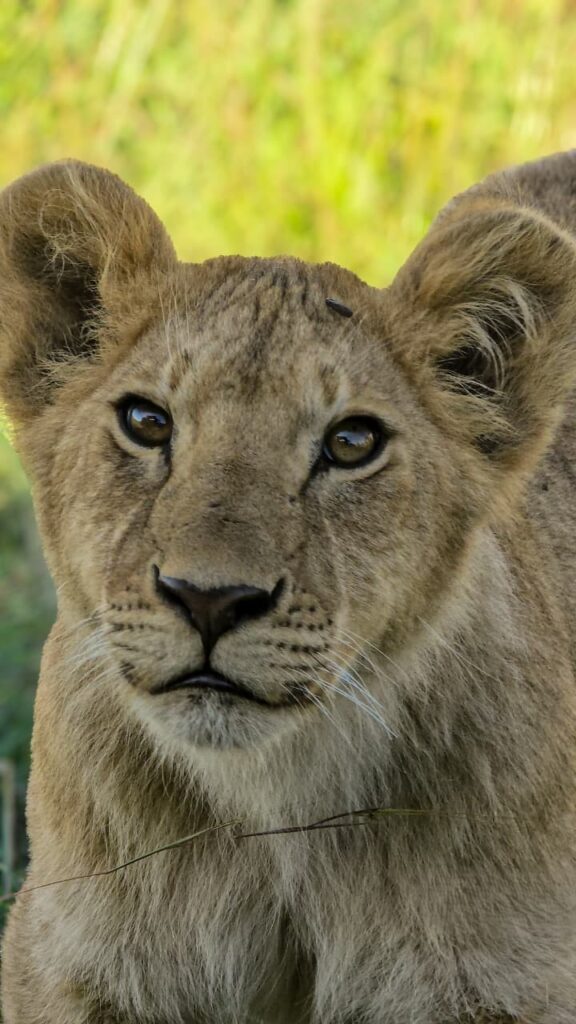
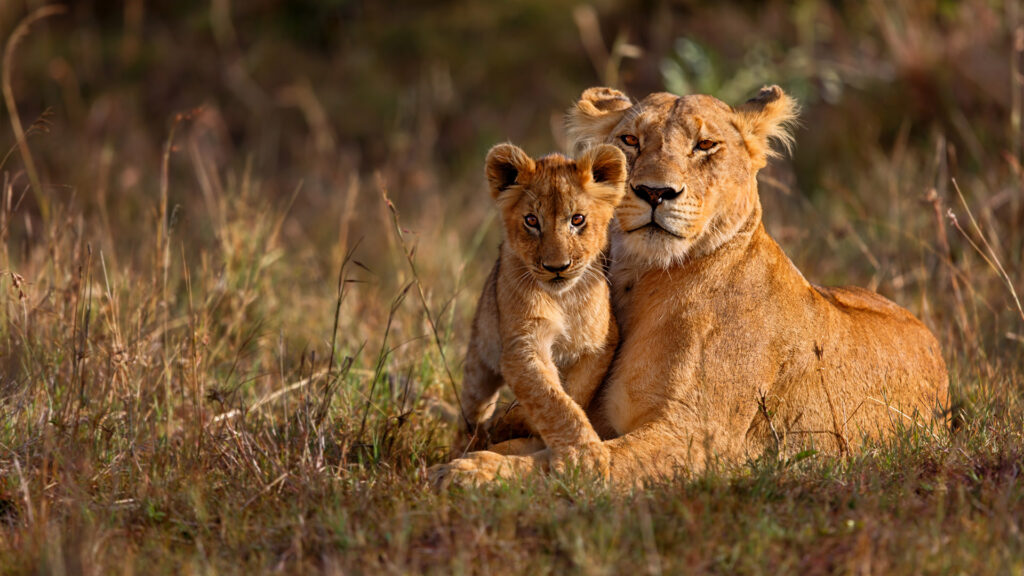
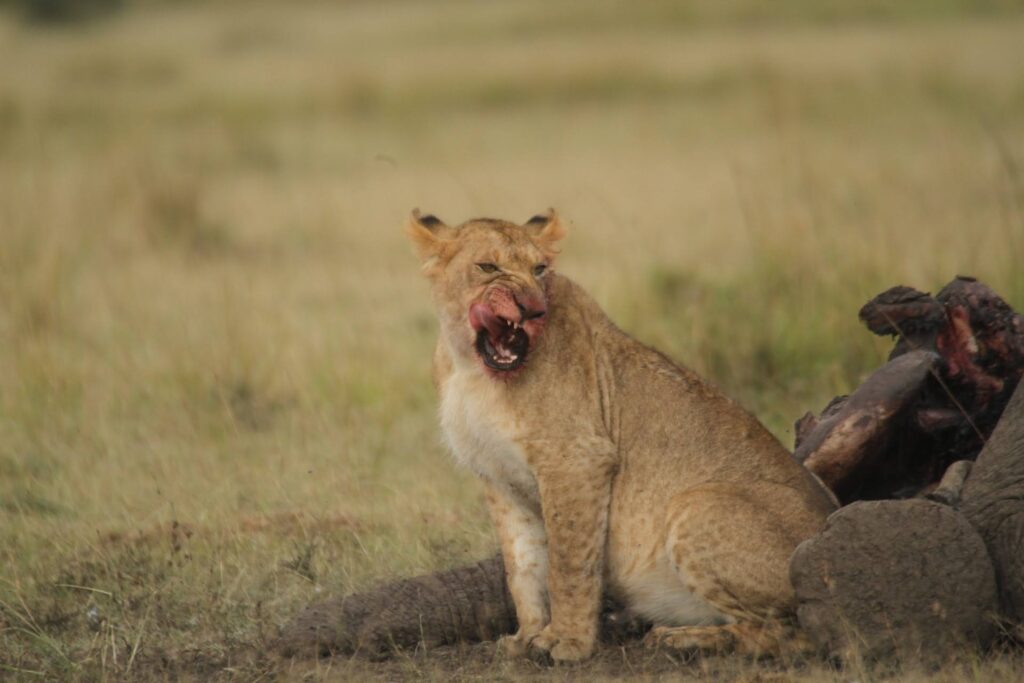
| QUICK ANSWER | What if I am afraid of lions? Tell your guide on the first morning. Guides can choose sightings at a distance, keep the roof down and leave the moment you ask. Lions spend most of the day resting and don’t treat a vehicle as prey. Nairobi National Park is a gentle place to meet them. |
Say so before the first drive. Guides hear this often, and it changes how they plan the day. Then use the tools you have:
- Choose your seat. Every guest in our Land Cruisers has a window, so pick the seat that feels right and swap during the day.
- Ask for distance. Request that big cat sightings are watched from further back. The guide can always move closer later.
- Keep the roof down. The pop-up roof stays closed until you decide you want it open.
- Agree a signal. A tap on the seat back means move on. No explanation needed.
- Start with sleepy lions. Lions resting in the shade are the easiest first sighting, and they make up much of what you see by day.
Fear fades fastest through exposure you control. That’s the logic behind the gentle start we describe further down.
What rules keep you safe on safari?
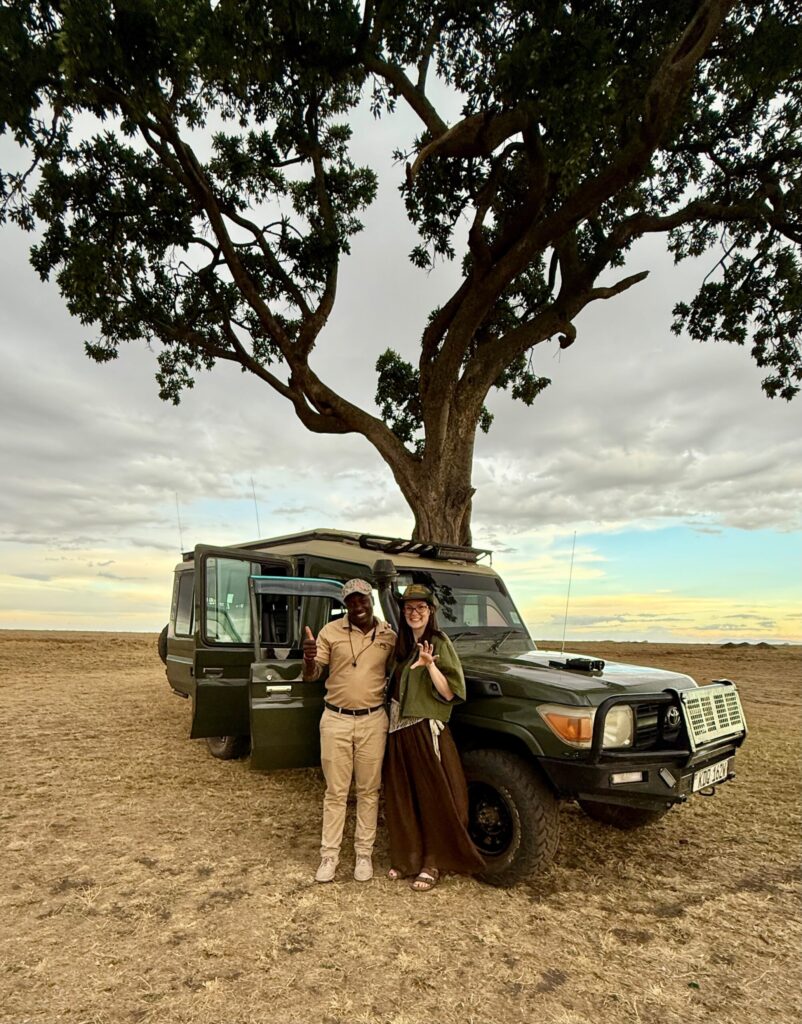
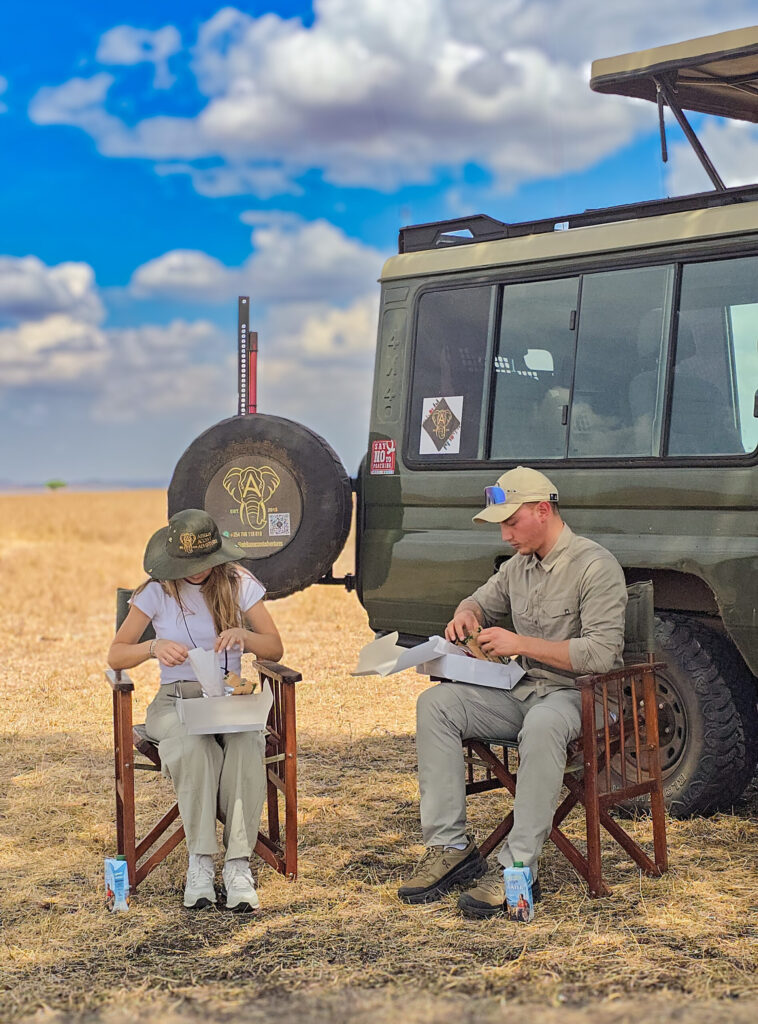
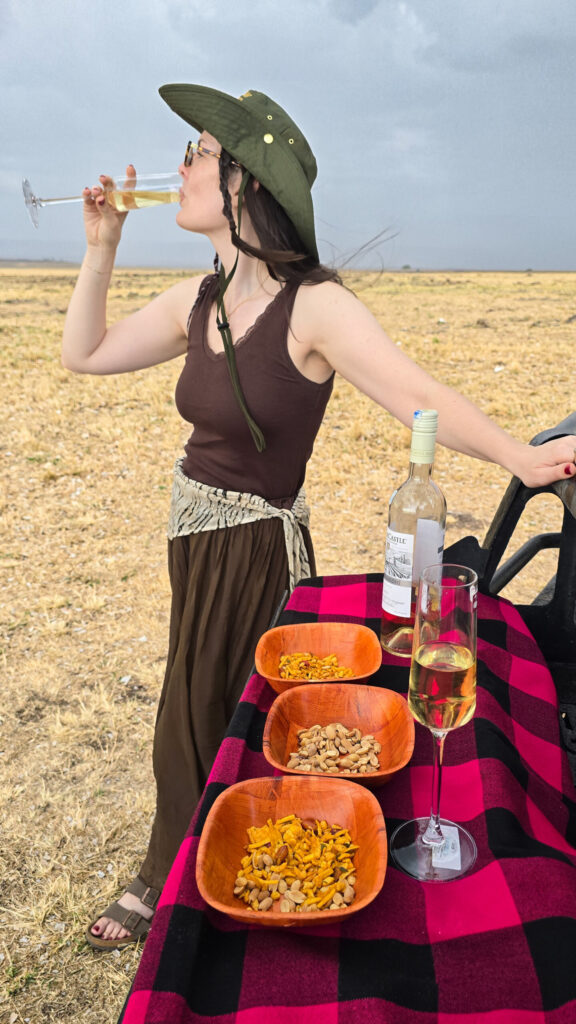
Safari safety comes down to a short list that every guide repeats at the first briefing. None of it is complicated. All of it matters.
- Stay in the vehicle. You get out only at spots your guide has chosen and checked, such as a picnic site or a lodge.
- Keep your body inside. No leaning over the sides and no hanging arms or legs out. Stand through the pop-up roof only when your guide says so.
- Keep your voice low. Loud noise unsettles animals and breaks the calm that makes close sightings possible.
- Never feed or call to animals. Fed animals lose their wariness, and that ends badly for the animal first.
- Keep food out of sight. Baboons and vervet monkeys will check a vehicle for snacks.
- Follow instructions instantly. Ask why afterwards.
If your guide says sit down, sit down first. Ask why afterwards.
The guide has rules too. Parks and conservancies set limits on how many vehicles can crowd a sighting, and good guides don’t block an animal’s path or push in between a mother and her young. Our fleet is built around this. Every vehicle is a 4×4 Land Cruiser with a pop-up roof, a UHF radio and a cap of six guests in eight seats. Read more in Inside our safari fleet.
What about nights and tents?
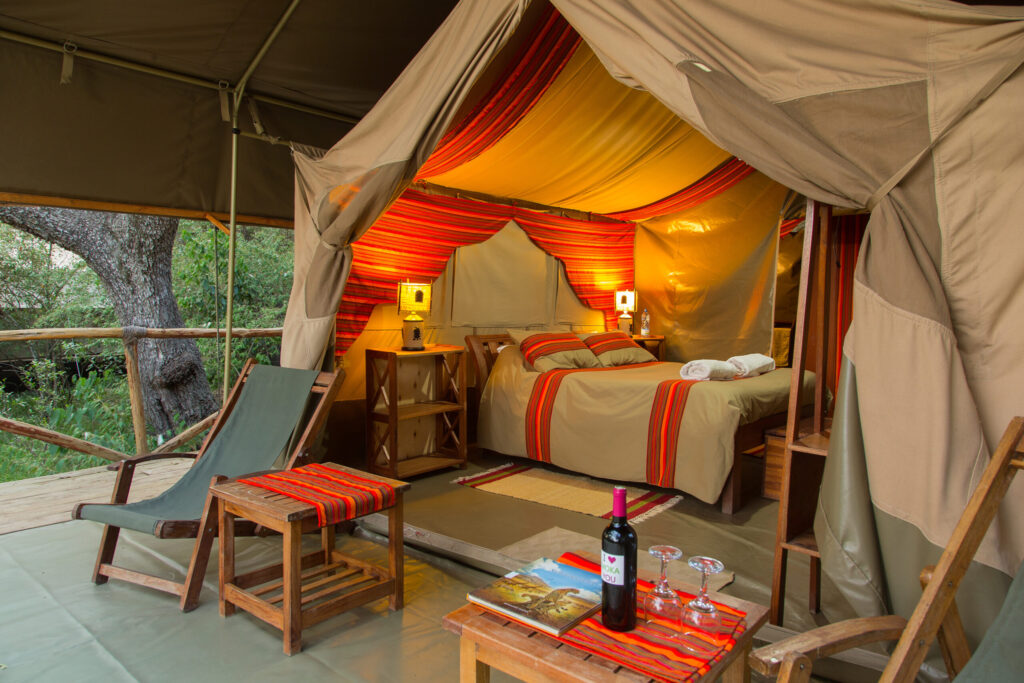
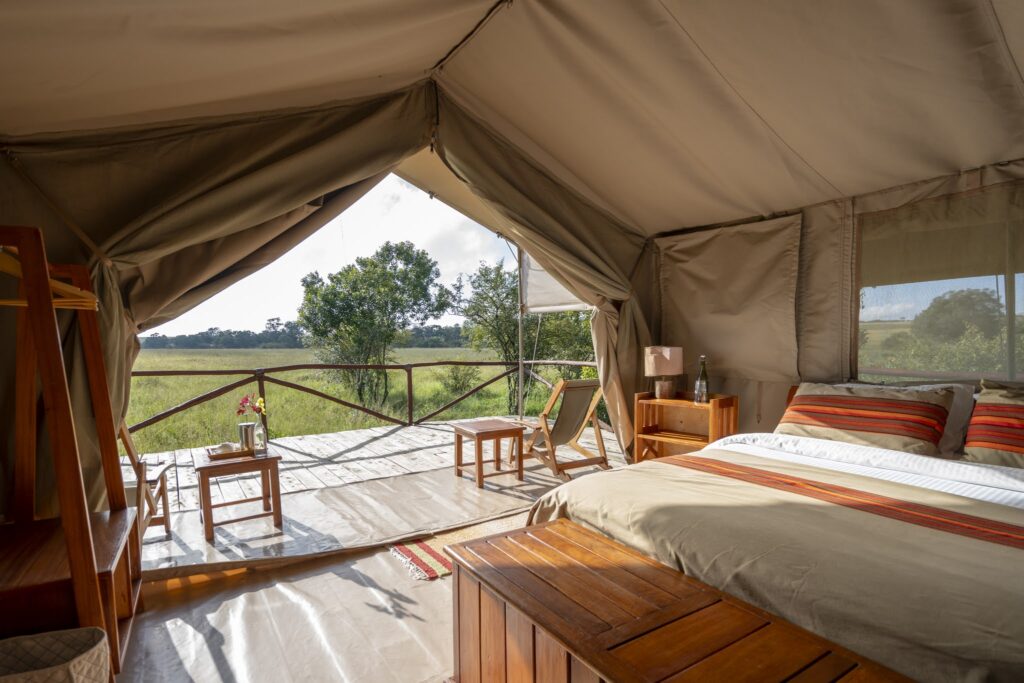
| QUICK ANSWER | Is it safe to sleep in a tent near wildlife? Tented camps are built for it, but your safety rests on camp rules more than canvas. Most camps escort guests to their tents after dark and ask you to stay put overnight. Wildlife does walk through camps, so keep zips closed and food out of the tent. |
This is the question we hear most from guests who’ve never camped. A tented camp means a real bed, a solid floor and a bathroom behind a canvas wall, and most are far more comfortable than the name suggests. Our guide to what a tented camp is like covers the comfort side. Here we stay with the animals.
What you will hear
Hippos grunt from the river. Hyenas whoop. A lion may call from a few kilometres away. Zebras bark when something has unsettled them. The sounds are the loudest part of a camp night and the part guests talk about longest. Pack earplugs if the noise worries you more than the animals do.
How camps keep you safe
Many camps in the Masai Mara and Amboseli areas aren’t fenced, so wildlife can walk through. The system is simple. After dark you don’t walk alone. A camp askari, usually carrying a torch, escorts you between your tent and the dining area, and your camp briefs you on exactly how to call for him. Zips stay closed, food stays out of the tent and you never step out to look at a noise.
When you book, ask each camp how night escorts work. A camp that answers in detail has done it a thousand times. If you’d rather start with solid walls, a lodge such as Mara Serena Safari Lodge on our 3-day Masai Mara fly-in safari is a gentler first night.
In an unfenced camp the rule is simple. You don’t walk alone after dark, and you never have to.
What do guides do in an emergency?
The most useful emergency tool is judgement made early. Guides read an animal long before it becomes a problem, and most tense moments end at the stage of moving the vehicle away. If an elephant mock charges, the guide stays calm and holds still or reverses slowly. If a vehicle is stuck or has a flat tyre, you stay put and the guide decides whether to wait or call for help.
Every one of our Land Cruisers carries a UHF radio, which links the vehicle to other guides and to camp. Guides also carry a first aid kit. For serious medical cases, air evacuation is the route out of remote areas, and AMREF Flying Doctors, based at Wilson Airport in Nairobi, is the best-known air ambulance service in the region.
Check that your travel insurance includes medical evacuation before you fly. It’s the one clause that matters out here. Tell your guide about any medication or condition on day one, so a plan exists before anyone needs it.
What does a first game drive feel like?
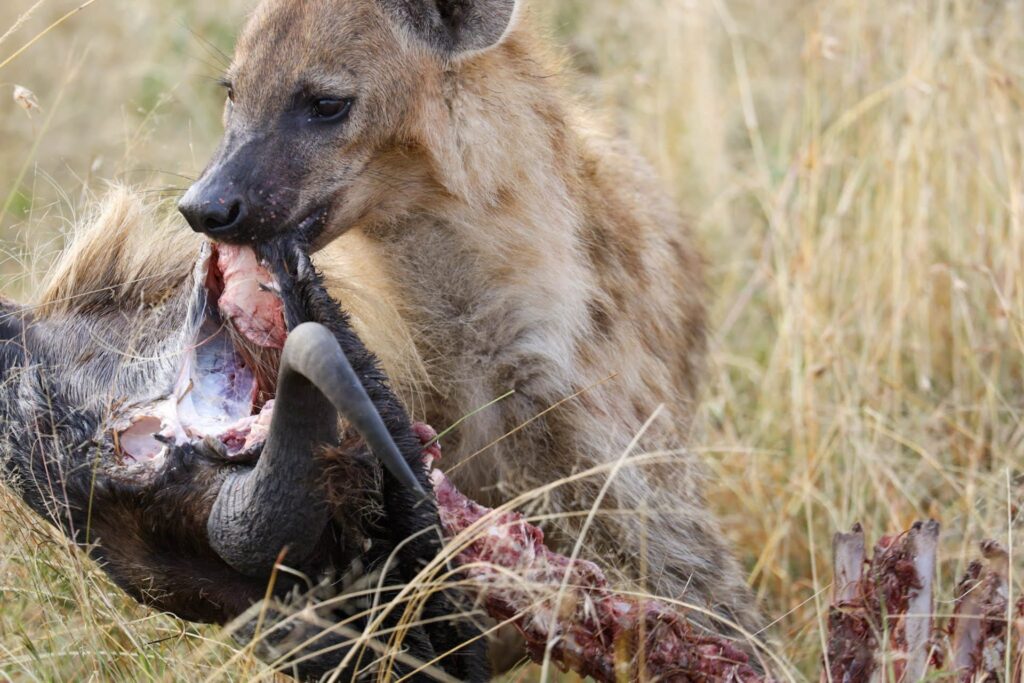
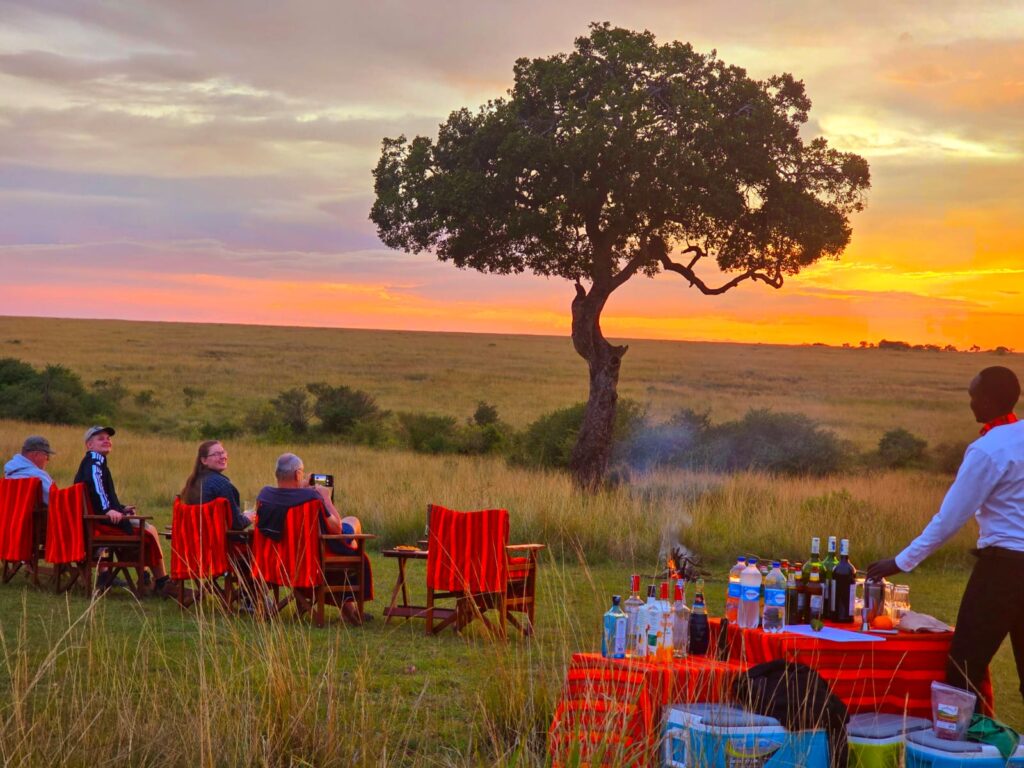
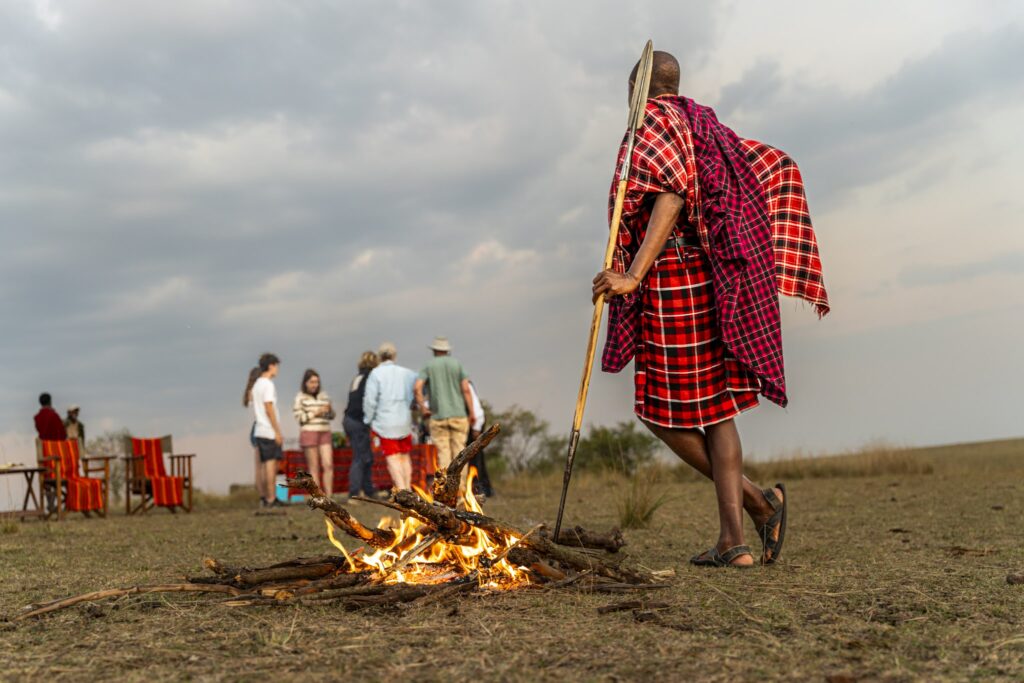
Take a typical morning. You wake in the dark, drink tea or coffee and leave around first light, which in Kenya is close to 6am most of the year because the country sits on the equator.
The first twenty minutes are cold and quiet. Then the light turns gold and the plains fill with impala, zebra and the odd jackal. Nothing feels dangerous. It feels like arriving somewhere. In our experience the first big cat is the moment nerves shift from dread to curiosity.
By mid-morning you’re back at camp for breakfast and a rest. The afternoon drive starts around 4pm. By day two most anxious guests are asking to stay longer at sightings, not shorter. The full rhythm is mapped in A Day on Safari in Kenya, Hour by Hour.
Which safari activities feel most exposed?
Not every activity carries the same feeling. Here’s how we’d sequence them for a nervous traveller.
| Activity | How it feels | Our advice |
| Game drive in a 4×4 | Enclosed by the vehicle with a pop-up roof; the guide handles distance | The right first step for almost everyone |
| Night drive | Spotlights and unfamiliar noises; allowed in some private conservancies and at Ol Pejeta Conservancy, not in national parks | Try it on a later night, not your first. See night game drives in Kenya |
| Walking safari | On foot with a trained guide; the most exposed way to see wildlife | Skip it on a first safari |
| Hot air balloon | Above the animals and surprisingly calm | A gentle thrill for nervous flyers who like heights. See our balloon safari guide |
How can you ease in: a day trip or a short stay?
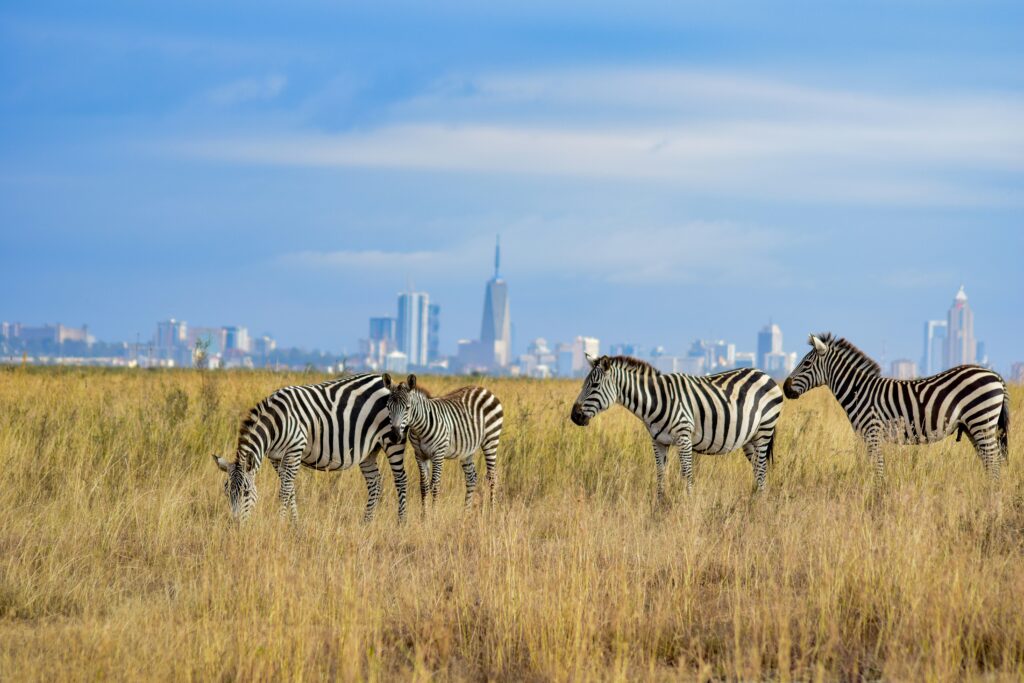
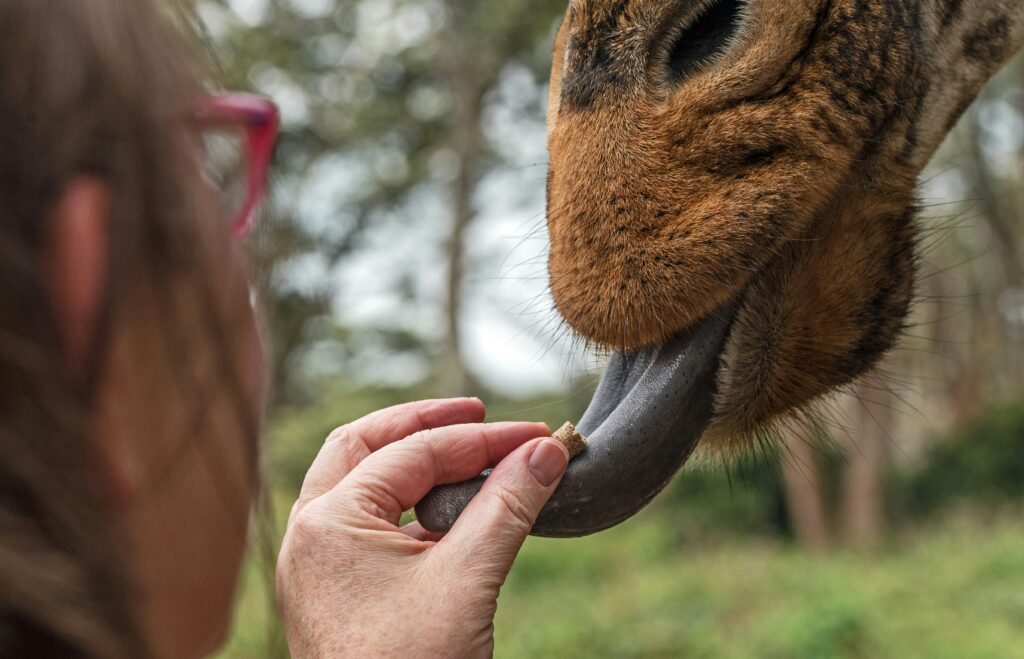
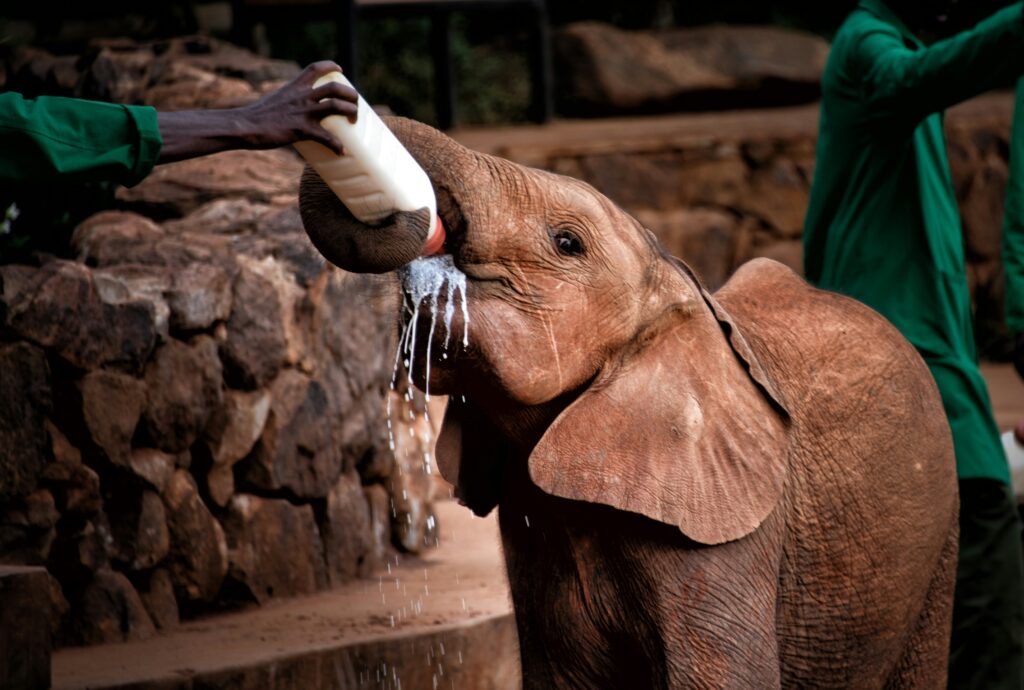
Match the size of your first step to the size of your fear. A gentle ladder works better than a leap. The half-day Nairobi National Park drive is usually the lowest-cost way to try a safari and commits you to no nights away, and current pricing is on the product page.
| Option | What it feels like | Best for |
| Half-day Nairobi National Park drive | A morning drive, then back to your Nairobi hotel with the city on the horizon | First-timers and nervous travellers |
| Amboseli day trip | A long road day with open plains and elephants, no camp night | Travellers who want more than a morning |
| 2 to 3 nights in a lodge or tented camp | The full rhythm of dawn and dusk drives and camp evenings | Once you have done one drive and want more |
Our suggested order is simple. Do the Nairobi morning first. If it goes well, add a lodge night in the Masai Mara before you try a tented camp. If tents are what worry you, there’s no prize for starting there. Our Masai Mara complete safari guide shows how that next step can look.
| EXPERT NOTE Match the first step to the fear. Afraid of animals: start with a short drive from a city bed. Afraid of sleeping near them: pick a lodge with solid walls first. Afraid of both: take the day trip. A short, successful first experience builds more confidence than a long one you endure. Kibara Mugo, Safari Writer and East Africa Specialist |
Who should talk to us before booking?
Anyone who has read this far with a knot in the stomach. A conversation before booking saves you from the wrong camp, the wrong vehicle or the wrong pace. We’d especially like to hear from:
- Travellers with a specific fear of big cats, elephants, snakes, small aircraft or open vehicles.
- Anyone managing anxiety or a medical condition who wants a plan, not a surprise.
- Parents of young children. Age rules differ by camp and activity, and our Kids on Kenya Safari guide covers them.
- Solo travellers and first-timers unsure about group size or pace. Our first safari guide is the best companion to this article.
| EXPERT NOTE Guest planning. The more we know before you travel, the better the match. Tell us what worries you, whether that’s lions, tents, small aircraft or the early starts, and we shape the camps, vehicles and pace around it. Nothing is too small to mention, and nobody is asked to justify a fear. Hellen Asiko, Director & Guest Experience Curator |
Frequently Asked Questions
Can animals jump into a safari vehicle?
Rarely, and not the animals you’re worried about. Baboons and vervet monkeys are the usual culprits, and only when food is visible, so keep snacks out of sight. In our experience big cats and elephants don’t try.
Do lions attack safari vehicles?
Very rarely. Lions treat a vehicle as part of the landscape while the people inside stay seated and quiet. Trouble tends to start when someone breaks the outline by leaning out or leaving the vehicle.
What should I do if an elephant charges?
Stay seated and silent and let your guide drive. Most charges are mock charges that stop short, and the guide’s job is to give the elephant space by holding still or reversing slowly. Don’t shout, stand up or take photos until the guide says it’s over.
Is it safe to use the bathroom on a game drive?
Yes, if you wait for your guide to choose the spot. Never step out on your own. Guides stop at gate facilities, picnic sites or an open stretch they’ve checked, and they keep watch. Tell your guide early, because a planned stop is a safer one.
Can I stand up to take photos in the safari vehicle?
Only when your guide says so. Standing through the pop-up roof with your feet on the floor is how most safari photography happens. Leaning over the sides or climbing onto the roof is what breaks the animal’s view of the vehicle.
Is a walking safari safe for nervous people?
Not as a first safari. A walking safari puts you on foot with a trained guide and is the most exposed way to see wildlife. Do a few game drives first, then ask us before you decide.
Which Kenya park is best for nervous first-timers?
Nairobi National Park is the easiest first step, because it’s a morning drive from the city and you return to your hotel afterwards. Amboseli National Park is next, with open plains where elephants are easy to watch from a distance. Neither is risk-free, and both suit a short guided first look.
Are children safe around wildlife on safari?
Yes, with the same rules as adults and a few extra ones. Age limits apply to some activities and camps. Minimum ages, malaria and camp rules are covered in our Kids on Kenya Safari guide, so we won’t repeat them here.
Start gently with a Nairobi National Park morning
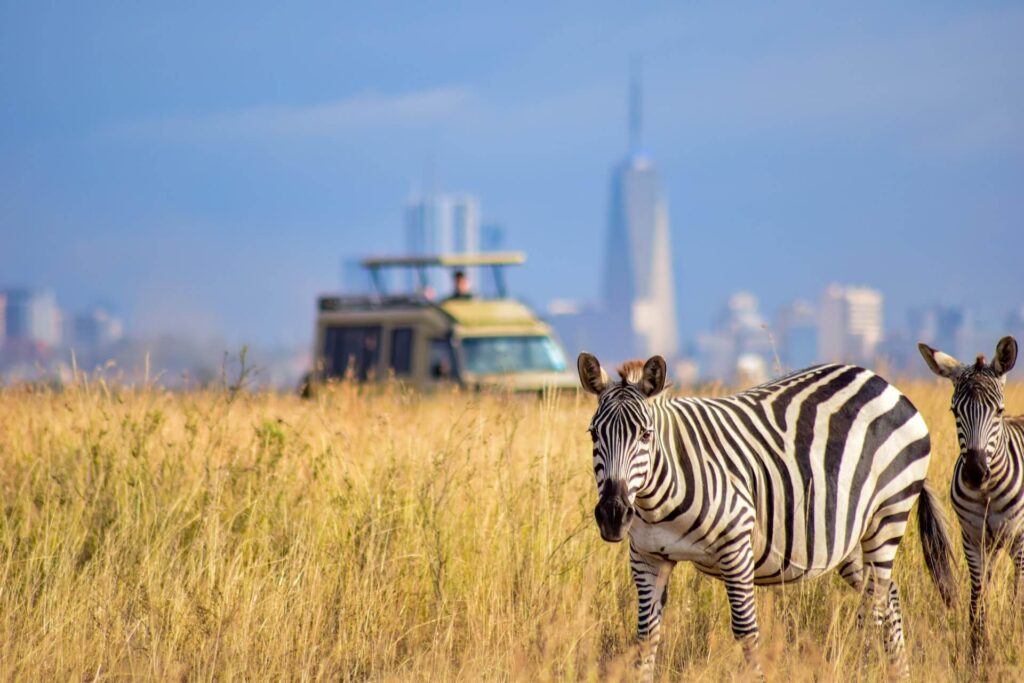
We opened with a guest, a lioness and a door handle. The argument since has been simple: the fear is real and so is the way through it. You now know how close animals come, why they ignore the vehicle, which animals earn real respect, what keeps you protected and how a night in camp works.
What Afrikan Accent Adventures adds is the person who plans it around you. Hellen Asiko, Director & Guest Experience Curator, will ask what worries you, then match the park, the vehicle, the camp and the pace to the answer. We’re a Nairobi-based safari operator, and our guides know these tracks well.
Start with a morning. The half-day Nairobi National Park game drive ends back in the city and gives you a real chance of a first lion without a single night away. Read the Nairobi National Park destination page first if you’d like to know what to expect.
Start with one quiet morning at Nairobi National Park, and let your first lioness decide how far you go next.
Let's plan your East African safari
Tell us when you'd love to travel and a local specialist will craft a tailor-made route around you.


