Night Game Drives in Kenya: Where They’re Allowed and What You’ll See
The rule is simpler than most itineraries make it sound: no national park allows it, a short list of private conservancies do it well, and one national park bends the rule under armed escort.
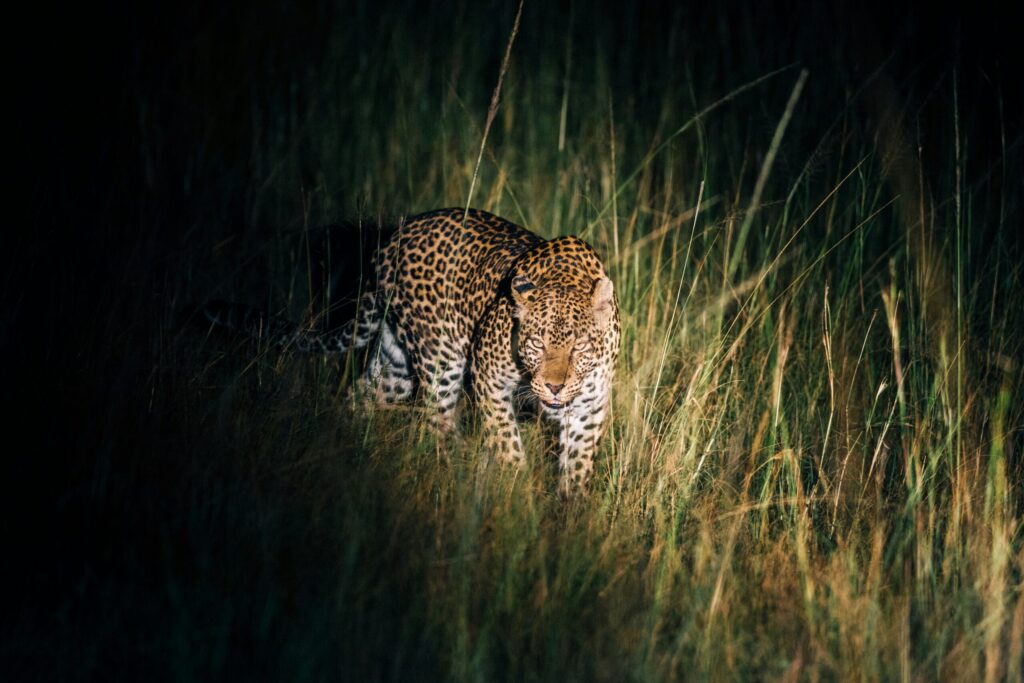
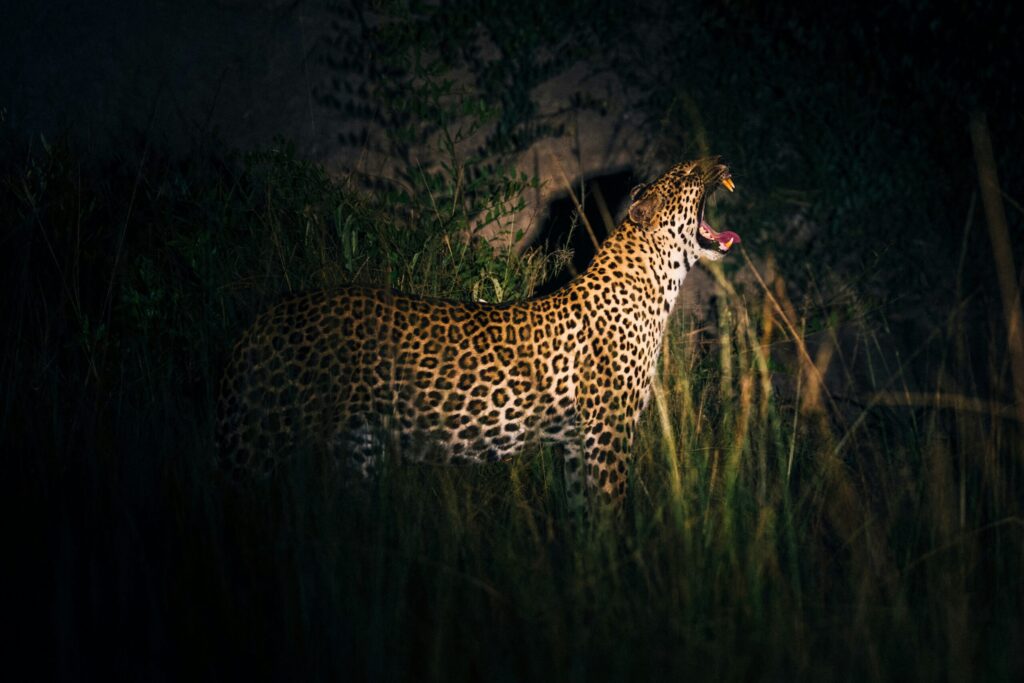
A leopard stalking through tall grass in the spotlight during a night game drive in Kenya.
Sweetwaters, Ol Pejeta Conservancy. 7:04pm. The day’s heat is gone, the last day safari landcruiser vehicles have cleared out through Rongai Gate, and our Land Cruiser is one of two waiting for clearance to go back out into the dark. The guide kills the headlights and switches to a spotlight fitted with a red filter, the kind that reads as a dim moon to an animal’s eyes rather than a headline act. Within twenty minutes we are sitting behind a female leopard working the edge of a drainage line, completely unbothered by us, because she has never once seen us as a threat in daylight.
This does not happen inside the Masai Mara National Reserve. It does not happen in Amboseli, Tsavo or Lake Nakuru either. Kenya Wildlife Service closes every gazetted national park and reserve at 6pm sharp, and driving after that hour is not a grey area, it is a fineable offence with your vehicle at risk of impoundment. We have had guests arrive expecting a night drive as a standard add-on to their Mara safari, the way it might work on a private reserve in South Africa, and we have had to explain, gently but firmly, that the rule here runs the other way.
What most guests do not know when they book is that the actual answer to “can I do a night game drive in Kenya” depends entirely on which side of a conservancy boundary their camp sits on. Cross that line, from the Masai Mara National Reserve into Mara North Conservancy for instance, and the same guide, the same lion pride, the same landscape becomes available after dark. We have built enough itineraries around this exact boundary to know it is the single most under-explained detail in Kenya trip planning.
So here is the version of that conversation we would have with you directly. Where night drives are genuinely legal in Kenya, which conservancies do them well, what actually lives out there once the sun goes down, and the one national park that breaks its own rule under very specific conditions.
| QUICK ANSWER | Can you do a night game drive in Kenya? Yes. Night game drives are allowed in private conservancies, such as Mara North, Naboisho, Ol Pejeta and Selenkay, where spotlight drives reveal leopards, hyenas, aardvarks and other nocturnal wildlife invisible by day. |
At a Glance:
- Where they are allowed: Private conservancies only, including Mara North, Naboisho, Olare Motorogi, Ol Kinyei, Siana and Lemek around the Masai Mara, plus Ol Pejeta and Lewa Wildlife Conservancy in Laikipia, and Selenkay Conservancy near Amboseli
- Where they are banned: Every KWS-gazetted national park and reserve, including the Masai Mara National Reserve, Amboseli, Tsavo East, Tsavo West, Lake Nakuru and Aberdare National Park
- The one exception: Nairobi National Park permits a pre-authorized night game drive with an armed KWS ranger escort, booked in advance, from 7pm to 9pm
- Typical timing: 7pm to 9pm or 9pm to 11pm at Ol Pejeta, roughly 1.5 to 2 hours after dark at most Mara conservancy camps
- Typical cost: USD 70 per person at Ol Pejeta as a paid add-on (2026 conservancy tariff); usually bundled into the nightly rate at Mara conservancy camps; USD 80 park fee plus USD 50 night game drive fee plus a KES 4,000 ranger fee at Nairobi National Park
- What you are likely to see: Leopards hunting, hyena clans on the move, aardvarks, bat-eared foxes, genets, civets, porcupines, bush babies, caracals and owls
- Best Masai Mara conservancy for it: Mara North or Naboisho, per our own conservancy research, for the widest camp choice and the most established guiding programs
- Equipment used: An open 4×4 fitted with a handheld or roof-mounted spotlight covered in a red filter, which does not disturb an animal’s night vision the way white light does
What Is a Night Game Drive?
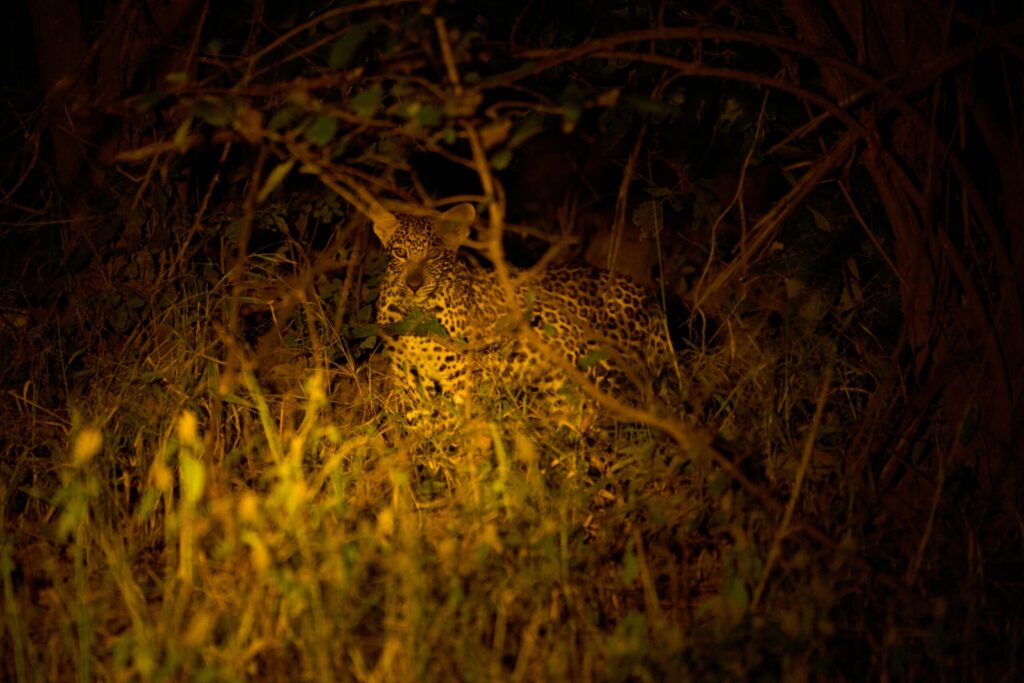
A night game drive is a guided wildlife viewing drive conducted after sunset, using a filtered spotlight to locate and observe animals that are either nocturnal or simply more active once the temperature drops. It is not the same activity as an evening game drive, which runs from roughly 4pm to sunset inside the normal park or reserve hours and needs no special permission anywhere in Kenya. A true night drive continues past sunset, into the hours when a completely different cast of wildlife takes over from the daytime one.
The guide and a spotter, usually seated on the vehicle’s bonnet or leaning out from the front seat, sweep a red-filtered light across the bush in a slow arc, watching for eyeshine, the reflective glint that gives away an animal’s position long before its shape becomes visible. Red light sits outside the wavelength range most nocturnal mammals see well, so a genet or a leopard registers the beam as barely more than moonlight rather than an intrusion. That single piece of equipment is what makes the entire activity possible without turning into wildlife harassment.
Why Night Drives Aren’t Allowed in National Parks
Kenya Wildlife Service prohibits driving after dark inside every gazetted national park and reserve in the country, the Masai Mara National Reserve, Amboseli, Tsavo East, Tsavo West, Lake Nakuru and the Aberdares among them. Gates close and driving hours end at 6pm, and any vehicle still inside after that point is operating illegally, with impoundment and fines as the standard consequence.
The reasoning is not bureaucratic box-ticking. Poaching remains a real threat in Kenya’s public parks, and after-dark vehicle movement has historically been one of the ways it happens, so KWS treats the blanket curfew as a frontline deterrent rather than an inconvenience. Ranger coverage inside the vast public reserves is also thinner after dark, and radio networks that work well enough in daylight cannot always guarantee a fast response if a vehicle breaks down or a guest needs help at 10pm in the middle of the Mara. On top of both of those, nocturnal feeding and breeding behaviour is exactly the kind of activity that repeated vehicle disturbance can disrupt, and a reserve open to any paying visitor has no way to cap how many vehicles might show up at a single sighting after dark.
No legitimate operator runs an actual night drive inside the Masai Mara National Reserve. If someone offers you one, that alone tells you something about how they operate everywhere else.
Where They Are Permitted: Private Conservancies
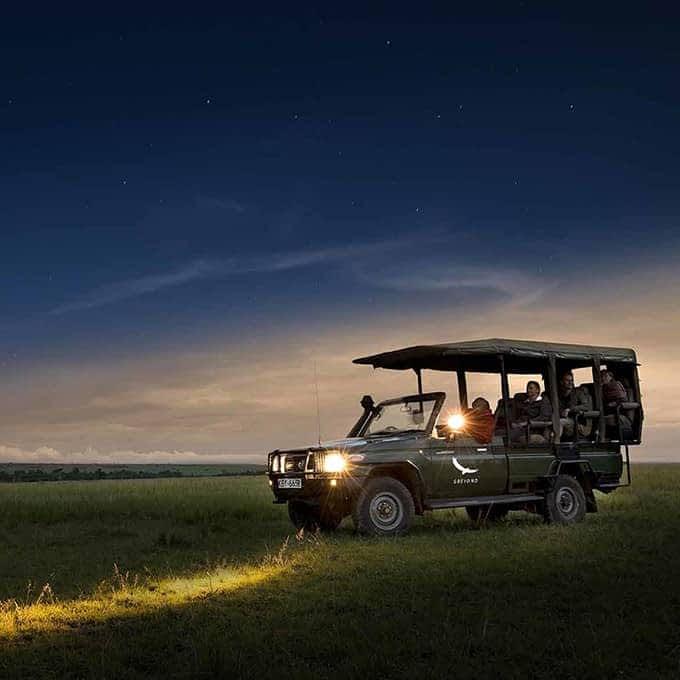
Private conservancies sit outside KWS jurisdiction, which is the entire reason the activity exists at all. A conservancy is Maasai-owned or community-owned land leased to safari camps and operators, run under its own management trust rather than county or national park rules. We cover the mechanism in detail in our Masai Mara Conservancies Guide, but the short version is that the same landowner agreements that cap vehicle numbers per sighting also give each conservancy the freedom to permit night drives, off-road tracking and guided walking safaris, none of which the adjoining national reserve allows.
Access is restricted to guests staying at a partner camp inside that specific conservancy, which is a feature rather than a limitation. It is the mechanism that keeps a night drive from turning into a queue of five vehicles around one hyena den. Around the Masai Mara, Mara North, Naboisho, Olare Motorogi, Ol Kinyei, Siana and Lemek all permit night drives for their own camp guests. Further north on the Laikipia Plateau, Ol Pejeta and Lewa Wildlife Conservancy run some of the country’s longest-established night drive programs. Near Amboseli, Selenkay Conservancy offers day, evening and night game drives to guests of its one resident camp.
Where Are Night Game Drives Allowed in Kenya?
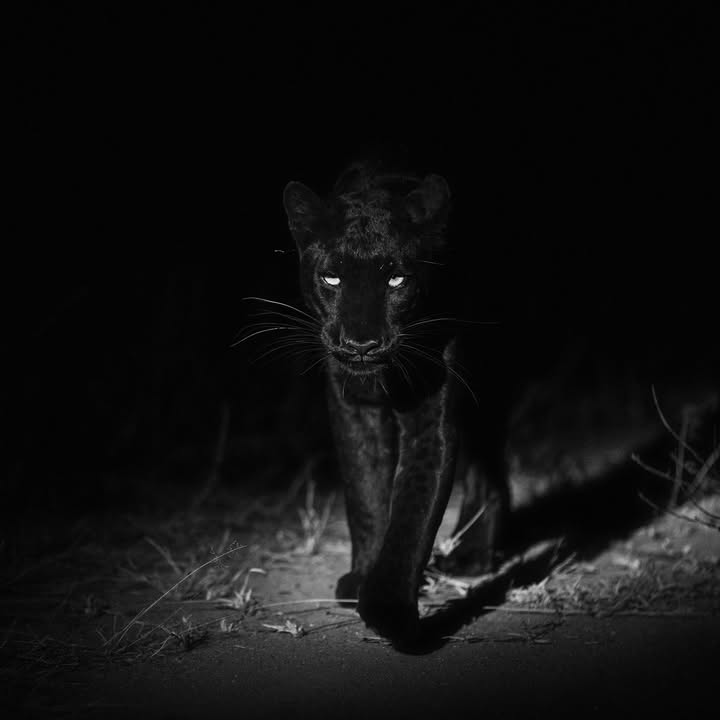
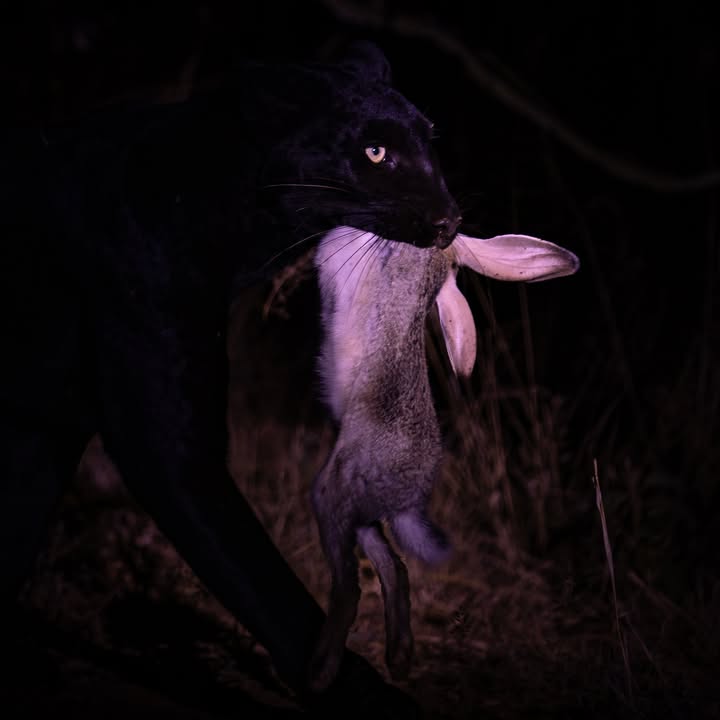
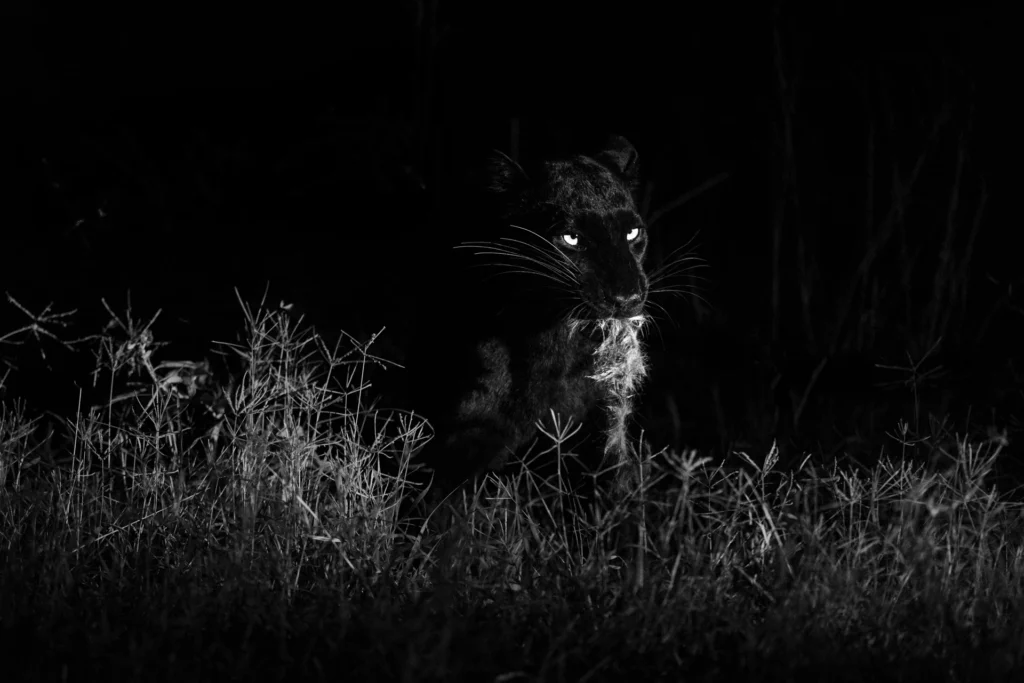
Four clusters cover almost every legitimate night game drive option in the country. Each one has its own character, its own access rules and its own reason a traveller might choose it.
Ol Pejeta Night Game Drive
Ol Pejeta Conservancy sits on the Laikipia Plateau between the Aberdare Range and Mount Kenya, roughly 200 to 220 kilometres and a three-and-a-half to four-and-a-half hour drive north of Nairobi by safari Land Cruiser, depending on the route. It runs one of Kenya’s most established night drive programs, with scheduled slots daily from 7:00pm to 9:00pm and 9:00pm to 11:00pm, priced at USD 70 per person under the conservancy’s 2026 activity tariff. The drive is shared and scheduled rather than private, booked at least a day ahead, and conducted separately from the standard game drives already included in most Ol Pejeta packages.
Because Ol Pejeta is a private conservancy rather than a national park, its entire 90,000 acres are open after dark, not a fenced-off corner of it. Guests staying inside the conservancy, at Sweetwaters Serena Camp for example, which is built around a floodlit waterhole, can watch elephants and buffalo drink after nightfall from the camp itself, before or after their scheduled drive. Ol Pejeta is also more flexible than the Mara conservancies about who can book: because it sits on public road access near Nanyuki, some guests staying at nearby lodges outside the conservancy boundary can still add a single night drive, though staying inside the conservancy removes the extra single-entry gate fee that arrangement can trigger.
Ol Pejeta also sits on the route most travellers take further north, so a night drive here often becomes one stop on a longer Laikipia circuit. Our Northern Kenya Safari Guide covers how to combine it with Samburu and Meru for a longer trip north of Nairobi.
Best Masai Mara Conservancy for a Night Game Drive
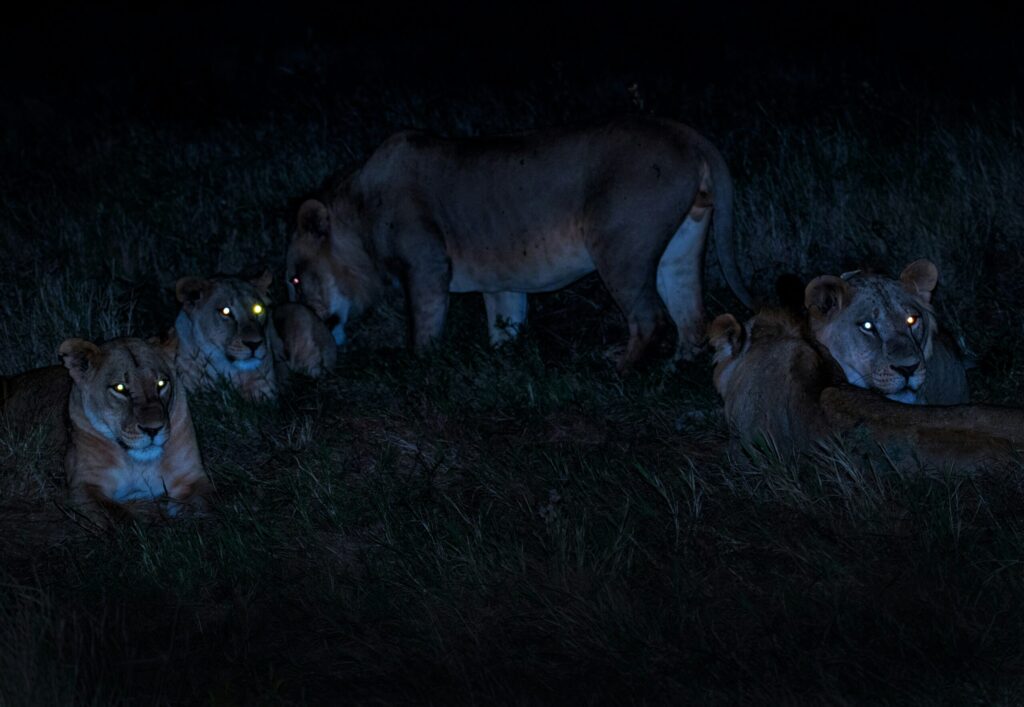
Mara North Conservancy and Naboisho Conservancy are, in our experience, the strongest choices specifically for night drives. Both carry the widest camp counts among the northern conservancies and the most established guiding programs, which in practice means guides who have spent years learning exactly which drainage lines the resident hyena clans favour after dark. We cover both in full in our Masai Mara Conservancy Fees Explained guide, alongside Olare Motorogi, Ol Kinyei, Siana and Lemek, all of which also permit night drives for their own camp guests.
Olare Motorogi is worth a specific mention for night drives too, since it carries one of the highest lion densities recorded anywhere in Africa, and lions become noticeably more active once the temperature drops after sunset. Ol Kinyei, being one of the smallest and least crowded conservancies in the ecosystem, delivers a quieter, more intimate version of the same experience, usually with only your own vehicle anywhere near a sighting.
Night drives change the entire rhythm of a safari. In the reserve you are back at camp before dark. In a conservancy like Naboisho or Mara North, dusk is often when the sightings get interesting, hyena packs moving out, genets appearing in the spotlight, lions starting to hunt. If a guest tells us they want to actually feel the bush at night, we point them toward a conservancy every time.
Nicholas Wangithi, Director & Founder
Amboseli Night Game Drive at Selenkay Conservancy
Amboseli National Park itself follows the same KWS rule as every other gazetted reserve, gates shut and driving ends at 6pm, no exceptions. Selenkay Conservancy is the workaround, a private, Maasai-owned conservation area of roughly 15,000 acres about 16 kilometres north of the park’s northern boundary, sharing the same eco-system and the same elephant herds that move freely between the two. Selenkay was established by Gamewatchers Safaris, which operates the conservancy’s only camp, Porini Amboseli Camp, in partnership with the local Maasai landowners.
Because it is a conservancy and not a national park, Selenkay offers day, evening and night game drives as a matter of course, all led by a Maasai guide from Porini Amboseli Camp, alongside guided walking safaris that Amboseli itself does not permit. A maximum of roughly eighteen guests share the conservancy at any one time, which keeps sightings uncrowded even during the drives that run well after Amboseli’s own gates have closed for the night.
Nairobi National Park Night Game Drive
Nairobi National Park is the single genuine exception to the parks-versus-conservancies rule, and it is a narrow one. KWS’s own visitor rules state that night game drives are allowed in select areas, but strictly by prior arrangement through the park office rather than as a standard evening activity anyone can turn up for. A pre-authorized drive typically runs from 7:00pm to 9:00pm, requires an armed KWS ranger to accompany the vehicle, and is booked well ahead of the date, since only a handful of vehicles are permitted inside the park after dark on any given night.
Budget for it accordingly: the standard USD 80 non-resident park entry fee, an additional USD 50 night game drive park fee, and a KES 4,000 ranger fee for the mandatory armed escort, on top of whatever your operator charges for the vehicle and coordination. This is worth knowing specifically because Nairobi National Park borders the capital itself, which makes it the only place in Kenya where a traveller with a single evening free in Nairobi, an arrival night before flying out to the Mara, for instance, could plausibly fit in a legitimate after-dark safari without leaving the city. It is not the freewheeling, hours-long conservancy experience described elsewhere in this guide. It is a shorter, more tightly supervised activity, and it should be arranged well in advance through a licensed operator coordinating directly with KWS rather than assumed as a walk-up option.
Nocturnal Wildlife You’re Likely to See
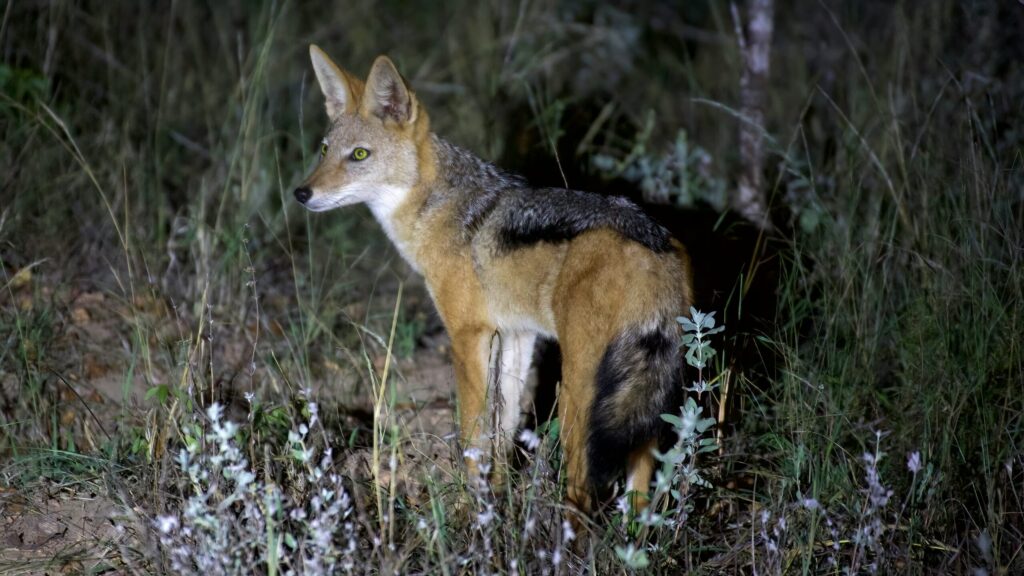
The animal roster changes almost completely once the spotlight comes out. Leopards, largely solitary and most active between dusk and dawn, are considerably easier to find at night than during a hot midday. Spotted and striped hyenas move out from their dens to hunt and scavenge, often crossing paths with the leftovers of a daytime kill. Lions, already the most visible cat during the day, become genuinely active hunters after dark rather than the sleeping shapes most safari photographs show.
Beyond the predators, a night drive is really the only reliable way to see Kenya’s smaller nocturnal specialists: aardvarks digging into termite mounds, bat-eared foxes hunting insects with those oversized ears turned forward, side-striped and silver-backed jackals, honey badgers, banded mongooses, civets and genets moving low along drainage lines, porcupines, cape hares, aardwolves and caracals. Bush babies, small enough to miss entirely in daylight, give themselves away at night through eyeshine and their distinctive, almost human-sounding call. Owls, nightjars and other nocturnal birds round out most sightings lists, and hippos, which spend the heat of the day submerged, are often seen grazing well away from water only after dark.
How a Night Drive Actually Works (Spotlights and Etiquette)
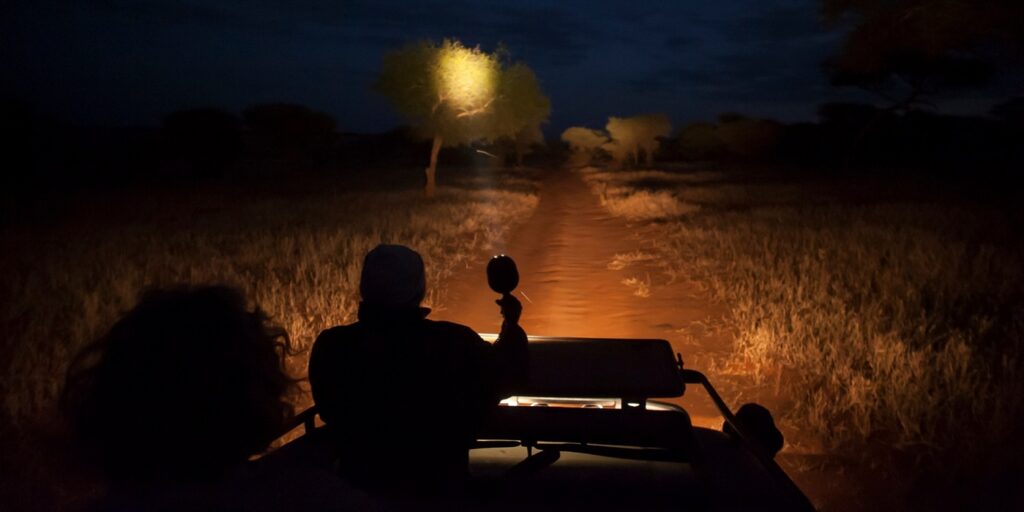
Most night drives leave camp around 7pm, either straight after sundowners or following dinner, and run for roughly one and a half to two hours. The guide drives slowly, well under the pace of a normal daytime game drive, while a spotter sweeps a handheld or vehicle-mounted spotlight across the bush in a steady arc, watching for eyeshine rather than trying to illuminate the whole landscape at once. Every reputable operator fits a red filter over the beam, since white light can genuinely disorient nocturnal animals and disrupt their hunting or feeding, while red light sits largely outside the range most species see well.
Good etiquette matters more here than on a daytime drive. Guides keep the light off an animal’s eyes for more than a few seconds at a time, never use it to track a hunt in a way that gives the prey a warning the predator did not intend, and switch it off entirely once a sighting is settled and guests have had their view. Flash photography is generally discouraged for the same reason. Voices stay low, since sound carries further and animals are more easily startled after dark, and guests remain seated in the vehicle throughout, the same rule that applies on any daytime drive outside a designated walking safari.
Which Camps Offer Them
In Mara North Conservancy, camps including Karen Blixen Camp, Kicheche Mara Camp, Elephant Pepper Camp, Ngare Serian and Saruni Mara run regular night drives for their guests. In Naboisho, Naboisho Camp, Kicheche Valley Camp and Encounter Mara do the same. Olare Motorogi’s five resident camps, among them Porini Lion Camp and Kicheche Bush Camp, offer night drives against the conservancy’s exceptionally high lion density. At Ol Pejeta, Sweetwaters Serena Camp sits inside the conservancy boundary and books guests directly onto the scheduled evening slots. Near Amboseli, Porini Amboseli Camp is effectively the only accommodation option inside Selenkay Conservancy.
Availability is set at camp level, not conservancy level, so a camp can choose to restrict or add conditions to the activity even where the wider conservancy permits it. We always confirm directly with the specific camp before promising a guest a night drive is included, rather than assuming conservancy-wide rules apply automatically to every property inside it.
What to Expect on a Night Game Drive
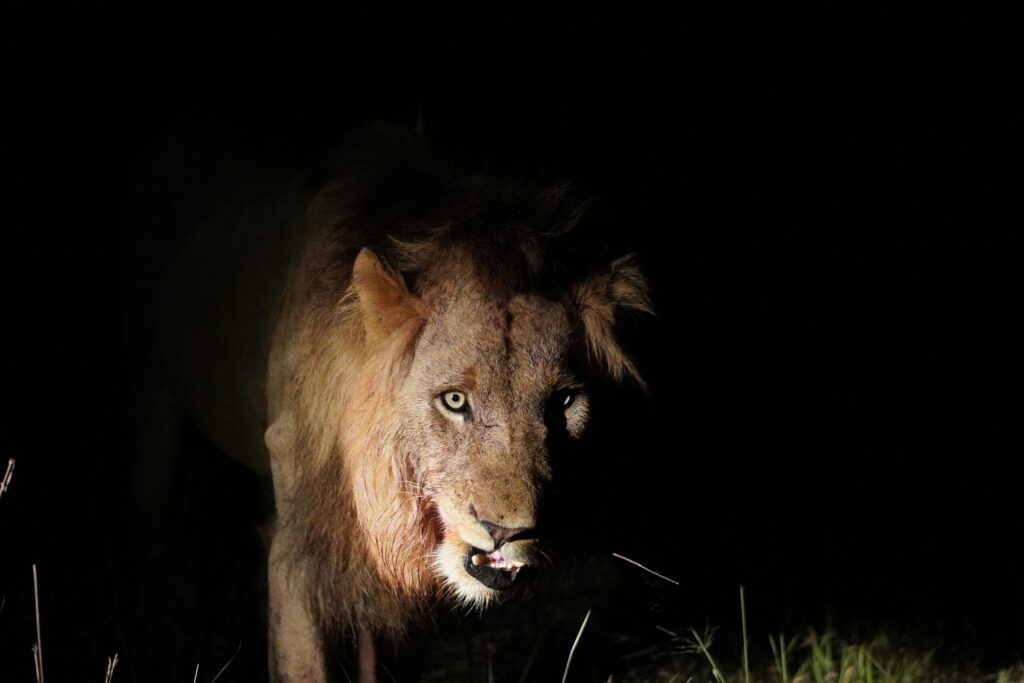
Expect a slower, quieter drive than your morning or afternoon game drive, built around patient observation rather than covering ground. Temperatures drop fast once the sun is down, often to somewhere between 10 and 15 degrees Celsius in the Mara and Laikipia even during the dry season, so most vehicles carry blankets and guests are expected to layer up beforehand. Sightings tend to be closer and longer than daytime equivalents, since a predator moving under cover of dark at 9pm is rarely aware of an audience the way it might be with several vehicles parked around it at 4pm.
The rhythm of the drive itself is different too, long stretches of quiet scanning punctuated by a sudden, close encounter, a genet frozen in the spotlight on a fallen branch, or a hyena clan trotting past close enough to hear their contact calls. Most operators build in a stop partway through, engine off, lights down, simply to listen to the bush change register once human noise drops out of it.
How Much Do Night Game Drive Add-Ons Cost?
At Ol Pejeta, a scheduled night drive costs USD 70 per person under the conservancy’s 2026 activity tariff, on top of the standard daily conservancy entry fee, and it is booked as a discrete add-on regardless of which camp you are staying at. Around the Masai Mara, the picture is different: most conservancy camps in Mara North, Naboisho and Olare Motorogi bundle night drives into the nightly camp rate rather than billing them separately, so the activity effectively comes at no extra cost once you have chosen a camp that offers it. At Selenkay, night drives are similarly included in Porini Amboseli Camp’s rate.
A Nairobi National Park night game drive carries its own separate cost structure, made up of three parts: the standard USD 80 non-resident park entry fee, an additional USD 50 night game drive park fee, and a KES 4,000 ranger fee for the mandatory armed escort. None of these three are optional, and none are absorbed into a general safari package rate the way conservancy fees often are, so budget for the full stack as a distinct line item rather than an informal add-on.
Safety and Night Game Drives
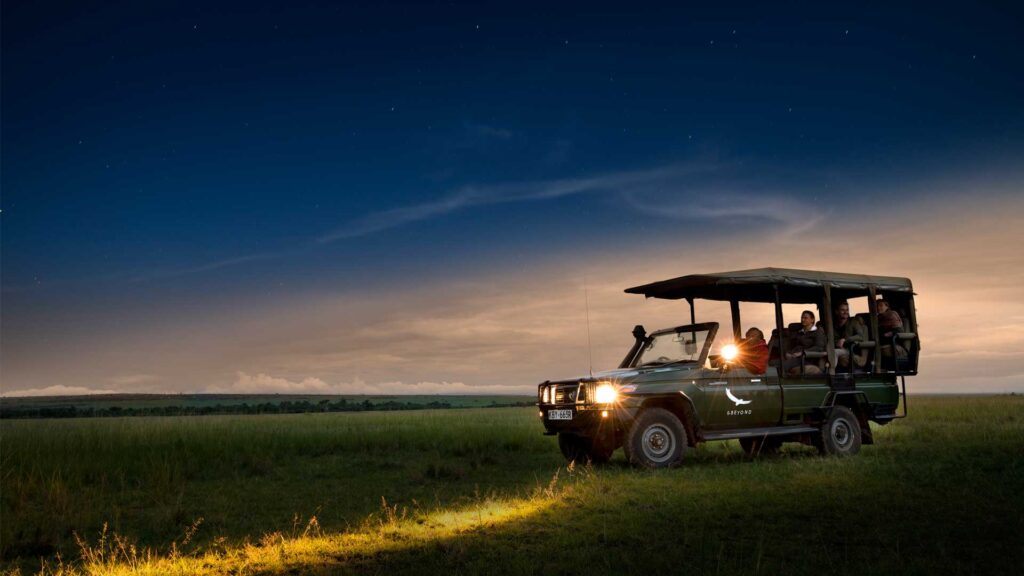
Night drives are a well-established, low-risk activity when run by a licensed operator inside a properly managed conservancy, but the risk profile is not identical to a daytime drive. Guests stay inside the vehicle at all times, exactly as during the day, and the vehicle itself stays on established tracks rather than pushing deep off-road after dark, both to protect wildlife behaviour and to avoid the mechanical risk of a breakdown in unfamiliar terrain at night. Guides carry radio contact with camp throughout, and reputable conservancies cap the number of vehicles permitted out after dark, which keeps response times manageable if something does go wrong.
The activity’s biggest genuine safety consideration is cold rather than wildlife. Hypothermia risk from an open vehicle at altitude after dark is real enough that most camps insist on blankets and layered clothing before a drive departs, and a guide who suggests postponing a night drive because of weather or an unsettled predator sighting nearby is exercising good judgement, not being overly cautious.
Are Night Game Drives Family-Friendly?
It depends on the child and the camp rather than on any single rule across the industry. Some conservancy camps set a minimum age for night drives specifically, often somewhere around 12 years old, separate from whatever minimum age applies to the camp’s daytime game drives, since the later start time, colder temperatures and longer stretch of quiet, unstimulating driving can be a genuinely poor fit for a young child regardless of how thrilling the sightings turn out to be. Other camps are more flexible with a private vehicle, where a family can set their own pace and turn back early if needed.
We always confirm a camp’s specific age policy before booking a night drive as part of a family itinerary, rather than assuming the conservancy’s general rules apply, and we are honest with parents about the practical realities, a cold, dark, largely quiet couple of hours, before they commit a young child to one.
What to Wear for a Night Game Drive
Layer up more than you think you need to. A base layer, a warm fleece or jumper and a windproof outer layer cover most conditions, since an open vehicle moving at even moderate speed after dark feels considerably colder than the same temperature would on foot. Closed shoes, long trousers and a hat that covers the ears make a real difference too. Bring a headlamp with a red-light mode if you have one, both so you do not blind your own night vision reaching for something in your bag and so you are not shining white light into other guests’ eyes or the guide’s line of sight.
Gloves and a beanie are worth packing between June and August, when night temperatures in the Mara and Laikipia can drop into the low teens Celsius or lower. Most camps provide blankets and, in some cases, hot water bottles for the drive itself, but arriving already dressed for the cold means less time fumbling with layers once you are out in the dark and a sighting is unfolding in front of you.
How Afrikan Accent Adventures Ensures Sustainable Night Game Drives
We only book night drives through conservancies and camps that follow red-filtered lighting protocols and respect the vehicle caps their own management trusts have set, and we do not work with any operator who runs, or claims to be able to arrange, an unauthorized night drive inside a national park or reserve. That distinction matters more than it might sound. An operator willing to bend the KWS curfew for one activity is an operator whose judgement we cannot vouch for on anything else.
Within the conservancies themselves, we favour camps that limit each sighting to a single vehicle, keep engines idling rather than revving near a predator, and train guides to end a spotlight session the moment a sighting has been observed rather than holding an animal in the light for the sake of a longer look. These are the same landowner-camp partnerships that fund conservancy lease payments to Maasai communities, so a well-run night drive supports the same conservation economics as the daytime game drives we build every itinerary around.
| EXPERT NOTE We are careful never to sell a night drive as a guaranteed leopard sighting. What we can promise is a guide who knows the ground, a red-filtered light used properly, and a conservancy that has agreed to the vehicle limits that make the sighting worth having in the first place. Kibara Mugo, Safari Writer and East Africa Specialist |
Is It Worth Adding to Your Itinerary?
For most travellers spending at least three nights in a conservancy camp, yes. A single night drive rarely adds a full extra day to an itinerary, and it opens up a genuinely different set of species and behaviour that no amount of daytime driving will show you. For a shorter two-night stay, we generally weigh it against a walking safari or an extra daytime drive, since a tired guest on a tight schedule sometimes gets less out of a late, cold outing than the marketing suggests.
It is not worth restructuring an entire trip around, and we would never recommend choosing a camp purely because it offers night drives while ignoring everything else that camp gets right or wrong for a given traveller. Treat it the way we treat any single activity on a longer safari: a strong addition to the right itinerary, not the reason the itinerary exists.
Frequently Asked Questions
Can you do a night game drive in the Masai Mara?
Not inside the Masai Mara National Reserve. You can do one in the private conservancies bordering the reserve, including Mara North, Naboisho, Olare Motorogi, Ol Kinyei, Siana and Lemek, provided you are staying at a partner camp inside that specific conservancy.
What animals do you see on a night safari?
Leopards, hyenas and lions hunting are the headline sightings, alongside smaller nocturnal specialists rarely seen by day, aardvarks, bat-eared foxes, genets, civets, porcupines, bush babies, caracals, aardwolves and owls. Hippos are also more often seen grazing away from water after dark than during the heat of the day.
Are night game drives allowed in Kenya’s national parks?
No, with one narrow exception. Every KWS-gazetted national park and reserve, including the Masai Mara National Reserve, Amboseli, Tsavo East, Tsavo West and Lake Nakuru, closes to driving at 6pm. Nairobi National Park permits a pre-authorized night drive with an armed KWS ranger escort, but only by advance arrangement, not as a standard evening activity.
How much does a night game drive cost in Kenya?
At Ol Pejeta, a scheduled night drive costs USD 70 per person under the 2026 conservancy tariff, billed as a separate add-on. Around the Masai Mara, most conservancy camps bundle the activity into the nightly rate instead of charging separately. At Nairobi National Park, budget for the USD 80 park entry fee, an additional USD 50 night game drive fee and a KES 4,000 ranger fee, none of which are bundled into a package rate.
Is the Nairobi National Park night game drive a real option for visitors?
Yes, but it is tightly regulated rather than a standard activity. It requires pre-authorization through the park office, an armed KWS ranger escort, and typically runs from 7pm to 9pm with only a small number of vehicles permitted inside the park at a time. Budget for the USD 80 park fee, USD 50 night game drive fee and KES 4,000 ranger fee on top of your operator’s own charges, and book well ahead of your date through a licensed operator.
Can you do a night game drive in Amboseli?
Not inside Amboseli National Park itself, which follows the same 6pm curfew as every other KWS reserve. Selenkay Conservancy, a private Maasai-owned area roughly 16 kilometres north of the park, offers day, evening and night game drives to guests of its resident camp, Porini Amboseli Camp.
Which is the best Masai Mara conservancy for a night game drive?
Mara North and Naboisho, based on their camp counts and the maturity of their guiding programs. Olare Motorogi is a strong alternative specifically for lion activity, given its exceptionally high lion density, and Ol Kinyei suits travellers who want a quieter, smaller-camp version of the same experience.
Are night game drives safe?
Yes, when run by a licensed operator inside a properly managed conservancy. Guests stay inside the vehicle throughout, guides keep radio contact with camp, and vehicles remain on established tracks. Cold exposure from an open vehicle after dark is a bigger practical risk than wildlife, which is why layered clothing and blankets matter.
Are night game drives suitable for children?
It depends on the camp and the child. Some camps set a minimum age for night drives specifically, often around 12 years old, separate from their daytime game drive policy, because of the later start, colder temperatures and quieter pace. Confirm the specific camp’s policy before booking rather than assuming a general age rule applies.
What should I wear for a night game drive?
Layer up. A base layer, a warm fleece and a windproof outer layer, closed shoes, long trousers and a hat that covers your ears cover most conditions. A headlamp with a red-light mode is useful, and gloves and a beanie are worth packing between June and August when night temperatures can drop into the low teens Celsius.
Planning Your Kenya Night Safari with Afrikan Accent Adventures
Everything above is the version of this conversation we have with guests every week: which conservancy actually runs a good night game drive, which camp includes it in the rate rather than billing it separately, and which national park exception is worth arranging in advance. What we offer beyond this guide is the part a blog post cannot do for you, matching that decision to your actual dates, budget and the rest of your itinerary, then confirming directly with the specific camp that the activity, age policy and pricing are exactly what we have told you here.
Speak to Hellen Asiko, our Director and Guest Experience Curator, and ask her directly which of your shortlisted camps actually offer night drives, since that answer changes camp by camp, not conservancy by conservancy.
The bush at 9pm is not the same place it was at 2pm, and the only way to see that difference is to book it correctly the first time.
Let's plan your East African safari
Tell us when you'd love to travel and a local specialist will craft a tailor-made route around you.


