

Masai Mara vs Serengeti: Which Should You Choose or How to Do Both
Both parks hold the same herds and the same rivers, but the border between them changes your budget, your crowds and your best month to travel.

A majestic lion overlooking the open plains at dawn, illustrating the classic scenery evaluated in any masai mara vs serengeti travel guide.
A guest called our Nairobi office from a taxi outside JKIA on a Tuesday afternoon in July, luggage still in the boot, six days on the ground and a decision she hadn’t made. She had read four blogs on the flight in. Two said the Masai Mara was overrated. Two said the Serengeti was too far and too expensive to bother with on a short trip. She wanted us to just tell her which one to pick.
We get this call every migration season. The two ecosystems share one unbroken wilderness, wildebeest and zebra move between them without noticing a border exists, yet the two names get thrown around online as if they’re interchangeable options on the same shelf. They aren’t. One sits in Kenya. One sits in Tanzania. The fees are different, the flights leave from different cities and the animals are only in one of them at certain points in the year.
We’ve driven the Mara Triangle at dawn with the mist still sitting on the escarpment. We’ve sat at Kogatende in Tanzania’s Lamai Wedge watching the first wildebeest test the Mara River before the crossing even started. This isn’t a comparison built from press releases. It’s built from years of moving guests across that Isebania border ourselves, working out which season and which side actually earns their money.
So here’s the honest answer, before the detail. Most travelers don’t need to choose between the Masai Mara and the Serengeti. They need someone to explain what changes when you cross that line, and when it’s worth crossing at all.
| QUICK ANSWER | Is the Masai Mara or Serengeti Better? Neither is better outright. The Masai Mara is smaller and closer to Nairobi, so a short trip costs less. The Serengeti is larger and holds the migration most of the year. Pick the Mara for speed, the Serengeti for scale, or combine both on trips of eight days or more. |
At a Glance:
- Country and County: Masai Mara sits in Narok County, southwestern Kenya. Serengeti National Park sits across the border in the Mara and Simiyu regions of northern Tanzania.
- Size: Masai Mara National Reserve covers 1,510 square kilometers, with a further band of private conservancies bordering it. Serengeti National Park covers roughly 14,750 square kilometers, nearly ten times the reserve alone.
- Nearest Gateway City: Nairobi serves the Masai Mara through Wilson Airport. Arusha serves the Serengeti through Arusha Airport and Kilimanjaro International Airport.
- Non-Resident Park Fees: Masai Mara charges $200 per adult per day from July to December and $100 per day from January to June, set by Narok County Government. Serengeti charges $83 per adult per day in high season and $71 in the short low season, with children aged 5 to 15 paying $24 year round under Tanapa, plus a separate camping or concession fee for stays inside the park.
- Getting There: Masai Mara is a 45 to 60 minute flight or a 5 to 6 hour drive from Nairobi. Serengeti is a 35 to 60 minute flight or a 6 to 7 hour drive from Arusha.
- Migration Presence: The herds spend roughly nine months of the year inside the Serengeti ecosystem, including the January to March calving season, and cross into the Masai Mara for river crossings from around July to October.
- Border Crossing: The Isebania-Sirari border post links the two countries. Safari guides and vehicles typically change there, since operators are licensed by country.
- Combining Both: An 8 to 12 day itinerary allows three or more nights in each ecosystem, connecting by fly-in transfer or by road through Isebania-Sirari.
Same Ecosystem, Different Country: What Actually Differs


The Masai Mara and the Serengeti are not two destinations that happen to sit near each other. They are one ecosystem split by a line drawn when Kenya and Tanganyika became separate countries. Wildebeest, zebra and the predators that follow them cross that line every year without a passport, a visa or the faintest idea it exists.
What changes on either side is everything human. The Masai Mara is Kenyan, run by the Narok County Government, and covers just 1,510 square kilometers of reserve, small enough to drive across in a morning. Add the private conservancies around it, Mara North, Mara Siana and others among them, and the wider Greater Mara ecosystem stretches considerably further. The Serengeti is Tanzanian, run by Tanapa, and the national park alone runs to roughly 14,750 square kilometers, nearly ten times the size of the Mara reserve on its own.
The name Serengeti comes from the Maasai word siringet, meaning endless plains, and standing in the central Serengeti at Seronera you understand exactly why. The grass runs to the horizon in every direction. The Masai Mara feels different again: more river, more forest along the Mara and Talek rivers, more of the classic acacia dotted savanna that shows up on every Kenya postcard.
The Mara is a jewel box. The Serengeti is a continent. Neither is wrong, they simply ask a different question of your itinerary.
Wildlife You’ll See on Each Side
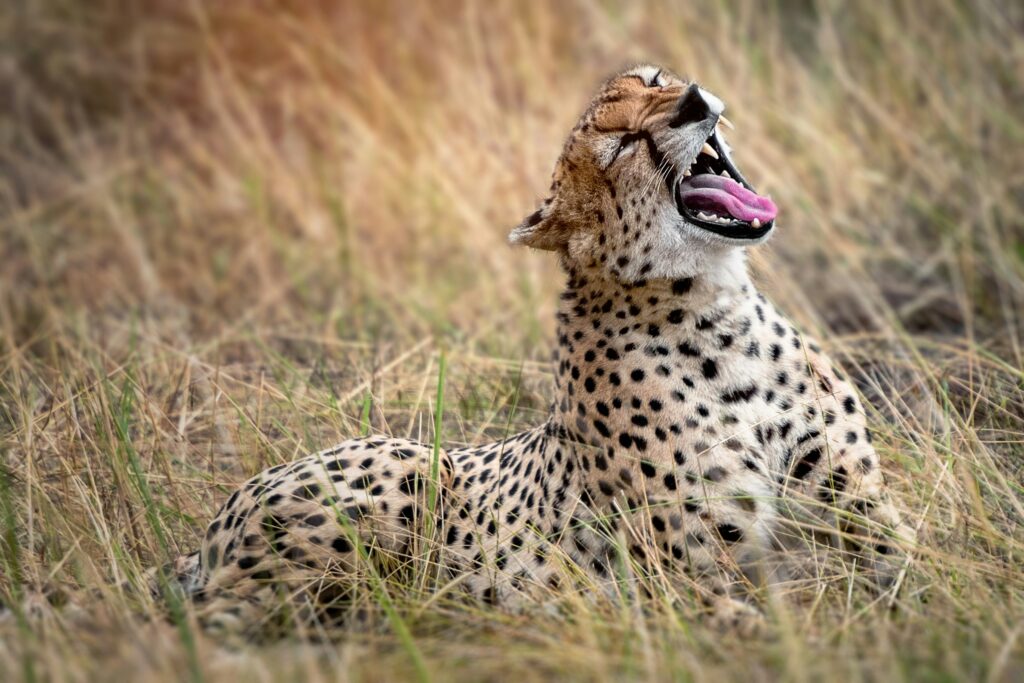
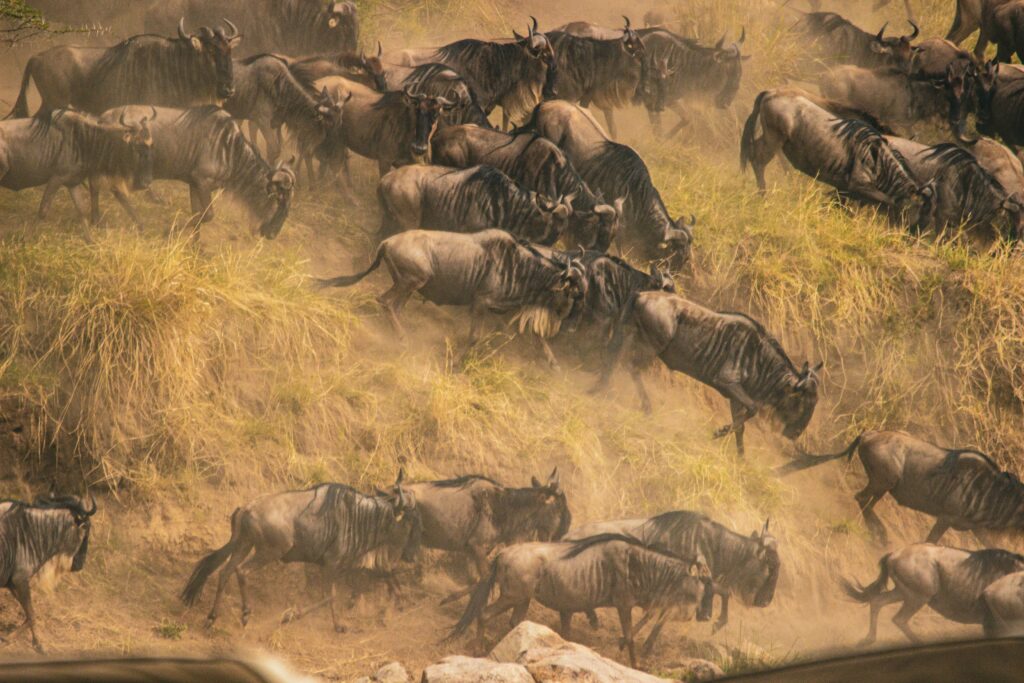
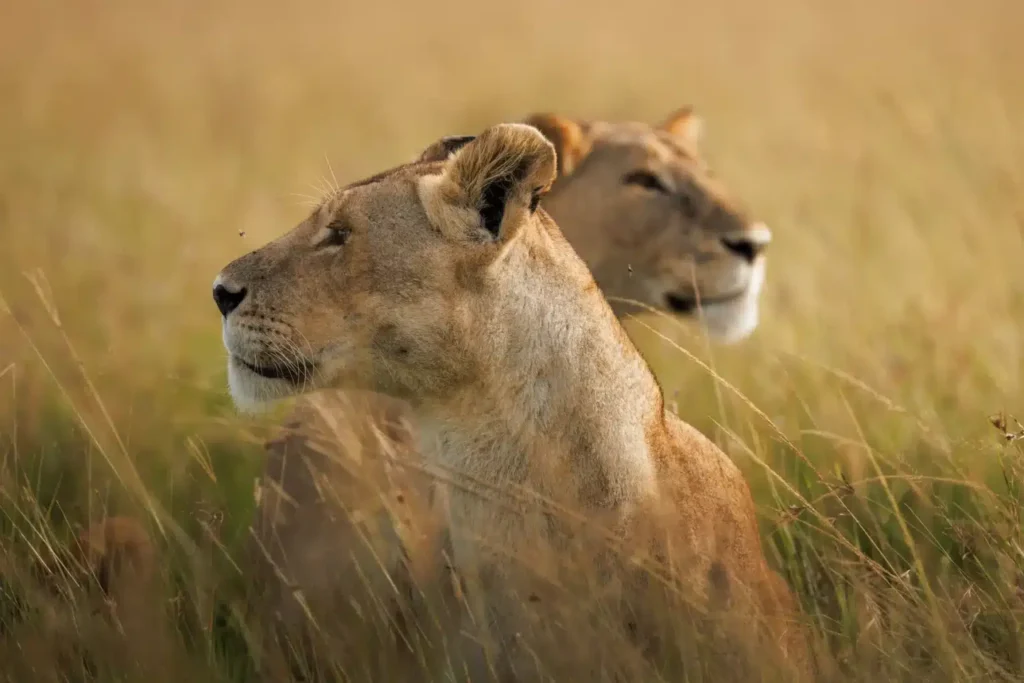
Both parks hold the Big Five, lion, leopard, elephant, buffalo and the increasingly rare black rhino, though rhino sightings are more reliable in the Mara’s conservancies and in the Serengeti’s Moru Kopjes than in the open plains of either park. Cheetah do particularly well on the short grass of the Mara Triangle and the southern Serengeti’s Ndutu plains, where visibility is best. The resident lion population is dense in both ecosystems, and neither depends on the migration to deliver excellent game viewing outside crossing season.
Conservancies and Private Concessions Compared

Fourteen private conservancies now ring the Masai Mara National Reserve, adding roughly 350,000 acres to the ecosystem on land leased from Maasai landowners. The Big Four, Mara North, Mara Naboisho, Ol Kinyei and Olare Motorogi, cap guest numbers by acreage, typically one bed for every 350 to 700 acres, and allow off-road driving, walking safaris and night drives that the main reserve doesn’t permit. The Serengeti’s equivalent sits on its western edge: Singita’s Grumeti Reserves, a 350,000 acre private concession bordering the national park, an area roughly equal to the whole Mara reserve on its own, offering the same off-road access and low guest density along the Grumeti River’s migration crossings.
Cost Comparison: Park Fees and Logistics
Masai Mara Park Fees
Narok County Government sets Masai Mara’s fees on a two season structure. Non-resident adults pay $100 per person per day from January through June, then $200 per day from July through December, which happens to be the exact stretch when most travelers want to be there for the migration. Children aged 9 to 17 pay $50 per day year round, and children under 9 enter free. Payment runs through the county’s KAPS platform rather than Kenya Wildlife Service, since the Mara is a county reserve and not a national park.
Serengeti Park Fees
Tanapa charges non-resident adults $83 per person per day in high season, dropping to $71 during a short low season window around April and May when the long rains keep road-based visitor numbers down. Children aged 5 to 15 pay $24 per day regardless of season, and children under 5 enter free. Those figures already include Tanzania’s 18 percent VAT. Camping or lodging inside the park itself adds a separate fee on top, from around $35 per night at a public campsite up to roughly $59 to $71 per adult per night at a special campsite or a lodge’s own concession rate, so a multi-night stay inside the Serengeti costs more than the headline entry fee suggests. Staying in a conservancy or just outside the park boundary avoids that extra charge entirely.
What This Means for Your Budget
Run the numbers over four days and the picture is straightforward. The Serengeti’s $83 high season daily fee sits below the Mara’s $100 low season rate and well below its $200 high season rate, though the Serengeti’s added camping or concession charge for staying inside the park narrows that gap once you’re actually booking a bed rather than just a gate pass. Push into Mara high season, July through December, and the reserve’s fee becomes the more expensive of the two by a wide margin, even before flights, though the Mara’s shorter transfer time from Nairobi often claws some of that back in transport cost.
Featured Safaris Compared
We build Masai Mara trips across the full budget range, from shared book a seat set departures to private conservancy camps, and offer one live cross-border route into the Serengeti ecosystem. Here’s how our current featured safaris stack up against each other.
| Safari | Country | Duration | Style | From | Best For |
| 3 Days Masai Mara Book-a-Seat Safari, Osero Camp | Kenya | 3D/2N | Budget Camp, shared vehicle | $690 | First-timers on a tight budget |
| 4 Days Masai Mara Safari, Mara Elatia Camp (Mara Triangle) | Kenya | 4D/3N | Luxury Lodge, private vehicle | $1,440 | Migration corridor on a mid-range budget |
| 3 Days Masai Mara Fly-In Safari, Mara Serena Safari Lodge | Kenya | 3D/2N | Luxury Lodge, fly-in | $1,515 | Short trips, limited time off work |
| 5 Days Tanzania Budget Safari (Serengeti, Tarangire, Ngorongoro) | Tanzania | 5D/4N | Budget Camp, road safari | $1,500 | First look at the Serengeti side, on a budget |
For a Serengeti-only itinerary, a luxury circuit through the northern Serengeti’s Kogatende crossing points, or a tailor-made Masai Mara and Serengeti combination, talk to Hellen Asiko, our Guest Experience Curator. She builds those routes to order rather than off a shelf, and will confirm exact 2026 pricing once she has your dates.
Migration Timing: Where the Herds Are and When
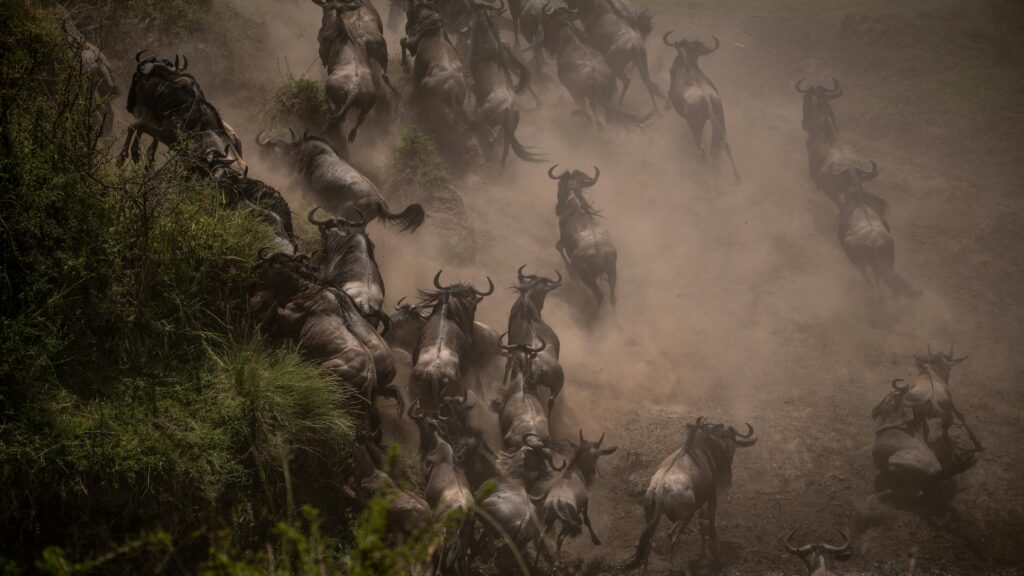
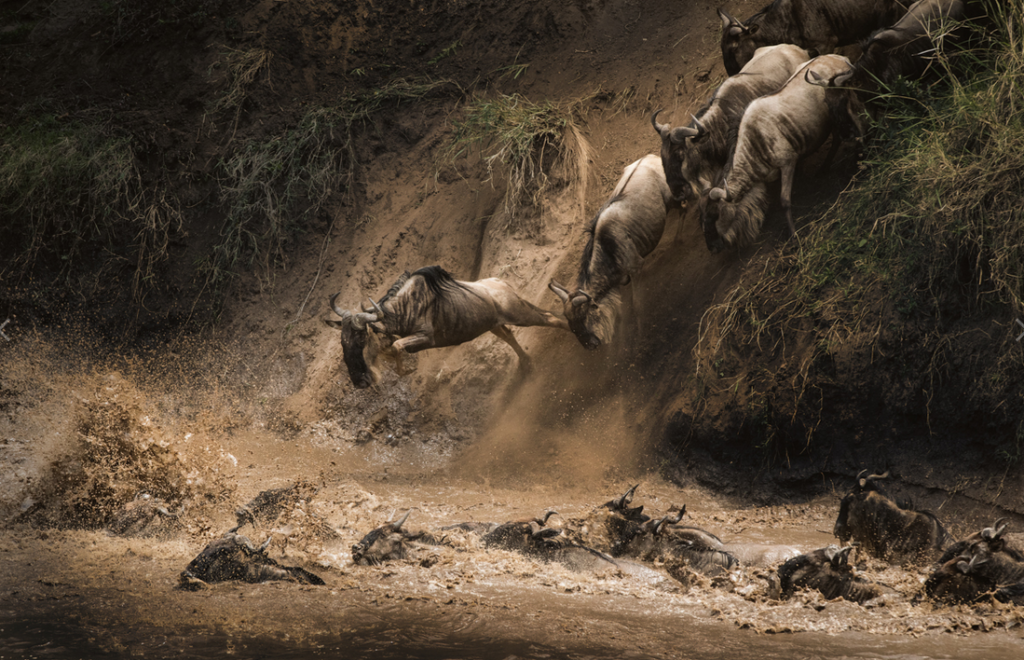
The Great Migration isn’t an event with a start date. It’s a continuous, roughly clockwise loop that never really stops, and where the herds are on any given week has more to do with rainfall than with the calendar taped to a travel agent’s wall.
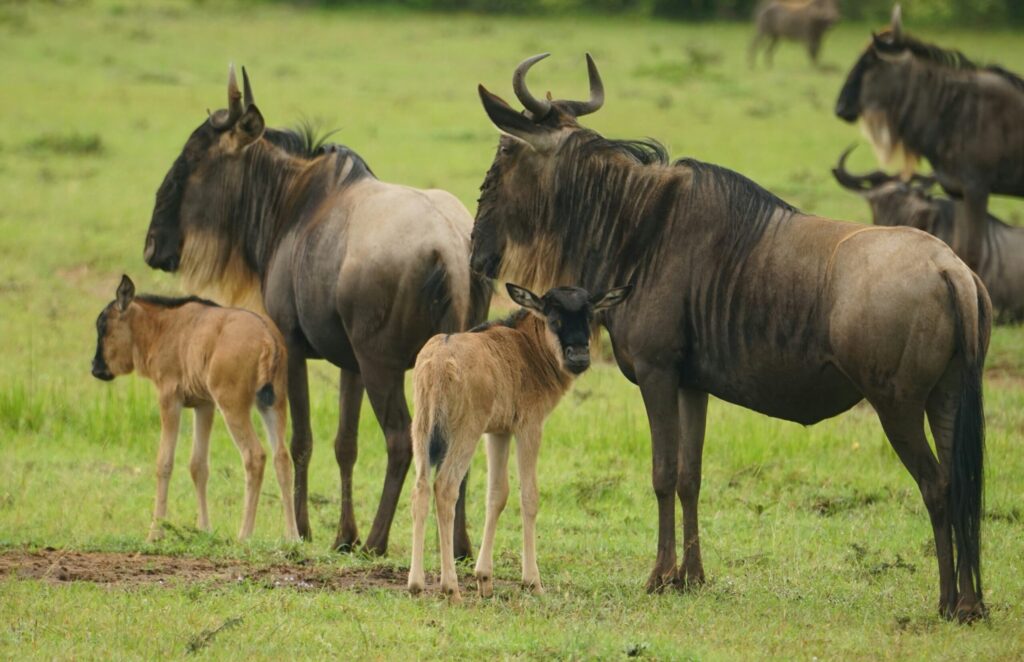
From late January through March, upward of two million wildebeest gather on the short grass plains of Ndutu and the southern Serengeti to give birth. Roughly 8,000 calves arrive daily at the February peak, which pulls in lion, cheetah and hyena for some of the best predator action of the year. None of this happens in the Masai Mara. If calving season is what you’re after, the Serengeti is the only answer.
From April through June the herds push north through the central Serengeti and the Western Corridor, crossing the Grumeti River along the way. By July they’ve reached the northern Serengeti, and the first Mara River crossings begin, some on the Tanzanian side near Kogatende, some already inside Kenya. August and September are peak crossing months, with herds splitting their time between the northern Serengeti and the Masai Mara, crossing and recrossing the same river more than once. By October the crowds thin even as crossings continue, and November’s short rains start pulling the herds back south, closing the loop.
The Migration Year, Month by Month
| Months | Where the Herd Is | What’s Happening |
| January to March | Southern Serengeti, Ndutu plains | Calving season, roughly 8,000 calves born daily at the February peak, dense predator action |
| April to June | Central Serengeti, Western Corridor | Long rains, herds walk north in columns, first Grumeti River crossings |
| July | Northern Serengeti, first arrivals in the Masai Mara | Early Mara River crossings begin on both sides of the border |
| August to September | Northern Serengeti and Masai Mara | Peak crossing season, herds cross and recross the same river |
| October | Northern Serengeti and Masai Mara | Crossings continue, crowds thin, an underrated month |
| November to December | Eastern and southern Serengeti | Short rains pull the herds back toward the calving grounds |
We’ve had guests fly in for the crossings and land three days after the herd moved on. The migration follows rain, not our itinerary.
What This Means for Choosing Between Them
If you’re building a trip around calving season, book the Serengeti. If you’re building it around river crossings, the Masai Mara delivers that spectacle at shorter notice and shorter flight times from Nairobi, generally from July to October. Outside those two windows, both ecosystems hold enough resident wildlife, lion, elephant, buffalo and giraffe among them, to justify the trip regardless of where the migration happens to be that week.
Crowding and Vehicle Density
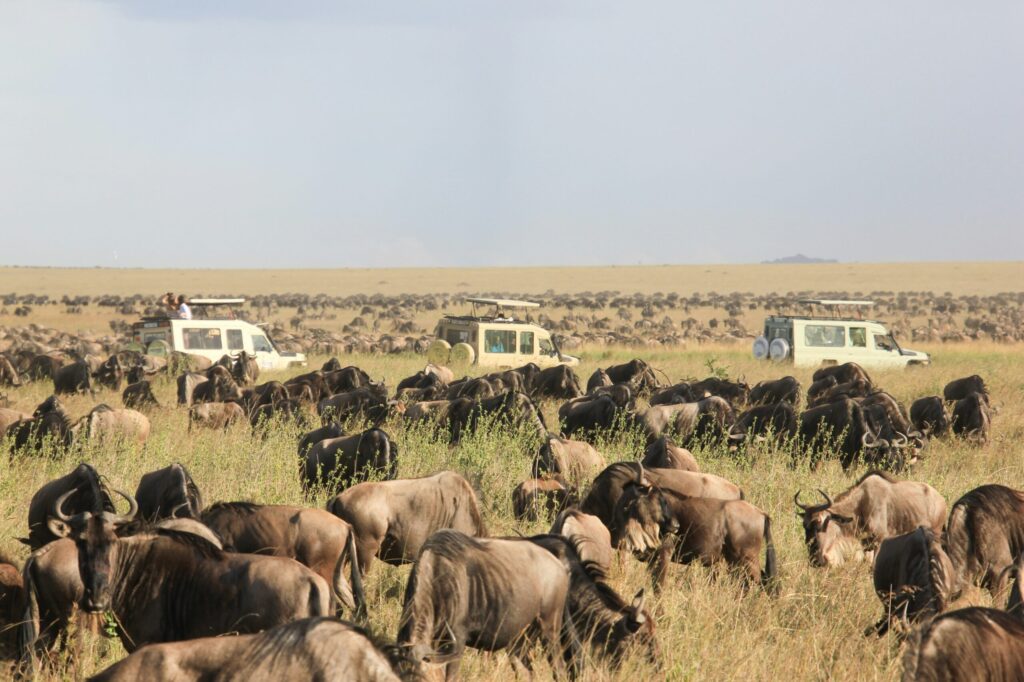
The single biggest complaint we hear about the Masai Mara isn’t the wildlife, it’s the traffic. During peak crossing season, a single crossing point on the Mara River can attract twenty or more vehicles parked nose to nose along the bank, engines off, everyone waiting on the same herd to make its move. The reserve itself has no cap on daily vehicle numbers, and its relatively small size concentrates that pressure.
Step into a private conservancy bordering the reserve, Mara North or Mara Siana among them, and the arithmetic changes. These conservancies cap vehicle numbers by agreement with the Maasai landowners who lease the land, off-road driving is permitted, and night drives and guided walks become possible, none of which the main reserve allows.
The Serengeti’s sheer size works in its favor here. Roughly 14,750 square kilometers gives vehicles room to spread out across the central Seronera area, the Western Corridor and the southern plains simultaneously. The exception is Kogatende and the Lamai Wedge in the far north during peak crossing season, where congestion can rival anything in the Mara, simply because that’s where the river narrows and the crossings concentrate.
For Photographers and Repeat Visitors
If crowd-free sightings matter more to you than a guaranteed migration spectacle, a Mara conservancy stay or a Serengeti trip timed for the shoulder months, April to June or November, will beat a peak season visit to either park’s main public area.
Safari Activities: What You Can (and Can’t) Do in Each Park

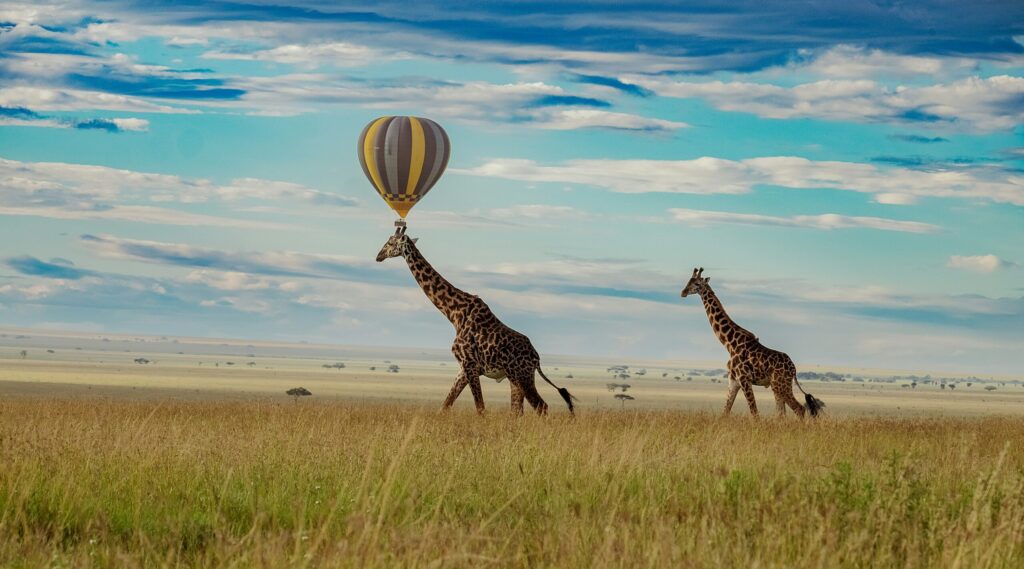
The Masai Mara National Reserve keeps things simple: daytime game drives only, on established tracks, with no walking and no night drives permitted inside the reserve boundary. Cross into a bordering conservancy, Mara North, Mara Siana or similar, and the rulebook opens up. Night drives, guided bush walks with an armed Maasai guide, off-road driving to follow a hunt and sundowners out of the vehicle all become possible, since the conservancies set their own rules in partnership with the Maasai landowners who lease the land.
The Serengeti runs a tighter, park-wide rule across all its zones. Game drives run from roughly 6am to 6pm, and night drives aren’t permitted anywhere inside the national park. Walking safaris do happen, but only in specific zones with an armed ranger escort arranged in advance, not as a spontaneous stroll from camp. Off-road driving is restricted to established tracks throughout the park too, which is one reason the Serengeti’s far greater size matters more than it first appears. You can’t simply nose the vehicle off-track to close the distance on a sighting the way you can in a Mara conservancy.
Hot Air Balloon Safaris
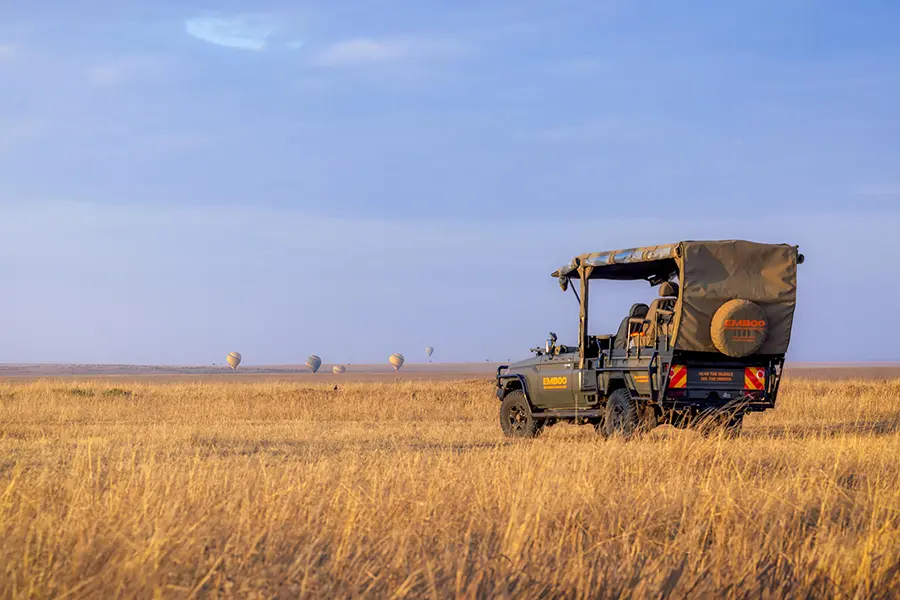
Both ecosystems run hot air balloon safaris at dawn, drifting low over the plains before a champagne breakfast is laid out wherever the balloon lands. The Masai Mara’s balloon safaris typically launch from the Mara Triangle or Mara North, while the Serengeti’s launch from Seronera or, in migration season, from a mobile site closer to the herds in the north. Book either well ahead. Spaces are limited and demand peaks alongside the migration.
Spotting the Big Five: Practical Tips
Early morning and late afternoon game drives, when temperatures are cooler and predators are most active, produce the strongest sightings in both parks. Rhinos are the hardest of the five to find in either ecosystem. The Mara’s private conservancies and the Serengeti’s Moru Kopjes area hold the better odds. A radio-equipped guide matters more than the park you choose, since sightings get shared between vehicles in both the Mara and the Serengeti, and a well-connected guide reaches a leopard sighting or a river crossing far faster than one working alone.
Access From Nairobi vs Arusha
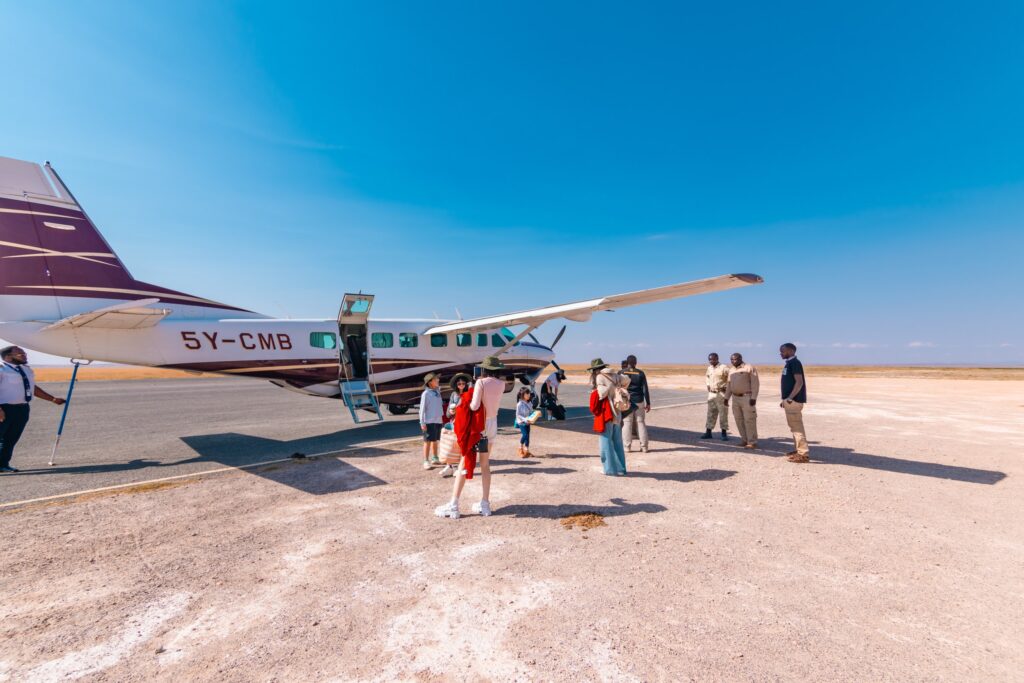
The Masai Mara answers to Nairobi. Kenya’s capital sits roughly 270 to 290 kilometers from the reserve by road, a drive of five to six hours down through Narok town on tarmac laid in recent years. Fly instead and Wilson Airport puts you on the ground at one of the Mara’s airstrips, Mara Serena, Musiara, Keekorok or Ol Kiombo among them, in 45 minutes to an hour. Scheduled flights on carriers like Fly ALS and Governors Aviation typically run $150 to $270 one way, depending on the airstrip and how far ahead you book.
The Serengeti answers to Arusha. The drive from Arusha runs about 225 kilometers to the Naabi Hill gate, roughly six hours including a stop, and continues through the Ngorongoro Conservation Area, so the transfer doubles as a game drive of its own. Flying from Arusha to Seronera takes 55 to 60 minutes, and pushing on to Kogatende in the far north adds another short hop, with one-way fares generally sitting in the $140 to $400 range depending on the route, the airline and the season.
Neither gateway city connects directly to the other reserve. There is no flight from Nairobi straight into the Serengeti and none from Arusha straight into the Masai Mara. Every route between the two runs through the Isebania-Sirari border, whether you’re driving the whole way or flying with a short road link between airstrips.
Choosing Road or Air
Road makes sense if you have the time, want the Great Rift Valley scenery on the way to the Mara or the Ngorongoro Crater views on the way to the Serengeti, and are traveling as a group large enough to make a private vehicle affordable per person. Flying makes sense on trips of three or four nights, where every hour on the road is an hour not spent on a game drive, and for travelers who find a five to seven hour drive on rougher roads simply not worth the saving.
Weather and Road Conditions
Both routes get harder in the long rains, roughly March through May, when murram roads on both sides of the border turn slick and travel times stretch well past the dry season averages. The short rains in November are milder and rarely close roads outright. If you’re traveling by road in April or May, build in extra time, or lean toward flying instead, since light aircraft schedules are far less affected by mud than a safari vehicle on the Narok or Naabi Hill routes.
Accommodation Options: Masai Mara vs Serengeti
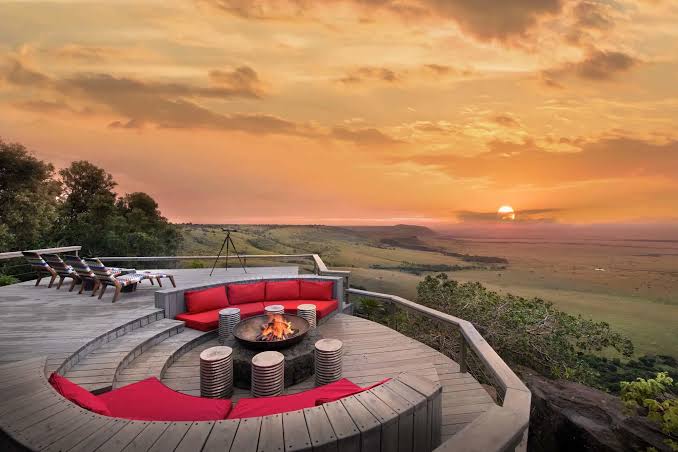
Masai Mara
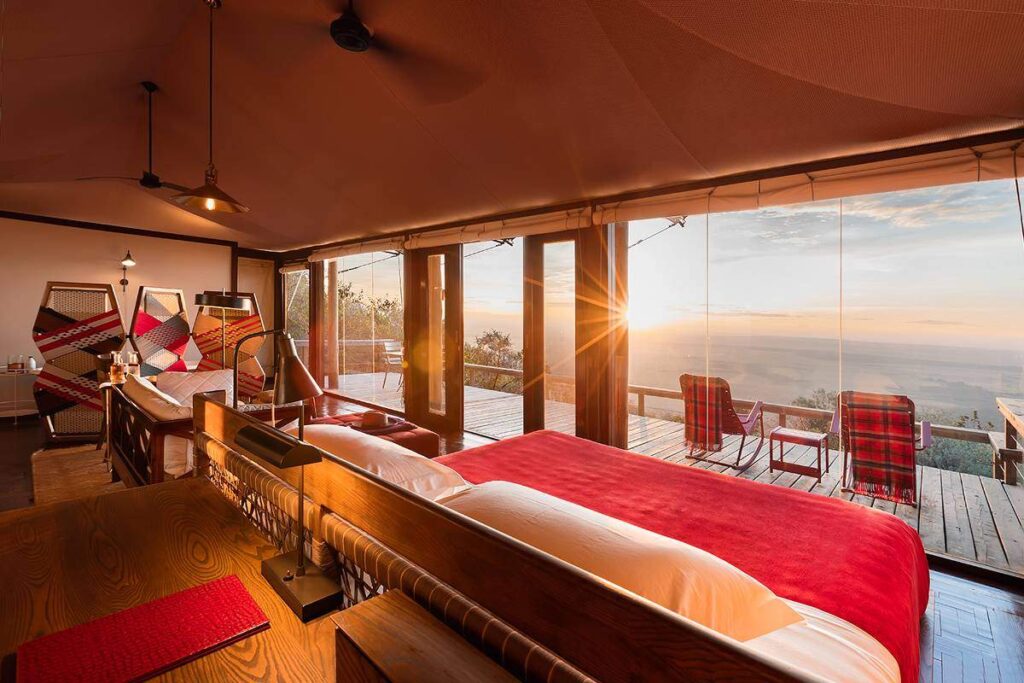
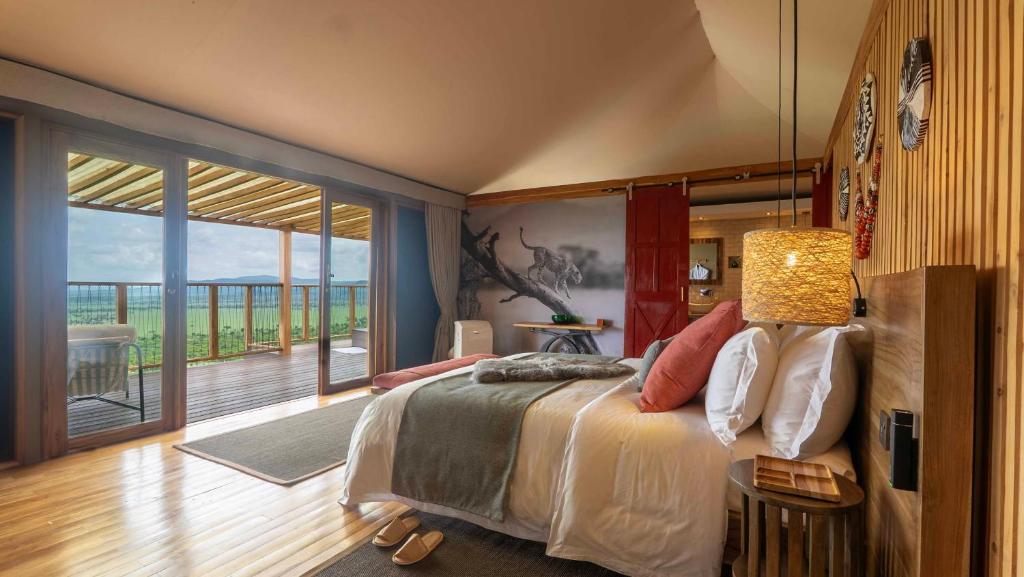
Accommodation on the Kenyan side ranges from budget tented camps like Osero Camp, used on our book-a-seat departures, through mid-range properties near the reserve gates, up to luxury lodges inside the Mara Triangle such as Mara Elatia Camp, and further still into exclusive conservancy camps in Mara North, where a single lodge might hold under twenty beds.
Serengeti
The Tanzanian side organizes itself by region as much as by budget tier. Seronera in the central Serengeti has year round wildlife and the widest choice of lodges. Ndutu, technically inside the Ngorongoro Conservation Area but part of the same ecosystem, is the address for calving season. The Western Corridor suits the May and June migration window, and Kogatende and the Lamai Wedge in the far north put you closest to the peak crossing months.
| EXPERT NOTE Book the region before you book the lodge. A five-star camp in the wrong part of the Serengeti for your travel month still leaves you three hours from where the herds actually are. Match the map to the calendar first, then choose your comfort level. Kibara Mugo, Safari Writer and East Africa Specialist |
Can You Do Both in One Trip?
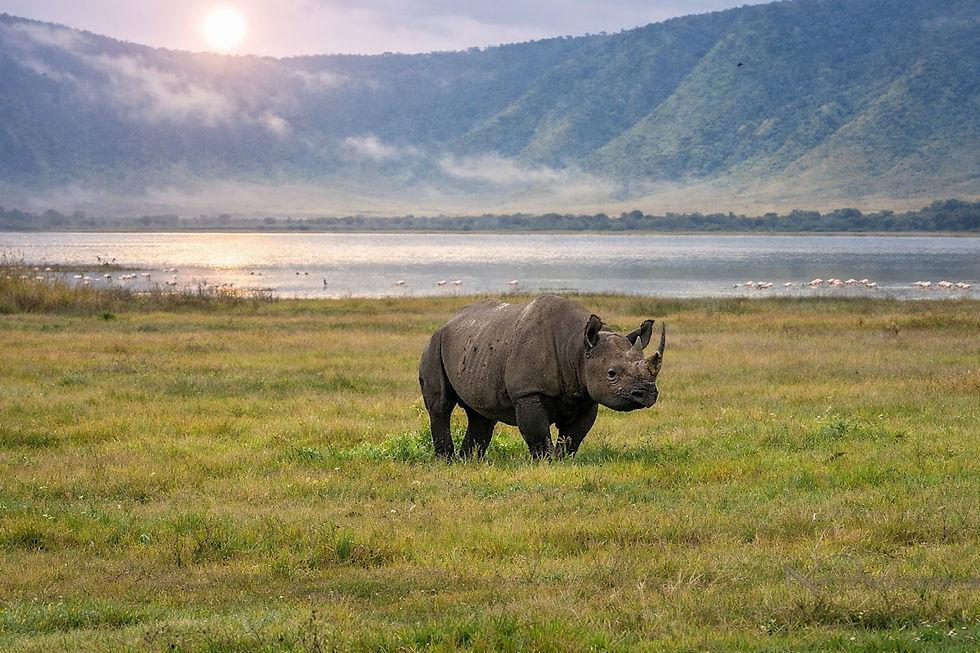
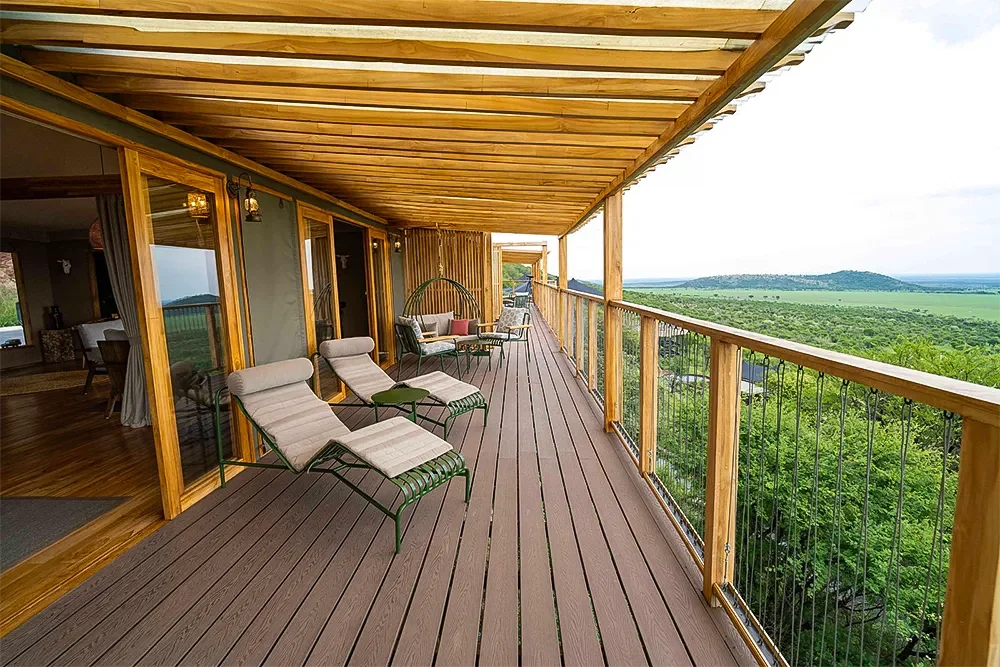
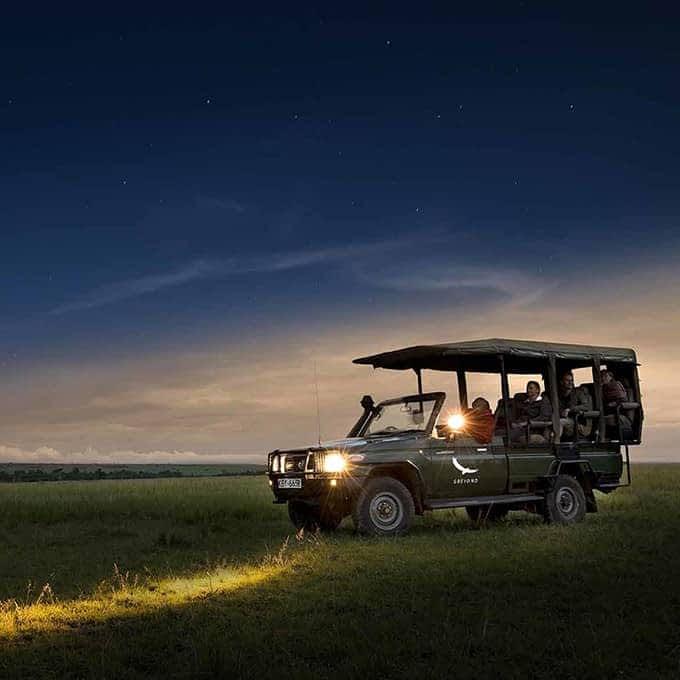
Yes, and it’s one of the more rewarding ways to see this ecosystem, provided you build the route properly. There’s no single road that runs straight across the unfenced wilderness boundary between the two parks. Every legitimate route goes through the Isebania-Sirari border post, whether you’re driving the whole way or flying with a short road transfer between airstrips.
Three Ways to Link the Parks
The fastest option is a fly-in safari, using Wilson Airport for the Masai Mara side and Tanzanian airstrips like Seronera or Kogatende for the Serengeti side, with a short flight or a brief road hop across the border between the two. The classic overland route drives the whole way, crossing at Isebania on the Kenyan side and Sirari on the Tanzanian side, a crossing that takes roughly 30 minutes on top of the driving time either side of it. A hybrid route mixes the two, driving one leg and flying the other.
How Many Days You Actually Need
Treat three nights in each ecosystem as the working minimum, which puts a proper Masai Mara and Serengeti combination at eight days from the moment you land in Nairobi to the moment you fly out through Kilimanjaro or back through Nairobi. Ten to twelve days gives a far more comfortable balance, especially when migration timing means one side deserves more nights than the other.
What Changes at the Border
Safari operators are licensed by country, so guides and vehicles typically change at Isebania-Sirari. A Kenyan guide takes you to the border, helps with the paperwork and hands you to a Tanzanian counterpart on the other side. Your visas need sorting before you get there too. The East Africa Tourist Visa covers Kenya, Uganda and Rwanda but not Tanzania, so a Masai Mara and Serengeti combination needs a Kenya eTA and a separate Tanzania eVisa, applied for a few weeks ahead rather than at the gate.
| EXPERT NOTE The mistake we see most is guests assuming one East Africa visa covers both countries. It doesn’t. Sort your Kenya eTA visa and Tanzania eVisa before you land, and tell us your travel dates early so we can build the border crossing into the itinerary properly rather than as an afterthought. Hellen Asiko, Director & Guest Experience Curator |
Which Should You Choose?
If you have three to four days and want the most efficient route to lion, elephant and, season permitting, a river crossing, choose the Masai Mara. It’s the shorter flight, the simpler single-country visa and the safer bet for a first African safari squeezed around a Nairobi business trip or a Kenya beach holiday extension.
If you have six days or more, want to see calving season, or you’re building a longer Tanzania trip around Ngorongoro Crater, Tarangire and Zanzibar, choose the Serengeti. Its sheer size rewards a longer stay, and the ecosystem’s other regions, Ndutu, the Western Corridor and the Moru Kopjes among them, each deserve time of their own.
If you have eight days or more and the migration timing lines up, do both. It’s the only way to properly close the loop on one of the largest wildlife migrations left on the planet, and having driven it ourselves more times than we can count, we still find something new on every crossing.
| EXPERT NOTE Guests always ask which side has the better crossings. Wrong question. Ask which month you’re traveling, then I’ll tell you which side the herd is likely to be on. The river doesn’t care which country it’s in. Nicholas Wangithi, Director & Founder |
Frequently Asked Questions
Is the Masai Mara or Serengeti better?
Neither is better, they suit different trips. The Masai Mara is smaller, cheaper to reach from Nairobi and ideal for short safaris of three to five days, while the Serengeti is larger, holds the migration for most of the year and rewards longer Tanzania itineraries of six days or more.
What’s the difference between Masai Mara and Serengeti?
The Masai Mara sits in Kenya’s Narok County and covers 1,510 square kilometers, while the Serengeti sits across the border in northern Tanzania and covers roughly 14,750 square kilometers. Beyond size, the two differ in park fees, gateway city, government management and which months the migration is actually present.
Can I visit both Masai Mara and Serengeti in one trip?
Yes, provided you allow at least eight days and cross at the official Isebania-Sirari border post. Three nights minimum in each ecosystem gives worthwhile game viewing on both sides, and guides and vehicles typically change at the border since operators are licensed by country.
Which is cheaper, Masai Mara or Serengeti?
The Serengeti’s park fee is lower on paper, $83 per adult per day in high season against the Mara’s $100 to $200, though Tanzania adds a further camping or concession charge of roughly $35 to $71 per night for staying inside the park. Overall trip cost depends more on flight versus road transfer and lodge category than on the entry fee alone.
When is the best time to see the wildebeest migration in the Masai Mara?
July through October is the classic window for Mara River crossings, with August and September typically the most active months. Outside that period, the migration is usually further south in the Serengeti ecosystem, though the Mara still holds strong resident wildlife year round.
Do I need a separate visa to cross from Kenya to the Serengeti in Tanzania?
Yes. The East Africa Tourist Visa covers Kenya, Uganda and Rwanda but not Tanzania, so a Masai Mara and Serengeti combination requires a Kenya eTA and a separate Tanzania eVisa, both best arranged before departure.
Is the Masai Mara or Serengeti better for a first safari?
The Masai Mara usually suits first timers best, given its short flight or drive from Nairobi, straightforward single-country visa and dense, reliable wildlife within a compact area, well suited to a three or four day trip.
How many days do you need to properly see the Great Migration?
Four days gives you a solid chance at resident wildlife and, in season, a river crossing, but six to eight days across both the Masai Mara and the Serengeti gives a far more complete picture of the migration’s full arc, from calving to crossing.
Can you do a hot air balloon safari in both the Masai Mara and the Serengeti?
Yes, both ecosystems run dawn balloon safaris followed by a champagne breakfast on landing. The Masai Mara’s balloons typically launch from the Mara Triangle or Mara North, while the Serengeti’s launch from Seronera or, during migration season, from a mobile site further north, and both should be booked well ahead since space is limited.
Are the Masai Mara conservancies worth the extra cost over the main reserve?
For most travelers, yes. The private conservancies bordering the Masai Mara cap vehicle numbers, allow off-road driving, walking safaris and night drives that the main reserve doesn’t permit, and see far less traffic at sightings, which matters most during peak crossing season when the reserve itself gets congested.
Plan Your Masai Mara and Serengeti Safari


That guest in the taxi outside JKIA ended up doing both. Four nights in the Masai Mara at Mara Elatia Camp for the crossings, three more across the border in the Serengeti’s Western Corridor once the herd had moved south again. It took a bit more planning than picking one park off a list, but it wasn’t a harder trip, just a better built one.
This article covers what changes between the two ecosystems, the fees, the timing, the crowds and the routes that connect them, but every migration season shifts by a few weeks in either direction, and every guest’s ideal balance of Mara nights to Serengeti nights is different. That’s where we come in. As a Nairobi-based tour operator who crosses that Isebania border ourselves, we track where the herds actually are before we build your dates, not after.
Talk to Hellen Asiko and her team about your dates, your budget and which side of the border you want to wake up on first.
Whichever side you choose, we’ve already driven the road to get you there.Book-a-Seat Safari Kenya: How It Works and Who It SuitsBook-a-Seat Safari Kenya: How It Works and Who It SuitsBook-a-Seat Safari Kenya: How It Works and Who It SuitsSamburu vs Masai Mara: Which Safari Is Better for You?
Let's plan your East African safari
Tell us when you'd love to travel and a local specialist will craft a tailor-made route around you.


