Food on a Kenya Safari: What You Eat, Who Can Eat What and What to Tell Us Before You Fly
Will there be anything for me to eat? Is the water safe? What if I'm allergic? The honest answers are yes, yes if you follow one rule and it depends on the allergy.
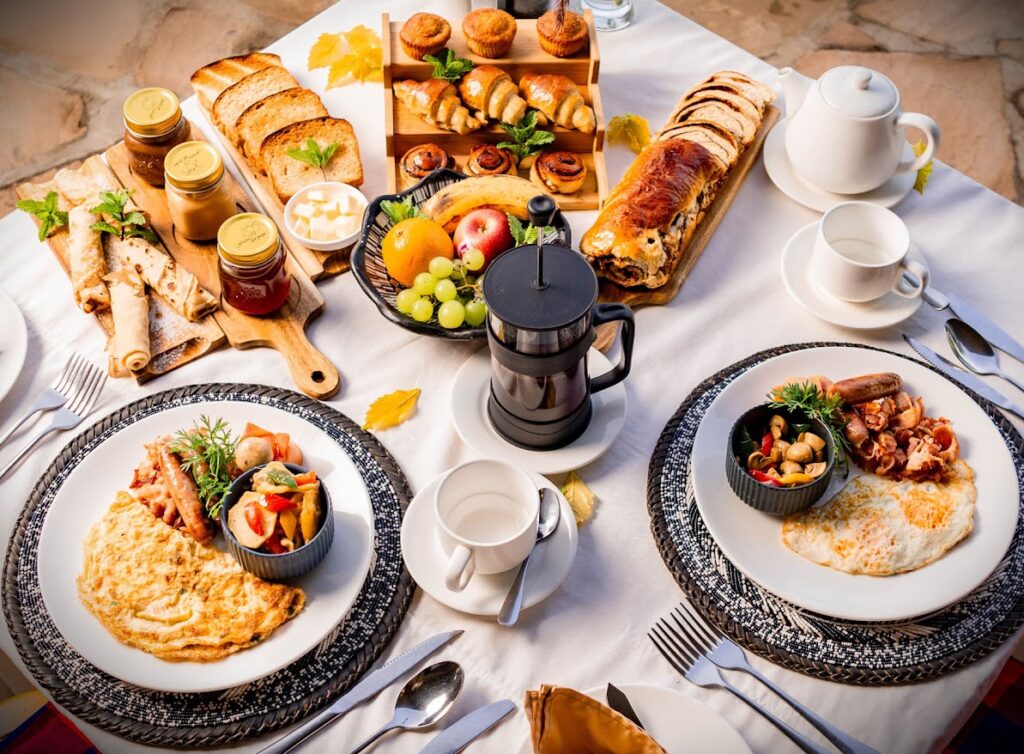
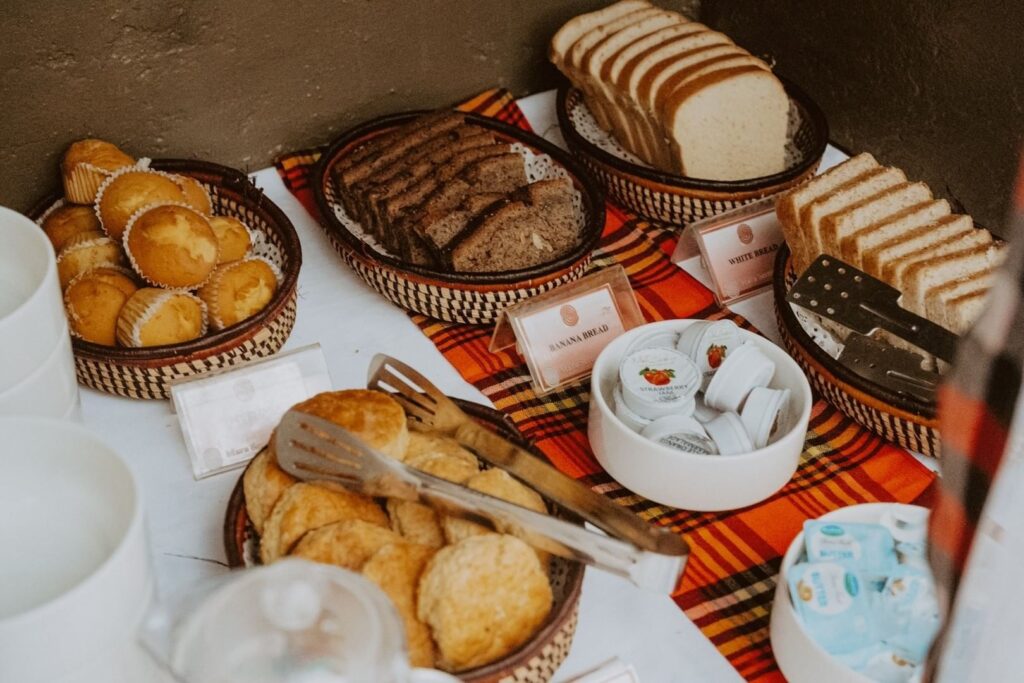
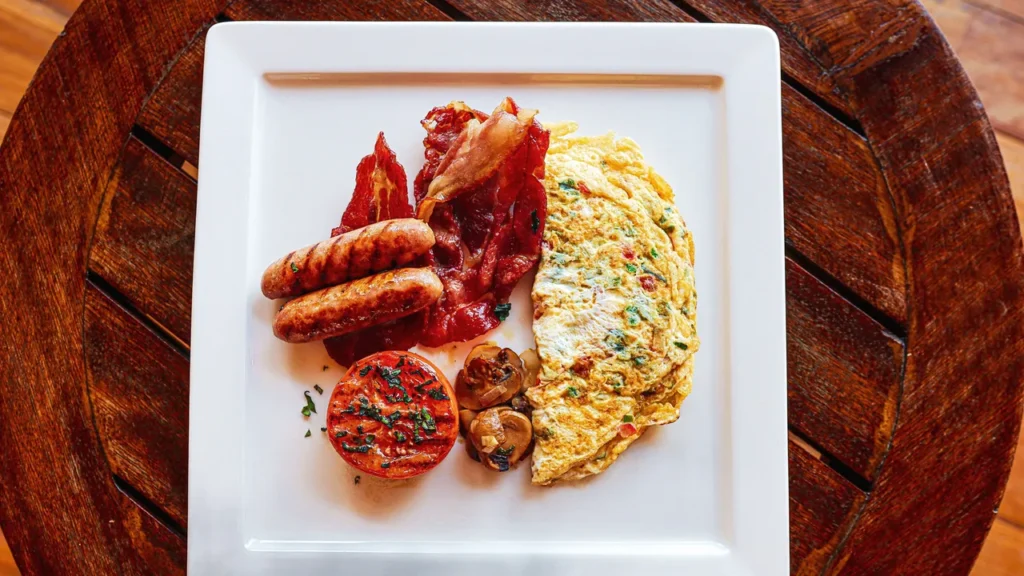
A lavish breakfast spread featuring omelettes, pastries, fresh fruit, and coffee, showcasing the high-quality food on a Kenya safari.
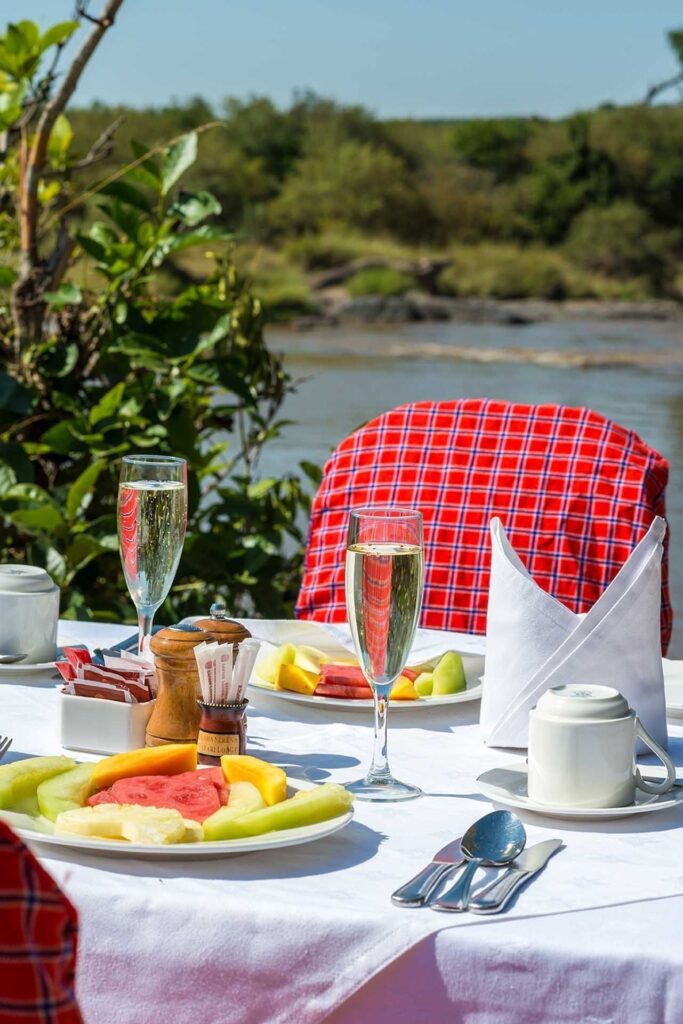
7:20am. A trestle table under a croton thicket on the Mara Triangle side of the Masai Mara, a long way from any camp. The chef has been awake since four. A gas burner hisses beside a cool box. Eggs go into the pan to order and the bush bread is still warm. This is food on a Kenya safari at its best.
What made the morning work happened an hour earlier. Before the Land Cruiser left camp our guide checked the dietary card and told the chef that one guest eats no meat and another can’t have gluten. Nobody at the table had to ask for anything. Every plate arrived right. It’s a very different thing from the tinned-beans picture most guests carry in their heads.
Here’s what we hear every week from first-timers. Will there be anything for me to eat? Is the water safe? What if I’m allergic? The honest answers are yes, yes if you follow one rule and it depends on the allergy. Safari camps feed people generously. Most guests go home needing a diet.
The kitchen isn’t the risk. The risk is the gap between what you know about your body and what the chef knows at 7pm on your first night, hours from the nearest supermarket. Close that gap and safari food becomes one of the best parts of the trip. This guide covers what you’ll eat, who can eat what, how allergies are handled, the water question and exactly what to tell us before you fly.
| QUICK ANSWER | What is the food like on a Kenya safari? Food on a Kenya safari is better than most guests expect. Camps serve breakfast, lunch, afternoon tea and a three-course dinner. Menus mix continental dishes with Kenyan staples such as nyama choma and sukuma wiki. Remote kitchens cook from scratch, so tell us any dietary needs early. |
At a Glance:
- Meals per day: Up to five: early coffee and rusks, breakfast, lunch, afternoon tea and dinner
- Usual meal plan: Full board at camp, meaning breakfast, lunch and dinner
- Dinner time: Around 7:30pm at most camps with bed by 9:00pm to 9:30pm
- Diets we plan for: Vegetarian, vegan, pescatarian and gluten-free, all with advance notice
- Drinking water: Supplied by your camp. We don’t advise drinking tap water in Kenya
- Plastic rule: Single-use plastic, including water bottles, has been banned in Kenya’s protected areas since 5th June 2020
- Balloon breakfast: A balloon flight over the Masai Mara costs USD 400 to 600 per person and ends with a bush champagne breakfast
- When to tell us: At enquiry, before the deposit and not on arrival
What do you eat on a Kenya safari, meal by meal?
A safari day runs on the animals’ clock and the kitchen follows it. We’ve set out the full timetable in our hour-by-hour guide to a day on safari, so here we’ll stay with the plates.
| Time | Meal | What to expect |
| 5:00am to 5:45am | Wake-up | Coffee, tea and rusks at your tent or the mess tent before the morning drive |
| 9:30am to 10:30am | Breakfast | A full cooked breakfast at camp, or a bush breakfast in the field if you ask for one |
| Around 1:00pm | Lunch | Salads, a hot main and dessert, served as a buffet or plated depending on the camp |
| Around 3:30pm | Afternoon tea | Tea, coffee and something sweet before the afternoon drive |
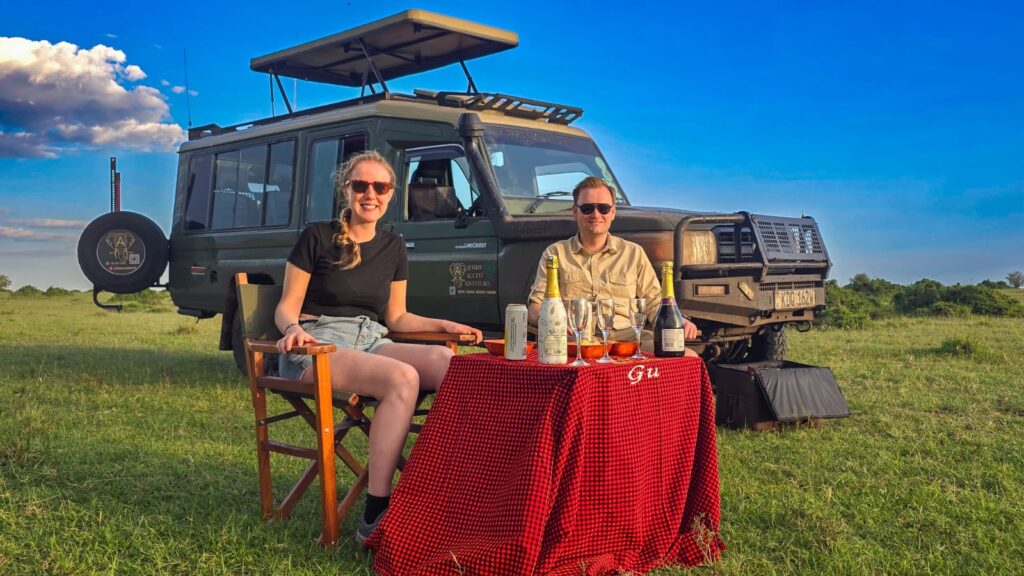
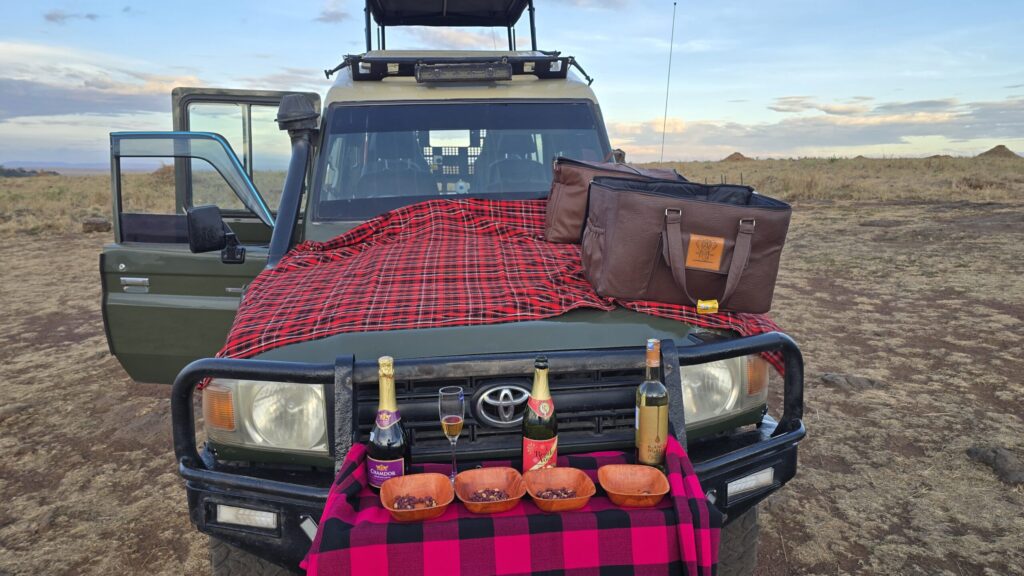
| Golden hour | Sundowners | Drinks and snacks from the cool box at a viewpoint, wherever your guide stops |
| Around 7:30pm | Dinner | Usually three courses, at a shared table or a private table by the fire |
Wake-up coffee and rusks
Between 5:00am and 5:45am someone brings coffee, tea and rusks to your tent or the mess tent. Rusks are twice-baked dry biscuits built for dunking. Eat two. The drive that follows runs about three hours.
Breakfast and lunch
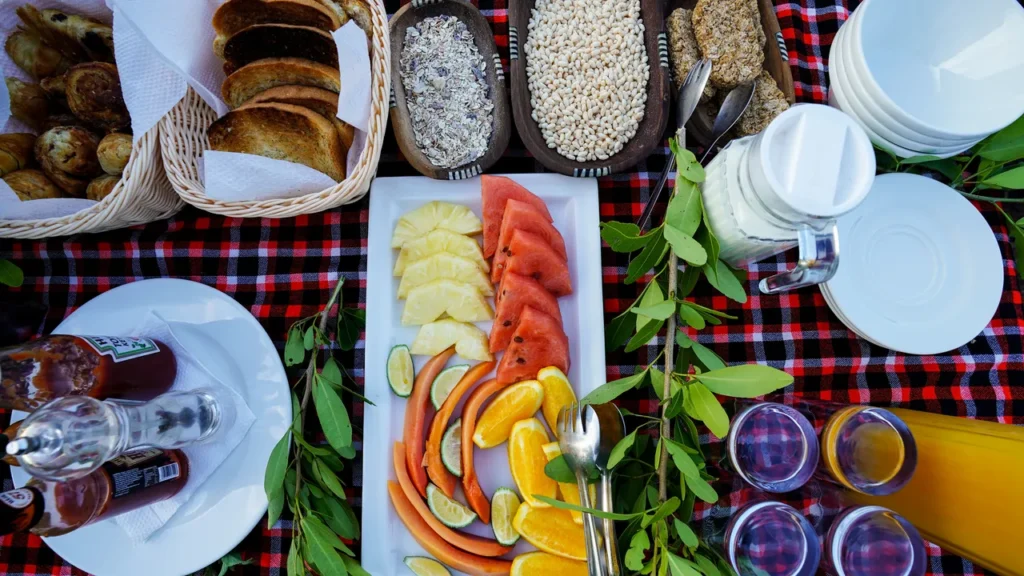
Back at camp around 9:30am you sit down to a proper breakfast with eggs cooked to order, fruit, pastries and often something Kenyan such as mandazi, a lightly sweet fried dough. Lunch lands around 1:00pm. Depending on the camp it’s a buffet or a plated meal. Either way you won’t leave hungry.
Afternoon tea, sundowners and dinner
Tea arrives at about 3:30pm. Kenya is among the world’s largest tea exporters and the camps take it seriously. Around golden hour the vehicle stops somewhere with a view and the guide opens the cool box. Ask for a non-alcoholic option if you don’t drink. Snacks at sundowners often include roasted nuts, so guests with nut allergies should tell the guide before the first stop. Dinner follows around 7:30pm and staff walk you back to your tent afterwards.
A Kenya safari doesn’t have a food problem. It has a communication problem and you can fix it with one email.
Kenya safari foods worth asking for
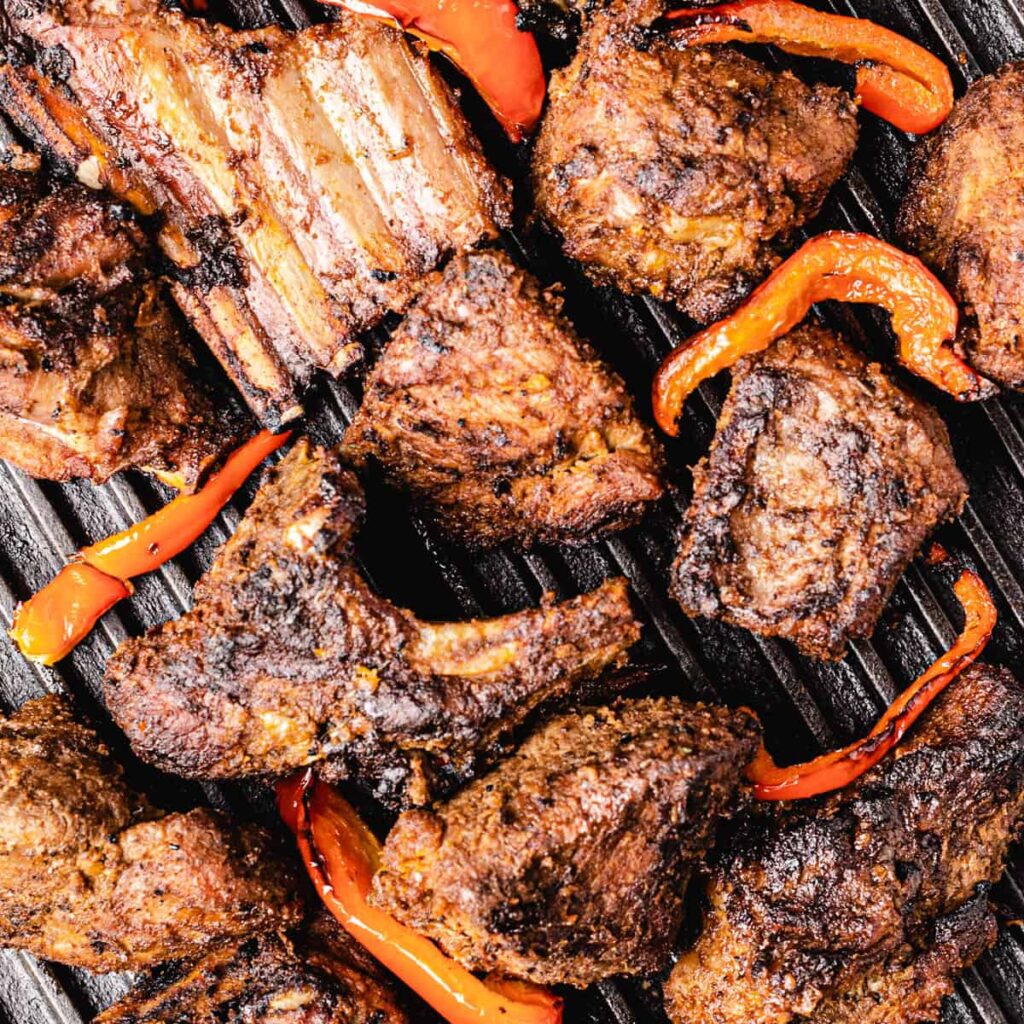
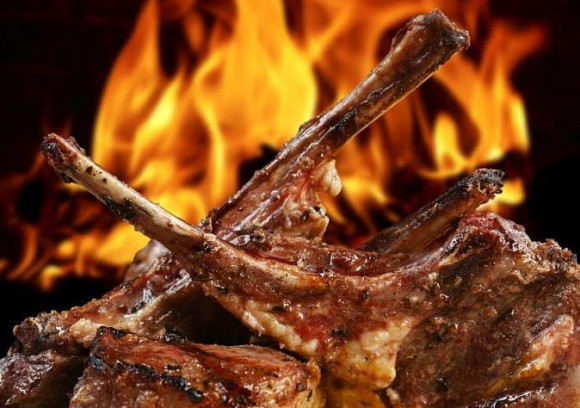
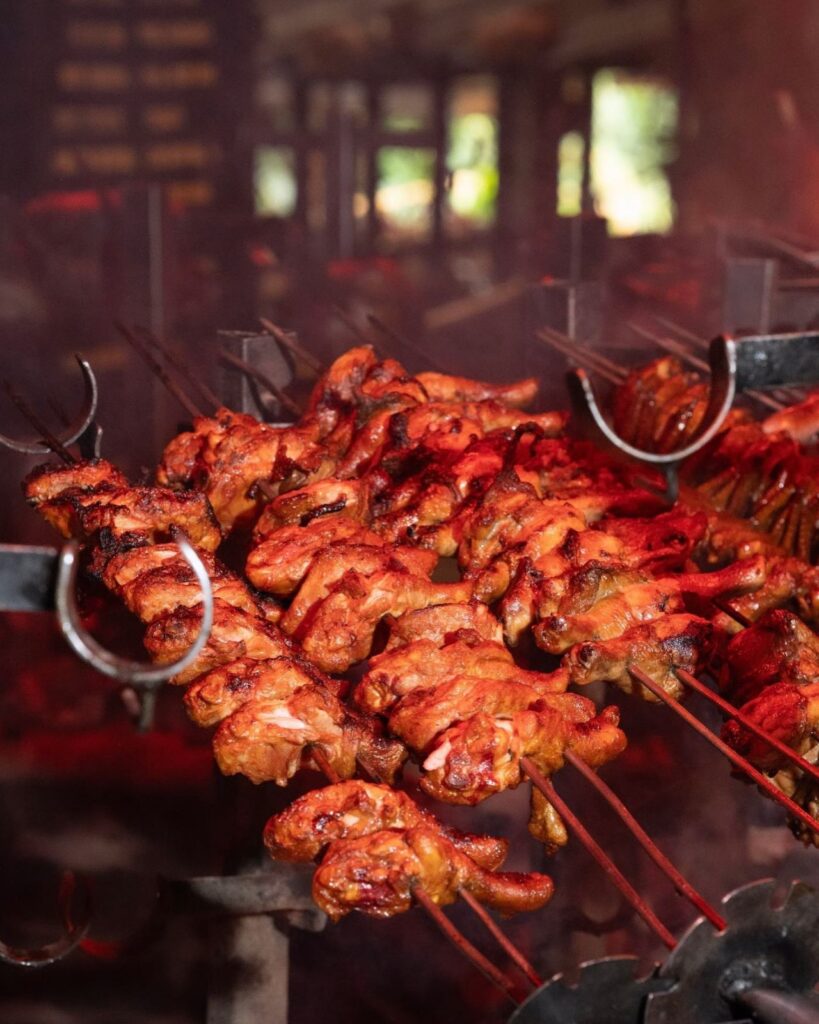
Most camps cook a continental menu with a Kenyan dish a few times a week. Don’t wait for it to appear. Ask the chef. Chefs light up when a guest wants the local plate. These are the ones we’d order first:
- Nyama choma. Slow-grilled meat, usually goat or beef, and the national dish in everything but name.
- Ugali with sukuma wiki. Stiff maize meal with braised collard greens. Sukuma wiki means push the week in Kiswahili, which tells you how far it stretches a budget.
- Pilau. Rice cooked with warm spices and often meat, from the Swahili coast kitchen.
- Githeri. Maize and beans cooked together. A common vegetarian main.
- Chapati. Soft layered flatbread, a Kenyan favourite that turns up at breakfast and dinner.
- Tilapia. Fish from Lake Victoria, grilled whole.
- Dawa. A cocktail of vodka, honey and lime. Dawa means medicine in Kiswahili.
Our view: eat the Kenyan dish when it’s offered. The continental menu is good. The Kenyan food is better.
Can vegetarians, vegans and gluten-free guests eat well on safari?
| QUICK ANSWER | Can vegetarians eat well on safari? Yes, vegetarians can eat well on a Kenya safari. Camps cook vegetarian meals routinely when told in advance. Vegan, gluten-free and pescatarian diets are also catered for with notice. We pass your needs to every camp and you should confirm them with each one. |
Yes, with one condition. Vegetarians eat well. Vegans eat well when the chef has had notice. Gluten-free guests eat well when the camp knows whether it’s coeliac disease or a preference. Pescatarians are also well served, because fish such as tilapia and Nile perch is a normal main course in Kenya.
Our view is blunt. Tell us about veganism on enquiry and never on arrival. Vegetarianism is routine. Veganism is routine only when the kitchen has had days to plan around butter, eggs, honey and milk in the tea.
| Diet | What works easily | What to watch | What we ask the camp |
| Vegetarian | Beans, lentils, green grams, vegetable curries, sukuma wiki, mukimo, pasta, omelettes | Stock made with meat and meat served as a side at breakfast | Confirm no meat stock in soups and sauces |
| Vegan | Beans, rice, vegetable stews, fruit, salads, ugali | Butter in bread and pastries, ghee in curries, eggs, honey and milk in tea | Plant milk and dairy-free spreads in advance |
| Pescatarian | Tilapia, Nile perch, vegetable dishes, eggs | Fish supply in remote camps depends on deliveries | Which fish is planned and on which nights |
| Gluten-free | Ugali, rice, potatoes, grilled meat and fish, vegetables, fruit | Chapati, bread, mandazi, rusks, sauces thickened with flour, beer | Gluten-free bread or alternatives and separate preparation |
| Dairy-free | Many Kenyan dishes are naturally dairy-free | Butter, cream, cheese and milk tea | Dairy-free alternatives for breakfast and dessert |
| Halal, low-salt or diabetic | Case by case | Depends on the kitchen and the supplier | Tell us early so we can ask each camp what it can do |
Remote camps are hours from a big supermarket. Specialist items such as gluten-free bread or plant milk have to be ordered ahead and carried in. That’s why advance notice isn’t a courtesy. It’s the whole mechanism.
| EXPERT NOTE The dietary note that helps a chef most is a short one. Say what you can’t eat, say whether trace amounts matter and say what you love. A chef who knows you adore mango plans a better week than one who only knows your restrictions. Send it on enquiry and send it again at the balance stage in case anything changed. Hellen Asiko, Director and Guest Experience Curator |
How are food allergies handled in remote safari camps?
| QUICK ANSWER | What happens if you have a food allergy on safari? Your allergy is flagged to each camp’s kitchen in advance and meals are adapted around it. We never guarantee an allergen-free kitchen because remote camps share cooking space. Confirm the details with each camp before you travel. Carry your own prescribed medication in hand luggage. |
Seriously and with honesty. Camp kitchens are used to allergies and cook around them every week. What they can’t offer is the sealed, audited kitchen of a hospital. Bush kitchens are small. Surfaces, oil and utensils are shared. Picnic lunches and bush breakfasts are often packed or cooked away from the main kitchen. We won’t promise an allergen-free meal and nobody honest can.
What we can do is make sure the right people know early and in writing. Here’s how a severe allergy should run from our side and yours.
What we do
- Record the exact allergen and how strict you need to be, trace amounts or avoidance only.
- Pass your details to every camp and ask each kitchen to confirm back what it can and can’t do.
- Brief your driver-guide so the cool box, the sundowner snacks and the picnic lunch are covered too.
What you do
- Confirm the plan directly with each camp. Introduce yourself to the camp manager and the chef at your first dinner and don’t be shy about asking how your meal is prepared.
- Carry your prescribed medication, including any adrenaline auto-injector, in your hand luggage and on you in the daypack. Don’t leave it in a hot vehicle and ask your doctor how many to carry.
- Bring a short letter from your doctor listing the allergy and the medication.
- Take travel insurance that covers emergency medical evacuation. From the Masai Mara that means an air transfer to Nairobi, which is expensive without cover.
The kitchen is hours from a supermarket. Your dietary note is the one ingredient that doesn’t arrive by road.
Flying between camps adds a wrinkle. Light aircraft on the Wilson Airport routes take soft bags of around 15 kilograms, so snacks for a strict diet compete with clothes for weight. Pack medication first and snacks second. Our African safari packing list covers the rest of the bag.
Is the water and the food safe on a Kenya safari?
| QUICK ANSWER | Is the water safe to drink on safari? Yes, if you drink only the water your camp provides. We don’t advise drinking tap water in Kenya. Camps supply filtered, treated or bottled water and most let you refill a reusable bottle. Bring one because Kenya bans single-use plastic in protected areas. |
Drinking water
Drink what your camp gives you and nothing from the tap. That goes for Nairobi hotels too. Camps provide filtered, treated or bottled drinking water depending on the property and most have a refill point. Our Land Cruisers carry an onboard fridge, so ask your guide for cold water during the drive. Our Kenya safari vehicle guide explains the fit-out.
The plastic bottle rule
Since 5th June 2020 Kenya has banned single-use plastics, including water bottles, from its national parks, beaches, forests and conservation areas. In practice camps have moved to refill stations and reusable bottles. Pack one robust reusable bottle. It’s the right answer for safety and for the landscape and it lines up with our approach to responsible tourism.
Ice, salads and fruit
At established camps salads and fruit are normally washed in treated water and ice is made from it. Normally isn’t a guarantee, so ask the camp manager if you’re unsure. Outside camps in Nairobi, eat where your hotel recommends and skip the unwashed raw salad.
Stomach upsets
Most guests have no trouble. A few meet an upset stomach in the first days anyway because of travel, altitude and a new diet. Nairobi sits at about 1,800 metres. Ask a travel clinic four to six weeks before departure what to carry. Oral rehydration salts weigh almost nothing. If you feel unwell tell your guide the same day. Don’t wait to see if it passes.
What about bush breakfasts and picnic lunches?
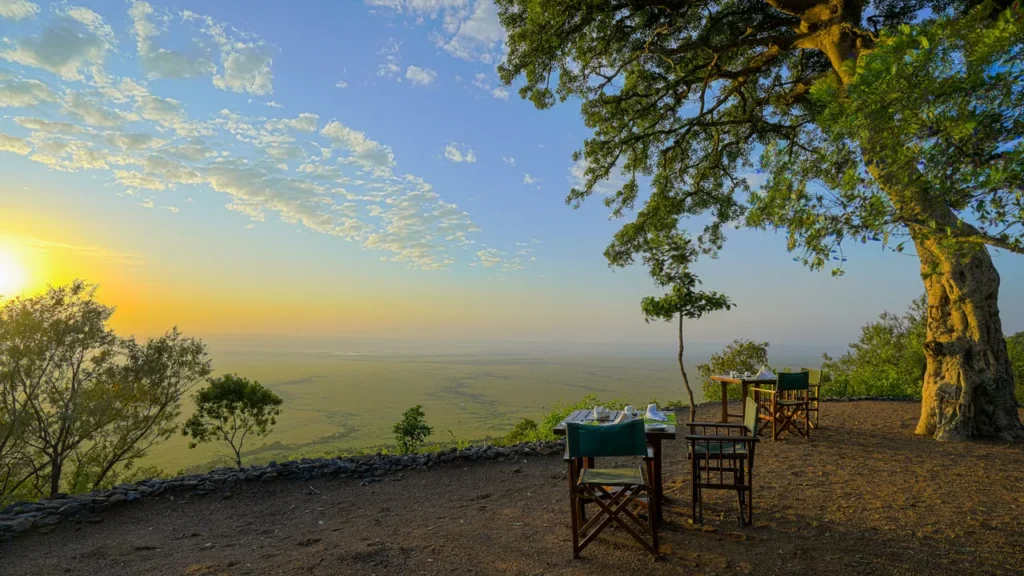
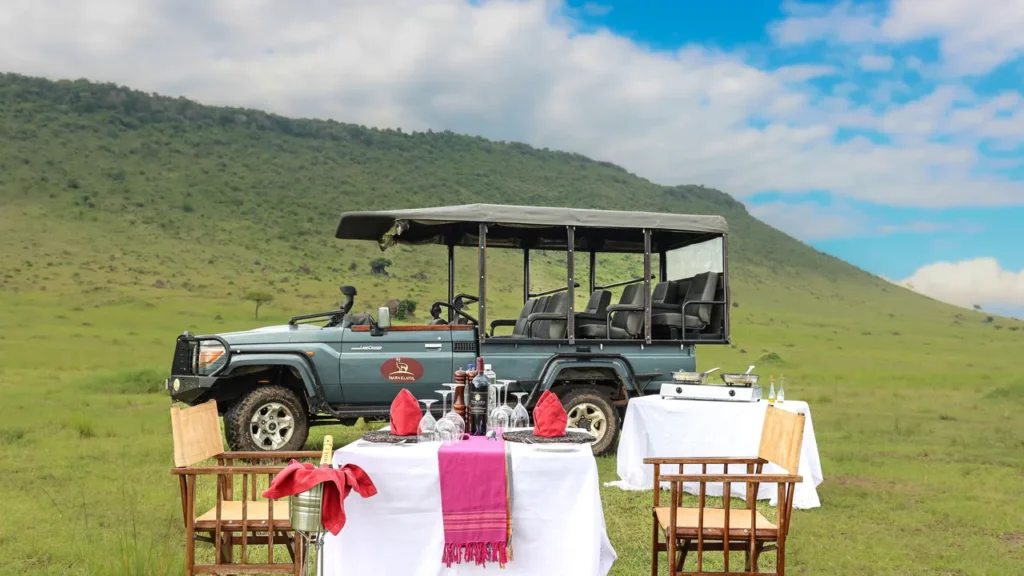
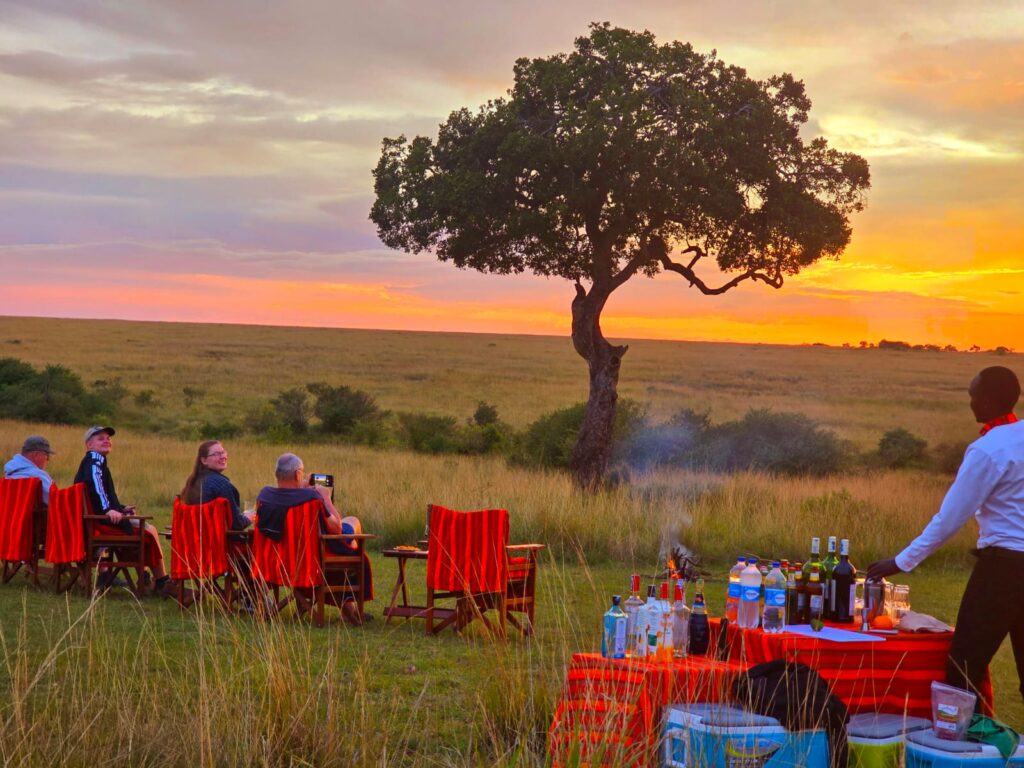
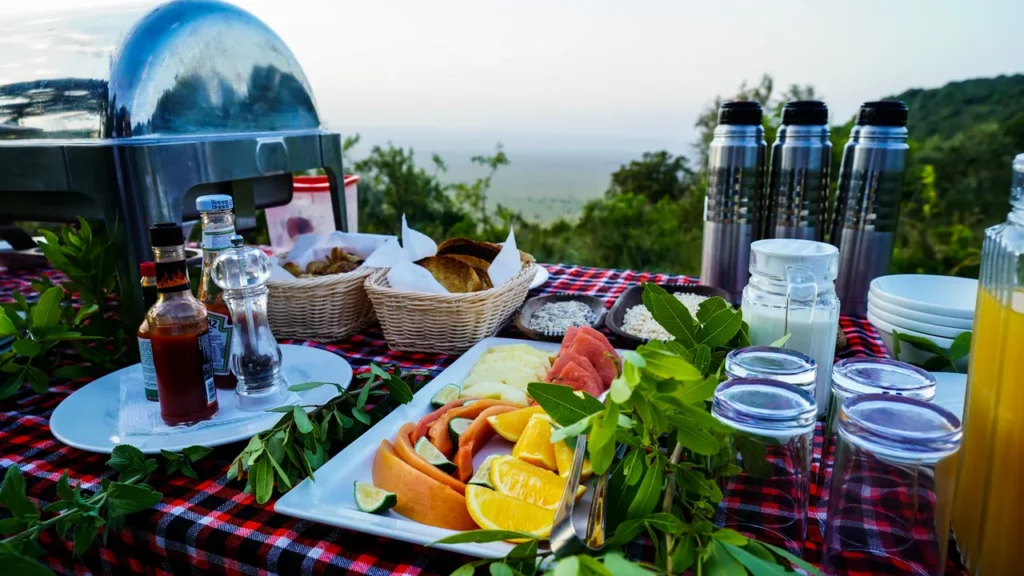
These are the two meals guests remember longest. A bush breakfast is a hot breakfast cooked or served in the field. A picnic lunch is a packed meal for a drive that stays out through the middle of the day. Both change how a safari day feels.
Bush breakfast
Ask the camp for a bush breakfast and the morning drive stretches to about 10am. You eat a hot breakfast at a table set in the field, often with animals in view. It’s one of the best ways to see a morning through. Our day-on-safari article covers bush breakfast and sundowners in the daily rhythm.
The balloon breakfast
A hot air balloon flight over the Masai Mara lasts about an hour and ends with a bush champagne breakfast where you land. We work with Governors’ Balloon Safaris, Skyship Balloon Safaris and Balloon Safaris Ltd and a flight costs USD 400 to 600 per person. Our Masai Mara hot air balloon safari guide covers cost and the experience in full.
Do you get packed lunches on game drives?
Yes, on full-day drives. A full-day drive leaves at 6am and returns around 6pm and the camp packs a picnic lunch box to carry you through. Inside the Masai Mara National Reserve you can’t leave the vehicle except at designated points, so lunch happens at a picnic site or in the vehicle. Black kites and monkeys know exactly what a lunch box looks like, so eat with the lid close at hand.
Two practical points. The picnic is often packed separately from the main kitchen, so confirm that your dietary note reached whoever packs it. And because of the plastic ban, boxes and cutlery are reusable or paper-based.
| EXPERT NOTE Tell your guide on the first morning, even if you’ve told us and the camp. The guide carries the cool box and chooses the picnic spot. A guide who knows your allergy before the first sundowner will check the snack bag before it comes out. That small habit has saved more awkward moments than any form. Nicholas Wangithi, Director and Founder |
What is the Shamba Experience and can you join it?
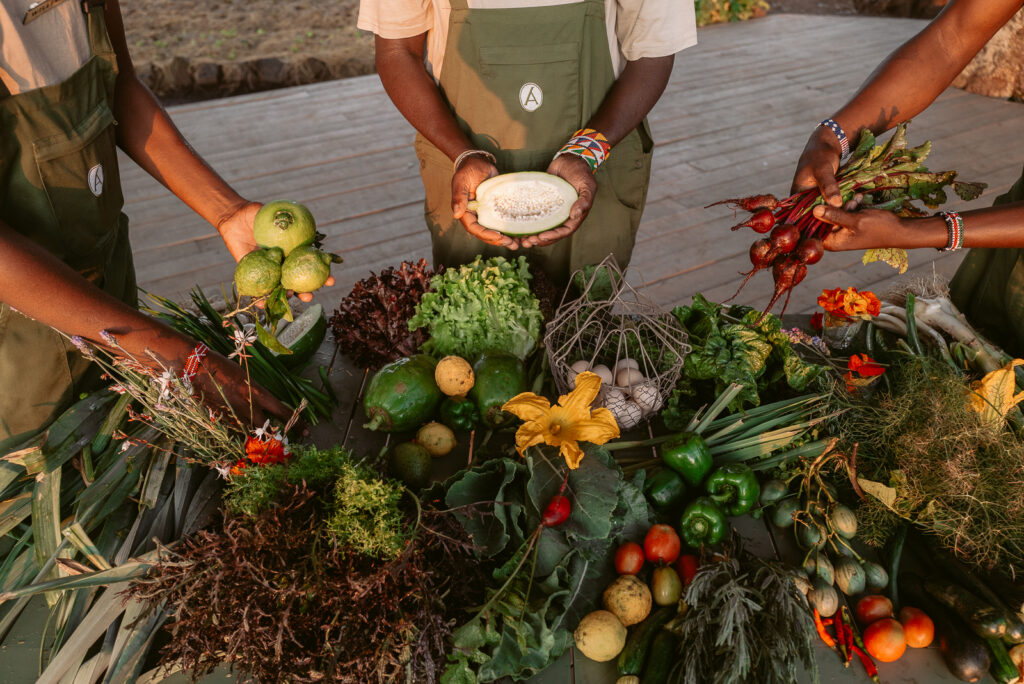
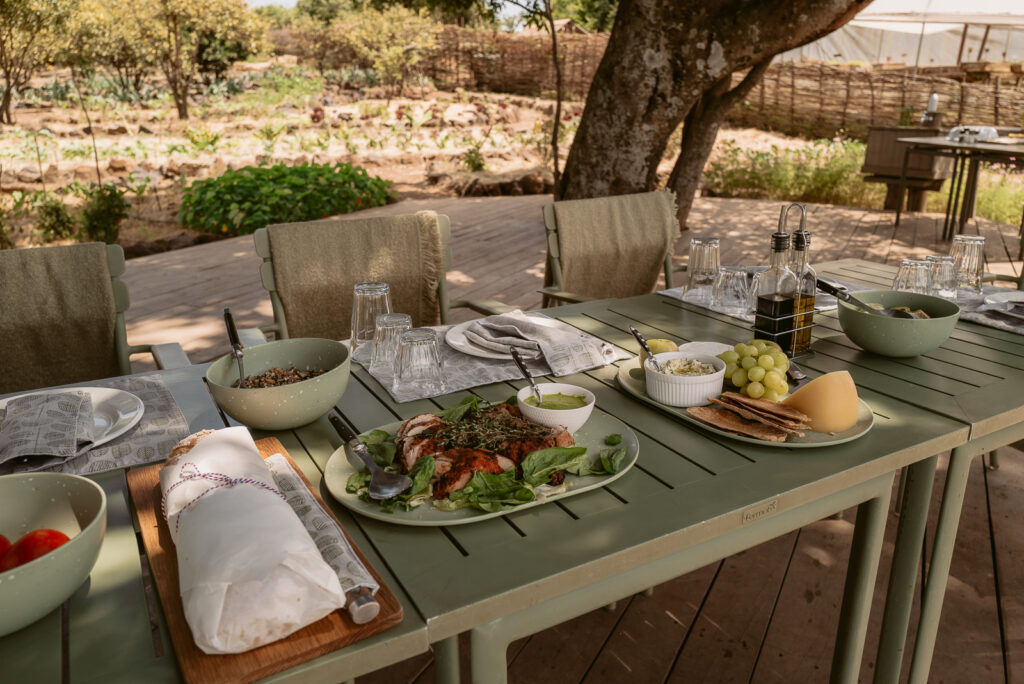
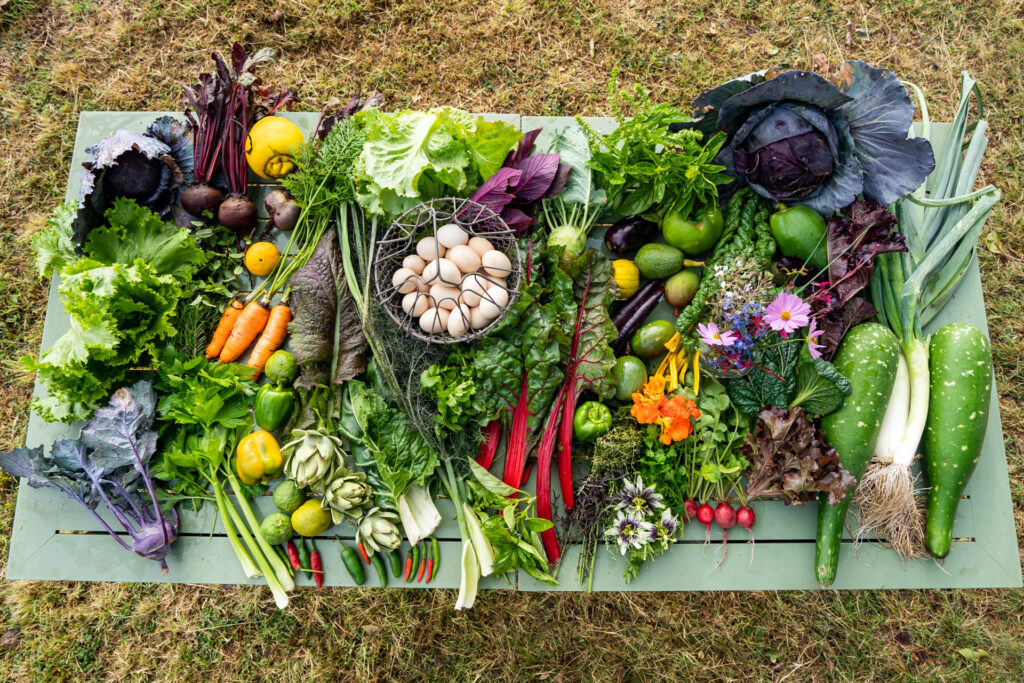
Shamba is Kiswahili for vegetable garden and on a safari it means one of the best hours of your stay. Several camps around the Masai Mara run a working shamba and let guests walk the rows with a gardener, pick their own lunch and help the chef prepare it. You choose what goes on the plate and you eat what you picked.
What’s growing depends on the season and the rains. Expect salad leaves, tomatoes, herbs and root vegetables and fruit when it’s in season. The produce is organically grown, so it’s as fresh as food gets in the bush. The experience suits children, vegetarians and vegans and anyone who wants to understand where a Kenyan plate begins. It also puts a human face on the camp’s kitchen.
Not every camp has a shamba and the experience varies by property. Ask us when you enquire and we’ll tell you which camps on your route run one and whether it’s included or an add-on. We’d rather give you the true answer than promise a garden that isn’t there.
The best lunch on a safari is often the one you picked yourself.
| EXPERT NOTE A shamba lunch is the easiest meal on safari to adapt for a restricted diet. You choose the ingredients and watch them being prepared, so you control what goes on your plate. For guests who worry about cross-contact it’s a calmer way to eat than a buffet. Kibara Mugo, Safari Writer and East Africa Specialist |
How far ahead should you tell us about dietary needs?
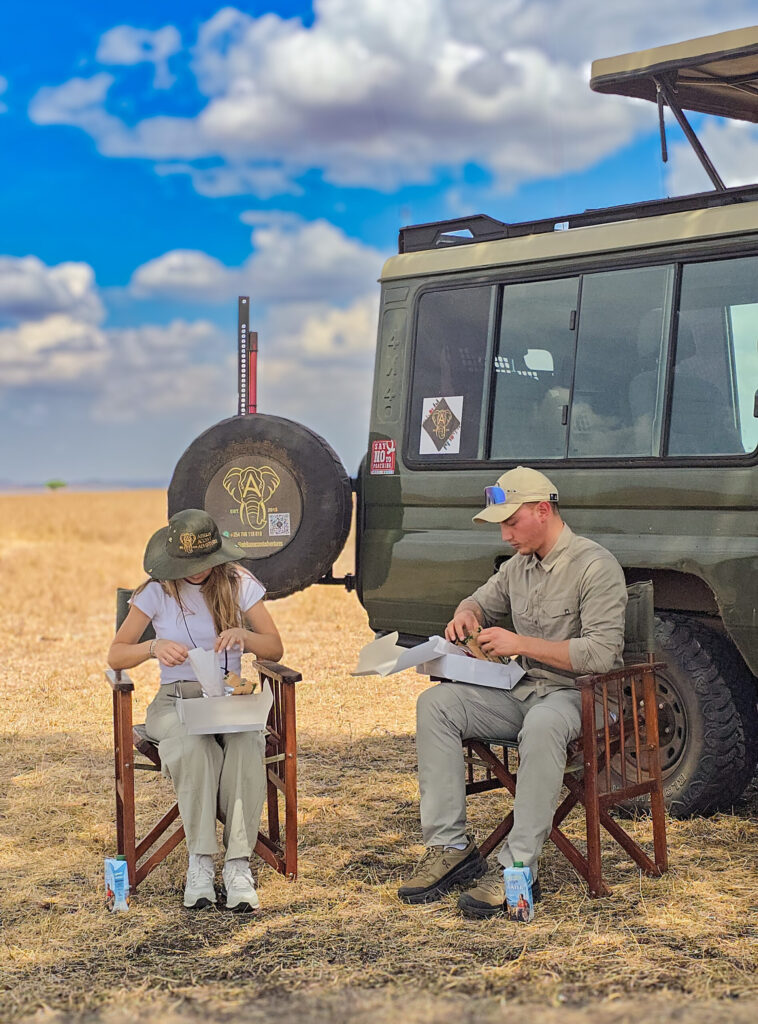
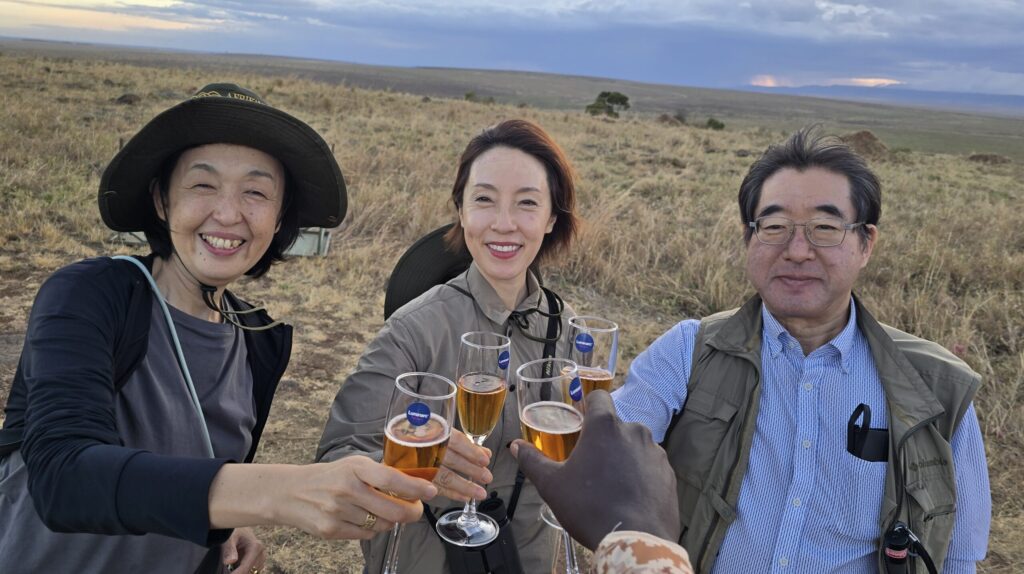
Tell us when you first enquire. That’s the plain answer. Remote camps order specialist items weeks ahead and a chef needs days, not hours, to plan around a vegan guest or a coeliac. Here’s the rhythm we use.
- At enquiry. Tell us every dietary need, allergy and strong dislike. We note it on your file from the first conversation.
- At booking. When your deposit is paid, we pass the details to each camp and ask them to confirm. Our guide to booking a Kenya safari explains the deposit and balance schedule.
- At the balance stage. Re-confirm anything that changed. A new diet, a new allergy or a new medication belongs in the file now.
- On arrival at each camp. Introduce yourself to the manager and the chef at your first meal and confirm the plan face to face.
- On your first morning. Tell your driver-guide so the cool box and the picnic match your needs.
Late changes can still be handled, but less reliably. A request on arrival depends on what’s in the camp store that day. A request at enquiry depends on nothing but planning.
Are meals and drinks included in the price of a Kenya safari?
| QUICK ANSWER | Are meals included on a Kenya safari? Yes, meals are included on our multi-day camp safaris. Full board covers breakfast, lunch and dinner. Drinks vary by camp, with premium spirits and imported wines often charged extra. Each safari page lists what’s included, so check it before you compare quotes. |
Full board is the standard on a multi-day safari. That means breakfast, lunch and dinner at camp, plus the tea and coffee between them. Drinks are where camps differ. Some include a wide range at the bar. Others cover water, soft drinks and house beer and charge for premium spirits, imported wine and champagne. Ask for the drinks policy of each camp on your route in writing.
Three costs catch guests out. Private bush dinners and special set-ups are normally priced separately by the camp and rates vary. Balloon flights are an add-on at USD 400 to 600 per person. And meals in Nairobi on arrival and departure days depend on the itinerary, so read the Included and Not Included lists. Our guide to park fees and conservancy fees covers the other big cost question.
How does food on safari differ between budget and luxury camps?
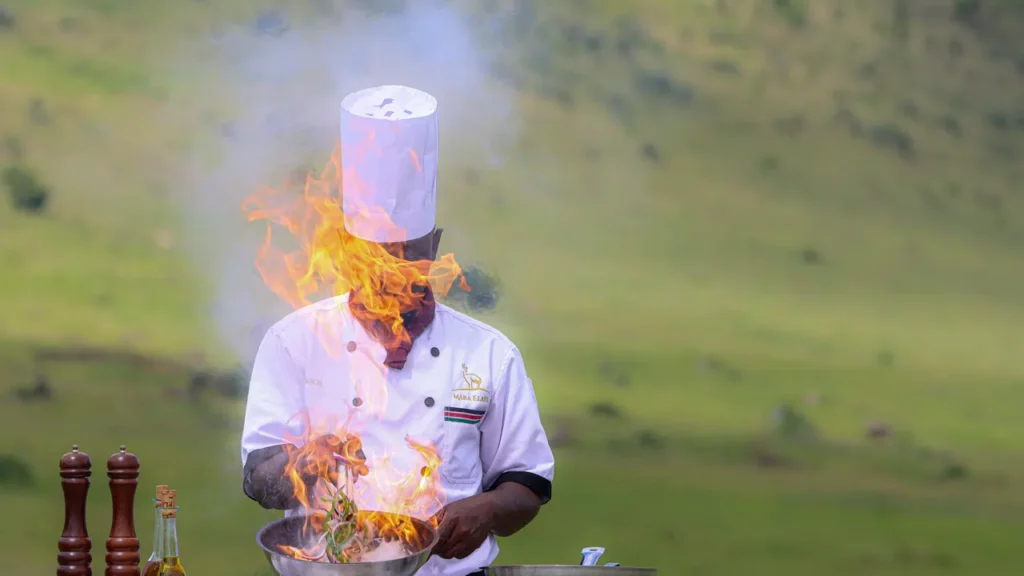
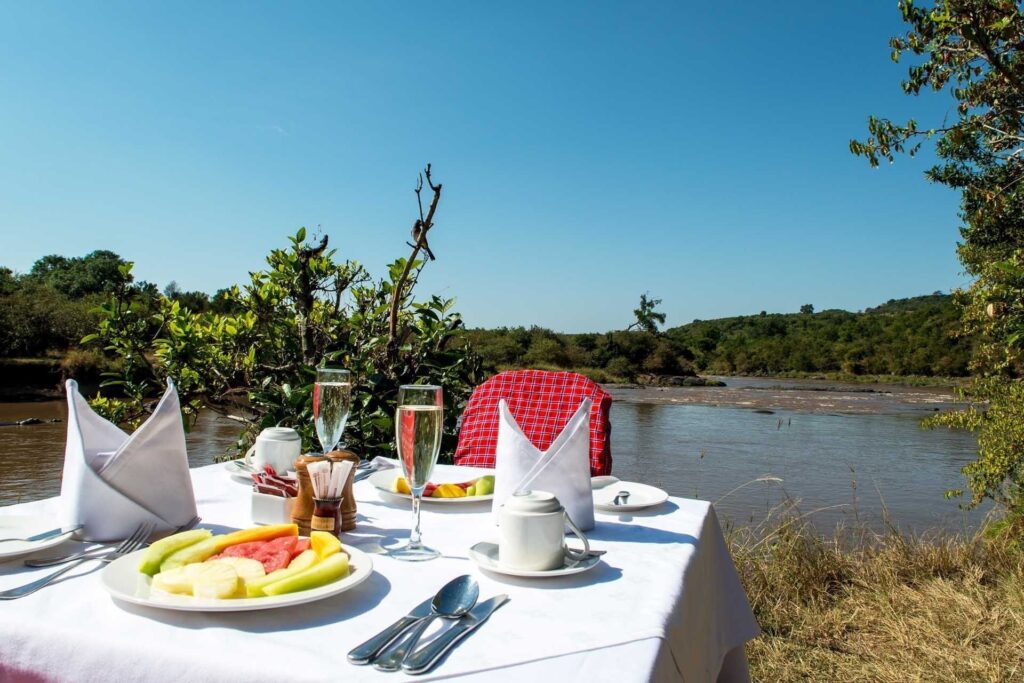
The difference isn’t hunger. Nobody goes hungry at any level. The difference is choice, flexibility and finish. This is how it looks in our experience across the camps we use.
| Camp style | Typical food service | Dietary flexibility | Drinks |
| Budget and book-a-seat | Set menus or buffets at fixed meal times with simpler dishes | Good with notice but fewer substitutes and less choice | Often limited to tea, coffee and water with the rest charged extra |
| Mid-range | Buffet or plated meals with a wider menu and Kenyan dishes on rotation | Strong with notice including vegan and gluten-free | Varies by camp, so check the Included list |
| Luxury | Plated menus, private tables, bush dinners and chef-led extras | Highest, with menus adjusted per guest and more specialist items | Often a wide range included but premium bottles may cost extra |
If food is a priority for you, our advice is to put the money into the right camp and not into a longer stay. A shorter trip at a camp with a strong kitchen and a shamba beats a longer one at a camp where every dinner is a buffet.
To see how price relates to what’s on offer, here are three live safaris from our site at different price points. Each page lists exactly what’s included.
| Safari | Length | From per person | Style |
| 6 Days Masai Mara, Nakuru, Naivasha and Amboseli Book-a-Seat Safari | 6 days | USD 1,335 | Group departure |
| 4 Days Masai Mara Safari at Mara Elatia Camp, Mara Triangle | 4 days | USD 1,440 | Road safari |
| 4 Days Flying Luxury Amboseli Safari at Kitirua Plains Lodge | 4 days | USD 2,450 | Flying luxury |
Camps inside conservancies often have smaller kitchens and fewer guests, which can mean more flexibility. Our Masai Mara conservancies guide explains how they differ from the main reserve. For the tented-camp side of the question, read our note on what a tented camp is like.
What about children, fussy eaters and bringing your own snacks?
Children eat well on safari. Kitchens are used to families and most can produce plain pasta, rice, eggs, fruit and chips on request. Tell us ahead if a child has an allergy or a very short list of accepted foods. Our Kids on Kenya safari guide covers age limits and family camps.
Bring snacks if your diet is strict or your child is picky. Crackers, bars and dried fruit are easy to carry. Check the weight against the soft bag limit on any flights and keep medication separate from food. For a first trip our first safari guide covers the rest of the planning.
Frequently asked questions about food on a Kenya safari
Do you get packed lunches on game drives?
Yes, on full-day drives the camp packs a picnic lunch box. The drive leaves around 6am and returns around 6pm. Tell the camp and your guide about any dietary needs because the picnic is often packed separately from the main kitchen.
Is the water safe to drink on safari?
Yes, the drinking water your camp provides is intended for guests. Don’t drink from taps anywhere in Kenya. Carry a reusable bottle and refill it at camp because Kenya bans single-use plastics in its protected areas.
Can vegans eat well on a Kenya safari?
Yes, with notice. Camps can cook vegan meals around beans, rice, vegetable stews and fruit. Butter, ghee, eggs, honey and milk in tea need flagging and plant milks may need ordering ahead. Tell us on enquiry.
Is there gluten-free food on safari in Kenya?
Yes, many Kenyan dishes are naturally gluten-free. Ugali, rice, potatoes, grilled meat and fish, vegetables and fruit all work. Chapati, bread, mandazi and rusks contain wheat. Tell us whether you’re coeliac so the kitchen takes cross-contact seriously.
Can a camp guarantee a nut-free meal?
No, and you should be wary of anyone who says yes. Camps will cook around nut allergies and flag them to the team but bush kitchens share space and equipment. Confirm the details directly with each camp and carry your own medication.
Is ice safe in safari camps?
Usually at established camps, but ask. Most make ice from treated water. If you’re unsure ask the camp manager and skip it until you know. Outside camps in Nairobi rely on your hotel’s advice.
Is Kenyan food spicy?
No, Kenyan food is generally seasoned rather than hot. Chilli sauce usually comes on the side so you control the heat. Pilau carries warm spice and nyama choma is simply grilled and salted.
Are drinks included on a Kenya safari?
Tea, coffee and water are normally covered but beer, wine and spirits depend on the camp and the safari. Premium bottles are often extra. Check each safari’s Included list and ask for the camp’s drinks policy in writing.
Can I bring my own snacks?
Yes, and for strict diets we recommend it. Keep to the weight limit on charter flights, which is around 15 kilograms in a soft bag on the Wilson Airport routes. Pack medication first and snacks second.
Do camps cater for children?
Yes, most kitchens are used to families. They can usually provide simple dishes such as pasta, rice, eggs and fruit. Tell us about allergies and picky eating in advance.
What if I get a stomach upset on safari?
Tell your guide the same day. Rest, drink safe water and use oral rehydration salts. Ask a travel clinic what to carry before departure. Insurance with medical evacuation cover is essential for a more serious problem.
Should I tip the kitchen staff?
Camps usually run a shared staff tip box that includes the kitchen team. Tipping is at your discretion and the minimum for any individual tip is KES 200. Our baseline for your driver-guide is USD 15 per person per day with a range of USD 10 to 20.
Plan your safari meals with us
You now know what lands on the plate between the 5am coffee and the 7:30pm dinner. You know which diets are easy and which need notice. You know why we won’t promise an allergen-free kitchen and why the water and the picnic matter. What an article can’t do is tell the kitchen about you.
That’s our job. We’re a Nairobi-based safari operator and we pass your dietary needs to every camp on your route before you fly. Our Director and Guest Experience Curator, Hellen Asiko, will go through your needs with you and flag anything that needs a conversation with a camp. Start at our free quote page and write your dietary needs in the first message. Like the dietary card on that trestle table in the Mara, it’s the one line that makes every plate right.
Tell us what you can’t eat when you enquire and we’ll make sure the plate that reaches the bush breakfast table is yours.
Let's plan your East African safari
Tell us when you'd love to travel and a local specialist will craft a tailor-made route around you.


