Kenya Luxury Safari: What “Luxury” Really Means and What It Costs
Our published itineraries run from about USD 450 to USD 2,100 per person per night, and the biggest differences sit in acreage, vehicle numbers and the guide rather than the thread count.
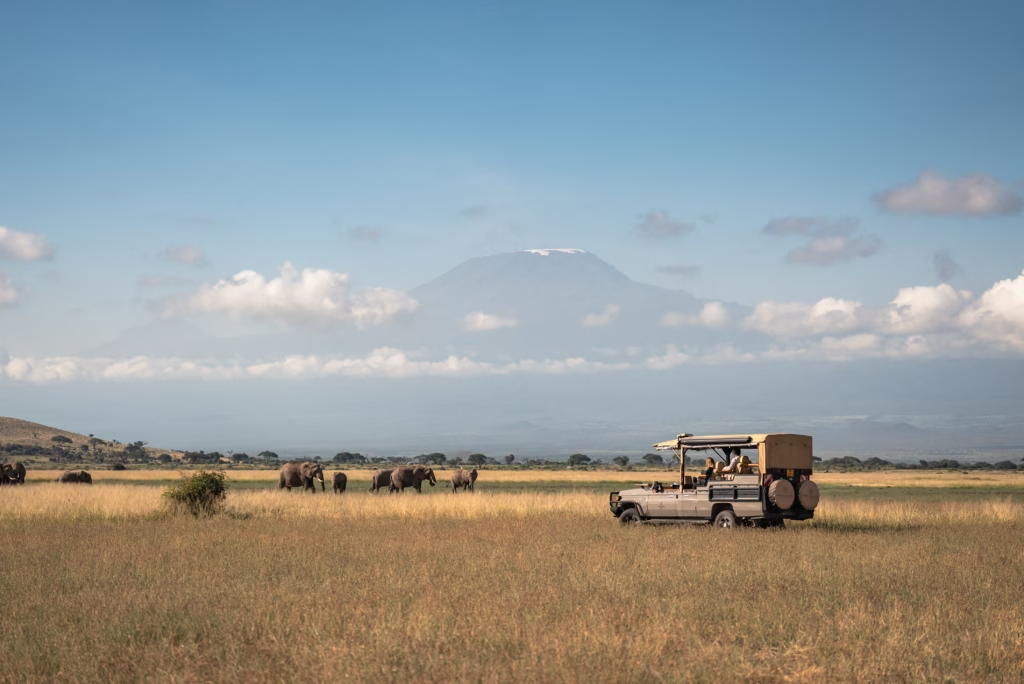
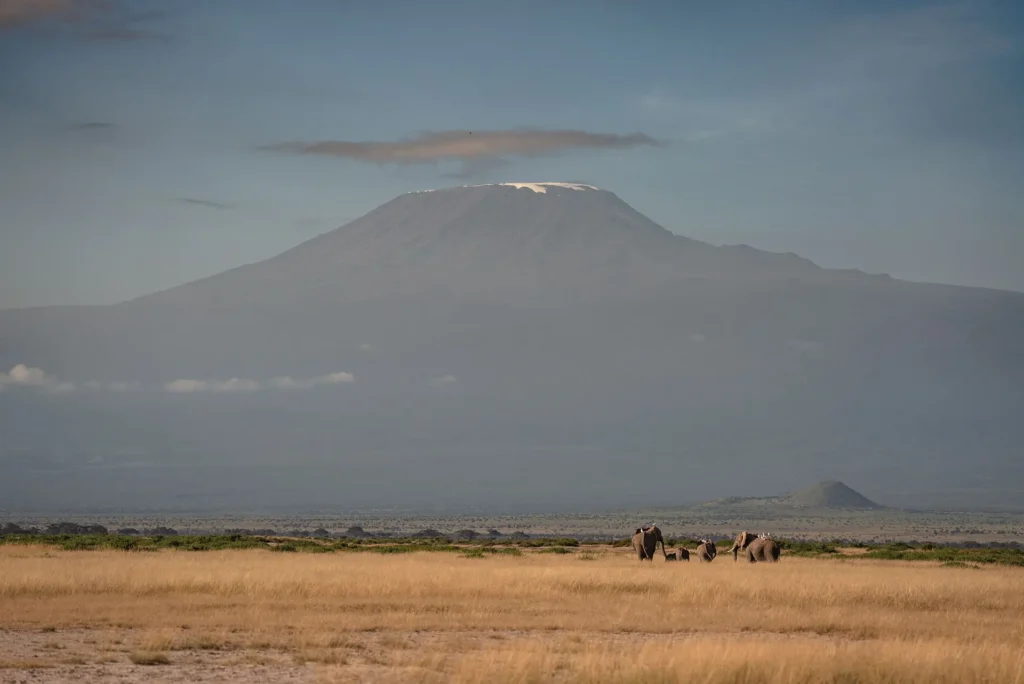
Safari vehicle on a game drive in Amboseli with an elephant herd and Mount Kilimanjaro in the background, the classic scene of a Kenya luxury safari.
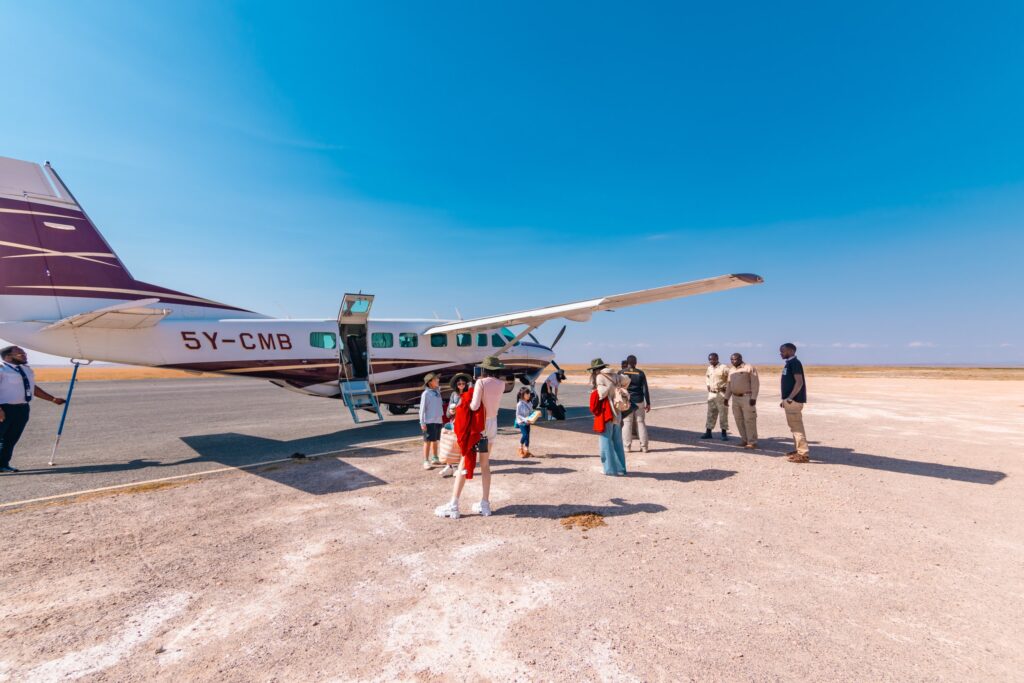
Wilson Airport, 5:40am. A couple at the start of their Kenya luxury safari stand at the light aircraft desk beside a hard-shell suitcase the size of a small fridge. The agent looks at the scale, then at the suitcase, then at them. “Soft bags only”, he says. “Fifteen kilos, hand luggage included.”
They’d paid for four nights at a camp that charges four figures a night. The tents had plunge pools and the chef had a name. Nobody had mentioned the bag. We’ve repacked a suitcase on that kerb more often than we like to admit, usually into a borrowed duffel, always against a departure that won’t wait.
That morning teaches what most Kenya safaris teach eventually. Luxury is mostly invisible. It’s the message about soft bags that arrives a week before departure. It’s the vehicle that reaches a sighting before the crowd does and leaves before it becomes one. It’s a guide who has worked the same ridge for years and knows which fig tree the leopard prefers when the wind turns.
The brochures sell something else: plunge pools, copper baths, a butler on call. Some of it is lovely. All of it is easy to copy, and none of it explains why one safari costs USD 450 a night and another USD 2,100. What’s scarce in Kenya is land, time and skill. How many acres does each guest get? How many vehicles share a sighting? How many hours do you spend in the field rather than in transit, and who’s behind the wheel?
At Afrikan Accent Adventures, a Nairobi-based safari operator, we build our luxury itineraries around that argument. Pay for space, time and a guide who knows the ground. Treat everything else as upholstery. This guide explains what a Kenya luxury safari really means and what it costs in 2026. It shows where to spend and where to save. It also shows how to tell the real thing from the marketing.
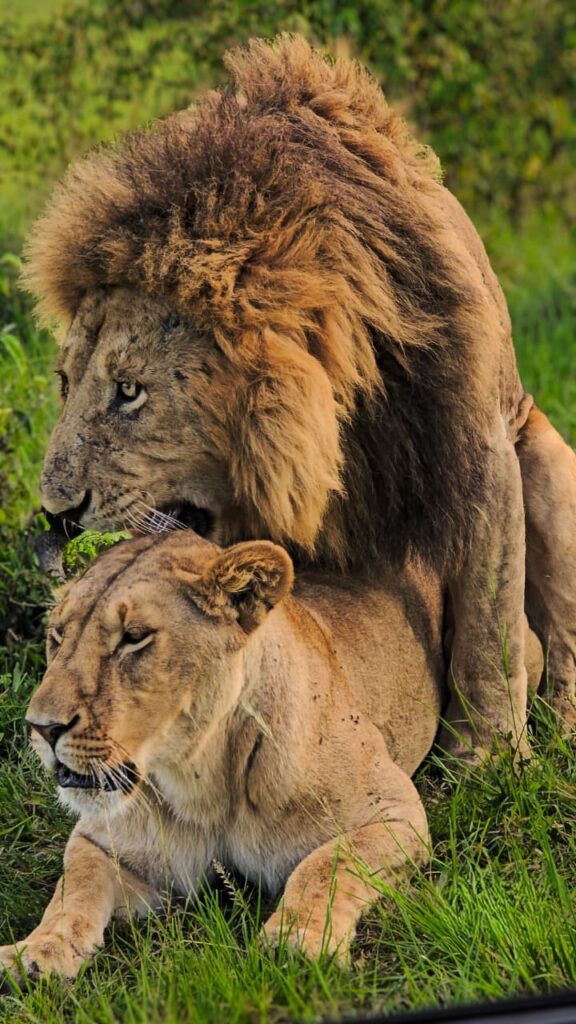
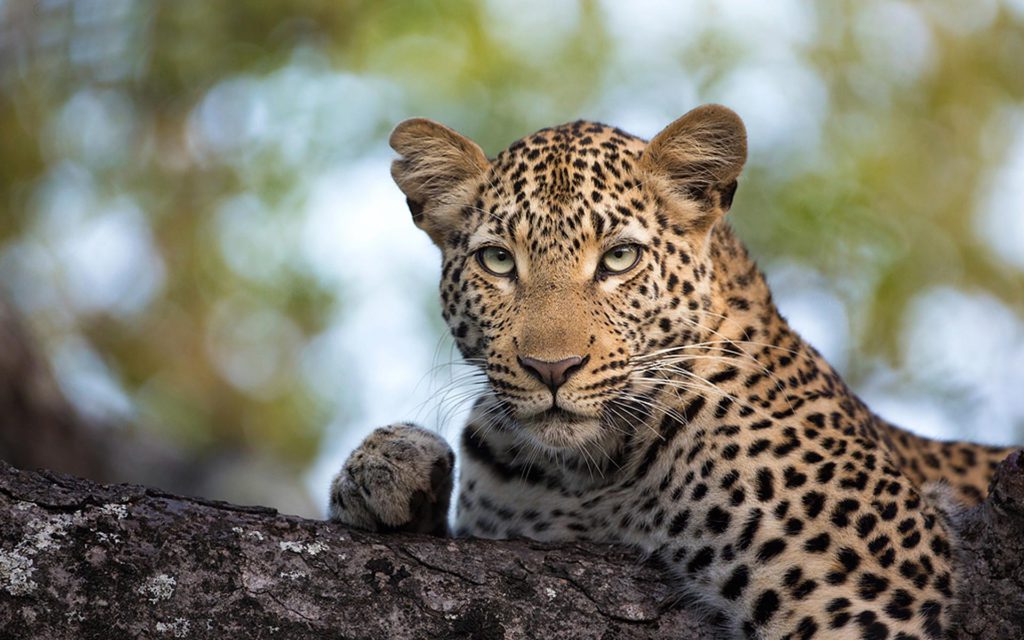
| QUICK ANSWER | How much does a luxury safari in Kenya cost? A Kenya luxury safari costs about USD 450 to 1,300 per person per night in 2026. Peak dates push the same stay to about USD 2,100. Complete itineraries from Afrikan Accent Adventures run USD 2,450 to 12,400 per person. Season moves the price more than anything else. |
AT A GLANCE:
- Typical cost: USD 450 to 1,300 per person per night all-in on our itineraries, rising to about USD 2,100 in peak season.
- Best regions: The Masai Mara conservancies (Mara North, Naboisho and Olare Motorogi) plus Amboseli, Laikipia and Samburu.
- Getting around: Scheduled light aircraft from Wilson Airport (about 45 minutes to the Mara) or a private 4×4 Land Cruiser by road (five to six hours).
- Ideal length: Six to eight nights across two regions. Three nights is the minimum if you fly.
- Best months: July to October for the Great Migration and January to February for value. The long rains run March to May.
- Park fees: The Masai Mara National Reserve charges non-resident adults USD 100 a day to 30 June and USD 200 a day from 1 July on the 2026 schedule. Every itinerary featured below includes them.
- Usually extra: International flights, visas, insurance, tips and a dawn balloon (USD 450 to 600 per person).
- Operator: Afrikan Accent Adventures, a Nairobi-based safari operator registered with the Tourism Regulatory Authority.
What does luxury really mean on a Kenya safari?
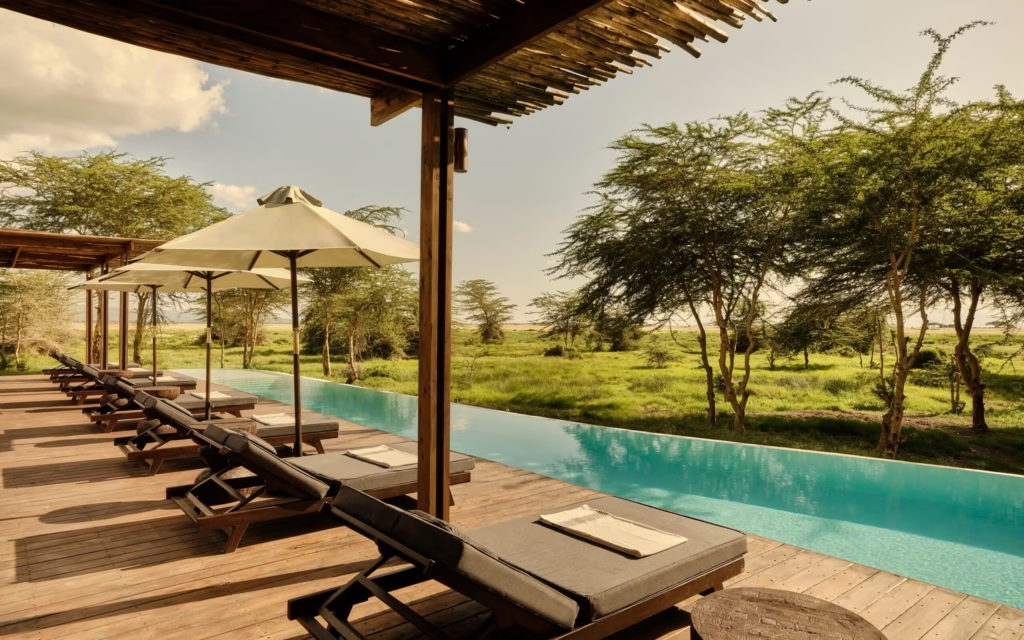
Ask ten operators to define luxury and you’ll get ten lists of amenities. Ask us and you’ll get five ratios: land per guest, vehicles per sighting, access, the guide and time. The room comes last.
Land: how many acres each guest gets
The scarce resource in the Masai Mara isn’t marble. It’s land. The community conservancies that border the national reserve cap tourism by formula. Mara North Conservancy covers roughly 70,000 acres, which close to 800 Maasai landowners lease to a dozen member camps and riding outfits, and it limits beds to one per 350 acres. That’s one tent per 700 acres. Inside the reserve no such formula applies and the largest lodges operate on a different scale altogether. Same ecosystem. Same animals. A very different afternoon.
Vehicles: how many share a sighting
Conservancy camps agree to cap the number of vehicles at a sighting, commonly at four or five. A sighting that draws a dozen vehicles inside the reserve typically draws two or three in a conservancy. For a leopard in a tree that’s the difference between watching the cat and watching someone’s roof hatch. Ask for the maximum number of guests per vehicle as well. At Royal Mara Safari Lodge in Mara North, it’s four.
Access: what the reserve doesn’t allow
Night drives, walking safaris and off-road driving are all prohibited inside the Masai Mara National Reserve. All three are routine in the conservancies. Amboseli National Park bans night drives as well, but a private concession on its edge doesn’t. That’s how Kitirua Plains Lodge runs a night drive from a 128-acre concession next door.
The guide: the line item you can’t see
A guide decides whether you see the leopard or hear about it afterwards. The Kenya Professional Safari Guides Association grades guides Bronze, Silver and Gold, and Gold is rare. Ask for the grade of the guide assigned to your trip. Ask whether the same guide stays with you throughout. Ask how long they’ve worked that ecosystem. We’d rather you ask us than guess.
Time: fly where the road costs you a day
Nairobi to the Masai Mara by road takes five to six hours each way, much of it on rough murram once the tarmac ends. The scheduled flight from Wilson Airport takes about 45 minutes. On a short itinerary that’s the difference between a first game drive on day one and a first game drive on day two. Amboseli tells the same story: about 30 minutes in the air against roughly four hours on the road.
The room, last
Then, and only then, the room. Tented suites with plunge pools, a solar-powered camp, a spa at the end of a boardwalk. They matter for the evenings and for the rest-day guest. They aren’t what separates a USD 450 night from a USD 1,300 one, so don’t let them decide the booking.
“The scarce things on a Kenya safari are land, time and a good guide. Almost everything else can be bought anywhere.”
| EXPERT NOTE Before you book any camp, ask how many vehicles will be at a sighting and how many guests sit in each one. In a good conservancy the answer is a number and the camp knows it. If you get a paragraph about exclusivity instead, you’ve learned what you needed to. Nicholas Wangithi, Director and Founder |
How much does a luxury safari in Kenya cost per person?
On our itineraries, a luxury safari in Kenya costs between USD 450 and USD 1,300 per person per night in 2026, all-in. The same lodge can sit at either end of that range depending on the week you book.
Take Kitirua Plains Lodge in Amboseli. The four-day fly-in itinerary is identical on every departure: the same 13 suites, the same flights from Wilson Airport, the same night drive on the private concession. For departures between 3 January and 15 June 2027 it’s listed at USD 3,800 per person. For departures between 16 June and 31 October 2027 it’s USD 6,350. That’s USD 2,550 more for the same walls, the same elephants and the same mountain. A time-limited offer rate of USD 2,450 currently applies to departures between 1 November and 20 December 2026.
“Same lodge. Same flights. USD 2,550 apart. The calendar is the most expensive thing on a Kenya safari.”
What each price band buys
We work out the nightly figure by dividing the published package price by the number of nights. Our prices include flights, transfers and park or conservancy fees where our itineraries say so, so they run higher than a camp-only rate sheet and give a truer picture of the total.
| Band | Per person per night | What it buys | Examples from our range |
| Entry luxury | USD 450 to 600 | Premium lodges and tented camps. A private Land Cruiser on road safaris or a short fly-in. Full board and park fees. | 11-day Kenya luxury road safari: USD 4,480 over 10 nights (USD 448). Naivasha and Masai Mara fly-in: USD 2,490 over 5 nights (USD 498). |
| Core luxury | USD 800 to 1,300 | Fly-in access, a low-density conservancy or private concession, night drives and walks, drinks often included. | Kitirua offer rate: USD 817. Mara North flying safari: USD 1,000. Six-day Amboseli and Masai Mara: USD 1,010. Emboo River Camp: USD 1,110. Northern Kenya: USD 1,127. Kitirua standard rate: USD 1,267. |
| Peak season | About USD 2,100 | The same fly-in camps from mid-June to October, when demand peaks. Park fees are included in our prices. | Kitirua in peak months: USD 6,350 over 3 nights (USD 2,117) against USD 3,800 at standard rates. |
What a nightly rate usually covers
A luxury rate normally covers full board, two game drives a day, laundry (in some lodges) and transfers to the nearest airstrip. Drinks vary. Kitirua Plains Lodge includes alcoholic and non-alcoholic beverages. Governors’ Camp, in our six-day Amboseli and Masai Mara itinerary, includes soft drinks, beers, house wines and non-premium spirits. Everything else is where quotes diverge.
Where quotes diverge: fees, vehicles and extras
Park fees come first. The Masai Mara National Reserve charges non-resident adults USD 100 a day to January to 30th June and USD 200 a day from 1st July on the 2026 schedule. Conservancies add their own bed-night fees. Some camps fold those fees into the rate and some add them on top, so ask which. Every itinerary we feature includes them.
Private vehicles come next. At some camps a private vehicle is billed per vehicle per day on top of the room rate. On our road itineraries the private Land Cruiser is part of the price, which is why two quotes that look hundreds of dollars apart often aren’t.
Then the extras. A dawn hot air balloon over the Mara costs USD 450 to 600 per person. Our baseline tip for your driver-guide is USD 15 per person per day, within a range of USD 10 to 20, plus a shared box for camp staff. Premium spirits, spa treatments and a night in Nairobi before an early flight are usually extra. International flights, visa fees and travel insurance never sit inside a safari price. Our visa requirements page covers the entry rules.
Seven nights, three budgets
| Budget | Per night | Seven nights per person | What it looks like |
| Entry luxury | USD 450 to 600 | USD 3,150 to 4,200 | A road circuit or a short fly-in with two bases. Private vehicle and fees included. |
| Core luxury | USD 800 to 1,300 | USD 5,600 to 9,100 | A fly-in conservancy stay plus Amboseli. Night drives, walks and drinks included. |
| Peak season | About USD 2,100 | About USD 14,800 | The same fly-in camps from mid-June to October. Our Kitirua peak rate, multiplied out. Fees are included in our prices. |
This is arithmetic from the bands above, not a quote. It excludes international flights and tips.
Travelling alone
Solo travellers pay a single supplement. On our set departures it’s USD 300 at Kitirua Plains Lodge, USD 1,150 on the Naivasha and Masai Mara flying safari, USD 1,300 at Emboo River Camp and USD 3,350 on the 11-day road safari. If you’re travelling alone, the kindest luxury in Kenya is a short fly-in stay outside peak season.
The cheapest way to buy luxury
Go between January and mid-June or between November and mid-December. On the 2026 schedule the Mara’s park fee is half its July to December rate from January to June, Kitirua’s price falls about 40 percent against its peak figure and the camps are quieter. You trade river crossings for value. That’s a good trade unless the crossing is the whole point.
| EXPERT NOTE When two quotes sit hundreds of dollars apart, check four things before you call the cheaper one better. Are Park and conservancy fees in? Are the flights in? Are drinks in? Is the vehicle private? Most gaps close once you add up the answers. Hellen Asiko, Director and Guest Experience Curator |
Where are the best luxury safari regions: Mara conservancies, Amboseli, Laikipia or the north?
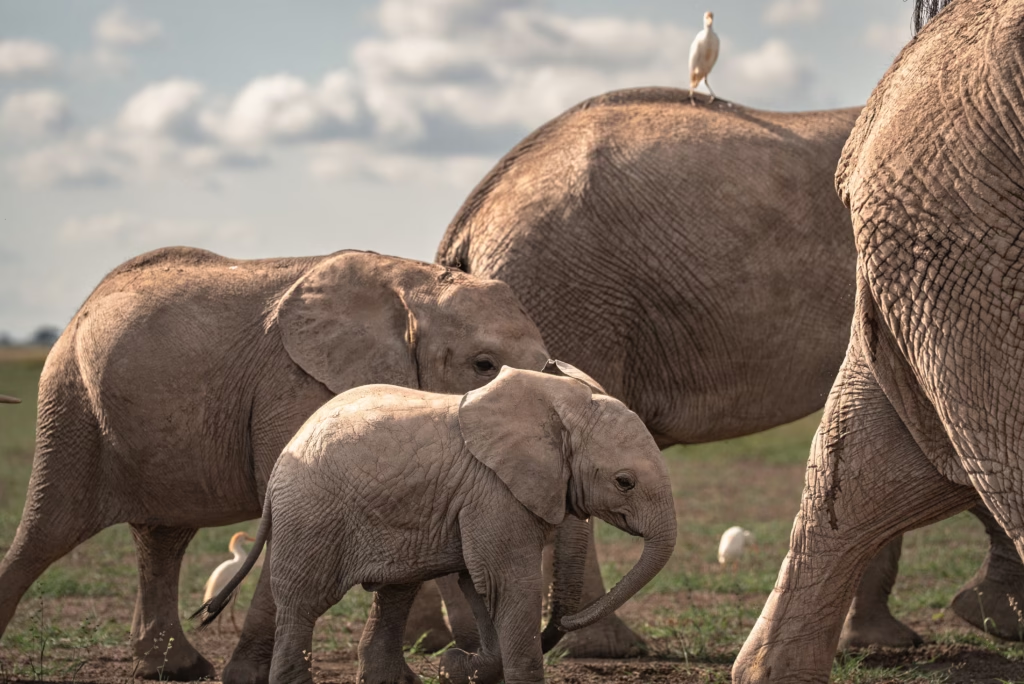
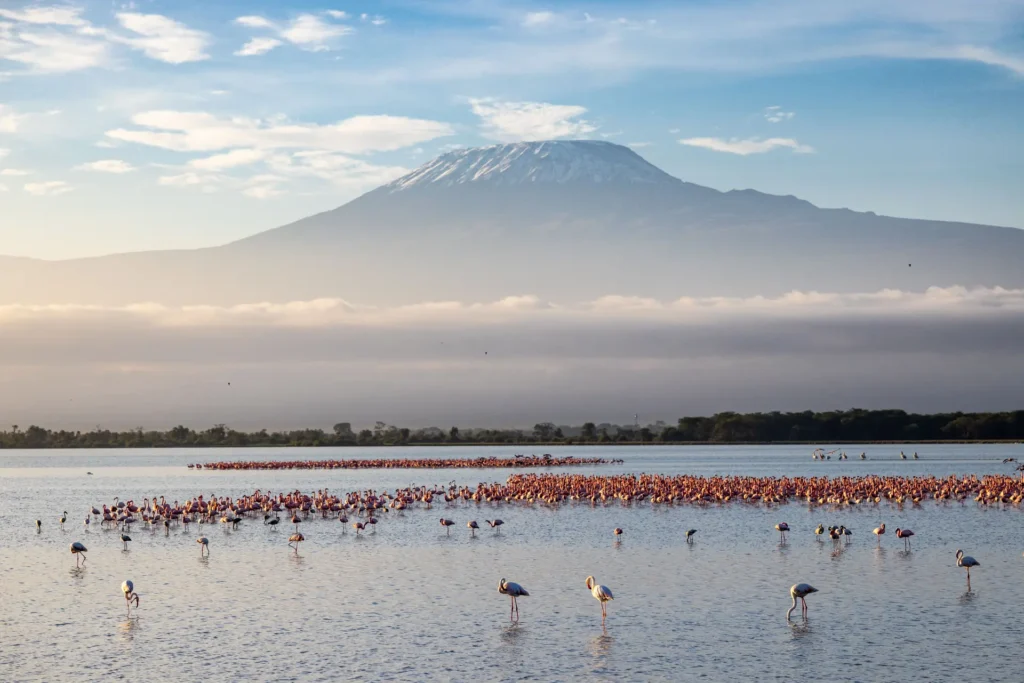
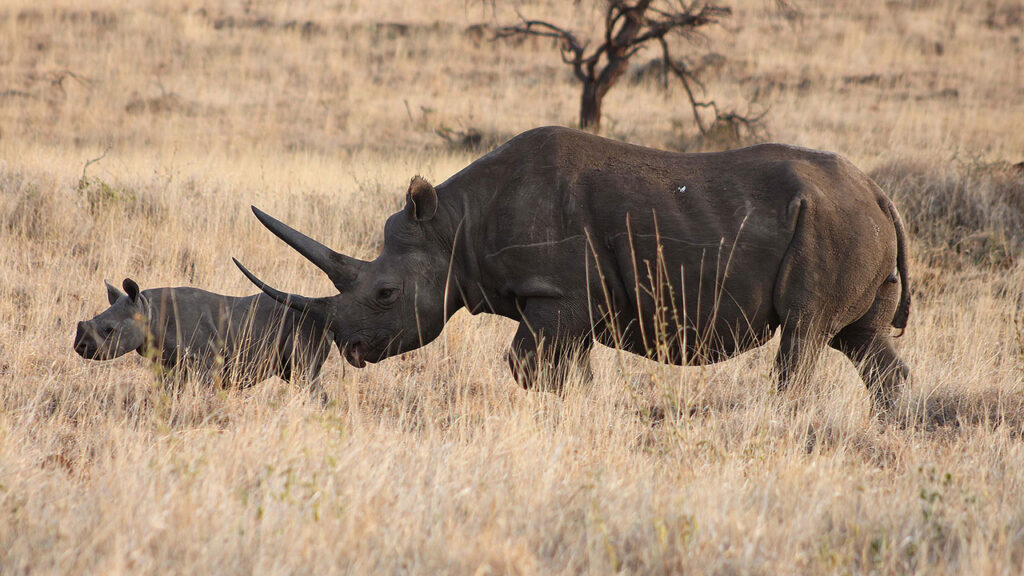
Four regions do luxury properly in Kenya. Each solves a different problem, and most trips shouldn’t try to cover more than two.
| QUICK ANSWER | What is the best luxury safari in Kenya? The best luxury safari in Kenya pairs the Masai Mara with Amboseli by air. Our six-day Amboseli and Masai Mara flying safari does it from USD 5,050 per person. Want night drives and walks? Choose Mara North Conservancy from USD 4,000. Both include flights and park fees. |
Luxury Masai Mara conservancy camps: space and after-dark access
If you can only do one place, make it a conservancy on the edge of the Masai Mara. Mara North, Naboisho and Olare Motorogi are the best known. You get low bed density, vehicle caps, night drives, walking safaris and off-road driving, none of which the reserve allows. The conservancy fee is the price of entry and it funds the landowners.
There’s one catch and it matters. The river crossings that define the Great Migration happen at fixed points inside the reserve. Our five-day Mara North Conservancy flying safari solves it with four nights at Royal Mara Safari Lodge: three days of conservancy drives and one full day in the reserve, timed for the crossing points at Musiara Marsh and Mara Serena. That’s the combination we’d pick ourselves. Density and drama for a day, space and access for the rest.
Royal Mara Safari Lodge sits on the Mara River at Hippo Bend Lagoon, ten minutes from the Mara North airstrip. Its eight river suites stand on mahogany decks above the water. Fly in and you’re on a game drive within the hour.
If rhinos and the western crossings matter more than night drives, the Mara Triangle is the other answer. It’s the quieter western sector of the reserve, managed by the Mara Conservancy, and Mara Elatia Camp sits on the Oloololo Escarpment above it in the neighboring Partakilat Conservancy, which keeps eight white rhinos in a private 3,000-hectare sanctuary.
Amboseli: elephants, Kilimanjaro and the private-concession trick
Amboseli is the best short add-on in Kenya. Elephant herds, some close to a hundred animals strong, cross open plains and swamp under Kilimanjaro. The mountain is clearest early in the morning and late in the afternoon, and cloud usually builds by midday, so we schedule dawn drives and treat the middle of the day as rest.
The luxury trick here is the private concession. Kitirua Plains Lodge sits on 128 acres adjoining the park, along a wildlife corridor between two low hills, and every one of its 13 suites has a Kilimanjaro view from the bed. A scheduled flight from Wilson Airport lands at Amboseli Airstrip in about 30 minutes and the lodge is a further 40 minutes by road. Elephant Gorge Camp, a five-suite camp in the private ALOCA Conservancy, is the more intimate alternative.
Laikipia: rhinos, wild dogs, Giza Mrembo the black leopard and walking on foot
Laikipia is a mosaic of private conservancies north of Mount Kenya and it’s where we send guests who’ve done the Mara and want something different. Lewa Wildlife Conservancy is a black rhino stronghold. Loisaba is known for wild dogs. Ol Pejeta Conservancy, on 90,000 acres, holds the largest black rhino population in East Africa and the last two northern white rhinos on earth, Najin and Fatu. Guided walks and night drives are part of the offer. We pair Elewana Lewa Safari Camp with Elewana Loisaba Tented Camp on our 12-day northern itinerary.
Samburu and the north: the Special Five
Samburu is the one place on this list where the wildlife itself is different. Grevy’s zebra, reticulated giraffe, Beisa oryx, Somali ostrich and gerenuk, the Special Five, live in the dry country north of the equator and are rarely seen further south. The Ewaso Nyiro River holds the ecosystem together. The camps above it are as comfortable as anything in the Mara: Saruni Samburu with villas on a rocky kopje over the Kalama Conservancy and Surana Buffalo Springs with 17 tented suites and private plunge pools. Add Reteti Elephant Sanctuary, Africa’s first community-owned elephant sanctuary, and the north becomes the region where luxury and conservation overlap most visibly. It isn’t where you go for a river crossing.
| EXPERT NOTE Kenya’s regions work best in pairs. Every extra transfer costs a morning of game viewing and the second landscape is only worth it if you give it at least two nights. Choose two regions, fly between them and resist the third. Kibara Mugo, Safari Writer and East Africa Specialist |
Which are the best luxury safari camps in Kenya?
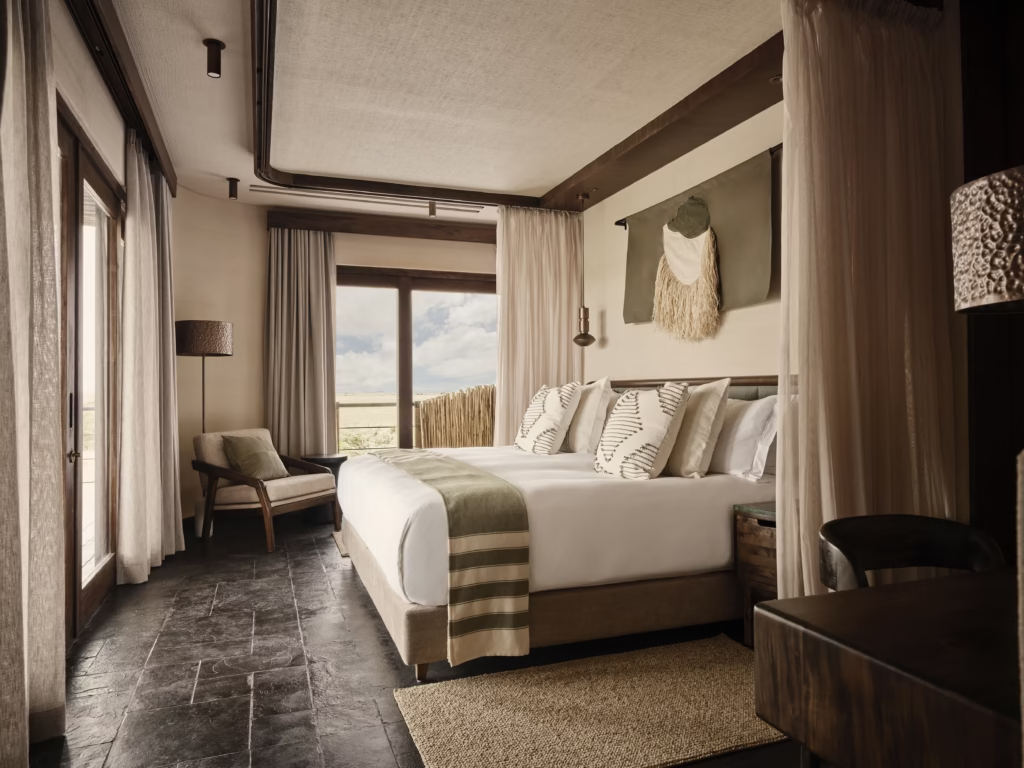
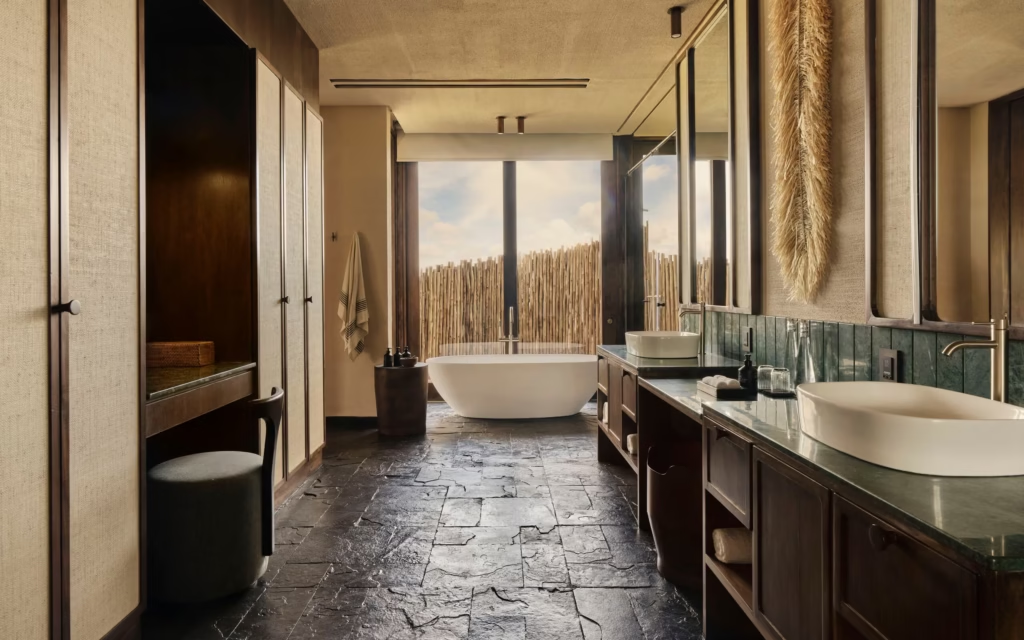
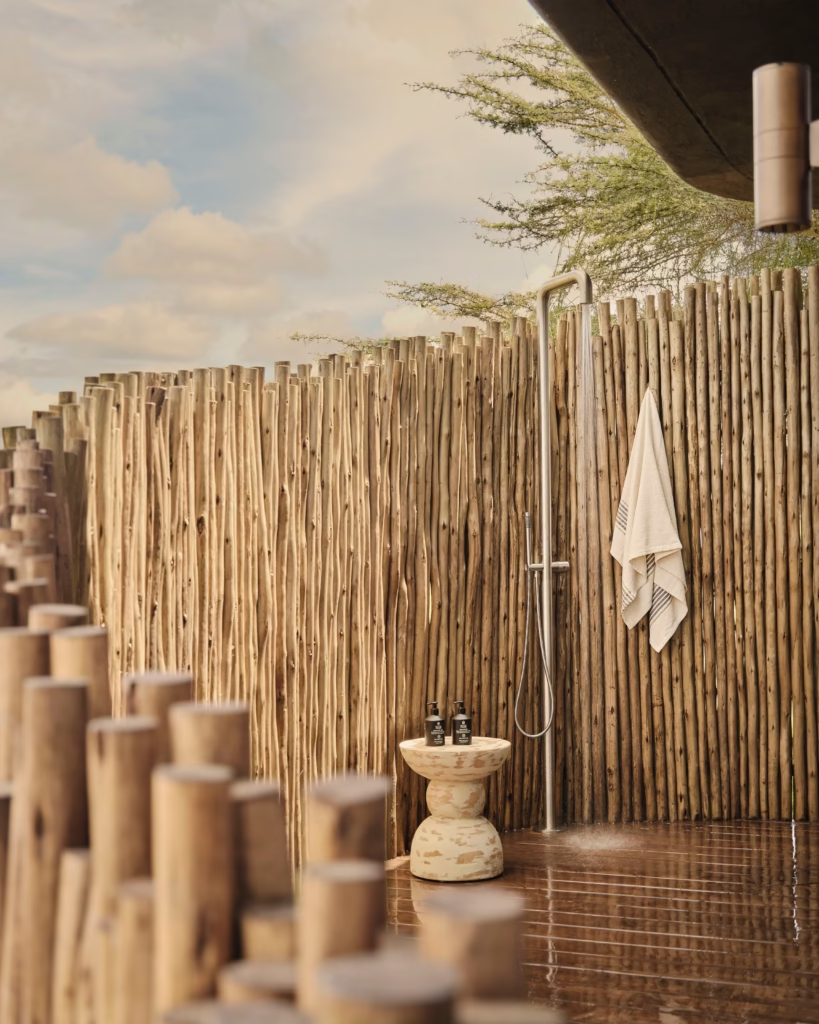
Here’s our shortlist, region by region, with what each camp does best. Every camp below appears in our own itineraries.
| Camp | Region | Our view |
| Royal Mara Safari Lodge | Mara North Conservancy | The right first Mara camp. Eight river suites and conservancy rules, with a night drive and a walk inside the first two days. |
| Governors’ Camp | Masai Mara National Reserve, Mara River beside Musiara Marsh | Pick it for position. You trade space for a riverside setting near the crossing points in migration season. |
| Mara Elatia Camp | Mara Triangle, Oloololo Escarpment | The quieter western sector with a white rhino sanctuary next door. Good value for fly-in luxury. |
| Emboo River Camp | Masai Mara National Reserve, Talek River | Nine suites, solar power and silent electric vehicles that can sit closer for longer. Our pick for low-impact luxury Eco safari. |
| Kitirua Plains Lodge | Amboseli, private concession beside the park | Thirteen suites with Kilimanjaro from the bed. Our pick for Amboseli. |
| Elephant Gorge Camp | Amboseli, ALOCA Conservancy | Five suites on a private conservancy beside the park, with guided bush walks available. |
| Elewana Loisaba Tented Camp | Loisaba Conservancy, Laikipia | Wild dogs and open private-conservancy driving. Pair it with Lewa for a rhino and dog week. |
| Elewana Lewa Safari Camp | Lewa Wildlife Conservancy, Laikipia | Black rhino and Grevy’s zebra in rolling hills, with optional guided walks. |
| Saruni Samburu | Kalama Conservancy, Samburu | The right base for the Special Five. Villas on a rocky kopje with long views. |
| Surana Buffalo Springs | Buffalo Springs National Reserve, Samburu | Seventeen tented suites above the Ewaso Nyiro River, each with a plunge pool. |
At the top of our range, Kitirua Plains Lodge in peak season works out at about USD 2,117 per person per night and our 12-day northern circuit at USD 1,127. Both are all-in with park fees included, so you can set them against any quote you’re holding.
Skip any camp that can’t give you its tent count and acreage in the first reply. Skip a reserve lodge in August if you’ve paid for privacy, because you’ll share the crossing. Do this instead: choose a small conservancy camp for most of your nights and give the reserve one full day. Our luxury collection also names Mugie House in Laikipia among its top-tier properties and you can browse the whole range on our luxury safaris page.
Is a private vehicle and private guide worth the extra money?
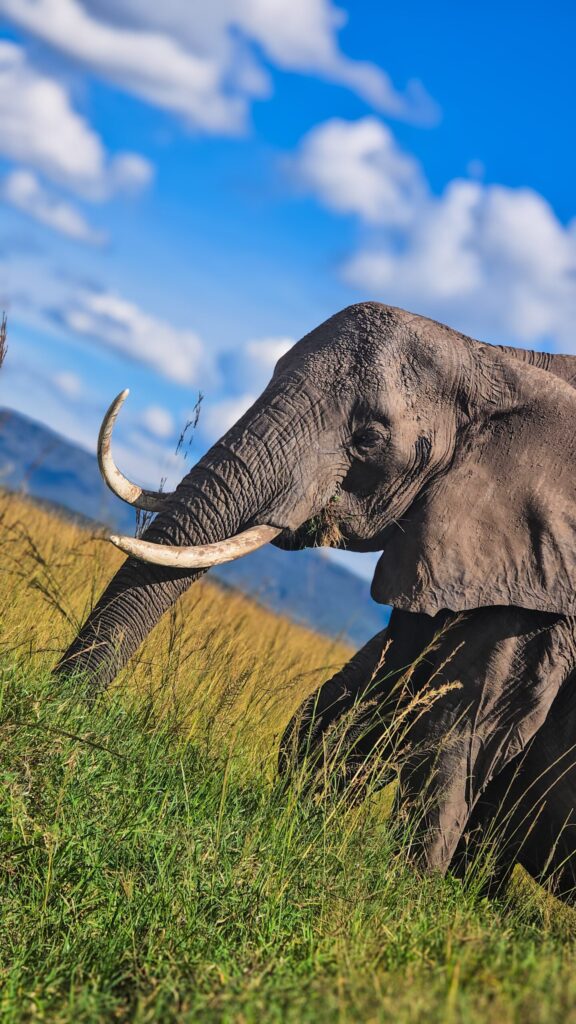
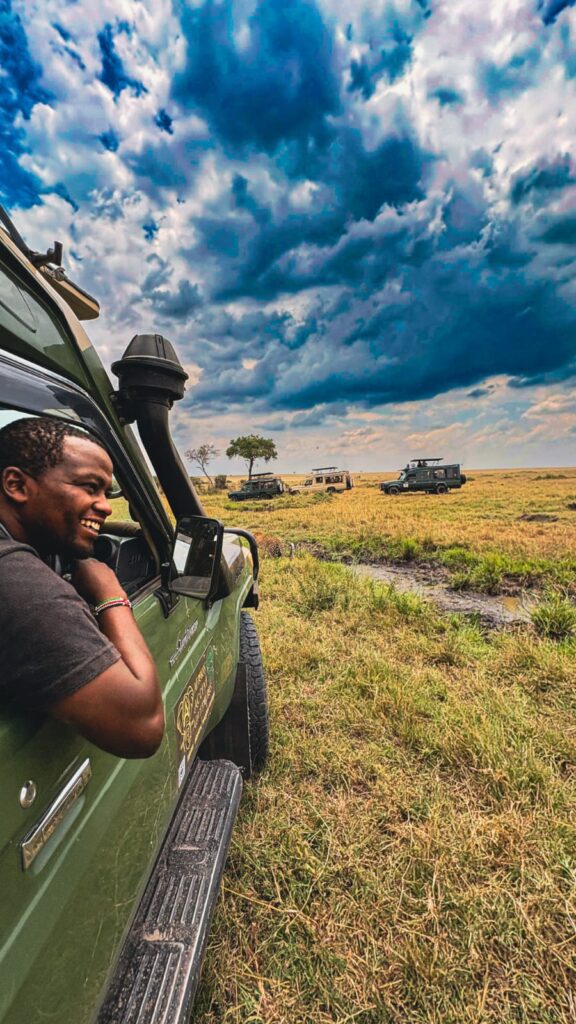
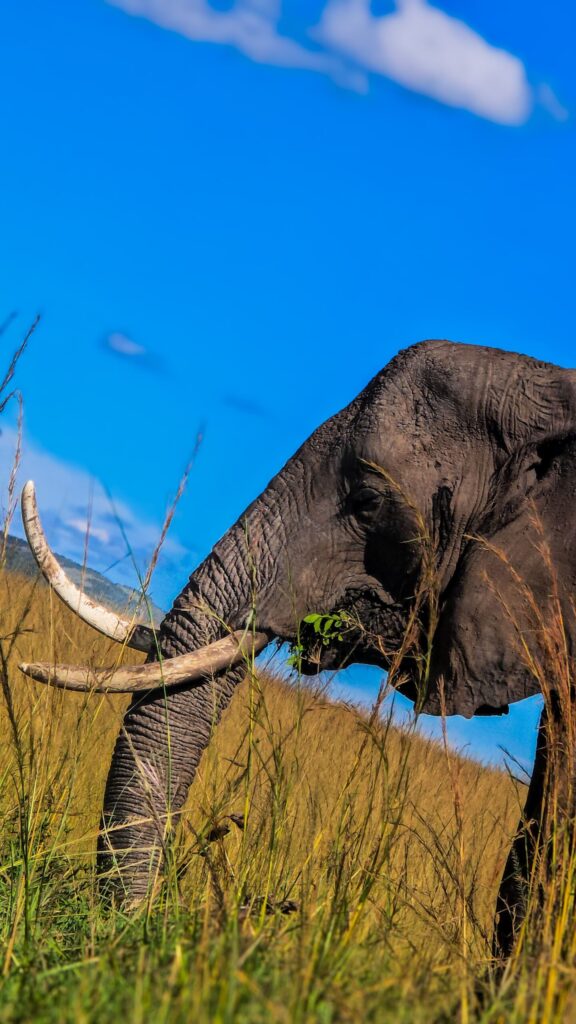
Usually yes. Sometimes it isn’t extra at all.
Private means three different things on a Kenya safari and operators use the word loosely. It can mean a vehicle used only by your party. It can mean a shared vehicle with a guaranteed seat and a cap on guests. It can mean the same guide for your whole trip rather than a new one at every camp. Ask which one you’re buying.
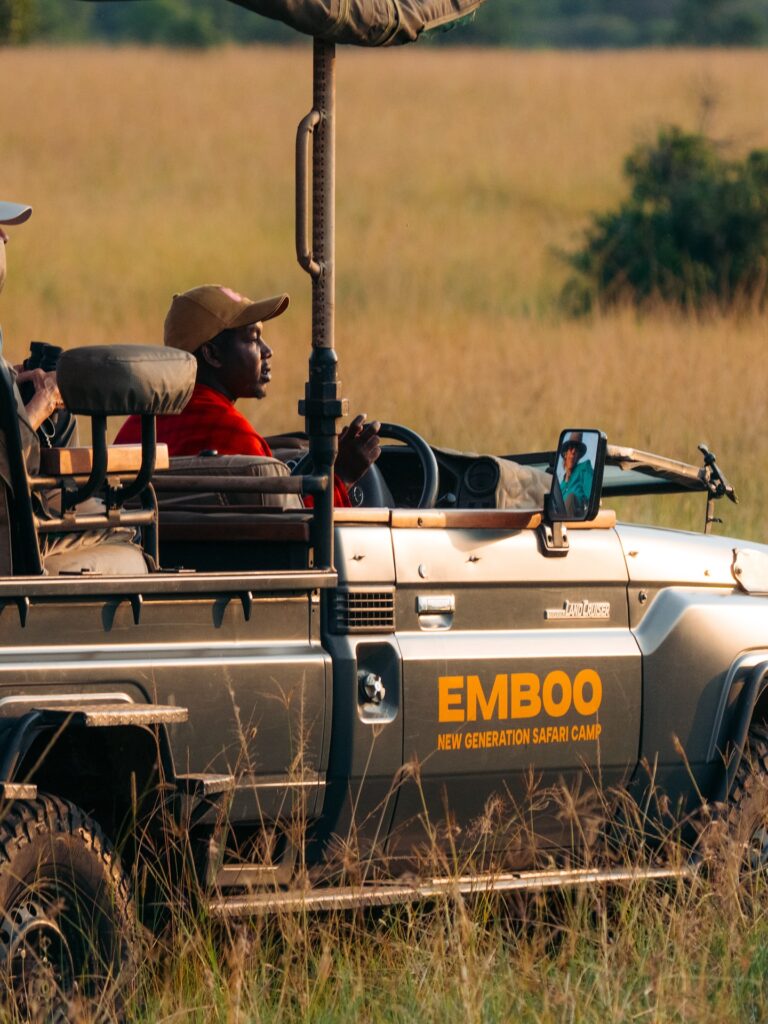
On our road itineraries a private 4×4 Land Cruiser with a pop-up roof and one driver-guide are included from the first day to the last, so there’s no handover and no repacking between regions. On fly-in itineraries the vehicles and guides come with the camp and the guest cap matters. At some camps privacy is a line item, billed per vehicle per day on top of the room rate, so ask whether the vehicle is included before you compare prices.
Pay for a private vehicle if you’re a photographer who needs to park where the light is best and stay as long as it lasts. Pay for it if you’re travelling with children who’ll want to leave a sighting before the adults do. Pay for it on a honeymoon and pay for it if you have a target species and a limited number of mornings. Skip it if you’re a couple at a small conservancy camp with a four-guest cap, because a shared vehicle there can be private in practice. Ask the camp to guarantee you won’t be matched with strangers.
“With a private vehicle the sighting ends when you decide it ends. For photographers that’s the whole premium.”
| EXPERT NOTE We read a sighting before we park. A private vehicle lets us choose the angle for the light and stay until the animals finish what they’re doing, not until the next vehicle wants our spot. That’s the real value and no rate sheet lists it. Nicholas Wangithi, Director and Founder |
How many days do you need for a luxury safari?
Count nights, not days. The first and last days of any Kenya safari are mostly travel.
| QUICK ANSWER | How long should a luxury safari be? A luxury safari in Kenya should last six to eight nights across two regions. Three nights is the minimum, and only if you fly. Stay at least two nights per camp. Add Laikipia or Samburu beyond eight nights. |
Three nights in one place by air is the shortest luxury safari worth taking. Our stays at Kitirua Plains Lodge in Amboseli and Emboo River Camp in the Mara both run three nights and both work because the flight from Wilson Airport takes under an hour. Drive to the Mara instead and you’d spend five to six hours each way, which on a short trip is most of two days.
Six to eight nights is the sweet spot. It gives you two bases in two landscapes, a rest afternoon at each and one flight between them. Our six-day Amboseli and Masai Mara itinerary is built this way: two nights beneath Kilimanjaro, a direct flight of about an hour and three nights on the Mara River.
Ten to twelve nights is a different trip. It’s a road circuit through five or six regions, like our 11-day Samburu to Amboseli safari or our 12-day northern Kenya itinerary, and it suits travellers who want depth and don’t mind long drive days. We plan the longer legs on purpose, with stops built in, and we’d rather you knew the driving hours before you booked than found out in the vehicle.
Two rules we hold to. Stay at least two nights at every camp, because you lose a morning to arrival and a morning to departure. And plan a night in Nairobi before an early flight, because pre-safari accommodation isn’t included in most of our prices and international flights land at awkward hours.
When is the best time for a luxury safari in Kenya?
It depends on what you’re paying for. The Great Migration carries a premium. Almost everything else in Kenya is excellent for most of the year.
| QUICK ANSWER | What is the best time for a luxury Kenya safari? July to October is the best time for a luxury Kenya safari, with Great Migration River crossings. January to February offers dry weather and lower prices. Masai Mara park fees double on 1st July, from USD 100 to USD 200 a day. March to May brings the long rains. |
| Months | Conditions | Mara Park fee (2026 schedule) | Kitirua four-day price per person |
| January to February | Dry and warm with fewer vehicles. Strong elephant viewing in Amboseli. | USD 100 | USD 3,800 (3 January to 15 June 2027 departures) |
| March to May | Long rains. Green and cheap, but roads get difficult and some lodges close. | USD 100 | USD 3,800 (same window) |
| June | Dry and green. Peak pricing starts mid-month. | USD 100 until 30 June | USD 3,800 to 15 June and USD 6,350 from 16 June |
| July to October | Peak season. Great Migration River crossings, heaviest in August and September. Clearest Kilimanjaro views. | USD 200 | USD 6,350 (16 June to 31 October 2027) |
| November to mid-December | Short rains. Green scenery, newborn animals, good birdwatching and fewer vehicles. | USD 200 | USD 3,800 (2027 departures). USD 2,450 offer for 1 November to 20 December 2026. |
| Late December to early January | Holiday weeks carry a premium. | USD 200 in December | USD 3,625 early bird (21 December 2026 to 2 January 2027). USD 6,350 for 2027 to 2028. |
If you want river crossings, go in August or September and book early. Crossings run from July to October with those two months heaviest, but they’re never guaranteed and herds can wait at the bank for days. Our Great Migration page explains the pattern.
If you want value, go in January or February. The reserve is quieter, the Mara fee is at its lower rate and Amboseli’s elephants are as good as ever. The long rains from mid-March to May are the one window we’d steer a first-timer away from, because roads get difficult and some lodges close.
Our pick for a first luxury safari: the last week of August or the first week of September if the budget allows, and late January to February if it doesn’t.
What does a luxury Kenya safari honeymoon look like?
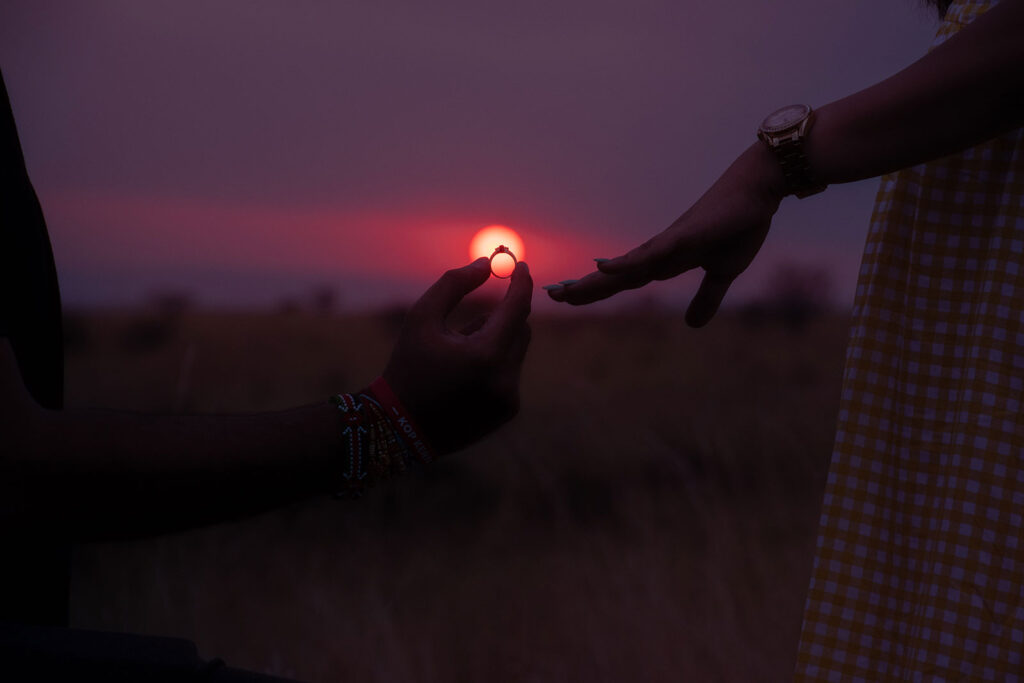
Build it in three parts. Spend three or four nights in a Mara conservancy or on the Mara River, two or three in Amboseli or Laikipia and three or four on the coast at Diani if you want sand. Fly between the safari legs. Honeymooners rarely thank us for a six-hour road transfer on day two.
Four details do the romantic work. The first is a private dinner: the farewell bush dinner around a bonfire at Royal Mara Safari Lodge is included in our five-day Mara North itinerary. The second is a dawn balloon over the Mara, USD 450 to 600 per person for about 45 minutes in the air and a champagne breakfast on landing. Book it before you arrive because seats are limited in migration season. The third is a lodge that rewards couples: Kitirua Plains Lodge offers newlyweds 50 percent off one partner’s stay. The fourth is a camp that suits two: The Cliff above Lake Nakuru takes adults and teens aged 12 and over only and is popular with honeymooners.
Five of our safaris carry a honeymoon tag on our site: the five-day Mara North flying safari, the 11-day Kenya luxury safari, the six-day Naivasha and Masai Mara flying safari, the four-day Emboo eco safari and the six-day Amboseli and Masai Mara flying safari. Any of them can be changed around your dates, camps and pace.
Our advice: don’t over-schedule. Leave one unplanned afternoon at every camp. Book the balloon for the second morning rather than the first so jet lag has had a night to fade. Tell the camp about the occasion before you arrive, not on the day.
Who is luxury right for, and who is better off mid-range?
Luxury is right for fewer people than the brochures suggest and wrong for fewer than the sceptics claim.
| QUICK ANSWER | Is a luxury safari worth the money? A luxury safari is worth it if you value space and expert guiding over room size. Good conservancy camps cap vehicles and allow night drives and walks. Their fees reach Maasai landowners directly. On a tight budget, a mid-range camp nearby delivers most of the wildlife. |
It’s right for travellers whose limit is time rather than money. If you have five days and want the best of them, flying and staying in a low-density conservancy is the sensible answer. It’s right for photographers, because a private vehicle and a guide who reads the light are worth more than any suite. It’s right for honeymoons and milestone birthdays, where the experience is the gift. It’s also right for guests who need easy logistics, since flights and short transfers suit older travellers and anyone with limited mobility.
It’s wrong for first-timers whose real priority is the Big Five at a sensible price. A mid-range tented camp in a good conservancy will out-perform a five-star lodge in a crowded part of the reserve for sightings and it costs far less. It’s wrong for travellers who’ll spend ten hours a day in the vehicle and never touch the plunge pool. It’s also wrong for anyone who’d rather have ten days at a lower price than five at a higher one.
Families need to read the small print before they read the rate. Age limits vary by camp. Emboo River Camp takes children from five and The Cliff takes guests from 12. Kitirua Plains Lodge welcomes children of all ages and has a 242-square-metre two-bedroom family suite. If your children are small, choose a camp for the family suite and the pool, not the photograph.
Solo travellers should look at the single supplement before anything else. The figures are in the cost section above and they’re the reason a short fly-in stay outside peak season is the best-value luxury for one.
| EXPERT NOTE The mistake we see most is buying luxury for the room and then spending the trip in the vehicle. If you’ll be out from dawn to dusk, put the money into the vehicle, the guide and the location. Spend what’s left on a camp you like, not on a camp that photographs well. Kibara Mugo, Safari Writer and East Africa Specialist |
How do you tell real luxury from marketing, and how do you book?
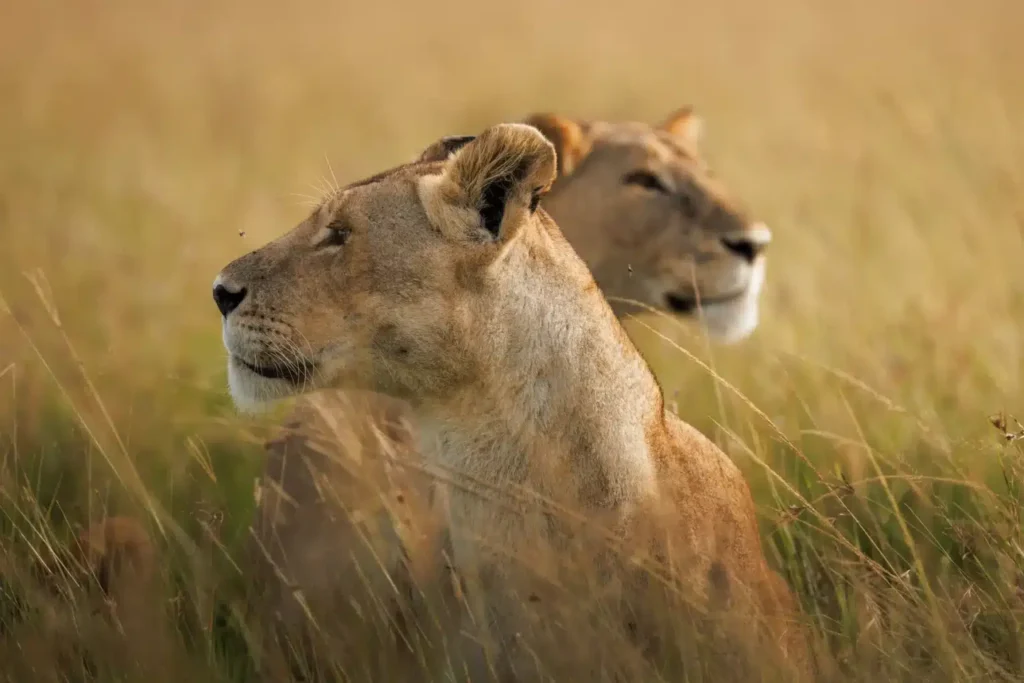
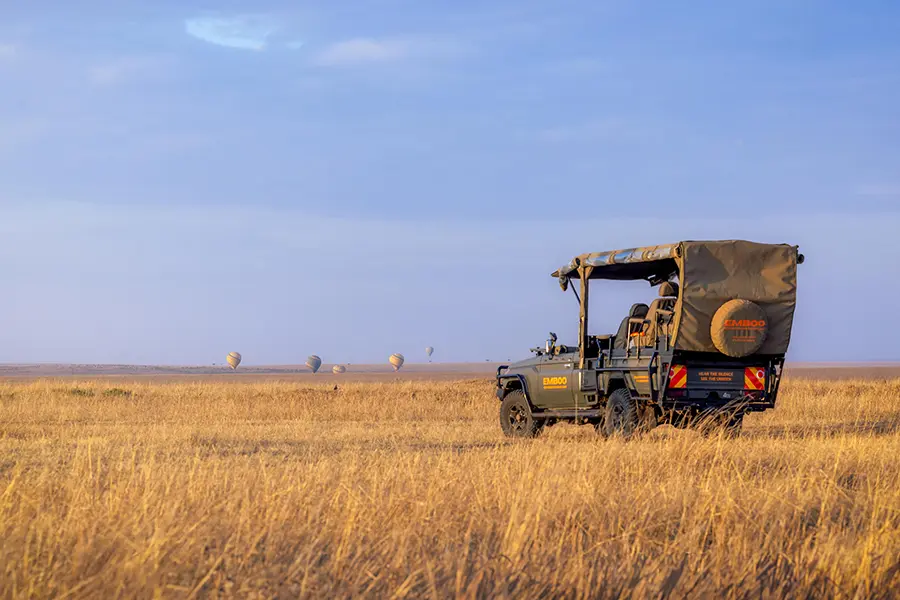
The word “luxury” is easy to print and hard to verify. Ten minutes of questions will tell you which one you’re looking at.
- How many tents and how many acres? Anything near Mara North’s one bed per 350 acres is serious. A camp that can’t answer is selling a photograph.
- How many vehicles at a sighting and how many guests per vehicle? In the conservancies the answer should be four or five vehicles at most and four guests or fewer in each. Inside the reserve the number is whatever the crowd decides.
- Which activities are included? Night drives, walks and off-road driving are conservancy or private-concession privileges. If they’re offered inside a national park or reserve, something is wrong.
- Who is the guide? Ask for the Kenya Professional Safari Guides Association grade, the years in that ecosystem and whether the same guide stays with you.
- What’s in the price? Park and conservancy fees, flights, transfers, drinks, laundry and the vehicle. If the quote doesn’t itemize them, ask for the itemized version.
- Where does the money go? Conservancy bed-night fees are paid to the Maasai landowners who lease the land. A camp should be able to say how much and how often.
- Who is the operator? Check licensing and independent reviews. Our guide on how to choose a safari operator in Kenya walks through each step.
Three red flags are enough to walk away. A “private” vehicle that turns out to be shared. A quote that leaves out park fees without saying so. A camp that can’t send you a tent plan.
How booking works with us
You tell us your dates, your budget and your priorities. A specialist replies within 24 hours with a no-obligation quote. We refine the itinerary until it fits. A flexible deposit secures your dates and the balance is due before travel, payable by card or bank transfer. We brief you before the safari starts and tell you about the soft bag long before you reach Wilson Airport.
| EXPERT NOTE Send us your dates before you pick camps. Small conservancy camps have the fewest tents and they’re often gone well before the season starts. It’s far easier to design around a camp that has space than to chase one that doesn’t. Hellen Asiko, Director and Guest Experience Curator |
Our featured Kenya luxury safaris, compared

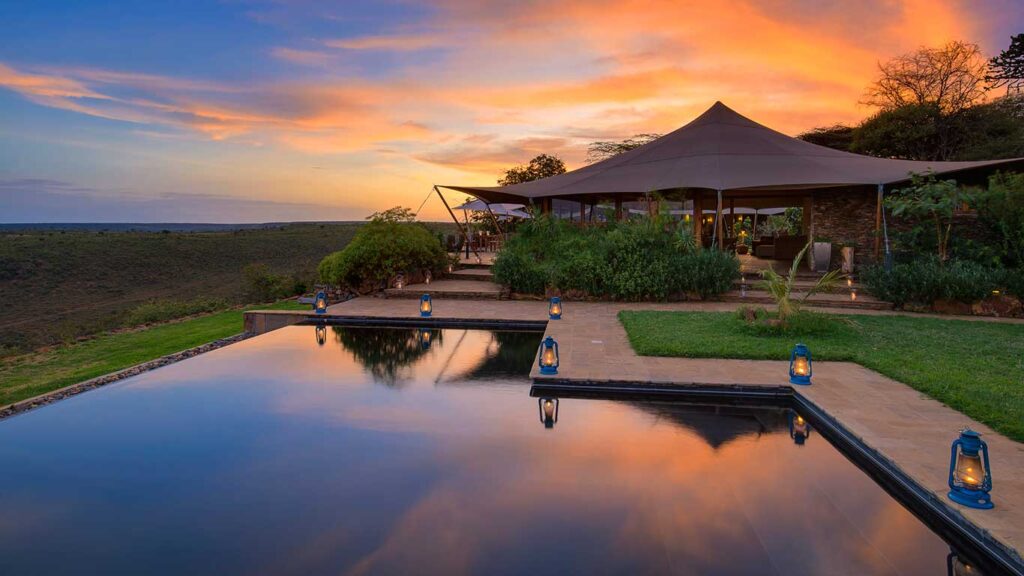
These are the six safaris we’d point you to, from a three-night fly-in to a 12-day northern circuit. Each can be adapted to your dates, camps and pace and every price below is per person sharing.
| FEATURED SAFARI 5 Days Masai Mara Flying Safari | Mara North Conservancy 5 days / 4 nights | Fly-in | from $4,000 per person Four nights at Royal Mara Safari Lodge with three days of conservancy drives and one full day in the Masai Mara National Reserve. Eight river suites, a night drive, a guided walk and a Maasai village visit are included along with the flights and all fees. The right pick for first-timers who want conservancy access and one migration day. View this safari |
| FEATURED SAFARI 11 Days Kenya Luxury Safari | Samburu to Amboseli 11 days / 10 nights | Road | from $4,480 per person Six regions and six properties in one private Land Cruiser with one driver-guide: Surana Buffalo Springs, Sweetwaters Serena Camp, The Cliff, Little Zebra River Camp, Enashipai Resort & Spa and Ol Tukai Lodge. Park fees and taxes are included. Long drive days are the trade for the price. View this safari |
| FEATURED SAFARI 6 Days Kenya Flying Safari | Naivasha and Masai Mara 6 days / 5 nights | Fly-in | from $2,490 per person Two nights above Lake Naivasha, a short-scheduled flight and three nights at Mara Elatia Camp in the Mara Triangle. Flights, airport transfers, reserve fees and a farewell lunch at Carnivore are included. The entry point to fly-in luxury. View this safari |
| FEATURED SAFARI 4 Days Masai Mara Eco Safari | Emboo River Camp 4 days / 3 nights | Fly-in | from $3,330 per person Nine river-facing suites on the Talek River, a fully solar-powered camp and Kenya’s first fully electric safari fleet. It’s a certified B Corporation, so the quiet is part of the product. Flights and reserve fees are included. View this safari |
| FEATURED SAFARI 12 Days Wild Frontiers of Northern Kenya Safari 12 days / 11 nights | Road | from $12,400 per person From the Aberdares to Samburu, Lewa, Ol Pejeta, Loisaba and Meru in a private Land Cruiser, staying at Solio Lodge, Saruni Samburu, Elewana Lewa Safari Camp, The River Camp Ol Pejeta, Elewana Loisaba Tented Camp and Elewana Elsa’s Kopje. All park fees are included. Built for repeat visitors who want rhinos, wild dogs and Grevy’s zebra. View this safari |
| FEATURED SAFARI 4 Days Flying Luxury Amboseli Safari | Kitirua Plains Lodge 4 days / 3 nights | Fly-in | from $2,450 per person (offer rate) Thirteen suites with Kilimanjaro views on a 128-acre private concession beside Amboseli National Park. Flights, drinks, a night drive, a Maasai community visit and park fees are included. Standard rates run from USD 3,800 to USD 6,350. View this safari |
Comparison table
| Safari | Region | Nights | Travel | From per person | Best for |
| Mara North flying safari | Mara North Conservancy and Masai Mara National Reserve | 4 | Fly-in | $4,000 | Night drives, walks and one migration day |
| Kenya luxury safari | Samburu to Amboseli (six regions) | 10 | Road | $4,480 | The whole country in one private vehicle |
| Naivasha and Masai Mara | Lake Naivasha and the Mara Triangle | 5 | Fly-in | $2,490 | Entry-level fly-in luxury |
| Masai Mara eco safari | Talek River, Masai Mara National Reserve | 3 | Fly-in | $3,330 | Low-impact luxury and quiet drives |
| Northern Kenya safari | Aberdares to Meru (six regions) | 11 | Road | $12,400 | Repeat visitors and photographers |
| Amboseli flying luxury safari | Amboseli, private concession | 3 | Fly-in | $2,450 offer rate. $3,800 to $6,350 standard | Elephants, Kilimanjaro and a short honeymoon |
Prices are per person sharing in USD, as published on afrikanaccentadventures.com. Set-departure, early-bird and last-minute rates change them and single supplements apply to solo travellers. All six include park and conservancy fees. One more worth knowing about: our six-day Amboseli and Masai Mara flying safari, from USD 5,050 per person, pairs Elephant Gorge Camp with Governors’ Camp by direct flight. Browse the full range on our luxury safaris page.
Frequently asked questions about a Kenya luxury safari
What does a luxury safari in Kenya include?
A luxury safari in Kenya includes full board in a small high-end camp or lodge, daily game drives with a professional guide and transfers to the nearest airstrip. Most also include laundry and house drinks and many include park or conservancy fees. On our fly-in itineraries the scheduled flights from Wilson Airport are included as well. Ask for an itemized list before you compare any two quotes.
What is not included in luxury safari prices?
International flights, visa fees and travel insurance are never included. Tips, premium drinks, spa treatments, a hot air balloon (USD 450 to 600 per person) and a night in Nairobi before an early flight are usually extra. At some top camps park fees and private vehicles are extra too.
Are Mara conservancy camps better than camps inside the reserve?
For space, access and after-dark activities, yes. Conservancies cap vehicles and limit beds to roughly one per 350 acres at Mara North. They also allow night drives, walks and off-road driving. The reserve holds the classic river-crossing points, which is why we combine the two: a conservancy base plus one full day in the reserve.
Do I need to fly on a luxury Kenya safari?
No, but flying saves a day on short trips. The road from Nairobi to the Masai Mara takes five to six hours each way against about 45 minutes by air from Wilson Airport. Our 11-day and 12-day circuits run by road in a private Land Cruiser because six regions in 11 days is a road trip. For one or two regions we’d fly.
What luggage can I take on a fly-in safari?
Plan for 15 kilograms in a soft bag, hand luggage included. Scheduled light aircraft have limited hold space, so hard-shell suitcases are generally refused at the Wilson Airport desk. Some aircraft allow up to 20 kilograms but it’s safer to pack to 15 and leave bulky items at your Nairobi hotel.
How far ahead should I book a luxury safari in Kenya?
Book as early as you can for July to October. Small conservancy camps have few tents and fill first and balloon seats are limited in migration season. For January to June and November you can often book a few months out. A free consultation will tell you which camps still have space on your dates.
What is the best luxury safari in Kenya for a honeymoon?
For most couples we’d suggest the five-day Mara North flying safari or the six-day Amboseli and Masai Mara flying safari, each followed by a coast extension. Both fly and both stay in small camps. Kitirua Plains Lodge adds a newlywed offer of 50 percent off one partner’s stay, so check it when you book.
Can I take children on a luxury safari in Kenya?
Yes, but age limits vary by camp. Emboo River Camp welcomes children from five, The Cliff takes guests from 12 and Kitirua Plains Lodge welcomes all ages. Some conservancy camps set higher minimum ages for night drives and walks, so check activity limits as well as camp limits.
How much should I tip on a luxury safari in Kenya?
Budget USD 15 per person per day for your driver-guide as a baseline, within a range of USD 10 to 20. Tipping is at your discretion and you can go higher for exceptional service. Most camps run a shared staff tip box and the minimum for individual staff such as porters is KES 200.
Is the Great Migration worth the peak-season premium?
Only if watching a river crossing is your priority. Crossings run from July to October with August and September heaviest but they’re never guaranteed and herds can wait at the bank for days. The premium is real: Mara Park fees double to USD 200 per adult per day and lodges such as Kitirua Plains Lodge climb from USD 3,800 to USD 6,350 for the same stay. If you’d rather have space and value, go in January or February or in November.
What are the best luxury safari camps in Kenya?
Our shortlist is Royal Mara Safari Lodge in Mara North Conservancy, Emboo River Camp on the Talek River, Kitirua Plains Lodge in Amboseli, Elewana Loisaba Tented Camp in Laikipia, Elewana Lewa Safari Camp at Lewa and Saruni Samburu in the north. Each does something different so choose by what you want to see first.
Is a private luxury safari in Kenya with a private vehicle worth it?
Yes, for photographers, families, honeymooners and anyone with a target species. A private vehicle lets you stay at a sighting as long as you like and leave when you choose. At some camps it’s billed per vehicle per day on top of the room rate and on our road safaris it’s included. Skip it only at a small conservancy camp that guarantees an unshared vehicle.
Design a luxury Kenya safari with a specialist
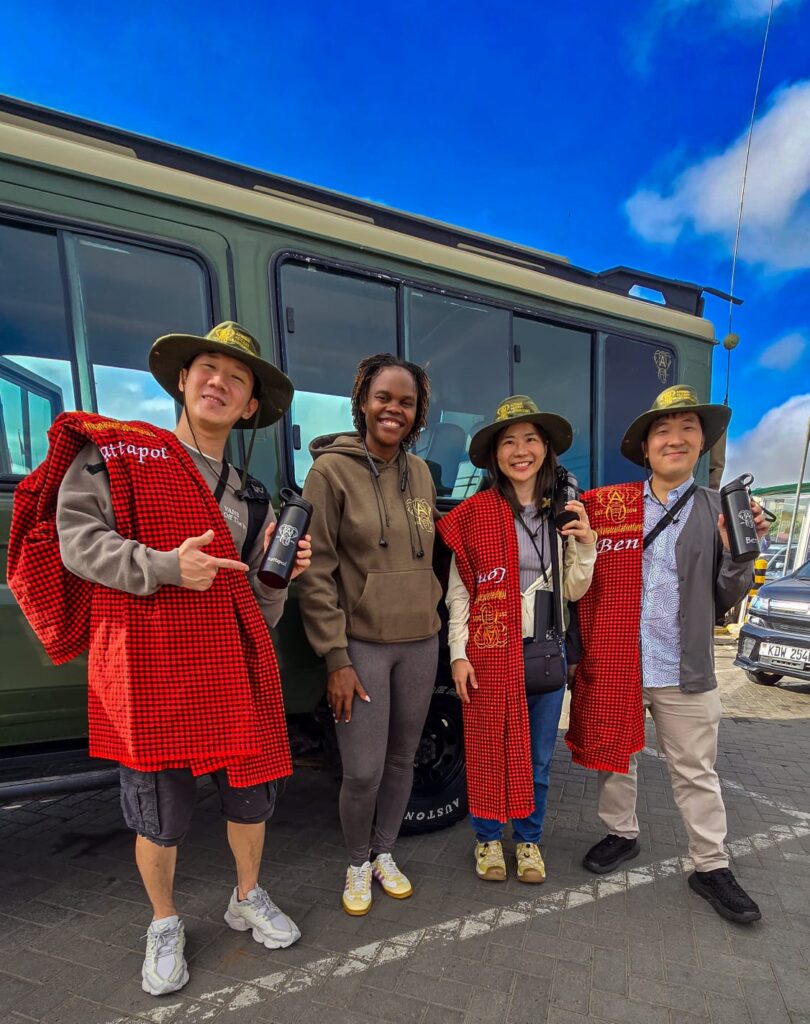
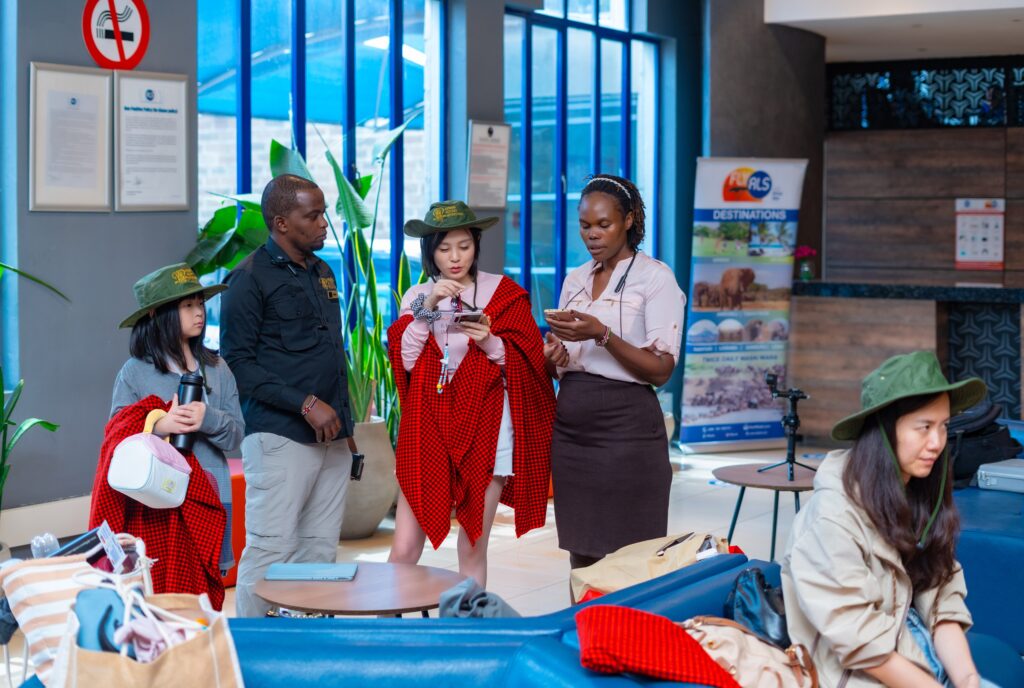
You now know what luxury means on a Kenya safari, what it costs in each band, where the real differences sit and how to test a quote. The next step is turning that into dates, camps and a number you can trust.
That’s where a specialist earns the fee. Afrikan Accent Adventures designs each luxury safari around your dates, your budget and your pace. We price flights, park and conservancy fees, drinks and vehicles in one quote so you can compare like with like. We hold the camps, brief you before you travel and tell you about the soft bag long before you reach Wilson Airport.
Talk to Hellen Asiko, Director and Guest Experience Curator, about your dates and priorities. Book a free consultation or request your tailored quote and browse the full luxury safaris collection.
Design a luxury Kenya safari with a specialist and the only thing you’ll need to check at Wilson Airport is that your bag is soft.
Let's plan your East African safari
Tell us when you'd love to travel and a local specialist will craft a tailor-made route around you.


