

Wifi, Electricity and Charging on Safari: What Kenya’s Camps Actually Offer
From a generator that switches off at ten to a Land Cruiser fitted with its own charging console, here is exactly how power and connectivity work once you leave Nairobi.
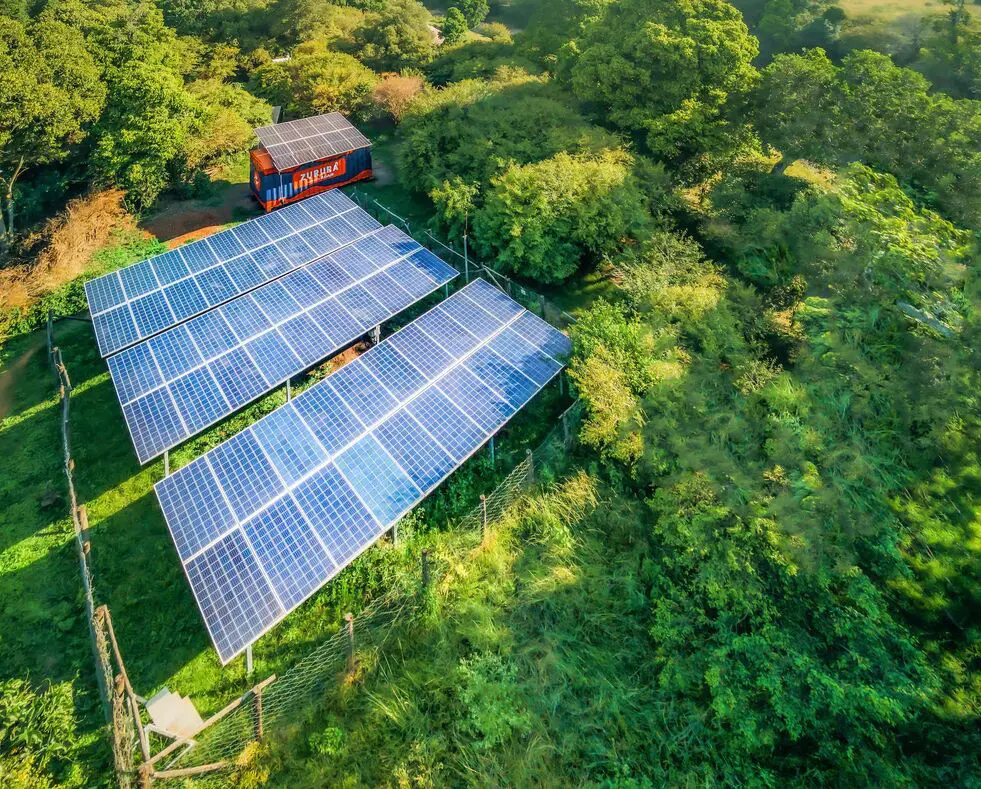
Aerial view of Emboo Camp’s off-grid solar power installation in the Masai Mara, providing 24-hour clean energy for electricity and reliable wifi on safari in Kenya.
A tented camp on the edge of the Mara Triangle, 9:52pm. A guest’s laptop screen goes black mid-sentence and the charger light in her hand goes dark with it. She had twenty minutes left on a work deadline and the single socket in her tent had gone quiet without warning.
Nothing was broken. That camp’s generator switches off at ten every night, as it does in a great many tented camps across the Mara, and the battery bank that carries the tent lights through until morning does not stretch to a laptop charger. Our guide had mentioned the cutoff at check-in. She had not clocked it as something that mattered.
We have watched a version of this exact scene play out more times than we can count, in the Mara, in Amboseli, in Samburu. It is never a camp failing to deliver what it promised. It is a traveller who booked a safari the way they would book a hotel, assuming a wall socket behaves the same way everywhere.
It does not. Power and connectivity on a Kenya safari follow the rhythm of the bush, not the rhythm of a city grid, and the camps that get this right are specific about it if you ask. This guide is what we tell every guest before they fly out, camp by camp, plug by plug, so nobody loses an evening to a dead battery again.
| QUICK ANSWER | Do Kenya’s Safari Camps Have Wifi and Electricity? Most tented camps in the Masai Mara, Amboseli and Samburu run on solar power or generators that give electricity for a set window each evening and wifi through Starlink or a boosted Safaricom signal. Coverage varies by camp, so pack a power bank and confirm connectivity before you book. |
At a Glance: Power and Connectivity on a Kenya Safari:
- Power source: solar panels or diesel generators, since most camps sit off the Kenya Power national grid
- Typical power hours: roughly 6am to 9am and 5pm to 10pm in tents, with solar-lit common areas running longer
- Electricity plug: Type G, the three-pin British style socket, running at 240 volts and 50 hertz
- Best mobile network: Safaricom, for the widest coverage across the Mara, Amboseli and Samburu conservancies
- Wifi in camp: Starlink terminals in a growing number of properties, alongside boosted Safaricom routers in the mess tent
- Vehicle charging: USB and 12-volt charging consoles fitted in every Afrikan Accent Adventures Land Cruiser
- Tourist SIM: Safaricom’s Jambo Tourist Bundle, sold at the JKIA arrivals shop just past baggage claim
- Recommended kit: a 20,000mAh power bank, a UK-style Type G adapter and a spare set of camera batteries
Why This Varies So Much Camp to Camp

The Masai Mara National Reserve, Amboseli National Park and Samburu National Reserve all sit well outside the reach of Kenya Power’s national grid. A camp inside the Mara Triangle or deep in a private conservancy has no cable running to it from anywhere. Every kilowatt used in that camp was generated on site, stored on site and rationed on site, which is a completely different proposition from a hotel in Nairobi or Naivasha where mains power runs around the clock.
This is why two camps a few hours apart can feel like different centuries when it comes to power. A traditional tented camp running a diesel generator on a fixed schedule protects its fuel budget and its equipment by cutting power overnight. Emboo Camp on the Talek River takes the opposite approach, running its entire operation, vehicles included, on solar power around the clock with no scheduled cutoff at all. Neither approach is wrong. They are simply different answers to the same off-grid problem, and the answer that matters to you is the one at the specific camp you have booked.
Location plays a part too. A camp near a conservancy headquarters or a lodge with year-round road access can justify the investment in a bigger solar system and a Starlink dish. A fly-in camp reached only by a bush airstrip, with every panel and battery flown or trucked in at real cost, tends to run leaner. None of this should be a surprise on the day you arrive. It is exactly why we ask about power and Wi-Fi for every camp before we recommend it.
The Standard at Most Tented Camps
The pattern repeats across the great majority of Kenya’s tented camps, from budget properties to five-star ones. Solar panels or a generator charge a central battery bank through the day. Camp lighting and the fridges in the kitchen draw on that reserve continuously, at low load. Guest tents get a window of full power, usually a couple of hours in the early morning while everyone is out on a game drive and again from early evening through to somewhere between nine and eleven at night.
Outside that window, most tents keep a dim solar light for safety but the wall socket goes cold. Some camps soften this by leaving one socket live in the mess tent or the lounge overnight for genuine emergencies, and it is always worth asking your guide where that socket is on arrival.
Ask the camp manager what time the generator switches off. That one question saves more frustration than any adapter you pack.
None of this is a downgrade dressed up as an experience. It is the honest cost of running a camp inside a wildlife reserve rather than a city, and once you know the schedule it stops being a problem and just becomes part of how you plan your evening.
Wifi and Starlink: Which Camps Have It

Wifi on safari has changed faster than almost anything else in the last three years. Starlink launched commercially in Kenya in 2023 and has since spread into the safari sector through resellers and direct camp installations, replacing the older satellite systems that struggled to stream a single video call. Where a camp has installed a Starlink terminal, speeds in the mess tent or lounge can now genuinely support video calls and photo uploads, a real change from the patchy, email-only wifi that defined bush camps for a decade.
The signal is not evenly spread through camp though. Wifi almost always lives in the mess tent, the bar or a central lounge area, powered by the same generator or solar system as everything else. It rarely reaches individual guest tents, particularly if those tents sit any distance from the main building, and it can slow to a crawl when several guests are online in the evening at once. A camp advertising wifi is telling you the truth about the lounge. It is not telling you the tent has it too.
Camps investing in full solar independence, such as Emboo Camp on the Talek River, tend to be the same properties investing in stronger connectivity, since both draw on the same upgraded power infrastructure. If a stable connection matters to your trip, tell us that when we build your itinerary and we will steer you toward camps we know can genuinely deliver it, rather than ones that simply list wifi on a website.
Charging Camera Gear and Laptops


A serious camera kit puts real pressure on a rationed power system. A single day of game drives on a photographic safari can drain two or three camera batteries, a drone battery and a laptop used to back up memory cards each evening, all inside the same short charging window every other guest in camp is also trying to use.
If photography is the main reason for your trip, our Photographic Safari Kenya guide covers gear and shot planning in full, but the power side comes down to three habits. Charge the moment you get back to camp rather than waiting for dinner, since the window closes earlier than most people expect. Charge more than you think you need during the day if your camp offers any daytime power at all. And never assume a laptop and two camera batteries can charge from the same socket at the same time on a rationed system, since most sockets are shared across the whole tent.
What to Bring: Power Banks and Adapters
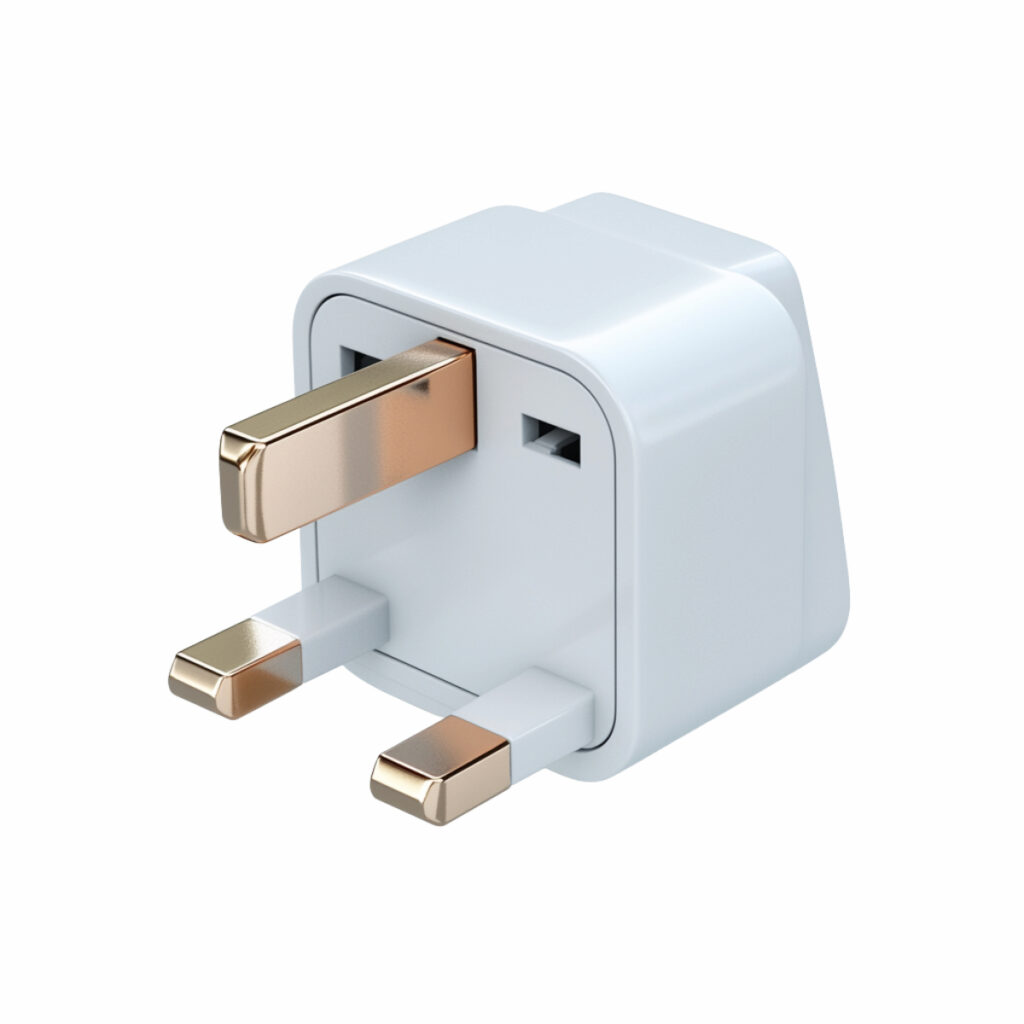

Kenya uses the Type G plug, the same three rectangular pins found in the United Kingdom, running on 240 volts at 50 hertz. If your devices come from a country on 220 to 240 volts, they will generally work without a separate converter, just an adapter for the plug shape. Travellers coming from 110 to 120 volt countries should check that laptop and camera chargers are dual voltage, which almost all modern ones are, and be more careful with hairdryers, straighteners and other heat-based appliances, which often are not.
Beyond the adapter itself, three items make the real difference in camp. A power bank of at least 20,000mAh, charged fully in Nairobi before you head into the bush, covers a phone and a couple of camera batteries through a rationed evening with room to spare. A compact multi-port USB charger lets you top up several devices from a single socket rather than queueing for outlets with other guests. And a small dust bag for chargers and cables keeps fine Mara dust out of your gear during the drive. For the rest of what to pack, our What to Pack for an African Safari guide covers clothing, health kit and luggage limits in full.
One packing detail catches travellers out more than any other: power banks must fly in carry-on luggage, never in a checked bag, and airlines cap them at 100 watt-hours without special approval. A standard 20,000mAh bank works out to roughly 74 watt-hours, comfortably inside that limit, so there is rarely a problem, but pack it in your daypack rather than the suitcase you check at JKIA.
If You Need to Stay Reachable for Work
Working remotely from a safari camp is possible but it takes planning, not hope. The honest picture is that most camps offer usable connectivity only in a common area, only during power hours, and only reliably where Starlink has been installed. A scheduled video call at four in the afternoon in a camp without solar-boosted daytime wifi is a genuine risk, while the same call at seven in the evening in a camp with a strong Starlink connection is usually straightforward. Kenya sits on East Africa Time, three hours ahead of UTC (UTC+3) year-round with no daylight saving shift, which is worth building into any call schedule before you fly.
| EXPERT NOTE When a guest tells us they need to stay reachable for work, we do not just pick a nice camp and hope the wifi holds up. We check which specific properties on the route have wifi or Starlink and confirm the power schedule against the call times they need, then build the itinerary around that. It is a five minute question that saves a client a genuinely bad afternoon. Hellen Asiko, Director & Guest Experience Curator |
If a work trip is layered onto your safari, tell us your call schedule when we plan the route. We will route you through camps with confirmed daytime power, wifi or Starlink rather than leaving it to chance, and flag any stretch of the itinerary, such as a remote fly-in camp or a mobile tented camp, where connectivity genuinely cannot be guaranteed.
Local SIM, eSIM or Roaming
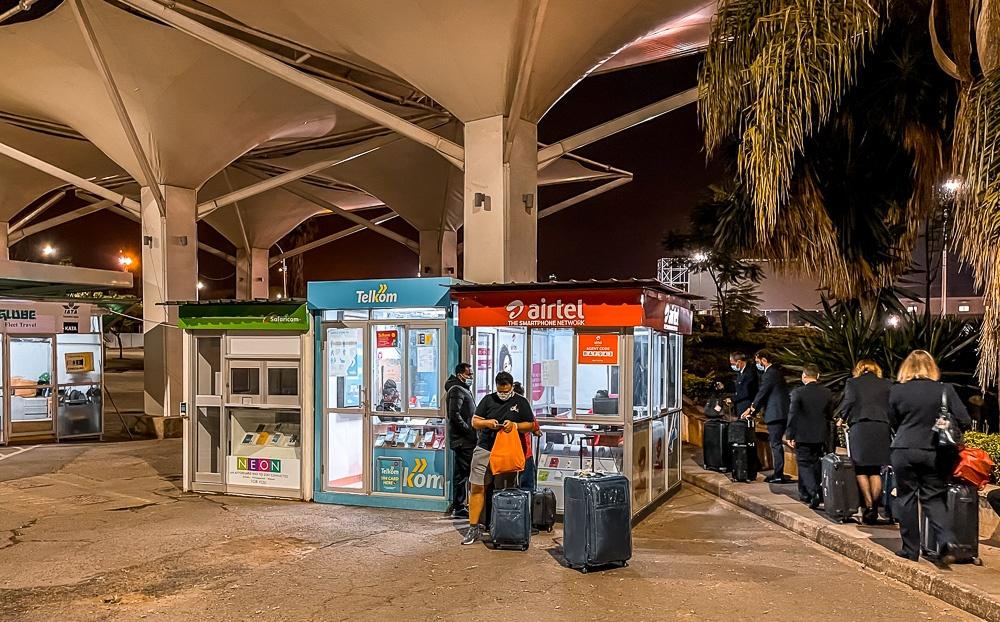
Safaricom carries the strongest and widest network across Kenya’s safari circuits, including deep into conservancy land where competitors thin out fast, which makes it the default choice for most travellers. The easiest way to get connected the moment you land is the Safaricom shop at Jomo Kenyatta International Airport, positioned just outside the baggage claim area in the arrivals hall. Bring your passport, since Kenyan law requires SIM registration, and ask for the Jambo Tourist Bundle, a data and call package built specifically for visitors.
An eSIM is a reasonable alternative if your phone supports one and you would rather skip the airport queue entirely, though data allowances on eSIM plans tend to run smaller and pricier than a physical Safaricom SIM bought locally. Airtel Kenya is the main alternative network, generally cheaper in the city but noticeably weaker once you are well into the Mara or Samburu. International roaming works almost everywhere Safaricom’s own network reaches, but at a cost most travellers find hard to justify over a two week trip.
Charging Consoles Inside Our Land Cruisers
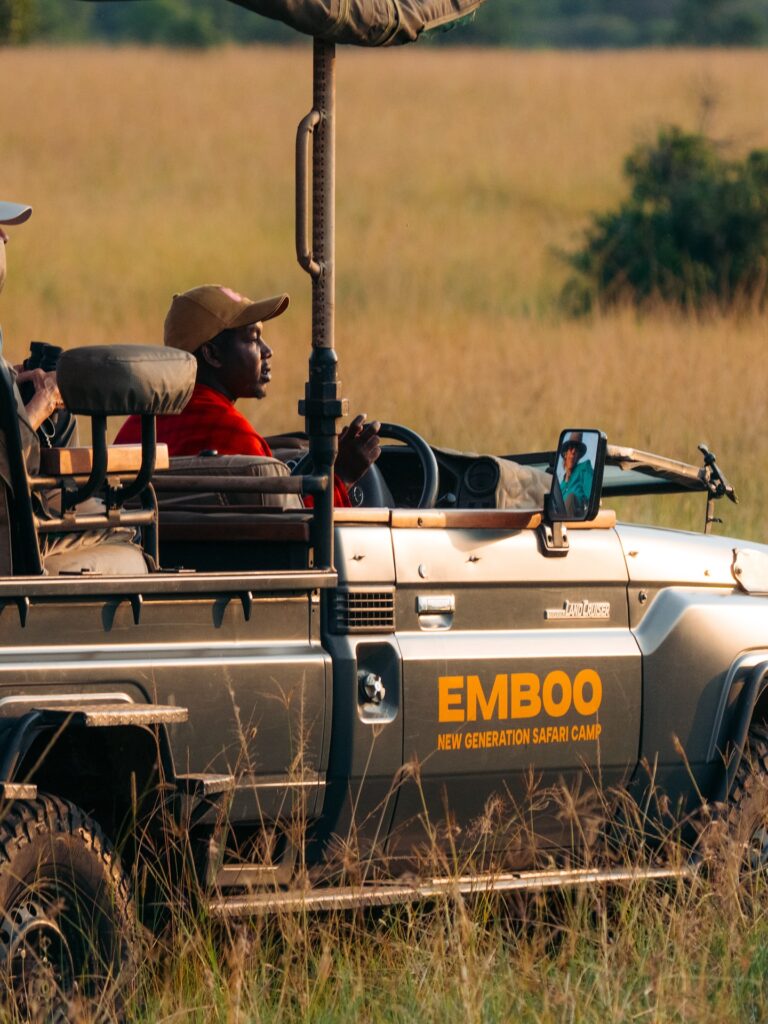
Every Afrikan Accent Adventures Safari Land Cruiser is fitted with its own charging console, giving guests USB ports and a 12-volt outlet inside the vehicle itself. A long game drive, sometimes four or five hours between breakfast and brunch, becomes a genuine charging opportunity rather than dead time, particularly useful for camera batteries and phones on days when camp power is still hours away.
| EXPERT NOTE Guides know the power schedule at every camp on a route better than any brochure does, because we live by it too. We fitted charging consoles into our own vehicles years ago for exactly this reason, so a guest never has to choose between a long game drive and a charged camera. If your battery is getting low, tell your guide. We will plug you in without you needing to ask twice. Nicholas Wangithi, Director & Founder |
Power Rationing, Generators and Solar
Rationing exists to protect fuel budgets, battery lifespan and, increasingly, a camp’s environmental footprint, not to inconvenience guests. A generator run continuously around the clock burns through diesel that has to be trucked or flown into a reserve at real cost, and a battery bank cycled too hard degrades within a couple of seasons. The fixed evening and morning windows most camps run are the balance that keeps the lights on at all without the whole system failing within a year.
A smaller number of camps have moved past rationing entirely by scaling up their solar capacity to run full time. Emboo Camp and Porini Amboseli Camp both operate on full solar independence rather than a scheduled generator, and that shift is a genuine part of what sustainable safari camps are doing differently across Kenya. Our Eco Safari Kenya guide covers those properties in full if that story matters to your choice of camp, but for the wider Kenya safari circuit, rationed generator and solar power remains the standard you should plan around.
| EXPERT NOTE Pack as if the socket might not be there when you want it, not as if it definitely will be. A charged power bank costs you nothing if you never need it. A dead camera on the morning a cheetah walks past your vehicle costs you a memory you cannot get back. Kibara Mugo, Safari Writer and East Africa Specialist |
Frequently Asked Questions
Do safari camps in Kenya have wifi?
Yes, most tented camps offer wifi in a common area such as the mess tent or lounge, though quality varies widely. Camps with a Starlink terminal now offer genuinely fast, reliable internet, while older properties running boosted Safaricom routers can slow to a crawl once several guests are online, and coverage rarely extends into individual guest tents.
How do you charge your phone on safari?
Charge your phone in your tent during the camp’s scheduled power window, usually early morning and again from evening until around ten at night, or plug into the USB and 12-volt console fitted in your safari vehicle during game drives. A power bank charged before you leave Nairobi covers the gap on days when neither option is immediately available.
Is there electricity at Kenya safari camps?
Yes, virtually every established tented camp and lodge in Kenya has electricity, generated on site through solar panels, a diesel generator or a combination of both since almost none sit on the national grid. Power is typically rationed to set hours rather than running continuously, so confirm the schedule with your camp or your operator before you travel.
Which is the strongest network to use on safari in Kenya?
Safaricom is the strongest network across Kenya’s safari circuits, with the widest rural coverage in the Masai Mara, Amboseli, Samburu and most conservancy land. Airtel Kenya works reasonably well in towns and near main roads but drops off noticeably once you are deep inside a reserve or conservancy.
What type of electricity plug is used in Kenya?
Kenya uses the Type G plug, the same three rectangular pins found in the United Kingdom, running at 240 volts and 50 hertz. This applies consistently across Nairobi hotels, city guesthouses and safari camps in the Mara, Amboseli and Samburu alike.
Do I need a power adapter for a Kenya safari?
Yes, unless your home country also uses the Type G plug. Bring a UK-style travel adapter for the plug shape, and if you are travelling from a 110 to 120 volt country, confirm your laptop and camera chargers are dual voltage before you leave, since most are but hairdryers and straighteners often are not.
What type of travel plug adapter do I need for Kenya?
A standard UK travel adapter covering the Type G plug, the three-pin British rectangular blade style, is the correct choice for Kenya. A universal travel adapter that includes a Type G setting works equally well and is worth packing if your trip continues on to Tanzania, Uganda or Rwanda, all of which also use Type G.
How does charging work at Kenya safari lodges and camps?
Most lodges and camps run electricity on a fixed schedule tied to their solar or generator capacity, typically a morning window and a longer evening window running into the night. Guest tent sockets go cold outside those hours in the majority of camps, while some leave one socket live in a common area for genuine emergencies, so ask your guide or camp host where that socket is on arrival.
What is the best safari charging kit to pack?
A 20,000mAh or larger power bank, a UK-style Type G travel adapter, a compact multi-port USB charger and spare camera batteries cover the vast majority of charging needs on a Kenya safari. A small dust bag for cables and chargers is also worth the negligible extra weight, given how fine Mara dust finds its way into everything.
What are the power and charging tips for game drives and remote camps?
Charge every device fully overnight or during your camp’s scheduled morning window before heading out on a game drive, then use the USB or 12-volt console fitted in your safari vehicle to top up through the day. At remote fly-in camps, where solar and generator capacity is often smaller, pack a fully charged power bank as your backup rather than assuming camp power will stretch to cover a full day of photography.
Plan Around Your Camp’s Actual Power and Wifi
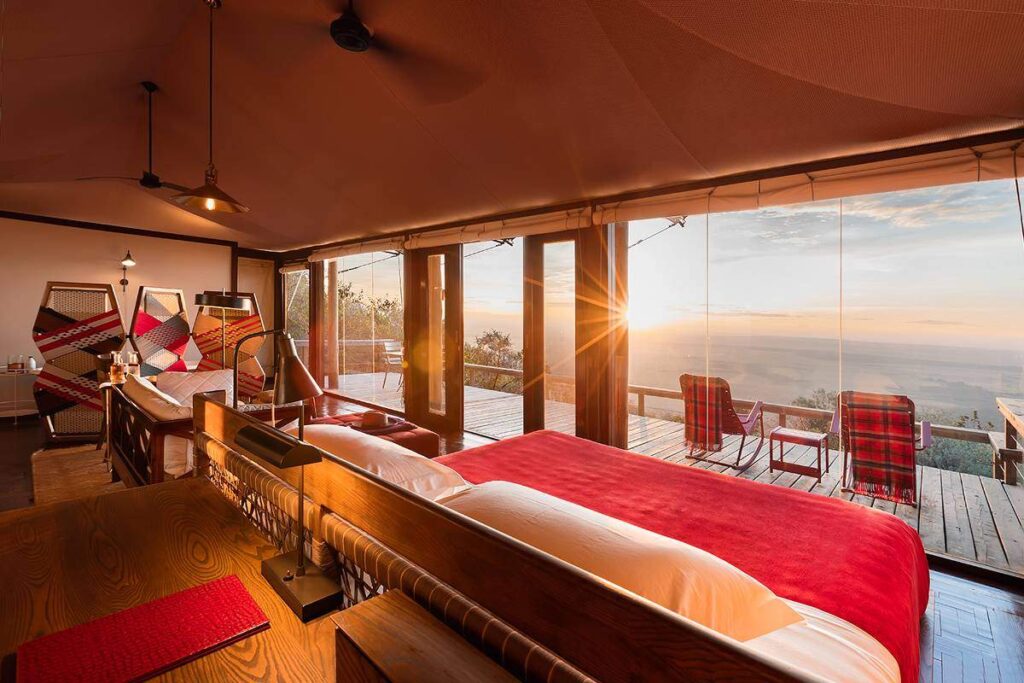
A dead laptop on the Mara Triangle taught that guest more about safari power than any packing list could have. We would rather you learn it from us before you fly, not from a black screen at ten at night.
Tell Hellen Asiko what connectivity your trip genuinely needs, whether that is a reliable evening call, enough charge for a photographic safari or simply the peace of mind that your phone will not die on the way to a river crossing, and we will build your route around camps we know can actually deliver it, not just ones that list wifi on a website.
Ask us about connectivity at your chosen camp before you book, and travel knowing exactly when the lights, and the wifi, will be on.
Let's plan your East African safari
Tell us when you'd love to travel and a local specialist will craft a tailor-made route around you.


