

Walking Safaris in Kenya: What They Add to a Game Drive
Where Kenya's guided bush walks happen, who leads them and why the thirty minutes you spend on foot often outlast every game drive in memory.
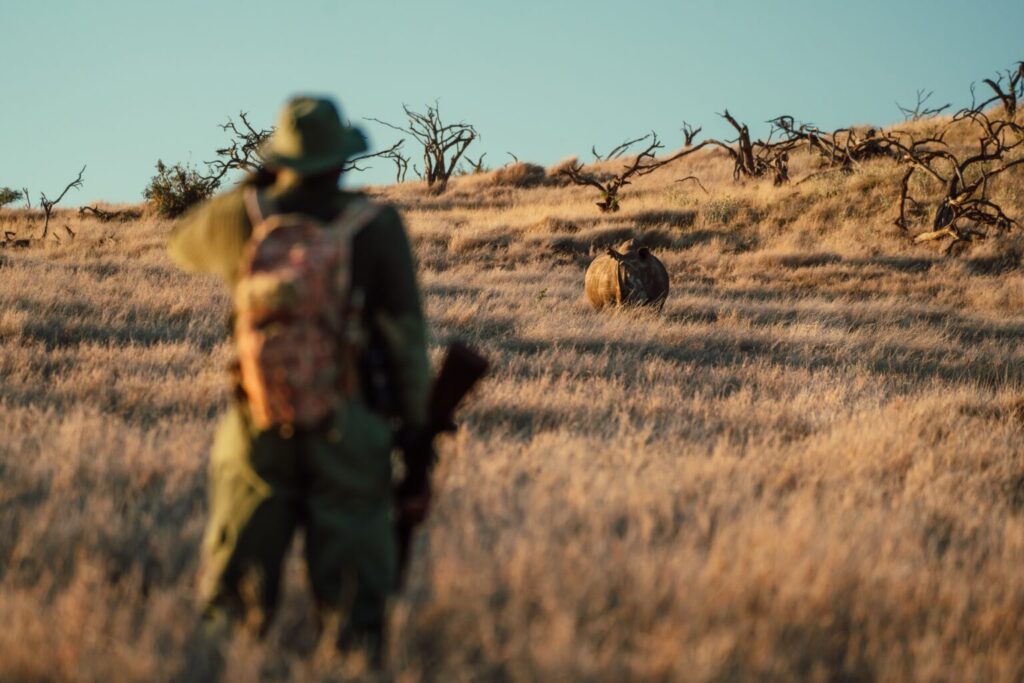
Guided walking safari led by an armed ranger observing strict protocol from our safari safety guide.
Four in the afternoon, Ol Kinyei Conservancy in the Masai Mara. The game drive has already delivered its cats and its elephants, the Land Cruiser is parked under a stand of acacia, and instead of driving the last stretch back to camp we step down and walk it, an armed ranger a few paces ahead, a resident Maasai naturalist at our shoulder.
He stops without a word at a low, grey-green shrub and crushes a leaf between his fingers before we have even registered it. Leleshwa. The camphor scent reaches us before the explanation does. Maasai households burn the branches in the boma to keep insects out, he says, and brew the leaves as a tea for a cough. A few steps on he points out the bark of an elephant pepper tree, used for generations in a bitter concoction against fever and malaria.
None of it is visible from a vehicle moving at speed. We had already driven past this exact patch of bush twice that same afternoon and seen nothing but scrub.
That is the case for a walking safari in a single stop. A game drive shows you the animals. Walking, especially in that golden hour after a drive when the light drops and the pace drops with it, shows you everything the animals live inside of. We build this combination, drive then walk, into every Mara and Laikipia itinerary where the schedule allows it, because treating a walking safari as a lesser add-on means missing most of what it actually offers.
| QUICK ANSWER | What Is a Walking Safari? A walking safari is a guided, on-foot activity, often following a game drive, led by an armed ranger and a resident Maasai naturalist or KPSGA guide. It slows the pace and shifts focus to tracks, birdlife and traditional plant use, offered in Laikipia and Masai Mara conservancies, not the reserve. |
At a Glance:
- Where it happens: Laikipia Plateau (Ol Pejeta Conservancy, El Karama, Loisaba Conservancy, Karisia Hills, Sosian) and Masai Mara conservancies (Naboisho, Mara North, Olare Motorogi, Ol Kinyei)
- Not permitted: Inside the Masai Mara National Reserve itself, where Kenya Wildlife Service rules confine walking to conservancies and private land
- Guide requirement: An armed ranger from Kenya Wildlife Service or the conservancy scout unit on every walk, paired with either a resident Maasai naturalist or a KPSGA-certified guide depending on the camp
- Typical duration: One to three hours for a standard morning bush walk; multi-day fly-camp walking safaris run two to five days in Laikipia
- Group size: Usually capped at six to eight guests per walk for safety and quiet
- Minimum age: Set by each camp, commonly between twelve and sixteen years
- Best time: June to October, the dry season, walking out at first light before the heat sets in
- Signature experience: On-foot black rhino tracking inside Ol Pejeta Conservancy, approaching to a guide-judged safe distance on foot
How a Walking Safari Differs from a Game Drive
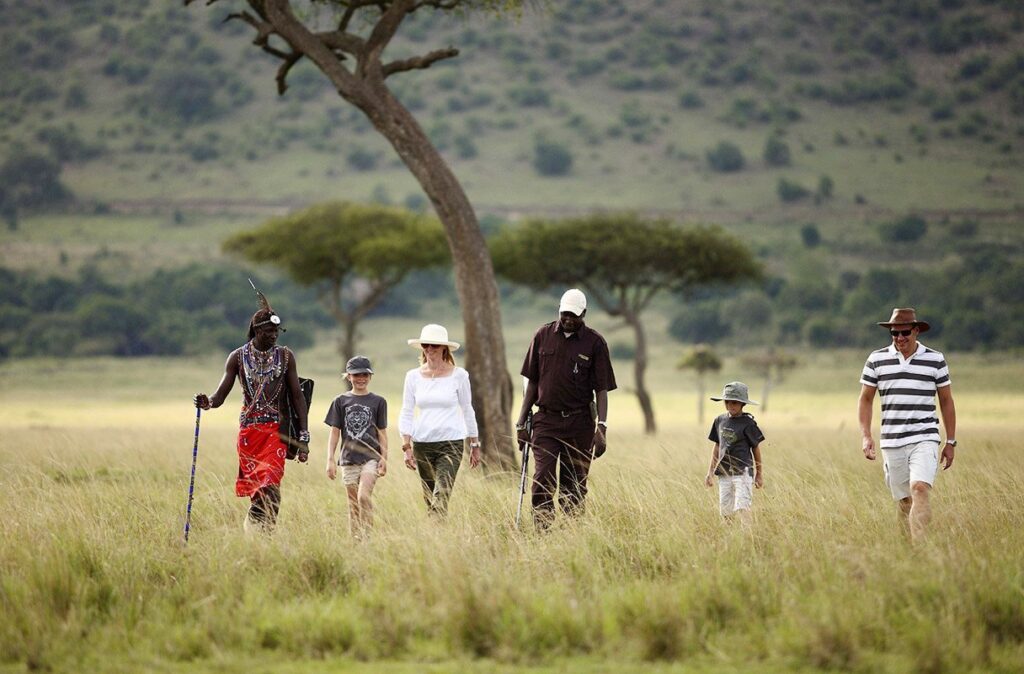
A game drive covers ground. In a morning you might cross fifteen or twenty kilometres of Laikipia or the Mara conservancies, stringing together sightings, a lion pride here, a breeding herd of elephant there. The vehicle is doing the work. You are the audience.
A walking safari covers almost none of that ground and asks something different of you. You become part of the landscape rather than an observer moving through it in a metal box. Wildlife knows the difference too. Most animals in Kenya’s parks and conservancies have grown up around vehicles and treat them as a neutral, familiar shape. A human silhouette on foot is not neutral. Flight distances change. A giraffe that would let a vehicle idle twenty metres away will often move off at eighty on foot.
A vehicle shows you the plains. Walking makes you part of them.
That changed flight distance is not a downside; it is the point. It forces a slower, quieter, more deliberate style of guiding, and it rewards patience over proximity. You are not there to get close to a lion. You are there to read the ground the lion walked over an hour before you did.
| EXPERT NOTE Guiding on foot is a different discipline from guiding a vehicle. On a drive you are managing an engine, a route and a radio. On a walk you are managing wind direction, group spacing and your own instinct for when a patch of thicket needs a wide berth. Whether that instinct comes from the KPSGA walking assessment or from growing up herding cattle through the same conservancy, it is drilled in long before a guide is trusted to lead a guest, because reading a print in the dirt under time pressure is a skill you either have or you do not. Nicholas Wangithi, Director & Founder |
What You Notice on Foot That You Miss from a Vehicle
Drop the speed to three kilometres an hour and the bush stops being scenery and starts being information. A termite mound is not a lump of earth, it is a functioning city with its own microclimate, and a guide will crack one open to show you the fungus gardens the termites farm inside it.
Dung tells a story a vehicle drives past in half a second. Warm, moist buffalo dung means the herd passed in the last hour. Dried, crumbling dung with old dung beetle activity means days. A guide crouched over a pile of droppings for two minutes is not being slow, he is reading a timestamp.
Birdsong becomes navigable too. A go-away bird’s call travelling through the acacia often means something is moving that the bird does not like, a leopard, a jackal, sometimes just your own group further along the path than expected. On a drive, the engine noise buries most of this. On foot it is the loudest thing in the bush.
Then there is the plant knowledge, which is where a Maasai naturalist earns his keep. Leleshwa, the grey-green camphor bush common across Laikipia and the Mara, is burned in bomas to keep insects out and brewed as a traditional remedy for coughs and colds. The elephant pepper tree, whose bark and roots Maasai communities have used for generations in fever and malaria remedies, stands unremarked at the edge of a dozen game drive routes. A dung beetle rolling a ball twice its own body weight and a leopard tortoise crossing your path at its own unbothered pace round out a list that a vehicle-paced itinerary simply has no time for.
Where Walking Safaris Are Offered in Kenya
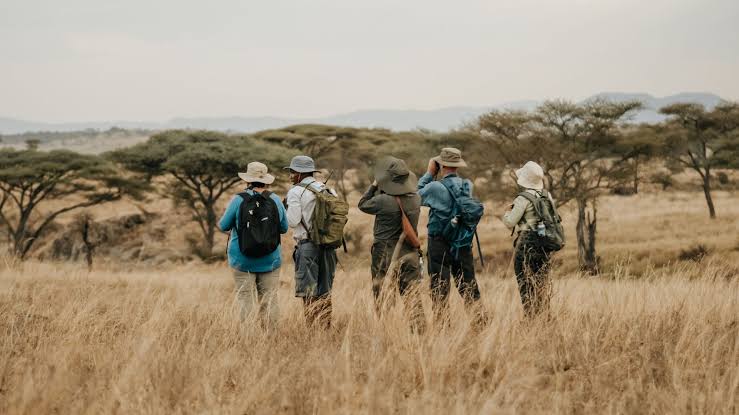
Walking is not available everywhere in Kenya, and that is by design. Kenya Wildlife Service does not permit walking safaris inside gazetted national parks and reserves, the Masai Mara National Reserve included. Where it is allowed is the private and community conservancy land that rings those reserves, plus a handful of private ranches with their own wildlife populations and their own rules.
Laikipia Plateau
Laikipia is Kenya’s walking heartland, and has been for longer than the Mara conservancies have existed in their current form. Ol Pejeta Conservancy runs the country’s best known walking activity, guided on-foot black rhino tracking, alongside standard bush walks offered from camps such as Kicheche Laikipia and Ol Pejeta Bush Camp, both of which include walking in the daily rate. El Karama, on the Ewaso Nyiro river to the north, runs walks led by two-armed guides focused on tracks, scat and burrows rather than big game encounters. Further north, Karisia Walking Safaris works with Samburu guides on multi-day treks through open plains, rocky hills and montane forest, camping fresh each night, and Sosian offers one to three hour guided walks with a fully armed escort.
Masai Mara Conservancies
Mara Naboisho Conservancy, a fifty thousand acre community-owned block adjoining the national reserve, is the standout for walking on the Mara side. Naboisho Camp is the only camp in the conservancy currently running walking safaris and overnight fly camps, and its guides, drawn from the surrounding Maasai villages, work as resident naturalists rather than through the standard KPSGA program. Mara North Conservancy, Olare Motorogi Conservancy and Ol Kinyei Conservancy also permit escorted walks from their member camps, most led by a Maasai naturalist guide alongside an armed ranger, and often run as an afternoon extension of a game drive rather than a separate morning activity. Kicheche Camps runs dedicated walking itineraries, its Walking Wilderness safari, across its Mara conservancy and Ol Pejeta properties, combining extended game drives, night drives and a walking safari with wild camping in between.
Beyond Laikipia and the Mara
The Chyulu Hills, the volcanic range between Amboseli and Tsavo, offer a different kind of walking, less about tracking dangerous game and more about the scenery, the cloud forest and the sheer sense of standing somewhere few vehicles ever reach. It is worth building into a Kenya itinerary that already includes Amboseli, rather than as a standalone destination.
Safety: Armed Guides and How Routes Are Chosen
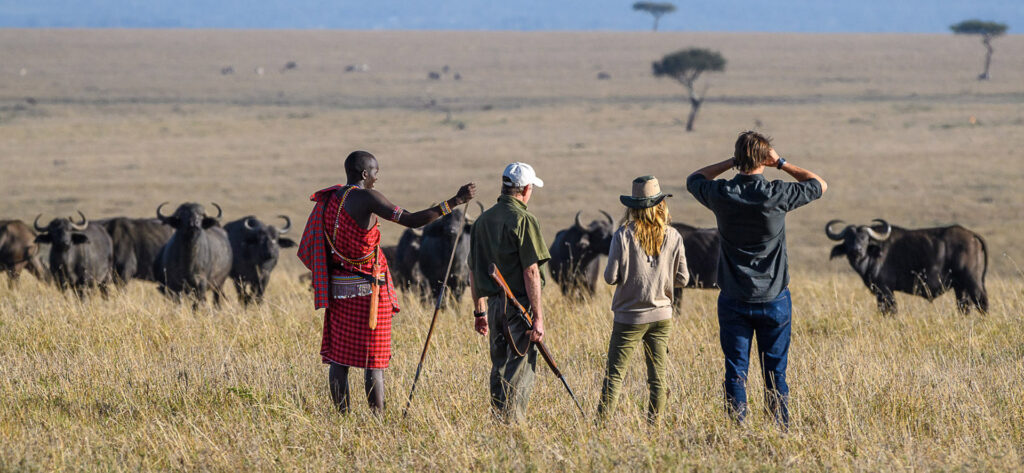
Every walking safari we put a guest on runs with two things in place before a single step is taken: an armed ranger, either a Kenya Wildlife Service officer or a conservancy scout carrying a rifle, and a qualified guide leading the group. In Laikipia that guide is most often KPSGA-certified, ideally silver or gold rated. In many Masai Mara conservancy camps the walk is led instead by a resident Maasai naturalist, drawn from the surrounding community and trained in bushcraft, tracking and wildlife behaviour rather than through the formal KPSGA syllabus. Either model works. Both put an armed escort on every walk without exception, and that is not a formality, it is the entire reason walking is permitted on this land at all.
Route selection happens before the group leaves camp and again continuously once they are moving. A guide checks wind direction first, since dangerous game will smell a group long before they see it and the route is planned to keep the wind in the group’s favour. Known resting spots for lion and buffalo are avoided or approached with extreme caution, and a guide who has walked that ground for years will know exactly which thicket held a pride two weeks ago and give it the width it deserves.
Before you leave camp you get a full briefing. Walk in single file. Stay behind the guide. No running, ever, under any circumstance, because running triggers a chase instinct in exactly the animals you do not want chasing you. If something happens, the guide’s instructions come first and they come immediately, not after you have finished taking a photo.
| EXPERT NOTE I have walked in Laikipia with guides who stopped a group cold over nothing more than a shift in the wind, and I have seen guests initially frustrated by the caution and then, twenty minutes later, grateful for it when we passed a buffalo bull bedded down in shade we would otherwise have walked straight past. The caution is the product. It is what lets you be out there at all. Kibara Mugo, Safari Writer and East Africa Specialist |
Who a Walking Safari Suits
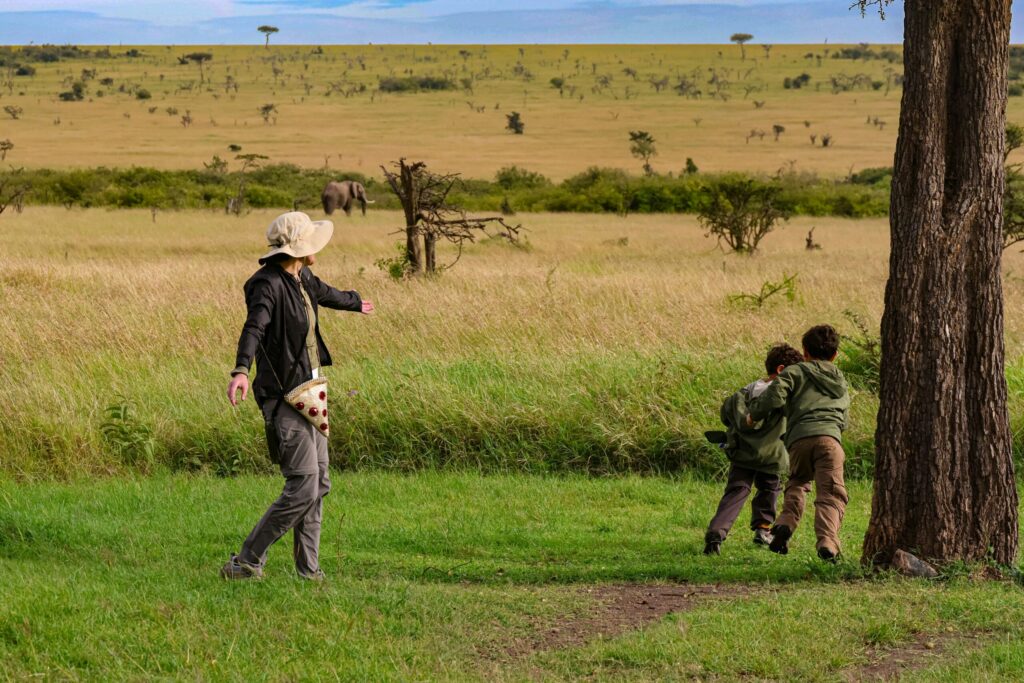
A walking safari suits repeat safari travellers who have done several vehicle-based trips and want a different register of experience, birders and photographers who want time with detail rather than a drive-by, and families with older children who can follow instructions immediately and hold a silence for twenty minutes at a time. Most camps set their minimum age between twelve and sixteen for exactly that reason.
It does not suit every trip. Guests wanting a restful, low-effort safari day are better served by a game drive with a long lunch stop. Anyone with limited mobility, a heart condition, or real discomfort with being close to potentially dangerous animals on foot, even at a managed distance, should say so before booking. A good operator will tell you plainly when a walk is not the right fit rather than sell it anyway.
What Wildlife Can You Expect to See
On a standard bush walk the expectation is different from a game drive, and it should be set correctly before you set out. You will see plains game, giraffe, zebra, dik-dik, warthog, impala, usually from a respectful distance the guide manages rather than the close range a vehicle allows. Elephant and buffalo are given a wide berth on foot, observed rather than approached. Birdlife is often the highlight, since walking pace and silence let you actually hear and locate calls that a moving vehicle drowns out.
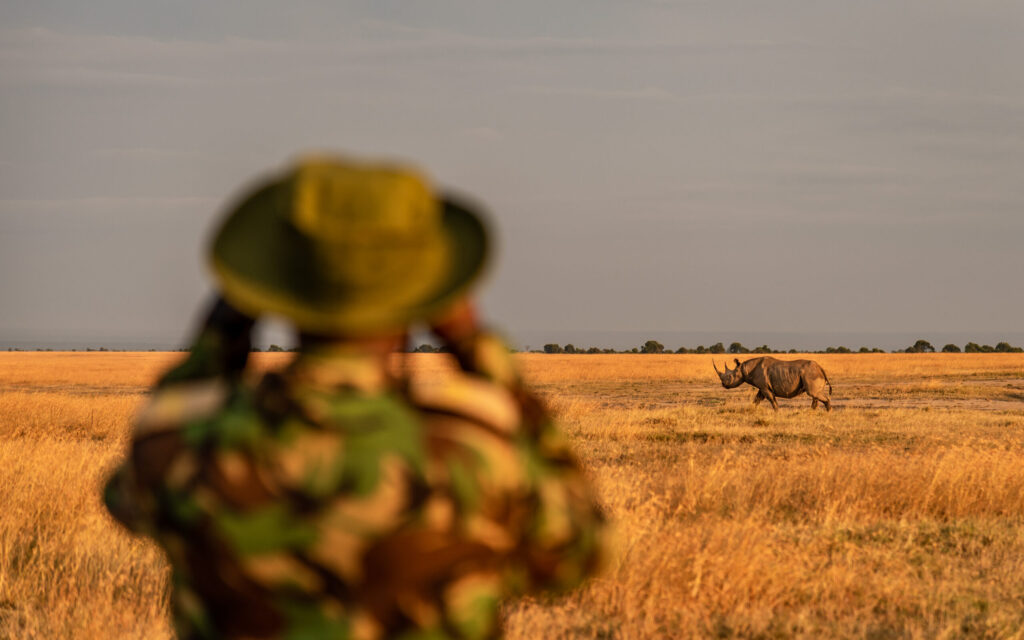
Ol Pejeta Conservancy’s rhino tracking is the exception to the distance rule, and the reason it draws travellers from across the world. Trackers locate a known, collared black rhino by vehicle first, then the group closes the final stretch on foot, reading the wind and approaching to a distance the guide judges safe, often within thirty to forty metres of a resting or grazing animal. It is one of the more concentrated wildlife encounters available anywhere in East Africa, and it is only possible on foot.
Walking Safari Etiquette
Single file, guide first, ranger positioned to cover the group. Silence unless the guide invites conversation, since noise carries further on foot than it does over an engine and every unnecessary word reduces what you will hear and see. No sudden movement, no running under any circumstance, and no separating from the group to get a better photo angle, however tempting the shot.
Phones on silent, camera shutter sound off if your camera allows it, and no perfume or strongly scented sunscreen, since scent carries on the wind exactly the way sound does and can alert animals to your presence well before the guide would choose. If the guide raises a closed fist, stop immediately and stay stopped until you are told otherwise. These are not suggestions; they are the terms on which walking is allowed at all.
What to Wear for a Walking Safari
Earth tones, khaki, olive, stone, dust brown, are the standard for a reason, they do not stand out against the bush and they do not attract tsetse flies the way dark blue and black do. Closed walking shoes or light hiking boots are non-negotiable given the acacia thorns, loose stone and occasional termite mound underfoot. Long sleeves and long trousers are worth wearing even in the heat, since they do more for you against thorns, grass seeds and biting insects than sun exposure does against you.
How to Prepare and What to Pack
A wide-brimmed hat, sunscreen applied before you leave camp rather than mid-walk, a small daypack with water and any personal medication, and binoculars if birding interests you. Leave heavy camera bags and tripods at camp. A walking safari moves at the guide’s pace and stops when the guide stops, not when you want to set up a shot, and less gear means less noise and less to manage when the guide needs your full attention.
When Is the Best Time to Go on a Walking Safari
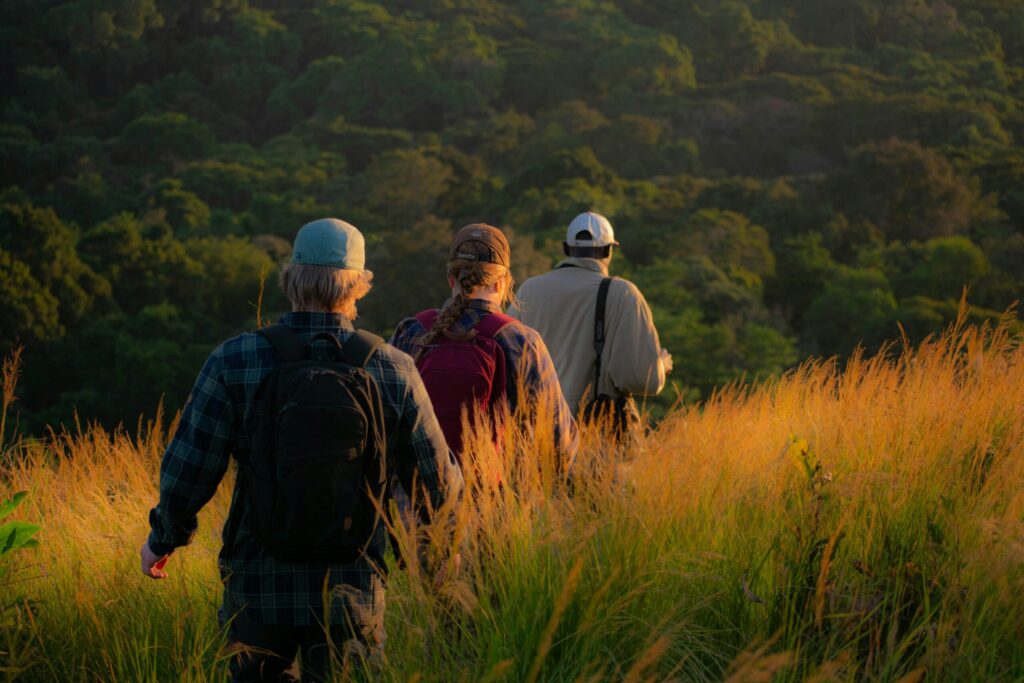
June through October, Kenya’s long dry season, is the best window for walking. Grass is shorter after the dry months, which means better visibility for both wildlife and the guide reading tracks, and animals concentrate more predictably around remaining water sources. Early morning, setting out as soon as there is enough light to walk safely, is consistently the best time of day, cooler for both you and the animals and closer to when nocturnal predators are still moving before they bed down for the heat.
Walking is still possible in the green season from November to May, and some guides prefer it for the birdlife and the drama of a landscape in full growth, but taller grass means less visibility and fresher rain can wash away the tracks that make a walk worth doing in the first place.
How Much Does a Walking Safari Cost?
A short morning bush walk most often costs nothing extra at all, it is bundled into the standard daily rate at camps such as Kicheche Laikipia and Ol Pejeta Bush Camp, where an armed guide and a resident escort are already part of the staffing. Ol Pejeta’s dedicated rhino tracking activity is usually booked and paid separately from the standard game package, and exact current rates should always be confirmed directly with the conservancy or your operator at the time of booking, since conservancy activity fees are reviewed periodically.
Multi-day fly-camp walking safaris are a different order of cost. Running a mobile camp, an extra armed ranger, additional KPSGA guiding hours and the conservancy or Kenya Wildlife Service walking permits that make it all legal adds real overhead on top of a standard game-drive rate, and that premium is reflected in the nightly price of specialist programs such as Karisia’s multi-day treks or Naboisho’s fly-camp walks. We build exact figures into your itinerary once we know your dates, camp choice and group size, since availability and seasonal rates shift throughout the year.
How to Add One to Your Itinerary
The easiest way in is a camp where walking is already part of the daily rate, which is why we route most first-time walkers through Laikipia rather than straight into a dedicated multi-day trek. A three day Ol Pejeta Conservancy stay based at Maisha Sweetwaters Camp, for example, already gives you standard game drives and, seasonally, a visit to the Sweetwaters Chimpanzee Sanctuary, and a bush walk or the rhino tracking activity slots naturally into a free morning without reshaping the rest of the trip.
If you already know you want more than an hour on foot, tell us before we build the route rather than after. A multi-day fly-camp walk needs its own logistics chain, a mobile crew, extra permits and a different pacing for the days either side of it, and it works far better as the spine of a Laikipia itinerary than as an afterthought bolted onto a Mara-heavy trip.
| EXPERT NOTE The itineraries that work best are the ones where we know about the walking interest at the planning stage, not after flights are booked. A fly-camp walk changes which camps make sense, how many nights you need in Laikipia versus the Mara, and sometimes the order you visit them in. Tell your consultant early and we will build the whole trip around it rather than squeezing it into a day that was never designed for it. Hellen Asiko, Director & Guest Experience Curator |
Frequently Asked Questions
What is a walking safari?
A walking safari is a guided, on-foot activity in which travellers explore the African bush accompanied by an armed ranger and, depending on the camp, a resident Maasai naturalist or a KPSGA-certified guide, rather than viewing wildlife from a vehicle. It focuses on tracking, ecology and traditional plant use rather than covering large distances, often runs directly after a game drive, and typically lasts one to three hours, though multi-day walking itineraries with mobile fly camps are also available in places such as Laikipia.
Is a walking safari safe in Kenya?
Yes, when run by a licensed operator with a KPSGA-certified guide and an armed ranger, which is the standard requirement across every conservancy and private ranch that offers the activity. Safety comes from route planning, wind reading and strict group discipline rather than from avoiding wildlife altogether, and guests who follow the guide’s instructions immediately have an excellent safety record on Kenya’s established walking programs.
Where can you do a walking safari in Kenya?
Walking safaris in Kenya are offered in the Laikipia Plateau conservancies, including Ol Pejeta Conservancy, El Karama, Loisaba Conservancy and Karisia Hills, and in Masai Mara conservancies such as Naboisho, Mara North and Olare Motorogi. Walking is not permitted inside the Masai Mara National Reserve itself or inside other gazetted national parks, where Kenya Wildlife Service confines the activity to conservancy and private land.
What is the difference between a bush walk and a guided walking safari?
A bush walk is typically a short, one to two hour interpretive stroll close to camp focused on plants, birds and smaller sightings, while a guided walking safari is a longer, more structured on-foot activity, sometimes multi-day, built around tracking and a deeper immersion in a specific landscape. Both use the same KPSGA-guide-plus-armed-ranger safety standard, the difference is scale and ambition rather than safety protocol.
What is the minimum age for a walking safari?
Minimum age is set by the individual camp rather than by a single national rule, and commonly falls between twelve and sixteen years old. The requirement exists because a walking safari depends on every participant being able to follow instructions immediately and stay silent when asked, so always confirm the specific age policy with the camp you plan to walk from before booking.
When is the best time to go on a walking safari?
June to October, Kenya’s dry season, is the best time, when shorter grass improves visibility for tracking and animals concentrate more predictably near water. Early morning is consistently the best time of day, cooler for walking and closer to when nocturnal predators are still active before the heat sets in.
What should I wear on a walking safari?
Earth-toned clothing in khaki, olive or stone, closed walking shoes or light hiking boots, and long sleeves and trousers even in warm weather, since they protect against thorns and biting insects better than they overheat you. Avoid white, black and dark blue, which attract tsetse flies in parts of Kenya’s bush country.
How much does a walking safari cost in Kenya?
A short bush walk is usually included free in the daily rate at camps that offer it, such as Kicheche Laikipia and Ol Pejeta Bush Camp, since the guide and escort are already on staff. Dedicated activities like Ol Pejeta’s rhino tracking and multi-day fly-camp walking safaris carry a separate cost that reflects the extra ranger, permits and mobile camp logistics involved, and we confirm exact current pricing once we know your dates and camp choice.
Add a Walking Safari to Your Mara or Laikipia Days
We opened this piece with an afternoon walk out of Ol Kinyei Conservancy, an armed ranger a few paces ahead and a resident Maasai naturalist crushing a leleshwa leaf between his fingers to show us why Maasai households have burned it in the boma for generations. That single stop is the case for adding foot time to a Kenya safari better than any list of benefits could make it, and it is exactly the kind of moment we build into an itinerary whenever a guest tells us they want more than the drive.
Beyond what this article covers, we handle the part that actually determines whether a walk works, the sequencing. Which camp includes it in the rate, whether a Mara conservancy or a Laikipia stay suits your dates better, and how an afternoon or morning on foot fits around your game drives without throwing off the rest of the trip. We will tailor the mix of walking, driving and rest to whatever pace you actually want.
Tell Hellen Asiko, our Director and Guest Experience Curator, what kind of walking interests you, an afternoon stroll after a game drive or several days on foot with a fly camp, and she will build the rest of the itinerary around it rather than the other way round.
Some of Kenya’s best safari moments happen at three kilometres an hour, not sixty.
Let's plan your East African safari
Tell us when you'd love to travel and a local specialist will craft a tailor-made route around you.


