What Is a Safari Tented Camp Like? Bathrooms, Hot Water, Night Noise and Safety in Kenya
A Masai Mara tent comes with a flush toilet, a hot shower, a torch and a radio. What it doesn't come with is silence, and that changes how you should choose between a tent and a lodge.
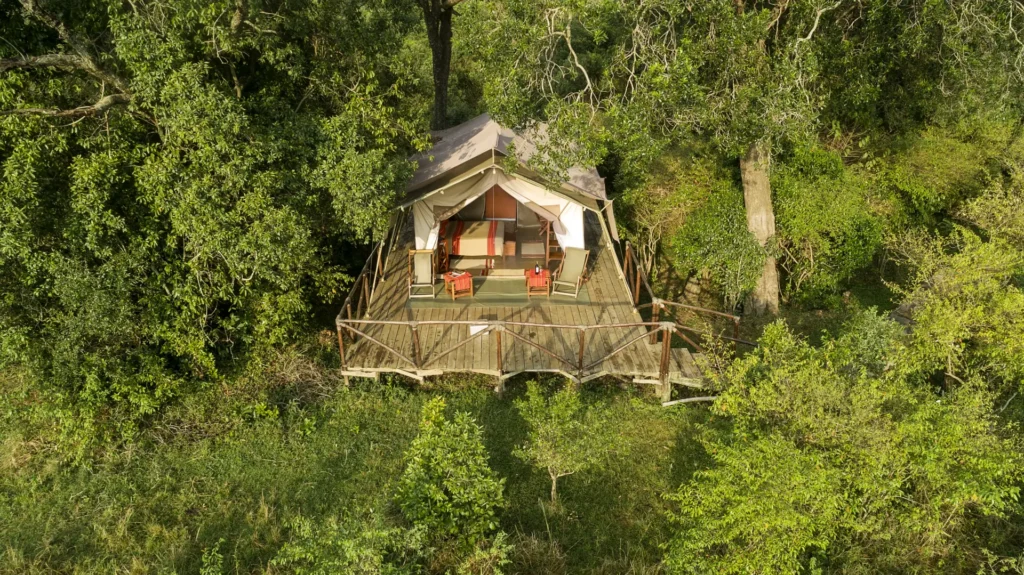
Aerial view of a luxury Kenya safari tent raised on a wooden deck among lush green trees, featuring a real bed and private veranda.
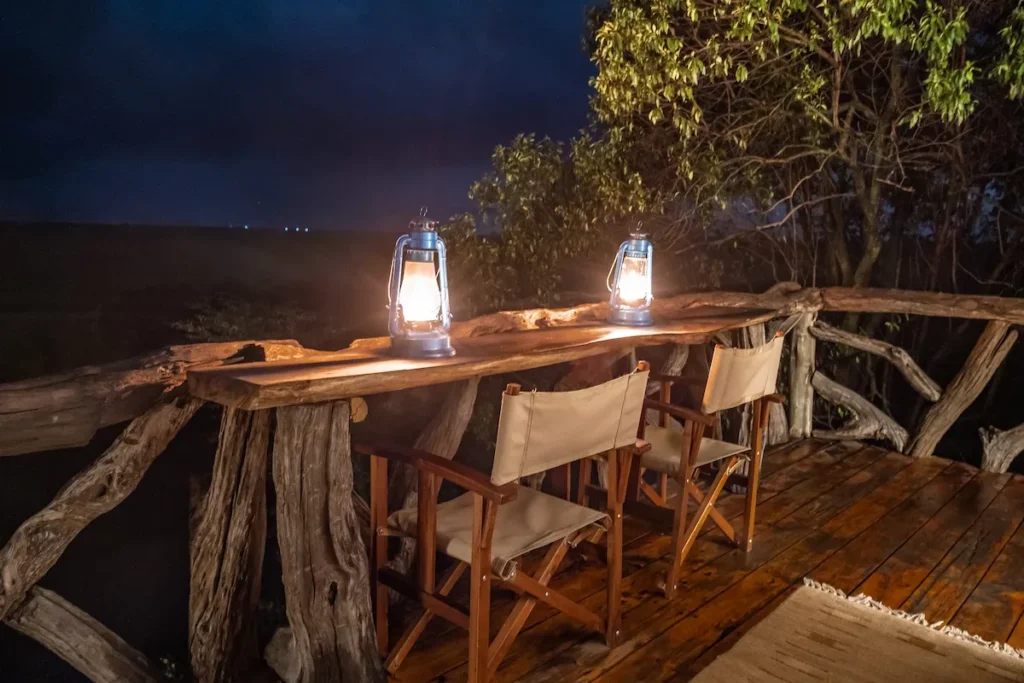
It’s 9:10pm on the first night at a tented camp in Lemek Conservancy. Dinner is over and the fire is down to embers. One of our guests stands at the edge of the dining tent with a torch in one hand and a handheld radio in the other. Her tent is a short walk away across open grass. She has just been told the door is held shut by a zip, and she asks the question every first-timer asks in some form: what is a safari tented camp like when the lights go out, and is a zip really the plan?
It isn’t the plan. The plan is the night guard waiting beside her with a torch of his own, the radio on her bedside table, the rule that no food stays in the tent and staff who know exactly which paths the wildlife use. The zip keeps the mosquitoes out. We walk her to the tent, show her the flush toilet and the shower, and tell her to expect noise.
At about 1:30am the hyenas start. One long whoop, then another. Then comes the thumping, stomping rush of Omosh, the camp’s resident hippo, running along the path he uses beside the tent. Somewhere out on the plains a lion roars, and it sounds as if it’s behind the tent but is almost certainly kilometres away. At breakfast she says she barely slept and wouldn’t swap the night for anything. That is a tented camp in two sentences, and it’s the honest version most brochures skip.
We’re Afrikan Accent Adventures, a Nairobi-based safari operator, and the same questions come up before every tent booking: bathrooms, hot water, noise, safety and whether a lodge would be the smarter choice. Here are the straight answers. A tented camp isn’t camping and it isn’t a lodge. Pick the wrong one for the way you sleep and you’ll know by 2am.
| QUICK ANSWER | What is a luxury safari tented camp like? A safari tented camp is a small camp of permanent canvas tents, each with a real bed, flush toilet and hot shower, usually on solar power. You hear the bush all night and walk with an escort after dark. At good camps, comfort matches a lodge; the walls do not. |
At a Glance:
- The tent: Permanent canvas tent, usually on a raised wooden platform, with a real bed, private veranda and en-suite bathroom.
- Bathroom: Flush toilet, basin and shower at Mara Elatia Camp, Emboo River Camp and Enkakenya Camp. Mobile camps may use a bucket shower.
- Hot water: Solar-heated at Emboo River Camp. Rain showers with hot water at Mara Elatia Camp.
- Power: Emboo River Camp runs round the clock on solar. Charging and Wi-Fi are covered in our separate guide.
- Safety: Night guard escort after dark, no food in the tent, zip closed, torch and radio to call staff.
- Night noise: Lion roars carry up to about 8 km. Expect hyena whoops and hippo grunts too.
- Scale: Mara Elatia Camp has 16 tents. Emboo River Camp has 11. Enkakenya Camp has 4. Mara Serena Safari Lodge has 74 rooms.
- Cost context: Our 4-day Mara Elatia Camp safari starts from USD 1,440 per person and our 4-day Enkakenya Camp safari from USD 2,409.
What is a safari tented camp like, and is it really camping?
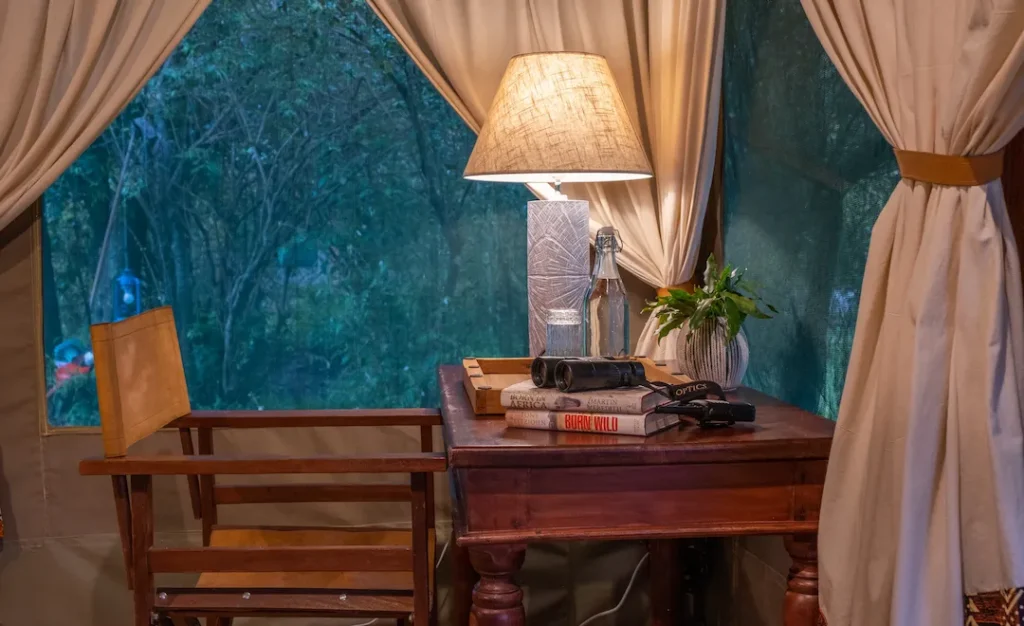
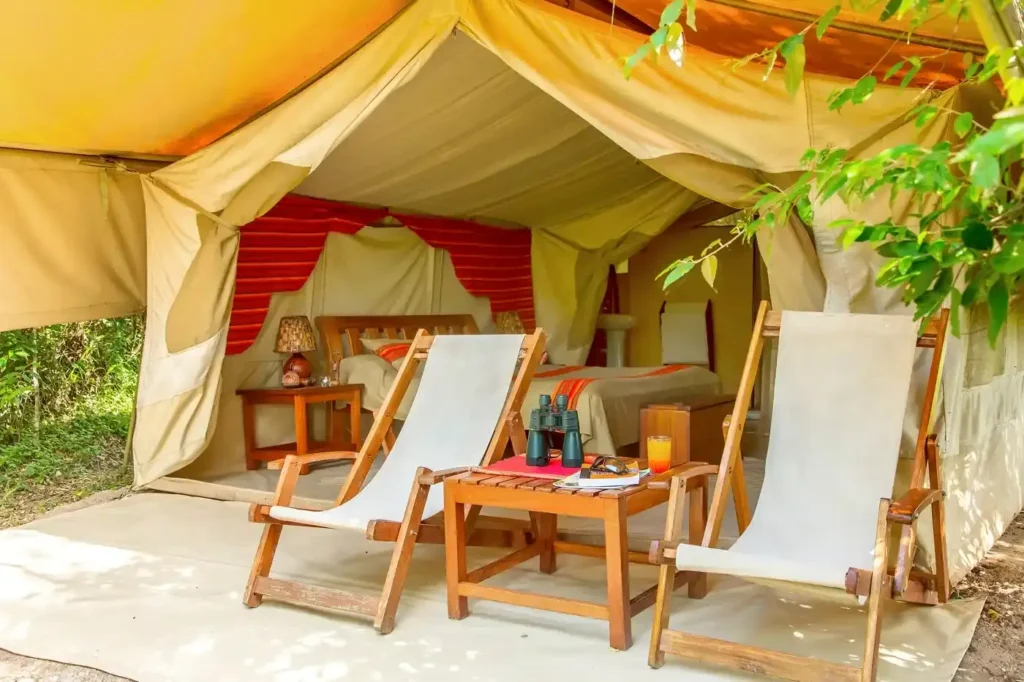
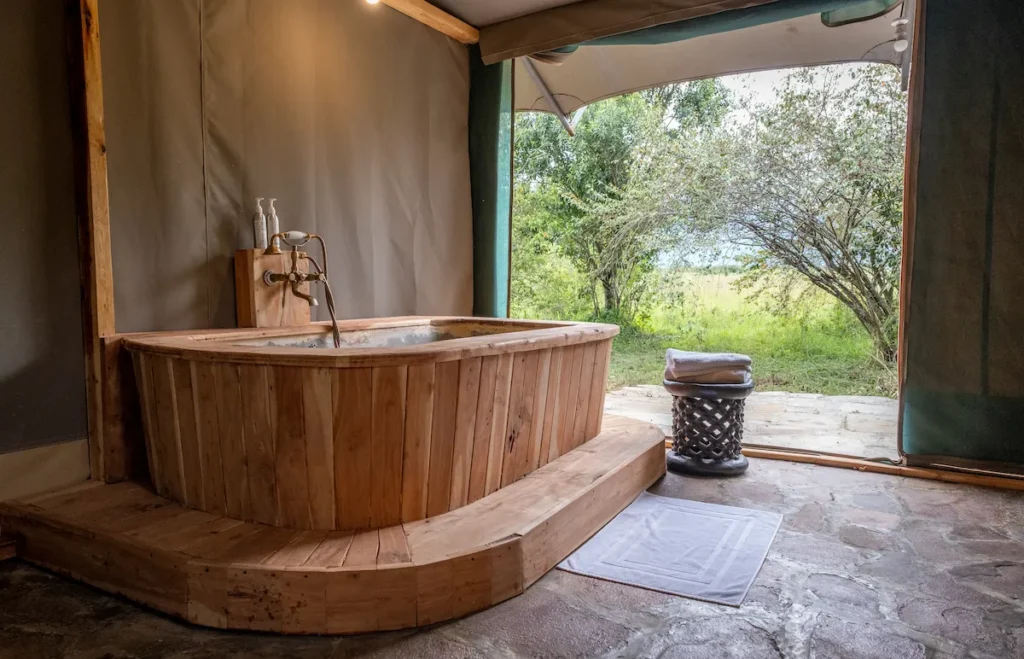
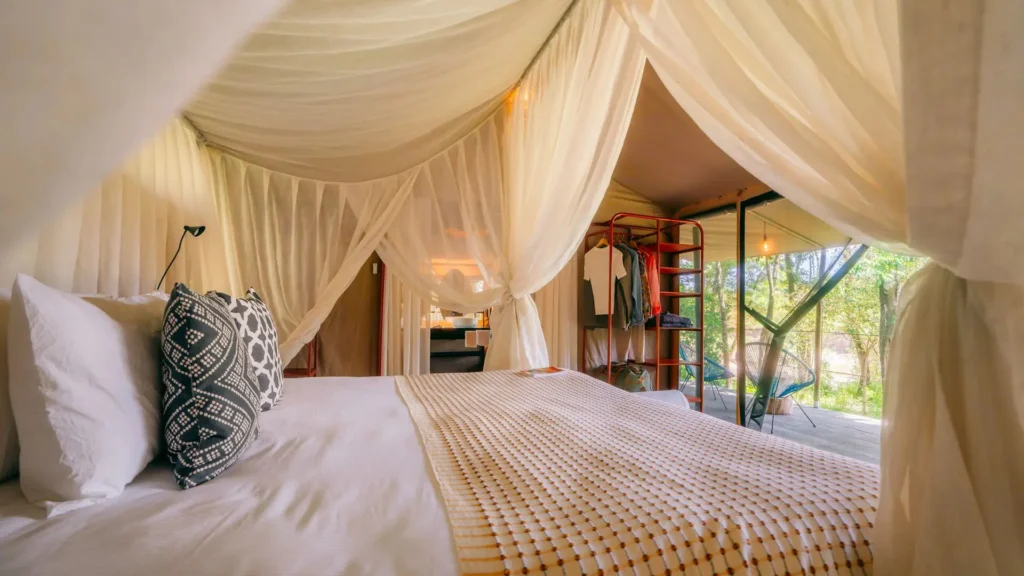
No, it isn’t camping in the way most people mean. A permanent luxury tented camp is a small cluster of canvas tents, usually raised on wooden platforms, each with a proper bed, a private veranda and an en-suite bathroom behind the canvas. Staff cook, clean and carry. You don’t pitch anything and you don’t share a bathroom.
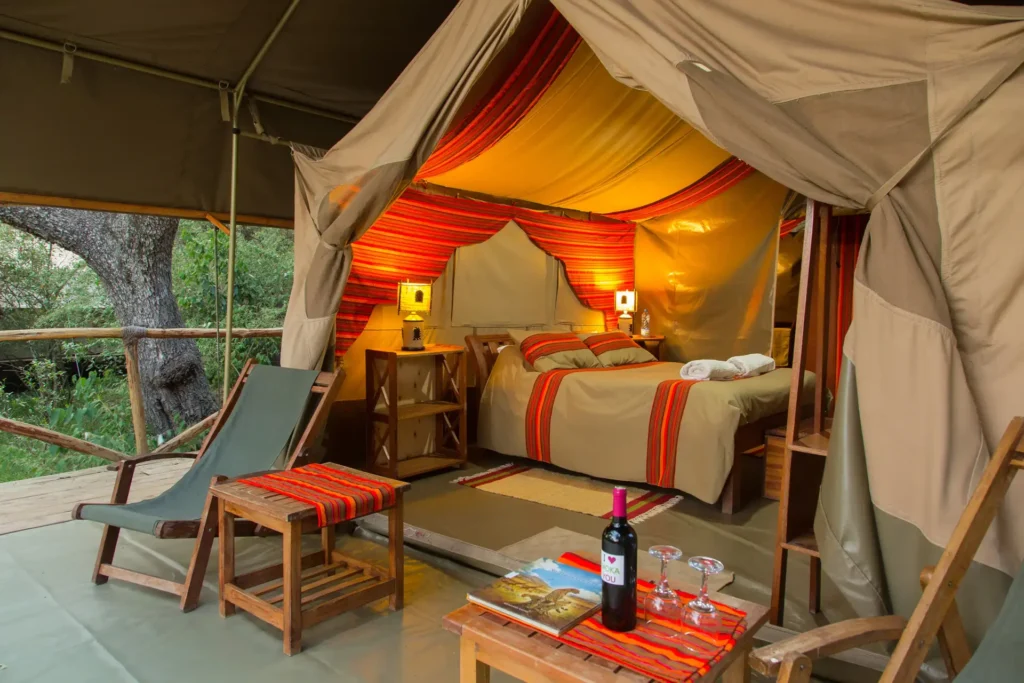
The tent itself is what surprises people. The canvas is stretched over a solid frame, the closures are heavy-duty and inside you find a real bed with linen, a lamp and a bathroom that works like a hotel’s. What’s missing is sound insulation.
Three things that all get called a tented camp
- Permanent tented camp. Open all year with fixed tents and plumbed bathrooms. Mara Elatia Camp, Emboo River Camp and Enkakenya Camp are all this type.
- Seasonal or mobile camp. The same canvas, but it moves with the season and the bathroom is often simpler, such as a bucket shower heated on request. Wonderful atmosphere. Different comfort level.
- Basic camping. A dome tent and shared washrooms. Cheaper, and a different trip entirely.
When a listing says tented camp, ask which of the three it is. The price won’t tell you. Count the tents too. A camp with 16 tents behaves like a camp. A camp with 70 behaves like a hotel with canvas walls.
You are not sleeping outdoors. You are sleeping indoors with the bush’s volume turned up.
Three tented camps we use in the Masai Mara, and what each is really like
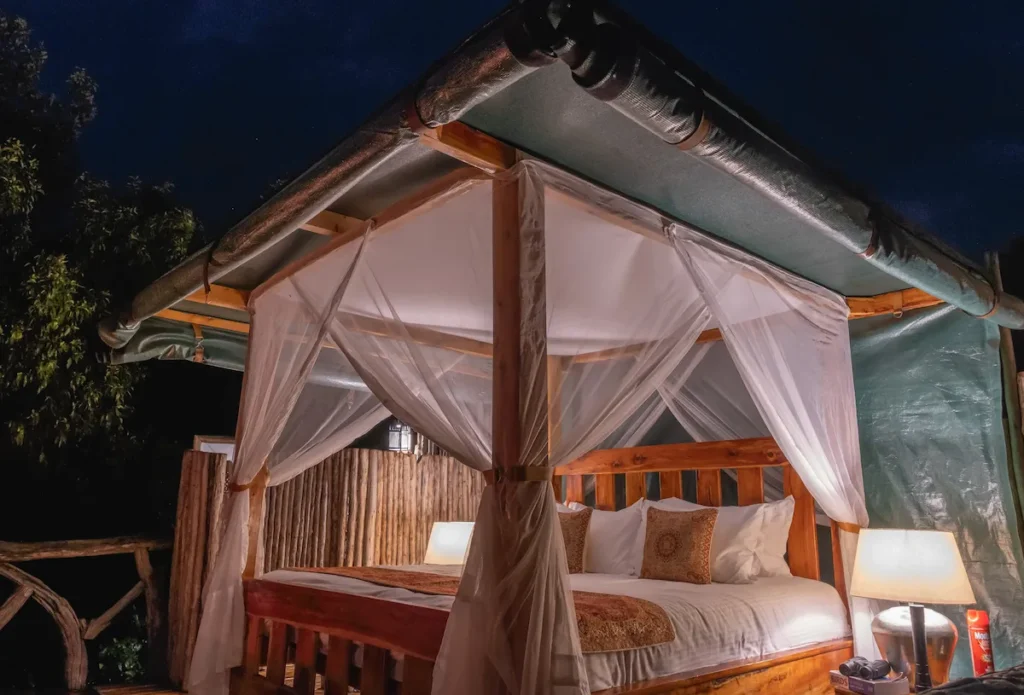
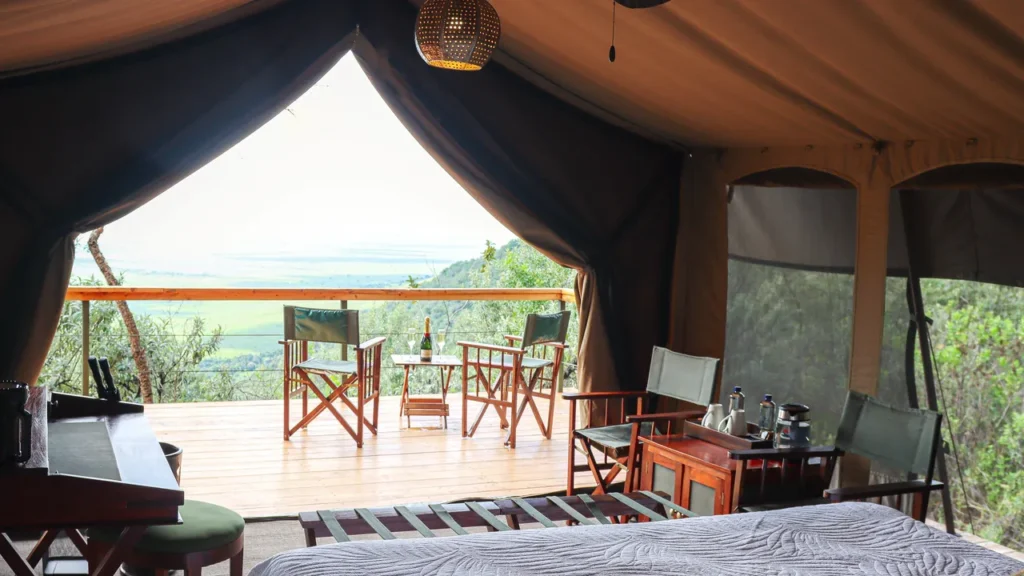
Facts first, checked against each camp’s own listing.
Mara Elatia Camp, Partakilat Conservancy (Mara Triangle)
Mara Elatia Camp sits on the Oloololo Escarpment above the Mara Triangle, about 280 km from Nairobi. Heritage Hotels, which runs it, lists 16 tents, each with an en-suite bathroom, a rain shower, free Wi-Fi and a private balcony. You get there in about 45 minutes by air or roughly six hours by road via Narok. The camp offers access to a community-led white rhino sanctuary and walking safaris in Partakilat Conservancy with Maasai guides. It’s the tent we point most first-timers to in the Mara, which is why our 4 Days Masai Mara Safari at Mara Elatia Camp starts from USD 1,440 per person.
Emboo River Camp, Talek River (Masai Mara National Reserve)
Emboo River Camp is a small camp on the Talek River inside the Masai Mara National Reserve. Asilia Africa, which operates it, lists 11 tents including one family suite, all with en-suite bathrooms and plumbed showers with solar-heated water. The whole camp runs on solar power, the game-drive vehicles are solar-powered and Wi-Fi is limited. It suits guests who want a quiet tent and a lighter footprint. It’s a river camp, so expect river sounds after dark. See our 4 Days Masai Mara Eco Safari at Emboo River Camp.
Enkakenya Camp, Olare Orok River
Enkakenya Camp is the smallest of the three. It has four safari tents set along a creek and a line of fig trees on the border between Mara North Conservancy and the Masai Mara National Reserve. The tents are solar-powered, with en-suite hot showers and private verandas. Four tents means no crowd at the fire and very little distance between you and the people running the camp. Our 4 Days Masai Mara Luxury Safari at Enkakenya Camp starts from USD 2,409 per person.
What are the bathrooms, hot water and power like in a Kenya tented camp?
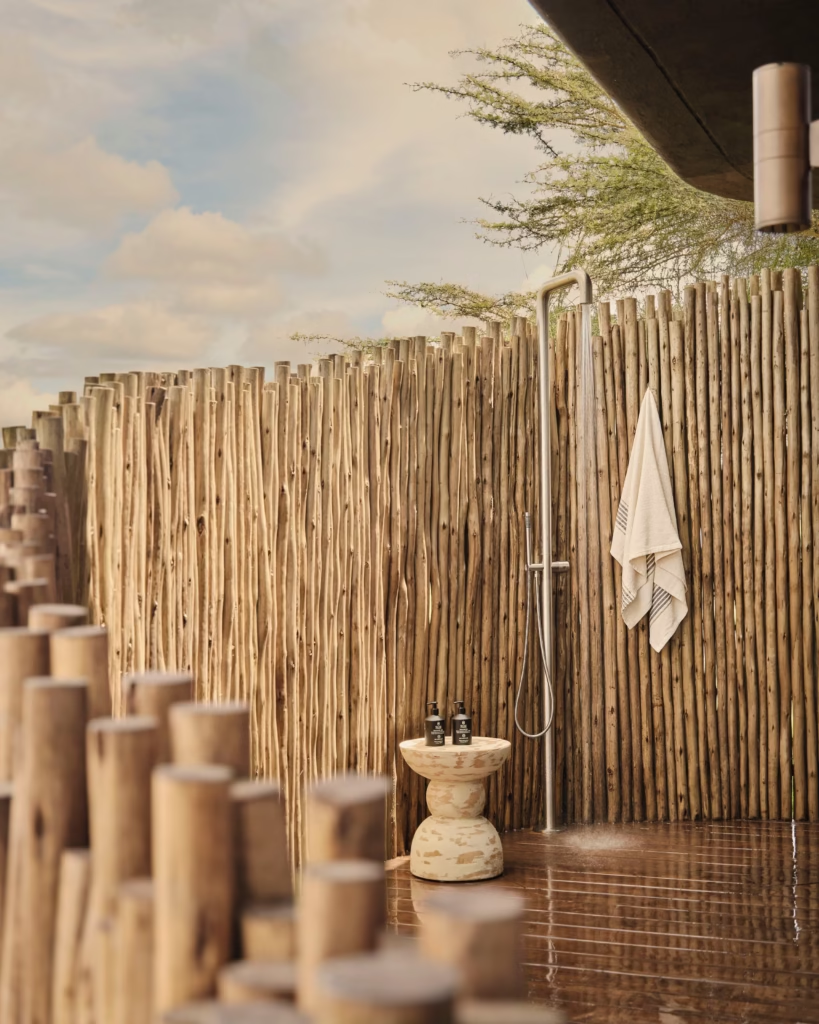
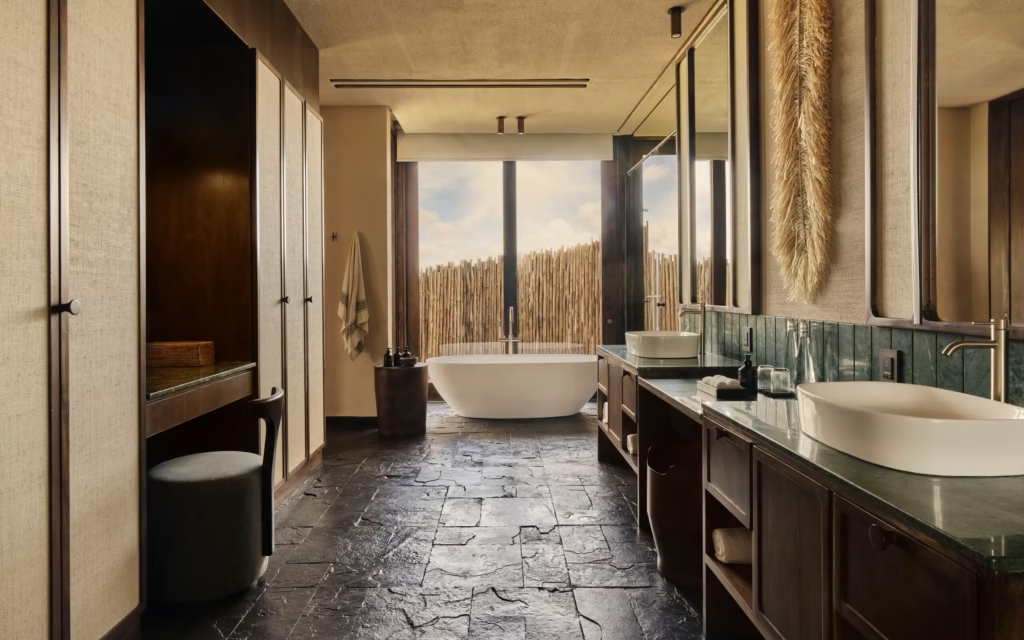
| QUICK ANSWER | Do safari tents have bathrooms? Yes. Luxury safari tents have en-suite bathrooms with a flush toilet, basin and shower, usually plumbed and solar-heated. At Mara Elatia Camp and Emboo River Camp you get a proper hot shower. Mobile and seasonal camps are simpler, often a bucket shower heated on request. |
Toilets and showers
At each permanent camp above, the bathroom is a proper room attached to the tent: flush toilet, basin and shower with plumbed water. Mara Elatia’s showers are rain showers. Emboo’s are plumbed and solar-heated. Luxury tented camp bathrooms in Kenya often go further, with double basins, outdoor showers or deep baths, but the baseline is a flush toilet and a hot shower you don’t have to organize.
Mobile camps are the exception. You may get a bucket shower, where staff fill an overhead bucket with hot water at a time you request. It works well. It also means a shower is something you schedule.
Hot water
Hot water at Mara tented camps is almost always solar. At Emboo the solar plant also heats the water. That’s clean and dependable in sunshine. It also means water temperature follows the weather, so ask a camp how it copes during a wet week. Ask too whether hot water is on tap or on request. It decides when you’ll want to shower after a dusty game drive.
Power at night
Most luxury tented camps run lights off solar batteries through the night, but some ration power or switch off at set hours. Emboo runs round the clock on solar. Plug types, charging points and wifi differ camp by camp, and we cover them in full in our guide to wifi, electricity and charging on safari in Kenya, so we won’t repeat that here.
| EXPERT NOTE Read the tent count before the brochure. Under 20 tents, you’re in a camp where staff know your name by the second dinner. Above 60, the bathrooms may be just as good but the experience is a hotel’s. Canvas isn’t what you’re choosing. Scale is. Kibara Mugo, Safari Writer and East Africa Specialist |
Is it safe to sleep in a tent on safari?
| QUICK ANSWER | Is it safe to sleep in a tent on safari? Yes, at a reputable camp. Safety comes from protocol, not canvas: a night guard escorts you after dark, food stays out of the tent, the zip stays closed and you have a torch and radio to call staff. Most camps are unfenced, so never walk alone at night. |
Unfenced doesn’t mean unguarded
Most Mara tented camps are unfenced. Wildlife walks through and elephants and zebra pass without fuss. Asilia, which runs Emboo River Camp, says animals generally avoid tents because of human movement, scent and camp activity, and that its security staff watch the grounds through the night. The maasai night guards, known as askaris, patrol the camp and escort guests between tent and dining area after dark.
The four rules that matter
- Don’t walk alone after dark. Use the radio or torch signal to call the night guard and wait for them.
- Keep food out of the tent. Ask the manager to store snacks for you.
- Zip the tent fully every time you go in or out. It keeps insects out and keeps the barrier intact.
- Do what your guide or the night guard says, straight away and without negotiating.
What we’d ask any camp before booking
Is there a night escort? Does every tent have a radio or another way to call staff? Where are snacks stored? Those three answers tell you more about safety than any star rating. Skip any camp that can’t answer them.
A tent is not what keeps you safe. The people and the rules around it are.
| EXPERT NOTE The animals aren’t the variable at night. The shortcut is. Guests who wait for the escort, even for a thirty-second walk to dinner, never have a problem. We brief every guest on the first evening and we mean the rule literally. Nicholas Wangithi, Director & Founder |
Our wider guidance, including road travel and health, sits in the Kenya safari safety guide.
What will you hear at night, and are safari tents noisy?
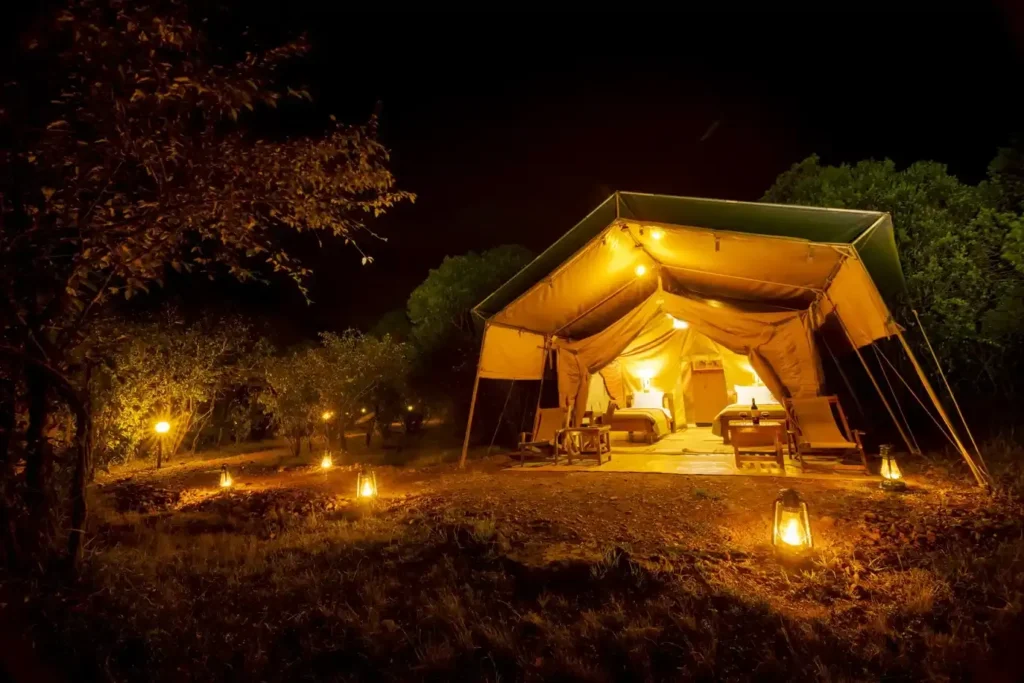
| QUICK ANSWER | Are tented camps noisy at night? Yes, but with wildlife rather than people. Lion roars carry up to about 8 km, hyenas whoop, hippos grunt along rivers and canvas lets it all in. Most guests settle within a night or two. Ask for a tent away from the river if you sleep lightly. |
Tented camps are noisy in a way that surprises people. It isn’t people noise. It’s wildlife noise, and the canvas lets the soundtrack arrive uncut.
The usual cast
- Lion. Roars at night can carry up to about 8 km on a still night, so a distant lion can sound as if it’s beside the tent.
- Spotted hyena. The long rising whoop is a contact call that travels far. The high cackle is closer and usually means excitement or competition.
- Hippo. Deep grunts and honks, loudest near rivers and among the biggest sounds of the Mara night.
- Everything else. Rain on canvas, wind, insects, owls, zips and the soft tread of the night guard.
Will you actually sleep?
Most guests do. The sounds can disrupt sleep for the first night or two before people settle. A tent chosen with care does most of the work. If you sleep lightly, ask for a tent away from the river. If voices bother you, ask for one away from the dining area. Then pack earplugs.
Bring earplugs. Don’t use them on the first night.
That isn’t a joke. The first night is the one you came for.
Safari tent vs lodge in Kenya: which is better for you?
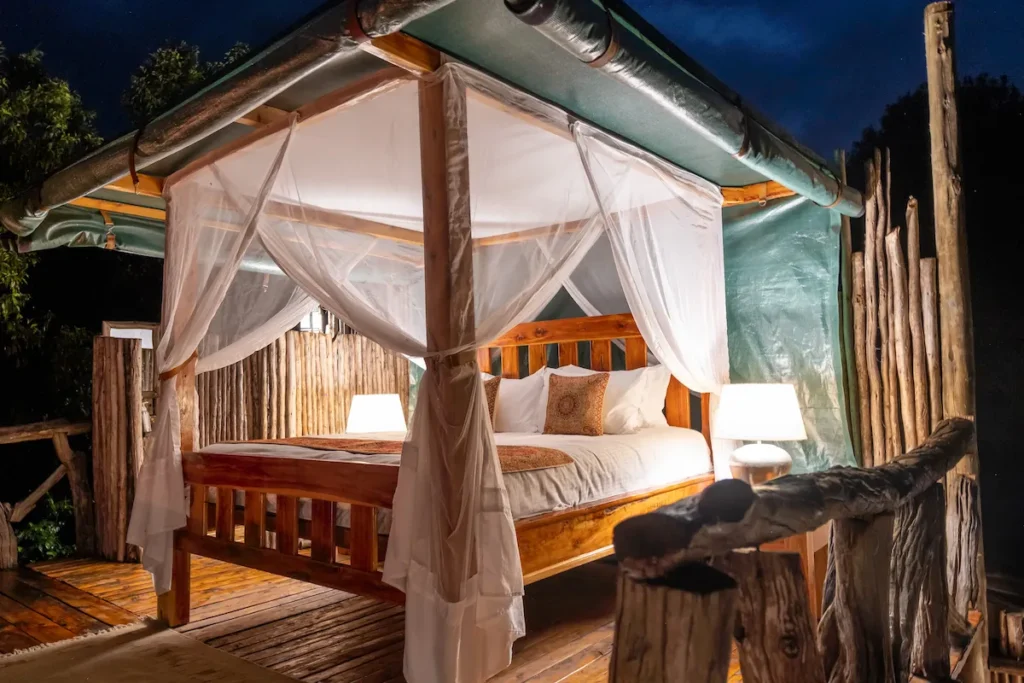
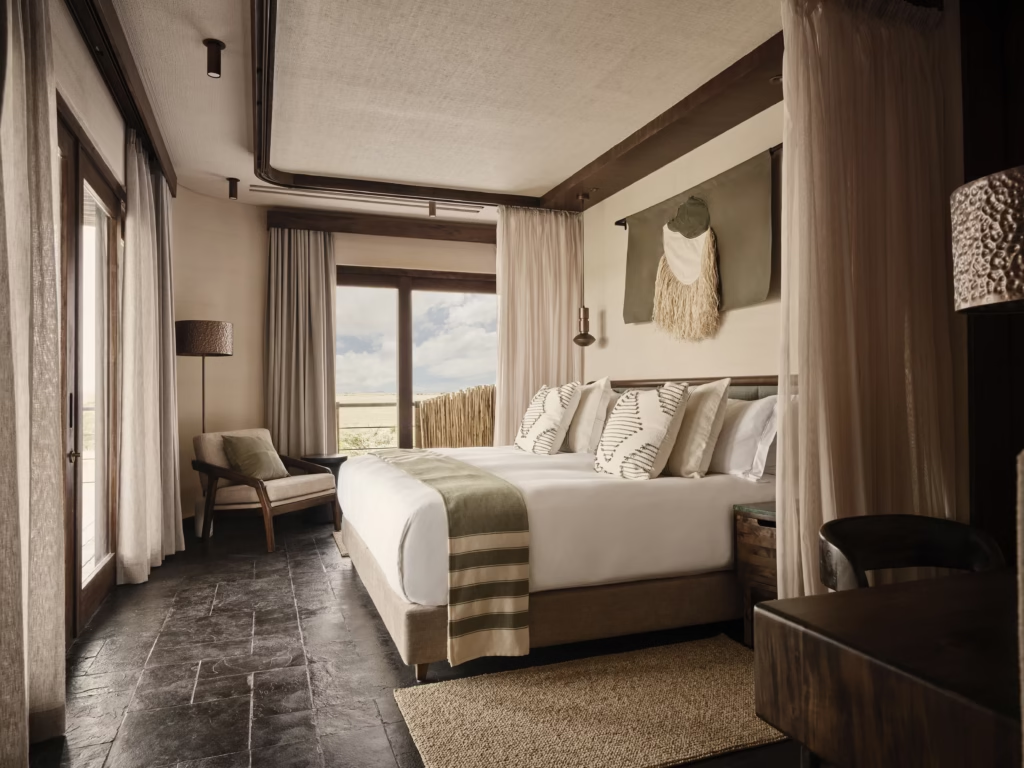
| QUICK ANSWER | Is a tent or a lodge better on safari? Neither wins outright. Choose a tent for the sounds, privacy and small scale of a camp. Choose a lodge for thicker walls, a pool and more facilities. In the Masai Mara we put most guests in tents, but light sleepers and anyone with mobility limits should ask us first. |
| Tented camp | Lodge | |
| Walls | Canvas over a frame | Brick or stone |
| Night sound | The full bush soundtrack | Muffled |
| Bathroom | En-suite, usually plumbed and solar-heated | En-suite |
| Scale | Mara Elatia 16 tents, Emboo 11, Enkakenya 4 | Mara Serena Safari Lodge has 74 rooms |
| Facilities | Lounge, dining tent and fire pit | Pool, spa, gym and a larger restaurant at Mara Serena |
| Mood | Small, quiet and close to the bush | Social, comfortable and easy |
| Best for | Couples, friends and families with older children | Light sleepers, limited mobility and pool lovers |
Our view
In the Masai Mara we put most guests in tents, because the setting is the point. A lodge answers a different list. Mara Serena Safari Lodge has 74 en-suite rooms, a rock-surround swimming pool, a spa and gym, ceiling fans, free Wi-Fi throughout and interconnecting family rooms, in a Maasai manyatta-inspired design in the Mara Triangle. If a pool and thick walls matter more to you than a quiet camp, choose the lodge and don’t apologize for it.
Neither is more luxurious by default. A tented camp with 11 tents and solar-powered vehicles can cost more than a lodge with a spa.
How do you charge phones, and is there wifi in a tent?
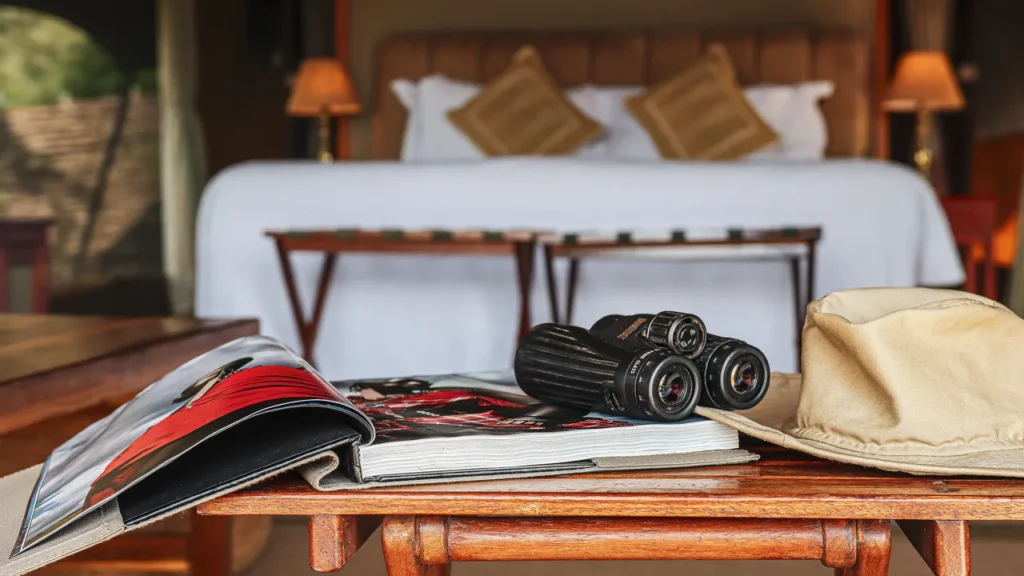
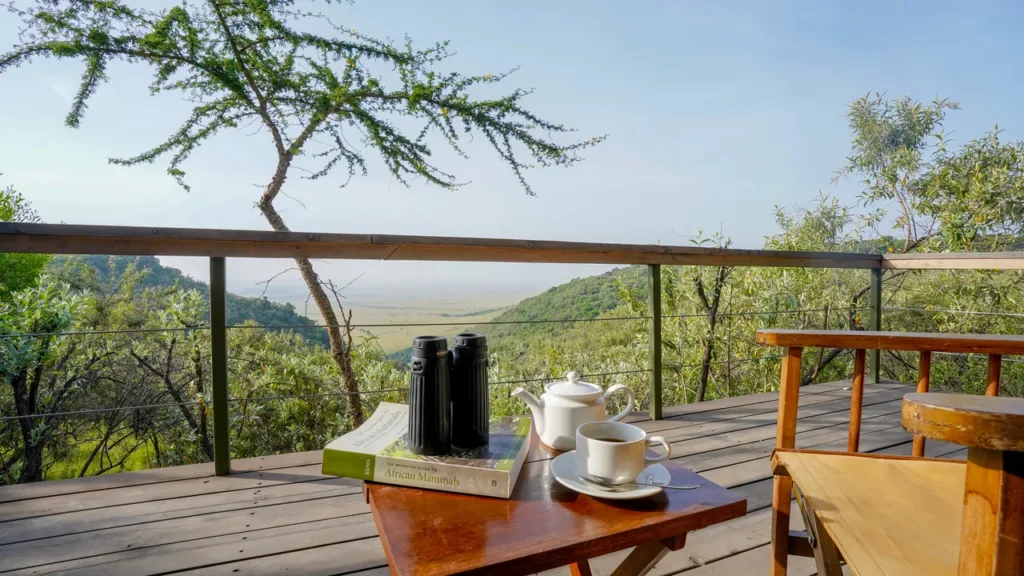
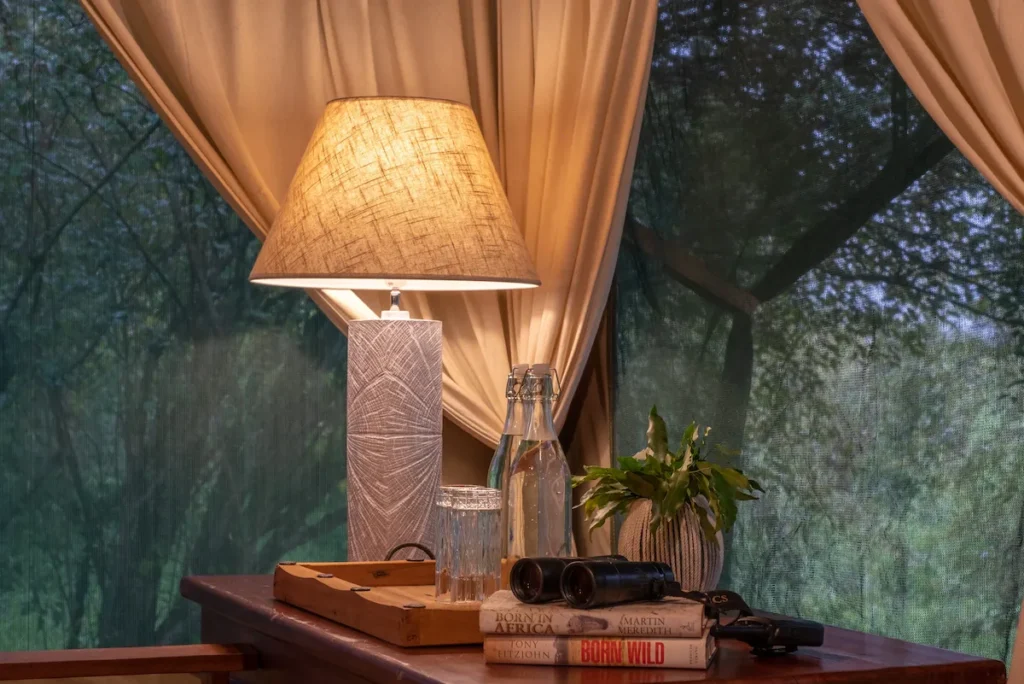
Usually yes, with limits. Mara Elatia Camp lists free Wi-Fi and Emboo River Camp offers limited Wi-Fi, so treat the connection as a convenience rather than a given. Charging runs off solar at most camps, either in the tent or in the lounge. Everything else, including plug types, power rationing, satellite internet and what to pack, sits in our guide to wifi, electricity and charging on safari in Kenya.
What does a tent cost compared with a lodge?
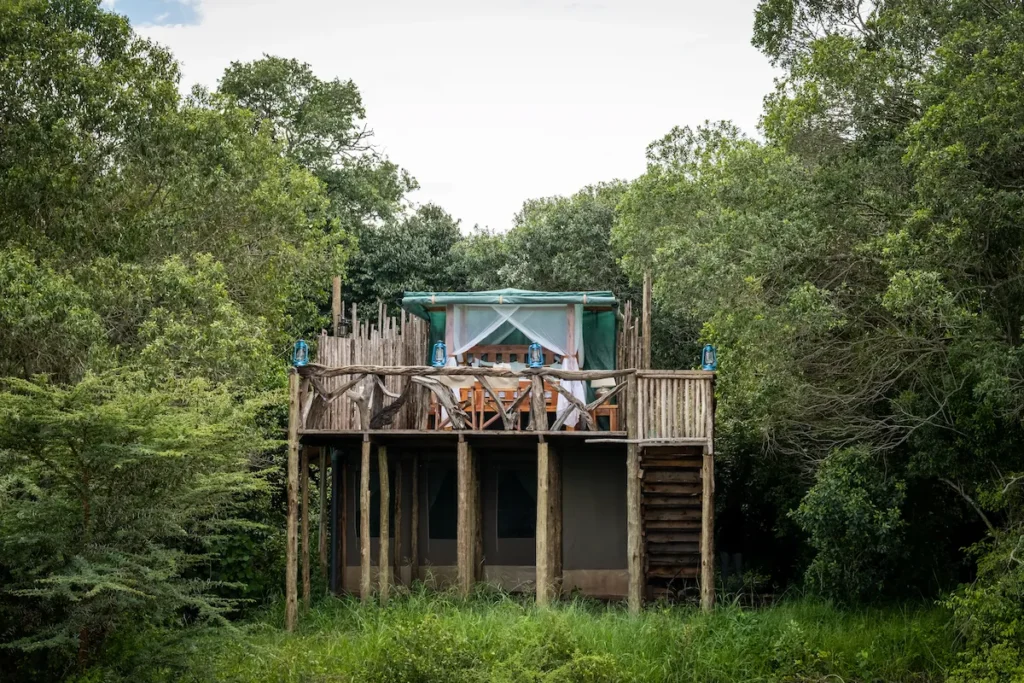
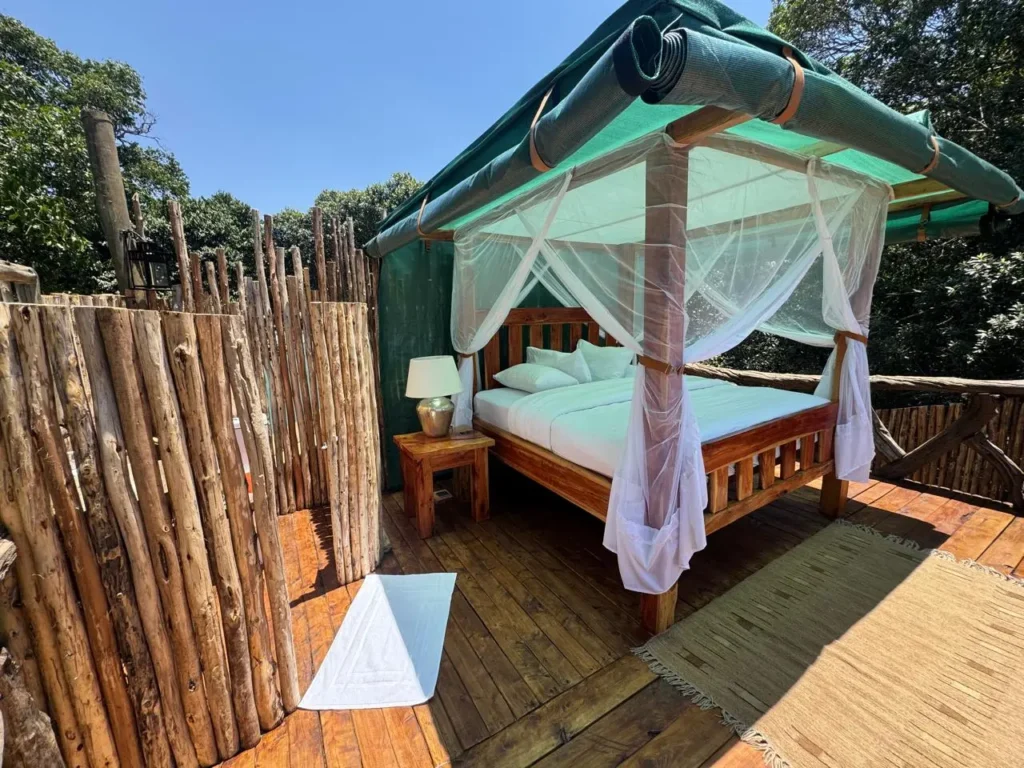
The material of the walls doesn’t set the price. Location, camp size, vehicles and guiding do. Here is where our live Masai Mara tented safaris sit, per person for four days:
- Mara Elatia Camp, Mara Triangle: from USD 1,440.
- Enkakenya Camp, Olare Orok River: from USD 2,409.
- Emboo River Camp, Talek River: priced above both. Check the live eco safari page for today’s rate.
That is a wide spread inside one category, which proves the point. A very cheap tent usually saves money on guiding, vehicles or location, so ask which. Before you compare any two quotes, check what’s included, because park or conservancy fees, flights and extras such as a balloon flight move the total more than canvas versus concrete does. For the wider cost picture, see our Kenya luxury safari guide.
What do first-timers get wrong about tented camps?
- Hard suitcases. Small aircraft need soft bags and many flights cap luggage at around 15 kg. It happens at Wilson Airport at 5:40am more often than you’d think: a hard suitcase, a guest and a check-in desk that won’t take it.
- Under packing for cold. Mara nights can be cold, especially in the cooler months. Bring a fleece and ask whether the camp adds a hot water bottle.
- Walking to dinner alone. See the four rules above. This is the one that matters.
- Eating in the tent. A biscuit is still food.
- Choosing by photo. Check the tent count, the distance to the river and the distance to the dining tent.
| EXPERT NOTE Tell us before we reserve if anyone has limited mobility, sleeps lightly or is travelling with children. Raised decks mean steps and walking distances vary from tent to tent. We’d rather place you in the right tent now than move you on arrival. Hellen Asiko, Director & Guest Experience Curator |
Who loves tents, and who should choose a lodge?
Choose a tent if
- You want the bush in earshot at night.
- You prefer a camp of under 20 tents to a hotel of 70 rooms.
- You’re happy to walk with an escort after dark.
- You’d take a roaring lion over a swimming pool.
Choose a lodge if
- You’re a very light sleeper.
- Anyone in your party would struggle with steps or escorted walks.
- You want a pool, spa and gym after a long drive.
- You’re travelling with very young children. Age limits vary camp by camp.
If you’re torn, split the stay: two nights in a lodge, then two in a tent. The first night in canvas is easier once you’ve seen how well a camp is run. If you’re planning your first trip, start with our first safari guide.
Safari tent FAQs
Do safari tents have flush toilets?
Yes, at every permanent luxury camp we use. Each tent has an en-suite bathroom with a flush toilet, basin and shower. Mobile and seasonal camps can differ, with bucket showers and simpler facilities, so we confirm the bathroom type before we book.
Do tented camps have hot water and electricity?
Yes, mostly on solar. Emboo River Camp runs on solar power and Mara Elatia Camp offers rain showers with hot water and free Wi-Fi. Some camps ration power or heat water on request, so ask when the lights go out. Our charging and wifi guide covers the detail.
Can a lion or hyena get into a safari tent?
It’s very unlikely at a well-run camp. Tents have secure closures and stay zipped, food is kept out and night guards patrol. Animals do walk through unfenced camps, but they tend to avoid tents. The real risk is a guest walking alone at night.
What do I do if I need help at night?
Use the radio or torch signal in your tent to call camp staff, then stay inside until the night guard arrives. Many camps, put a torch and radio in every tent. Ask at check-in how your camp does it.
Is it cold in a safari tent at night?
It can be, especially on the Oloololo Escarpment in the cooler months. Many camps add hot water bottles. Pack a fleece anyway.
Are tented camps suitable for children?
Often yes, but it depends on the camp. Emboo River Camp has a family suite among its 11 tents, while minimum ages vary by camp and activity. We confirm age rules before booking.
Do I need malaria tablets when sleeping in a tent?
Take medical advice before you travel, because the Masai Mara is generally treated as a malaria-risk area. Tented camps screen openings with mesh and provide nets over the beds, but nets don’t replace the prophylaxis your doctor recommends.
What should I pack differently for a tent?
Soft bags, a head torch, a fleece and earplugs. Small aircraft from Wilson Airport need soft luggage and often limit weight to around 15 kg, so check your flight’s allowance.
Choose between a tented camp and a lodge
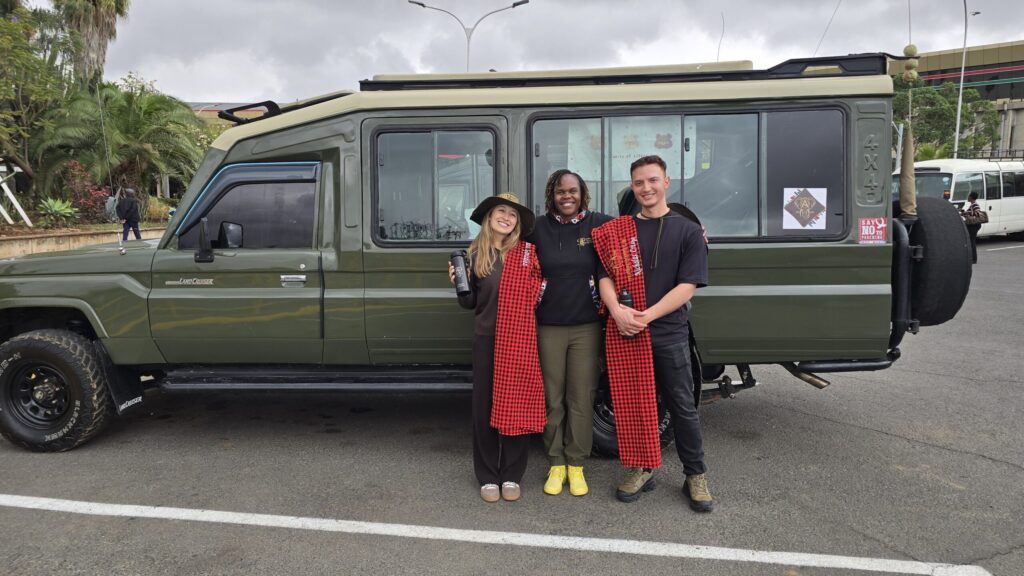
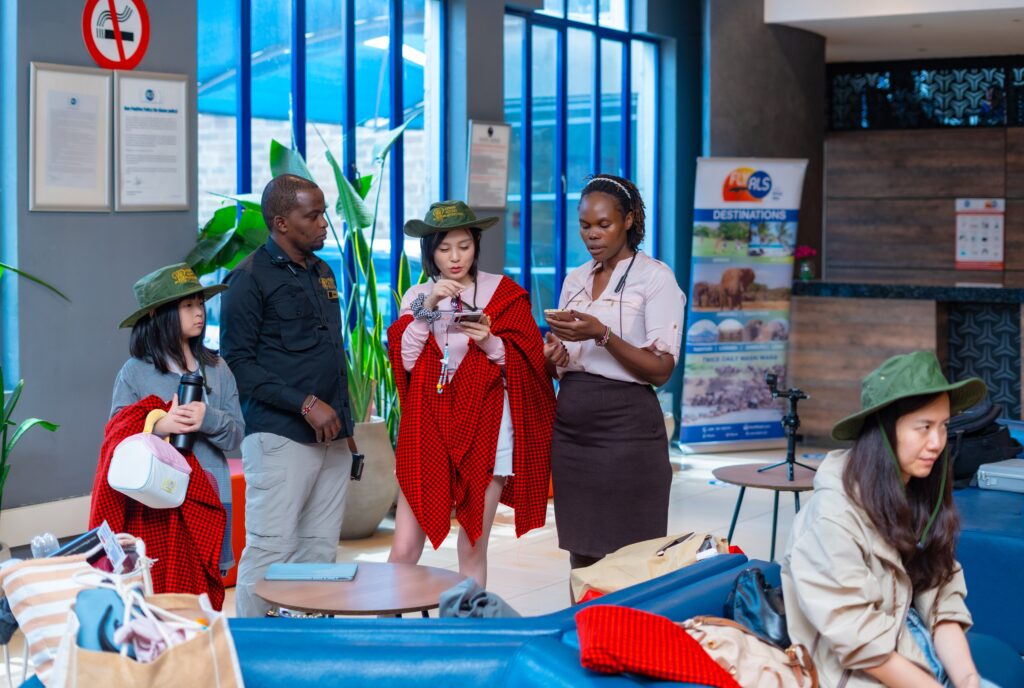
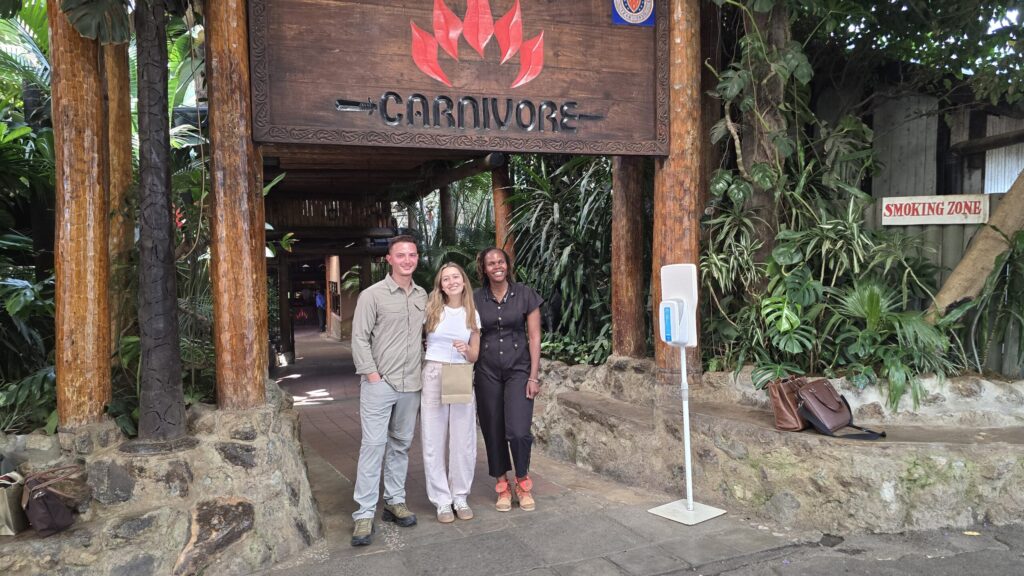
You now know what we tell guests at 9:10pm on the first night: the zip isn’t the plan, the people are. What we offer beyond this article is the choosing. We know these camps, which tents sit near the river and which sit near the dining area, and we match the camp to how you sleep, how you walk and who you’re travelling with. Tell Hellen Asiko, Director & Guest Experience Curator, whether you’re a light sleeper, how mobile your party is and what you want from your nights. She’ll build a tent-or-lodge shortlist from our live safaris: four days at Mara Elatia Camp, the eco safari at Emboo River Camp or the luxury safari at Enkakenya Camp.
A tent won’t make your safari wilder, but it will make your nights part of it.
Let's plan your East African safari
Tell us when you'd love to travel and a local specialist will craft a tailor-made route around you.


