

Planning & Tips
Wifi, Electricity and Charging on Safari: What Kenya’s Camps Actually Offer
From a generator that switches off at ten to a Land Cruiser fitted with its own charging console,…
Read more →
Discover the breathtaking wilderness of Murchison Falls National Park, Uganda’s largest and oldest conservation area, where the mighty Nile River squeezes through a narrow gorge before plunging dramatically over the famous Murchison Falls. Home to abundant wildlife including elephants, lions, giraffes, hippos, crocodiles and over 450 bird species, the park offers unforgettable game drives, boat safaris along the Nile and spectacular views of one of Africa’s most powerful waterfalls. A true highlight of any Uganda safari, Murchison Falls combines diverse landscapes, rich wildlife encounters and the raw beauty of the Nile wilderness.
Murchison Falls National Park, Paraa Gate, just after six in the morning. The Nile is already moving steadily below the escarpment, the first rays of sunlight are catching the tops of the Borassus palms and somewhere out on the northern plains a herd of Uganda kob is beginning to move. The park is quiet at this hour, before the heat builds and before the game-drive tracks fill with vehicles. Then the guide points toward the grassland and the first giraffe appears above the acacias.
We have driven into Murchison Falls National Park many times and that first morning still feels different. There is something about watching the Nile cut through one of Uganda’s largest wilderness areas that immediately tells you this is not an ordinary safari destination.
Murchison Falls National Park is Uganda’s largest national park, covering approximately 3,840 square kilometres in northwestern Uganda. The park forms part of the wider Murchison Falls Conservation Area and stretches across savanna, woodland, riverine forest and wetland habitats around the Victoria Nile and Lake Albert. It was first gazetted as a game reserve in 1926 and became a national park in 1952.
At the centre of the park is Murchison Falls itself, where the Victoria Nile is forced through a narrow gorge before plunging approximately 43 to 45 metres into the gorge below. The pressure of the river through this restricted channel creates the spectacular roar and spray that gave the waterfall its name and remains the defining experience of any Murchison Falls safari.
But Murchison Falls National Park is much more than the waterfall. The northern sector offers some of Uganda’s most rewarding savanna game viewing, with elephant, buffalo, Rothschild’s giraffe, lion, leopard, Uganda kob, hartebeest and other antelope. Along the Nile, hippos and Nile crocodiles gather around the water while African fish eagles, Goliath herons, kingfishers and other waterbirds patrol the riverbanks. Uganda Wildlife Authority records 144 mammal species and more than 550 bird species in the park.
If Uganda is already on your safari list for gorillas and chimpanzees, Murchison Falls National Park is where we suggest adding a completely different side of the country: open savanna, big mammals, the Nile and one of East Africa’s most dramatic waterfalls.
Murchison Falls National Park is Uganda’s largest national park, covering approximately 3,840 square kilometres in northwestern Uganda. It is famous for Murchison Falls, where the Victoria Nile squeezes through a narrow gorge before plunging into the Devil’s Cauldron, as well as for elephants, giraffes, buffalo, lions, Uganda kob, hippos, crocodiles and exceptional birdlife. The park is part of the wider Murchison Falls Conservation Area.
Location: Northwestern Uganda, around the Victoria Nile and Lake Albert
Size: Approximately 3,840 square kilometres
Established: Gazetted as a game reserve in 1926 and designated a national park in 1952
Altitude: Approximately 127 metres at the park’s lower elevations
Managed by: Uganda Wildlife Authority
Distance from Kampala: Approximately 305 kilometres
Driving time from Kampala: Around 4 to 5 hours to the southern entrance, with additional time to reach lodges around Paraa
Flying time: Domestic and charter flights from Entebbe or Kajjansi can reach airstrips serving the park in roughly 1 to 2 hours depending on routing
Known for: Murchison Falls, Victoria Nile boat cruises, savanna game drives, elephants, giraffes, lions, buffalo, Uganda kob and birdwatching
Main tourism area: Paraa and the northern savanna sector
Nearby attractions: Budongo Forest, Lake Albert, Karuma Wildlife Reserve, Bugungu Wildlife Reserve and Ziwa Rhino Sanctuary
Main rivers: Victoria Nile and Albert Nile
The park is large enough that where you stay and which gate you use can make a meaningful difference to your safari experience.
The waterfall is the reason the park carries its name, and it is worth seeing from more than one perspective.
At Murchison Falls, the Victoria Nile is compressed into a narrow rock gorge before dropping into the basin below. From the top, the experience is about sound and force: the river seems almost impossibly powerful as it rushes through the restricted channel. From the bottom, the scale changes completely, with the waterfall rising above the river and mist hanging in the air.
The river continues from the falls through the park toward Lake Albert, creating a long stretch of productive wildlife habitat. Elephants, buffalo and giraffes frequently come down to drink, while hippos and crocodiles spend much of their time in or beside the water.
Murchison Falls is a powerful waterfall on the Victoria Nile where the river is forced through a narrow gorge before plunging roughly 43 to 45 metres below. The falls are the centrepiece of Murchison Falls National Park and can be experienced from the top of the falls and from a boat cruise approaching the bottom.
Murchison Falls National Park offers one of Uganda’s strongest traditional savanna safari experiences.
The northern sector is particularly productive because the open grasslands, Borassus palms and woodland provide ideal habitat for large concentrations of herbivores. The Victoria Nile adds another dimension, drawing wildlife toward the water and creating excellent opportunities for photography.
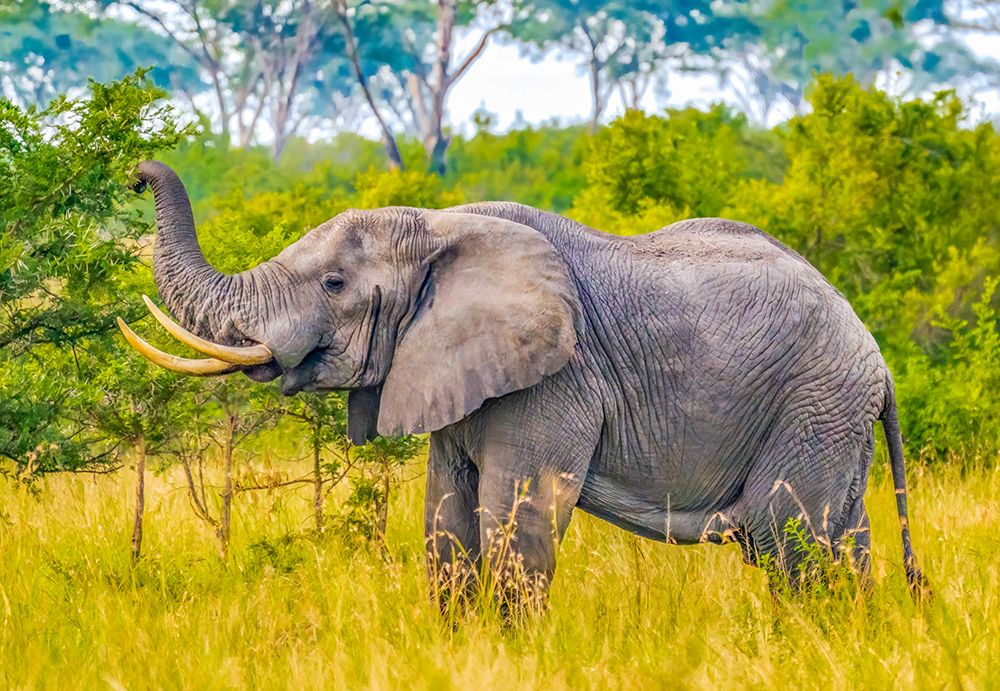
Elephants are among the park’s most memorable residents. Large herds move through the savanna and frequently approach the river, particularly during hotter and drier periods.
Rothschild’s giraffe is another major attraction. These tall giraffes are particularly impressive against the open grassland and Borassus palms, and Murchison Falls National Park is one of the important places in Uganda to see them.
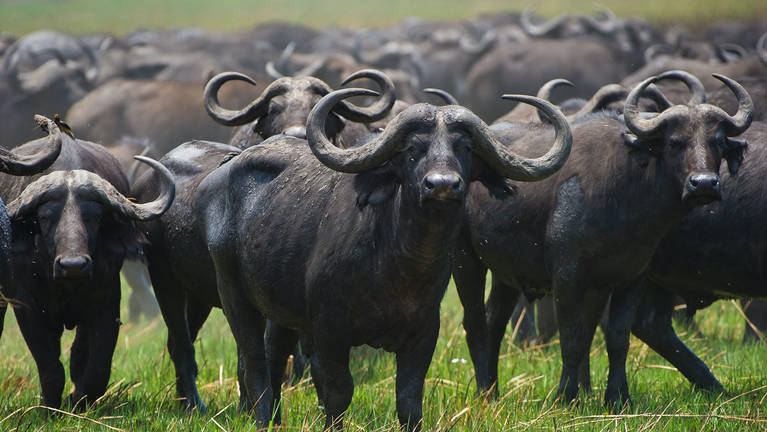
Buffalo are widespread, while Uganda kob can occur in large numbers across the northern plains. Jackson’s hartebeest, waterbuck, warthog and other antelope add variety to game drives.
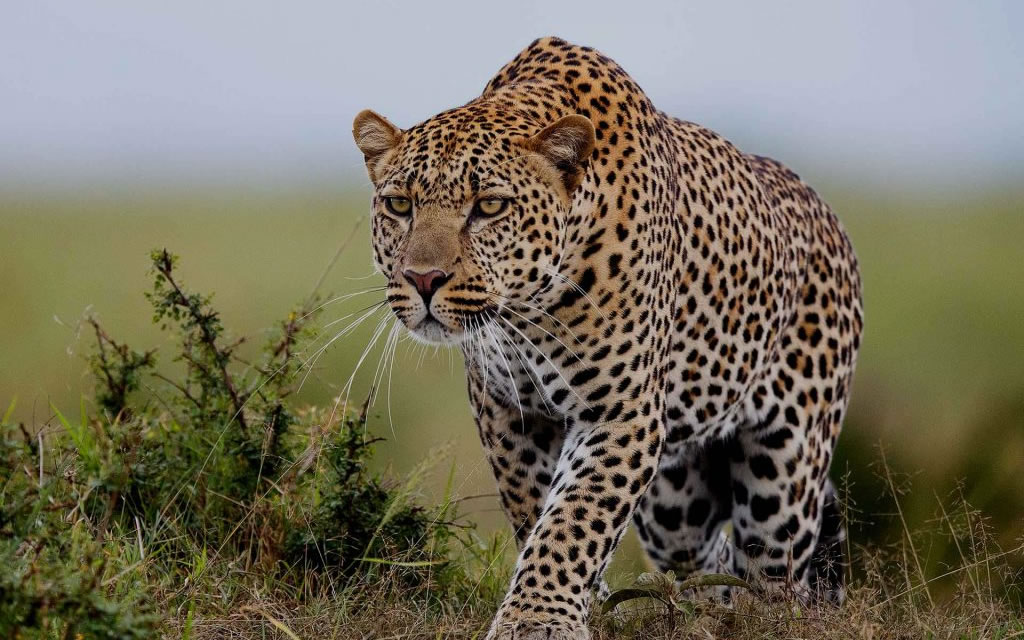
Predators include lion, leopard and spotted hyena. Lion sightings are often strongest around areas where Uganda kob and other prey species are concentrated, while leopard sightings require more patience and a good guide who knows the tracks and riverine vegetation.
The Nile itself supports a different wildlife community. Hippos spend much of the day submerged or resting near the riverbanks, while Nile crocodiles lie motionless along sandy banks waiting for opportunities to feed.
Uganda Wildlife Authority lists 144 mammal species and more than 550 bird species within Murchison Falls National Park, making it one of Uganda’s most diverse safari destinations.
A Murchison Falls safari can include elephant, Rothschild’s giraffe, buffalo, lion, leopard, Uganda kob, Jackson’s hartebeest, waterbuck, warthog, hippo and Nile crocodile. The park also supports more than 550 recorded bird species, including the sought-after shoebill in suitable wetland areas.
Murchison Falls National Park is sometimes marketed as a Big Five destination, but we prefer to set realistic expectations.
Elephant, buffalo and lion are established residents and can be encountered on regular game drives. Leopard is present but naturally more elusive. Rhinoceros are not resident in Murchison Falls National Park itself, so travellers looking specifically for a complete Big Five experience usually combine Murchison Falls with Ziwa Rhino Sanctuary or another destination where rhino can be tracked.
This distinction matters when planning a Uganda safari. Murchison Falls is particularly strong for elephants, giraffes, buffalo, Uganda kob, lions and Nile wildlife rather than simply being a destination where visitors come to tick off five species.
Game drives are the foundation of a Murchison Falls safari.
Early morning game drives are usually our preferred option. The temperatures are cooler, herbivores are active and predators may still be moving after the night. The northern sector around the Victoria Nile offers open landscapes that make it easier to scan for giraffe, elephant, buffalo, Uganda kob and other wildlife.
Afternoon game drives offer a different experience. As temperatures begin to fall, wildlife becomes active again and the changing light creates excellent photography conditions.
A good Murchison Falls safari does not need to rush from one animal to another. The size of the park means that the best experiences often come from slowing down, watching behaviour and allowing the guide to read the landscape.
The boat cruise along the Victoria Nile toward the bottom of Murchison Falls is one of the defining experiences in the park.
From the water, the wildlife comes into view from a completely different angle. Hippos gather in the shallows, crocodiles rest on the banks and elephants, buffalo and other animals often come down to drink.
The boat continues toward the base of the falls, where the sound of the water gradually becomes louder and the gorge begins to close around the river. This is one of the best ways to understand how the Nile shapes the entire ecosystem of Murchison Falls National Park.
Boat trips to the bottom of the falls have historically been listed among the Uganda Wildlife Authority’s activities for the park, with activity fees charged separately from park entry.
Standing above Murchison Falls gives you the opposite perspective from the boat cruise.
Here, the focus is the river itself. You can watch the Victoria Nile being forced into the narrow gorge and feel the spray rising from below. The viewpoint is particularly impressive when water levels are high.
For many travellers, combining the top-of-the-falls visit with the bottom-of-the-falls boat cruise creates a much more complete understanding of the waterfall.
A guided walk to the top of Murchison Falls can be arranged as part of a safari, subject to current Uganda Wildlife Authority regulations and conditions.
The walk is less about distance than about getting close to the geological feature that defines the park. The final approach to the falls brings the sound of the Nile and the spray into the experience in a way that a vehicle viewpoint cannot reproduce.
Murchison Falls National Park is one of Uganda’s important birdwatching destinations, with more than 550 recorded bird species.
The Victoria Nile and Albert Delta are particularly productive areas for birdwatchers. Depending on season and water conditions, visitors may encounter African fish eagle, Goliath heron, saddle-billed stork, kingfishers, bee-eaters and other water-associated species.
The shoebill is one of the biggest draws for serious birders. Sightings are never guaranteed, but the wetlands around the Albert Delta offer opportunities to search for this prehistoric-looking bird.
A shoebill search is different from a conventional game drive. Instead of scanning open savanna for large mammals, the focus shifts to papyrus wetlands and shallow water where the bird may stand almost completely motionless.
If seeing a shoebill is a priority, tell us before your Murchison Falls safari so we can structure the itinerary around the right habitat and local birding expertise.
The Victoria Nile below Murchison Falls offers sport-fishing opportunities, particularly for Nile perch.
Fishing trips are typically arranged separately from standard game drives and boat cruises, and the appropriate permits and guides are required. The experience appeals particularly to travellers who want to spend more time on the river rather than simply passing through it.
Budongo Forest lies on the southern side of the Murchison Falls Conservation Area and provides an opportunity to add a forest experience to a savanna safari.
Chimpanzee tracking in Budongo creates a useful contrast with Murchison Falls game drives. Instead of open plains and large mammals, visitors enter a mature forest environment searching for chimpanzees, monkeys and forest birds.
If chimpanzees are a priority, we recommend booking the activity in advance because permits and availability can affect the itinerary. Budongo is particularly useful for travellers who want to combine Uganda’s savanna and primate experiences without adding another major destination.
Guided nature walks around the Murchison Falls Conservation Area allow visitors to experience the landscape at a slower pace.
Walking shifts attention away from large animals and toward tracks, plants, insects, birds and smaller signs of wildlife. It is particularly valuable for travellers who have already experienced several game drives and want a more detailed understanding of the ecosystem.
Communities around Murchison Falls National Park provide opportunities to learn about local traditions, crafts, farming and everyday life.
We recommend choosing community visits that are organized with local residents and where the community directly benefits from tourism. A good cultural experience should feel like an exchange rather than a staged performance.
Murchison Falls National Park is exceptionally photogenic because three very different landscapes meet: open savanna, the Nile and the dramatic escarpment around the falls.
Morning light works particularly well for wildlife photography, while late afternoon produces warm light across the plains. The river offers opportunities for reflection shots, hippo photography, crocodile portraits and images of elephants coming down to drink.
Do not plan your Murchison Falls safari entirely around the waterfall. The falls are spectacular, but the strongest itinerary combines the waterfall with early-morning game drives and a Nile boat cruise. That gives you three completely different experiences of the same ecosystem.
Nicholas Wangithi, Director & Founder
Murchison Falls National Park forms part of the larger Murchison Falls Conservation Area, which includes surrounding wildlife reserves and forest habitats.
The wider conservation landscape includes Bugungu Wildlife Reserve, Karuma Wildlife Reserve and Budongo Forest. These neighbouring areas add important habitat and help create a larger ecological system around the national park.
Karuma Wildlife Reserve lies north of the park and shares similar wildlife characteristics, with elephant, giraffe, buffalo and several antelope species moving between habitats.
Bugungu Wildlife Reserve lies south of Murchison Falls National Park and provides additional savanna and woodland habitat. It is also connected to the Budongo Forest landscape, creating a transition from open savanna to forest ecosystems.
Murchison Falls National Park has several access points, and the right gate depends on where you are coming from and where your accommodation is located.
Kichumbanyobo Gate: One of the principal southern access points, commonly used by travellers arriving from Masindi and Kampala.
Tangi Gate: Provides access from the northern and western approaches.
Paraa: The central tourism area around the Victoria Nile crossing and many of the park’s major lodges and safari camps.
Chobe: Serves the northern and northeastern side of the wider conservation area.
The choice of gate matters because Murchison Falls National Park is enormous. We normally select the entrance according to your accommodation, route and planned activities rather than treating every gate as interchangeable.
Murchison Falls National Park is approximately 305 kilometres north of Kampala. Uganda Wildlife Authority estimates the drive to the southern entrance at around four to five hours, although the actual journey depends on road conditions, stops and the chosen route.
A road safari gives travellers the opportunity to combine Murchison Falls with other attractions along the route, including Ziwa Rhino Sanctuary, Masindi and Budongo Forest.
For guests arriving from Kampala or Entebbe, we generally recommend allowing most of a day for the transfer rather than treating the journey as a simple point-to-point drive.
Murchison Falls National Park can also be reached by scheduled or chartered light aircraft from Entebbe International Airport or Kajjansi Airfield.
Pakuba Airfield is particularly convenient for many camps and lodges around Paraa, while Chobe and Bugungu provide alternatives depending on the accommodation and safari route.
Flying makes sense for travellers with limited time or those combining Murchison Falls with destinations such as Bwindi, Queen Elizabeth National Park or Kidepo Valley National Park.
Choose the road option if you want to experience more of Uganda’s countryside, are interested in stopping at Ziwa Rhino Sanctuary or Budongo Forest, or want to keep the overall safari cost lower.
Choose flying if your priority is maximizing time inside Murchison Falls National Park or connecting the park with distant destinations.
The right choice ultimately depends on whether you see the journey as part of the safari or simply as transportation between destinations.
For a first Murchison Falls safari, I prefer the road route when the itinerary allows it. The landscape changes dramatically as you travel north, and adding Ziwa Rhino Sanctuary or Budongo Forest turns the transfer day into part of the wildlife experience rather than simply a long drive.
Kibara Mugo, Safari Writer & East Africa Specialist
Murchison Falls National Park has a tropical climate that is generally warm throughout the year. Temperatures are commonly around the high 20s to low 30s Celsius during the day, although conditions vary across the large conservation area.
Rainfall is seasonal, with wetter periods producing greener landscapes and more active birdlife. The northern sector can become particularly dry during extended dry periods, concentrating wildlife around water sources.
The weather affects the safari experience in several ways. During dry conditions, animals are easier to locate around permanent water and vegetation becomes thinner, improving visibility. During wetter periods, the landscape becomes greener and bird activity increases, although some tracks can become muddy.
Because Murchison Falls National Park is large, weather conditions can also vary between the northern savanna, southern forest areas and the Albertine Rift escarpment.
Murchison Falls National Park has a warm tropical climate, with daytime temperatures commonly around 21°C to 30°C and relatively high humidity. Rainfall varies across the conservation area, with wetter conditions generally producing greener landscapes and stronger birding opportunities.
Murchison Falls National Park falls under Uganda Wildlife Authority’s A+ park category.
For the 2024–2026 tariff cycle, the published UWA rate for Murchison Falls National Park was USD 45 per foreign non-resident adult, USD 35 per foreign resident adult, USD 30 for Rest of Africa visitors, and UGX 25,000 for East African citizens, with separate child rates.
UWA has published a new 2026–2027 tariff cycle, so travellers should confirm the applicable rate for their exact travel date before finalizing a safari budget.
Park entrance fees are separate from activities such as boat cruises, guided game drives, fishing and visits to the top of the falls. The final safari price therefore depends on which experiences are included in the itinerary.
The published UWA rate for the previous tariff cycle was USD 45 per foreign non-resident adult for 24 hours, USD 35 for foreign residents, USD 30 for visitors from other African countries and UGX 25,000 for East African citizens. UWA’s 2026–2027 tariff should be checked for travel dates after the new tariff cycle begins.
Murchison Falls National Park can be visited throughout the year, but the experience changes significantly with the seasons.
December to February is generally a strong period for game viewing because conditions are drier and animals become easier to locate around water. The heat can be intense during the middle of the day.
March to May brings wetter conditions, greener vegetation and increased bird activity. Some tracks can become more challenging after heavy rain, but the landscape is particularly attractive.
June to September is another popular period for a Murchison Falls safari. The vegetation is often relatively manageable for wildlife viewing and the weather is generally favourable for game drives.
October and November can bring more rain and greener scenery. These months can be rewarding for birdwatchers and travellers looking for fewer visitors.
There is no single month that guarantees the perfect Murchison Falls safari. The best time depends on whether your priority is wildlife concentration, photography, birding, lower visitor numbers or combining Murchison Falls with other Ugandan destinations.
The drier months, particularly December to February and June to September, generally offer reliable wildlife viewing. The wetter months produce greener scenery and strong birding conditions and can be attractive for travellers who prefer fewer visitors. Weather and road conditions should be considered when planning activities.
Two nights gives you a good introduction to Murchison Falls National Park. You can usually fit in a game drive, a Nile boat cruise and a visit to the top of the falls.
Three nights is our usual recommendation for a first Murchison Falls safari. It gives you enough time for several game drives, the boat cruise, the waterfall experience and some flexibility if weather affects an activity.
Four nights or more works particularly well if you want to add Budongo Forest, chimpanzee tracking, birdwatching, sport fishing or a slower-paced safari.
For travellers combining Murchison Falls with gorilla trekking or chimpanzee tracking elsewhere in Uganda, three nights often provides the best balance between depth and overall itinerary length.
Three nights is generally ideal for a first Murchison Falls safari. It allows time for game drives, a Victoria Nile boat cruise, a visit to the top of the falls and enough flexibility to enjoy the park without rushing. Two nights works for a shorter trip, while four or more nights suits travellers adding Budongo Forest, fishing or specialist birding.
Murchison Falls National Park offers one of Uganda’s most complete wildlife experiences.
The park combines classic African savanna with the Victoria Nile, giving visitors the chance to experience game drives, river cruises and a spectacular waterfall within the same safari.
The wildlife is another major reason to visit. Elephants, giraffes, buffalo, Uganda kob, hippos and crocodiles are regular highlights, while lion and leopard provide the possibility of exciting predator encounters.
Then there is the scale. At approximately 3,840 square kilometres, Murchison Falls National Park is large enough to feel genuinely wild while still offering productive game-viewing areas around the northern plains and river.
The park also fits naturally into a wider Uganda safari. Travellers can combine Murchison Falls with Budongo chimpanzee tracking, Ziwa Rhino Sanctuary, Kibale Forest, Queen Elizabeth National Park or the gorilla forests of southwestern Uganda.
For guests coming to Uganda primarily for gorillas, Murchison Falls adds something completely different: open horizons, savanna wildlife and the Nile.
Murchison Falls safari prices vary according to accommodation level, season, number of travellers, transport and activities.
As a broad planning guide, budget Murchison Falls safaris can start around USD 200–350 per person per day, mid-range safaris often fall around USD 350–550 per person per day, while luxury Murchison Falls safaris can reach USD 600 or more per person per day.
These are planning ranges rather than fixed prices. A safari including a private 4×4 vehicle, full-board accommodation, park fees, boat cruise and a professional guide will cost more than a basic group safari using budget accommodation.
Flying into Murchison Falls also increases the cost but saves substantial road travel time.
The number of people travelling together has a major impact as well. A private safari for two guests generally costs more per person than a private safari for four or six guests because vehicle and guide costs are shared among more travellers.
A rough planning range is around USD 200–350 per person per day for budget safaris, USD 350–550 for mid-range safaris and USD 600+ for luxury experiences. Actual Murchison Falls safari prices depend on accommodation, season, transport, group size and included activities.
We build Murchison Falls safari packages around the way each traveller wants to experience Uganda.
A 3-day Murchison Falls safari works well for travellers who want the essential combination of game drives, the Nile boat cruise and the waterfall.
A 4-day Murchison Falls safari allows more time for game viewing and can include Budongo Forest or Ziwa Rhino Sanctuary depending on the route.
A 5-day Uganda safari can combine Murchison Falls with Budongo chimpanzee tracking and other attractions around the conservation area.
Longer Uganda safari packages can link Murchison Falls with Kibale Forest, Queen Elizabeth National Park, Bwindi Impenetrable National Park or other destinations, creating a complete wildlife and primate itinerary.
For guests flying between destinations, we can also design a fly-in Murchison Falls safari that reduces driving time and maximizes time inside the national park.
Accommodation around Murchison Falls ranges from comfortable budget lodges and tented camps to high-end safari lodges and luxury tented properties.
Properties around Paraa are particularly convenient for travellers who want easy access to the Victoria Nile, game-drive areas and the ferry crossing.
Accommodation farther south around Budongo and the Kaniyo Pabidi area works particularly well for travellers combining Murchison Falls with forest walks or chimpanzee tracking.
Some lodges are positioned to maximize river views, while others focus on privacy, forest surroundings or proximity to game-drive tracks.
We match accommodation to the style of safari rather than simply selecting the most expensive property. A traveller focused on wildlife photography may prefer a property with easy access to the northern game-drive circuit, while someone combining Murchison Falls with chimpanzee tracking may benefit from staying closer to Budongo.
Queen Elizabeth National Park offers the famous Kazinga Channel, tree-climbing lions in the Ishasha sector and a broad range of habitats.
Murchison Falls offers a different experience, with the Victoria Nile cutting through a much larger savanna landscape and the spectacular waterfall providing a major geological attraction.
If your priority is combining classic savanna wildlife with a dramatic river and waterfall experience, Murchison Falls is difficult to beat.
Kidepo Valley National Park is more remote and has an exceptionally rugged wilderness character.
Murchison Falls is considerably easier to incorporate into a conventional Uganda itinerary from Kampala or Entebbe and offers the added attraction of the Nile and Murchison Falls.
Kidepo is the choice for remoteness and isolation. Murchison Falls is the choice for accessibility combined with wildlife, river and waterfall experiences.
For a first-time Uganda safari, both parks are excellent, but Murchison Falls often works particularly well when travellers want a classic savanna experience without giving up Uganda’s distinctive river landscapes.
Queen Elizabeth can be especially strong when combined with gorilla or chimpanzee trekking in southwestern Uganda.
Murchison Falls National Park is managed by the Uganda Wildlife Authority, which is responsible for wildlife conservation and protected-area management across Uganda. UWA manages Uganda’s national parks, wildlife reserves and wildlife sanctuaries and oversees wildlife activities in protected areas.
Tourism contributes to conservation through park entry fees, activity fees, employment and the wider safari economy.
Responsible behaviour inside Murchison Falls National Park is straightforward but important. Stay on designated tracks, maintain a respectful distance from wildlife, avoid unnecessary noise and never feed animals.
The Uganda Wildlife Authority has specifically emphasized a maximum speed of 40 km/h inside the park and restrictions against off-route driving, littering, hooting and feeding wildlife.
Community benefits are equally important. Tourism creates employment for guides, drivers, lodge staff, rangers, boat crews and community-based tourism operators around the conservation area.
When visiting communities, we encourage guests to buy crafts directly from local makers, ask before taking photographs and treat cultural experiences as genuine exchanges rather than staged performances.
The best responsible-tourism decision you can make in Murchison Falls is also one of the simplest: stay on the tracks, keep your distance and let the animals decide how close the encounter becomes. A good photograph is never worth stressing an elephant, giraffe or predator.
Hellen Asiko, Director & Guest Experience Curator
Murchison Falls National Park brings together almost everything travellers look for in a classic Uganda safari: expansive savanna, elephants and giraffes, lions and buffalo, hippos and crocodiles, exceptional birdlife, the Victoria Nile and one of Africa’s most dramatic waterfalls.
We build Murchison Falls safaris as standalone three- or four-day trips, as part of longer Uganda wildlife circuits, or alongside chimpanzee tracking and gorilla trekking.
For travellers coming from Kampala or Entebbe, we can arrange a road safari through the Ugandan countryside, with optional stops at Ziwa Rhino Sanctuary and Budongo Forest. For guests with limited time, we can arrange flights into the park and focus the itinerary on game drives, the Nile boat cruise and Murchison Falls itself.
The most important thing is deciding what you want from the park before choosing the number of nights. If wildlife is the priority, we build around early-morning game drives. If the Nile is the attraction, we give more time to the boat cruise and waterfall. If you are a birder, we can structure the safari around the river and Albert Delta. If chimpanzees are part of the plan, Budongo becomes an important part of the itinerary.
Murchison Falls National Park is not simply a waterfall with a game drive attached. It is Uganda’s largest national park, a vast savanna ecosystem shaped by the Nile and one of the country’s most rewarding destinations for a wildlife safari.
For guests who have already experienced Kenya’s Masai Mara or Tanzania’s Serengeti, Murchison Falls offers something distinctly Ugandan: fewer crowds, the Nile running directly through the safari landscape, powerful waterfalls and the chance to combine classic game viewing with chimpanzee tracking and other forest experiences.
Murchison Falls is where the Nile becomes part of the safari.
Experience the unforgettable spectacle of Murchison Falls National Park, where the mighty River Nile crashes through a narrow 7-metre gorge before plunging 43 metres into the gorge below. From thrilling game drives and Nile boat cruises to Big Five wildlife encounters and chimpanzee tracking in Budongo Forest, every moment promises adventure in Uganda's largest and most iconic national park.
Witness the mighty River Nile squeeze through a dramatic 7-metre gorge before plunging 43 metres into the gorge below, creating one of…
Cruise upstream to the base of Murchison Falls for incredible close-up views of hippos, Nile crocodiles, elephants and abundant birdlife along the…
– Enjoy rewarding game drives with opportunities to see African bush elephants, lions, leopards, African buffaloes, Rothschild's giraffes, Uganda kobs and many…
– Explore one of the most important remaining habitats for the endangered Rothschild's giraffe, with excellent sightings across the northern plains.
Experience the thunder and mist of Murchison Falls from the dramatic viewpoints overlooking the narrow Nile gorge.
Venture into Budongo Forest Reserve to search for habituated chimpanzees and discover one of Uganda's richest tropical forest ecosystems.
– Discover over 450 bird species, including the iconic shoebill, African fish eagle, Goliath heron, Abyssinian ground hornbill and numerous kingfishers and…
Enjoy breathtaking scenery where savannah grasslands, riverine forests, wetlands and the River Nile combine to create one of East Africa's most photogenic…

From value camps to premium lodges — we match every stay to your style and budget.
Budget accommodation around Murchison Falls National Park offers clean and comfortable rooms, warm Ugandan hospitality and convenient access to game drives, Nile boat cruises and the spectacular falls. These properties are ideal for travellers seeking an affordable safari experience without compromising on comfort.
Mid-range lodges provide spacious rooms, excellent dining, swimming pools and scenic views of the River Nile or surrounding savannah. Guests enjoy easy access to wildlife viewing, boat safaris and hiking to the top of Murchison Falls, making these lodges perfect for families, couples and small groups.
Luxury accommodation in Murchison Falls National Park combines elegant suites, exceptional service and spectacular locations overlooking the River Nile or surrounding wilderness. Guests enjoy gourmet dining, personalised safari experiences, luxurious amenities and convenient access to game drives, Nile boat cruises, Budongo Forest chimpanzee tracking and the iconic Murchison Falls, making these lodges ideal for luxury safaris, honeymoons and exclusive wildlife adventures.
Every season has its magic — here's what to expect when, so you can travel at your perfect time.
Everything you need to know before you go — and we’ll guide you through every step.
Most international visitors require a valid visa to enter Uganda. Applications can be made online through the Uganda e-Visa system before arrival. Visitors from East African Community (EAC) member states benefit from simplified entry arrangements.
The official currency is the Ugandan Shilling (UGX). Most safari lodges, hotels and tour operators accept Visa and Mastercard, while cash is useful for gratuities, souvenirs and purchases in local communities.
English and Swahili are Uganda's official languages. Local communities also speak several regional languages, while English is widely spoken by guides, park rangers and hospitality staff.
Queen Elizabeth National Park follows East Africa Time (EAT), which is UTC +3 throughout the year with no daylight saving time.
The park enjoys a warm tropical savannah climate with daytime temperatures generally ranging between 20°C and 30°C (68°F–86°F). Light clothing is suitable during the day, while a light jacket is recommended for early morning game drives.
A yellow fever vaccination certificate is required for entry into Uganda. Travel insurance covering safari activities is strongly recommended. Visitors should also carry insect repellent, sunscreen and any necessary personal medication.
A 4x4 safari vehicle is recommended for exploring the park, particularly during the rainy seasons when some game drive tracks may become muddy. Organised safaris provide experienced driver-guides familiar with the park's wildlife hotspots.
Mobile phone coverage is available in most parts of the park, particularly near lodges and major visitor areas. Many safari lodges also provide complimentary Wi-Fi in public spaces.
Pack lightweight neutral-coloured clothing, comfortable walking shoes, a hat, sunglasses, sunscreen, insect repellent, binoculars, a camera, a reusable water bottle and a light jacket for morning and evening game drives.
Respect wildlife by maintaining a safe distance, remaining inside your vehicle during game drives unless instructed otherwise, avoiding littering and following all park regulations. Responsible tourism helps conserve Queen Elizabeth National Park's remarkable biodiversity while supporting local communities.
Murchison Falls National Park is located in northwestern Uganda, approximately 305 km (190 miles) from Kampala. The park spans the districts of Masindi, Nwoya, Buliisa, Kiryandongo and Pakwach.
The park is famous for the spectacular Murchison Falls, where the River Nile squeezes through a narrow 7-metre gorge before plunging 43 metres. It is also renowned for Big Five safaris, Nile boat cruises, Rothschild's giraffes and chimpanzee tracking in Budongo Forest.
Visitors can encounter African bush elephants, lions, leopards, African buffaloes, Rothschild's giraffes, hippopotamuses, Nile crocodiles, Uganda kobs, Jackson's hartebeests, chimpanzees and more than 450 bird species.
The best time to visit is during the dry seasons from June to September and December to February, when wildlife viewing is at its best and road conditions are ideal for game drive
For foreign non-residents, the park entry fee is USD 45 per adult per 24 hours and USD 25 per child (5–15 years).
Yes. The Nile boat cruise is one of the park's signature experiences, offering close-up views of Murchison Falls together with hippopotamuses, Nile crocodiles, elephants and abundant birdlife along the riverbanks.
Yes. Guided chimpanzee tracking is available in the nearby Budongo Forest Reserve, home to one of Uganda's best-known habituated chimpanzee populations.
A stay of 3–4 days is recommended to enjoy game drives, a Nile boat cruise, the hike to the Top of the Falls, chimpanzee tracking and birdwatching.
The park offers a wide selection of budget camps, mid-range safari lodges and luxury lodges, catering to solo travellers, families, photographers and honeymooners.
Murchison Falls National Park is commonly combined with Ziwa Rhino Sanctuary, Budongo Forest Reserve, Kibale National Park, Queen Elizabeth National Park and Bwindi Impenetrable National Park for a complete Uganda safari experience.
From a generator that switches off at ten to a Land Cruiser fitted with its own charging console,…
Read more →
A working checklist from a Nairobi ground operator on licensing, red flags and the questions that separate real…
Read more →
Both parks hold the same herds and the same rivers, but the border between them changes your budget,…
Read more →Tell us what you’d love to see and a local specialist will design a tailor-made itinerary around you — no obligation, reply within 24 hours.