

 Budget Safari
📍 Serengeti National Park + Tarangire National Park + Ngorongoro Conservation Area
5 Days Tanzania Budget Safari
from$1,500
★★★★★ 5

Experience Tarangire National Park: Home to East Africa's largest elephant herds, giant baobabs, night game drives, and luxury lodges.
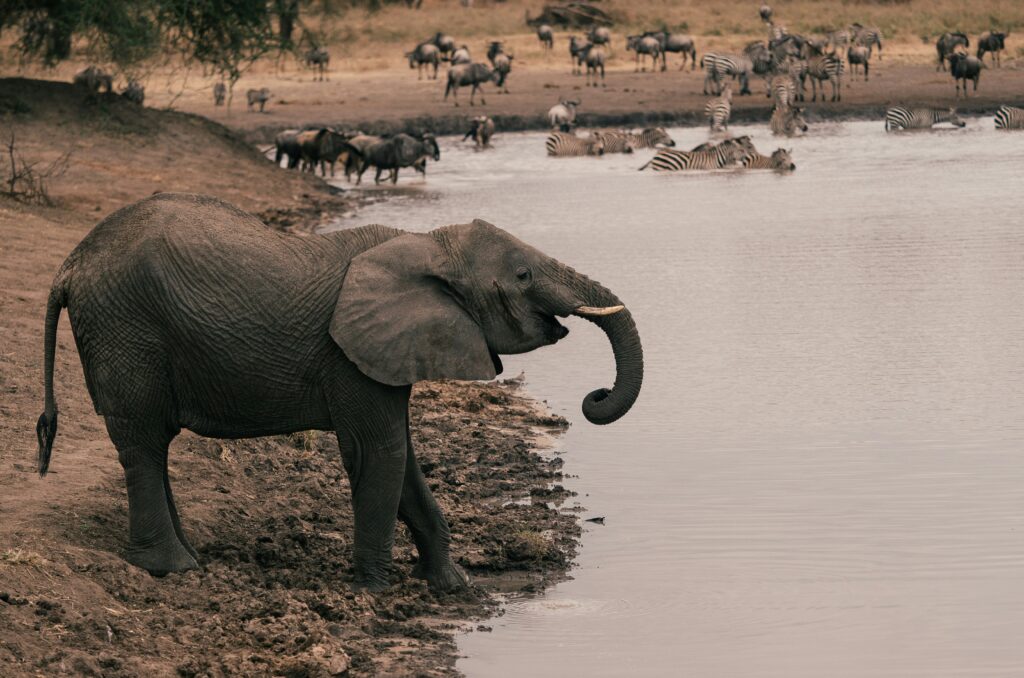
The road into Tarangire is already turning red by the time the first elephants appear. A family group is moving slowly between the baobabs, trunks reaching into dry grass, while another herd disappears towards the Tarangire River. The morning light catches the enormous trees one by one, and for a few minutes the vehicle is completely quiet.
Tarangire National Park sits in northern Tanzania, roughly 120 kilometres southwest of Arusha, and covers about 2,850 square kilometres. The park takes its name from the Tarangire River, which runs through the landscape and becomes one of the most important dry-season water sources for wildlife in the wider Tarangire ecosystem.
What makes Tarangire different from Tanzania’s better-known parks is the combination of elephants, ancient baobabs, seasonal wetlands and unusually diverse wildlife packed into a landscape that changes dramatically with the seasons. During the dry months, wildlife from the surrounding Maasai Steppe moves towards the Tarangire River and permanent water sources, producing some of northern Tanzania’s most concentrated game viewing.
Tarangire is especially famous for elephants. Large elephant families are one of the defining sights of a Tarangire safari, often moving beneath enormous baobab trees or gathering around water. The park is also an excellent destination for giraffe, zebra, wildebeest, buffalo, impala, eland, kudu, lion, leopard, cheetah and a remarkable variety of birds.
We send guests to Tarangire for a different kind of Tanzania safari: big elephant herds, spectacular baobab landscapes, quieter game drives and a wildlife experience that works particularly well as the opening destination on a northern Tanzania circuit. If you are travelling between Arusha, Lake Manyara, Ngorongoro and Serengeti, Tarangire is one of the most rewarding first stops.
Tarangire National Park is a 2,850-square-kilometre protected area in northern Tanzania, approximately 120 kilometres southwest of Arusha. It is famous for its large elephant herds, ancient baobab trees, Tarangire River, seasonal wildlife concentrations and exceptional birdlife. Tarangire was gazetted as a national park in 1970 and forms part of a much larger ecosystem extending beyond the park boundaries.
Location: Northern Tanzania, southwest of Arusha
Size: Approximately 2,850 square kilometres
Gazetted: 1970
Altitude: Approximately 900 to 1,250 metres
Distance from Arusha: Approximately 120 kilometres
Driving time from Arusha: Roughly 2.5 to 3 hours depending on the route and road conditions
Nearest major airport: Kilimanjaro International Airport (JRO)
Nearest city airport: Arusha Airport (ARK)
Main geographical feature: Tarangire River
Known for: Elephants, baobabs, seasonal wildlife concentrations and birdlife
Major habitats: Acacia woodland, open savanna, riverine forest, seasonal wetlands and baobab-studded plains
Wet seasons: March to May and November to December
Drier periods: January to February and June to October
Park authority: Tanzania National Parks Authority (TANAPA)
If there is one animal that defines Tarangire National Park, it is the African elephant.
Tarangire is one of Tanzania’s most important elephant strongholds, and large family groups are frequently encountered during game drives, particularly during the dry season when wildlife is drawn towards the Tarangire River and remaining water sources. TANAPA describes the park as having one of the country’s highest concentrations of elephants, with the current park information highlighting more than 2,500 elephants.
The experience is different from simply seeing an elephant crossing a road. In Tarangire, it is common to spend several minutes watching a whole family group move together: adults surrounding younger calves, matriarchs leading the herd and younger elephants stopping to investigate the safari vehicle before following the rest of the group.
During the dry months, elephant sightings can become particularly impressive around the river and swamps. Herds also move through the park’s woodland and open plains, creating excellent opportunities for photography against the red earth and giant baobabs.
Tarangire National Park is famous for its large elephant population and the spectacular concentrations of elephant herds that gather around permanent water during the dry season. The combination of elephants, baobabs and the Tarangire River creates one of northern Tanzania’s most recognisable safari landscapes.
The baobab is the other great symbol of Tarangire National Park.
These enormous trees rise above the savanna with swollen trunks and sparse branches, giving parts of Tarangire a landscape that looks almost prehistoric. Some of the park’s baobabs are centuries old, and TANAPA notes that some can reach around 30 metres in height with trunks more than 10 metres wide.
The baobabs are more than scenery. Their trunks, branches, flowers and hollows support a range of smaller wildlife, while their presence provides shelter and food for different species. During a Tarangire game drive, a baobab can become as important to the photograph as the animal standing beside it.
The most memorable Tarangire photographs often combine several elements at once: an elephant herd crossing beneath a baobab, giraffe feeding among the trees or a lone acacia silhouetted against the evening sky.
Tarangire National Park supports an impressive range of wildlife across its riverine forest, woodland, grassland and wetland habitats.
Elephants are the headline species, but Tarangire also supports buffalo, zebra, wildebeest, giraffe, impala, warthog, eland, waterbuck, hartebeest and numerous smaller antelope. The park is also known for less frequently encountered species including greater and lesser kudu, gerenuk, Beisa oryx and African wild dogs.
Predators include lion, leopard, cheetah and spotted hyena. Sightings depend heavily on the season, location and time of day, but the concentration of prey around water during the dry season can create excellent predator-viewing opportunities.
Tarangire is also one of Tanzania’s strongest birding destinations. TANAPA records more than 550 bird species in the park, including raptors, ostriches, kori bustards, bee-eaters, lovebirds and many woodland and wetland species.
A Tarangire safari can include elephants, lions, leopards, cheetahs, buffalo, giraffes, zebras, wildebeest, impala, warthogs, eland, kudu, waterbuck, hartebeest, hyena and, with luck, African wild dogs. Tarangire National Park is also exceptionally rich in birdlife, with more than 550 recorded bird species.
Silale Swamp is one of the most important wildlife areas in Tarangire National Park.
Although parts of the swamp change dramatically with the seasons, it acts as a major wildlife refuge during the dry period. Elephants, buffalo and other herbivores are drawn towards the remaining water and vegetation, while predators follow the concentration of prey.
The surrounding landscape also creates excellent opportunities for photography because the open wetland contrasts with the woodland and baobab-covered ridges around it.
A Tarangire game drive that combines the river with Silale Swamp can therefore produce a very different sequence of sightings within a single morning or afternoon.
The Tarangire River is the ecological heart of Tarangire National Park.
The river gives the park its name and provides a crucial source of water, especially when seasonal waterholes and surrounding areas begin to dry out. Wildlife movement across the wider ecosystem is closely linked to the availability of water and forage.
During the dry season, the river becomes one of the most productive places for a Tarangire game drive. Elephants come to drink and bathe, buffalo gather in groups, giraffe browse nearby vegetation and predators patrol the surrounding woodland.
The importance of the river is also why Tarangire should not be viewed only as a collection of individual wildlife sightings. The river, swamps, woodland and seasonal migration routes work together as one ecosystem.
Game drives are the main activity in Tarangire National Park and the best way to experience its wildlife.
Morning game drives begin early, when temperatures are cooler and wildlife is active. This is often a productive period for predators, elephants and smaller animals before the heat of the day becomes intense.
Afternoon game drives offer a different experience. As the temperature drops, wildlife becomes more active and the changing light transforms the baobabs and open plains. Late afternoon is particularly good for photography, especially around the river and open woodland.
TANAPA lists game viewing among Tarangire’s principal visitor activities.
Elephant watching deserves its own place on a Tarangire itinerary.
The park’s elephant herds can be encountered in different habitats throughout the day, but the dry season is especially rewarding because water concentrates animals around the Tarangire River and other remaining water sources.
Rather than rushing from one sighting to another, we encourage guests to spend time watching elephant behaviour. Tarangire is one of those parks where sitting quietly beside a herd can be more memorable than ticking another species from a list.
Tarangire is one of the most photogenic parks in Tanzania.
The combination of red soil, giant baobabs, open grassland, woodland and dramatic skies provides a natural background for wildlife photography. Elephants are particularly rewarding subjects because their size creates a strong sense of scale against the ancient trees.
Early morning and late afternoon produce the softest light, while the dry season can create excellent contrast between golden grass, dusty roads and green vegetation around permanent water.
Photographers should carry a longer lens for distant wildlife but also keep a moderate zoom available for elephants and larger animals that approach the vehicle.
With more than 550 recorded bird species, Tarangire National Park is an outstanding destination for birdwatchers.
The variety of habitats means that a single game drive can produce woodland species, water-associated birds, raptors and open-country species.
Ostriches and kori bustards can be seen across open areas, while bee-eaters, lovebirds and other colourful species occur in woodland and riverine habitats. Raptors are another highlight, with several large birds of prey regularly using the thermals above the park.
For serious birders, Tarangire can easily justify an additional night because slower game drives allow more time to identify calls, behaviour and smaller species that a standard wildlife-focused safari may pass.
Walking experiences are available in the Tarangire area through approved operators and locations, giving travellers a chance to experience the landscape away from the vehicle.
A walking safari shifts the focus from large animals to the smaller details of Tarangire: animal tracks, insects, plants, birds, dung, termite activity and the relationship between different habitats.
Walking activities are subject to current park regulations and designated areas, so we confirm availability and operating conditions before including a walking experience in an itinerary.
A bush breakfast adds another dimension to a Tarangire safari.
After an early game drive, guests can stop at an approved scenic location for breakfast surrounded by the sounds and landscape of the park. Rather than returning immediately to camp, the experience allows the morning to continue at a slower pace.
Some camps also arrange bush lunches or other outdoor meals depending on park regulations and location.
Sundowners are particularly memorable in Tarangire because of the baobab-studded landscape.
As the sun drops, the plains turn golden and the silhouettes of baobabs become increasingly dramatic. A drink and light refreshments at an approved viewpoint can turn an ordinary afternoon game drive into one of the defining moments of a Tarangire safari.
Hot air balloon experiences are available in the Tarangire area and offer a completely different perspective of the landscape.
The flight begins around sunrise, when the savanna is still cool and wildlife is becoming active below. From above, the patterns of woodland, river channels, open plains and baobab-covered hills become easier to appreciate.
Balloon operations are subject to availability, weather conditions and current park regulations. TANAPA’s current Tarangire information lists balloon safari among the park’s visitor experiences.
Tarangire is one of the parks where slowing down genuinely improves the safari. We would rather spend 30 minutes watching an elephant family move through the baobabs than rush away simply because another species has been reported a few kilometres down the road.
Tarangire National Park is only one part of a much larger ecosystem.
The park covers approximately 2,850 square kilometres, but the wider Tarangire ecosystem extends across roughly 30,000 square kilometres of the southern Maasailand and Maasai Steppe. Wildlife moves between protected areas, community lands and seasonal grazing areas depending on rainfall, water and available forage.
This wider ecosystem is important because the wildlife seen inside Tarangire does not remain within the park throughout the year. During wetter periods, animals can disperse into surrounding areas where food and water are more widely available. As the dry season develops, many return towards permanent water sources.
This seasonal movement is one of the reasons Tarangire National Park can feel dramatically different from one month to another.
Tarangire and Lake Manyara are often combined because they sit relatively close to each other on northern Tanzania’s safari circuit.
Lake Manyara is smaller and best known for its alkaline lake, groundwater forest, birdlife and occasional tree-climbing lions. Tarangire is considerably larger and offers a more open savanna landscape, giant baobabs and some of northern Tanzania’s strongest elephant viewing.
If you have only one night available between Arusha and the Ngorongoro area, Tarangire often provides a stronger traditional game-drive experience. If you have two or more nights, combining Tarangire with Lake Manyara creates a useful contrast between the two ecosystems.
The Serengeti is Tanzania’s great open-plains destination and is unmatched for the scale of the Great Migration and its enormous predator-prey interactions.
Tarangire offers something different.
Instead of endless grass plains, Tarangire combines woodland, riverine habitats, swamps and baobab-covered hills. Elephant viewing is one of its strongest attractions, and the park can feel more intimate than the vast Serengeti landscape.
Many travellers choose both. Serengeti provides scale and migration, while Tarangire adds elephants, baobabs and a very different northern Tanzania landscape.
Ngorongoro Crater offers one of Africa’s most concentrated wildlife viewing environments within a spectacular volcanic caldera.
Tarangire is more open and seasonal. Its wildlife is distributed across river valleys, woodland, swamps and plains rather than concentrated within a crater.
The two destinations complement each other particularly well. A northern Tanzania itinerary can combine Tarangire’s elephants and baobabs with the Crater’s dense wildlife and then continue towards Serengeti.
Tarangire National Park is accessed through several entry points, with the appropriate gate depending on the direction of travel, accommodation and itinerary.
Maweninga and Sangaiwe/Kwasuyo corridors are among the access routes identified by TANAPA’s current visitor information.
The gate you use is therefore less important to the traveller than the location of the camp and the route being followed.
When we plan a Tarangire safari, we select the most practical entry point based on where the guest is staying and whether Tarangire is being combined with Lake Manyara, Ngorongoro, Serengeti or another northern Tanzania destination.
The most common way to reach Tarangire National Park is by road from Arusha.
The drive takes roughly 2.5 to 3 hours on a good route through Makuyuni and Minjingu, followed by access roads into the park. TANAPA currently recommends a 4×4 during the wetter months because road conditions can become more challenging.
A road safari is the option we recommend for most travellers because it allows Tarangire to be incorporated naturally into a northern Tanzania circuit.
Tarangire can also be reached by light aircraft.
Scheduled or charter flights can use Kuro Airstrip inside the park, reducing road travel time considerably.
Flying makes sense for travellers with limited time or those connecting Tarangire with another safari destination. The trade-off is the additional cost and luggage restrictions associated with light aircraft.
Choose the road if you are already staying in Arusha and want to build Tarangire into a conventional northern Tanzania safari. It is generally the simplest and most cost-effective option.
Choose flying if you have limited time, are connecting several distant safari destinations or prefer to minimize road transfers.
For most first-time visitors travelling through Arusha, we recommend the road. Tarangire is close enough to Arusha that the journey does not consume an entire day, and the route fits naturally into a multi-park safari.
Tarangire National Park has a warm, semi-arid climate, with temperatures influenced by altitude and seasonal rainfall.
The park lies at approximately 900 to 1,250 metres above sea level and receives an average annual rainfall of around 650 to 700 millimetres. Rainfall follows a bimodal pattern, with the short rains generally occurring from November to December and the long rains from March to May.
The dry periods generally fall between June and October and again during January and February.
The difference between wet and dry seasons is particularly important in Tarangire because it affects wildlife distribution. When surrounding areas retain water and fresh vegetation, animals can spread across the wider ecosystem. As conditions dry, wildlife increasingly gathers around the Tarangire River and permanent water sources.
Tarangire has a warm, relatively dry climate with two main rainy periods: the short rains from November to December and the long rains from March to May. The main dry season runs from June to October, with another drier period in January and February.
Tarangire National Park entry fees depend on visitor category, age, season and the applicable TANAPA tariff.
TANAPA’s current Tarangire visitor page lists international adult entry at USD 70 and international child entry at USD 20, while East African residents are listed separately in Tanzanian shillings. Fees can change, and additional charges may apply depending on activities, vehicles, camping or other services.
The current TANAPA tariff system also distinguishes between visitor categories and different types of park access. Conservation fees are generally tied to defined validity periods, so travellers combining several parks should check the applicable tariff rather than assuming that one ticket covers multiple parks.
Most Afrikan Accent Adventures safari packages include the relevant park entry fees in the overall safari quotation, so guests do not have to manage separate payments during the game drive.
TANAPA’s current Tarangire visitor information lists international adults at USD 70 and international children at USD 20, with separate rates for East African residents and other visitor categories. Additional charges can apply for vehicles, camping and specific activities, so current TANAPA tariffs should be checked when preparing a final safari quotation.
June through October is generally the strongest period for a classic Tarangire safari.
This is the dry season, and as water becomes scarce across the wider ecosystem, elephants, buffalo, zebra, wildebeest and other wildlife concentrate around the Tarangire River, Silale Swamp and other permanent water sources.
July through October is particularly attractive for travellers who want strong elephant viewing and concentrated wildlife. TANAPA’s park information specifically highlights the dry season as a period of exceptional wildlife concentration.
January and February can also provide good game viewing, particularly when conditions are dry.
November and December bring the short rains. The landscape becomes greener, migratory birds arrive and visitor numbers can be lower than during peak dry-season periods.
March through May is the long-rains period. The scenery can be beautifully green and dramatic, but some roads can become more difficult and some accommodation properties operate seasonally.
June to October is generally the best period for concentrated wildlife viewing in Tarangire National Park, particularly for elephants around permanent water. January and February can also be productive, while November to December offers greener scenery and strong birding. March to May is wetter and can bring more challenging road conditions.
One night can provide a worthwhile introduction to Tarangire National Park, especially when the park is included as a stop between Arusha and Ngorongoro.
Two nights is our preferred recommendation for travellers who want to experience Tarangire properly. It provides enough time for several game drives, elephant viewing, birdwatching and time around the river and baobab landscapes without rushing.
Three nights or more suits photographers, birders and travellers who want a slower safari experience. It also gives more flexibility to explore different areas of the park and adjust game drives around weather and wildlife movement.
For a classic northern Tanzania itinerary, two nights in Tarangire followed by Ngorongoro and Serengeti is a strong combination.
One night works well as an introduction, but two nights is generally ideal for a first Tarangire safari. Three or more nights suits travellers interested in photography, birding, walking experiences or a slower wildlife-focused itinerary.
Tarangire National Park offers one of the most distinctive safari experiences in northern Tanzania.
The elephants alone are reason enough to visit, but the attraction is much broader. Giant baobabs, the Tarangire River, Silale Swamp, seasonal wildlife movements, diverse habitats and more than 550 recorded bird species make the park rewarding for both first-time safari travellers and experienced wildlife enthusiasts.
Tarangire also provides a different atmosphere from the Serengeti and Ngorongoro Crater. It is less about enormous open plains and more about the relationship between water, woodland and wildlife.
For guests travelling on a northern Tanzania safari circuit, Tarangire provides an excellent opening chapter.
You leave Arusha, the landscape opens, the baobabs begin appearing and then an elephant herd crosses the road.
That is Tarangire.
The cost of a Tarangire safari varies according to accommodation category, season, number of travellers, transportation and the number of parks included.
As a broad planning guide, budget Tarangire safaris using basic camps and simpler accommodation may start around USD 200 to 350 per person per day. Mid-range Tarangire safaris commonly fall around USD 350 to 550 per person per day, while luxury Tarangire camps and premium private safari arrangements can reach USD 600 or more per person per day.
These figures are planning ranges rather than fixed quotations. Peak-season accommodation, private vehicles, flying safaris, premium camps and additional activities can increase the final price substantially.
A Tarangire safari quotation should normally consider accommodation, meals, private or shared safari vehicle, professional safari guide, park fees, transfers and any additional activities.
Tarangire is one of the easiest parks to fit into different budgets because its location near Arusha makes a road safari practical. If budget is the priority, we usually adjust the accommodation before cutting the number of game drives, because the wildlife experience is what brings most guests to Tarangire in the first place.
We build Tarangire safari packages around different travel styles.
A one-night Tarangire safari works well for travellers with limited time who want elephants and baobabs before continuing towards Ngorongoro.
A two-night Tarangire safari gives guests more time for game drives and is our usual recommendation for a first visit.
A longer Tarangire stay works particularly well for photographers, birdwatchers and travellers who want to explore the park without rushing.
Tarangire can also form part of a longer northern Tanzania safari combining Arusha, Tarangire National Park, Lake Manyara, Ngorongoro Crater and Serengeti National Park.
For travellers flying between destinations, Tarangire can also be connected with other safari areas using scheduled or charter light aircraft.
Accommodation around Tarangire ranges from public campsites and special campsites to mid-range lodges, permanent tented camps and luxury safari properties. TANAPA’s current visitor guide notes accommodation options around the Tarangire River, Silale Swamp and the park boundary.
River-facing camps are particularly attractive because they place guests close to one of the park’s main wildlife corridors.
Luxury camps tend to focus on private tented suites, spacious decks, outdoor dining and high levels of guiding and service.
Mid-range lodges and tented camps offer a balance between comfort and price and are particularly suitable for travellers building a multi-park northern Tanzania safari.
Budget options can include campsites and simpler accommodation outside or near the park.
We match accommodation to the traveller rather than treating every Tarangire safari as a luxury trip. A well-located mid-range camp can provide an excellent Tarangire experience without the price of an exclusive luxury property.
Tarangire can be an excellent destination for families because elephants and other large animals are frequently encountered during game drives, making wildlife easy for younger travellers to appreciate.
Family accommodation varies by property, so we recommend confirming room configurations and minimum age requirements before booking.
For families, we also prefer shorter, well-timed game drives rather than forcing children through unnecessarily long days in the vehicle. A good Tarangire itinerary balances wildlife viewing with breaks at camp.
Photographers often find Tarangire more rewarding than expected.
The park provides multiple layers within a single frame: elephant herds, baobabs, acacia woodland, open grassland, distant hills and dramatic skies.
The dry season is especially strong for wildlife photography because animals concentrate around water and vegetation is less dense.
Early morning provides soft light and active wildlife, while late afternoon produces warm light on the baobabs and long shadows across the plains.
For serious photographers, we recommend a private safari vehicle because it allows more flexibility with positioning, time at sightings and camera equipment.
Responsible tourism is essential to protecting Tarangire National Park and the wider ecosystem.
Guests should remain inside the vehicle unless in a designated area where walking is permitted, maintain a respectful distance from wildlife and follow the instructions of their safari guide.
Off-road driving should only take place where officially permitted. Wildlife should never be pressured into changing its behaviour for photographs, and visitors should avoid loud noises, feeding animals or leaving waste behind.
The wider Tarangire ecosystem extends well beyond the national park, making conservation of surrounding habitats and wildlife corridors equally important.
Choosing locally owned accommodation, using professional local guides and supporting conservation-focused tourism helps ensure that safari tourism continues to contribute to the long-term protection of the area.
Tarangire National Park is one of those destinations that rewards travellers who give it more than a rushed half-day.
From enormous elephant herds and ancient baobabs to Silale Swamp, the Tarangire River and more than 550 bird species, the park offers a wildlife experience that is distinct from both Serengeti and Ngorongoro.
We build Tarangire safaris as standalone trips, as a one- or two-night stop on a northern Tanzania circuit, or as part of a longer itinerary combining Tarangire, Ngorongoro and Serengeti.
For first-time visitors, we generally recommend at least two nights if the schedule allows. That gives enough time to experience the park at different times of day rather than treating Tarangire as a quick stop between destinations.
Yes. Tarangire National Park is particularly worthwhile for travellers who want large elephant herds, ancient baobabs, diverse wildlife, excellent birding and a quieter alternative to some of Tanzania’s larger safari destinations. Its proximity to Arusha also makes Tarangire one of the easiest parks to include in a northern Tanzania safari circuit.
Tarangire is not simply the park you visit on the way to Serengeti.
For many of our guests, the first elephant herd beneath a giant baobab is the moment the Tanzania safari truly begins.
Explore one of Tanzania's most rewarding safari destinations, famous for massive elephant herds, ancient baobab trees, exceptional predator sightings, and uncrowded game viewing in the heart of the Northern Safari Circuit.
Tarangire National Park is internationally famous for hosting some of Africa's largest elephant populations. During the dry season, herds numbering between 100…
One of Tarangire's defining features is its spectacular collection of giant baobab trees, some believed to be several hundred years old. These…
Tarangire offers excellent predator viewing throughout the year. Lions are frequently seen resting beneath acacia trees or stalking prey near the river…
The permanent Tarangire River is the heart of the park and the reason for its spectacular dry-season wildlife concentrations. As surrounding areas…
Although overshadowed by the Serengeti migration, Tarangire hosts one of East Africa's most impressive seasonal wildlife movements. Every year, thousands of wildebeest,…
Tarangire is one of the few parks in Tanzania where visitors can regularly encounter dry-country specialists such as the fringe-eared oryx and…
With more than 550 recorded bird species, Tarangire is considered one of Africa's premier birding destinations. Highlights include yellow-collared lovebirds, Kori bustards,…
Tarangire is a dream destination for wildlife photographers. The combination of giant elephant herds, ancient baobab trees, dramatic skies, golden grasslands, and…
Budget Safari


From value camps to premium lodges — we match every stay to your style and budget.
Comfortable tented camps just outside the reserve gates. En-suite rooms with hot showers, full-board meals, and close proximity to the Mara.
Spacious canvas tents on raised platforms with private decks, often inside or adjacent to conservancies. Better access and fewer crowds.
World-class lodges and exclusive camps in private conservancies. Night drives, bush walks, spa, and personalized service — the ultimate safari experience.
Every season has its magic — here's what to expect when, so you can travel at your perfect time.
Everything you need to know before you go — and we’ll guide you through every step.
Tarangire National Park is located approximately 118 kilometres southwest of Arusha and is easily accessible via a well-maintained tarmac road through Makuyuni and Minjingu. The drive typically takes between 2 and 3 hours, making Tarangire one of the most accessible parks on Tanzania's Northern Safari Circuit. Visitors travelling from Nairobi can reach the park in approximately 6 to 7 hours via the Namanga border crossing and Arusha.
Scheduled and charter flights operate daily from Arusha Airport, Kilimanjaro International Airport, Zanzibar, Serengeti, and other safari destinations to Tarangire Airstrip and Kuro Airstrip. Flight times from Arusha are approximately 20 to 30 minutes, while flights from Zanzibar typically take around 1.5 to 2 hours.
The best time to visit Tarangire National Park is during the dry season from June to October when thousands of animals migrate into the park and gather along the Tarangire River. This period offers exceptional elephant sightings and some of Tanzania's best wildlife viewing opportunities.
The rainy season from November to May transforms Tarangire into a lush green paradise filled with migratory birds and newborn animals. Visitor numbers are lower and accommodation rates are often more attractive, making this an excellent time for photographers and bird enthusiasts.
Park fees are collected by the Tanzania National Parks Authority (TANAPA) and contribute directly to wildlife conservation, anti-poaching operations, infrastructure maintenance, and community development initiatives. Additional fees may apply for vehicles, concessions, and guiding services depending on your safari arrangements.
Tarangire experiences a warm and generally dry climate with daytime temperatures ranging between 24°C and 30°C throughout much of the year. Evenings and early mornings can be cooler, especially during June, July, and August when temperatures occasionally fall below 15°C.
Recommended items include lightweight neutral-coloured clothing, a warm jacket for morning game drives, comfortable walking shoes, sunscreen, sunglasses, a wide-brimmed hat, binoculars, insect repellent, and a camera with spare batteries and memory cards.
Mobile phone coverage is available in many parts of the park, particularly near lodges and camps. Most permanent lodges provide Wi-Fi access in guest areas, although internet speeds may be slower than in urban areas due to the remote location.
The Tanzanian Shilling (TZS) is the local currency, although US Dollars are widely accepted in lodges, camps, and safari operations. Major credit cards including Visa and Mastercard are accepted at most properties, although some may charge a small transaction fee.
Travellers should consult their healthcare provider regarding recommended vaccinations and malaria prevention before travelling to Tanzania. Bottled drinking water is readily available at lodges and camps throughout the park.
Tarangire is particularly suitable for families thanks to its short driving distances, excellent elephant sightings, and family-friendly lodges. Many camps offer activities specifically designed for younger travellers, including nature walks and cultural experiences.
Early morning and late afternoon provide the best light for photography. The combination of giant baobab trees, large elephant herds, golden grasslands, and dramatic skies makes Tarangire one of Africa's finest photography destinations.
With more than 550 bird species recorded, Tarangire is a paradise for bird enthusiasts. The best birdwatching months are between November and April when migratory species arrive and breeding plumage is at its most colourful.
Tarangire is internationally famous for its enormous elephant herds, with groups of more than 100 elephants regularly gathering around the Tarangire River during the dry season, creating some of the most memorable wildlife spectacles in East Africa.
Tarangire combines seamlessly with Serengeti National Park, Ngorongoro Crater, Lake Manyara National Park, and Mount Kilimanjaro itineraries, making it a key highlight of northern Tanzania safari adventures.
Tarangire National Park is located in northern Tanzania within the Manyara Region, approximately 118 kilometres southwest of Arusha. The park forms part of Tanzania's famous Northern Safari Circuit alongside Serengeti National Park, Ngorongoro Conservation Area, and Lake Manyara National Park.
Tarangire is world-famous for its enormous elephant herds and ancient baobab trees. During the dry season, the park hosts one of the highest wildlife concentrations in Tanzania as thousands of animals migrate to the Tarangire River, the region's primary permanent water source. It is often referred to as the "Land of Giants" due to its large elephant populations and towering baobabs.
Tarangire is home to four of the Big Five animals: elephants, lions, leopards and buffaloes. Black rhinos are extremely rare and are generally not seen within the park. Travellers wishing to complete the Big Five often combine Tarangire with Ngorongoro Crater, where rhino sightings are more common.
The greater Tarangire ecosystem supports one of East Africa's largest elephant populations, estimated at several thousand individuals. During the dry season, visitors frequently encounter herds numbering between 50 and 300 elephants gathered around the Tarangire River and surrounding wetlands.
The best time to visit is during the dry season from June to October when wildlife concentrations are at their highest and animals gather around permanent water sources. January and February are also excellent months, offering good wildlife viewing and beautiful photography conditions before the long rains begin.
Most visitors spend one to two nights in Tarangire as part of a Northern Circuit safari. However, two to three nights is ideal for travellers wishing to fully explore the park, enjoy multiple game drives, and experience the quieter areas away from the main tourist routes.
Absolutely. Tarangire offers a completely different safari experience from both Serengeti and Ngorongoro. Its giant elephant herds, iconic baobab landscapes, lower visitor numbers, and excellent birdwatching make it one of Tanzania's most rewarding parks and a favourite among experienced safari travellers.
Night game drives are generally not permitted inside the national park itself. However, some private concessions and lodges located adjacent to the park may offer night drives on private land, allowing guests to search for nocturnal species such as civets, genets, porcupines and bush babies.
Yes. Tarangire is considered one of Africa's premier birdwatching destinations with more than 550 recorded bird species. Highlights include yellow-collared lovebirds, Kori bustards, secretary birds, hornbills, bee-eaters, ostriches and numerous birds of prey. The wet season from November to April is particularly rewarding for bird enthusiasts.
Tarangire offers accommodation for every budget, ranging from public campsites and budget tented camps to luxury safari lodges and exclusive tented camps overlooking wildlife-rich areas of the park. Many luxury properties provide exceptional views of elephant corridors and seasonal wetlands.
Yes. Tarangire is an excellent destination for families due to its relatively short driving distances, abundant wildlife, and family-friendly lodges. Children particularly enjoy the frequent elephant sightings and opportunities to observe giraffes, zebras, and other herbivores in open landscapes.
Yes. Tarangire is one of the core parks included in Tanzania's Northern Safari Circuit and is commonly combined with Serengeti National Park, Ngorongoro Crater, Lake Manyara National Park and even Zanzibar beach holidays. This combination creates one of Africa's most iconic safari itineraries.

A Nairobi operator's field notes on our private seven-day Naivasha-to-Mara route, from the first seedling to the last…
Read more →
Real per-person prices from $200 a day on a shared group departure to more than $1,000 a day…
Read more →
A family safari rarely fails on wildlife. It fails on the logistics: the suitcase, the six-hour drive, the…
Read more →Tell us what you’d love to see and a local specialist will design a tailor-made itinerary around you — no obligation, reply within 24 hours.