


Planning & Tips
Solo Safari in Kenya: What the Single Supplement Really Costs and How to Cut It
We priced eleven safaris for one traveller, from a USD 650 shared tent in the Siana Conservancy to…
Read more →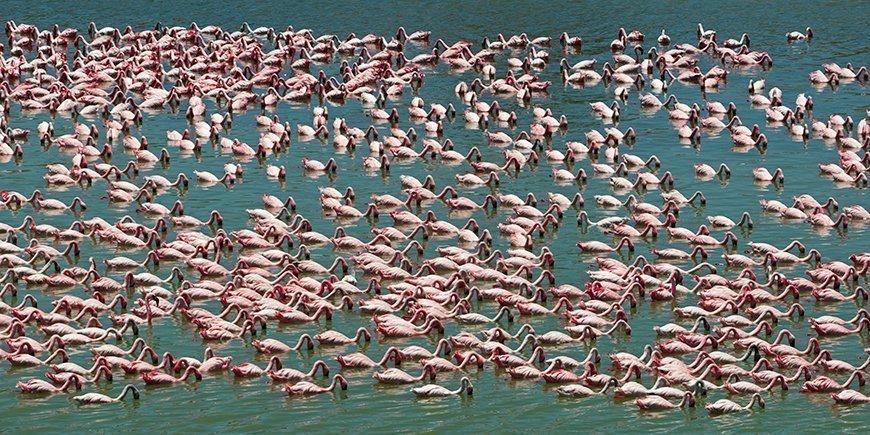
Tanzania's compact Rift Valley park - tree-climbing lions, groundwater forest and seasonal flamingos.
The road from Arusha drops steadily toward the Great Rift Valley, the landscape changing from cultivated highlands to dry acacia country before the escarpment suddenly rises ahead of you. Then the trees close in. Tall figs, mahogany and fever trees form a green tunnel around the road, baboons sit beside the track and somewhere above them a blue monkey disappears into the canopy. A few kilometres later, the forest opens and Lake Manyara appears, a shallow sheet of alkaline water stretching beneath the Rift Valley wall.
We have driven into Lake Manyara National Park more times than we can count, and the first impression never really changes. It is difficult to believe that a park of 648.7 square kilometres can contain groundwater forest, open floodplain, acacia woodland, hot springs, wetlands and an alkaline lake within such a compact area. That variety is exactly what makes a Lake Manyara safari different from the larger northern Tanzania parks.
Lake Manyara National Park sits at the base of the western escarpment of the Great Rift Valley, just south of Mto wa Mbu and roughly 125 kilometres from Arusha by road. The park is best known for its tree-climbing lions, large elephant herds, prolific birdlife and the flamingos that gather seasonally around the alkaline waters of Lake Manyara. It is also one of the easiest parks to combine with Ngorongoro Crater and the Serengeti on a northern Tanzania safari.
What sets Lake Manyara National Park apart is not the size of its wildlife population but the variety of experiences packed into a relatively small landscape. A single Lake Manyara game drive can move from dense forest filled with primates to open plains occupied by zebra and wildebeest, then along the lakeshore where hippos, flamingos and other waterbirds gather.
And then there are the lions.
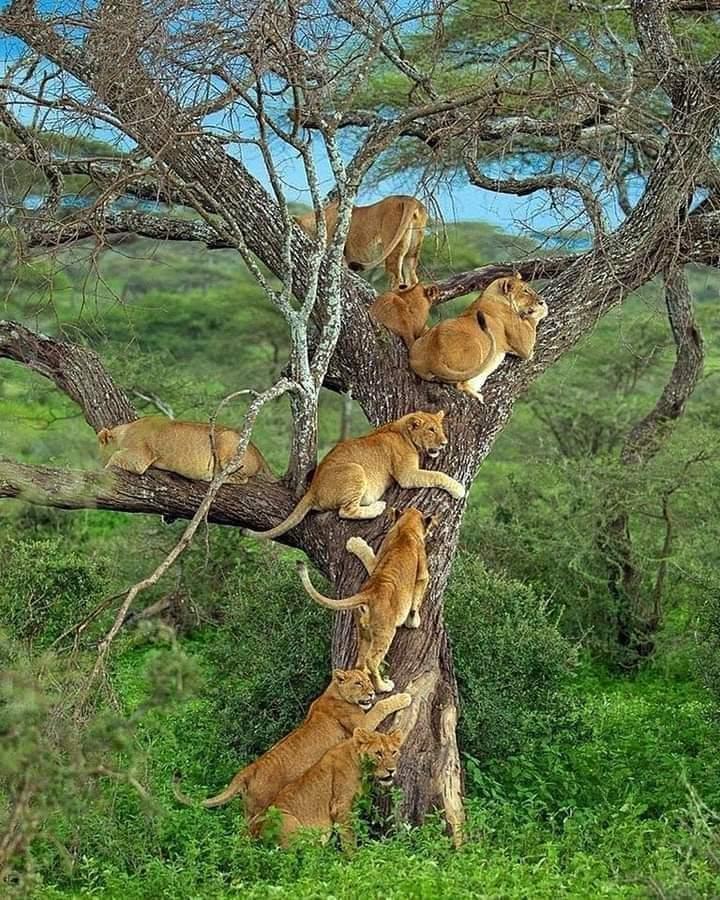
Tree-climbing lions are the image most associated with Lake Manyara National Park. Seeing one stretched across the branches of an acacia tree is never guaranteed, but when the sighting comes, it is one of the most memorable moments on a Tanzania safari. TANAPA itself identifies the park as a home of tree-climbing lions.
Lake Manyara National Park is a 648.7-square-kilometre protected area in northern Tanzania, located beneath the Great Rift Valley escarpment and centred around the alkaline Lake Manyara. The park is famous for tree-climbing lions, elephants, groundwater forests, flamingos, hippos and more than 390 recorded bird species. Its combination of forest, wetland, woodland, lake and escarpment makes it one of Tanzania’s most diverse compact safari destinations.
Location: Arusha Region, northern Tanzania, at the base of the Great Rift Valley escarpment
Size: 648.7 square kilometres
Nearest town: Mto wa Mbu
Distance from Arusha: Approximately 125 kilometres, around 2 to 2.5 hours by road
Established: 1960
Managed by: Tanzania National Parks Authority (TANAPA)
Known for: Tree-climbing lions, elephants, flamingos, groundwater forest and exceptional birdlife
Main access: Lake Manyara National Park Gate near Mto wa Mbu
Nearest air access: Manyara Airstrip
Nearby destinations: Mto wa Mbu, Karatu, Ngorongoro Conservation Area and Tarangire National Park
Main activities: Game drives, birdwatching, canopy walks, guided walking, photography, bush meals and selected water-based activities where conditions permit.
The landscape is the first reason a Lake Manyara safari feels different.
The park stretches between the Great Rift Valley escarpment and Lake Manyara, creating a series of habitats that change rapidly as you travel through the park. The northern section is dominated by groundwater forest, where underground springs create a permanently green environment even when the surrounding country is dry. Further south, the vegetation opens into woodland, floodplain and wetland before reaching the lake itself.
The escarpment provides a dramatic backdrop throughout the Lake Manyara National Park experience. From elevated viewpoints, the contrast between the vertical Rift Valley wall, the green forest, open plains and shimmering lake creates some of the most distinctive scenery on the northern Tanzania circuit.
Lake Manyara itself is a shallow alkaline lake whose size and shoreline change significantly with rainfall and evaporation. During wetter periods, the lake expands into surrounding wetlands, attracting large numbers of waterbirds. During dry periods, exposed soda flats become an important feeding environment for flamingos and other species.
The result is a park where the scenery can change considerably from one season to another.
Lake Manyara National Park supports a remarkable variety of wildlife despite being considerably smaller than Serengeti National Park. Elephant is one of the signature species, and the park is known for large-tusked elephants that frequently move through the groundwater forest and woodland.
Other commonly encountered animals include buffalo, giraffe, zebra, wildebeest, warthog, impala, hippo, baboon and blue monkey. Predators include lion and leopard, although leopard sightings are considerably less predictable than sightings of the park’s more visible herbivores.
The relationship between the different habitats is what makes wildlife viewing in Lake Manyara National Park interesting. Elephants may disappear into dense forest, giraffes feed in open woodland and buffalo gather on the floodplain, all within a relatively short drive.
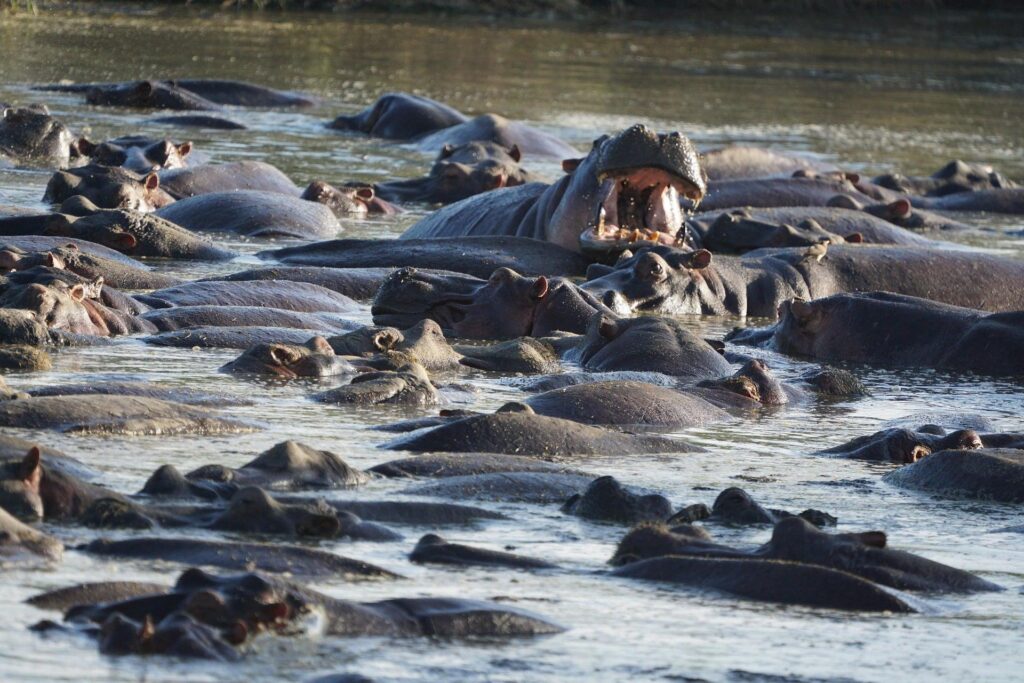
The lake creates another layer of wildlife activity. Hippos spend much of the day in the water or shallow pools, while flamingos and other waterbirds feed around the shoreline when conditions are suitable.
QUICK ANSWER | What animals can you see in Lake Manyara National Park?
A Lake Manyara safari can produce sightings of elephants, lions, leopards, buffalo, giraffes, zebra, wildebeest, hippos, warthogs, impala, baboons and blue monkeys. The park is particularly famous for tree-climbing lions, large elephant herds and its exceptional concentration of waterbirds.
The tree-climbing lions are the signature attraction of Lake Manyara National Park.
Unlike the more familiar image of lions resting on open ground, Lake Manyara’s lions are sometimes found stretched across the branches of large acacia trees. The exact reason for this behaviour is still debated, although escaping insects, gaining a breeze, resting away from wet ground and obtaining a better vantage point are among the explanations often discussed.
What matters to guests is simpler.
You drive slowly through the woodland, scan the branches and suddenly the guide stops.
There is a lion above you.
The sighting is never guaranteed, and responsible guides will not promise tree-climbing lions on every Lake Manyara safari. Their behaviour changes with weather, prey availability, temperature and season. But Lake Manyara National Park remains one of the best-known places in Tanzania for the possibility of seeing lions resting in trees.
Elephants are another defining part of the Lake Manyara National Park experience.
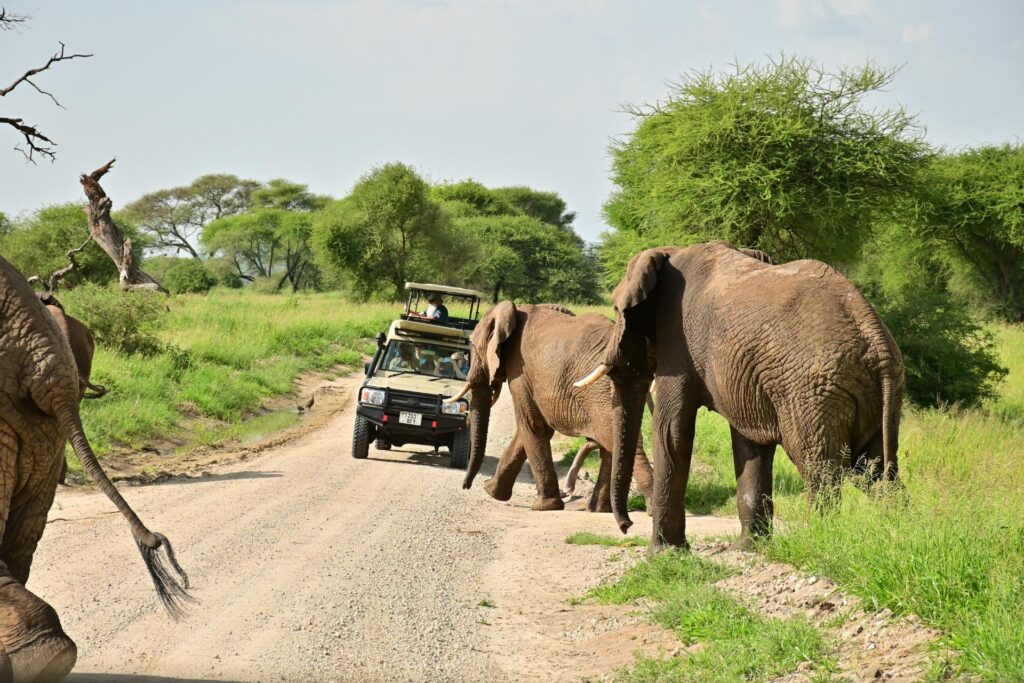
The groundwater forest provides shade and food, while the woodland and floodplain give larger elephant groups space to move and feed. Manyara is particularly associated with large-tusked elephants, and encounters can be extremely close because the forest roads bring vehicles into the same habitat used by the animals.
This is one of the moments when having an experienced guide matters. Elephants may cross the road, approach a vehicle or stand quietly among the trees with little warning. The correct response is to stop, give them space and allow the animals to decide how close they want to come.
For birdwatchers, Lake Manyara National Park can be just as rewarding as it is for big-game enthusiasts.
TANAPA records more than 390 bird species in the park, while its wildlife information highlights more than 400 recorded species across the different habitats. The variety includes waterbirds, forest species, raptors, woodland birds and migratory species.
The lake and surrounding wetlands attract flamingos, pelicans, storks, herons and other waterbirds. The groundwater forest adds species associated with dense vegetation, while the open woodland and escarpment provide habitat for birds of prey and savanna species.
For serious birdwatchers, Lake Manyara National Park is therefore worth more than a quick drive through on the way to Ngorongoro. Spending additional time around the forest, lake and wetland habitats can reveal species that a standard big-game circuit might otherwise overlook.
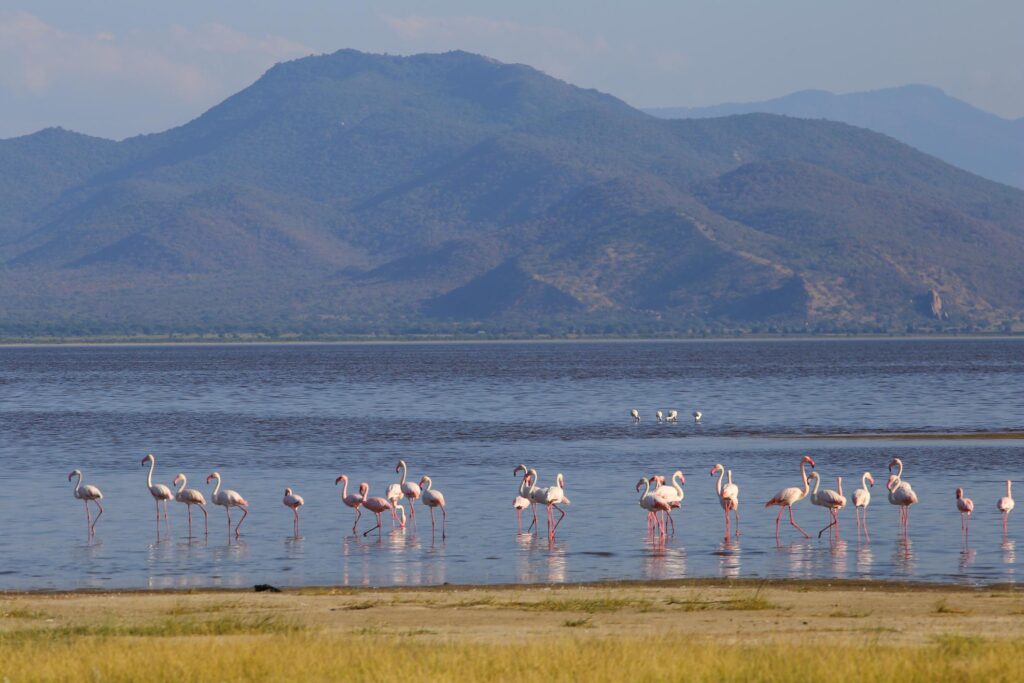
When water levels and food conditions are right, flamingos can transform the shoreline of Lake Manyara into a broad pink and white band.
Both lesser and greater flamingos occur in the ecosystem, feeding on algae and small aquatic organisms in the alkaline waters. Their numbers fluctuate seasonally and according to water conditions, so we never promise a particular number of flamingos on a Lake Manyara safari.
The important thing is the landscape.
Thousands of birds moving across shallow water beneath the Rift Valley escarpment is one of the most distinctive visual experiences in northern Tanzania.
The groundwater forest is one of the defining habitats of Lake Manyara National Park.
Freshwater springs rising from the Rift Valley system keep parts of the forest green throughout the year. Towering trees provide shade and create habitat for baboons, blue monkeys, bushbuck and a wide variety of birds.
For visitors arriving from the dry landscapes of Tarangire or the open plains of the Serengeti, the sudden transition into dense forest can feel almost theatrical.
This forest is also one reason Lake Manyara National Park is so valuable as a biodiversity destination. The park is not simply a lake surrounded by savanna. It is a mosaic of groundwater forest, woodland, floodplain, wetlands, lake and escarpment.
Game drives are the main activity in Lake Manyara National Park.
Morning and afternoon drives follow the network of roads through forest, woodland, floodplain and lakeshore habitats. Early drives are particularly useful for cooler temperatures and active wildlife, while afternoon drives can provide beautiful light along the lake and open plains.
A good Lake Manyara game drive is not simply about searching for lions. Guides watch the forest edges for elephants, scan the branches for tree-climbing lions, check open areas for giraffes and zebra and spend time around wetland areas looking for hippos and birds.
Because the park is compact, it is possible to cover a considerable variety of habitats during a single day.
The Lake Manyara canopy walkway provides a completely different perspective of the park.
Instead of viewing wildlife from a safari vehicle at ground level, visitors move through the forest canopy on an elevated walkway with viewing platforms positioned among the trees. TANAPA describes the walkway as one of the longer canopy walkways in Africa, with opportunities to observe birds, butterflies and monkeys from above.
The canopy walk is particularly useful for families and travellers who want an activity beyond traditional game drives.
It also demonstrates something important about Lake Manyara National Park: wildlife viewing here does not have to happen exclusively from a vehicle.
Birdwatching is one of the strongest reasons to spend additional time in Lake Manyara National Park.
The combination of lake, wetland, groundwater forest, woodland and open country creates habitat for a remarkable range of species. Flamingos and pelicans are among the obvious attractions, while patient birders can look for fish eagles, storks, herons, spoonbills, bee-eaters, hornbills, turacos and numerous migratory species.
A specialist birding safari should be planned differently from a conventional big-game itinerary, with more time spent around forest edges, wetlands and lake habitats.
Guided walking can be arranged in Lake Manyara National Park with prior planning and authorization.
Walking changes the experience completely. Instead of concentrating on large animals, you begin noticing tracks, insects, plants, bird calls and the smaller details of the ecosystem.
Walking routes can include forest environments and areas around the park’s southern sections, depending on current conditions and park regulations. TANAPA specifically identifies guided hiking as an available activity, including routes toward the Marangi Forest.
Night game viewing is available in Lake Manyara National Park under permitted arrangements.
After sunset, the park becomes a different environment. Nocturnal species become active, predators change their behaviour and the sounds of the forest become more prominent.
Night activities are subject to park regulations, authorized operators and current conditions, so we confirm availability before including a night drive in an itinerary.
Canoeing can be available on Lake Manyara when water levels and conditions allow.
The activity provides a quieter way of experiencing the lake environment, with opportunities to observe waterbirds and the surrounding Rift Valley landscape from the water.
Because Lake Manyara is a seasonal alkaline lake whose water levels fluctuate, canoeing is not an activity we guarantee year-round. We confirm current conditions before recommending it.
A bush breakfast or lunch adds another dimension to a Lake Manyara safari.
Rather than returning immediately to the lodge, guests can stop at a designated area, enjoy a meal surrounded by the landscape and take time to appreciate the escarpment, forest and open country.
Bush meals are available in Tanzania’s national parks, with Lake Manyara being particularly suited to this type of experience because of its dramatic scenery and compact layout.
Lake Manyara National Park is an excellent photography destination because the scenery changes so quickly.
Forest photography offers shaded green backgrounds and close encounters with primates and elephants. The lake provides reflections, birds and wide landscapes, while the escarpment gives a dramatic sense of scale.
The tree-climbing lions are an obvious photographic prize, but the park’s strongest images often come from the combination of wildlife and landscape: an elephant moving beneath fig trees, giraffes against the Rift Valley wall or flamingos crossing the lake beneath the escarpment.
The hot springs, known locally as Maji Moto, are among the natural attractions associated with the southern part of Lake Manyara National Park.
Geothermal activity produces warm mineral-rich water and distinctive deposits around the springs. TANAPA notes that temperatures in the southern springs can range from approximately 40°C to 75.8°C.
The springs provide an interesting contrast to the freshwater-fed northern forest and the alkaline lake itself, demonstrating how many geological and ecological processes are compressed into the Lake Manyara landscape.
The Great Rift Valley escarpment is impossible to ignore during a Lake Manyara safari.
The steep western wall rises dramatically above the park, creating a natural boundary between the lake basin and the higher country around the Rift Valley. It is particularly impressive in early morning and late afternoon when changing light emphasizes the cliffs and surrounding woodland.
The escarpment also provides context for understanding why Lake Manyara National Park looks the way it does. Springs, wetlands, forest and lake habitats are all linked to the geology of the Rift Valley system.
Mto wa Mbu sits immediately outside Lake Manyara National Park and is much more than a transit point.
The town is known for its cultural diversity, markets, farms, local food and crafts. A cultural visit can be added before or after a Lake Manyara game drive, allowing travellers to experience a part of Tanzania that is not visible from a safari vehicle.
Cycling, walking and local cultural tours can provide an opportunity to meet residents, visit farms and learn about traditional food and crafts.
For travellers interested in combining wildlife with culture, Mto wa Mbu makes Lake Manyara National Park an especially flexible destination.
Tarangire is larger in feel and is particularly famous for elephants, baobabs and its dry-season wildlife concentrations.
Lake Manyara National Park is more compact and more varied in vegetation, with groundwater forest, lake, wetlands and the Rift Valley escarpment all packed together. It also offers the possibility of tree-climbing lions and exceptionally strong birdwatching.
Many travellers combine the two rather than choosing between them.
A Tarangire and Lake Manyara safari works particularly well because the parks offer different landscapes and wildlife-viewing experiences despite being relatively close on the northern Tanzania circuit.
Ngorongoro Crater is famous for its spectacular enclosed caldera, high density of wildlife and dramatic concentration of predators.
Lake Manyara National Park offers a very different experience. It is more about habitat diversity, forest, water, birds, elephants, tree-climbing lions and the Rift Valley landscape.
The two destinations complement each other extremely well.
A Lake Manyara safari followed by Ngorongoro Crater allows travellers to move from a forest-and-lake ecosystem into one of the world’s most famous wildlife landscapes without repeating the same experience.
The Serengeti is enormous and is the destination to choose when the priority is wide-open plains, large predator populations and the Great Migration.
Lake Manyara National Park is the opposite in scale and character. It is compact, densely vegetated in places and defined by the interaction between forest, lake and escarpment.
For first-time Tanzania visitors, the strongest itinerary is often not choosing between them but combining them.
Lake Manyara can provide a shorter wildlife experience on the way toward Ngorongoro and Serengeti, while the Serengeti supplies the vast open landscapes and large-scale wildlife concentrations.
The most common way to reach Lake Manyara National Park is by road from Arusha.
The journey is approximately 125 kilometres and normally takes around 2 to 2.5 hours on the main tarmac route, depending on traffic and stops. The main gate is close to Mto wa Mbu at the base of the Great Rift Valley escarpment.
For safari travellers, driving makes sense because Lake Manyara is usually part of a larger northern Tanzania circuit. A typical route can connect Arusha, Tarangire, Lake Manyara, Ngorongoro and Serengeti without unnecessary backtracking.
Manyara Airstrip receives scheduled and charter flights, making a fly-in Lake Manyara safari possible.
For travellers with limited time, flying can eliminate the longer road transfer from Arusha and make it easier to connect Lake Manyara with other destinations in Tanzania.
Lodges and safari operators arrange transfers between the airstrip, park gate and accommodation.
The road option is usually best for travellers following the northern Tanzania safari circuit. It is efficient, flexible and allows Lake Manyara to be combined naturally with Tarangire, Ngorongoro and Serengeti.
Flying is more attractive for travellers with limited time or those connecting Lake Manyara with distant destinations.
For most first-time visitors, we recommend road travel because the distances between the northern circuit destinations are manageable and the journey itself forms part of the safari experience.
Lake Manyara National Park has a warm climate throughout the year, although temperatures vary with altitude and season.
The park experiences Tanzania’s characteristic wet and dry seasons, with rainfall transforming the forest, floodplain and surrounding landscape.
The long rains generally occur from March to May, while shorter rains arrive later in the year. The wetter months can produce exceptionally green scenery and excellent birdwatching conditions, while the drier months often make wildlife easier to locate around permanent water and remaining wetland areas.
Unlike some dry savanna destinations, Lake Manyara does not simply become empty during the rains. The forest remains productive, migratory birds arrive and the entire landscape can become intensely green.
QUICK ANSWER | What is the climate like in Lake Manyara?
Lake Manyara National Park is warm year-round, with distinct wet and dry periods. The long rains generally occur from March to May, while shorter rains occur later in the year. The dry season can make wildlife viewing easier around water, while the wetter months offer greener scenery and strong birdwatching opportunities.
Park fees for Lake Manyara National Park are set by TANAPA and can change when new tariff schedules are introduced.
The current TANAPA visitor page lists international adult entry at USD 70 and international child entry at USD 20, while the wider TANAPA tariff structure has historically placed Lake Manyara, Tarangire and Arusha in a separate fee category from Serengeti and Nyerere. Fees can also vary by residency category and season, and VAT and other applicable charges may affect the final amount.
For this reason, we recommend confirming the applicable tariff for the exact travel dates before finalizing a Lake Manyara safari budget. Organized safari packages commonly incorporate park fees into the overall quotation.
QUICK ANSWER | How much does it cost to enter Lake Manyara National Park?
TANAPA’s current visitor information lists USD 70 for international adults and USD 20 for international children, but travellers should confirm the applicable tariff, VAT and residency category for their travel dates because Tanzania National Parks fees can change.
The best time to visit Lake Manyara National Park depends on what you want to see.
These months are generally warm and can offer good wildlife viewing, while the landscape may remain relatively green after earlier rains.
Birdwatchers can also benefit from the diversity of resident and migratory species.
The long rains produce lush vegetation and dramatic skies.
This is a quieter period for tourism and can be rewarding for photographers and birdwatchers. Some tracks may become muddy after heavy rainfall, so routing needs to be handled carefully.
The dry season is one of the most popular periods for a Lake Manyara safari.
Vegetation becomes less dense in some areas and wildlife can be easier to locate. Weather is generally more predictable, making this a comfortable period for combining Lake Manyara with Ngorongoro and Serengeti.
The short rains bring fresh vegetation and renewed activity.
The landscape becomes greener, migratory birds are present and visitor numbers can be lower than during the main dry-season peak.
QUICK ANSWER | What is the best time to visit Lake Manyara?
June to October is a strong period for reliable weather and general wildlife viewing, while January and February can also be rewarding. March to May is greener and quieter, with excellent birdwatching and photography opportunities. November and December bring renewed vegetation and migratory birdlife.
One day is enough for most travellers to experience the main attractions of Lake Manyara National Park.
A full-day Lake Manyara safari can include the groundwater forest, open woodland, lake shore, hippo areas and several wildlife-viewing circuits.
One night is useful if you want a slower experience and would like to combine a game drive with a canopy walk, cultural visit or additional birdwatching.
Two nights makes more sense for specialist birdwatchers, photographers and travellers who want to include multiple activities rather than treating Lake Manyara as a stopover.
For a standard northern Tanzania safari, however, one night or a full-day visit is usually sufficient because Lake Manyara combines naturally with Tarangire, Ngorongoro and Serengeti.
QUICK ANSWER | How many days do you need in Lake Manyara?
One full day is enough for a first Lake Manyara safari and allows time for a substantial game drive. One or two nights are better for travellers interested in birdwatching, photography, canopy walks, walking or a slower exploration of the park.
Lake Manyara National Park offers something few other destinations can reproduce: extreme ecological variety within a relatively compact area.
You can begin the morning beneath towering forest trees, watch elephants moving through the woodland, search acacia branches for tree-climbing lions and finish beside an alkaline lake surrounded by waterbirds.
The park also works exceptionally well as part of a larger Tanzania safari.
It is close enough to Arusha for easy access, close to Mto wa Mbu for cultural experiences, and naturally positioned between Tarangire and Ngorongoro.
For travellers who want a safari with more than just big animals, Lake Manyara is particularly strong. The birds, forests, geology, primates and changing landscapes are as important to the experience as the lions and elephants.
The cost of a Lake Manyara safari depends primarily on accommodation, transport, season and the number of nights included.
Budget Lake Manyara safaris using basic camps or guesthouses can start at approximately USD 200 to 350 per person per day, while mid-range lodges and tented camps commonly fall around USD 350 to 600 per person per day. Luxury Lake Manyara safari packages can reach USD 600 or more per person per day depending on the property, season and whether private vehicles or premium accommodation are included.
These figures are planning ranges rather than fixed prices.
A Lake Manyara safari quotation can include accommodation, meals, a private 4×4 safari vehicle, professional guide, park fees and transfers, but inclusions vary between operators.
The biggest difference in price usually comes from accommodation and whether the safari is private or shared.
QUICK ANSWER | How much does a Lake Manyara safari cost?
A Lake Manyara safari can range from roughly USD 200 to 350 per person per day for budget arrangements, around USD 350 to 600 for mid-range safaris and USD 600 or more for luxury experiences. The final price depends on accommodation, season, vehicle arrangement, park fees and the length of the itinerary.
We build Lake Manyara National Park into Tanzania itineraries in several ways.
A classic northern Tanzania safari can combine Lake Manyara with Tarangire, Ngorongoro Crater and Serengeti National Park.
A shorter itinerary can focus on Lake Manyara and Ngorongoro, making it suitable for travellers with only a few days.
A longer safari can add Lake Eyasi, Tarangire, Serengeti or other northern Tanzania destinations.
For birdwatchers and photographers, we can slow the itinerary down and dedicate more time to the lake, forest and wetland habitats rather than simply treating Lake Manyara as a transit stop.
For families, the canopy walk and Mto wa Mbu cultural experiences can add variety to the conventional game-drive schedule.
Accommodation around Lake Manyara ranges from permanent lodges and tented camps to more basic campsites.
Some properties are positioned close to the park, while others are based around Mto wa Mbu or Karatu and provide easy access to Lake Manyara National Park.
TANAPA confirms that accommodation options exist inside the park, although capacity is limited, while Mto wa Mbu and Karatu provide a wider range of budget, boutique and luxury accommodation outside the park.
We match accommodation to the style of Lake Manyara safari being planned.
A traveller looking for convenience may prefer a property near the park gate. Someone combining Lake Manyara with Ngorongoro may prefer to stay around Karatu. A traveller seeking a more immersive experience may choose a lodge or camp with views toward the Rift Valley or surrounding forest.
Lake Manyara can work particularly well for family safaris because the park offers more than traditional game drives.
The canopy walkway, shorter game-viewing circuits, birdwatching and Mto wa Mbu cultural experiences provide different activities for children and adults.
The park is also compact enough that families do not necessarily need to spend entire days on long drives.
As with any wildlife destination, children should remain under close supervision, particularly around elephants, hippos, baboons and other animals. TANAPA advises visitors to remain in vehicles except at designated points and to follow guide and ranger instructions.
Photographers often underestimate Lake Manyara.
The park does not have the enormous open plains of Serengeti, but that is precisely why it offers different photographic opportunities.
The forest creates layered compositions, elephants can be photographed among trees, the escarpment provides a dramatic background and the lake offers reflections and bird photography.
Tree-climbing lions can be particularly challenging and rewarding subjects because they often disappear into branches and shadow.
The variety of environments also means that a single Lake Manyara game drive can produce very different images from one hour to the next.
Birdwatching deserves to be treated as a primary activity rather than an afterthought.
With more than 390 species highlighted by TANAPA and more than 400 recorded in its wildlife information, Lake Manyara National Park is one of the strongest birding destinations on the northern Tanzania circuit.
Waterbirds concentrate around the lake and wetlands, forest birds occupy the groundwater forest and woodland species move through the drier areas.
Migratory birds add another seasonal layer, making repeat visits particularly worthwhile for serious birders.
Lake Manyara National Park protects a fragile combination of groundwater forest, wetlands, wildlife habitat and alkaline lake.
Responsible tourism therefore matters.
Guests should remain on designated roads and boardwalks, avoid feeding animals, maintain safe distances from wildlife and follow the instructions of guides and rangers. These rules are particularly important around elephants, hippo pools and areas frequented by baboons and monkeys.
We also encourage travellers to avoid unnecessary plastic waste, use established picnic areas and respect the quiet of the park.
The objective is simple: visitors should leave Lake Manyara National Park with memories, photographs and a deeper appreciation for the ecosystem without leaving unnecessary disturbance behind.
Lake Manyara National Park is often introduced as the home of tree-climbing lions.
That is true, but it only tells part of the story.
The real attraction is the combination.
The forest.
The lake.
The flamingos.
The elephants.
The hippos.
The birds.
The hot springs.
The Rift Valley escarpment.
And, if you are lucky, a lion stretched across an acacia branch above your safari vehicle.
Lake Manyara National Park works as a standalone safari destination, but its greatest strength may be how naturally it fits into a larger northern Tanzania journey. From Arusha, the route can continue toward Tarangire, Ngorongoro and Serengeti, creating a safari that changes landscape and wildlife experience at every stage.
For travellers who want to see more than the famous open plains of Tanzania, Lake Manyara National Park is one of the places we recommend adding.
It may be smaller than Serengeti.
It may be quieter than Ngorongoro.
But for a lot of our guests, the moment they look up and see a lion resting in a tree is the moment Lake Manyara becomes unforgettable.
Experience one of Tanzania's most scenic national parks, where groundwater forests, flamingo-filled lakes, elephants, hippos and the legendary tree-climbing lions combine to create an unforgettable safari adventure.
Explore the park's diverse ecosystems, from groundwater forests and acacia woodlands to open floodplains and lakeshore habitats. Game drives offer opportunities to…
Lake Manyara is one of the few places in Africa where lions are regularly observed resting in acacia and sausage trees, particularly…
The alkaline waters of Lake Manyara attract flamingos, pelicans, storks, herons, and hundreds of other bird species. Birdwatching is particularly rewarding between…
One of Tanzania's most unique safari activities, the Manyara Treetop Walkway allows visitors to walk above the forest canopy on suspended bridges…
When water levels permit, canoe safaris provide a peaceful way to explore the lake while viewing hippos, waterbirds, and the dramatic Great…
Lake Manyara is considered one of Tanzania's most photogenic parks thanks to its flamingo-lined shores, elephant-filled forests, tree-climbing lions, and spectacular Rift…
The Great Rift Valley escarpment provides spectacular sunset viewpoints overlooking the lake and surrounding wilderness. Endala Viewpoint and the escarpment lookouts are…
The park's geothermal hot springs, locally known as Maji Moto, bubble through mineral-rich ground near the lakeshore and offer an interesting geological…
From value camps to premium lodges — we match every stay to your style and budget.
Affordable lodges and camps around Lake Manyara offer comfortable stays, excellent access to the park, and authentic safari experiences without compromising on wildlife viewing opportunities.
Mid-range properties combine comfort, excellent service, and strategic locations, making them ideal for families and travellers seeking value for money.
Lake Manyara offers some of Tanzania's most exclusive safari lodges, combining exceptional service, stunning scenery, and unforgettable wildlife experiences.
Every season has its magic — here's what to expect when, so you can travel at your perfect time.
Everything you need to know before you go — and we’ll guide you through every step.
Lake Manyara National Park is in northern Tanzania, at the base of the Great Rift Valley escarpment, about 125 km from Arusha and close to Mto wa Mbu.
The park is easily reached by road from Arusha, usually taking around 2–2.5 hours. It can also be accessed by air through Manyara Airstrip.
A full day is enough for a first visit, while 1–2 nights are recommended for travellers interested in birdwatching, photography, canopy walks or a slower safari experience.
June to October offers generally dry conditions and reliable wildlife viewing. January and February are also good, while the rainy months bring greener scenery and excellent birdwatching.
Lake Manyara is warm throughout the year. Expect hot daytime conditions, cooler mornings and evenings, and seasonal rainfall from the long and short rains.
Entry fees are charged by Tanzania National Parks (TANAPA) and vary according to residency status, age and the current tariff. Confirm the applicable rates when booking.
Game drives are the main way to explore Lake Manyara National Park, taking visitors through groundwater forest, woodland, floodplain and lakeshore habitats.
Wildlife includes elephants, buffalo, giraffes, zebra, wildebeest, hippos, baboons, monkeys, lions and leopards, alongside hundreds of bird species.
Lake Manyara is famous for lions that sometimes rest in the branches of trees. Sightings are not guaranteed, but they remain one of the park's most memorable attractions.
The lake, wetlands and forest attract flamingos, pelicans, storks, herons, raptors and migratory birds, making Lake Manyara an excellent destination for birdwatchers.
Pack lightweight clothing, comfortable walking shoes, a warm layer for early mornings, sun protection, insect repellent, binoculars, a camera and a reusable water bottle.
Depending on conditions and current permissions, visitors can enjoy canopy walks, guided walks, birdwatching, cultural experiences around Mto wa Mbu and selected water-based activities.
Accommodation ranges from lodges and tented camps near the park to properties around Mto wa Mbu and Karatu, making it easy to combine Lake Manyara with Ngorongoro.
Lake Manyara is suitable for family safaris because of its compact size and variety of activities, although children must follow wildlife-safety instructions at all times.
Early morning and late afternoon provide excellent light for photographing elephants, giraffes, forest landscapes, the Rift Valley escarpment, birds and, with luck, tree-climbing lions.
Stay on designated routes, avoid feeding wildlife, minimise plastic waste and respect local communities and cultural sites. Responsible tourism helps protect the park for future visitors.
Lake Manyara National Park is located in northern Tanzania at the base of the Great Rift Valley escarpment, approximately 126 kilometres southwest of Arusha. It forms part of Tanzania's famous Northern Safari Circuit and is commonly visited alongside Serengeti, Ngorongoro Crater and Tarangire National Park.
Lake Manyara is internationally famous for its rare tree-climbing lions, large elephant populations, enormous troops of olive baboons and seasonal flamingo concentrations along the lake shoreline. The park is also renowned for its beautiful groundwater forests and dramatic Rift Valley scenery.
Yes. Lake Manyara is one of the few places in Africa where lions are regularly observed resting and sleeping in trees, particularly acacia and sausage trees. Although sightings cannot be guaranteed, the park remains one of the best places in Tanzania to witness this unusual behaviour.
Absolutely. Lake Manyara offers a completely different safari experience from both Serengeti and Ngorongoro. Its lush forests, birdlife, tree-climbing lions and Rift Valley landscapes provide exceptional diversity and make it an excellent addition to any Northern Tanzania safari itinerary.
Most visitors spend one full day exploring the park. However, one to two nights are ideal for travellers wishing to enjoy a slower pace, photography opportunities, birdwatching and additional activities such as the treetop walkway and cultural visits to nearby communities.
The dry season from June to October offers the best wildlife viewing conditions as animals gather around water sources and vegetation is less dense. For birdwatching and flamingos, the wet season between November and April is particularly rewarding.
Flamingo numbers vary significantly depending on rainfall and lake water levels. The best chances of seeing large numbers of flamingos are generally during the wet season and immediately after the rains when water conditions favour algae growth, their primary food source.
Visitors commonly encounter elephants, buffaloes, giraffes, zebras, hippos, wildebeest, impalas, warthogs, blue monkeys, vervet monkeys, and large troops of baboons. Predators include lions, leopards, spotted hyenas, and occasionally serval cats.
Yes. Lake Manyara is one of Tanzania's premier birdwatching destinations with more than 400 recorded bird species. Highlights include flamingos, pelicans, storks, hornbills, fish eagles, kingfishers, bee-eaters, herons, and numerous migratory birds.
Yes. The park supports a healthy elephant population and is considered one of northern Tanzania's best places to observe elephants in forest habitats. Many visitors enjoy close encounters with breeding herds and large bulls during game drives.
Yes. Depending on park conditions and lodge arrangements, visitors may enjoy the Manyara Treetop Walkway, canoe safaris on the lake when water levels permit, birdwatching excursions, cultural visits to Mto wa Mbu village, photography safaris and scenic viewpoints along the Rift Valley escarpment.
Yes. Lake Manyara is perfectly positioned for combination safaris with Tarangire National Park, Ngorongoro Conservation Area and Serengeti National Park. It is also frequently paired with beach holidays in Zanzibar, creating one of Africa's most iconic safari and beach combinations.
We priced eleven safaris for one traveller, from a USD 650 shared tent in the Siana Conservancy to…
Read more →
A 5:00am start, about eight hours inside the park and a late return to your hotel: who the…
Read more →
Kenya swapped the visa for an online eTA in 2024, added compulsory health insurance in October 2026 and…
Read more →Tell us what you’d love to see and a local specialist will design a tailor-made itinerary around you — no obligation, reply within 24 hours.