

Planning & Tips
Kenya Safari Cost 2027: What a Safari Really Costs, From Budget to Luxury
Real per-person prices from $200 a day on a shared group departure to more than $1,000 a day…
Read more →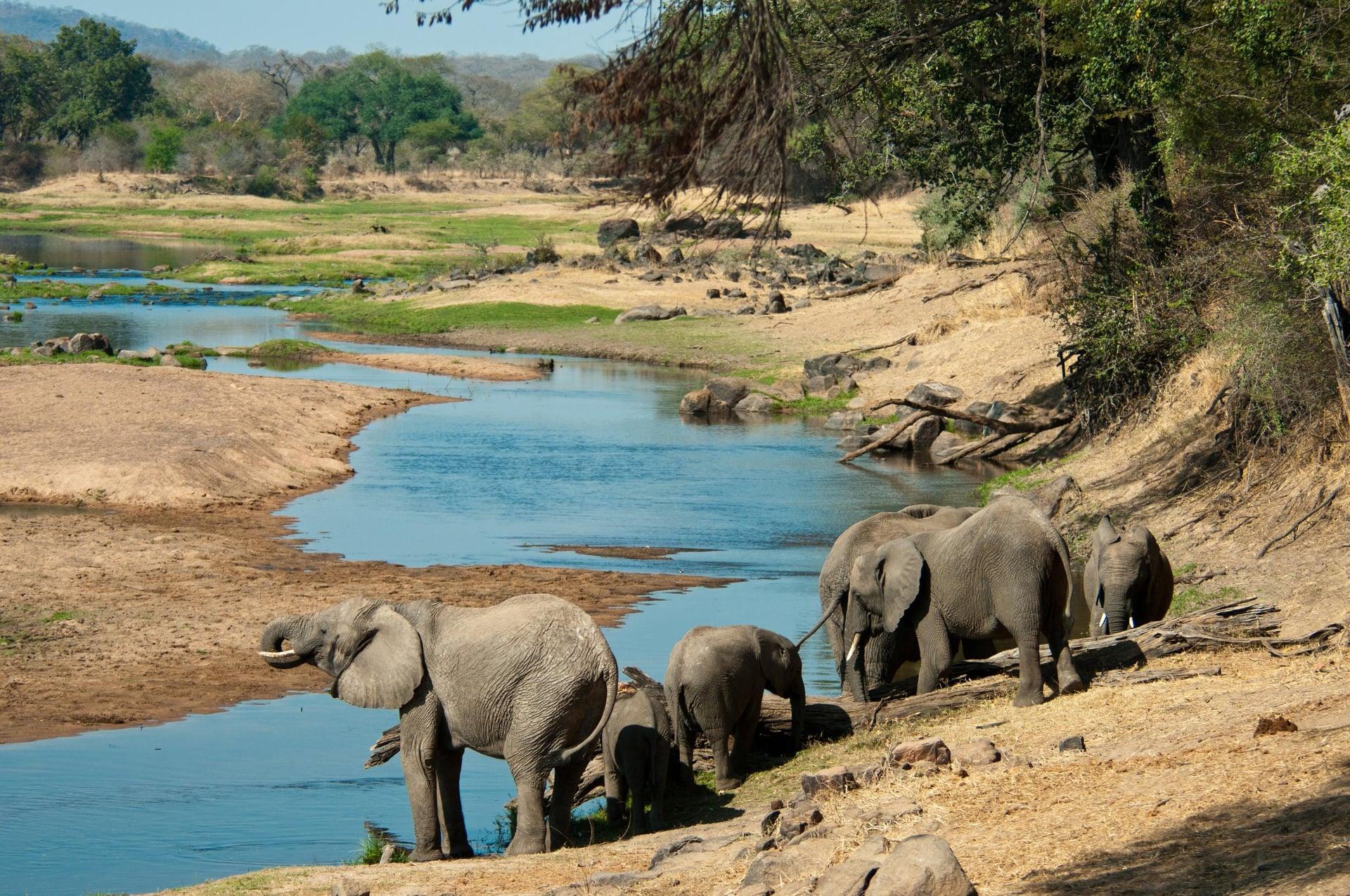
Tanzania's untamed south - lions, wild dogs and thousands of elephants beneath ancient baobabs.
The sun is barely above the baobabs when the first elephant herd emerges from the dry riverbed. A few hundred metres away, a pride of lions is still stretched beneath an acacia, waiting for the heat to build before moving into the shade. The guide kills the engine. For a moment there is nothing but the sound of birds and the distant rumble of elephants.
This is Ruaha National Park.
In south-central Tanzania, far from the busiest safari routes, Ruaha National Park is one of Africa’s great wilderness areas. Covering approximately 20,226 square kilometres, it is Tanzania’s second-largest national park and forms part of a much larger ecosystem extending across roughly 45,000 square kilometres. The landscape is defined by baobab-studded plains, rocky kopjes, miombo woodland, seasonal sand rivers and the Great Ruaha River.
What makes a Ruaha National Park safari different is not simply its size. It is the combination of East African and southern African wildlife species found within the same ecosystem. Elephant, buffalo, lion, leopard and cheetah are abundant, while greater kudu, lesser kudu, sable antelope, roan antelope and African wild dog add a level of variety that experienced safari travellers particularly appreciate.
Ruaha National Park is also a destination for travellers who value space. The park’s remote location means fewer vehicles, long stretches of wilderness and game-viewing experiences that can feel remarkably private compared with some of Tanzania’s more heavily visited parks.
For guests travelling with Afrikan Accent Adventures, we recommend Ruaha National Park when the priority is wilderness, predators, elephants, unusual antelopes and a slower, more exclusive safari experience. If you have already explored the Serengeti and Ngorongoro and want to see a different side of Tanzania, Ruaha National Park is one of the strongest places to go next.
Ruaha National Park is a vast protected wilderness in south-central Tanzania’s Iringa Region. Covering approximately 20,226 square kilometres, Ruaha National Park is Tanzania’s second-largest national park and is famous for elephants, large lion prides, African wild dogs, greater kudu, sable and roan antelope, baobabs and the Great Ruaha River.
Location: Iringa Region, south-central Tanzania
Size: Approximately 20,226 square kilometres
Established as a national park: 1964
Managed by: Tanzania National Parks Authority (TANAPA)
Known for: Large elephant herds, lions, African wild dogs, greater kudu, sable and roan antelope, baobabs and the Great Ruaha River
Main river: Great Ruaha River
Other important river systems: Mwagusi, Mdonya and Jongomero
Nearest major town: Iringa
Distance from Iringa: Approximately 130 kilometres to the Msembe area
Main airstrips: Msembe and Jongomero
Best wildlife-viewing period: June to October
Wet season: Generally November to May, with rainfall patterns varying across the park
Recorded bird species: More than 570 species, with TANAPA currently listing 571+ recorded species
Ruaha National Park occupies a biological crossroads where wildlife and vegetation associated with eastern Africa overlap with species more commonly associated with southern Africa. That ecological overlap is one of the reasons Ruaha National Park feels so different from the northern Tanzania safari circuit.
The landscape changes constantly. One game drive can move through open savanna scattered with enormous baobabs, then into miombo woodland, across a sandy seasonal riverbed and eventually towards rocky kopjes overlooking the plains.
The Great Ruaha River is the park’s most important permanent watercourse and becomes particularly significant during the dry season. As smaller rivers and seasonal pools disappear, elephants, buffalo, predators and other wildlife concentrate around remaining water sources.
Then there are the elephants. Ruaha National Park is famous for its large elephant population and dry-season concentrations along rivers and springs. Watching elephants dig into a sandy riverbed with their trunks and feet in search of underground water is one of the defining experiences of a Ruaha National Park safari.
For photographers, the combination is equally compelling. Red and golden earth, ancient baobabs, dramatic skies, rocky outcrops and large mammals create a landscape that looks unmistakably different from the open grasslands of the Serengeti.
Ruaha National Park is famous for its enormous wilderness, large elephant herds, strong populations of lions and other predators, African wild dogs, greater kudu, sable and roan antelope, spectacular baobab landscapes and the Great Ruaha River. It is also known for offering a quieter and less crowded safari experience than many of Tanzania’s northern parks.
Ruaha National Park is one of Tanzania’s most rewarding destinations for serious wildlife viewing. The sheer size of the park means that animals are not concentrated into a small number of viewing areas, yet during the dry season water sources create natural gathering points.
Elephants are among the most memorable residents. Large herds move through the park, particularly around the Great Ruaha River and other remaining water sources as the dry season progresses. The sight of elephants moving beneath baobabs or crossing a sandy riverbed is one of the classic Ruaha National Park experiences.
Buffalo are also abundant, often forming large herds across the open plains and woodland. Where buffalo gather, predators are rarely far away.
Lion is one of Ruaha National Park’s major attractions. The park is renowned for large lion prides, and the combination of abundant prey, river systems and expansive wilderness provides excellent habitat for them. Leopards and cheetahs are also present, while spotted hyenas add another important predator to the ecosystem.
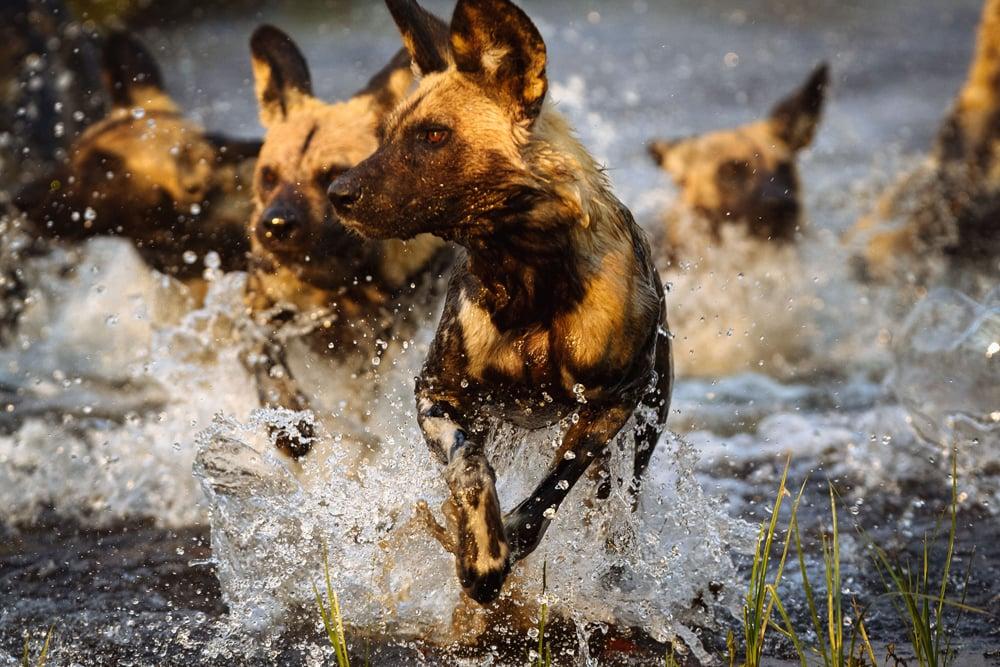
African wild dogs are another major reason experienced safari travellers choose Ruaha National Park. The park forms part of an important habitat for this endangered species, and sightings can be particularly rewarding because wild dogs range widely and may cover considerable distances between encounters.
Ruaha National Park is equally important for antelope enthusiasts. Greater kudu, lesser kudu, sable and roan antelope are among the species that distinguish the park from many northern Tanzania destinations. Greater kudu, with its dramatic spiral horns, is particularly associated with Ruaha’s woodland habitats.
Giraffe, zebra, impala, eland, warthog, hippo and crocodile are also encountered, while the park’s rivers, woodlands and open country support an exceptionally diverse bird population.
A Ruaha National Park safari can include elephant, buffalo, lion, leopard, cheetah, African wild dog, spotted hyena, greater kudu, lesser kudu, sable antelope, roan antelope, giraffe, zebra, impala, eland, warthog, hippo and crocodile. More than 570 bird species have also been recorded.
Elephants are one of the defining features of Ruaha National Park.
During the dry season, elephants increasingly depend on the Great Ruaha River, seasonal sand rivers and remaining springs. When surface water disappears, elephants can dig beneath sandy riverbeds to reach underground water.
This behaviour can create remarkable sightings. A herd may appear to be standing beside a completely dry river, yet within minutes several elephants are digging, pushing sand aside with their trunks and eventually finding enough water for the herd.
The combination of elephants and baobabs is also one of the visual signatures of Ruaha National Park. In the early morning and late afternoon, the silhouettes of elephants beneath enormous baobab trees make for some of the most memorable photographs of a southern Tanzania safari.
Ruaha National Park is particularly strong for big-cat viewing.
Large lion prides are regularly encountered, especially around areas where prey gathers near water. Early morning and late afternoon are generally the most productive periods because temperatures are lower and predators are more active.
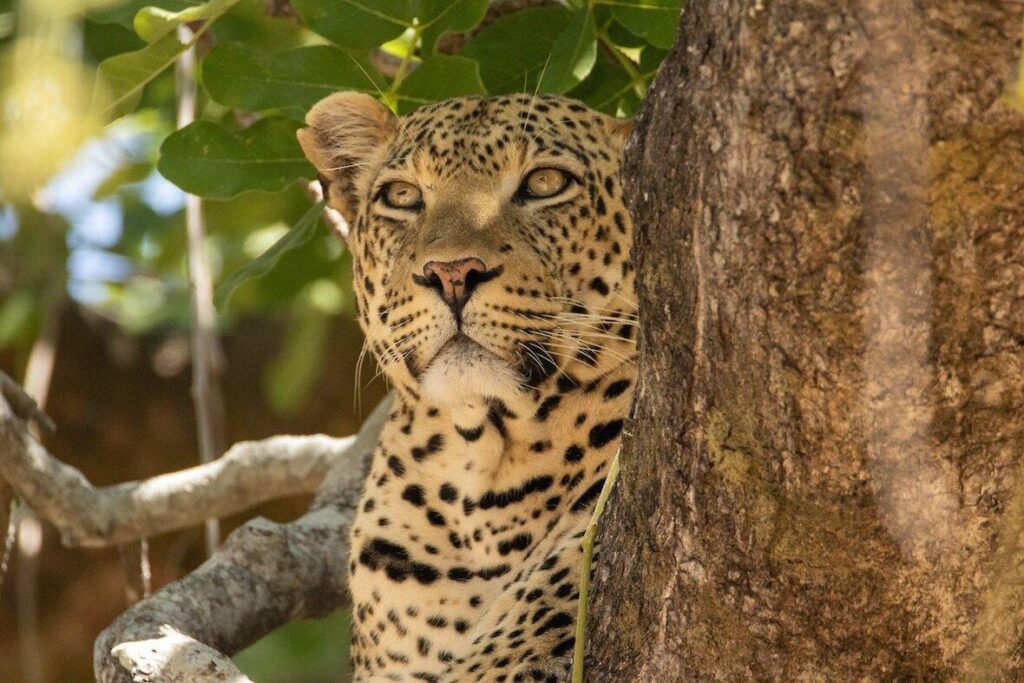
Leopard sightings are more elusive but can occur around riverine vegetation, woodland and rocky areas. Cheetahs favour more open country where their speed gives them an advantage over prey.
The scale of Ruaha National Park means that predator encounters often feel less crowded than those in heavily visited areas. A lion sighting can involve only one or two safari vehicles, and in remote parts of the park it is possible to spend considerable time without encountering another vehicle.
African wild dogs are among the most sought-after sightings in Ruaha National Park.
Unlike lions, which may remain within relatively defined territories, wild dogs can travel long distances in search of prey. Their movements are therefore less predictable, but when a pack is found, the encounter can be extraordinary.
Watching a pack communicate, play, rest or prepare for a hunt gives guests an insight into one of Africa’s most sophisticated social predators.
Ruaha National Park’s large size and relatively remote character provide important space for this endangered species. For travellers specifically interested in wild dogs, we recommend allowing several days in the park rather than relying on a single game drive.
For many experienced safari travellers, the antelopes are what separates Ruaha National Park from the more familiar safari destinations.
Greater kudu is one of the park’s signature species. The males carry spectacular spiral horns and are often associated with woodland habitats.
Sable and roan antelope are also among the special sightings to look for. These species are more strongly associated with southern African ecosystems, and their presence reflects the ecological transition that makes Ruaha National Park so distinctive.
Finding these animals is not about ticking off a list as quickly as possible. It is about spending enough time in the right habitat and allowing the guide to interpret tracks, vegetation and animal behaviour.
Birdwatching is one of the most underrated reasons to visit Ruaha National Park.
TANAPA currently records more than 570 bird species in the park, with its visitor information listing 571 or more species. The combination of river systems, wetlands, woodland, savanna and seasonal vegetation creates habitats for an extraordinary range of birds.
Raptors are particularly impressive, while bee-eaters, kingfishers, hornbills and other woodland and riverine species provide constant activity around camps and game-drive routes.
The green season is especially attractive for birdwatchers because vegetation becomes more vibrant and migratory species add to the resident bird population.
If birding is a priority, tell us before we build your Ruaha National Park itinerary. A safari designed around birds is paced differently from a traditional big-game itinerary.
Game drives are the foundation of a Ruaha National Park safari.
Morning drives begin around sunrise when temperatures are cooler and predators are often active. Afternoon drives continue towards sunset, when elephants and other animals may begin moving towards water.
Because Ruaha National Park is so large, game drives can cover significant distances. The experience is less about driving from one guaranteed sighting to another and more about exploring a genuine wilderness landscape.
TANAPA specifically highlights 4×4 game drives as a core activity in Ruaha National Park, with elephants, buffalo, lions, leopards, crocodiles and hippos among the major wildlife attractions.
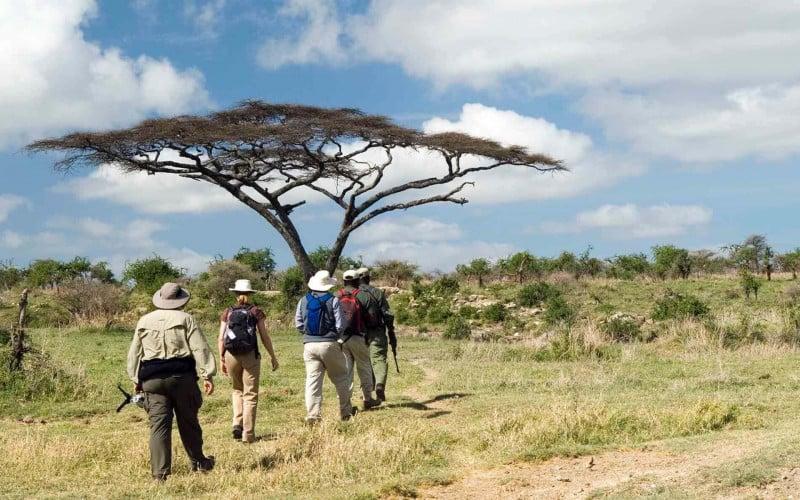
Walking provides an entirely different way to experience Ruaha National Park.
Instead of focusing only on large mammals, a walking safari slows the experience down and introduces guests to tracks, plants, insects, birds, animal signs and smaller details that are easy to miss from a vehicle.
Walking activities must be arranged through licensed operators and according to current park regulations and safety requirements. TANAPA lists wilderness walking among the activities available in the Ruaha area.
With more than 570 recorded species, Ruaha National Park is an excellent destination for birdwatchers.
A dedicated birding drive can focus on raptors, riverine birds, woodland species and seasonal migrants rather than concentrating exclusively on mammals.
The wet season is particularly rewarding for birdwatching because the landscape becomes greener and migratory species are present.
Some camps arrange bush breakfasts, lunches or dinners in carefully selected locations.
A bush breakfast after an early game drive allows guests to stop beneath a large tree or near a scenic viewpoint while the landscape wakes up around them.
The experience is not simply about the meal. It is about taking time outside the vehicle and appreciating the scale and silence of Ruaha National Park.
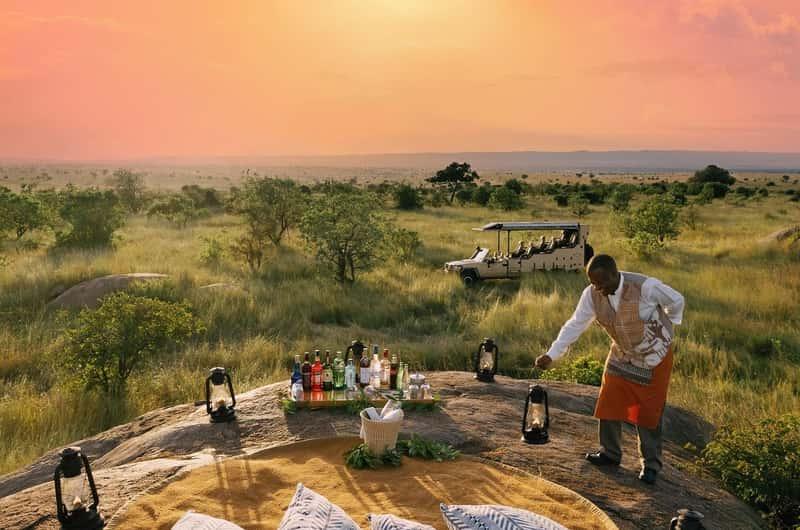
Sundowners are particularly atmospheric in Ruaha National Park.
As the sun drops behind baobabs and rocky hills, the colours of the landscape change from gold to orange and then deep red. A quiet drink overlooking the plains is one of the simplest ways to finish a game-drive day.
Ruaha National Park offers excellent opportunities for stargazing because of its remote location and limited artificial light.
TANAPA specifically lists stargazing among the visitor activities available in the park.
On clear nights, the Milky Way can become a major part of the safari experience, particularly when viewed from a camp away from artificial lighting.
Ruaha National Park is a photographer’s destination.
The combination of elephants, lions, wild dogs, kudu and other antelope with baobabs, rocky kopjes, riverbeds and dramatic skies creates enormous variety.
Morning and afternoon light are especially attractive, while the dry season often provides clearer visibility and stronger concentrations of wildlife around water.
The scale of Ruaha National Park makes simply being in the wilderness an activity in itself.
Long game drives through remote sections of the park can reveal landscapes where there may be no other vehicle in sight. For repeat safari travellers, this sense of space is often more important than the number of animals seen.
The Great Ruaha River is the ecological centrepiece of Ruaha National Park.
It runs along the southeastern part of the park and provides an essential source of water, particularly as the dry season intensifies. Seasonal rivers such as the Mwagusi, Mdonya and Jongomero also influence wildlife movements, although their water levels vary significantly throughout the year.
During the driest months, permanent pools, springs and underground water accessed through sandy riverbeds become increasingly important.
This creates one of the great rhythms of a Ruaha National Park safari: as water becomes scarce, animals become easier to predict.
Elephants arrive at riverbeds. Buffalo gather near water. Predators follow prey. Birds concentrate around remaining pools.
The river therefore does much more than provide scenery. It determines where much of the wildlife is found.
Baobabs are one of the visual symbols of Ruaha National Park.
These enormous trees stand across open plains and woodland, sometimes appearing almost impossibly large against the surrounding landscape.
TANAPA specifically identifies the Baobab Plains as one of Ruaha’s major natural attractions.
A game drive beneath a baobab is a different experience from viewing wildlife across an open grassland. The trees provide shade for elephants and other animals while creating striking silhouettes during sunrise and sunset.
For photographers, baobabs are particularly valuable because they give scale to wildlife photographs. An elephant standing beneath a centuries-old baobab immediately communicates the character of the Ruaha landscape.
Miombo woodland covers substantial parts of Ruaha National Park and provides habitat for several of the park’s most interesting antelope species.
Greater kudu, lesser kudu, sable and roan can all be associated with woodland habitats, while birds and smaller mammals use the vegetation for food and shelter.
The woodland also changes the character of a game drive. Visibility is lower than on open plains, requiring the guide to slow down and read tracks, movement and vegetation.
This is one reason experienced guides make such a difference in Ruaha National Park.
Ruaha National Park and Nyerere National Park are both major destinations in southern Tanzania, but they offer different safari experiences.
Nyerere is known for its enormous river and wetland systems, boat safaris and extensive wilderness, while Ruaha National Park is particularly strong for big cats, elephants, African wild dogs and unusual antelopes.
Ruaha National Park also has a distinctive combination of baobab plains, miombo woodland and rocky landscapes that gives it a more rugged visual character.
For travellers with enough time, combining the two parks creates an excellent southern Tanzania safari circuit.
The Serengeti is the obvious choice for travellers who want vast grasslands, the Great Migration and exceptionally high concentrations of plains wildlife.
Ruaha National Park offers something different.
There is no need to compete with the Serengeti on migration spectacle because Ruaha’s strength lies elsewhere: wilderness, elephants, large lion prides, wild dogs, kudu, sable and roan antelope, baobabs and lower visitor density.
Many experienced travellers choose both.
The Serengeti provides the classic northern Tanzania safari experience, while Ruaha National Park introduces a quieter and more rugged southern landscape.
Tarangire is famous for elephants, baobabs and seasonal wildlife concentrations along the Tarangire River.
Ruaha National Park shares some of those characteristics but on a vastly larger scale.
Ruaha is considerably more remote and offers a broader range of southern-associated wildlife, including sable, roan and wild dogs. Tarangire is easier to combine with Arusha, Lake Manyara, Ngorongoro and Serengeti, while Ruaha generally requires more deliberate planning.
If the priority is a classic northern circuit, Tarangire is the natural choice. If the priority is remote wilderness, Ruaha National Park deserves serious consideration.
Flying is the most convenient way to reach Ruaha National Park for most safari travellers.
Scheduled and charter flights connect Ruaha with major Tanzanian safari hubs, including Dar es Salaam and Arusha, depending on the operator and season. Flights land at airstrips including Msembe and Jongomero, after which the camp or safari operator arranges the transfer.
For guests arriving from Dar es Salaam, a flight generally takes around two to two and a half hours depending on routing and aircraft schedule.
The major advantage is time.
Instead of spending most of a day travelling by road, guests can arrive in Ruaha National Park with enough time for an afternoon game drive.
Ruaha National Park can also be reached by road, usually through Iringa.
TANAPA advises that the park is approximately two to three and a half hours from Iringa by road, with a 4×4 vehicle recommended, particularly during the rains.
From Dar es Salaam, the road journey is considerably longer and can take most of a day. Travellers using the road route often combine Ruaha National Park with other southern Tanzania destinations or overnight in Iringa rather than attempting to rush the entire journey.
The road option is particularly attractive to travellers who enjoy the journey itself and want to see more of rural Tanzania.
Choose flying if your priority is time, comfort and maximizing your days inside Ruaha National Park.
Choose driving if you have a longer itinerary, want to experience rural Tanzania or are combining Ruaha with destinations along the southern circuit.
For most first-time visitors staying only two or three nights, we recommend flying.
For longer southern Tanzania circuits, a combination of road and air can work very well.
Ruaha National Park can be reached by scheduled or charter flights to Msembe or Jongomero airstrips, or by road through Iringa. The park is roughly 130 kilometres from Iringa, with the final journey taking approximately two to three and a half hours depending on conditions. A 4×4 vehicle is recommended, particularly during the rains.
Ruaha National Park has a hot seasonal climate.
The dry season generally runs from June to October. During this period, rainfall is limited, vegetation becomes thinner and wildlife increasingly concentrates around permanent water sources and remaining pools.
This makes the dry season one of the strongest periods for game viewing.
The green season generally begins with the rains from around November and continues into the following months, although rainfall patterns vary across the large Ruaha ecosystem.
The wet season transforms the landscape. Grass grows, trees become greener and the plains become visually spectacular. Bird activity also increases, making this an excellent period for photographers and birdwatchers.
Temperatures can be high during the middle of the day, while mornings and evenings are considerably more comfortable.
Ruaha National Park has a seasonal climate, with a hot, dry period from approximately June to October and a wetter, greener period from around November into the following months. The dry season generally provides the most concentrated wildlife viewing, while the wet season offers greener landscapes, birdlife and fewer visitors.
Current TANAPA information lists international adult entry at USD 70 and international child entry at USD 20 for Ruaha National Park, while East African residents are listed at a separate rate. TANAPA states that conservation fees are valid for 24 hours and that applicable fees include VAT.
Rates can vary according to visitor category, age, vehicle class and additional activities, so travellers should confirm the applicable tariff for their exact itinerary before travelling.
Children under five are currently listed by TANAPA as entering free of charge, while child rates generally apply from age five to fifteen. Residents and East African Community citizens must present the appropriate identification or residence documentation when qualifying for those rates.
For Afrikan Accent Adventures clients, park fees are normally incorporated into the safari quotation so the total cost is clear from the beginning.
TANAPA’s current visitor information lists the international conservation fee for Ruaha National Park at USD 70 for adults and USD 20 for children, with separate rates for residents and East African Community citizens. Fees are subject to the applicable TANAPA tariff and should be confirmed when booking.
June to October is the classic dry-season window and our preferred period for a first Ruaha National Park safari.
As the landscape dries, wildlife becomes increasingly concentrated around rivers, springs and remaining water sources. Visibility improves because vegetation is thinner, roads are generally easier and predators become easier to locate around prey concentrations.
June and July can be particularly pleasant because the dry season is established but temperatures are not yet at their hottest.
August and September offer excellent game viewing, with elephants and other animals increasingly dependent on remaining water.
October is hotter and often very dry, but wildlife concentrations can be excellent.
The green season brings a completely different Ruaha National Park experience. The landscape becomes lush, birds become more active and the park feels transformed.
If birdwatching, photography and green scenery are more important than maximum wildlife concentration, the wetter months can be an excellent choice.
June to October is generally the strongest period for a first Ruaha National Park safari because dry conditions concentrate wildlife around water and make game viewing easier. The wetter months offer greener scenery, excellent birding and a quieter atmosphere.
Two nights gives you a useful introduction to Ruaha National Park, especially if you fly in and out.
You can usually fit in an arrival game drive, a full day of game viewing and a final morning activity before departure.
Three nights is our standard recommendation for a first Ruaha National Park safari.
Three nights provides enough time for several game drives and gives your guide more opportunities to search for wild dogs, kudu, sable, roan and predators rather than simply focusing on the most accessible wildlife.
Four nights or more is ideal for travellers who want to slow down.
A longer stay allows you to explore different habitats, dedicate time to birdwatching or walking, spend longer around predator sightings and experience both the riverine areas and woodland sections of the park.
Three nights is a good starting point for a first Ruaha National Park safari. Two nights works for travellers with limited time, while four or more nights is better for guests who want deeper exploration, walking, birdwatching and a greater chance of finding species such as wild dog, sable, roan and greater kudu.
Ruaha National Park is for travellers who want more than a checklist.
The park offers enormous space, unusual wildlife, dramatic landscapes and a genuine sense of remoteness.
It is one of the best places in Tanzania to combine elephant viewing with big-cat sightings and the search for less common antelopes.
It is also a destination where the landscape itself becomes part of the safari. A baobab-covered plain can be as memorable as a lion sighting.
For repeat safari travellers, Ruaha National Park offers something particularly valuable: difference.
The park does not look like the Serengeti.
It does not feel like Ngorongoro.
It does not operate at the same visitor density as some of Tanzania’s better-known destinations.
Instead, Ruaha National Park feels expansive, rugged and quietly wild.
The cost of a Ruaha National Park safari depends heavily on accommodation, season, number of nights and whether the itinerary is road-based or fly-in.
Budget and simple camping options can provide access to Ruaha National Park at a lower price, particularly for travellers using road transport and basic accommodation.
Mid-range tented camps and lodges generally provide a balance between comfort and value, with meals, game drives and park logistics incorporated into the safari package.
Luxury Ruaha National Park camps can command significantly higher rates, particularly during the June to October peak season. These properties often offer premium tented accommodation, private dining, guided walking, fly-camping options and highly personalized service.
Flying into Ruaha National Park also increases the overall cost compared with driving, but it can save most of a day of road travel and allows travellers to maximize their time inside the park.
For an accurate price, we recommend building the quotation around your travel dates, preferred accommodation level, number of nights and whether you prefer a road or flying safari.
Ruaha National Park safari prices vary significantly according to accommodation, season, transport and activities. Road safaris with mid-range camps are generally more economical, while fly-in safaris and luxury camps cost more. The best way to establish the actual price is to build the itinerary around the traveller’s dates and accommodation preferences.
We build Ruaha National Park into several types of Tanzania safari.
A three-night Ruaha National Park safari works well as a focused wildlife escape for travellers who want elephants, predators and unusual antelopes.
A four- or five-night Ruaha itinerary allows a slower exploration of the park and can incorporate walking, birdwatching and longer game drives.
Ruaha National Park can also be combined with Nyerere National Park for a southern Tanzania safari circuit. This combination creates an excellent contrast between Ruaha’s dry woodland and baobab country and Nyerere’s riverine and wetland environments.
For travellers flying from Zanzibar or Dar es Salaam, Ruaha National Park can also work as a safari extension before returning to the coast.
For guests arriving through Arusha, flights can connect the southern circuit with the northern Tanzania safari network depending on available schedules.
We tailor each Ruaha National Park safari around the guest’s interests rather than simply selling a fixed package.
Accommodation in Ruaha National Park ranges from public campsites and park bandas to permanent tented camps and luxury safari properties.
Some camps are positioned near the Mwagusi, Mdonya and Jongomero areas, while others are located closer to the central sections of the park.
River and seasonal-water access can be an important consideration when selecting a property, particularly during the dry season.
For guests looking for an immersive wilderness experience, we generally recommend tented camps that maintain a strong connection with the surrounding landscape.
For families or travellers prioritizing comfort, we can select properties with larger tents, private facilities and more flexible dining arrangements.
Accommodation availability can become limited during June to October and festive periods, so early booking is recommended.
Ruaha National Park is an enormous ecosystem whose future depends on protecting wildlife, rivers and surrounding communities.
The Great Ruaha River and associated river systems are particularly important because they support wildlife during the dry season and contribute to wider ecological and human systems beyond the park itself.
Responsible tourism begins with following park regulations.
Guests should remain with their guide, respect wildlife distances, avoid disturbing animals and follow designated routes and current park instructions.
Walking safaris should only be undertaken through properly licensed operators and under the conditions required by park authorities.
Low-impact tourism is especially important in a wilderness as large and ecologically significant as Ruaha National Park.
The best safari experience is one that leaves the landscape exactly as it was found.
A successful Ruaha National Park safari starts with deciding what you want from the destination.
If your priority is maximum wildlife concentration, we recommend travelling during the dry season and staying near important water systems.
If your priority is birds and green landscapes, consider the wetter months.
If you have limited time, fly into Ruaha National Park.
If you want a slower and more economical journey, consider travelling by road through Iringa.
If you are a repeat safari traveller, allow at least three or four nights and consider adding walking or a dedicated wildlife photography day.
If you are interested in African wild dogs, greater kudu, sable or roan, tell your guide before the safari begins so the game-viewing strategy can be built around the habitats where these species are most likely to occur.
Ruaha National Park rewards patience more than speed. The temptation on a first game drive is to cover as much ground as possible, but the most memorable sightings often come from slowing down, watching elephant behaviour, following a predator track or spending time in one productive area.
Afrikan Accent Adventures Safari Team
From enormous elephant herds beneath baobabs to lions resting beside the Great Ruaha River, Ruaha National Park offers a version of Tanzania that feels increasingly rare.
It is a destination for travellers who want space, wildlife and silence.
It is a destination for people who want to see more than the standard safari circuit.
And it is a destination where the landscape matters just as much as the animals.
We build Ruaha National Park safaris as standalone wildlife journeys, as part of a southern Tanzania circuit with Nyerere National Park, or as a longer Tanzania itinerary connecting the southern and northern safari regions.
Whether you are looking for a mid-range tented camp, a luxury wilderness property, a road safari or a fly-in experience, Afrikan Accent Adventures can build the itinerary around your travel dates, budget and interests.
Ruaha National Park is not simply another stop on a Tanzania safari.
For many travellers, it is where Tanzania starts to feel truly wild.
Experience vast baobab-studded landscapes, exceptional predator sightings, enormous elephant herds, and authentic off-the-beaten-path safaris in Tanzania's largest national park.
Ruaha National Park is home to one of the largest concentrations of elephants in East Africa, with an estimated population exceeding 10,000…
Ruaha has earned a reputation as one of Africa's premier lion destinations. The park supports approximately 10% of the world's remaining wild…
The endangered African wild dog is one of Africa's rarest predators, yet Ruaha remains one of the continent's most reliable places to…
Few parks in Africa can rival Ruaha for predator diversity. Alongside lions and wild dogs, visitors have an excellent chance of spotting…
Ruaha's landscapes are defined by enormous baobab trees, some of which are estimated to be over a thousand years old. These iconic…
The Great Ruaha River is the lifeline of the park and one of the most important wildlife corridors in southern Tanzania. During…
With more than 570 recorded bird species, Ruaha is a paradise for birdwatchers. The park lies at the intersection of eastern and…
Unlike the Serengeti or Ngorongoro, Ruaha receives relatively few visitors despite its extraordinary wildlife abundance. It is entirely possible to spend hours…

From value camps to premium lodges — we match every stay to your style and budget.
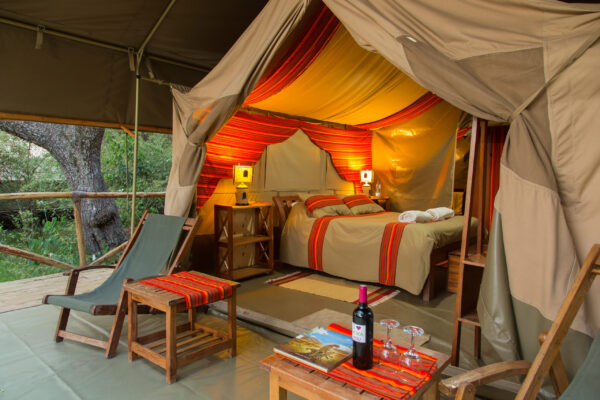
Budget accommodation in Ruaha focuses on authentic safari experiences, comfortable rooms or tents, and excellent access to wildlife while keeping costs manageable. Facilities are generally simple but clean and well maintained.
Mid-range accommodation combines comfort, excellent guiding, quality meals and prime safari locations without the premium price tag associated with ultra-luxury camps.
Luxury properties in Ruaha deliver exclusive safari experiences with exceptional guiding, gourmet cuisine, premium service and spectacular wilderness locations.
Every season has its magic — here's what to expect when, so you can travel at your perfect time.
Everything you need to know before you go — and we’ll guide you through every step.
The fastest and most convenient way to reach Ruaha National Park is via scheduled or charter flights to Msembe Airstrip or Jongomero Airstrip. Daily and seasonal flights operate from Dar es Salaam, Arusha, Zanzibar, Serengeti and Selous/Nyerere National Park.
Ruaha National Park lies approximately 130 kilometres west of Iringa town. The drive takes around 2.5 to 3 hours on a combination of paved and gravel roads, offering scenic views of southern Tanzania's landscapes and villages.
The best wildlife viewing occurs from June to October when animals concentrate around the Great Ruaha River and remaining water sources. Predator sightings become particularly frequent during these months.
Ruaha is internationally famous for large lion prides, endangered African wild dogs, leopards, cheetahs, and one of East Africa's largest elephant populations. Wildlife densities are especially high during the dry season.
Ruaha offers exceptional opportunities for wildlife photography thanks to open landscapes, baobab trees, dramatic skies, and relatively low visitor numbers. A telephoto lens of at least 300mm is highly recommended.
Daytime temperatures often range between 28°C and 35°C during the dry season, while evenings and early mornings can become surprisingly cool, especially between June and August.
Recommended items include lightweight clothing in neutral colours, sunscreen, a hat, insect repellent, sunglasses, binoculars and a light fleece or jacket for early morning game drives.
Ruaha lies within a malaria-risk area. Visitors should consult their healthcare provider regarding anti-malarial medication and use insect repellent, particularly during evenings and the rainy season.
Most safari camps accept major credit cards, but cash in US Dollars or Tanzanian Shillings is useful for staff gratuities, local purchases and small expenses during travel.
Mobile coverage is available in some areas of the park and at many camps, but signal strength can vary considerably. Wi-Fi is available at most mid-range and luxury lodges
Ruaha has a limited number of camps and lodges compared to northern Tanzania destinations. Early reservations are highly recommended for travel between June and October.
Ruaha National Park is one of the continent's strongest remaining refuges for endangered African wild dogs, offering some of the best viewing opportunities in Africa.
Tourism revenue directly supports wildlife conservation and local communities in southern Tanzania. Choosing responsible operators helps protect one of Africa's last great wilderness ecosystems.
Ruaha National Park is famous for its enormous elephant population, exceptional predator sightings, massive lion prides, ancient baobab trees and authentic wilderness safaris far away from the crowds found in many other African parks. It is widely regarded as one of Africa's last great wilderness destinations.
Ruaha National Park is located in southern Tanzania within the Iringa Region, approximately 130 kilometres west of Iringa town and around 625 kilometres from Dar es Salaam. It forms the heart of the vast Ruaha-Rungwa ecosystem.
Absolutely. Many experienced safari travelers consider Ruaha to be one of Tanzania's finest safari destinations due to its low visitor numbers, outstanding wildlife densities, spectacular landscapes and exclusive safari experiences. It offers a more remote and authentic alternative to the Northern Safari Circuit.
Ruaha supports an extraordinary diversity of wildlife including elephants, lions, leopards, cheetahs, buffaloes, giraffes, zebras, hippos, crocodiles, hyenas, jackals, antelope species and endangered African wild dogs. More than 570 bird species have also been recorded in the park.
Yes. Ruaha is considered one of Africa's premier lion destinations and supports one of the continent's highest lion populations. Prides frequently exceed 15 to 20 individuals and visitors often witness hunting behaviour and interactions between competing prides.
Yes. Ruaha is one of Africa's best destinations for observing endangered African wild dogs in the wild. The Ruaha-Rungwa ecosystem protects one of East Africa's most important remaining populations of this highly endangered predator.
The best time to visit is during the dry season from June to October when wildlife gathers around the shrinking waters of the Great Ruaha River, creating exceptional game viewing opportunities and dramatic predator-prey interactions.
A minimum stay of three nights is recommended to appreciate the park's size and wildlife diversity fully. Four to five nights are ideal for photographers, birdwatchers and travelers interested in exploring multiple areas of the park.
Visitors can reach Ruaha by road from Iringa in approximately 2.5 to 3 hours or by scheduled bush flights from Dar es Salaam, Arusha, Zanzibar and other safari destinations. Most fly-in safaris arrive at Msembe Airstrip or Jongomero Airstrip.
Yes. Many lodges and camps welcome families and offer child-friendly activities such as nature walks, junior ranger programs and educational wildlife experiences. Some camps may apply minimum age requirements for walking safaris.
While Serengeti National Park is famous for the Great Wildebeest Migration, Ruaha offers a more exclusive and remote safari experience with fewer vehicles, larger wilderness areas, outstanding predator sightings and exceptional opportunities to observe African wild dogs.
Yes. Ruaha combines exceptionally well with Nyerere National Park, Mikumi National Park, and the beaches of Zanzibar to create an unforgettable Southern Tanzania safari itinerary.
Ruaha is one of East Africa's top birding destinations with more than 570 recorded species, including hornbills, kingfishers, bee-eaters, eagles, vultures and numerous migratory species. The green season from November to April is particularly rewarding for bird enthusiasts.
Ruaha offers something increasingly rare in Africa — genuine wilderness, uncrowded game drives, extraordinary wildlife encounters and a sense of exploration. Many safari experts consider it one of the continent's most rewarding safari destinations for repeat visitors seeking an authentic African experience.
Real per-person prices from $200 a day on a shared group departure to more than $1,000 a day…
Read more →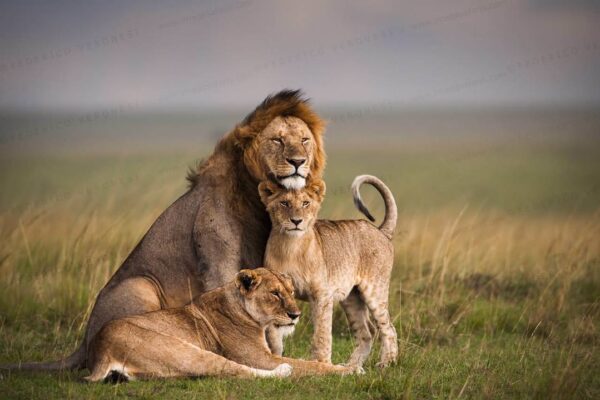
A family safari rarely fails on wildlife. It fails on the logistics: the suitcase, the six-hour drive, the…
Read more →
We priced eleven safaris for one traveller, from a USD 650 shared tent in the Siana Conservancy to…
Read more →Tell us what you’d love to see and a local specialist will design a tailor-made itinerary around you — no obligation, reply within 24 hours.