

Planning & Tips
Wifi, Electricity and Charging on Safari: What Kenya’s Camps Actually Offer
From a generator that switches off at ten to a Land Cruiser fitted with its own charging console,…
Read more →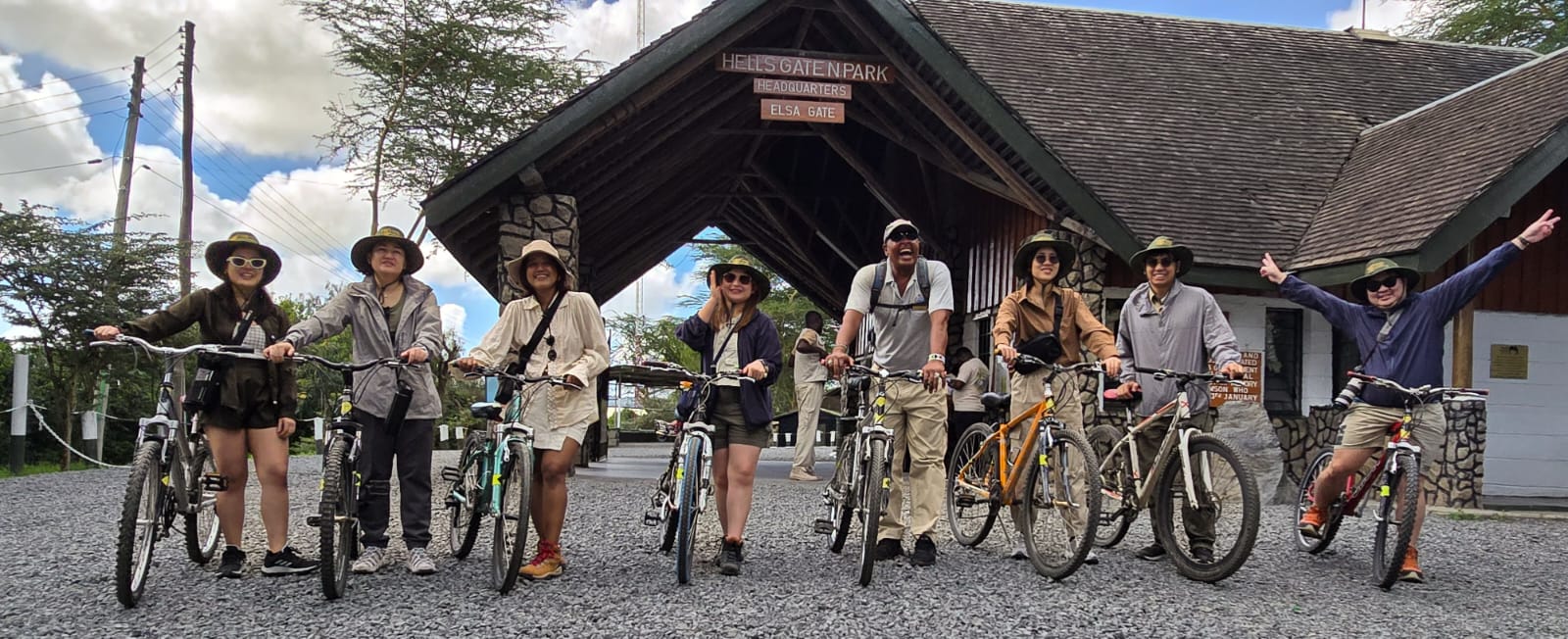
Hell's Gate National Park is a spectacular Great Rift Valley destination known for dramatic cliffs, volcanic landscapes, hiking, cycling, rock climbing, wildlife and unique outdoor safari experiences.
OverviewHell’s Gate National Park is one of Kenya’s most distinctive national parks, located in the Great Hell’s Gate National Park is one of those places where the landscape changes the moment you leave the main road. The last houses of Naivasha fall behind, the Rift Valley opens out, and suddenly you are cycling beneath cliffs with zebra grazing a few metres away. There is no engine noise unless you bring it yourself. A giraffe watches from the acacia. Somewhere above the gorge, vultures circle on the thermals.
We have driven into Hell’s Gate many times and it still feels unusual by Kenyan safari standards. This is not a park where you spend the entire day sitting inside a safari vehicle. You can walk, cycle, hike, climb rock faces and explore narrow gorges while wildlife moves through the surrounding grasslands.
Hell’s Gate National Park sits in the Great Rift Valley, just south of Lake Naivasha and roughly 90 kilometres northwest of Nairobi. Covering about 68.25 square kilometres, it is one of Kenya’s smaller national parks, but its combination of towering cliffs, volcanic rock formations, geothermal activity and open grassland makes it one of the country’s most distinctive. The park was gazetted in 1984 and is managed by the Kenya Wildlife Service.
What sets Hell’s Gate apart is the freedom to experience the landscape on foot and by bicycle in designated areas. It is also home to Fischer’s Tower, Central Tower, Ol Jorowa Gorge, obsidian caves and geothermal features associated with the Olkaria area.
For travellers staying around Nairobi, Naivasha or Lake Nakuru, Hell’s Gate is less about ticking off a long list of animals and more about getting out of the vehicle and experiencing the Rift Valley physically.
Hell’s Gate National Park is a 68.25-square-kilometre protected area in Kenya’s Great Rift Valley, south of Lake Naivasha and about 90 kilometres from Nairobi. It is famous for dramatic cliffs, volcanic formations, gorges, geothermal activity and the unusual opportunity to explore parts of the park by bicycle and on foot.
Location: Great Rift Valley, south of Lake Naivasha, Nakuru County
Size: Approximately 68.25 square kilometres (26.35 square miles)
Established: 1984
Managed by: Kenya Wildlife Service
Distance from Nairobi: Approximately 90 kilometres
Altitude: Roughly 1,560 to 2,187 metres above sea level
Known for: Cycling, walking safaris, Hell’s Gate Gorge, Fischer’s Tower, Central Tower, geothermal activity and rock climbing
Main access: Elsa Gate
Nearest major town: Naivasha
Nearby attractions: Lake Naivasha, Mount Longonot, Crescent Island and Olkaria Geothermal Spa
Wildlife: Zebra, giraffe, buffalo, eland, hartebeest, gazelles, klipspringer and numerous bird species, with lion, leopard and cheetah occurring but being less frequently seen.
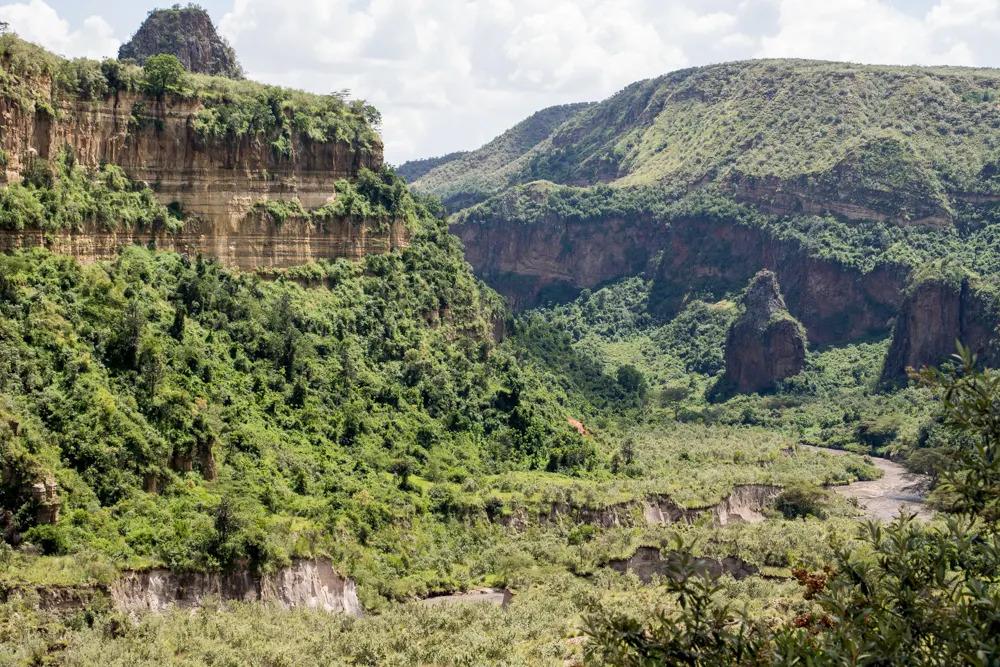
Hell’s Gate is essentially a geological story written across the floor of the Rift Valley. Volcanic activity has produced cliffs, towers, lava formations, gorges and obsidian deposits, while geothermal activity continues beneath the surrounding landscape.
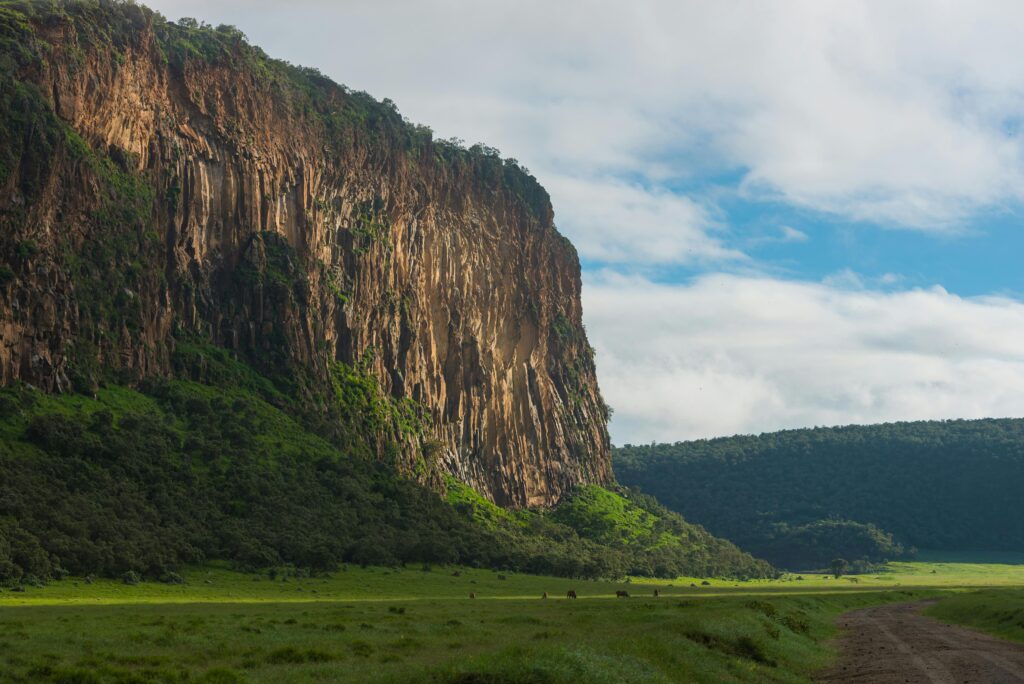
The park’s most recognisable feature is Ol Jorowa Gorge, a dramatic incision through the volcanic landscape that gives Hell’s Gate much of its character. Towering cliffs rise on either side, while Fischer’s Tower and Central Tower stand out as isolated rock formations across the plains.
Steam rising from the Olkaria geothermal area adds another unusual element. Few safari destinations combine wildlife, hiking trails, volcanic geology and an operating geothermal power complex within such a compact area.
The result is a park that feels very different from the Masai Mara, Amboseli or Samburu. The wildlife matters, but the landscape is often the main attraction.
Hell’s Gate does not have the wildlife density of Kenya’s major Big Five parks, and we would not recommend coming here expecting constant predator sightings. What it does offer is the chance to experience relatively approachable plains wildlife in a much more active way.
Zebra are among the most frequently encountered animals, often grazing across the open grasslands. Giraffe, buffalo, eland, hartebeest, Thomson’s and Grant’s gazelles, klipspringer and other antelope species are also found within the park.
Lion, leopard and cheetah occur in the wider ecosystem but are considered uncommon sightings inside the park. Klipspringer and rock hyrax are particularly suited to the rocky terrain, while the cliffs provide nesting sites for large birds of prey.
Birdlife is one of Hell’s Gate’s quieter strengths. More than 100 bird species have been recorded, with vultures, eagles, augur buzzards and other raptors making use of the cliffs and thermals. The Mervyns Carnelley Raptor Hide provides a particularly good opportunity to observe birds at close range.
Hell’s Gate is home to zebra, giraffe, buffalo, eland, hartebeest, Thomson’s and Grant’s gazelles, klipspringer, rock hyrax and other antelope. Lion, leopard and cheetah also occur but are relatively uncommon. The park is particularly good for birdwatching, with more than 100 recorded bird species and numerous birds of prey nesting around the cliffs.
Cycling is arguably the experience that makes Hell’s Gate different from almost every other safari destination in Kenya.
Instead of watching the landscape through a vehicle window, you pedal along the park’s established roads with zebra, giraffe and antelope moving across the plains around you. The terrain is generally manageable for visitors with reasonable fitness, although the distance and heat should be taken seriously.
Bicycles can be hired around the Elsa Gate area, and cycling is an officially recognised park activity. KWS currently lists a separate cycling charge of KES 300 for East African citizens and Kenya residents, and USD 10 for African citizens and non-residents.
Hell’s Gate is one of the few Kenyan national parks where visitors can leave the vehicle and explore designated areas on foot.
Walking allows you to appreciate details that disappear during a conventional game drive: animal tracks in volcanic dust, birds riding the thermals, rock formations, plants growing from seemingly impossible places and the changing texture of the cliffs.
Guided walking can be arranged with KWS security or local community guides depending on the activity and route.
The gorge is the park’s defining attraction and one of the most memorable places to explore.
The walls close in around you as you move deeper into the gorge, creating a completely different environment from the open plains above. Depending on current conditions and access, visitors can explore sections of the gorge with a local guide.
Conditions inside gorges can change rapidly after rainfall, so gorge walks should always be undertaken with current local guidance rather than treated as a self-guided hike.
Fischer’s Tower is one of Hell’s Gate’s most recognisable landmarks, rising approximately 25 metres above the surrounding landscape. It is a volcanic rock formation named after the German explorer Gustav Fischer, who visited the region in 1883.
The tower is also associated with a Maasai oral tradition describing the rock as a young woman who looked back toward her home before leaving to be married.
For climbers, Fischer’s Tower provides one of the park’s most popular rock-climbing experiences.
Rock climbing at Fischer’s Tower adds an adrenaline element to a Hell’s Gate visit. The volcanic cliffs provide a natural climbing environment, and experienced operators can arrange climbing activities depending on conditions and experience level.
For visitors who have never climbed before, this is something to organise with a qualified local operator rather than attempting independently.
Game drives remain available and are useful for covering more ground, particularly for visitors who want to see the park’s wildlife without cycling or walking the entire route.
A vehicle also allows you to reach viewpoints, geological features and different wildlife areas more efficiently.
However, if you are choosing between a conventional game drive and cycling or walking, we generally recommend doing at least part of the experience outside the vehicle. That is what makes Hell’s Gate special.
The Olkaria geothermal area is one of the most unusual features associated with Hell’s Gate. Steam vents and geothermal activity are visible across parts of the landscape, demonstrating the volcanic forces beneath the Rift Valley.
The park hosts the Olkaria geothermal complex, operated by KenGen, while the surrounding area also offers geothermal tourism experiences.
The Olkaria Geothermal Spa offers visitors the opportunity to swim in naturally heated geothermal water.
It is a popular addition after cycling or hiking, particularly for travellers spending several days around Naivasha. The water is naturally heated and mineral-rich, although claims that geothermal water cures medical conditions should not be treated as established medical advice.
Hell’s Gate is particularly rewarding for visitors interested in birds of prey.
The cliffs create ideal nesting and soaring conditions, while warm air rising from the Rift Valley produces thermals used by vultures, eagles and other raptors.
The Mervyns Carnelley Raptor Hide provides a close-range viewing opportunity and is positioned above the Endachata campsite.
Hell’s Gate has several scenic picnic areas where visitors can stop and take in the Rift Valley scenery.
Lake View Point, Moibeni, the obsidian caves, Hell’s Kitchen and Kapartania View Point are among the recognised scenic areas within the park.
The best moments are often simple: a packed lunch, a quiet viewpoint and the sound of wind moving across the cliffs.
Hell’s Gate has open grasslands, established park roads and relatively gentle terrain in many sections, allowing visitors to cycle through a wildlife environment rather than remaining inside a safari vehicle. Zebra, giraffe, antelope and other wildlife can be encountered along the route, although visitors should always follow KWS safety instructions and maintain a safe distance from animals.
Mount Longonot lies close to Hell’s Gate and makes a natural combination for travellers interested in hiking and geology.
The two destinations offer different experiences. Hell’s Gate is about cycling, gorges, cliffs and wildlife, while Mount Longonot is primarily a strenuous volcanic mountain hike leading to the crater rim.
For active travellers, combining the two creates a strong Rift Valley adventure over two days.
Lake Naivasha is the obvious companion destination to Hell’s Gate.
The freshwater lake sits immediately north of the park and offers boat trips, birdwatching, hippo viewing and opportunities to explore the lake’s shoreline. Crescent Island, located within Lake Naivasha, can also be visited as part of a wider Naivasha itinerary.
A common combination is Hell’s Gate in the morning for cycling or hiking, followed by lunch and a boat safari on Lake Naivasha in the afternoon.
Lake Nakuru is the stronger choice for traditional game viewing, particularly if you want a broader range of wildlife and a conventional vehicle safari.
Hell’s Gate is the better choice for active travellers who want to cycle, hike, climb and explore geological features.
The two parks work extremely well together. A morning at Hell’s Gate followed by one or two nights around Lake Nakuru gives travellers both an active Rift Valley experience and a more traditional wildlife safari.
Amboseli is famous for its elephants and views of Mount Kilimanjaro, while Hell’s Gate is about geological scenery, cycling, hiking and the freedom to explore on foot.
If elephants and classic safari photography are your priority, Amboseli is the stronger destination.
If you want an active day outdoors close to Nairobi, Hell’s Gate is considerably easier to incorporate.
Nairobi National Park is much stronger for traditional wildlife viewing and is particularly convenient for travellers arriving in or departing from Nairobi.
Hell’s Gate offers something Nairobi National Park cannot easily replicate: cycling through a Rift Valley landscape, hiking through volcanic formations and exploring gorges.
For travellers with limited time, Hell’s Gate works particularly well as a day trip from Nairobi.
The current Kenya Wildlife Service tariff lists Hell’s Gate entry for non-residents at USD 50 per adult and USD 25 per child, while Kenya residents pay KES 675 per adult and KES 350 per child. East African citizens pay KES 500 per adult and KES 250 per child. African citizens outside the East African Community are listed at USD 20 per adult and USD 10 per child.
KWS also lists separate charges for activities and services, including cycling, camping, horse riding, animal tracking and night game drives. The exact activity availability and applicable fee should be confirmed when booking because these are separate from the standard park entry charge.
For current bookings, KWS directs visitors through its online payment system, and identification documents are required at the gate.
Current KWS rates list entry at USD 50 per non-resident adult and USD 25 per non-resident child, KES 675/350 for Kenya residents, and KES 500/250 for East African citizens for adults/children respectively. Additional activities such as cycling and camping are charged separately.
Hell’s Gate is one of the easiest national parks to reach from Nairobi.
The route follows the Nairobi–Naivasha road before continuing toward Naivasha and then along Moi South Lake Road. Elsa Gate is approximately 25 kilometres from the junction with Moi South Lake Road.
The journey from Nairobi generally takes around two hours depending on traffic and road conditions.
For safari travellers, we usually combine Hell’s Gate with Lake Naivasha, Lake Nakuru or a longer Kenya safari circuit rather than treating it as a destination requiring several days on its own.
Hell’s Gate does not generally make sense as a fly-in safari destination because of its proximity to Nairobi and its easy road access.
If you are already flying into the Naivasha region or using a private charter for a larger safari itinerary, the surrounding airstrips can be considered, but road access remains the simplest option for most visitors.
For most travellers, Hell’s Gate works exceptionally well as a day trip from Nairobi or Naivasha.
A typical day can begin with an early departure from Nairobi, cycling or hiking inside the park in the morning, exploring the gorge or geological features, followed by lunch and an afternoon boat trip on Lake Naivasha.
Travellers staying around Naivasha can take a slower approach and spend the entire day exploring Hell’s Gate without worrying about the return drive to Nairobi.
Hell’s Gate has a generally mild-to-warm highland Rift Valley climate compared with Kenya’s hotter lowland safari destinations.
Temperatures are influenced by the park’s elevation, which ranges from approximately 1,560 to 2,187 metres above sea level.
Mornings can be cool, especially when cycling or hiking at first light, while afternoons become warmer under direct Rift Valley sunshine.
Rain can make gorge activities more complicated, particularly where water collects in narrow sections. For this reason, the weather forecast matters more for Hell’s Gate than it does for a straightforward vehicle safari.
A light jacket for the morning, sunscreen, comfortable walking shoes and plenty of drinking water are sensible year-round.
Hell’s Gate can be visited throughout the year, but the best period depends on what you want to do.
June to October generally offers drier conditions and is excellent for cycling, hiking and photography. The grasslands can be dry, making wildlife easier to spot against the open landscape.
January and February are also useful for outdoor activities, with generally drier conditions between the main rainy periods.
March to May brings the long rains. The landscape becomes greener and the scenery can be spectacular, but heavy rainfall can affect gorge access and make some activities less predictable.
November and December bring the short rains, creating fresh vegetation and good photographic conditions while keeping the landscape greener.
If gorge walking is your main reason for visiting, we recommend checking local conditions shortly before your trip rather than relying solely on seasonal averages.
The drier months from June to October and January to February are generally the easiest for cycling, hiking and outdoor activities. The rainy seasons can produce greener scenery and excellent photography but may affect gorge access and trail conditions.
One day is enough for most visitors. A morning cycling or hiking experience followed by a gorge visit and an afternoon around Lake Naivasha gives you a strong introduction.
Two nights works well if you want to combine Hell’s Gate with Lake Naivasha, Crescent Island or a geothermal experience without rushing.
Three nights or more makes sense mainly when Hell’s Gate is part of a wider Rift Valley itinerary including Lake Nakuru, Mount Longonot and other surrounding attractions.
Unlike Samburu or the Masai Mara, Hell’s Gate does not usually require several consecutive game-drive days.
Hell’s Gate is for travellers who want to do something, not simply watch.
You can cycle beneath towering cliffs, walk through a volcanic landscape, climb Fischer’s Tower, explore gorges, watch raptors circling overhead and finish the day beside Lake Naivasha.
It is also remarkably accessible. At roughly 90 kilometres from Nairobi, it can be incorporated into a Kenya itinerary without adding several days of travel.
For families, couples, photographers, hikers and first-time safari travellers, Hell’s Gate provides a welcome change from the traditional safari format.
And for guests who have already experienced the Masai Mara or Amboseli, it offers something completely different.
Because Hell’s Gate is often visited as a day excursion rather than a multi-night safari, the overall cost can be considerably lower than a traditional national park safari.
A typical private day trip from Nairobi may include private 4×4 transport, professional safari guide, park entry fees, cycling or hiking arrangements and optional Lake Naivasha activities.
The final price depends mainly on the number of travellers, vehicle arrangement, cycling or hiking activities, accommodation and whether Lake Naivasha or another destination is added.
For travellers staying in Naivasha, the cost can be reduced substantially because there is less driving involved.
We recommend treating Hell’s Gate as part of a wider Rift Valley experience rather than comparing its price directly with a three-night Mara or Samburu safari.
We build Hell’s Gate into several types of Kenya itineraries.
A Hell’s Gate and Lake Naivasha day trip is ideal for travellers based in Nairobi who want an active escape without spending a night away.
A Hell’s Gate and Lake Nakuru safari combines cycling and geological exploration with traditional wildlife viewing.
A Hell’s Gate, Lake Naivasha and Mount Longonot circuit works particularly well for active travellers who enjoy hiking and outdoor experiences.
For longer Kenya safaris, Hell’s Gate can also be positioned between Nairobi and the central Rift Valley destinations, creating a natural break from consecutive game drives.
Most visitors stay in the wider Naivasha area rather than inside Hell’s Gate itself.
Accommodation ranges from comfortable mid-range hotels and lodges around Lake Naivasha to luxury lakeside properties and smaller tented camps.
Staying around Lake Naivasha has the advantage of allowing you to combine Hell’s Gate with boat trips, Crescent Island and other Rift Valley attractions without changing hotels every night.
For a short safari, we generally recommend choosing accommodation based on the wider itinerary rather than selecting a property solely for proximity to the park.
Hell’s Gate’s appeal depends heavily on visitors respecting the landscape and wildlife.
KWS requires visitors to remain on established roads and trails, prohibits off-road driving and requires wildlife to be viewed from a safe minimum distance. Feeding wildlife is also prohibited.
Cyclists should never approach animals simply because they are on bicycles. Buffalo, in particular, deserve a wide berth, and visitors should follow their guide’s instructions whenever wildlife is close to the cycling route.
The same principle applies to gorge walks. Flash floods can occur after rainfall, and visitors should follow local guidance regarding access.
The park is small and its geological features are fragile, so leaving volcanic rocks, plants and other natural features untouched is part of responsible travel.
Hell’s Gate is one of the most photogenic parks in Kenya, particularly for landscape photography.
The combination of red and ochre cliffs, green grasslands, volcanic towers, dramatic skies and geothermal steam creates images very different from the classic savannah safari.
Early morning light is particularly good around Fischer’s Tower and the main cliffs, while late afternoon produces long shadows across the Rift Valley landscape.
For wildlife photography, a longer lens is still useful, but the park’s strength is its combination of wildlife and landscape rather than close-up predator photography.
Hell’s Gate is not trying to compete with the Masai Mara.
There are no massive wildebeest herds crossing rivers here, and predator sightings are not the main reason to visit.
Instead, Hell’s Gate gives you something that most Kenyan national parks cannot: the freedom to get out of the vehicle and physically experience the landscape.
You can ride a bicycle past zebra, walk beneath cliffs, climb volcanic rock, explore a gorge and watch birds of prey using the Rift Valley thermals, all within a single day.
That is the reason we recommend Hell’s Gate to travellers who want more variety from their Kenya safari.
It is not just a place to see the wild. It is a place to move through it.
At Hell's Gate, you don't watch the wild from behind glass — you ride right into it. Because no big predators roam free here, it's one of the only parks in Kenya where you can cycle and walk directly among the animals. Picture pedalling across the valley floor beneath 100-metre red cliffs, a giraffe browsing acacia just off the trail, zebra scattering ahead of your wheels, and eagles wheeling overhead. It's raw, active, and gloriously close — a safari you feel in your legs and lungs, not just your camera.
The park's signature experience and one of the only places in Kenya you can do it. Rent a bike at the gate…
The park's namesake and main attraction — a spectacular canyon of water-eroded walls, narrow passes, hot springs and small geysers. Hiking down…
A striking 25 m volcanic plug near the main gate, Fischer's Tower is one of Kenya's premier rock-climbing spots, offering routes for…
Hell's Gate sits atop intense geothermal activity — steam vents, hot springs, and the pioneering Olkaria Geothermal Station, the first in Africa.…
With no free-roaming big predators, Hell's Gate lets you experience the thrill of walking directly among wildlife — giraffe, zebra, gazelle and…
The park's towering cliffs are prime nesting sites for birds of prey. Over 100 species include the spectacular Verreaux's eagle, augur buzzards,…
Hell's Gate's dramatic cliffs, gorges and sweeping vistas famously helped inspire the scenery of Disney's The Lion King, including its Pride Rock-style…
The Maasai community around the park maintains a deep cultural connection to the land. Cultural visits and interactions with local guides offer…


From value camps to premium lodges — we match every stay to your style and budget.
Comfortable tented camps just outside the reserve gates. En-suite rooms with hot showers, full-board meals, and close proximity to the Mara.
Comfortable lakeside gardens and rooms, a long-standing favourite.
Lakeside lodges on Lake Naivasha, an easy drive from the park gates.
Every season has its magic — here's what to expect when, so you can travel at your perfect time.
Everything you need to know before you go — and we’ll guide you through every step.
International visitors travelling to Kenya generally require an Electronic Travel Authorization (eTA) before arrival. Carry a valid passport with at least six months' validity.
No special vaccinations are required solely for visiting Hell's Gate, but routine travel vaccinations are recommended. Carry drinking water, sunscreen, a hat, and insect repellent. The park's altitude and warm climate can cause dehydration during hikes and cycling.
Hell's Gate is easily reached via the Nairobi–Naivasha highway, approximately 90 km from Nairobi (1.5–2 hours). It is often combined with visits to Lake Naivasha, Crescent Island, or Lake Nakuru National Park.
The closest airstrip is Naivasha Airstrip, primarily serving charter flights. Most visitors travel to the park by road from Nairobi.
The Kenyan Shilling (KES) is the official currency. Park entry fees are payable through the eCitizen platform, while local guides, bicycle rentals, and nearby shops may accept cash, M-Pesa, and major credit cards
Temperatures generally range between 15°C and 28°C. Mornings can be cool, while afternoons are warm. Rainy seasons (March–May and October–December) can make gorge walks inaccessible due to flash flood risks.
Kenya uses 240V, 50Hz electricity with Type G (British-style) plugs. Accommodation around Naivasha provides reliable electricity and charging facilities.
Kenya operates on East Africa Time (EAT), UTC +3, throughout the year.
Mobile network coverage is generally good around the park and Naivasha. Most nearby lodges and hotels offer Wi-Fi, though speeds may vary.
Follow instructions from Kenya Wildlife Service rangers and certified local guides. Guided walks are recommended for the gorge, and access may be restricted during heavy rains because of flash flood risks. Stay on designated trails and keep a safe distance from wildlife.
Wear sturdy hiking shoes, lightweight outdoor clothing, a light jacket for cool mornings, a reusable water bottle, sunscreen, sunglasses, a camera, binoculars, and a small backpack. Gloves and a helmet are recommended if hiring a bicycle for cycling through the park.
Hell's Gate is famous for being one of the only Kenyan parks where you can walk and cycle freely among wildlife, for its dramatic Rift Valley scenery (towering red cliffs, gorges, geothermal steam), Fischer's Tower rock climbing, the Olkaria geothermal spa, and for inspiring the landscapes of Disney's The Lion King
Yes — this is the park's defining feature. Because there are no resident free-roaming big predators, visitors can cycle and walk without a KWS escort, getting close to zebra, giraffe, buffalo and gazelle. Bikes can be rented at the gate. A separate cycling fee applies, and you should still follow ranger safety guidance.
Under the KWS rates effective October 2025, Hell's Gate is a "Scenic Park (Category B)." Non-resident adults pay US$50 (children ~US$25); African citizens US$20; East African citizens KES 500; Kenyan residents KES 675. A cycling fee of ~US$10 (KES 300) per day is separate. Entry is valid 24 hours. Pay cashless via eCitizen/KWS (M-Pesa or card) — no cash at the gate.
It's about 90 km (2 hours) northwest of Nairobi by road via the A104 to Naivasha, then a short drive to the Elsa (main), Olkaria or Narasha gates. It's an easy self-drive or day trip. There's no scheduled air service to the park itself; fly-in visitors use Nairobi (Wilson/JKIA) then drive.
Zebra, Maasai giraffe, buffalo, eland, hartebeest, Thomson's gazelle, baboons and rock hyrax are commonly seen. Rarer residents include serval, klipspringer and Chanler's mountain reedbuck. It's a raptor haven (100+ birds, including Verreaux's eagle). Big cats are very rare and not a resident population — don't expect a Big Five experience.
Yes, generally — the absence of resident big predators is why it's permitted. Follow ranger guidance, keep a respectful distance from buffalo (which can be dangerous), stay hydrated in the semi-arid heat, and never enter the gorge during or after rain due to flash-flood risk. A local guide is recommended for the gorge.
The dry seasons (June–October and January–February) are best for cycling, hiking and open gorge access. The rainy months (March–May, November) are green and good for birds but can flood and close the gorge. Always check gorge status before you go.
A half to full day is typical. You can cycle the main valley, hike the gorge, see Fischer's Tower and the geothermal features, and visit the spa in a day. Many combine it with a Lake Naivasha boat trip or a Mount Longonot hike for a fuller Rift Valley day or overnight.
Most visitors stay around Lake Naivasha (5–20 minutes from the gates), which offers everything from luxury resorts (Enashipai, Sopa) to legendary backpacker camps (Fisherman's Camp). The park also has basic KWS campsites for camping inside. Naivasha makes the ideal base.
Yes — the Olkaria Geothermal Spa, near the geothermal station inside the park, is a large pool of naturally heated turquoise water where visitors can swim and relax. A separate spa fee applies, though access to that area of the park is covered by your entry ticket. A wonderful way to end an active day.
Excellent. The walking, cycling and dramatic scenery make it engaging and active for families, adventure travellers, climbers, photographers and anyone seeking an alternative to sitting in a safari vehicle. Kids old enough to cycle or walk love it. It's also one of Kenya's most affordable parks.
Absolutely. It pairs perfectly with Lake Naivasha (boat trips, Crescent Island walking safari), Mount Longonot (crater hike next door), Lake Nakuru (flamingos, rhino), and the wider Rift Valley circuit. It's also a popular active add-on before or after a Maasai Mara safari.
From a generator that switches off at ten to a Land Cruiser fitted with its own charging console,…
Read more →
A working checklist from a Nairobi ground operator on licensing, red flags and the questions that separate real…
Read more →
Both parks hold the same herds and the same rivers, but the border between them changes your budget,…
Read more →Tell us what you’d love to see and a local specialist will design a tailor-made itinerary around you — no obligation, reply within 24 hours.