Lewa Wildlife Conservancy is a world-renowned private wildlife conservation area in northern Kenya, locatThe first thing you notice at Lewa is the landscape. The mountains sit on the horizon, the grasslands roll away beneath scattered acacias and, somewhere beyond the next ridge, a black rhino is moving through the morning light. Then the radio crackles and the guide turns the vehicle towards a herd of Grevy’s zebra.
Lewa Wildlife Conservancy sits on the northern foothills of Mount Kenya, in northern Kenya, across approximately 62,000 acres of protected wilderness. It is one of Kenya’s most important conservation landscapes, particularly for black rhinos and Grevy’s zebras, but Lewa is much more than a wildlife sanctuary. Its conservation model connects endangered species protection with education, healthcare, livelihoods, security and community development.
What makes a Lewa safari different from a traditional Kenya safari is the combination of wildlife and conservation. You are not simply entering a protected area to look for animals. Tourism at Lewa helps fund the wider conservation and community programme, with tourism contributing a significant share of the conservancy’s annual revenue. Visitors can also go behind the scenes to understand how rangers, tracker dogs, conservation teams and community programmes keep this landscape functioning.
Lewa Wildlife Conservancy is particularly important for travellers who want to see rhinos, Grevy’s zebra and northern Kenya’s other specialist wildlife in a quieter, more exclusive setting. It also combines naturally with Samburu, Ol Pejeta, Mount Kenya and the Laikipia conservancies, making it an excellent stop on a northern Kenya safari.
QUICK ANSWER | What is Lewa Wildlife Conservancy?
Lewa Wildlife Conservancy is a 62,000-acre protected wildlife landscape on the northern foothills of Mount Kenya. Originally established as a rhino sanctuary in 1983, Lewa has developed into a major conservation organisation protecting black and white rhinos, Grevy’s zebra, elephants, lions, cheetahs, giraffes, wild dogs and more than 490 bird species while supporting surrounding communities through education, healthcare, water, livelihoods and other development programmes.
Lewa Wildlife Conservancy At a Glance
Location: Northern Kenya, on the northern foothills of Mount Kenya
Size: Approximately 62,000 acres of protected wilderness
Established: 1983 as a black rhino sanctuary; the Lewa Wildlife Conservancy was formally established as a conservation organisation in 1995
Known for: Black rhinos, white rhinos, Grevy’s zebra, elephants, lions, cheetahs and exceptional birdlife
Landscape: Open grasslands, acacia woodland, rolling hills and seasonal waterways
Altitude: Varies across the conservancy, with the landscape influenced by its position below Mount Kenya
Wildlife: More than 70 mammal species and more than 490 recorded bird species
Conservation significance: Lewa protects an important population of Kenya’s black rhinos and forms part of the wider Lewa-Borana conservation landscape
Nearby destinations: Mount Kenya, Nanyuki, Ol Pejeta Conservancy, Samburu National Reserve and northern Laikipia
Main access: By road from Nairobi or by scheduled and chartered light aircraft
The Story of Lewa Wildlife Conservancy
The story of Lewa Wildlife Conservancy begins with the black rhino.
During the 1970s and 1980s, Kenya’s rhino population collapsed under intense poaching pressure. In 1983, David and Delia Craig set aside 5,000 acres of their land as a sanctuary for black rhinos, working with conservationist Anna Merz and other partners to create a secure refuge for some of the last remaining animals in northern Kenya.
That original rhino sanctuary gradually expanded. By the early 2000s, the conservation area had grown to approximately 62,000 acres and incorporated neighbouring land as well as the Ngare Ndare National Forest Reserve. The focus also expanded beyond rhinos to include Grevy’s zebra, elephants, predators, birds and the wider ecosystem.
Today, Lewa Wildlife Conservancy is regarded as one of Kenya’s leading examples of integrated conservation. The idea is straightforward: wildlife cannot survive permanently if the communities living around protected areas do not also benefit from conservation.
That principle shapes almost everything that happens at Lewa.
QUICK ANSWER | Why was Lewa Wildlife Conservancy established?
Lewa Wildlife Conservancy began in 1983 as a 5,000-acre sanctuary created to protect black rhinos from extinction. The successful rhino programme eventually expanded into a much larger conservation landscape protecting endangered wildlife while integrating community development, education, healthcare, livelihoods and habitat protection.
Wildlife of Lewa Wildlife Conservancy
Lewa Wildlife Conservancy has an unusually strong wildlife profile for a private conservation area. Rhinos are the headline attraction, but a game drive can also produce elephants, Grevy’s zebra, giraffes, buffalo, lions, cheetahs, hyenas, warthogs, zebras and occasionally African wild dogs.
The conservancy is particularly important for endangered northern Kenyan species. Lewa hosts one of the world’s most important populations of Grevy’s zebra and forms part of a wider conservation landscape designed to keep wildlife populations connected across northern Kenya.
Birdlife is another major attraction. More than 490 bird species have been recorded at Lewa, making the conservancy rewarding for both dedicated birders and travellers who simply enjoy the variety of life around the safari vehicle.
Black Rhino
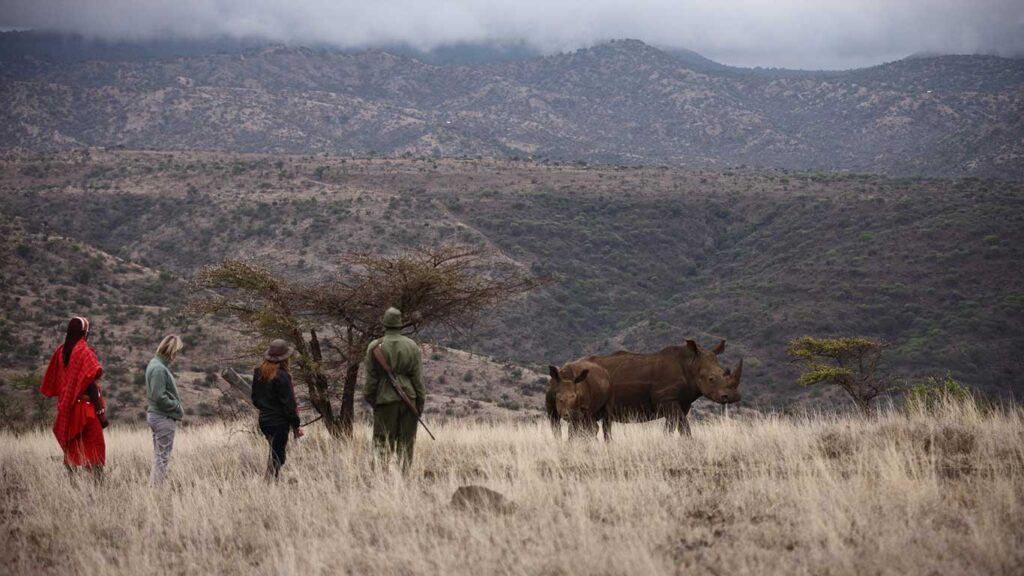
Black rhinos are the defining species of Lewa Wildlife Conservancy.
The original Lewa conservation project was created specifically to protect black rhinos, and rhino conservation remains central to the conservancy’s identity. Lewa’s programme has helped establish the conservancy as one of Kenya’s most important rhino strongholds, while its partnership with neighbouring Borana Conservancy has created a much larger contiguous rhino landscape.
A rhino sighting at Lewa is therefore more than simply another wildlife encounter. You are seeing the result of more than four decades of conservation work.
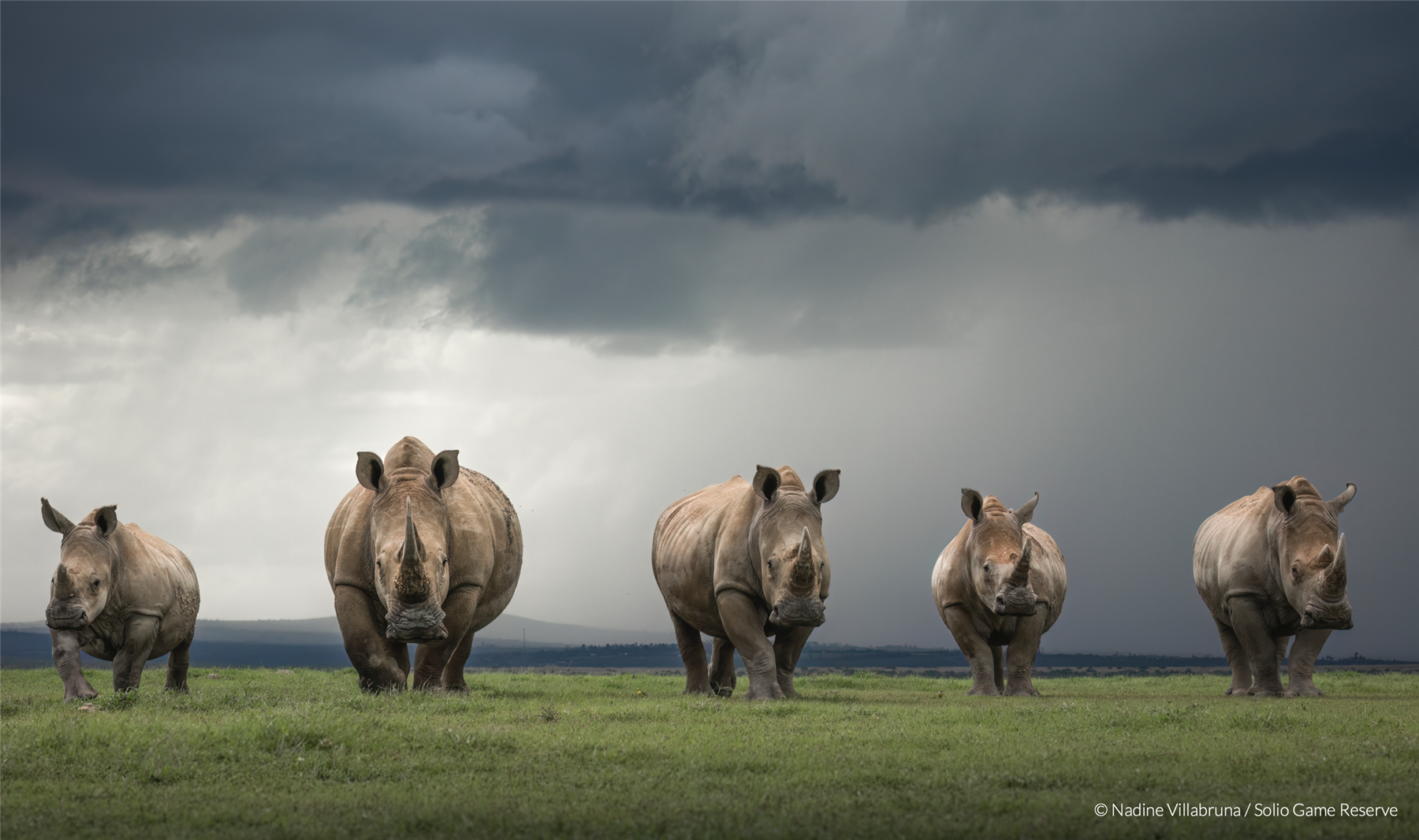
White Rhino
White rhinos also occur within the Lewa-Borana landscape, giving visitors an opportunity to see both of Kenya’s main rhino species in the same wider conservation ecosystem.
The open grassland habitat makes white rhinos relatively easy to identify, particularly during the cooler morning hours when they are actively grazing.
Grevy’s Zebra
Grevy’s zebra is one of the major reasons to visit Lewa Wildlife Conservancy.
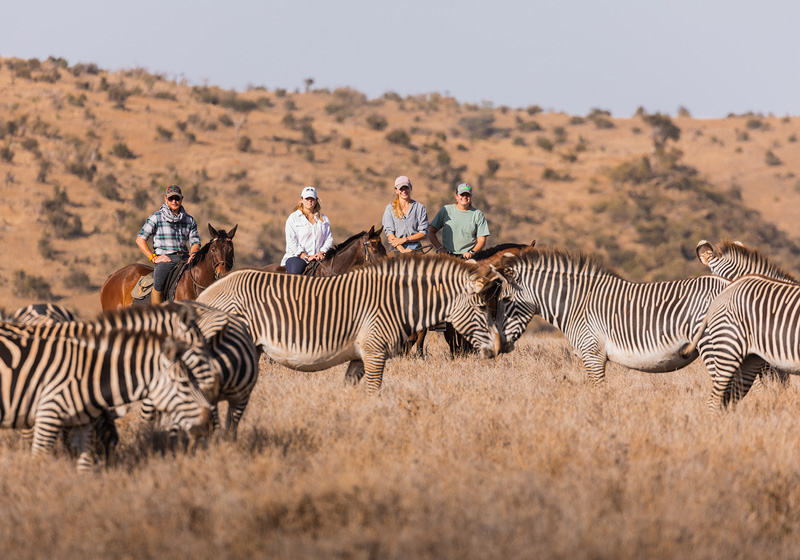
The species is distinguished by its narrow, closely spaced stripes, large rounded ears and white belly. Unlike the more widespread plains zebra, Grevy’s zebra is endangered and has a much more restricted distribution.
Lewa protects an exceptionally important population, and the conservancy describes itself as home to the world’s largest single population of Grevy’s zebra.
For wildlife enthusiasts, seeing Grevy’s zebra against Lewa’s open northern grasslands is one of the signature experiences of a Lewa safari.
Elephants
Elephants move across Lewa’s grasslands and woodland areas, sometimes appearing unexpectedly close to safari vehicles.
The conservancy is also important because its protected landscape provides connectivity between Mount Kenya and the northern rangelands. Maintaining these corridors is essential for elephants and other wide-ranging species whose survival depends on access to larger landscapes.
Lion
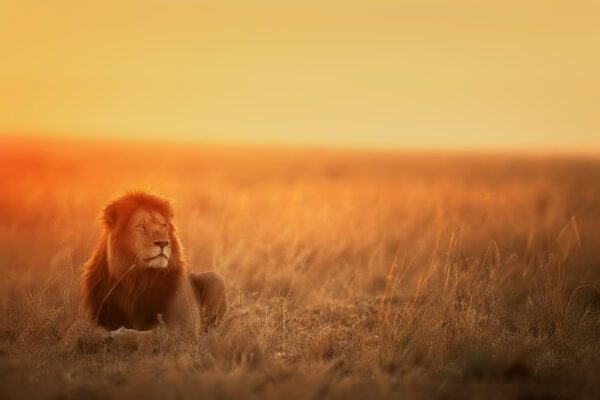
Lions are resident predators within Lewa Wildlife Conservancy.
Unlike the enormous open plains of the Masai Mara, Lewa’s mixture of grassland, rocky country and woodland creates a different setting for predator encounters. Early morning and late afternoon game drives are generally the best times to search for lions before temperatures rise.
Cheetah
Lewa’s open grasslands provide excellent habitat for cheetahs.
Their speed and hunting behaviour make them particularly exciting to watch in the open country, where the absence of dense vegetation allows guests to observe more of the chase when a hunt begins.
African Wild Dog
African wild dogs are among the more elusive species that may be encountered in Lewa Wildlife Conservancy.
Sightings are not guaranteed, but when a pack passes through the conservancy, the encounter can be one of the highlights of a Lewa safari. Their movements across large landscapes also demonstrate why connected conservation areas matter.
Giraffe, Buffalo and Other Wildlife
Giraffes browse among the acacia, buffalo graze the open grasslands and smaller antelope occupy almost every part of the ecosystem.
The conservancy supports more than 70 mammal species, meaning that even a game drive without a major predator or rhino encounter can produce a long list of wildlife.
QUICK ANSWER | What animals can you see in Lewa Wildlife Conservancy?
Lewa Wildlife Conservancy is known for black and white rhinos and Grevy’s zebra, but wildlife also includes elephants, lions, cheetahs, African wild dogs, buffalo, giraffes, hyenas, zebras and many smaller mammals. More than 490 bird species have also been recorded in the Lewa landscape.
Things to Do in Lewa Wildlife Conservancy
Game Drives
Game drives are the foundation of a Lewa safari.
Morning drives begin early, when the air is cooler and wildlife is often more active. This is an excellent time to search for rhinos, Grevy’s zebra and predators before the heat of the day becomes intense.
Afternoon game drives continue towards sunset, when the landscape takes on the warm golden light that makes northern Kenya so attractive to photographers.
Because Lewa is a conservancy rather than a conventional national park, the safari experience can feel more intimate and conservation-focused than a high-density wildlife circuit.
Rhino Tracking
Rhino tracking is one of the most meaningful wildlife experiences available at Lewa Wildlife Conservancy.
The conservancy’s rhino programme combines field protection, monitoring, research and technology to safeguard the animals. Seeing a rhino during a normal game drive is memorable; understanding how the animal is monitored and protected makes the encounter considerably more meaningful.
Grevy’s Zebra Viewing
For visitors particularly interested in endangered species, Grevy’s zebra viewing should be built into the safari.
The species is one of Lewa’s conservation priorities and represents one of the clearest differences between a Lewa safari and the more traditional Kenya safari circuit.
Guided Bush Walks
Walking gives guests an entirely different understanding of Lewa Wildlife Conservancy.
Instead of looking primarily for large animals, a walking safari slows the experience down to tracks, dung, plants, insects, birds and smaller signs of wildlife.
Walking at Lewa must be undertaken with an authorised, appropriately equipped guide. The conservancy’s visitor code requires authorised armed guides for walking in areas where dangerous game may be present.
Horse Riding
Horse riding is one of the activities that can make a Lewa safari particularly distinctive. Depending on current lodge arrangements and conditions, guests can experience the landscape from horseback rather than from a safari vehicle.
Riding provides a different perspective on the grasslands and can be particularly rewarding for travellers who enjoy combining wildlife with an active safari.
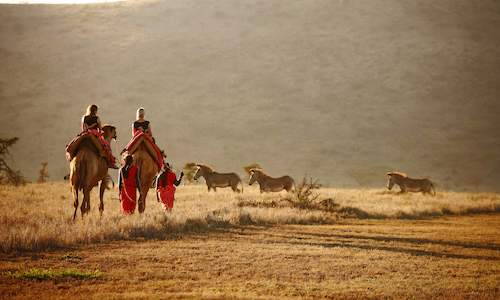
Camel Experiences
Camel experiences can also be arranged in the wider northern Kenya landscape, although availability depends on the lodge and current local arrangements.
The slower pace of a camel experience complements the traditional game drive and gives visitors another way of appreciating the dry-country environment.
Birdwatching
With more than 490 recorded bird species, Lewa Wildlife Conservancy is an excellent destination for birdwatching.
The combination of grassland, woodland, seasonal water sources and higher ground creates different habitats for birds of prey, water-associated species, grassland birds and woodland species.
For serious birders, it is worth telling the safari operator before arrival so that the guide can adapt the daily schedule accordingly.
Conservation Behind the Scenes
This is where a Lewa safari becomes different from many other wildlife experiences.
Lewa offers behind-the-scenes activities that can introduce visitors to the work taking place beyond the game drives. Options include school visits, tracker-dog experiences, security operations, elephant-underpass visits, conservation education and community health programmes.
These activities are generally available to guests staying at participating lodges on Lewa and Borana and should be arranged through the accommodation provider. Some experiences are subject to availability and are offered on a first-come, first-served basis.
Meet the Tracker Dogs
Lewa’s anti-poaching operation includes highly trained tracker dogs.
A visit provides insight into the security side of conservation and demonstrates how modern technology, trained personnel and local knowledge are combined to protect wildlife.
Visit the Elephant Underpass
The elephant underpass is another example of conservation infrastructure that most safari travellers would never normally see.
Wildlife corridors require more than fences and rangers. They also require practical solutions that allow animals to move safely through landscapes increasingly shared with people and roads.
School and Community Visits
Lewa’s conservation model extends beyond wildlife.
Education, healthcare, water access and livelihoods form a major part of the organisation’s work with neighbouring communities. A school or community visit gives travellers an opportunity to understand the human side of conservation and how wildlife tourism can contribute to local development.
Wildlife Photography
Lewa Wildlife Conservancy is exceptionally rewarding for photographers.
The open grasslands provide clean backgrounds for Grevy’s zebra and rhinos, while the hills and distant Mount Kenya landscape add depth to wider images. Early morning and late afternoon provide the softest light, while the combination of endangered species and relatively intimate wildlife viewing creates excellent opportunities for detailed portraits.
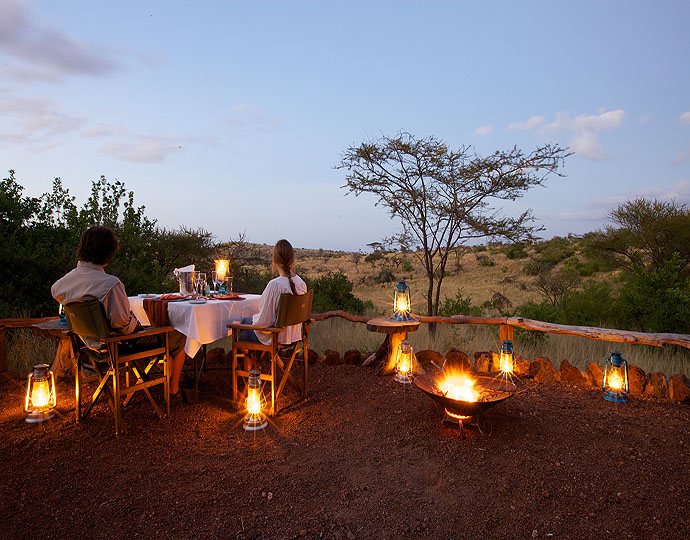
Sundowners
A Lewa sundowner turns the landscape itself into the attraction.
As the sun drops behind the northern hills, the grasslands change colour and silhouettes appear along the ridges. Depending on lodge and conservancy arrangements, sundowners can be organised at suitable scenic locations.
Bush Breakfasts
A bush breakfast after an early morning game drive is another popular addition to a Lewa itinerary.
It allows guests to stop and enjoy the landscape after the first wildlife activity of the day rather than immediately returning to camp.
Expert Note
Lewa is one of those destinations where I would encourage guests not to fill every hour with activities. Give yourself time for a long morning game drive, a relaxed lunch and an afternoon conservation experience. The strength of Lewa is not only the number of animals you can see but the opportunity to understand why they are still here.
Safari Planning Team, Afrikan Accent Adventures
Lewa Wildlife Conservancy and Rhino Conservation
Rhino conservation is the heart of Lewa’s story.
When the original sanctuary was established in 1983, the objective was to prevent the local black rhino population from disappearing. The programme subsequently expanded into a broader conservation organisation, and Lewa has since helped translocate rhinos to other protected areas while developing expertise in monitoring, security and habitat management.
The partnership between Lewa and neighbouring Borana Conservancy is particularly important. Together, the two properties form a contiguous landscape of approximately 93,000 acres of rhino habitat, creating greater space for a growing population.
This makes Lewa Wildlife Conservancy one of the most important places in Kenya to understand modern rhino conservation.
Lewa and Community Conservation
The philosophy behind Lewa is that conservation must benefit people as well as wildlife.
The conservancy invests in education, healthcare, water, micro-enterprise, youth development and other programmes in neighbouring communities. Lewa states that half of its annual budget directly empowers neighbouring communities, with programmes reaching tens of thousands of people.
This is one of the reasons a safari at Lewa feels different.
The money generated by tourism does not simply pay for accommodation and game drives. Tourism forms part of a wider financial model that helps support conservation and community development. Lewa currently states that tourism contributes around 27% of its annual revenue.
Lewa Wildlife Conservancy vs National Parks
Lewa Wildlife Conservancy operates differently from Kenya’s national parks and reserves.
The conservancy is a protected landscape managed around conservation, wildlife protection and community development, with accommodation and safari activities operating within that framework.
This creates opportunities for experiences that are not necessarily available inside conventional national parks, including certain walking experiences, conservation visits and behind-the-scenes activities.
The trade-off is that Lewa is a private conservation destination and accommodation and activity costs are generally positioned at the premium end of the safari market.
Lewa Wildlife Conservancy vs Samburu
Samburu National Reserve and Lewa Wildlife Conservancy are excellent northern Kenya destinations, but they offer distinctly different experiences.
Samburu is famous for the Samburu Special Five, including gerenuk, reticulated giraffe, Beisa oryx, Grevy’s zebra and Somali ostrich. Lewa’s strongest wildlife attractions are rhinos, Grevy’s zebra, elephants and the broader conservation landscape.
Samburu offers the dramatic Ewaso Nyiro River, doum palms and dry northern scenery. Lewa offers open grasslands, rolling hills and the Mount Kenya setting.
For a longer northern Kenya itinerary, combining Samburu and Lewa can be particularly rewarding because the landscapes, wildlife priorities and safari experiences complement each other.
Lewa Wildlife Conservancy vs Ol Pejeta
Ol Pejeta Conservancy and Lewa Wildlife Conservancy are both major private conservation destinations in Kenya, with strong reputations for rhino conservation.
Ol Pejeta is particularly known for its rhino programme, chimpanzee sanctuary and proximity to Nanyuki, while Lewa offers a more northern landscape and exceptional access to Grevy’s zebra alongside its rhino programme.
Travellers with enough time can combine both, particularly on a northern Kenya itinerary beginning around Mount Kenya and continuing towards Samburu.
Lewa Wildlife Conservancy vs Masai Mara
The Masai Mara is the stronger destination for huge concentrations of plains wildlife, major predator sightings and the annual wildebeest migration.
Lewa is more specialised.
If your priority is witnessing thousands of wildebeest crossing the Mara River, Lewa is not a substitute for the Masai Mara. If your priority is rhinos, Grevy’s zebra, conservation and a quieter private-conservancy safari, Lewa offers something the Mara cannot replicate.
For repeat safari travellers, combining the two gives you both experiences.
Lewa Wildlife Conservancy Accommodation
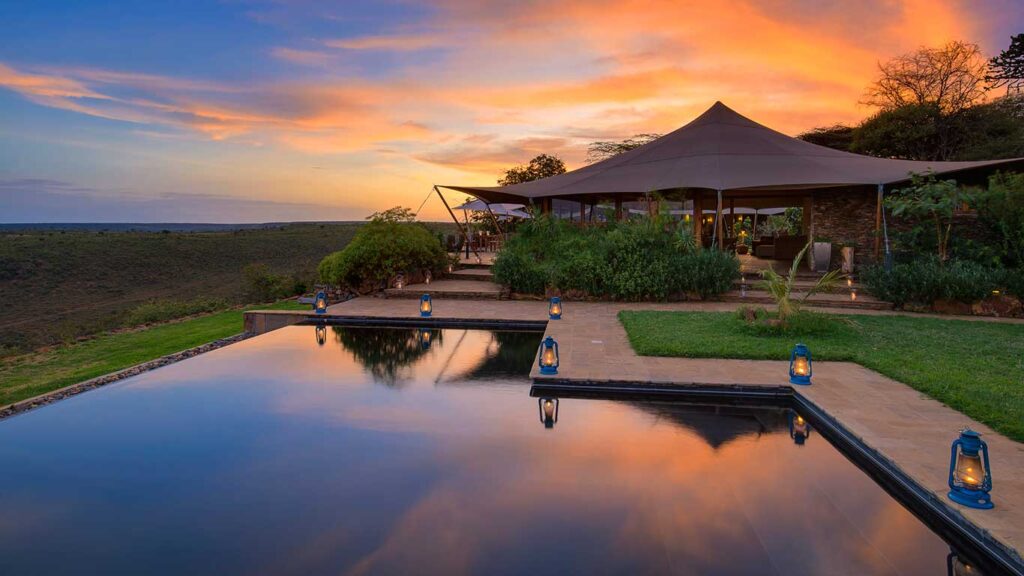
Accommodation at Lewa ranges from intimate luxury camps to private safari houses and exclusive lodges.
The conservancy currently highlights several properties, including Elewana Lewa Safari Camp, Elewana Kifaru House, Sirikoi Lodge, Lewa House and Lewa Wilderness. Each offers a different style of accommodation and safari experience.
Elewana Lewa Safari Camp
Elewana Lewa Safari Camp is positioned within the Lewa Wildlife Conservancy and provides access to the conservancy’s protected wilderness and wildlife.
It is a strong option for travellers looking for a classic tented safari experience combined with the conservation story of Lewa.
Elewana Kifaru House
Kifaru House is an intimate luxury property with five thatched cottages.
Its name comes from the Swahili word for rhino, making the property particularly fitting for a safari destination whose conservation history began with rhino protection.
Sirikoi Lodge
Sirikoi is a small, family-owned luxury lodge positioned beside a spring-fed stream.
The property offers four luxury tents, Sirikoi Cottage and Sirikoi House, providing a more private safari experience within the Lewa landscape.
Lewa House
Lewa House is built around a dramatic thatched main house, with separate cottages positioned around the grounds.
The property combines a classic northern Kenya safari atmosphere with views across the wider landscape.
Lewa Wilderness
Lewa Wilderness is designed around a broad range of safari activities and offers opportunities to walk, ride, fly, drive and camp.
For active travellers who want more than conventional game drives, it can be one of the most flexible accommodation choices within Lewa.
How to Get to Lewa Wildlife Conservancy
By Road
Lewa Wildlife Conservancy is approximately a four-hour drive from Nairobi under normal conditions.
The route heads north through Thika, Makuyu and Karatina before continuing towards Nanyuki and Timau. From the Timau area, travellers continue towards the Meru/Isiolo junction before reaching the main Lewa entrance.
The road journey works particularly well as part of a northern Kenya safari because it allows travellers to combine Lewa with Mount Kenya, Nanyuki, Ol Pejeta or Samburu.
A 4×4 safari vehicle is recommended for safari travel, particularly once you leave the main highways and enter conservancy roads.
By Air
Lewa can also be reached by light aircraft from Nairobi and other safari destinations in Kenya.
Flying is particularly useful for travellers combining Lewa with Samburu, the Masai Mara or the Kenyan coast, as it avoids spending a large portion of the itinerary on the road.
Because access arrangements and airstrips can vary according to accommodation and flight operator, we confirm the appropriate air connection when building the safari itinerary.
QUICK ANSWER | How do you get to Lewa Wildlife Conservancy?
Lewa Wildlife Conservancy can be reached by road from Nairobi in approximately four hours or by light aircraft through safari flight networks serving northern Kenya. The road route passes through Thika, Karatina, Nanyuki and Timau before reaching the Lewa entrance.
Climate and Weather in Lewa Wildlife Conservancy
Lewa has a generally warm, dry climate influenced by its elevation and position near Mount Kenya.
Days are usually warm, while mornings and evenings can be noticeably cooler, particularly during the June to August period. A light fleece or jacket is useful for early morning game drives, even when the afternoon becomes hot.
Rainfall follows the broader Kenyan pattern, with the long rains generally occurring between March and May and shorter rains later in the year.
The rains transform the grasslands, producing greener scenery and improving conditions for many herbivores and birds. The drier periods generally make wildlife easier to locate around reliable water sources and can provide excellent photographic conditions.
QUICK ANSWER | What is the climate like in Lewa?
Lewa Wildlife Conservancy has a warm semi-arid climate with cooler mornings and evenings and warmer afternoons. The landscape becomes greener during the rainy seasons, while the drier months generally offer easier wildlife viewing and excellent visibility across the open grasslands.
Best Time to Visit Lewa Wildlife Conservancy
January and February
January and February are generally dry and warm, with good wildlife viewing conditions and relatively clear skies.
The thinner vegetation can make animals easier to locate, while the dry landscape provides excellent photographic contrast.
March to May
The long rains bring new vegetation and a fresh green appearance to Lewa Wildlife Conservancy.
Birdwatching can be particularly rewarding during this period, although rain can occasionally affect road conditions and some safari activities.
June to October
June through October is one of the strongest periods for a Lewa safari.
The weather is generally dry, wildlife viewing is reliable and the grassland landscape provides excellent visibility. June also brings the Lewa Safari Marathon, an important conservation and community fundraising event. The 2026 edition was held in late June and attracted more than 1,200 participants.
November and December
The short rains bring fresh vegetation and renewed activity across the landscape.
This period can suit travellers looking for greener scenery and potentially quieter conditions, although rainfall can affect some roads.
QUICK ANSWER | What is the best time to visit Lewa Wildlife Conservancy?
June to October is generally one of the best periods for a Lewa safari because of dry conditions, good visibility and reliable wildlife viewing. January and February are also strong months. The rainy seasons from March to May and November to December offer greener landscapes and excellent birdwatching but can bring occasional wet-weather road conditions.
How Many Days Do You Need in Lewa Wildlife Conservancy?
Two nights can provide a good introduction to Lewa Wildlife Conservancy, particularly for travellers focused on rhinos, Grevy’s zebra and traditional game drives.
Three nights is our preferred recommendation for a first Lewa safari.
Three nights allows enough time for several game drives without rushing, while leaving room for one conservation-focused activity such as a tracker-dog visit, school visit or other behind-the-scenes experience.
Four nights or more works particularly well for travellers who want a slower safari, combining game drives with walking, photography, conservation activities and time at the lodge.
QUICK ANSWER | How many days do you need in Lewa?
Three nights is an excellent starting point for a Lewa Wildlife Conservancy safari. Two nights works for travellers on a shorter northern Kenya itinerary, while four or more nights allows a much slower experience with multiple game drives and conservation-focused activities.
Lewa Safari Cost
Lewa Wildlife Conservancy is generally positioned in the premium and luxury segment of the Kenya safari market.
The final cost depends heavily on the lodge selected, season, length of stay, whether the safari is road-based or fly-in, and the activities included.
Unlike a simple national park day trip, a Lewa safari is usually structured around staying inside or closely connected to the conservancy, with accommodation, meals, game drives, conservation activities and other services bundled into the overall lodge package.
For this reason, it is more useful to quote Lewa as a complete safari package rather than treat the conservancy as a simple park-entry destination.
At Afrikan Accent Adventures, we can structure Lewa safaris around different accommodation categories and combine the conservancy with Samburu, Ol Pejeta, Masai Mara, Mount Kenya or the Kenyan coast.
QUICK ANSWER | How much does a Lewa safari cost?
A Lewa safari is generally a premium or luxury safari experience, with the final price depending on accommodation, season, number of nights, transportation and activities. The most accurate approach is to price the complete package rather than calculate Lewa as a simple daily park-entry destination.
Lewa Safari Packages
Lewa Wildlife Conservancy works particularly well in several different safari combinations.
A Lewa and Samburu Safari combines two of northern Kenya’s most distinctive wildlife landscapes, with Lewa’s rhinos and Grevy’s zebra followed by Samburu’s Special Five.
A Lewa and Ol Pejeta Safari focuses heavily on conservation, rhinos and endangered species while also incorporating the Mount Kenya region.
A Lewa, Samburu and Masai Mara Safari creates a broader Kenya safari, combining northern specialist species with Samburu’s dry-country landscape and the Mara’s high-density plains wildlife.
A Lewa and Mount Kenya Safari is ideal for travellers who want wildlife combined with mountain scenery and outdoor experiences.
A Lewa and Kenyan Coast Safari works well for travellers who want a northern Kenya wildlife experience followed by several days of relaxation on the coast.
Responsible Tourism and Conservation in Lewa
Responsible tourism is fundamental to the Lewa Wildlife Conservancy model.
The conservancy combines wildlife protection with community development, using tourism and conservation partnerships to support both the ecosystem and neighbouring communities. Lewa’s programmes include education, healthcare, water access, micro-enterprise and youth empowerment.
Visitors also have a responsibility to minimise their impact.
Wildlife has the right of way, visitors should maintain appropriate distances, engines should be switched off where appropriate during sightings, and litter should never be left in the conservancy. Walking is only permitted with an authorised guide who is properly equipped to operate around dangerous wildlife.
For cultural and community activities, we encourage guests to listen first, ask permission before taking photographs and treat local communities as partners rather than attractions.
Lewa Wildlife Conservancy and the Northern Rangelands
Lewa’s influence extends beyond its boundaries.
The conservancy has played a role in the development of community conservation across northern Kenya and maintains a close relationship with the Northern Rangelands Trust, which supports community conservancies across the region.
The wider idea is important: wildlife needs connected landscapes.
Animals do not recognise the boundaries between a national reserve, private conservancy and community-owned land. Conservation therefore becomes stronger when neighbouring communities have reasons to maintain habitat and tolerate wildlife.
This is one of the reasons Lewa Wildlife Conservancy has become an important model for conservation beyond its own 62,000 acres.
Lewa Wildlife Conservancy and the Lewa Safari Marathon
The Lewa Safari Marathon has become one of Kenya’s best-known conservation fundraising events.
The race began in 2000 with only 180 participants and has grown into an international event attracting more than 1,200 runners. The event combines endurance sport with wildlife conservation and community development, with proceeds supporting conservation, education, healthcare and livelihoods.
For travellers visiting around the time of the event, the Lewa Safari Marathon provides an entirely different way of experiencing the conservancy.
UNESCO and Lewa Wildlife Conservancy
Lewa Wildlife Conservancy forms part of the UNESCO World Heritage-listed Mount Kenya–Lewas–Ngare Ndare conservation landscape.
This recognition reflects the ecological importance of the wider landscape and its role in protecting biodiversity and maintaining connections between Mount Kenya and the northern rangelands.
For safari travellers, the significance is simple: you are visiting a landscape recognised not only for wildlife tourism but also for its global conservation value.
Expert Note
If a guest tells me they have already seen the Big Five, Lewa immediately becomes more interesting. The question changes from “How many animals can we see?” to “Which species and conservation stories have you not experienced yet?” Rhinos, Grevy’s zebra and the work happening behind the scenes give Lewa a completely different purpose.
Safari Planning Team, Afrikan Accent Adventures
Why Visit Lewa Wildlife Conservancy?
Lewa Wildlife Conservancy is one of the strongest choices in Kenya for travellers who want wildlife combined with conservation.
You come for the rhinos.
You stay for the Grevy’s zebra, elephants, predators, birdlife and open northern landscapes.
You remember the conservation story.
A Lewa safari offers something that a conventional game drive cannot: the opportunity to see endangered wildlife while understanding the people, technology, rangers and community programmes working to protect it.
The conservancy is also extremely easy to combine with other northern Kenya destinations. Add Samburu for the Special Five, Ol Pejeta for another major conservation experience, Mount Kenya for mountain scenery or the Masai Mara for high-density plains wildlife.
For first-time visitors, three nights gives a strong introduction. For repeat safari travellers, Lewa can become the centrepiece of a more specialised northern Kenya itinerary.
Plan Your Lewa Wildlife Conservancy Safari
From black rhinos and Grevy’s zebra to elephants, predators, birdlife and conservation experiences, Lewa Wildlife Conservancy offers one of Kenya’s most distinctive safari experiences.
We can arrange Lewa safaris as standalone conservancy stays or combine them with Samburu, Ol Pejeta, Mount Kenya, Laikipia, the Masai Mara or the Kenyan coast.
At Afrikan Accent Adventures, we tailor the safari around your travel dates, preferred accommodation, budget and interests, whether your priority is rhino conservation, photography, birdwatching, family travel, luxury accommodation or a broader northern Kenya safari.
Lewa is not simply somewhere to go looking for wildlife.
It is a place where you can see what conservation looks like when wildlife, land, tourism and communities are treated as parts of the same story
 ✨Signature Journeys