

Planning & Tips
Wifi, Electricity and Charging on Safari: What Kenya’s Camps Actually Offer
From a generator that switches off at ten to a Land Cruiser fitted with its own charging console,…
Read more →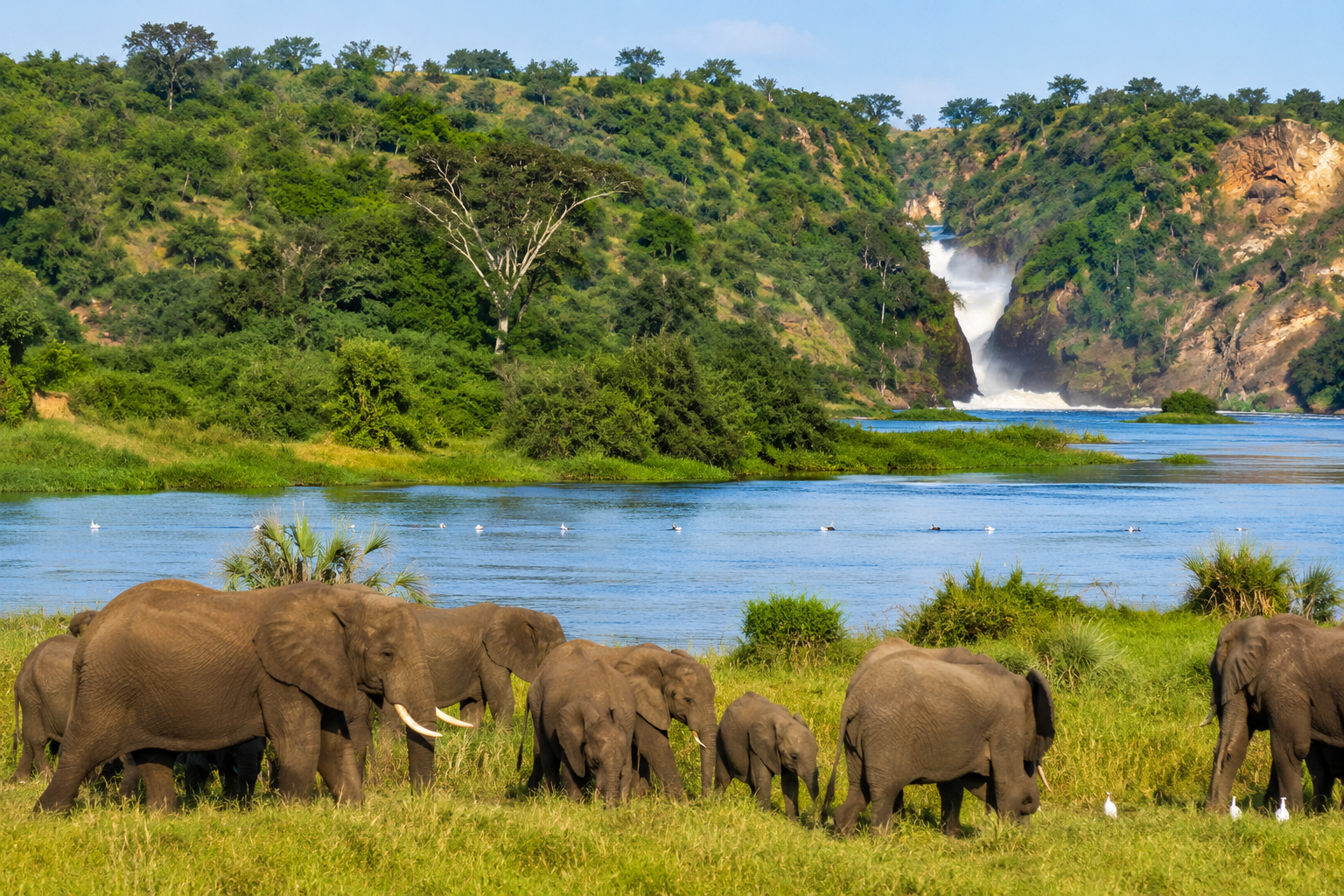
Discover Queen Elizabeth National Park, Uganda's most popular safari destination, renowned for its tree-climbing lions, boat cruises along the Kazinga Channel, chimpanzee tracking in Kyambura Gorge and incredible wildlife. Home to over 95 mammal species and more than 600 bird species, the park offers unforgettable game drives, breathtaking landscapes and exceptional wildlife encounters in the heart of the Albertine Rift Valley.
The road into Queen Elizabeth National Park starts to feel different long before you reach the gate. The traffic thins, the Rwenzori Mountains rise through the haze to the west, and the savanna opens out towards Lake George. Then, somewhere near Mweya, the first Uganda kob appears in the grass and the whole vehicle goes quiet.
Queen Elizabeth National Park is Uganda’s most popular and one of its most biodiverse safari destinations. Covering approximately 1,978 square kilometres in western Uganda, the park stretches across a remarkable landscape of savanna, wetlands, forests, crater lakes and open plains between Lake Edward and Lake George. The Kazinga Channel cuts through the park, connecting the two lakes and creating one of East Africa’s most productive concentrations of hippos, elephants, buffalo and waterbirds.
What makes Queen Elizabeth National Park particularly compelling is the variety packed into one destination. You can spend the morning tracking lions across the Kasenyi Plains, take a boat cruise along the Kazinga Channel in the afternoon, walk into Kyambura Gorge looking for chimpanzees the following day and then drive south to Ishasha in search of the park’s famous tree-climbing lions.
Queen Elizabeth National Park is also part of Uganda’s wider conservation story. The park’s wildlife and surrounding communities are closely connected, with tourism revenue supporting community projects around protected areas. In 2025, districts neighbouring Queen Elizabeth and Rwenzori Mountains national parks received UGX 1.54 billion through UWA’s revenue-sharing programme.
For travellers looking for a Uganda safari that combines classic game viewing, primates, dramatic landscapes, boat safaris and cultural experiences, Queen Elizabeth National Park is one of the country’s most complete safari destinations.
Queen Elizabeth National Park is a 1,978-square-kilometre protected area in western Uganda, famous for its diverse savanna and wetland ecosystems, the Kazinga Channel, tree-climbing lions in Ishasha, chimpanzee tracking in nearby Kyambura Gorge and more than 600 recorded bird species. The park was originally established as Kazinga National Park in 1952 and renamed Queen Elizabeth National Park in 1954 following the visit of Queen Elizabeth II.
Location: Western Uganda, primarily in Kasese District
Size: Approximately 1,978 square kilometres
Established: 1952 as Kazinga National Park; renamed Queen Elizabeth National Park in 1954
Managed by: Uganda Wildlife Authority (UWA)
Altitude: Approximately 910 to 1,350 metres
Distance from Kampala: Approximately 410 kilometres
Driving time from Kampala: Around 7 to 8 hours, depending on the route and stops
Known for: Tree-climbing lions, Kazinga Channel boat cruises, elephants, Uganda kob, chimpanzee tracking and exceptional birdlife
Main tourism areas: Mweya Peninsula, Kasenyi Plains, Kazinga Channel, Kyambura Gorge and Ishasha
Nearby destinations: Kibale Forest, Rwenzori Mountains, Bwindi Impenetrable National Park and Semuliki National Park
Queen Elizabeth National Park is managed by the Uganda Wildlife Authority, which currently lists the park at 1,978 square kilometres and an altitude range beginning around 1,300 metres in its general park information.
Queen Elizabeth National Park is one of Uganda’s strongest destinations for traditional African game viewing. Its combination of open savanna, water, woodland and forest habitats supports more than 95 mammal species and over 600 bird species.
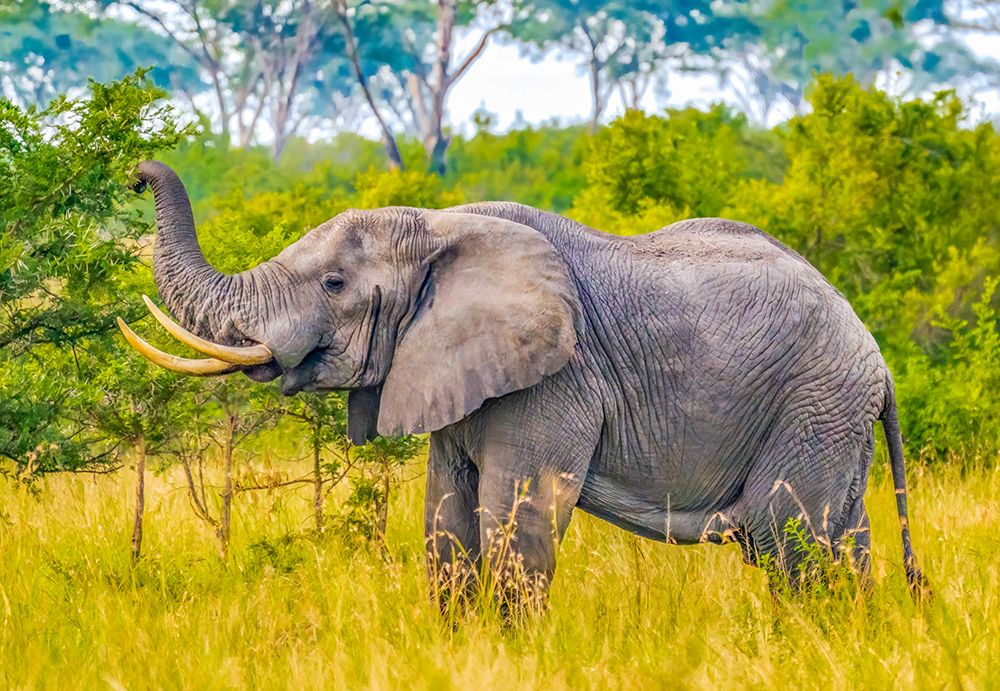
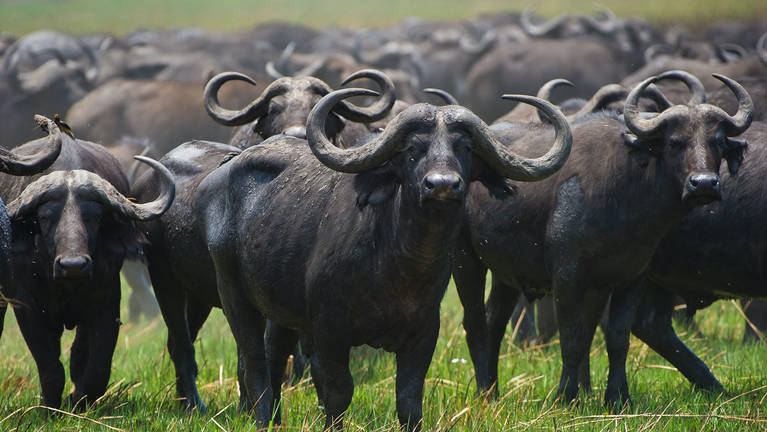
The park’s wildlife includes elephant, buffalo, lion, leopard, Uganda kob, waterbuck, topi, warthog and hippopotamus, while the forested sections support chimpanzees, baboons, colobus monkeys and other primates.
The wildlife experience changes dramatically depending on where you are in Queen Elizabeth National Park. The Kasenyi Plains are particularly associated with Uganda kob and the lions that hunt them, while the Kazinga Channel concentrates water-loving wildlife. Ishasha, in the south, is the area most closely associated with tree-climbing lions.
Queen Elizabeth National Park is home to elephants, buffaloes, lions, leopards, hippos, Uganda kob, waterbucks, topi, warthogs and several primate species. The park is particularly famous for tree-climbing lions in Ishasha, while more than 600 bird species make Queen Elizabeth National Park one of Uganda’s leading birdwatching destinations.
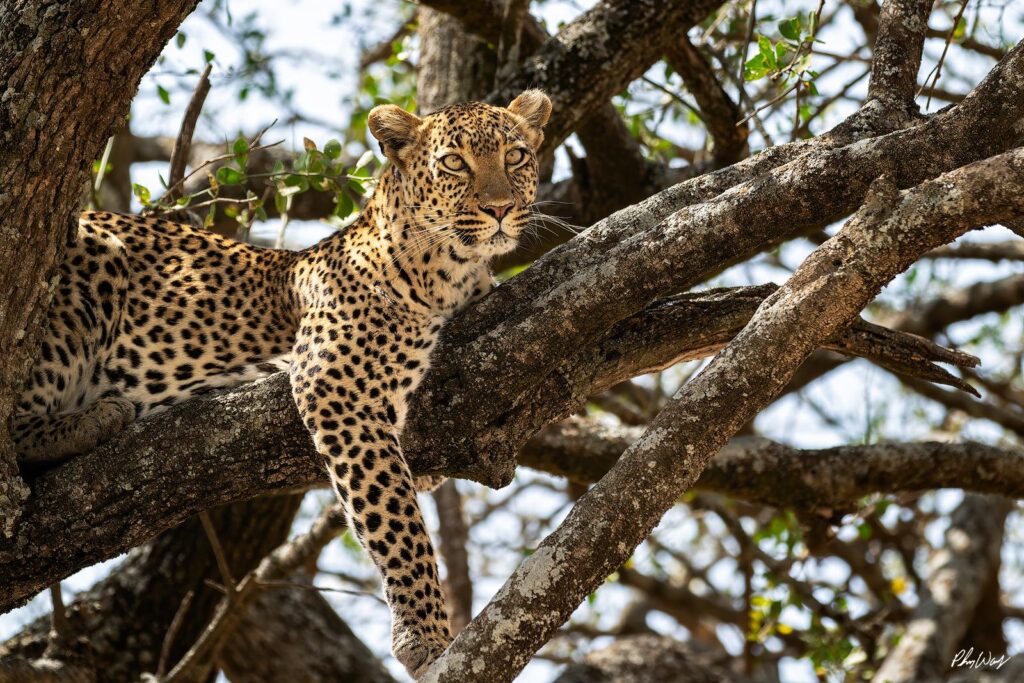
The tree-climbing lions of Ishasha are probably the single most famous wildlife attraction associated with Queen Elizabeth National Park.
Unlike the typical image of lions resting on the ground, Ishasha’s lions are frequently seen lying high in large fig trees, sometimes stretched across branches several metres above the savanna. The exact reason for this behaviour is not fully established, but the elevated branches provide shade, cooling air and a useful vantage point over the surrounding plains.
Ishasha lies in the southern sector of Queen Elizabeth National Park and is also an important route for travellers continuing towards Bwindi Impenetrable National Park. The sector supports buffalo, elephants, hippos, topi and other wildlife in addition to its famous lions.
A tree-climbing lion sighting is never something we promise, because wildlife remains unpredictable, but when the pride is resting in the branches, the sight is one of the most memorable encounters on a Uganda safari.
The Kazinga Channel is the geographical and wildlife heart of Queen Elizabeth National Park.
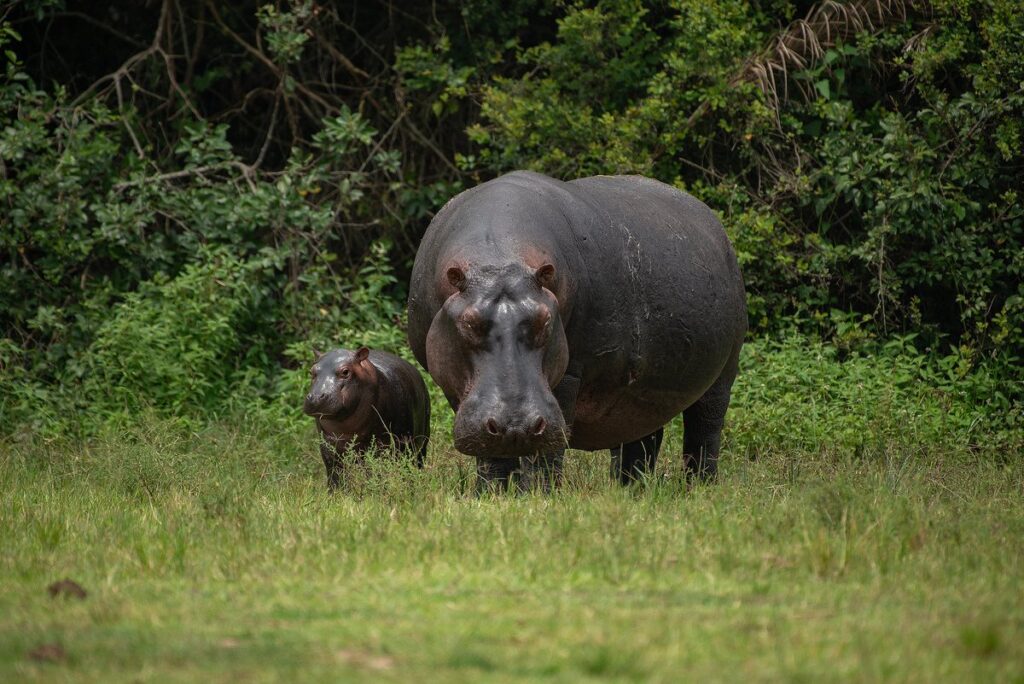
This natural waterway connects Lake George and Lake Edward and attracts some of the highest concentrations of hippos and water-associated wildlife in the park. Elephants, buffaloes and antelopes regularly approach the water, while crocodiles and hundreds of waterbirds occupy the channel’s banks and islands.
A boat cruise on the Kazinga Channel is one of the defining experiences of a Queen Elizabeth National Park safari. Instead of following wildlife tracks in a vehicle, you move slowly along the water, often approaching hippos at close range while elephants stand on the shoreline and African fish eagles watch from overhanging trees.
The cruise also turns Queen Elizabeth National Park into an exceptional birding destination. Pelicans, kingfishers, herons, storks, cormorants and other waterbirds can be seen along the channel, making the boat trip valuable even for travellers who are not specifically visiting Uganda for birdwatching.
The Kazinga Channel is a natural waterway connecting Lake George and Lake Edward inside Queen Elizabeth National Park. It is famous for its large concentrations of hippos, crocodiles, elephants, buffaloes and waterbirds and is best explored by boat.
Game drives are the foundation of a Queen Elizabeth National Park safari.
The Kasenyi Plains are one of the most productive game-viewing areas in the central section of the park, particularly for Uganda kob and the predators that follow them. Early morning game drives are especially rewarding because temperatures are lower and predators may still be active after the night.
Afternoon game drives offer a different experience as wildlife becomes more active again after the heat of the day. If you have enough time, we recommend doing several shorter drives rather than trying to cover the entire park in one outing.
The Kazinga Channel boat cruise is one of the activities we consider essential on a first Queen Elizabeth National Park safari.
The slow pace of the boat allows you to observe wildlife from a completely different angle. Hippos dominate many sections of the channel, while elephants and buffaloes regularly come down to drink. The shoreline is also excellent for photography because animals can often be seen against the open water.
The historic UWA park guide describes the launch trip as a roughly two-hour return voyage between Mweya and the channel’s entrance into Lake Edward.
A trip to Queen Elizabeth National Park would not be complete for many travellers without searching for the famous lions of Ishasha.
Unlike the Kasenyi Plains, which are easily incorporated into a central Queen Elizabeth itinerary, Ishasha requires additional time because it lies in the southern part of the park. We recommend allowing at least one night in or near the Ishasha sector if seeing the tree-climbing lions is a major priority.
Kyambura Gorge offers one of the most unusual primate experiences associated with Queen Elizabeth National Park.
The gorge drops into a forested landscape where visitors can track chimpanzees with trained guides. The experience is different from a traditional game drive because you are walking through forest, following tracks, calls and movement through the canopy rather than scanning open plains from a vehicle.
Chimpanzee tracking and habituation experiences are available throughout the year, although UWA notes that chimpanzee tracking can be particularly productive during the rainy season when food availability influences their movements.
Maramagambo Forest provides another side of Queen Elizabeth National Park, away from the open savanna.
The forest supports primates, forest birds and other wildlife and contains several interesting natural features, including crater lakes and the Bat Cave. Guided forest walks provide opportunities to experience the park’s biodiversity at a much slower pace.
For travellers who enjoy forests and birdwatching, adding Maramagambo to a Queen Elizabeth National Park itinerary creates a useful contrast to the savanna game drives.
The volcanic crater landscape north of Mweya is one of the most scenic parts of Queen Elizabeth National Park.
Dozens of extinct volcanic craters create a landscape of steep rims, grassland, forest and crater lakes. The historic park guide describes a 27-kilometre Crater Drive between Kabatoro and Crater gates, following a scenic route around the rims of extinct craters.
The crater area is particularly worthwhile for travellers who want scenery and photography alongside wildlife.
Queen Elizabeth National Park is one of Uganda’s premier birdwatching destinations, with more than 600 recorded bird species.
The combination of savanna, forest, crater lakes, wetlands and the Kazinga Channel creates an unusually broad range of habitats within one protected area.
Birders can look for African fish eagles, storks, pelicans, herons, kingfishers, raptors and many other species. Seasonal wetlands and lakes can also attract migratory birds.
The equator crosses the Queen Elizabeth National Park region, and marked points along the nearby road provide a popular opportunity to stand in both hemispheres.
It is a simple stop compared with a game drive or boat cruise, but it works well as part of a road safari, particularly when travelling between Queen Elizabeth National Park and other western Uganda destinations.
Katwe Salt Lake offers an opportunity to look beyond wildlife and understand how communities around Queen Elizabeth National Park make a living from the landscape.
The Katwe area has a long history of traditional salt extraction from the saline lake. A cultural visit can introduce travellers to local salt production and the communities whose livelihoods are connected to the crater-lake environment.
Queen Elizabeth National Park is surrounded by communities with distinct histories, traditions and livelihoods.
Cultural experiences can include traditional music and dance, storytelling, community walks, craft demonstrations and visits focused on local livelihoods. UWA highlights cultural experiences involving communities such as the Bakonzo, Basongora and Banyabindi.
We recommend choosing community experiences that are locally organized and allow residents to benefit directly from tourism.
The Rwenzori Mountains form one of the most dramatic backdrops to Queen Elizabeth National Park.
On clear mornings, the mountains rise beyond the western edge of the park, creating an extraordinary contrast between open savanna and high mountain terrain. The proximity of the Rwenzori Mountains also makes Queen Elizabeth National Park an excellent addition to longer western Uganda itineraries.
For travellers combining wildlife and mountain scenery, a route through Queen Elizabeth National Park and the Rwenzori Mountains offers a particularly varied section of Uganda.
Queen Elizabeth National Park has several access points serving different sections of the protected area.
Mweya Gate: The principal access point for the Mweya Peninsula, Kazinga Channel and central Queen Elizabeth National Park.
Katunguru Gate: Convenient for accessing the northern and central areas around the Kazinga Channel.
Kasenyi Gate: Useful for access towards the Kasenyi Plains and central game-viewing areas.
Ishasha Gate: Provides access to the southern Ishasha sector and is particularly useful for travellers combining Queen Elizabeth National Park with Bwindi.
Katwe Gate: Provides access towards the crater area and southern approaches.
The correct gate depends on your accommodation and the route you are following. We therefore plan the entry point around the itinerary rather than treating every Queen Elizabeth National Park safari the same way.
Queen Elizabeth National Park is approximately 410 kilometres west of Kampala. The drive takes at least seven to eight hours, although a safari itinerary will often include other destinations and stops along the way.
For international travellers, the journey normally begins at Entebbe International Airport before continuing west towards the park.
A road safari gives you the opportunity to see Uganda change from the urban environment around Kampala into agricultural landscapes, rolling hills, forests and finally the savanna and crater country of western Uganda.
Queen Elizabeth National Park can also be reached by domestic or chartered light aircraft.
UWA identifies nearby air access points including Kasese, Mweya and Kihihi, with flights available from Entebbe International Airport or Kajjansi Airfield depending on the operator and itinerary.
Flying is particularly useful when combining Queen Elizabeth National Park with Bwindi, Murchison Falls or other destinations where long road transfers would consume significant safari time.
The road option is usually better for travellers who want to experience Uganda’s changing scenery, have enough time for a longer circuit or are combining Queen Elizabeth National Park with Kibale, Fort Portal, Bwindi or the Rwenzori Mountains.
Flying is better when time is limited or when the priority is maximizing time inside the national parks rather than spending full days on inter-destination transfers.
Queen Elizabeth National Park has a generally warm tropical climate, influenced by its relatively low elevation and proximity to large lakes and the Rwenzori Mountains.
Temperatures are typically comfortable in the morning and evening but can become hot during the middle of the day, particularly during dry periods. Rain can occur at almost any time because western Uganda has a more variable rainfall pattern than some of the classic East African safari destinations.
The wetter periods bring greener vegetation and can be particularly rewarding for birdwatching and chimpanzee tracking, while drier periods often make wildlife easier to locate around water sources.
For game drives, we recommend early mornings and late afternoons throughout the year. The cooler temperatures make the drives more comfortable and generally coincide with periods when wildlife is more active.
Queen Elizabeth National Park has a warm tropical climate with seasonal rainfall. The park can be visited throughout the year, with dry periods generally offering easier game viewing and wetter periods producing greener scenery, excellent birding and favourable conditions for some primate experiences.
Queen Elizabeth National Park is managed by the Uganda Wildlife Authority, which publishes its official conservation tariffs.
UWA currently lists the foreign non-resident park entry fee for Queen Elizabeth National Park at USD 40 per adult, with a foreign resident rate of USD 30 and an East African Community rate of UGX 20,000, according to its current park information page.
However, UWA has also published a new 2026–2027 tariff update, so travellers should confirm the applicable rate for their travel dates before budgeting.
Additional charges may apply for activities such as chimpanzee tracking, boat cruises and other specialized experiences.
UWA’s current published park information lists Queen Elizabeth National Park entry at USD 40 for foreign non-resident adults, USD 30 for foreign residents and UGX 20,000 for East African Community visitors. Because UWA has issued a 2026–2027 tariff update, the applicable rate should be confirmed for your exact travel dates.
Queen Elizabeth National Park can be visited throughout the year, but the experience changes with the seasons.
January and February are generally among the drier periods and can offer good conditions for game drives, with animals often easier to locate around permanent water sources.
March to May brings wetter conditions and greener vegetation. The landscape becomes especially attractive for photography and birdwatching, although some tracks can become muddy.
June to September is generally one of the strongest periods for a classic Queen Elizabeth National Park safari, with relatively dry conditions and good wildlife viewing.
October to December brings another wetter period, with greener landscapes and strong birding opportunities.
For chimpanzee tracking, UWA notes that rainy-season conditions can be favourable because chimpanzees may remain in areas with greater food availability, although visitors should expect mud.
The drier months are generally the easiest for traditional game viewing, while the wetter months offer greener scenery, strong birding and favourable conditions for some chimpanzee experiences. Queen Elizabeth National Park remains a year-round safari destination.
Two nights is enough for a short introduction, particularly if you want a game drive and Kazinga Channel boat cruise.
Three nights is our usual recommendation for a first Queen Elizabeth National Park safari. This gives you time for game drives, the Kazinga Channel and either a crater experience or chimpanzee tracking.
Four nights or more is ideal if you want to include Ishasha and search for tree-climbing lions, because the southern sector deserves additional time rather than being rushed through as a day trip.
If chimpanzee tracking is a priority, we recommend building the itinerary around Kyambura Gorge or combining Queen Elizabeth National Park with Kibale Forest for a longer primate-focused Uganda safari.
Three nights is a good starting point for a first Queen Elizabeth National Park safari. Four or more nights works better when you want to combine central game viewing, the Kazinga Channel, Kyambura Gorge and Ishasha.
Queen Elizabeth National Park brings together an unusually broad range of safari experiences.
You can watch elephants and hippos from a boat, search the Kasenyi Plains for lions and Uganda kob, photograph tree-climbing lions in Ishasha, walk through Kyambura Gorge looking for chimpanzees and explore crater lakes and forests without leaving the wider Queen Elizabeth ecosystem.
It is also one of Uganda’s strongest destinations for birdwatching, with more than 600 recorded species.
The landscapes are equally compelling. Savanna stretches towards the Rwenzori Mountains, volcanic craters break up the plains, lakes reflect the changing sky and the Kazinga Channel provides a permanent source of water around which wildlife gathers.
For travellers who want more than a conventional game-drive safari, Queen Elizabeth National Park is difficult to beat.
Queen Elizabeth National Park safari prices vary considerably according to accommodation, season, transport and the activities included.
As a general planning range, budget Uganda safaris may start around USD 200–350 per person per day, mid-range Queen Elizabeth National Park safaris commonly fall around USD 350–550 per person per day, while luxury lodges and private safari arrangements can reach USD 600 or more per person per day.
These figures are planning estimates rather than fixed tariffs. Your final safari cost will depend on accommodation, vehicle type, number of travellers, park fees, boat cruise fees, chimpanzee permits, guide services and whether you travel by road or fly.
Flying into Queen Elizabeth National Park normally costs more than travelling by road, but it can save a substantial amount of travel time.
A Queen Elizabeth National Park safari can range from roughly USD 200–350 per person per day for budget arrangements, USD 350–550 for mid-range safaris and USD 600 or more for luxury experiences. The final price depends on accommodation, season, transport, park fees and activities.
We build Queen Elizabeth National Park into several types of Uganda safari.
A 3-day Queen Elizabeth safari can focus on game drives and the Kazinga Channel.
A 4-day Queen Elizabeth safari can add Kyambura Gorge or the crater lakes.
A 5-day western Uganda safari can combine Queen Elizabeth National Park with Kibale Forest or the Rwenzori Mountains.
A 6- to 8-day Uganda safari can combine Queen Elizabeth National Park with Kibale, Bwindi and other major destinations for travellers who want wildlife, chimpanzees and gorilla trekking on one journey.
For travellers travelling south towards Bwindi, we particularly recommend including Ishasha, as the route provides an opportunity to search for the famous tree-climbing lions before continuing towards the gorilla forests.
Accommodation around Queen Elizabeth National Park ranges from budget camps and comfortable mid-range lodges to high-end safari properties overlooking the Kazinga Channel, Lake Edward or the surrounding savanna.
Mweya Peninsula is one of the most convenient bases for first-time visitors because it provides easy access to the Kazinga Channel and central game-viewing areas.
Kasenyi is useful for travellers prioritizing game drives across the open plains.
Ishasha is the preferred area for travellers whose priority is the southern sector and its tree-climbing lions.
Properties outside the park can also work well for travellers looking for more affordable accommodation while remaining within reasonable driving distance of the main safari areas.
We match accommodation to the itinerary rather than simply selecting a lodge based on its rating. If chimpanzee tracking, the Kazinga Channel or Ishasha is your priority, location can make a significant difference to how much time you spend on the road.
Murchison Falls National Park is larger and is famous for the dramatic Nile waterfall and its broad savanna landscapes. Queen Elizabeth National Park offers a more varied combination of crater lakes, forests, the Kazinga Channel and Ishasha’s tree-climbing lions.
Many travellers choose both rather than treating them as competing destinations.
Kibale is Uganda’s specialist primate destination and is particularly famous for chimpanzee tracking.
Queen Elizabeth National Park offers a broader traditional safari experience, with lions, elephants, buffaloes, hippos, Uganda kob and the Kazinga Channel.
Combining Kibale and Queen Elizabeth National Park creates one of the strongest wildlife-and-primate combinations in western Uganda.
Bwindi is primarily associated with mountain gorilla trekking and its ancient rainforest.
Queen Elizabeth National Park is more focused on savanna wildlife, boat safaris and classic game drives.
For travellers with enough time, combining Queen Elizabeth National Park with Bwindi creates a highly varied Uganda safari, moving from savanna and wetlands into montane rainforest.
If your priority is variety rather than a single flagship experience, Queen Elizabeth National Park sits particularly well in a western Uganda circuit.
A route incorporating Kibale, Queen Elizabeth and Bwindi can provide chimpanzees, savanna wildlife, Kazinga Channel boat cruises, tree-climbing lions and gorilla trekking in one itinerary.
Queen Elizabeth National Park is not isolated from the communities around it. Conservation depends on maintaining a relationship between wildlife protection, tourism and local livelihoods.
Uganda Wildlife Authority operates revenue-sharing programmes in communities surrounding protected areas. In 2022, UWA reported distributing more than UGX 3.1 billion from tourism revenue to districts associated with several western Uganda protected areas, including Queen Elizabeth National Park.
More recently, UWA reported that neighbouring districts around Queen Elizabeth and Rwenzori Mountains national parks received UGX 1.54 billion through revenue-sharing initiatives.
Responsible travel in Queen Elizabeth National Park means following the rules of the protected area, maintaining appropriate distances from wildlife, avoiding litter, respecting local communities and using registered guides and operators.
For cultural visits, we encourage guests to ask before photographing people, support locally owned businesses and treat community encounters as genuine cultural exchanges rather than staged performances.
Queen Elizabeth National Park is one of those destinations where trying to see everything in one day usually makes the safari worse, not better. The park looks manageable on a map, but the different sectors have very different experiences. If tree-climbing lions matter to you, allow time for Ishasha. If chimpanzees matter, build in Kyambura or Kibale. If wildlife photography is the priority, give yourself several game drives rather than trying to cover every attraction.
The strongest Queen Elizabeth National Park itineraries are built around what you actually want to see rather than simply counting attractions.
From the tree-climbing lions of Ishasha to the hippos of the Kazinga Channel, Queen Elizabeth National Park offers one of Uganda’s most complete wildlife experiences.
The park combines savanna game drives, boat safaris, chimpanzee tracking, crater landscapes, forest walks, birdwatching and cultural experiences in a single destination. Its location also makes it one of the most useful building blocks for a western Uganda safari, particularly when combined with Kibale Forest, Bwindi Impenetrable National Park or the Rwenzori Mountains.
Whether you are planning a short Queen Elizabeth National Park safari focused on game drives and the Kazinga Channel or a longer Uganda itinerary combining chimpanzees, gorillas and classic wildlife, we can build the route around your travel dates, accommodation preference and budget.
Queen Elizabeth National Park is not simply a stop between Kibale and Bwindi. Give it enough time, and it becomes one of the highlights of the entire Uganda safari
From the famous tree-climbing lions of the Ishasha Sector to the wildlife-rich waters of the Kazinga Channel, Queen Elizabeth National Park offers one of Africa's most diverse safari experiences. Encounter elephants, buffaloes, leopards, chimpanzees and over 600 bird species while exploring breathtaking savannahs, crater lakes and lush forests in Uganda's premier wildlife destination.
Witness the iconic tree-climbing lions of the Ishasha Sector, one of only a few places in Africa where this remarkable behaviour is…
Cruise along the wildlife-rich Kazinga Channel, renowned for its large concentrations of hippopotamuses, Nile crocodiles, elephants and abundant birdlife.
Enjoy rewarding game drives with opportunities to see African bush elephants, African buffaloes, leopards, lions, Uganda kobs, waterbucks and warthogs.0).
Trek through the lush "Valley of Apes" for a chance to encounter wild chimpanzees in their natural forest habitat.
Discover over 600 bird species, making the park one of Africa's premier birding destinations and a paradise for bird enthusiasts..
Explore spectacular volcanic crater lakes surrounded by rolling hills, forests and panoramic viewpoints across the Albertine Rift Valley.
Experience an incredible variety of habitats, including open savannah, tropical forests, wetlands, crater lakes and the Kazinga Channel, all within a single…
Capture breathtaking images of predators, elephants, hippos, dramatic landscapes and vibrant sunsets in one of Uganda's most photogenic parks.

From value camps to premium lodges — we match every stay to your style and budget.
Budget accommodation in Queen Elizabeth National Park provides comfortable rooms, friendly service and excellent access to the park's wildlife attractions. These lodges are ideal for travellers seeking an affordable safari without compromising on location or memorable wildlife experiences.
Mid-range lodges offer spacious accommodation, quality dining and stunning views of the savannah, crater lakes or the Kazinga Channel. Guests enjoy comfortable amenities, guided game drives, boat cruises and easy access to chimpanzee tracking in Kyambura Gorge.
Luxury accommodation in Queen Elizabeth National Park combines elegant suites, exceptional hospitality and spectacular views across Uganda's premier safari destination. Guests enjoy personalised service, gourmet dining, luxurious amenities and convenient access to game drives, Kazinga Channel boat safaris, chimpanzee tracking and the famous tree-climbing lions of the Ishasha Sector, making these lodges perfect for luxury safaris, honeymoons and exclusive wildlife adventures
Every season has its magic — here's what to expect when, so you can travel at your perfect time.
Everything you need to know before you go — and we’ll guide you through every step.
Most international visitors require a valid visa to enter Uganda. Applications can be made online through the Uganda e-Visa system before arrival. Visitors from East African Community (EAC) member states benefit from simplified entry arrangements.
The official currency is the Ugandan Shilling (UGX). Most safari lodges, hotels and tour operators accept Visa and Mastercard, while cash is useful for gratuities, souvenirs and purchases in local communities.
English and Swahili are Uganda's official languages. Local communities also speak several regional languages, while English is widely spoken by guides, park rangers and hospitality staff.
Queen Elizabeth National Park follows East Africa Time (EAT), which is UTC +3 throughout the year with no daylight saving time
The park enjoys a warm tropical savannah climate with daytime temperatures generally ranging between 20°C and 30°C (68°F–86°F). Light clothing is suitable during the day, while a light jacket is recommended for early morning game drives.
A yellow fever vaccination certificate is required for entry into Uganda. Travel insurance covering safari activities is strongly recommended. Visitors should also carry insect repellent, sunscreen and any necessary personal medication.
A 4x4 safari vehicle is recommended for exploring the park, particularly during the rainy seasons when some game drive tracks may become muddy. Organised safaris provide experienced driver-guides familiar with the park's wildlife hotspots.
Mobile phone coverage is available in most parts of the park, particularly near lodges and major visitor areas. Many safari lodges also provide complimentary Wi-Fi in public spaces.
Pack lightweight neutral-coloured clothing, comfortable walking shoes, a hat, sunglasses, sunscreen, insect repellent, binoculars, a camera, a reusable water bottle and a light jacket for morning and evening game drives.
Respect wildlife by maintaining a safe distance, remaining inside your vehicle during game drives unless instructed otherwise, avoiding littering and following all park regulations. Responsible tourism helps conserve Queen Elizabeth National Park's remarkable biodiversity while supporting local communities.
Queen Elizabeth National Park is located in Western Uganda, within the Albertine Rift Valley. It spans the districts of Kasese, Rubirizi, Rukungiri and Kamwenge, approximately 400 km southwest of Kampala.
The park is renowned for its tree-climbing lions in the Ishasha Sector, the Kazinga Channel boat safari, abundant wildlife, chimpanzee tracking in Kyambura Gorge and exceptional birdwatching with over 600 recorded bird species.
Visitors can see lions, tree-climbing lions, African bush elephants, African buffaloes, leopards, hippopotamuses, Nile crocodiles, Uganda kobs, waterbucks, warthogs, chimpanzees, olive baboons and many other mammals, together with one of Africa's richest bird populations.
The best time to visit is during the dry seasons from June to August and December to February, when wildlife is easier to spot and road conditions are at their best.
For foreign non-residents, the park entry fee is USD 45 per adult per 24 hours and USD 25 per child (5–15 years).
Yes. The Kazinga Channel boat cruise is one of Uganda's top wildlife experiences, offering close encounters with hippopotamuses, Nile crocodiles, elephants, buffaloes and numerous bird species along the shoreline.
Yes. Guided chimpanzee tracking is available in Kyambura Gorge, where visitors can search for habituated chimpanzees living within the forested valley.
A stay of 2–4 days is recommended to enjoy game drives, the Kazinga Channel boat safari, chimpanzee tracking, birdwatching and visits to the Ishasha Sector.
The park offers a wide range of accommodation, including budget camps, mid-range safari lodges and luxury lodges, suitable for every type of traveller.
Queen Elizabeth National Park is commonly combined with Bwindi Impenetrable National Park, Kibale National Park, Lake Mburo National Park, Semuliki National Park and Mgahinga Gorilla National Park to create a comprehensive Uganda safari itinerary.
From a generator that switches off at ten to a Land Cruiser fitted with its own charging console,…
Read more →
A working checklist from a Nairobi ground operator on licensing, red flags and the questions that separate real…
Read more →
Both parks hold the same herds and the same rivers, but the border between them changes your budget,…
Read more →Tell us what you’d love to see and a local specialist will design a tailor-made itinerary around you — no obligation, reply within 24 hours.