

Destinations
Masai Mara Conservancies Explained: Which One Is Right for You?
A dozen private conservancies and conservation areas border the Masai Mara National Reserve, and no two of them…
Read more →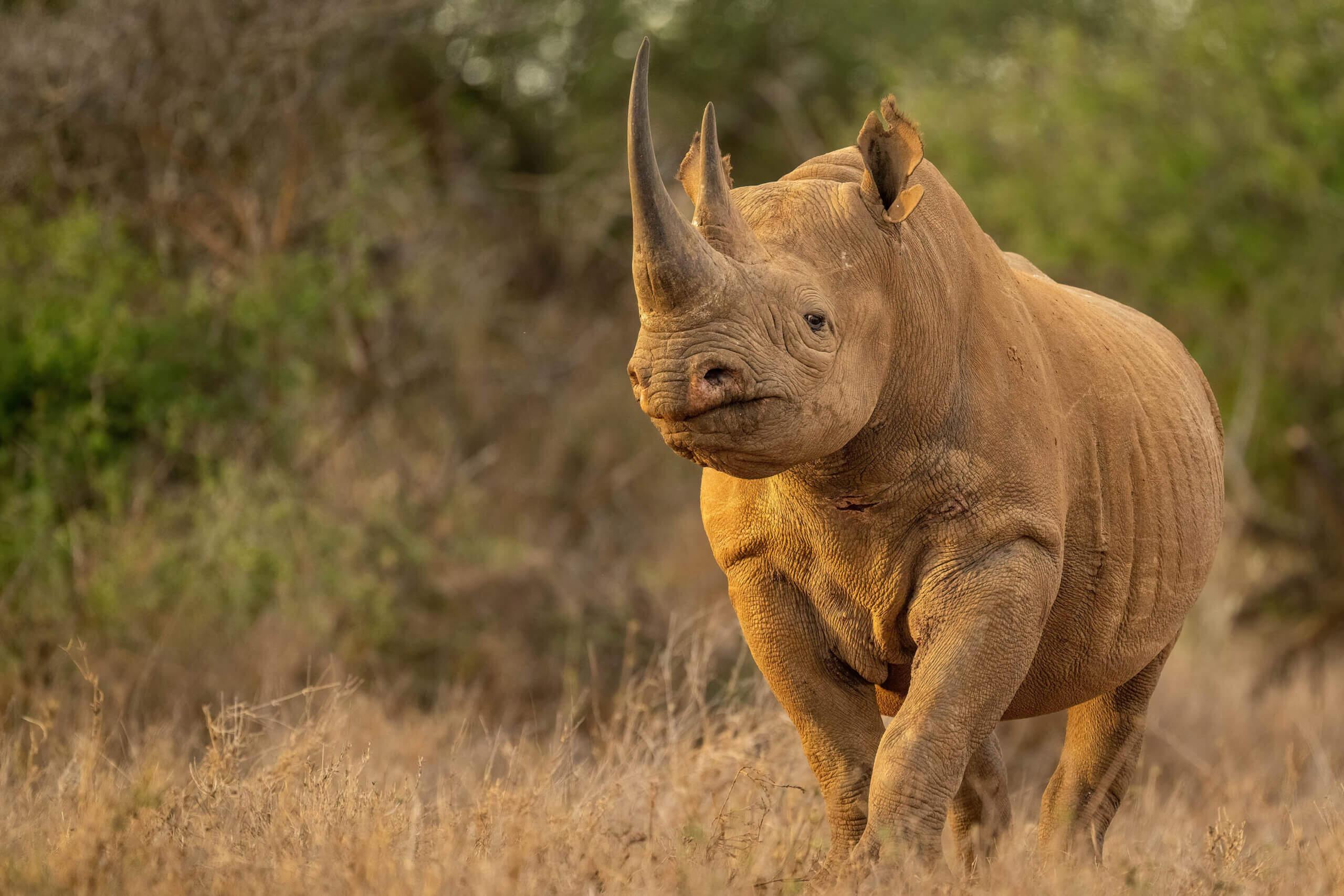
Mkomazi National Park is a remote northern Tanzania safari destination renowned for black rhino and African wild dog conservation, unique dry-country wildlife, spectacular mountain scenery and uncrowded game drives.
Mkomazi National Park sits just after the northern Tanzanian landscape begins to dry out, where the road from Moshi and the slopes of Kilimanjaro give way to thorn bush, baobabs and open savannah. On a clear morning, Mount Kilimanjaro can appear beyond the plains, while elephants move through the acacia and somewhere in the distance a herd of fringe-eared oryx disappears into the scrub.
We have driven into Mkomazi knowing that it is not Tanzania’s most famous park. That is precisely the point.
Located in northeastern Tanzania along the Kenyan border, Mkomazi covers approximately 3,245 square kilometres and forms part of the wider Tsavo-Mkomazi ecosystem. It was originally established as a game reserve in 1951 and was upgraded to national park status in 2008. The park borders Kenya’s Tsavo West National Park, creating an important transboundary landscape for wildlife.
What sets Mkomazi apart is its combination of rare species, dry-country wildlife and relative solitude. The park is home to eastern black rhino, African wild dog, elephant, lion, leopard and buffalo, alongside unusual northern species such as gerenuk, fringe-eared oryx and lesser kudu. More than 450 bird species have been recorded here, making the park particularly attractive to birdwatchers.
Mkomazi is also a conservation story. The Mkomazi Rhino Sanctuary protects critically endangered black rhinos, while the park supports conservation and breeding efforts for African wild dogs. For travellers who have already experienced Serengeti and Ngorongoro and want to see a less visited side of Tanzania, Mkomazi offers a completely different safari experience.
Mkomazi National Park is a 3,245-square-kilometre protected area in northeastern Tanzania along the Kenyan border. Originally established as a game reserve in 1951 and later upgraded to national park status, it is known for black rhino conservation, African wild dogs, elephants, giraffe, gerenuk, fringe-eared oryx, lesser kudu and more than 450 recorded bird species.
Location: Northeastern Tanzania, along the Kenya border in the Kilimanjaro and Tanga regions
Size: Approximately 3,245 square kilometres
Established: 1951 as a game reserve; upgraded to national park status in 2008 according to current TANAPA information
Managed by: Tanzania National Parks Authority (TANAPA)
Elevation: Approximately 230 metres in the park’s lower areas
Known for: Black rhino conservation, African wild dogs, dry-country wildlife and quiet safari experiences
Neighbouring ecosystem: Kenya’s Tsavo West National Park
Major landscapes: Semi-arid savannah, thorn bush, open plains, baobab-studded country and mountain views
Birdlife: More than 450 recorded species
Nearby towns: Same, Mwanga and Moshi
Mkomazi’s wildlife is shaped by its dry environment and its position between northern Tanzania and Kenya’s Tsavo ecosystem. The park holds the Big Five, although sightings of rhino and leopard are considerably more specialized than in Tanzania’s better-known safari destinations.
Elephants are among the more recognizable large mammals, while buffalo, giraffe and plains game are widely distributed across the park. Lions and leopards are present, although Mkomazi is not primarily marketed as a predator-density destination in the way the Serengeti is.
The unusual antelope species are part of the attraction. Gerenuk, lesser kudu and fringe-eared oryx are particularly suited to Mkomazi’s dry thorn country. Gerenuk can often be seen standing upright on their hind legs to reach leaves high in the acacia, while oryx are adapted to surviving in conditions where water is scarce.
African wild dogs are another major draw. Mkomazi has supported reintroduction and conservation efforts for this increasingly rare predator, making any sighting especially significant.
Birdlife is equally important. More than 450 species have been recorded, including dry-country birds and migratory species, giving birders plenty to look for beyond the larger mammals.
Mkomazi is home to elephant, lion, leopard, buffalo, eastern black rhino, African wild dog, giraffe, zebra, wildebeest, gerenuk, fringe-eared oryx, lesser kudu and many other species. The park also supports more than 450 recorded bird species.
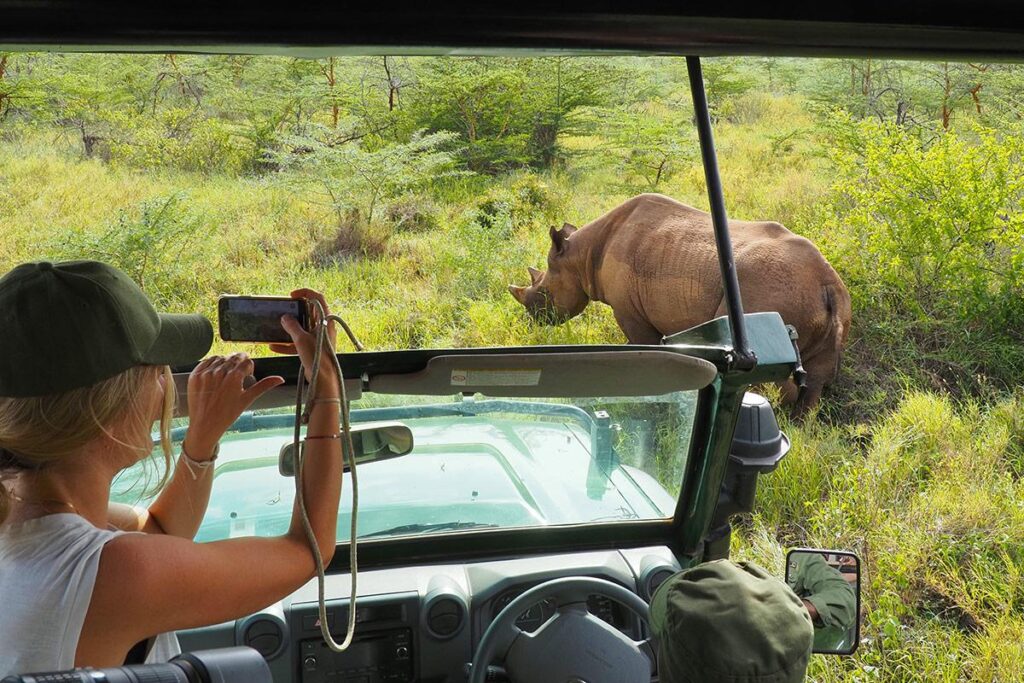
The black rhino is one of the strongest reasons to visit Mkomazi.
The Mkomazi Rhino Sanctuary was established to protect and breed eastern black rhinos, an animal whose numbers were devastated across East Africa by poaching during the twentieth century. The sanctuary forms an important part of Mkomazi’s wider conservation identity and gives visitors an opportunity to understand the work involved in protecting one of Africa’s most threatened large mammals.
A rhino sighting here should not be treated simply as another item on a Big Five checklist. Mkomazi’s rhino population represents decades of conservation work, habitat protection and reintroduction efforts.
For travellers interested in conservation rather than simply wildlife photography, this adds an important dimension to a Mkomazi safari.
African wild dogs, also known as painted wolves, are among Africa’s most elusive predators. Mkomazi has played an important role in their conservation through reintroduction and breeding programmes.
The species is particularly fascinating to watch because of its highly social behaviour. Packs cooperate closely when hunting, raising pups and defending their territory. Sightings are never guaranteed, but their presence adds an exciting possibility to a game drive in Mkomazi.
TANAPA identifies African wild dog conservation as one of the park’s key attractions alongside the black rhino sanctuary.
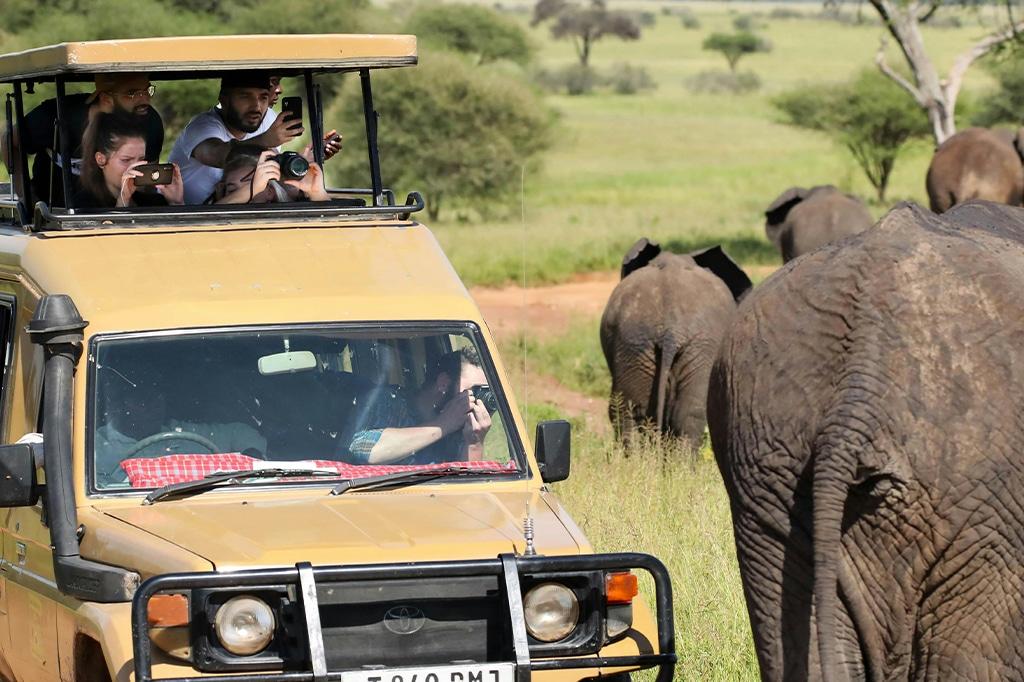
Game drives are the main way to explore Mkomazi. Early morning drives are particularly rewarding because temperatures are cooler and wildlife is generally more active. The open plains and thorn bush allow long views across the landscape, while areas of thicker vegetation require a slower approach.
Mkomazi’s relatively low visitor numbers are part of the attraction. TANAPA describes the park as a quieter destination where visitors can experience wildlife without the heavy vehicle concentration associated with some of Tanzania’s more famous parks.
A visit connected with the rhino conservation programme is one of the most distinctive experiences available in Mkomazi. It offers an opportunity to learn about black rhino protection, breeding and reintroduction work rather than simply seeing the animals from a safari vehicle.
Access arrangements can vary, so we confirm the current rules and availability before including a sanctuary visit in an itinerary.
Mkomazi’s wild dog conservation programme gives specialist wildlife enthusiasts another reason to visit. If wild dogs are a priority, we recommend allowing enough time for multiple game drives rather than expecting a sighting on a single circuit.
With more than 450 recorded species, Mkomazi is an excellent destination for birders interested in dry-country species. Acacia woodland, thorn scrub and open plains each provide different habitats, while migratory birds add another dimension during the appropriate season.
Walking is one of the ways to experience Mkomazi beyond the vehicle. Rather than concentrating only on large mammals, a guided walk allows visitors to focus on tracks, plants, insects, birds and the smaller details of the ecosystem.
TANAPA lists walking safaris among the activities available in Mkomazi.
Night game viewing provides a completely different perspective on the park. Nocturnal species become active as temperatures fall, while predators such as lions and other night-active animals can behave differently from what visitors see during daylight.
Night game viewing is listed among the activities available in Mkomazi, subject to the applicable park guidelines and arrangements.
Mkomazi’s dry landscape creates strong photographic contrasts. Golden grass, dark thorn trees, baobabs and distant mountain ranges provide a very different backdrop from the endless grass plains of the Serengeti.
The possibility of photographing unusual species such as gerenuk, fringe-eared oryx, lesser kudu and black rhino adds another reason for photographers to spend several days here.
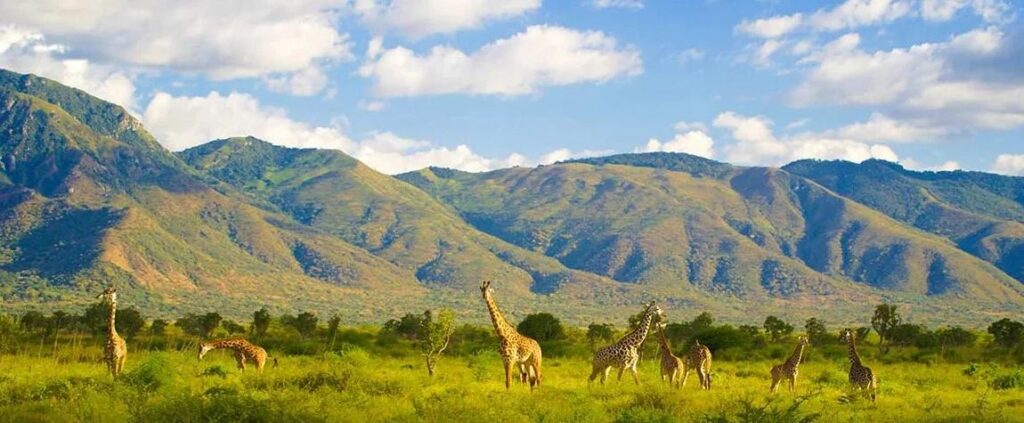
Mkomazi’s position in northeastern Tanzania gives it spectacular views toward the surrounding mountain ranges. The Pare and Usambara Mountains can form dramatic horizons, while Mount Kilimanjaro can appear as a distant backdrop under favourable weather conditions.
One of Mkomazi’s most underrated attractions is its scenery.
The park sits in a landscape where Tanzania’s dry northeastern plains meet the mountain country around the Pare and Usambara ranges. On clear days, Mount Kilimanjaro can be visible in the distance, adding an extraordinary mountain backdrop to an otherwise dry savannah landscape.
The combination is unusual: an elephant crossing an open plain, baobabs in the foreground and Africa’s highest mountain appearing on the horizon.
Weather determines visibility, so Kilimanjaro should be considered a scenic possibility rather than a guaranteed view.
Mkomazi does not exist in isolation.
The park shares a border with Kenya’s Tsavo West National Park and forms part of the wider Tsavo-Mkomazi ecosystem. This cross-border landscape is important because wildlife does not recognize the political boundary separating Kenya from Tanzania.
The connection gives Mkomazi significance beyond its own 3,245 square kilometres. Protecting habitat on both sides of the border helps maintain movement corridors and supports wildlife populations across a much larger landscape.
For travellers combining Kenya and Tanzania, this also creates an interesting geographical connection between two countries that are often marketed separately.
The Serengeti is the obvious choice for travellers who want massive plains, high predator density and the Great Migration. Mkomazi offers something completely different.
There are fewer vehicles, a more rugged dry-country landscape and greater emphasis on unusual species and conservation. You will not come to Mkomazi to reproduce the classic Serengeti experience.
You come because you want to see a different Tanzania.
Tarangire is famous for elephants, baobabs and seasonal concentrations around the Tarangire River. Mkomazi shares the dry-country character and baobab scenery but offers a different wildlife mix, particularly its black rhino and wild dog conservation programmes.
Tarangire is usually easier to combine with the northern safari circuit of Manyara, Ngorongoro and Serengeti. Mkomazi makes more sense for travellers approaching from the Kilimanjaro, Moshi, Same or northeastern Tanzania side, or for those deliberately looking for a quieter destination.
Mkomazi and Tsavo West are part of the same broader ecosystem, so there are obvious similarities in landscape and wildlife.
Tsavo West is much larger and offers famous attractions such as Mzima Springs, lava landscapes and extensive elephant country. Mkomazi is smaller and more focused, with black rhino and wild dog conservation adding a distinctive conservation angle.
For travellers crossing between Kenya and Tanzania, combining Tsavo with Mkomazi can create an especially interesting cross-border safari route.
Mkomazi has a warm, semi-arid climate. TANAPA gives a general temperature range of approximately 19°C to 29°C, although temperatures can vary considerably between locations, seasons and times of day.
The dry season generally provides the easiest wildlife viewing because vegetation becomes thinner and animals are more likely to concentrate around available water.
The green seasons transform the park. Grass and shrubs become more vibrant, bird activity increases and the landscape takes on a completely different appearance.
Tanzania’s general seasonal pattern includes a dry period from June to October, short rains around November and December, and longer rains from March to May.
Mkomazi is a warm, semi-arid park with relatively low rainfall compared with Tanzania’s wetter mountain and forest regions. The dry season generally provides easier wildlife viewing, while the green seasons bring fresh vegetation, migratory birds and dramatic skies.
Mkomazi is managed by Tanzania National Parks Authority, so park entry and related tourism charges fall under TANAPA’s national tariff system. Fees vary according to nationality or residency status, age and the specific services being used.
TANAPA’s published tariff system includes conservation fees, camping fees, accommodation-related charges and activity fees, while applicable taxes are incorporated according to the current tariff structure. The authority also notes that conservation fees operate within specified validity periods and that payments can be made through approved electronic payment systems.
Because Tanzanian park tariffs can be revised between financial years, we recommend confirming the applicable rate for your travel dates before finalizing a safari quotation rather than relying on an old fee schedule.
For guests booking with Afrikan Accent Adventures, we normally incorporate applicable park fees into the safari quotation so you can see the overall cost rather than having to calculate each charge separately.
Mkomazi National Park uses TANAPA’s national tariff system, with rates varying according to visitor category, age and applicable activities. Because tariffs can change between financial years, the current TANAPA tariff should be checked for the exact travel dates before booking.
The dry season is generally the strongest period for wildlife viewing. Vegetation becomes thinner, animals are easier to locate and the weather is generally favourable for long game drives.
This is also a popular period for safari travel across northern Tanzania, so accommodation should be booked early if Mkomazi is part of a wider Tanzania itinerary.
The short rains bring fresh vegetation and renewed colour to the landscape. Bird activity increases and the park becomes particularly attractive for photographers who prefer greener scenery.
Visitor numbers can also be lower than during the peak dry season.
These months can offer a mixture of warm, dry conditions and green-season scenery depending on recent rainfall. Wildlife remains present throughout the park, although viewing conditions can be less predictable than during the driest months.
The long rains produce some of Mkomazi’s most dramatic scenery, but wet conditions can affect road access and some accommodation operations. Travellers considering this period should confirm road and camp conditions before departure.
June to October is generally the best period for straightforward wildlife viewing and comfortable safari conditions. November and December are attractive for greener scenery and birdwatching, while the March-to-May rains can produce beautiful landscapes but may make some roads more challenging.
Two nights is enough for a first introduction, especially if Mkomazi is being added to a wider northern Tanzania itinerary.
Three nights is our preferred recommendation for travellers who specifically want to experience the park. It gives you several game drives and a better opportunity to search for less common species such as wild dog, gerenuk, lesser kudu and fringe-eared oryx.
Four nights or more works well for specialist wildlife photographers, birdwatchers and conservation-focused travellers who want to slow the pace and spend more time exploring different sections of the park.
If black rhino is the main reason for visiting, we recommend allowing enough flexibility for the conservation experience and multiple game drives rather than treating Mkomazi as a one-night stop.
Two nights provides a useful introduction, while three nights is a better choice for travellers who want several game drives and time to explore the park properly. Four or more nights suits wildlife photographers, birders and conservation enthusiasts.
Mkomazi is for travellers who have looked at the standard Tanzania safari map and decided they want to go somewhere slightly different.
The park has the Big Five, but that is not the strongest reason to come. The attraction is the combination of black rhino conservation, African wild dogs, unusual antelope, dry-country birdlife, baobab landscapes and relatively low visitor numbers.
It is also one of those parks where the scenery changes the experience. The distant Pare and Usambara Mountains, the possibility of Kilimanjaro on the horizon and the semi-arid plains give Mkomazi a visual identity completely separate from Serengeti or Ngorongoro.
For repeat safari travellers, that difference matters.
Mkomazi safari prices vary according to accommodation, season, transport and the number of activities included.
As a general planning guide, budget and simple camping safaris can be considerably less expensive than luxury lodge-based trips, while private safaris using higher-end accommodation and dedicated vehicles can cost substantially more.
The biggest factors are accommodation category, number of nights, private versus shared transport, guide services, park fees and whether Mkomazi is combined with other destinations such as Kilimanjaro, Arusha, Tsavo West or the Usambara Mountains.
We recommend treating any online price range as an initial guide rather than a final quotation. For Afrikan Accent Adventures clients, we build the quotation around the actual travel dates, accommodation preference and whether you want Mkomazi as a standalone safari or part of a larger Tanzania or Kenya-Tanzania circuit.
There is no single fixed Mkomazi safari price. The final cost depends mainly on accommodation level, number of nights, vehicle arrangements, guide services, park fees and the other destinations included in the itinerary. A private mid-range safari will cost more than a camping trip, while luxury camps and fly-in arrangements can increase the price significantly.
Mkomazi works particularly well as part of a northern Tanzania itinerary.
One option is a dedicated Mkomazi safari for travellers who want several days of quiet wildlife viewing and conservation experiences.
Another is to combine Mkomazi with Kilimanjaro or Moshi, creating a journey that moves from mountain landscapes into dry-country wildlife habitat.
For travellers crossing between Kenya and Tanzania, Mkomazi can also be incorporated with Tsavo West, creating a fascinating safari through the wider Tsavo-Mkomazi ecosystem.
We can also combine Mkomazi with Arusha, the Usambara Mountains or other northern Tanzania destinations depending on the amount of time available.
Accommodation around Mkomazi is more limited than in Tanzania’s major safari destinations, which is part of what gives the area its remote character.
Options include campsites within the park and accommodation in nearby towns such as Same, while safari operators can also arrange tented accommodation and properties outside the park depending on the itinerary. TANAPA’s own material identifies public and special campsites within the park and accommodation options in the surrounding area.
Because Mkomazi is less developed as a mass-market safari destination than Serengeti or Ngorongoro, we recommend checking accommodation availability early, particularly during the July-to-October high season.
Conservation is central to the Mkomazi experience.
The black rhino sanctuary exists because the species requires intensive protection, while the park’s wild dog conservation programme contributes to the survival of another increasingly rare African predator.
Tourism therefore contributes to a landscape where wildlife conservation is not simply an attraction but an ongoing management responsibility.
Responsible visitors should maintain appropriate distances from animals, follow guide and ranger instructions, avoid disturbing wildlife and respect all rules governing photography and conservation facilities.
We also encourage travellers to spend locally where possible, use licensed guides and choose accommodation and safari operators that contribute positively to the communities surrounding the park.
Mkomazi rewards travellers who arrive without a checklist mentality. If your only objective is to see as many large animals as possible in the shortest possible time, Serengeti may be a better fit. If you want unusual species, conservation stories, quiet game drives and a landscape that feels genuinely different from the main northern circuit, Mkomazi becomes much more interesting.
Mkomazi is accessible by road from northern Tanzania, with approaches from the direction of Moshi, Arusha, Same and other towns in the Kilimanjaro and Tanga regions.
Its location makes it particularly convenient for travellers already exploring northeastern Tanzania. A road safari also allows you to experience the transition from the cultivated and mountainous areas around Moshi and Kilimanjaro into Mkomazi’s dry savannah.
Air access is possible through nearby regional airports and airstrips depending on the itinerary and operator. For most travellers, however, road access is the more straightforward option when Mkomazi is combined with Kilimanjaro, Moshi or other northeastern destinations.
Road travel makes the most sense when Mkomazi is part of a northern Tanzania circuit or when the journey itself is part of the experience.
Flying becomes more attractive when time is limited or when Mkomazi is being connected with destinations that would otherwise require long road transfers.
Access arrangements can vary according to the route, section of the park and current park management arrangements. Rather than assuming one gate works for every safari, we confirm the appropriate entrance based on the camp, road route and activities included in the itinerary.
This is particularly important when travelling during the wetter months, when road conditions can affect the most practical approach.
Mkomazi National Park is not Tanzania’s most famous safari destination, and that is exactly why we like sending travellers there.
It is a park of black rhinos and wild dogs, gerenuk and oryx, baobabs and thorn bush, elephants crossing open country and mountains appearing beyond the plains. It offers a quieter safari experience and a chance to see Tanzania from a different perspective. TANAPA itself describes Mkomazi as an off-the-beaten-path destination with rare wildlife, black rhino conservation and African wild dog programmes at its centre.
For first-time visitors, Mkomazi can complement the major northern parks. For repeat safari travellers, it can be the destination that makes the second trip feel completely different from the first.
If you have already seen the Serengeti and Ngorongoro and are asking what else Tanzania has to offer, Mkomazi deserves a place on the list.
Mkomazi is not trying to be the Serengeti.
It does not need to.
It is quieter, drier, wilder in a different way, and for the right traveller, that is exactly the point.
In the 1960s, more than 400 black rhinos roamed Mkomazi. By the late 1980s, relentless poaching had reduced that number to zero. What you can see here today is the result of one of Africa's most determined conservation efforts — rhinos flown back, released into a guarded sanctuary, and slowly rebuilt into a breeding population by Tony Fitzjohn and the George Adamson Wildlife Preservation Trust. Every visit helps fund their protection.
The park's headline attraction and the reason most visitors come. A fenced, heavily guarded sanctuary (built 1995–97, rhinos reintroduced from 1997) offers…
Mkomazi runs one of Tanzania's most important African wild dog (painted wolf) breeding and reintroduction programs. These critically endangered, four-toed pack hunters…
Mkomazi is a stronghold for arid-adapted species you simply won't find on a typical northern safari: the long-necked gerenuk, the shy lesser…
Vast arid savanna, ancient baobabs, and rocky inselbergs create a rugged, empty frontier straight out of a Western. Framed by the Pare…
This is one of Tanzania's quietest parks. You can drive for an hour without passing another vehicle, and rhino and wildlife encounters…
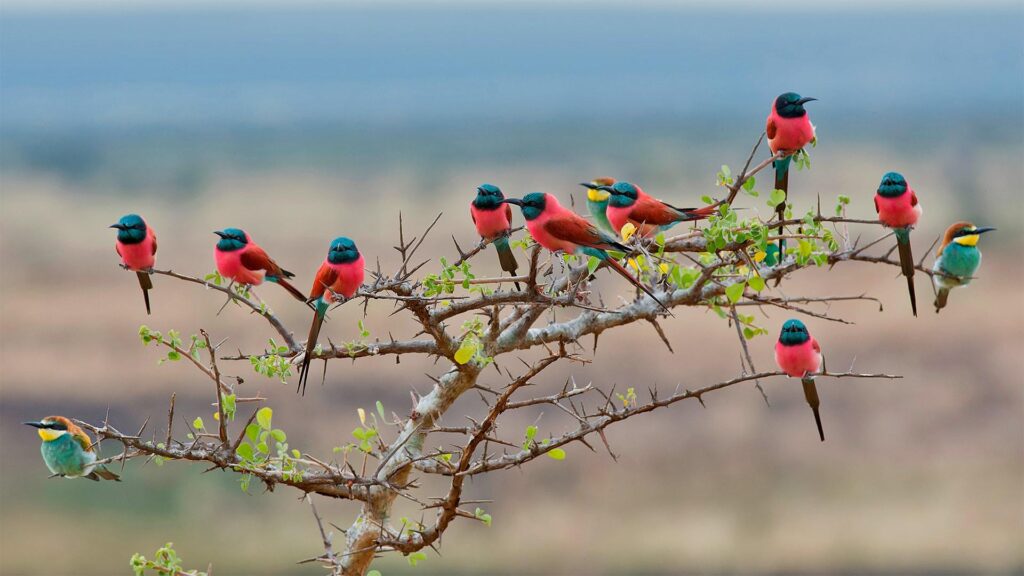
A birding paradise, with over 450 species, including dry-savanna specialists rare elsewhere in East Africa, plus seasonal migrants. Ostriches stride the plains,…
Mkomazi offers guided walking safaris starting from the main gate — a chance to experience the bush on foot, reading tracks and…
Bordering Kenya's Tsavo West with no fence between them, Mkomazi is part of a vast transboundary wilderness of global conservation significance —…
From value camps to premium lodges — we match every stay to your style and budget.
Comfortable tented camps just outside the reserve gates. En-suite rooms with hot showers, full-board meals, and close proximity to the Mara.
The practical choice for most Mkomazi visitors — comfortable eco-lodges in the neighbouring Pare and Usambara Mountains, and dependable lodges just outside the park near Same.
Mkomazi's top tier means intimate, atmospheric tented camps in commanding wilderness positions — not opulent resorts. Expect spacious en-suite safari tents, solar power, home-cooked meals, private verandas, and personal guiding, all in near-total solitude with mountain and waterhole views.
Every season has its magic — here's what to expect when, so you can travel at your perfect time.
Everything you need to know before you go — and we’ll guide you through every step.
Mkomazi is one of the more accessible of Tanzania's off-circuit parks. From Kilimanjaro International Airport (JRO) or Moshi, it's roughly a 3-hour drive along the good tarmac Moshi–Dar es Salaam highway to the town of Same, from where the main Zange gate lies about 6 km away. From Arusha, allow around 4 hours (about 2.5 hours to Babu's Camp). The park's position on this major highway makes self-drive and add-on visits straightforward. Your operator or lodge can arrange transfers.
Most fly-in visitors land at Kilimanjaro International Airport (JRO) and transfer by road (~3 hours). Charter flights can be arranged directly to airstrips serving the park — Babu's Camp, for example, is around 40 minutes by air from Kilimanjaro. Scheduled flights into Mkomazi are limited given its low visitor volume, so chartering or flying to JRO and driving are the usual routes. Confirm airstrip access with your camp when booking.
ANAPA conservation fees are charged per person, per day: approximately US$30 for non-resident adults and US$10 for children (5–15), plus 18% VAT; under-5s are free. Expatriate residents and East African citizens pay reduced rates. A separate fee applies to the rhino sanctuary visit, and vehicle fees are additional. Fees follow TANAPA's annual tariff cycle (July–June), so confirm current rates when booking.
The Mkomazi Rhino Sanctuary is the park's headline experience — and it isn't a standard drive-through. Visits are made by appointment in park vehicles with a ranger, so arrange it ahead through your operator, lodge, or at the gate rather than assuming access on arrival. Booking in advance maximises your chance of a close-range black rhino sighting. A separate sanctuary fee applies, and your payment directly funds the protection of a critically endangered species.
TANAPA gates increasingly require electronic payment (Visa/Mastercard) for park fees rather than cash — a common surprise for independent travellers. If you're booking through an operator, fees are usually settled on your behalf; confirm this in writing. Carry some Tanzanian Shillings for tips, community lodges, guesthouses and village purchases, where card facilities are often unavailable.
June to October is the sweet spot — sparse vegetation and animals gathering at water make game and rhinos easier to spot, roads are firm, and clear skies often reveal Kilimanjaro on the horizon. November–December and February–March bring green landscapes, superb birding with migrants, and even fewer visitors. April–May (long rains) is the wettest, greenest and quietest period, but some tracks become difficult. Temperatures stay warm year-round; it's rainfall that varies.
Accommodation is genuinely limited. Inside the park, Mkomazi Wilderness Retreat (on Dindira Hill) and Babu's Camp are the main camps. Many visitors instead day-trip from Same, Moshi, or eco-lodges in the neighbouring Usambara and Pare Mountains (e.g. MamboViewPoint), or use TANAPA campsites on a budget. Because this is a low-volume park, book camps early and confirm operating status directly — several options are seasonal or small.
Mkomazi lies in a malaria region, so antimalarial prophylaxis, repellent, and long sleeves at dawn and dusk are strongly advised. This is hot, dry country — bring high-factor sunscreen, a hat, and drink far more water than you think you need. Tanzania may require proof of yellow fever vaccination if you're arriving from or transiting a risk country (which includes Kenya). Consult a travel clinic 6–8 weeks before departure, and confirm current requirements with an official source.
Mkomazi is safe, with the rhino sanctuary heavily protected by armed rangers (poaching remains a real threat to the rhinos, not to visitors). But it is remote — medical facilities are limited and distances are large. Comprehensive travel insurance including medical evacuation cover is strongly recommended. Walking safaris are always accompanied by an armed ranger. Come self-sufficient with water, fuel, and supplies, especially if self-driving.
Bring neutral-toned clothing (khaki, olive, brown — avoid blue and black, which attract tsetse), sturdy closed shoes for walking safaris, long sleeves and trousers for sun and evenings, a wide-brimmed hat, sunglasses, and high-factor sunscreen. Binoculars are essential for the 450+ bird species and distant rhino sightings, and a zoom lens (300mm+) helps enormously since shy rhinos keep their distance. Add a refillable water bottle, dust protection for gear, and a power bank.
This is a remote wilderness park — expect patchy to absent mobile coverage across much of it, and solar power rather than mains at in-park camps. Charge devices when you can and carry a power bank for long days out. Same town and the mountain lodges have more reliable connectivity. Tanzania uses UK-style Type G plugs, 230V, so bring a universal adapter. The disconnection is part of Mkomazi's appeal.
Mkomazi slots cleanly at the start or end of a Northern Circuit safari from Kilimanjaro, and pairs naturally with a Kilimanjaro climb or the Usambara and Pare Mountains for hiking and culture. It also sits across the border from Kenya's Tsavo West. Most travellers give it 1–2 days — a full day for the rhino sanctuary and a game drive, a second for walking safaris and birding. It's a distinctive counterpoint to the busier headline parks.
Drones are prohibited in Tanzanian national parks without prior written authorisation. Driving inside the park is permitted 6am to 6pm, and off-road driving is restricted to protect habitat and wildlife. Rhino sanctuary visits must follow ranger instructions — maintain distance and keep quiet, as rhinos are easily stressed. Walking is only permitted with a guide. Respect the conservation mission: this is a working sanctuary for critically endangered species first, a tourist destination second.
Most nationalities need a visa to enter Tanzania, available via the official government eVisa portal in advance or on arrival at major entry points. Your passport must be valid for at least six months beyond arrival with blank pages. If you're combining Mkomazi with Kenya (Tsavo is just across the border), an East Africa Tourist Visa may be more economical. Visa fees and rules change — verify with the official Tanzanian immigration portal or your nearest high commission before travelling.
Mkomazi is famous as Tanzania's premier black rhino sanctuary — the country's highest-probability place to see a black rhino at close range — and for its African wild dog program. It's also known for rare dry-country antelope (gerenuk, lesser kudu, oryx), dramatic scenery, and near-total solitude.
By road, it's roughly a 3-hour drive from Kilimanjaro International Airport (JRO) or Moshi, via the town of Same, where the main Zange gate sits about 6 km from town. By air, charter flights can be arranged to nearby airstrips. Its position on the Moshi–Dar highway makes road access straightforward.
The dry season, June to October, offers the best wildlife viewing and rhino sightings, firm roads, and frequent Kilimanjaro views. November to March is greener with excellent birding and even fewer visitors.
Non-resident adults pay approximately US$30 per day plus 18% VAT; children (5–15) around US$10; under-5s free. East African citizens and residents pay reduced rates. A separate fee applies for the rhino sanctuary visit, and vehicle fees are additional. Fees follow TANAPA's annual tariff — confirm at booking.
Nothing in the wild is guaranteed, but Mkomazi offers Tanzania's highest probability of a close-range black rhino sighting thanks to its fenced, managed sanctuary. Rhinos can still be shy and keep their distance from vehicles, so patience helps — but your odds here far exceed anywhere else in the country.
Mkomazi is drier, wilder, far less crowded, and conservation-focused. It's not about dense big-cat action or the Great Migration — it's about rare and endangered species (rhino, wild dog, gerenuk), stunning frontier scenery, and genuine solitude. Think quality of experience over sheer volume of animals.
Most visitors spend 1–2 days, typically as an extension to a northern-circuit safari or a Kilimanjaro trip. A single full day covers the rhino sanctuary and a game drive; two days allows deeper exploration, walking safaris and birding.
In/near the park: Mkomazi Wilderness Retreat and Babu's Camp (premium tented). Nearby: Mambo View Point eco-lodge (Usambara) and Elephant Motel in Same (mid-range). Budget: TANAPA campsites inside the park or guesthouses in Same. Many visitors day-trip from Same or Moshi.
Game drives, rhino sanctuary visits, wild dog viewing, guided walking safaris from the main gate, birdwatching (450+ species), and photography of the dramatic dry-country landscapes. Cultural and mountain excursions in the Pare/Usambara ranges pair well.
Yes — it slots cleanly at the start or end of a Northern Circuit safari from Kilimanjaro Airport, pairs naturally with a Kilimanjaro climb, and connects to the Usambara and Pare Mountains for hiking. It's also adjacent to Kenya's Tsavo West across the border.
The park is safe, with armed rangers protecting the rhino sanctuary. It lies in a malaria region, so antimalarial prophylaxis, repellent and covered clothing at dawn/dusk are strongly recommended. It's dry country, so bring sun protection and plenty of water.
For the right traveller, absolutely. If you want near-certain black rhino sightings, a real shot at wild dogs, rare antelope, cinematic landscapes, and driving for an hour without seeing another vehicle, Mkomazi delivers something the headline parks can't. If you want wall-to-wall big cats or luxury infinity-pool lodges, look elsewhere.
A dozen private conservancies and conservation areas border the Masai Mara National Reserve, and no two of them…
Read more →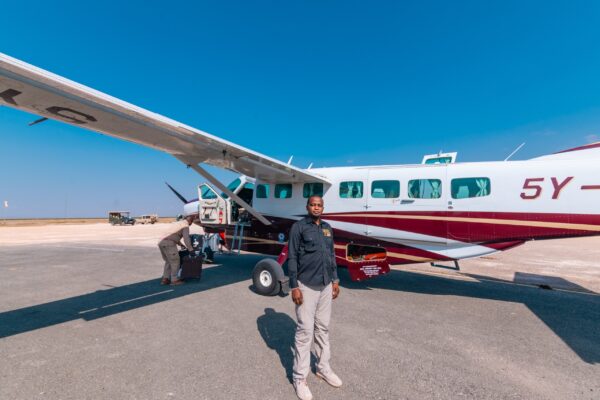
We compare Kenya safari road vs fly-in costs mile for mile, so you know exactly when the extra…
Read more →
Everything a woman needs to know before booking a women only safari in Kenya, from why the model…
Read more →Tell us what you’d love to see and a local specialist will design a tailor-made itinerary around you — no obligation, reply within 24 hours.