

Planning & Tips
Walking Safaris in Kenya: What They Add to a Game Drive
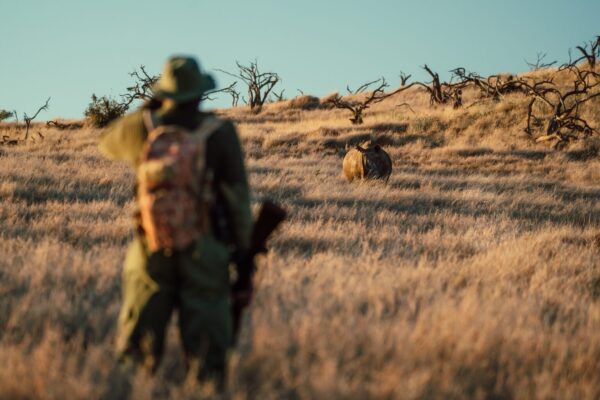
Where Kenya's guided bush walks happen, who leads them and why the thirty minutes you spend on foot…
Read more →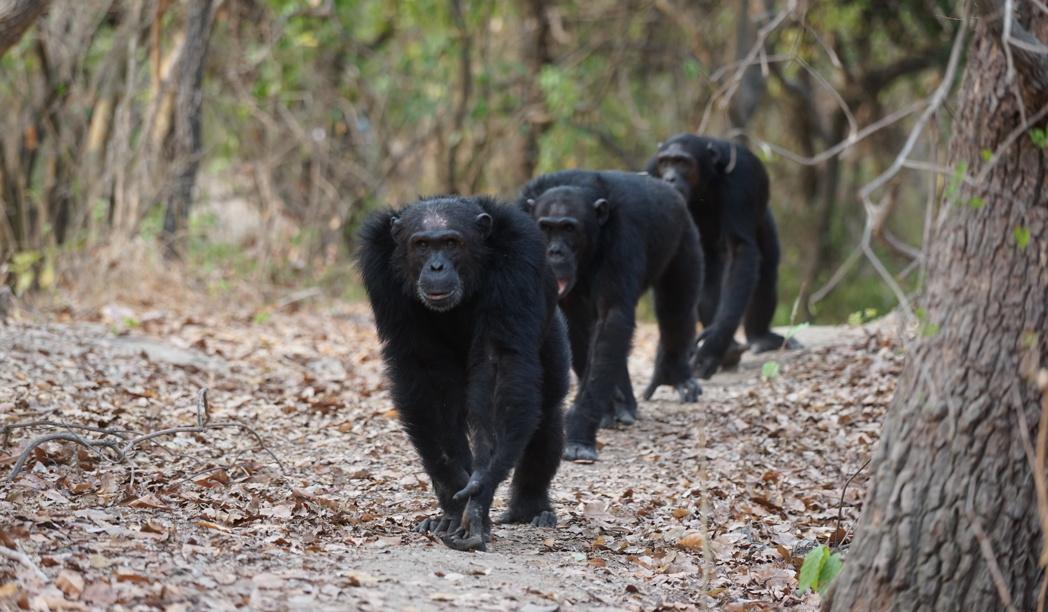
Mahale Mountains National Park is Tanzania's most remote and breathtaking wilderness, where lush rainforest-covered mountains meet the crystal-clear shores of Lake Tanganyika. Renowned for world-class chimpanzee trekking, pristine beaches, and exclusive luxury safaris, Mahale offers one of Africa's most extraordinary wildlife and adventure experiences.
Just after sunrise on Lake Tanganyika, the mountains are still holding onto the first mist of the morning. The water is almost completely still, the forest rises sharply from the shoreline and somewhere above the beach, a chimpanzee group is beginning to move through the canopy. There is no road noise, no convoy of safari vehicles and no distant town. Just forest, water and the calls of wild chimpanzees.
Mahale Mountains National Park is one of Tanzania’s most remote and distinctive safari destinations, sitting on the eastern shore of Lake Tanganyika in western Tanzania. Established as a national park in 1985, it covers approximately 1,613 square kilometres, including 1,517 square kilometres of terrestrial habitat and 96 square kilometres of aquatic area. The park lies roughly 128 kilometres south of Kigoma and combines steep forested mountains, tropical woodland, rivers, waterfalls and long stretches of sandy shoreline.
What makes Mahale different is the way its landscapes come together. Few African national parks allow you to trek through rainforest in the morning, watch wild chimpanzees moving through the trees and then step onto a white-sand beach beside one of the world’s deepest freshwater lakes later the same day.
Mahale is best known for its chimpanzees. More than 1,000 chimpanzees are estimated to live within the park, including the famous M Group, which has been studied continuously for more than six decades.
For travellers looking for something beyond the classic northern Tanzania safari circuit, Mahale offers a completely different experience: intimate chimpanzee encounters, remote mountain trails, crystal-clear lake waters and a genuine feeling of wilderness.
Mahale Mountains National Park is a remote wildlife and forest park on the eastern shore of Lake Tanganyika in western Tanzania. Established in 1985, it covers approximately 1,613 square kilometres and is internationally renowned for its habituated chimpanzee communities. The park also offers mountain hiking, forest walks, birdwatching, swimming, kayaking, snorkeling, boat trips and other lake-based activities.
Location: Kigoma Region, western Tanzania, on the eastern shore of Lake Tanganyika
Size: Approximately 1,613 square kilometres
Established: 1985
Terrestrial area: Approximately 1,517 square kilometres
Aquatic area: Approximately 96 square kilometres
Distance from Kigoma: Approximately 128 kilometres south of Kigoma
Nearest major town: Kigoma
Highest mountain: Mount Nkungwe, rising to approximately 2,400 metres
Known for: Wild chimpanzee trekking, Lake Tanganyika, rainforest-covered mountains and remote beaches
Main access: Mahale Airstrip, usually reached by scheduled or chartered light aircraft, with boat transfers to lakeside camps
Major activities: Chimpanzee trekking, forest walks, mountain hiking, swimming, snorkeling, kayaking, boat trips, birdwatching and sport fishing
Mahale’s combination of mountains, forest and lake makes it one of Tanzania’s most unusual national parks.
The chimpanzees are the reason most travellers make the long journey to Mahale.
Unlike a conventional game drive, chimpanzee trekking is conducted on foot. Visitors follow trained park rangers and trackers into the forest, listening for calls and following signs of movement until the group is located. Once the chimpanzees are found, the experience becomes less about ticking an animal off a list and more about watching an entire social community behaving naturally.
Mahale’s famous M Group has been the subject of continuous research for more than 60 years, making it one of the best-studied wild chimpanzee communities anywhere in Africa. Another group, the Y Group, is undergoing habituation, adding an important long-term conservation and research dimension to the park.
Mahale is home to habituated chimpanzee communities that can be followed on foot with trained rangers. The experience takes place in dense montane and sub-montane forest rather than from a safari vehicle, allowing visitors to observe chimpanzees grooming, feeding, travelling and communicating in their natural environment.
Chimpanzee trekking normally begins in the morning when temperatures are cooler and the forest is active. Rangers and trackers follow signs such as vocalizations, feeding remains and tracks before locating the chimpanzees.
Once the group is found, visitors remain at the prescribed distance and keep noise to a minimum. The forest can be steep and humid, so a reasonable level of fitness and proper footwear are important.
Mahale’s chimpanzee experience is particularly memorable because the animals are not encountered against an open savannah backdrop. They are surrounded by giant trees, vines and thick vegetation, with the sound of the forest constantly moving around you.
Do not approach chimpanzee trekking as a guaranteed one-hour wildlife sighting. The animals are wild and move through a mountainous forest environment. Some days involve a longer hike than others, but that unpredictability is part of what makes Mahale special.
Chimpanzees dominate Mahale’s wildlife story, but the park supports a much wider range of forest and lakeshore species.
Red colobus, red-tailed monkeys and vervet monkeys occur in the forest, alongside bushbuck, bushpig and other forest mammals. The transition from mountain forest to riverine habitat and lakeshore creates several distinct ecological zones within a relatively concentrated area.
The lake adds another layer to the wildlife experience. Lake Tanganyika’s clear waters support colourful cichlids and other fish species, while fish eagles, kingfishers, cormorants and forest birds use the shoreline, river mouths and forest edge.
You are unlikely to come to Mahale for the Big Five. This is not the Serengeti, and the park should not be sold as a conventional big-game destination. Mahale’s attraction is the combination of primates, rainforest, mountains and one of Africa’s great inland lakes.
Mahale is best known for chimpanzees, but visitors can also encounter red colobus, red-tailed and vervet monkeys, bushbuck, bushpig and numerous forest species. The park also has exceptional birdlife and Lake Tanganyika’s colourful cichlid fish.
Mahale’s mountains rise directly behind the lake, creating one of Tanzania’s most dramatic natural landscapes.
Montane and sub-montane forests cover the slopes, while riverine vegetation, woodland and palm-fringed beaches occupy the lower elevations. Trails can pass beneath giant figs and mahogany trees, through shaded valleys and alongside streams and seasonal waterfalls.
The highest point is Mount Nkungwe, reaching approximately 2,400 metres. From higher trails, the views open across the forest canopy and out over the deep blue expanse of Lake Tanganyika.
This is one of the rare places in East Africa where a mountain hike can finish at a tropical freshwater beach.
Chimpanzee trekking is the defining activity in Mahale. Guided by park rangers and trackers, visitors walk into the forest to locate habituated chimpanzee communities and spend time observing their natural behaviour.
The experience can involve steep climbs and long forest walks, but the reward is an intimate encounter with one of humanity’s closest living relatives.
Shorter guided walks provide an alternative to a full chimpanzee trek. These excursions focus on the forest itself, including plants, insects, birds, monkeys, tracks and the smaller details that are easy to miss during a dedicated chimpanzee expedition.
Mahale’s mountain trails provide some of the best panoramic views in western Tanzania. More ambitious hikers can attempt sections leading toward Mount Nkungwe, while shorter walks explore the lower slopes, valleys and forest ridges.
The combination of mountain scenery and Lake Tanganyika views makes hiking here as much about the landscape as the physical challenge.
After a morning in the humid forest, Lake Tanganyika provides a natural contrast. The park’s sandy beaches and clear freshwater shallows are ideal for swimming in designated areas, subject to local safety guidance.
There is something particularly unusual about finishing a chimpanzee trek and walking straight onto a beach beside one of the world’s great lakes.
The clear waters near the shoreline provide opportunities to explore Lake Tanganyika’s colourful fish communities. Cichlids are particularly notable, with many species found in the lake’s diverse aquatic ecosystem.
Kayaking offers a quiet way to explore the shoreline and sheltered waters. From the lake, the perspective changes completely: rainforest-covered mountains rise behind the beaches while the lake stretches far beyond the park.
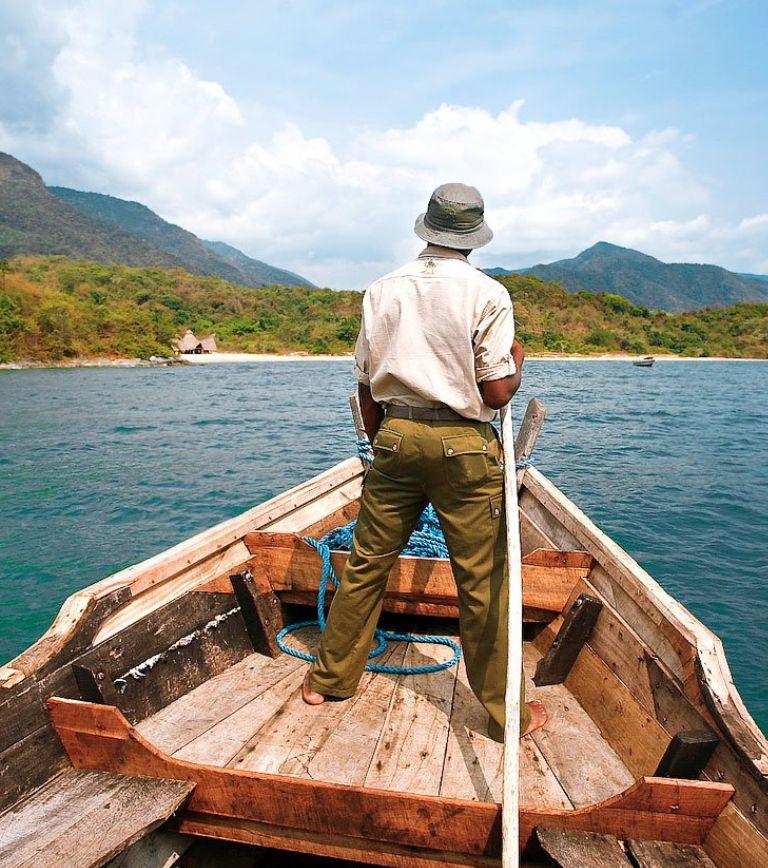
Boat excursions can be arranged for exploring the shoreline, reaching different beaches, viewing wildlife from the water and enjoying the scenery of Lake Tanganyika.
For photographers, early morning and late afternoon boat trips can provide exceptional reflections of the mountains across the lake.
Mahale is a rewarding destination for birders because of its combination of forest, shoreline and freshwater habitats. Fish eagles, kingfishers and cormorants are among the species associated with the lake and shoreline, while forest habitats support specialist species such as the Narina trogon.
Sport fishing is available as one of the lake-based activities offered in Mahale, although regulations and permitted areas should always be confirmed when arranging the activity.
Mahale is particularly suited to photographers looking for something beyond conventional savannah photography.
Chimpanzees provide compelling behavioural photography, while the forest creates opportunities for intimate wildlife portraits. The combination of mountains, beaches, forest and Lake Tanganyika also produces a completely different visual language from the Serengeti or Ngorongoro.
Lake Tanganyika is one of the defining features of Mahale.
The park occupies part of the lake’s eastern shoreline, with forested mountains dropping toward sandy beaches and clear freshwater coves. It is one of the world’s deepest lakes and creates an extraordinary backdrop to a safari that would otherwise be dominated by forest.
The lake is not simply something to look at from camp. Swimming, snorkeling, kayaking, boat trips and other water-based activities allow visitors to experience it directly.
For many guests, the combination of chimpanzee trekking and lakeside relaxation is what makes Mahale worth the journey.
Mount Nkungwe is the highest peak in the Mahale Mountains, reaching approximately 2,400 metres.
It rises behind the forest and provides a dramatic backdrop from the lakeshore. For experienced hikers, an ascent offers panoramic views across Mahale’s forested slopes and Lake Tanganyika.
A full mountain climb requires more preparation than the standard forest walks, so it should be planned with the park and local guides before arrival.
Mount Nkungwe is the highest peak in the Mahale Mountains, reaching approximately 2,400 metres. It forms part of the mountainous landscape behind the park’s forest and lakeshore and can be incorporated into longer hiking experiences for fit and experienced travellers.
Mahale’s interior contains streams, seasonal waterfalls and forested valleys that provide an entirely different atmosphere from the lakeshore.
Guided walks can lead into these areas, particularly during wetter periods when water flows through the mountain landscape. The combination of dense vegetation, steep ridges and cool forest shade makes these walks an excellent complement to chimpanzee trekking.
The park’s biodiversity is closely tied to these changes in elevation and habitat, from the lake and shoreline through woodland and into the higher montane forest.
Mahale can be visited for much of the year, but the best period depends on what you want from the trip.
The dry season from June to October is generally the most popular period for visiting. Forest trails are easier to navigate, conditions are more comfortable for hiking and lake activities are often well suited to the dry weather.
September and October can be particularly attractive for travellers combining chimpanzee trekking with swimming, boating and hiking.
The rainier months can bring greener forest conditions and dramatic scenery, although heavier rainfall can make trails more demanding and affect transport arrangements.
Unlike some northern Tanzanian parks, Mahale’s appeal is not based around a single seasonal migration. The chimpanzees, mountains and lake remain the core attractions throughout the year, although weather can influence trekking and boat activities.
June to October is generally the most popular period for Mahale because of drier conditions that favour forest trekking, hiking and lake activities. Mahale can be visited at other times of year as well, but travellers should expect wetter conditions and potentially more challenging forest trails.
Two nights can work for travellers focused almost entirely on chimpanzee trekking, but the journey to Mahale makes a short stay feel rushed.
Three nights is a better starting point for most visitors. It allows time for one or two chimpanzee treks, a forest walk and some relaxation beside Lake Tanganyika.
Four nights or more is ideal for travellers who want to combine chimpanzee trekking with mountain hiking, boating, snorkeling, kayaking and slower days around the lake.
Mahale rewards staying longer because the journey itself is part of the experience.
Three nights is a good minimum for a first Mahale visit, while four or more nights allows you to combine chimpanzee trekking with hiking, swimming, boat trips and other Lake Tanganyika activities without rushing.
Flying is the most practical option for most international safari travellers.
Scheduled and charter flights can connect Mahale with Kigoma and, depending on the operator and season, other Tanzanian destinations including Arusha and Dar es Salaam. Flights land at Mahale Airstrip, after which guests normally continue by boat to their lakeside accommodation.
The combination of light aircraft and boat transfer is part of what gives Mahale its remote character.
Kigoma is the main gateway to western Tanzania.
Travellers can fly into Kigoma and continue toward Mahale by boat. TANAPA also notes the possibility of reaching the park by public or hired boat from Kigoma, while an alternative road-and-boat route involves driving south from Kigoma before continuing across the lake toward the park.
For adventurous travellers, Mahale can be reached by road from Kigoma followed by a boat transfer. TANAPA describes an approximately four-hour drive south of Kigoma via Simbo village and across the Malagarasi River to Lukoma, followed by a boat journey to the park.
This option takes considerably longer than flying but provides a deeper sense of the remoteness of western Tanzania.
Flying is the obvious choice for travellers with limited time. Mahale is remote, and spending most of a short holiday on the road can take away from the actual experience.
The road-and-boat option makes more sense for adventurous travellers who enjoy the journey itself or are building a longer western Tanzania itinerary around Kigoma, Katavi and Mahale.
For a first visit, we generally recommend flying where the budget allows, particularly when Mahale is being combined with other safari destinations.
Do not plan Mahale as though it were another stop on the northern safari circuit. The geography is completely different. Build the itinerary around the flight schedule and lake transfer first, then fit the chimpanzee trekking and other activities around your arrival and departure times.
TANAPA’s current visitor information lists international adult entry at USD 70 and international child entry at USD 20, while the published visitor information lists East African residents at TZS 20,000. Separate charges may apply for boats, guides, camping and special activities, so the complete cost of a Mahale safari depends on the accommodation and experiences included.
Because Tanzania’s park tariffs can change, we recommend confirming the applicable TANAPA tariff when preparing a safari quotation rather than relying on an old fee schedule.
TANAPA currently lists Mahale’s international conservation fee at USD 70 per adult and USD 20 per child, with separate charges potentially applying for boats, guides, camping and special activities. Always confirm the current tariff before travelling.
Mahale is generally more expensive than a conventional Tanzania road safari because of its remote location and the logistics involved in reaching the park.
The biggest factors affecting the cost are flights, accommodation, boat transfers, park fees and the length of stay. Luxury lakeside camps can make Mahale a premium safari destination, while the limited number of properties also means accommodation availability can influence pricing significantly.
For planning purposes, we recommend treating Mahale as a specialist safari destination rather than comparing its cost directly with a standard Serengeti or Tarangire road safari.
A well-planned Mahale package will normally combine accommodation, meals, park fees, chimpanzee trekking arrangements, transfers and the necessary boat or flight logistics into one itinerary.
We build Mahale into Tanzania itineraries in several ways.
A Chimpanzee Trekking Safari focuses primarily on the habituated chimpanzee communities, with time for forest walks and relaxation on Lake Tanganyika.
A Mahale and Katavi Safari combines two of western Tanzania’s most remote wilderness destinations, pairing Mahale’s chimpanzees and lake environment with Katavi’s classic big-game wilderness.
A Western Tanzania Safari can incorporate Kigoma, Mahale, Katavi and other western destinations for travellers looking for a more adventurous alternative to the northern Tanzania circuit.
Mahale can also work as a slower, luxury extension after a conventional Serengeti, Ngorongoro and Tarangire safari.
Accommodation in Mahale is concentrated around the lakeshore, where camps take advantage of the combination of forest, mountains and Lake Tanganyika.
Lakeside properties range from intimate tented camps to higher-end safari lodges, with many designed around low-impact living and the natural environment.
The best properties allow guests to walk directly from their accommodation toward the forest or beach, creating a seamless transition between safari and relaxation.
Because accommodation capacity is limited, we recommend securing rooms early, particularly for peak-season travel.
Mahale and Gombe are both famous for chimpanzees, but they offer different experiences.
Gombe is closer to Kigoma and is strongly associated with Jane Goodall’s pioneering chimpanzee research. It is smaller and more accessible from Kigoma.
Mahale is much larger and combines chimpanzee habitat with mountains, extensive forest and long stretches of Lake Tanganyika shoreline. The overall experience feels more remote and is particularly suited to travellers who want chimpanzees alongside hiking and lake activities.
If chimpanzees are the only priority, either destination can be compelling. If you want chimpanzees plus mountains, beaches and a wider wilderness experience, Mahale has the advantage.
The Serengeti is Tanzania’s classic big-game safari destination, famous for enormous plains, predators and the Great Migration.
Mahale is almost the opposite.
There are no endless savannah plains here. Instead, the experience centres around forest, chimpanzees, mountains and Lake Tanganyika.
A traveller interested in lions, cheetahs, wildebeest and large-scale game viewing should prioritize Serengeti. A traveller looking for primates, hiking, freshwater beaches and a remote wilderness experience should consider Mahale.
For travellers with enough time, combining both provides an excellent contrast between Tanzania’s famous savannah and its remote western forests.
Mahale and Gombe are often compared because both are chimpanzee destinations on Lake Tanganyika.
Mahale generally offers the broader wilderness experience. The park is substantially larger, its mountains rise dramatically behind the shoreline and it provides a wider range of activities, including hiking, boating, kayaking, swimming and snorkeling.
Gombe, meanwhile, has extraordinary historical significance because of its association with Jane Goodall and decades of chimpanzee research.
For a first-time chimpanzee safari, Mahale is particularly attractive for travellers who want the chimpanzee experience combined with a longer lakeside escape.
Mahale’s remoteness is one of its greatest conservation advantages.
The park protects chimpanzees and the forest habitats on which they depend, while responsible tourism provides an economic reason to maintain those ecosystems. TANAPA emphasizes chimpanzee protection, forest conservation, community engagement and low-impact tourism as important parts of Mahale’s conservation approach.
Chimpanzee trekking also requires responsible behaviour. Visitors must maintain the required distance, keep voices low and follow ranger instructions. Anyone showing cold or flu symptoms should avoid trekking because of the risk of transmitting illness to chimpanzees.
We encourage guests to treat the forest as a living ecosystem rather than simply a backdrop for wildlife photography.
No feeding wildlife. No littering. No approaching animals. No mimicking chimpanzee calls.
The best encounter is one where the animals continue behaving as though you are not there.
Mahale Mountains National Park is one of Tanzania’s most extraordinary destinations for travellers willing to go beyond the familiar safari routes.
Here, the safari vehicle gives way to walking boots. The savannah gives way to rainforest. The game drive becomes a chimpanzee trek, and the afternoon can end barefoot on a beach beside Lake Tanganyika.
The park combines habituated chimpanzees, forest-covered mountains, Mount Nkungwe, clear freshwater, sandy beaches and a level of remoteness that is increasingly difficult to find in East Africa. TANAPA describes Mahale as a place where rainforest peaks meet Lake Tanganyika, with chimpanzee trekking, hiking and lake activities forming the core visitor experience.
For travellers who have already experienced the Serengeti and Ngorongoro, or simply want a Tanzania safari that feels completely different, Mahale is worth the extra effort.
Mahale is not simply a chimpanzee destination. It is where the forest meets the lake, where mountains rise from the shoreline, and where one of Africa’s most intimate wildlife experiences happens on foot.
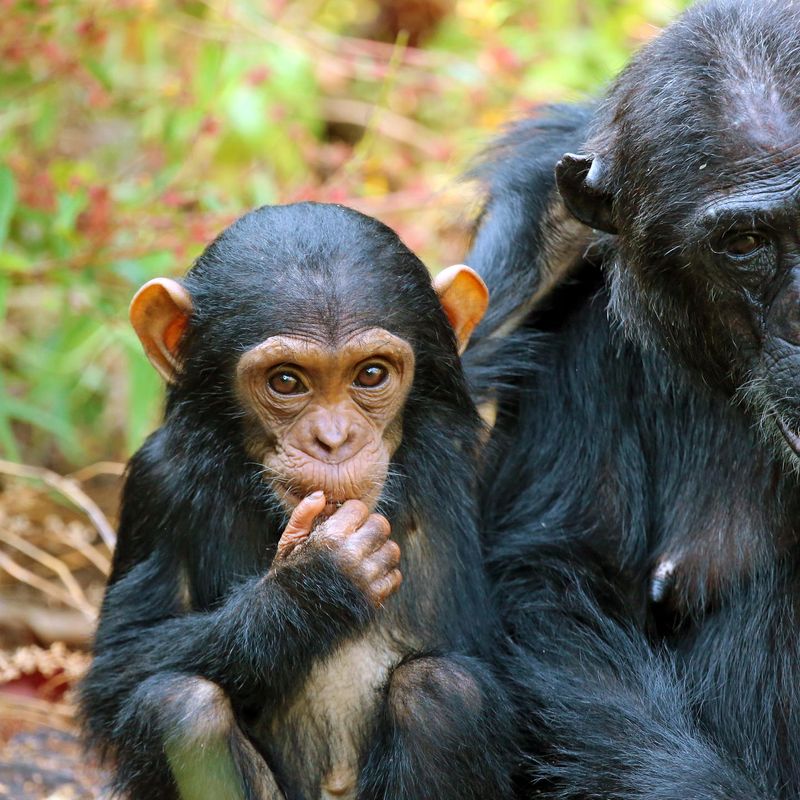
Deep in the forested mountains above Lake Tanganyika lives the Mimikire clan — a community of wild chimpanzees studied by researchers since the 1960s and habituated to human presence over decades. Trekking to find them, then sitting quietly as they groom, play and call just metres away, is one of the most profound wildlife encounters on Earth. We share roughly 95% of our DNA with them — and nowhere in the world will you feel that kinship more powerfully than in Mahale.
The reason Mahale exists and the pinnacle of any visit. Trek through steep rainforest with expert guides in search of the habituated…
The world's longest and second-deepest freshwater lake forms the park's shimmering edge. Its crystal-clear, turquoise waters are perfect for swimming, kayaking, sunset…
Forested peaks rising to 2,462 m straight out of white-sand beaches create a landscape unlike anywhere else in Africa — a rare…
Beyond chimps, Mahale hosts 8–9 primate species — red colobus, blue and red-tailed monkeys, yellow baboons, bushbabies — plus the unique distinction…
With no roads, access only by air and boat, and a handful of tiny camps, Mahale receives barely a thousand-odd visitors a…
Lake Tanganyika is a living aquarium. Its clear waters teem with brilliantly coloured cichlids found nowhere else, making Mahale one of the…
Because there are no roads, Mahale is explored entirely on foot and by boat — a genuinely immersive, low-impact way to experience…
A birder's prize, with over 337 species including rarities and Albertine Rift near-endemics such as Pel's fishing owl. Forest, lake and mountain…



From value camps to premium lodges — we match every stay to your style and budget.
Comfortable tented camps just outside the reserve gates. En-suite rooms with hot showers, full-board meals, and close proximity to the Mara.
Spacious canvas tents on raised platforms with private decks, often inside or adjacent to conservancies. Better access and fewer crowds.
Mahale's top tier means intimate, world-class beach camps that combine barefoot wilderness with genuine comfort — and, crucially, handle the notoriously complex fly-in-and-boat logistics for you.
Every season has its magic — here's what to expect when, so you can travel at your perfect time.
Everything you need to know before you go — and we’ll guide you through every step.
Mahale Mountains National Park is located in western Tanzania along the eastern shores of Lake Tanganyika in Kigoma Region. It is one of the country's most remote and pristine protected areas.
The park has no road access. Visitors typically fly by scheduled or charter aircraft from Arusha, Dar es Salaam, or Zanzibar to Mahale Airstrip or Kigoma, followed by a scenic boat transfer across Lake Tanganyika.
Most safari lodges arrange private or shared boat transfers between Mahale Airstrip or Kigoma and the lodges located along the lakeshore.
Park entry fees are charged by Tanzania National Parks (TANAPA) and are usually included in luxury safari packages. Chimpanzee trekking permits may be included depending on the itinerary.
Mahale enjoys a tropical climate with warm temperatures throughout the year. The dry season from June to October offers the best trekking conditions, while the wet season brings lush rainforest scenery.
The best time to visit is June to October, when chimpanzees stay at lower elevations and trekking is easier.
Pack lightweight hiking clothes, sturdy walking shoes, rain gear, a hat, sunscreen, insect repellent, binoculars, a swimsuit, a dry bag and a camera with a telephoto lens.
The Tanzanian Shilling (TZS) is the local currency, though US Dollars are widely accepted at lodges. Credit cards are accepted at most luxury camps, but carrying some cash for gratuities is recommended
Mobile signal is very limited. Most luxury lodges offer Wi-Fi in designated guest areas, providing a true digital detox experience.
Most lodges operate on solar power and provide 220–240V electricity with UK-style Type G sockets. Charging facilities are available in guest rooms or common areas.
Yellow fever vaccination requirements depend on your country of origin. Malaria precautions are recommended. Visitors should also be reasonably fit for chimpanzee trekking on forest trails.
Maintain a minimum distance from chimpanzees, follow your guide's instructions, avoid flash photography and limit noise to minimize disturbance to the animals.
Mahale is a fragile ecosystem. Visitors are encouraged to leave no trace, avoid single-use plastics, support conservation initiatives, and respect wildlife and local communities.
Tipping is appreciated for guides, trackers, boat crews and lodge staff. Many lodges provide recommended tipping guidelines for guests.
Mahale is world-famous for offering the best wild chimpanzee trekking on Earth — home to the largest known population of eastern chimpanzees (~800–1,000), including the long-habituated Mimikire (M) group. It's also renowned for its stunning setting on Lake Tanganyika and for being the only place where chimps and lions coexist.
There are no roads into the park access is by air then boat. Most visitors fly by light aircraft (scheduled or charter) from Arusha/Dar via Katavi to Mahale airstrip, then take a ~90-minute boat transfer to the beach camps. Alternatively, fly to Kigoma and travel several hours by boat, or take a long boat journey along the lake. Camps arrange all transfers.
The dry season, June to October, is ideal drier trails, easier trekking and chimps generally lower down and easier to find (mid-July onward is often best). November–December (green season) is lush and cheaper but wetter; most camps close during the heavy rains around March/April–May.
The Mahale conservation fee is around US$80 per 24 hours (roughly US$94 including VAT) for non-residents, with a separate guided chimpanzee tracking fee of about US$20 per person. Children pay reduced rates. Fees follow TANAPA's annual tariff cycle and are often bundled into all-inclusive camp rates — confirm at booking.
Sightings are very likely but never guaranteed — these are wild chimps in dense mountain forest. The Mimikire group's decades of habituation make Mahale one of the most reliable places anywhere to see them, though treks can be short or strenuous depending on where the chimps are feeding. Most visitors on a multi-day stay have excellent encounters.
Moderate to challenging. Treks involve steep, humid, off-trail hiking through forest that can last from under an hour to several hours, depending on where the chimps are. A reasonable level of fitness helps. Once you reach the chimps, viewing is limited to one hour to protect them.
Minimum age is typically 12 years. Because chimps share ~95% of human DNA and are highly susceptible to our diseases, strict rules apply: keep a minimum distance (usually 10 m), wear a mask where required, and anyone ill may not trek. These rules are essential to the chimps' survival.
Luxury: Greystoke Mahale (Nomad) and Mbali Mbali Mahale — iconic beach camps that handle all logistics. Mid-range: Kungwe Beach Lodge. Budget: TANAPA bandas/campsites near park HQ, or lodges in Kigoma town as a staging base. Most international visitors choose an all-inclusive camp.
Plan 3–4 nights. Given the effort and cost to get there, at least two or three full days maximises your chimp-trekking chances (weather and chimp movements vary) and lets you enjoy the lake — snorkelling, kayaking, and sunset cruises. Mahale pairs superbly with Katavi National Park.
Mahale is very safe, with expert guides and tiny visitor numbers. It's a remote malaria region, so antimalarial prophylaxis, repellent and covered clothing are essential, as is comprehensive travel and medical-evacuation insurance given the isolation. The lake is bilharzia-low and generally considered safe for swimming near the camps.
Plenty: snorkelling and diving among endemic cichlids, kayaking, sunset dhow cruises, sport fishing, forest and waterfall walks, birdwatching (337+ species), and simply relaxing on white-sand beaches. Mahale is as much a lake paradise as a chimp destination.
Yes — the classic pairing is Mahale + Katavi National Park (Nomad runs sister camps at both), forming one of the most adventurous safaris in Africa. Mahale also combines with a wider Tanzania itinerary via Dar es Salaam or Arusha, though its remoteness means it's usually the centrepiece rather than a quick add-on.
Where Kenya's guided bush walks happen, who leads them and why the thirty minutes you spend on foot…
Read more →
The rule is simpler than most itineraries make it sound: no national park allows it, a short list…
Read more →
From a generator that switches off at ten to a Land Cruiser fitted with its own charging console,…
Read more →Tell us what you’d love to see and a local specialist will design a tailor-made itinerary around you — no obligation, reply within 24 hours.