
USD $ ▾ |
  • English
  • Français
  • Deutsch
  • Español
  • Italiano
  • Nederlands
  • Kiswahili
  • 中文
  • العربية
| Brochure | Free Consultations
Kibale Forest National Park
National Reserve · East Africa

Kibale Forest National Park

Kibale Forest National Park Uganda is a premier primate destination famous for chimpanzee trekking, lush rainforest, diverse monkey species, exceptional birdlife and immersive guided forest experiences.

Why Kibale Forest National Park

Discover Kibale Forest National Park

Overview

The first sound at Kanyanchu is usually not a vehicle starting up. It is the forest itself. A red-tailed monkey moves through the canopy, birds call from somewhere beyond the trail and, if the trackers are lucky, a chimpanzee answers from deep inside the trees. Then the guide stops, looks up and raises a hand. The forest goes quiet.

Kibale Forest National Park sits in western Uganda, south of Fort Portal, within one of East Africa’s most important tropical forest ecosystems. The park is best known for its exceptional primate diversity and, above all, its large population of habituated chimpanzees. Uganda Wildlife Authority describes the Kanyanchu Primate Walk as Kibale’s flagship experience, with visitors having the opportunity to encounter 13 primate species in the forest.

What makes Kibale Forest National Park different from Uganda’s savannah parks is the experience itself. This is not primarily a destination for ticking off large mammals from a vehicle. It is a forest safari where you walk beneath ancient trees, follow chimpanzee calls, watch monkeys moving through the canopy and look for birds that can disappear into the vegetation within seconds.

Kibale is also an important conservation and research landscape. The forest forms part of the wider Kibale Conservation Area and supports chimpanzees, forest elephants, buffalo, giant forest hogs, numerous antelope species and one of the highest concentrations of primates in East Africa.

For travellers combining Uganda’s gorilla trekking with a chimpanzee experience, Kibale Forest National Park is the natural complement to Bwindi Impenetrable National Park. For travellers who have already experienced conventional savannah safaris, Kibale offers something completely different.

QUICK ANSWER | What is Kibale Forest National Park?

Kibale Forest National Park is a protected tropical forest in western Uganda, renowned for chimpanzee tracking, chimpanzee habituation and exceptional primate diversity. Uganda Wildlife Authority lists Kibale among Uganda’s national parks and identifies it as one of the country’s principal chimpanzee destinations.

Kibale Forest National Park At a Glance

Location: Western Uganda, south of Fort Portal

Main tourism centre: Kanyanchu

Park size: UWA’s current park webpage lists 321 square kilometres, while UWA’s broader park management documents and tourism material have historically described the wider Kibale National Park as approximately 795 square kilometres. This difference reflects differing descriptions of the park and management landscape in official materials, so we recommend confirming the figure used for a particular itinerary.

Altitude: Approximately 1,160 to 2,607 metres above sea level.

Established as a national park: 1993, following its earlier designation as a forest reserve.

Managed by: Uganda Wildlife Authority

Nearest major town: Fort Portal

Distance from Kampala: Approximately 326 kilometres by road, around 6 hours depending on road conditions and traffic.

Known for: Chimpanzees, 13 primate species, chimpanzee tracking, chimpanzee habituation, forest birding and tropical rainforest scenery

Main tracking centre: Kanyanchu

Other tourism sector: Sebitoli

Signature experience: Chimpanzee tracking

The Chimpanzees of Kibale Forest

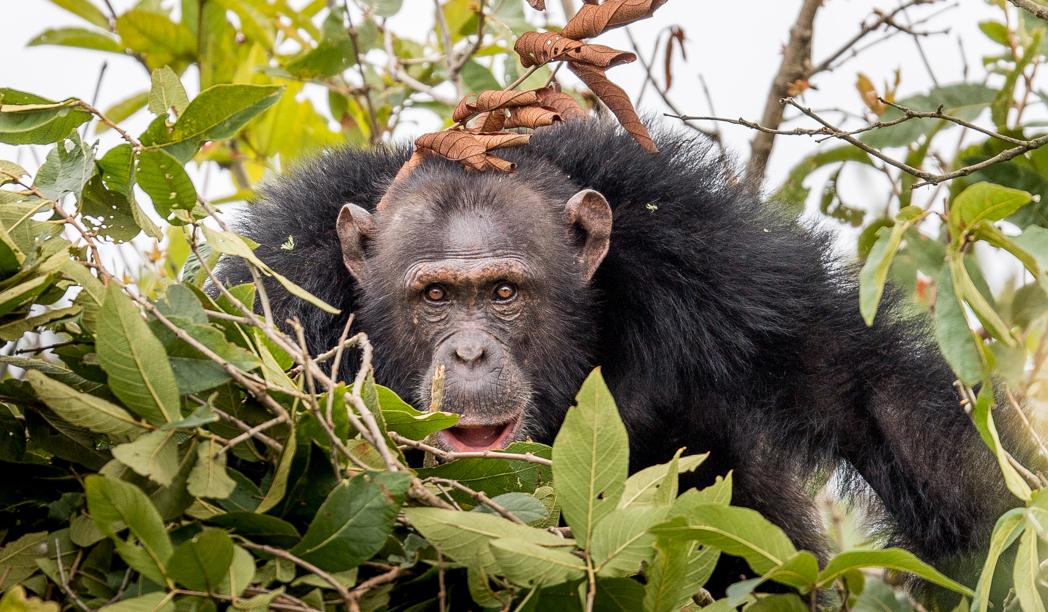
If there is one animal that defines Kibale Forest National Park, it is the chimpanzee.

Kibale supports one of Uganda’s largest populations of wild chimpanzees. UWA currently describes the park as supporting more than 1,500 chimpanzees distributed among several communities, with the Kanyanchu chimpanzee community having been monitored and habituated for tourism and research since 1993. UWA reports chimpanzee sighting success of more than 90 percent on the Kanyanchu experience, although wildlife sightings can never be guaranteed.

The experience begins at the Kanyanchu visitor centre with a briefing before trackers enter the forest. Once inside, the pace changes completely. Your guide is listening for calls, looking for fresh nests and watching the canopy for movement. Chimpanzees can be on the ground one moment and thirty metres above you the next.

Unlike a traditional game drive, chimpanzee tracking in Kibale Forest National Park is an active forest experience. You walk, sometimes for several hours, through dense vegetation while following the movements of the chimpanzee community.

Uganda’s 2026 State of Wildlife Resources report confirms that Kibale remains one of the country’s key chimpanzee landscapes, with a 2025 site-specific survey recording approximately 1,415 chimpanzees in Kibale, up from 1,001 recorded in the 2019 census.

QUICK ANSWER | How many chimpanzees are in Kibale?

Kibale Forest National Park supports one of Uganda’s largest wild chimpanzee populations. A 2025 site-specific survey reported approximately 1,415 chimpanzees in Kibale, while UWA’s visitor information describes the park as supporting more than 1,500 chimpanzees across several communities.

Chimpanzee Tracking

Chimpanzee tracking is the principal reason most international travellers visit Kibale Forest National Park.

The standard chimpanzee tracking experience begins with a briefing before visitors enter the forest with UWA guides and trackers. Tracking times currently include morning and afternoon departures, with UWA guidelines specifying 8:00 am for morning chimpanzee tracking and 2:00 pm for afternoon tracking. Visitors are allowed a maximum of one hour with the chimpanzees once an encounter is made.

The one-hour viewing period is only part of the experience. Finding the chimpanzees can take considerably longer, and the tracking itself is what makes Kibale so rewarding. You may follow calls through thick forest, examine nests from the previous night, watch other primates while waiting and suddenly find yourself standing beneath a chimpanzee feeding in the canopy.

Kibale chimpanzee tracking takes place throughout the year, although UWA notes that the rainy season can provide good tracking opportunities because chimpanzees may remain closer to accessible areas while searching for food.

Chimpanzee Habituation Experience

For travellers who want considerably more time with chimpanzees, the Chimpanzee Habituation Experience provides a deeper alternative to standard chimpanzee tracking.

The habituation experience involves spending an extended period following chimpanzees that are still becoming accustomed to human presence. UWA’s current guidelines provide for chimpanzee habituation from 6:30 am, with a maximum viewing period of four hours once the encounter is established.

The difference between chimpanzee tracking and habituation is important. Tracking is about finding and observing a habituated chimpanzee community within a limited encounter period. Habituation is about spending substantially longer with the animals and observing more of their daily behaviour.

For photographers, researchers, repeat Uganda visitors and travellers with a particular interest in chimpanzees, the habituation experience can be one of the strongest reasons to spend additional nights around Kibale Forest National Park.

QUICK ANSWER | What is the difference between chimpanzee tracking and habituation?

Chimpanzee tracking in Kibale normally allows a maximum of one hour with the chimpanzees after they are located. The Chimpanzee Habituation Experience allows up to four hours of viewing and begins earlier in the morning, providing a much longer opportunity to observe chimpanzee behaviour.

The Primates of Kibale Forest National Park

Chimpanzees are the headline attraction, but they are only one part of Kibale’s primate story.

Kibale Forest National Park is famous for supporting 13 primate species. Among the species visitors may encounter are red colobus monkeys, black-and-white colobus monkeys, L’Hoest’s monkeys, red-tailed monkeys, blue monkeys, grey-cheeked mangabeys, olive baboons and vervet monkeys.

The red colobus is particularly important. Kibale is one of the strongest places in East Africa to see this threatened primate, while the L’Hoest’s monkey represents one of the distinctive Albertine Rift species found in the forest.

Kibale is therefore not simply a chimpanzee destination. It is a primate destination where almost every forest walk has the potential to produce several different monkey species.

QUICK ANSWER | What primates can you see in Kibale?

Kibale Forest National Park supports 13 recorded primate species, including chimpanzees, red colobus, black-and-white colobus, L’Hoest’s monkeys, red-tailed monkeys, blue monkeys, grey-cheeked mangabeys and olive baboons.

Wildlife of Kibale Forest National Park

The forest is dominated by primates, but Kibale’s wildlife extends well beyond monkeys.

More than 120 mammal species have been recorded in the wider park information provided by UWA, including forest elephants, buffalo, bush pigs, giant forest hogs, duikers and other forest-adapted mammals. Many of these animals are elusive and considerably harder to see than the chimpanzees and monkeys.

Forest elephants occasionally move through the vegetation, but sightings are not comparable to the open savannah elephant encounters of Queen Elizabeth or Murchison Falls. The same applies to buffalo and giant forest hogs: they are present, but the forest environment gives them plenty of cover.

This is part of what makes Kibale Forest National Park different. Wildlife is not always presented in front of you. Sometimes you hear it first, see a track second and only later catch a glimpse through the vegetation.

Birds of Kibale Forest

Kibale Forest National Park is also one of Uganda’s important birding destinations.

UWA records approximately 370 bird species in the park, including Albertine Rift endemics and forest specialists. Species of interest include Nahan’s francolin, Cassin’s spinetail, blue-headed bee-eater and lowland masked apalis.

Birdwatching in Kibale requires patience. The forest canopy is dense, light levels can be low and many species remain hidden for long periods. A specialist birding guide can make a significant difference, particularly for travellers hoping to identify calls and locate canopy species.

For serious birders, Kibale can also be combined with nearby forest and wetland habitats to broaden the species list.

QUICK ANSWER | How many bird species are in Kibale?

Kibale Forest National Park supports approximately 370 recorded bird species, including a number of Albertine Rift species and specialist forest birds.

Things to Do in Kibale Forest National Park

Chimpanzee Tracking

Chimpanzee tracking is the signature activity in Kibale Forest National Park. Visitors walk through the forest with trained guides and trackers to locate habituated chimpanzee communities, with encounters lasting up to one hour once the chimpanzees are found.

Chimpanzee Habituation Experience

The Chimpanzee Habituation Experience is designed for visitors who want a much longer and more immersive encounter. Participants can spend up to four hours observing chimpanzees after locating the group, making this particularly attractive to photographers, researchers and serious primate enthusiasts.

Kanyanchu Primate Walk

The Kanyanchu Primate Walk is the main wildlife walking experience in Kibale Forest National Park. UWA describes it as the park’s flagship primate experience and notes that visitors may encounter 13 different primate species during the walk.

Birdwatching

Birdwatching is particularly rewarding in the early morning, when forest species are most active. With around 370 recorded species, Kibale offers opportunities for both experienced birders and safari travellers who simply want to experience Uganda’s forest birdlife.

Forest Nature Walks

Guided nature walks provide a slower way to experience Kibale Forest National Park without making chimpanzees the sole objective. Guides interpret trees, medicinal plants, animal tracks, insects, birds and the wider forest ecosystem.

Night Forest Walks

Night walks around Kibale’s forest environment provide an opportunity to search for nocturnal species such as bushbabies, pottos, bats, owls and other creatures that become active after sunset. Availability and exact routing depend on the current UWA operating arrangements and the specific area or lodge organising the experience.

Bigodi Wetland Sanctuary

Bigodi Wetland Sanctuary lies outside Kibale Forest National Park and is one of the best-known community-based attractions near the park. The wetland supports monkeys, birds, butterflies and other wildlife, while guided walks provide an opportunity to explore a different habitat from the main Kibale forest.

The community-based nature of Bigodi is an important part of the experience. Tourism supports local livelihoods and conservation initiatives, making a visit more than simply another wildlife walk.

Cultural Experiences

Communities surrounding Kibale offer opportunities to learn about local farming, food, traditional knowledge and everyday life. These experiences work particularly well when added to a chimpanzee safari because they introduce the human landscape surrounding the forest.

Tea Plantation Visits

The Fort Portal and Kibale region is known for its tea-growing landscape. A visit to a tea plantation can complement a Kibale Forest National Park safari by showing how agriculture and forest conservation exist side by side in western Uganda.

Expert Note

Kibale works best when you resist the temptation to schedule every hour. Chimpanzee tracking can take time, the forest rewards slow observation and the best wildlife moments often happen between the major activities. Leave room for another forest walk, birding session or simply an afternoon around the lodge.

Safari Writer & East Africa Specialist

Bigodi Wetland and Community Conservation

One of the strengths of a Kibale itinerary is that conservation does not stop at the national park boundary.

Bigodi Wetland Sanctuary is an example of community tourism built around the protection of natural habitat. Visitors contribute through guided walks and local experiences while seeing a different ecosystem from the dense rainforest of Kibale.

The wider Kibale landscape has also been the focus of forest restoration and climate-related conservation work. UWA reports that restored forest areas around Kibale have significant carbon-storage value and that restoration activities are providing benefits to neighbouring communities.

For travellers, this makes Kibale Forest National Park more than a chimpanzee destination. The forest is part of a larger conservation landscape in which tourism, habitat protection and community livelihoods are closely connected.

Kibale Forest National Park vs Bwindi

Kibale and Bwindi are both famous Ugandan forest destinations, but the wildlife experience is different.

Kibale Forest National Park is primarily associated with chimpanzees and primate diversity. Bwindi Impenetrable National Park is primarily associated with mountain gorilla trekking.

Travellers who have enough time should consider doing both. A chimpanzee experience in Kibale followed by gorilla trekking in Bwindi creates one of East Africa’s strongest great-ape itineraries.

Kibale is also generally easier to combine with Queen Elizabeth National Park because of its location in western Uganda. The route allows travellers to move from forest primates to savannah wildlife and then continue toward the southern Ugandan gorilla destinations.

Kibale Forest National Park vs Queen Elizabeth National Park

Queen Elizabeth National Park is a classic savannah-and-wetland safari destination, known for elephants, buffalo, lions, hippos, leopards and the Kazinga Channel.

Kibale Forest National Park is almost the opposite. The forest is dense, walking is central to the experience and primates dominate the wildlife story.

Combining the two gives travellers a more complete western Uganda safari. One day you can be following chimpanzee calls beneath a rainforest canopy; the next you can be watching elephants and hippos across open savannah and wetlands.

Kibale Forest National Park vs Murchison Falls

Murchison Falls National Park is Uganda’s largest national park and is built around open savannah, the Nile River and the dramatic Murchison Falls.

Kibale is smaller in feel and much more intimate. Its strength lies in the forest rather than in large open landscapes.

If your priority is chimpanzees, Kibale is the clear choice. If your priority is large savannah mammals, river wildlife and the Nile, Murchison Falls is the stronger destination.

How to Get to Kibale Forest National Park

By Road

The most straightforward road journey from Kampala follows the Kampala–Fort Portal route. UWA gives the distance as approximately 326 kilometres, with a journey of around six hours on the tarmacked route, depending on traffic and road conditions.

From Fort Portal, the main Kanyanchu tourism area is reached by road, making Fort Portal a useful overnight stop or base for travellers who want to break the journey.

Kibale can also be incorporated into a longer western Uganda circuit connecting Queen Elizabeth National Park, Kasese, the Rwenzori Mountains and eventually Bwindi.

By Air

There are no direct scheduled flights landing inside Kibale Forest National Park itself. UWA notes that travellers can fly from Entebbe International Airport or Kajjansi Airfield to Kasese Airstrip and continue by road, while charter options to Fort Portal are also possible.

Flying is particularly useful for travellers with limited time or those combining Kibale with other destinations across Uganda.

Road or Fly? How to Decide

The road option is usually better for travellers who want to experience Uganda’s changing scenery and who are building a longer western Uganda itinerary.

Flying makes more sense when time is the priority. A domestic flight can remove much of the long-distance driving and leave more time for chimpanzee tracking, forest walks and lodge activities.

For a first-time Uganda safari, we often recommend a road circuit if the itinerary allows it. The journey itself becomes part of the experience rather than simply transportation between destinations.

Climate and Weather in Kibale Forest National Park

Kibale Forest National Park has a tropical rainforest climate, with considerably more moisture and humidity than Uganda’s northern savannah parks.

Rain can occur throughout the year, which is why the forest remains green and dense. Temperatures are moderated by altitude, particularly around the Fort Portal and Kibale highlands, although humidity can make forest walking feel warm.

The wetter periods can produce muddy trails, but rain also brings advantages. Vegetation becomes lush, insects become more active and chimpanzees may be easier to track in some circumstances. UWA specifically notes that the rainy season can be a good period for chimpanzee tracking despite the mud.

The drier periods generally provide easier walking conditions, but the forest remains green rather than becoming the dry, open landscape associated with Uganda’s savannah parks.

QUICK ANSWER | What is the best time to visit Kibale Forest National Park?

Kibale Forest National Park can be visited throughout the year. The drier periods generally provide easier trail conditions, while the wetter months can offer good chimpanzee tracking opportunities and lush forest scenery. UWA notes that chimpanzee tracking takes place year-round.

Kibale Forest National Park Entry Fees and Chimpanzee Permits

Kibale Forest National Park has separate charges for park entry and specialist chimpanzee experiences, although chimpanzee permit structures can include certain park-entry and guiding components depending on the applicable tariff.

The UWA tariff in force from July 2024 through June 2026 listed Kibale park entry for foreign non-residents at USD 40 per person and chimpanzee tracking at USD 250 per foreign non-resident, with different rates for foreign residents and East African citizens.

As of July 2026, the current UWA tariff has changed. Current published 2026 information indicates a standard Kibale chimpanzee tracking rate of USD 300 for foreign non-residents, with lower rates for foreign residents, Rest of Africa visitors and East African citizens. Chimpanzee habituation is listed at USD 400 for foreign non-residents under the revised tariff.

Because UWA tariffs can change, we confirm the exact chimpanzee permit and park-entry rate applicable to the client’s tracking date before finalizing a quotation.

QUICK ANSWER | How much is chimpanzee tracking in Kibale?

As of July 2026, the standard chimpanzee tracking permit at Kibale Forest National Park is published at USD 300 per foreign non-resident, while the Chimpanzee Habituation Experience is published at USD 400 per foreign non-resident. Low-season and resident/East African rates differ, so the applicable UWA tariff should be confirmed when booking.

Best Time to Visit Kibale Forest National Park

Unlike a savannah safari where dry-season wildlife concentration can dominate the decision, Kibale Forest National Park remains a year-round destination.

January and February can offer relatively favourable walking conditions and good forest experiences.

March to May brings wetter conditions and lush vegetation. Trails can become muddy, but the forest is particularly vibrant and chimpanzee tracking remains available.

June to September is generally among the more popular periods for Uganda safaris, with relatively favourable conditions for walking and combining Kibale with other destinations.

October to December brings further rainfall and lush forest conditions, while bird activity can be rewarding for travellers interested in forest birding.

For chimpanzee tracking, we prioritize the client’s wider Uganda itinerary rather than choosing dates solely around weather because Kibale operates year-round.

How Many Days Do You Need in Kibale Forest National Park?

Two nights is enough for a focused Kibale visit, particularly if chimpanzee tracking is the main objective.

Three nights is our preferred recommendation for travellers who want to combine chimpanzee tracking with Bigodi Wetland, birding, a nature walk or simply more time to enjoy the forest.

Four nights or more makes sense for serious birders, photographers, chimpanzee habituation participants and travellers combining Kibale with a broader western Uganda circuit.

If chimpanzee tracking is the only priority, two nights can work. If you want to understand Kibale Forest National Park rather than simply tick chimpanzees off a list, three nights gives a much better pace.

QUICK ANSWER | How many days do you need in Kibale?

Two nights works for a focused chimpanzee safari. Three nights is our usual recommendation for chimpanzee tracking plus Bigodi, birding or forest walks. Four nights or more is ideal for chimpanzee habituation, serious birding and a slower western Uganda itinerary.

Kibale Forest National Park Safari Cost

The cost of a Kibale Forest National Park safari depends primarily on accommodation, chimpanzee permits, transport, guide services and the number of nights.

A budget Kibale safari using simple accommodation and road transport can be considerably less expensive than a luxury fly-in safari. Mid-range itineraries typically combine comfortable lodges around Fort Portal or Kibale with private road transfers and chimpanzee tracking.

Luxury Kibale safaris can include high-end forest lodges, private vehicles, premium guiding and additional experiences such as chimpanzee habituation, birding and community visits.

Chimpanzee permits are one of the major fixed costs. For foreign non-residents, the standard 2026 chimpanzee tracking rate is currently published at USD 300, while the habituation experience is USD 400 under the revised UWA tariff.

When preparing a Kibale Forest National Park safari quotation, we therefore calculate the permit, accommodation, transport, meals, guide, park fees and additional activities separately before presenting the final package price.

QUICK ANSWER | How much does a Kibale safari cost?

Kibale safari prices vary according to accommodation and transport, but chimpanzee permits are a significant part of the cost. In 2026, the published UWA rate for standard chimpanzee tracking is USD 300 for foreign non-residents, while chimpanzee habituation is USD 400. Accommodation, transport, meals and other activities are additional depending on the package.

Kibale Forest National Park Safari Packages

We build Kibale Forest National Park into Uganda itineraries in several ways.

A Kibale chimpanzee safari focuses on chimpanzee tracking, forest walks and Bigodi Wetland.

A Kibale and Queen Elizabeth safari combines chimpanzees and primates with savannah game drives, elephants, lions, buffalo and the Kazinga Channel.

A Kibale and Bwindi safari creates a great-ape itinerary combining chimpanzee tracking with mountain gorilla trekking.

A Western Uganda safari circuit can include Kibale, Queen Elizabeth, the Rwenzori region, Bwindi and other destinations depending on the number of available days.

For repeat visitors, we can build the itinerary around the Chimpanzee Habituation Experience rather than standard tracking.

Accommodation in Kibale Forest National Park

Accommodation around Kibale ranges from comfortable mid-range lodges to luxury forest properties and smaller guesthouses.

Properties close to Kanyanchu are particularly convenient for travellers whose priority is chimpanzee tracking because early departures mean less transfer time before the morning briefing.

Lodges around Fort Portal provide another option, particularly for travellers combining Kibale with crater lakes, tea plantations or a longer western Uganda route.

Forest-facing properties are particularly attractive for travellers who want the destination to continue after the day’s chimpanzee tracking. Hearing monkeys, birds and forest sounds from the lodge can become part of the experience rather than simply background noise.

We match accommodation to the traveller’s budget, tracking schedule and wider Uganda itinerary rather than choosing a property based solely on its room category.

Kibale Forest National Park Responsible Tourism and Conservation

Kibale’s conservation story is inseparable from its surrounding communities.

The forest provides habitat for chimpanzees and other primates while supporting a wider ecosystem that has significant ecological and climate value. UWA’s restoration work around Kibale has demonstrated the importance of forest recovery for both carbon storage and neighbouring communities.

Tourism also creates employment for guides, trackers, lodge staff, drivers and community-based tourism operators.

When visiting Kibale Forest National Park, responsible behaviour is straightforward: follow the guide’s instructions, maintain the required distance from chimpanzees, avoid touching wildlife, do not feed animals and respect the forest environment.

Chimpanzee tracking is particularly sensitive because visitors are entering the habitat of wild great apes. Following UWA’s tracking rules protects both visitors and chimpanzees.

Expert Note

The best chimpanzee encounter is not necessarily the closest photograph. Give the animals space, listen to your guide and watch what the chimpanzees are actually doing. Feeding, grooming, communicating and moving through the canopy tell you much more about Kibale than simply getting a perfect photograph.

East Africa Safari Specialist

Plan Your Kibale Forest National Park Safari

From the first chimpanzee call deep inside the forest to a red colobus moving through the canopy, Kibale Forest National Park offers a completely different interpretation of the African safari.

This is Uganda’s primate country: chimpanzees, colobus monkeys, mangabeys, red-tailed monkeys and forest birds living beneath one of East Africa’s most important tropical forest landscapes.

We build Kibale Forest National Park into standalone chimpanzee safaris, western Uganda circuits, Queen Elizabeth combinations and longer great-ape itineraries incorporating Bwindi.

If chimpanzees are on your Uganda wish list, Kibale should be near the top of it.

The savannah safari teaches you to look across the horizon.

Kibale teaches you to look up.

From the journal

Kibale Forest National Park travel guides

Read the journal →
Your Kibale Forest National Park safari, your way

Let’s plan your Kibale Forest National Park safari

Tell us what you’d love to see and a local specialist will design a tailor-made itinerary around you — no obligation, reply within 24 hours.

Chat with a specialist
Plan Your Safari WhatsApp
error: Content is protected !!