

Planning & Tips
What to Pack for an African Safari: Everything You Actually Need and What You Don’t
The packing guide built from years of watching what goes wrong at the airstrip, on the vehicle and…
Read more →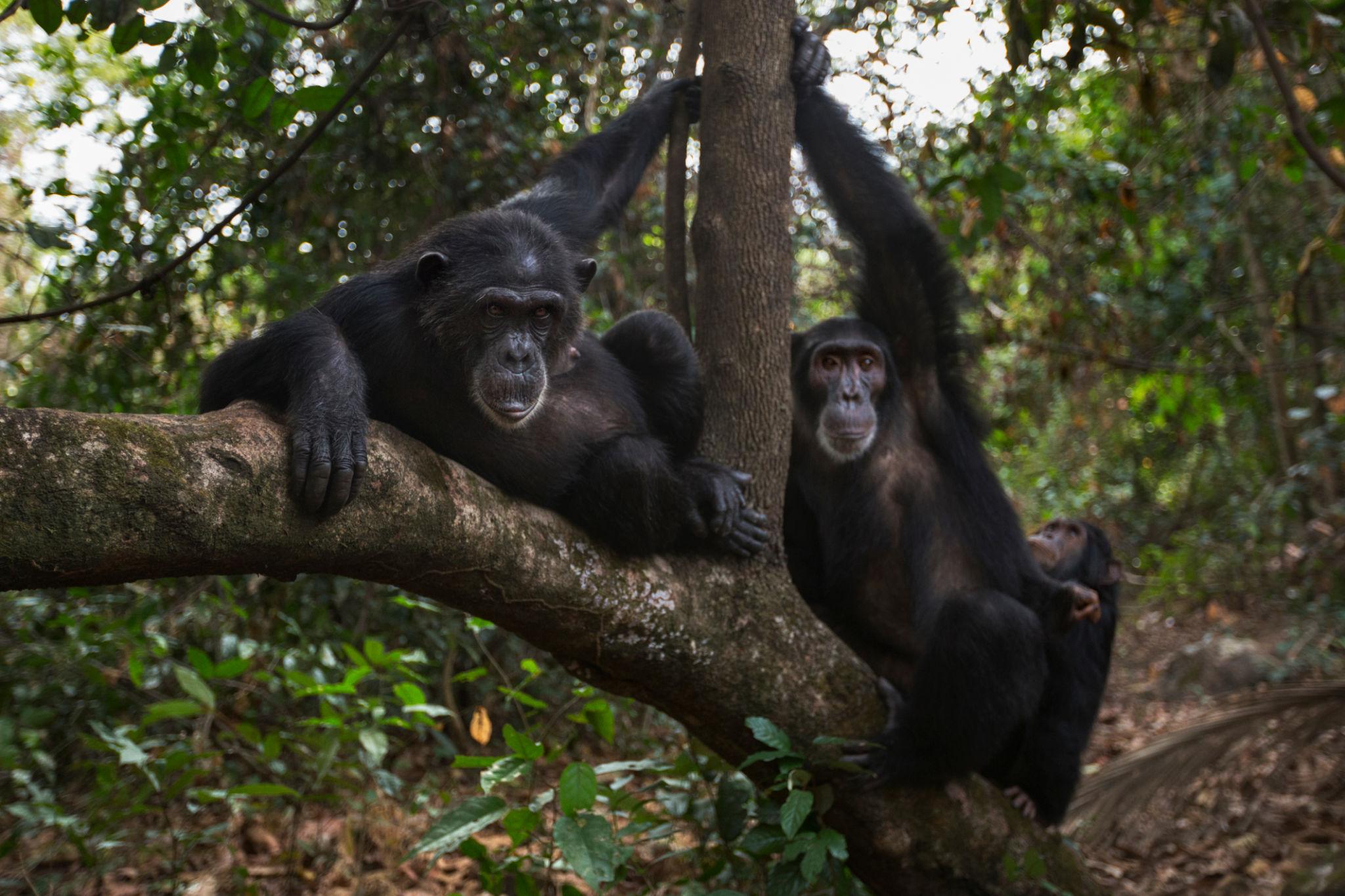
Gombe National Park is where Jane Goodall began her legendary chimpanzee research in 1960. Tanzania's smallest and most storied park offers intimate treks to wild, habituated chimpanzees along the forested shore of Lake Tanganyika — remote, exclusive, and reached only by boat.
Gombe National Park — still widely known by its original name, Gombe Stream is the smallest of Tanzania’s national parks, yet by any measure of scientific and cultural significance, it is among the most important protected areas anywhere on Earth. Covering just 52 km² (roughly 20 square miles), it occupies a narrow, dramatic ribbon of steep, forested mountainside on the eastern shore of Lake Tanganyika, in the remote Kigoma Region of far western Tanzania. The park lies about 16 km north of the town of Kigoma, close to the borders with Burundi and the Democratic Republic of the Congo, in one of the least-developed and least-visited corners of the country.
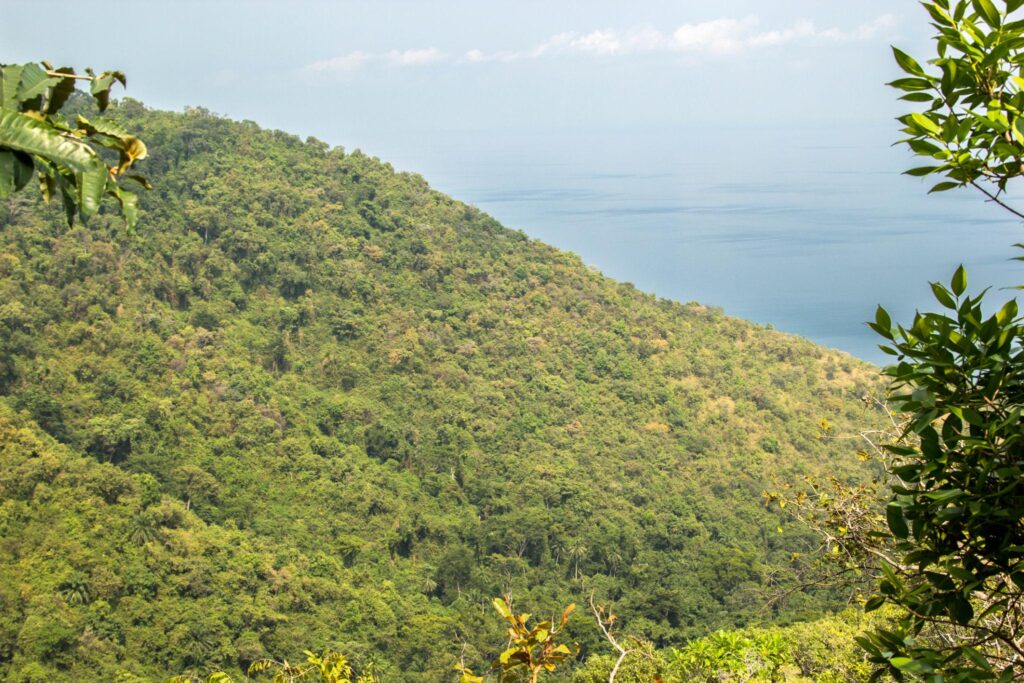
Gombe’s geography is defined by two boundaries: the vast, deep-blue expanse of Lake Tanganyika to the west, and the crest of the Great Rift Valley escarpment rising steeply to the east. Between them, a landscape of folded ridges, tumbling streams, cavernous valleys and dense evergreen forest packs extraordinary biodiversity into a tiny footprint. It is a place of remarkable natural beauty — but it is what happened within this small forest that made Gombe famous across the world.
Gombe is, above all, the birthplace of modern primatology. In 1960, a young Englishwoman named Jane Goodall — sent by the celebrated anthropologist Louis Leakey, and possessing no formal scientific training at the time — arrived on these shores to study the park’s wild chimpanzees. What began as a short field study became the longest continuous study of any wild animal population in history, running unbroken for more than six decades.
Goodall’s observations rewrote science. She documented chimpanzees stripping leaves from twigs to “fish” termites from their mounds — proof that animals other than humans make and use tools, a discovery that forced scientists to redefine what it meant to be human. She went on to record their complex social hierarchies, cooperative hunting (including the hunting of red colobus monkeys for meat), purposeful communication, deep family bonds, affection, territorial conflict and even organised warfare between communities. Each finding chipped away at the supposed boundary between humans and the rest of the animal kingdom.
Her legacy is not confined to history books — it is alive and ongoing in the park today. The Gombe Stream Research Centre, founded in 1967, remains an active “living laboratory,” and the Jane Goodall Institute continues both research and community-focused conservation work in and around the park. For visitors, this means that trekking in Gombe is not merely a wildlife encounter; it is stepping directly into a scientific story still being written, and meeting the direct descendants of the very chimpanzees Goodall first studied.
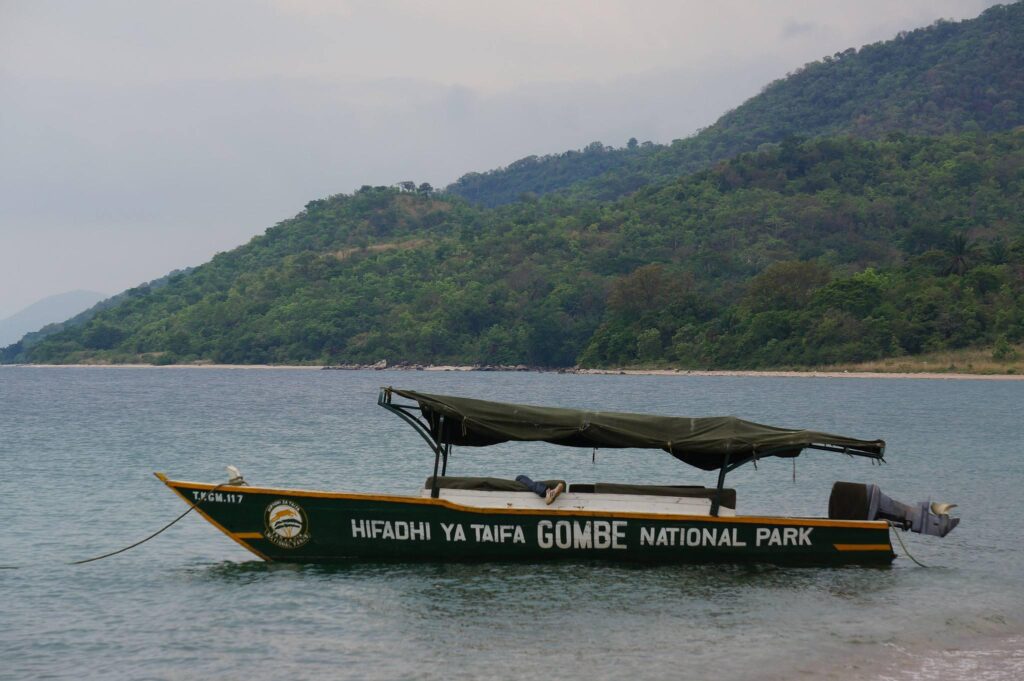
Gombe was gazetted as a game reserve and upgraded to national park status in 1968. Despite its global fame, it remains one of Tanzania’s least-visited parks — precisely because of its remoteness. There are no roads into or out of Gombe and no perimeter fence; the park is reached only by boat and explored only on foot. This inaccessibility is not a drawback but a defining feature: it preserves both the fragile forest and the profound sense of wilderness and privilege that visitors describe.
The park’s terrain is steep and demanding. From the narrow lakeshore, the land rises sharply up the Rift Valley escarpment, cut by fast-flowing streams and cloaked in a mosaic of habitats — evergreen gallery forest in the valleys, woodland and grassland on the upper slopes. This altitudinal range, from the lake at roughly 773 metres to escarpment ridges climbing well above it, creates a diversity of plant and animal communities remarkable for so small an area. Yet Gombe is also, honestly, a small remnant of natural forest surrounded by a heavily deforested and populated landscape a fragility that underlies its high conservation value and the pressures its wildlife faces.
To the west lies one of the planet’s great natural wonders: Lake Tanganyika, the world’s second-deepest and second-oldest freshwater lake, part of the same Great Rift geological system that shaped the escarpment. Its waters are astonishingly clear and support hundreds of endemic cichlid fish species, making Gombe’s shoreline one of the finest freshwater swimming and snorkelling spots in Africa. Sunsets over the Congolese mountains across the water are a signature Gombe moment.
Gombe’s headline residents are, of course, its chimpanzees (Pan troglodytes schweinfurthii, the eastern subspecies) — our closest living relatives, sharing over 98% of human DNA. The park is home to roughly 90–100 individuals across a few intensively studied communities, the most famous being the Kasakela community at the heart of Goodall’s research. It is worth noting, with honesty, that this population has declined from the 150–160 chimps present when Goodall arrived, a drop driven by habitat loss beyond the park boundaries and infectious disease — a sobering reminder of why conservation here matters.
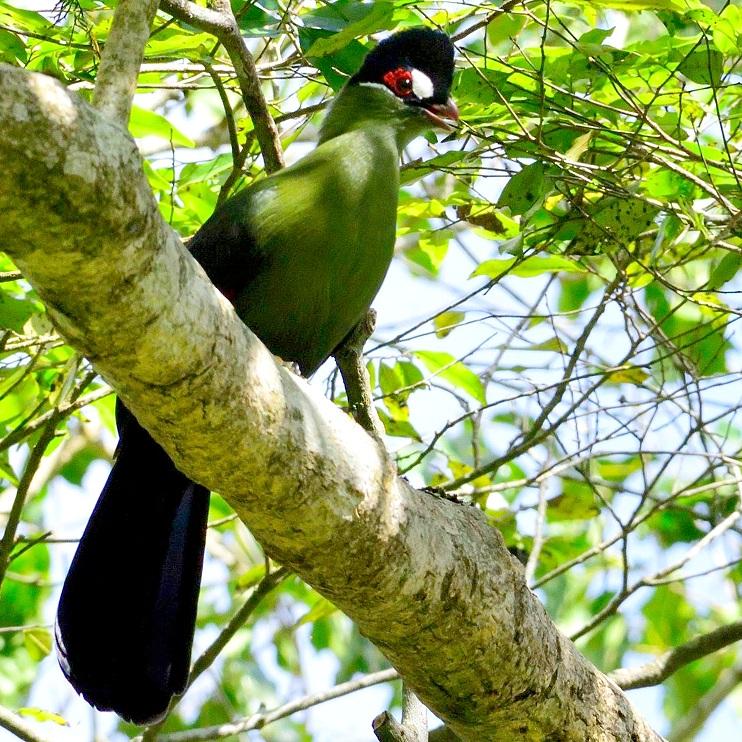
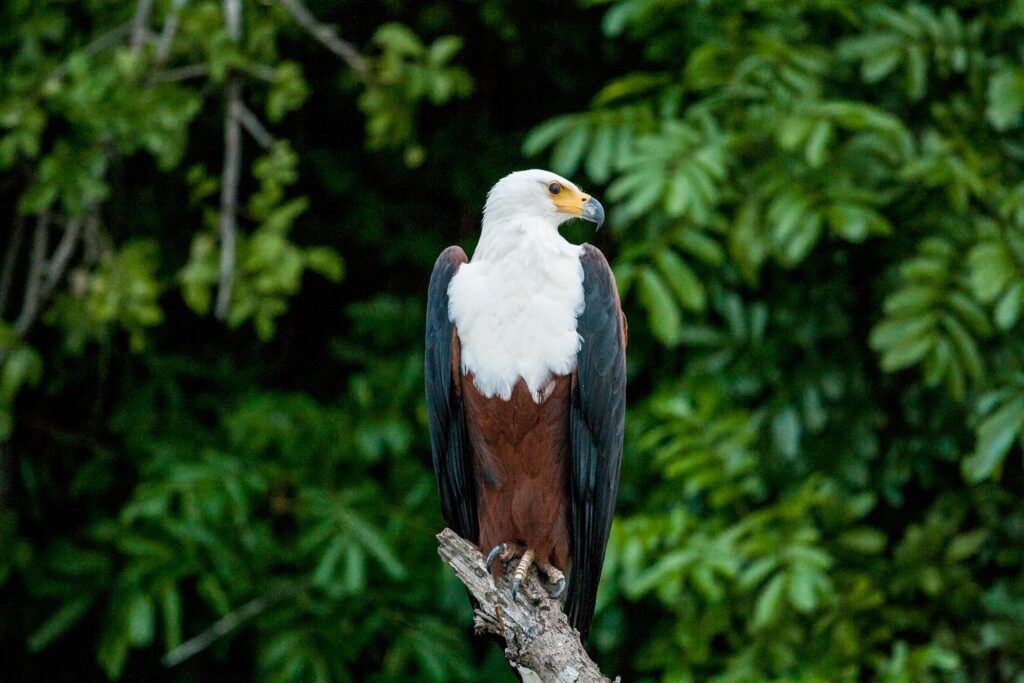
But Gombe is far more than a single species. It is exceptionally rich in other primates: large troops of olive baboons (themselves the subject of decades of dedicated study), along with red colobus, red-tailed monkeys, blue monkeys and vervet monkeys moving through the canopy. The forest floor and understorey shelter bushpig and a variety of smaller mammals, while the trees and shoreline host over 200 bird species including fish eagles, palm-nut vultures and forest specials such as Peter’s twinspot and clouds of vividly coloured butterflies. For a park of just 52 km², the density and variety of life is astonishing.
Gombe’s human story stretches back well beyond Jane Goodall. The shores of Lake Tanganyika near here are steeped in the lore of 19th-century European exploration the era of David Livingstone, Henry Morton Stanley, Richard Burton and John Speke when this lake marked one of the great frontiers of African discovery. The nearby region is famously associated with the legendary Stanley–Livingstone meeting. Today, the fishing communities along the lakeshore give the park a living cultural dimension, and the Jane Goodall Institute’s community programmes weave local people directly into the conservation of the greater Gombe ecosystem — recognised since 2018 within the Gombe–Masito–Ugalla UNESCO Biosphere Reserve.
A visit to Gombe is unlike any conventional safari. There are no game-drive vehicles, no convoys, no crowds — just forest trekking on foot, up and down the steep escarpment, in search of chimpanzees and other wildlife. The experience is intimate, physically engaging, and deeply rewarding: sitting quietly a few metres from a wild chimpanzee family as they feed, groom and play is an encounter that stays with travellers for life.
Most visitors come for a focused two- to four-day chimp-tracking experience, often as part of Tanzania’s remote and rewarding Western Circuit, pairing Gombe with Mahale Mountains National Park further south along the same lake. Beyond trekking, days can be filled with swimming and snorkelling in Lake Tanganyika, kayaking, hikes to Kakombe Waterfall (where Goodall herself spent contemplative hours), birdwatching, and visits to the Gombe Stream Research Centre. Reaching the park by boat, staying in the single forest lodge on the shore and having the trails almost entirely to oneself all combine to create a genuine sense of exclusivity and privilege.
Gombe is not a destination for everyone, and that honesty is part of its appeal. It is remote, requires physical effort, carries Tanzania’s highest park fees, and offers no big-game game drives. But for the right traveller, it delivers something no other park on Earth can: the chance to walk the same forest paths as Jane Goodall, to sit among wild, habituated chimpanzees descended from the most studied animals in history, and to participate — simply by visiting — in a conservation and research legacy that reshaped humanity’s understanding of itself. Add the pristine beauty of Lake Tanganyika, the rich supporting cast of primates and birds, and the profound solitude and Gombe stands as one of the most meaningful and moving experiences in all of African travel.
In short: Gombe is small in size but monumental in spirit — a living cathedral of conservation where science, wilderness, and our shared evolutionary story converge on the shore of one of the world’s great lakes.
In 1960, a young Englishwoman with no formal scientific training sat quietly in this forest and watched a chimpanzee strip leaves from a twig to fish termites from a mound. That single observation — that animals make and use tools — shattered a definition of humanity that had stood for centuries. Jane Goodall's study of Gombe's chimpanzees has continued unbroken ever since, the longest of its kind on Earth. To trek here is to step directly into that living history.
The reason the world knows Gombe. Guided forest treks lead you to habituated wild chimpanzees — descendants of Jane Goodall's original study…
Gombe is hallowed ground for anyone who cares about conservation. This is where humanity's understanding of primates — and itself — was…
Beyond chimps, Gombe teems with primates: olive baboons, red colobus, red-tailed, blue and vervet monkeys. The forest also shelters bushpig and the…
The park's western boundary is one of the world's most spectacular lakes — the second-deepest and second-oldest freshwater lake on Earth, its…
Gombe's steep, stream-cut valleys reward hikers with lush trails, dense gallery forest and beautiful waterfalls including the famous Kakombe Waterfall, where Goodall…
With no roads in or out, Gombe is reached only by boat across Lake Tanganyika from Kigoma — a journey that heightens…
Over 200 bird species — including the striking Peter's twinspot, palm-nut vultures, fish eagles and forest specials — plus clouds of colourful…
The Lake Tanganyika shoreline near Gombe is steeped in exploration lore, associated with the era of Livingstone, Stanley, Burton and Speke. A…

From value camps to premium lodges — we match every stay to your style and budget.
Budget visitors sleep inside the park at the TANAPA resthouse or campsites, or in simple guesthouses in Kigoma. The in-park options are basic but put you steps from the forest — the cheapest way to maximise trekking time.
Since in-park options are minimal, mid-range travellers typically base in Kigoma town — the regional hub with the airport and boat departures — in comfortable lakeside hotels, then day-trip or overnight into the park. Reliable en-suite rooms, restaurants and lake views.
"Luxury" at Gombe means one intimate, atmospheric forest lodge rather than a resort — remote, lakeside, and perfectly placed for chimp trekking. Expect comfortable en-suite accommodation, home-cooked meals, lake swimming and sundowners under the stars, all in near-total seclusion.
Every season has its magic — here's what to expect when, so you can travel at your perfect time.
Everything you need to know before you go — and we’ll guide you through every step.
Gombe National Park is located in the Kigoma Region of western Tanzania along the eastern shores of Lake Tanganyika. It is Tanzania's smallest national park and one of Africa's most celebrated primate destinations.
Gombe National Park is accessible only by boat. Visitors first travel to Kigoma by air, rail, or road, then take a speedboat or traditional boat across Lake Tanganyika. The boat journey takes approximately 30–45 minutes.
Scheduled flights operate daily from Dar es Salaam, Arusha, Dodoma, Mwanza, and Zanzibar to Kigoma Airport. From the airport, a short transfer to Kigoma Port is followed by a boat ride to the park.
Entry fees are administered by Tanzania National Parks (TANAPA) and are charged per person per 24-hour period. Additional charges may apply for chimpanzee trekking, boat transfers, guiding services and accommodation.
Gombe enjoys a warm tropical climate with temperatures ranging from 20°C to 30°C. The dry season offers excellent chimpanzee trekking, while the wet season transforms the forest into a lush green paradise.
The best time to visit is from July to October and December to February, when chimpanzees are easier to locate and forest trails are generally drier.
Bring lightweight hiking clothes, sturdy walking shoes, a waterproof jacket, insect repellent, sunscreen, binoculars, a reusable water bottle and a camera with a zoom lens for wildlife photography.
The Tanzanian Shilling (TZS) is the official currency. Most lodges accept major credit cards, but carrying cash is recommended for boat transfers, tips, and small purchases in Kigoma.
Mobile network coverage is available around Kigoma, while reception inside the park is limited. Most lodges provide Wi-Fi in designated areas, although internet speeds may vary.
A good level of fitness is recommended for chimpanzee trekking. Malaria precautions are advised, and visitors should carry personal medications. To protect the chimpanzees, anyone showing symptoms of contagious illness may not be permitted to trek.
Maintain a minimum distance from chimpanzees, avoid flash photography, keep noise to a minimum, and always follow your ranger's instructions. Daily visitor numbers may be limited to reduce disturbance to the animals.
Early morning offers the best opportunity to photograph chimpanzees as they forage and socialize. A telephoto lens is recommended, and flash photography is prohibited during chimpanzee encounters.
Gombe is internationally recognized for primate conservation and research. Visitors are encouraged to stay on designated trails, avoid littering, and support sustainable tourism initiatives that protect chimpanzees and their rainforest habitat.
Tipping is appreciated for park rangers, boat crews, guides, lodge staff, and porters. The amount is at the visitor's discretion and reflects the quality of service received.
Gombe is world-famous as the site of Dr. Jane Goodall's pioneering chimpanzee research, begun in 1960 — the longest continuous wildlife study in history. Today it's Tanzania's premier destination for intimate chimpanzee trekking among habituated wild communities, set on the shore of Lake Tanganyika.
There are no roads into Gombe — access is by boat only across Lake Tanganyika from Kigoma, roughly 16 km south. Most visitors fly into Kigoma Airport from Dar es Salaam or Arusha, then take a motorboat (about 1–3 hours depending on the boat) or a slower local lake-taxi to the park.
The dry season, July to October, is best — drier trails make trekking easier and chimp sightings more reliable, and lake crossings are calmer. The wetter months (February–April) offer lush forest but tougher, slippery trekking.
Gombe has Tanzania's highest park entry fee, reflecting its fragility and conservation value. Non-resident adult entry/trekking is around US$100–118 per person (sources vary; includes 18% VAT), children (5–15) roughly US$20–24, plus a boat entry fee (~US$24) and, if staying inside the park, a concession fee (~US$35 pp/night). Confirm current TANAPA rates at booking.
Sightings are very likely but never guaranteed — these are wild animals in dense, steep forest. Gombe's chimps are well habituated after 60+ years of research, so success rates are high, but you may trek for several hours. Patience and reasonable fitness help enormously.
Gombe trekking involves steep, sometimes strenuous forest hiking up and down the Rift escarpment, occasionally for hours. A moderate level of fitness is important. The minimum age is 15 (as with chimp trekking generally), and you must be free of contagious illness — chimps are highly vulnerable to human respiratory infections.
Most visitors spend 2–4 days. A minimum of two nights allows for two treks (increasing your chances and time with the chimps) plus lake activities. Gombe pairs beautifully with Mahale Mountains for a fuller Western Circuit chimpanzee experience.
Inside the park: Mbali Mbali Gombe Lodge (the only lodge) or the TANAPA resthouse/campsite (budget). In Kigoma: Kigoma Hilltop Hotel or Lake Tanganyika Hotel (mid-range), plus town guesthouses. The single in-park lodge books out well ahead.
Plenty: swimming and snorkelling in Lake Tanganyika (hundreds of endemic fish), kayaking, forest hikes to Kakombe Waterfall, birdwatching (200+ species), visiting the Gombe Stream Research Centre and watching other primates like baboons and colobus monkeys.
Gombe is safe, with guided treks and rangers. It's a malaria region, so prophylaxis, repellent and covered clothing are strongly advised. Lake Tanganyika is bilharzia-low in the clear Gombe waters and popular for swimming, but check current local advice. Boat crossings depend on weather allow buffer time.
Yes — Gombe is the anchor of Tanzania's Western Circuit, most naturally combined with Mahale Mountains National Park (also chimp trekking, further south on Lake Tanganyika), and reachable via Kigoma, which links by air to Dar es Salaam and Arusha and historically by the famous Central Line railway.
Because it's a tiny, fragile ecosystem with exceptional conservation value. Higher fees limit visitor numbers to reduce human impact on the vulnerable chimp population and a portion directly funds the ongoing research and conservation work begun by Jane Goodall. You're paying to protect what you've come to see.
The packing guide built from years of watching what goes wrong at the airstrip, on the vehicle and…
Read more →
A practical safari safety guide from an operator who has been in the vehicle, on the plain and…
Read more →
The question isn't simply when Kenya is best. It's when Kenya is best for what you want to…
Read more →Tell us what you’d love to see and a local specialist will design a tailor-made itinerary around you — no obligation, reply within 24 hours.