


Women Only Safari Kenya
Magdaline Muindi: The Female Safari Guide the Rongai Pride Knows by Name
Inside the Masai Mara career of a Kenya Utalii College graduate who tracks big cats for a living…
Read more →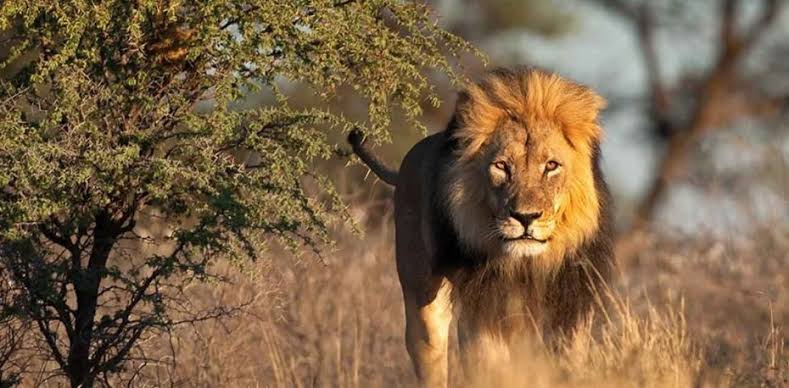
Akagera National Park is Rwanda's premier Big Five safari destination, offering game drives, boat safaris, diverse wildlife, scenic lakes, and unforgettable adventures.
The road into Akagera National Park is quiet before sunrise. The eastern hills are still dark, the first light catches the tops of the acacia trees and somewhere beyond the grassland, a hippo is moving back toward Lake Ihema. Then the landscape opens up: rolling savannah, papyrus wetlands, scattered lakes and herds of zebra and impala beginning to spread across the plains. Akagera National Park has a way of feeling completely different from the rest of Rwanda within minutes of entering it.
Akagera National Park lies in eastern Rwanda, close to the Tanzanian border and approximately 110 kilometres from Kigali. The journey takes around two hours by road, making Akagera National Park one of the most accessible safari destinations in East Africa for travellers combining wildlife with Rwanda’s mountain and forest experiences. The park covers approximately 1,122 square kilometres and protects a remarkable combination of savannah, woodland, wetlands, lakes and rolling highlands.
What makes Akagera National Park particularly important is its transformation. Once severely affected by poaching, habitat loss and human-wildlife conflict, Akagera has undergone one of Africa’s most remarkable conservation recoveries. Lions were reintroduced in 2015, eastern black rhinos returned in 2017 and 2019, southern white rhinos arrived in 2021, and another 70 southern white rhinos were introduced in June 2025.
Today, Akagera National Park is Rwanda’s only savannah national park and one of Central Africa’s most important protected wetland ecosystems. It is also a Big Five destination, with lion, leopard, elephant, buffalo and rhino all present, while almost 500 bird species make Akagera National Park especially attractive to birdwatchers.
For travellers looking for a safari beyond Kenya and Tanzania, Akagera National Park offers something unusually compact: Big Five wildlife, spectacular lakes, excellent birding, boat safaris, savannah game drives and a conservation story that is as compelling as the animals themselves.
Akagera National Park is a 1,122-square-kilometre protected savannah and wetland ecosystem in eastern Rwanda, approximately 110 kilometres from Kigali. Established in 1934, Akagera National Park is Rwanda’s only protected savannah landscape and is known for its recovering Big Five populations, extensive wetlands, Lake Ihema, exceptional birdlife and successful conservation restoration.
Location: Eastern Rwanda, near the Tanzanian border
Size: Approximately 1,122 square kilometres
Established: 1934
Managed by: Akagera Management Company in partnership with African Parks and the Rwanda Development Board
Distance from Kigali: Approximately 110 kilometres
Driving time from Kigali: Around 2 to 2.5 hours
Known for: Big Five wildlife, Lake Ihema, wetlands, savannah, elephants, rhinos, lions, leopards and exceptional birdlife
Main southern access: Mutumba/Giraffe Gate area
Major lakes: Lake Ihema, Lake Rwanyakazinga and other interconnected freshwater lakes
Wildlife: More than 8,000 large mammals and almost 500 recorded bird species
Best known activities: Game drives, boat safaris, night drives, birdwatching, fishing, behind-the-scenes conservation experiences and community cultural experiences
Akagera National Park has become particularly significant because all of Africa’s traditional Big Five can now be found within the park: lion, leopard, elephant, buffalo and rhinoceros.
Unlike some safari destinations where the Big Five have been present continuously for generations, Akagera’s Big Five story is largely one of restoration. Lions disappeared from the park after years of pressure and were returned in 2015. Eastern black rhinos were reintroduced in 2017 and 2019, followed by southern white rhinos in 2021 and another major white rhino translocation in 2025.
Lion are among the most exciting animals to encounter in Akagera National Park. The species was locally lost from the park before seven lions were reintroduced in 2015. The population subsequently established itself successfully, turning Akagera into an important lion conservation landscape in Rwanda.
Lions are particularly associated with the open savannah and plains of the park, where they can sometimes be seen resting in the shade during the heat of the day or becoming active during the cooler morning and evening hours.
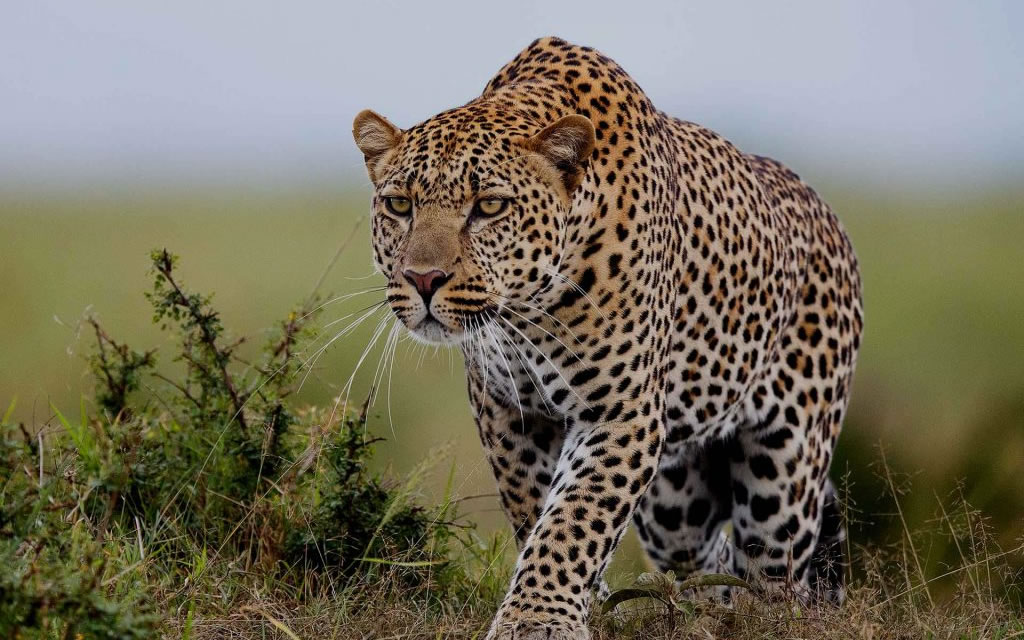
Leopard are present in Akagera National Park but are naturally more elusive than lion. They favour woodland, thicker vegetation and areas where they can remain concealed during the day.
A leopard sighting in Akagera can therefore feel considerably more intimate than a typical plains-game encounter. Early morning and late afternoon game drives offer the best opportunities, particularly when experienced guides know where individual animals have been moving.
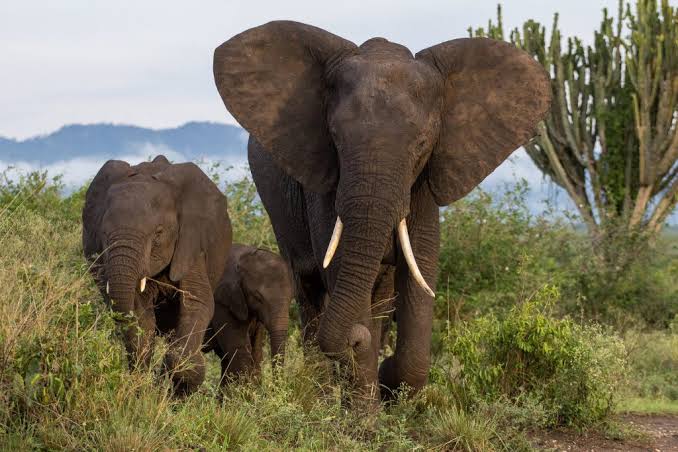
Elephants are an important part of Akagera National Park’s recovery story. In 1975, 26 young elephants were translocated into the park after human-wildlife conflict had developed around a herd living outside protected areas. Their descendants now form part of the park’s thriving elephant population.
Elephants can be encountered around woodland, grassland and water sources, particularly during dry periods when water becomes increasingly important to wildlife movement.
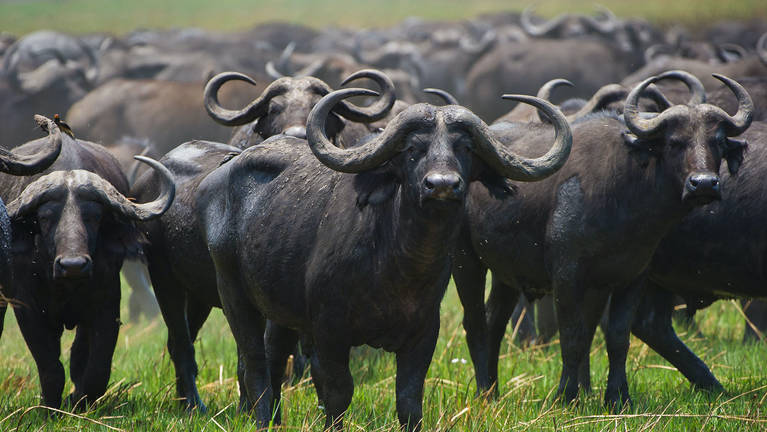
Cape buffalo are among the most widespread large herbivores in Akagera National Park. Large herds can be encountered moving through the open savannah or gathering around water.
Their presence is particularly important ecologically because they form part of the prey and grazing system supporting Akagera’s recovering predator populations.
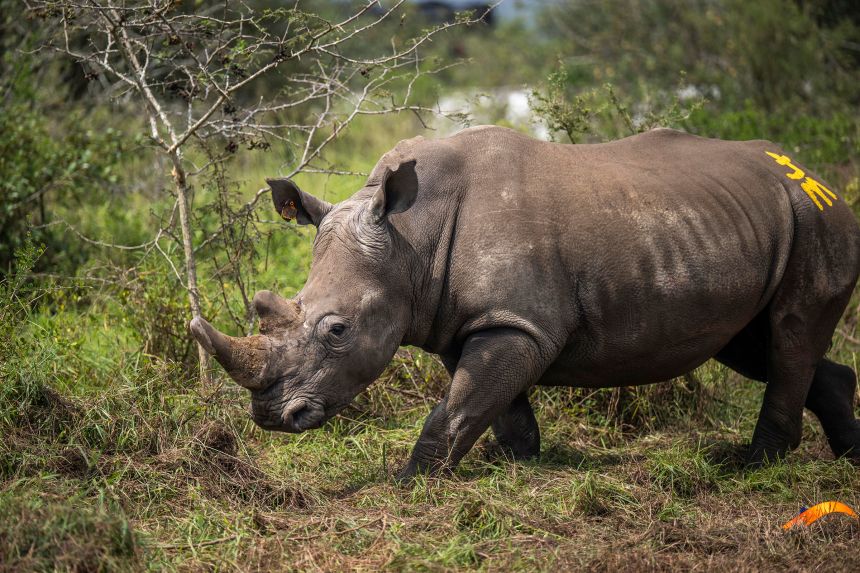
Rhinoceros are one of the strongest conservation stories in Akagera National Park. Eastern black rhinos were reintroduced in 2017 and 2019 after the species had disappeared from the park, while 30 southern white rhinos arrived in 2021. In June 2025, a further 70 southern white rhinos were moved from South Africa to Akagera as part of the Rhino Rewild Initiative.
Rhino tracking is therefore more than a wildlife-viewing activity in Akagera National Park. It is an opportunity to see the results of long-term conservation work taking place on the ground.
Akagera National Park supports more than 8,000 large mammals and almost 500 recorded bird species, making it one of Rwanda’s most diverse wildlife destinations.
Beyond the Big Five, wildlife in Akagera National Park includes zebra, giraffe, topi, impala, eland, waterbuck, hippo, crocodile, bushbuck, warthog and several antelope species.
The combination of savannah and wetlands is particularly important. A game drive across the eastern plains can produce completely different sightings from a boat trip on Lake Ihema, where hippos, crocodiles and waterbirds dominate the experience.
Akagera National Park is also home to sitatunga, a specialised wetland antelope that inhabits papyrus swamps, and the park’s extensive wetland system provides important habitat for species that would be difficult to find elsewhere in Rwanda.
Akagera National Park is home to lion, leopard, elephant, buffalo and rhinoceros, along with zebra, giraffe, hippo, crocodile, impala, topi, eland, waterbuck, sitatunga and many other species. Almost 500 bird species have also been documented in Akagera National Park, making it one of Rwanda’s leading birdwatching destinations.
Water is the defining feature of Akagera National Park.
The park protects one of Central Africa’s largest protected wetland systems, made up of papyrus swamps, marshes, rivers and a chain of freshwater lakes. Lake Ihema is the best known of these lakes and is one of the most rewarding places in Akagera National Park for a different type of safari experience.
Instead of following tracks through grassland in a vehicle, a boat safari moves quietly across the water. Hippos surface around the boat, crocodiles rest along the shoreline and fish eagles call from the trees. The surrounding papyrus and wetland vegetation also attract enormous numbers of waterbirds.
This wetland system is one of the reasons Akagera National Park is so different from the drier savannah landscapes of many East African safari destinations.
Game drives are the foundation of a safari in Akagera National Park. Visitors can explore the park independently or arrange guided drives with community guides or Akagera’s professional guiding network.
Morning game drives are especially productive because temperatures are cooler and predators are more likely to be active. Afternoon drives provide another opportunity to explore the savannah as temperatures fall and animals become more active.
Akagera National Park is a self-drive destination, allowing visitors to explore the park at their own pace between approximately 6:00 a.m. and 6:00 p.m.
For many travellers, the opportunity to see the Big Five is the main reason to visit Akagera National Park.
The park’s relatively compact size makes it possible to combine several game-viewing areas within a short itinerary, although wildlife sightings can never be guaranteed. The best strategy is to allow enough time for multiple drives rather than expecting every species to appear on a single circuit.
A boat safari on Lake Ihema is one of the signature experiences of Akagera National Park.
The lake is particularly good for viewing hippos, crocodiles and waterbirds, while the shoreline provides a different perspective on the park’s wildlife. Scheduled boat excursions operate at several times during the day, including a sunset departure that is especially attractive for photographers.
The sunset boat safari is often one of the quietest moments of an Akagera itinerary. As the light softens across the lake, the silhouettes of trees and birds create a completely different atmosphere from a conventional game drive.
Night drives provide access to a side of Akagera National Park that daytime visitors never see.
As temperatures fall, nocturnal animals become active and predators begin moving through the darkness. Bushbuck, civets, genets, hyenas and other nocturnal species may appear, while lions and leopards can become considerably more active after sunset.
Night drives are available in selected areas and are particularly associated with overnight stays and properties such as Karenge Bush Camp.
Akagera National Park is one of Rwanda’s most rewarding birdwatching destinations, with almost 500 recorded bird species.
The diversity comes from the park’s unusual combination of habitats. Wetlands attract waterbirds, woodland supports forest species, while the savannah provides habitat for raptors, grassland birds and open-country species.
For serious birdwatchers, Akagera National Park deserves more than a quick game drive. A slower itinerary allows time to explore the lakes, papyrus swamps, woodland and open plains.
Sport fishing is available in designated areas of Akagera National Park and is particularly associated with the park’s lakes.
Fishing is generally conducted on a catch-and-release basis and offers a slower alternative to traditional wildlife viewing. It can be especially enjoyable for travellers spending several nights in the park who want to break up their game-drive schedule.
Akagera National Park offers visitors the opportunity to learn about the conservation work that has transformed the park.
A behind-the-scenes visit can provide insight into park headquarters, wildlife monitoring, law enforcement and the practical work required to manage a large protected landscape.
This is particularly valuable for travellers who want to understand why Akagera National Park has become one of Africa’s leading conservation recovery stories rather than simply seeing the end result from a safari vehicle.
Akagera National Park’s conservation model is closely connected to surrounding communities.
Community freelance guides can arrange cultural experiences including visits to dairy farms, banana-beer producers and honey cooperatives. Revenue from these experiences is shared with the community members involved, giving tourism a direct economic connection to local livelihoods.
These visits are best approached as genuine cultural exchanges rather than staged performances. They provide an opportunity to understand life in Rwanda’s Eastern Province and the relationship between communities and the protected landscape.
Akagera National Park is an excellent destination for wildlife photography because of the variety of backgrounds available within a relatively compact area.
The open savannah provides clean backgrounds for zebra, giraffe and antelope, while lakes and wetlands create opportunities for waterbird photography. Early morning and late afternoon offer the warmest light, while the changing skies during the wetter months can add dramatic depth to landscape images.
Camping is another way to experience Akagera National Park.
The park operates several campsites, including Muyumba, Shakani, Mutumba and Mihindi. Some camps have facilities such as solar-heated showers, toilets, barbecue areas and protective fencing designed to reduce encounters with large wildlife around the campsite.
Camping is best suited to travellers who want a more immersive experience and are comfortable with a simpler style of safari accommodation.
Akagera National Park works particularly well when you combine activities rather than filling every day with game drives. A morning game drive followed by a Lake Ihema boat safari gives you two completely different perspectives on the same ecosystem, while a night drive or conservation experience adds another layer to the trip.
Few African parks have changed as dramatically as Akagera National Park.
The park was established in 1934 and originally covered a much larger area. Following years of political instability, human pressure and wildlife loss, Akagera was reduced by approximately two-thirds in 1997, leaving the park at around 1,122 square kilometres.
The turning point came in 2009 and 2010, when the Rwanda Development Board entered into a long-term management partnership with African Parks and the Akagera Management Company was established.
Since then, stronger law enforcement, improved infrastructure, community engagement and wildlife reintroductions have transformed Akagera National Park.
Lion returned in 2015.
Eastern black rhino returned in 2017 and 2019.
Thirty southern white rhinos arrived in 2021.
Another 70 southern white rhinos arrived in June 2025.
The result is not simply a better safari experience. Akagera National Park has become an example of how conservation, tourism and community development can reinforce one another.
In 2025, Akagera became the first park in the African Parks network to cover its operating costs through self-generated revenue. Tourism is a major contributor, while 10% of park income is allocated through Rwanda’s revenue-sharing programme to support community projects including schools, healthcare and cooperatives.
The future of Akagera National Park depends heavily on the relationship between the park and the communities living around its boundaries.
Conservation only works when people living beside wildlife see tangible benefits from protecting it. Akagera’s community programmes therefore support employment, guiding, fisheries, beekeeping, education and other income-generating activities.
This model has helped reduce human-wildlife conflict while creating economic reasons for surrounding communities to support conservation.
For visitors, this means that a safari in Akagera National Park contributes to a much larger conservation system. Money spent on park entry, accommodation, guiding and community experiences helps sustain the landscape and the people connected to it.
Akagera National Park and Volcanoes National Park provide completely different safari experiences.
Volcanoes National Park is Rwanda’s destination for mountain gorilla and golden monkey trekking, with dramatic volcanic mountains and dense montane forest.
Akagera National Park is Rwanda’s savannah destination, offering traditional game drives, Big Five wildlife, wetlands, boat safaris and open landscapes.
For travellers with enough time, combining the two creates one of Rwanda’s strongest wildlife itineraries: gorillas in the volcanic forests followed by elephants, lions, rhinos and hippos in Akagera National Park.
Nyungwe National Park is dominated by ancient rainforest, chimpanzees and forest biodiversity, while Akagera National Park is characterised by savannah, wetlands and large mammals.
The two destinations complement each other rather than compete.
A Rwanda itinerary that combines Nyungwe National Park, Volcanoes National Park and Akagera National Park can cover three very different ecosystems within one country.
Access arrangements at Akagera National Park depend on where you are entering and where you intend to stay.
The main southern access is through the Mutumba/Giraffe Gate area, which is the practical entry point for travellers coming from Kigali and staying in the southern sector.
The northern part of the park can be reached on longer internal drives, while properties such as Karenge Bush Camp provide access to the northern sector.
Because Akagera National Park is a large landscape, the right entrance depends on your accommodation and itinerary. We recommend planning the route around where you are staying rather than simply selecting the nearest gate.
The most straightforward way to reach Akagera National Park is by road from Kigali.
The park is approximately 110 kilometres from Kigali and the drive takes around two to two and a half hours depending on the starting point and road conditions. The route passes through Rwanda’s eastern countryside before reaching the park entrance.
A road safari is particularly convenient because the distance is short enough to make Akagera National Park suitable for a two- or three-night extension from Kigali.
Akagera National Park can also be accessed by scheduled or charter helicopter services. This is mainly useful for travellers staying at higher-end properties or combining Akagera National Park with other destinations where saving road time is important.
For most travellers, driving is the logical option because Akagera National Park is only around two hours from Kigali.
Flying becomes more attractive for luxury itineraries, private charters and travellers connecting several remote destinations where road transfers would consume valuable safari time.
Akagera National Park has a generally warm climate throughout the year, with comfortable evenings and warmer daytime temperatures.
The park’s wetland system means that the landscape can change dramatically with rainfall. During wetter periods, the savannah becomes greener, water levels rise and bird activity can be particularly rewarding.
The official Akagera National Park visitor information currently highlights November to April as the best period to visit, when the landscape is greener and bird activity is excellent.
The drier months can make wildlife easier to locate around permanent water sources, while the wetter season offers lush scenery, migratory birds and fewer visitors.
Akagera National Park has a warm climate with relatively cool nights and warm daytime conditions throughout the year. November to April is particularly attractive for green landscapes and birdwatching, while drier periods can make wildlife more concentrated around water.
For 2026, Akagera National Park lists the international visitor entry fee at USD 100 per adult for one day/night, with reduced cumulative rates for longer stays: USD 150 for two nights and USD 200 for three nights. Children aged 6 to 12 pay USD 50 for one day/night, USD 75 for two nights and USD 100 for three nights. Rwandan and EAC citizens pay RWF 15,000 per adult for one day/night, while foreign residents of Rwanda/EAC pay USD 50.
Pan-African rates are also available, depending on citizenship and residency status.
Children aged five and under are free, while children aged 6 to 12 are charged the applicable child rate. Visitors should carry the appropriate documentation proving citizenship or residency because the park may charge the international rate where residency status cannot be verified.
Park fees can change, so we recommend confirming the current Akagera National Park rates when finalising a safari quotation.
In 2026, the Akagera National Park entry fee for an international visitor is USD 100 per adult for one day/night, USD 150 for two nights and USD 200 for three nights. Children aged 6 to 12 pay USD 50, USD 75 and USD 100 respectively. Rwanda/EAC citizens and residents have separate lower rates.
The best time to visit Akagera National Park depends on whether your priority is wildlife viewing, birdwatching, photography or a quieter safari.
November to April: This period is especially attractive for green scenery, birdwatching and a fresh landscape following rainfall. It is the period currently highlighted by Akagera National Park as its best general visiting window.
June to September: The drier conditions can make wildlife easier to locate around water and create excellent photographic conditions.
October: Transitional weather can produce a mixture of dry and green conditions and fewer visitors.
Wet-season months: Rain can make some roads slower, but the landscape becomes dramatically greener and bird activity can be exceptional.
There is no single month when every wildlife experience is guaranteed. Akagera National Park is a year-round destination, and the best travel period depends on what you want to see and do.
Two nights gives you a good introduction to Akagera National Park. You can combine several game drives with a boat safari on Lake Ihema and experience the main southern wildlife areas.
Three nights is our usual recommendation for a first safari in Akagera National Park. It gives you enough time for several game drives, a Lake Ihema boat trip and additional activities such as birdwatching or a cultural experience without rushing.
Four nights or more is better for travellers who want to explore the northern sector, add a night drive, spend time on photography or include a conservation experience.
We generally recommend three nights in Akagera National Park for a first safari. Two nights works for a shorter itinerary, while four or more nights allows a slower exploration of the park, including additional game drives, boat safaris, birdwatching and conservation experiences.
Akagera National Park offers a rare combination of accessibility, wildlife diversity and conservation significance.
It is close enough to Kigali for a short safari but extensive enough to feel like a genuine wilderness destination.
It is Rwanda’s Big Five park.
It protects one of Central Africa’s largest wetland ecosystems.
It offers both traditional game drives and boat safaris.
It has almost 500 recorded bird species.
It has become one of Africa’s most impressive examples of wildlife restoration.
And unlike a safari destination where conservation is simply part of the background story, Akagera National Park allows visitors to see the results of conservation work directly through wildlife reintroductions, community programmes and protected habitats.
Akagera safari costs vary according to accommodation, season, transport, activities and the number of nights spent inside the park.
A budget Akagera safari using campsites and simple accommodation will generally cost considerably less than a luxury safari staying at properties such as Ruzizi Tented Lodge or a private luxury camp.
The current official park fee for international visitors is USD 100 per adult for one day/night, before accommodation, guiding, transport and additional activities are added.
As a planning guide, a budget safari may be built around camping and shared transport, while mid-range and luxury safaris can increase substantially depending on accommodation and whether the safari is private.
For example, Ruzizi Tented Lodge’s published 2025 international rates ranged from USD 220 per person per night for a standard tent in low season to USD 350 for a tree-top tent in high season, before considering the applicable park fees and other safari costs.
For a current quotation, we price the full safari rather than relying on a generic per-person figure because transport, accommodation and activities can change the final cost considerably.
Akagera safari prices depend heavily on accommodation and transport. Camping offers the most economical option, while mid-range lodges and luxury tented camps can cost substantially more. International visitors currently pay USD 100 per adult for one day/night in park entry fees, with lower cumulative rates for longer stays.
We build Akagera National Park into Rwanda itineraries in several ways.
A 2-night Akagera safari works well for travellers with limited time who want to experience Rwanda’s savannah wildlife.
A 3-night Akagera safari is ideal for first-time visitors who want game drives, a Lake Ihema boat safari and time to enjoy the park without rushing.
A 4-night Akagera safari suits travellers interested in deeper wildlife exploration, birdwatching, photography, night drives and conservation experiences.
Akagera National Park can also be combined with Volcanoes National Park for gorilla trekking or Nyungwe National Park for chimpanzee trekking and rainforest experiences.
Accommodation in Akagera National Park ranges from campsites and simple bush camps to comfortable tented lodges and luxury safari camps.
Ruzizi Tented Lodge sits near Lake Ihema and offers en-suite tents, a tree-top honeymoon tent and a family tent. The lodge operates with solar power and includes full board.
Karenge Bush Camp is positioned in the northern part of Akagera National Park and offers a more intimate bush experience, with seven canvas tents and access to night drives for overnight guests.
Magashi Camp offers a luxury tented experience overlooking Lake Rwanyakazinga, with a strong focus on conservation, privacy and wildlife viewing. Its concession provides opportunities for day and night game drives, boating and walking experiences.
For travellers on a tighter budget, Akagera National Park operates campsites including Muyumba, Shakani, Mutumba and Mihindi.
Volcanoes National Park is Rwanda’s mountain gorilla destination. Akagera National Park is Rwanda’s savannah and Big Five destination.
If your priority is gorilla trekking, choose Volcanoes. If your priority is lions, elephants, rhinos, buffalo, giraffes and boat safaris, choose Akagera.
For a complete Rwanda wildlife itinerary, combining both is the stronger option.
Nyungwe is a rainforest ecosystem dominated by chimpanzees, monkeys and forest birds.
Akagera is an open savannah and wetland ecosystem dominated by large mammals, lakes and waterbirds.
Together they demonstrate just how much biodiversity Rwanda contains within a relatively small country.
The Masai Mara remains one of East Africa’s greatest wildlife destinations and is particularly famous for large predator populations and the annual wildebeest migration.
Akagera National Park is considerably smaller, but it offers a different experience: fewer safari vehicles, wetlands, boat safaris, a strong conservation story and the convenience of being only around two hours from Kigali.
Travellers who have already visited the Masai Mara often appreciate Akagera National Park precisely because it feels different.
Akagera National Park demonstrates how tourism can support conservation when the relationship between wildlife, communities and visitors is managed carefully.
Tourism revenue has become a major source of funding for the park. In 2024, tourism generated 97% of Akagera’s annual revenue, while 10% of park income is allocated to Rwanda’s revenue-sharing programme for community projects.
The park also supports local employment, community guiding, fisheries, beekeeping and educational programmes.
For visitors, responsible tourism in Akagera National Park means following park rules, staying on designated tracks, keeping a respectful distance from wildlife, avoiding litter and treating community visits as genuine cultural exchanges.
The same principle applies to photography. Ask before photographing people during community experiences, listen to your guide and remember that the communities surrounding Akagera National Park are partners in conservation, not attractions.
Akagera National Park is one of those destinations where understanding the conservation story changes the safari. When you see a rhino, you are not simply ticking another Big Five species off a list. You are seeing the result of years of reintroduction, protection, monitoring and community cooperation.
From its Big Five wildlife and Lake Ihema boat safaris to its wetlands, birdlife and remarkable conservation recovery, Akagera National Park offers a completely different side of Rwanda.
We build Akagera National Park into short two-night escapes from Kigali, three-night wildlife safaris and longer Rwanda circuits combining Akagera with Volcanoes National Park and Nyungwe National Park.
For travellers who want a genuine savannah safari without committing to a long cross-border itinerary, Akagera National Park is one of the most convenient wildlife destinations in East Africa.
The elephants, lions and rhinos are the headline.
The lakes and wetlands are what make the landscape different.
The conservation story is what makes the destination memorable.
And the fact that Akagera National Park sits only around two hours from Kigali makes it remarkably easy to experience.
Akagera National Park is no longer simply Rwanda’s forgotten savannah. It is one of Africa’s clearest examples of what can happen when wildlife restoration, tourism and community conservation are made to work together.
Home to the <strong>Big Five</strong> and more than <strong>500 bird species</strong>, <strong>Akagera National Park</strong> offers an unforgettable safari experience across rolling savannahs, scenic lakes, and lush wetlands. From thrilling game drives to tranquil boat safaris on <strong>Lake Ihema</strong>, every visit showcases Rwanda's remarkable wildlife conservation success and breathtaking natural beauty.
Akagera National Park is Rwanda's only Big Five safari destination, offering excellent opportunities to see lions, leopards, elephants, black rhinos, and buffalo…
Cruise across Lake Ihema, the park's largest lake, where you'll encounter hippos, Nile crocodiles, African fish eagles, and an incredible variety of…
Discover a rich diversity of wildlife, including giraffes, zebras, topi, eland, impalas, waterbucks, warthogs, and numerous antelope species roaming the open savannah.
With over 500 recorded bird species, including the rare shoebill stork, Akagera is one of East Africa's premier birdwatching destinations.
Explore rolling grasslands, acacia woodlands, lakes, wetlands, and papyrus swamps that create some of Rwanda's most spectacular safari scenery.
Witness one of Africa's greatest conservation stories, where the successful reintroduction of lions and black rhinos restored the park as a thriving…
Located just 2.5–3 hours from Kigali, Akagera National Park is one of Africa's most accessible Big Five safari destinations, making it perfect…
Stay in beautifully located safari lodges and tented camps that combine comfort with breathtaking views of Akagera's wilderness.
From value camps to premium lodges — we match every stay to your style and budget.
Budget accommodation in Akagera National Park offers comfortable and affordable stays with essential amenities, friendly hospitality, and convenient access to the park. These lodges and camps are ideal for budget-conscious travellers looking to experience Rwanda's only Big Five safari destination without compromising on comfort.
Mid-range accommodation in Akagera National Park combines comfort, excellent service, and scenic surroundings at great value. These lodges offer spacious rooms, quality dining, and easy access to game drives and boat safaris.
Luxury accommodation in Akagera National Park offers exclusive safari experiences with elegant suites or luxury tents, gourmet dining, personalised service, and spectacular views of the park's lakes and savannahs
Every season has its magic — here's what to expect when, so you can travel at your perfect time.
Everything you need to know before you go — and we’ll guide you through every step.
Most international visitors require a visa to enter Rwanda. Many nationalities are eligible for a Visa on Arrival or can apply online through the Rwanda Immigration website. Citizens of East African Community (EAC) member states can travel using a valid national ID or passport.
The official currency is the Rwandan Franc (RWF). Major lodges and hotels accept Visa and Mastercard, while cash is recommended for smaller purchases and tips.
The official languages are Kinyarwanda, English, French, and Swahili, with English widely spoken in hotels, lodges, and by safari guides.
Central Africa Time (CAT) – UTC +2
Akagera National Park enjoys a tropical savanna climate with warm temperatures throughout the year. Daytime temperatures generally range between 25°C and 30°C (77°F–86°F), while evenings are cooler.
A yellow fever vaccination certificate may be required if arriving from or transiting through a country with a risk of yellow fever transmission. It is advisable to carry insect repellent, sunscreen, and any personal medications.
The best way to explore Akagera National Park is by 4x4 safari vehicle. Guided game drives, self-drive safaris, and boat safaris on Lake Ihema are available.
Mobile coverage is available across much of the park, although signal strength may vary in remote areas. Most safari lodges provide Wi-Fi in the main guest areas.
Pack lightweight neutral-coloured clothing, a light jacket for early morning and evening game drives, comfortable walking shoes, a hat, sunglasses, sunscreen, binoculars, a camera, and insect repellent.
Akagera National Park is located in Eastern Province, Rwanda, along the border with Tanzania. It is approximately 110 km (68 miles) from Kigali and can be reached in about 2.5 to 3 hours by road.
Budget shared safaris start from $450/person for 3 days including accommodation, meals, transport, and park fees. Mid-range private safaris range $800–$1,200. Luxury and flying safaris start from $1,500+ per person. All Afrikan Accent Adventures packages include park entry fees, full-board accommodation, and professional driver/guide.
Akagera National Park is famous for being Rwanda's only Big Five safari destination. It is also renowned for its scenic savannahs, boat safaris on Lake Ihema, diverse birdlife, and remarkable conservation success.
The park is home to the Big Five—lion, leopard, elephant, black rhinoceros, and African buffalo—as well as giraffes, zebras, hippos, Nile crocodiles, antelope species, primates, and over 500 bird species.
The best time to visit is during the dry seasons (June–September and December–February) when wildlife is easier to spot around water sources and road conditions are ideal for game drives.
For international non-residents, the park entry fee is USD 100 per adult per day. Additional charges apply for activities such as boat safaris, night game drives, and camping.
Yes. Akagera National Park is the only national park in Rwanda where visitors can see the Big Five—lion, leopard, elephant, black rhinoceros, and African buffalo.
Yes. Guided boat safaris on Lake Ihema are among the park's most popular activities, offering close-up views of hippos, Nile crocodiles, African fish eagles, and a variety of waterbirds.
A stay of 2–3 days is recommended to enjoy multiple game drives, a boat safari, birdwatching, and a relaxed safari experience.
Yes. Akagera National Park is commonly combined with Volcanoes National Park, Nyungwe National Park, Lake Kivu, and Kigali to create a complete Rwanda safari itinerary.
Yes. The park is suitable for families, couples, photographers, birdwatchers, and first-time safari visitors. A variety of accommodation options and guided safari activities cater to travellers of all ages.
Inside the Masai Mara career of a Kenya Utalii College graduate who tracks big cats for a living…
Read more →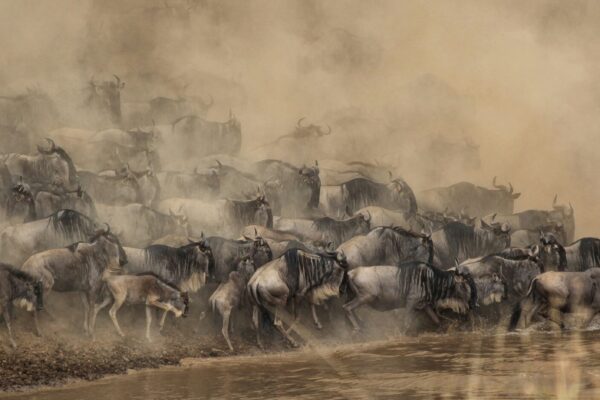
A dozen private conservancies and conservation areas border the Masai Mara National Reserve, and no two of them…
Read more →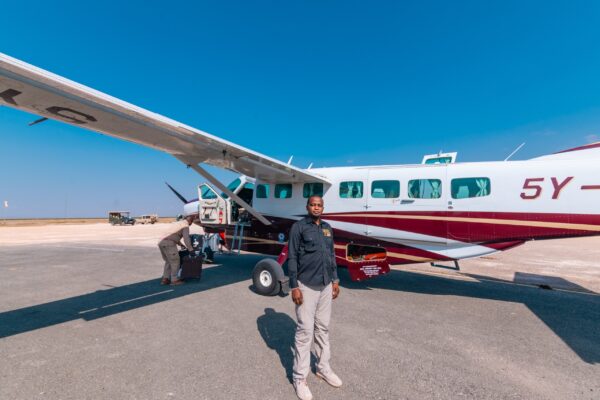
We compare Kenya safari road vs fly-in costs mile for mile, so you know exactly when the extra…
Read more →Tell us what you’d love to see and a local specialist will design a tailor-made itinerary around you — no obligation, reply within 24 hours.