

Planning & Tips
Wifi, Electricity and Charging on Safari: What Kenya’s Camps Actually Offer
From a generator that switches off at ten to a Land Cruiser fitted with its own charging console,…
Read more →
Just a short drive east of Kampala, Mabira Forest is Uganda's largest surviving natural rainforest in the central region and one of the country's most accessible eco-tourism destinations. Renowned for its lush tropical scenery, diverse wildlife, thrilling zip-line adventures and excellent birdwatching, Mabira Forest offers visitors an unforgettable escape into nature. Whether you're hiking beneath towering trees, spotting primates, cycling forest trails or enjoying a canopy adventure, Mabira Forest delivers an authentic rainforest experience for every traveller.
Mabira Forest begins almost without ceremony. You are driving east out of Kampala on the busy Kampala–Jinja highway, traffic and roadside markets filling the windows, and then suddenly the buildings thin out and the road disappears between walls of deep green. The forest has been there long before the traffic, and once you turn off toward the eco-tourism centre near Najjembe, the sound of the highway quickly gives way to birds, insects and the movement of monkeys through the canopy.
Mabira Forest is one of Uganda’s most important remaining tropical forests in central Uganda, covering approximately 306 square kilometres. Located about 54 kilometres east of Kampala and along the Kampala–Jinja highway, it is an unusually accessible rainforest experience for travellers who do not have time for the longer journeys required to reach Uganda’s western forest destinations. The forest is managed by the National Forestry Authority (NFA) and supports an extraordinary variety of trees, birds, butterflies, primates and smaller forest animals.
What makes Mabira special is not the possibility of seeing large African mammals. This is not a savannah safari. It is a rainforest experience, built around walking beneath enormous trees, listening for birds hidden in the canopy, tracking monkeys through thick vegetation, discovering medicinal plants and following trails towards waterfalls such as Griffin Falls.
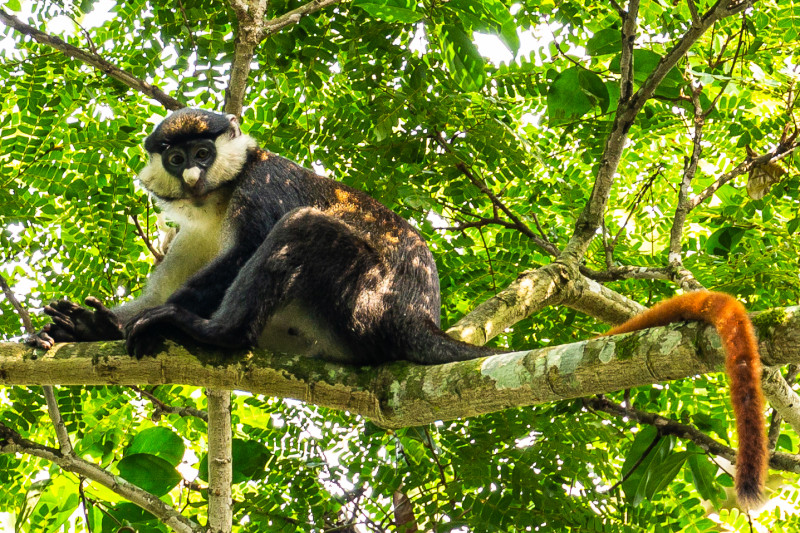
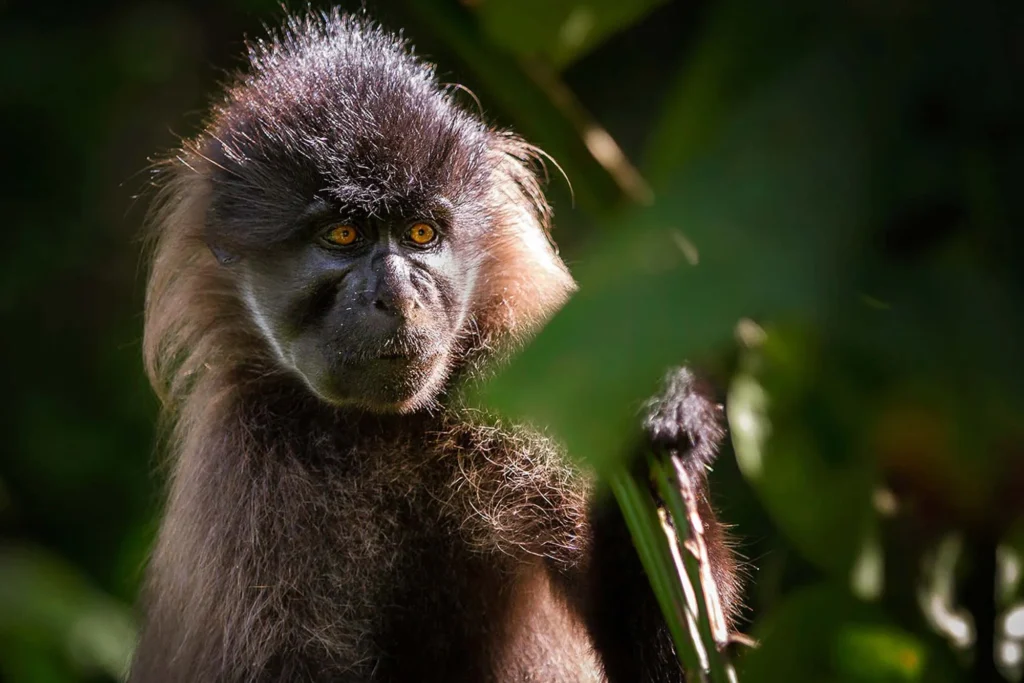
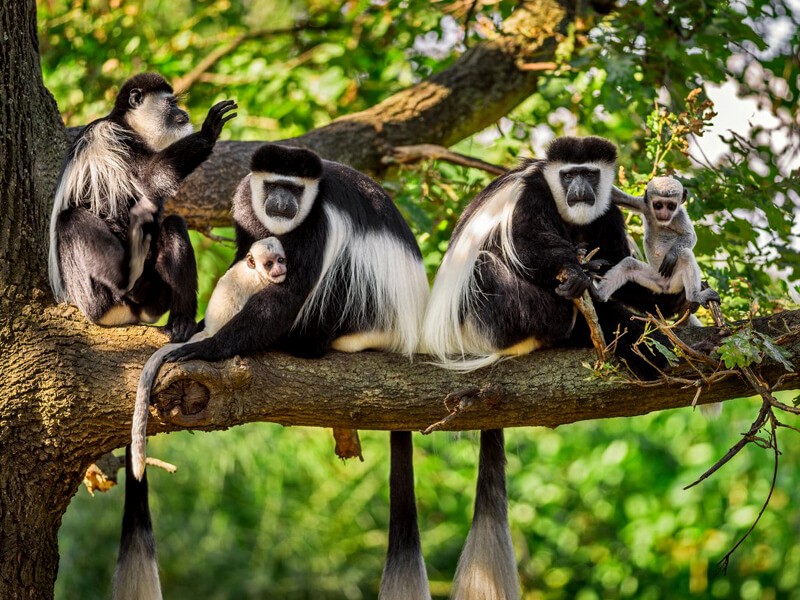
Mabira is particularly rewarding for birdwatchers. More than 300 bird species have been recorded here, including the Great Blue Turaco, African Grey Parrot, Black-and-white Casqued Hornbill and the rare Nahan’s Francolin. The forest also supports several primate species, including grey-cheeked mangabeys, red-tailed monkeys and black-and-white colobus monkeys.
For travellers combining Kampala, Jinja and Uganda’s longer wildlife circuit, Mabira works particularly well as a half-day or full-day forest experience, or as a peaceful overnight stop before continuing east towards Jinja and the source of the Nile.
Mabira Forest is a 306-square-kilometre tropical forest reserve in central Uganda, located along the Kampala–Jinja highway between Kampala and Jinja. Managed by the National Forestry Authority, it is one of Uganda’s largest surviving central forests and is known for its exceptional birdlife, primates, butterflies, ancient trees, forest walks, cycling and Griffin Falls.
Location: Central Uganda, along the Kampala–Jinja highway, near Najjembe
Size: Approximately 306 square kilometres
Distance from Kampala: Approximately 54 kilometres
Distance from Jinja: Approximately 20–25 kilometres
Forest type: Tropical moist forest
Established as a forest reserve: 1932
Managed by: National Forestry Authority (NFA)
Known for: Forest walks, birdwatching, primates, butterflies, cycling, canopy experiences and Griffin Falls
Main access point: Mabira Forest Eco-tourism Centre near Najjembe
Main attractions: Griffin Falls, forest trails, birding sites, ancient trees and surrounding community experiences
Best for: Birdwatchers, nature lovers, photographers, families, short excursions and travellers combining Kampala with Jinja
Mabira is not about ticking off the Big Five. Its wildlife is smaller, quieter and often hidden in the vegetation.
The forest contains more than 300 tree species and supports a diverse collection of mammals, birds, butterflies and other insects. Several primate species occur here, making the reserve particularly interesting for travellers who enjoy tracking animals through a forest rather than watching them from an open safari vehicle.
The experience is about slowing down. A branch moving above the trail might reveal a red-tailed monkey. A call from deep inside the canopy might lead your guide towards a Great Blue Turaco. Sometimes you will see very little at all, but hear dozens of species around you.
That is part of the appeal.
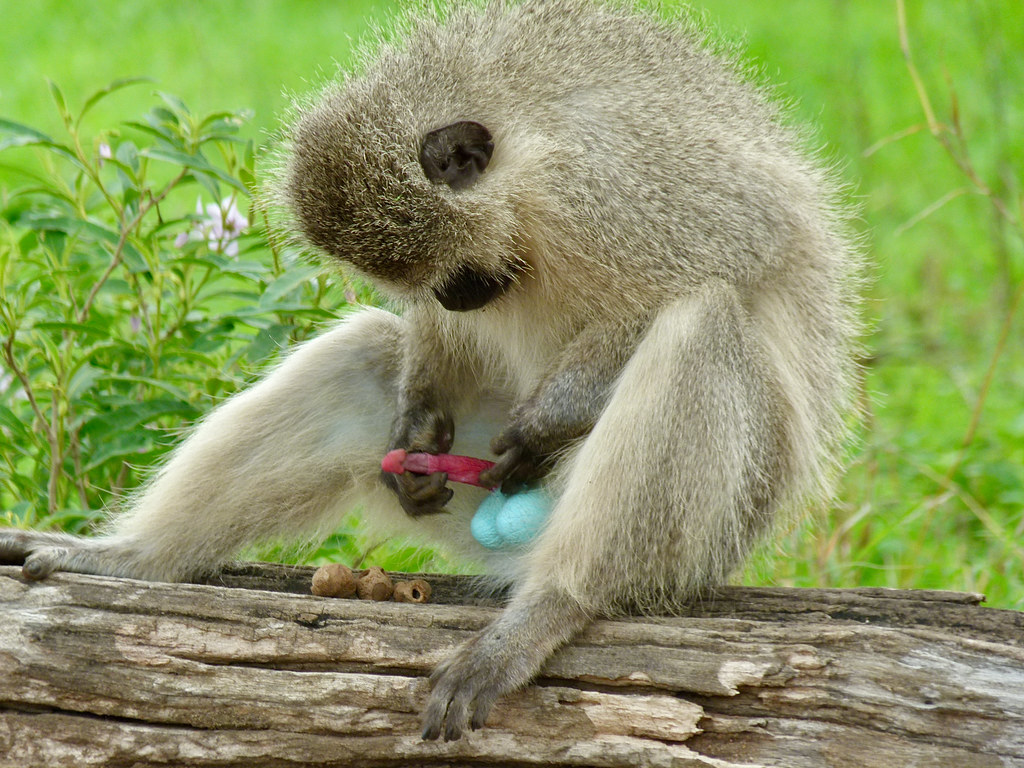
Mabira supports several primate species including grey-cheeked mangabey, red-tailed monkey, black-and-white colobus and vervet monkey, as well as numerous smaller mammals, reptiles and insects. The forest is particularly famous for its birdlife, with more than 300 species recorded.
Birdwatching is one of Mabira’s strongest attractions.
More than 300 bird species have been recorded in the forest, including several rare and sought-after species. Among the birds associated with Mabira are Great Blue Turaco, Black-and-white Casqued Hornbill, African Grey Parrot, Palm-nut Vulture, African Pied Hornbill, Superb Sunbird and Nahan’s Francolin.
The dense vegetation makes forest birding different from birding in open savannah. You often hear a bird before you see it, and a knowledgeable guide becomes extremely valuable because they can identify calls and know where particular species are likely to feed or roost.
For serious birders, early morning is the best time to enter the forest, when bird activity is at its highest and temperatures are still comfortable.
Mabira’s primates are one of the reasons the forest works so well as a short wildlife experience from Kampala.
Grey-cheeked mangabeys are among the forest’s most interesting primates, while red-tailed monkeys, black-and-white colobus monkeys and vervet monkeys can also be encountered.
Unlike chimpanzee trekking in Kibale or Budongo, Mabira should not be marketed as a dedicated chimpanzee-tracking destination. The attraction here is the wider forest ecosystem and the opportunity to encounter smaller primates while walking through their habitat.
Walking is the most natural way to experience Mabira.
The forest contains a network of trails ranging from relatively easy walks to longer excursions. Guided walks allow visitors to learn about the forest’s trees, medicinal plants, wildlife and traditional uses rather than simply walking through the vegetation. The NFA’s eco-tourism programme encourages visitors to use trained forest guides, whose knowledge can make the difference between seeing an ordinary tree and understanding why it matters.
For first-time visitors, a morning forest walk is usually enough to appreciate the character of Mabira without making the experience unnecessarily strenuous.
Birdwatching is one of Mabira’s signature activities.
The forest’s extensive bird list, combined with its network of trails, makes it an excellent destination for both experienced birders and travellers who simply enjoy seeing colourful forest species. Early morning walks are particularly productive when the forest is most active.
A good guide is strongly recommended because many of Mabira’s birds remain high in the canopy or hidden among dense vegetation.
Mabira offers the opportunity to look for grey-cheeked mangabeys and other forest primates while following established trails.
This is a very different experience from a traditional game drive. There are no wide plains or predictable animal concentrations. Instead, you follow sounds, movement and tracks through the vegetation, often stopping to watch a troop feeding high above the forest floor.
Cycling provides another way to explore Mabira beyond the walking trails.
The forest tourism programme includes cycling routes, while longer cycling experiences can extend into the surrounding countryside. A circular route of approximately 25 kilometres has been described for mountain bikers, connecting forest areas with surrounding plantations and rural landscapes.
It is a good option for active travellers who want to combine rainforest scenery with exercise.
Griffin Falls is one of Mabira’s best-known natural attractions.
The waterfall lies deeper inside the forest and is reached by walking trails through the rainforest. The journey is as important as the waterfall itself: you move beneath tall trees, through dense vegetation and across a landscape where birds and insects constantly provide background sound.
Griffin Falls can be incorporated into a longer forest walk or combined with camping and other activities around the forest.
For travellers who want something more adventurous, Mabira offers canopy experiences that take visitors above the forest floor.
Ziplining allows you to move through the upper levels of the forest while looking down through the canopy towards the vegetation and surrounding landscape. The experience has historically included multiple lines crossing the Musamya River area and views towards Griffin Falls.
Availability and operating arrangements can change, so we confirm the current experience before including it in an itinerary.
Mabira’s tropical environment supports an impressive diversity of butterflies and other insects.
Butterfly watching is often overlooked by visitors who arrive expecting conventional wildlife, but the forest floor and vegetation become particularly interesting once you begin paying attention to smaller species. For photographers and nature enthusiasts, this can turn an ordinary forest walk into a surprisingly rewarding experience.
Mabira is excellent for nature photography.
The combination of enormous trees, buttressed roots, vines, ferns, colourful birds, butterflies and shafts of sunlight through the canopy gives photographers plenty to work with. Rather than waiting for a single iconic animal, the photographer can concentrate on textures, patterns, forest light and small wildlife.
Camping is available at designated eco-tourism facilities within and around the forest.
Sleeping near Mabira changes the experience completely. During the day the forest is filled with birds, insects and movement; after dark, the soundscape shifts towards frogs, nocturnal insects and forest mammals. Basic camping facilities are available through the forest tourism infrastructure.
Yes. Mabira is particularly well suited to a day trip from Kampala or Jinja because it lies directly along the Kampala–Jinja highway. Visitors can combine a forest walk, birdwatching or cycling with a visit to Griffin Falls before continuing their journey.
The Mabira Forest Eco-tourism Centre is the practical starting point for most visits.
It provides access to the forest trails and serves as an information point for visitors. Facilities associated with the tourism site include camping areas, picnic facilities and basic accommodation options.
The centre also connects tourism with conservation and community participation. Local people can benefit through guiding, crafts, hospitality and other tourism services, helping create an economic reason for surrounding communities to value the forest.
Mabira is more than a beautiful forest. It is an important conservation landscape surrounded by communities whose livelihoods are closely connected to the resources around them.
Uganda’s forest eco-tourism programme has been designed partly to generate sustainable income while involving communities living around forest reserves. Tourism can support local employment, guiding services, handicrafts and community initiatives while creating greater awareness of the importance of keeping the forest intact.
The model is particularly important in Mabira because the forest has faced significant pressure over the years from human activity and competing land-use demands.
Visiting responsibly therefore matters. Guests should remain on established trails, avoid disturbing wildlife, use local guides where possible and purchase crafts directly from community producers when available.
Community experiences around Mabira can add a cultural dimension to a forest visit.
Local initiatives offer opportunities to meet artisans, learn about traditional crafts, taste local food and understand how communities around the forest make a living. Some community tourism programmes combine craft demonstrations with guided forest walks, allowing visitors to experience both the cultural and natural sides of Mabira.
We encourage guests to approach these experiences as genuine exchanges rather than staged performances. The forest is part of a living landscape, not simply a tourist attraction.
Mabira is important because it protects one of central Uganda’s major surviving tropical forests and provides habitat for hundreds of plant and animal species. Its eco-tourism programme also creates opportunities for local employment and community income while encouraging conservation of the forest.
Sezibwa Falls can be combined with a Mabira experience for travellers with additional time.
The falls are associated with the wider cultural and natural landscape of central Uganda and can provide another stop on a day or multi-day itinerary around Mabira and the Kampala–Jinja corridor. NFA tourism information lists Sezibwa Falls among attractions associated with the wider Mabira eco-tourism area.
For travellers interested in combining forest, culture and waterfalls, this can create a more varied day than a forest walk alone.
Mabira is one of Uganda’s easiest forest destinations to reach from the capital.
The forest lies approximately 54 kilometres east of Kampala along the Kampala–Jinja highway. The journey normally takes around an hour or slightly longer depending on traffic, particularly when leaving Kampala. The main eco-tourism centre is accessed near Najjembe.
Because the forest lies directly on one of Uganda’s busiest tourism corridors, it works especially well as a stop between Kampala and Jinja rather than requiring a separate detour.
From Jinja, Mabira is even closer.
The forest lies roughly 20 to 25 kilometres from Jinja depending on the access point used, making it an easy half-day or full-day excursion.
This makes Mabira a natural addition to itineraries combining Jinja, the Source of the Nile, adventure activities and eastern Uganda.
The easiest way to reach Mabira is by road along the Kampala–Jinja highway.
From Kampala, drive east towards Jinja and follow the signs around Najjembe for the Mabira Forest eco-tourism centre. The access road leaves the main highway and continues towards the forest facilities.
For safari travellers, Mabira can easily be incorporated into a private Uganda itinerary using a 4×4 safari vehicle.
Public transport is also possible because Mabira lies directly along the Kampala–Jinja highway. Visitors can travel towards Jinja from Kampala and alight around Najjembe before continuing to the forest centre.
For international travellers, however, a private vehicle and local guide are more convenient, particularly if the forest is being combined with other attractions.
Mabira has a tropical rainforest climate, meaning conditions are generally warm, humid and considerably wetter than Uganda’s drier savannah destinations.
Rain can occur throughout the year, and forest trails may become muddy following heavier rainfall. The wet conditions are not necessarily a disadvantage: rain keeps the vegetation lush, supports insect life and gives the forest its characteristic deep-green appearance.
For walking, lightweight breathable clothing, waterproof footwear and a rain jacket are useful regardless of the season.
The forest can also feel cooler beneath the canopy than the open countryside around Kampala, particularly during or immediately after rainfall.
Mabira has a warm and humid tropical rainforest climate with rainfall occurring throughout the year. Conditions are generally greener and wetter than Uganda’s open savannah regions, and visitors should be prepared for occasional rain and muddy forest trails.
Mabira can be visited throughout the year.
For birdwatching and forest walks, the best approach is to start early in the morning when temperatures are comfortable and bird activity is high.
The wetter periods can actually be rewarding for photographers because the forest becomes intensely green and waterfalls such as Griffin Falls are more impressive when water levels are higher.
The drier periods generally make walking trails easier, particularly for visitors who want to combine forest walks with cycling or longer hikes.
Rather than choosing Mabira based entirely on weather, we recommend choosing the timing around the rest of your Uganda itinerary.
A few hours is enough for a first introduction.
A half-day visit can include a guided forest walk and birdwatching.
A full day allows time for a longer forest walk, Griffin Falls, birding, cycling or another activity.
One night is ideal for travellers who want to experience the forest after dark and begin the following morning with an early birding walk.
Two nights or more makes sense for serious birders, photographers or travellers who want to combine several activities without rushing.
For most travellers using Mabira as part of a wider Uganda itinerary, one day or one night is sufficient.
Mabira offers something that many Uganda itineraries overlook: a genuine tropical rainforest experience without requiring a long journey into the country’s more remote forests.
It is close enough to Kampala for a day trip, close enough to Jinja to fit naturally into an eastern Uganda itinerary, and diverse enough to reward travellers who slow down and explore it properly.
Birdwatchers come for the extensive species list. Nature lovers come for the trees and forest trails. Photographers come for the canopy, butterflies and waterfalls. Active travellers come for cycling and ziplining. Others simply come because they want to walk somewhere green and quiet for a few hours before returning to the road.
That accessibility is perhaps Mabira’s greatest strength.
You do not need a week to experience it.
You just need to stop.
Mabira is generally an affordable addition to a Uganda safari compared with dedicated wildlife destinations.
The final cost depends on whether you are visiting as a day excursion, staying overnight, using a private guide, adding cycling or canopy activities, or combining the forest with other attractions around Kampala and Jinja.
Forest entry, guiding, accommodation and activity charges should be confirmed at the time of booking because rates and operating arrangements can change.
For an Afrikan Accent Adventures itinerary, we normally incorporate Mabira into the overall Uganda safari cost rather than treating the forest as a completely separate trip.
Mabira works particularly well in several types of Uganda itinerary.
A Kampala–Mabira–Jinja itinerary can combine the forest with the Source of the Nile and Jinja’s adventure activities.
A Mabira day excursion is ideal for travellers based in Kampala who want a short escape into nature without committing to an overnight safari.
A forest and primate itinerary can combine Mabira with other Ugandan forests and dedicated chimpanzee destinations such as Budongo or Kibale.
For travellers continuing east, Mabira can also be used as a transitional stop between Kampala and Jinja rather than simply being treated as a standalone destination.
Accommodation ranges from basic forest camping and eco-tourism facilities to more comfortable forest lodges.
The best-known option is Rainforest Lodge Mabira, which is located within the forest and gives guests the opportunity to wake up surrounded by rainforest rather than returning to a city hotel after their walk.
There are also community-oriented facilities around Griffin Falls, including accommodation and camping associated with local conservation initiatives. Griffin Falls Camp, for example, is operated by the Mabira Forest Integrated Community Organisation, with revenue supporting community development and conservation-related projects.
For travellers seeking comfort, we recommend a forest lodge. For adventurous travellers, camping provides a much more immersive experience.
Kibale is the stronger choice if your primary objective is chimpanzee trekking.
Mabira is the more convenient choice if you are based around Kampala or Jinja and want a rainforest experience without travelling deep into western Uganda.
Kibale is famous for its chimpanzees and exceptional primate diversity. Mabira offers a broader short-form forest experience centred on birding, walking, smaller primates, trees, butterflies and waterfalls.
They should not be viewed as substitutes. They serve different purposes within a Uganda itinerary.
Budongo is another major Ugandan forest destination associated with chimpanzee tracking and extensive research.
Mabira is considerably more accessible from Kampala and Jinja and works better for a short excursion. Budongo is better suited to travellers already travelling through northwestern Uganda towards Murchison Falls.
If your priority is chimpanzee trekking, choose Budongo or Kibale. If your priority is a convenient tropical forest experience between Kampala and Jinja, Mabira makes more sense.
Bwindi is in an entirely different category.
Its primary attraction is mountain gorilla trekking, while Mabira is a lowland tropical forest experience centred on birding, primates, nature walks and forest activities.
A traveller should not choose Mabira instead of Bwindi if gorilla trekking is the main reason for visiting Uganda.
Instead, Mabira works beautifully as an additional forest experience at the beginning or end of a much longer Uganda safari.
Responsible tourism is particularly important in a forest environment.
Stay on established trails, follow your guide’s instructions, avoid feeding or approaching wildlife, keep noise levels low and take all waste back out of the forest.
Where community tourism opportunities exist, spending money directly with local guides, artisans and community-run facilities helps ensure that tourism creates tangible benefits around the forest.
Mabira’s future depends not only on government protection but also on surrounding communities seeing the forest as an asset worth protecting. Uganda’s National Forestry Authority continues to identify ecotourism as an important opportunity for generating sustainable income while supporting forest conservation and community livelihoods.
Mabira Forest is one of those places that rewards travellers who are willing to slow down.
There is no guarantee of a dramatic animal sighting. Instead, there is the possibility of walking beneath some of central Uganda’s oldest forest trees, hearing a Great Blue Turaco somewhere above you, watching a troop of monkeys move through the branches, following a trail towards Griffin Falls and discovering just how much life can exist inside a few hours of green forest.
Its greatest advantage is its location. From Kampala, Mabira is close enough for a day trip. From Jinja, it is even closer. And as part of a longer Uganda safari, it provides a welcome change from vehicles, roads and open savannah.
For birders, photographers, nature lovers and travellers who simply want to experience Uganda beyond its famous national parks, Mabira deserves a place on the itinerary.
Mabira is not the destination you visit to chase the Big Five.
It is the destination you visit to hear the forest breathe.
Step into the lush wilderness of Mabira Forest, where towering tropical trees, playful primates and over 315 bird species create one of Uganda's most captivating natural escapes. Whether you're soaring above the canopy on the famous Canopy Super Skyway, hiking scenic forest trails, cycling through the rainforest or discovering rare wildlife, Mabira Forest offers an unforgettable eco-adventure just a short drive from Kampala and Jinja.
Wander through one of Uganda's oldest and most biodiverse tropical forests, home to towering trees, lush vegetation and tranquil forest trails.
Soar high above the rainforest on the famous Mabira Forest zip-line, offering breathtaking views of the forest canopy and an unforgettable adventure
Discover hidden forest trails with experienced guides while learning about the rainforest's unique plants, wildlife and ecological importance.
Spot red-tailed monkeys, grey-cheeked mangabeys, black-and-white colobus monkeys and vervet monkeys in their natural habitat.
Observe more than 315 bird species, including the rare Nahan's Francolin, Great Blue Turaco, African Grey Parrot and numerous hornbills, kingfishers and…
Cycle through scenic rainforest trails and surrounding countryside while enjoying the forest's fresh air and beautiful landscapes
Photograph colourful butterflies, exotic plants, towering rainforest trees and diverse wildlife in one of Uganda's richest ecosystems.
Experience one of Uganda's most important conservation areas, supporting hundreds of plant species, mammals, reptiles, butterflies and birds.
From value camps to premium lodges — we match every stay to your style and budget.
Budget accommodation near Mabira Forest offers comfortable rooms and campsites with easy access to forest trails, guided nature walks and zip-lining activities. These options are ideal for backpackers, students and travellers seeking affordable access to one of Uganda's most important rainforest reserves.
Mid-range accommodation provides spacious rooms or forest cottages, quality dining, beautiful natural surroundings and convenient access to Mabira Forest's hiking trails, birdwatching hotspots and adventure activities. These properties offer an excellent balance of comfort, service and value for couples, families and leisure travellers.
Luxury accommodation near Mabira Forest combines elegant forest lodges and premium riverside retreats with exceptional hospitality, gourmet dining and personalised experiences. Guests can enjoy tranquil rainforest surroundings, guided wildlife excursions, spa treatments and easy access to both Mabira Forest and the River Nile, making these properties ideal for honeymooners, luxury travellers and nature enthusiasts.
Every season has its magic — here's what to expect when, so you can travel at your perfect time.
Everything you need to know before you go — and we’ll guide you through every step.
Most international visitors require a valid visa to enter Uganda. Applications can be completed online through the Uganda e-Visa system before arrival. Citizens of East African Community (EAC) member states benefit from simplified entry procedures.
The official currency is the Ugandan Shilling (UGX). Major hotels and tour operators generally accept Visa and Mastercard, although carrying some cash is recommended for entrance fees, local guides, community visits and small purchases.
English and Swahili are Uganda's official languages. Around Mabira Forest, Luganda is widely spoken by local communities, while English is commonly used by guides, lodge staff and tourism operators.
Mabira Forest operates on East Africa Time (EAT), which is UTC +3 throughout the year with no daylight saving time.
Mabira Forest enjoys a warm, humid tropical climate with daytime temperatures typically ranging between 22°C and 30°C (72°F–86°F). Light rain is possible at any time of the year, so carrying a lightweight waterproof jacket is advisable.
A yellow fever vaccination certificate is required for entry into Uganda. Comprehensive travel insurance is recommended. Visitors should carry insect repellent, sunscreen, drinking water and any necessary personal medication when exploring the forest.
Wear lightweight long-sleeved clothing in neutral colours, comfortable walking or hiking shoes, a hat and a light rain jacket. Binoculars are highly recommended for birdwatching.
Mobile network coverage is generally good throughout the forest and surrounding towns. Most lodges and visitor centres provide Wi-Fi, although internet speeds may vary.
Zip-lining, hiking and mountain biking are conducted under professional supervision. Always follow your guide's instructions, wear the recommended safety equipment and remain on designated trails to protect both yourself and the forest ecosystem.
Help conserve this unique rainforest by staying on marked trails, avoiding littering, respecting wildlife, minimising noise and supporting local community initiatives. Responsible tourism plays an important role in protecting Mabira Forest for future generations
Mabira Forest is located in Central Uganda, approximately 54 km (34 miles) east of Kampala along the Kampala–Jinja Highway. The forest spans Buikwe, Mukono and Kayunga Districts..
natural rainforest in the central region. It is renowned for its Canopy Super Skyway (zip-line), guided nature walks, mountain biking, birdwatching, primate encounters and rich biodiversity.
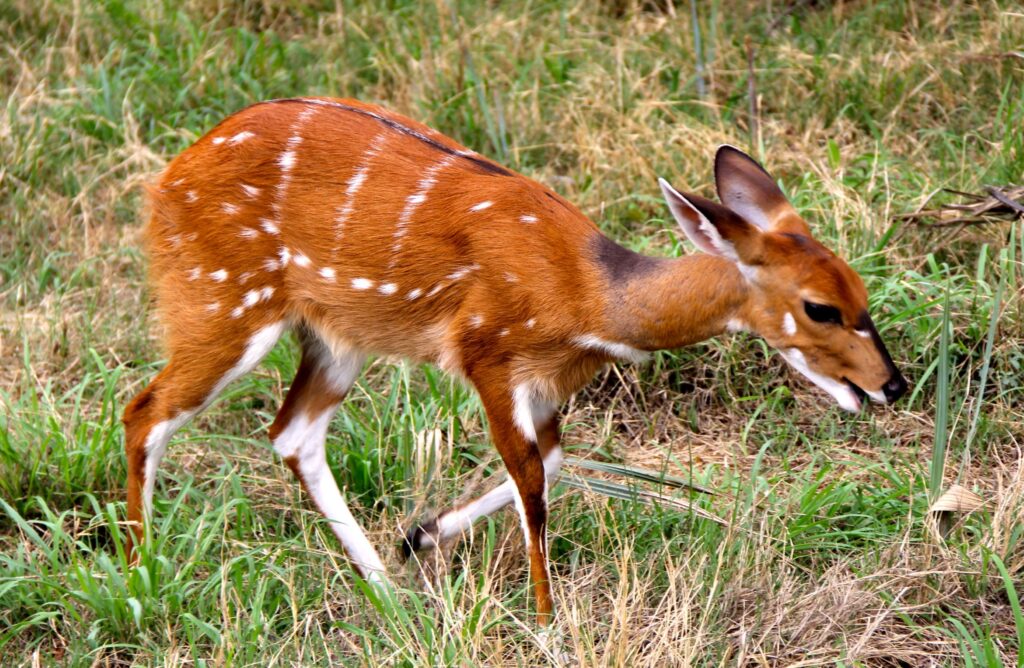
The forest is home to red-tailed monkeys, grey-cheeked mangabeys, black-and-white colobus monkeys, vervet monkeys, bushbucks, tree hyraxes and more than 315 bird species, including the rare Nahan's Francolin and the colourful Great Blue Turaco..
Visitors can enjoy zip-lining, guided forest walks, birdwatching, mountain biking, primate viewing, butterfly watching, photography, community tours and educational nature experiences.
The best time to visit is during the dry seasons from June to August and December to February, when forest trails are drier and ideal for hiking, cycling and zip-lining. The forest remains open and beautiful throughout the year.
Most visitors spend one full day exploring the forest. However, an overnight stay is recommended for travellers wishing to enjoy birdwatching, forest walks, adventure activities and the peaceful rainforest atmosphere at a relaxed pace.
Yes. Mabira Forest is an excellent family-friendly destination. Many activities, including guided nature walks, birdwatching and selected cycling trails, are suitable for children. Age and safety requirements may apply for the canopy zip-line experience.
Yes. The Canopy Super Skyway is operated by trained professionals using internationally recognised safety equipment and procedures. Participants receive a comprehensive safety briefing before the activity begins.
Absolutely. Its location less than an hour from Kampala makes Mabira Forest one of Uganda's most popular day-trip destinations, and it is also frequently combined with visits to Jinja, the Source of the Nile and Sezibwa Falls.
Mabira Forest offers a variety of budget campsites, mid-range forest lodges and luxury eco-lodges, catering to backpackers, families, adventure travellers and those seeking a tranquil rainforest retreat.
From a generator that switches off at ten to a Land Cruiser fitted with its own charging console,…
Read more →
A working checklist from a Nairobi ground operator on licensing, red flags and the questions that separate real…
Read more →
Both parks hold the same herds and the same rivers, but the border between them changes your budget,…
Read more →Tell us what you’d love to see and a local specialist will design a tailor-made itinerary around you — no obligation, reply within 24 hours.