Planning & Tips
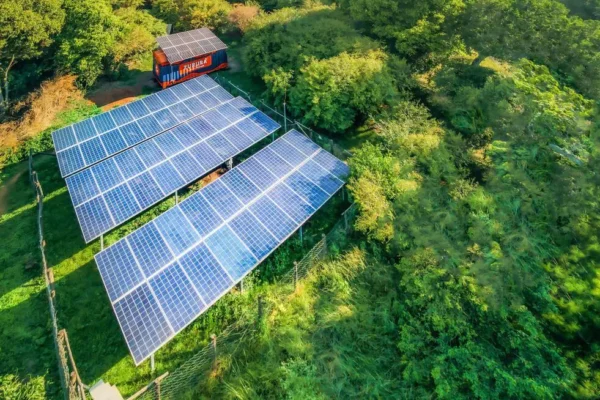
Wifi, Electricity and Charging on Safari: What Kenya’s Camps Actually Offer
From a generator that switches off at ten to a Land Cruiser fitted with its own charging console,…
Read more →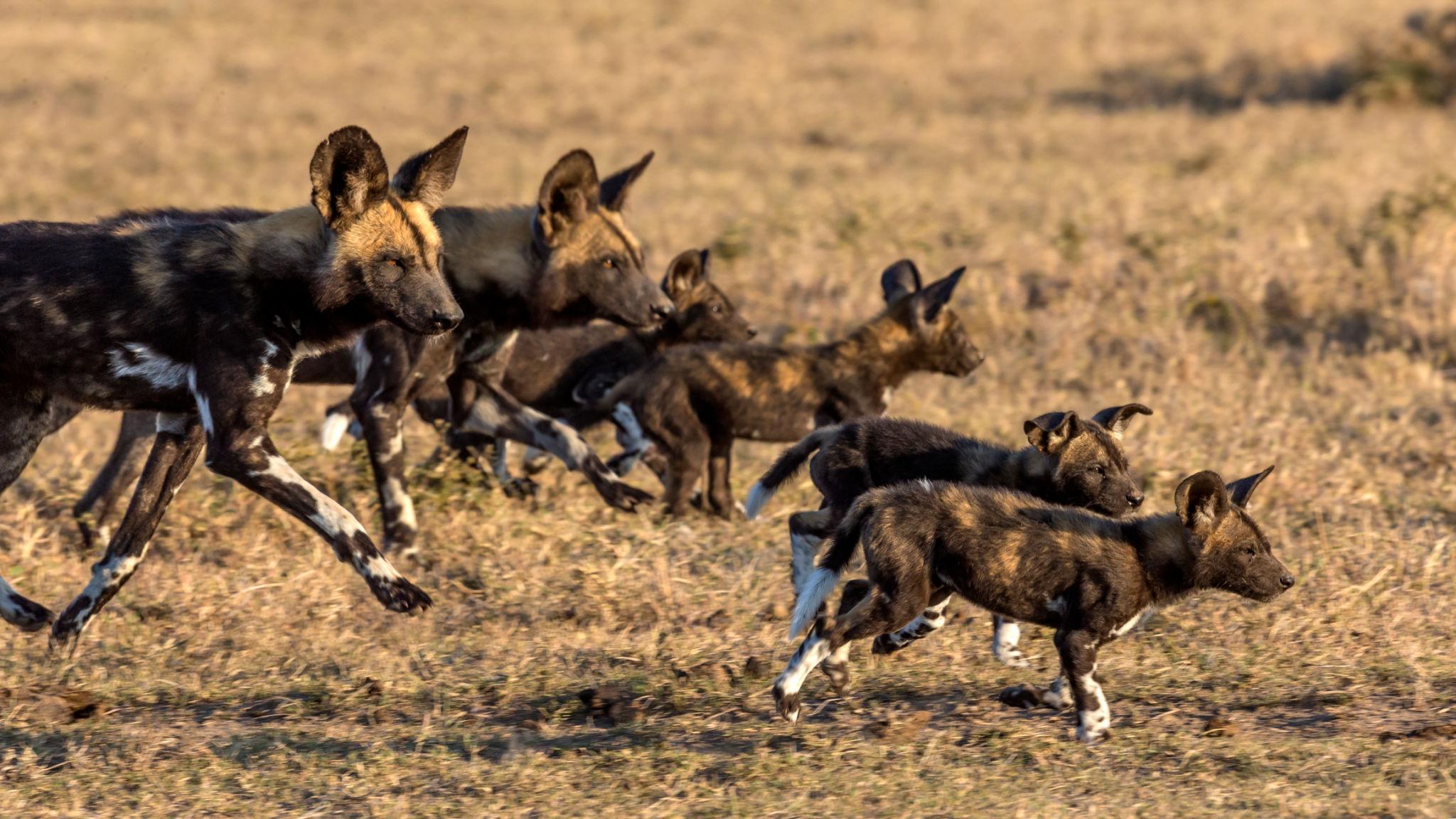
Discover El Karama Wildlife Conservancy in Kenya's Laikipia region, a pioneering private conservancy renowned for exclusive safaris, night game drives, walking safaris, African wild dogs, luxury eco-lodges, and exceptional wildlife viewing in an uncrowded wilderness setting.
The road north from Archer’s Post starts to feel different almost immediately. The traffic thins, the red earth becomes more pronounced and the horizon opens into a landscape of acacia scrub, rocky ridges and dry grassland. Somewhere beyond the next rise, an elephant is moving between the conservancy and the wider Samburu ecosystem, following routes that existed long before there were gates, lodges or safari vehicles.
This is Kalama Wildlife Conservancy, a community-owned conservation area on the northern edge of the Samburu ecosystem in Samburu County, Kenya. Covering approximately 49,588 hectares, or about 496 square kilometres, Kalama forms an important wildlife corridor bordering Samburu National Reserve and connecting wildlife habitats farther north. The conservancy was established from the Gir Gir Group Ranch and is home to Samburu and Turkana pastoralist communities whose livelihoods remain closely connected to livestock, land and natural resources.
What makes Kalama Wildlife Conservancy different from Samburu National Reserve is the way the land is managed. This is community-owned land where conservation and tourism operate alongside pastoralism. Wildlife is not separated from the community by a fence. Instead, the conservancy protects habitat and wildlife movement while creating income, employment and development opportunities for the people who own the land.
Kalama Wildlife Conservancy is also particularly valuable for travellers looking for a more private northern Kenya safari. The landscape is less concentrated around the Ewaso Nyiro River than Samburu National Reserve, and the conservancy offers activities that are generally unavailable inside the national reserve, including night game drives, guided walking safaris and cultural experiences. Properties such as Saruni Samburu and other camps in the wider Kalama area use the conservancy landscape to provide a quieter style of safari.
For guests who have already visited the Masai Mara or Samburu National Reserve, Kalama Wildlife Conservancy offers something different: fewer vehicles, open wilderness, community-led conservation and the opportunity to experience northern Kenya beyond the conventional game-drive circuit.
Kalama Wildlife Conservancy is a community-owned conservation area in Samburu County, northern Kenya, bordering Samburu National Reserve. It covers approximately 49,588 hectares and protects an important wildlife corridor used by elephants and other species moving between Samburu, Marsabit and neighbouring conservancies. The conservancy combines wildlife conservation, tourism and pastoralist livelihoods, creating a model where local communities benefit directly from protecting their land and wildlife.
Location: Samburu County, northern Kenya, on the northern side of the Samburu ecosystem
Size: Approximately 49,588 hectares, or about 496 square kilometres
Community: Primarily Samburu and Turkana pastoralist communities
Land origin: Formed from the Gir Gir Group Ranch
Conservation network: Northern Rangelands Trust community conservancy network
Neighbouring areas: Samburu National Reserve, West Gate Conservancy and Namunyak and other northern conservation areas
Known for: Wildlife corridors, elephants, reticulated giraffe, gerenuk, Beisa oryx, lions, leopards, cheetahs and Grevy’s zebra
Main safari advantage: Private conservancy activities including night drives and guided walking
Accommodation: Safari camps and lodges within or associated with the conservancy landscape
Main access: Road from Nairobi through Nanyuki and Isiolo, or by light aircraft to northern Kenya airstrips followed by a road transfer
Best for: Private safaris, walking safaris, night drives, wildlife photography, cultural experiences and community conservation
Kalama Wildlife Conservancy grew out of the Gir Gir Group Ranch, reflecting a broader change in northern Kenya from traditional communal rangeland management toward structured community conservation. Sources differ slightly on the early history: Kalama’s conservation development began before its formal participation in the Northern Rangelands Trust, while NRT documentation records Kalama as established in its current conservancy structure in 2009.
The important point for visitors is what the model represents today. Kalama is not simply a wildlife reserve owned and managed by an outside organization. The land belongs to the community, and conservation is designed to generate benefits for the people living on it.
That distinction matters in northern Kenya. Samburu communities have historically depended on livestock, particularly cattle, goats and camels, and the same landscapes are used by wildlife. During dry periods, competition for water, grazing and other resources can increase. Community conservancies create a framework in which wildlife becomes an economic asset rather than simply another competitor for limited land and water.
Tourism is one part of that equation. Camps and lodges operating in the conservancy contribute to a local economy that supports employment, conservation operations and community development. The wider Northern Rangelands Trust model has also supported livelihood programs, ranger employment, education, healthcare and other community initiatives across its member conservancies.
This is why a safari in Kalama Wildlife Conservancy feels different from a standard national-park experience. You are not simply visiting wildlife habitat. You are visiting a landscape where conservation is tied directly to community ownership.
Kalama Wildlife Conservancy is community-owned land associated with the Gir Gir Group Ranch and managed through a community conservation model. The conservancy was developed to protect wildlife and habitat while generating income and development benefits for the communities living in the area.
Kalama Wildlife Conservancy supports a wide range of northern Kenya wildlife. Its large size and connection with neighbouring conservation areas allow animals to move through the landscape rather than being confined to a small protected block.
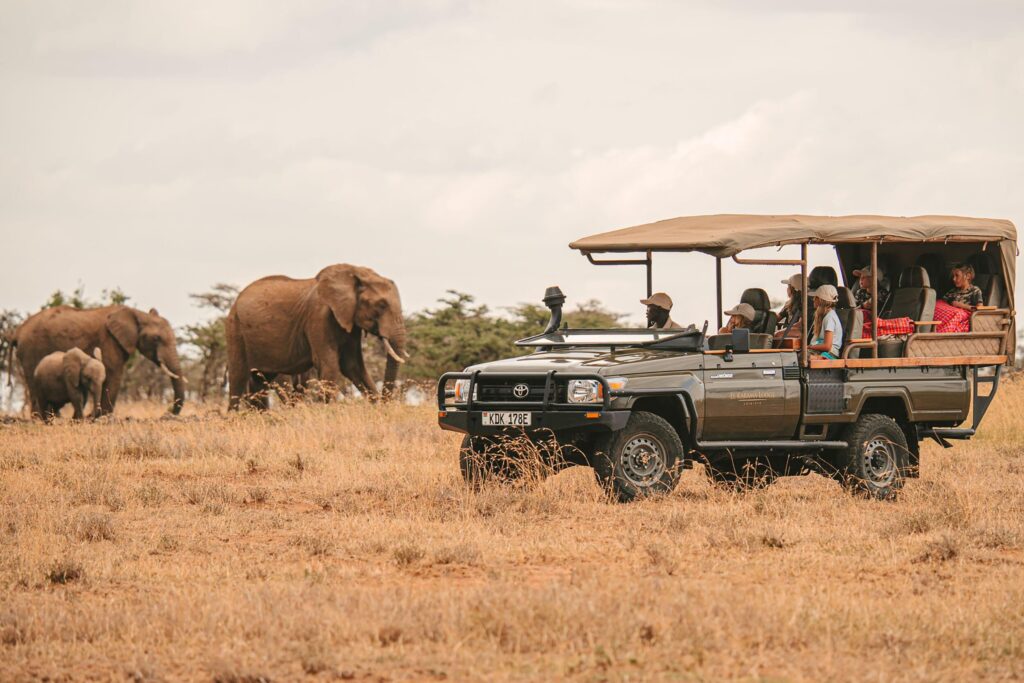
Elephants are among the most important species in Kalama. The conservancy forms part of a broader movement corridor used by elephants travelling between the Samburu ecosystem and habitats farther north. The absence of conventional fencing across much of northern Kenya allows wildlife to move between conservation areas in response to water, food and seasonal conditions.
Reticulated giraffe are another important sighting. Their sharply defined geometric coat pattern is one of the visual signatures of northern Kenya, and Kalama’s acacia woodland provides suitable browsing habitat.
Gerenuk are particularly well adapted to the dry environment. Their ability to stand upright on their hind legs and browse from bushes and trees allows them to exploit vegetation that many other antelopes cannot reach.
Beisa oryx are also associated with the landscape, along with lesser and greater kudu, Grant’s gazelle and other dry-country species.
Predators include lion, leopard and cheetah, while wild dog has also been recorded in the wider Kalama conservation landscape.
Grevy’s zebra are another important northern Kenya species, although sightings depend heavily on season, location and animal movements. The value of Kalama is partly its connectivity: wildlife can move between neighbouring conservancies and the Samburu ecosystem rather than remaining within one isolated protected area.
Kalama Wildlife Conservancy supports elephants, reticulated giraffe, gerenuk, Beisa oryx, Grevy’s zebra, lion, leopard, cheetah, wild dog, lesser and greater kudu and other northern Kenya wildlife. Wildlife movements change according to rainfall, grazing conditions and water availability, so sightings are never guaranteed.
Kalama Wildlife Conservancy sits within the same wider northern Kenya ecosystem that makes Samburu National Reserve famous for the Samburu Special Five: Grevy’s zebra, reticulated giraffe, gerenuk, Beisa oryx and Somali ostrich.
Not every member of the Samburu Special Five is seen on every Kalama safari, and the conservancy should not be marketed as a guaranteed checklist destination. Instead, Kalama adds another wildlife habitat to the Samburu ecosystem, increasing the range of landscapes available to guests.
Reticulated giraffe and gerenuk are especially well suited to Kalama’s dry woodland and acacia country. Beisa oryx can be encountered on open ground, while Grevy’s zebra may move through the wider conservancy network depending on seasonal conditions.
The Somali ostrich is also a northern Kenya speciality, although sightings are naturally dependent on where birds are ranging on the day of the safari.
For guests staying for several nights, combining Kalama game drives with visits into Samburu National Reserve gives a broader wildlife experience than treating either destination in isolation.
Game drives remain the most accessible way to explore Kalama Wildlife Conservancy. Unlike the more concentrated wildlife viewing around the Ewaso Nyiro River in Samburu National Reserve, Kalama game drives cover a broader landscape of acacia woodland, open plains, rocky terrain and elevated viewpoints.
Morning game drives begin early when temperatures are cooler and wildlife is more active. This is a particularly good time for searching for giraffe, gerenuk, elephants and antelope before the heat of the day pushes animals into shade.
Afternoon drives begin later and can continue toward sunset. In the conservancy environment, the transition from daylight to darkness is particularly valuable because it allows guests to experience the bush after sunset.
One of the major reasons to choose Kalama Wildlife Conservancy over a conventional national reserve is the opportunity for night game drives.
Inside Samburu National Reserve, standard safari activities are more restricted. In a private community conservancy such as Kalama, night drives can provide access to a completely different side of the ecosystem, subject to the operating rules of the conservancy and the accommodation provider.
The landscape changes dramatically after dark. Nocturnal animals become active, predators begin moving and smaller species that are rarely noticed during daylight can suddenly become the focus of the safari.
A night game drive is not simply a longer version of a daytime game drive. It is a different experience, with a guide using a spotlight carefully and responsibly while searching for nocturnal wildlife without disturbing animals.
Walking is one of the best ways to understand Kalama Wildlife Conservancy beyond large mammals.
With an experienced Samburu guide, guests can move through the landscape at walking pace, learning to identify animal tracks, dung, plants, insects and signs of recent wildlife activity.
The experience is particularly valuable because Kalama’s importance is not only about large animals. The conservancy protects an entire rangeland ecosystem, including vegetation, smaller species, water sources and wildlife corridors.
Walking safaris must always be conducted according to local safety procedures, guide instructions and conservancy regulations.
Kalama Wildlife Conservancy is also a place to learn about Samburu culture and the relationship between pastoral communities and the northern Kenya landscape.
Cultural experiences may include visits to communities, traditional homesteads, beadwork groups and local cultural sites, depending on arrangements made with the community and lodge.
A responsible cultural visit should be based on genuine interaction rather than staged entertainment. Guests can learn about livestock keeping, traditional knowledge, beadwork, pastoral life and the changing role of conservation in the community.
We encourage visitors to ask before taking photographs and to purchase crafts directly from the people who make them whenever possible.
Some Kalama experiences can include interaction with Samburu warriors who have extensive knowledge of the surrounding landscape.
Warriors and community guides can explain traditional tracking knowledge, wildlife behaviour, local plants and the cultural significance of the land.
These experiences are particularly valuable when they are led by local people rather than presented as a generic cultural performance.
Kalama Wildlife Conservancy offers strong opportunities for birdwatching, particularly for visitors interested in northern Kenya’s dry-country species.
The mixture of acacia woodland, open grassland, rocky terrain and seasonal water sources creates a variety of habitats.
Birdwatching can be incorporated into morning game drives or walking experiences, and the quieter environment of the conservancy can be particularly rewarding for visitors who prefer to stop and observe rather than rush between large mammal sightings.
Kalama Wildlife Conservancy is an excellent destination for photographers who want something beyond the classic riverbank safari.
The red and ochre tones of the northern Kenya landscape contrast with acacia trees, rocky hills and open sky. Early morning and late afternoon provide softer light, while elevated viewpoints can produce wide landscape compositions.
Reticulated giraffe, gerenuk, elephants and Beisa oryx provide opportunities for wildlife portraits, while walking safaris allow photographers to focus on smaller elements of the ecosystem.
A bush breakfast can turn a morning game drive into a full wilderness experience.
After an early start, guests can stop at a suitable location where camp staff prepare breakfast in the bush. Depending on the property and location, the experience may take place near a scenic viewpoint, under an acacia tree or overlooking the surrounding landscape.
The emphasis is not on luxury for its own sake but on allowing guests to slow down and experience Kalama’s wilderness during the cooler hours of the morning.
Sundowners are particularly memorable in Kalama because the conservancy’s elevated terrain provides wide views across the northern Kenya landscape.
As the sun drops, the dry plains and rocky ridges take on deeper colours, creating a natural end to the afternoon game drive.
A sundowner can be combined with wildlife photography, storytelling and a quiet appreciation of the landscape before returning to camp after dark.
Mount Ololokwe is one of the defining landmarks of the Samburu landscape and can be seen from viewpoints around the northern side of the ecosystem.
The flat-topped mountain has deep cultural significance to the Samburu people and forms a dramatic backdrop for photography and sundowners.
Depending on the camp and local arrangements, guests can include viewpoints and guided excursions associated with Mount Ololokwe in a wider Kalama itinerary.
Kalama Wildlife Conservancy works best when you slow the itinerary down. A rushed one-night stop can give you a taste of the landscape, but two or three nights allow enough time to combine daytime game drives with walking, a cultural experience and a night drive.
Nicholas Wangithi, Director & Founder
Kalama Wildlife Conservancy and Samburu National Reserve are closely connected geographically and ecologically, but they provide different safari experiences.
Samburu National Reserve is a formal wildlife reserve centred around the Ewaso Nyiro River and is particularly well known for concentrated wildlife viewing and the Samburu Special Five.
Kalama Wildlife Conservancy is community-owned land with a broader conservation and tourism model. Its attraction lies in combining wildlife with walking, night drives, cultural experiences and a more private style of safari.
The two destinations work particularly well together.
A guest can spend the morning exploring Samburu National Reserve, return to a lodge in or near Kalama for lunch and then experience a walking safari or night drive in the conservancy.
This combination gives travellers both the classic Samburu wildlife experience and the more intimate community-conservancy experience.
No. Kalama Wildlife Conservancy is a separate community-owned conservation area bordering the Samburu ecosystem. It is ecologically connected to Samburu National Reserve, but it has different land ownership, management arrangements and tourism activities. The two areas are often combined in the same safari itinerary.
The most important story in Kalama Wildlife Conservancy is arguably not a particular animal. It is the community conservation model.
Northern Kenya contains vast areas where people and wildlife share the same rangelands. Removing people entirely from these landscapes is neither practical nor necessarily desirable. The community conservancy approach instead gives local landowners a direct stake in protecting wildlife.
Kalama’s tourism economy provides one mechanism for turning conservation into a tangible community benefit.
Employment is created through tourism and conservation operations, while tourism revenue contributes to the broader economic value of keeping land available for wildlife.
The Northern Rangelands Trust has worked with community conservancies across northern Kenya to strengthen conservation, security, livelihoods and governance. Kalama is part of this wider network.
This approach has broader implications. When wildlife generates income for communities, elephants, giraffe, zebra and predators can become assets worth protecting rather than simply animals competing with livestock for water and grazing.
Kalama is particularly important as a wildlife corridor.
The conservancy connects habitats used by elephants and other wildlife moving between Samburu and areas farther north toward Marsabit. Maintaining these corridors is critical because wildlife populations cannot survive indefinitely in isolated pockets of habitat.
The landscape also supports pastoralism, meaning conservation has to account for grazing, water availability and livestock movement.
This is one reason community conservation can be more complicated than simply declaring land a protected area. The same land has multiple users and values.
Kalama’s conservation model attempts to maintain those connections while creating incentives for sustainable land management.
Kalama Wildlife Conservancy is important because it protects a large community-owned rangeland and provides an important wildlife corridor between the Samburu ecosystem and northern Kenya. It also demonstrates how tourism, wildlife conservation and pastoralist livelihoods can operate together on community-owned land.
Accommodation around Kalama Wildlife Conservancy is generally aimed at travellers looking for an intimate northern Kenya safari rather than a large resort-style experience.
Saruni Samburu is the best-known luxury property associated directly with Kalama Conservancy. The lodge is positioned on a rocky hillside with expansive views across the surrounding wilderness and provides access to both conservancy activities and excursions into the Samburu ecosystem.
Other accommodation options in the wider Kalama and Samburu area can be used depending on the style of safari, budget and itinerary.
When choosing accommodation, the most important question is not simply how luxurious the room is. It is what access the property provides to the conservancy.
A camp with direct access to Kalama can offer walking, night drives and private conservancy experiences that may not be available from a property operating solely inside Samburu National Reserve.
Staying in Kalama Wildlife Conservancy makes sense for travellers who want more than traditional daytime game drives.
The first advantage is privacy. Community conservancies generally have fewer safari vehicles than Kenya’s busiest national parks, which can make wildlife encounters feel more personal.
The second advantage is flexibility. Walking safaris and night drives create opportunities that are not available inside Samburu National Reserve under its standard operating rules.
The third is conservation. Staying at a property that operates within a community conservancy contributes to an economic model where tourism supports the land and communities protecting wildlife.
The fourth is scenery. Kalama’s combination of red earth, acacia woodland, rocky terrain and broad northern horizons gives it a visual character completely different from the grasslands of the Masai Mara.
Kalama Wildlife Conservancy can be visited throughout the year, but the experience changes significantly with rainfall and vegetation.
January and February are generally hot and dry. Wildlife may become more concentrated around reliable water and grazing areas, making these months useful for game viewing.
March through May brings the long rains. The landscape becomes greener and bird activity increases, but heavy rainfall can affect some roads and tracks.
June through October is generally one of the strongest periods for a northern Kenya safari. Conditions are drier, vegetation is thinner and wildlife viewing can be rewarding. July, August and September are particularly popular because of the dry-season conditions and broader Kenya safari demand.
November and December bring the short rains. The landscape begins to green again, birdlife becomes more active and the conservancy can feel especially fresh after rainfall.
For photographers, the choice is less straightforward. Dry-season months provide clearer wildlife visibility and dramatic earthy colours, while the green season can produce more vibrant landscapes and skies.
June to October is generally an excellent period for visiting Kalama Wildlife Conservancy because of drier conditions and strong wildlife viewing opportunities. January and February can also be productive. The rainy seasons offer greener scenery, fewer visitors and stronger birding conditions, although road conditions can be less predictable.
One night gives you a brief introduction to Kalama Wildlife Conservancy, but it is not enough to experience everything the conservancy offers.
Two nights allows for a morning or afternoon game drive, a night drive and a cultural or walking experience.
Three nights is our preferred recommendation for travellers visiting Kalama for the first time. It provides enough time to experience the conservancy at a slower pace while also allowing a visit to Samburu National Reserve.
Four nights or more works particularly well when Kalama is combined with Samburu, Buffalo Springs, Shaba or a wider northern Kenya circuit.
For photographers and repeat safari travellers, longer stays are especially worthwhile because the attraction is not simply finding a particular animal. It is spending enough time in the landscape to see how wildlife, people and the environment interact.
The road journey from Nairobi to the Kalama and Samburu area generally follows the northern route through Nanyuki and Isiolo before continuing toward Archer’s Post.
The journey is approximately 345 kilometres to the Samburu area, with the exact driving time depending on traffic, road conditions and the final location of the lodge.
Travelling by road gives guests the opportunity to see the landscape change gradually from the greener central highlands around Mount Kenya to the dry rangelands of northern Kenya.
For guests travelling in a 4×4 safari vehicle, the road journey can also be incorporated into a larger northern Kenya circuit.
Flying from Nairobi’s Wilson Airport is the fastest way to reach the Samburu ecosystem.
Scheduled and charter light aircraft operate between Nairobi and airstrips serving the Samburu area. Depending on the lodge, guests may land at a nearby airstrip before continuing by road to Kalama.
The flight usually takes around one to one and a half hours, depending on routing and intermediate stops.
Flying is particularly useful for travellers combining Kalama with the Masai Mara, Laikipia or other distant safari destinations.
Light aircraft generally have strict luggage limitations, so guests flying into Kalama should pack in soft-sided bags and confirm the applicable baggage allowance before departure.
Choose the road if you enjoy seeing Kenya’s changing landscapes, want to combine Kalama with Nanyuki or Laikipia, or prefer a more cost-effective safari.
Choose to fly if time is limited, if you are combining northern Kenya with the Masai Mara or if you would rather spend the day exploring the conservancy than travelling between destinations.
For a first-time Kenya safari, a road journey can be part of the adventure. For a short luxury safari, flying is often the more practical option.
Kalama Wildlife Conservancy is different from Samburu National Reserve in how access and tourism charges are structured.
Visitors should not automatically assume that the entry fee for Samburu National Reserve covers activities in Kalama Wildlife Conservancy. Conservancy access, accommodation and activities are normally arranged through the lodge, camp or safari operator, with charges depending on the property and current conservancy arrangements.
This distinction is important when comparing safari prices.
A luxury conservancy stay may appear more expensive than a lodge inside a national reserve, but the rate can include additional experiences such as night drives, guided walks, cultural activities and private conservancy access.
Because community conservancy charges and accommodation rates can change, we recommend confirming the current cost when planning a safari rather than relying on an old published rate.
When comparing two Samburu-area safari packages, look beyond the room price. Ask whether the rate includes conservancy access, night drives, walking, transfers and activities. A slightly higher lodge rate can represent much better value when those experiences are already included.
Hellen Asiko, Director & Guest Experience Curator
The Masai Mara and Kalama Wildlife Conservancy provide completely different safari experiences.
The Masai Mara is famous for large concentrations of plains wildlife, exceptional predator viewing and the annual wildebeest migration.
Kalama is smaller in terms of tourism volume and focuses more heavily on northern Kenya species, community conservation and wilderness activities.
If the Masai Mara is about scale and abundance, Kalama is about space, rarity and immersion.
A traveller who has already visited the Masai Mara will often appreciate Kalama because it provides a completely different landscape and style of safari.
Amboseli is best known for its elephants and views toward Mount Kilimanjaro.
Kalama offers elephants too, but the scenery is entirely different. Instead of Kilimanjaro rising above open swamps and plains, guests encounter red earth, acacia woodland, rocky hills and the wide horizons of northern Kenya.
Kalama also offers access to walking and night-drive experiences through the conservancy model.
The two destinations therefore complement rather than replace each other.
Samburu National Reserve is the stronger choice if your priority is concentrated wildlife viewing around the Ewaso Nyiro River and the Samburu Special Five.
Kalama Wildlife Conservancy is the stronger choice if you want private conservancy activities, walking, night drives, cultural experiences and a slower pace.
The best option for many travellers is to combine them.
A two- or three-night stay around Kalama can include game drives in Samburu National Reserve during the day and conservancy activities around Kalama during the morning or evening.
Responsible tourism is particularly important in a community-owned landscape.
The first principle is to respect wildlife. Keep a safe distance, avoid sudden movements and follow the guide’s instructions.
The second is to respect the community. Ask before taking photographs of people, particularly children, and avoid treating cultural visits as staged performances.
The third is to support local enterprises. Purchasing authentic beadwork and crafts directly from community members can help ensure that tourism income remains within the local economy.
The fourth is to respect the landscape. Do not leave litter, disturb vegetation or interfere with livestock and wildlife movements.
The fifth is to choose accommodation and safari operators that demonstrate a genuine commitment to community conservation.
The value of Kalama Wildlife Conservancy ultimately depends on maintaining the relationship between wildlife, people and land.
Tourism in Kalama Wildlife Conservancy contributes to a wider community conservation economy.
The Northern Rangelands Trust model has demonstrated how tourism and conservation can support community development through employment, livelihood projects and conservation operations. In 2019, NRT reported that tourism revenue across its conservancies generated US$1.3 million for communities, while thousands of people benefited from indigenous-led development projects.
These benefits are important because conservation needs to provide tangible value to the people living alongside wildlife.
A safari in Kalama therefore becomes more than a wildlife excursion. Accommodation, guiding, conservation work and cultural experiences can all form part of an economic chain that gives communities an incentive to maintain wildlife habitat.
One of Kalama Wildlife Conservancy’s most important roles is its position within a connected northern Kenya landscape.
Wildlife such as elephants need room to move. Seasonal changes in water and vegetation can push animals across large distances, and corridors allow populations to move between different habitats.
Kalama’s connection with Samburu National Reserve and other northern conservancies therefore makes it important beyond its own boundaries.
Conservation in northern Kenya increasingly depends on maintaining these connected landscapes rather than protecting isolated islands of habitat.
For travellers, this means the safari experience is also an opportunity to support a broader conservation model.
A Kalama Wildlife Conservancy safari can be designed as a standalone northern Kenya experience or combined with Samburu National Reserve, Buffalo Springs, Shaba, Laikipia or other destinations.
For first-time visitors, we generally recommend two or three nights. This provides enough time for game drives, a walking experience, a night drive and a cultural activity without making the itinerary feel rushed.
For guests interested primarily in wildlife photography, three or four nights allows more flexibility around weather, light and animal movements.
For families, Kalama can provide an educational safari experience where children learn not only about wildlife but also about pastoral communities, conservation and the relationship between people and natural resources.
For couples and honeymoon travellers, the privacy of a conservancy camp, combined with sundowners, bush meals and private game drives, makes Kalama particularly appealing.
For repeat safari travellers, Kalama offers something even more valuable: a chance to experience northern Kenya away from the most familiar safari routes.
Visit Kalama Wildlife Conservancy for its community-owned conservation model, open northern Kenya landscapes, wildlife corridors, elephants, reticulated giraffe, gerenuk, Beisa oryx and other dry-country species, as well as activities such as night game drives, guided walks, cultural experiences and photography. Its location beside Samburu National Reserve makes it especially valuable as part of a wider Samburu safari.
At Afrikan Accent Adventures, we do not treat Kalama Wildlife Conservancy as simply another stop on a Kenya safari itinerary.
We build the itinerary around the experience you actually want.
If your priority is wildlife, we can combine Kalama with Samburu National Reserve and neighbouring reserves to increase the variety of habitats and species.
If you want adventure, we can build around walking safaris, night drives and conservancy activities.
If culture matters to you, we can include carefully arranged community experiences that focus on genuine interaction and respect.
If you prefer comfort, we can pair Kalama with a luxury conservancy lodge and private safari vehicle.
If budget is the priority, we can look at accommodation and routing options that reduce unnecessary costs without removing the essential safari experience.
We also consider whether you should drive or fly, how many nights you actually need, which activities are worth adding and which ones can be left out.
The result is not simply a Kalama Wildlife Conservancy booking. It is a northern Kenya safari designed around your time, interests and budget.
Kalama Wildlife Conservancy represents something important about the future of safari in Kenya.
It is a place where wildlife does not exist separately from people. Elephants move across community land. Pastoralists continue to depend on the same rangelands. Tourism creates income from protecting wildlife. Conservation becomes part of the local economy rather than something imposed from outside.
And for travellers, that creates a safari experience that feels different from the traditional national park circuit.
There are the animals, of course. Elephants crossing red earth. Reticulated giraffe moving between acacias. Gerenuk standing impossibly tall to reach leaves. Oryx appearing on open plains. Predators moving through the landscape after dark.
But there is also the silence.
The walking.
The conversations with Samburu guides.
The distant outline of Mount Ololokwe.
The knowledge that the land you are travelling through is protected because a community has chosen to make conservation part of its future.
That is what makes Kalama Wildlife Conservancy worth adding to a Kenya safari.
It is not simply another place to see wildlife.
It is a different way of experiencing northern Kenya.
Discover over 15,000 acres of pristine wilderness in Laikipia, home to more than 80 mammal species, 432 bird species, endangered wildlife, luxury eco-lodges and some of Kenya's most authentic safari experiences away from the crowds.
El Karama supports healthy populations of lions and leopards, with regular sightings of cheetahs and occasional sightings of African wild dogs. Because…
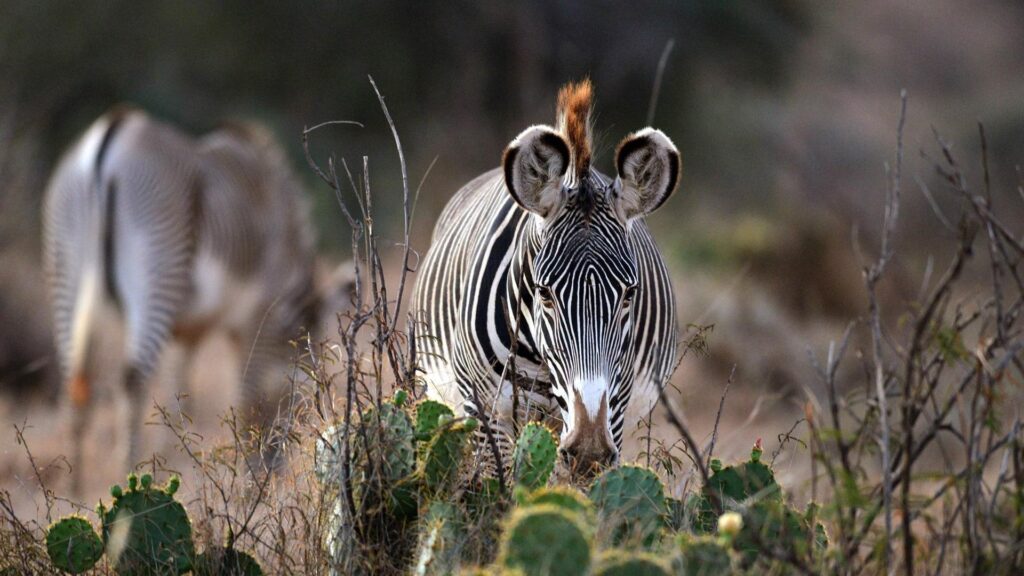
The conservancy is one of Laikipia's most important refuges for: Grevy's Zebra African Wild Dog Reticulated Giraffe Cheetah Striped Hyena Jackson's Hartebeest…
Unlike most Kenyan national parks, El Karama permits night drives. Visitors frequently encounter: Aardwolf Bat-eared Fox Civets Genets Porcupines Bush Babies Striped…
Walking safaris allow guests to track wildlife on foot with experienced guides and rangers, learning about animal behavior, tracks, medicinal plants and…
Bird enthusiasts can enjoy over 432 recorded species, making El Karama one of Kenya's premier birdwatching destinations.
Large elephant herds regularly move through the conservancy and gather at waterholes and along the Ewaso Nyiro River, creating excellent photography opportunities.
Horseback safaris allow visitors to approach wildlife quietly and naturally while exploring areas inaccessible by vehicle.
Every conservation fee contributes directly to wildlife protection, anti-poaching patrols, habitat restoration and community development projects.


From value camps to premium lodges — we match every stay to your style and budget.
Comfortable tented camps just outside the reserve gates. En-suite rooms with hot showers, full-board meals, and close proximity to the Mara.
Spacious canvas tents on raised platforms with private decks, often inside or adjacent to conservancies. Better access and fewer crowds.
World-class lodges and exclusive camps in private conservancies. Night drives, bush walks, spa, and personalized service — the ultimate safari experience.
Every season has its magic — here's what to expect when, so you can travel at your perfect time.
Everything you need to know before you go — and we’ll guide you through every step.
El Karama Wildlife Conservancy is located approximately 220 kilometres north of Nairobi in Laikipia County. The journey takes around 4.5 to 5.5 hours via the Nairobi–Nanyuki Highway (A2) followed by the Rumuruti Road. The roads are largely tarmacked with the final section consisting of good all-weather gravel roads suitable for most vehicles during the dry season. A 4x4 vehicle is recommended during the rainy months.
Daily scheduled flights operate from Wilson Airport in Nairobi to Nanyuki Airstrip, with a flight time of approximately 45 minutes. Guests are then transferred to the conservancy by road, with the transfer often doubling as an introductory game drive. Private charter flights can also be arranged directly to nearby private airstrips within the Laikipia region.
El Karama offers excellent wildlife viewing throughout the year. The dry seasons from June to October and January to February provide the best game viewing conditions as wildlife congregates around permanent water sources. The green seasons between March and May offer lush landscapes, fewer visitors, dramatic skies and exceptional birdwatching opportunities.
Unlike national parks, El Karama operates under a conservancy fee structure that contributes directly to wildlife conservation, anti-poaching operations, habitat restoration and community projects. Fees vary depending on the lodge, season and package booked and are often included within accommodation rates.
Due to its altitude of approximately 1,700 metres above sea level, El Karama enjoys moderate temperatures throughout the year. Daytime temperatures typically range from 22°C to 28°C, while evenings and early mornings can be cool, particularly between June and August.
Visitors are advised to bring lightweight neutral-coloured clothing, a warm jacket or fleece for early morning and evening game drives, comfortable walking shoes, sunscreen, sunglasses, insect repellent, a hat, binoculars, and a camera with extra batteries or memory cards.
Most safari lodges within and around El Karama offer Wi-Fi in common areas and guest rooms. Mobile phone coverage is generally reliable, although signal strength may vary depending on location within the conservancy.
Major lodges and camps accept international credit cards including Visa and Mastercard. It is advisable to carry some Kenyan Shillings for gratuities, purchases in local communities, and incidental expenses.
The conservancy's higher elevation reduces the risk of malaria compared to Kenya's coastal regions, although travellers should still seek medical advice regarding malaria prophylaxis and routine travel vaccinations before arrival.
El Karama is highly regarded as one of Kenya's best family safari destinations, offering child-friendly activities including junior ranger programmes, wildlife tracking, bush skills experiences and educational conservation activities.
The conservancy's low visitor numbers, off-road game viewing opportunities, dramatic landscapes, and access to night drives make it a favourite destination for professional and amateur wildlife photographers alike.
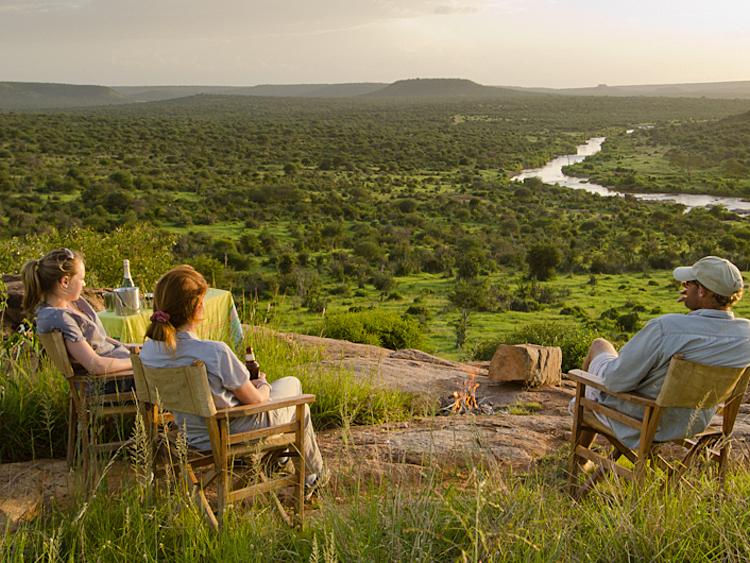
Visitors can enjoy guided bush walks, night game drives, bush breakfasts, sundowners overlooking the Laikipia plains, birdwatching excursions, horseback safaris and conservation-focused experiences not available in many national parks.
El Karama Wildlife Conservancy is located in Laikipia County in central Kenya, approximately 220 kilometres north of Nairobi and close to the town of Nanyuki. The conservancy sits within the renowned Laikipia ecosystem, one of Kenya's most important wildlife conservation areas and home to the country's second-largest wildlife population after the Maasai Mara ecosystem.
The conservancy supports more than 80 mammal species and over 430 bird species. Visitors regularly encounter elephants, lions, leopards, buffaloes, giraffes, zebras, impalas, waterbucks, elands and warthogs. The conservancy is particularly important for endangered species including Grevy's zebra, reticulated giraffe, cheetah and African wild dog.
El Karama offers excellent opportunities to see four of the Big Five: lion, leopard, buffalo and elephant. Rhinos are not commonly found within the conservancy itself, although they can easily be seen in nearby conservancies such as Ol Pejeta Conservancy and Borana Conservancy, making combination itineraries very popular.
The main difference is exclusivity and experience. While the Maasai Mara offers larger wildlife concentrations and the Great Migration, El Karama provides low vehicle density, private game viewing, walking safaris, night drives and a more personal safari experience. Guests often enjoy sightings without other vehicles present, creating a more intimate connection with nature.
Yes. Night game drives are one of the conservancy's signature experiences and are not permitted in most Kenyan national parks. These drives offer opportunities to see nocturnal species such as aardwolf, civet, genet, porcupine, bush baby, striped hyena and occasionally leopard actively hunting after dark.
Yes. Guided walking safaris are among the highlights of a stay at El Karama. Accompanied by experienced guides and armed rangers, guests learn about animal tracks, insects, plants, birdlife and the smaller details of the ecosystem that are often missed during vehicle-based safaris.
A stay of three nights is generally recommended to enjoy the full range of activities including day game drives, night drives, walking safaris and sundowners. Four nights or longer is ideal for photographers, birdwatchers and travellers interested in conservation experiences.
The conservancy is a year-round destination. The dry seasons from June to October and January to February generally provide the best wildlife viewing because animals gather around permanent water sources. The green seasons from March to May offer lush scenery, excellent birdwatching and fewer visitors.
Yes. The conservancy is considered one of Kenya's leading family safari destinations. Many lodges offer family cottages, child-friendly activities, bush skills sessions, wildlife tracking experiences and junior ranger programmes that introduce children to conservation in an engaging way.
Visitors can drive from Nairobi in approximately 4.5 to 5.5 hours via Nanyuki, or fly from Wilson Airport to Nanyuki Airstrip in around 45 minutes followed by a road transfer to the conservancy. Many lodges can arrange transfers and charter flights for guests.
In addition to traditional game drives, visitors can enjoy walking safaris, night drives, birdwatching, sundowners, bush breakfasts, photography safaris, conservation activities, educational experiences and, in some locations, horseback safaris and cultural interactions with neighbouring communities.
In most cases, yes. Many lodges include conservation fees within their accommodation packages, although this varies depending on the property and booking arrangement. Conservation fees contribute directly to anti-poaching patrols, habitat restoration, wildlife monitoring and community development programmes that support long-term conservation efforts in Laikipia.
From a generator that switches off at ten to a Land Cruiser fitted with its own charging console,…
Read more →
A working checklist from a Nairobi ground operator on licensing, red flags and the questions that separate real…
Read more →
Both parks hold the same herds and the same rivers, but the border between them changes your budget,…
Read more →Tell us what you’d love to see and a local specialist will design a tailor-made itinerary around you — no obligation, reply within 24 hours.